Eric H
-
Posts
1,029 -
Joined
-
Last visited
Content Type
Profiles
Forums
Events
Store
Downloads
Gallery
Everything posted by Eric H
-
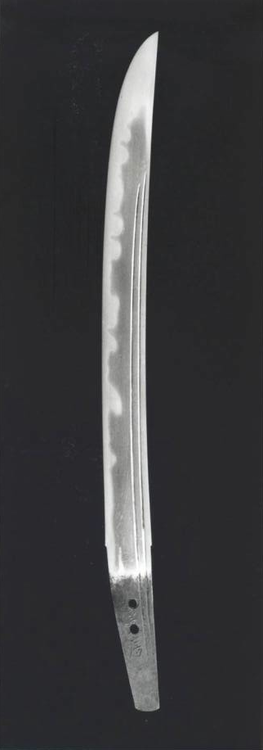
Ietada shodai belongs to the Darani school in Kaga province during early Edo period. His real name is Yoshibei. He is known for a skillful masame hada and his workmanship has close resemblance to that of Kanewaka. He is listed in Yamada Asaemon's Kokin Kaji Biko. Eric


-
*** STOLEN SWORDS and FITTINGS ***
Eric H replied to Jesper's topic in General Nihonto Related Discussion
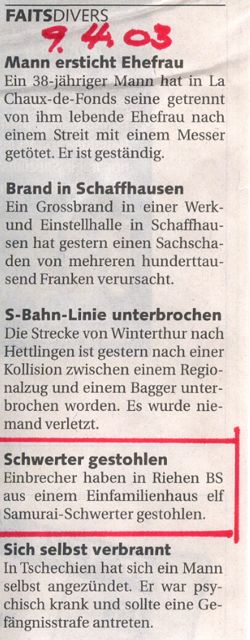
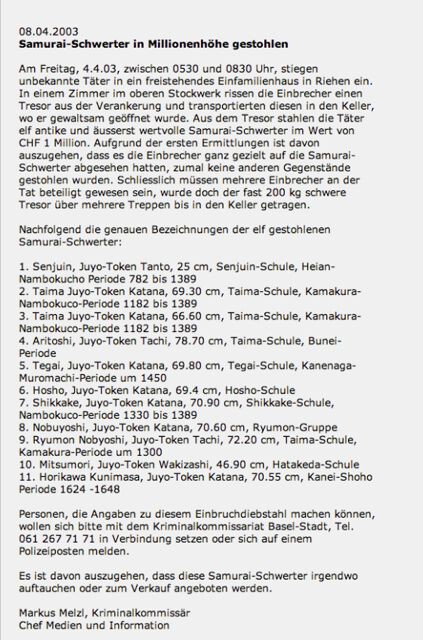
The police should thoroughly investigate in his own personal environment ! Someone, another Nihonto collector, who is well informed about his collection comes as a thief in question. The more people were informed about his hobby the harder it will clear up this fall. When I read a newspaper report in April 2003, I immediately thought of that person that was robbed. The burglars transported a 200kg safe down in the cellar and broke it on. The criminals are still not taken, the collection was well known in many circles. These swords are hidden somewhere, stolen on behalf of a "collector". The list of the stolen swords is added. viewtopic.php?f=9&t=6485... Eric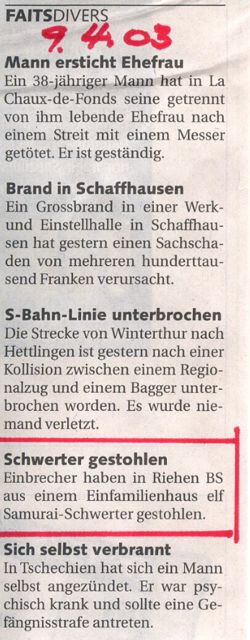
-
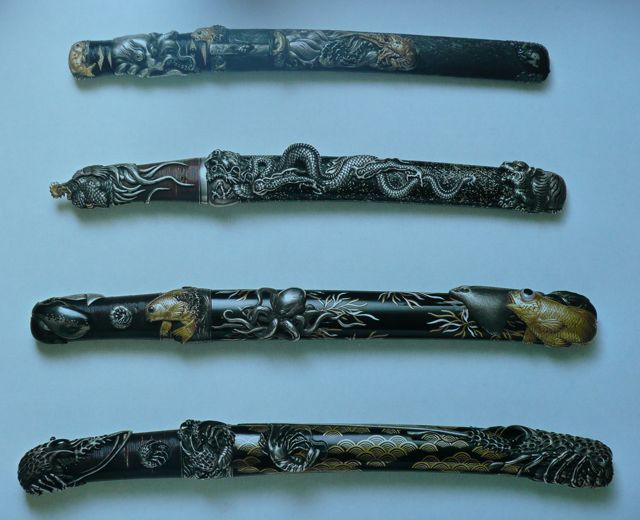
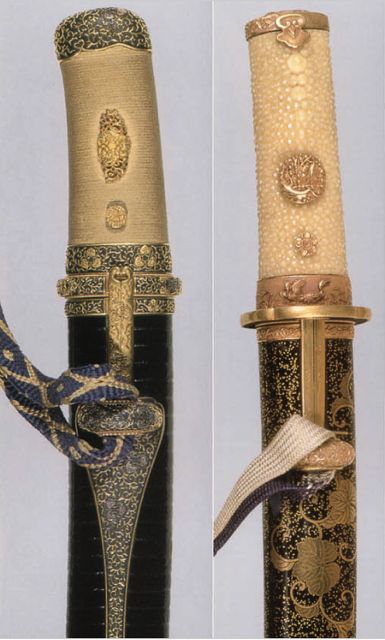
Well, I am very surprised, have a look at those Tanto's in Aikuchi Koshirae, they show at a glance their strongly influenced execution by western tastes. Most of us when beginning to collect Japanese swords etc. were captured by the unrivaled skill of those craftsmen, as I remain impressed until now. These opulent, baroque mountings are prime examples of overloading and shining, real eye-catchers. The purists among Nihonto collectors detest this kind of bombastic adornment, in fact they are absolutely not in accordance with Japanese aesthetics. I for one would nevertheless be happy to own the Lobster Aikuchi just for high admiration of this most skillfully made Koshirae. But Thank God! tastes are different. I have never seen a Tanto like those offered for sale on the Japanese market, this is enough evidence I believe, they were exclusively made for the European i.e. foreign market. I repeat, Alfred Baur was able on occasion to have pieces specially made and decorated to his taste! BTW I like "good" hamamono, they are well to distinguish from "bad" hamamono, roughly said, and incidentally, they are important witnesses of a certain period of times. On this occasion I would like to state more precisely my objection to the two "vertically" Tanto details. As they belong to the Tanto's Kokuho Masamune and Norishige, I think the artists who made the Koshirae for them knew very well about their importance. Eric
-
For better comparison Eric

-
Murakami Jochiku, active from 1764-1781, for instance used mother of pearl inlay. The Tsuba with fishes and seaweed presented as an example of Japanese aesthetics in the Hama-Mono topic is made by this famous artist. Eric

-
Indeed... A most interesting article, that gives a broad overview, however, treating in particular painting. I would like to make some points of this essay. The impoverishment of the samurai class and the mass exodus of samurai from Tokyo (over half the population) hit painters left painters bereft of their patrons and many of them turned to Ukiyo-e , Yokohama-e (souvenir pictures for foreigners) or any means available to be able to make a living. ...and perhaps related to a greater extent to Tosho and Tsubako, there was no need anymore for swords and fittings. The 1873 Vienna Exposition divided had categories of 'Fine' And 'Industrial' or technical arts. This differentiation between arts and crafts did not exist in the Japanese language before this time when the words 'bijutsu' and 'geijustsu' were created to hold these respective meanings. The use of this language may have had an effect on art production in Japan for the craftsmen who, feeling the elevated status of 'bijutsu', attempted to take their work out of the realm of industrial arts by making elaborately decorated work which suited European tastes at the time, as opposed to the simpler more understated 'wabi' style, for example, which was closer to a true Japanese aesthetic. Meiji crafts are now characterized by an opulent decorativeness using designs and motifs derived from Chinese, Japanese and Western painting. As crafts became a valuable export commodity styles were adapted for European taste and even today Meiji crafts are not as valued as other Japanese arts. The goods were eagerly bought in Japan, perhaps also because they represented the international spirit of the exhibitions themselves as well being a symbol of a cultured lifestyle ordinary people aspired to in the west. If we look nowadays at those called "Hama-mono" perhaps in a derogatory sense, keep in mind it's the result of the bad (?) taste of foreign collectors of those days and for those artists to make a living. Eric
-
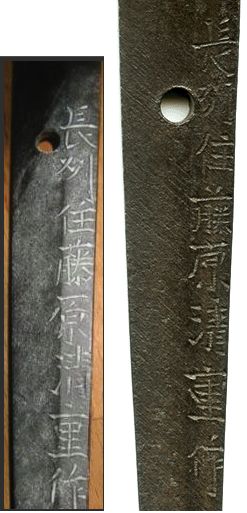
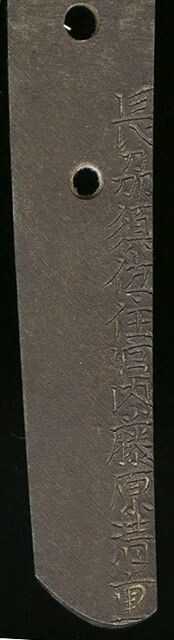
Nakago of a shinshinto Choshu Kiyoshige. Eric
-
Christies Sale 2296
Eric H replied to Bob M.'s topic in Sword Shows, Events, Community News and Legislation Issues
Tank you for the link. Fine swords, helmets and armor are listed...a well stuffed wallet is needed... ... and only one Tsuba. Hamamono sends regards. Eric
-
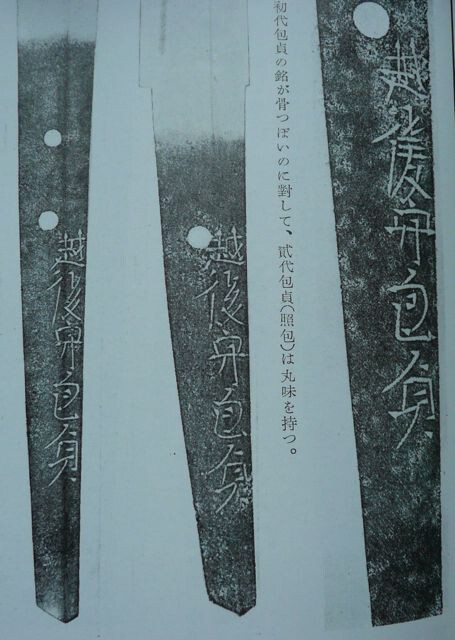
Reinhard, We, Jacques D, Moriyama san, and myself, gave an answer to his questions. Moriyama san stating that the date was not correct. Of course I noticed that. Further it became clear that the mei of his sword is more similar to shodai Kanesada. No one gave an opinion on the blade either shoshin or gimei, we were not asked then to do so, but pictures are conclusive. Now I add the oshigata's from Fujishiro shinto hen. It's up to SwordGuyJoe now to make up his mind. Eric
-
This is a comparison with Kanesada shodai (Fujishiro kanteisho) Eric

-
Jean... and John Stuart... Eric
-
For comparison, Echigo no Kami Kanesada Eric

-
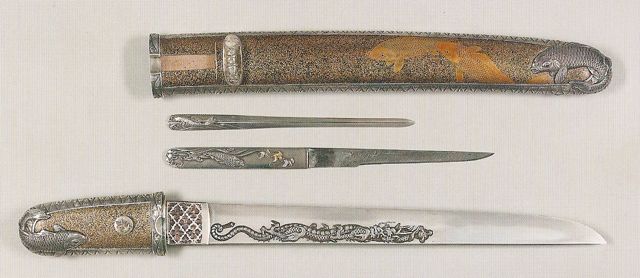
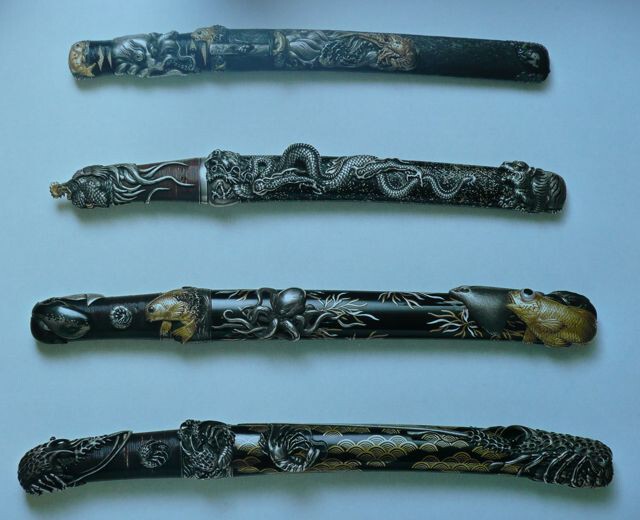
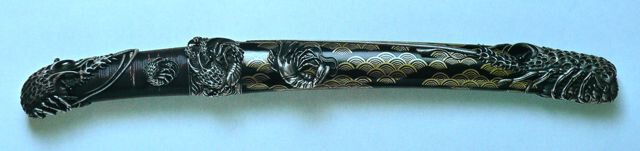
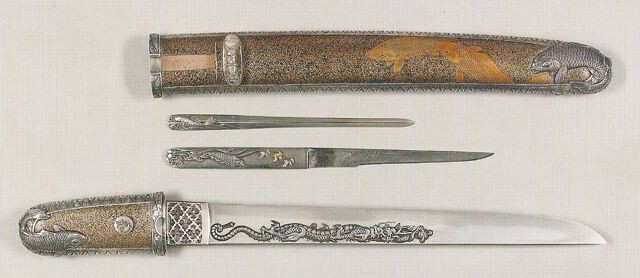
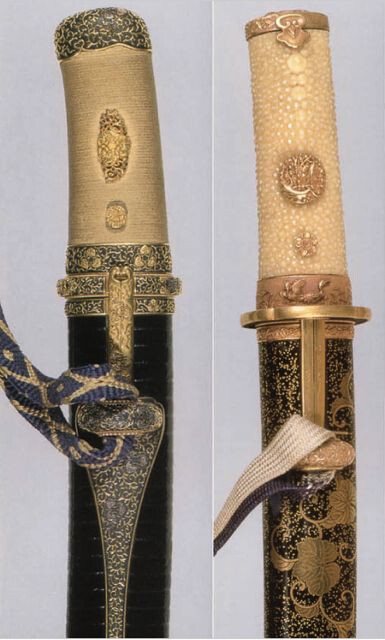
The historical background of those times has been explained at best by several members. There is indeed an evidence that foreign collectors, in this case Alfred Baur, a collector of his period, was able on occasion to have pieces specially made and decorated to his taste. Baur started collecting in 1906, his first contact was with the English collector and connoisseur Thomas Bates Blow (1854-1940) when Blow was living in Kyoto, later he was introduced by Blow to the Japanese dealers Sato and Tomita. The great majority of his acquisitions were made in Japan following his own taste. I have added some pics of Tanto's with luxurious decoration, extremely skillfully executed, and two partly in detail, which I think they represent "Japanese aesthetics". There is the Tanto with blade, in my opinion an example for an impeccable mounting, this one was stolen in 2001 before auctioned at Klefisch, Köln. That with the Lobster mounts has a blade by Tairyusai Sokan with horimono, the mounts by Omori Terumitsu, the Kogatana by Ozaki Suketaka. In addition this kind of opulently decorated Tanto is extremely rarely found at auctions, if any, and they fetch high prices. Eric
-
what is different between Eric's examples and Reinhard's? John My invitation for comments was ignored maybe due to no interest or simply overlooking their qualities. I would have at least expected a brief statement by the initiator of this topic on the Tsuba's I have posted after all his explanations about Japanese aesthetics...no comment is a comment by itself. All posted Tsuba's are in Japan. A - Tsuba Muromachi time B - Natsuo, printed in the Nihonto-Koza vol. 8, the two Chinese characters "Natsuo" C - Kodogu late Edo from a Daisho's Katana worn by Tokugawa Yoshikatsu, Daimyo of Owari B - Goto Ichijo C - Hamano Noriyuki D - Nomura Kanenori, Juyo E - Akiyoshi, Aizu Shoami school (see Clive Sinclaires comment on Aizu Shoami), sold for $ 66,000 F - Katsura Eiju, Juyo Eric
-
Grey, there must be large quantities of Tosogu in Europe as well in USA. In Italy: Edoardo Chiossone, in Japan from 1875 to 1898, built up a collection of Japanese art objects, ca. 20'000 pieces (Museum E. Chiossone in Genova) Enrico di Borbone, il Conte di Bardi, during his visits in Japan and Asia 1887-1889, a collection of ca. 36'000 pieces. (Museum in Venice) Frederick Stibbert, large collection of Japanese Arms and Armour. (Museum Stibbert in Florence) Then the collectors of the "first days" Samuel Bing Collection, Paris Michael Tomkinson Collection England Goncourt Collection, Paris Georg Oeder, Germany (lists 1798 Tosogu pieces) The Baur Collection (in Geneva) and what is stored in European and American museums? I dislike the term hama-mono in relation to Tsuba, it's suitable for works by the Komai, for they worked exclusively for foreign markets. With the fall of the Shogunate and the abolition of the Samurai-class, the banning of wearing swords in 1876, Tosho and Tsubako were forced to change their living conditions. For instance Kiyondo, 1827-1902, retired in 1871 and started a new career in the hotel business. A good question...I have added 8 pics. Now as we are told by Reinhard how to evaluate and examine in particular Tsuba's, i.e. Tosogu, everyone, inclusive Reinhard, is free in to give an opinion. I leave it open, if these are pre Meiji or not. Eric
-
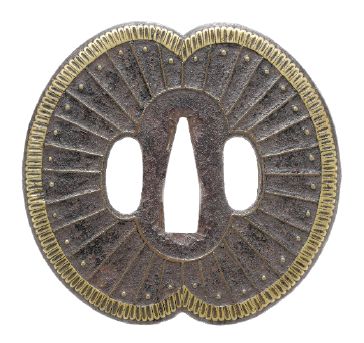
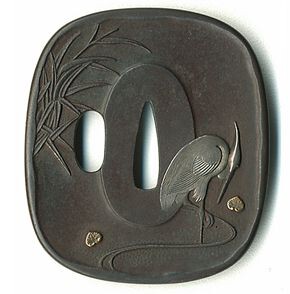
I have added 5 Tsuba's. Overloaded, shiny colors? Three of them show no signs on the seppa-dai, which could be interpreted that it never was intended to be mounted on a sword. They are made by well-known Tsuba-ko. Who will insinuate now, that they were made for export? Two of the Tsuba's have Juyo status. Those who believe to be familiar with the Japanese principles of aesthetics will recognize them instantly. Eric
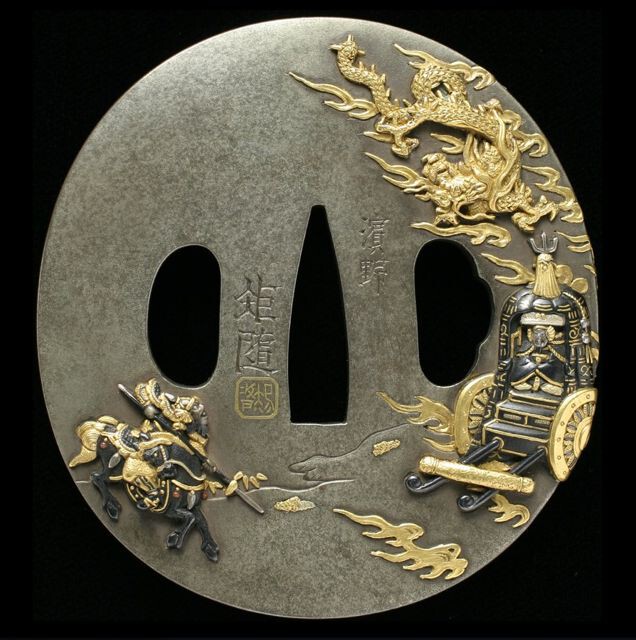
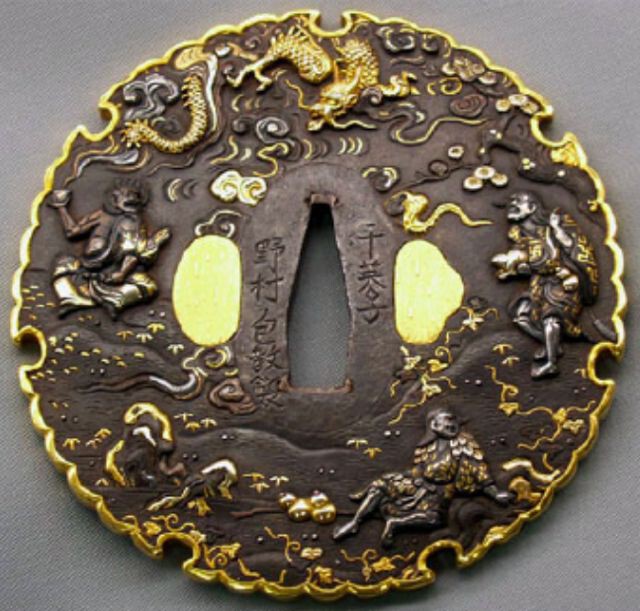
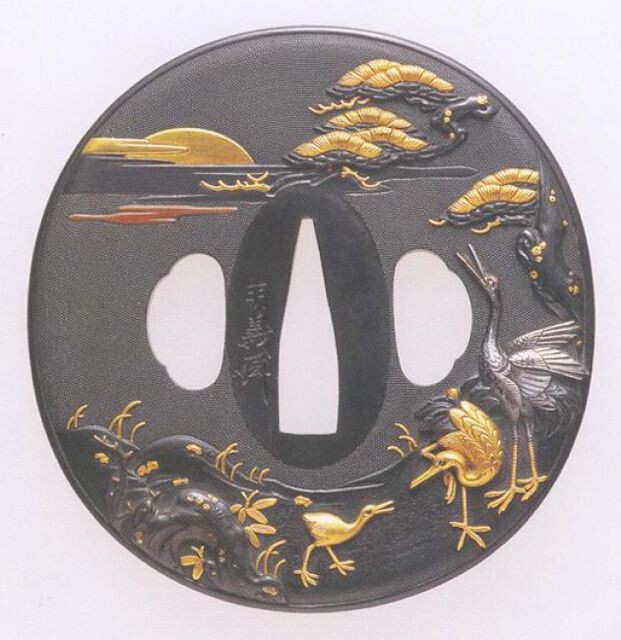
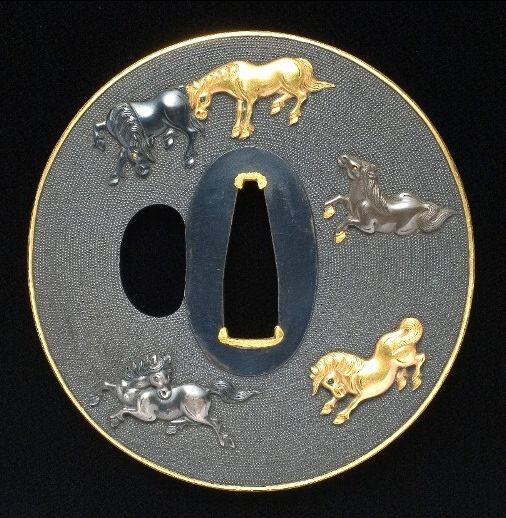
-
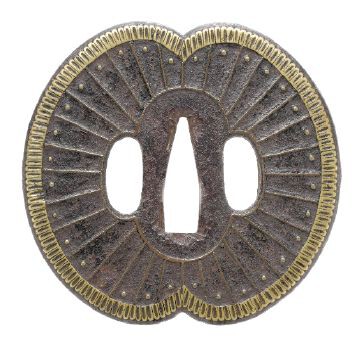
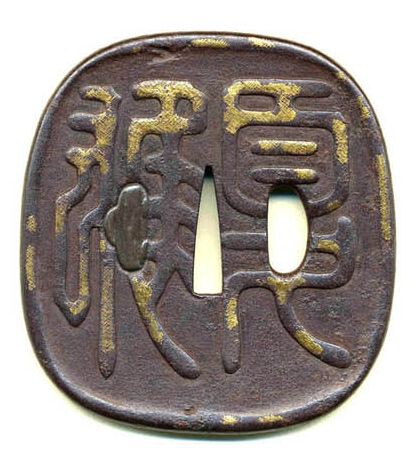
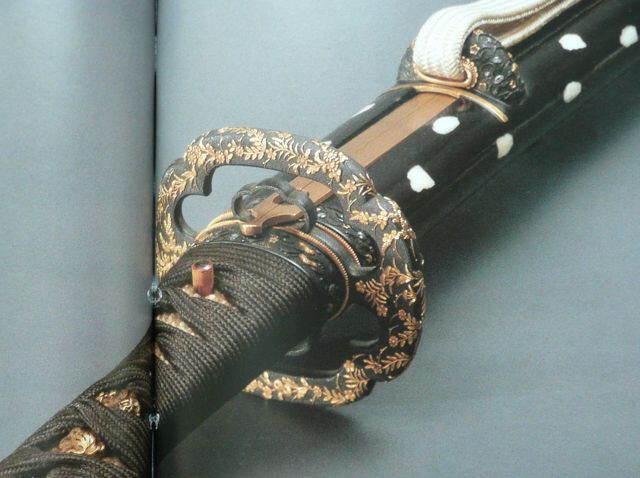
It can be safely assumed that Tosogu were made in the traditional manner and in accordance to the appropriate schools until the end of the Tokugawa Shogunate, i.e. the abolition to wear swords. It is also proven by Philippe Sichel, a Parisian merchant who visited Japan in 1874 for shopping antiques, who writes in his memories, that he was offered boxes fully filled with sword mounts, but he was not interested to buy them, regrettably, as he remarks: Qui eut supposé... In 1880/81 Siegfried Bing, who had contact to Japan and who is considered to be the "founder of Japonism" started his first shopping trip in Japan and in succession became the most important importer of Japanese art work. The world exposition in Paris 1889 gave birth to an increased interest in Japanese art. I believe that at that time a great demand for elaborately worked Tosogu grew up to meet western taste. Wabi-Sabi...Sen no Rikyu established a bench mark for "Japanese aesthetics" and another perception is given with... Shibui. In any case it is difficult to give the "right" answer. But as anybody knows ... "Beauty is in the eye of the beholder". What's your opinion on the pictures?... Shibui? Eric
-
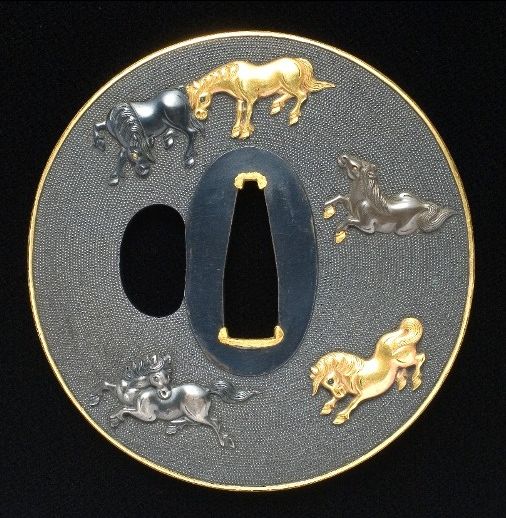
The fleeing horse showing it's hooves and the other Tsuba with the hoof traces are, in my understanding, an exceedingly well realized artistic composition, the date of production is of minor importance. The previously strongly guided debate on pre Meiji made or affected by western sources was informative, both have forwarded good arguments. It's up to a Shinsa to decide what is right. Mark, a good choice :D Eric
-
Well, if so, then I can only wonder what's all has been read out and interpreted on the basis of such images... Eric
-
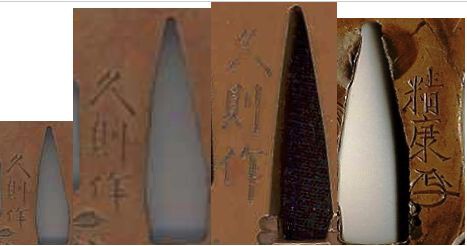
This unknown Hisanori, pre Meiji or later, built up to a question of faith, seems to have had in his assortment of tools only one chisel, when looked at the execution of the design and the mei. The mei looks blurry and differences between the dai and sho can also be seen. A clearly, sharp cut mei can draw conclusions about the craftsman skill, such an indication should not be overlooked. The exact attribution can only be done by the Shinsa. Eric
-
Strikingly similar... Eric

-
$ 27,999... Eric
-
On Honami origami's the nagasa of the respective sword is indicated, and if the smith's characteristics are present, and both parameter are conform, why doubt? I have never seen an oshigata attached to Honami papers. BTW is this Honami Koho the famous painter? Eric


-
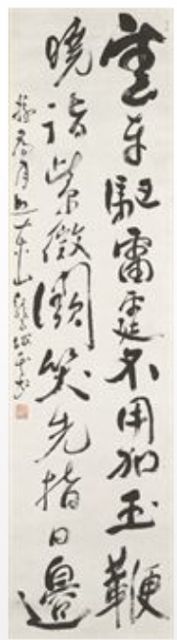
A look back at those turbulent times Katsura Kogoro, later Takayoshi Kido, Sakamoto Ryoma, Sa Yukihide and a wonderful Wakizashi http://www.choshuya.co.jp/1/0803/member ... allery.htm and a poem by Sakamoto Ryoma Eric

-
While reading Clive Sinclaire's excellent article the "Real last Samurai" I have found another Tanto by Kanefusa of historical importance. This 16th century Mino tanto by Kanefusa, now in the BM, was presented to Lord Redesdale for being an official witness to the seppuku of Taki Zenzaburo. Eric