Marius
-
Posts
3,200 -
Joined
-
Last visited
-
Days Won
26
Content Type
Profiles
Forums
Events
Store
Downloads
Gallery
Everything posted by Marius
-
Cool, but out of focus. Even so, much better if one wants to see hataraki :-)
-
Next one doing the arbitrage thing
Marius replied to Marius's topic in Auctions and Online Sales or Sellers
Not that I recommend the dealer in Japan, but maybe someone has dealt with them and has an opinion to offer? -
eBay: http://www.ebay.com/itm/WAKIZASHI-Samur ... 2a44b3ba1d Dealer's site: http://www.giheiya.com/shouhin_list/jap ... zashi.html
-
Nishigaki.
-
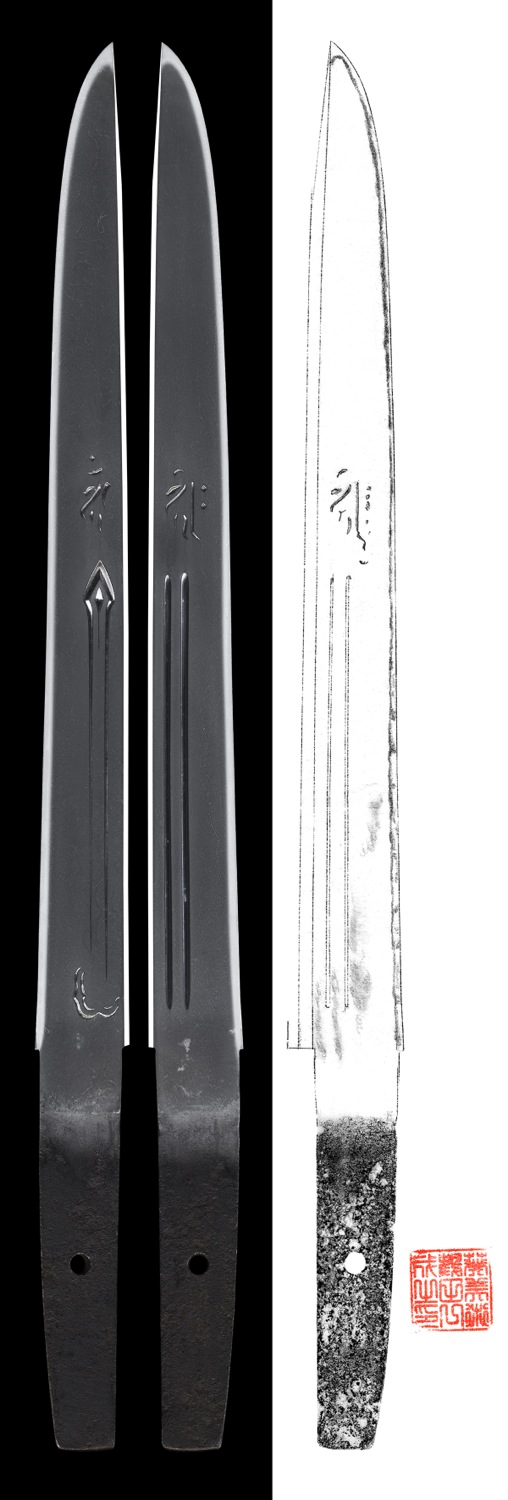
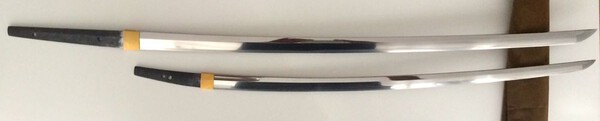
Gents, Returnig to the kodachi problem... I have taken a pic of this Tsukushi Ryokai kodachi alongside an osuriage Tegai blade. The Tegai is ordinary katana size. Here are the measurements of both swords: ....................katana................kodachi nagasa:...... 69.2 cm .............. 56.8 cm sori: .......... 1.1 cm ................ 1.3 cm motohaba:. 2.95 cm .............. 2.43 cm sakihaba:... 1.97 cm .............. 1.39 cm Hopefully that will give all an idea how delicate this kodachi blade is.
-
Ebay seller with sudden influx of nihonto
Marius replied to AndyMcK's topic in Auctions and Online Sales or Sellers
Thmas, you could have done this through an intermediary, would have come cheaper. There are people on the Board here who do that for a fee. Transparent and efficient. -
Jean, nobody said it that this is all easy :-) Thanks for adding that info PS: I have adjusted the title of this thread
-
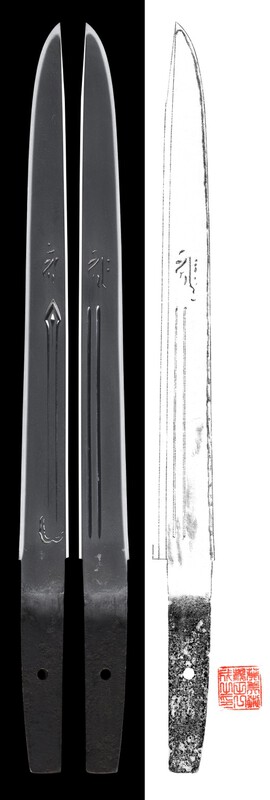
Thank you Guido The hada on your Tsukushi Ryokai seems more pronounced (o-hada?), while it is pretty fine in my kodachi. This is of course nothing I could build upon, given my paltry knowledge, but I think it is worth noting - it seems the Tsyukushi Ryokai smiths worked in several styles. Also, there is a Ryo Hisanobu tanto on Aoi, here is the link, and I am attaching a picture too, as these links do not last: http://www.aoijapan.com/tanto-mumei-unsigned(ryo-hisanobu)
-
Ian, very interesting, thank you :-) Yes, diminutive is the word, but also refined. I can obviously speak only about the blade, as the sword has no koshirae. I have seen only few genpuku swords, so I cannot draw any conclusions, but yes, they were not particularly well made (not bad, but definitely not refined). This blade is very well forged, which, I hope, can be seen in the pictures. Paul, Why the NBTHK thought this sword to be Chikushi (Tsukushi) Ryokai? Probably due to the konie-deki suguha and somewhat limited hataraki (although I have to look closer to examine it in detail). I guess one should expect more activities in earlier Ryokai swords. Also I have to have a look at some oshigata of Ryokai swords. Thanks for the pic of the Norikuni. One more thing about this kodachi - the patina on the nakago is excellent and deep, neither dry nor excessively lustrous. It seems like the hi could be original to the blade - they are polished down and start in accordance with what seems the original length of the sword (my take is it is suriage and machi okuri by 4 cm at the most). The habaki is gold plated, and a very high quality work. Somene has cherishied this sword, which is not surprising, as it has the elegance of an early Kyo-mono. I may be just dreaming, of course
-
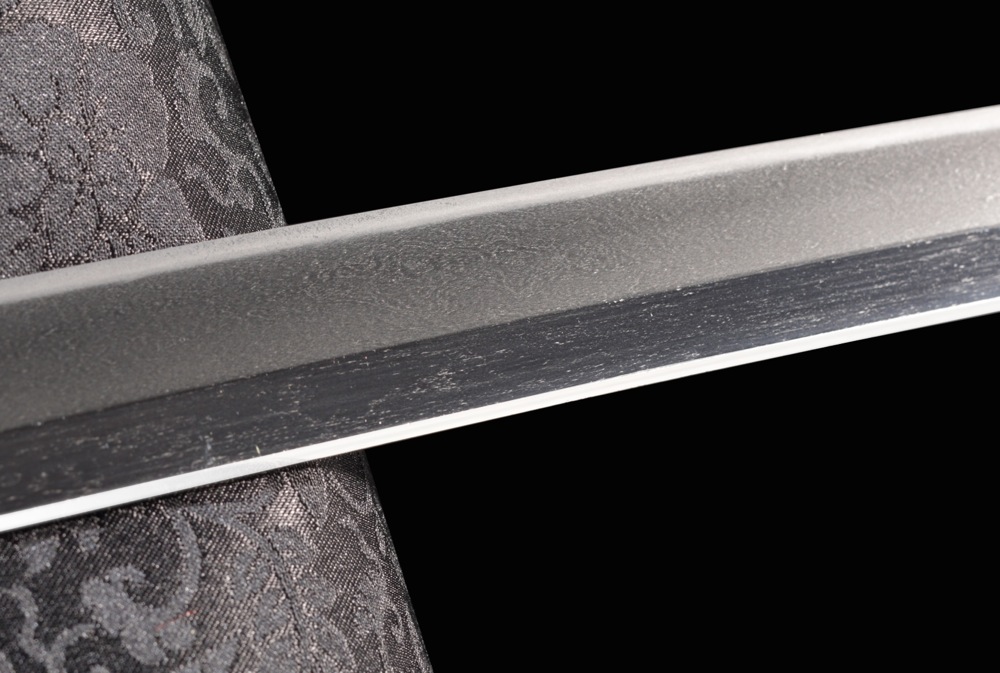
Thank you Guido and Eric, this is very kind of you Looking at this sword, I was thinking - an extremely carefully made sword for a courtier. It is so short and light, that it wouldn't have been cumbersome to use wither in the palace or in the ox-cart. NBTHK's attribution is Chikushi Ryokai, so it would be Nambokucho (or later), provided that the NBTHK is correct (not for me to judge, of course)... It is a Yamashiro tradition blade, for sure. Very slender, elegant and with very good steel (loads of ji-nie, etc). Eric - this pic is great, thanks :-) Attached is a picture which shows the hada and utsuri on this sword.

-
Jean, Thank you :-) I have done it, but the only thing in this discussion that I have found meaningful (regarding the term kodachi) was Guido's statement: "A Kodachi is kind of a scaled down Tachi." I seem to remember that the opposite opinion was brought forward on another occasion Of course I know that it is difficult to determine what a kodachi was, exactly. The name suggests a small tachi, i.e. a sword worn edge down. But are there any sources which confirm that short, diminutive tachi were worn, too, perhaps in civilian/court life? Regarding my blade, its measurements are: Nagasa: 56.8 cm (1 shaku 8 sun 7 bu 4 rin), sori: 1.3 cm (4 bu 2 rin), motohaba: (width at base) : 2.43cm sakihaba (thickness at top) : 1.39 cm This is a very slender sword.
-
Thank you John. I appreciate your interpretation of the term, I don't quite agree with the comparison to a wakizashi. That function was fulflilled by the uchigatana or/and the koshigatana.. A kodachi, it seems (correct me if I am wrong) was worn edge down. It was, in fact, a small tachi... But all my questions remain unanswered...
-
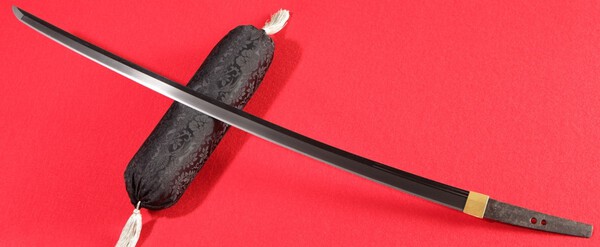
Gentlemen, I haven't researched this subject yet, but I want to get my starting points here. Kodachi - these were comparatively short swords worn edge down like regular tachi. That much is sure. Questions are: - what was their purpose? - were they worn by fighting men? - were they worn by courtiers? - how long/thick/boad were they? I ask these questions because I am lucky enough to own a kodachi (and no, it is not a shortened tachi) attributed to Chikushi Ryokai. An excellent Yamashiro sword, BTW. The sugata is delicate, almost diminutive, and graceful. The blade is very slender, but seems not tired. It appaears almost ubu, with some minor machi okuri. It has nashiji hada, utsuri and a hamon in ko-nie (suguha). Pictures are attached. What is your opinion about kodachi (not necessarily this sword)? I will try to take some pics in which this delicate sword is next to an ordinary daito. Thanks for your time :-)

-
Yes. Very clearly :-)
-
Arnold, Jussi, Thank you, gentlemen
-
Gentlemen, does anyone of you have a sheet on which participants of a kantei game write down the sword's characteristcs? I presume such sheets exist? It would be great if the terms were in romaji... Thanks for your kind help
-
A good old Masahiro(?) Your pictures, or most of them emphasise the hadori, which looks like a real eye-sore. Tanto seems Nambokucho/Oei, as the sugata, including mitsu-mune seem to indicate. The polish is irritating. Honestly, what is the purpose of such a strong hadori for what seems (almost?) a hitatsura? I am not saying that this must be done in sashikomi, but the polisher should have been more considerate with his finish. Having said that, this might be only your photos...
-
I have a feeling of deja vu... Haven't we discussed this or am I making something up? Honestly, Curt, while it is not arrogant to come up with a Sadamune, it is certainly a bit far fetched for beginners like us, no? Hope springs eternal, they say... In other words - books, books, and tons of good swords. After a while you may be able to say - Soshu... Sorry, don't take offence, but you are judging by two features out of so many, with a huge number of combinations. Haven't I said it already?
-
Thank you Kunitaro san :-)
-
Kunitaro san, A great koshirae, thanks for sharing :-) I have a question regarding the crests - why are there two crest on the saya? The predominant crest is the Tokugawa mon, the other one being shown is the mon of the Honda.
-
David, you really like mukade, no?

-
Buying from Danny Massey (http://www.nihontocraft.com) is always a good idea. Well done
-
Both the excellent iron and the design tell me it is a Higo. The Higo specialists here will certainly be able to tell you which master's shop has produced this tsuba. I reckon it is a later Jingo, maybe a student work, and a good one, too :-) I might be wrong about the attribution, but the quality is obvious. Well done
-
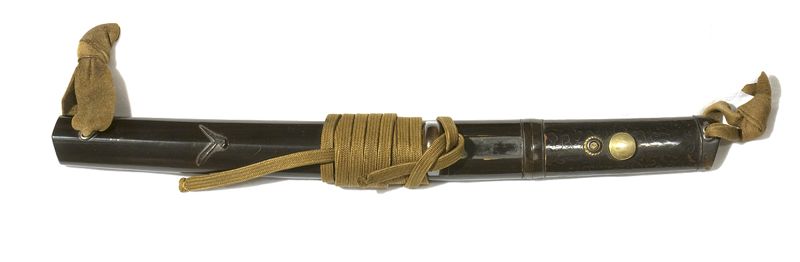
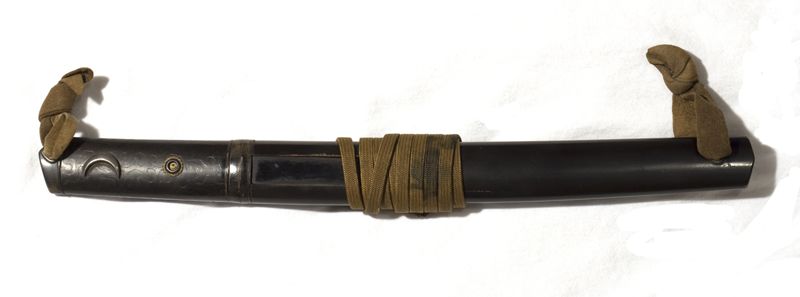
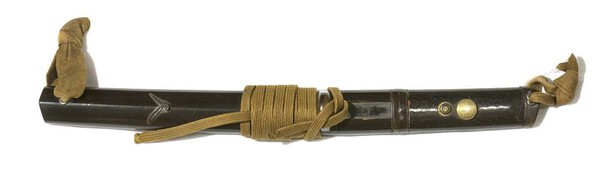
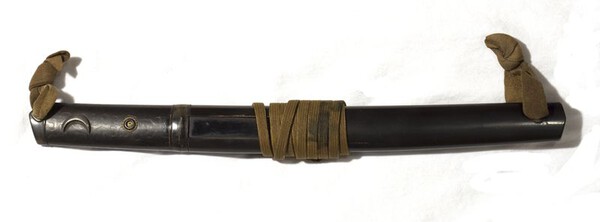
I have a tanto in an original koshirae. It is such a shame someone removed the kozuka and kogai I will never know how they looked like This is what Danny Massey wrote about it: "The koshirae for this tanto is equally exciting, It is a fully intact Edo period example that would have been made for an older samurai in the sunset of his life. It is in the theme of an old Chinese poem. An abbreviated verison : "Sun sets in the Western sky, Moon rises in the Eastern sky and shines on the entire world many times again, but man (poet) is reaching the end of his life....." We can see the sun and moon on the tsuka and the kanji of "nin" or "man" on the saya. The meaning of the poem adds an extra level of appreciation to the sword as a whole and makes one wonder about the gentleman for which this koshirae was made so many years ago. The kashira and kojiri both have eyelets and retain original Edo period doe skin ties."
-
If this is a mon, it would be roughly a hanabishi shape crest. But why two petals... Very odd. Kawari katabami sasa hanabishi?