Grey Doffin
-
Posts
4,227 -
Joined
-
Last visited
-
Days Won
31
Content Type
Profiles
Forums
Events
Store
Downloads
Gallery
Everything posted by Grey Doffin
-

need help with a showato from seki
Grey Doffin replied to budodeshi's topic in Translation Assistance
When Seki is involved the 1st Kanji is often Kane, which it is here. Grey -
Hi Alex, Your tsuba resembles one of the Holbrook tsuba on my website, which Skip gives to Jakushi School. Here's a link. http://www.japaneseswordbooksandtsuba.c ... ushi-tsuba Grey
-
New to Sword Collecting and Translation Assistance
Grey Doffin replied to reeder's topic in Translation Assistance
Looks to be an arsenal stamp on the katana; the Showa stamp I think. This means it is not traditionally made (not true Nihonto) The wakizashi has been shortened and I agree, "Bizen" is all that remains of a longer mei. Edit to add, having seen Jean's post. Why would the 1st kanji be a suffix? Shu in this position doesn't make sense. Bizen or Bishu seems more likely. Your tsuba might benefit from a gentle wash with water and a soft brush. Don't use a brush stiffer than a toothbrush and use nothing other than water. Grey -
Got my "Masamune" tanto -looks AWESOME
Grey Doffin replied to Prepeleac's topic in Auctions and Online Sales or Sellers
Chip, Export papers mean nothing to you. If you can return the tanto you would be smart to do so. If not, take your lumps and spend a lot of time in study before you attempt to buy another sword. Grey -
Got my "Masamune" tanto -looks AWESOME
Grey Doffin replied to Prepeleac's topic in Auctions and Online Sales or Sellers
Chip, Having the false signature removed professionally will cure the gimei problem but it leaves you with other problems. Before you spend any more money on this blade you need to learn if it is worth it; chances are good it isn't. The shoddy hori-mono, which most likely was done to hide a terrible flaw, is very troublesome. Are those cracks we see under the hori mono? Next time, ask questions here before you buy. We can help you avoid similar mistakes in the future. Grey Just saw your question about a paper. No one will give a paper as is; the false signature would have to be removed. But even then no reputable organization would paper a blade with that hori-mono. Masamune was the most famous Japanese swordsmith ever. There are so many false Masamune signatures; yours is one of them. -
Sakumuki Kaneshige Saku, according to Fuller & Gregory. Grey
-
Feelings on "dressing out" a Nihonto?
Grey Doffin replied to Ken-Hawaii's topic in General Nihonto Related Discussion
Hi Ken, No harm in doing this so no waste of time but friends are correct when they tell you it is a waste of money. When the time comes to sell (and it will come) you'll be lucky to recoup half what you spend to make the koshirae. Grey -
Hi guys, Any idea what's happening with this tsuba? http://www.ebay.com/itm/271054054257?ss ... 1438.l2649 All I can figure is that the plugged ana never was an actual ana; it was made to look like one that has been plugged. I've never seen a faked ana before, though. Any better ideas? Grey
-
And if the habaki is so large that altering the saya isn't an option, the 2nd easiest thing is to find a different, smaller shakudo habaki. Grey
-
Hi David, When I had this tsuba those designs put me in mind of shoji in non rectangular window frames. Grey
-
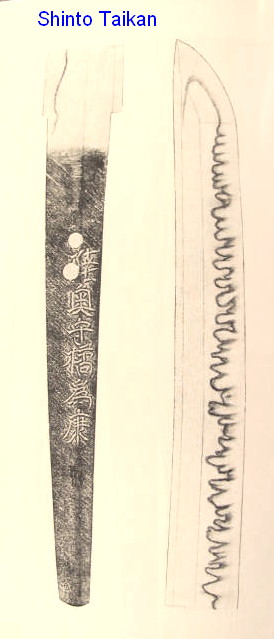
Hi Anders, Here is the 1 Omi Daijo mei I have in my books, from Shinto Taikan Grey

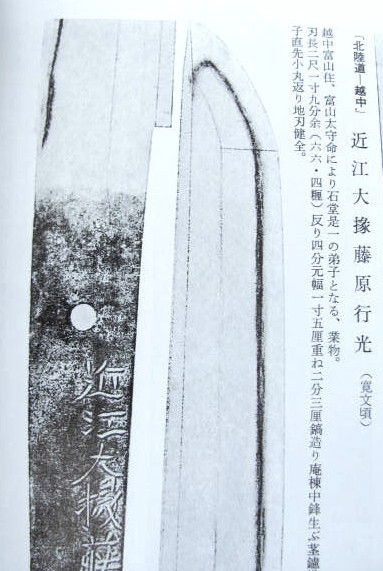
-
Thank you Morita-san; much obliged. Grey
-
Hi guys, What do the 2 Kanji before Saku say? Thanks, Grey

-
Hi Isidro, Which is why your first purchase, and many more after, should be books. It is not possible to buy well without knowledge or great luck, and you can't count on luck. Grey
-
Hi folks, I convened an email discussion with the JSS/US Board, about sharing our articles with other sword groups. We are OK with other groups using our material as long as permission is requested 1st and that our material isn't used for commercial purposes. While not required, it would be nice that if a group asks to use our material, they have something of theirs to offer in return. I think every sword group in the west that publishes has seen a drop in membership, the JSS/US included. If you want us to continue publishing our Newsletter and translating Japanese references into English, you might consider becoming a member. http://www.jssus.org Grey, JSS/US publications guy
-
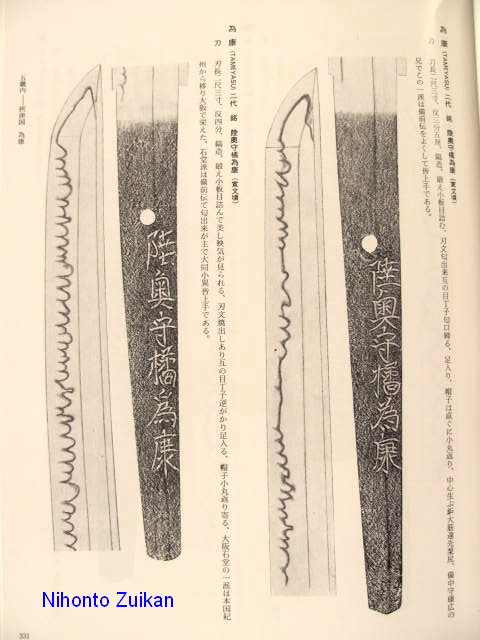
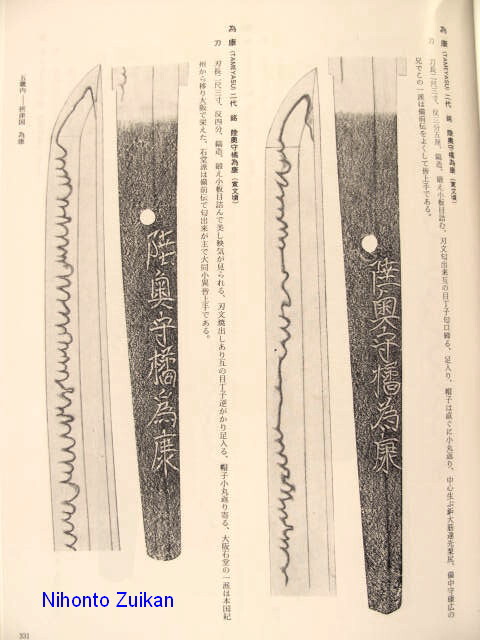
Hi Martin, I think it was from me you wanted the picture of the oshigata in Nihonto Zuikan. If so, please send me an email and I'll reply with a high resolution photo attached. Make sure I know which oshigata, right or left, you want. Grey gdoffin@cpinternet.com
-
Hi Grev, It would help if you can let us know which Kanji are used, so we know which smith you're asking after. Go to any online Kanji reading aid, find the Kanji, and copy & paste here. Grey
-
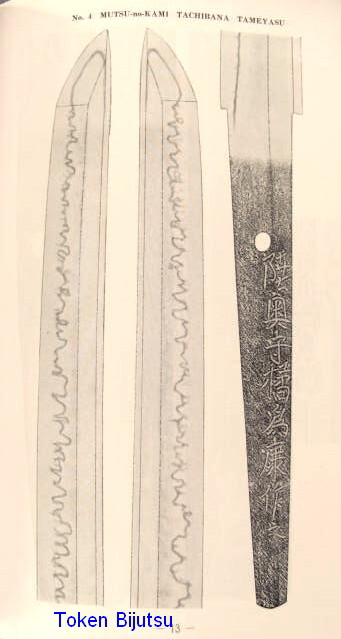
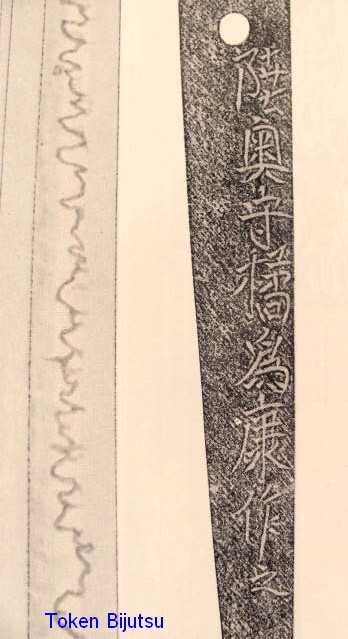
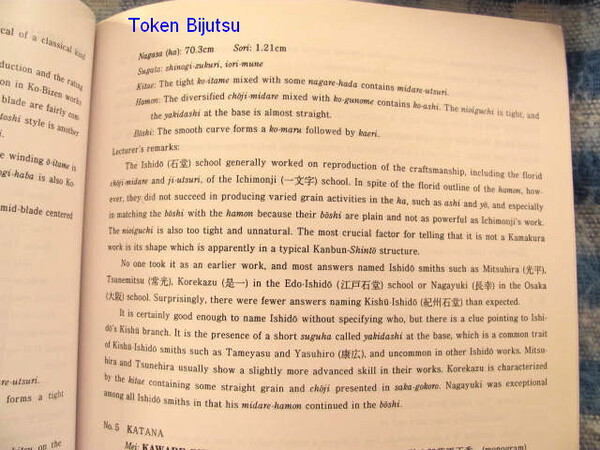
Hi Martin, Here's what I have. Grey
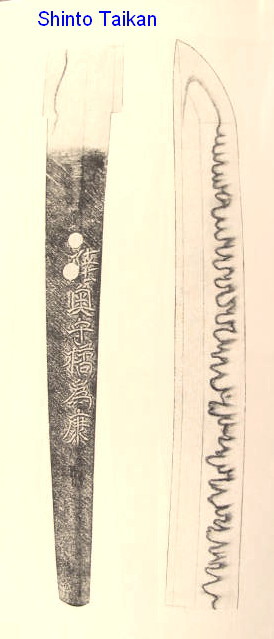
-
questions about description of this auction
Grey Doffin replied to korsaire's topic in Auctions and Online Sales or Sellers
Hi Luc, Illegible means not readable. By overwritten a signature I think the seller means that one signature is carved over the top of another. I've never seen this before; no idea why it was done. Grey -
Hi Hoanh, The blade has a ha machi only because polishers have laid off just above the machi. If you continue the line of the ha from a few inches above the machi down, the ha machi completely disappears. The sword does look to be a bit tired in the mono uchi also. To answer your question, it is worth the expense of new polish & shira-saya only if the blade is important. If it is just stuff it won't be a smart investment. How knowledgeable is the seller? If he knows what he has chances are good it won't come out of a polish worth what you have in it. If he's uneducated, you have a chance. Grey
-
Hi Paul, If you find a fully mounted katana for $1,600, unless the seller is silly, it won't be much to get excited about. That price for a katana in shira saya is possible but, again, the quality probably won't be much. A good katana in shira saya, one you'll be happy to own and can learn from, should cost at the very least $2,000 and likely a good bit more. Mounts boost the bill. A fully mounted wakizashi, happy with and learn from, might be doable on your budget. A wakizashi in shira saya: definitely for $1,600. You can wait till you have more money to spend, or you can spend the money now on books, become an authority, and buy swords a dime on the dollar whenever you like. Just joking about that last, but might not be a bad idea. Figure $100 an inch of cutting edge for polish, plus a few hundred for new shira saya and habaki if necessary. Best, Grey
-
I've been told that there was a time when craftsmen in China, having seen Japanese swords that had been exported to China, started to make similar items (note: this isn't yesterday; I'm talking centuries ago). I've had a couple tsuba about which it was said they might have been made in China since they aren't quite real Japanese. No idea how correct any of this is but if so, might this explain the tsuba in this thread? Grey
-
Hi guys, We at the JSS/US are in need of articles for our Newsletter. We'll take swords, fittings, armor, history, collecting, metalurgy, or most anything else you find interesting. Doesn't have to be the most scholarly material ever written; no one will complain if you dangle a participle. Got something on your mind? We'd love to hear from you. John Eliyas is our editor. You can contact him at eliyasj@comcast.net If I can help let me know. Thanks, Grey (JSS/US Publications guy) gdoffin@cpinternet.com
-
Hi guys, Any idea why the eyelet on this tsuba? Grey http://www.ebay.com/itm/261083908981?ss ... 1438.l2649
-
Sword i recently bought , and want some opinions on it.
Grey Doffin replied to bmoore1322's topic in Nihonto
Hi Brian, The WWII menuki mean the tsuka was wrapped no earlier than the war. I think you have a Shinto or Shinshinto unsigned wakizashi with parts put together after the war, to be sold to a member of the occupying US forces. OK if you're happy with it and you didn't pay more than 2 or 300 $, but nothing special and not much to learn from other than that next time you might want to look for better. When you're new to Japanese sword collecting you want to buy everything (I did). As you gain knowledge and experience you learn that you'd rather save your money for quality. Grey