All Activity
- Past hour
-
mino katana sold on hold is beefy wak and kashu tachibana pending payment on hold mishina wak and loyalist sword, pending on decision on koshirae
-
So we have “摂州住榎並屋伊兵衛作” (Sesshū jū Enonamiya* Ihei saku). There is a signature recorded with the date “享和元年” (Kyōwa gan‘nen). That is 1801. * not sure about the proper reading…
-
If anyone here is using inspection camera to check saya/tsuka inside please share experience. Any particular model?
-
Double piece habaki. But it’s kinda to small to fit fully in koiguchi. Saya holds safely?
- Today
-
Colin, I take full credibility of your experience and knowledge, but I stick to the opinion that this specific piece was more likely not 琉球漆器 as I failed to identify its hallmarks in the video. Attached is a similar tsuba made by the 杣田 school I mentioned.

-
It was not a school as far as I know…..not in the traditional sense. The technique was borrowed from the earlier Ryukyu pieces in the late Edo but also into Meiji. I used to restore such pieces for the bigger dealers including shibayama style tsuba and other works of art so I am very familiar with how they were made and how difficult they are to restore. I live in the UK…we don’t have many kantei events here!
-
Cost and time are both a factor of the level of complexity of the work comissioned and the grade or level of demand the artist/workshop has. For example, I was recently quoted for a high quality saya in various configurations - with kozuka and kogai pockets integrated the price was close to double that of one with none. 4,750 US or thereabouts. I imagine additional carving such as ribbing, fluting or application of other materials samegawa, crushed abalone etc sky is the limit.
-

Seeking ID and additional info help for Tachi sword
John C replied to Corsairisen's topic in Nihonto
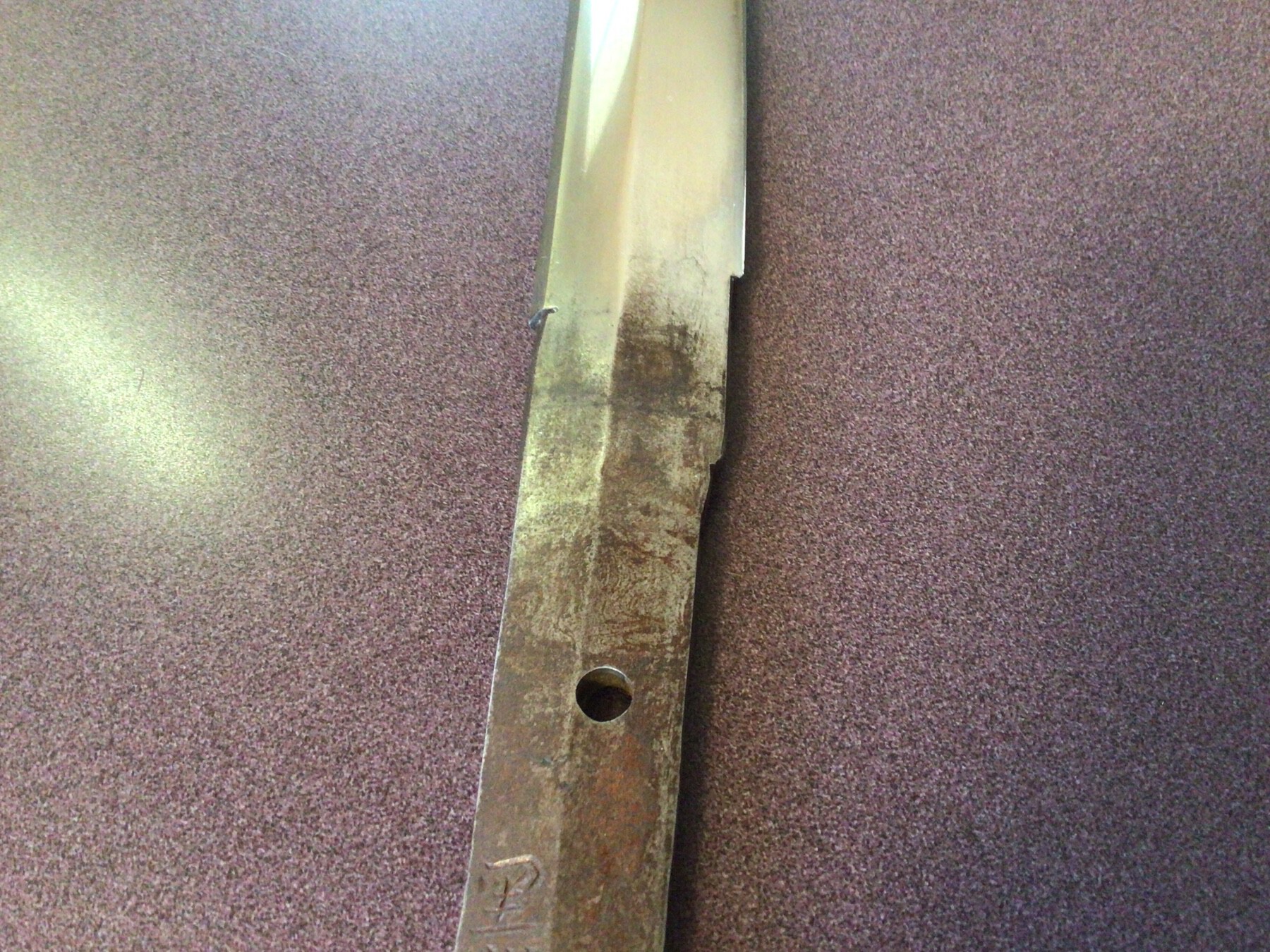
Randy: I'll try to answer some of your questions. But first, take a look at the two pics. Notice a few things: 1) the nakago is the wrong shape (of course, this could have happened with the violent alteration) 2) the offset line between the munemachi and hamachi is classic Chinese. Could this have been done as a result of the alteration? Sure, however a Japanese craftsman would not do it this way. 3) the writing is spaced too far apart and not artistic enough, in my opinion. Usually happens when a non-Japanese speaker is writing it. 4) notice how the bohi almost runs off of the kissaki. Again, not typically Japanese. * one reason to use a fake signature of an unknown smith is because it's difficult to verify that it's fake. Signed pieces go for more money than mumei pieces, generally. * I'm not sure the alterations have anything to do with the deception. Most likely someone was messing around with it to make it fit into whatever mounts they had; whether or not it was Japanese. * making fake patina is super simple these days. I make wood art that incorporates multi-colored patinas using chemicals on silver and gold-tone gilding like barium sulfide, pot ash, and a few others. Even vinegar and salt with a little sunshine can patina copper in a few minutes, nevermind the comercial products available. Note sure exactly what the sword is without hamon details. But the preponderance of the evidence suggests either not Japanese or used to be Japanese until someone destroyed it. John C.

-
You mean that your pieces were papered to be 琉球漆? I wonder if you mind sharing the kantei results as this is quite educational. I am still a newbie learning tosogu history and I just have not heard that there was a school applying this technique in 琉球. Many thanks.
-
Brian, I agree - I wasn't questioning that it was not lacquer, but it was not 琉球 lacquer. It was a common technique to use MOP on lacquer, but the only school I know that used it on tsuba is the 杣田 school, which wasn't based in 琉球. Sorry for not being clear in my original reply. 琉球漆, or what Colin referred to as Ryukyu lacquer, specifically refers to the lacquerware made in the 琉球 area, the place today known as Okinawa. I have some personal interests in lacquer and failed to find the hallmarks to connect the tsuba shown in the video with 琉球漆, so I wonder if Colin would share his deduction.
-

Seeking ID and additional info help for Tachi sword
Corsairisen replied to Corsairisen's topic in Nihonto
Kisumu =Kizu. Really don’t like spellcheck. -
I’ve owned several pieces including a tsuba and fuchi kashira and koro stand.
-
Seeking ID and additional info help for Tachi sword
Corsairisen replied to Corsairisen's topic in Nihonto
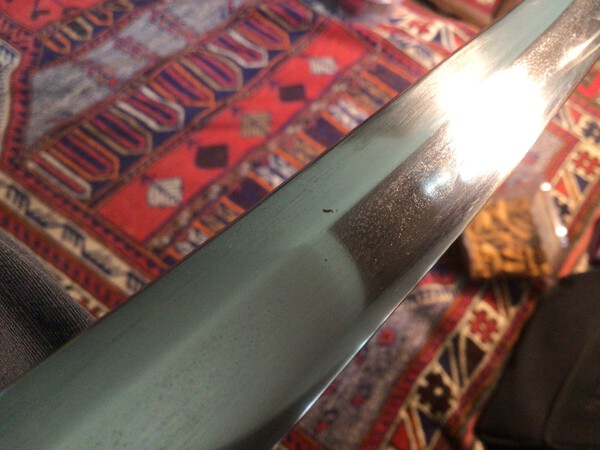
Sorry, forgot to mention I see one kisumu on the blade. It is about a millimeter in width, and maybe a a couple of microns deep. Looks much bigger in photo due to magnification. Not sure what magnification. I used the objective lens from a broken pair of binoculars.
-
Seeking ID and additional info help for Tachi sword
Corsairisen replied to Corsairisen's topic in Nihonto
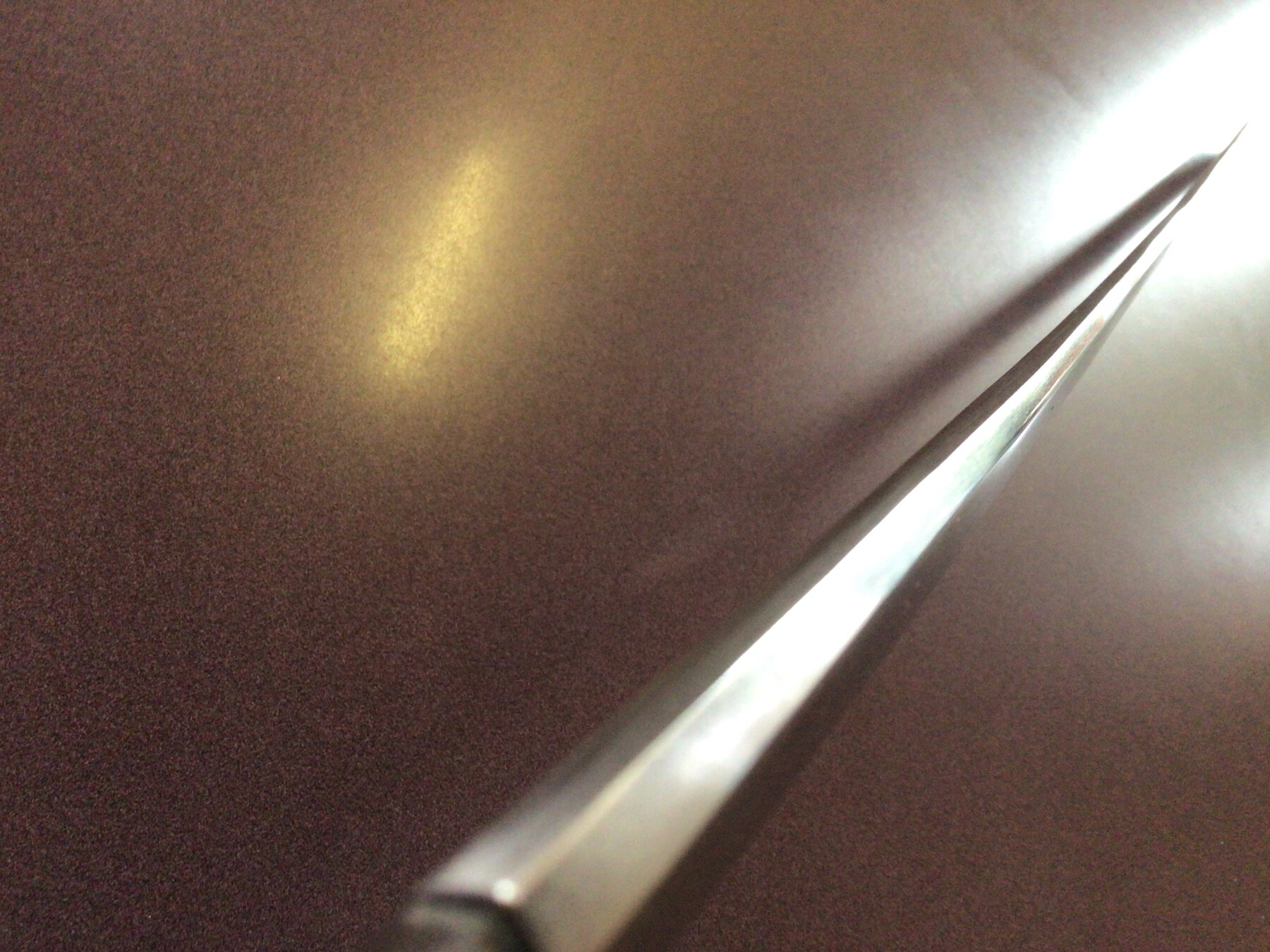
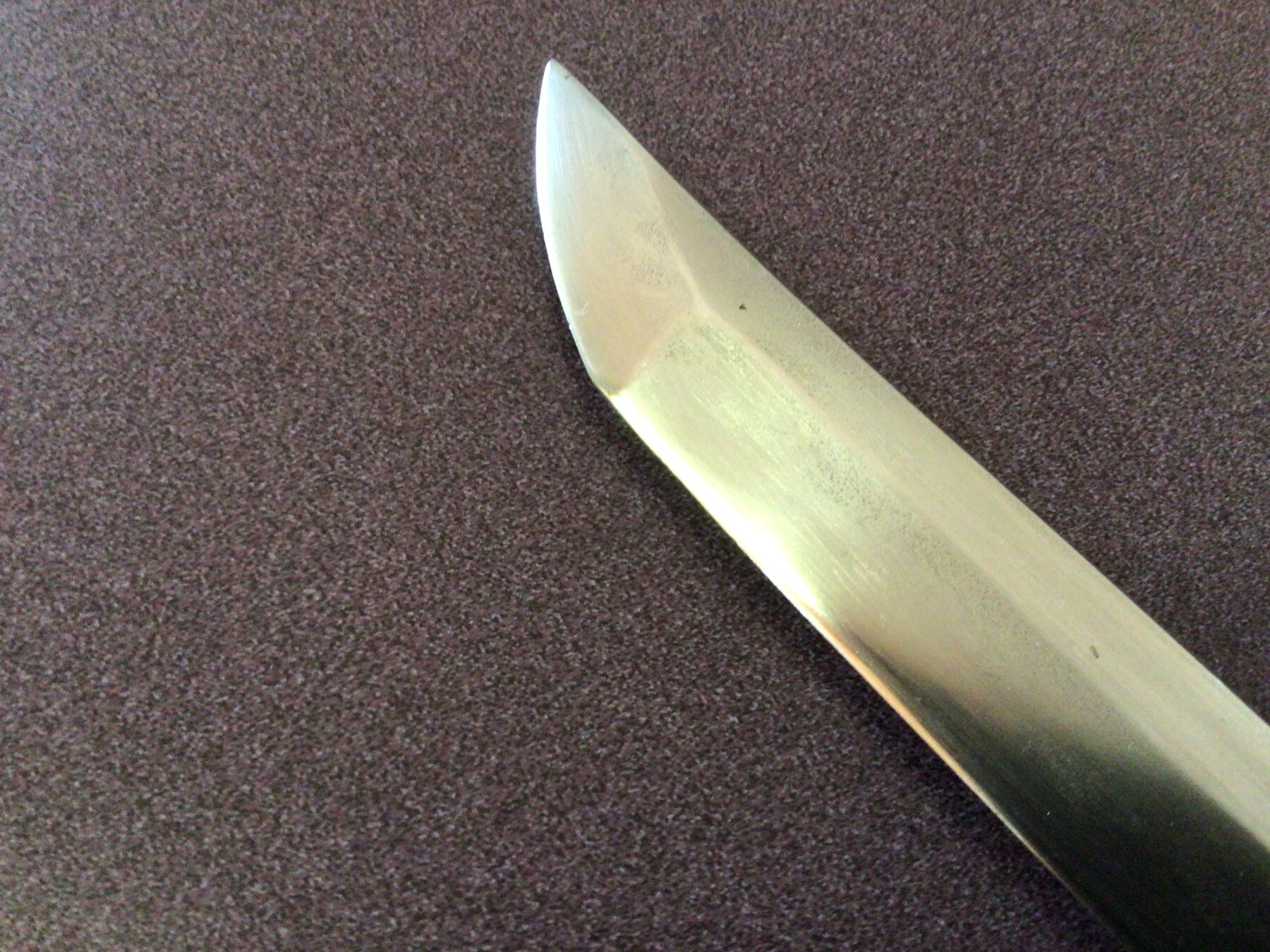
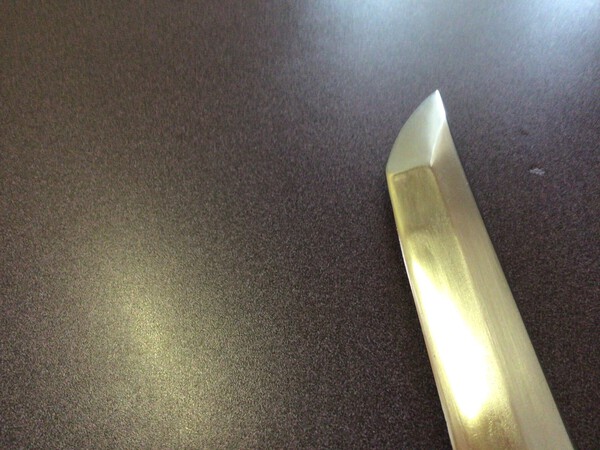
Magnified view of the hamon and showing slight concave indent (on both sides of blade) right before the kissaki. Meant to add these last week but has been Esperanto busy at work and home. Thank to everyone, again, for any info you can offer! Hope you all have a good Holiday and New Year!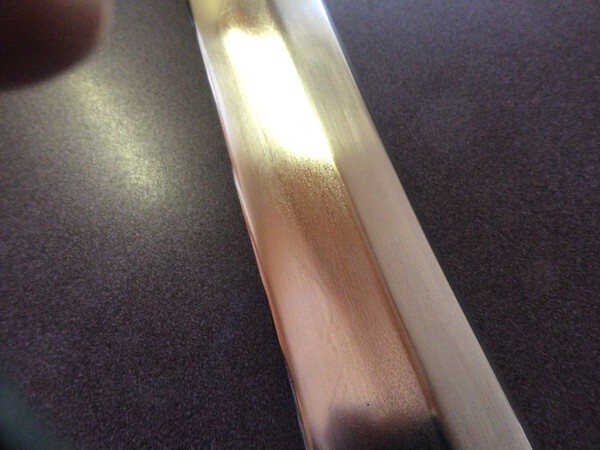
-
Seeking ID and additional info help for Tachi sword
Corsairisen replied to Corsairisen's topic in Nihonto
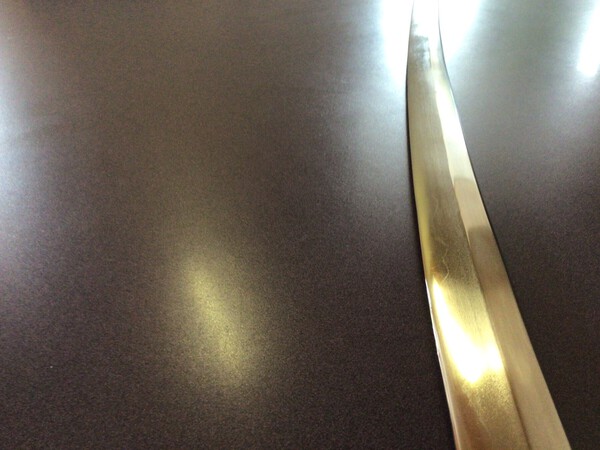
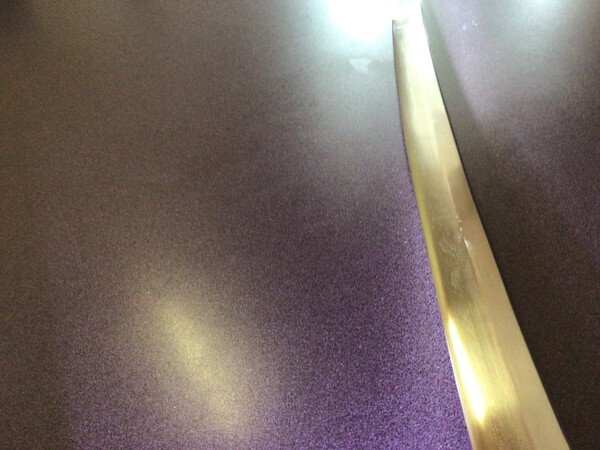
-
Seeking ID and additional info help for Tachi sword
Corsairisen replied to Corsairisen's topic in Nihonto


-
Charlie, I think Colin is correct. The MOP isn't inlayed into the metal, the base is lacquer over the iron, and the MOP is put into that. Still maazing craftsmanship, but they are putting the designs on lacquer with a clear coating to smooth it out, and not cutting out the shapes in the metal and putting the MOP in.
-
Seeking ID and additional info help for Tachi sword
Corsairisen replied to Corsairisen's topic in Nihonto
Can’t really see it here, but just below the curvature at the very tip of the sword There is a concave dimpling on both sides of blade. Looks like it was made for potentially improving ability to penetrate when used with a stabbing motion

-
Seeking ID and additional info help for Tachi sword
Corsairisen replied to Corsairisen's topic in Nihonto
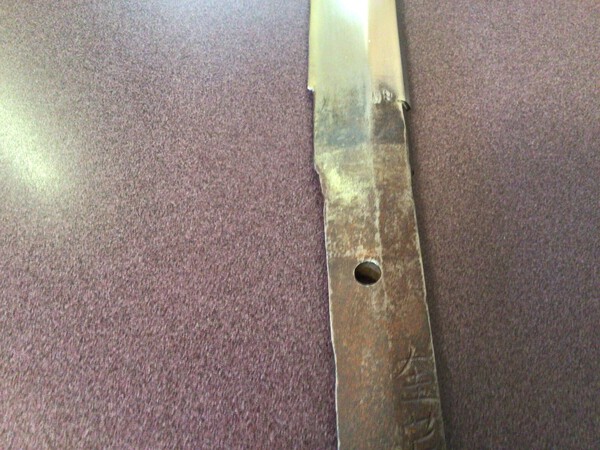

-
Seeking ID and additional info help for Tachi sword
Corsairisen replied to Corsairisen's topic in Nihonto


-
Not sure from what you deduced that this is 琉球 lacquer. The school famous for applying 螺鈿(https://en.wikipedia.org/wiki/Raden) on tsuba shall be the 杣田 school, which was employed by the 富山藩 (https://en.wikipedia.org/wiki/Toyama_Domain). I am actually not aware of any tosogu industry in 琉球 in the edo era, and it would be great if you could let me know your rationale. Thanks. Just to add a wikipedia https://ja.wikipedia.org/wiki/七宝紋
-
Seeking ID and additional info help for Tachi sword
Corsairisen replied to Corsairisen's topic in Nihonto
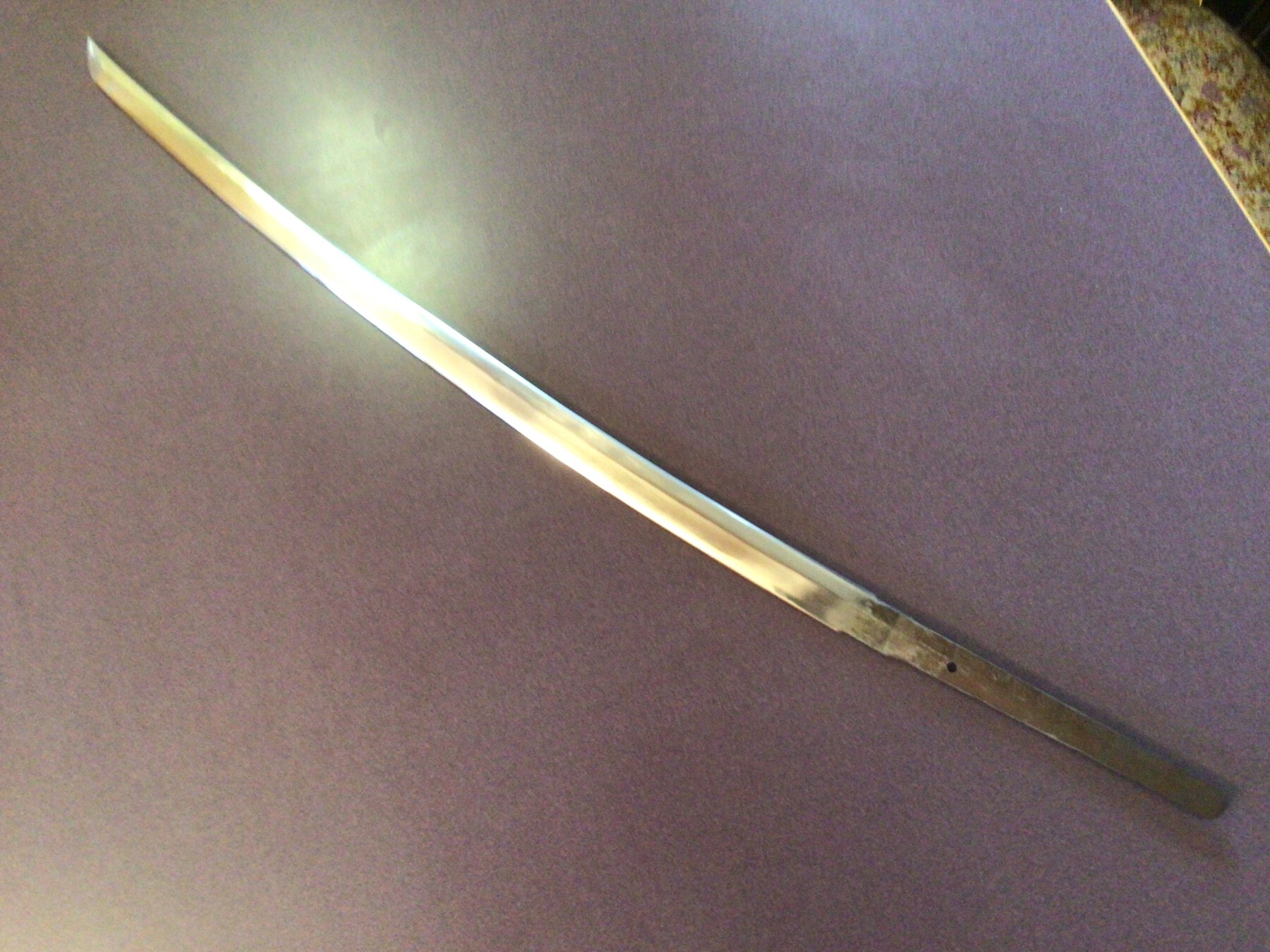
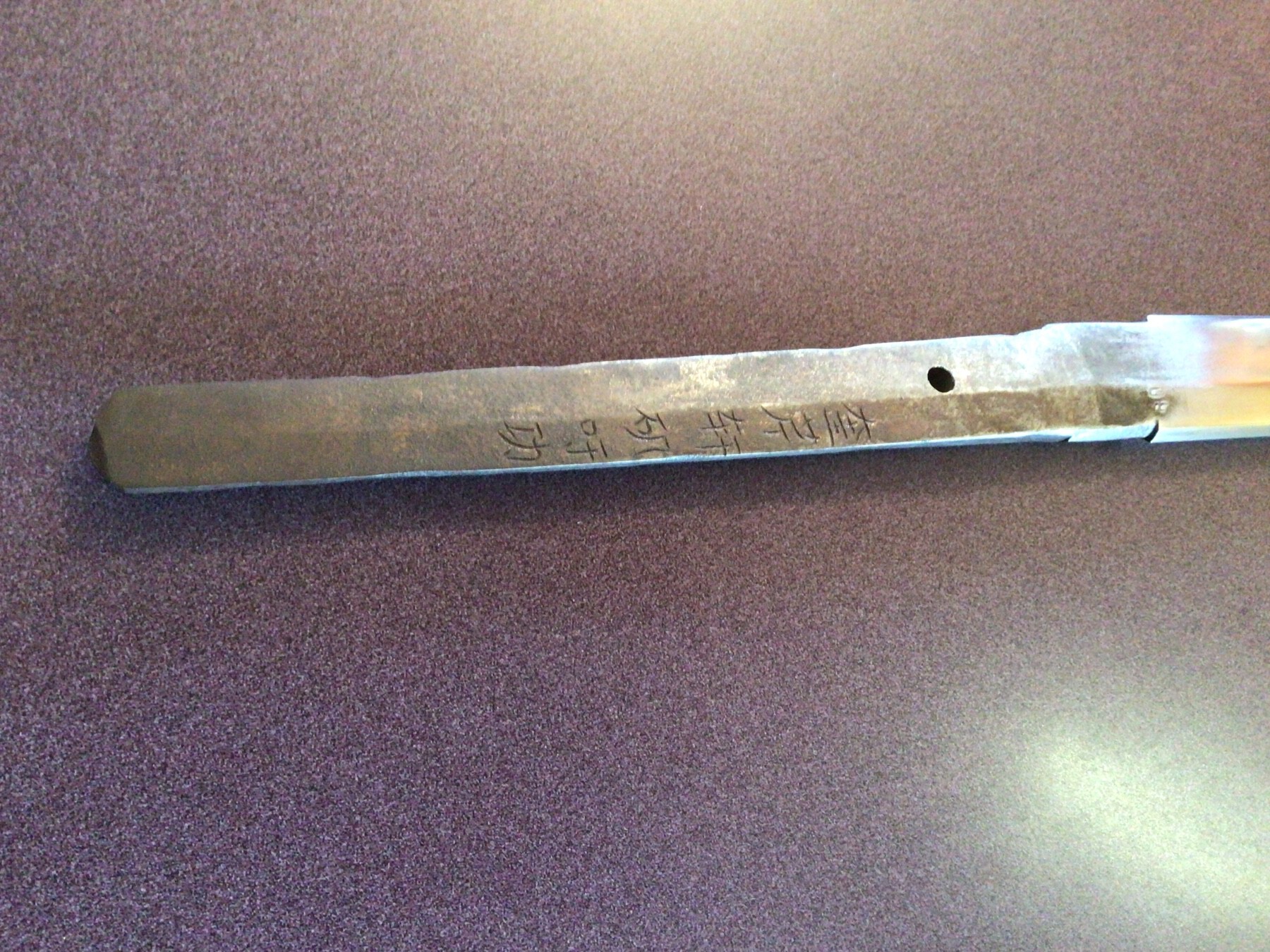
Truly appreciate all the responses. Really interesting info from which I learned a lot. If you all would please indulge me, I’ll post some more photos to see what you think and hopefully come to a resolution. Especially since initial post had limited information and photos to work with. The deal with this sword is it in many ways shows such quality in manufacturing, detail, and signs of patination that in a lot of ways it doesn’t make sense unless the blade was modified at some point. While I initially stated this was purchased about 10 years ago, time flies, and when I looked into it found it was acquired closer to 25 to 30 years ago and for not a particularly large amount. I bought it at auction and believe it was for something like $300 USD. However the auction purchase left me with no clue as to the previous history other than some heavily used military mounts. If I look at the mune, it precisely crafted and filed. The blade with regard to period and specs matches Tachi. Mei is on the correct left side for this type of sword. Blade overall is nicely filed and formed. Handling wise, it seems purposely made in weight, balance, and length for cavalry use. Enough weight that it would cut through dense material, yet also well balanced. Original length, before what I believe to be a reduction in length also seems appropriate, with to some extent taking into account people from period would be slightly shorter than contemporary adults of Asian decent. Seems to have a difference in the patina on nakago where it was shortened. Kanji also suggests an archaic use of language and certainly use of characters from the pre-simplified Japanese timeframe. Temper wise, I am pretty positive is of clad and deferentially tempered steel. When I first acquired the sword, the surface had active oxidation on the softer steel yet the edge temper line showed a much harder and denser surface with no oxidation or active rust. The finish / polish on blade is IMHO a little strange, the overall curvature of the surface is nicely done with a matching convex surface on both sides of the cutting edge, but along the length shows a wave where it appears to have been put into use without regard to completely finishing, but was still in a condition where it would serve its intended purpose (hold an edge and cut) and assumed this was a result of being in a time of war and form following function, thus anything that didn’t directly affect use might be omitted. Overall, is attractive and appears to be a well crafted sword that someone spent a huge amount of time in making. Before getting to the pics, I do have a few questions: 1) If the signature is forged, Why not go with a known sword smith? Would they be knowledgeable enough to put the mei on the left side of a Tachi style (assuming the sword is Tachi style) 2) The sword shows a huge amount of work and craftsmanship, how can this be economically viable? 3) Would they really cut-down the blade to deceive? Wouldn’t a sword in pristine cond. be worth more, forgery, or not? 4) Same as above for the “09” stamp. Why not go got a sword that matches the correct period vs. forging one that has been altered and thus reducing value? 5) making fake patinas is typically not easy and one of the most frequently used aspects to discern forgeries, there appears to be two patinas on the nakago, one from the original length and one from post shortening of the length. It just seems like anyone with this much talent could make a more profitable honest living / would they really go to these lengths to forge (pun not intended but appreciated) a sword that is damaged? Anyway, while I have traded in art and antiquities for about 50 some years and thus have a pretty good eye for quality vs. knock-offs and old vs. new. I am, though, not an expert on Japanese swords and welcome any insight you are generous enough to offer. Unfortunately, despite spending a number of hours trying to decrease the pixel count on photos so I could load on one page, I could not find a way to do it with the iteration of IPad I am using. Please excuse the multiple pages of photos…assuming I can get them to load at all😕. Thank you, again, and please let me know if anything is needed from this side of things. Really appreciate the help and hope the info and discussion benefits all involved and/or who have an interest in the topic.

-
I was thinking about the importance of the Hizen school the other day and had the thought that perhaps the Hizen school could be considered in at least some way, the rebirth and continuation of Rai. This comes from the idea that Umetada Myōju counted himself as the direct 25th lineage of Sanjo Munechika and the idea that Tadayoshi settled on an overall signature forging style that pays homage to Rai. Plus the school delivers a very similar approach in terms of industry. Sanjo -> Awataguchi -> Rai -> ...? -> Umetada Myōju -> Hizen basically. The larger question I would like to know is who exactly was Umetada Myōju's teacher? Dude was super skilled and prolific but basically no record that I can find of his teacher...
-

Questions about shipping high value items to auction houses.
Mark replied to Paul Godfrey's topic in Nihonto
maybe the auction house has coverage? When i send a sword i had completed the "paperwork" in advance and they sent me shipping label/instructions and it was covered by them as it was already "under contract" -

Questions about shipping high value items to auction houses.
atm replied to Paul Godfrey's topic in Nihonto
When shipping in the United States, USPS Registered Mail is best for high value items up to $50,000. It is slow but secure, as the package is signed for each time it is handed off internally and it is held in a secured area while waiting for the next leg of the journey. And the insurance is relatively inexpensive. Otherwise, I insure collectible items using a special policy (like this) that covers items in transit, and I ship them UPS Next Day Air to minimize the item they are in the UPS system.