Bruce Pennington Posted May 10 Report Posted May 10 *Note to self - don't automatically assume poorly aligned diamonds in ito means poor post-war re-wrap* Good eye, John. Quote
Nazar Posted May 12 Report Posted May 12 From the local internet auction. Dated by August 10, 1914 if I read the date right. 2 Quote
Hiro Posted May 12 Report Posted May 12 (edited) ↑ It’s photographed very beautifully! The text in the first image reads: “MAINICHIKEN” (毎日軒) (Address: )Osaka Sennichimae大阪千日前, just west of Nankai-dōri南海通西入. (This would be south of Osaka Castle, around the present-day Namba Station area.) when I hear the word ‘ken’ (軒) today, I tend to think of a restaurant, but at that time it may actually have been the name of a photography studio. The third image reads: 大正3年8月15日 August 15, Taishō 3 (1914) 歩兵 第8総隊 Infantry 8th Regiment Headquarters 陸軍中尉 服装 Imperial Japanese Army First Lieutenant’s Uniform (NAME)瀧澤繁信 Takizawa Shigenobu I think August 15 would have been a holiday period back then as well (the Obon season). I wonder whether the photography studio was open…? Edited May 12 by Hiro 3 1 Quote
Hiro Posted May 13 Report Posted May 13 I’m amazed that photographs from the Taishō era could survive in such beautiful condition. Thank you very much for sharing them here! 2 Quote
Hiro Posted May 13 Report Posted May 13 (edited) I would like to make a partial correction. I previously translated 「聡隊」 as “総隊,” but in the military organizational terminology of that period, they may have referred to different units.These were probably pronounced the same (sōtai). “Sōtai” (聡隊) is said to have been a colloquial designation or unit title referring to an internal formation within an infantry regiment, particularly a battalion-level unit. Rather than forcing an uncertain translation, I would prefer to leave the term untranslated and defer to those with greater expertise in historical military terminology. Edited May 13 by Hiro 2 1 Quote
Nazar Posted May 18 Report Posted May 18 Hiro, thank you once more for your explanations. They inspired me to buy this photo. It's indeed in the most excellent condition, especially if one takes into account its age. I have no scanner, so I shot photos of it as best as I could. Here they are (made them 1200x1800 pixels). Quote
Scogg Posted May 26 Report Posted May 26 34 minutes ago, Krzysio said: Very interesting to see a Type 95 sword without sarute. I see them this way in the market very often, but kind of assumed that they had been removed relatively recently. Looks like a Tokyo example. Thanks for sharing, Best, -Sam 3 Quote
Nazar Posted May 27 Report Posted May 27 Another interesting practice: sarute positioned to the mune side of the sword. 2 Quote
Bruce Pennington Posted May 27 Report Posted May 27 Interesting, Kris! This guy is a Sergeant Major: 2 1 Quote
PNSSHOGUN Posted June 18 Report Posted June 18 Portrait of Tojo Hideki with his special Gunto, this is the same sword now in the MacArthur Museum. 5 1 Quote
The Blacksmith Posted June 18 Report Posted June 18 That is an unusually short tsuka On Tojo's sword? I presume it is a katana and not a wakizashi? Quote
eternal_newbie Posted June 18 Report Posted June 18 9 minutes ago, The Blacksmith said: That is an unusually short tsuka On Tojo's sword? I presume it is a katana and not a wakizashi? Or forged as katateuchi 1 Quote
The Blacksmith Posted June 18 Report Posted June 18 Would that also not mean that is was perhaps a wakizashi? 1 Quote
eternal_newbie Posted June 18 Report Posted June 18 2 hours ago, The Blacksmith said: Would that also not meant that is was perhaps a wakizashi? Entirely possible, yep. The "official" lengths for katana, wakizashi and tanto are somewhat arbitrary - e.g. there are many swords with nagasa just under 60cm that were intended as katana for a person of smaller stature, and there are wakizashi just over 30cm that were intended for use as large tanto rather than side-swords. 1 Quote
John C Posted June 18 Report Posted June 18 Donated swords could be as short as 54.5cm (21.8 inches). John C. 4 Quote
Bruce Pennington Posted Sunday at 07:12 PM Report Posted Sunday at 07:12 PM This is a cool one posted by @adachi on this Warrelics discussion, You'll notice the ends of the saya are of Type 95 copper handled gunto: "You can look up "Tsingtao City Hall" to see their HQ. I was very lucky to come across a few photos of some of their officers in the field that belonged to one of the probably less than 100 total sailors that served in the HQ. The photos are around 1939 though so I have no idea if Takabata was still with the unit the or not. There is nothing the IJN loved more than rotating officers." Akira Komiya agrees about the saya, but says the officer withe the Sam Brown belt would be an officer or Warrant officer. 1 Quote
Bruce Pennington Posted 17 hours ago Report Posted 17 hours ago Adachi identified the officers as: "Here's a bit better version of the photo. The officer on the right is 1st Combined SNLF Commander Rear Admiral Oshima Shiro (大島四郎). Beside him is his staff, Lt. Hirata Haruo (平田春生). The other staff officer should be Cdr. Nagaya Shigeru (長屋茂). I don't know the other two, the three main possibilities would be the Engineer Cdr. Nakajima Ichiro (中島一郎), Medical Cdr. Sakurai Tokuichi (桜井得一), and Supply Cdr. Owada Tsutomu (大和田勉). Personally I think the officer with the glasses is Sakurai." So an SNLF officer wearing an army Type 95 copper. 2 Quote
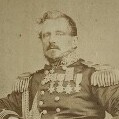
PNSSHOGUN Posted 5 hours ago Report Posted 5 hours ago Lt General Kawata, Tsuchitarō (河田槌太郎) - seen here as a Major General during his command of the Imperial Guards Division in the early 40's. He later went on to command the 31st Division in Burma, a somewhat stark contrast to his subsequent surrender in 1945. 3 Quote

Recommended Posts
Join the conversation
You can post now and register later. If you have an account, sign in now to post with your account.