klee
-
Posts
310 -
Joined
-
Last visited
Content Type
Profiles
Forums
Events
Store
Downloads
Gallery
Everything posted by klee
-
Im not exactly sure of the reason why it was frowned upon. Swords and swordsmithing have always been considered sacred so perhaps the altering of it was considered a bit tabboo. I dont think shinto suriage/osuriage is unattractive most of the time but they certainly stand out and looks obviously altered. We have to also consider that a lot of koto swords were probably suriage in a very short amount of time due to the edict restricting the length of blades during the edo period. Edit: Great article by Mr Sessko as always and basically answers this in his own view which I always trust.
-
Hi @Subayai Kitsune Funny you mention this bc I just came accross this on a Japanese nihonto chanel on youtube and they briefly hit this topic. Based on what the translation said, suriage during the koto period was somewhat frowned upon and a lot of effort was put into shaping the nakago to as close to it s original shape when suriage was done. In shinto times however, suriage of old swords was very much the norm and the nakago was simply cut to fit whatever length.
-
He can be reached via Robert Benson https://togishi.com/index.html
-
yes Woody Hall will do an amazing job with it. He has a very beautiful and unique style thats far better than anything that comes from the dealers in my opinion. It looks like you might only need a shiage togi . You might want to consider a slight kissaki shaping as it looks slightly mishapened but there s really nothing wrong leaving it the way it is. He s the only togishi I ll send my blades to and he has done a number of shiage togi for me. Each blade came back looking like a juyo sword lol


-
@NotANinja Time periods specifically for nihonto can be a little confusing at first since they often dont match the historical time periods. The koto/shinto division is one of them but I ve always stuck with 1600. Historicaly , the nanbokucho perio 1336 - 1392 viewed as a period WITHIN the Muromachi period. ( 1392 - 1573 ) This is very important to avoid mixing up bc the Nanbokucho period is a very specific and separate era in terms of Nihonto. In Nihonto , the Muromachi spans from 1392 - 1600 but this is in direct conflict with historical timelines since the Muromachi period techinically ended in 1573 with Nobunaga dissolving the Ashikaga shogunate and doesnt include the Azuchi Momoyama period. It s very easy to be confused at first with all the discrepancies so I would just strictly stick with the established Nihonto timelines.
-
Hi @nulldevice Awesome project and I hope you keep at it for a long time ! Just some adjuatments I would consider for the schools I follow. The Hokke school is a little confusing but they are an off shoot of Mihara and came about towards the end of Nanbokucho. Some sources list Sukekuni as the founder and some list Ichijo as the founder. Regardless, I think Ichijo should be added as notable smith for the school as well The Ko-Kongohyoe school had some notable smiths but I think Moritaka and most importantly Reisen Sadamori should be there as he has the highest amount of Juyo work The Kongo Hyoe school should also have a post nanbokucho start date. Hope this helps ! -Kevin
-
All that aside, Kai Mihara would be great place to start collecting if you want to focus on Koto ( pre 1600 ) If you love their work, you can delve deeper and expand ur collection to the main Mihara line or explore their other offshoot the Hokke School ( my favorite ) Ko Mihara ( pre 1392 Mihara work ) are very elegant streamlined and generally high quality swords whenever they tend to come on the market. Mihara ( Muromachi ) will carry some of it s Ko predecessors features but will tend to be lower quality . Still very solid swords that can be had for a good price Hokke swords will lose some elegance but their atmosphere is more grand, stout and powerful in my opinion. This is my favorite Mihara branch
-
Most certainly not. Tsubas were swaped based on personal taste of the owner so it s been swapped many many times over time. You sometimes find a koshirae with matching tsuba, fuchi, kashira and menuki but that will cost a lot. People find great joy collecting tsubas even nowdays
-
Kai Mihara is an off shoot of the Mihara school and the smiths were active during the later muromachi period 1500s not 1300s. The original edo listing is based off the kurashiki papers which should be disregarded. Always go with NBTHK attributions
-
It most likely was a repurposed tsuka which happens all the time since the wood , ito ,and samegawa will degrade over time. It is very very rare to find a sword with old custom made fittings. When it was replaced might be next impossible determine. Might have been done recently by a dealer/previous owner or over 100+ years ago. Samegawa issues are also very common in old fittings since they are organic and degrade much faster than other fitting materials
-
Thank again @Jussi Ekholm 🙏🙏🙏 And yes @flemming dated this sword to the 1409 Moritaka so you are probably correct on your assumption. I almost passed on this sword bc I was looking for an Ubu katana with the sotoba gata but the inclusion of the school name in the mei felt very unusual so I went for it. I had no idea how rare it was among Kongo Hyoe swords
-
Believe it or not it s not a major procedure. I thought the same when I inquired about having one of my sword adjusted and was quoted $300 plus shipping. Im sure it varies case by case but your situation isnt much different than mine
-
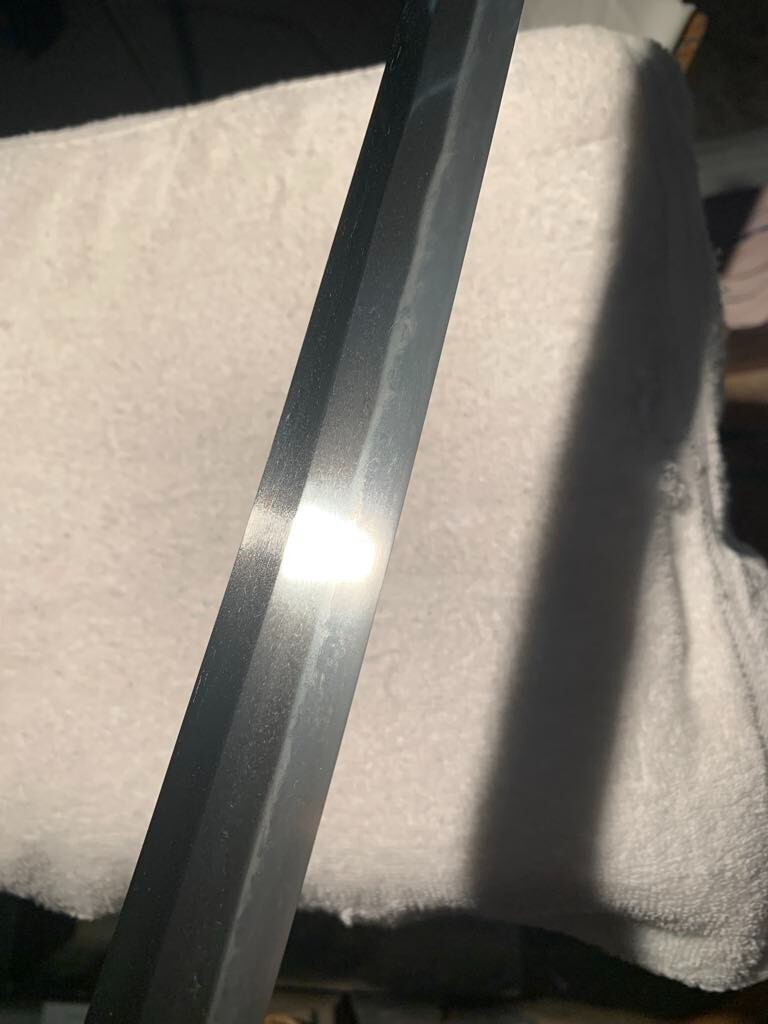
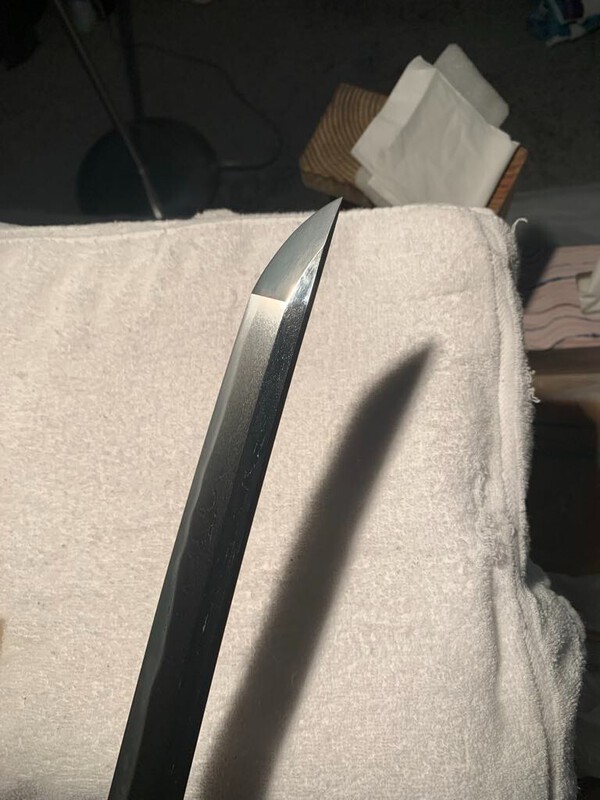
I agree with @Lewis B. lookslike some slight repair was made but I dont think it s an issue at all. It s a very pretty Mihara blade at a very good price. Their swords tends to have a thin boshi by default so I thought it was a great idea to check it out closely. If you love the blade, you can send it to a polisher at a later time and fix the geometry if it bothers you. The ko shinogi needs to be pulled back slightly to match the width of the mitzukado line. This does not affect the boshi or the overall length
-
Hi @Jussi Ekholm this is a pretty amazing and insane piece of work you have here and I cant believe im just coming around to reading it. I wanted to make sure im reading this correctly. I own the sword circled in red and based on the document, this is the ONLY signed katana by Moritaka pre 1450 that you ve come across ??? Seemed kind of insane and cool to me if that is the case Thank you as always - Kevin

-
Late Kamakura Tachi (Katana) - Help for verifying descriptions and attribution
klee replied to Longbow1464's topic in Nihonto
Im not good at analyzing small details but that hamon definitely doesnt seem kamakura Senjuin at all -
Thenk you @Jussi Ekholm and @Rivkin for the insight as always. This is the sword I was interested in https://shop.nihontou.jp/products/detail/31638 Checks all the boxes from what I can tell. I dont like the hi situation however. The way its on one side of the tang and not the other. Maybe added later and they wanted to preserve the signature. The signature looks ok but I ve always thought Moritaka and Kongo Hyoe in general signed down the middle. Not to the side
-
"The NBTHK hozon paper identifies it as Kai Mihara, while the Kurashiki Museum paper attributes it to the second-generation Nanki Shigekuni" NBTHK attributed it to Kai Mihara I would disregard the Kurashiki papers
-
The NBTHK attributed them to Kai Mihara. This school was active during the Muromachi period. Yes when the kissaki is reshaped, the boshi is often reduced in places and you always want to make sure that it is clearly visible
-
https://www.toukenkomachi.com/index_en_tachi&katana_A030925.html Here is another good one that is slightlly cheaper ( also shorter ) and mounting . Has a brand new NBTHK from May 2025 . The NBTHK attributed it to the Kai Mihara school . I would disregard the Kurashiki museum paper. Kai mihara is a very good school in my opinion but check with Tsukada san ( owner ) and ask for more photos of the kissaki/Boshi. It could be just the angle of the photograph but looks like it could have been reshaped. This is not an issue at all most of the time as swords were repaired often but you want to make sure there is no problem with the boshi
-
@Rhizosphere it says on the listing under' Attachment ' that it has NBTHK Hozon papers. At 350,000 yen ( about $2200 ) and aafter shipping , tarrif etc, it will probably be about $2600 give or take. Not bad at all for what you are getting
-
An interesting piece in that price range. At 58cm it is technically a wakizashi but this is a Katate-Uchi ( single handed ) katana which became a staple of Muromachi warfare https://www.toukenkomachi.com/index_en_tachi&katana_A041123.html
-
Unfortunately, a papered, full polish, near flawless Hizent To for around $2000 might be a bit unrealistic
-
I am 1000% wrong bc the hamon doesnt match but the 1st one that popped into my mind bc of similar sugata I ve seen was Chiyozuru. That that is my guess in the spirit of participation lol Nanbokucho Chiyozuru
-
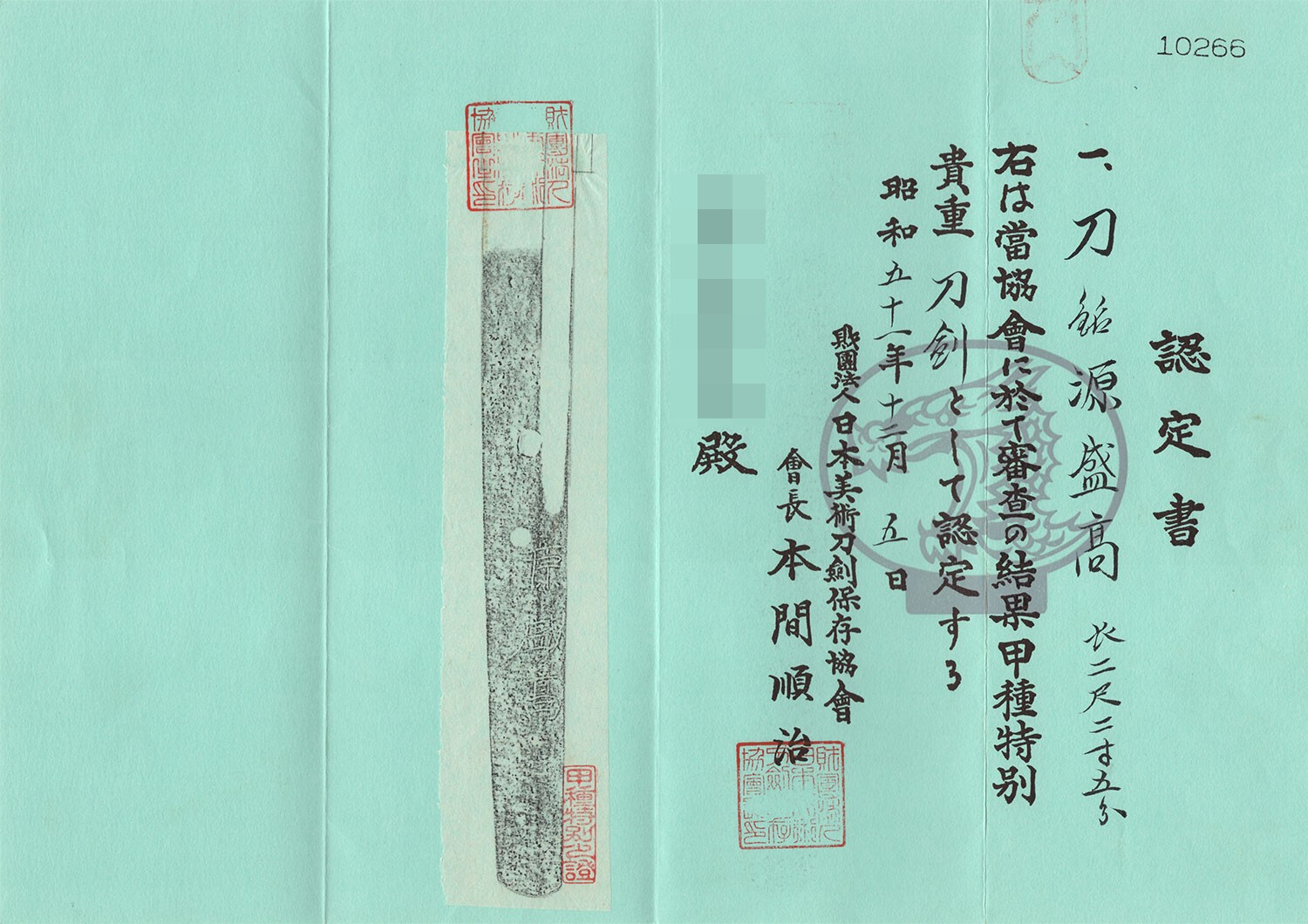
Good evening I know it s common knowledge that the green papers ( Tokubetsu kicho ) have pretty much zero value now but where the blue papers ( Koshu Tokubetsu Kicho ) affected as well ? Havent really come across these and I know they are uncommon
-
I am biased bc I enjoy sue bizen but there is a papered, signed, dated Sukesada for under 3000 usd in the for sale section if you want muromachi I would never in million years spend $2000+ on a green paperer wak over something like that