.png.109da69f50d2b8856e823a9916a8b657.png)
Jake6500
-
Posts
632 -
Joined
-
Last visited
-
Days Won
7
Content Type
Profiles
Forums
Events
Store
Downloads
Gallery
Everything posted by Jake6500
-
This one is an amazing piece Viktor. Jiryuken Terumitsu appears to have been a student of both Yokoya and Omori schools... Both Ichinomiya and Yokoya emerge as "new schools" from the Goto tradition in the West and East respectively and used similar techniques so it can sometimes be hard to distinguish them... I think Yokoya school is also a distinct possibility.
-
Mentioned above already, but I think it might be Ichinomiya school. The Gold pattern on the robe, thickness of the limbs and style of the fingers, etc. remind me of Ichinomiya school. The theme of Shennong (good job team, I honestly never would have guessed it) also seems to match the type of theme one might expect from the school as the Ichinomiya school seem to have been big on Chinese history mythology and folklore motifs... But I'm interested to see what other more experienced posters think. After all I am basically just an overly active newbie on the forum...
-
Wow Geraint! That helps heaps! I can basically confirm the two Ichinomiya pieces at minimum were in fact in that auction lot. It is possible that the Uji River piece refers to one of the Hamano style pieces, however it may also be that those two have different origins despite coming from the same collector. Thanks for posting these catalogue descriptions! They could well be gimei given that Hamano Naoyuki was a big name. Keep in mind though that my pictures aren't the best. They definitely all look nicer in hand! I got each of these pretty cheap (roughly 60,000 yen per piece) so I think based on the quality alone they were a good deal. I have a 5th and final piece that was (a LOT) more expensive on its way so stay tuned for a separate thread about that when it arrives...
-
Can't say with 100% certainty but this one gives me an Ichinomiya vibe and strongly reminds me of a recent fuchigashira acquisition of mine... No idea about the theme though
-
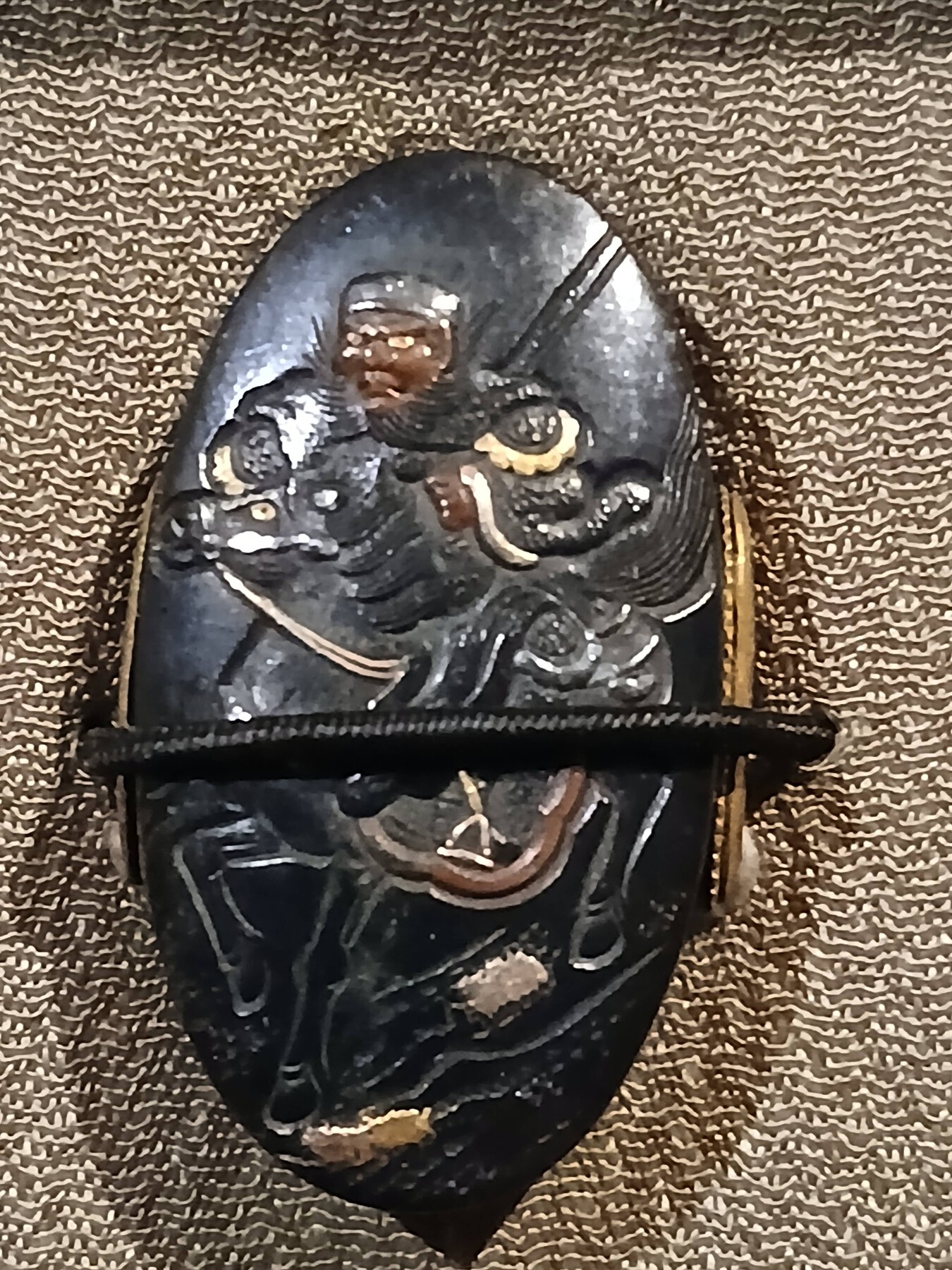
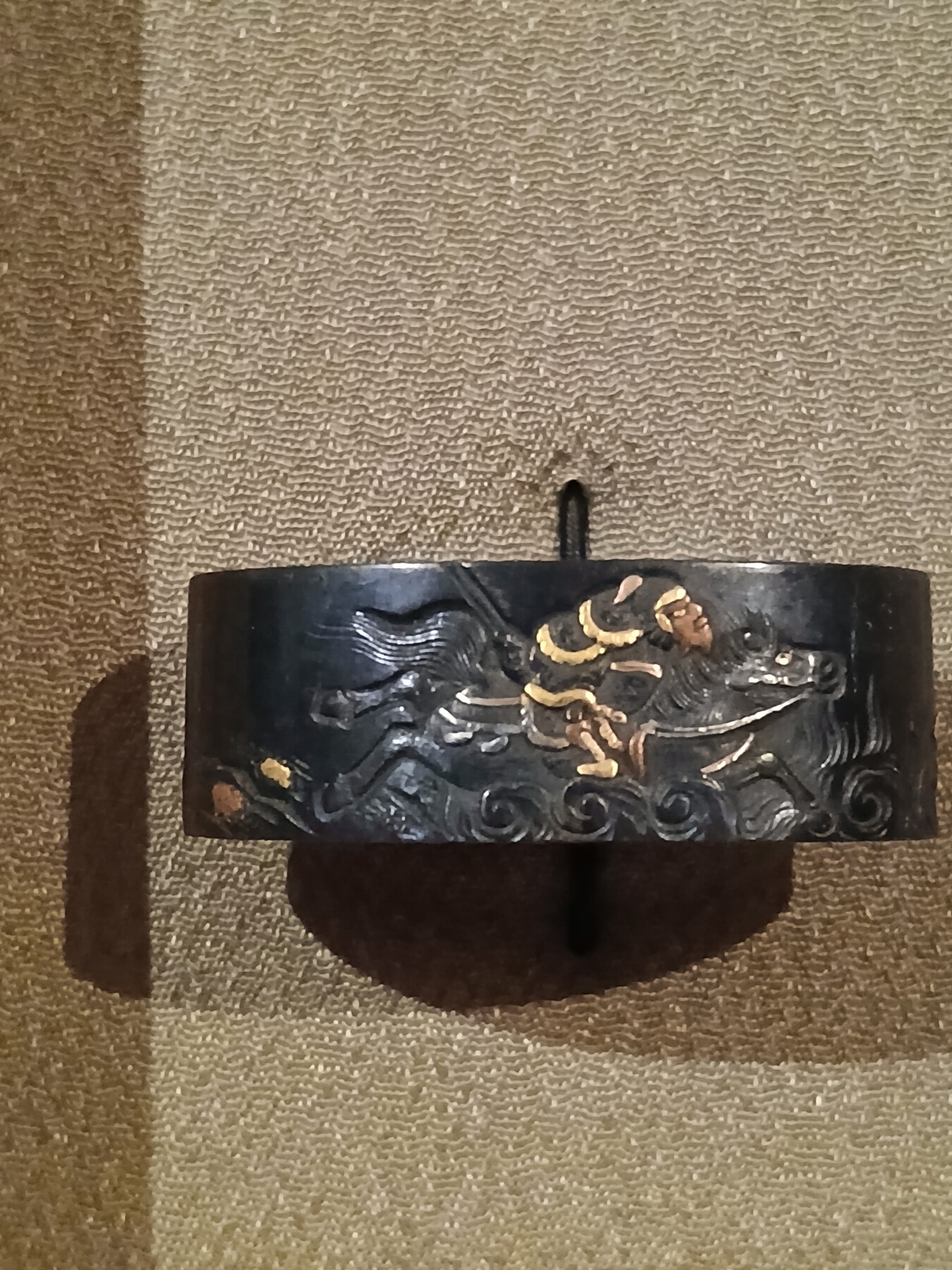
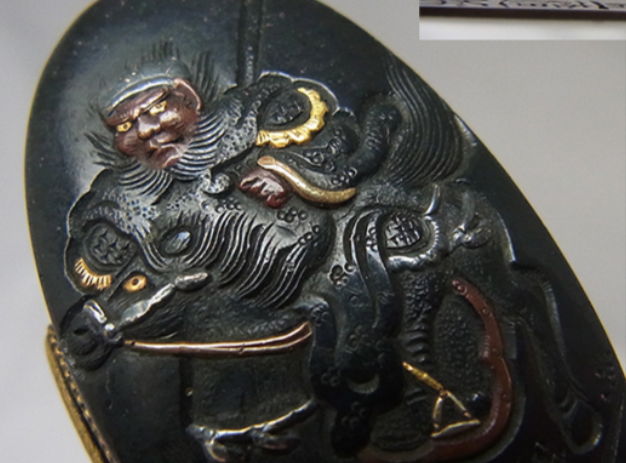
Last but not least, when it comes to my favourite from this set it's between the first Hamano piece I posted and this Taigong Wang design and I can't decide which I like most...
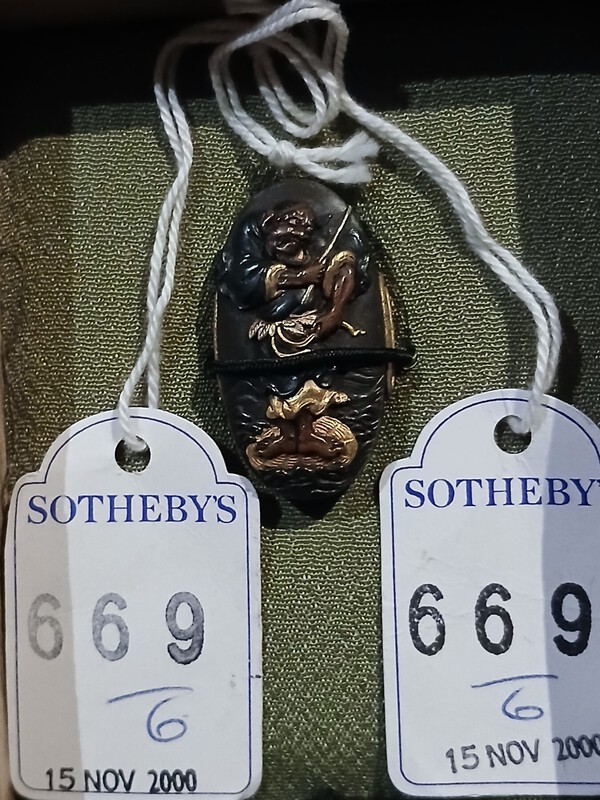
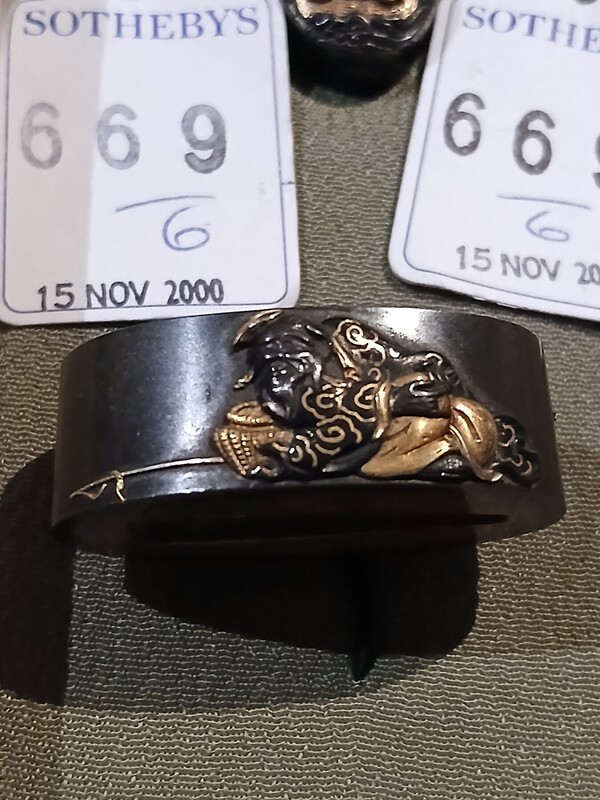
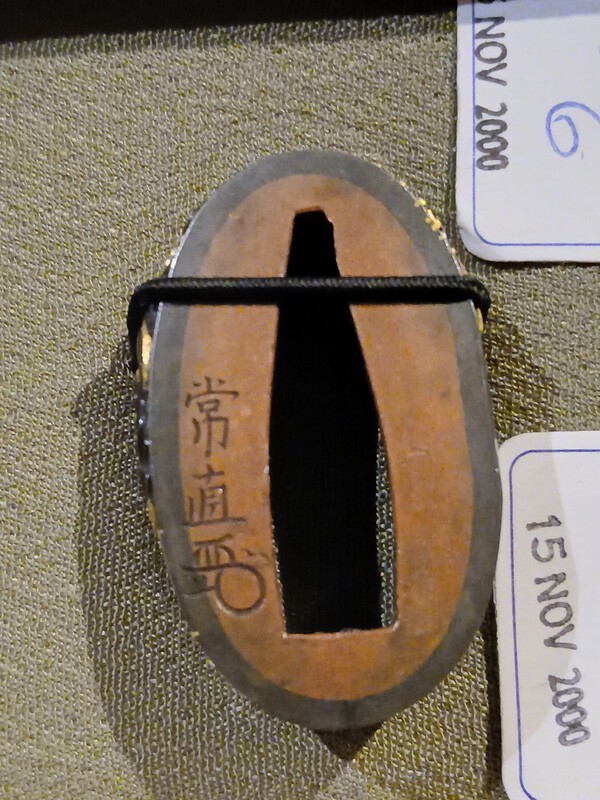
-
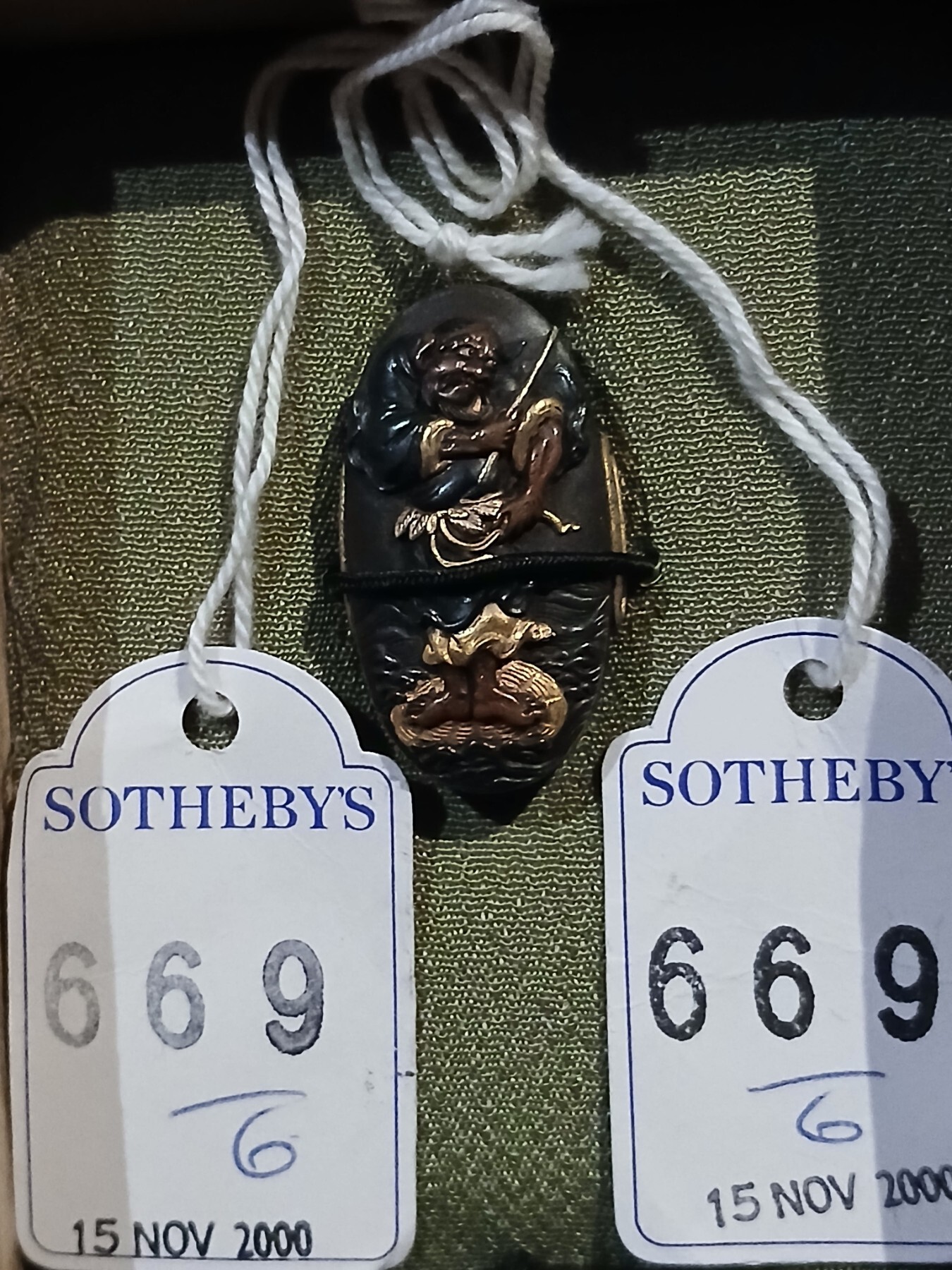
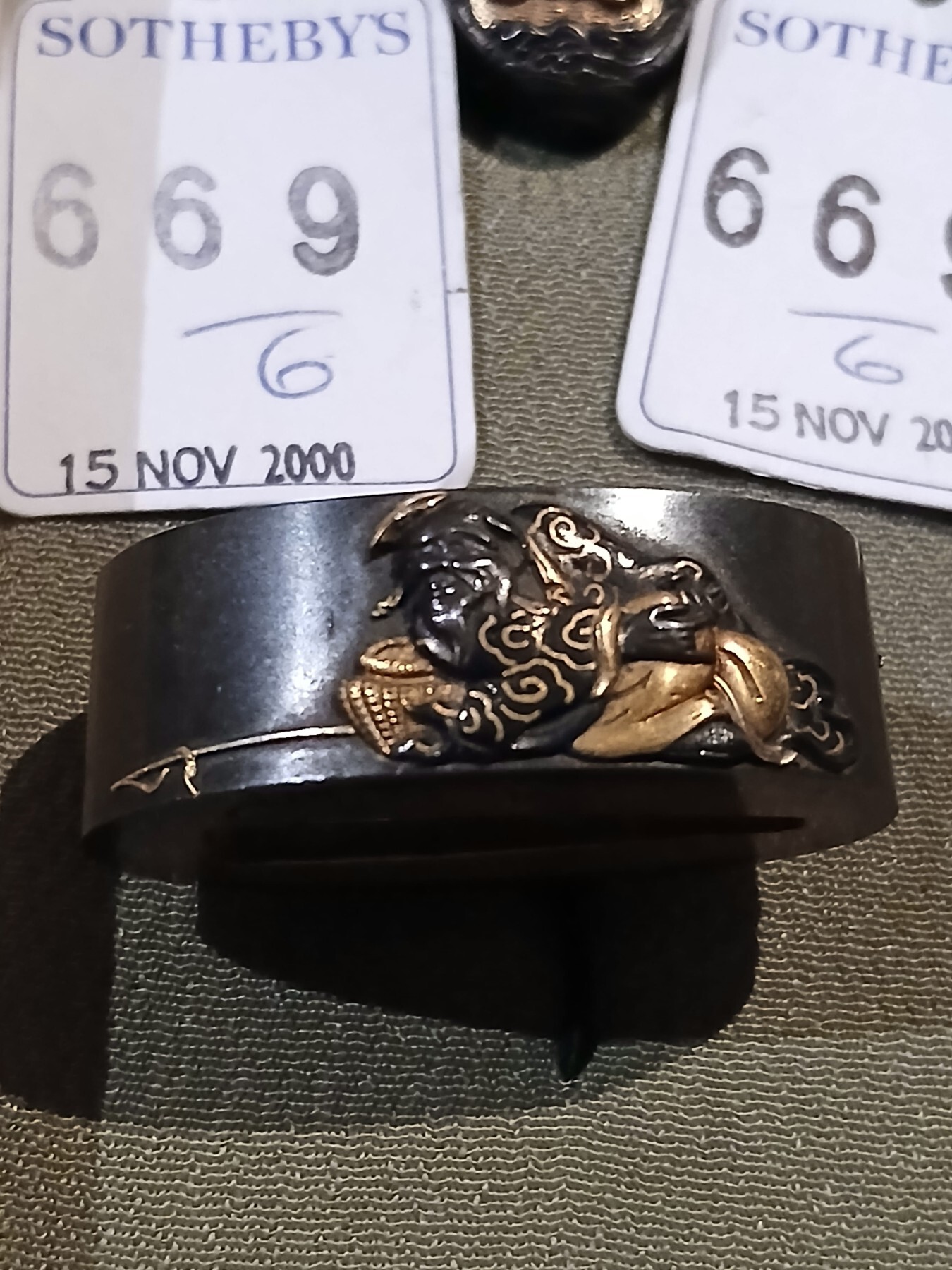
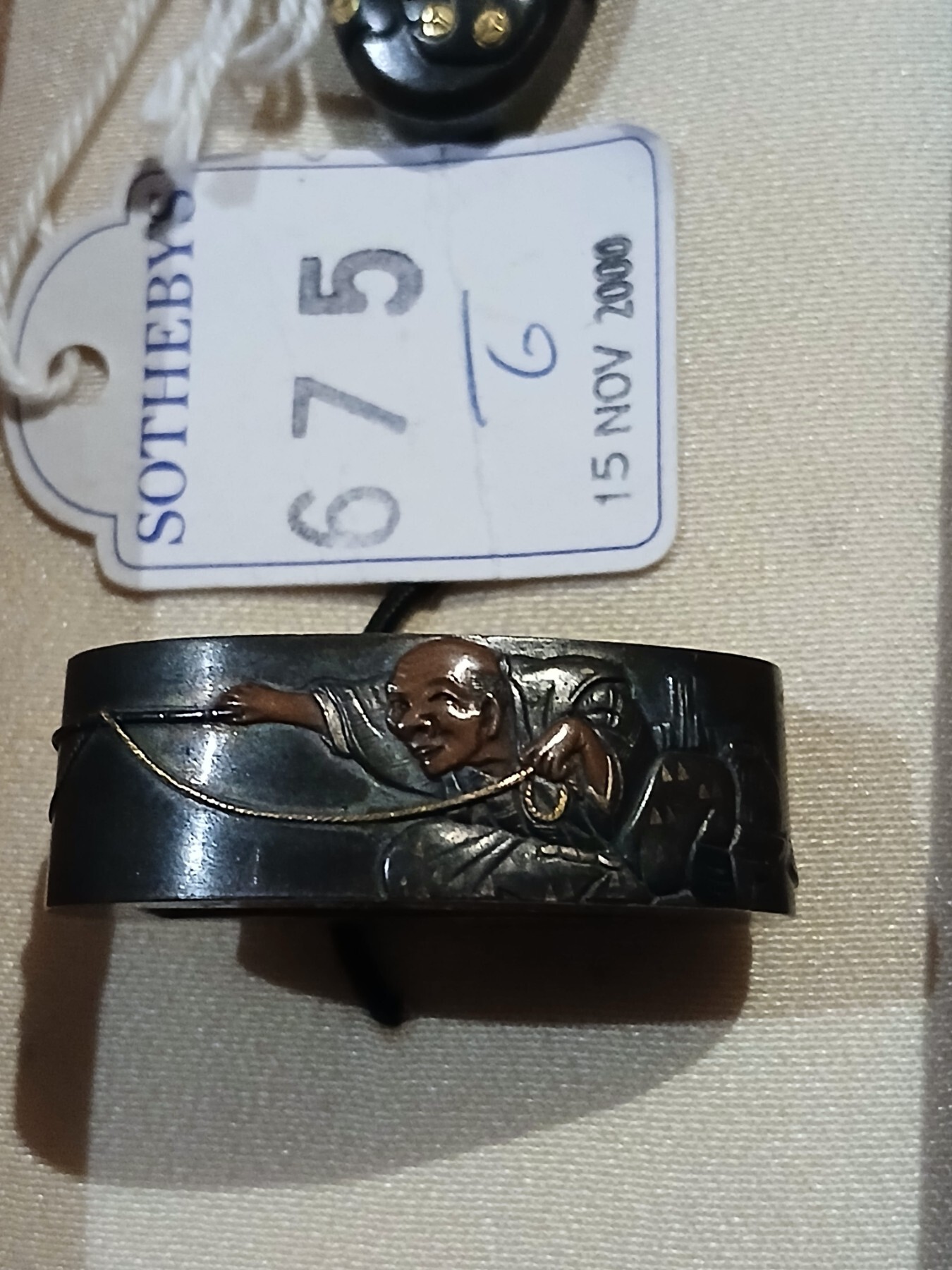
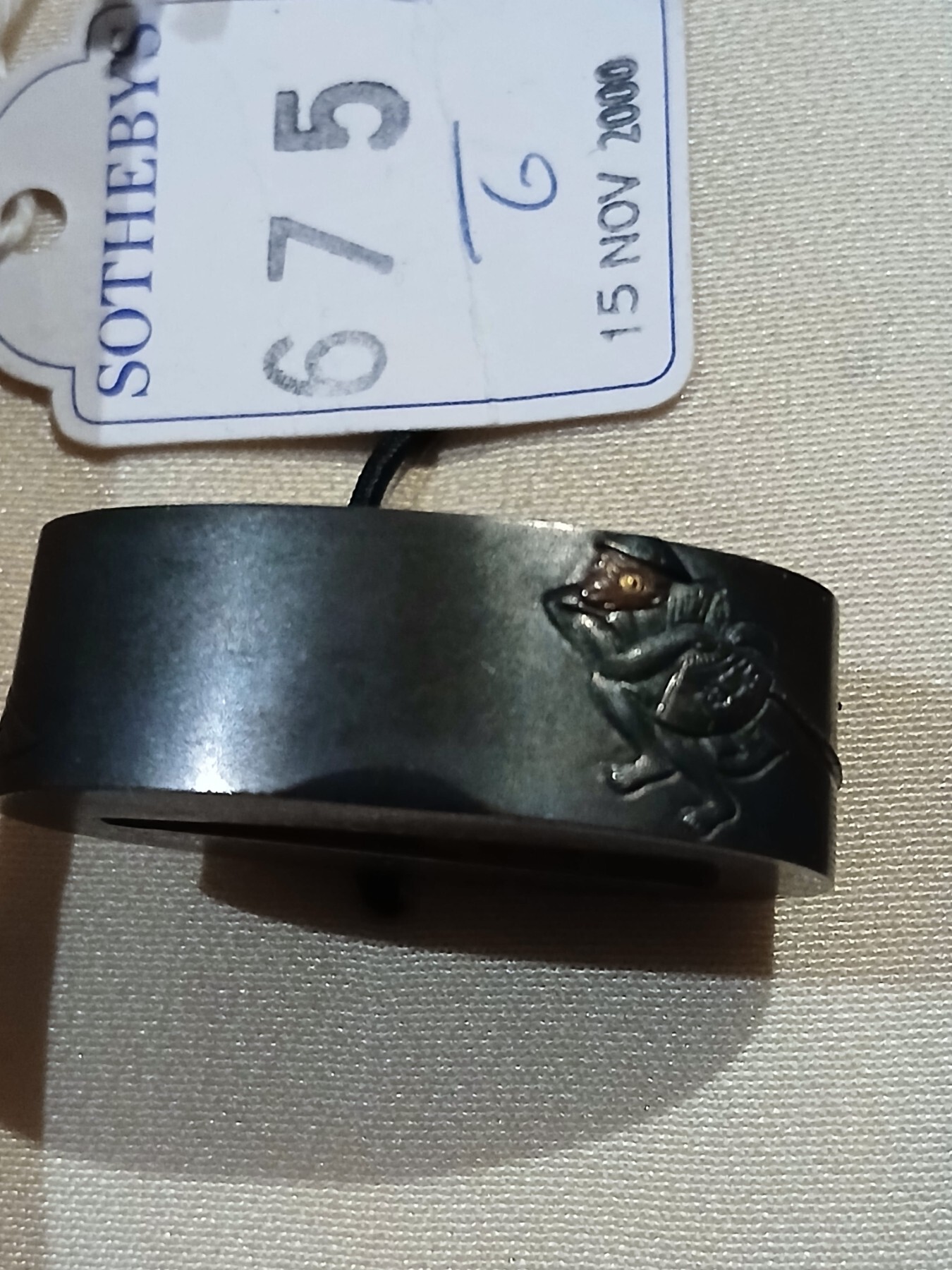
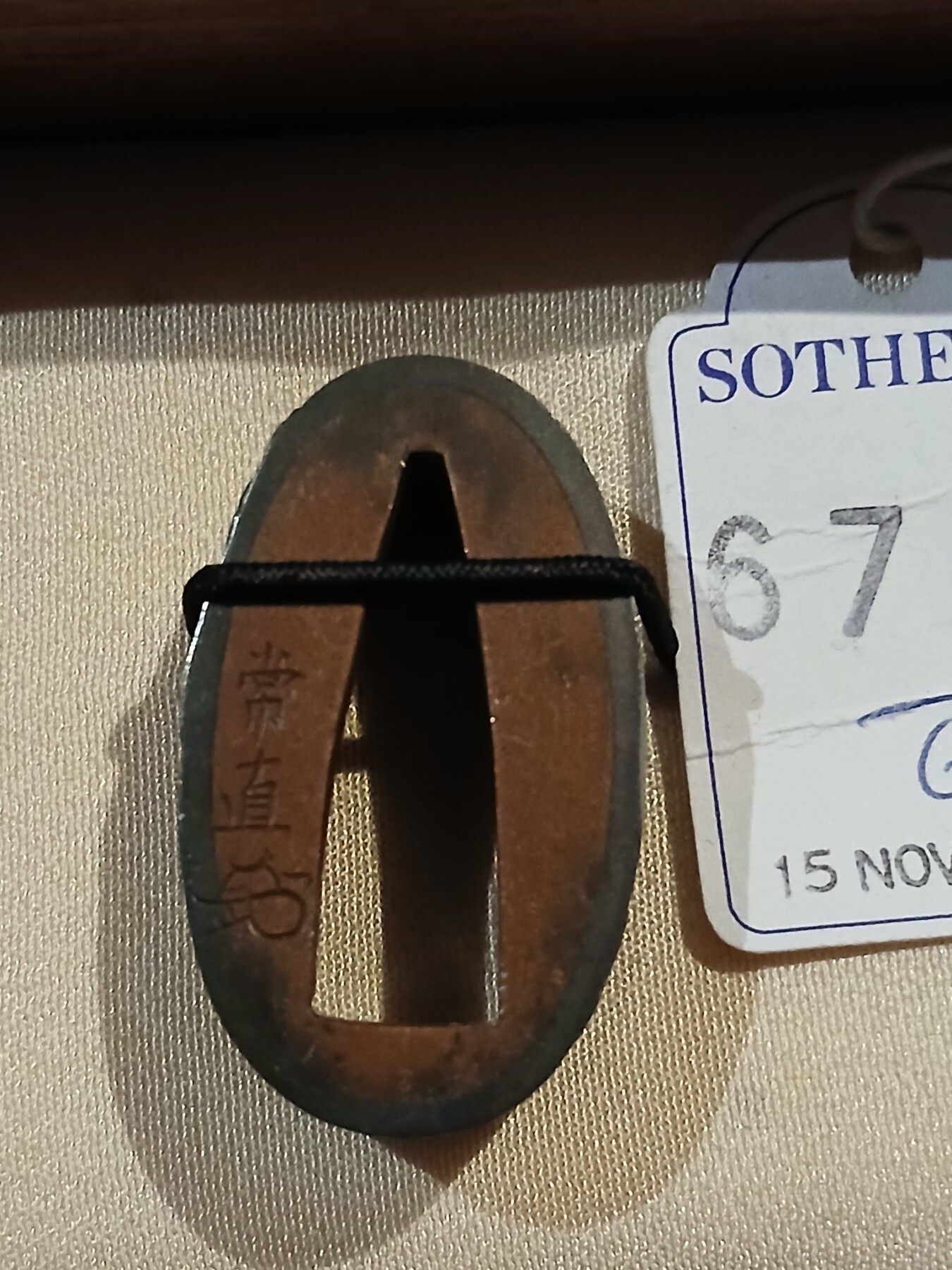
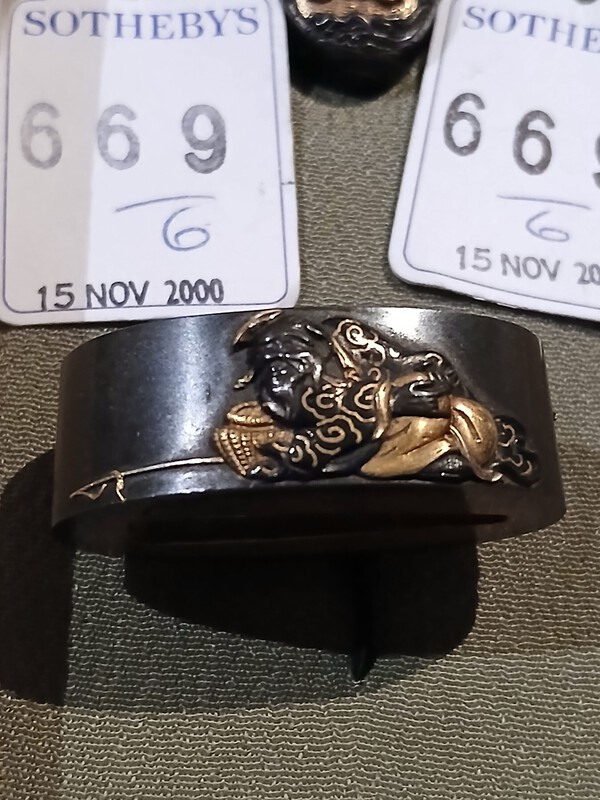
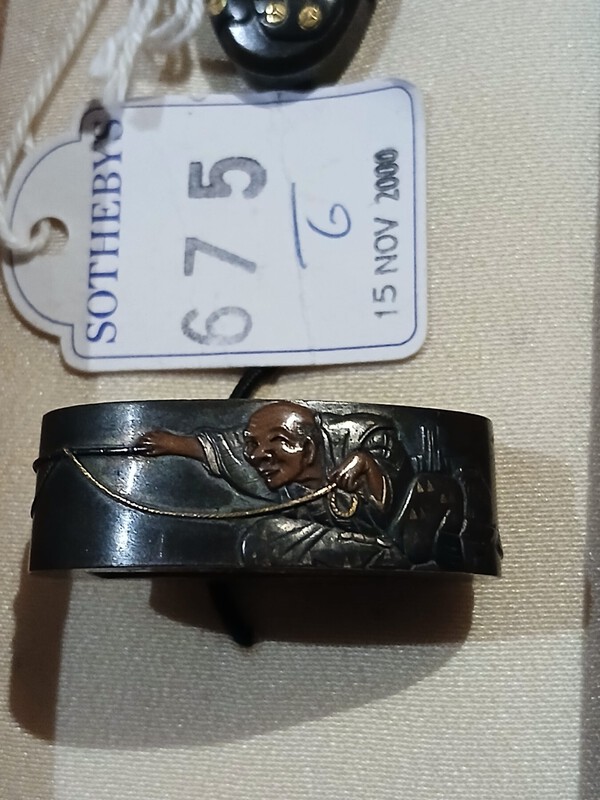
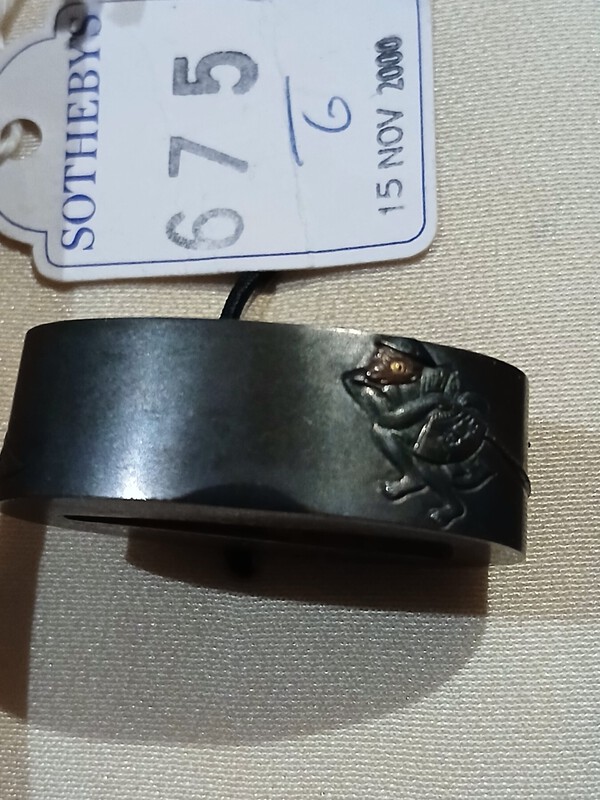
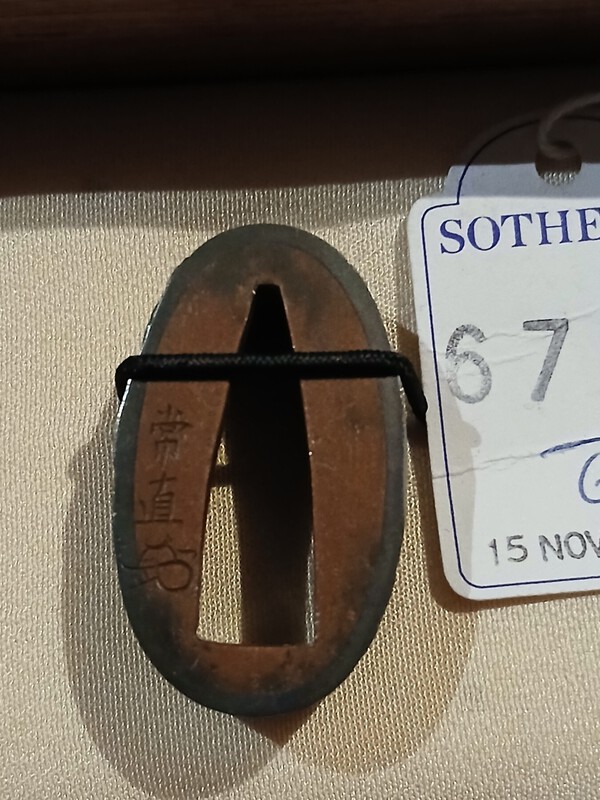
Now the Tsunenao pieces with their original Sotheby's tags...
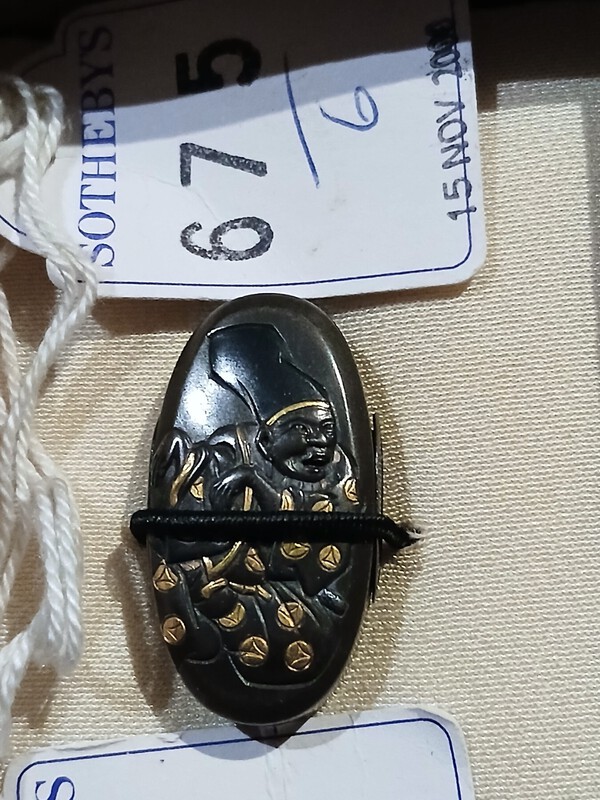
-
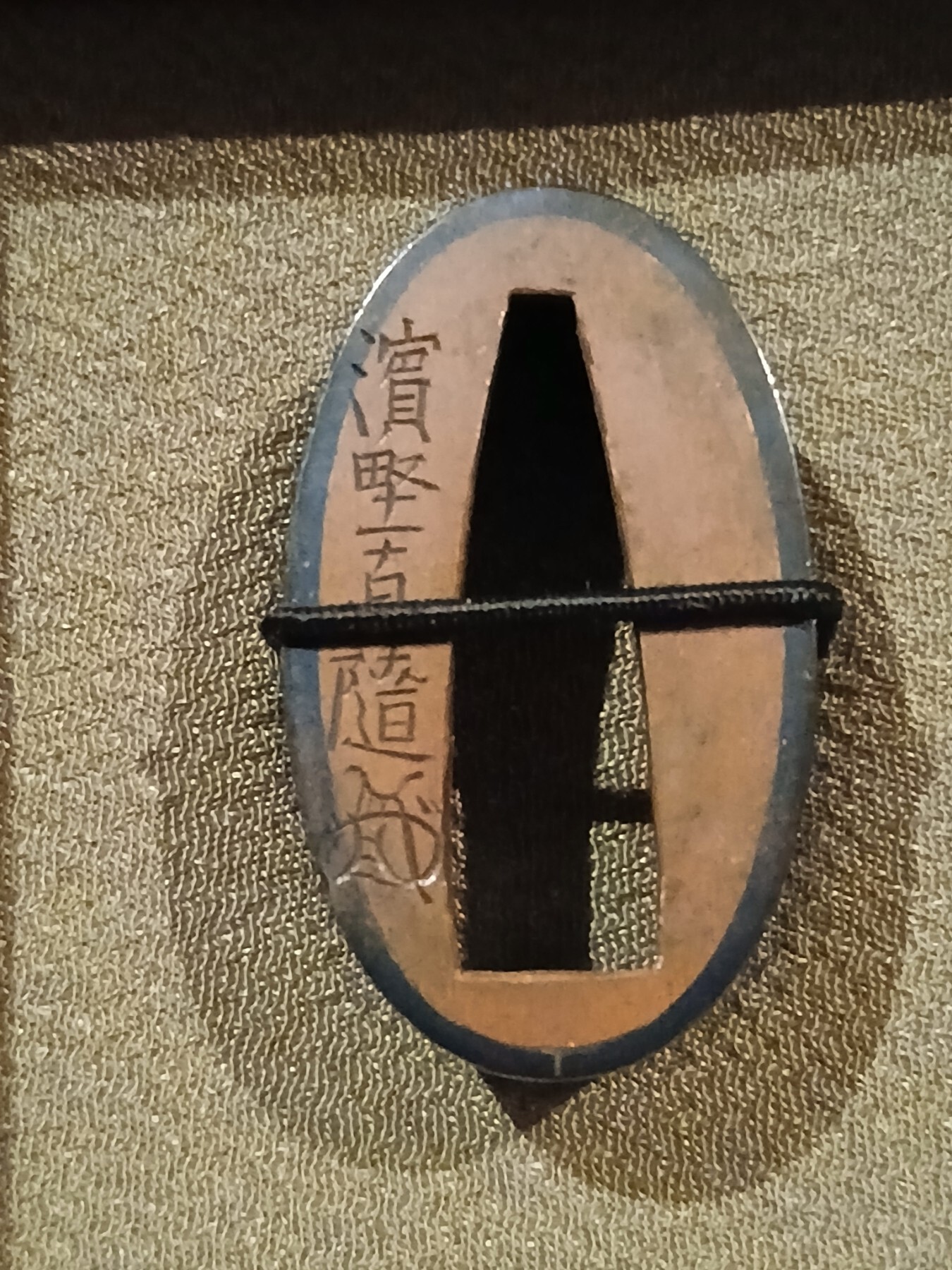
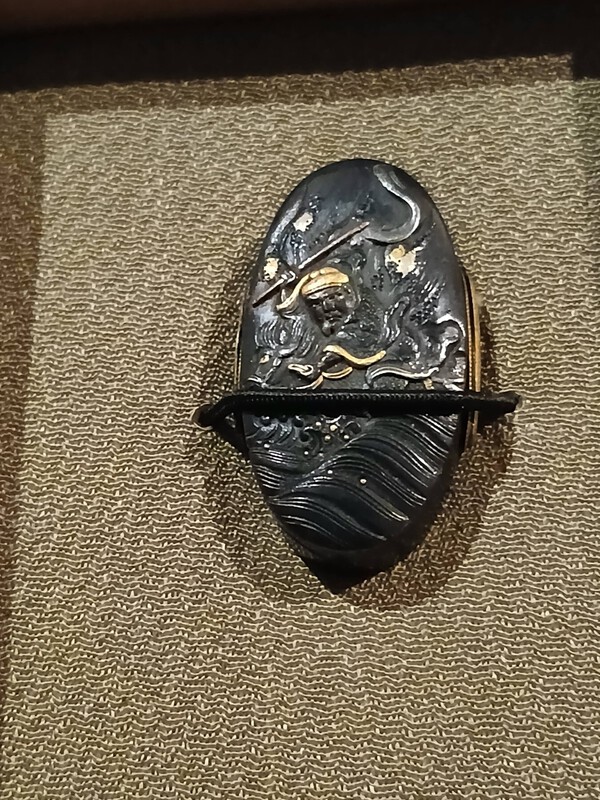
Posting the 4 pieces in 4 separate comments just for space...
-
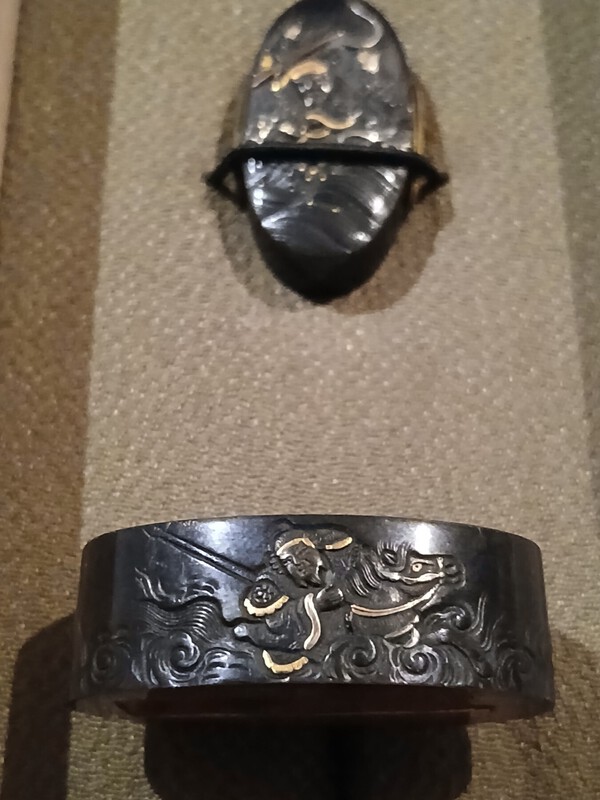
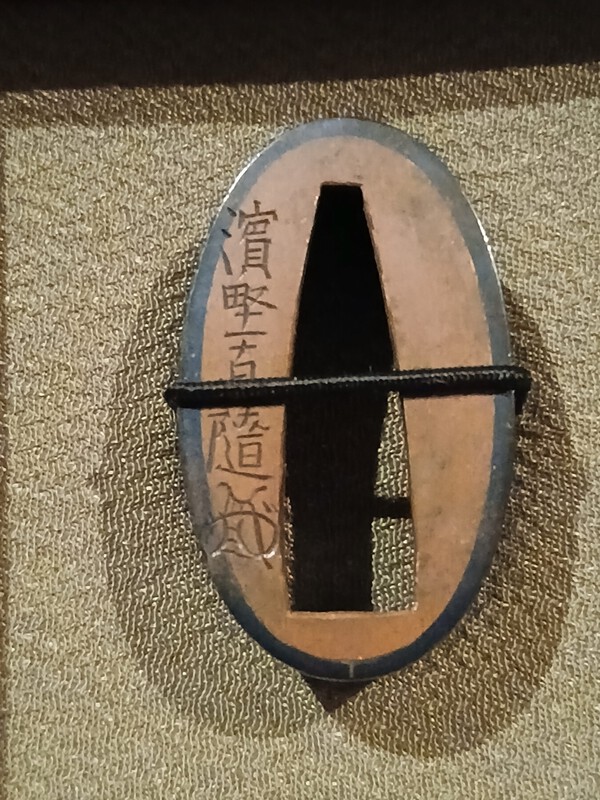
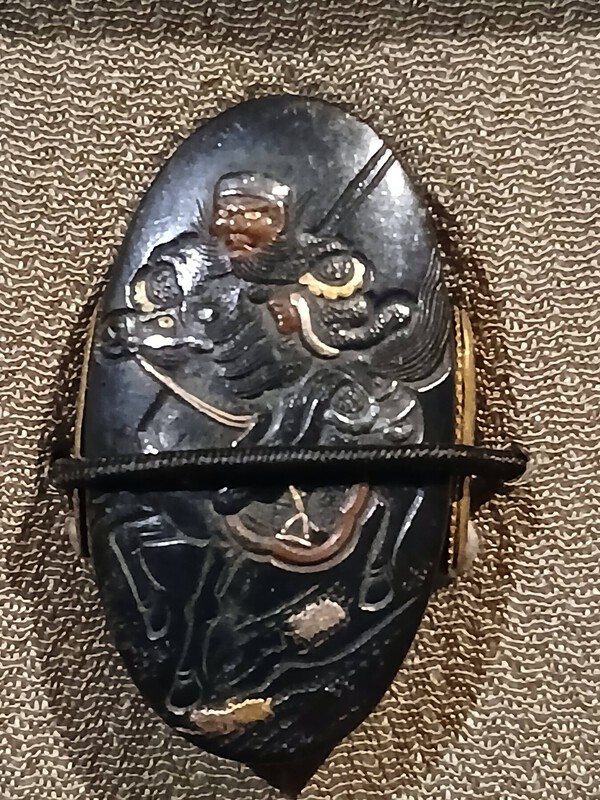
Hi Tosogu enthusiasts, Over the holidays I acquired a number of new fuchigashira that appear to have come from a single collection. The acquisitions include 4 pieces in total, two signed Hamano Naoyuki and two signed (Ichinomiya) Tsunenao. The two Tsunenao pieces still have their original auction tags from a Sotheby's collection dated November 15th 2000. The other two pieces are missing their tags, but all 4 appear to have been from the same collector/owner. (This does not mean they are from the same Sotheby's collection necessarily...) These pieces are pretty high quality with some interesting motifs and I'm hopeful the mei might be authentic. If not however it's no big deal as the quality was well worth the price I paid for these. Photos taken with my less-than-spectacular phone camera and size compressed but I tried my best... Do let me know what you all think! I'll start with the Hamano pieces:


-
Very interesting thread! This is the first time I've seen this technique so I'm happy to have learned something new! Did you encounter this blade in Japan Ian?
-
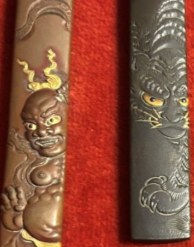
I see some beautiful stuff there including what (I think) are some pieces with Hamano school influences... (Tiger could also be sekibun as Curran said). The tiger kozuka and the Nioh kozuka next to it both have what look like Hamano style influences with the gold eyes and striking colour contrasts... Are either of them signed on the reverse? If so, please post images of the signatures. It wouldn't be hard to find a buyer for many of these pieces if you're looking to sell. (Hell, I'd probably make an offer on these two myself! Possibly for the tiger menuki too...) As others have said though, take your time evaluating each individual piece, even if it means extra work. Posting images of any signatures here would be a good start.
-
Not exactly multi-stacked but this tsuba of mine by Marukawa Hiroyoshi (Mito school) has sekigane resized so small that the centrepiece of a tsuba box will not fit... I had to make my own (kinda dodgy) box for it out of a ring box... I think it might have been re-used on a mamori-tanto gifted to a child. (Image below is in the original box, not my dodgy self-made one)

-
Hi Ian, I feel pretty confident in saying the piece is from the Edo Period but it does not appear to be particularly high quality work and I'm not sure I could ascribe a particular school... If I had to take a guess it feels like it might have some Nara region influences? Curious to see what others with more knowledge and experience think
-
Sorry for diverging from the topic of the thread being the sword itself But I really, REALLY like that saya...
-
Those actually look really good though...
-
Scammers gonna scam Everybody gotta buy bread lol
-
Colin is right, developing an eye for quality is priority number 1 in this hobby. High standards and an eye for quality lead to a collection of appreciating assets... That said 400 Euro or so for your tsuba seems like a decent price to me. I don't think you did too bad at all.
-
I think this might be it Geraint. Didn't realise before that the fuchi is showing a backpack rather than an open scroll.
-
On a serious note, probably reading the Buddhist sutra's based on the fuchi (Sanskrit?)
-
Hi Mauro, I had considered this with my other fuchigashira above that I posted back in April. You can see how the fuchi in both sets shows an unusual, seemingly foreign armour that seems more characteristic of China or Korea. That said, the content of the kashira and the bow in the mouth more or less makes it clear that the depiction is of Kajiwara Kagesue. The new set does not include the bow in the mouth which does leave the door open to alternate possibilities but I couldn't say for sure and given the similarities, I am unsure. Another notable difference however is the fact that this new set features a polearm of some kind on the warriors back, so perhaps you could be right. It's funny you should mention the 3 Kingdoms, another piece I purchased from the same collection, also signed Hamano Naoyuki depicts Liu Bei's crossing of the river during his retreat at the battle of Changban Bridge. Here it is below:

-
I don't know enough about Soten school works to add too much to the discussion beyond what has already been said... What I will say is that I think there is a consensus amongst most if not everyone here that the tsuba is authentic in the sense that it is antique, not modern and is "Soten style" making the description of the auction house mostly accurate. Anyone who disagrees with this, feel free to reply and correct me but this seems to be a point of agreement amongst everyone. The disagreement seemingly comes from whether we view this as low or medium quality work and by extension its price point or value. Unfortunately I can't view the original listing as it is no longer available now that the auction is done, but I'd say if you haven't paid a lot you probably got a good deal. Going off the screenshots you and Colin uploaded I can see some of the mild gilding flaws Colin has pointed to, but I can also see some fine details such as the fine lines in the armor / pauldrons, etc. All in all it doesn't seem like a bad pickup to me. I think Colin has high standards (which is a good thing in this hobby!) Of course, it also depends how much you paid. As I can't see the full tsuba I'm not even going to try to give a value estimation.
-
Thanks for the reassurance Brian. I am still kind of shocked at the relatively low price I paid for the pieces in this collection. Even if the piece is determined to be gimei, the price I paid would still be decent at only 70,000 yen or so. There is one other Naoyuki piece as well as two Ichinomiya Tsunenao pieces I managed to nab from the same collection. I'll make a separate thread about them soon.
-
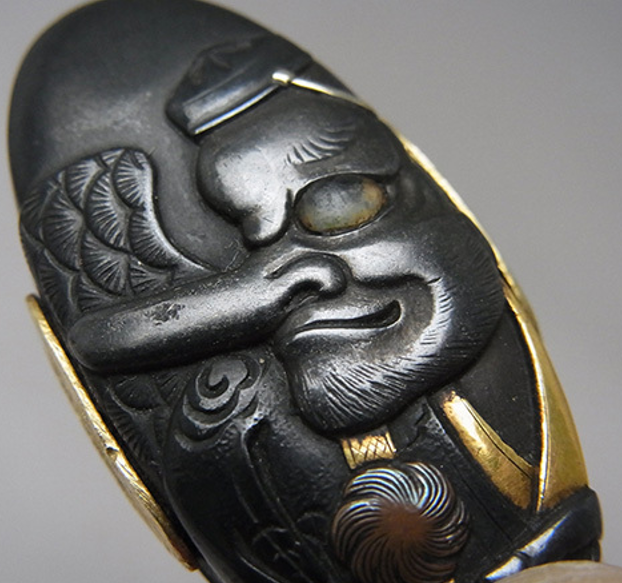
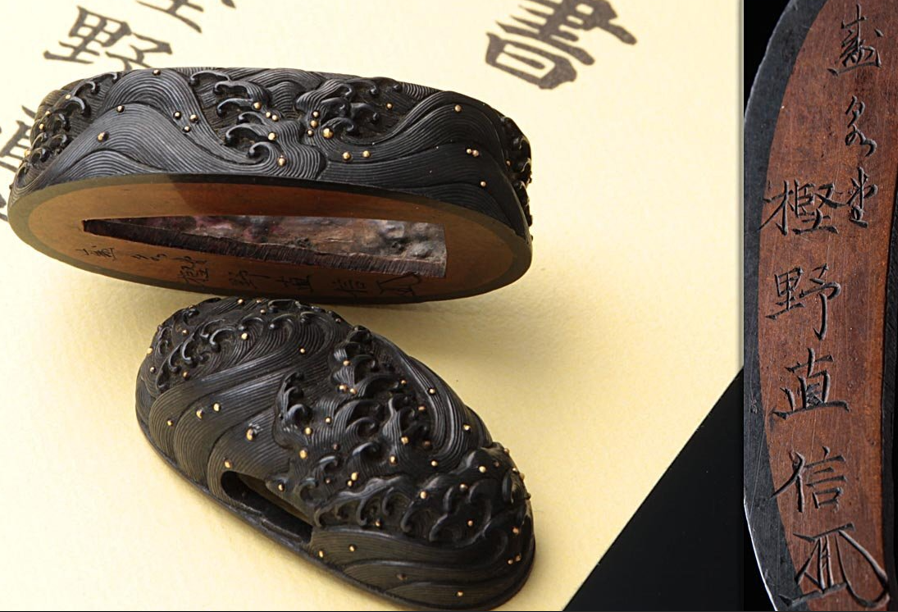
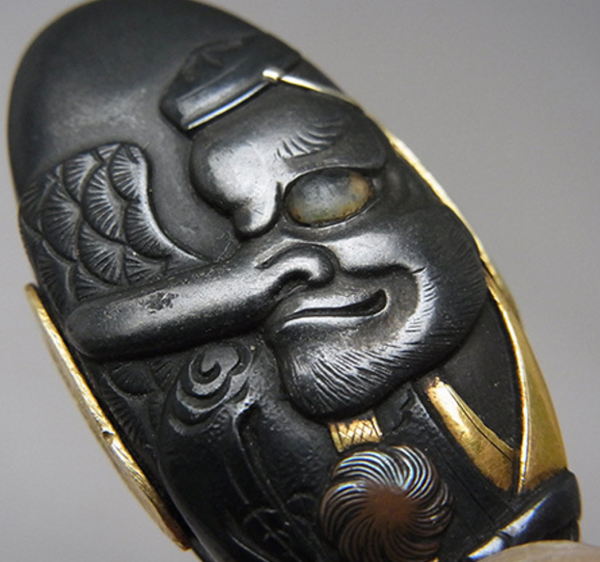
Hamano works typically feature taka iroe zogan like the example provided by Mikolaj above (beautiful piece btw). This means designs are typically carved notably in three dimensions as well as in multiple colours. Combinations of shibuichi or shakudo as a base contrasted with gold to create striking contrasts are typical of quality Hamano school works. Part of the design is usually raised whilst outlines and fine details are carved to create the three dimensional feeling. Whilst the material used does not in and of itself rule out authenticity, the lack of a three dimensional design means your piece lacks the style that is typical of quality Hamano school work. Moreover the quality of the work does not match up to high or even middle level Hamano school work in my opinion. Shozui's mei was of course reused in many gimei works as he was the founder of the Hamano school. Here are a few decent pieces of Hamano school stuff from my collection, images of which are already floating around on the forum in other threads to give you an idea... First, the item in my profile picture also signed "Shozui", but not papered. I would say it features a typical design for Shozui - Historical or folklore based, taka iroe zogan, etc. The unusual part of the design is the use of mother of pearl in the eye of the tengu which is atypical of Shozui's works: Next, here is a fuchigashira signed "Hamano Noriyuki" depciting the crossing of the Uji River: Lastly, my only papered piece, a fuchigashira featuring a three dimensional wave design that resembles the Omori school. The piece is signed "Seisendo Kashino Naonobu" who was a later student of the Hamano-Oguri school in Echigo province. I would like to submit this one for Tokubetsu Hozon assessment in the future to see if it passes: These pieces should give you an idea of what to look for in authentic Hamano school work. In fact, it is open ended as to whether even my first 2 examples would pass authentication as Shozui and Noriyuki were both elite artists. The mother of pearl eye in particular is something that I don't think exists in any authenticated Shozui piece. I do however still think it is a good example of Hamano school work based on the quality and style, even if it is gimei.


-
Good timing reviving this thread as I actually just purchased another fuchigashira set with (I think) this same theme. Again in the Hamano style, signed Hamano Naoyuki (Kao) Not sure if it is authentic or gimei as it has never been submitted to shinsa but I think the quality is there... I'll have a better idea once it arrives (currently still in Japan) but it was part of a wider collection from a seller I consider reliable. Picked up a couple other nice pieces from said collection that I'll probably make a separate thread for in a couple weeks time.


-
I did see that version and thought it was unusual. Apparently the Janome kamon also is believed to have some association with archery which might explain this. Keep in mind Dave that kamon were adopted and used by a variety of families over the years. It is unlikely that your naginata has any direct connection to the Kato family but rather is more likely from a late Edo Period family that adopted the kamon later. Still pretty cool though!
-
I believe this might be Kato Kiyomasa's mon... It can appear in a couple different forms and I believe this is one of them. https://symbolikon.com/downloads/kato-kiyomasa-Japanese-symbol/ The kamon is "Snakes eye" or "Janome" 蛇の目
.thumb.png.4c5df79fec171b2dc4a23af38e280a4d.png)