cabowen
-
Posts
6,786 -
Joined
-
Days Won
10
Content Type
Profiles
Forums
Events
Store
Downloads
Gallery
Everything posted by cabowen
-
Katakana コクイナ ????? maybe 十二 at the bottom....
-
I think it bears mentioning that there was also a sword making firm in Tokyo that made kai gunto and shin gunto during the war called Takayama Gunto Sei Saku Jo (高山軍刀製作所). It was run by a Mr. Takayama Kazu. I wonder if these Takayama To might have been made there? Not all of the Takayama To signed blades I have seen have been made of stainless......and this one surely isn't either.
-
Since Bizen smiths made chojiba for at least 500 plus years before the shinshinto era, I can't completely understand the statement: "Making the hada so fine allows the smith to create hamon with denser or more concentrated habuchi, smaller and/or more vibrant defined patterns such as chojiba or juka chogi" Though I do agree that the construction/hada and hamon should work together. Kobuse/makuri is a construction type independent of forging and it does not place a seam above the edge where two different steels intersect and thus makes for a uniform "canvas", if I can borrow your metaphor. Kiyomaro is noted for using a construction that does place a seam along the edge and this is where sunagashi and the like tend to form. One can still get sunagashi and nie with a thick, diffuse habuchi in a tightly forged blade. I have a Shibata Ka back from the polisher recently that has very tight hada and clouds of ji-nie all over, becoming yubashiri... Conversely, some of the most vibrant choji imaginable occurs in koto Ichimonji which are not known for their muji hada.....Seki blades are known for their yaki-shimari yet many show o-hada as well... I think the composition of the steel and the control over the way the blade is hardened contribute more to the end result than the tightness of the forging....Depending on the steel composition of the hada, the type of hada may or may not have much of an effect.
-
Not sure I follow you here....can you elaborate?
-
It may or may not be harder or have higher carbon content. The hardness depends primarily on the both the carbon content and the quench rate. If the steel has has been folded more, chances are it will have a lower carbon content than steel starting with the same amount of carbon that has not been folded as much as carbon is lost the more the steel is in the forge. The final carbon content of shinshinto blades is usually thought to be higher than koto blades as they are generally harder. They start with higher carbon and finish with higher carbon. The hardness is indirectly related to the folding....
-
The steel is not necessarily harder, it has simply been folded and refined more.
-
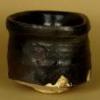
Does anyone know what this is???
cabowen replied to Dakota's topic in General Nihonto Related Discussion
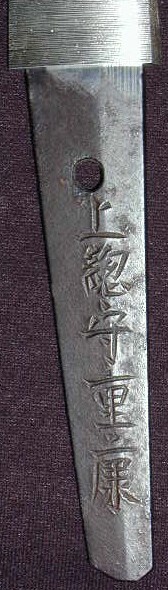
here are what proper nakago looks like. Notice any differences?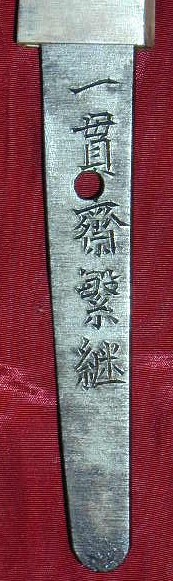
-
Horii Hideaki (Toshihide) made roughly 200 tachi from cannon steel from the battleship Mikasa, which is what this is. The flaws are unusual for Horii, though keeping in mind he had to bang out 200 of these probably more or less in a mass production mode, with a lot of student help no doubt, it is to be expected. Yes, they decrease the value. There are people who appreciate the rarity and historical importance of such blades and who are after the artifact more than the art. I sold one of these blades, badly out of polish, with no koshirae, for about $3500 some years ago. I would think you should be able to get nearly that, if the blade has its original koshirae, today.....
-
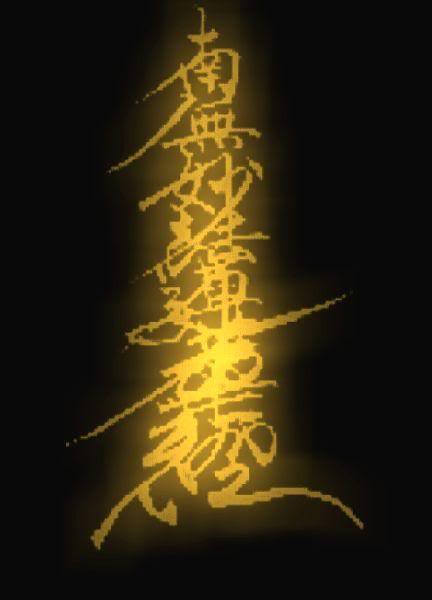
Grey- This is the Nichiren Lotus Sutra.....Na Mu Myo Ho Ren Ge Kyo....
-
almost looks like some ayasugi hada there Jean...Very nice!
-
The kanteisho notes that the mei is illegible-that is what the O O O O 's mean under Mishina on the far right....In the notes section,on the far left, it says "nidai mishina kanemitsu, I think". They are guessing the maker due to the illegibility of the mei....
-
Does anyone know what this is???
cabowen replied to Dakota's topic in General Nihonto Related Discussion
I have seen some pretty crude export pieces but without seeing more and better pictures I would now tend to agree with Brian.... -
Does anyone know what this is???
cabowen replied to Dakota's topic in General Nihonto Related Discussion
It is not, no matter what it may be, an "emperor's dagger". It is either a later 19th century export item or a Chinese copy from the 20th century. The only way to tell for certain is to remove the peg through the handle and take of the handle to see how the nakago (tang) is finished, and perhaps, signed by the maker. The handle is made to be removed for cleaning of the blade. If you are careful and don't do something dumb, like use a hammer, no harm should come from it.... -
Does anyone know what this is???
cabowen replied to Dakota's topic in General Nihonto Related Discussion
I have seen some small tanto with very similar shape in Japan....I could be wrong about this, of course, but would really like to see better photos and hope the op will take off the tsuka and post the results.... -
Hello, Introduction, Questions & Pictures of a Sword
cabowen replied to bibox's topic in General Nihonto Related Discussion
-The reason it is dull in the tip area is because it has been filed and reshaped, either because it was damaged at some point or someone did so to fit it into the scabbard. In either case, not a good thing.... -
Does anyone know what this is???
cabowen replied to Dakota's topic in General Nihonto Related Discussion
Don't mean to be contentious but I think this is indeed Japanese. Most likely a late Meiji export piece. The blade looks better than what is usually found in these though....Try to remove the peg and have a look at the nakago as suggested to solve the mystery.... -
Might make a good knife to carve the turkey with, other than that, I am afraid it is toast....
-
You are discounting the Eisho date?
-
hawley is full of such duplications....
-
NTHK-NPO 2011 UK Shinsa
cabowen replied to pcfarrar's topic in Sword Shows, Events, Community News and Legislation Issues
Unfortunately, since the NTHK-NPO will be in the US in 2011, there will not be a 2011 shinsa in the UK..... Hopefully this will happen at some point in the near future.... -
I will take a shot: 田舎物 (thing) 田舎者 (person) 傍もの (thing or person) 交わりもの (thing or person) be careful with this one....
-
Kinai are a large and well known group....I would try google as I am sure there is plenty of info there....
-
I thought so.....
-
私も。。。。
-
echizen ju kinai saku