cspage
-
Posts
189 -
Joined
-
Last visited
Content Type
Profiles
Forums
Events
Store
Downloads
Gallery
Everything posted by cspage
-
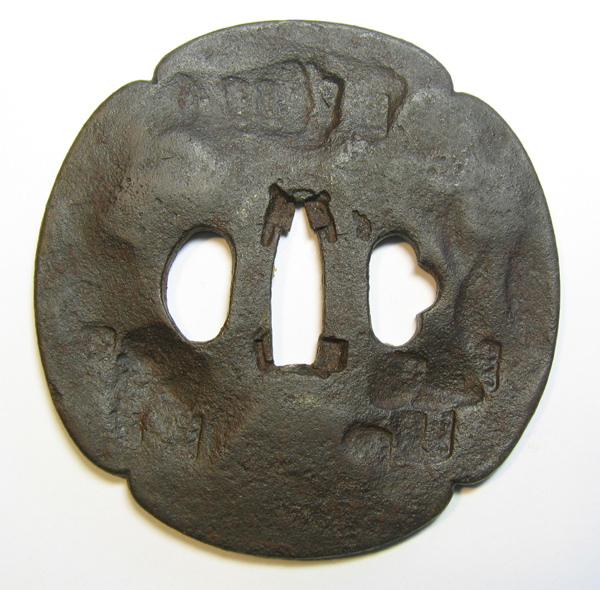
Greetings all. This is one of two tsuba I acquired over the weekend (the other to be discussed later). To my modest knowledge it fits into the katchushi style of tsuba, but whether ko-katchushi, middle to late Edo, or what, I can't comment on. The kozuka-ana shape I've seen referred to as indicative of late Muromachi or Momoyama. I've seen the intersecting circles on a ko-katchushi tsuba on the Yamabushi Antiques website. The size is close, if somewhat smaller, to other examples I've seen in books and on websites. The decorative stamps I've not yet seen on an identified katchushi tsuba...yet. I would be interested in comments on the rectangular sukashi. The overall color is a rich chocolate brown with subtle variations. It has a supurb feel in hand. width: 7.8 cm height: 8.3 cm thickness at the mimi: 3.2mm Thanks for any comments. Colin

-
Mariusz, yes, that's a lovely tsuba, and you were very fortunate in acquiring it. As I said above, tsubas less than $300 are "most likely" to be suspect or of low quality. There are exceptions to everything, especially if you know what you're doing. I also have purchased tsuba at less than $300 dollars, but with careful research, some knowledge and a little experience, and have not been disappointed. It is just a ballpark measurement to keep in mind when evaluating what is being offered. Colin
-
Robert, I recently purchased a papered mumei wakizashi, and as I am relatively new to this and have not had much hands on experience with swords, having an identified sword in my hand while I research the school, era and maker was a grand learning experience, a first hand one. Colin
-
I've only one thought to start with on this subject, and it's not terribly specific, but I think that composition of design may be one of the key points in trying to identify "Western Influence." I'm not in any way an expert on Japanese art, or, for that matter, well versed in it, but I do have a fairly good background in visual art and the principles of composition. My inclination is that features such as negative and positive space and the way they are treated could be a path to uncovering some sort of "aha" moment regarding influences. I'm not yet saying in what ways they are treated that would identify the differences, it may only be in the degree of treatment that may be the key. The treatment could be so subtle as to be easily disputed, and dispute is most likely. I do look forward to what comes out of this. OK, next? Colin (this is like sticking a toe into the ocean to see how cold it is)
-
Not being at all conversant with kanji, but having a nifty Mei Character Table from Blade Shark, I would vote for Masanobu, for what it's worth. Colin
-
Yikes! Inside lucite? One of the wonderful things about tsuba is its quality in hand, the heft, the feel of the iron. Also, close inspection of the nuances of texture, bones, etc. is essential to the appreciation of tsuba. I would not recommend locking all that away from the world under any circumstances. Just IMHO. Colin PS. By the way, just in case you're interested, here's a website with some spiffy displays for tsuba, at the lower end of the page. And of course I have nothing to do with the proprietors or any other aspect of this business) http://www2.saganet.ne.jp/hasuike-itou- ... kake2.html
-
Brief continuation of off-topic. Scott, that phrase has never let me down. It is not mine, however, I learned it from a pottery mentor many years ago and she from her's. It has helped me make many a decision, and not one is regretted. There are tarts I have encountered that I did not take, and I forever rue those decisions not to do so. In this world of Nihonto, I find I use the phrase often, and did just a couple of weeks ago in purchasing my first wakizashi. In bringing the thread around to the topic at hand, I expect, in his own way, Fred took tarts when they were passing. I would say it worked for him, too. I look forward to the photo of the sign. Colin
-
Fred, that Owari tsuba is spectacular. I am not an expert in any way, shape or form, but I do love them for the vast variety and methods of expression they represent. The depth of tactile experience in handling excellent tsuba gives a sense of quality in life, value and oft times, strength. The patina of the iron, the clarity and flow of sukashi, all contribute the beauty of the object. A successful design within a very confined and defined format is wonderful to encounter. Both your tsuba exhibit these qualities. Congratualations, and I'm jealous. Colin
-
Jason, in my relatively short experience and love affair with tsuba, I've come to realize that any single tsuba worth considering will most likely be at least $300 (wakizashi or tanto size usually) and most probably much more. Any tsuba offered for less would be suspect or of low quality. But the best advice is that already given...learn. Be patient, look at the websites of reputable sword guys, the links section of this site is a good place to start, and read what they have to say. Sometimes they have sales and if you can wait for them, it can be very rewarding. Books are expensive, but well worth the outlay if you can deal with it. Colin
-
Good points, Mariusz. I stand corrected. I did consider the non-removal of the tsuka in this video, but was sloppy in my recommendation. I will look for the uchiko debate. Thanks. Colin PS. Finally someone got back on subject and away from the smell of choji oil. I would still like to see the original query addressed further, as I'm sure John would. I am still puzzled about his designation of "My concern was the specifics for a blade older than 100 years..."
-
I've never encountered any special treatment other than that described above for nihonto of any age , providing the sword is in any sort of decent polish. I assume this accepted process for maintenance has been tried and true for over 100 years, probably for well longer than that. If I'm wrong, I'd love to hear about it. Anyone? Colin
-
Here's a very straightforward and clear video of simple maintenance for nihonto. This is what everyone is talking about. Maintenance kits are available online from many sources. http://www.youtube.com/watch?v=JLnAWCABGUE Colin
-
Justin, I'm sure it would be fine to e-mail Boris Markasin and pose the question to him. He is friendly and receptive to questions. I have purchased tsuba from Boris and I just had a "conversation" with him this morning about another tsuba. He was most helpful. Colin
-
And all along I was looking for some mysterious molecular aspect of the hamon of a sword, when in fact, "etcetera" was the answer. Funny. Many thanks. I've a new word for my general vocabulary. Colin
-
Morita san, thank you so much. This is an introduction for me to Japanese handwriting and while I can appreciate the graphic aesthetic of the strokes and spaces, relating them to print is a mystery. I am grateful. Colin
-
Cool! Thank you, John. Every little bit helps and adds up. No seal on the reverse of mine, unfortunately. Colin
-
I recently purchased a papered wakizashi from Andy Quirt (Echizen Hirotaka) and included with the documents is this very delicate piece of writing. Andy says it is a small appraisal with attribution and dimensions for the wakizashi, but he was unsure of some of the smaller writing. I was wondering if I could get any bits of translation, please? The paper is incredibly soft and wispy, but the calligraphy is lovely. Thank you. Colin

-
I have seen this term, nado, in descriptons of blades, but cannot find a definition. Could someone please help? Pictures, illustrations welcome. Thank you. Colin
-
Welcome, David. There's lots to learn here and lots of terms to remember. One of the most entertaining issues with terms is the constant question of what's the ura side and what's the omote side of a tsuba. I believe your "dragon" is on the omote side of your tsuba, not the ura. But, as I noted, this is oft remembered incorrectly or mis-written, even by the "experts." I frequently have to look it up to remind myself which is which. Also, from my own experience, there's little value in posting out-of-focus pics. So much of the information needed depends on minute detail that anything out of focus is either totally useless or incites guesswork which may simply confuse the issue. Just something to consider in future posts, which I look forward to seeing. Beginning a new area of interest is the really fun time. While your tsuba may be somewhat "long in the tooth," as I've seen other tsuba described, that faint dragon or whatever it is intriguing and definitely worth appreciating. It adds a nice sense of depth to the visual aspect of the tsuba. Colin
-
Stephen, the phrase is "Allez Cuisine!" (Start Cooking, roughly, French, as you probably recognize) It could have been a better show. It definitely wasn't a documentary. Everyone here is pretty much on the same page about this, including moi. Colin
-
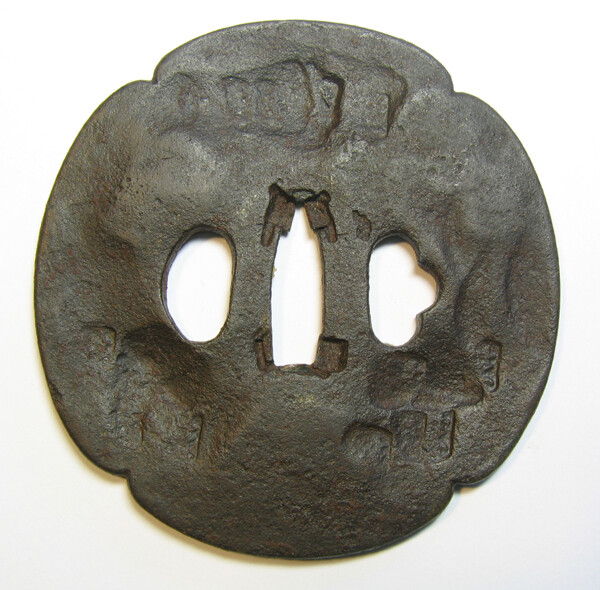
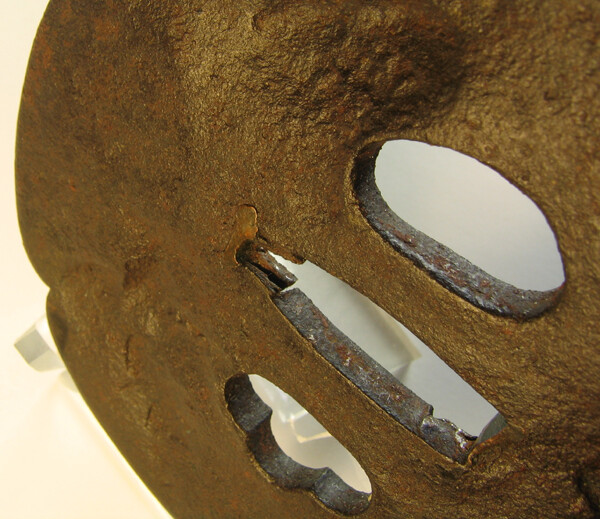
Here is the one Tempo tsuba I have. One can see in the cutouts for the sekigane that there is a step down from the surface to what appears to be another layer. Also in the closeup one can see where it appears as though a layer has been lifted a bit in the cut. There doesn't seem to be obvious indications of layers in the mimi, however, or in the two hitsu-ana. For what it's worth. It's good to see some Tempo here. Good subject and not much mentioned. Colin
-
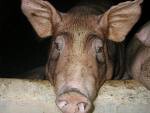
I almost feel apologetic for getting back on subject. Here's a nifty shot of boar's eyes that may intimate at the "heart" shape we all have come to love.
-
I just acquired this tsuba from Danny Massey and it is my first encounter with a fukurin. I am astonished at the fit, the craftsmanship in attaching this thing to the tsuba. And the one in the kozuka ana. Is there any reference out there that can explain how this is done? I've seen photos all over the place of various versions of fukurin, but nothing on how it's done. Any help is much appreciated. Thanks all. Colin PS. Any observations on the tsuba as a whole would also be welcome. There is a very similar tsuba on Eric Molinier's site that is listed as Saotome, http://www.owazamono.com/Tsuba-060.html

-
FYI, there is an identical tsuba to #3 at Nihontocraft website, unfortunately no attribution, but dimensions and even on sale price. http://www.nihontocraft.com/tosogu2.htm Colin