SwordGuyJoe
-
Posts
2,739 -
Joined
-
Last visited
-
Days Won
43
Content Type
Profiles
Forums
Events
Store
Downloads
Gallery
Everything posted by SwordGuyJoe
-
Impossible to say for sure from the photos, but my guess would be late koto based on the Sugata. Not a ton to glean from the photos of the blade, but the perhaps late Bizen kazuuchimono - like some signed Bizen Osafune Sukesada. Just a swag and worth every penny you paid for it!
-
...I should also add. While there is not a set rule of how many contests you need to take a top - or the top - prize before earning Mukansa, they have repeatedly and consistently earned top places in the contests. This is what makes their work beyond judgement or not needing to be judged - because it is known that it will be excellent. There is no test to take and the only opinion that matters is that of the NBTHK. This also adds the element of politics, since if you have in some way begrudged the NBTHK, your chances of earning the Mukansa title is likely to drop. This goes for the other crafts as well.
-
Full education for a trained togishi is closer to 10 years. Swordsmiths start at 5, but typically closer to 7 by the time they pass their exams. Can a foreigner make mukansa? Technically speaking, they can, but it has never happened. Also consider that this honor is bestowed by the NBTHK, the same body that issues the license to professionally practice the trade - read this as unlicensed foreigners would be at a steep disadvantage. The area that I believe a foreigner would have the best opportunity would be tosogu, but I am admitted ignorant to that area of modern craftsmanship, so it may be just as hard or harder, but know that foreigners have won prizes in those contests.
-
I define an amateur polisher as one who did not complete an apprenticeship with a qualified master togishi and become a licensed polisher.
-
Sukaira, It has been a while since I participated on the NMB so @Brian, please delete if things have changed. I agree with above where it was said that judging a polish via pictures is challenging. As you have it in hand, I will trust that you are satisfied with the results. That said, this was a risky endeavor. You entrusted the blade of a master artisan - assuming it was done by Taikei Naotane and has or would pass shinsa - to an amateur/unlicensed polisher. When thinking of the unlicensed polishers with the best reputation, Moses and a handful of others come to mind first, which is meant to be said with respect. They have had some level of training and as such, their work is better than untrained “polishers”. Since he is in the camp of one of the better amateur togishi, there is a chance that no damage has been done, but there was a chance that a great deal of damage COULD’VE been done. That is why I’m speaking up here. For every one example like yours that looks good and shiny, there are others where an untrained/unlicensed polisher destroys a blade. People will read this and think that they can avoid the time and cost of sending to Japan and still get top quality results, when on average, that will not be the case. The other reason I’m speaking up is because of the sword you sent. Taikei Naotane is in the list of the best Shinshinto smiths and if he doesn’t have Juyo work yet, it is simply a matter of time until he does. If you would’ve sent a showato or even a mid-range gendaito (read emura or nagamitsu level), I probably wouldn’t say anything, to avoid the almost certain backlash and conflict. But you didn’t. You sent a Taikei Naotane and in my opinion - even if this worked out well, which it’s impossible to tell via pictures - was a gamble not worth taking with what could prove to be in time a Juyo candidate. Apologies for providing a more constructive response, but even if your situation worked out well, it’s important for others to understand the risk associated with engaging non-licensed polishers.
-
Similar to Brian, when I viewed the blade, I immediately thought that it looked like Showato to me. Not because of X or Y traits, just that I’ve looked at enough to get a general sense. Admittedly a sense that can be wrong. If I would see this blade unpapered and in the wild - regardless of what a seller says - I see a showa era Iaido blade that is likely non-traditionally made. the best advice you’ve received here would be to send it to shinsa.
-
I will be going to Chicago on Saturday. Look forward to seeing you there.
-
Thanks all and I appreciate that my good reputation hasn’t been completely forgotten.
-
All, I am looking to reenter the habit after a long hiatus. For those that don’t know me, I used to focus on the Kasama Ikkansai Shigetsugu group and amassed a nice collection before life took a detour. I am specifically looking for the Miyairi school, Enomoto Sadayoshi group, and Minamoto Moriyoshi. I do like So Tsutomo and Matsuba Kunimasa as well, so while I do have a preference to these groups, I’m not locked into them. I do have a preference for shinsakuto, gendaito, and possibly shinshinto. I’m looking to get a couple of blades to get started. Feel free to message me if you have any excellent examples you’re looking to move - or know of any.
-
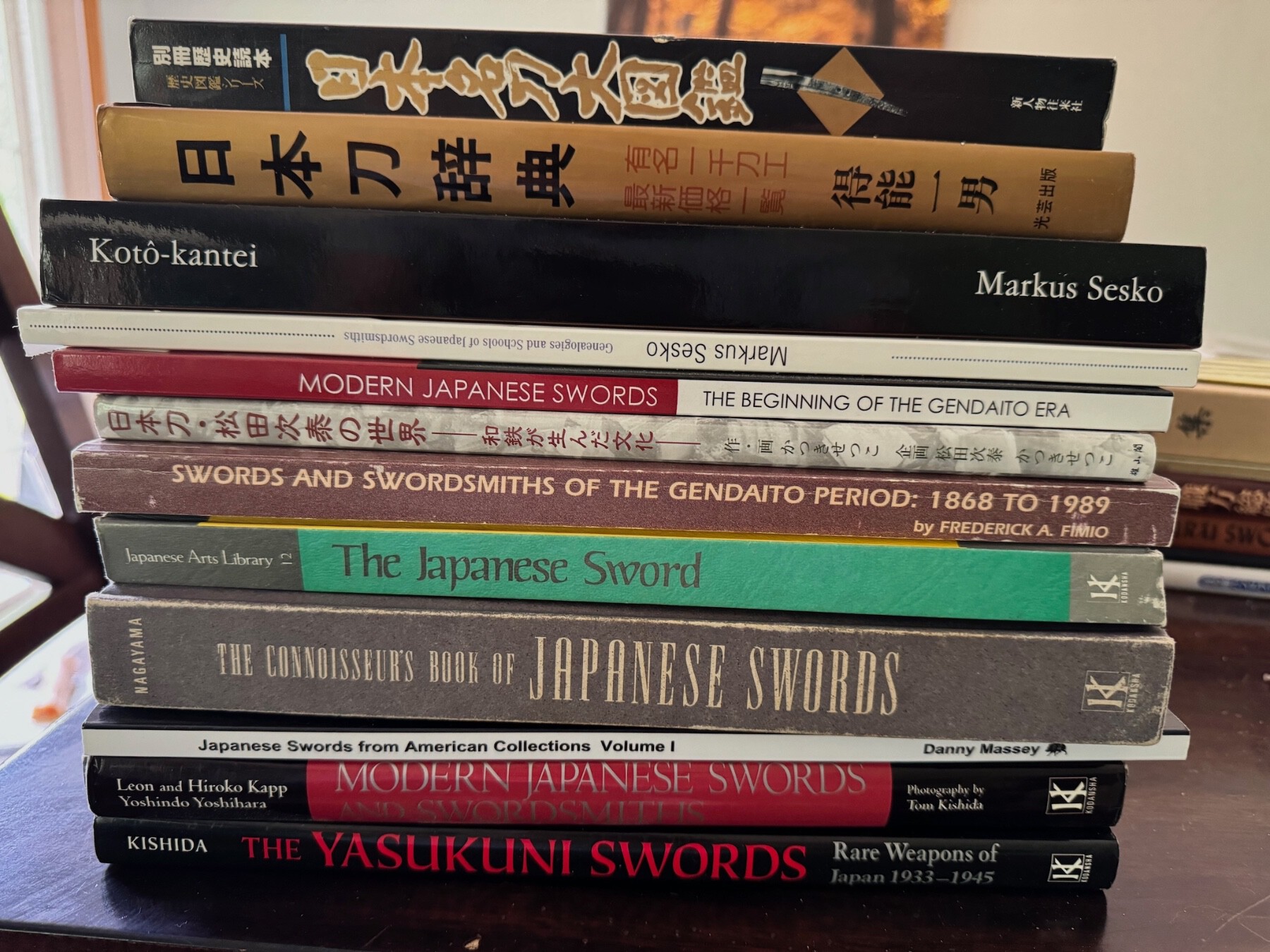
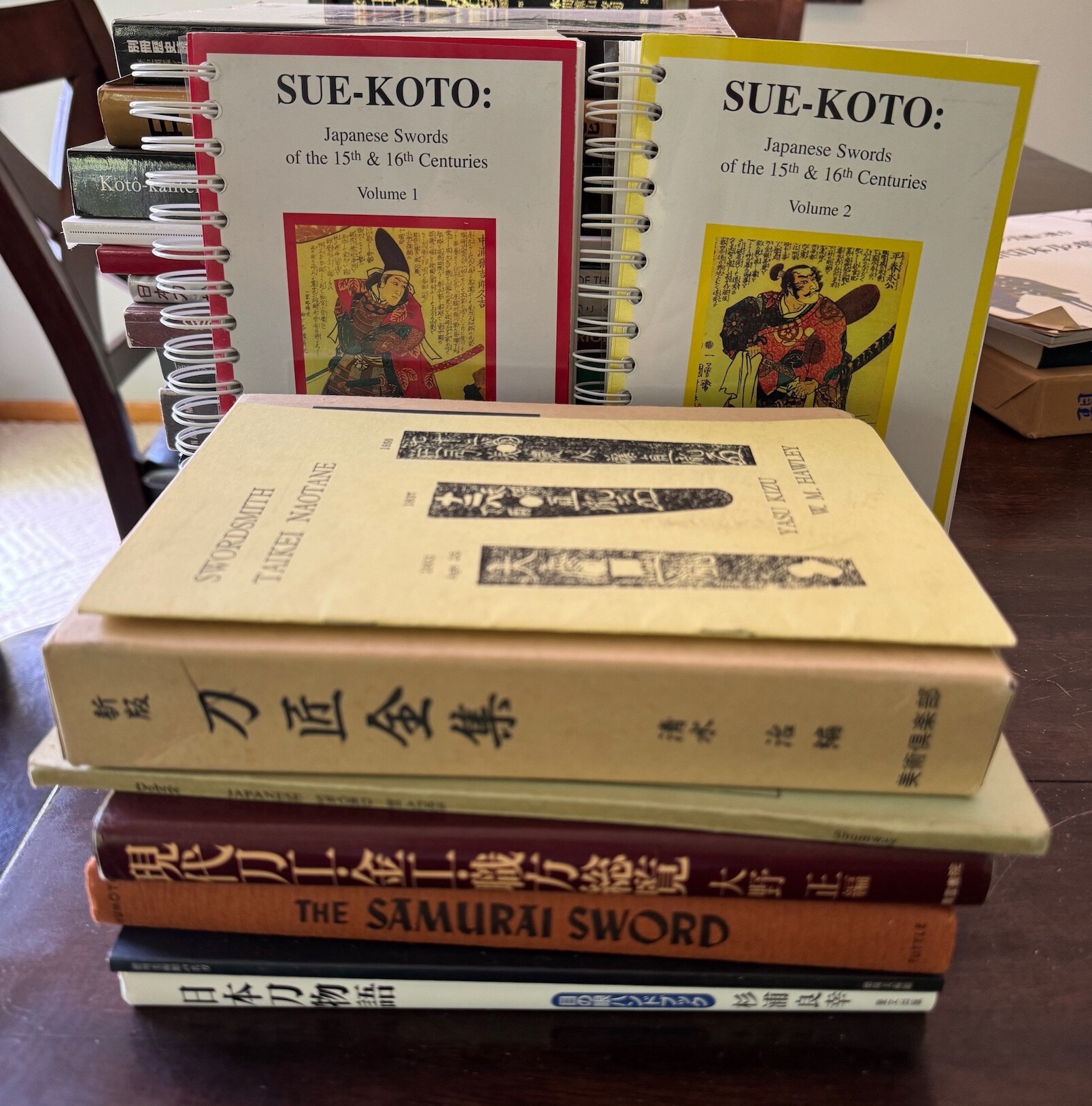
After placing books on hold with the recent set of PM's, here is what is currently available.

-
Khalid, Yes, there are masterpieces to be found in the Meiji, Taisho, and Showa era. You can see this in NBTHK starting to more freely offer Tobuketsu Hozon papers to blades of these eras. At this point, most of what I have seen are for the preeminent smiths of the time - the Gassan group, Miyairi group, Kasama and his best students, and Masamine to say just a few. At some point, lesser known smiths that produce an exceedingly exceptional blade will be allowed to earn tokubetsu hozon - as you see in Koto, Shinto, and to a lesser extent Shin-Shinto. I call this out, because it is a signal that in time, Meiji, Taisho, and Showa blades will get Juyo and further down the line likely Tokubetsu Juyo. This is the same evolution that impacted Shin-Shinto blades. Notice that when I discussed this I did not include Reiwa. This is too early to see any tokubetsu hozon nominations in my opinion, since first the smith must pass away to be eligible and second, there has not been sufficient time to allow the smith’s reputation to solidify. There could be some exceptions to this depending on the smith’s reputation when he passes, but that would be exceedingly few and far between.
-
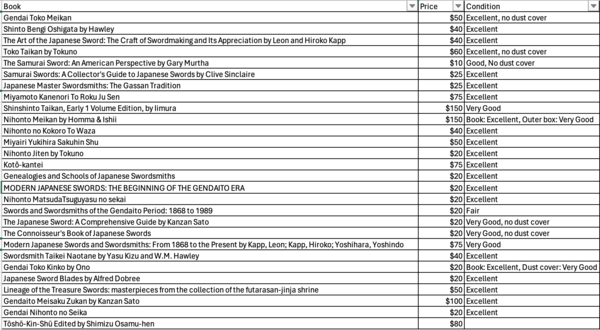
All, I have gotten to the PM's that I have seen so far. Below is a table with the available books. I tried my best on pricing by finding copies and what they sold for, then taking them down, but it turns out that a lot of these are actually tough to find! I will be flexible with you if you're trying to buy a couple books. Still... I am not trying to get rich here, just move good books on to good people and get Brian enough for a bottle of scotch or something for all the hard work that guys does managing this bunch of hooligans! If you see something you like, let me know.
-
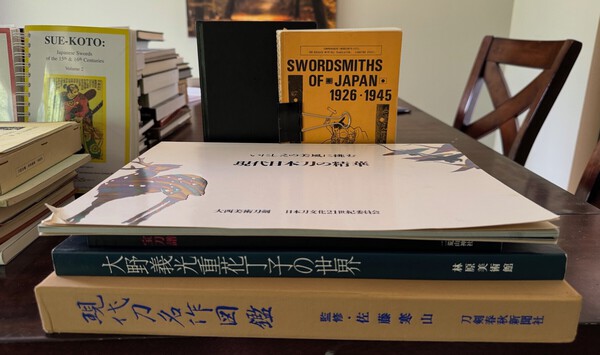
All, Some here will remember me, though I have been out of the hobby for a few years. For those that don't know who I am, I used to collect gendaito, with a specific focus on Kasama Ikkansai Shigetsugu, his masters and pupils. In the 15 years or so that I collected swords, I amassed a decent collection of books as well. I will be selling these in the coming days/weeks, as I catalog and price the books. I expect to be selling these for very fair prices and 5% of all sales will be donated to the board. If you don't know me, please let me know and I would be happy to give references. Here are some pics of what will be coming for sale. Please let me know if you are interested in any of the titles via DM, as I am happy to sell prior to listing.


-
Thanks for the well wishing gents! Yes, I am swordless, but looking to dig into some new smiths… at least some not from the Ikkansai group. Still love them, but I would like to focus outside of them. Nice tip on the Miyairi group. I had a wakizashi by Fujiyasu Masahiro and absolutely loved it! He was a part of an interesting group of smiths called the Genmon no Kai that I only brief researched there prior to my hiatus. Should be interesting at least.
-
Hey there all! It’s been a wild couple years that now find me swordless… but, some journeys include a step or 18 backwards. I am looking to recast a collection and was first hoping to say hi to some virtual friends and get some feedback and some tips on who to take a look at. First, I would like to stay post war. Second, from the Ikkansai group, my favorite aspects were their soden bizen work and enjoyed their horimono. So my ideal smiths would be excellent horimono carvers and many excellent examples of soshu den. A couple example smiths I’ve enjoyed are Tanigawa Moriyoshi, Sakai Ikkansai Shigemasa, the Enomoto Gassans, and a few others. Any recommendations in addition to looking into different schools of smiths?
- 16 replies
-
- 11
-

-

-
Most things Ikkansai are excellent. For post war, No one has mentioned Sakai Ikkansai Shigemasa and I’ve always enjoyed Ozawa Masatoshi’s work. +1 on Enomoto works, Moriyoshi, and it’s tough to beat Horii jigane.
-
FS: Sakai Ikkansai Shigemasa Masterpiece Tanto
SwordGuyJoe replied to SwordGuyJoe's topic in Sold Archive
Sold -
FS: Sakai Ikkansai Shigemasa Masterpiece Tanto
SwordGuyJoe replied to SwordGuyJoe's topic in Sold Archive
And the sales page from Tsuruginoya 短刀 酒井一貫斎繁政|日本刀専門店 つるぎの屋.pdf -
FS: Sakai Ikkansai Shigemasa Masterpiece Tanto
SwordGuyJoe replied to SwordGuyJoe's topic in Sold Archive
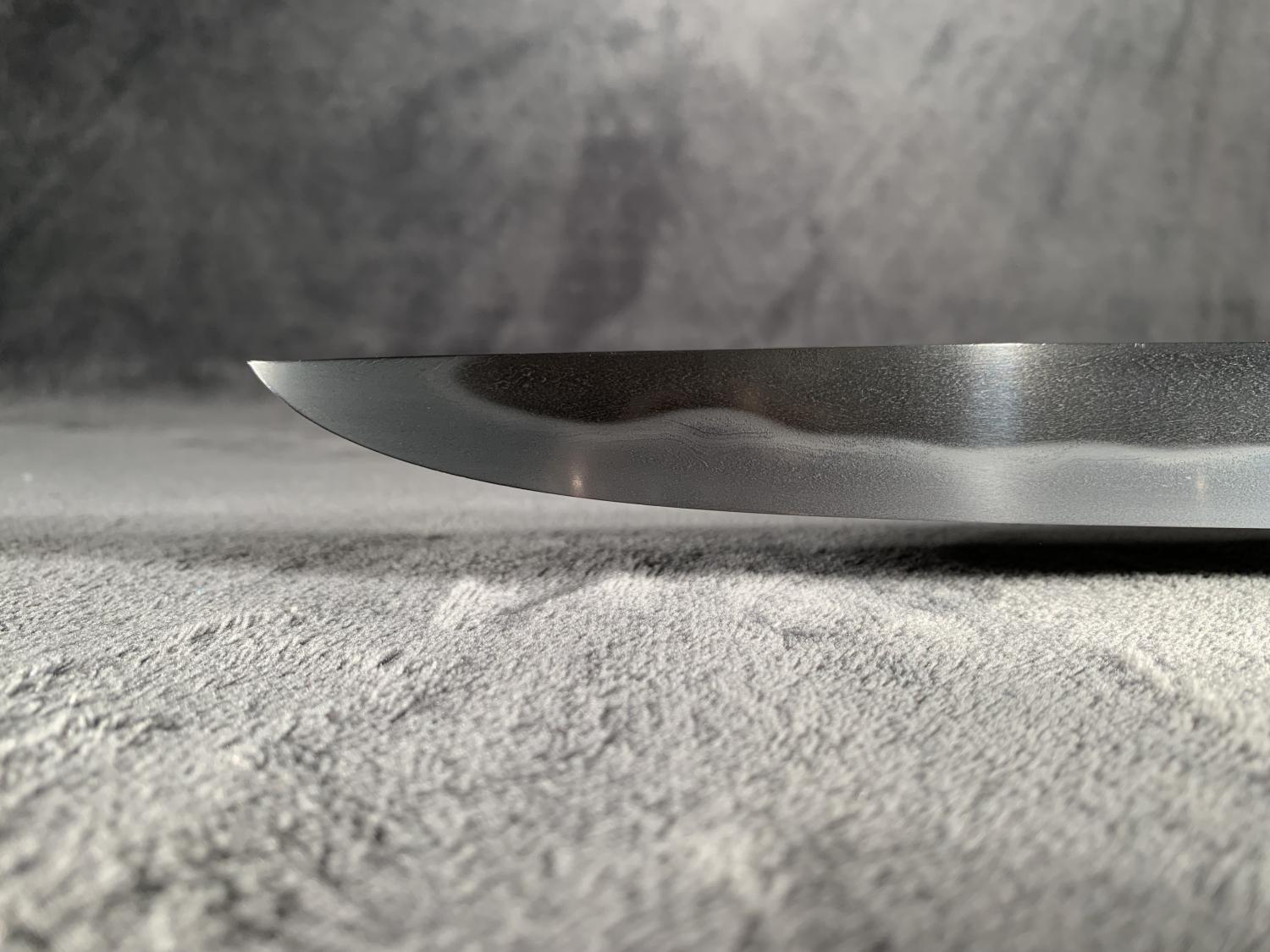
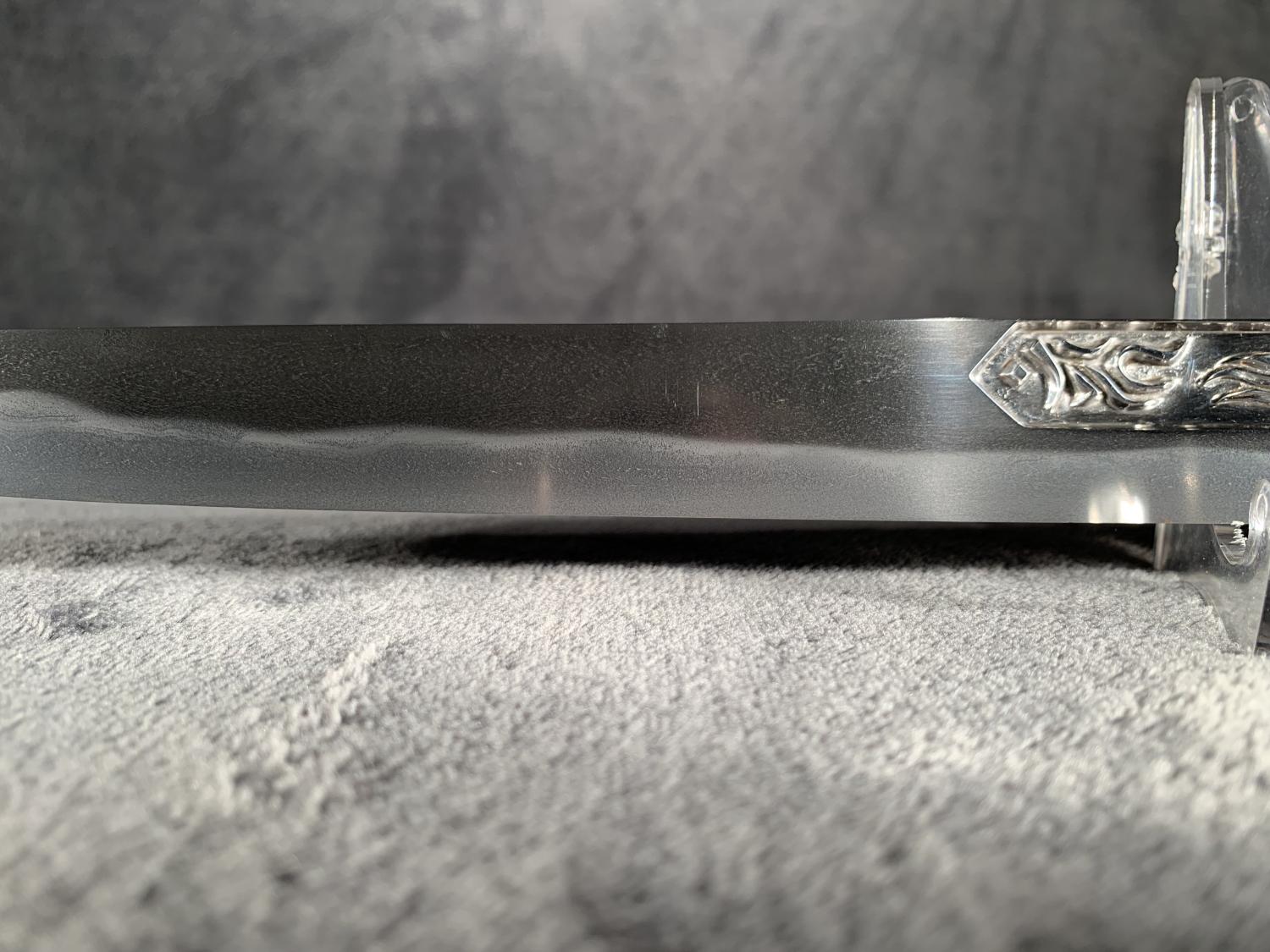
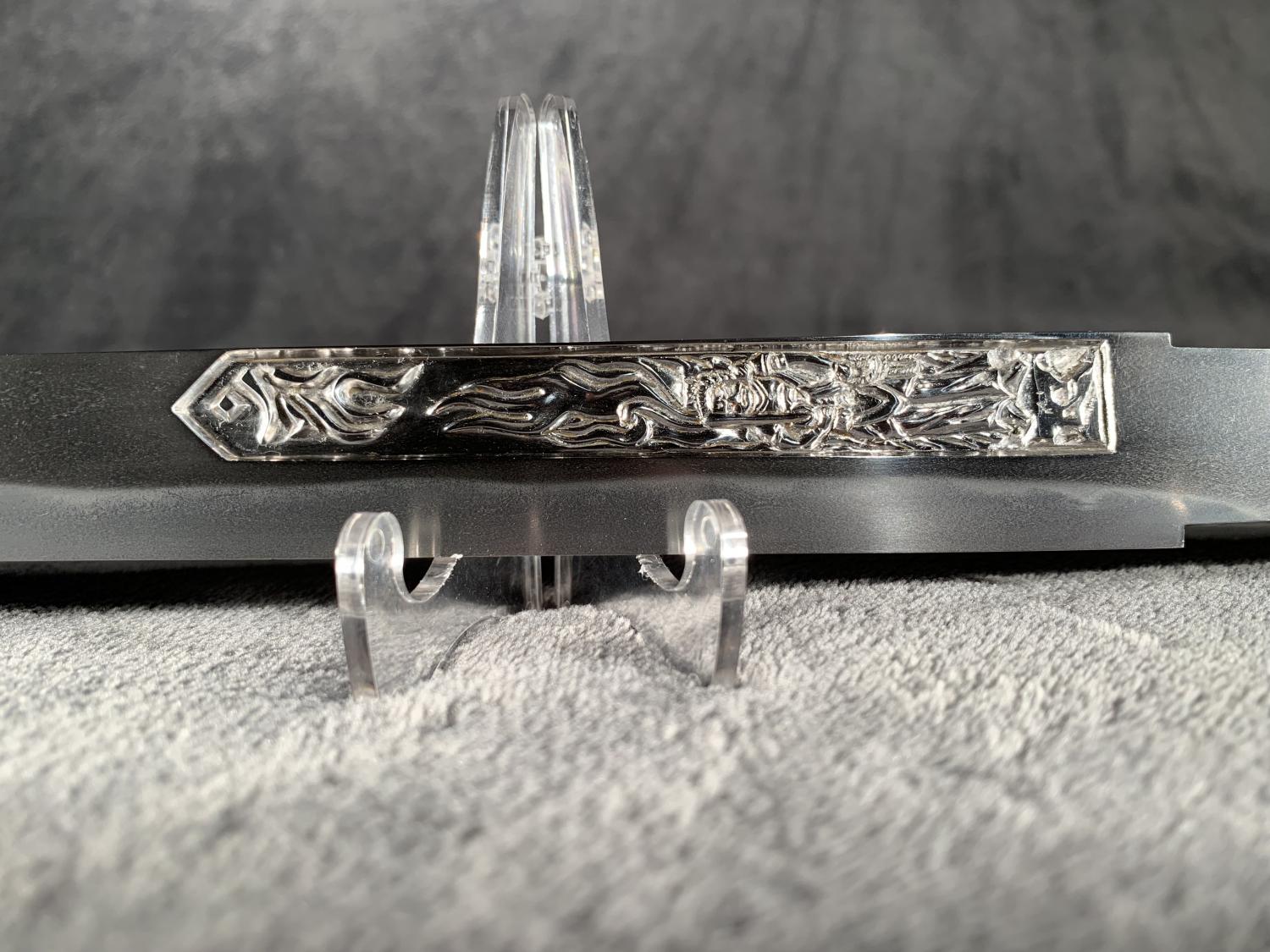
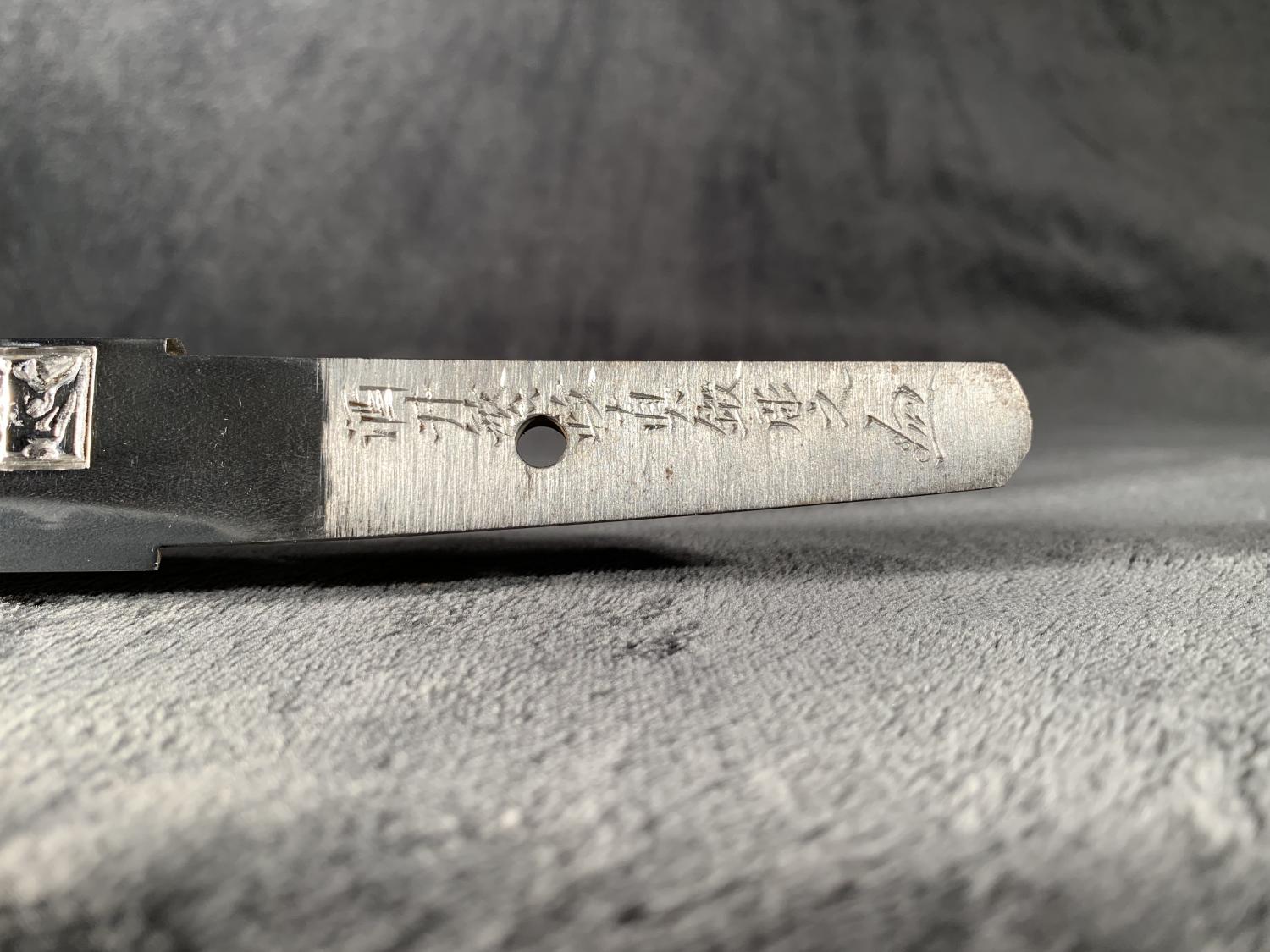
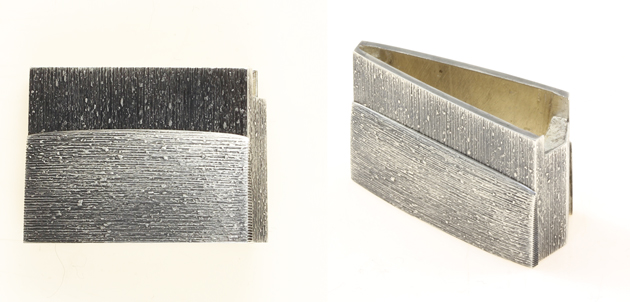
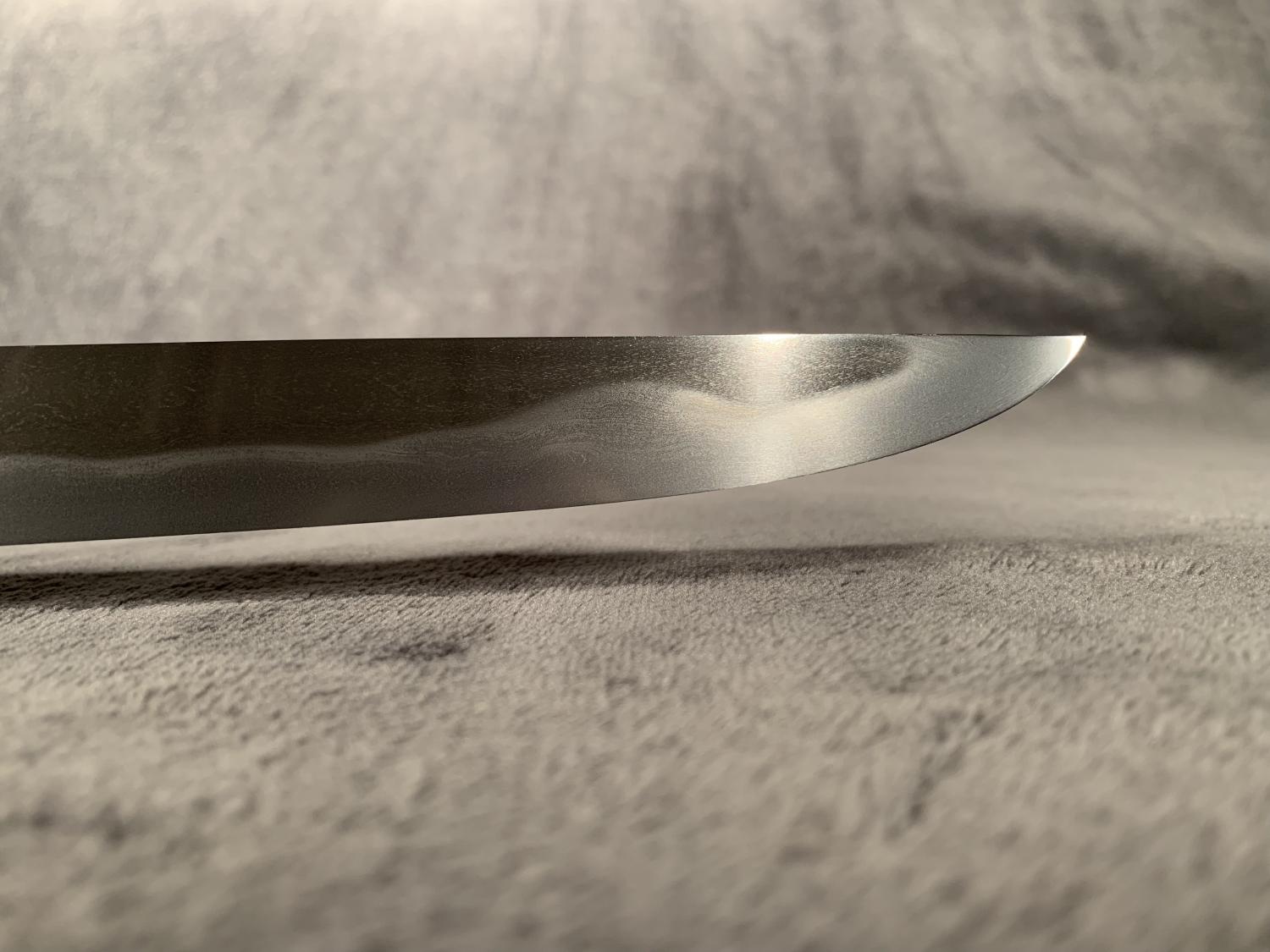
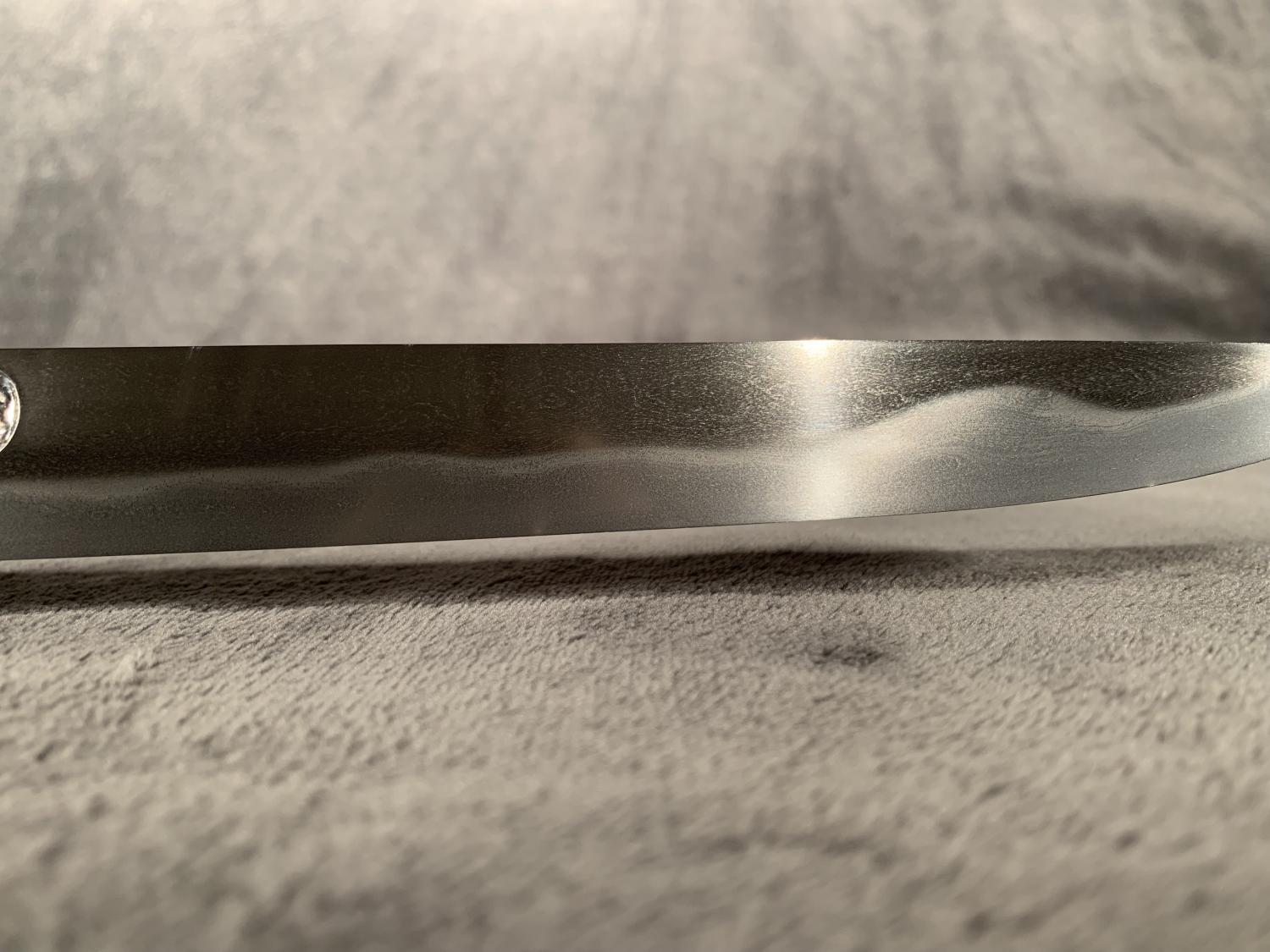
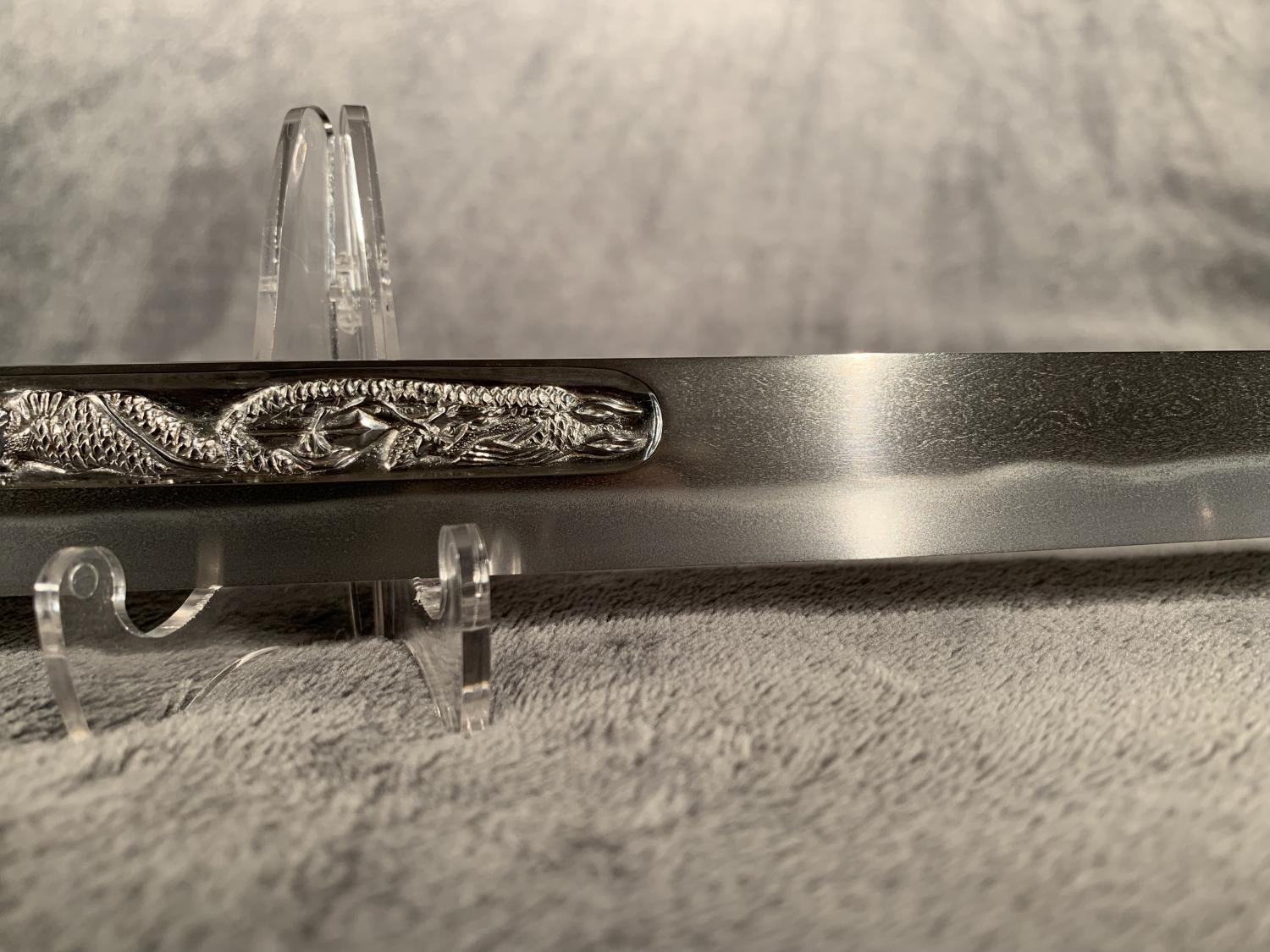
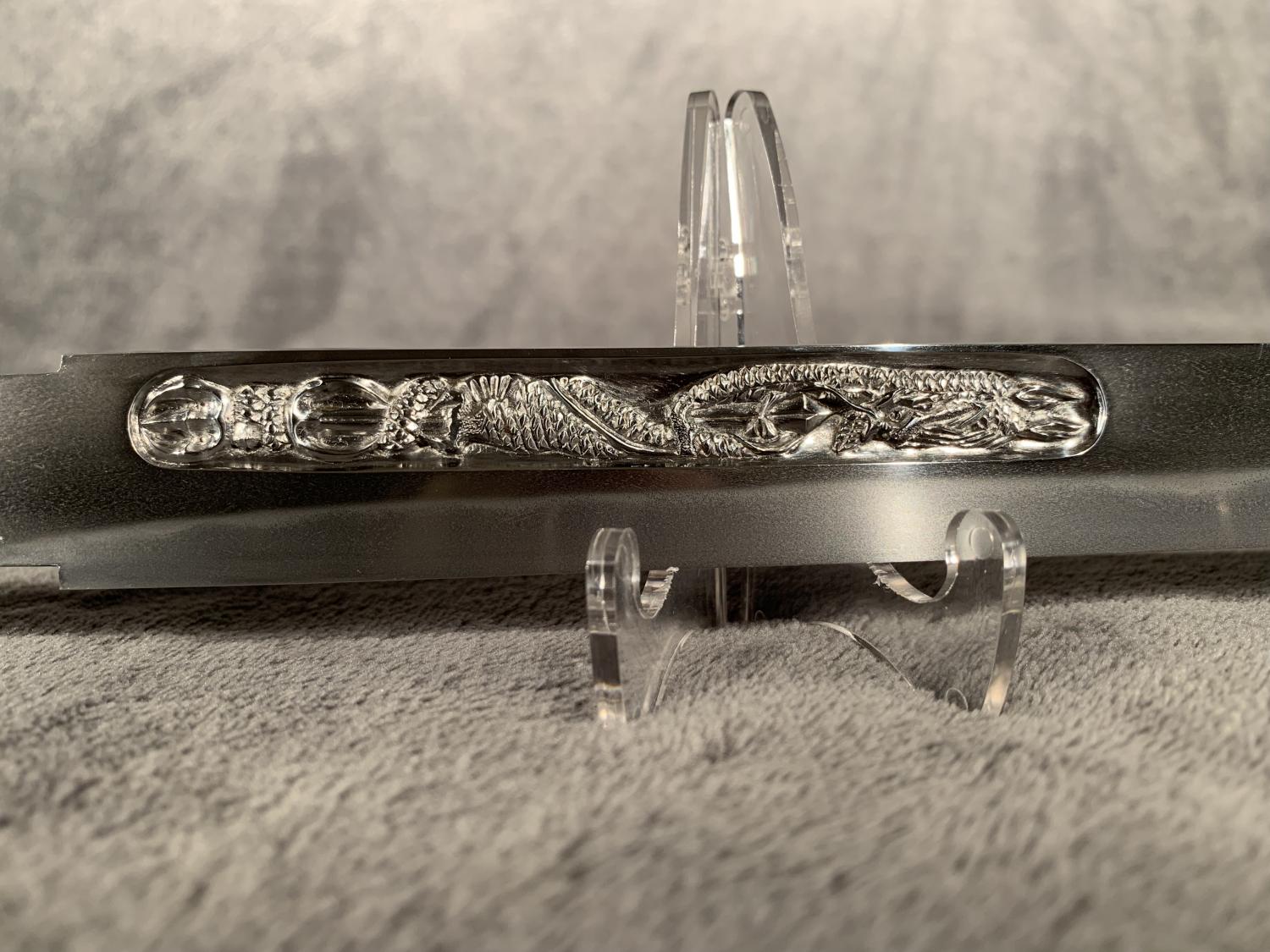
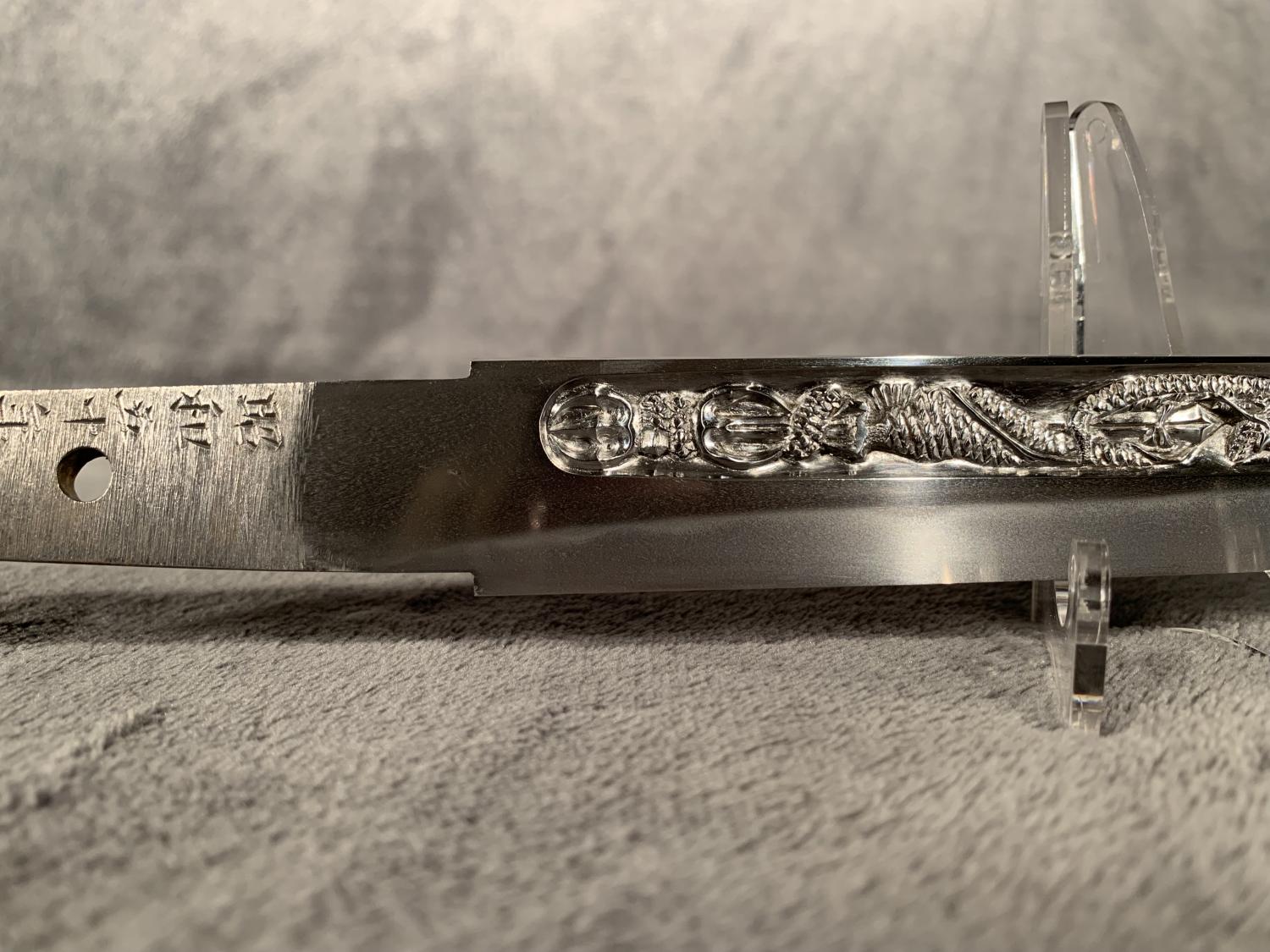
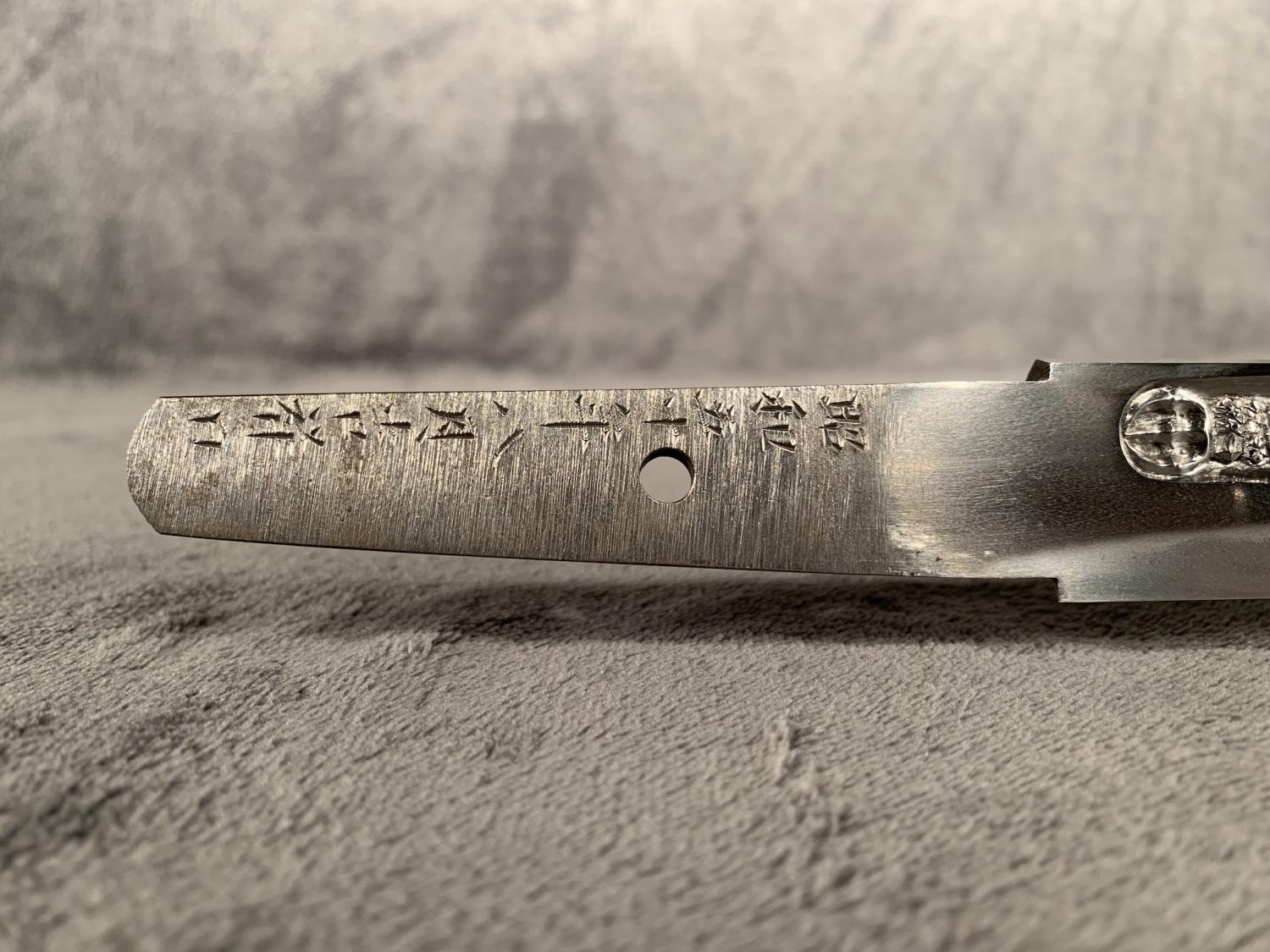
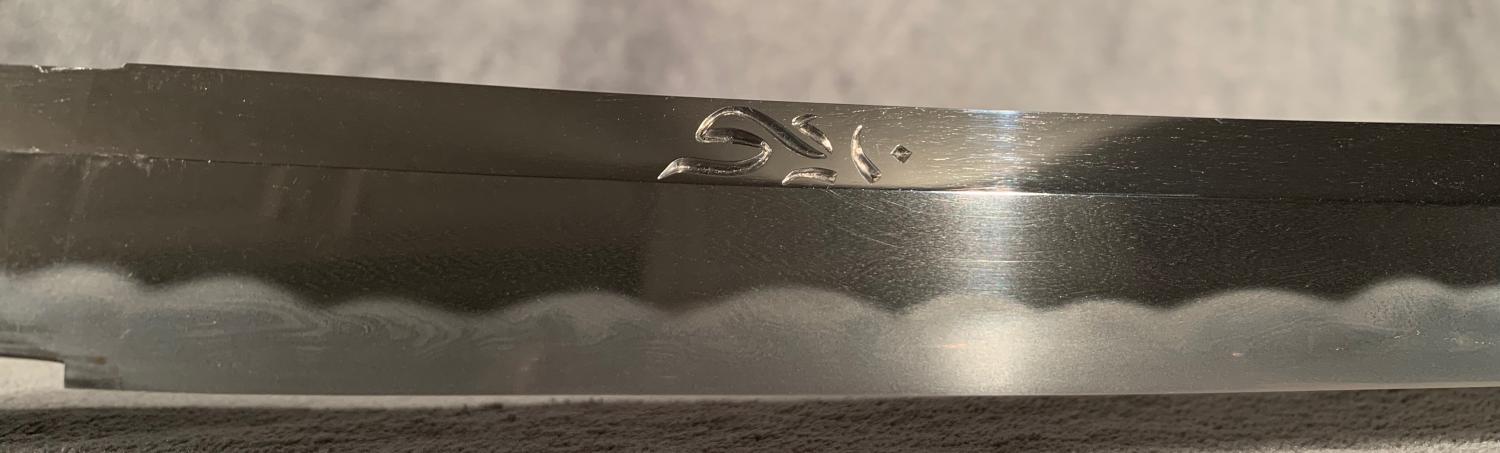
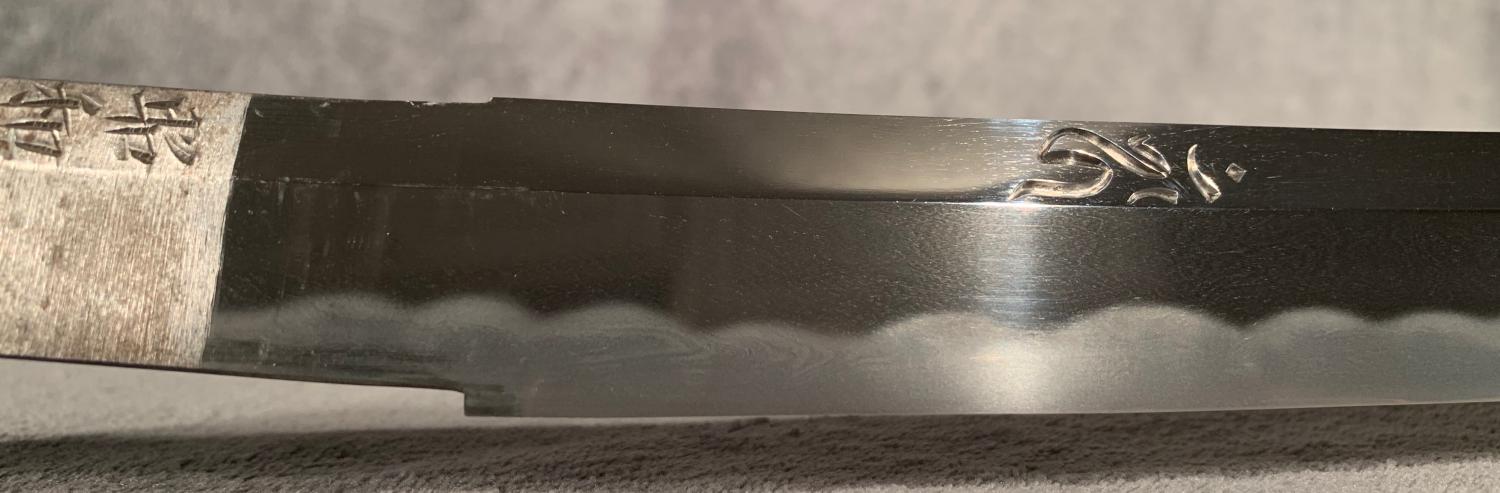
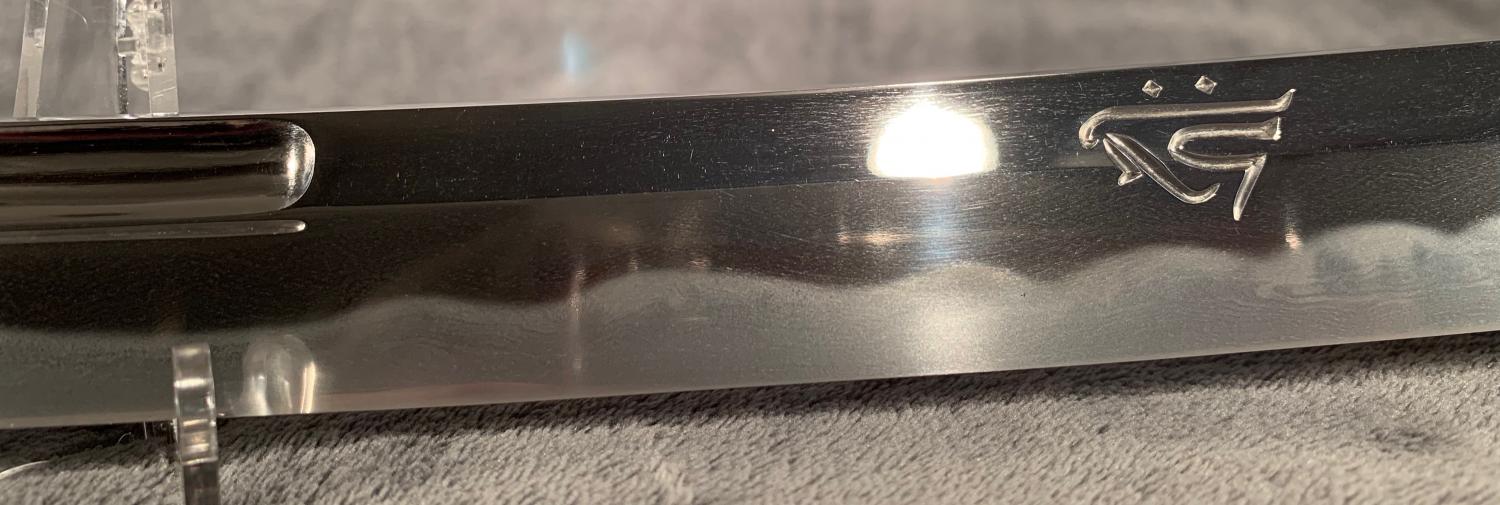
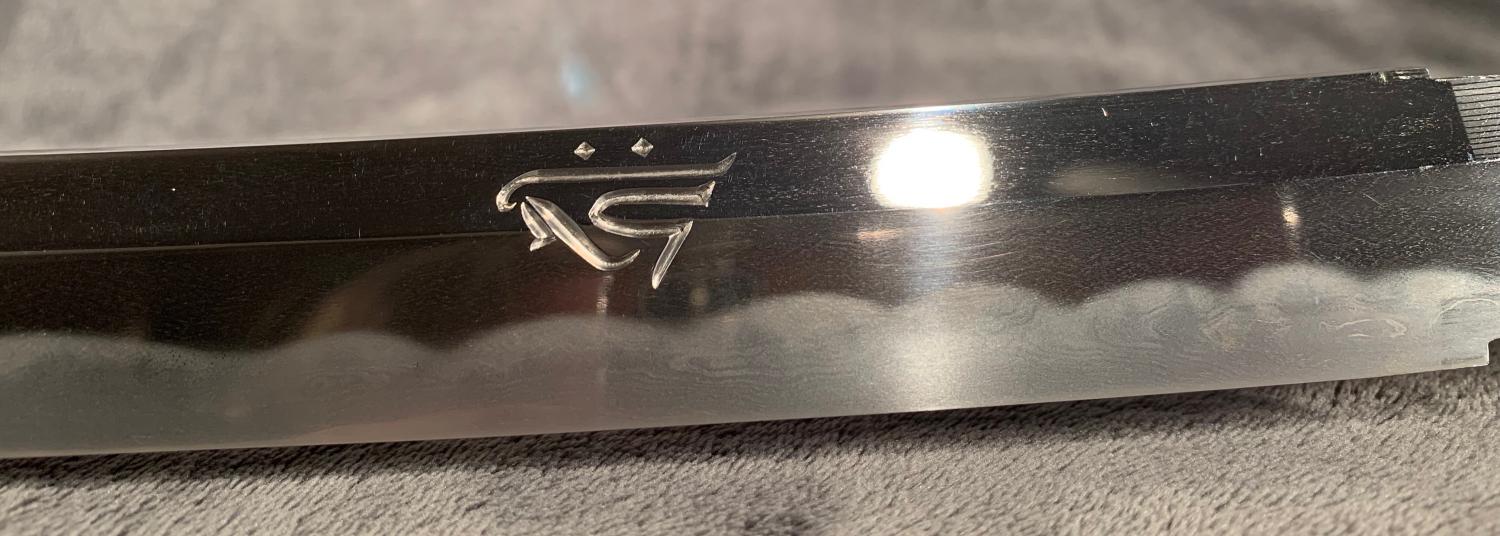
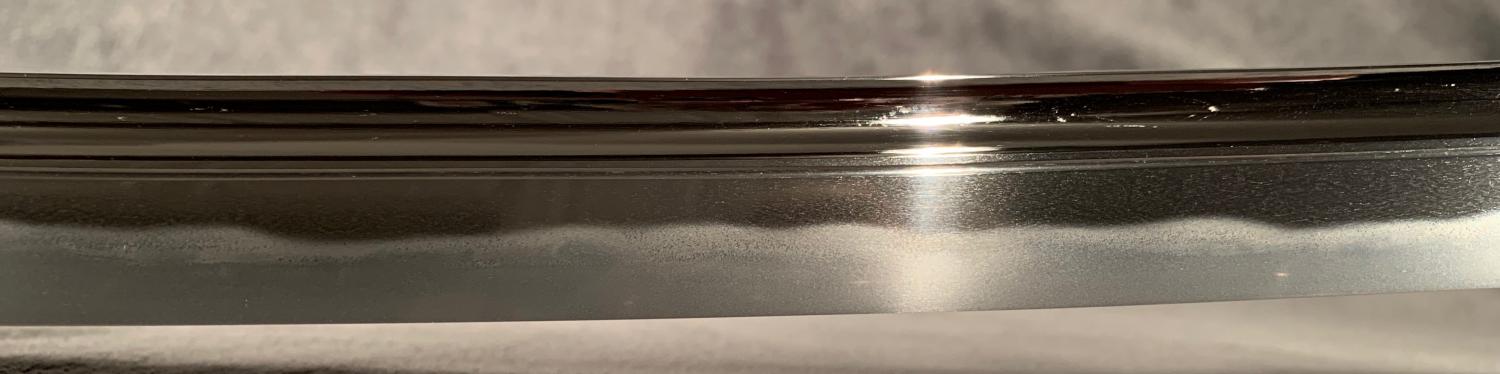
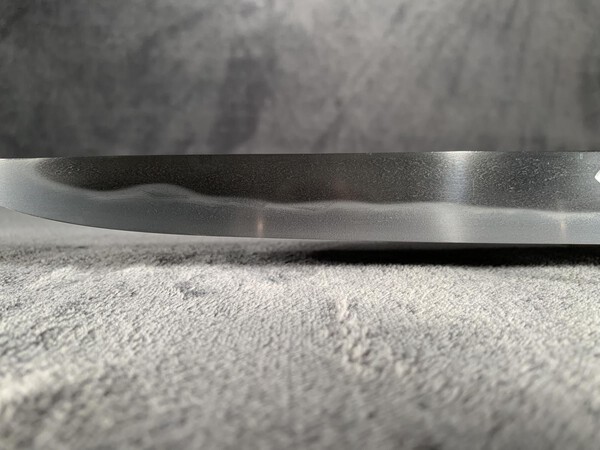
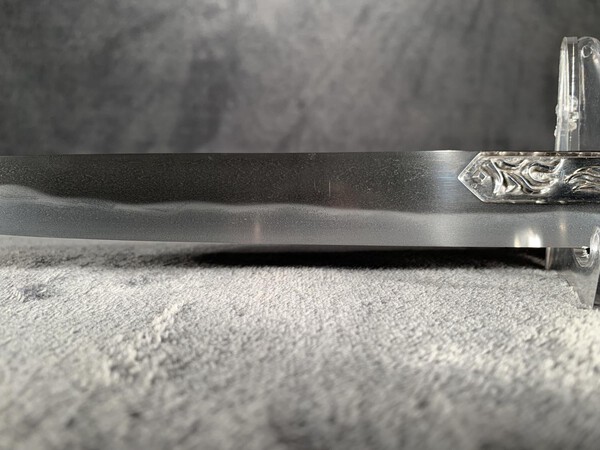
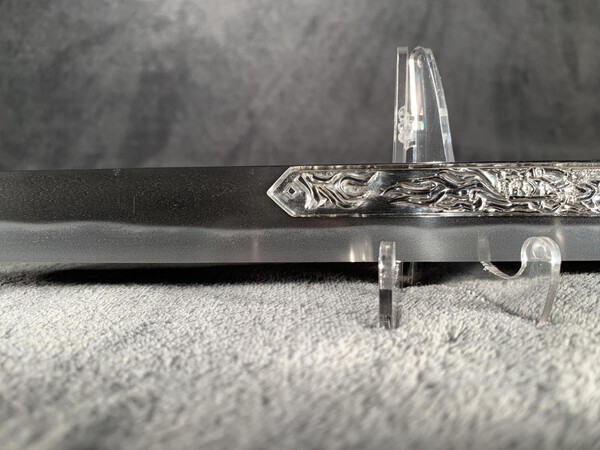
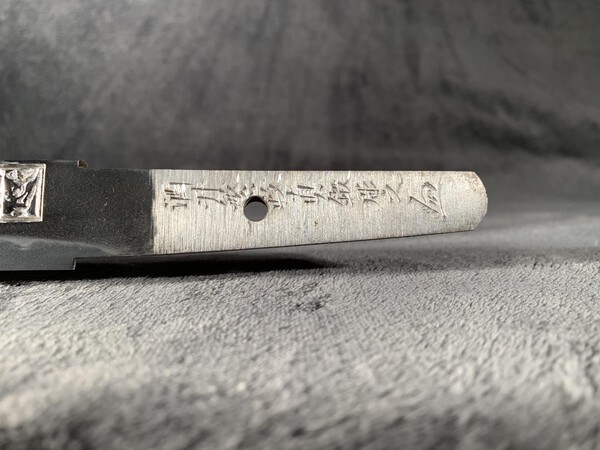
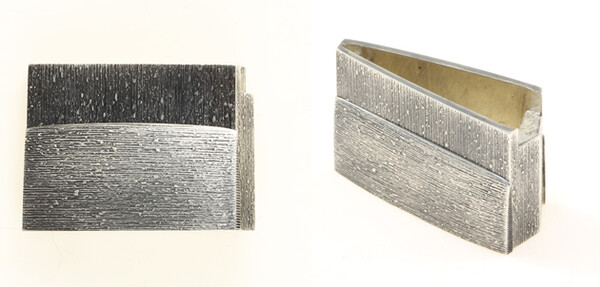
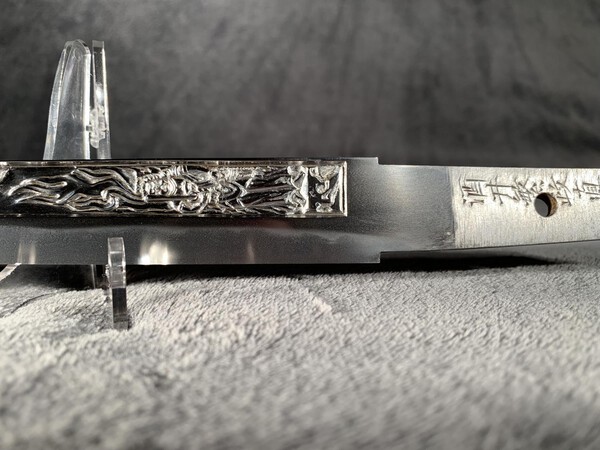
More pics. Professional picture credit to Tsuruginoya.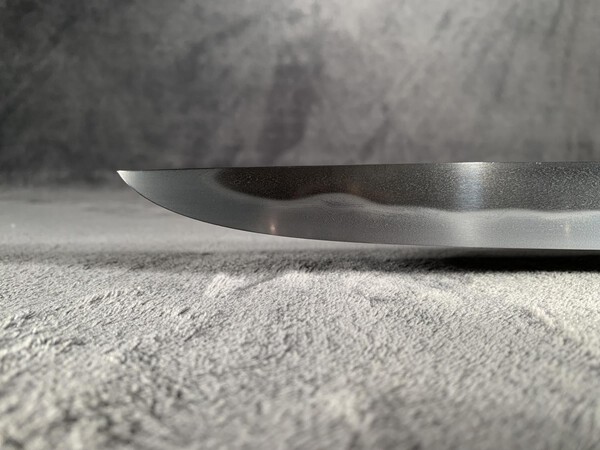


-
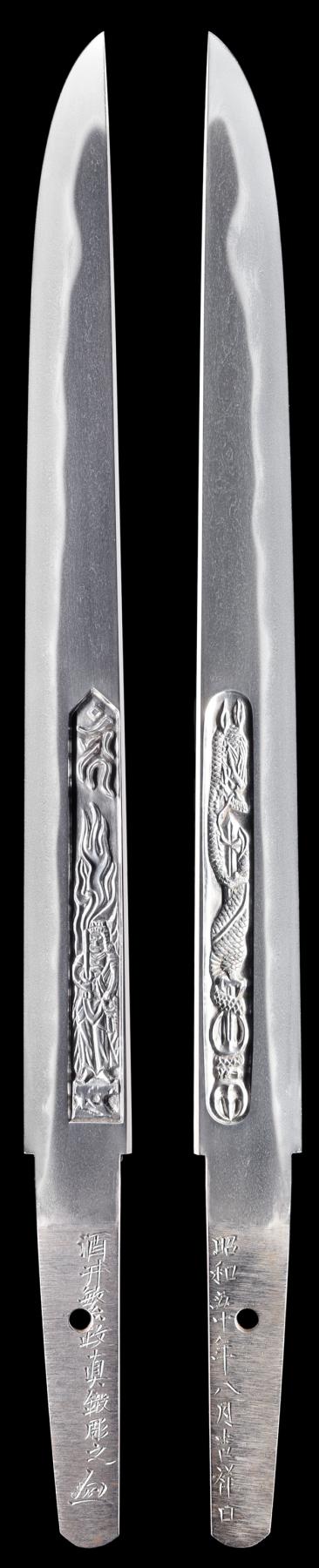
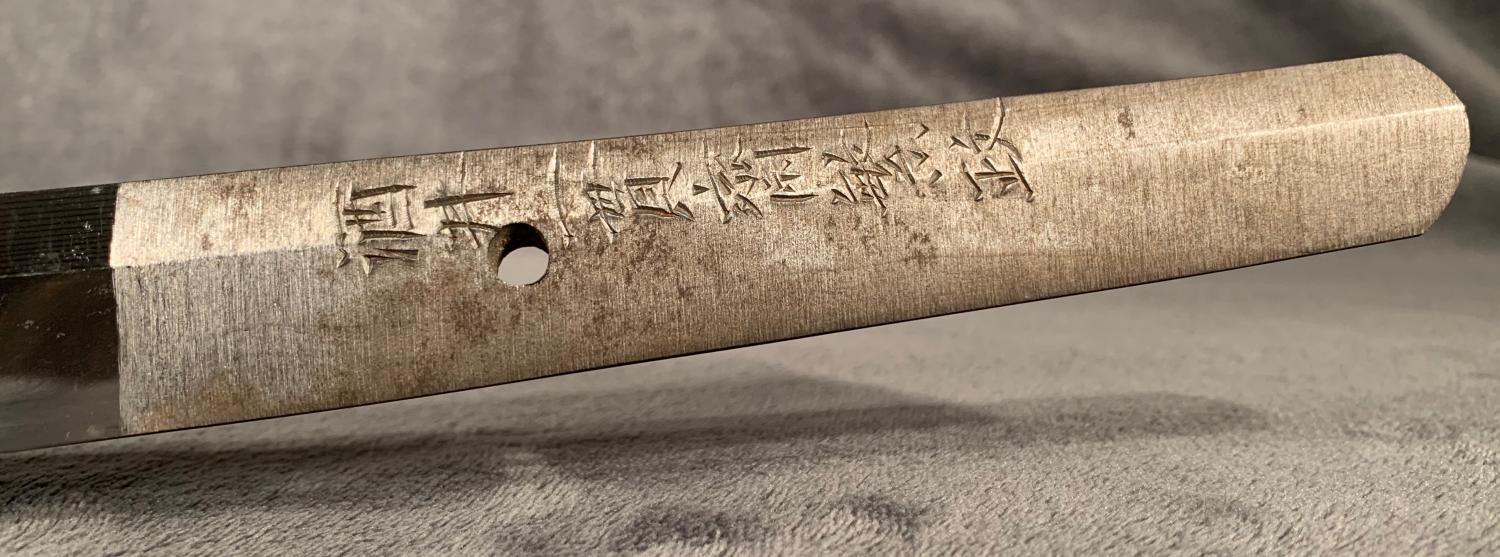
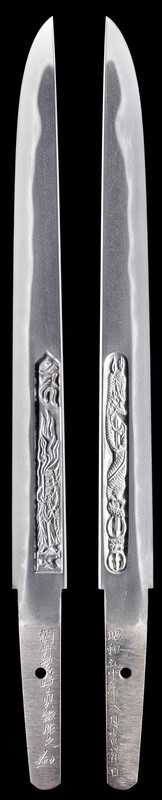
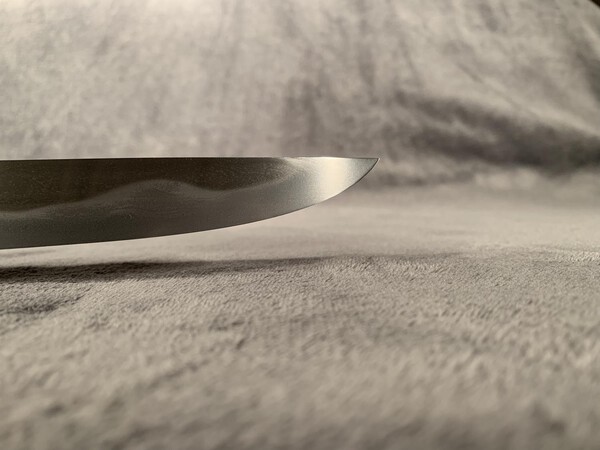
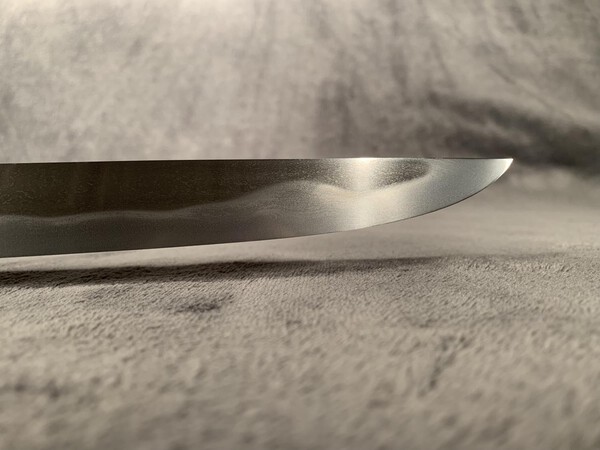
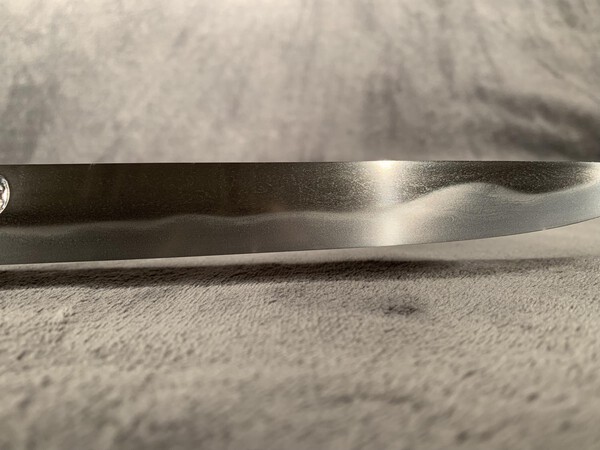
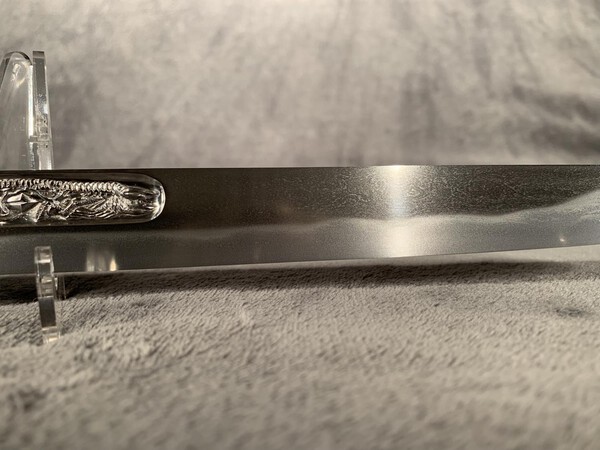
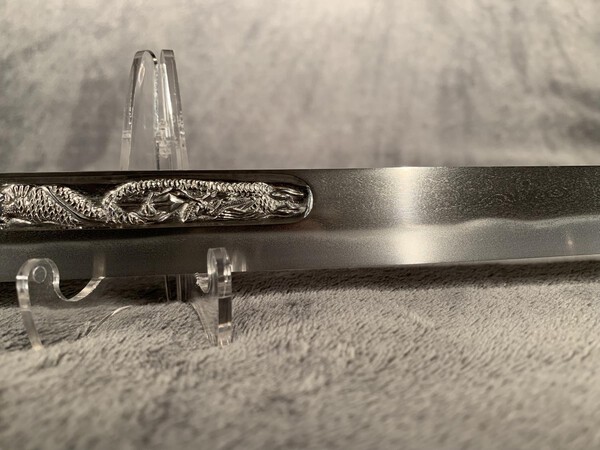
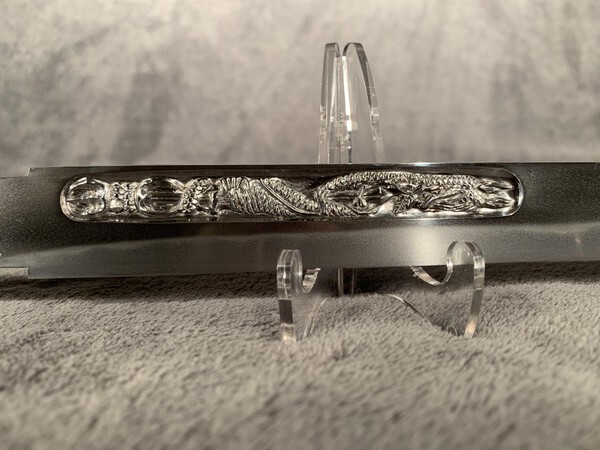
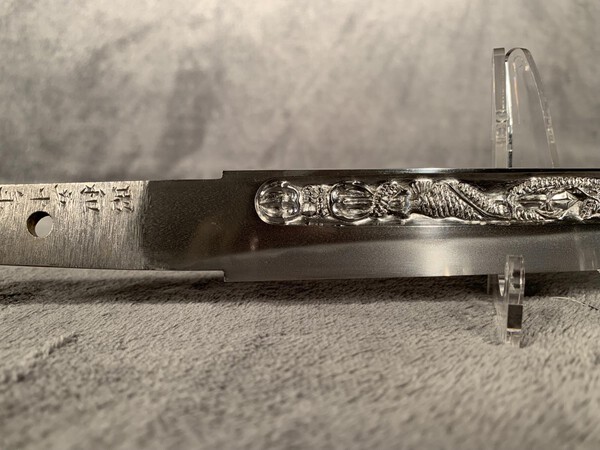
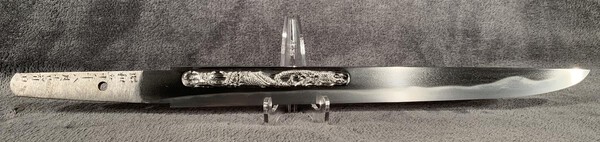
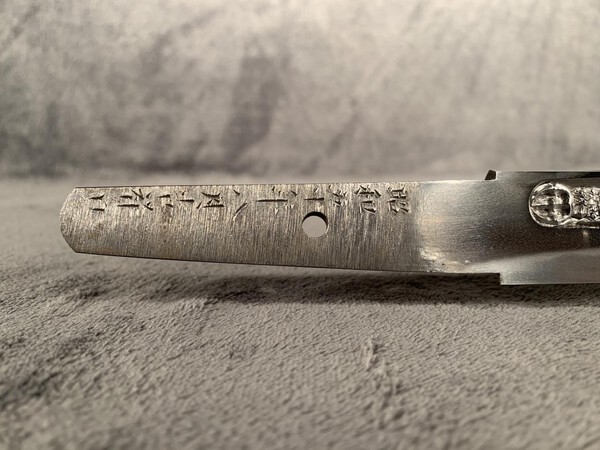
All, Here is my last offering for a little while. It is an absolute masterpiece of Sakai Ikkansai Shigemasa. I have handled or viewed no less than 50 Shigemasa swords and NONE have been of this quality. Am I biased? Of course. But I am also honest. I have attached the sales page, including the asking price, to show the price in which I paid, as I snapped it up as soon as it was listed. I don't recall the exchange rate when I purchased it, but today, the exchange rate is Approximately $7,800 (USD). SOLD Sword Information: Type: Tanto Sugata: Hira-zukuri Mei: Sakai Shigemasa shin tan kore o horu (truly forged and carved by Sakai Shigemasa) Date/Era: Showa go ju nen hachi gatsu kichi sho bi (A good and lucky day in August, 1975) School/Den: Kasama Ikkansai Shigetsugu Mon Tradition: Soshu Authentication/Papers: NBTHK Hozon Sword Details: Nagasa: 28.3 cm Mihaba: 2.6 cm Kasane: 0.65 cm Nakago Jiri: Ubu, Kurijiri Yasurime: Kiri Mune: Iori Jihada: Ko-Itame Hamon: Active Gunome, with Sunagashi and Kinsuji Boshi: Komaru, w/ Short Turnback Smith Information: Rating: - Toko-Taikan: 2 Million Yen - Gendai Tosho Ninki Banzuke: East Block, Maegashira Smith Details: Shigemasa (繁政), Shōwa (昭和, 1926-1989), Tōkyō – „Shigemasa“ (繁正), „Sakai Ikkansai Shigemasa“ (酒井一貫斎繁正), „Tōtō Jōhoku ni oite Sakai Ikkansai Shigemasa kinsaku“ (東都於城北酒井一貫斎繁正謹作), „Sakai Ikkansai Shigemasa“ (酒井一貫斎繁政), „Sakai Shigemasa hori-dōsaku“ (酒井繁政彫同作), civilian name „Sakai Hiroshi“ (酒井寛), he was born on August 19th 1905 as third son of Sakai Yasujirō (酒井安次郎), the younger brother of Miyaguchi Shigetoshi (宮口繁寿), in Shizuoka, in 1925 he started his apprenticeship as a swordsmith under Kasama Shigetsugu (笠間繁継) and became independent in 1932, he signed his name first with the characters (繁正), during World War II he worked for the forges „Nihontō-tanrenkai“ (日本刀鍛錬会) and „Ōkura-Nihontō-tanrenjo“ (大倉日本刀鍛錬所), later he lived in Tōkyō´s Itabashi district (板橋), as his master Shigetsugu he too was an excellent horimono carver, he died 1995 at the age of 91, during World War II he forged ten tantō for Admiral Yamamoto Isoroku (山本五十六, 1884-1943) who rewarded several persons with them for their merits in assisting the attack on Pearl Harbor which was also co-planned by Yamamoto From Markus Sesko's, "Index of Japanese Swordsmiths"

-
Sold!
-
Sakai Ikkansai Shigemasa Daito W/ Bonji And Boho
SwordGuyJoe replied to SwordGuyJoe's topic in Sold Archive
Sold! -
Sold!
-
Sakai Ikkansai Shigemasa Daito W/ Bonji And Boho
SwordGuyJoe replied to SwordGuyJoe's topic in Sold Archive
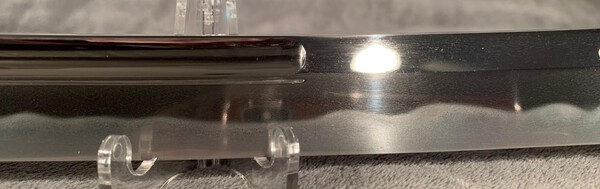
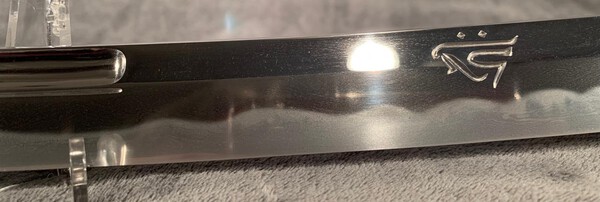
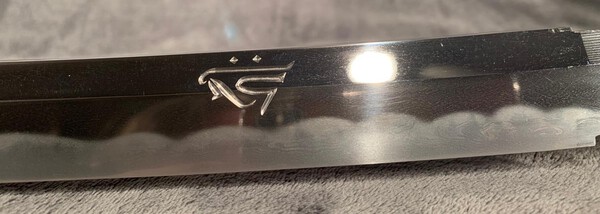
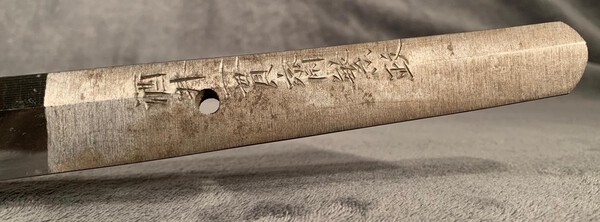
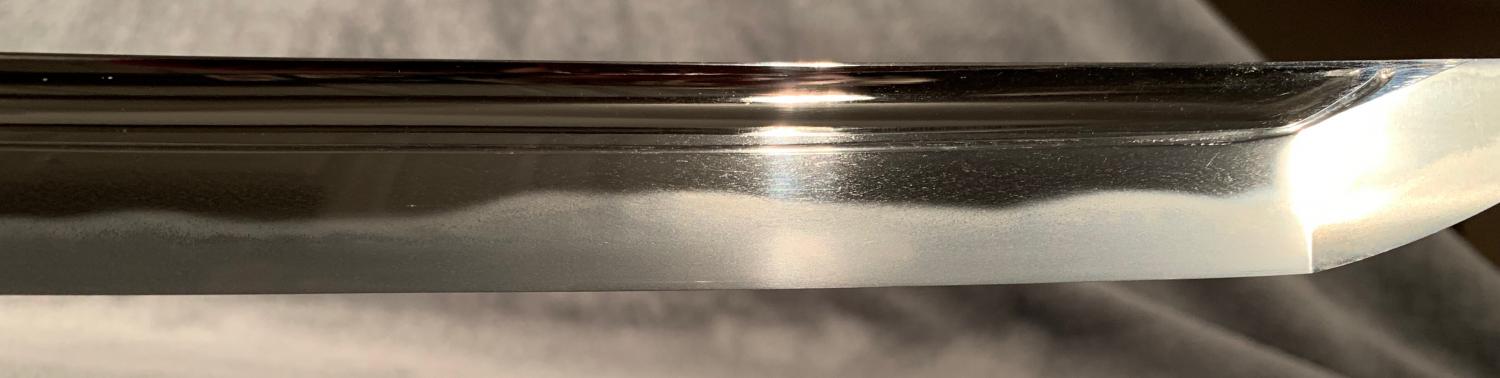
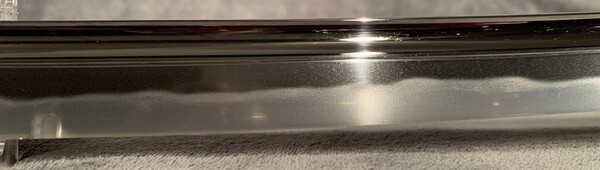
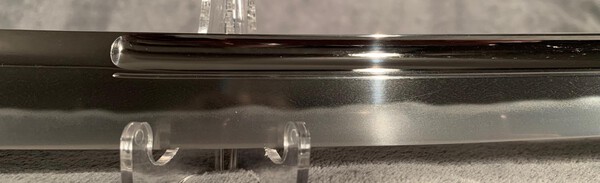
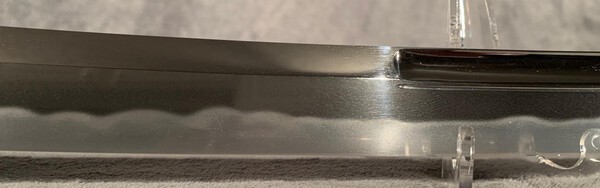
Last pics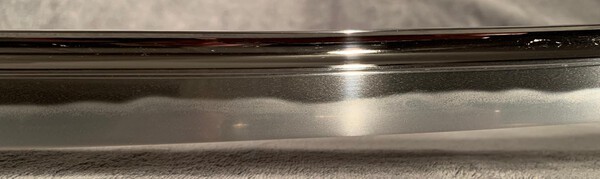

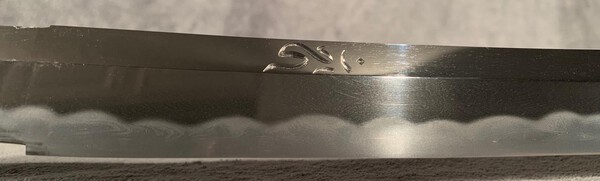

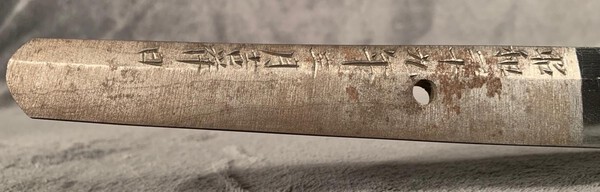
-
Sakai Ikkansai Shigemasa Daito W/ Bonji And Boho
SwordGuyJoe replied to SwordGuyJoe's topic in Sold Archive
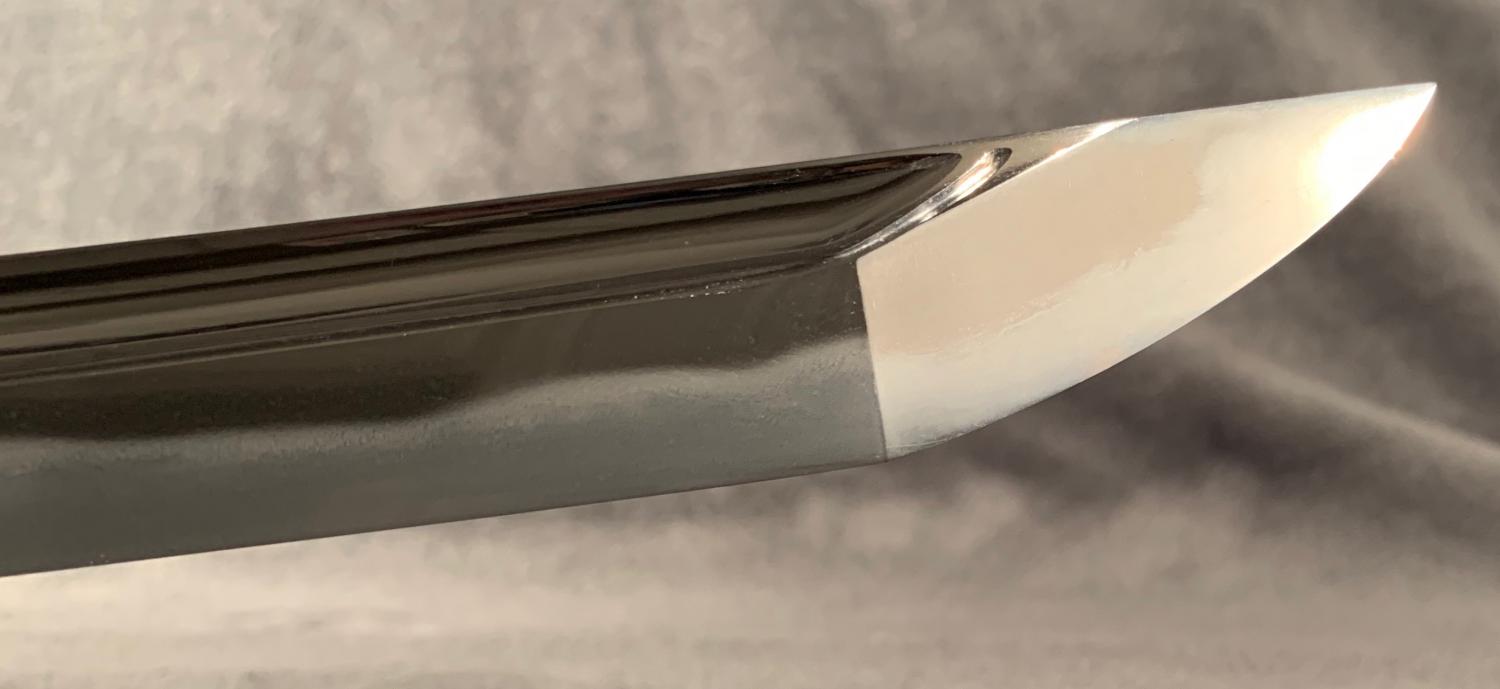
More pics