The Blacksmith
-
Posts
1,573 -
Joined
-
Last visited
-
Days Won
20
Content Type
Profiles
Forums
Events
Store
Downloads
Gallery
Everything posted by The Blacksmith
-
Actually Colin, they had power happers back in the day, this was one of the reasons that certain workshops were situated where they were, fast flowing rivers to power hammers. An abundance of trees for charcoal and of course iron was also usually required if possible. Nes jernverk in Tvedestrand in Norway still have trip hammers that date back to the 1600's, and these are still used every year in demonstrations.
.thumb.jpg.9d983f97359230181d124a60733e8944.jpg)
-
I absolutely agree Colin. There are exceptional craftsmen, and then there are the truly exceptional craftsmen, those with that little extra, divine gift if you will. The Negroli brothers were certainly amongst the latter. The thing that astounds me,with Japanese craftsmen was their ability to cut extremely fine cuts in metal, Today, we have piercing saw blades that will do it, but what did they use in the 15th and 16th century? What, how? What is so astounding with the Negroli, as evidenced here, is not only their absolute mastery over their tools and materials, but thei exquisite mastery of form. Note the way the muscles of Medusa show at the sides, and the delicate way that the breasts on the upturned figure hang slightly inverted. It is absolutely exquisite workmanship, on all levels.
-
The thing that amazes me Colin, is the skill with which the armourers of old managed to make such compound shapes, which today, while difficult enough to do in the traditional manner, are cosiderably easier given the homogenous state of modern smelted and rolled metals, ie. no slag inclusions. Some recent studies in armour metalurgy, have shown some armour ranges from almost pure iron to high carbon steel in just a few centimetres. This must have made forging plates extremely difficult, and the hardening process, where used, perhaps even more so. A true tour de force, made in 1543 by Filipo Negroli of Milan. This is all one piece of metal! Such superb mastery of his material is simply breathtaking. Perhaps the nearest in Japanese metalworking was Myochin Muneakira, who is known to have made somen in one piece! He was extremely adept at repousé.
.thumb.jpg.71fa85260220c739952d294bf87066d5.jpg)
.thumb.jpg.f1be80969c779a449be1cd6b91fde786.jpg)
-
I have spent some time in the workshops at the Tower of London. A wonderful experience for anybody remotely interested in armour. Ted smith (The head armourer there at the time) kindly showed me on one occasion a beautiful pair of mitten gauntlets, and a superb locking gauntlet.........................all of which just happened to have belonged to King Henry VIII ! The workshops at The Tower of London were in the same building as the New Armouries, that housed the Japanese and oriental collections. As you say, some of the tools are believed to have come from the Royal Workshops at Greenwich.
-
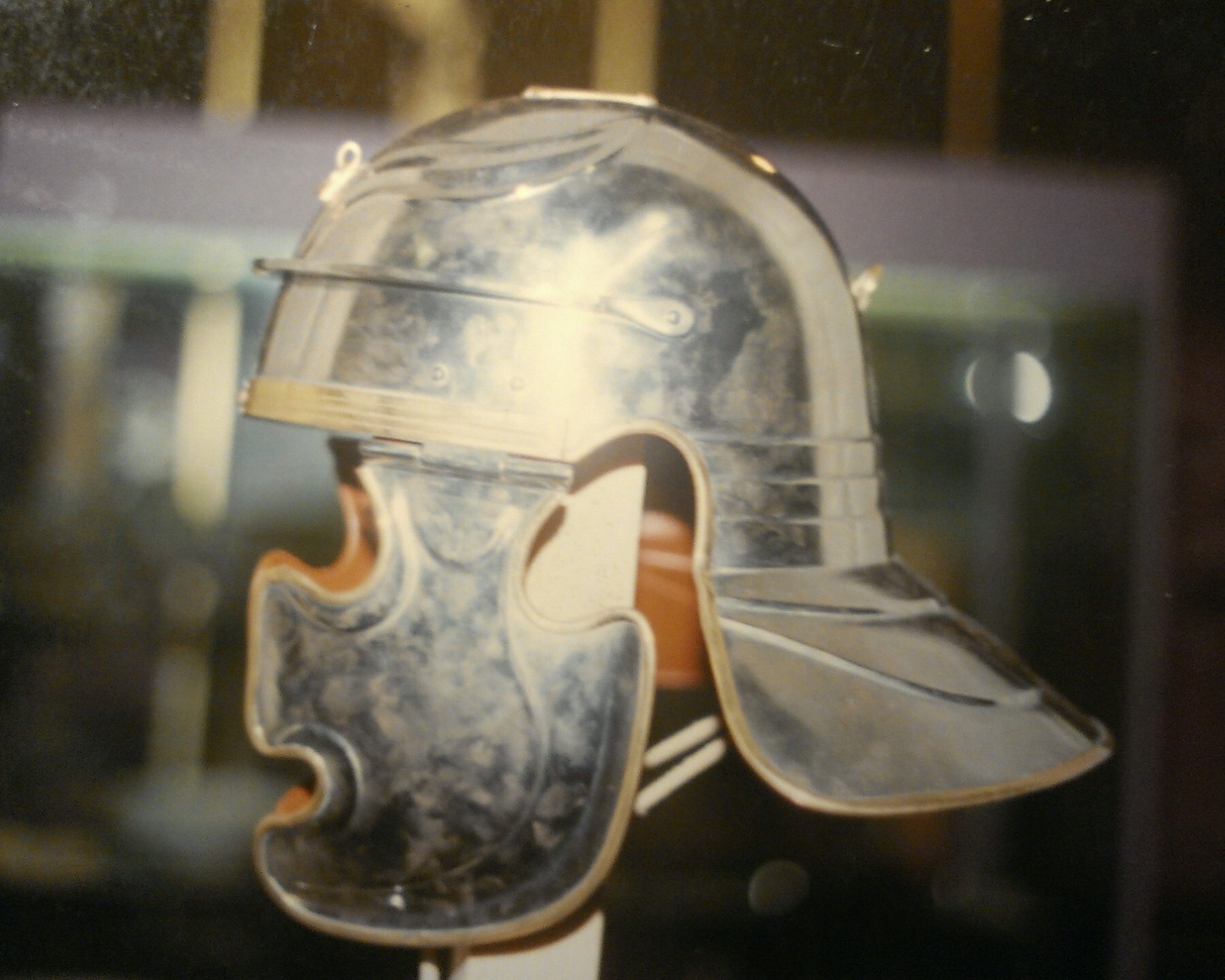
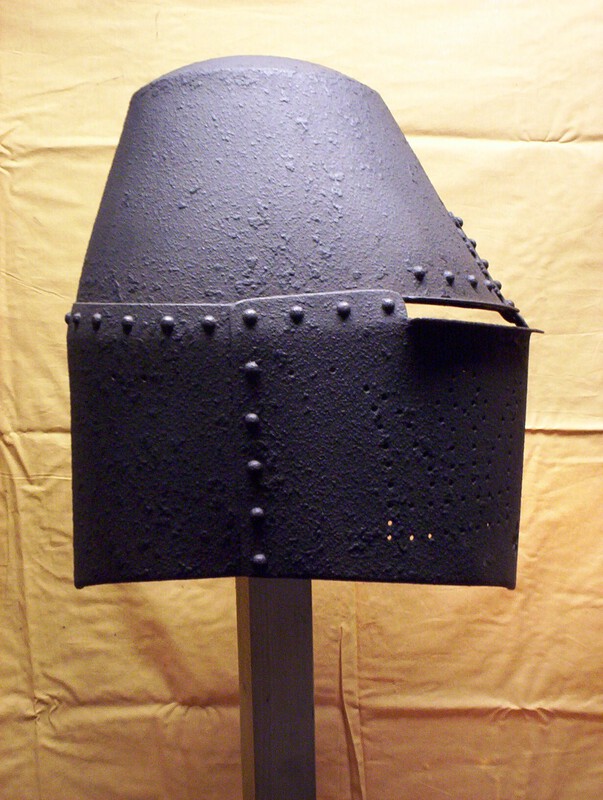
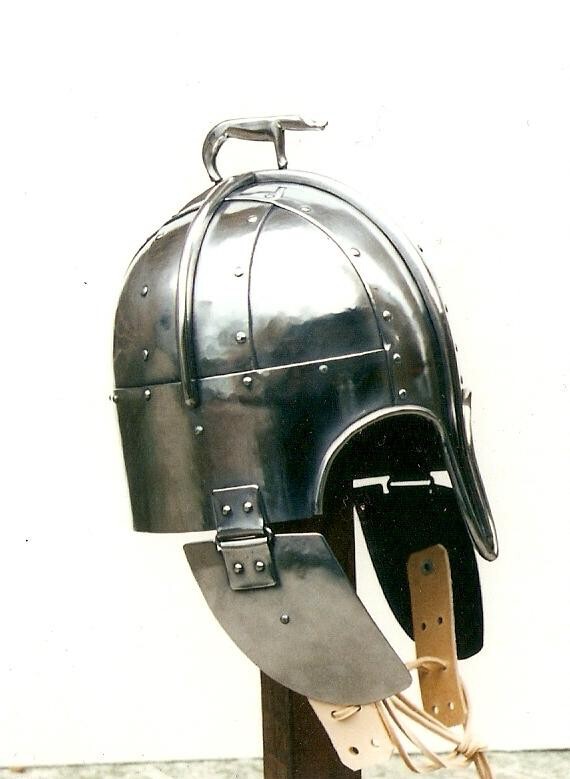
@Matsunoki Sorry if this is a bit off topic mods, but this was the sort of thing that I used to do..... Rough and clumsy compared to Colins exquisite handiwork, but great fun to do nevertheless! Basically, if I can hit it, I can possibly make it! A Roman helmet type C made for Harlow Museum, unfortunately the picture was taken after two school classes had handled it! A copy of the saxon 'Pioneer' helmet. Made from a sketch in the Independant newspaper, but which proved to be surprisingly accurate! When I was living in England I repaired quite a few antiques of various types for dealers, including repairing items of Japanese armour from time to time.




-
@Matsunoki Absolutely stunning work Colin ! A real labour of love I think. Unfortunately, as is usual, it quite probably wasn't you who stood to get the most reward out of your excellent craft and dedication! Did you by anychance take any before and during pictures while you were restoring these? Regrettably, I have rarely done so, and that is something that I greatly regret now. All too often, especially when I have been in a rush to deliver something, I haven't even taken photos of the finished item. Awesome work Colin, and something to be extremely proud of!
-
That's tragic Colin, but something that I can only too well understand. After nearly fifty years of hammering metal the body is suffering somewhat. For me, this is why perhaps making an okimono would be a nice little 'sit down job'! I can all to well understand your wife's comments too, sometimes we are just having too much fun in the workshop, and time just runs away.
-
@Matsunoki Colin, people tend to shy away from metal, but if you can use tools, as you obviously do, and have the eye, then metal is really no different from wood or bone or any other material.. Yes, there are different techniques to learn, but that is the fun bit! The only time that it scared me was the first time that I worked in gold, that was different ! I was only thinking that it was hundreds of pound worth of material in my hands, and I was scared of damaging it! However, after I convinced myself that it was just another piece of metal, it was a piece of cake. Try working some copper first, and then progress. Metal is fun, and maybe you'll find another outlet for your skills and talents. Maybe I'll try and amass some pictures of crayfish etc, and then have a go during the winter. Unfortunately, my skills are very limited, I can copy many things, but have almost never had an original idea in my life. So show me a picture of something and I'll have a go, but ask me to design something and it is a lost cause!
-
Not sure about the crabs, but I certainly have a desire to make a crayfish or lobster. Not sure if I'd make it in iron and russet it, or make it in copper, both have their merits, though I guess that iron would be the most traditional. Perhaps that will be my winter project for next year. Another little masterpiece that Mike Dean showed me was a little beetle. All the legs etc moved and it was absolutely stunning, but when you pulled the shell apart two little laquer wings emerged. Simply unbelievable workmanship.
-
Certainly some mouthwatering pieces there. if only I'd won the lottery, as there are some superb okimono there. I particulary like the crabs. I can remember Mike Dean showing me an absolutely stunning Myochin Munesuke okimono crab. It was absolutely exquisite! Thankyou for posting that Colin.
-
Translation help with Signature on Gunto
The Blacksmith replied to Skeezy Bojangle's topic in Translation Assistance
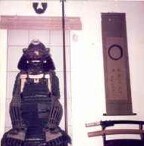
Obviously Brian not preferable to the real thing admittedly (when it is the 'real thing' bought from a reputable dealer that is!). However, I used clove oil on my blades quite a bit, without any problems. I never had any problems with staining either it must be said, though the slightly thicker clove oil did seem to darken slightly the shinogi and the jigane of a Kanezane blade that I had, but that was the only one, and I always put that down to the metal that he used in that particular blade (?) The clove oil that I used was thicker than commercially bought choji oil, but when I applied it I always wiped of most of it afterwards anyway, leaving just a very thin film on the blade, so it never seemed to be a problem. For the record, I cleaned and oiled all my blades twice a year as a matter of routine. How often do other people clean and oil their blades? -
That happened when the first series came out as I recall. Prior to the series coming out WWII officers swords where from about £75 upwards. After the series came out the were from about £175! Then came the Great Japan Exhibition at the Royal Academy, and things just snowballed from there....... I just love their fanciful descriptions on that site Alex. I was looking at a couple of items from the Napoleonic War, and the descriptions seemed to detail the entire history of the conflict, almost none of which had anything to do with the object in question!
-
Translation help with Signature on Gunto
The Blacksmith replied to Skeezy Bojangle's topic in Translation Assistance
Choji oil is clove oil, and whilst not quite the same as choji oil bought for the purpose, you can get clove oil from a chemist, as it is used for dental pain. I used to use it on my blades when I was collecting them. Cheap, effective, and smells great. I have heard somewhere that it was said that the weather was suppose to change when a sword was drawn in a house, as the gorgeous strong smell of the choji was thought to remind one of summer. I cannot remember where I read that, but it is a nice story. Perhaps this too gave rise to the myth of perfumed blades, as a blade once oiled with choji oil can smell of it for years afterwards, even if the oil is totally removed. I hope you like the smell of cloves! Russ -
Translation help with Signature on Gunto
The Blacksmith replied to Skeezy Bojangle's topic in Translation Assistance
To be honest Kevin, I'd really suggest doing absolutely nothing until you have posted pictures of the fittings and the complete blade. The polish , as I am sure you are aware already, can easily be ruined by well meaning owners. There are some very knowledgeable people here who will be able and willing to guide you on the best course of action given the blades condition. Welcome to the forum by the way! Russ -
Looks very professional Adam! Really nice job.
-
sword that should not exist??
The Blacksmith replied to Jacob Rudnicki's topic in Translation Assistance
Shukichi, that is interesting. Thank you very much for that Ray, much appreciated. It is forty odd years since I learned to read any kanji, and I have forgotten much of it, so I am in the process of trying to remember them again! -
sword that should not exist??
The Blacksmith replied to Jacob Rudnicki's topic in Translation Assistance
@Ray Singer Ray, what is your reading of this please. Yamaguchi is easy enough, and my reading of the last kanji is Yoshi, though it may have other readings perhaps. But that third kanji is one that I am unfamiliar with. My thinking was that it was a perhaps a badly written Toshi. -
sword that should not exist??
The Blacksmith replied to Jacob Rudnicki's topic in Translation Assistance
For what it is worth, I think the mei is trying to say Yamaguchi Toshiyoshi, but don't take my word for it, as my kanji is deplorable these days! -
sword that should not exist??
The Blacksmith replied to Jacob Rudnicki's topic in Translation Assistance
Jacob, I am sorry for your disappointment, truly I am. However, if you are really interested in Nihonto, do stay around and learn, there are many very knowledgable folks here, who all have a deep love of Nihonto, and will be very happy to help guide you in this fascinating hobby. I wish this forum was around when I started collecting forty odd years ago! Regards, Russ -
sword that should not exist??
The Blacksmith replied to Jacob Rudnicki's topic in Translation Assistance
Unfortunately Jacob, Matsunoki is quite correct, this is a modern Chinese copy. If you have a look on ebay you will see many simliar swords. I am sorry, as this is obviously not what you wanted to hear, but unfortunately it is so. And if you look further on this forum, you will see plenty of photos of how that nakago (the tang) should look, colour, file marks and signatures. -
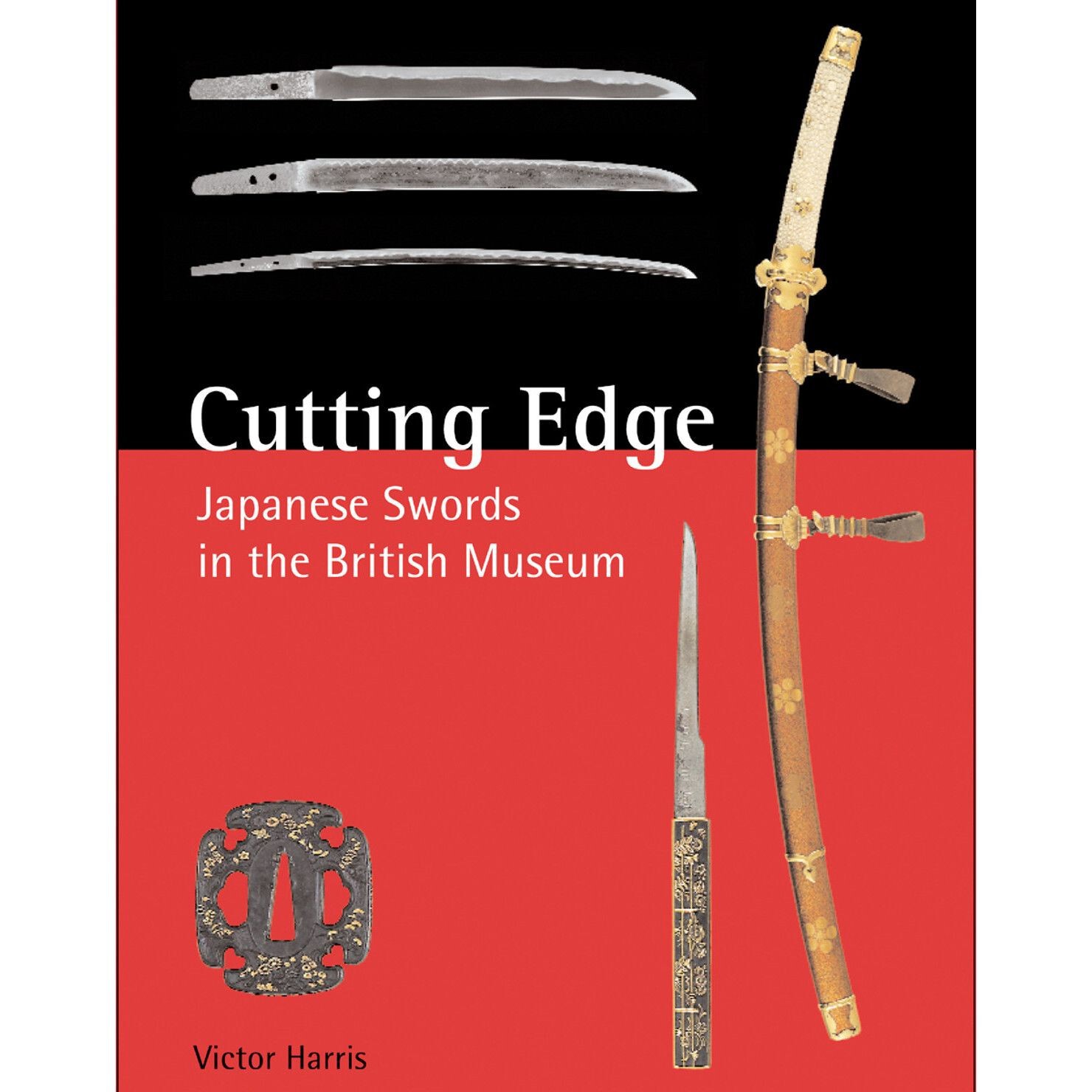
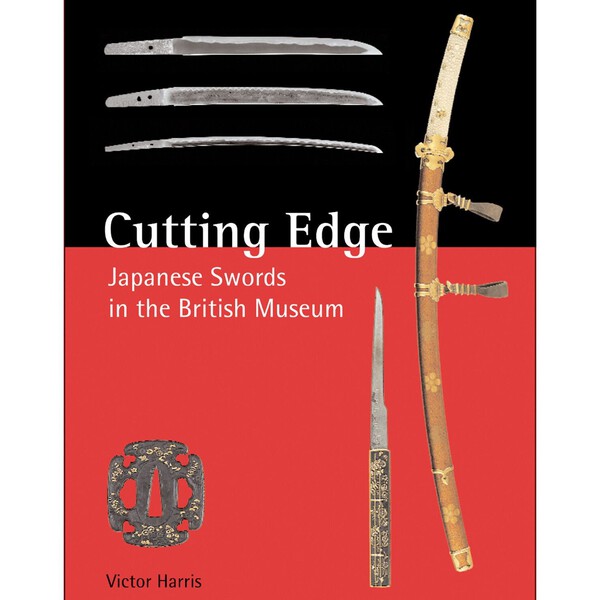
A book that cannot be recommended highly enough........... Unfortunately, no photographs, but a superb book nevertheless! Another book that I would recommend, and one that does have many beautiful photo illustrations is...... It is a stunning book and extremely well explained. Not blades that we are likely to be able to acquire, but extremely informative.

-
Congratulations on acquiring your first nihonto. A far more imposing piece than my first one that is certain! Well done. As has been mentioned, if you haven't already done so, then start acquiring a good library, this is essential, and imensely rewarding.
-
Anyone remember this book?🙂
The Blacksmith replied to Matsunoki's topic in General Nihonto Related Discussion
@Matsunoki Did you know Mike when he had the shop in St. Giles Circus ? I often used to pop into Nihon Token when it was in Museum St. We'd chat over the odd glass of sakè. I bought a lot of books from Mike, and a few swords too. Amongst other gems, Mike had an exquisite Muramasa tachi blade which he showed me once. It was absolutely stunning! -
Anyone remember this book?🙂
The Blacksmith replied to Matsunoki's topic in General Nihonto Related Discussion
I too bought many of my books from Skafte in Denmark. Many of them were later destroyed in a fire unfortunately, and are prohibitively expensive to buy again. I am however, slowly trying to re build my Japanese library again, and probably have about fifty books on the shelf now. I also bought a lot of books on European arms and armour from Skafte too. My first Japanese language book, also bought from Skafte, and one that I would very much like to get again, was Nihonto nin, Nihonto ken. My copy of Nihonto by Hakusui Inami I bought from Mike Dean in Museum St. London, back in the late 70's. -
Anyone remember this book?🙂
The Blacksmith replied to Matsunoki's topic in General Nihonto Related Discussion
Yep, I've still got a copy on my bookshelf. I think I gave my original copy to a friend though, as this one is a 1998 edition. A great little book. My first nihonto books were John Yumoto's The Samurai Sword, and Alfred Dobrèe's Japanese Sword Blades, both of which I still have on the bookshelf. These I bought back in the early 1970's.
.jpg.08d32d71c187fdfd2db3a600f8ff37e4.jpg)



.jpg.01853bf0a521c21d62b92482a7e150f6.jpg)
.jpg.7f8116d2a5af33af114b9d75da2998ea.jpg)