John C
-
Posts
2,715 -
Joined
-
Last visited
-
Days Won
18
Content Type
Profiles
Forums
Events
Store
Downloads
Gallery
Everything posted by John C
-
Thank you for the info, Nazar. John C.
-
Sam: What's interesting is that this could be the genesis of why the Chinese fakes have offset machi. I could imagine them taking apart a type 95 and thinking this is how it is supposed to be done. John C.
-
Steve: I think your method with the foam was fine, just switch out the foam for leather. There is an old weightlifting belt on shopgoodwill that would make a dozen very thick seppa. https://shopgoodwill.com/item/254983331 Just lightly trace a seppa onto the belt using an exacto knife. Then slowly cut through with the exacto knife, which make take several passes. You can then treat the seppa just like wood and sand the edges smooth and even burnish the edges (to smooth and round them) with water and the shaft of a screwdriver. John C.

-
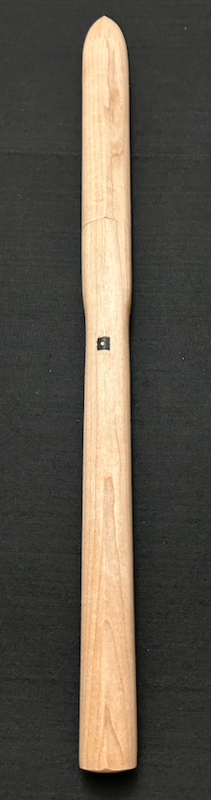
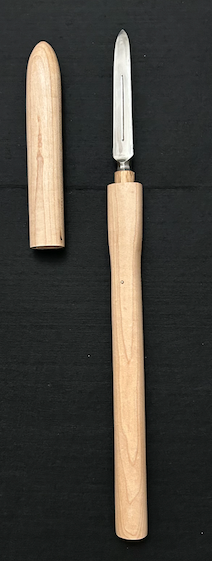
Honoki is much easier to work with. Almost as light as balsa (hence the light weight of shirasaya). It also tends to have long straight grain, which again is perfect for shirasaya. Maple is much harder, denser, and heavier. And as a consequence, much harder to carve. I had to stop about every 10 minutes and re-sharpen the tools. But the upside is that hard maple doesn't dent as easily. In any case, honoki is nearly impossible to get here in southern California. My local wood suppliers didn't even have American magnolia. I just happen to have some left over maple from another project so I used that because of the grain and color. John C.
-
Hello fellow woodworkers: I wanted to share this shirasaya I made for a naked Monju Kanesada yari. Mostly because of the saya's unusual shape. The shape was inspired by an existing shirasaya I have on a Inoue Shinkai yari. The wood is aged (i.e., very low to no VOC's left from the tannic acid) hard maple with an ebony inset for the mekugi. What makes it particularly difficult to manufacture are the number of compound angles. There is a central peaked rib that runs the length of saya but only on the top, which makes it easier to index which way the top aligns to the bottom half. From the rib, the width is a flattened oval, widening out just after the mekugi ana to accomodate the extra width on the blade section and rounded on the back side. The rear end is also dome-shaped and the tip is sort of boat or airplane shaped. All of which brings me to the challenging part - this must all be done by hand. No power tools involved (with the exception of drilling the mekugiana to keep it straight). Just a kanna (Japanese block plane), some different sized oire nomi (chisels), a bench scraper, and some files. The finish is a standard woodworkers finish of boiled linseed oil followed by carnuba paste wax. Thanks to the various bench scrapers, the wood is extremely smooth and tactile. The Japanese do not usually use sandpaper so I didn't either. It's tough not to hold it! If you have any questions on the process, I will be happy to answer. John C.



-
Nazar: I've been interested in this 3-D printing concept for some time to make habaki molds for metal casting. Are you doing this at home with a small printer or at a workshop with an industrial printer (usually used for making car parts)? If at home, could you name the brand and model of the printer and the plastic medium you use? Regards, John C.
-
New member, old sword, can't remove Tsuka
John C replied to MichaelL's topic in Fake Japanese Swords
Michael: My first impression was that it may be a reproduction. But what is going on with that latch? Could that be holding the tsuka on? Could just be the lighting. John C.
-
Japanese Simple Weapons of 1944-1945
John C replied to Kiipu's topic in Tanegashima / Teppo / Hinawajū
I think the sniper version of that rifle used a piece of PVC pipe as a scope. John C. -
Japanese Simple Weapons of 1944-1945
John C replied to Kiipu's topic in Tanegashima / Teppo / Hinawajū
The concept reminds me of the FP 45 pistol dropped to French resistance fighters. https://en.wikipedia.org/wiki/FP-45_Liberator John C.
-
Smiths Use of different characters is quite common. Sometimes the use of a particular character was a personal choice to differentiate themselves and sometimes it was traditional. Style is also a clue. The way in which a character is written can point to a smith or particular school or time period. So look at all of it - what form of kanji is being used; does the overall style of writing match a particular school (in this case Mino) or time period; which Kaneyoshi used that type of character in that style? And just to gum up the works even further, smiths often changed their style (i.e., how they wrote a particular character). For example, Nakata Kanehide changed the way he wrote the "kane" character 4 times! Keep this mind as well as smiths that actually changed their artist name. John C.
-
Rich: Here are the Kaneyoshi listings in Sesko just for Mino tradition. Not all are muromachi, however it should get you started. John C. Kaneyoshi - sesko.docx
-
Good luck. There were a lot of Kaneyoshi who worked in the Mino tradition during that time period. In fact, there was a Mino tradition Kanefusa who worked under the name Kaneyoshi during the Muromachi period. John C.
-
Nice find, Jaco. I metal detect at the beach on occasion (Equinox 800) but all I find is coins, gold jewelry, and bottle caps! John C.
-
4.4 pounds of ivory - I hesitate to ask what kind. In any case, the detail is stunning. In the second pic, you can see the individual fine chisel (?) marks in the design. John C.
-
Late War NCO help with date and arsenal
John C replied to nchistory's topic in Military Swords of Japan
Chris: I would guess that it's possible. July/August of 1944, the Japanese were still trying to hold on to Guam, Tinian, and New Guinea, among other fronts, as well as Peleiu in September. In addition, Operation Ichi-go was still going on, with over 400,000 troops fighting in China. John C. -
Thank you, Thomas. I briefly thumbed through my 1st edition and could not find a reference (probably just missed it). Let us know the chapter or page number when you get a chance. John C.
-
Apologies for a quick hijack, however this reminds me of something. I had to make a patch for my martial arts school. The outer ring was the belt colors starting with white and ending in black going back into the white to express the never-ending learning process. John C.
-
Brett: First of all, great work! Secondly, do you know if an index has ever been created for these? John C.
-
My Father's Collection of Kozukas
John C replied to JBHIII's topic in Auctions and Online Sales or Sellers
Jim: It looks like several have menuki (matching?) with them. You could have some nice pieces there. Definately seek out some sword collectors (NOT pawn shops or the like - they aren't likely to know the good stuff from average) or at least post some good quality pics here. John C. -
That's interesting. I'm curious if any particular stamp, mark, or design feature was included to differentiate those from ones used in Japan. And are these counted in the 17,000 or so specimens that are commonly associated with the Meiji 25 serial number range? John C.
-
For future reference, the giveaways from those photos are the misplaced and irregular shinogi and the shape of the kissaki. We would also expect the nakago to be somewhat unfinished. John C.
-
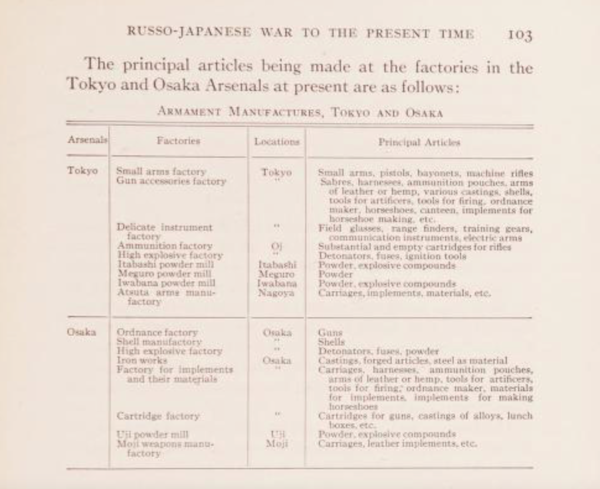
Very good study of the Japanese military machine in general. I found one reference to swords (sabre), noting they were made at Tokyo Arsenal. No other details, unfortunately. John C.
-
Thanks, Conway. The second highest number to date. Interesting with the chromed blade and fake tassel. They also referenced Thomas' info derived from a Nick Komiya post. John C.
-
Attention Mantetsu Owners: A Survey
John C replied to Bruce Pennington's topic in Military Swords of Japan
@Bruce Pennington Bruce: This one just popped up on showa22. You might have it already if he's reselling one. https://www.ebay.com/itm/236612905534? John C.
-
Thanks everyone. This is helping to narrow down the actual meaning (and timing) of the stamps. I've tried to research the tensho script stamps and I'm finding more results in the Chinese charts than the Japanese charts. I had also entertained the idea the swords may have been made in Manchuria or Dalian. The journey continues..... John C.