Grevedk
-
Posts
161 -
Joined
-
Last visited
Content Type
Profiles
Forums
Events
Store
Downloads
Gallery
Everything posted by Grevedk
-
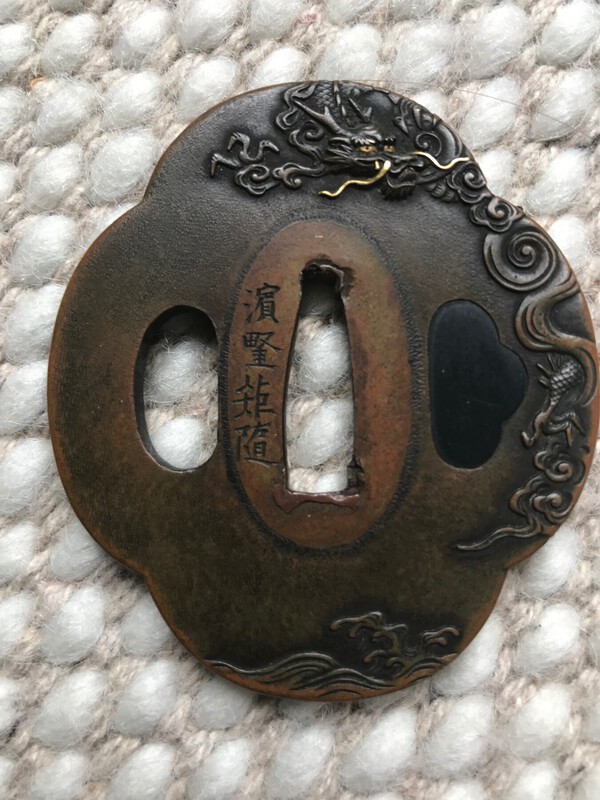
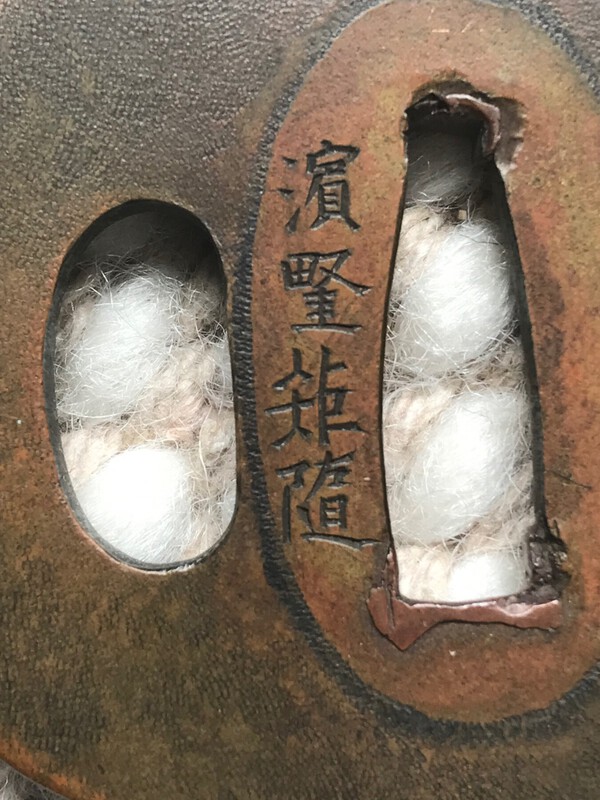
Thank you Bruno - much appreciated translation as I had my hopes🙏🤓 Yes - it’s a big name, and a very fine craftsman. The Tsuba is heavy for it’s size, and the atagane (Kogai Hitsu-Ana) is probably Shakudo. So - it looks and feels like real quality and craftsmanship. I have however seen a few Mei from Hamano Noriyuki, and most of them had also a Kao inscribed - does that say something when it’s missing on this piece? And is it possible to say anything about which generation - I or II generation Noriyuki? Maybe an early work of one of them?🤔 I acknowledge that these questions may belong under the Tosugu forum but would really appreciate any further comments on design, generation and whatever comes to mind. /Soren
-
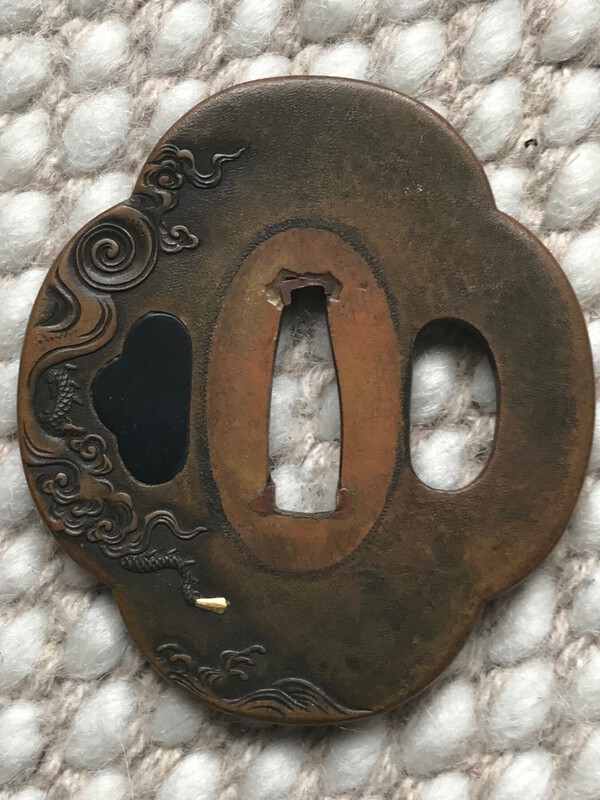
Dear NMB members, I have recently acquired this beautiful Tsuba with a finely carved design of a dragon in cloud’s. Metal base is refined copper (suaka), and it’s size is about 70 mm x 62 mm x 4 mm (probably made for a wakizashi). The design and Mei indicate and corresponds with the Hamano School, but I would greatly appreciate your thoughts and comments on the subject - and especially on the translation of the Mei. Best regards Soren
-
Hi Sean, You have a very nice sword to a fine price. If that item had been posted in Europe (within the EU) I would have sent you a PM with an offer. But the severe restrictions and customs between the US and Europe very often make it a very expensive and time consuming transit (especially in regard to Denmark). The situation in Europe (Ukraine and Russia) is also testing our economic future in so many different ways. People are probably just “waiting” to see what way things are turning. Hope that make sense. /Soren
-
Dear Jan and John, That was fast - thank you 🙏 Best regards Soren
-
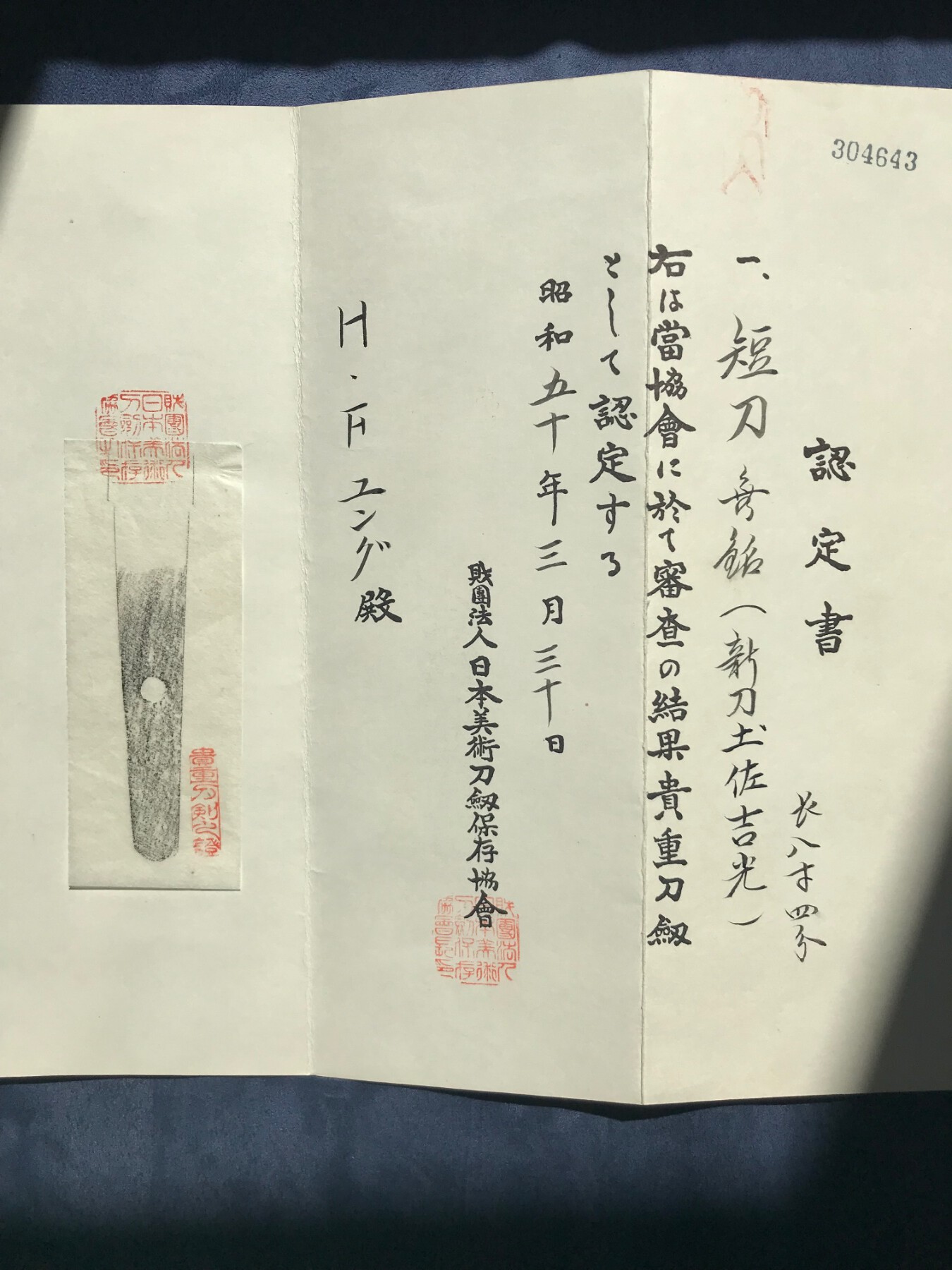
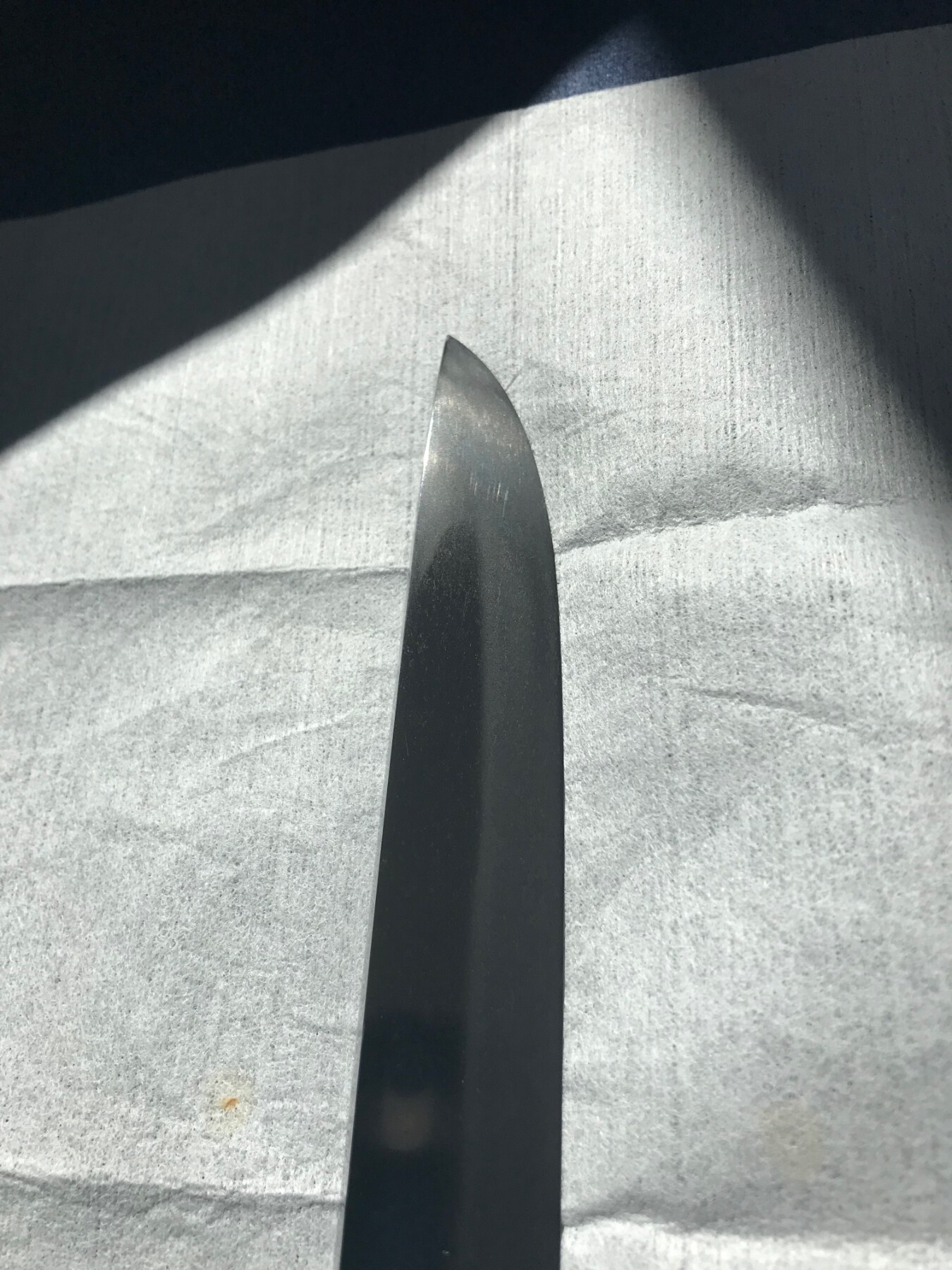
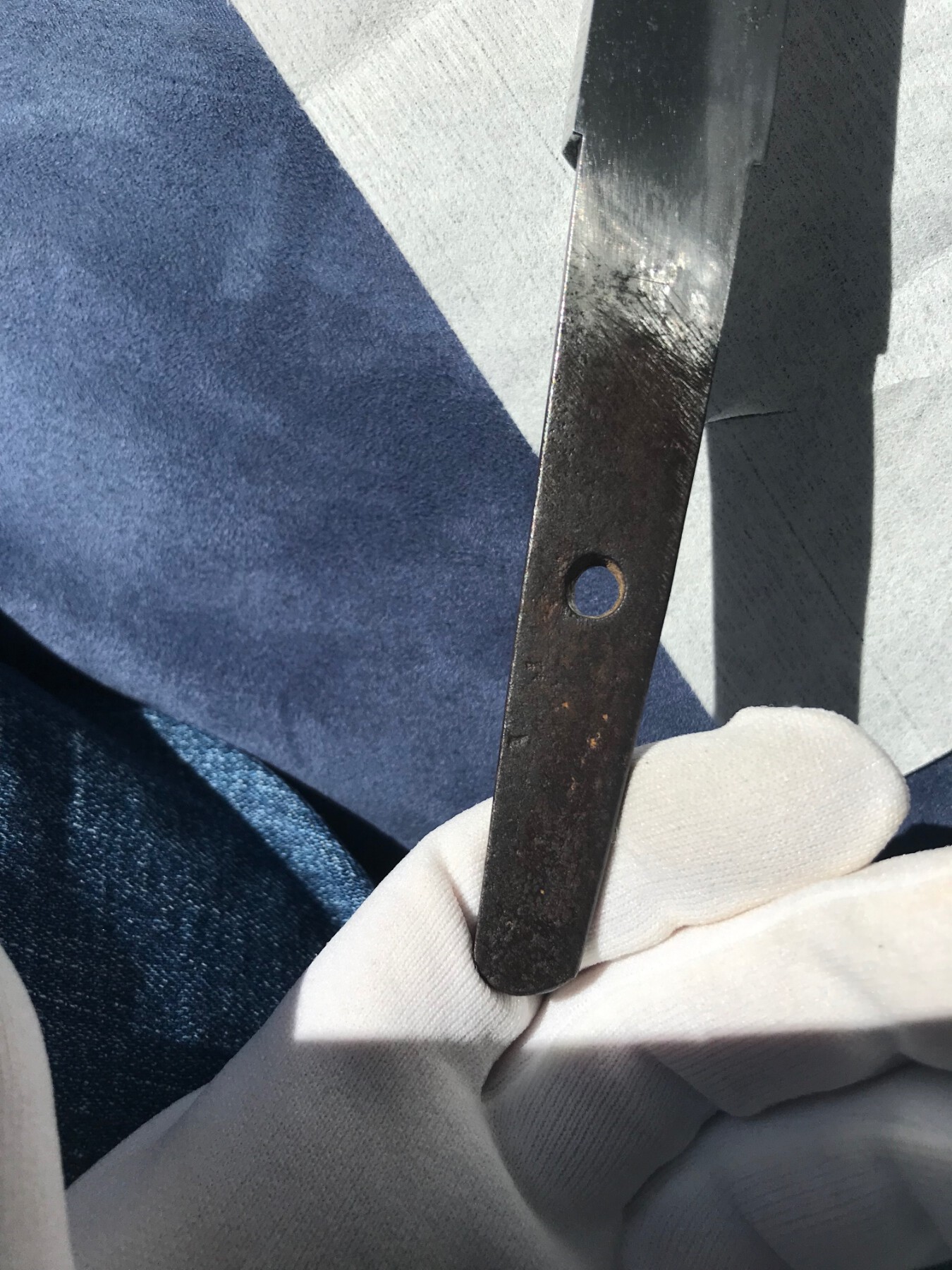
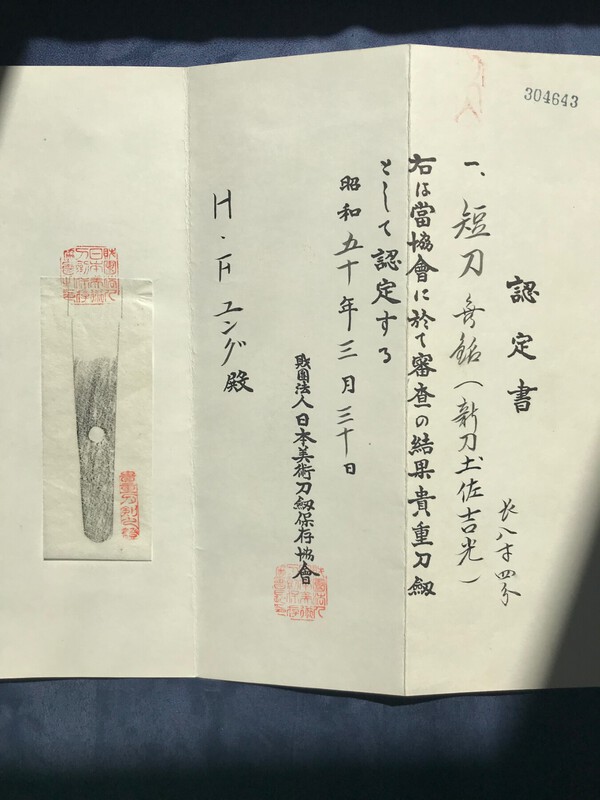
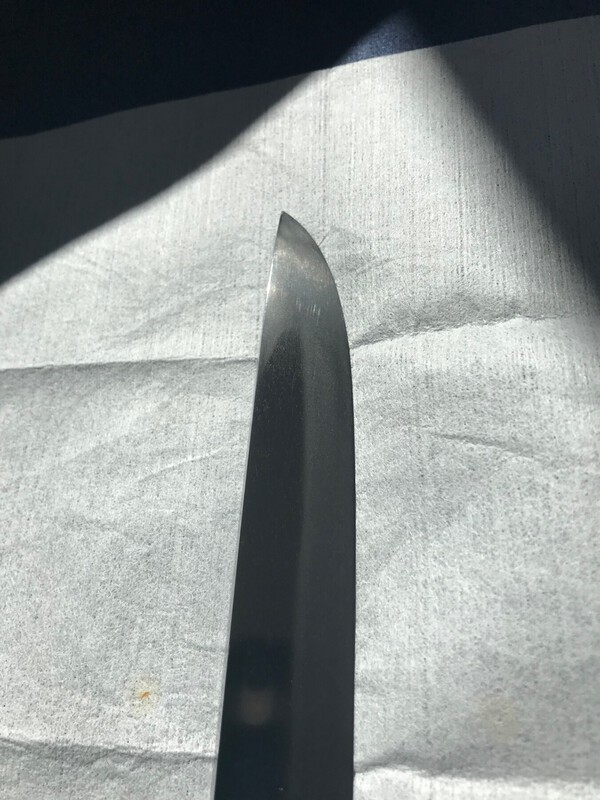
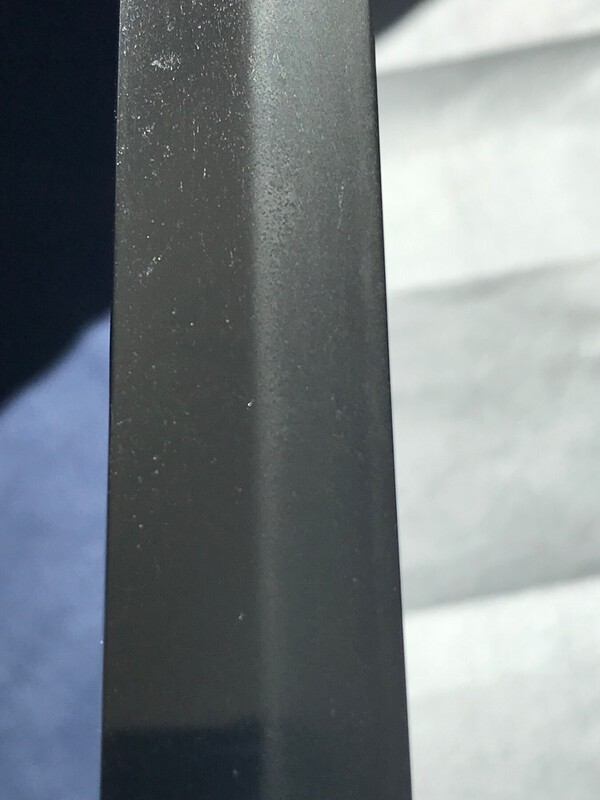
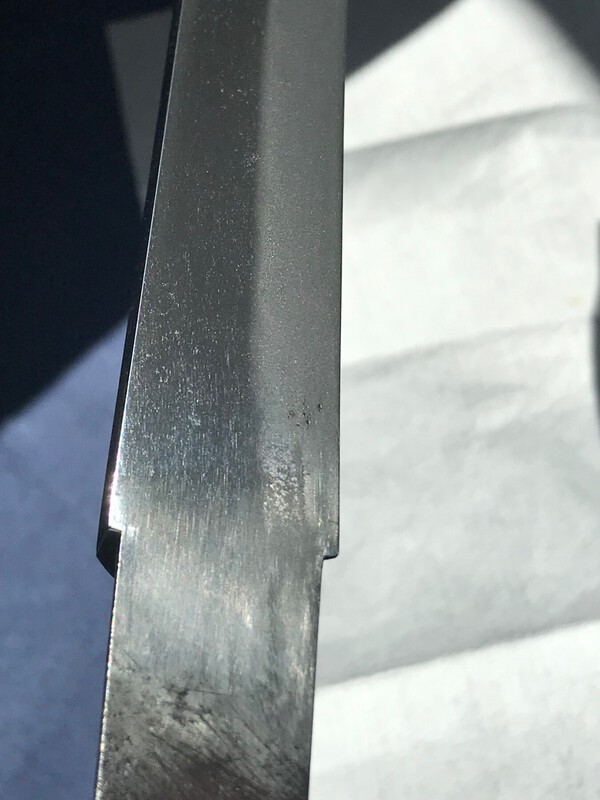
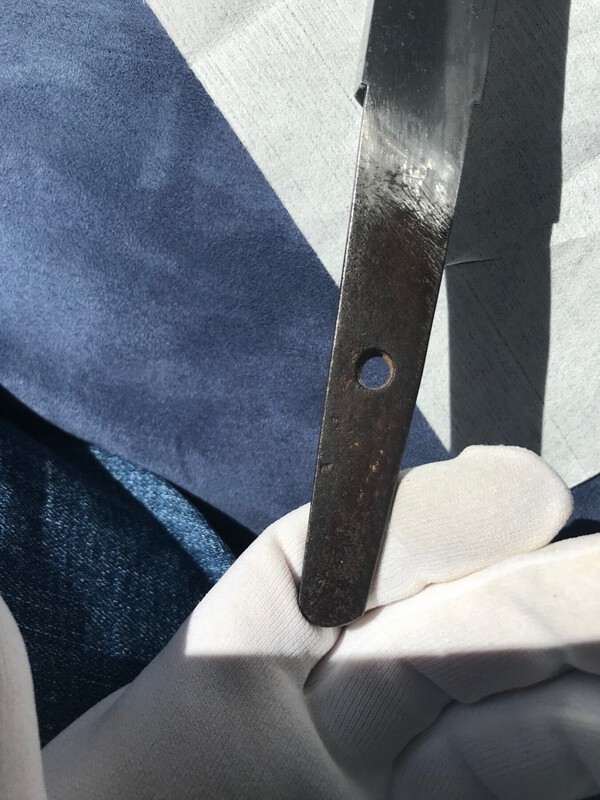
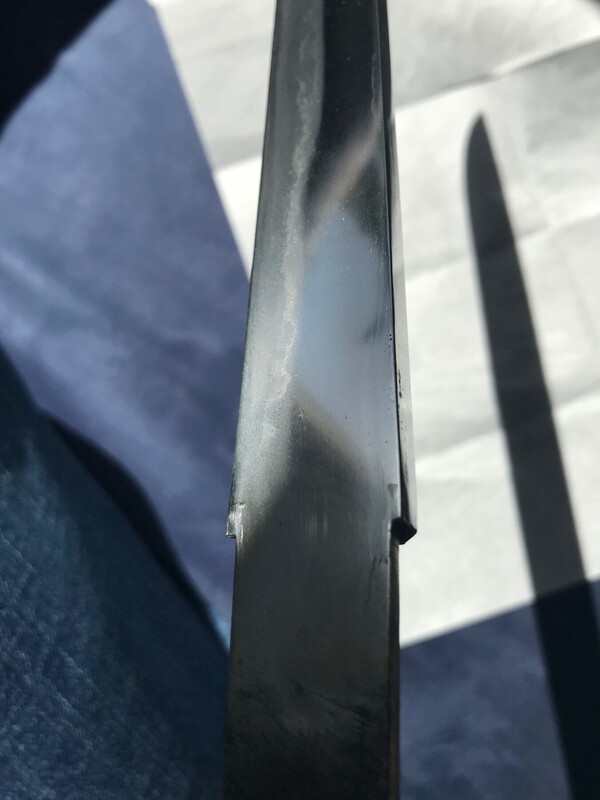
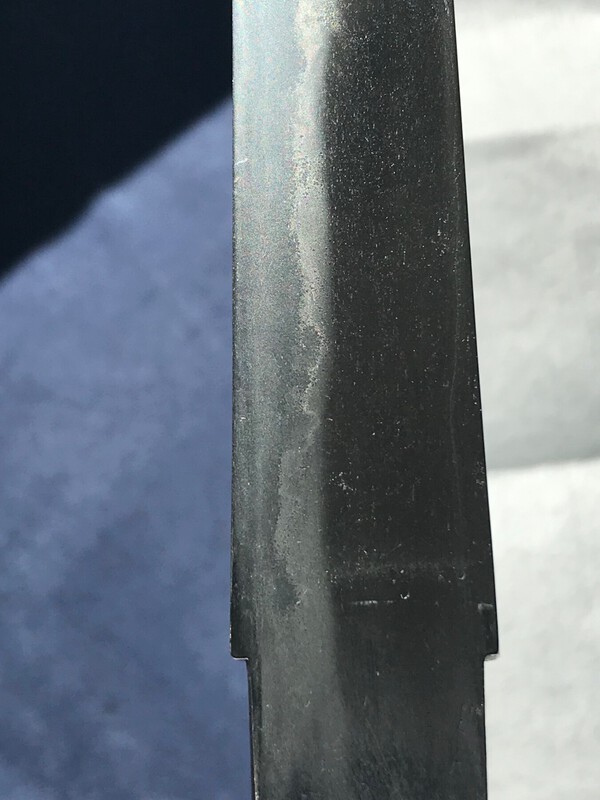
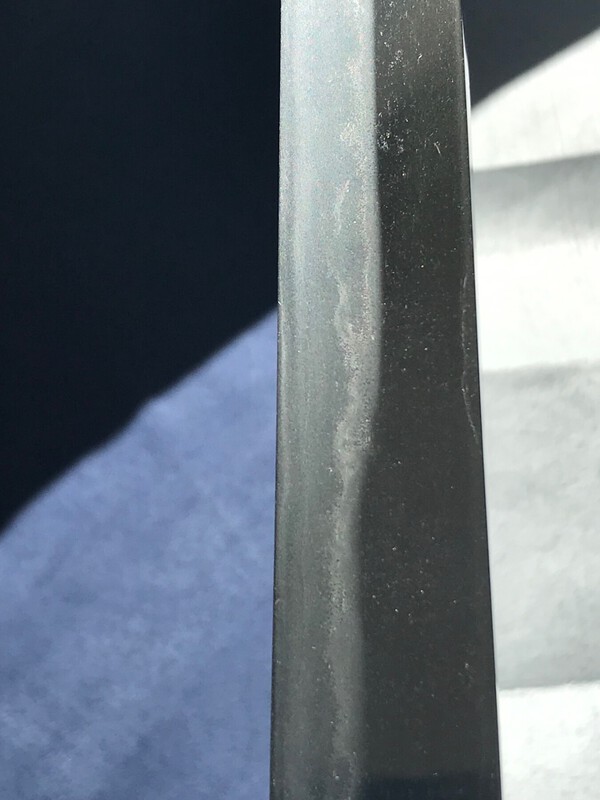
Dear NMB members, I have a fine tanto in yoroi-doshi (armor piercing) style. Mumei but apparently ascribed by NBTHK 30th March 1975 to (Tosa) Yoshimitsu if I’m reading the middle and last kanji correct? There have been several Yoshimitsu smith’s over time however, and I therefore need some help to translate and clarify both the first kanji but also my own interpretation of the name. Tanto specification: Nagassa: 254 mm, one punched mekugi ana (ubu nagassa / nakago) Sori: none Mune / hamachi: 10 mm Best regards Soren
-
Hi Florian, PM sent - shakudo mokko gata - if not to late. Best regards Soren
-
When in doubt - ask somebody more knowledgeable 😎
Grevedk replied to Grevedk's topic in Translation Assistance
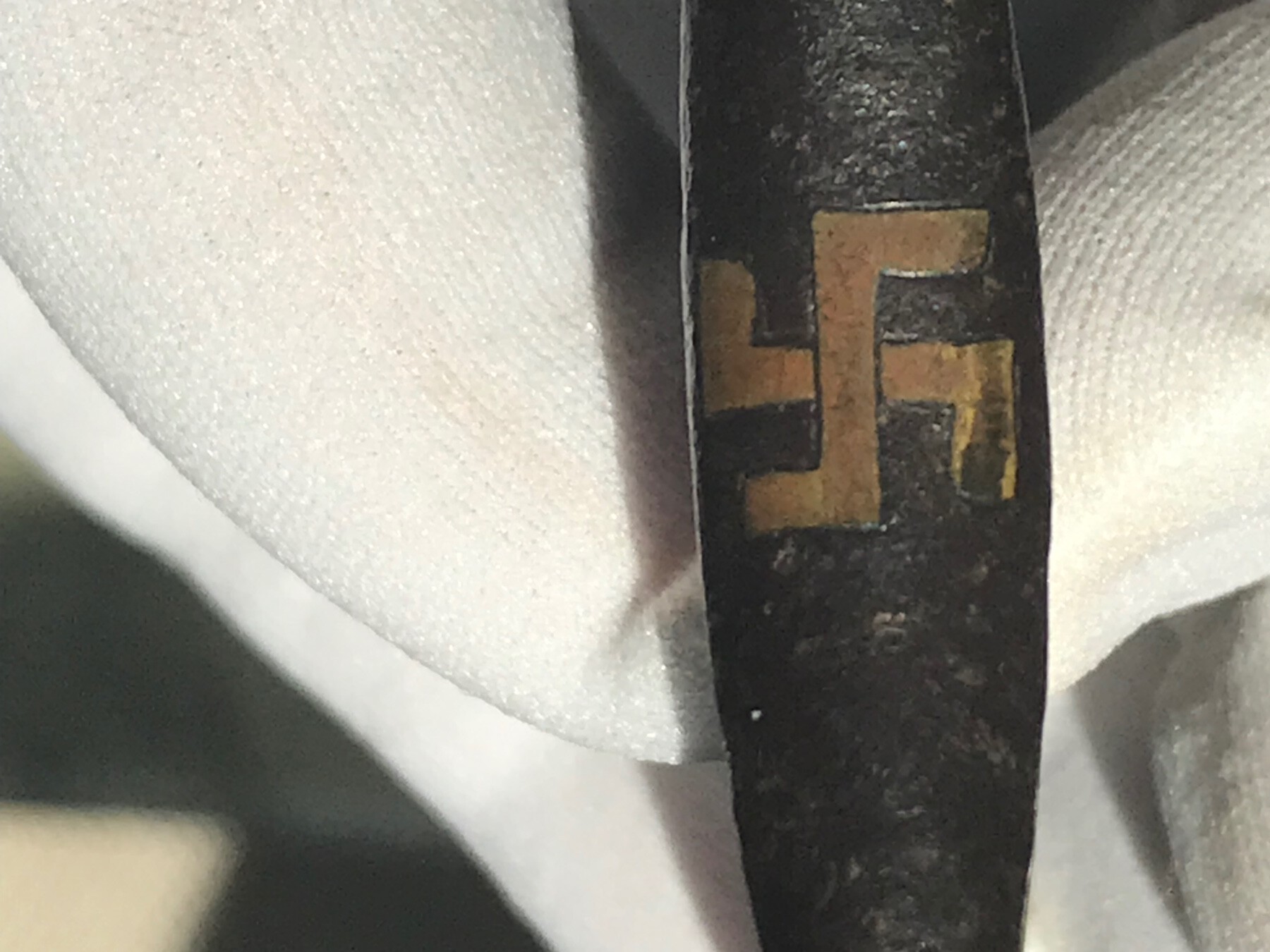
Good evening Okan, That was very interesting link👍 Indeed - same sword and same seller, correct translation but as you have noticed not the same Torokusho. This time it has Mei but otherwise with matching Nagassa length and Sori 🤔 Looks like a real “forgery”. I bought through CataWiki. And I have a feeling that seller may have found it a bit difficult to re-list through or on that platform. I wrote directly to CataWiki senior support with my suspicion that clearly indicted that seller, against all good business conduct, deliberately had used wrong and misleading information in order to secure a sale. With auction fee included the final price was 4300 Euro. Seller later offered to sell for 3000 Euro. I honestly believe the sword to by traditional made and in fine quality, and Saya was (is) very nice with gold inlaid Mon. Tsuba is very probably late Edo, but the rest of Tosugu is Showa. I am not qualified to judge wether the price is fair and actually a fine deal, but I simply found seller wanting, professional incompetent and so stupidly suspicious that any further dealings was completely out of the question. But - I am more the wiser (steep learning curve), and I will find another sword to fulfill my curiosity 🤓 /Soren -
When in doubt - ask somebody more knowledgeable 😎
Grevedk replied to Grevedk's topic in Translation Assistance
As promised - a little follow up 😎 Based on your valuable input I confronted seller with all the discrepancies that was inconsistent with the auction information that he had provided in the original listing. Seller “fell flat on his face”, and without any fuss admitted that the sword and Saya was not from the Edo-period. Then he gave me an alternate offer and price reduction if I would have the courtesy to cancel (opt out on my purchase) through the auction house (online auctions have a window for regretting a purchase). In short - when I had my initial payment returned from auctioneer, then I could just pay him the sum that he and I had agreed upon, and we would both save the auction fee. All our communication was performed through the auction houses own communications platform, and therefore visible for their internal customer support 😂 I refused the transaction, and the sale was terminated as the auction house confirmed that my claim was valid. The sword was returned to seller. Sword and Saya was fine, and in good quality - but all in all it was not what I was looking for. Seller will now have to deal with whatever sanctions (exclusion or fine, or maybe nothing) that the auction house finds to be appropriate. @Brian donation to NMB (#349) in appreciation of both your work, the platform, and the invaluable information gathered through the members willingness to share their knowledge. Thank you 😎👍 /Soren -
When in doubt - ask somebody more knowledgeable 😎
Grevedk replied to Grevedk's topic in Translation Assistance
Thank you all for taking time and effort to respond. This is the strength of forum’s like this, and I will donate to the board in respect for that collective support 👍 And thank you MORIYAMA for reading the Torokusho and pointing out the discrepancy between what it states, and the actual Mei. And Steve - it does itch a bit The sword is apparently well made and in fine condition as is the Saya and Tosugu. But there is always the matter of what you expect to get, what you get, and what you really pay for 🤔 Based on that observation and the rest of your valuable input I contacted the seller and give him a few questions to answer. Seller, by the way, runs a business from Italy selling Japanese artifacts which includes Nihonto swords (with or without Hozon certificates) imported directly from Japan. And he has just responded. He apparently sold the sword in commission for a regular customer (client). He recognizes the discrepancies that you all have pointed out, and apologized for having trusted that client, and not checked the correct information him self before submitting the sword to an international auction. He will get in touch with that client and return in order to facilitate a compromise. Then we shall see. I will give you a follow up, when I have one. Enjoy your Easter 🐣 /Soren -
When in doubt - ask somebody more knowledgeable 😎
Grevedk replied to Grevedk's topic in Translation Assistance
I can not explain the seemingly yellow rust on the tang from the pictures in the original listing from seller. But - in normal light it looks like the picture I have posted. And - from what I can tell - the yasurime also seems to correspond with the smith that Brian mentioned - Shimizu Tadatsugu (1921 - 1998) file pattern. The sword and fittings that I have received do seem to be the ones in sellers “pictures”. The only, and obvious, discrepancy is in the Torokusho and concerning Mei or Mumei. Can there be a reasonable explanation to that? /Soren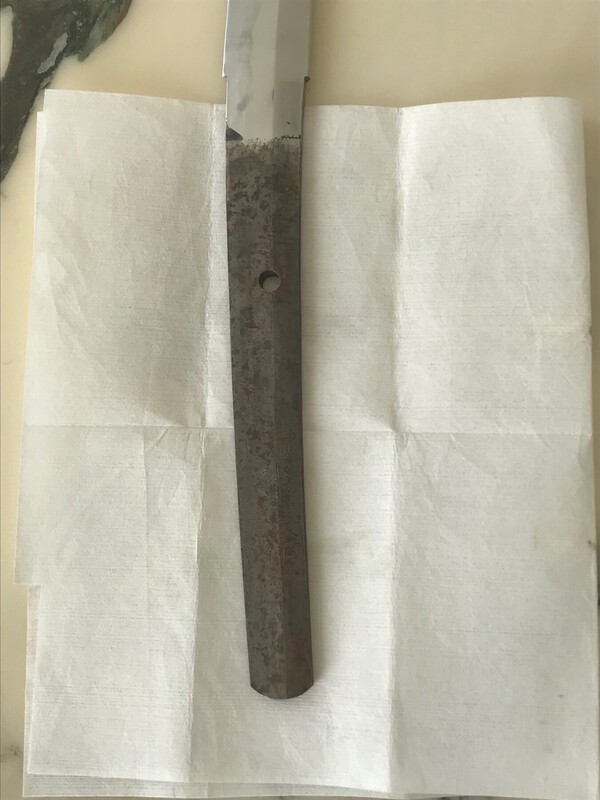
-
When in doubt - ask somebody more knowledgeable 😎
Grevedk replied to Grevedk's topic in Translation Assistance
Thank you - that is some very valuable insights that you have brought to the “table”. Appreciated 👍 I have just taken a picture of my copy of the Torokushu I am no expert on either kanji or how these papers should be translated, but length of Nagassa and depth of Sori fits with my first examination 🤔 But I guess it should state Mei if it was inscribed from the start?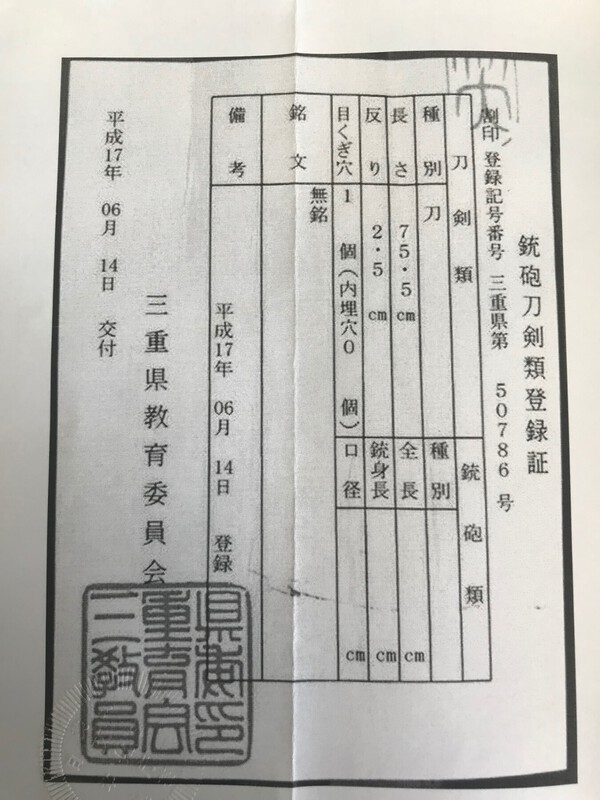
-
When in doubt - ask somebody more knowledgeable 😎
Grevedk replied to Grevedk's topic in Translation Assistance
Pictures 4 + 5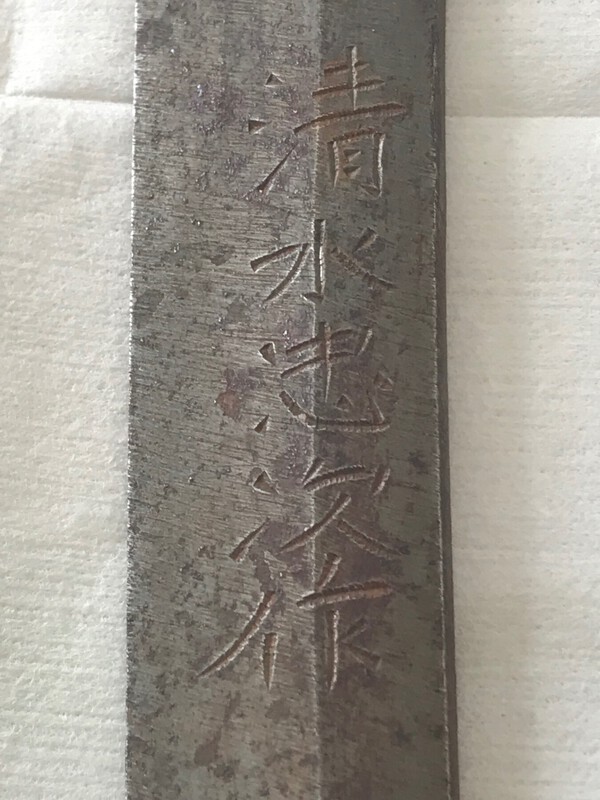
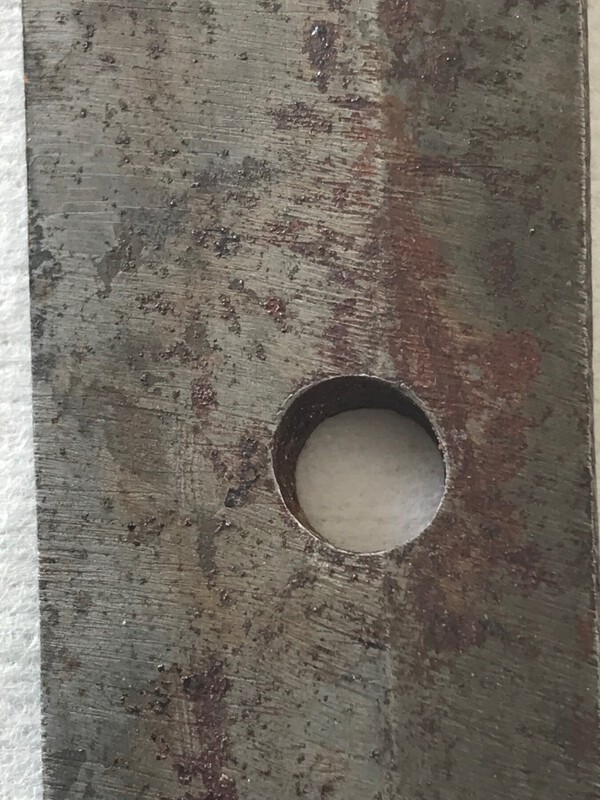
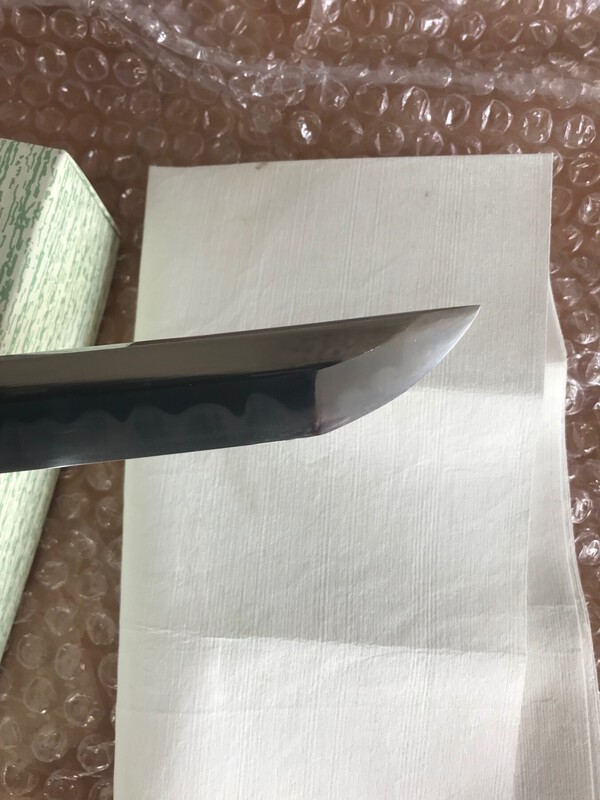
-
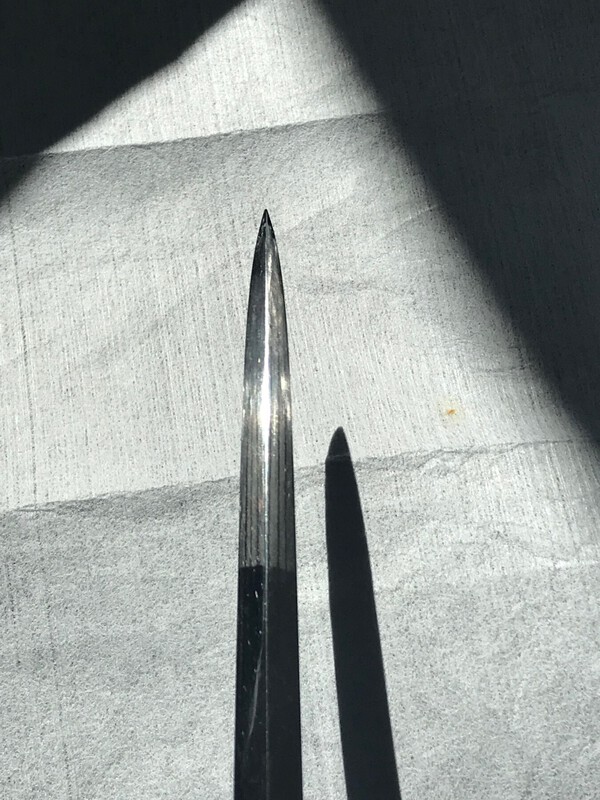
Dear NMB members, I am in need of your knowledge - in regard to pinpoint the sword smith (Mei translation) and if possible how that correspond with period and sword dimensions. I fully understand that this post may be a combination of more than one forum, but I will very much appreciate any comments that you may have. I have just acquired a katana with the following dimensions and information: Katana sword (Edo period 1600 - 1868) - supposedly 🤔 Full length: 105 cm Nagassa: 75,5 cm Sori: 2,5 cm Motohaba: 3,28 cm Motokasane: 0,68 cm Weight of blade: 880 grams Mei: Tadatsugu Nakago: one Mekugi Ana (drilled hole) Very nice and heavy sword with a beautiful Harmon that in shape and form correspond well with the middle Edo period (Jokyo and Genroku era between 1684 - 1703). And it is very sharp and in good polish. Question: Does the Mei correctly correspond with the signature of “Tadatsugu”? If so - which one, as I find it difficult to identify a smith with that name that made swords around 1684 - 1703? Pictures include sellers (1 + 2) and my own in regard to Mei and Kissaki (3 + 4 + 5 + 6). I will appreciate all of your comments, reflections and / or potential misgivings if you should have any. best regards Soren
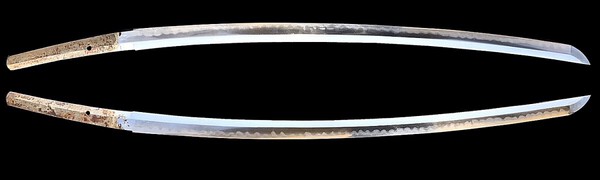
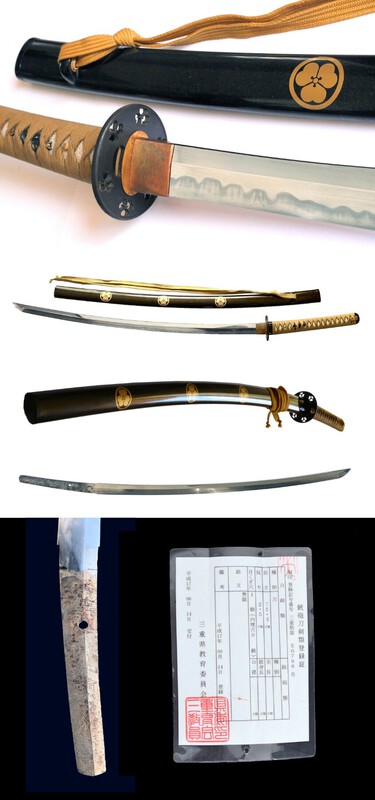

-
Seems as if she has found her mate A really nice motive and two fine M&M models (Mantis and Menuki). Thank you for sharing a rare moment. Best regards Soren
-
Could be the Japanese KITSUNE (fox) with or without forked (nine) tails? As menuki they could represent cleverness, intelligence, guidance or maybe just mischief No commercial intended

-
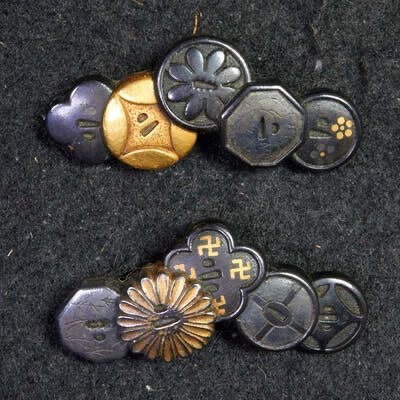
On stage things tend to be exaggerated - while “less is more” might be the “right” alterntive such as Shakudo menuki sold at Bonhams 2020
-
Steve - thank you for your assessment and willingness to share your thoughts on the subject. It could make sense if it where a sign of an alliance between clans or families. Best regards Soren
-
So - this could be the former owner of my tsuba

-
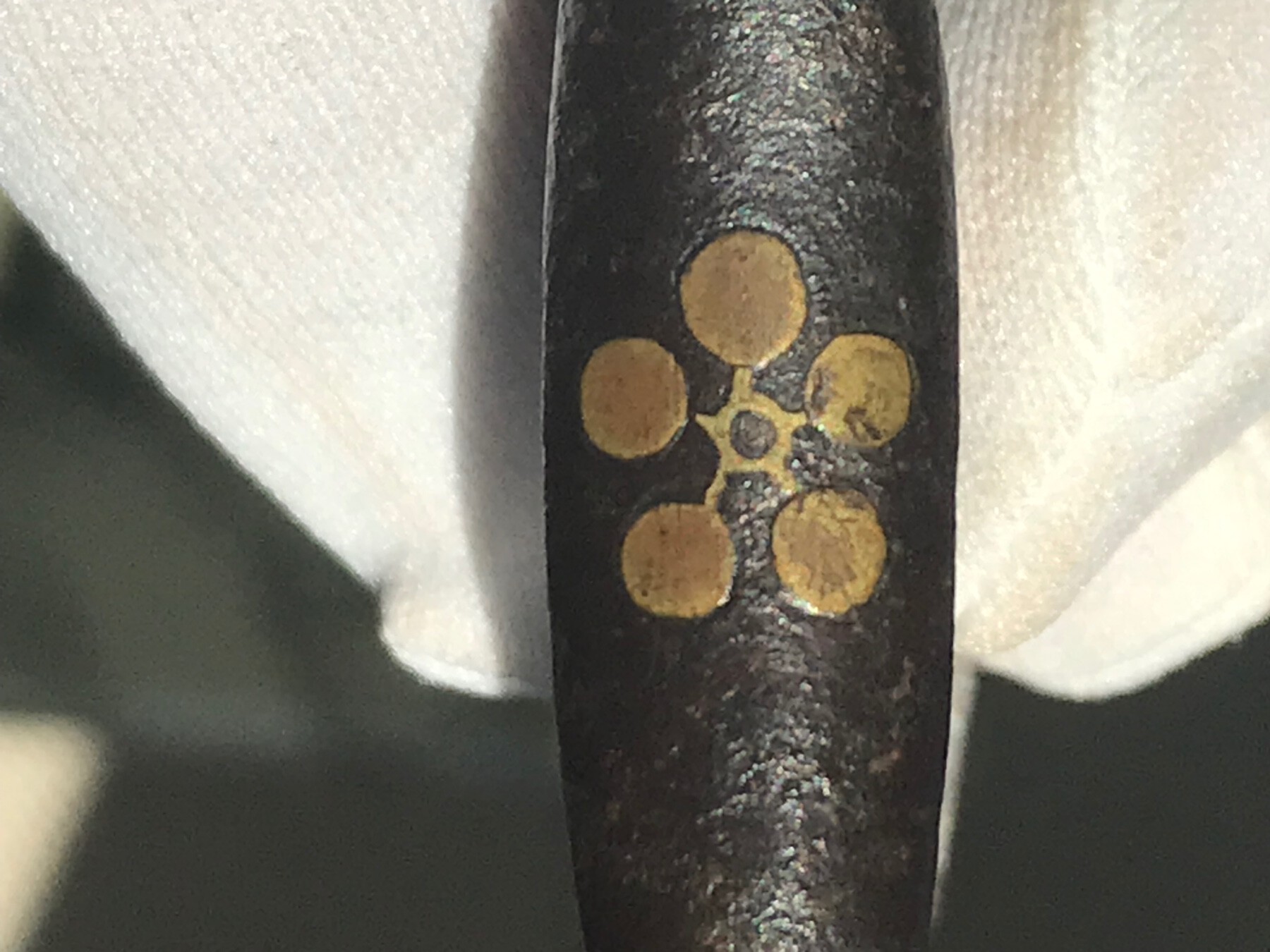
Thank you all for some fine comments and points. @ Florian - Itomaki-gata is a very reasonable suggestion, and the possibility of later “ad on’s” in regard to the “mon” is equally plausible. The tsuba by itself is well and solid crafted, but the “mon” are a bit “crude” in their design and quality. @ Pat - thanks for your input. I will correct my “clockwise / counterclockwise” error. @ Brian - I will make no further disclaimers in future post regarding this Manji / symbol 🤓👌 But - Can anyone decipher these “mon” / inlays? Best regards Soren
-
5. Warning - No intention to hurt anyones feelings. Counter-clockwise manji. Not tilted and in 90 degrees position. The family mon and the Buddhist symbol would be clockwise? Can anyone explain the meaning of this on a Tsuba?

-
3. Takeda mon?


-
Dear NMB members, I have acquired this Tsuba as it rather intrigued me. It’s not that pretty and feels more like a design that probably were not that uncommon. But - that is open for discussion🤓 Mt. Fuji on four sides. Tate Ito Gata (design) Iron (magnetic with a clear bell sound) 80 mm x 79,5 mm (diameter) 120 grams (weight) Both Kozuka Hitsu-Ana and Kogai Hitsu-Ana Uchikaeshi-Mimi (iron reversed and rounded edges) Probably brass inlaid “mon”? Probably mid to late Edo period School - could be Bishu (Owari) or Shoami? A similar Tsuba was discussed in a tread from 2013. That Tsuba had only one Hitsu- Ana, no mon” but a different inlaid design. Disclaimer: apologies if someone should be offended by one of the “mon”. I would appreciate any of your input, opinions or just comments on: The “mon” - not quite sure that they are mon? (What are they?) School and possible the maker Any reflection that comes to your mind 1.


-
Thank you Steve, Your knowledge and comment’s are more than appreciated 👍 The NMB site is a marvelous place to search for information, but the real “magic” lies in the comments and insights that learned people like you share. Thank you - I have just learned quite a few things 😎👍 Best regards Soren