Lewis B
-
Posts
1,905 -
Joined
-
Last visited
-
Days Won
10
Content Type
Profiles
Forums
Events
Store
Downloads
Gallery
Everything posted by Lewis B
-

Japan art fair, the Netherlands
Lewis B replied to Leen's topic in Sword Shows, Events, Community News and Legislation Issues
If you can its a unique opportunity in Europe to see and handle many high quality items from every era. The exhibitors are also a great source of info and have so much experience in Japanese swords, fittings and armour. -
Japan art fair, the Netherlands
Lewis B replied to Leen's topic in Sword Shows, Events, Community News and Legislation Issues
I will make inquiries and report back. The only information I have at the moment is what is in the announcement. -
Japan art fair, the Netherlands
Lewis B replied to Leen's topic in Sword Shows, Events, Community News and Legislation Issues
Tickets now on sale. Prices are significantly higher compared to 2024, though there is a Shinsa event on the Sunday (a first for JAF) with a limit of 2 blades per person. https://www.japanartfair.com/tickets/ -
Stolen sword : Your help is required ! (FOUND)
Lewis B replied to Tohagi's topic in General Nihonto Related Discussion
I thought this was a Tintin character. In the English edition he's called Professor Calculus. Herge's Tintin was my favourite cartoon characters growing up (still is) and there is a fantastic museum just south of Brussels devoted to the man and his work. Well worth a visit. -
Here is my Tensho koshirae being made in the workshop of the Okayama Museum. https://www.facebook...pcb.5810403085743944

-
katana Kurihara Akihide Katana in Shingunto Koshirae
Lewis B replied to Sutraken's topic in Sold Archive
That makes no sense. There are plenty of Nihonto listed on eBay.de -
Thought of new idea, electroforming of swords and knives
Lewis B replied to Mustafa Umut Sarac's topic in Nihonto
I want to believe something is lost in translation. Dear Mr Umut can you use a better translator (Deepl for example) and/or please post in a more respectful way. -
Question for Tsuba experts. Some mention was made of the condition in the OP's example. Would a restoration by a professional return the metal to something like that in the last example? I have a good idea what a sword polish costs by a competant to a mukansa level togishi but not for a Tsuba. Approx what would a high quality restoration cost using the OP's as a starting point?
-
You're late to the party. Consensus is to stay well clear.
-
Interesting Section of a Nakago
Lewis B replied to Infinite_Wisdumb's topic in General Nihonto Related Discussion
Certainly a possibility Ray. Definitely not something I'd bidding on. -
Interesting Section of a Nakago
Lewis B replied to Infinite_Wisdumb's topic in General Nihonto Related Discussion
Although given the pitting this would have to have been done a very long time ago. The corrosion being consistent with the rest of the nakago surface. This another of those Yahoo.jp caveat emptor listings with top tier 'attributions'. -
Interesting Section of a Nakago
Lewis B replied to Infinite_Wisdumb's topic in General Nihonto Related Discussion
"The blade is about 3 shaku 3 sun long! The blade weighs about 2 kg! This is a miraculous sword made by Kanemitsu that is not inferior to the national treasure "Okanohira", which is the treasure of the Ikeda family, and has all the three features of workmanship, condition, and history, so please do not miss this opportunity and let someone who will cherish it keep it as a family heirloom for the rest of their life." Red flags get raised when blades like this are not submitted for modern papers, especially when he makes comparisons with the Okanohira. The seller is clearly knowledgeable. Almost 300 bids so far with a day to go. -
Interesting Section of a Nakago
Lewis B replied to Infinite_Wisdumb's topic in General Nihonto Related Discussion
My guess? Likely had the smith's mei relocated there after a o-suriage shortening. The piece that was placed in that section looks to have either corroded away or become detached. -
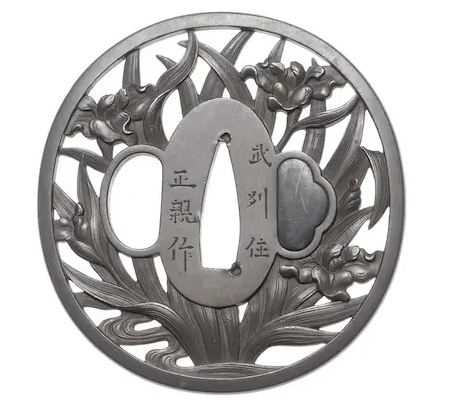
This one is exceptional and gives a nice example of the workmanship for comparison. Sold by Bonhams in 2011 for over $3000.
-
I believe he was active late 18th early 19th century, unless this is a later generation piece. Fine workmanship nonetheless. Price does not seem high although if you can get a little more off for the condition it would be worth asking.
-
Good comparo for the signature. Looks to be a good match. Based on the format of the listing the Tsuba was sold at least 6-7 years ago so I imagine prices have advanced quite considerably since then.
-
Thats interesting. I'm familiar with Dictum since I live in Germany but had no idea they stocked so many steel bar stock products (monosteel and prelaminated). They even have Tamahagane. Very cool
-
There is a Turkish kitchen knife maker called Mert Tansu in Australia who uses Hitachi steels (Shirogami #1, Aogami #2 and Aogami Super). He might be willing to sell some depending how much you need or at least let you know where he buys it. He also makes his own bloomery steel (Wootz).
-
Looks like a wall hanger piece to me.
-
In many instances do you really think you can tell the difference?
-
I hear you. At least he uses charcoal. I guess when you're a one man operation some concessions must be made. But how much is too much? While I can understand and forgive the power hammer, the use of a belt sander to shape the sword when a Sen is traditionally used was too much. Has Mori Sukemitsu destroyed any chance he might have had of attaining the level of Mukansa?
-
A very detailed account of modern sword making processes. Some things I noted was the use of old broken sword pieces forge welded into the construction of the blade. And the use of a paper fan the precisely control the temperature of the forge and thus the blade, before yaki-ire. It's seeing modern processes that really makes one appreciate what the old guys could achieve.
-
Would you knowingly buy a gimei blade?
Lewis B replied to a topic in General Nihonto Related Discussion
Yes it's the blade in question. -
So for my own information Hokke and Ko-Hoki are not related?
-
This triggers my spidey senses
Lewis B replied to Lewis B's topic in General Nihonto Related Discussion
Kimura-san thinks highly of it. Priced at 20mil Yen (TH papers from 2022 only). I wonder if it was submitted for Juyo and failed. Wouldn't a signed blade by such a big name waltz through Juyo Shinsa?