Lewis B
-
Posts
1,962 -
Joined
-
Last visited
-
Days Won
11





Lewis B's Achievements






-
A little more info on this diminutive Norishige tanto. 4mm motokasane, 18mm motohaba with iori-mune (2nd Norishige tanto after the Compton piece to have this style mune).
-
After seeing a TJ Den Chogi today I would say that is pretty much guaranteed.
-
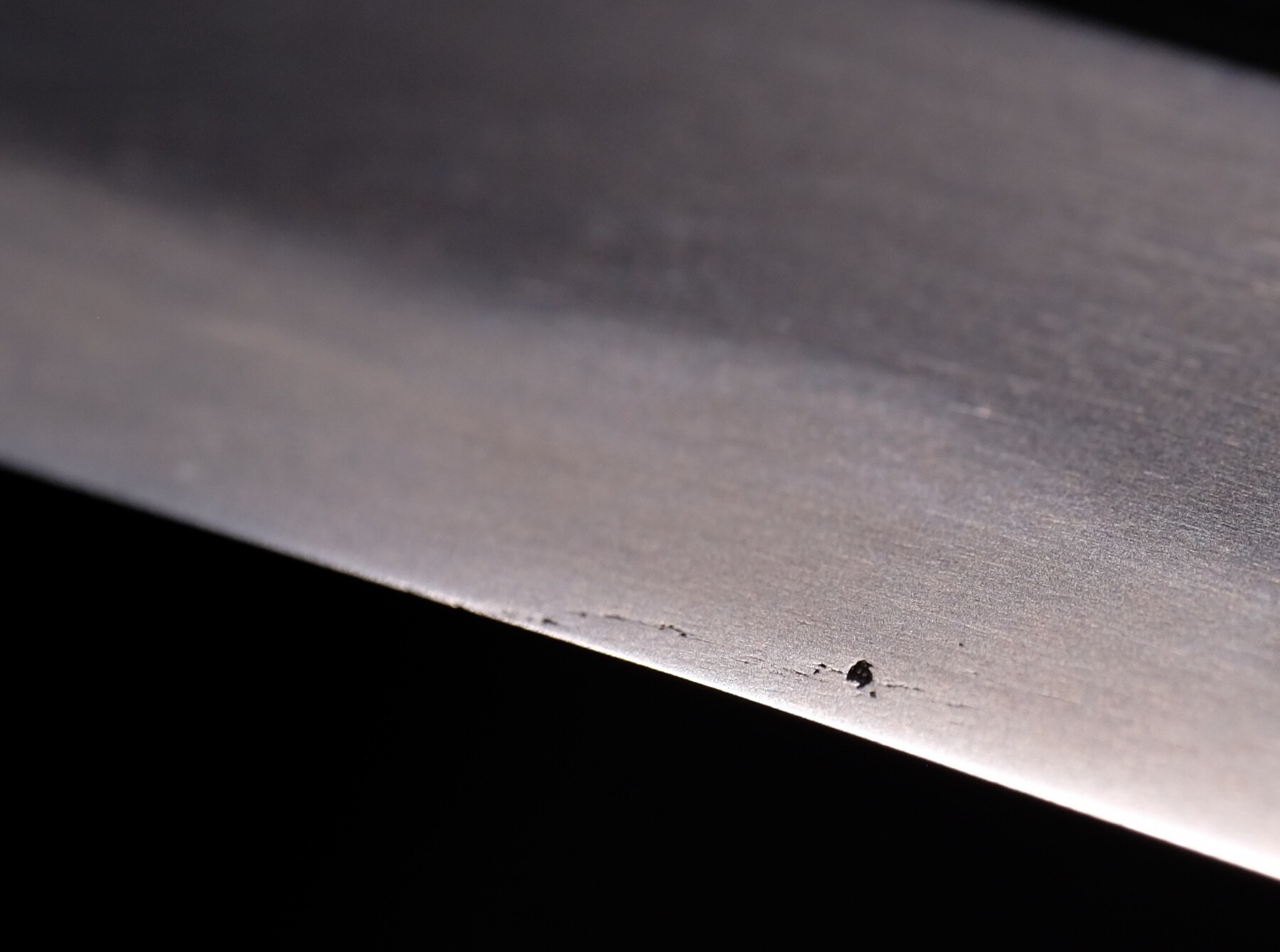
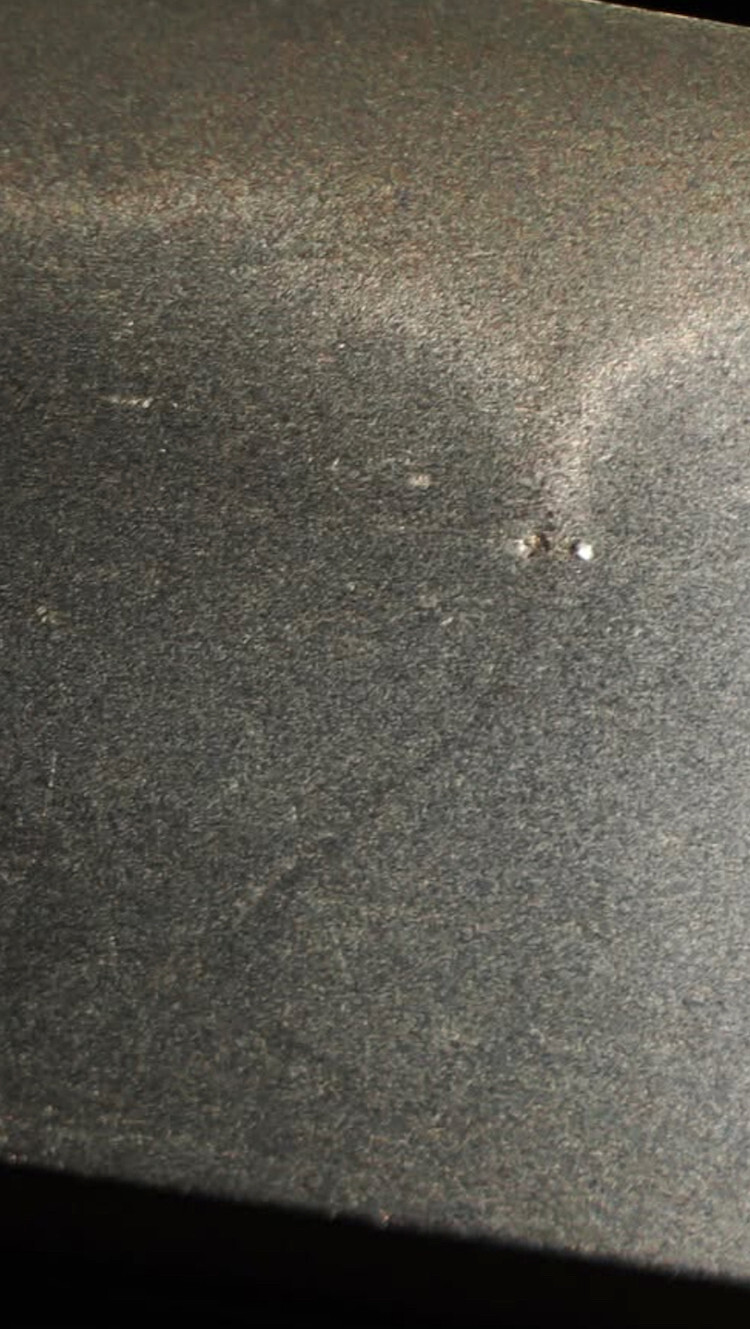
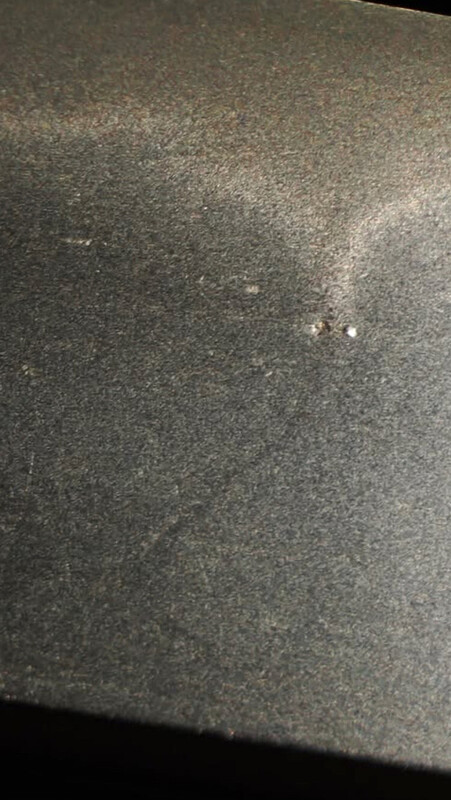
I have something very similar on my senjuin Kodachi sword. I think it’s called hagarami. The crater is about 1/4mm and the horizontal line 2mm. Looks more significant under a macro lens and only visible on one side.

-
For me a forging issue/inclusion exposed after many polishes. The shape doesn’t suggest corrosion but that could be another explanation.
-
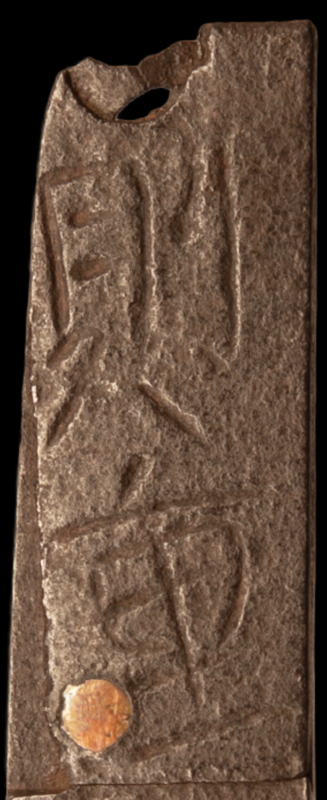
This listing popped up today on Nihontowatch. The orikaeshi mei on a tanto is a first for me. Appears to be an early Norishige mei example and note the tilted 'shige' kanji, which is a common idiosyncracy on his early work. I would say the Norishige Matsukawa hada is not as developed as in other later works, so could this be an example of an early foray into this forging technique (it could also appear like this after many polishes I guess). Its unfortunate the blade is significantly machi-okuri. From the condition of the nakago likely quite a recent reworking. No papers but the mei looks good and is very clear in the photos. Undoubtedly an interesting research blade, albeit not his most accomplished.


-
 We had a nice discussion. I look forward to seeing the Dutch token society expand and develop in the coming years. Given the healthy attendance on the first day of the show it clearly illustrates the interest in Nihonto, tosogu and katchu ( looking forward to the menpo talk tomorrow) is still strong and attracting younger enthusiasts.
 -
Agreed. The arrows in particular are awfully depicted as is the bow of the ship. I find it hard to believe a Japanese artisan would come up with imagery like this.
-
I can see why so many were impressed by the Norishige tanto. Thanks once again to Mr Shiotsuna


-
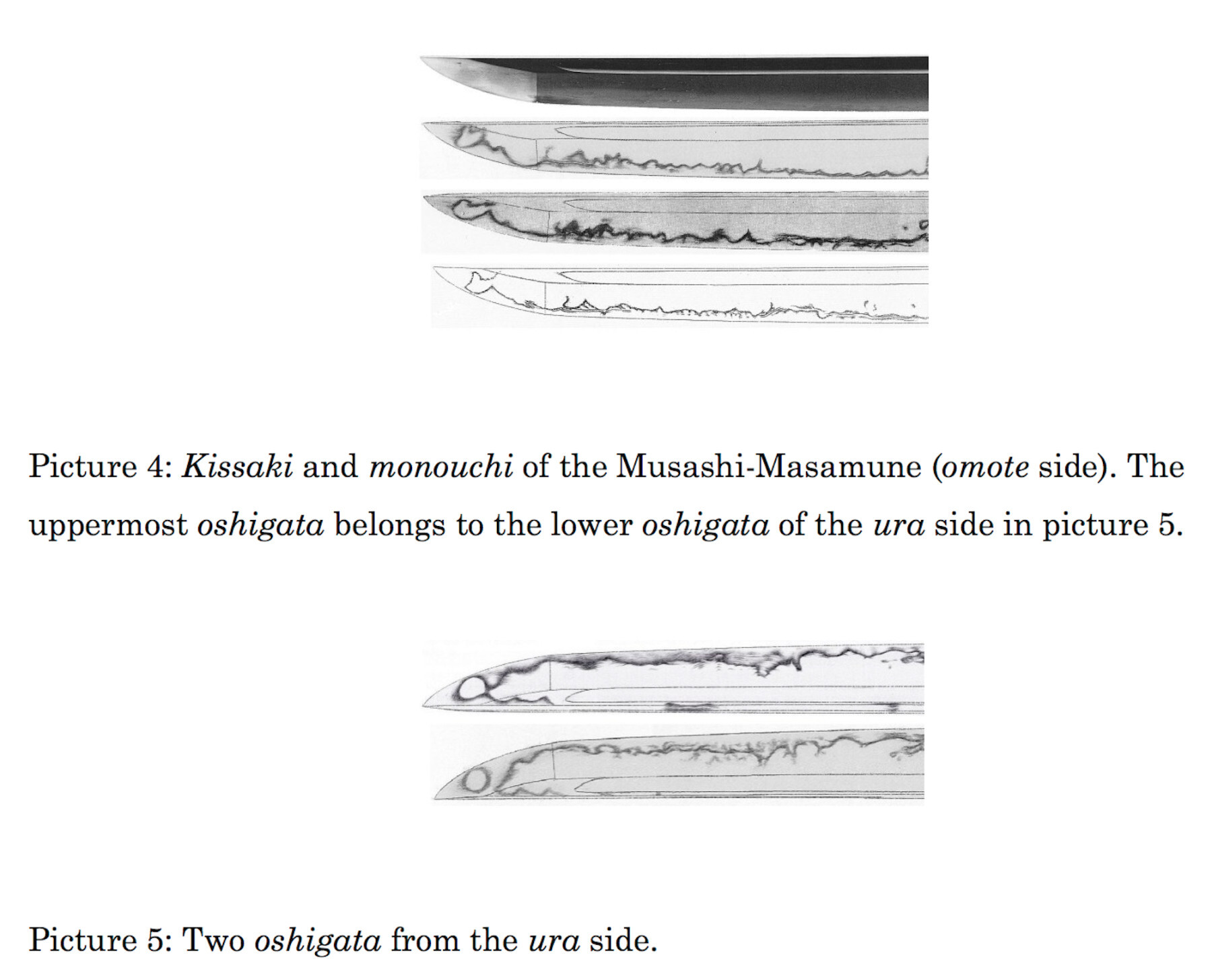
Musashi Masamune oshigata from Markus Sesko article on the blade


-
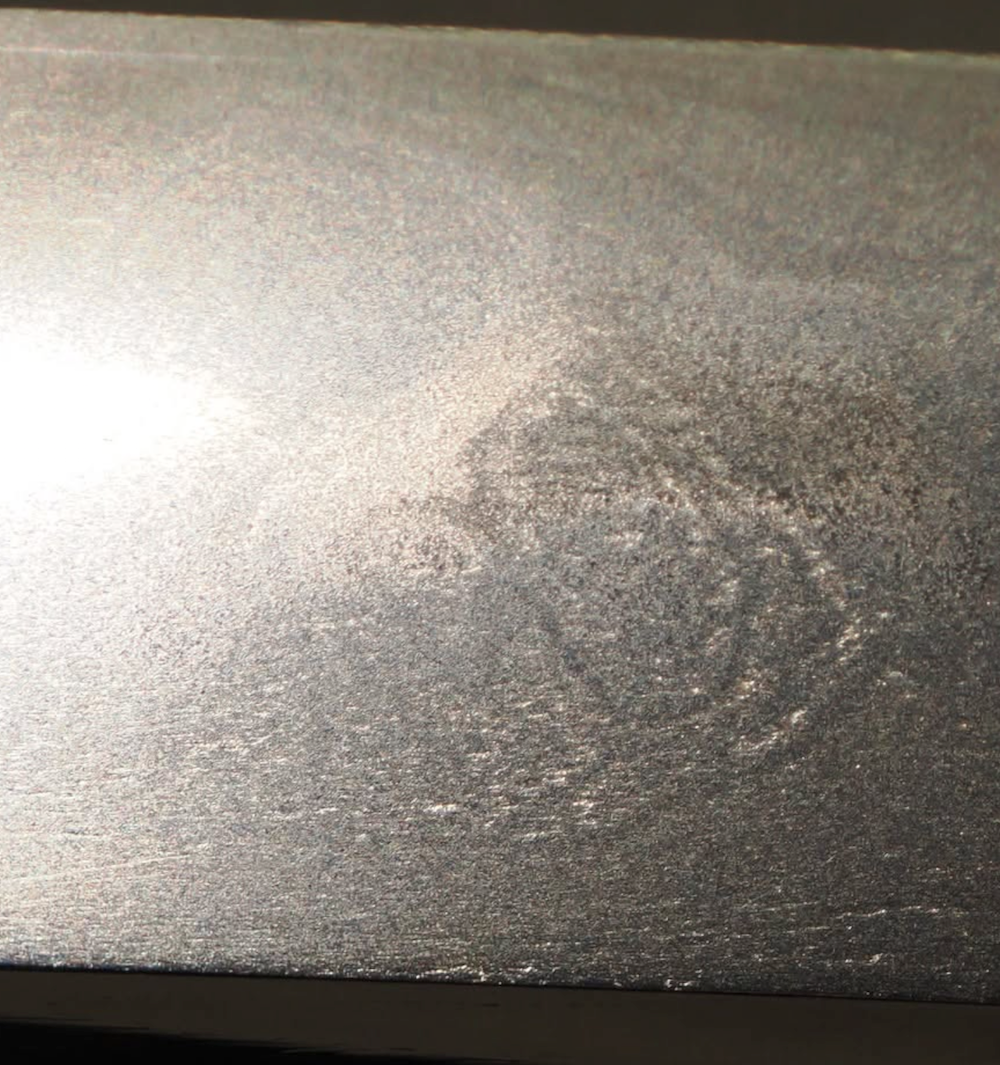
The Musashi Masamune is something special. Pic acknowledgements to Shiotsuna


-
Is it that simple? Don’t you have to register the blade to import it which may not be so straightforward for a non Japanese speaker without dealer status?
-
Starting bid only 5.5 mil jpy. I’m guessing this will go higher. would hitatsura tempering preclude utsuri? I don’t see this feature mentioned in the aoi description.
-
Well thanks for catching it so quickly. It was a lucky day for someone. Sounds like a rare opportunity to acquire an authenticated Masamune in exceptional condition. Appraisal and Description of the Blade The three masters—Yukimitsu, Norishige, and Masamune—who studied under Shintōgo Kunimitsu, further accentuated chikei (dark lines of martensite), kinsuji (golden lines), and nie (bright crystals) within the Sōshū tradition founded by Kunimitsu, successfully bringing the style to its ultimate perfection. Masamune, in particular, masterfully manipulated several types of steel with varying carbon contents and pushed the aesthetic beauty of nie to its absolute zenith, contributing monumentally to elevating the Japanese sword into a realm of pure art. This specific blade is an ō-suriage (greatly shortened) unsigned specimen that Hon’ami Kōjun appraised as the work of Masamune, affixing a kin-zōgan (gold inlay) attribution. The grain (kitae) exhibits itame (wood grain) mixed with mokume (burl grain), covered in a thick layer of ji-nie, with prominent chikei coming through to present a well-kneaded, refined texture (nereta hadai). The temper line (hamon) is a notare (wavy) variation interspersed with gunome (undulating semicircles), heavily laden with nie that manifest various activities (hataraki). Both the steel topology (ji) and the cutting edge (ha) display an exquisite mastery of shifting nie dynamics. Kōjun’s attribution to Masamune is entirely convincing; the blade is in a superb state of health (kenzen), and the clear, radiant clarity (sae) across both the ji and ha deserves special commendation. (Excerpted from the Jūyō Tōken Zufu / Important Sword Masterpieces Registry) Structural Characteristics and Workmanship Shape (Sugata): Shinogi-zukuri (ridged style). Standard width (mihaba) with a moderate curve (sori), leading into a chū-kissaki (medium point) that is slightly extended (nobi-gokoro). Steel topology (Jitetsu): Itame mixed with mokume grain. The entire surface is densely blanketed with a thick coating of ji-nie, accompanied by striking, well-defined chikei. Temper Line (Hamon): Notare style intermingled with gunome and ko-ashi (small vertical activities). It is heavily laden with glittering nie, featuring patches of coarser nie (arame-no-nie) throughout. Active sunagashi (stream-like patterns) appear continuously alongside kinsuji and tobiyaki (detached spots of temper). The sections exhibiting fierce activity evoke a profound, ethereal elegance (yūgen), while the quieter, lower-burned sections actively interweave yubashiri (blurs of nie). The overall composition represents the absolute ideal of Masamune's tempering technique. Notably, the exceptional brilliance and luster of each individual grain of nie is extraordinary, standing out significantly even when compared to other works by the same smith. Tip (Bōshi): Richly swept (hakikake), taking on a fiery kaen (flame) appearance. Tang (Nakago): Ō-suriage (greatly shortened). Features a gold inlay attribution (kin-zōgan mei) reading "Masamune" on the obverse (omote) and "Hon'ami" on the reverse (ura). Appraiser's Commentary Perhaps due to his forging technique of blending multiple types of steel with differing carbon contents, one frequently encounters Masamune blades where the texture appears coarse, or where the steel is genuinely rough. This tendency is notably more pronounced in long swords (katana) than in short daggers (tantō). Compounded by the scarce number of surviving long blades, finding a Masamune that is completely flawless, perfectly preserved, and crafted with superior workmanship is an exceedingly rare privilege. The piece at hand is not only a textbook archetype of Masamune’s style, but it also remains in exemplary condition. It conveys the absolute essence of the Sōshū tradition—the sublime beauty of nie—without omission. A vast array of characteristics historically attributed to Masamune present themselves vividly across the blade. It is a masterpiece where his true prowess is fully unleashed and concentrated; a blade that serves as the ultimate textbook for understanding the very nature of Masamune's craft. Among the works of Masamune—who stands at the absolute pinnacle of Japanese swordsmithing—this blade indubitably merits the designation of a masterpiece. It is a sublime treasure of such high caliber that its current Jūyō Tōken (Important Sword) status feels like an understatement of its true worth.
-
Anyone have the deets on this Masamune. What was the asking price. It has modern Juyo papers and sold quickly. https://nihontowatch.com/?listings=47739&alert_search=Masamune&listing=47739
-
Yamato Daijo Fujiwara Masanori
Lewis B replied to J-Dubb627's topic in General Nihonto Related Discussion
Actually the cost was quite reasonable and was the first part of the project to be completed. Took something like 3 weeks to complete. Making the new shirasaya on the other hand is taking forever. Some interesting thoughts on the subject of originality, preservation or replacement were presented here https://www.militaria.co.za/nmb/topic/7788-retain-or-discard-old-habaki/#comment-77462