Kiipu
-
Posts
2,392 -
Joined
-
Last visited
-
Days Won
11
Content Type
Profiles
Forums
Events
Store
Downloads
Gallery
Everything posted by Kiipu
-
HELP NEEDED for Sword Markings~ VET acquired from 1st marine
Kiipu replied to LISAMORRILL's topic in Military Swords of Japan
Cross-Reference Similar fittings, but a little different. IJA officers factory made sword? -
Japanese Swords Made In China During World War II
Kiipu replied to Kiipu's topic in Military Swords of Japan
I found this statement via an Internet search 恒茂鋼鉄版(旧昇恒機器工廠). It is coming from page 64 of the 1962 Japanese book entitled 中国の鉄鋼業と機械工業の技術水準 by 岡崎文勲. Japanese wartime documents always referred to the company as 昇恒機器工廠. I think the company also had more than one factory as well. After the war in 1945, the Chinese Nationalists 中國國民黨 took over and I am sure the company would have been renamed either by them or the Chinese Communists in 1949. -
Japanese Swords Made In China During World War II
Kiipu replied to Kiipu's topic in Military Swords of Japan
Trystan, what exactly does Chang Heng 昇恒 mean? Is it a person's name, a place, or some other meaning in Chinese? If it is a person's name, is it the first or last name? -
The location of all of the above swordsmiths is unknown with the possible exception of Yoshiharu 義治. @cabowen states that he was located in Tōkyō. Translation assistance with WW2 Oficers Katana, Post #14 I think Chris Bowen is correct because in 1937 there was a shop in Shibuya-ku, Tōkyō, that was run by Yoneda Yosaburō 米田・與三郎. What is interesting about Yoneda-san is that he used the mei of Minamoto Yoshiharu 源義治. He had 8 workers, was capitalized at ¥5,000, and could manufacture 240 swords per month. He started production at the Shibuya location in 1927. Based upon the quantity of swords being made monthly, it is doubtful that these are traditional blades. I think that at some point in the war, Yoneda san got a contract from the army to manufacture some economy swords for officers. As such, army marking regulations came into effect that required the smith's name and date be inscribed on the tang. Furthermore, the blades would have been inspected at the time of delivery or completion. My statement above about "economy swords" is based upon posts by @PNSSHOGUN in which he pointed out the similarities in construction. Beside his comments in this thread, there is another one at the link below. Request for kanji assistance please, Post #3
-
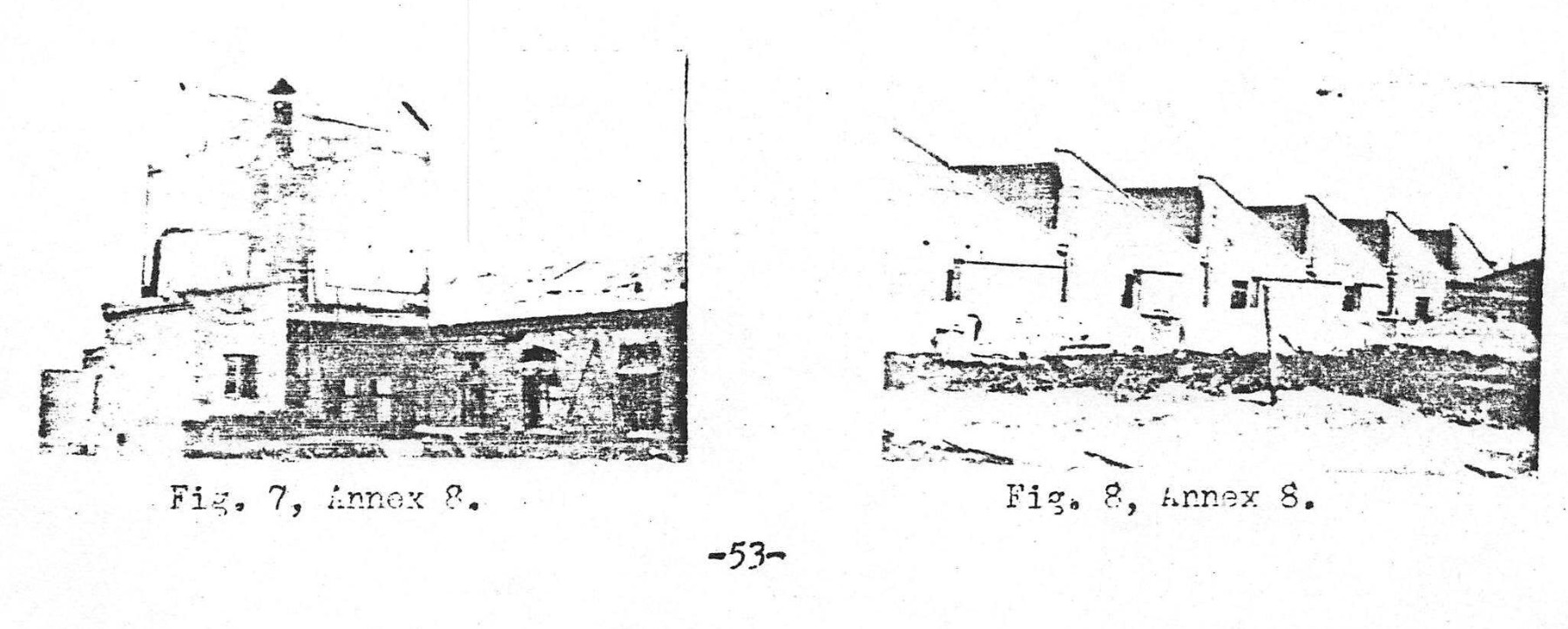
(4) Chang Heng Machinery and Tool Company (Shoko Kiki) [昇恒機器工廠], 197 Route Road, 3rd District, Tientsin [天津]. Source: Japanese in Tokyo; Japanese Headquarters, C.E.F.; Japanese Liaison Office, Peiping. This plant containing about 600 machine tools, a foundry for iron and steel and a forge shop manufactured Model 38 rifles, mortar shell, swords and gages. Steel was made in a one-half ton electric arc furnace. A small arc furnace was used for making Silicon Carbide. Production of rifles was reported at 50 rifles per day. The quality was very poor. The rifles were issued to puppet troops. (Figs. No. 7 & 8 to Annex 8).

-
A thread started by @Pete Klein that discusses the purpose of the shinobi ana 忍び孔. Shinobi Ana
-
Maybe the Kaneoto 兼音 that is pictured alongside the Tenshin 天心 was the source of the confusion? A close examination of the pictures reveals no M stamp on the Kaneoto. However, it would be easy to get the two swords mixed up though and the Tenshin does have an M stamp. Need Help With Two Blades
-
Trystan, I think there is a yamagata M at the bottom of the tang on this Murakami Haruhisa 村上治久. Black paint: 七五二 = 752. White paint: 六二 = 62. Type 94 Shin-Gunto Tang Translation: Assistance Appreciated!
-
In regards to Tenshin 天心, there are only two known blades and neither have a hole for the mekugi. Also of note, is that the year was accidentally inscribed in the wrong order on one of them. Incorrect year Can someone Identify please versus the correct year Need Help With Two Blades.
-
I have carefully looked at the picture linked to above and in my opinion it is merely corrosion and not an M stamp. Trystan, here are the characters for the swordsmiths that used the yamagata M stamp: Murakami Haruhisa 村上治久; Takehisa 武久; Tenshin 天心; and finally Yoshiharu (also known as Yoshitani) 義治. This excludes the Mantetsutō 満鉄刀, Zoheitō 造兵刀, and Type 95 Military Sword 九五式軍刀.
-
Do you have links to the M stamped Kaneoto (with Seki stamp) and Kokima Kanenori?
-
Arsenal Mark on RJT sword Fittings
Kiipu replied to george trotter's topic in Military Swords of Japan
It looks like both the Akitaka's 昭孝 are missing the matsu 松 prefix? Other than that, they fit right in with Niigata. -
Arsenal Mark on RJT sword Fittings
Kiipu replied to george trotter's topic in Military Swords of Japan
Niigata Prefecture 昭孝 Akitaka. 昭和十八年四月吉日 1098 = A lucky day in April 1943 1098. Star stamped removed? Courtesy of @Ray Singer Show Us Your High Class Gunto, Page 7 -
Attention Mantetsu Owners: A Survey
Kiipu replied to Bruce Pennington's topic in Military Swords of Japan
Zac, this particular variant, the interim Type 100/98, was only made in two series, the 44th ヒ and 45th モ series. It consists of a Type 100 blade fitted out as a Type 98. It is an army contract blade that was made in Dairen, Kwantung Leased Territory, that was then sent to Tōkyō, Japan, to be finished. Your sword is the last one known to have used the 南 inspection mark and also the last one to be finished in Japan. After this, they switched to the 連 inspection mark and were finished in Manchuria. Thanks for sharing your sword and may many more come your way. -
Bibliography of Japanese Modern Edged Weapons, 1868-1945
Kiipu replied to Kiipu's topic in Military Swords of Japan
Kapp, Leon, editor. Yoshindo Yoshihara and The Yoshihara Tradition 吉原義人刀匠とその一門 [Yoshindo Yoshihara tōsho to sono ichimon]. San Rafael, California: San Raphael Token Benkyo Kai, 2005. Softcover, quarto, 72 pages. Produced in conjunction with an exhibit at the Pacific Asia Museum in Pasadena, California, from March to June 2005. B720. Yoshindo Yoshihara and the Yoshihara Tradition Yoshindo Yoshihara and The Yoshihara Tradition A link to the museum's website. USC Pacific Asia Museum -
Bibliography of Japanese Modern Edged Weapons, 1868-1945
Kiipu replied to Kiipu's topic in Military Swords of Japan
Watson, Harry Afu, translator. Nihon Tō Kōza: Volume 5, Shinshintō Kantei. Afu Research Enterprises, Inc., 1992. The Nihontō Kōza 日本刀講座 [Japanese Sword Lectures] was originally published in the 1930s and totaled some 20 volumes. They were re-edited by Honma Kunzan 本間薫山 and Satō Kanzan 佐藤寒山 between 1966–1970 and published in a 10 volume set. Volume 5 第5巻, entitled shinshintō kantei-hen 新々刀鑑定編, came out in 1967 and covers the shinshintō era of 1772–1925. There are at least three different printings of the translation noted so far. English language, hardbound, 8 x 11 inches. Volume V, Shinshinto ISBN 1-888612-00-2 -
Sword authenticity, can somebody please help?
Kiipu replied to BrunofromBrazil's topic in Military Swords of Japan
The Type 95 was made by Iijima and it is noteworthy for being the earliest one with all steel fittings. By all steel, I mean the crossguard, ferrule, and mekugi. What is the scabbard serial number on the Type 95? @Stegel -
I think this is Hattori 服部 and not 服郚. Below is a link to Hattori's website showing another example of the mei. http://www.katana-hattori.com/enkaku_01/binsen_ww2_01.html Edit: @SteveM had already correctly translated it in another thread. Seeking Help In Deciphering The Markings On This Katana (More Pics In Album)
-
Arsenal Mark on RJT sword Fittings
Kiipu replied to george trotter's topic in Military Swords of Japan
Cross-Reference ☆ 昭孝 = ☆ Akitaka. 昭和十八年一月吉日 615 = A lucky day in January 1943 615. Another star stamped gendaito -
@Daniel the link to the sword has since moved to the archives section and can still be seen at the link below. In regards to the serial number, is there a faint encircled 松 stamp before the 615? And finally, any markings on the nakago mune? Rikugun Jumei Akitaka (fss-533) @BANGBANGSAN & @Bruce Pennington Cross-Reference Arsenal Mark on RJT sword Fittings, Page 9
-
Cross-Reference Correct Mei Translation? I agree with @Jussi Ekholm in that it looks like Taira 平 and not Minamoto 源. 平定守 = Taira Sadamori. The markings on the nakago mune have nothing to do with the Japanese military.
-
The reference to the "marine gunto" is referring to a Type 100 Military Sword, sometimes called by the standard it was released under, Rinji Seishiki 臨時制式.
-
Below is a chronological listing of dictionaries and encyclopedias about Japanese swords. Many of these publications were put out by the various sword collecting associations for their members. As always, any comments, corrections, or criticism welcomed. Fuller, R. A Dictionary of Japanese Sword Terms. The To-Ken Society of Great Britain. Late 1970s or early 1980s. Kajihara Kōtōken 梶原・皇刀軒. Zusetsu Nihontō yōgo jiten 図説 日本刀用語辞典 [Nihonto Swords of Japan, A Visual Glossary]. 2-satsu 2冊 [2 volumes]. Fukuoka 福岡: Kajihara Fukumatsu 梶原福松, 1989. Hawley, W. M. 1100 Japanese Sword Terms and 400 Named Blades. Compiled by Panchita Hawley. 1995. 140 pages. 1100 Japanese Sword Terms and 400 Named Blades Hawley, W. M. 600 Japanese Sword Fittings Terms. Compiled by Panchita Hawley. 1998. 133 pages. 600 Japanese Sword Fittings Terms Fimio, Frederick A. Kantei: Glossary of Sword Terms. Japanese Sword Society of Canada. Date unknown. https://www.japaneseswordsocietyofcanada.org/Sword_Books.html Cox, Malcolm, and Sueko Cox. Book of Dates for Japanese Swords (1000–2010) 日付の本 Hizuke no Hon. 2006. Soft cover, A4, 75 pages. Minto-to and swordsmiths; Japanese dates; iaido Robson, Gordon. Glossary of Japanese Sword Terms. Japanese Sword Society of the United States. 2005? 78 pages. Sesko, Markus. Handbook of Sword Fittings related Terms. Books on Demand GmbH, 2011. Handbook of Sword Fittings related Terms Sesko, Markus. Encyclopedia of Japanese Swords. Lulu Enterprises, Inc., 2014. Encyclopedia of Japanese Swords
- 1 reply
-
- 1
-

-
Shinobi ana: 忍び孔 An extra mekugi ana, place near the tip of the nakago, for added security and tightness of the tsuka. Seen, for example in what is commonly, but erroneously, referred to as Marine Gunto. GLOSSARY
-
Arsenal Mark on RJT sword Fittings
Kiipu replied to george trotter's topic in Military Swords of Japan
Aichi Prefecture ☆ 三州住筒井清兼作 115 = ☆ Sanshū jū Tsutsui Kiyokane saku 115 ☆ 昭和十九年二月日 = ☆ A day in February 1944 Star stamped on both sides, sideways serial number the same as used by Aichi swordsmith Kanemitsu 兼光. Star Stamped Tsutsui Kiyokane Blade, Post #26 @Ganko Kōchi Prefecture, Shikoku ☆ 建依別山村善貞 kao = ☆ Tateyoriwake Yamamura Yoshisada plus koa. 昭和十九年四月日 = A day in April 1944. Nakago mune: 38. Help translating, hopefully not a gimei or at least a good one @mecox