tbonesullivan
-
Posts
409 -
Joined
-
Last visited
Content Type
Profiles
Forums
Events
Store
Downloads
Gallery
Everything posted by tbonesullivan
-
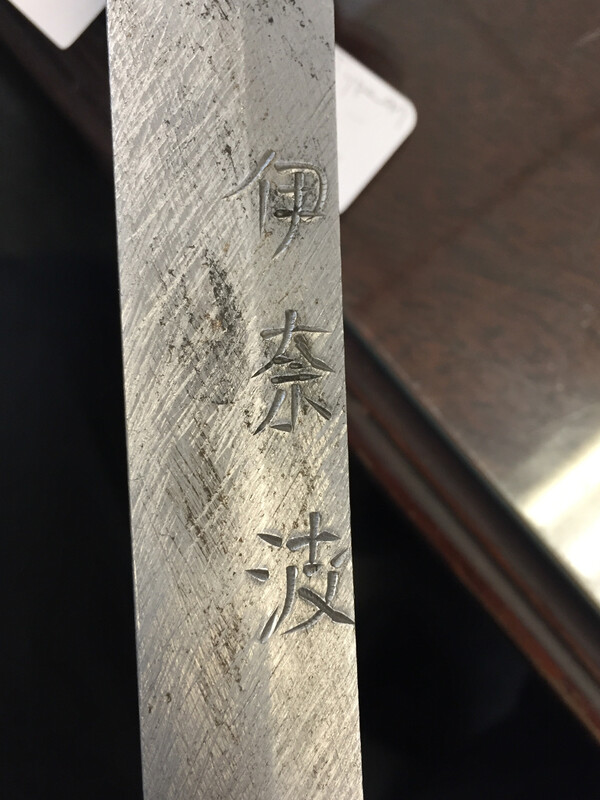
P-37 Kai Gunto Mei : 伊 奈 波 INABA?
tbonesullivan replied to tbonesullivan's topic in Translation Assistance
Thanks! That thread mentions a real hamon on the one they have, but the one I have doesn't look to be "real". Maybe just acid etched. -
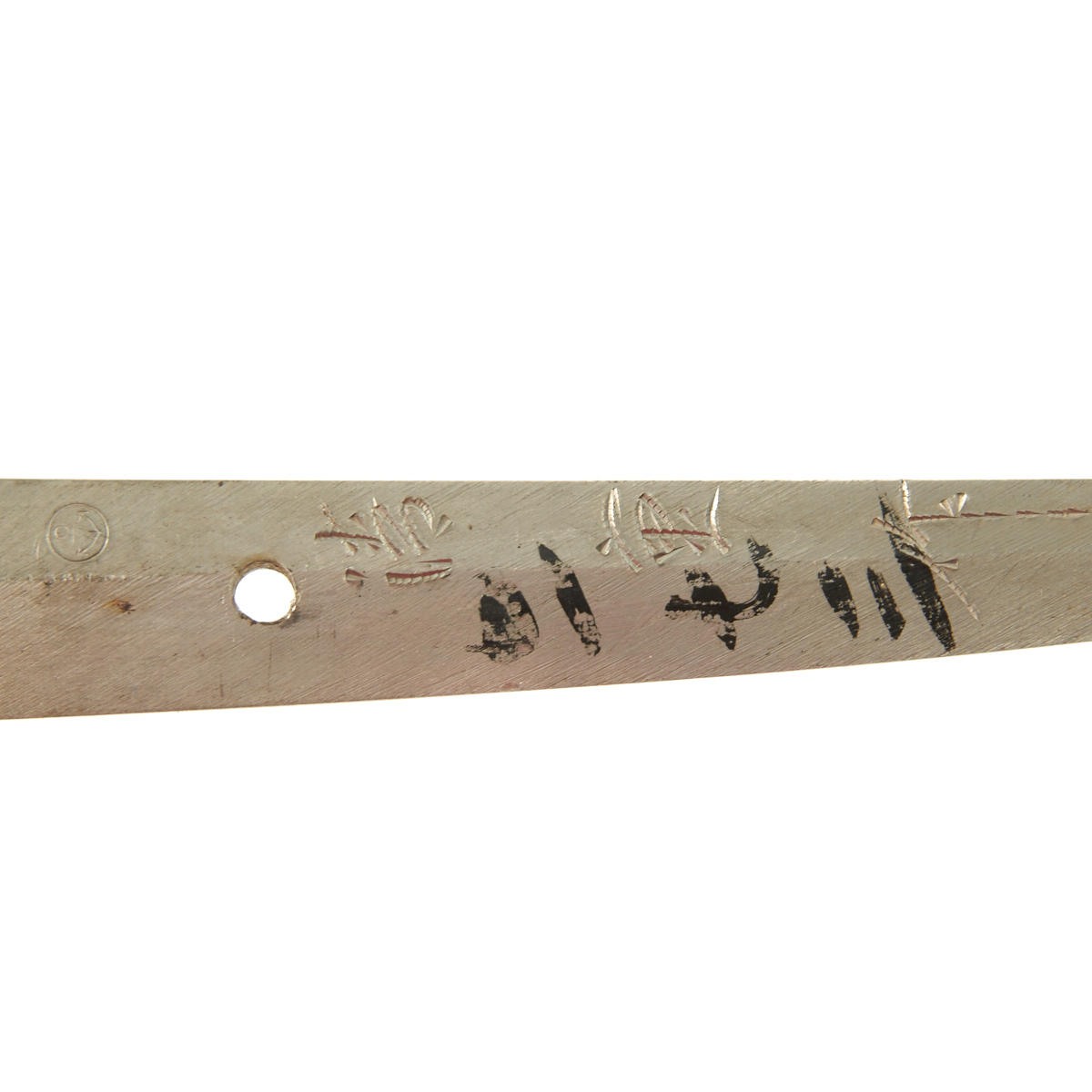
I guess this isn't quite the standard request. I know what the characters are, but I don't know how to read them. This is a P-37 Kai Gunto, probably a stainless steel blade. It's got the Navy anchor stamp on the tang. It's inscribed 伊 奈 波. Most of what I am finding out there has this as part of a larger signature, 伊 奈 波 兼 吉, or INABA KANEYOSHI. Is this a shortened version of the signature by the same smith? Or a different smith?
-
Katana by 1st Generation Tadayoshi?
tbonesullivan replied to tbonesullivan's topic in General Nihonto Related Discussion
Yes, that's the real question. Of the Nihonto I've dealt with, all were kept and sold as is. This would be the first time looking into having a blade polished, and possibly sent in for a Shinsa. Do either the NTHK or NBTHK still do any Shinsa examinations in the U.S., or is it all in Japan now? I'm in NJ, so I'm going to try to make the next NYTK meeting and will see if I can bring it along. -
Katana by 1st Generation Tadayoshi?
tbonesullivan replied to tbonesullivan's topic in General Nihonto Related Discussion
It stops just before the HABAKI and is not present under it, like it was left on when whoever polished it did this. The lines are perfectly parallel, like on a German WWII Dagger, which for me, usually means machine polishing. Just curious, but where was this blade seen before? I spend most of my day buried under bayonets and antique guns so I don't get out much. -
Katana by 1st Generation Tadayoshi?
tbonesullivan replied to tbonesullivan's topic in General Nihonto Related Discussion
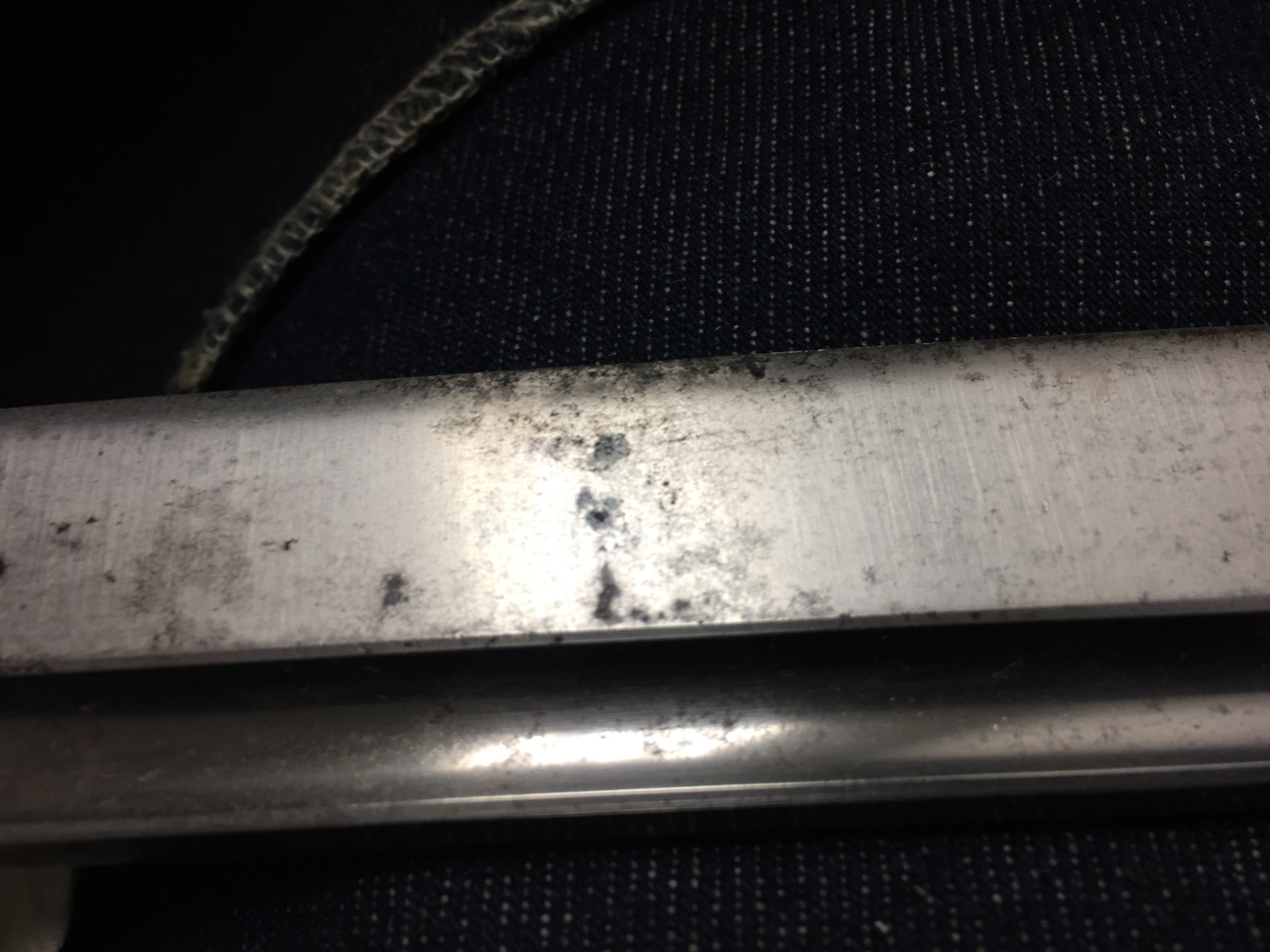
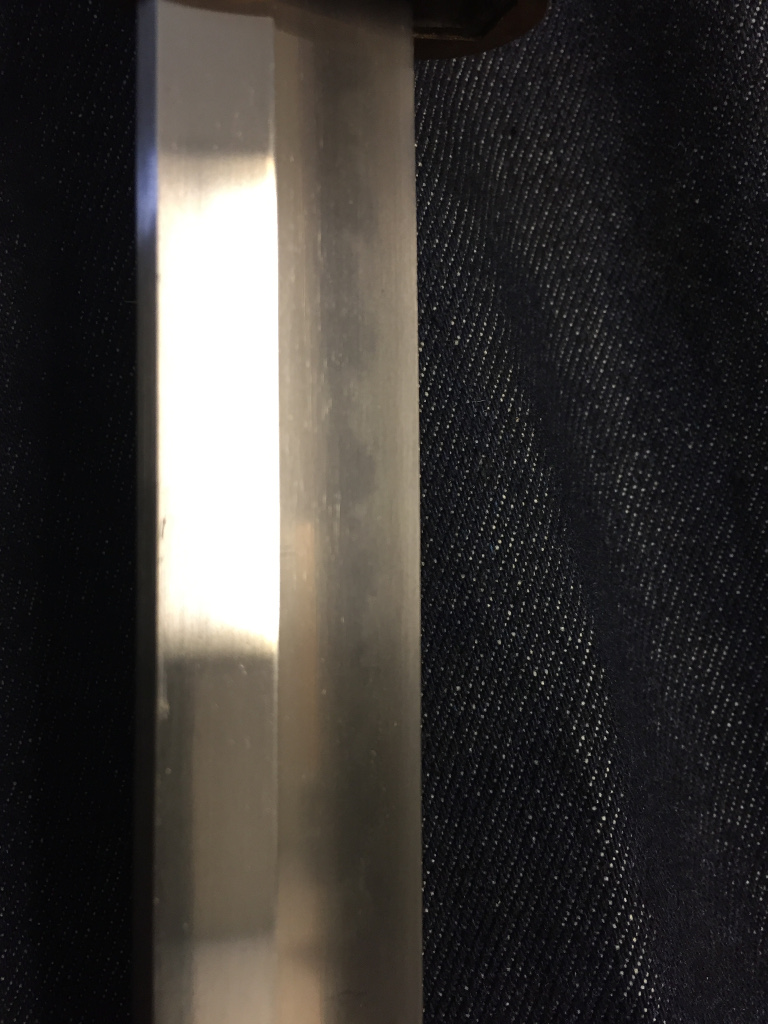
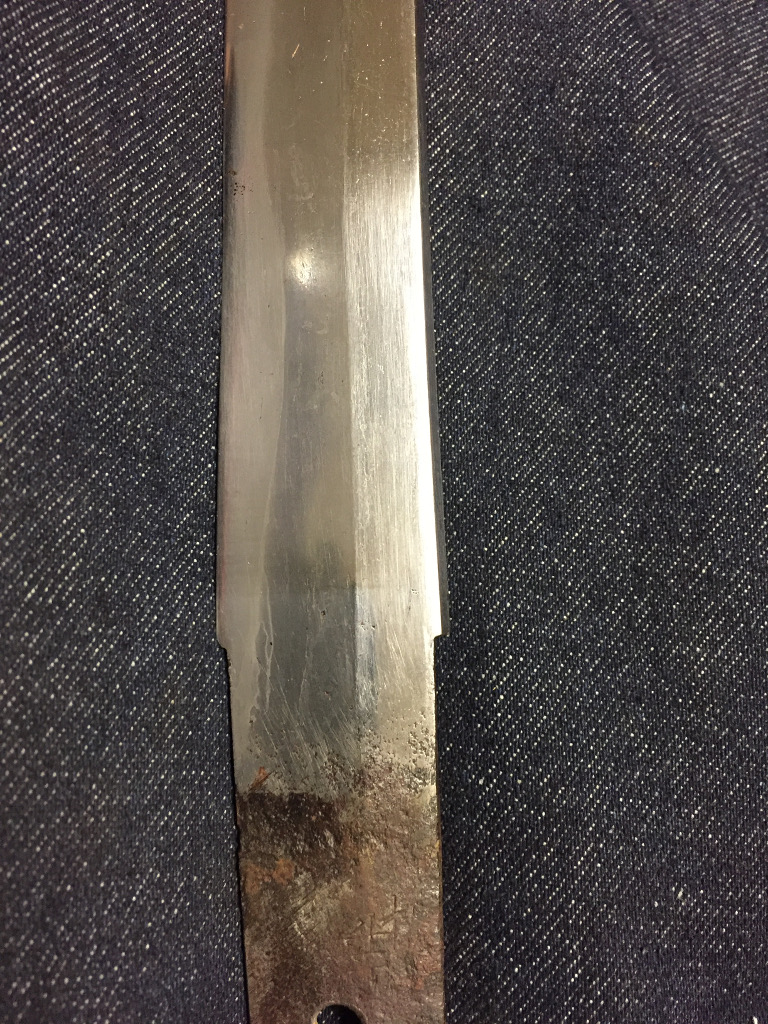
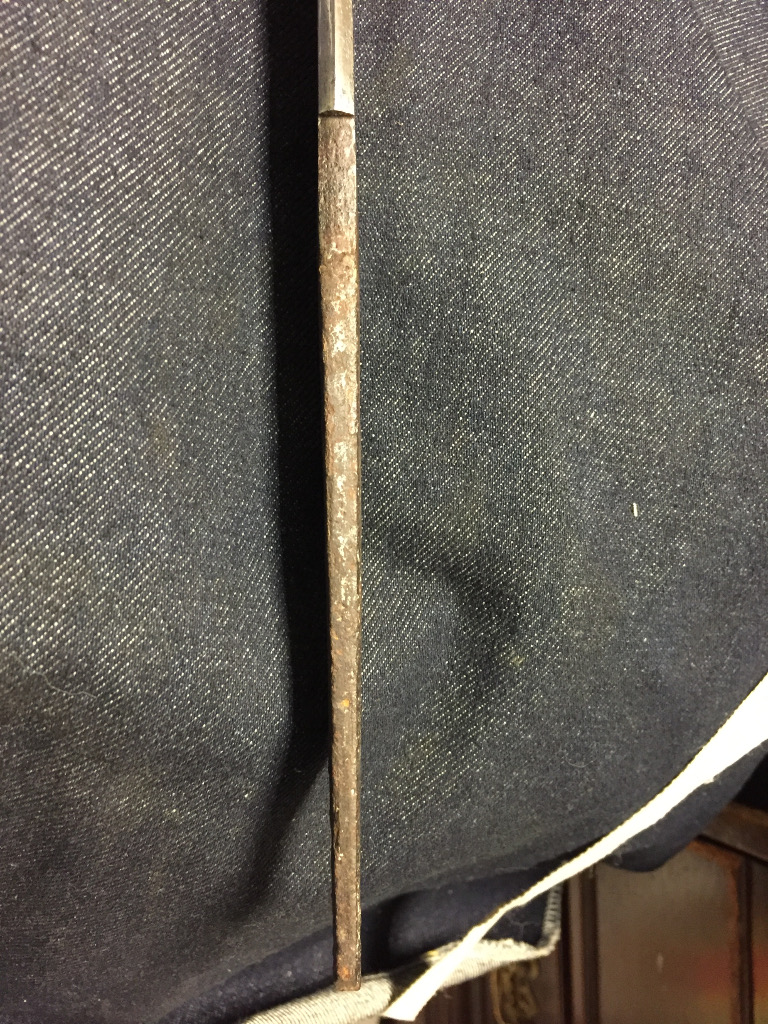
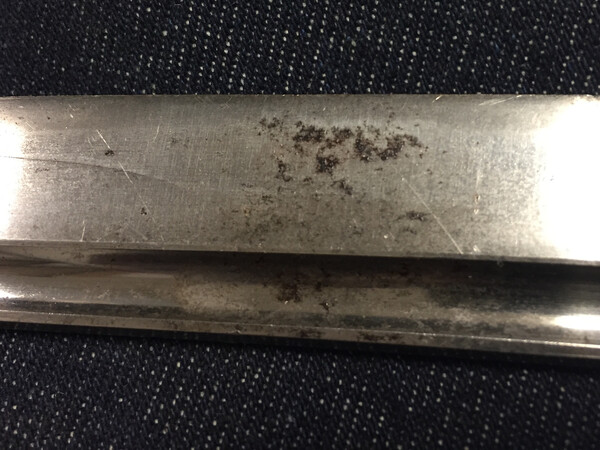
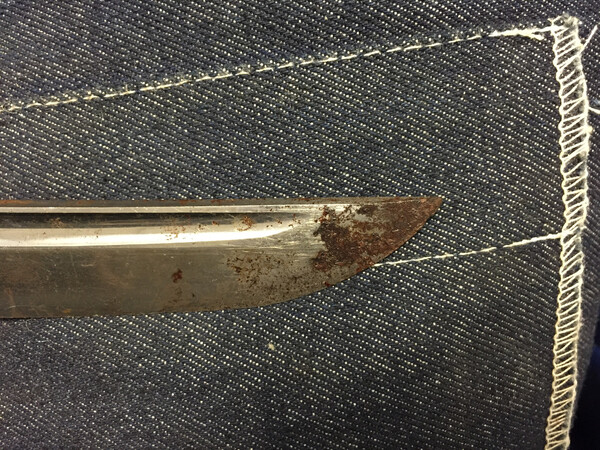
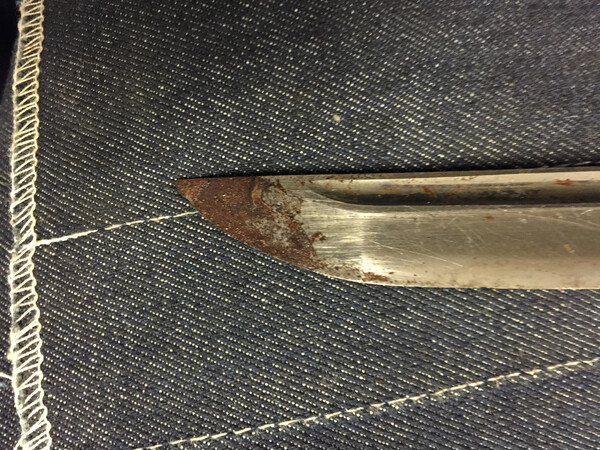
I am not seeing much in the terms of ware. There definitely are some but nothing horrible. What it has are actual scratches in the surface of the blade, as well as the fact that it has a lot of horizontal striations on the blade. I don't know if this from a lot of cutting through GOZA, or whether someone polished it on a wheel . The marks that look like FUKURE seem to be rust stains and pits, which have a bit of rust scale in them. There are little squiggly lines of corrosion, which I've seen on non-Japanese blades, as well as on aluminum. It's almost like the corrosion moves in a little line, pushing a piece of debris around that is making water contact the blade. I attached close ups of two different parts of the blade. Either way, my concern also is whether there is in fact enough left to actually send in for a polish.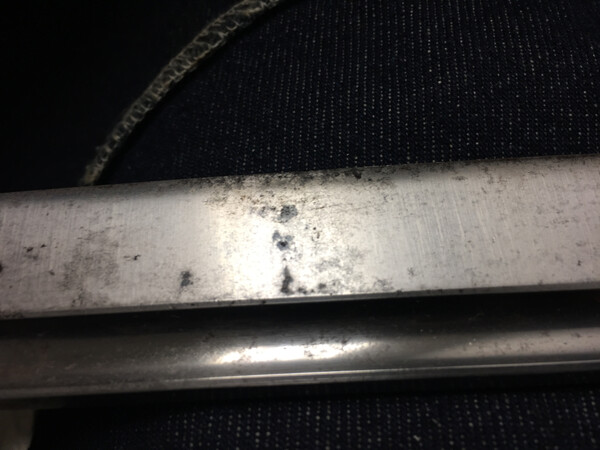
-
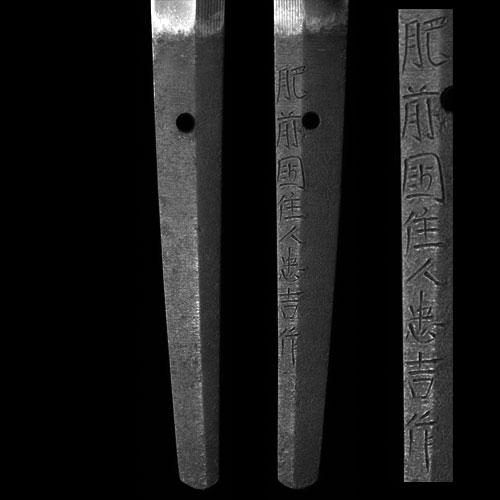
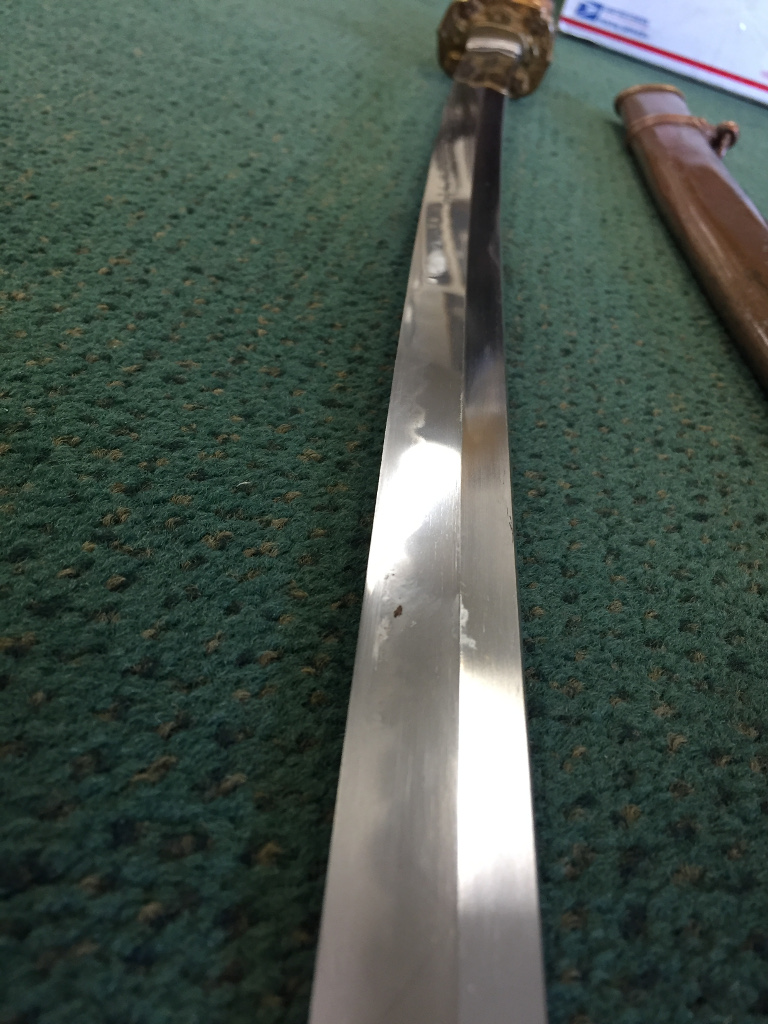
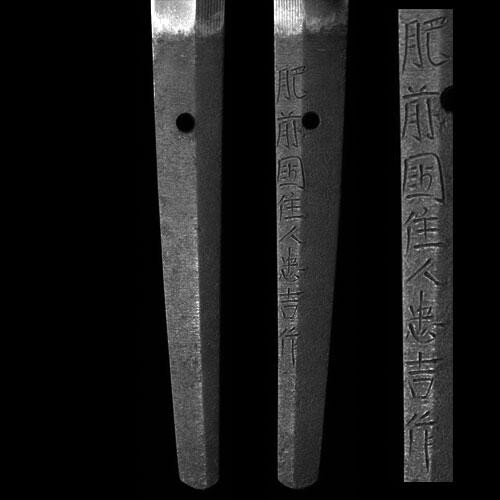
Well, we just picked up this somewhat uncared for Katana from a private purchase estate sale type of deal. It's supposed to be a Bring Back from Japan, post war. Blade has some rust issues, and the Koshirae are really banged up. However, the MEI threw me for a loop. 肥前國住人忠吉作 - Hizen no kuni Junin Tadayoshi Saku Just like on this sword: https://nihontoclub.com/sword-images/15734/16394 It looks like a real signature to me, but if there are experts out there, it's possible they could recreate it. The kissaki is kinda sad, with that amount of oxidation. I did wipe it down and oil it, but we're not doing anything else to it. The main concern I always have is whether it's Gimei or not.
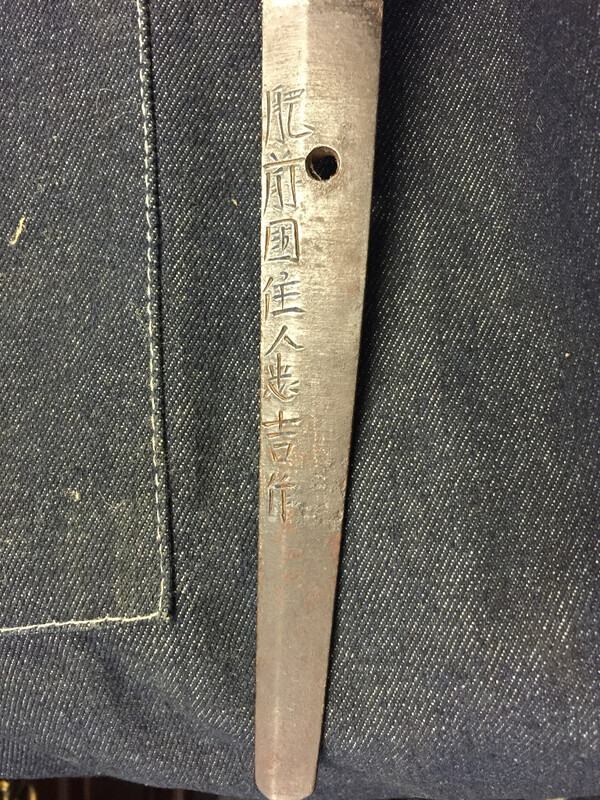
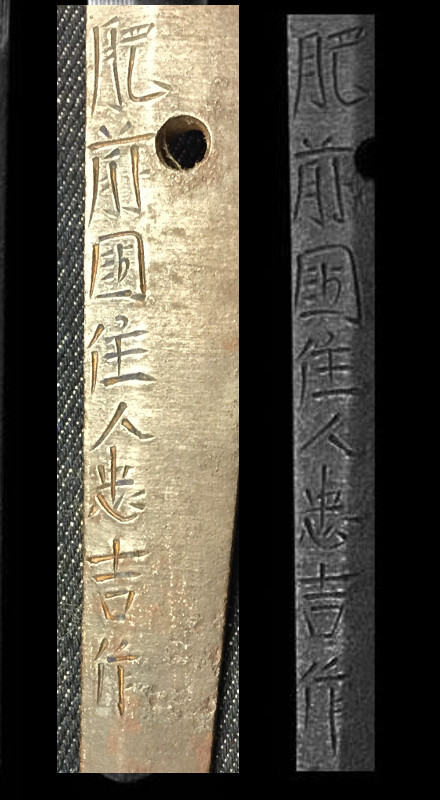
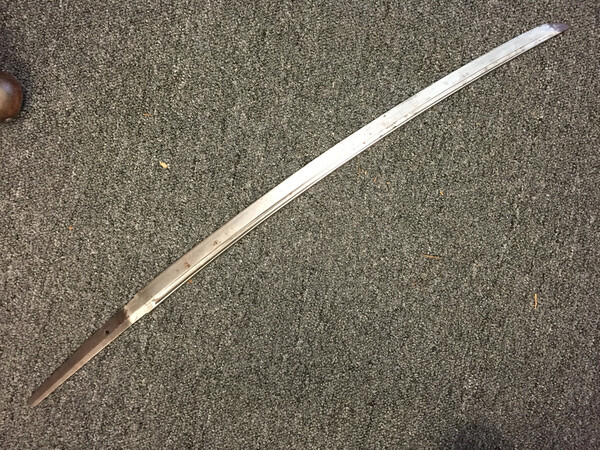
-
How many characters is this? 8? 10?
tbonesullivan replied to tbonesullivan's topic in Translation Assistance
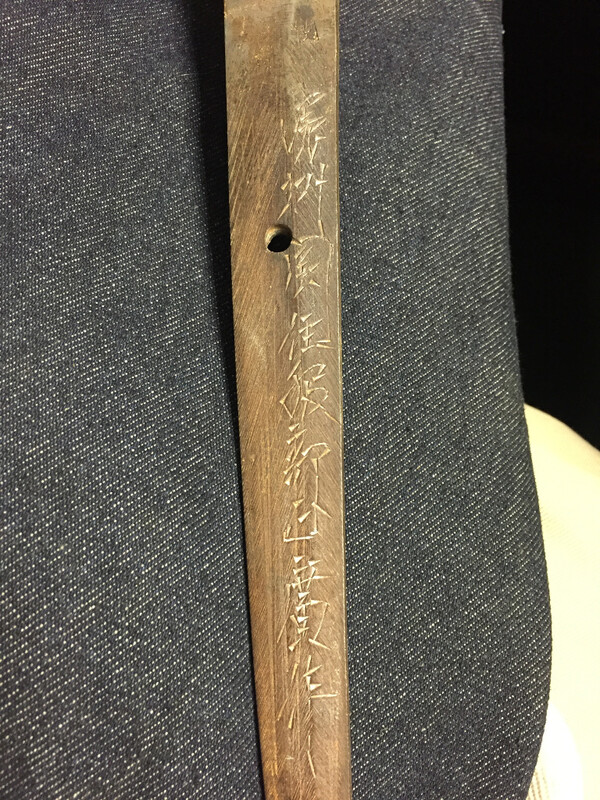
I had considered that the third Character might be SEKI based on the location, but man that looks different than the expected markings. That really long right side on the SEKI mark, that really is characteristic though. I should spend more time in the Showa Oshigata list. Usually I manage to get one character out of the name, and go from there, but this one, I'm just not used to reading those kinds of chiseled markings. -
This is from a Seki Arsenal stamped Shin-gunto, and the style eludes me. I can't tell whether it's 8 characters, 9, or 10. Since it's from seki I'm assuming the first two are 濃 州 (NO SHU), but it looks like another character is before the 住 (JU) character. This character almost seems to extend down on the right past the Ju. It isn't 国 (KUNI) is it? After that, I can't tell how many more characters there are, except that the last character would probably be 作 (SAKU)
-
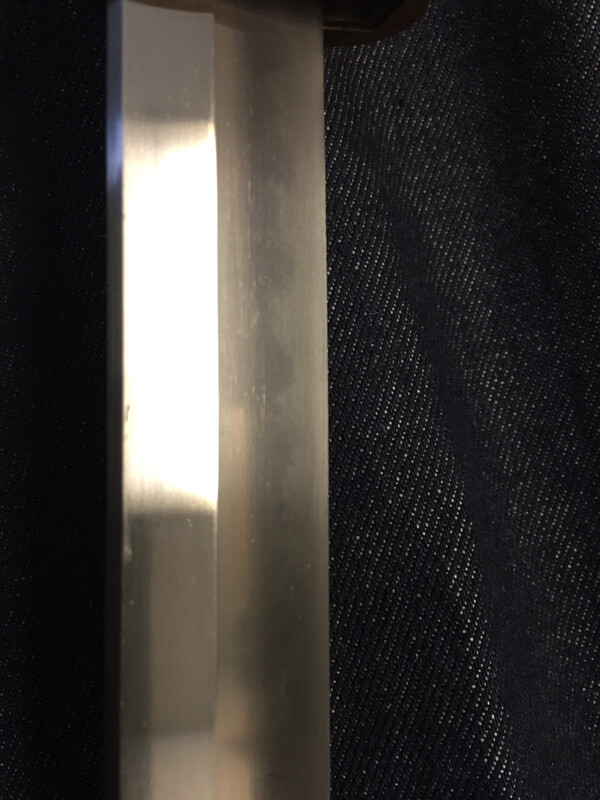
I've got a mid 17th Century Shinto Blade in a Gunto setting, probably put back into service for the war and cleanedup. It has a polish from the Showa that doesn't bring out the hamon or other blade characteristics at all. You can barely see it in the right light. Makes me wonder if it would be worth it to send it out for a real polish.

-
Shin-Gunto Tang Paint Markings
tbonesullivan replied to tbonesullivan's topic in Military Swords of Japan
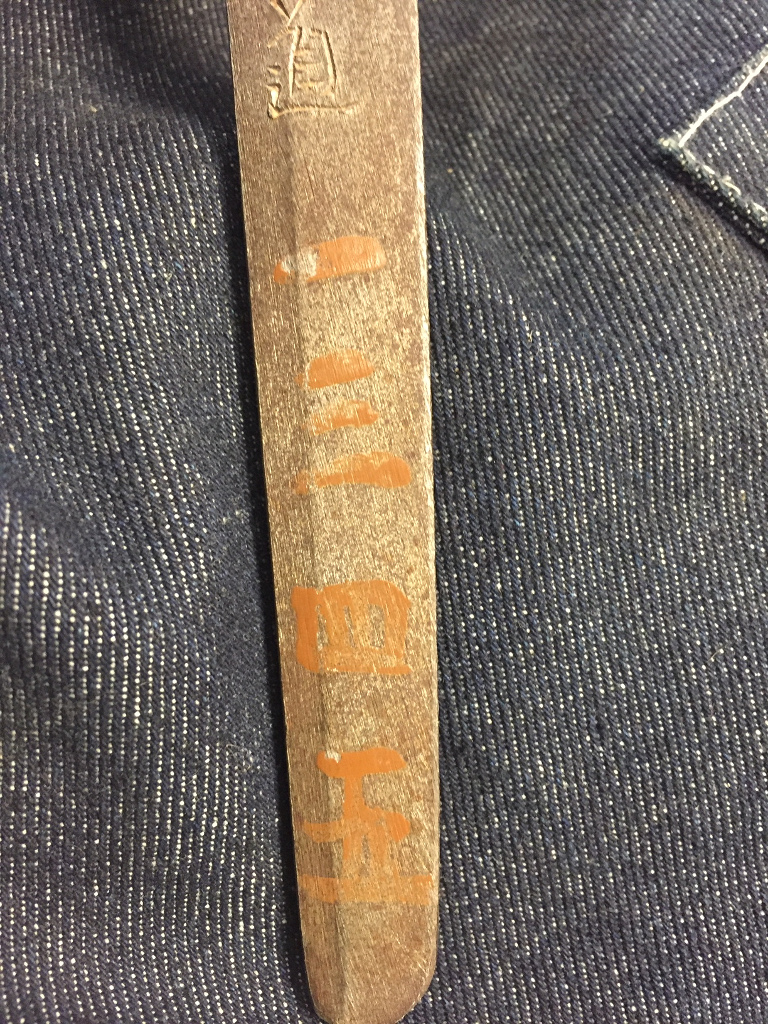
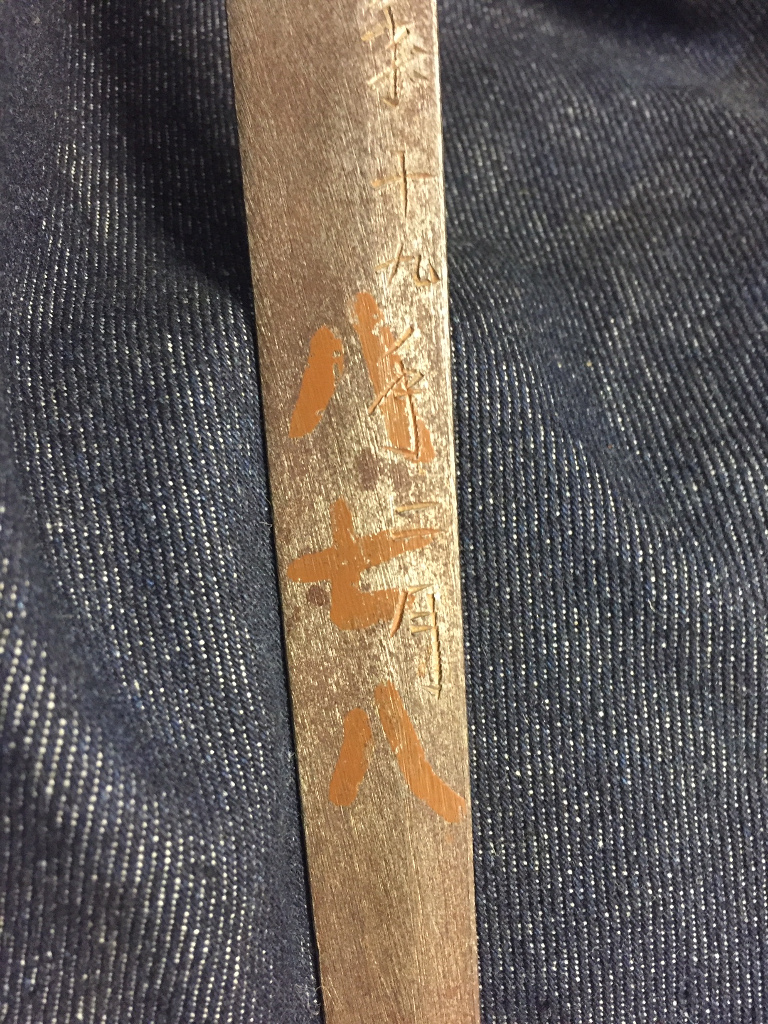
Ok, here is the tang that is marked on both sides with paint, with different numbers : 一 三 四 五 - 1345 and 八 七 八 - 8 7 8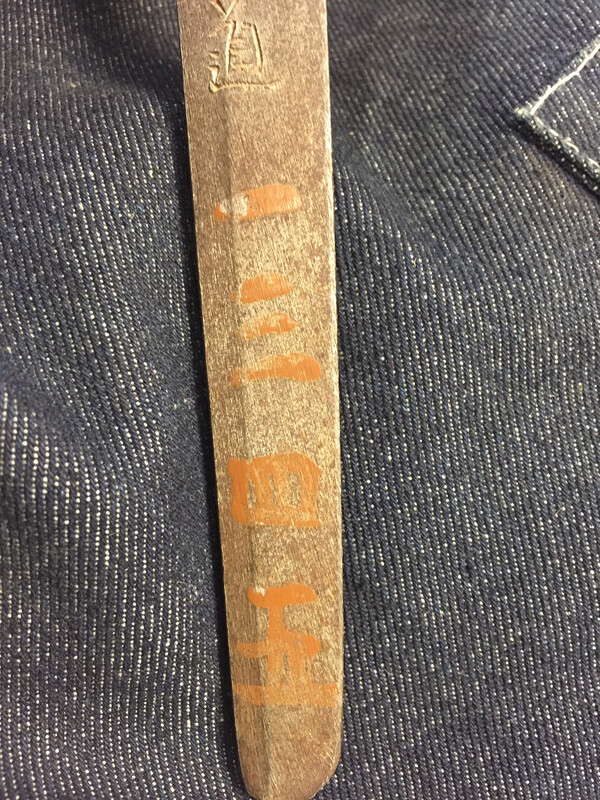
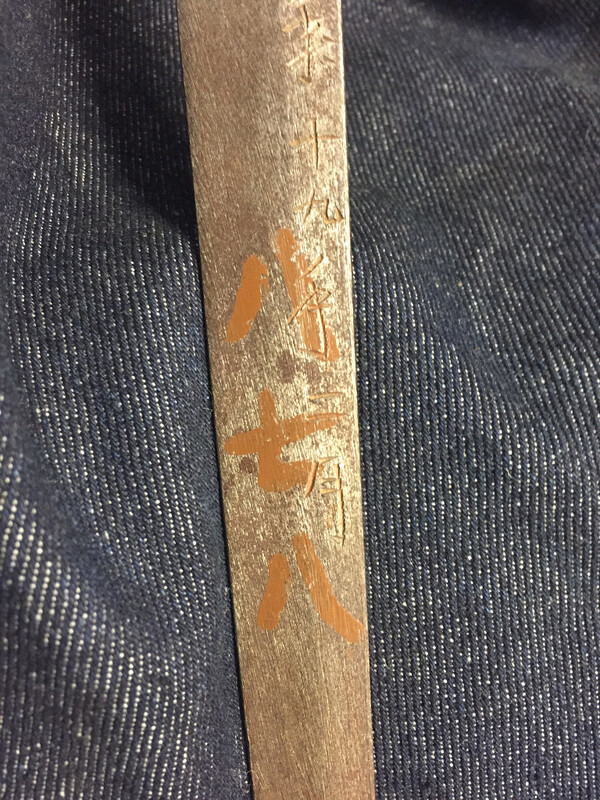
-
Shin-Gunto Tang Paint Markings
tbonesullivan replied to tbonesullivan's topic in Military Swords of Japan
oh, i was talking about a different sword. I'll see if I can get pictures of that one as well. -
Shin-Gunto signed by Kanemichi?
tbonesullivan replied to tbonesullivan's topic in Translation Assistance
I thought it might have been that, but the strokes at the bottom looked so perpendicular to the bottom stroke. I'll have to take a look at those NMB Kanji. Thanks so much for helping me figure this out. It's such a steep learning curve. On the other hand, it's easier than reading old handwritten British documents on Vellum. It looks like a bunch of scribbles. -
Temperature and Humidity
tbonesullivan replied to Michaelr's topic in General Nihonto Related Discussion
If this was guitars, I could help, but not with swords. I would think the lower side for humidity would be best. You probably don't want it bone dry for the wooden artifacts, but maybe 40% humidity? Temperature around 68 sounds good. -
Shin-Gunto Tang Paint Markings
tbonesullivan replied to tbonesullivan's topic in Military Swords of Japan
AH! Now It make sense. Not sure why this one has different numbers on each side of the tang. Maybe that number is used for some other purpose than matching with the koshirae. -
This one came with a little tag that said "KANE MICHI" on it, but I'm a bit stumped. Well, the second character is definitely 道 MICHI from what I can tell, but the 兼KANE looks nothing like I am used to. I've also looked up other sword tangs, and can't find a KANE that looks like that. I am having trouble finding any character that looks like that in the usual sources I look at for Kanji on tangs. Is it some kind of stylized variant, or is it something else? It's definitely an arsenal made blade. The other side of the tang is dated 昭 和 十 九 年 二 月 - Showa 19 (1944) 2nd Month (February)
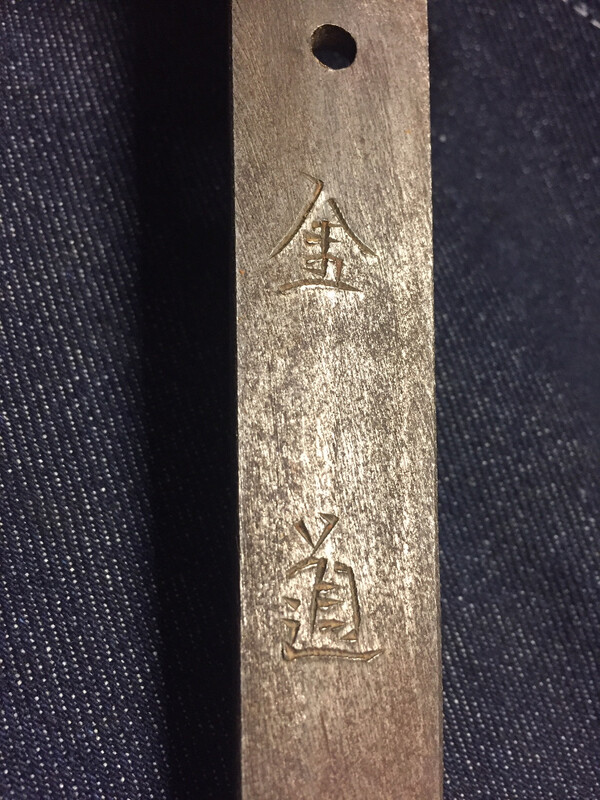
-
This lovely Shin-Gunto showed up a few weeks ago, and it has already moved on to a new owner. It was fairly nice, marked 濃 州 住 福 本 兼 宗 作 - MISHU JU FUKUMOTO KANEMUNE SAKU , with a Showa arsenal stamp. However, I'm trying to figure out what the paint markings on the tang mean. Usually they would match numerically somehow with the fittings, which in this case were marked 8 九 . However the tang was marked 一 ? 二 0, where the ? could be 目 (me?) or maybe 且(Katsu?). Well I just have seen another Shin Gunto, and this one has the 八 七 八 - 8 7 8 matching number on one side, which is also on the Tsuka, and on the other side in paint is 一 三 目 五. Anyway, does anyone know which character it is, and what the paint marking signifies?
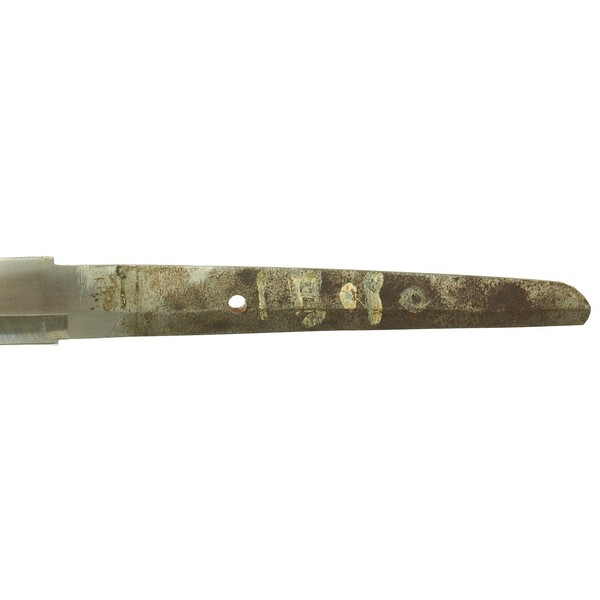
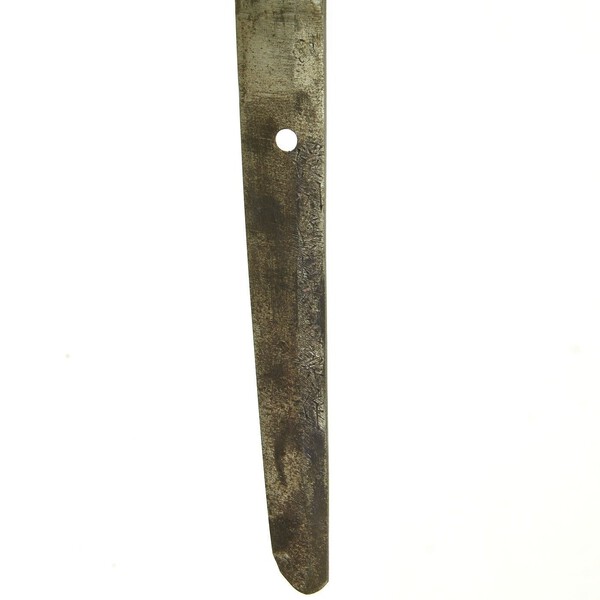
-
Obscured / Rusted Mei - How to Read?
tbonesullivan replied to tbonesullivan's topic in Translation Assistance
Oh wow. I never imagined that just from the pictures it could be potentially identified. I was definitely wrong about the opposite side having to be a date. Thanks so much! I may still try getting a rubbing, as it's a skill i'd definitely like to work on, not just for sword tangs. I sometimes have to deal with totally rusted military items, like antique gun barrels, which often may have traces of markings, but they are almost impossible to read. -
Obscured / Rusted Mei - How to Read?
tbonesullivan replied to tbonesullivan's topic in Translation Assistance
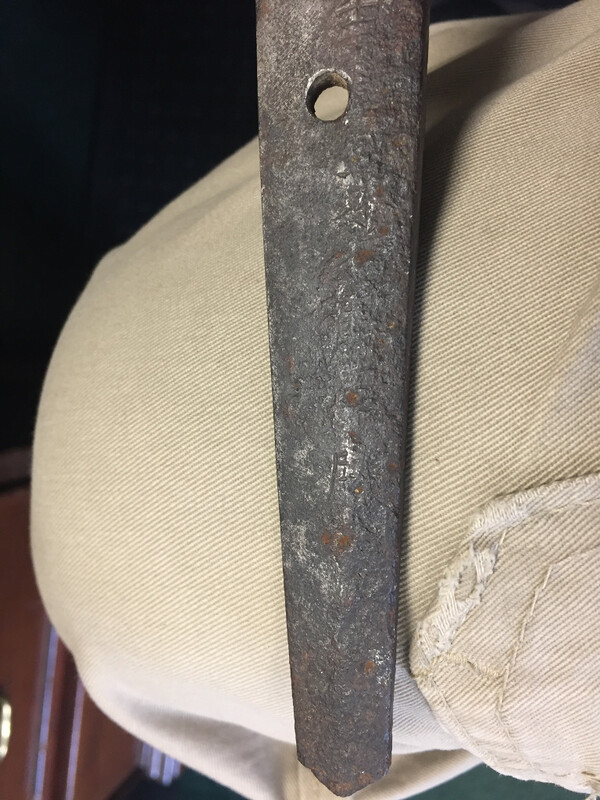
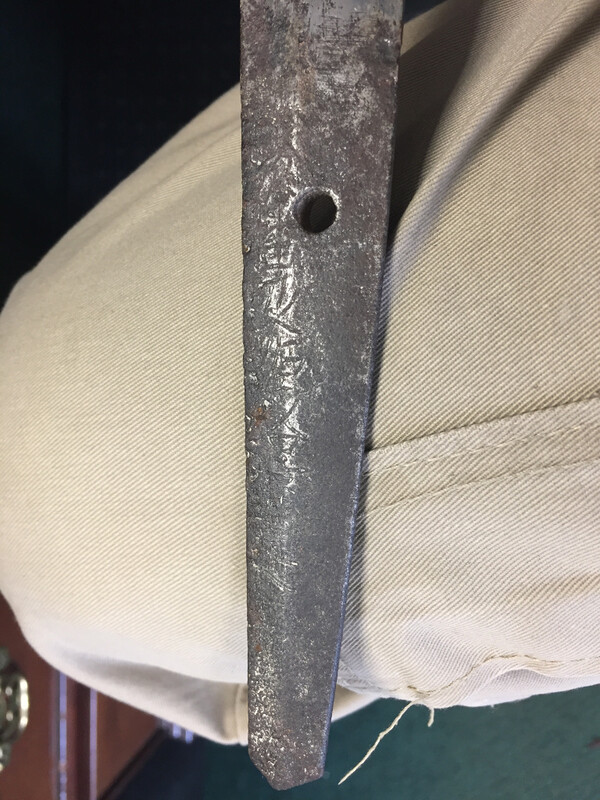
Here's the machi area, and also the top of the fuchi, which has quite a bit of writing on it. Would they have transferred information to the Fuchi if it could not be read on the tang anymore? It definitely has a date on it. I haven't gotten a chance to pull up my date charts to see which era it is marked.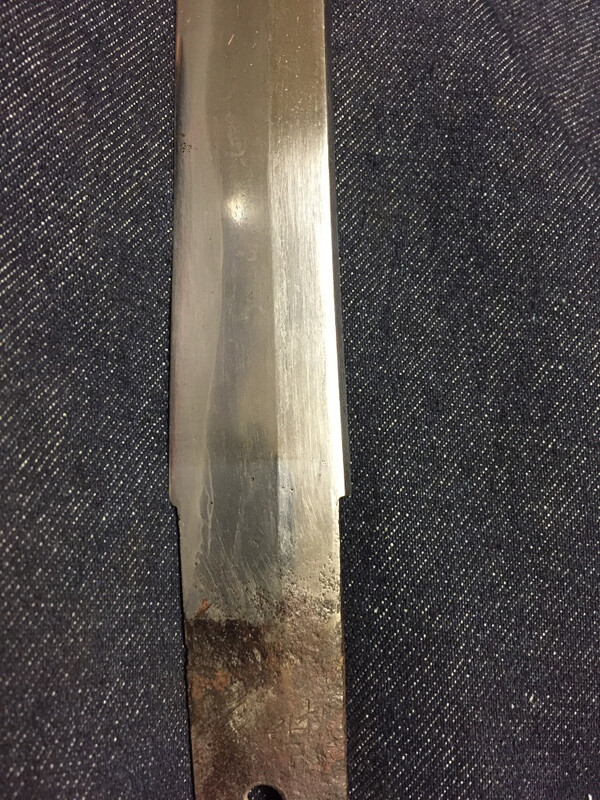
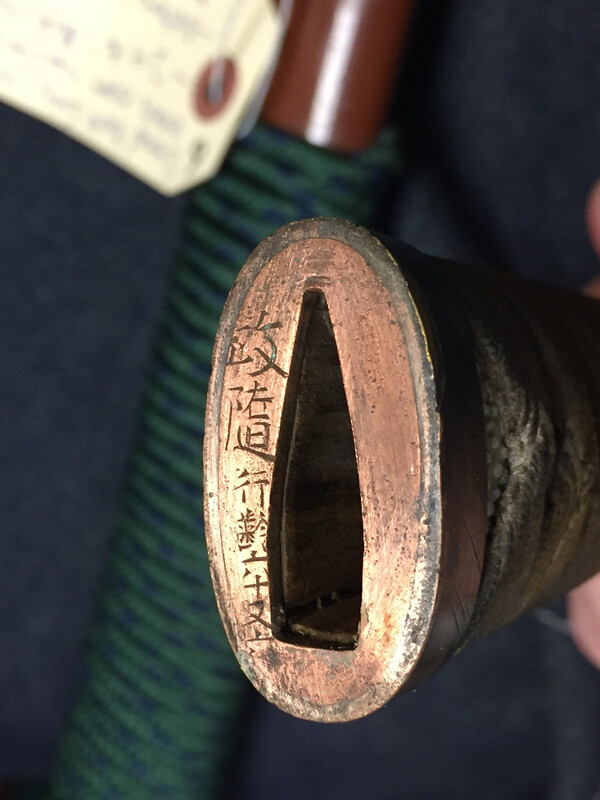
-
Obscured / Rusted Mei - How to Read?
tbonesullivan replied to tbonesullivan's topic in Translation Assistance
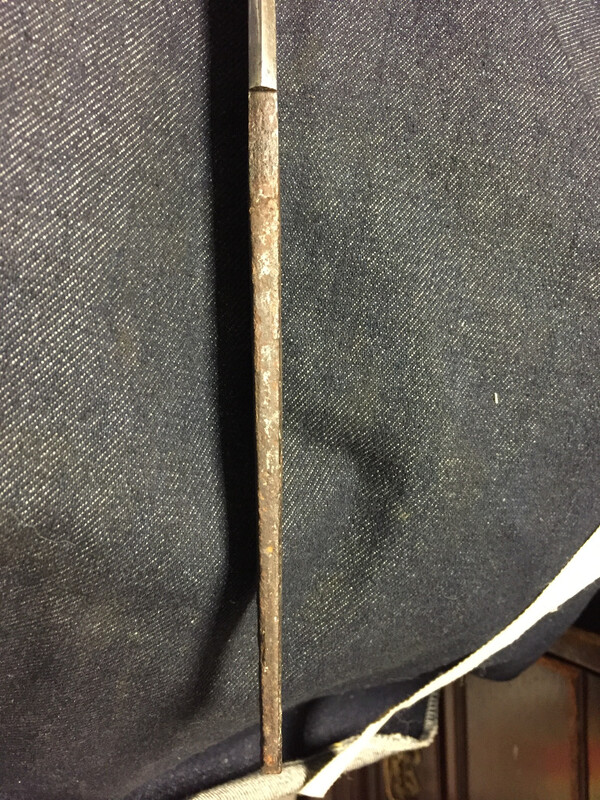
I tried for some better light, and managed to get a little bit clearer. There is some white substance in areas, so most likely I am not the first who has tried to visualize the me. I did not find anything on the spine of the tang. I will probably try some rubbings once I get the proper stuff.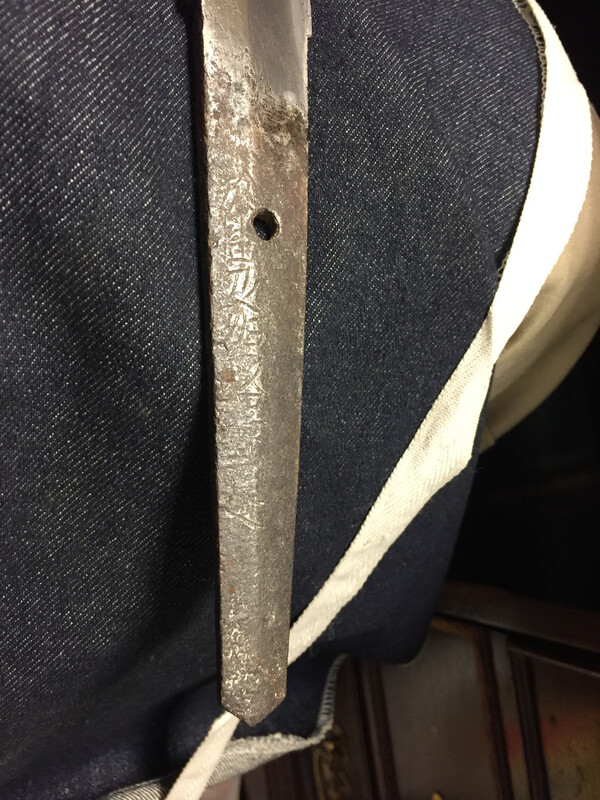
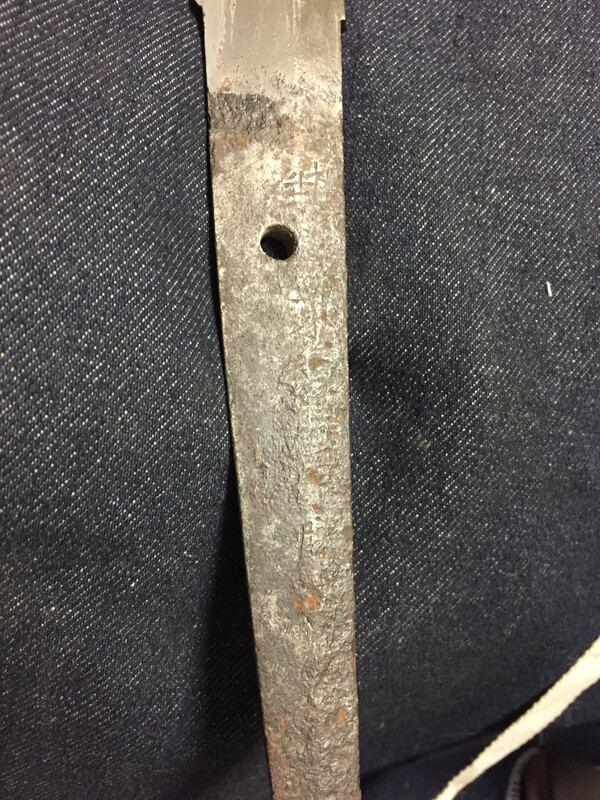
-
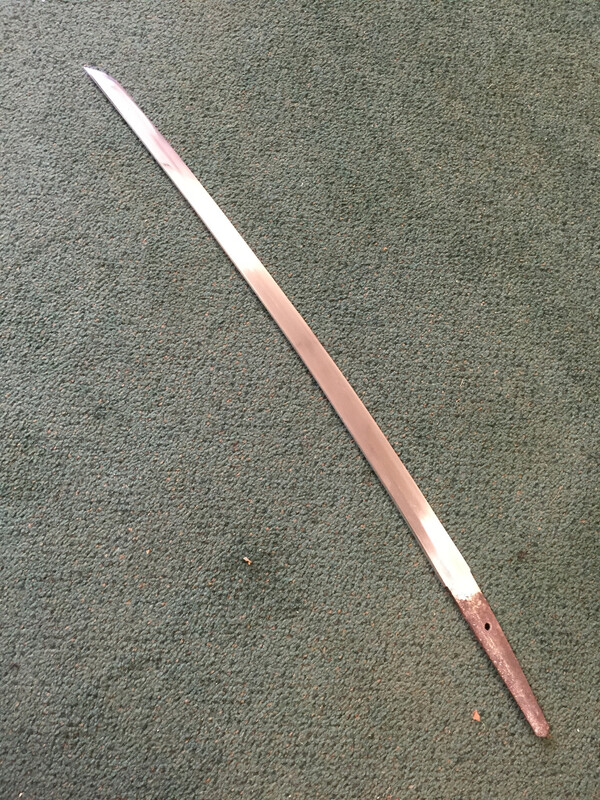
I guess this is a stage everyone gets to: when you end up with a tang is like this. I can somewhat make out the Mei, but the date is pretty much obliterated. Is there any way to really get these back? The tang has some pretty significant rust scaling. I'm not doing anything to it, but at least being able to get a rubbing or something might be nice. I'm just worried that the tang condition will prevent any type of accurate rubbing.
-
Show Us Your High Class Gunto
tbonesullivan replied to lonely panet's topic in Military Swords of Japan
Oh wow, those certainly were fancified. Never seen one in person with an Ishizuki like that, either Shin-Gunto or Kai-Gunto. -
Are you able to get off the Habaki? That usually protects the blade from a lot of the oxidation, and removing it can provide information about the blade. The transition from blade to tang also can show whether it has been cut down.
-
The writing on either side looks pretty much the same style, and honestly unless it's a super well-known smith, I don't see why adding a fake maker would really increase the value. That's not saying people don't do it, but with all those chisel strokes, the amount of work to add that MEI and make it look that nice really wouldn't be worth the added value, if there is any.
-
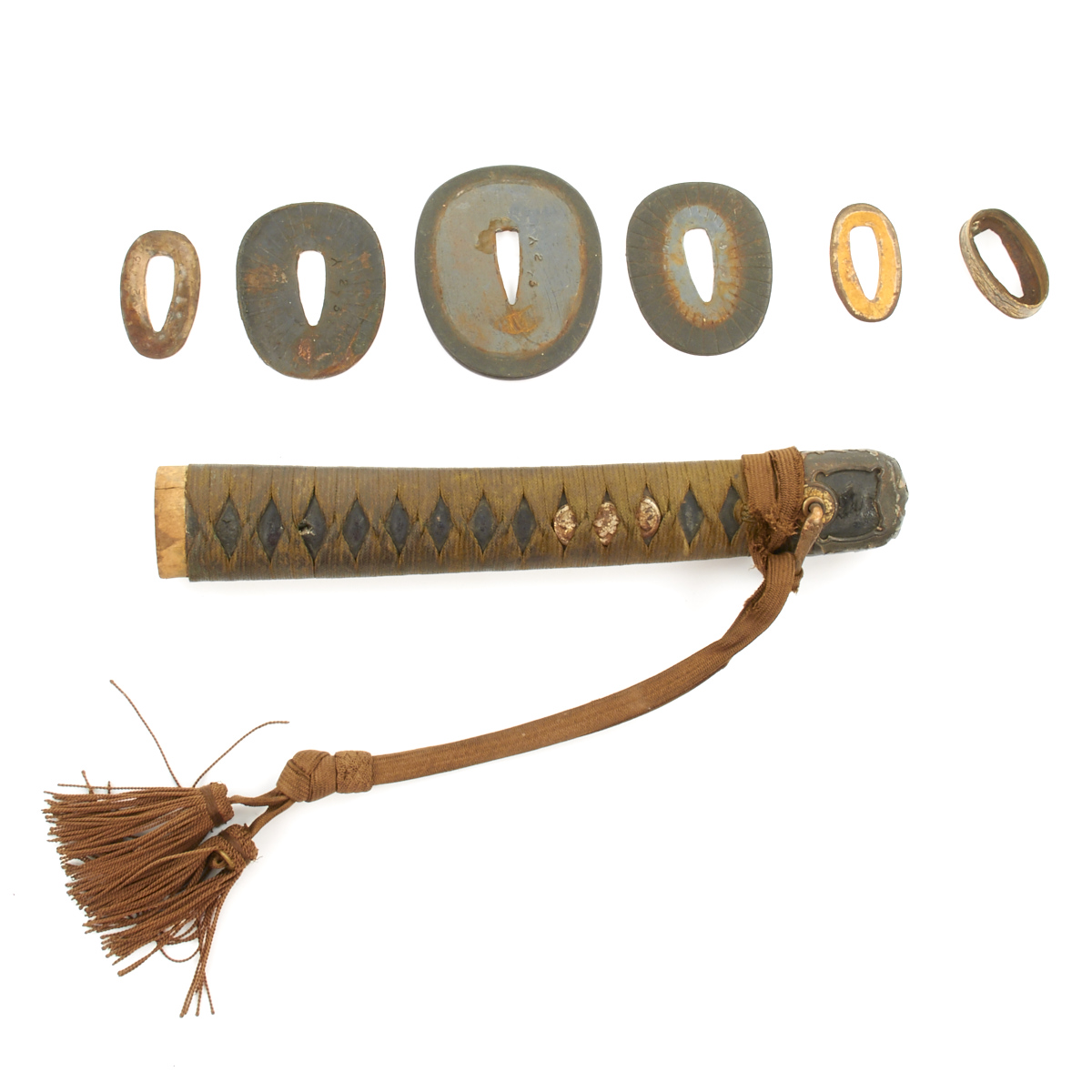
Here's a few . It's got a nice olive green ITO, but there is a bit of rust on the Koshirae. It would appear that the fittings are almost ENTIRELY magnetic. The Kanuto-Gane, the menuki, the top of the Fuchi, ALL of the Seppa, O-Seppa, and The Tsuba are magnetic. The Habaki definitely is not magnetic. On the Saya, the Ashi, Senegane, and Ishizuke are magnetic as well. The Koiguchi however is not. Definitely not what I was expecting at all.
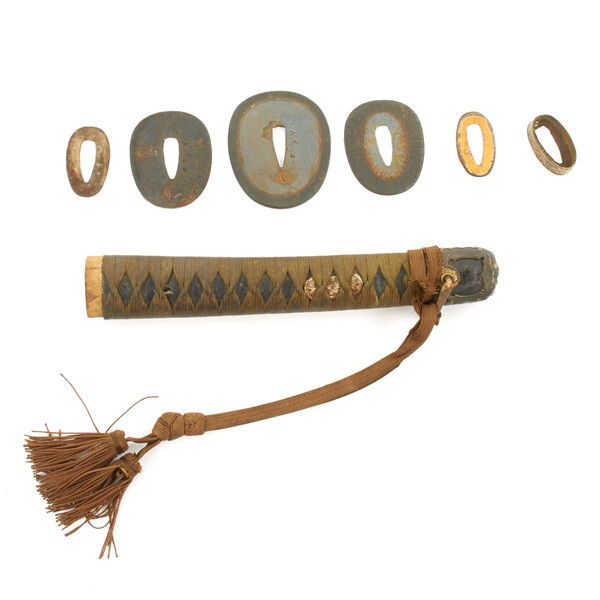
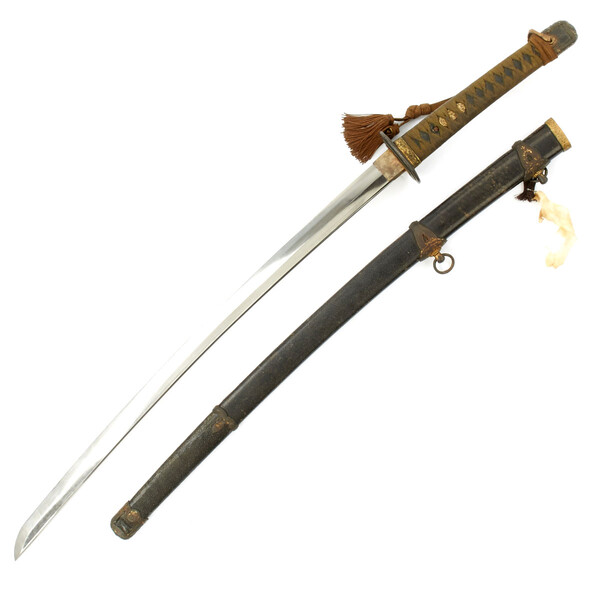
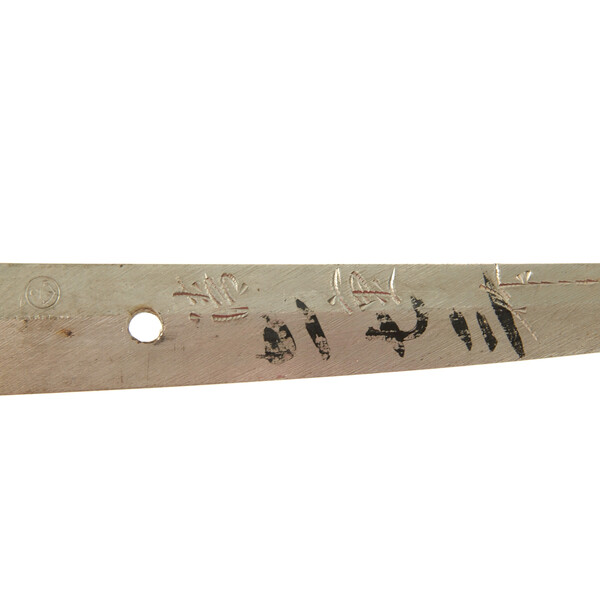
-
The leather cover on the scabbard is what interests me the most. I don't know if there is even a way to fake the age deterioration of leather. I've seen a lot of old leather from WWII, WWI, and earlier. Nothing in that leather looks out of line for being at least 70 years old, especially the dry rot where the surface is flaking off.