Yukihiro
-
Posts
241 -
Joined
-
Last visited
Content Type
Profiles
Forums
Events
Store
Downloads
Gallery
Everything posted by Yukihiro
-

Nagata Sukenori showa-to with no Seki stamp
Yukihiro replied to Yukihiro's topic in Military Swords of Japan
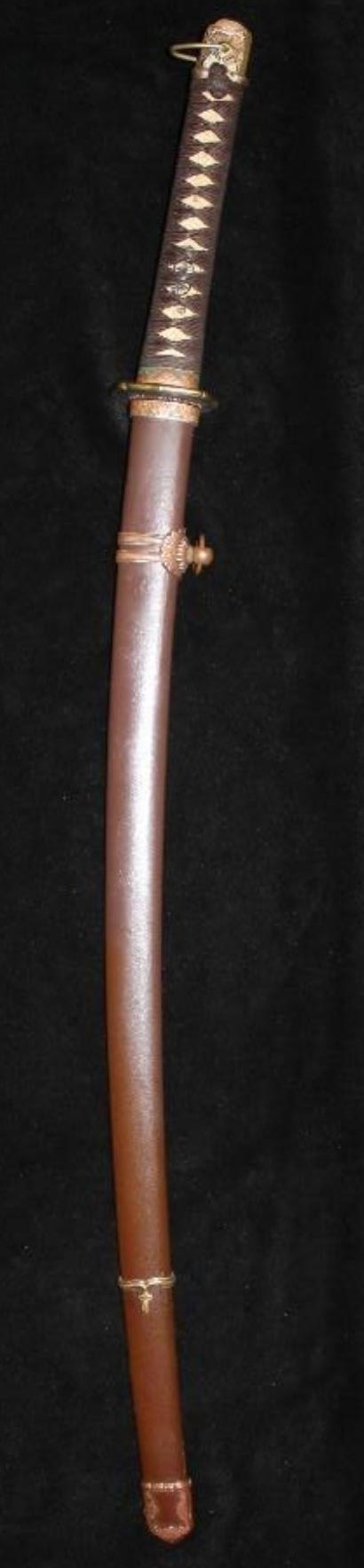
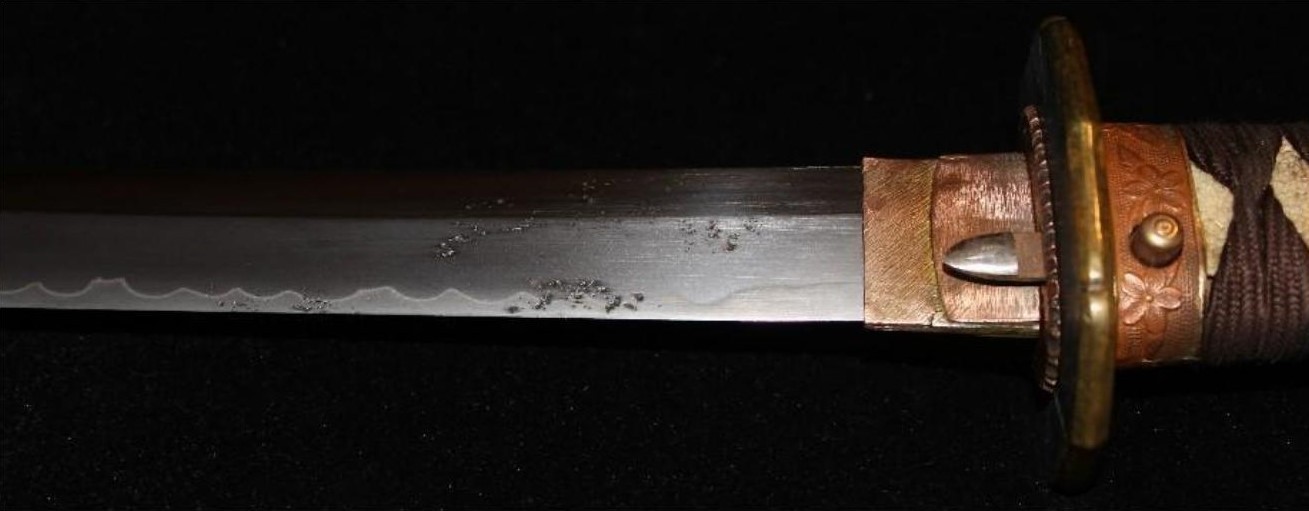
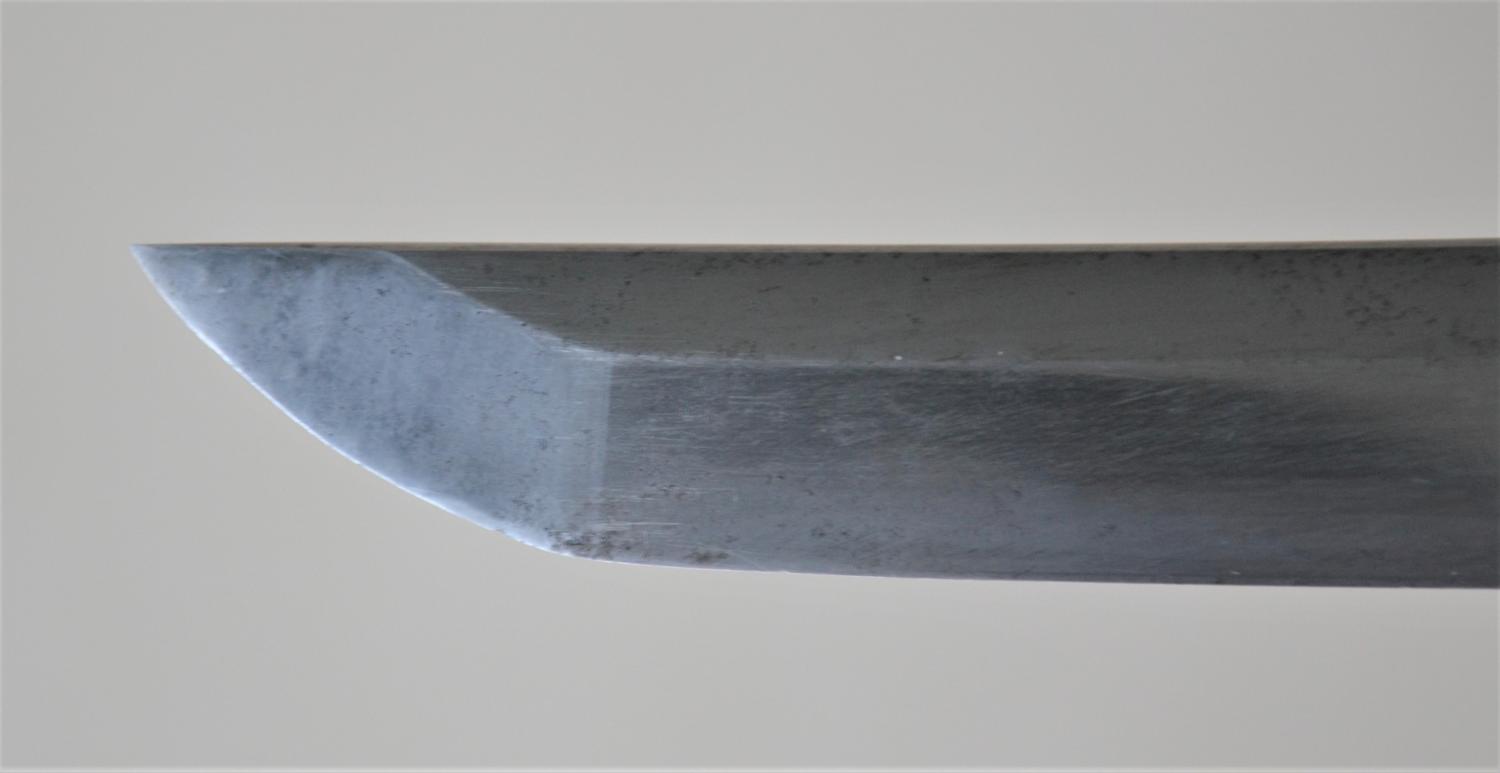
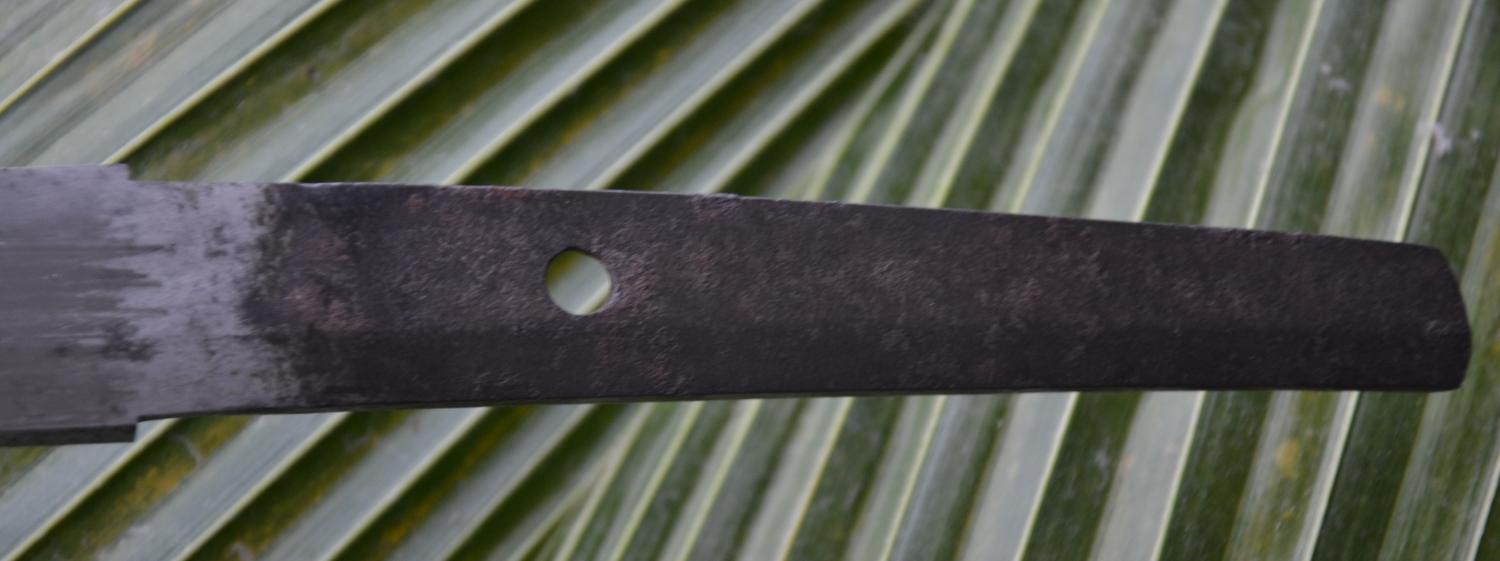
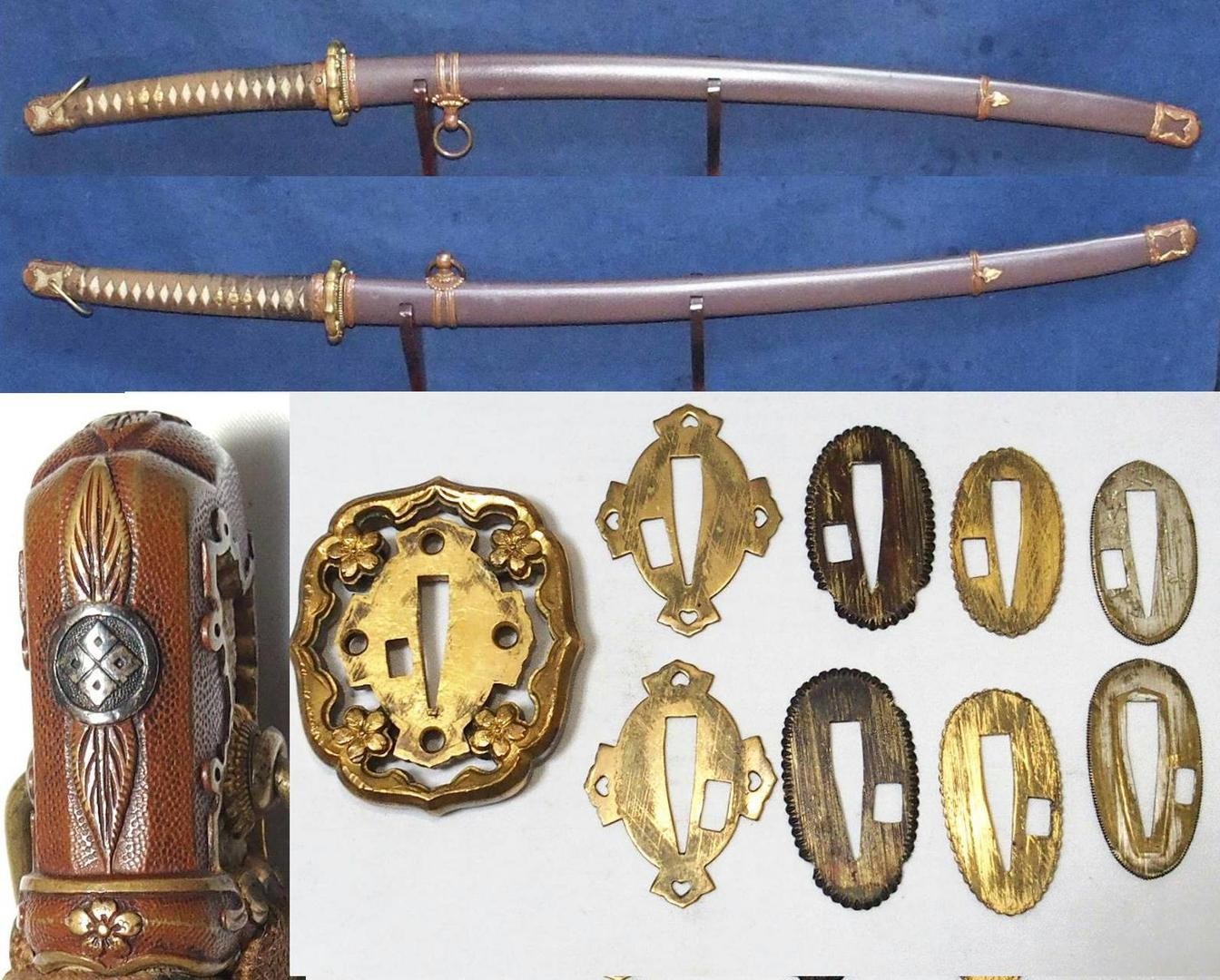
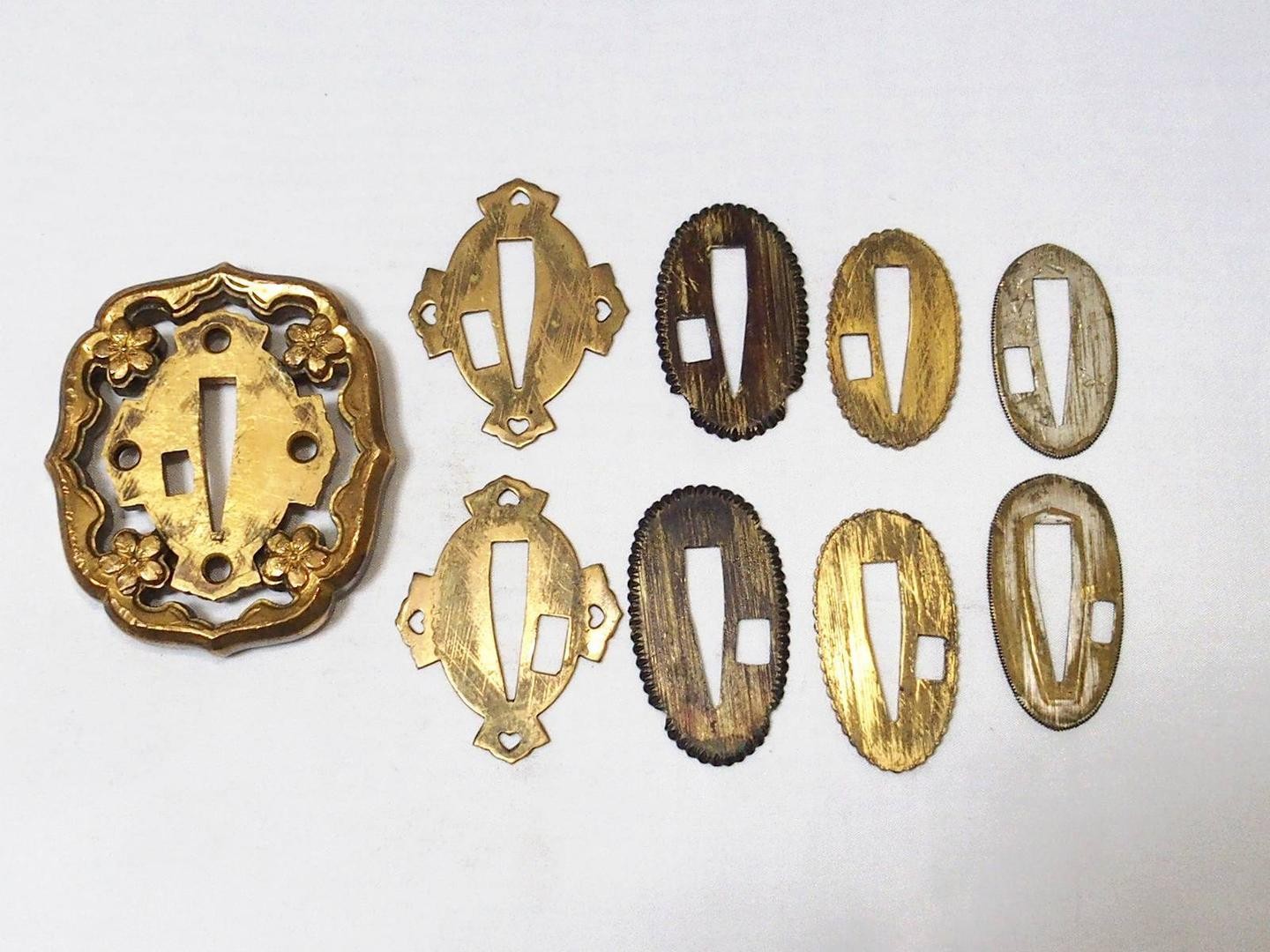
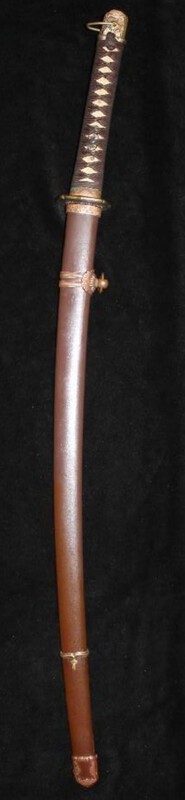
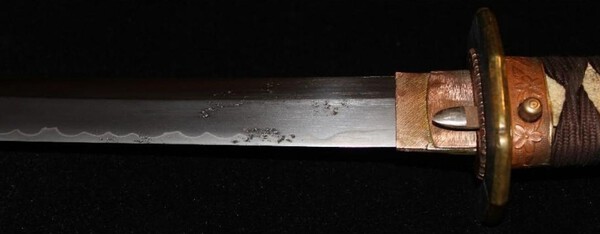
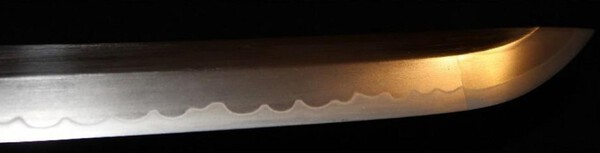
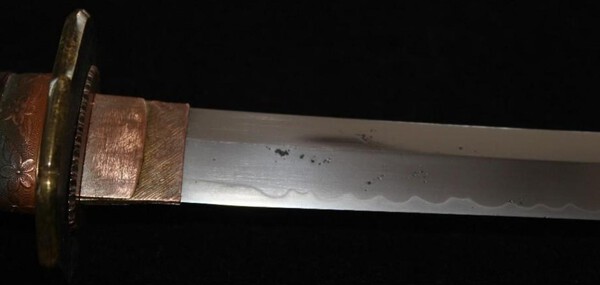
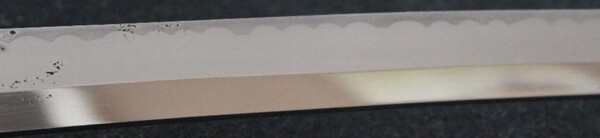
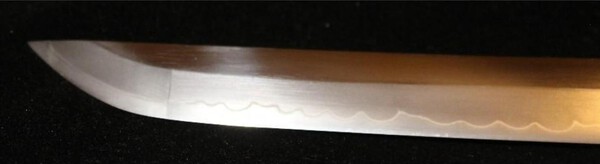
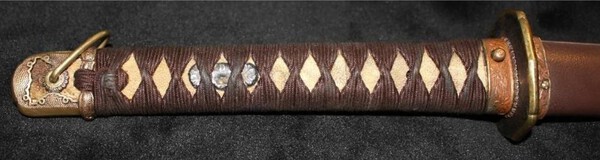
Thank you very much indeed, Chris! Of course I do not think this gunto is a gendaito, but still, I find it both interesting and puzzling that it was not marked with a Seki stamp. I will make better and clearer photos as soon as the sword reaches me. From what I gathered, the fact that a blade was water quenched is one of the determining visual factors in its being classified as a gendaito. The tsuba on this one, though it looks quite military, is quite unusual - could it be some kind of economy, end-of-war pattern or is it just a cheap tsuba? The habaki seems to be a civilian one - if it is original to this blade, I wonder why someone would use it on a mass-produced blade. Do you think this could be an upgrade of some sort? -
I have recently acquired (and am eagerly awaiting) a showa-to signed by Nagata Sukenori (氷田祐則), a (low-ranking) Seki swordsmith. The problem with this gunto is that, according to the seller, it bears no stamp at all, not even the usual Seki stamp. Its koshirae does not seem to be anything out of the ordinary, and, on the contrary, is far from being luxurious. I have spotted at least another stampless Sukenori gunto elsewhere, so I am wondering why these did not receive the Seki stamp, as they do not look like gendai-to at first sight. Another important element is that Nagata Sukenori became a licensed swordsmith on 12 November 1941, that is long after stamps were made compulsory for non traditionally made swords in Japan.




-
The study of Japanese swords is a vast and, I would say, seemingly almost endless subject - the deeper I am trying to get into it, the more I become aware of just how little I know. Maybe I am too impatient, but I keep on searching for an answer to the riddle this blade poses me. Thank you very much indeed for all your replies!
-
Thank you Stefan. My purpose is to get a clearer picture of the possible origin of this blade, but I do realise that a polish would by far exceed the intrinsic value of the sword and that opening a window would not be satisfactory as regards the overall aesthetics of the blade. I suppose my best bet would be to leave the blade as it is, but, nonetheless, my gut feeling is that there is still a possibility to determine albeit vaguely its origin.
-
I had hoped for a reappraisal of the sword in the light of what I thought I had found, hence the title of this new post, Chris
-
Sorry, I have no idea. Maybe this photo could help? http://www.militaria.co.za/nmb/topic/30113-shinshinto-wakizashi/?p=306742
-
I daresay I like the blade for what it is - that is a rather basic though "antique" Japanese wakizashi - but I find it difficult to own an object whose origin I cannot determine with any degree of certainty.
-
A gentleman with some knowledge of nihonto (he sells tsuba mostly, though) and who had the sword in hand did tell me it was Shin-shinto, but I am at a loss as to defining the school this wakizashi might be from.
-
Well, I have tried to look for information using key words such as o-wakizashi, suguha, ko-maru, short kaeri and the like, all of which were, as far as I could judge, characteristics of this sword, and the results I got seemed to point to Hizen and Nidai Tadahiro. Of course, I am what you would call a noob, so you could say that this was some kind of desperate attempt to try and discover where the sword was possibly made and by whom.
-
Thank you for your reply, Bazza It looks like I will have to live with the idea that the maker of my wakizashi will never be identified...
-
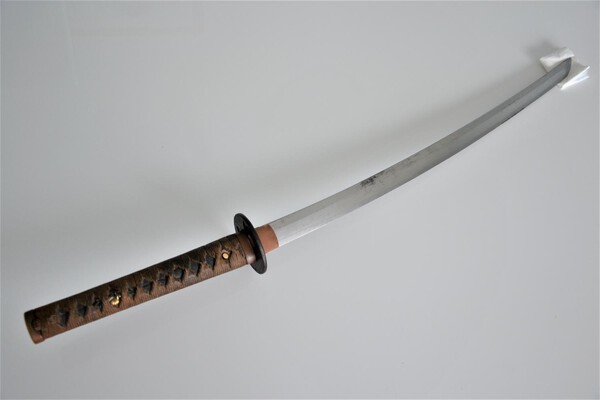
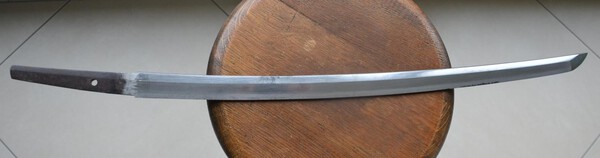
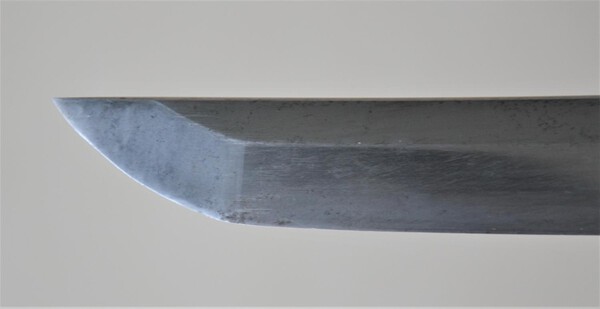
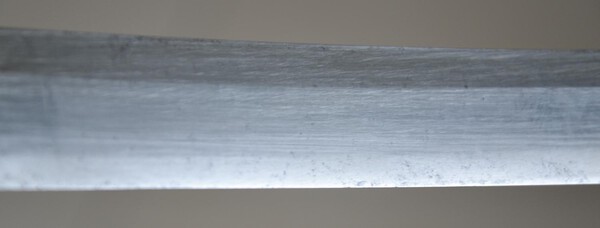
Hello, I have been looking for information and, above all, for other swords that might match the style of my mumei wakizashi and have wondered whether there might be a remote possibility that this sword be Hizen and made in the style of Nidai Tadahiro. Didier

-
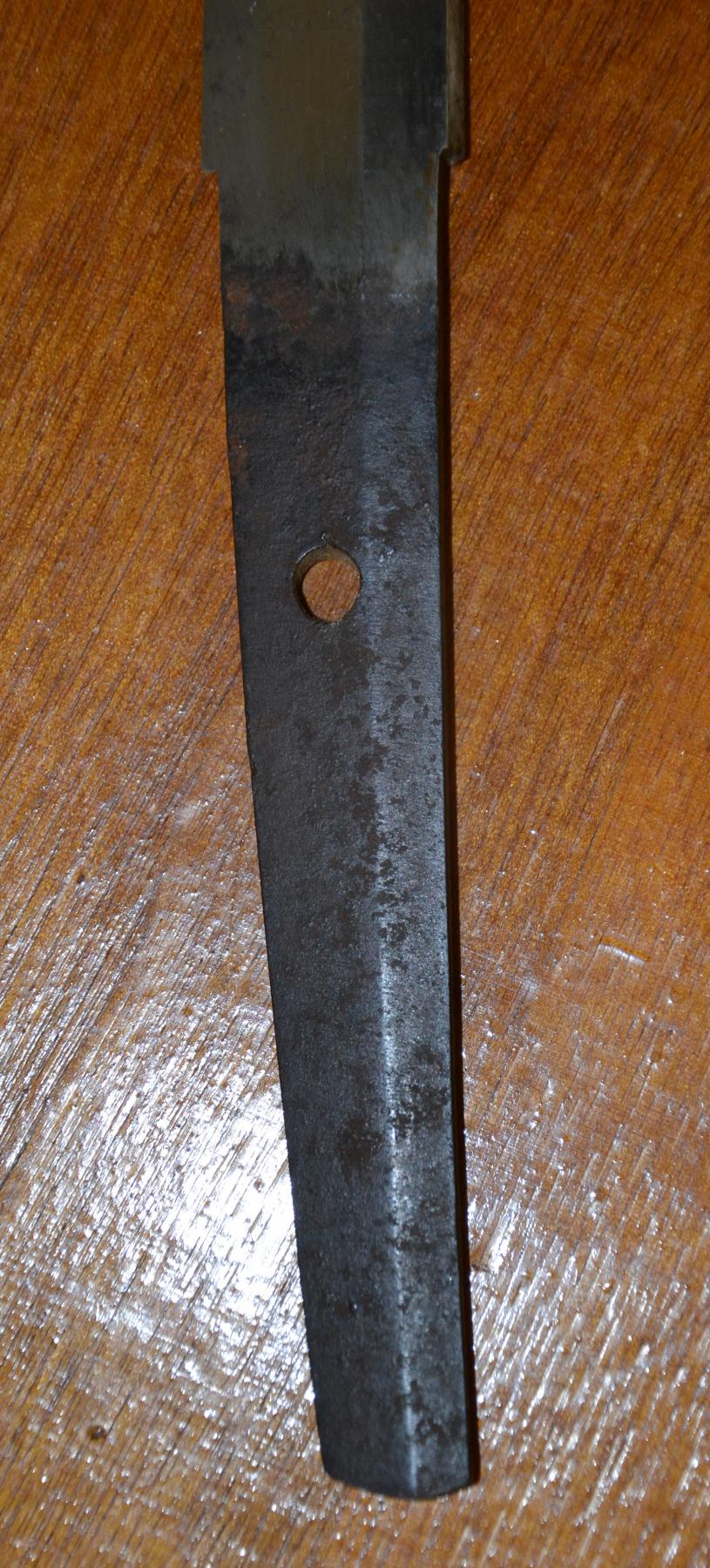
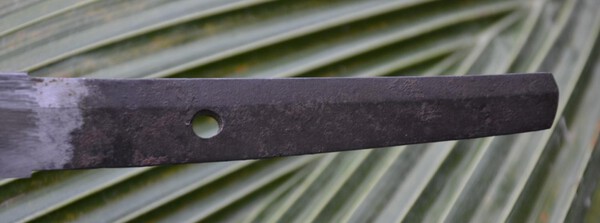
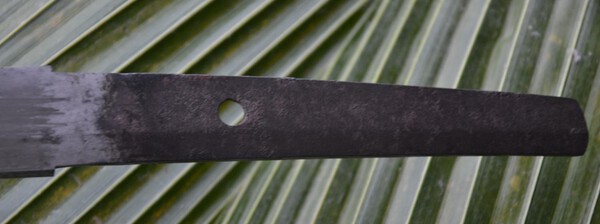
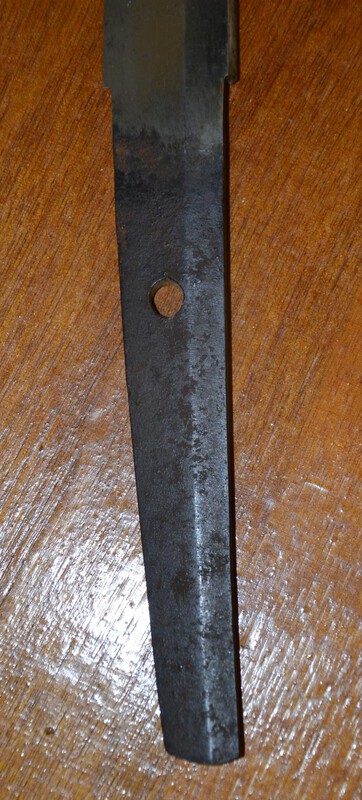
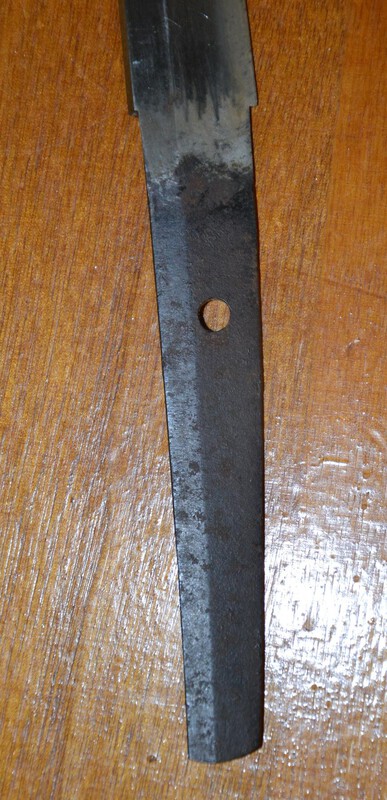
Maybe some additional information can be provided by the faint traces of yasurime (katteagari?) on the nakago?...
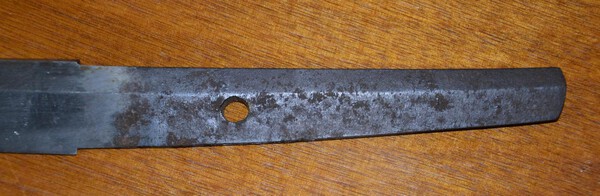
-
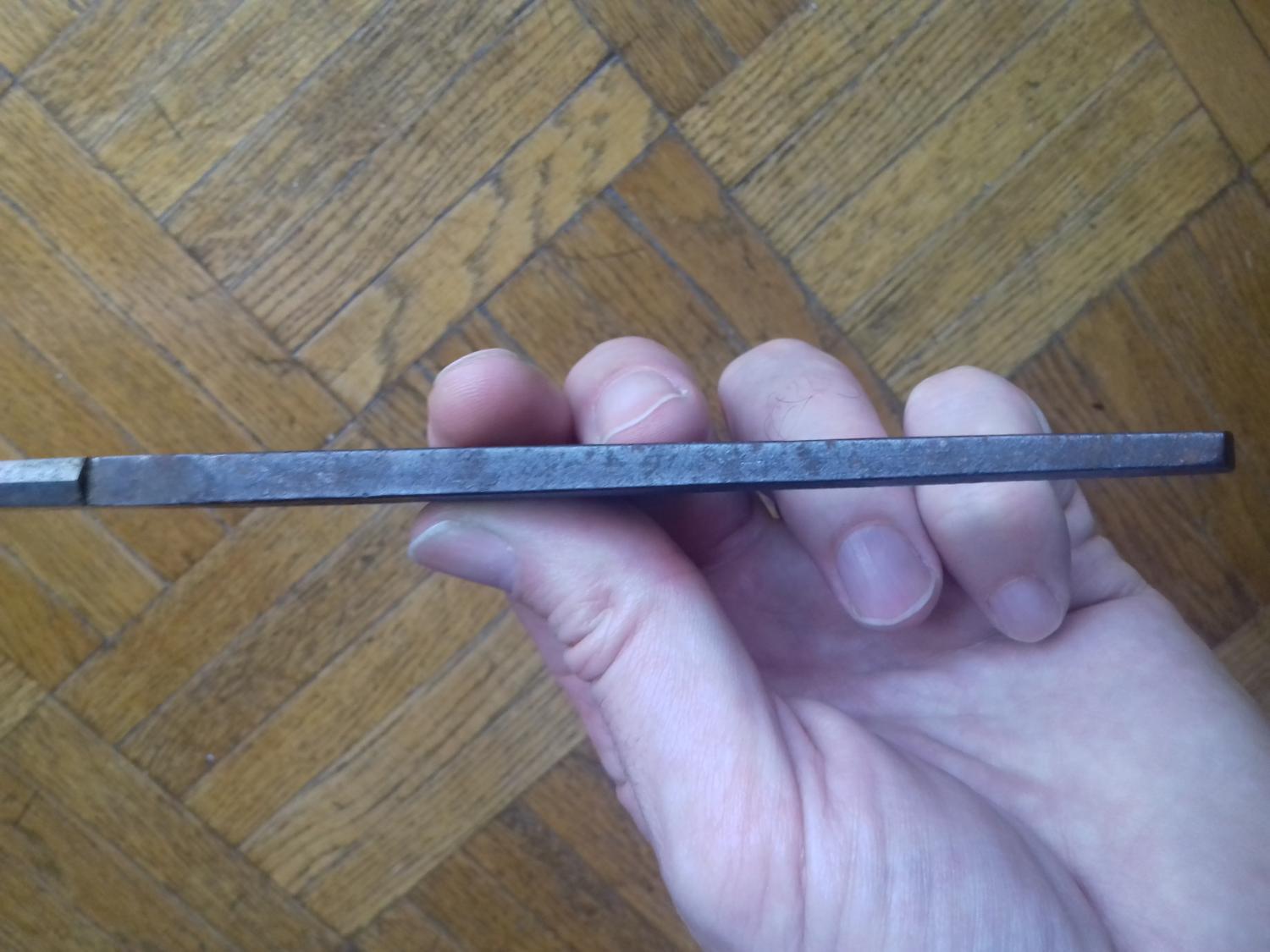
Sori is barely half an inch (1.3 cm) on this blade: very shallow indeed. So, if I understand correctly, the sword is definitely Shinto.
-
Starting from scratch as far as "nihonto knowledge" is concerned, I am at a loss when it comes to ascertaining the origin and possible date of manufacture of this wakizashi, that is the reason why I am most thankful for your contributions. I imagine the task is made all the more so difficult by the fact that the blade is mumei.
-
Merci, Jean ! I am surprised that this blade can be THAT old - it does not seem to have been polished a lot, judging by its thickness and the fact that both the ha-machi and the mune-machi are well preserved. Well, at least that was what I had gathered from my readings. The blade is ubu, too.
-
Thank you for your reply! Does the length of the wakizashi (o-wakizashi?) give us a clue as to the origin and date of the sword?
-
Some more photos:
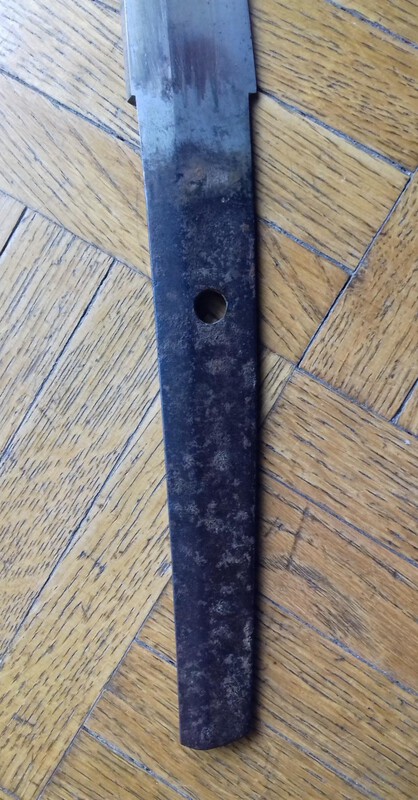
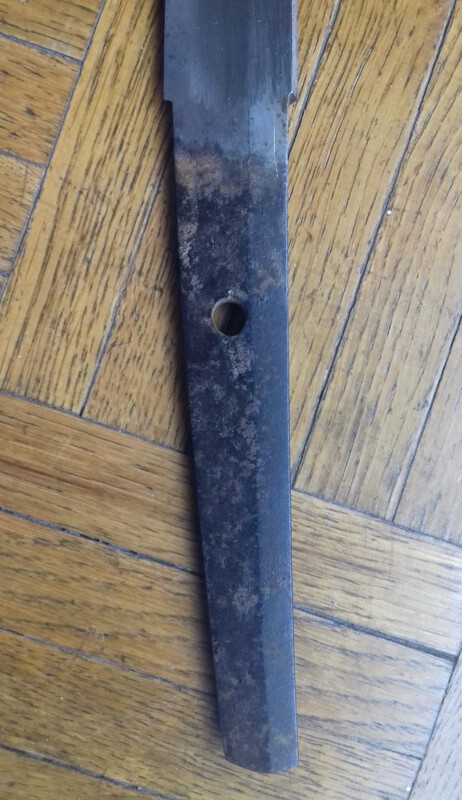
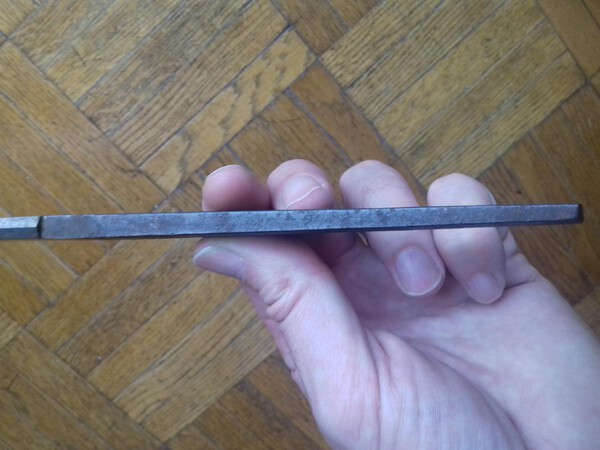
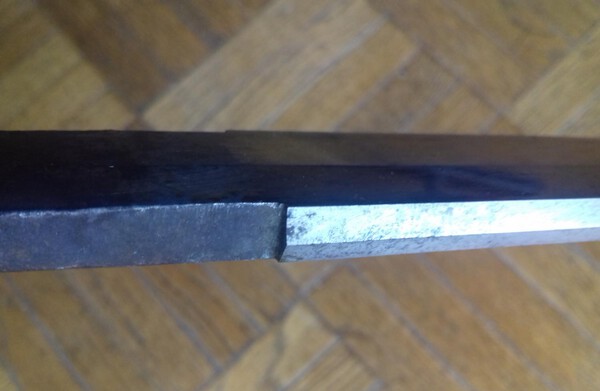
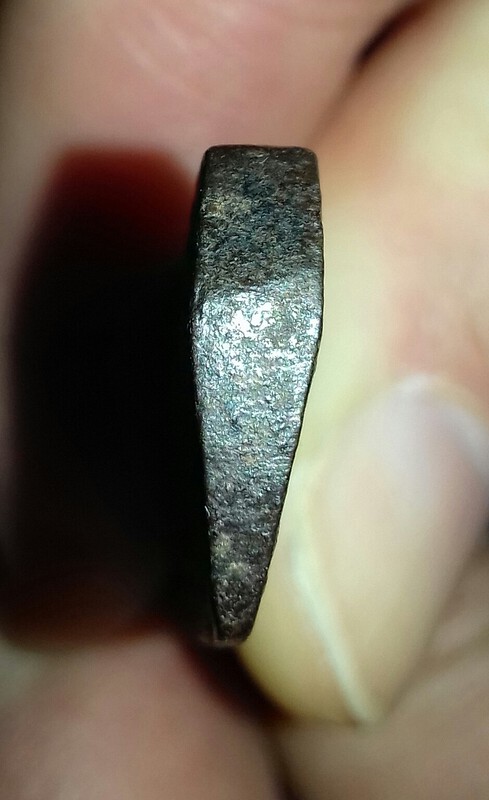
-
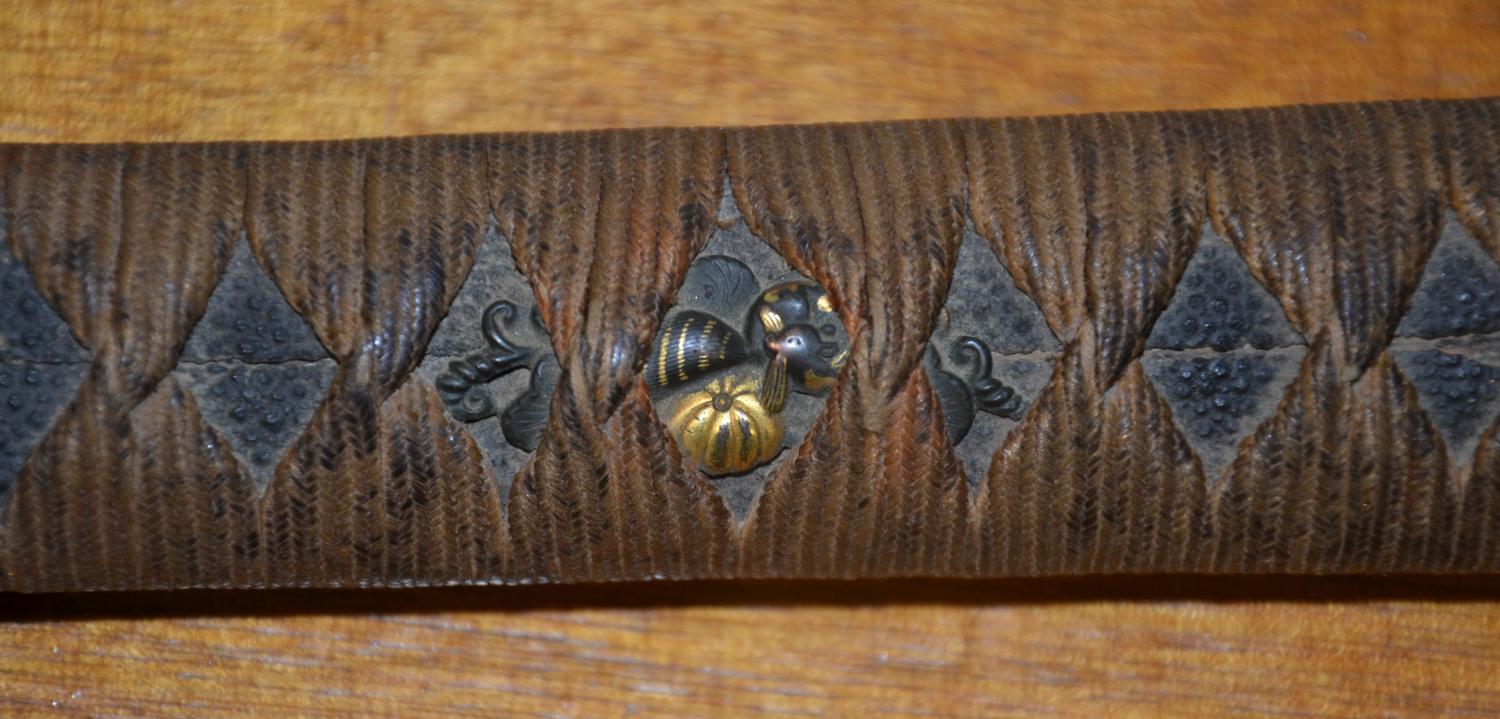
The koshirae : The kanji on the tsuba were read Nobuie (gimei) by the members of the French forum Etude du sabre d'art japonais (https://token.forumactif.com/).


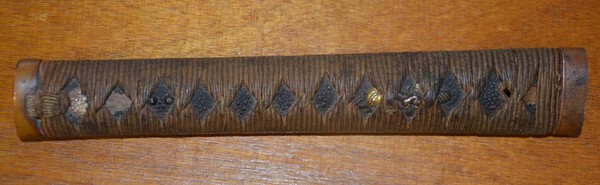
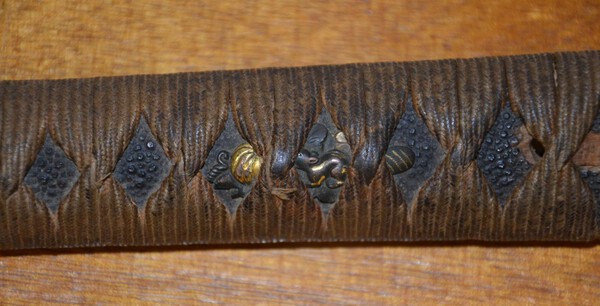
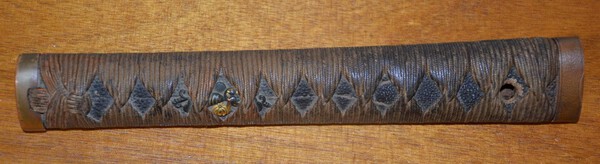

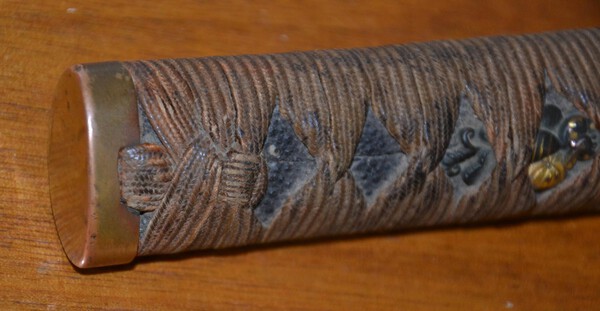
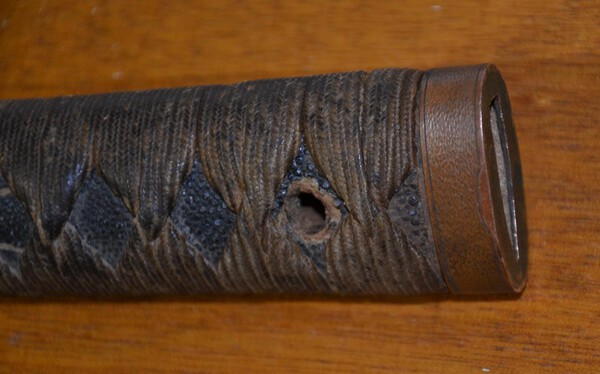
-
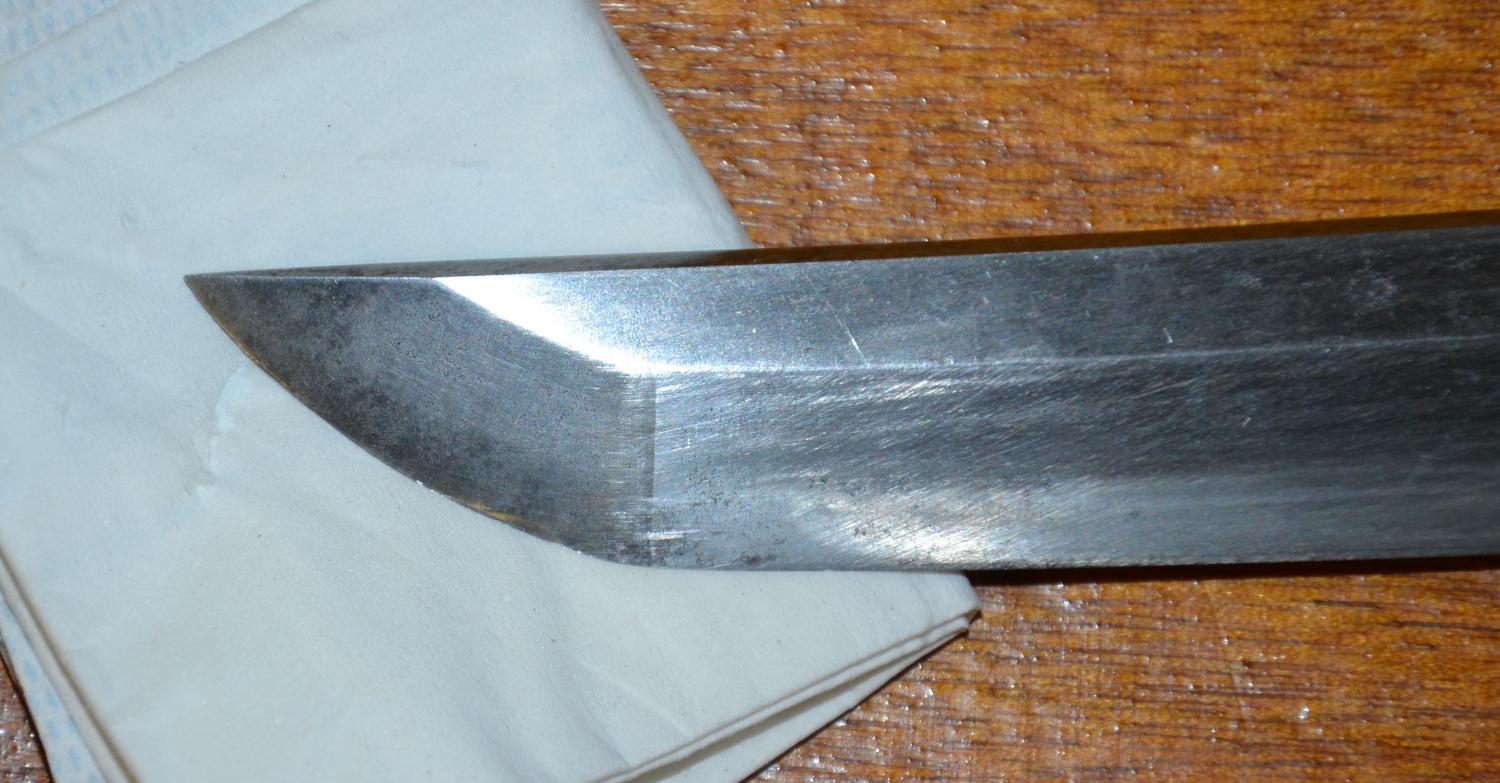
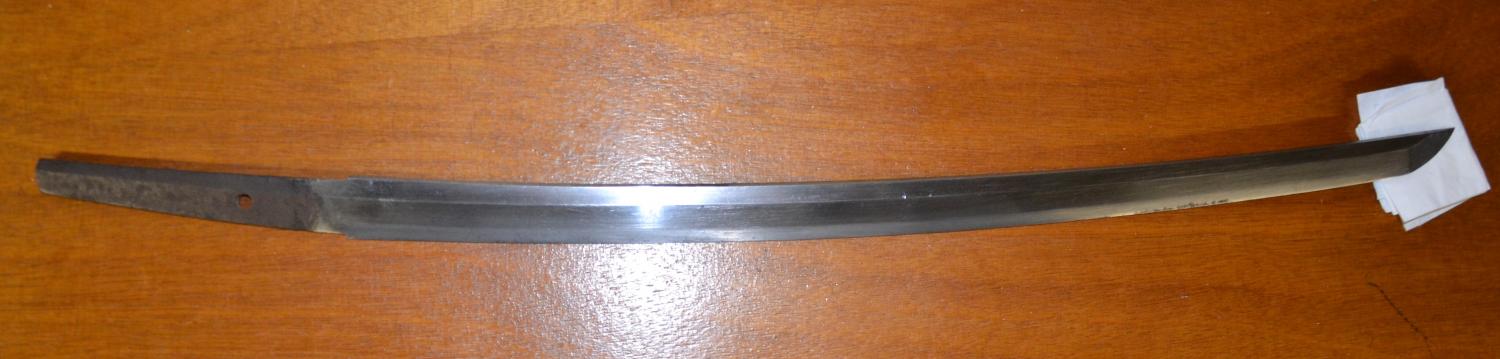
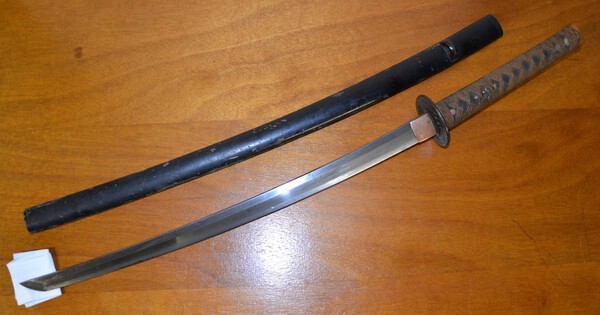
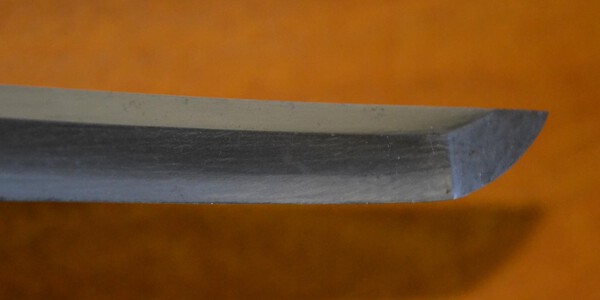
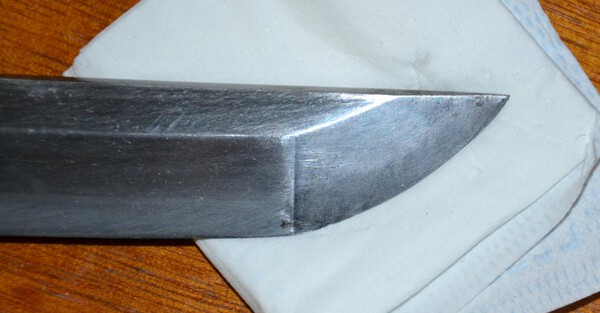
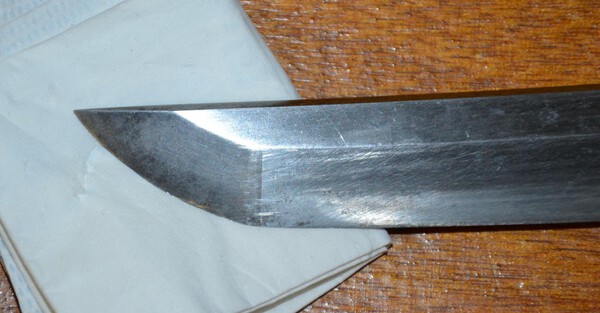
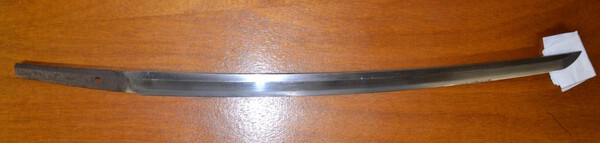
Here is my very first nihonto : a (presumably) Shinshinto wakizashi (mumei) with a nagasa of 54.5 cm (21"1/2) : The hamon is suguha, but I don't see a lot of activity in it (if at all!). As far as I can tell, the sword is ubu. Could anybody on here tell me more? Is it possible to ascribe this wakizashi to a particular school or style? I have read that merchants were forbidden to wear long swords, so, as this wakizashi is rather on the long side, do you think it could have been worn by one such person? Thank you in advance for your replies! Regards, Didier
-
Doesn't this tsuba remind you of another one?... http://www.militaria.co.za/nmb/topic/28235-unusual-open-work-tsuba/page-2?do=findComment&comment=294929
-
Bruce, These tsuba with round holes seem to be rather scarce : maybe less than 1 or 2 % of the total number, judging by the time it took me to browse the Internet to find but ONE instance of a tsuba with such holes.
-
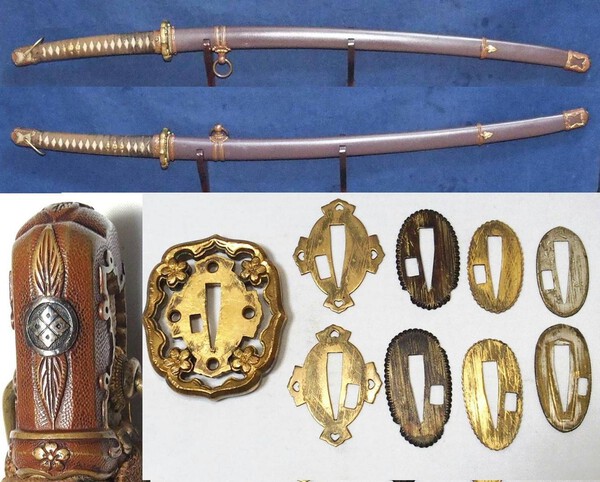
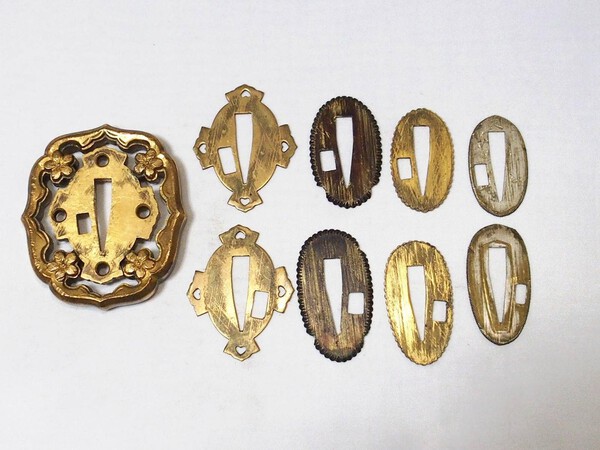
To go back (if you don't mind) to the original topic, here is another example of a Japanese (???) gunto tsuba with holes drilled in it that I have found... Could this one also be a Chinese fake? (I have posted a photo of mine for the sake of comparison)

-
Thanks to everybody for the input I find the ones that have been posted on here rather cruder than mine, but I'll search the Net for other examples (whether fake or genuine) to get to the bottom of it.
-
Unfortunately, I cannot see the fittings you are referring to, Chris. I had noticed that the holes were somewhat off centre. The blossoms on the tsuba don't look particularly crude to me.
-
Alright, so they are sakura after all! Thank you for putting things right