Yukihiro
-
Posts
241 -
Joined
-
Last visited
Content Type
Profiles
Forums
Events
Store
Downloads
Gallery
Everything posted by Yukihiro
-
I was asking the question because my other gunto blade (signed by Toshimasa) has definitely more sori than this one.
-
Honestly, that is exactly what I thought, but I am no expert.
-
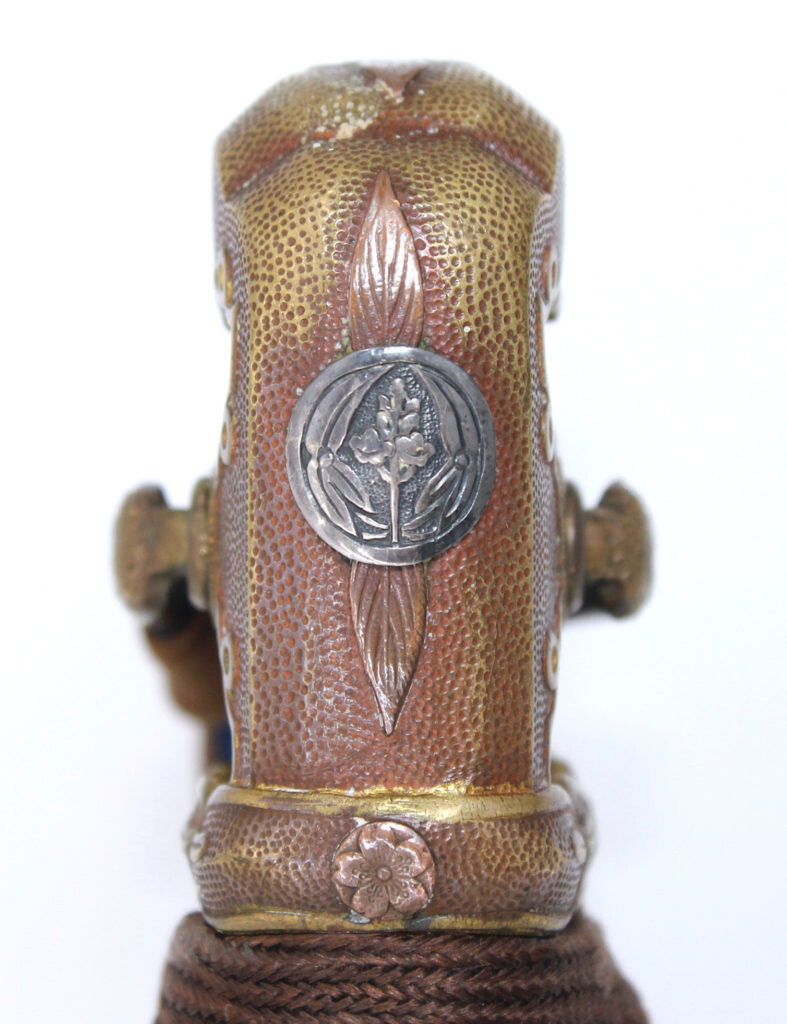
I'll post mine here (actually the one that is on my type 98 shin-guntō!), for the record: This is a Daki Omodaka mon 抱面高 (alternate spelling for Omodaka: 沢瀉). Associated families are: Shiina, Someda/Yanada, Mori, Kinoshita, Asano, Sakai, Horikoshi, Mizuno, Tsuchii, Fukushima, etc. 椎名、梁田、毛利、木下、浅野、酒井、堀越、沢井、水野、土井、福島など (Information provided by SteveM)

-
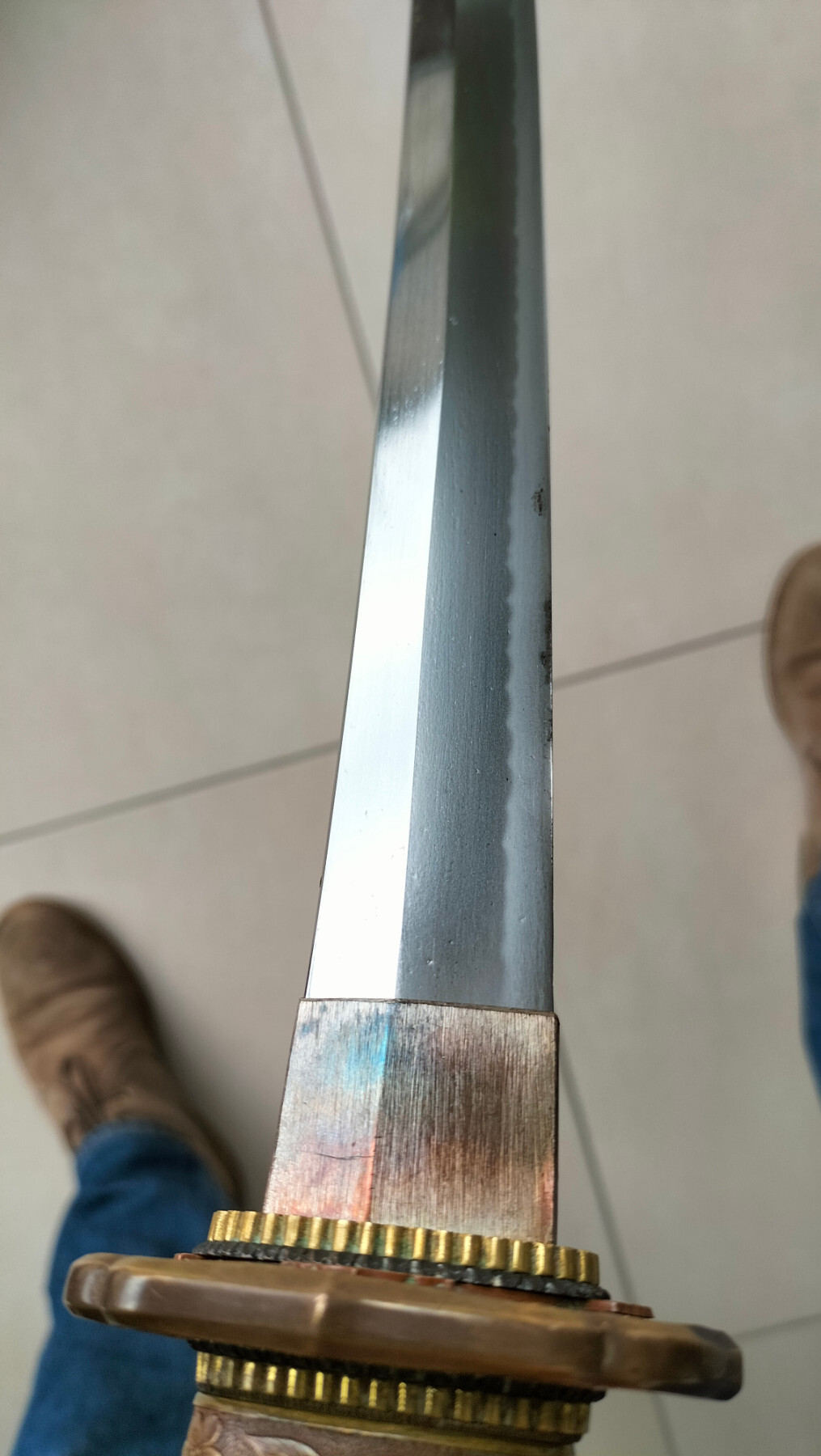
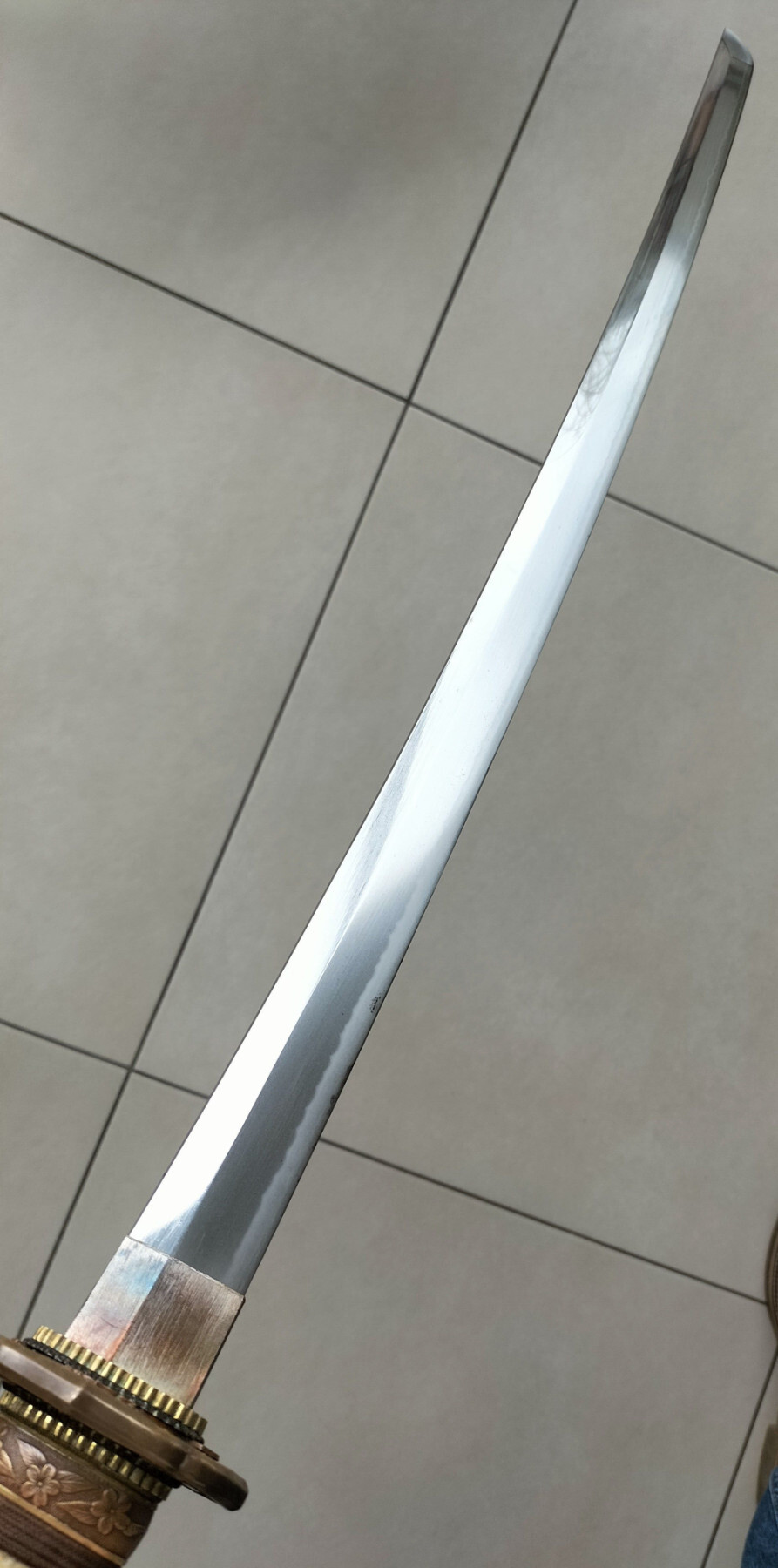
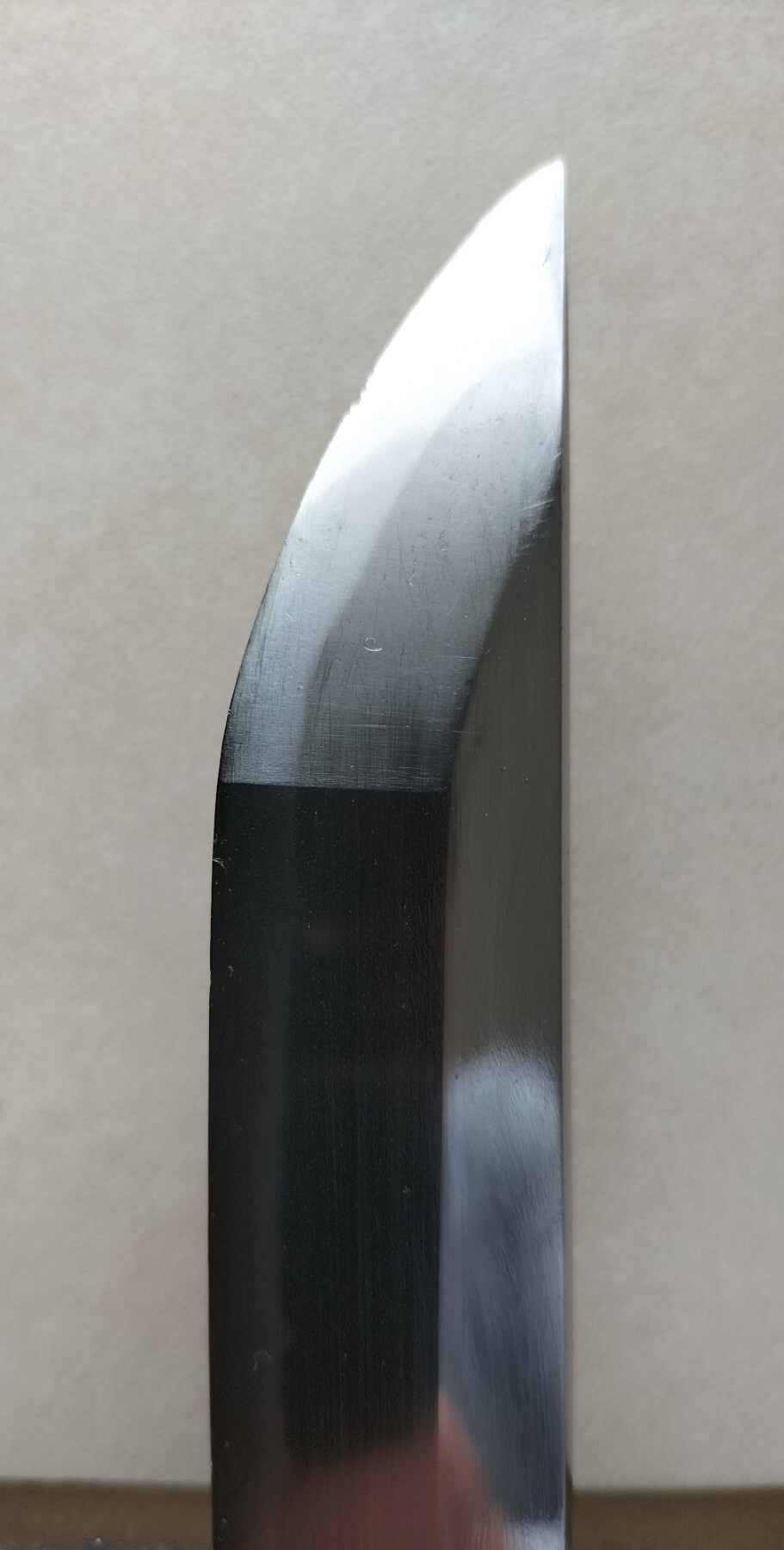
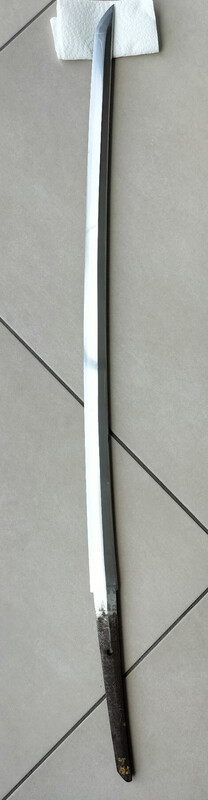
I haven't tried to measure it yet, but the blade strikes me as having (very) little sori - was it the hallmark of the production at Amahide's guntô factory or just a random choice on the part of those who made that sword?

-
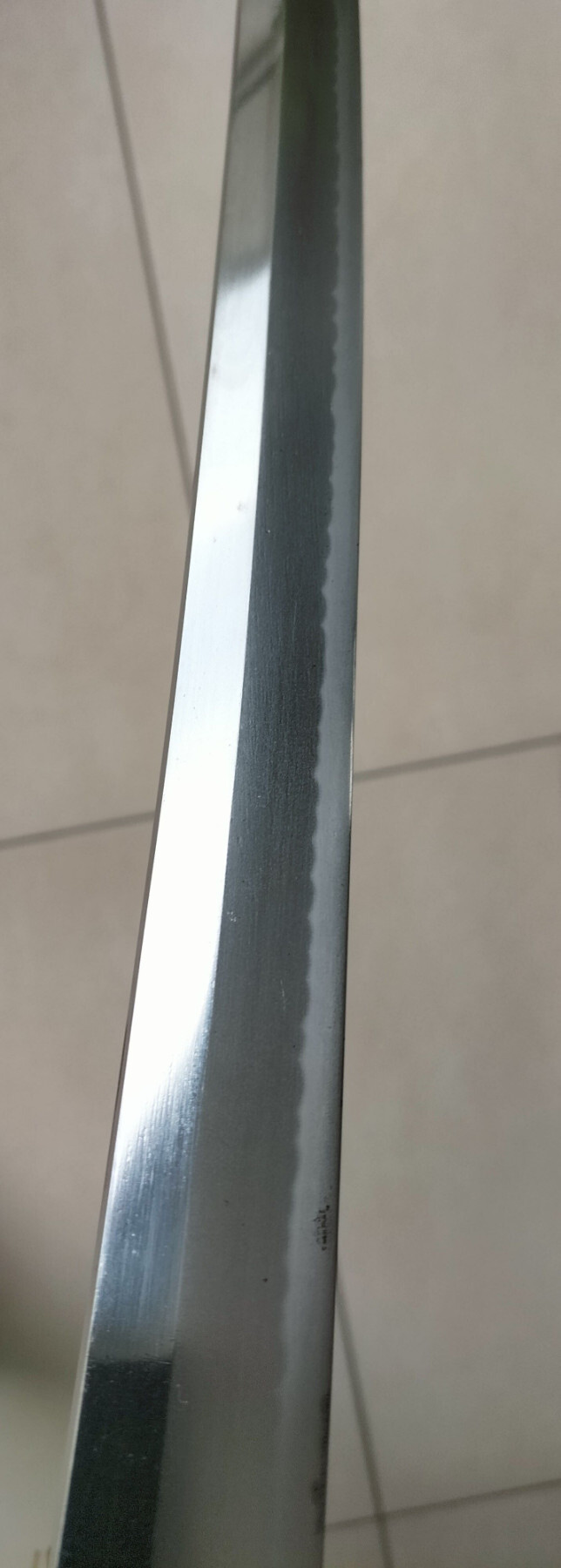
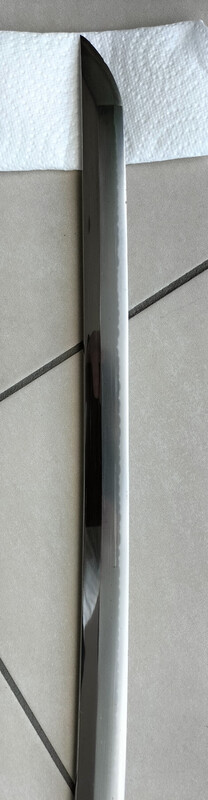
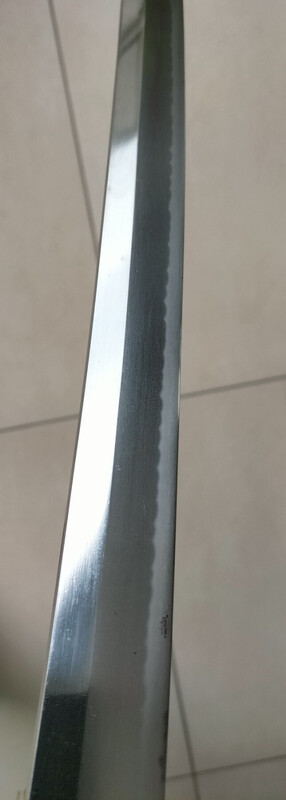
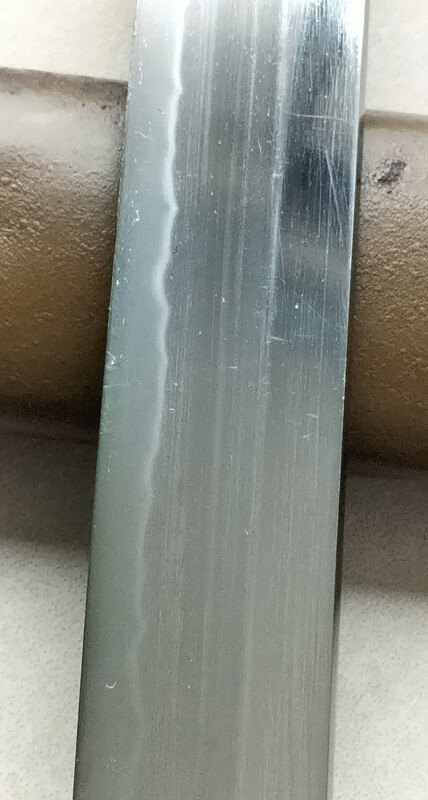
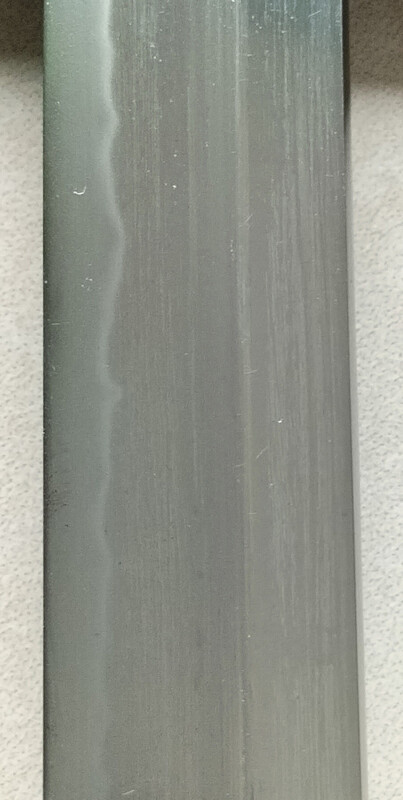
Bruce, Could you tell me more about the style of my Amahide blade? I know very little but my impression is that it has a ko-gunome hamon and maybe a ko-maru boshi. Other than that, I really don't know, but surely there is not much to see. I had thought for a moment it might have had a masame hada, but they are just scratches apparently. The Seki stamp precludes the possibility of it being a gendaito anyway.
-
I know ^^
-
My view on the subject is that hoping to improve the polish of Showato blades is a lost cause - to be sure, there are those who improve them visually by polishing the blades mechanically and/or acid etching them, but by so doing they take away some of their historical value. That is the reason why I wanted a gunto blade with a decent polish: gunto blades should be taken as they are and for what they are.
-
Because, in the first place, I thought that the polish might have been revamped after WW2, but it turned out that I was wrong.
-
The expenditure would by far exceed the intrinsic value of the blade anyway...
-
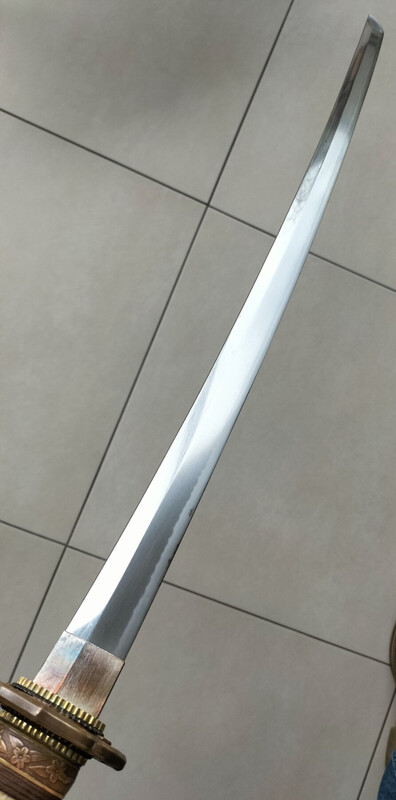
The blade does have some scratches and stains here and there, but, other than that, the (wartime?) polish looks good to me (as good as an original WW2 polish can possibly be, I mean! ).
-
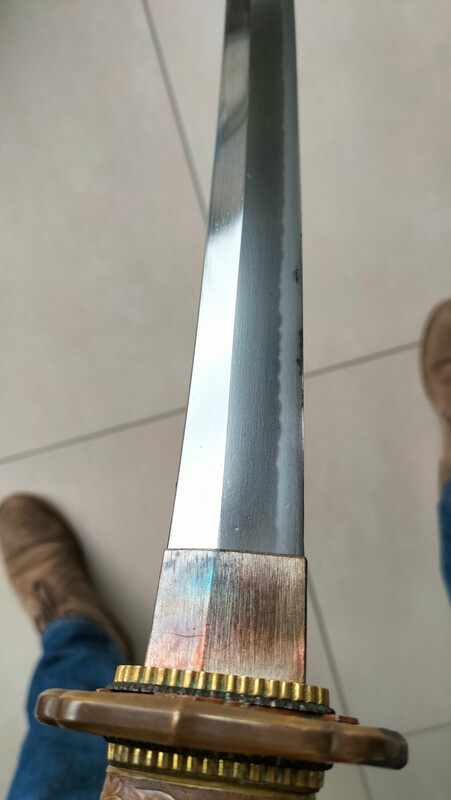
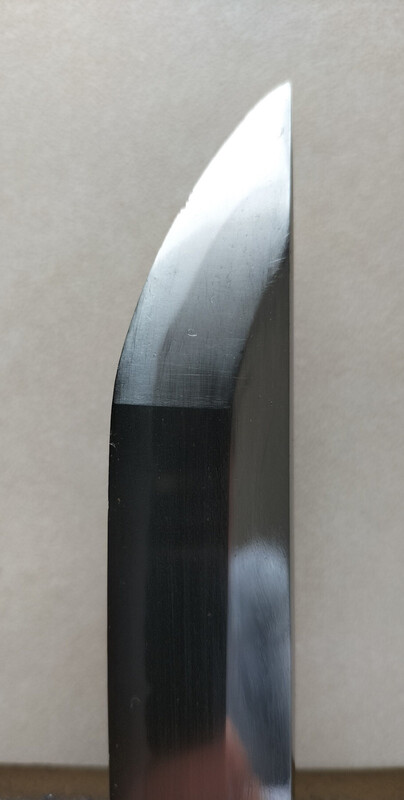
These are actually the very first pictures of the blade I was able to take in broad daylight (no sunlight, though): I can't tell whether my Amahide blade is low or medium grade Shôwatô, but it doesn't look too bad in the light of day. The "scratch pattern" on the blade is not visible to the naked eye for the most part, so I suppose the way I took some of the photos must have had something to do with it.
-
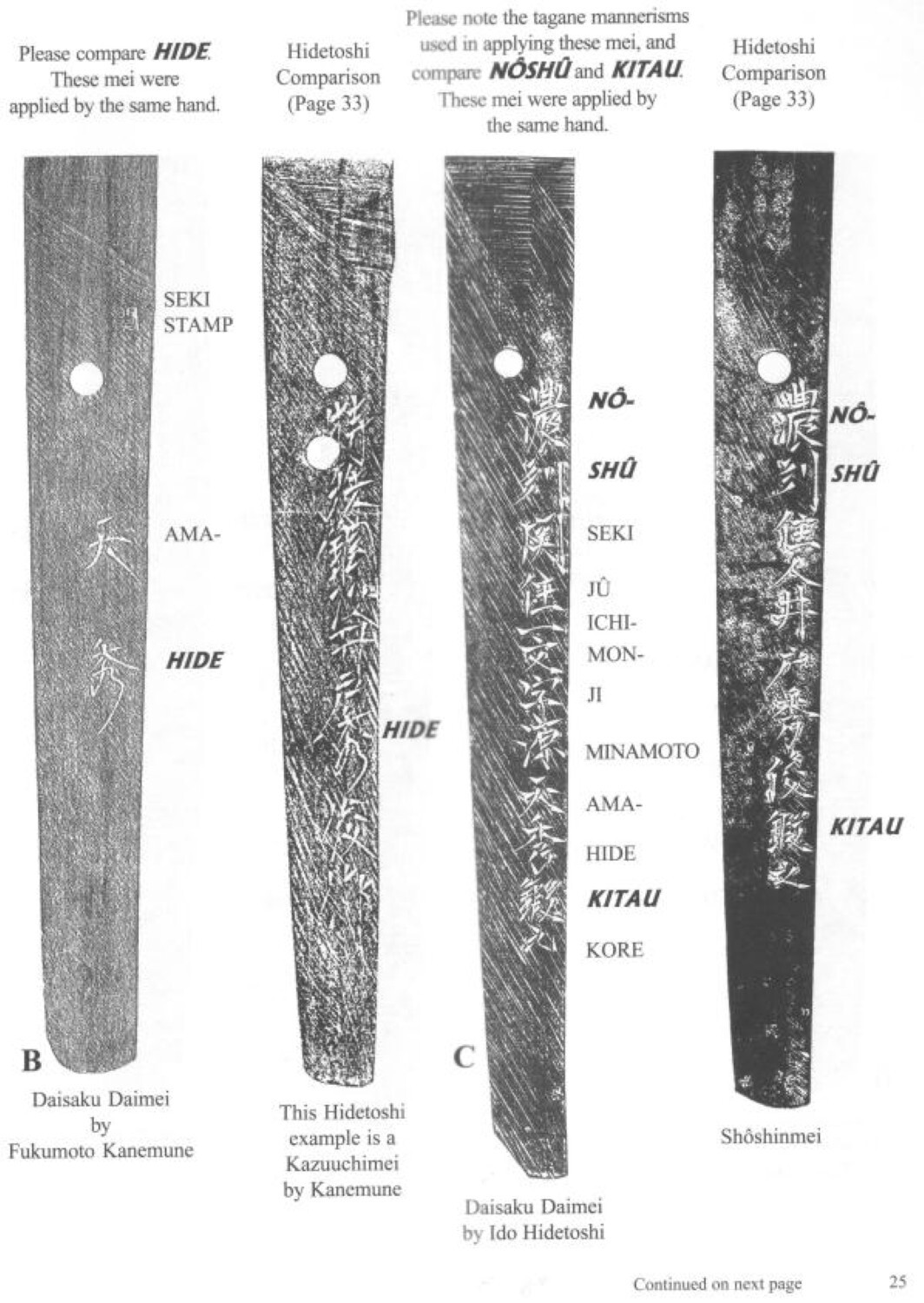
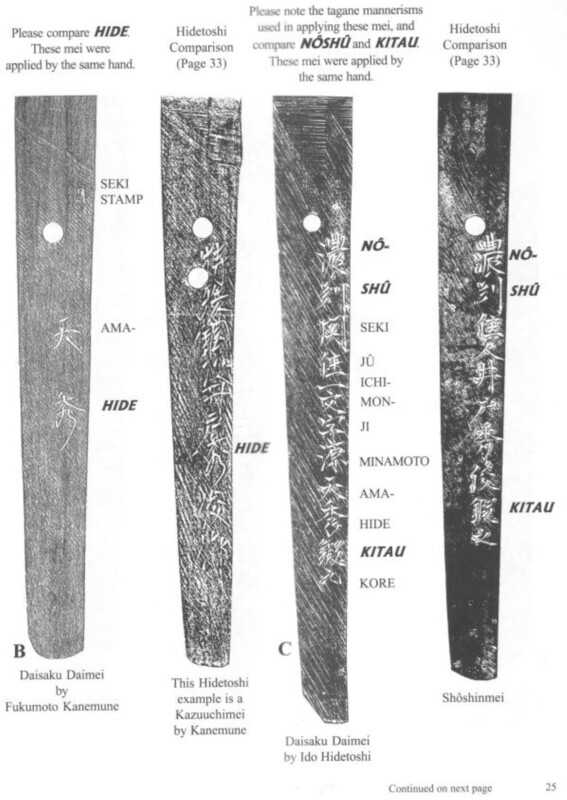
Actually I had, Mal, and I assume the reason why Amahide's production is so well documented is because it was indeed much more complex than meets the eye (literally!). From what I have understood so far, my blade might have been made by Fukumoto Kanemune, Amahide's son-in-law and adopted son, but, as a matter of fact, I find Kanemune's style more flamboyant than the one my sword exhibits, which is, at least from my layman's point of view, of a much more "classical" gunto style.
-
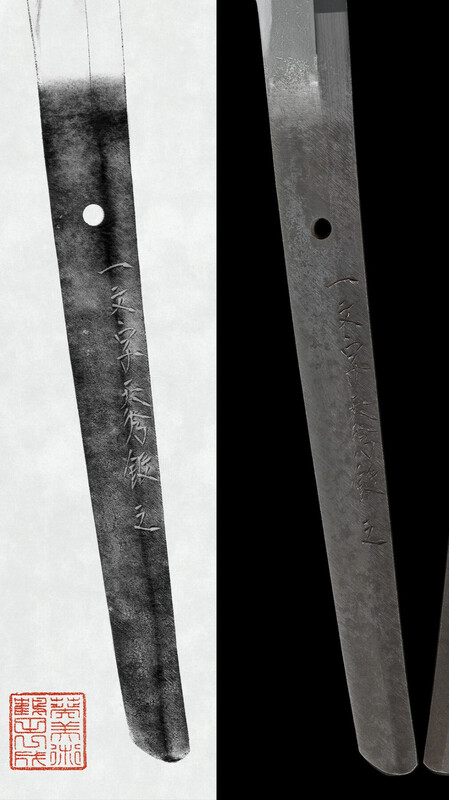
This is for comparison (I should get my copy of Slough's book tomorrow): Ichimonji Amahide Kitae Kore 一文字天秀鍛之 Here is yet another one: https://www.nipponto...swords6/KY332614.htm

-
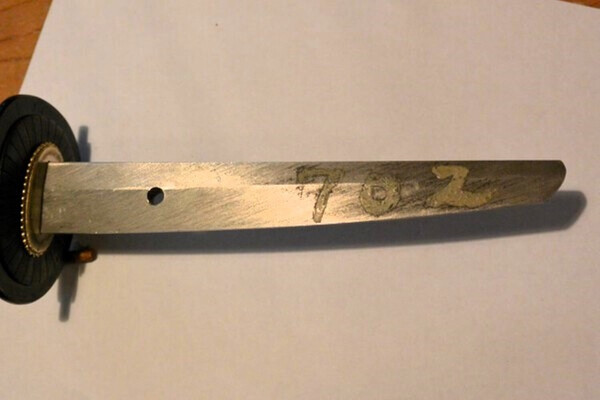
As improbable as it may sound to some of you on here, @Bruce Pennington's theory might be the right one, as I have found two other such instances of gunto assembly numbers painted in Arabic numerals: The difference, though, is that the Arabic numerals were painted horizontally and not vertically, but the presence of the Japanese ス might explain that. Now I think somebody should move this post to a more adequate section...
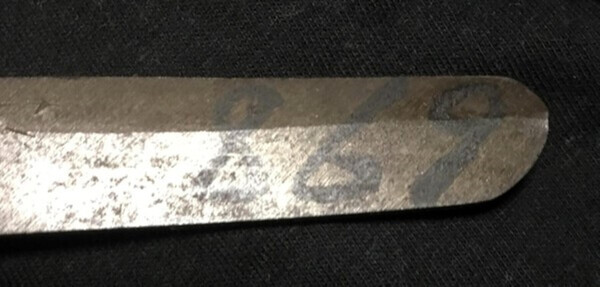
-
Thank you very much indeed, Bruce! I am nonetheless very surprised that there should be a 10 in Arabic numerals on the nakago, as, most of the time, they seem to be in kanji.
-
Thank you all the same for your reply, Thomas. I shall try to figure out by myself what the numbers or characters can be, then
-
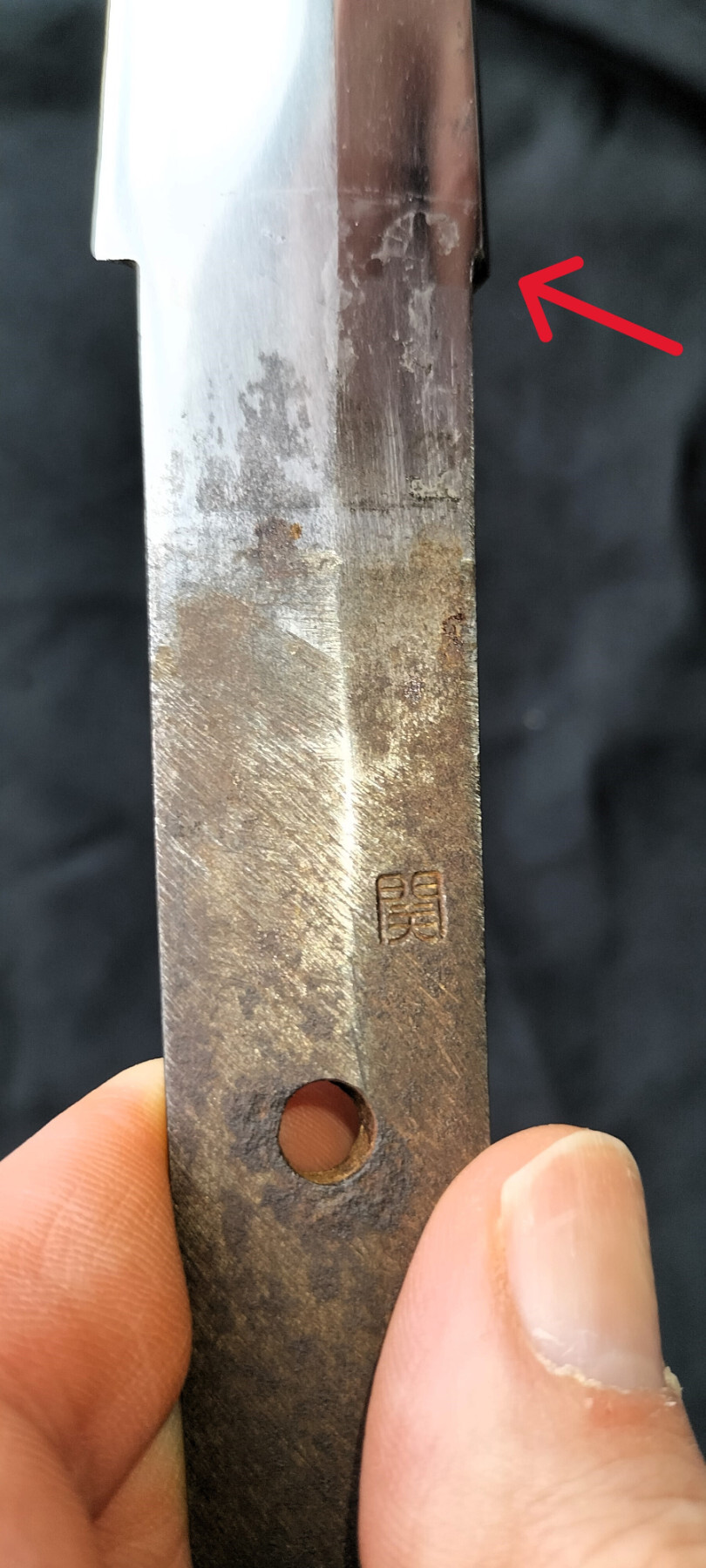
Actually, all I would need to know is whether the yellow painted numbers/characters could possibly be read as ス拾 , that is "su" + "formal 10". That way I would know for sure that the blade and the koshirae have been together since 1941 Regards, Didier
-
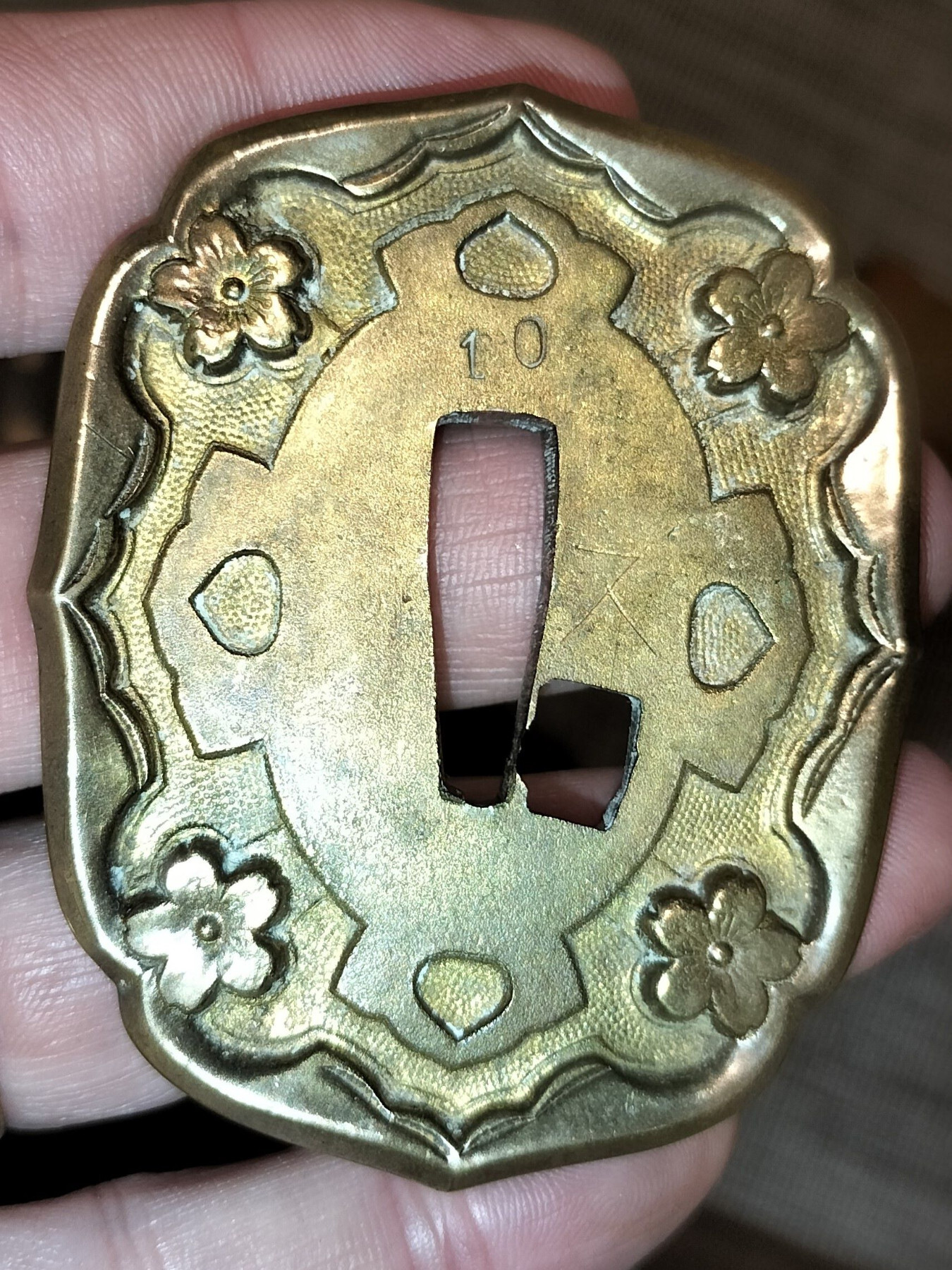
This is in no way nihonto-related but, as a matter of fact, I feel I have reached an impasse as to the interpretation of what I think should be a painted number on the nakago of my gunto. Its fittings all bear the number 10 together with a Japanese character (ス= su?), so maybe the yellow painted characters are somehow related to them? At any rate, the yellow characters were deemed "unreadable/illegible" by other Japanese sword experts... There are many possible interpretations, among them maybe "formal" 10: 拾
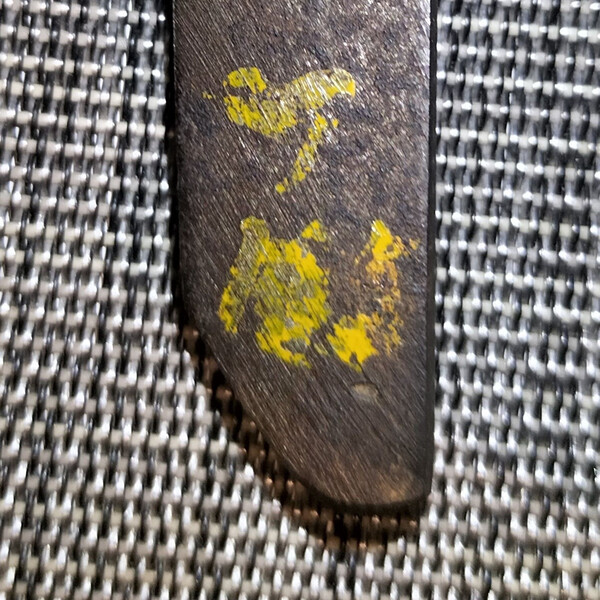
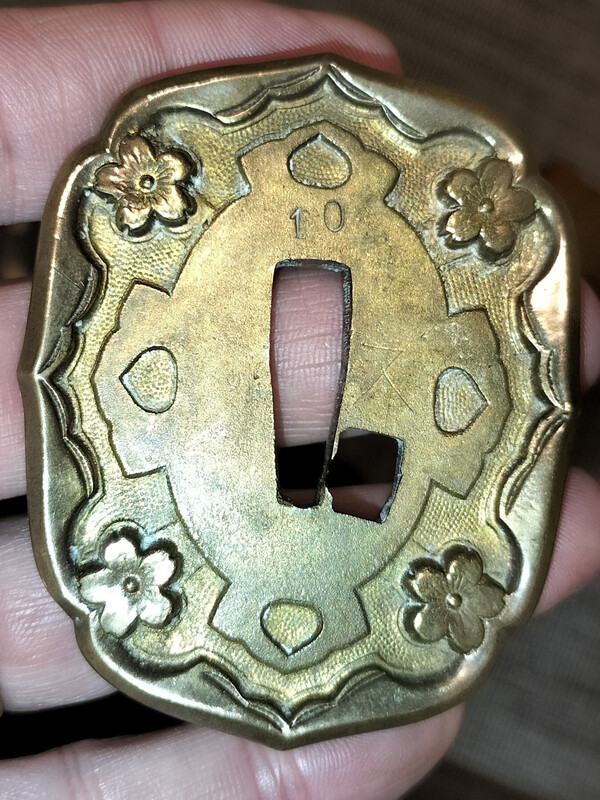
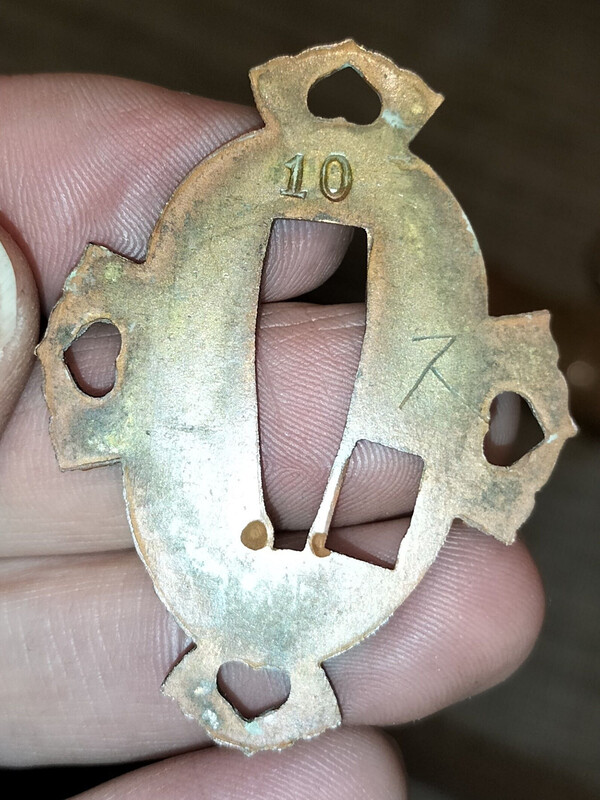
-
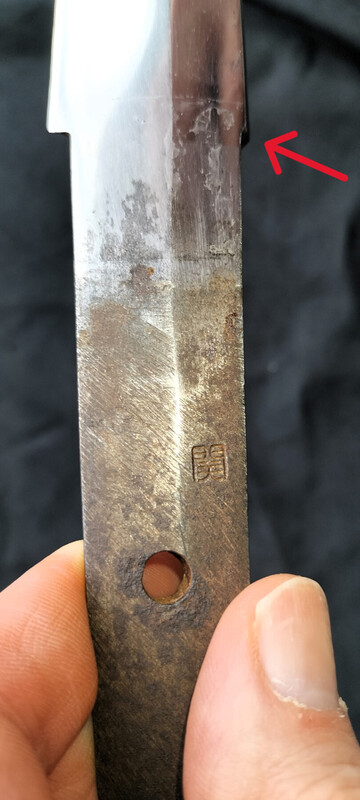
This could be an instance of a double-stamped Seki blade (1941 dated Amahide gunto), but @Bruce Pennington should be able to tell you more about it.

-
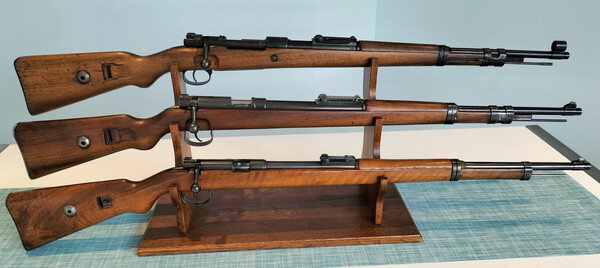
Don't talk about firearms! Some of mine are even older than your average gunto! From top to bottom: Russian captured K98k (8x57IS), KKW (.22 LR), DSM34 (.22 LR).
-
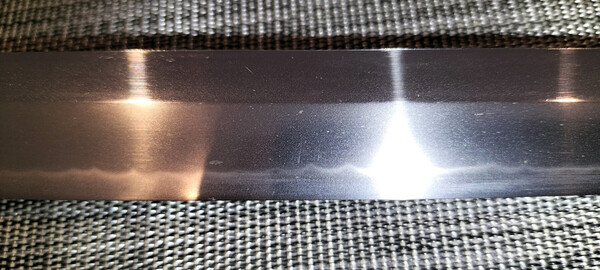
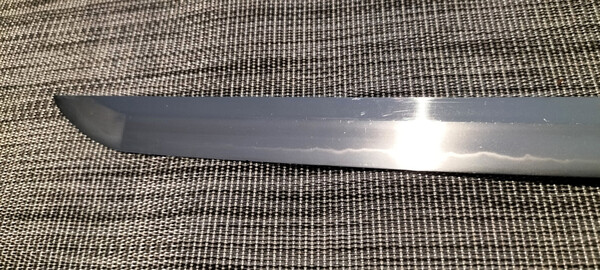
These are the best shots I can get at the moment (no natural light) : Quite showato-ish, I suppose...
-
Here is a short video showing the blade, which has a nice polish (maybe too nice a polish, from my point of view ) --> Amahide gunto blade From the instances of his work I have been able to see so far, my impression is that Fukumoto Kanemune's gunome is more flamboyant than this one, so maybe Kanemune had nothing to do with this blade after all.
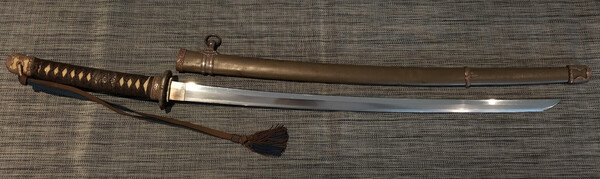
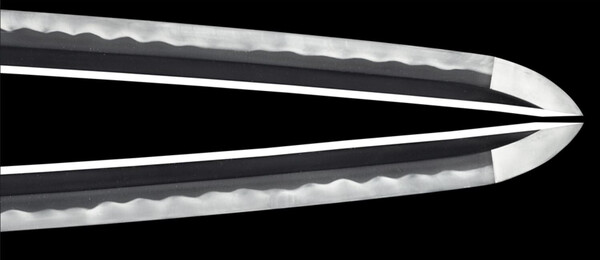
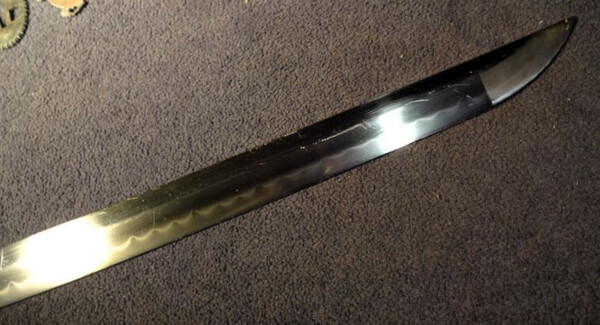
-
Yes, the tsuba is a close match to those that have already been posted: definitely Nagoya-mono Thank you, Colin
-
I have had this tsuba for some time now and I still don't know what it is for sure - the metal looks copper to me and I suppose it must be Edo but, other than that, I have been unable to pin down a particular school (Nagoya-mono?) or a more precise date. Judging from its rather flourished style, I imagine this particular tsuba was more for show than for actual combat, though. Your opinion will be most welcome Regards, Didier


-
Someone on this thread mentioned the fact that there had been WW2 mon on sale for those who wished to pimp up their gunto, hence the possibility of having a fake mon on a sword. Your theory on "commoners" getting access to officer status during WW2 does make sense and might account for mon-bearing shingunto being the exception rather than the rule during that time Maybe this is a bit off topic, but there is a similar trend in the French army with gold signet rings adorned with family coat of arms: logically, they should only be worn by French officers of noble descent in the legitimate male line only, but, in reality, lots (if not most) of signet ring bearers are not noblemen in the true (and very restrictive) sense of the term.