rebcannonshooter
-
Posts
108 -
Joined
-
Last visited



rebcannonshooter's Achievements






-
Tokugawa Art - Sanmei Trading Co.
rebcannonshooter replied to Oldman's topic in Auctions and Online Sales or Sellers
I also have purchased a sword from Yuji-san, he handled the export paperwork like a champ. He is just a great person with a passion for Nihonto that's contagious! If you are in Nagoya his shop is a must see, but be prepared to spend hours, there's a lot of swords and tsuba there. -
Hi Dekabyu, I bought my KaneZane in 1980 from the old vet who brought it back. It was the second Japanese sword I ever owned and at the time I couldn't even translate the tang. (I think I paid $250 for it). I knew an old sword collector who translated the signature for me, I guess I got VERY lucky and got something nice. Later I bought Richard Fuller and Ron Gregory's book "Military Swords of Japan 1868-1945" they had published a letter from a collector who wrote to Asano Shinichi (KaneZane) and received an answer from him. I think that article really established KaneZane's fame, and showed just how much care he and his students poured into each sword. He spoke about his work as a swordsmith as being "the flower of (his) life" and a "fragile dream" that ended when the war was over. After reading that, how can you not be romantic about Japanese Swords? I really don't know the going price of KaneZane's swords, over the years I have seen quite a number come up for sale. (KaneZane stated that he was making swords full time for 10 years) As mecox alluded to, the sword is in good polish, the fittings look to be in great shape, so I think its a great example of a '98 with a tassel. But, it is more than likely not a traditionally made sword. Good luck with the purchase, buying from an unknown person can be nerve-racking! Tom
-
Hi Dekabyu, Yes this is an authentic KaneZane. It's a Nakirishimei for him just like Oshigata "D" in Slough's "Modern Japanese Swordsmiths 1868-1945". And, an almost identical copy of the signature on my KaneZane! Good looking sword and mounts look great. hope this helps, Tom
-
Hi Con, The third kanji appears to be "koto". I agree with you that the first kanji is "Minamoto" and, if so, the second kanji cannot be "Ju". There is a possibly that the second kanji is "Tomo". But...the name "Tomo Koto" seems very weird???? So I'm stumped too! Hopefully one of the better translators will weigh in on it. Tom
-
Hello David, This is absolutely a legitimate Shigetsugu signature! Do you own this sword, or are just doing some research? Search the posts, there was quite a discussion on a sword by him recently and compare. Tom M.
-
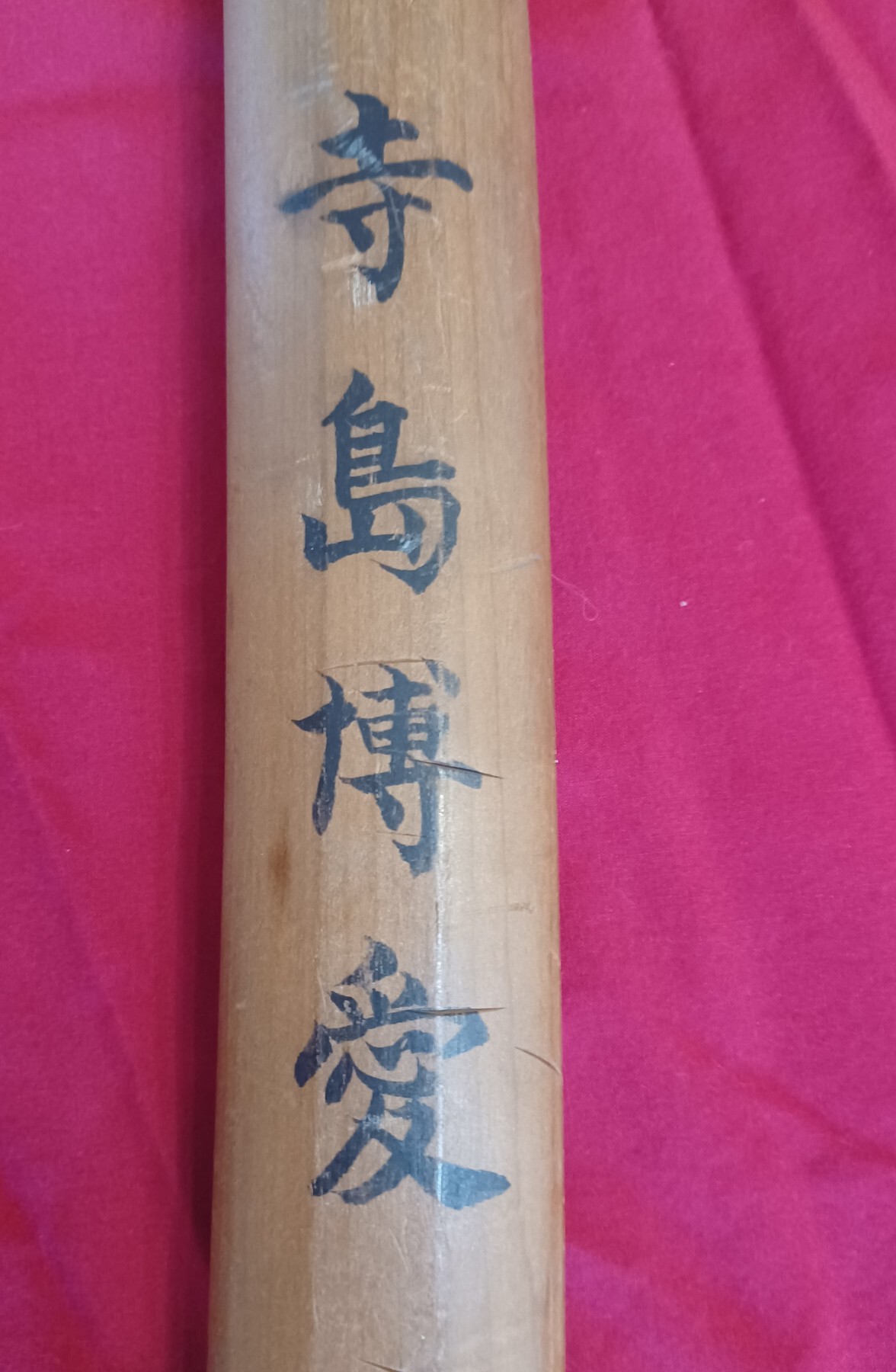
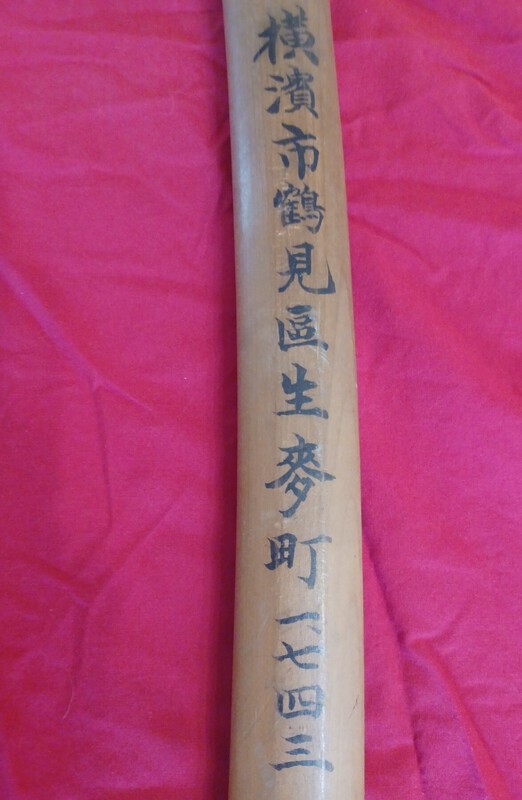
Thanks Moriyama san, Yes, that's my sword, a friend of mine years ago sent photos to an acquaintance of his in Japan to help solve the mystery. We believed that the dedication on the nakago was made by the same hand as the swordsmith's signature (not a later addition). And, that since it was "dedicated to the Kasuga temple by Mikawaya Jinkichi" my assumption has always been that it was GIVEN to the temple to reside there. Your post about the sword's possible owner has caused me to re-evaluate my thinking about its history. What is your opinion about it being given to the temple vs. just prayed over at the shrine? Additionally, maybe you or other members could comment on how common it was to put a name and address on a shirasaya? I'm beginning to wonder if Mr. Terashima put his name on the shirasaya (like Japanese officers did on their military swords) in false assumption/ hope? that the sword would be returned to him. Thanks again for all your help, Tom
-
Thanks Piers, The swordsmith was from Yonago, and from what I could find there's no current shrine there. Possibly there was one in the 1850's?? The closest shrine to Yonago seems to be in Tottori. But maybe being in Japan you have better ability to discover a former shrine located in Yonago. Thanks again for the help, Tom
-
Hi Piers, The inscription only says "Kasuga Sha", and since the swordsmith lived in Hoki I assumed it was a local temple, but have no evidence either way.
-
Thank you MORIYAMA San, The sword is beautiful and light, dated 1856, and made by "Morita Yoshiharu" of Hoki Provence. The nakago has extensive inscriptions and indicates that it was named "Cloud Dragon" and was dedicated to a Kasuga Temple (I have no idea which one). I always assumed that the sword came to the U.S. at the end of WW2 and was taken from a shrine by a GI. I've cared for it for about 40yrs and never imagined that it could have belonged to somebody famous, and that possibly he was forced to turn it in at the end of the war. If only these swords could talk, what a story they would tell! Thankyou again for your help, Tom M.
-
Tony, I'm guessing that "Terashima or Terajima" is a family name, and that "Denai" is the given name of the owner? Is that right? Thanks again, Tom
-
Thanks Tony, When I was working on it, it appeared to be an address in Yokohama, but I just couldn't figure it out. What is "terashima denai"? Thanks again, Tom M.
-
Good Morning all, This is a sword I've had for a while. I struggled for quite some time trying to translate it, it doesn't seem to follow a normal pattern for other sayagaki I've seen. It almost seems as if its a name and address or something like that. Would appreciate any help you guys can give. Thanks in advance, Tom M.


-
Bruce, I believe John is spot on with his analysis. The location of the chuso is often more a function of the location of the mekugi ana than of model type. If one looks at John's photo, one can see that if you center the chuso on that sword, there would be little or no wood left to support the tsuka. I have a sword in my collection that has a "halfmoon" cut out on the side of the chuso, near where the spring attaches. It was put there to to allow the mekugi to go past it. The wood is understandably very weak there and not something that Japanese craftsmen normally do. Tom
-
I have an absolutely original, high end 94 and it does not have a pierced tsuba. But, I don't how prevalent they were on 94's or if pierced were more common. Tom M.
-
Thanks Thomas, I couldn't imagine that ALL the reference books were wrong. Makes sense that it was an older form! Tom M.