rodrig4
-
Posts
146 -
Joined
-
Last visited
Content Type
Profiles
Forums
Events
Store
Downloads
Gallery
Everything posted by rodrig4
-
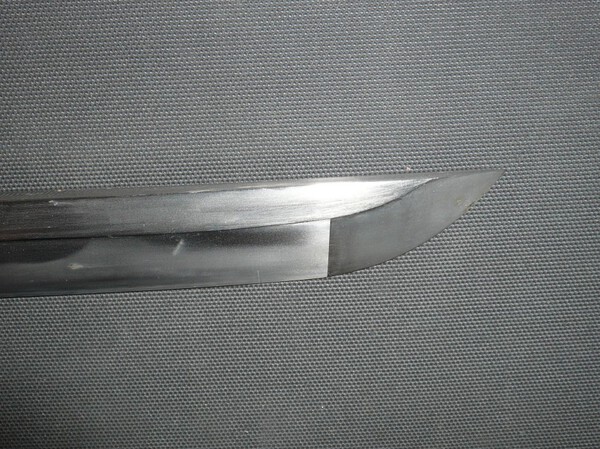
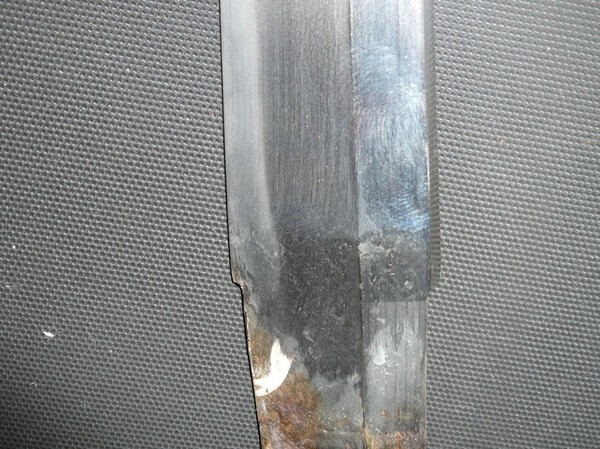
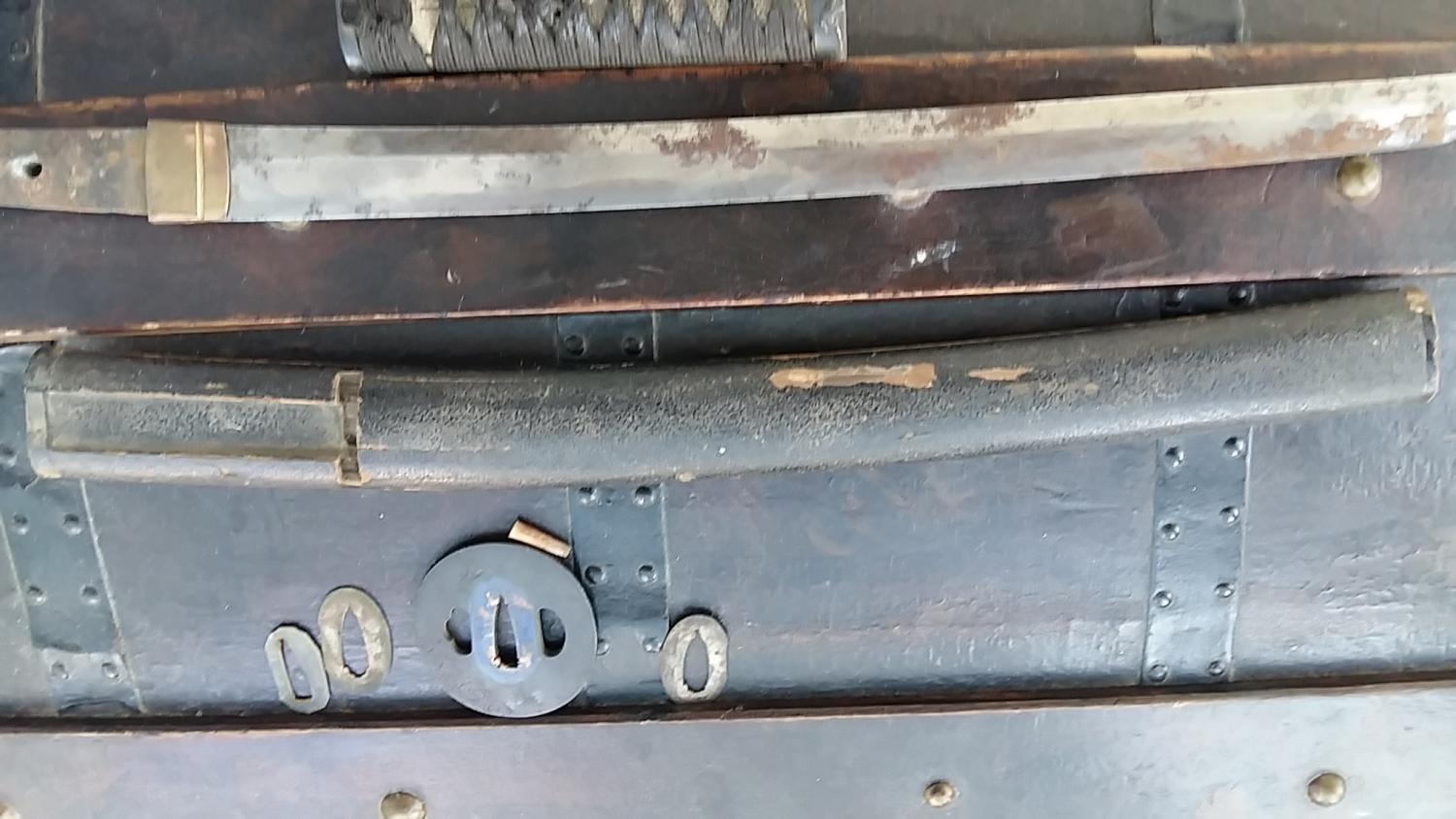
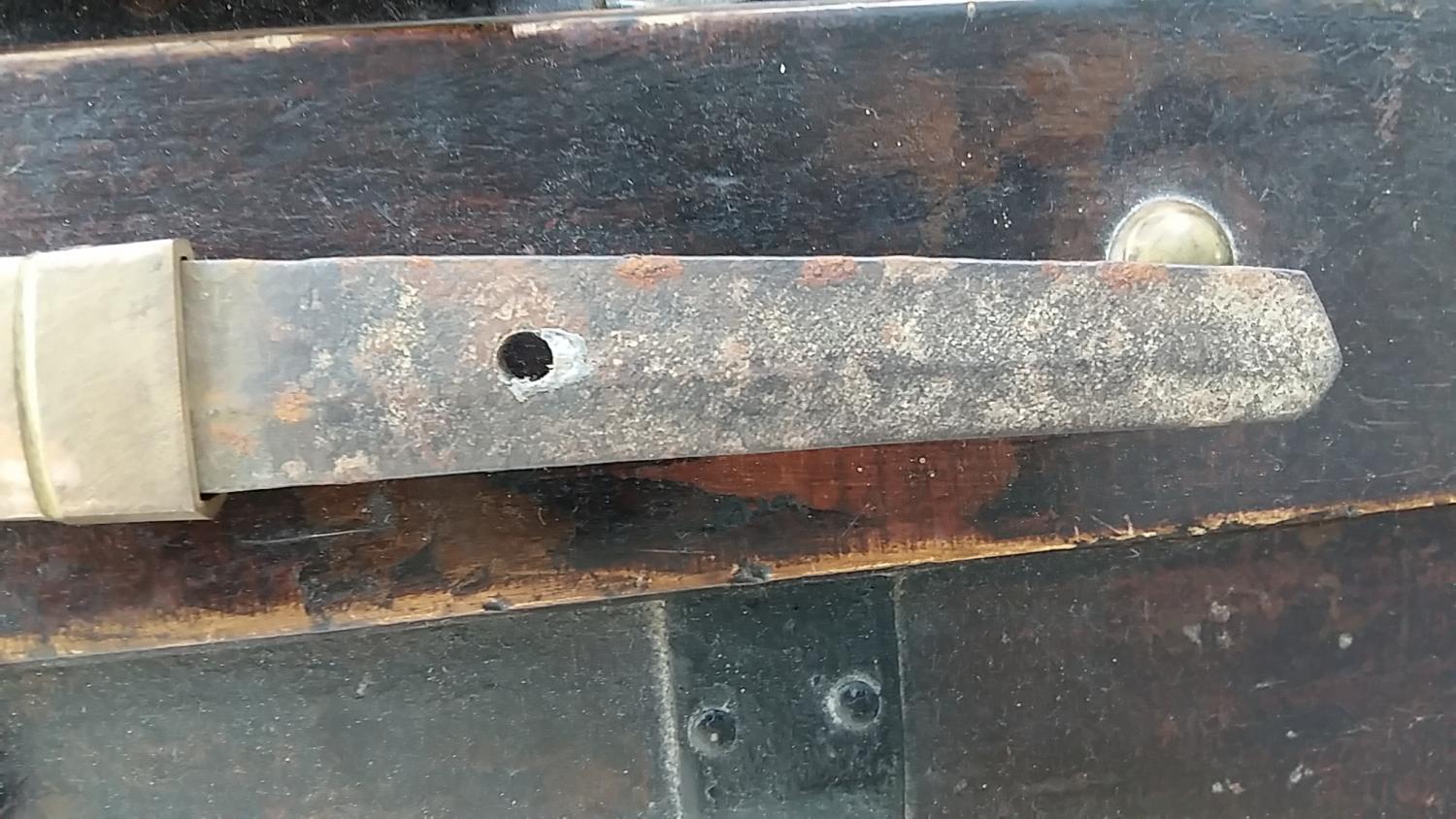
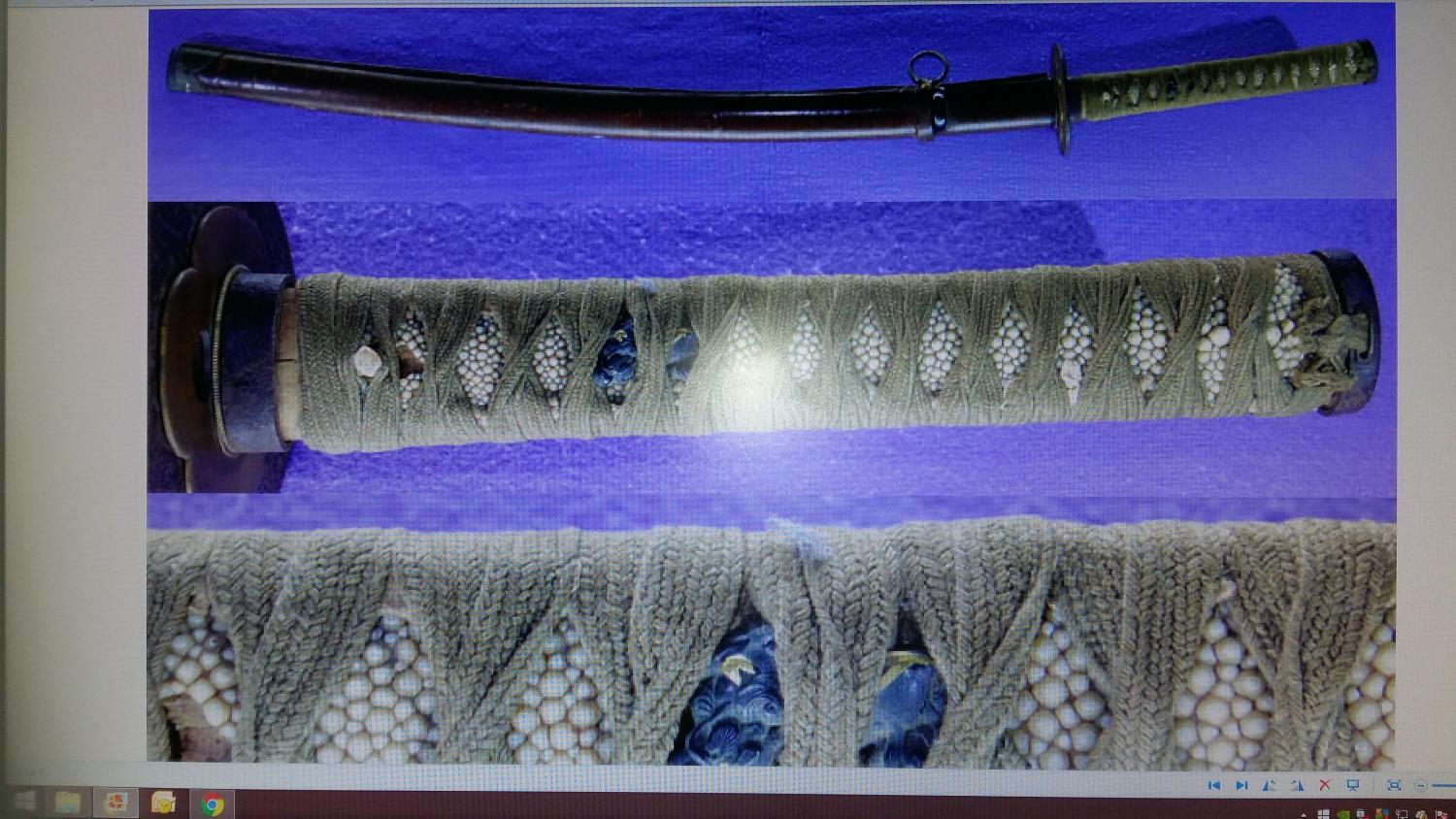
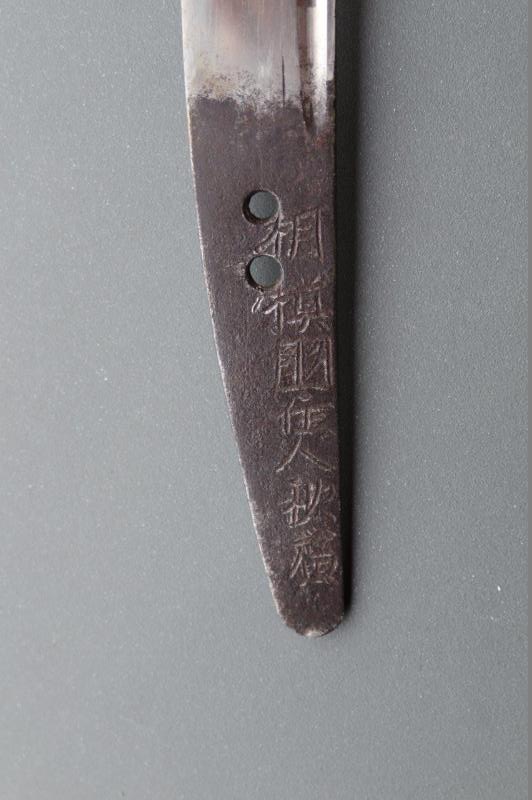
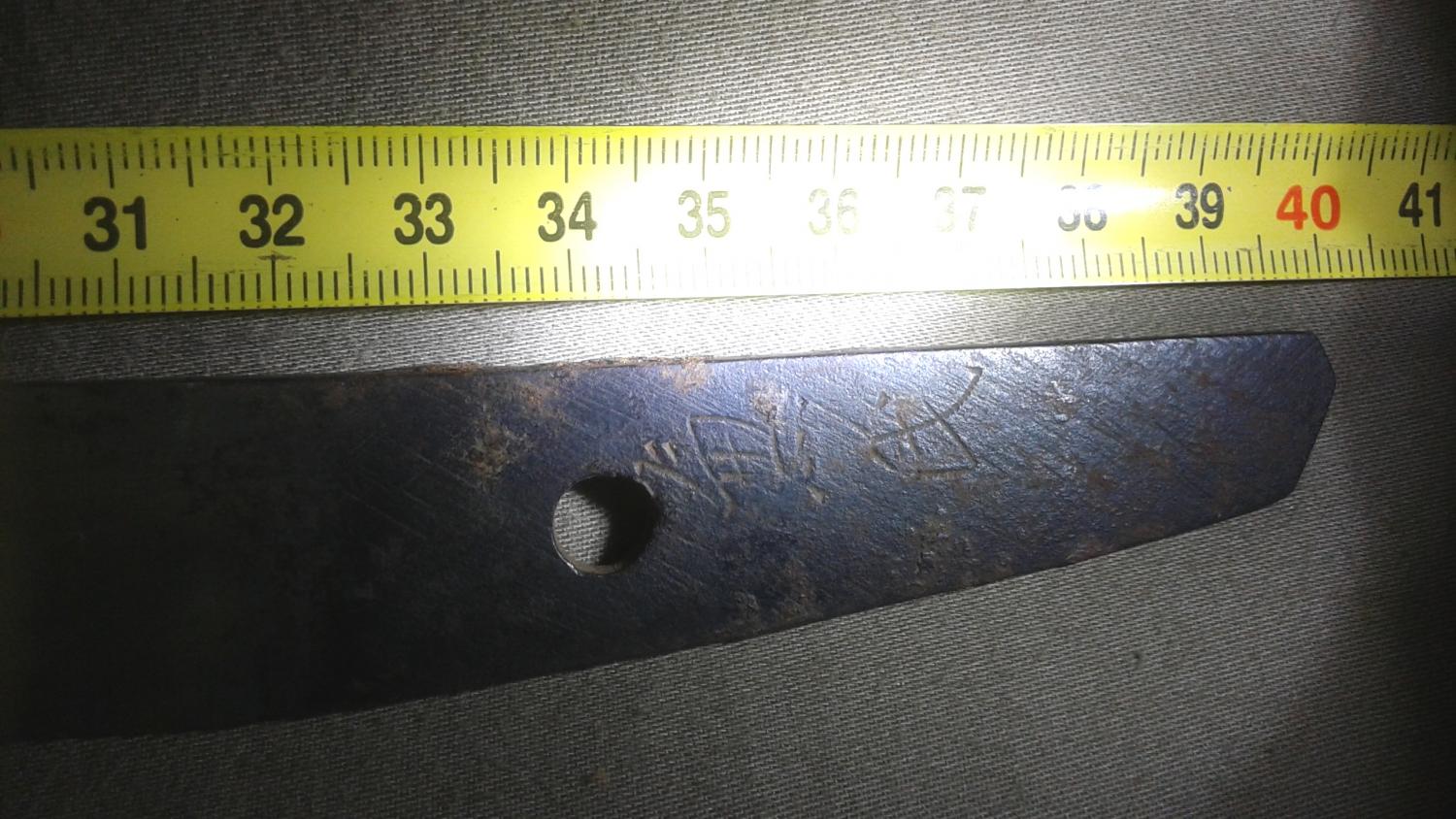
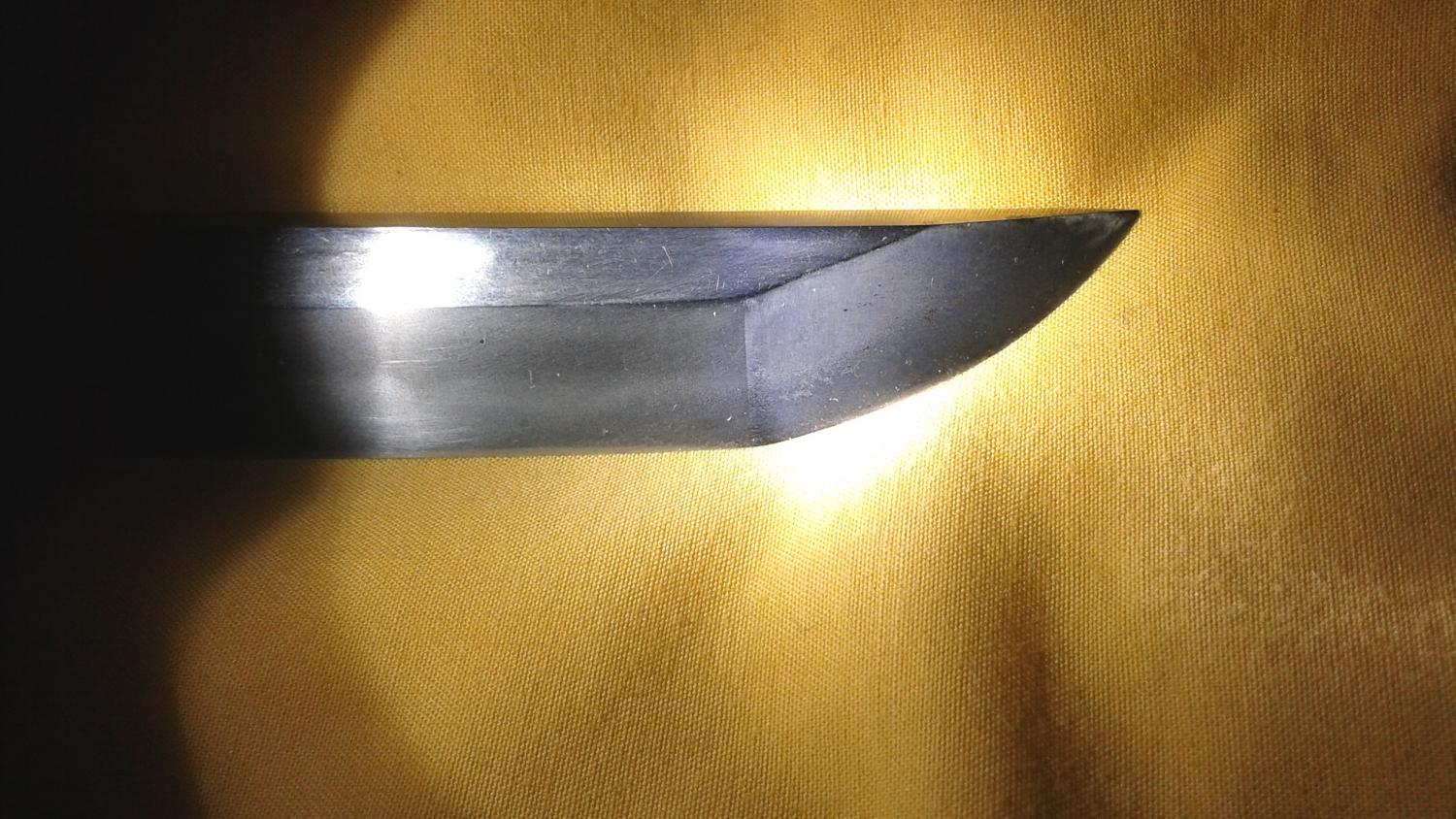
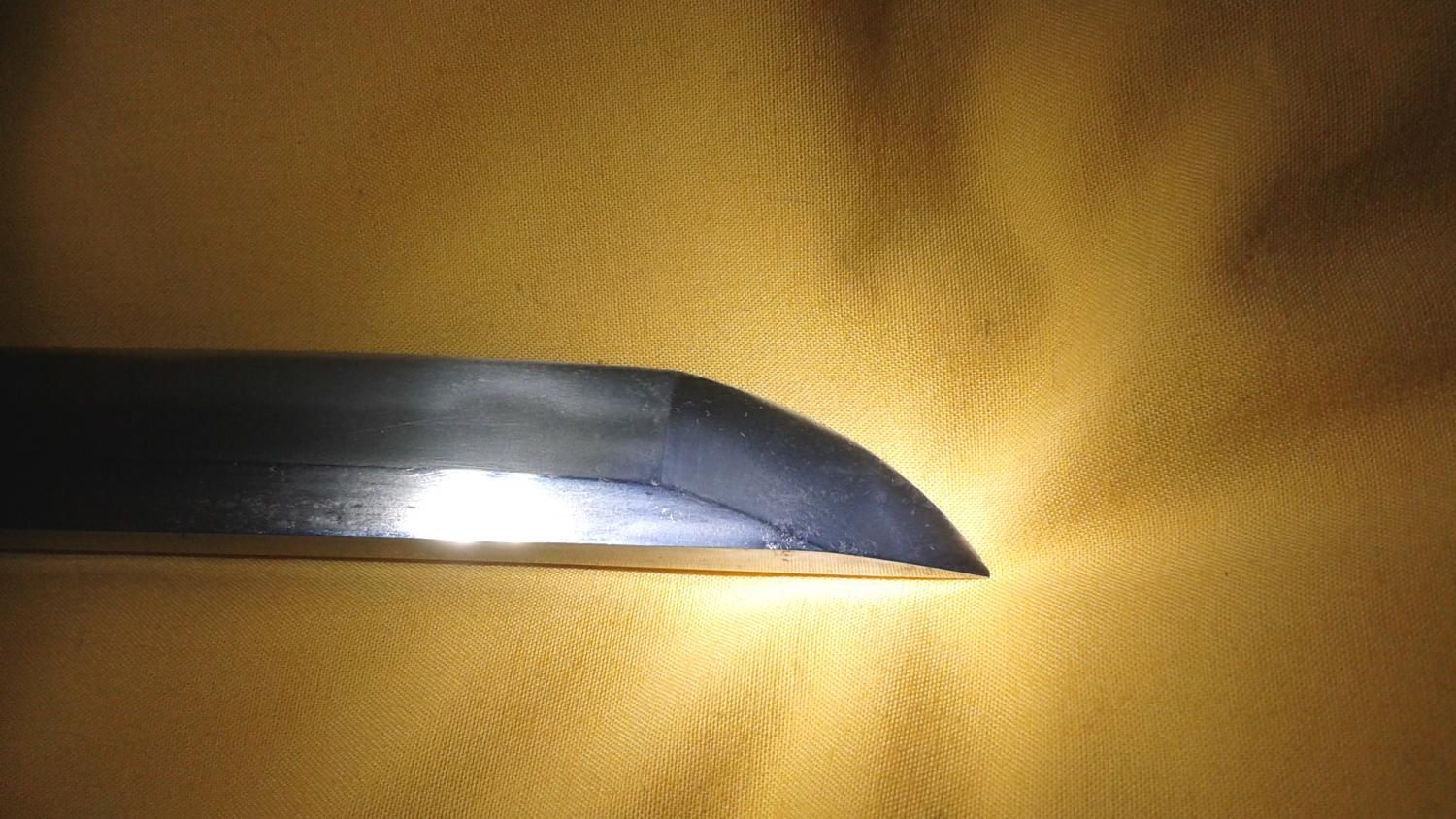
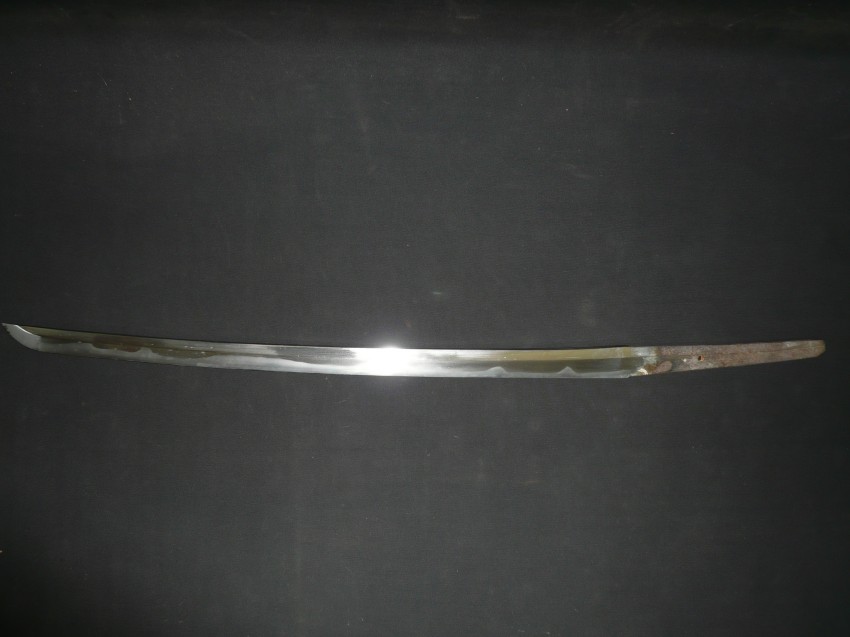
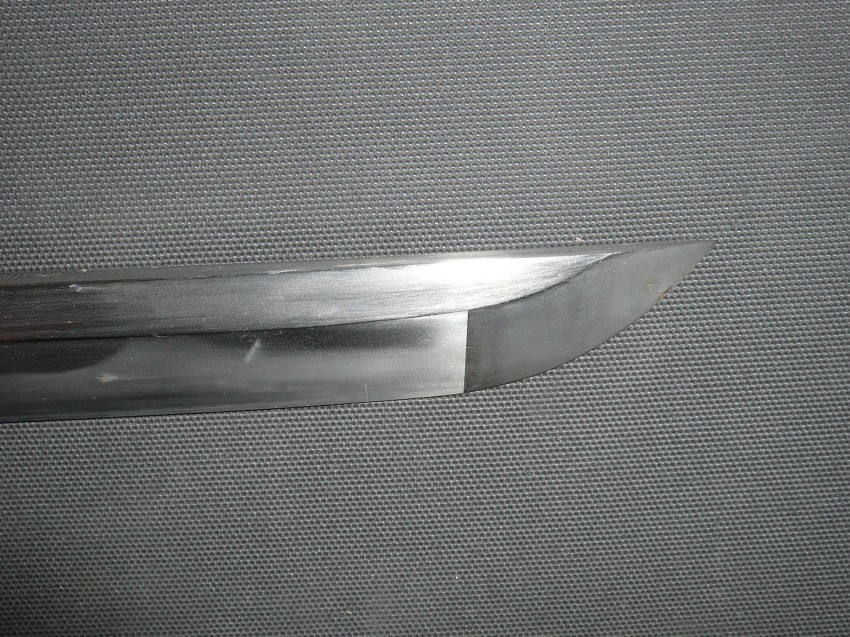
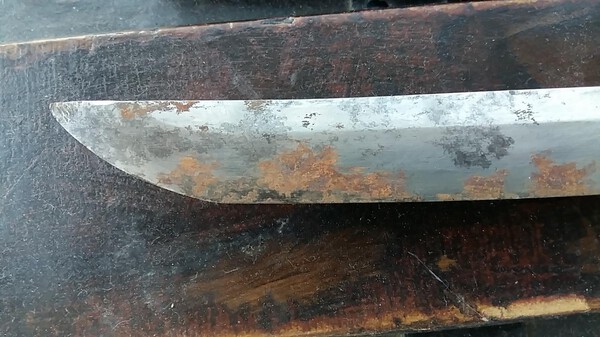
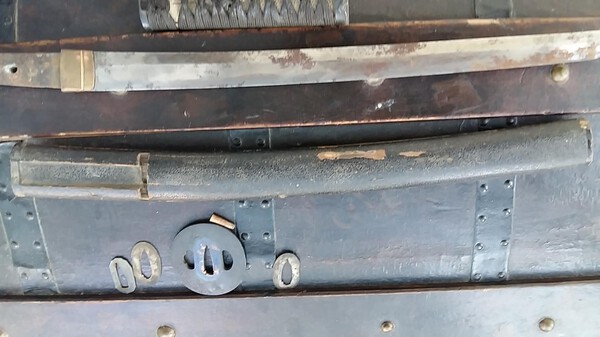
Hello. Could you give me an opinion on this wakisashi which is unfortunately in poor condition. the shape of the blade makes me think has the momoyama period. The tsuba is signed but I can not decipher. The Stuka is interesting. With Seppa there was a Seppa paper? I thank you in advance. Rodriguez.






-
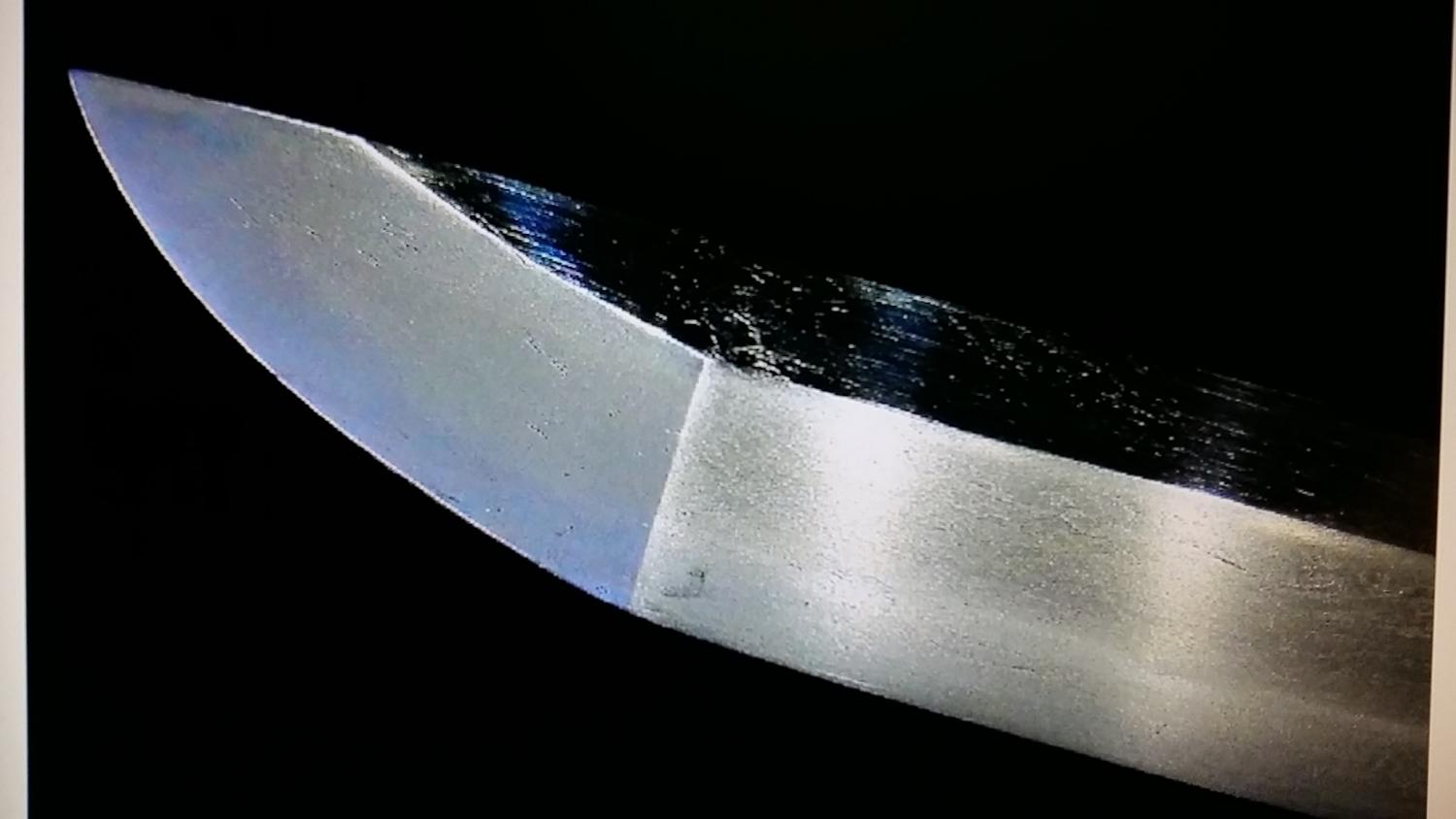
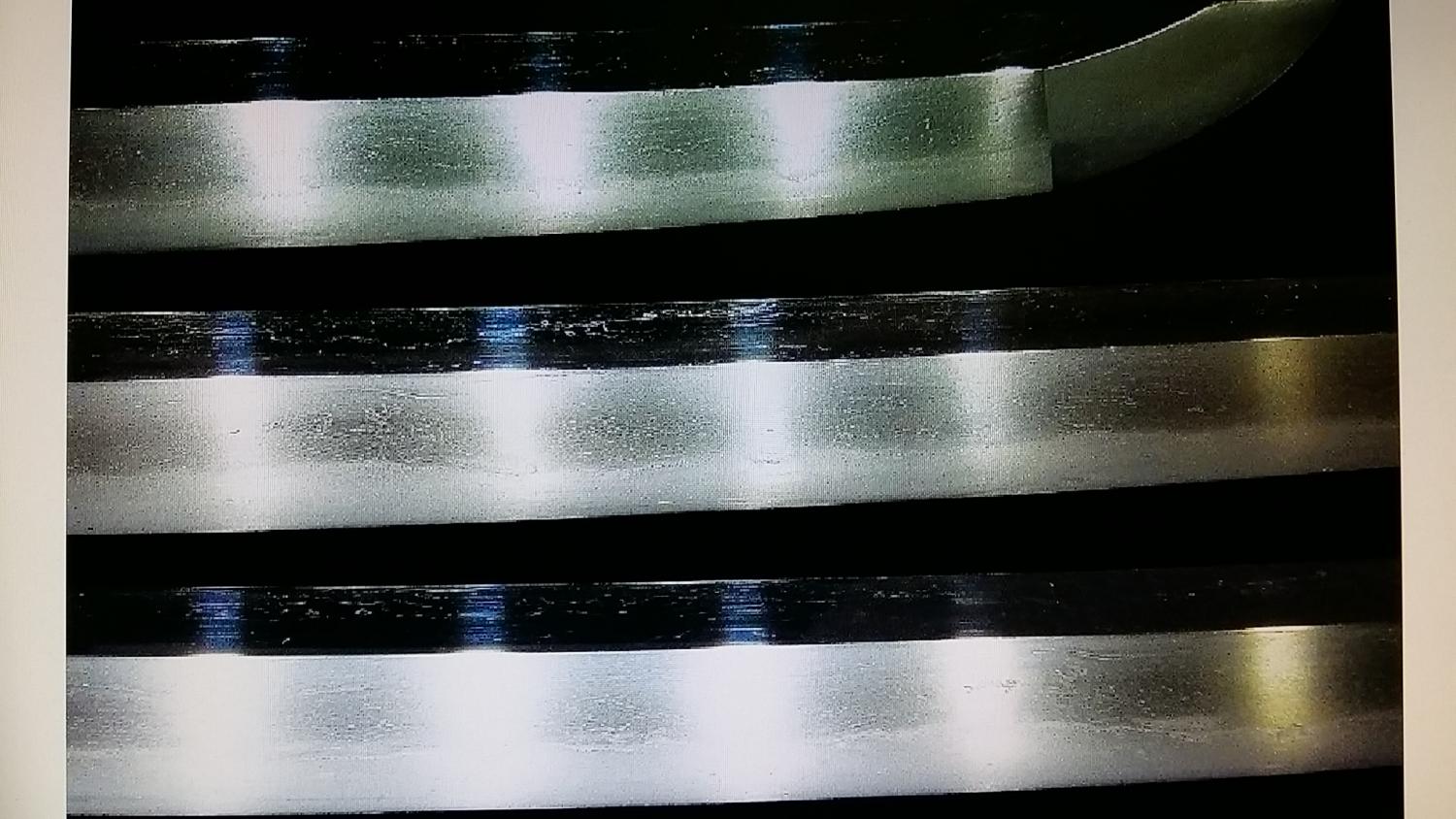
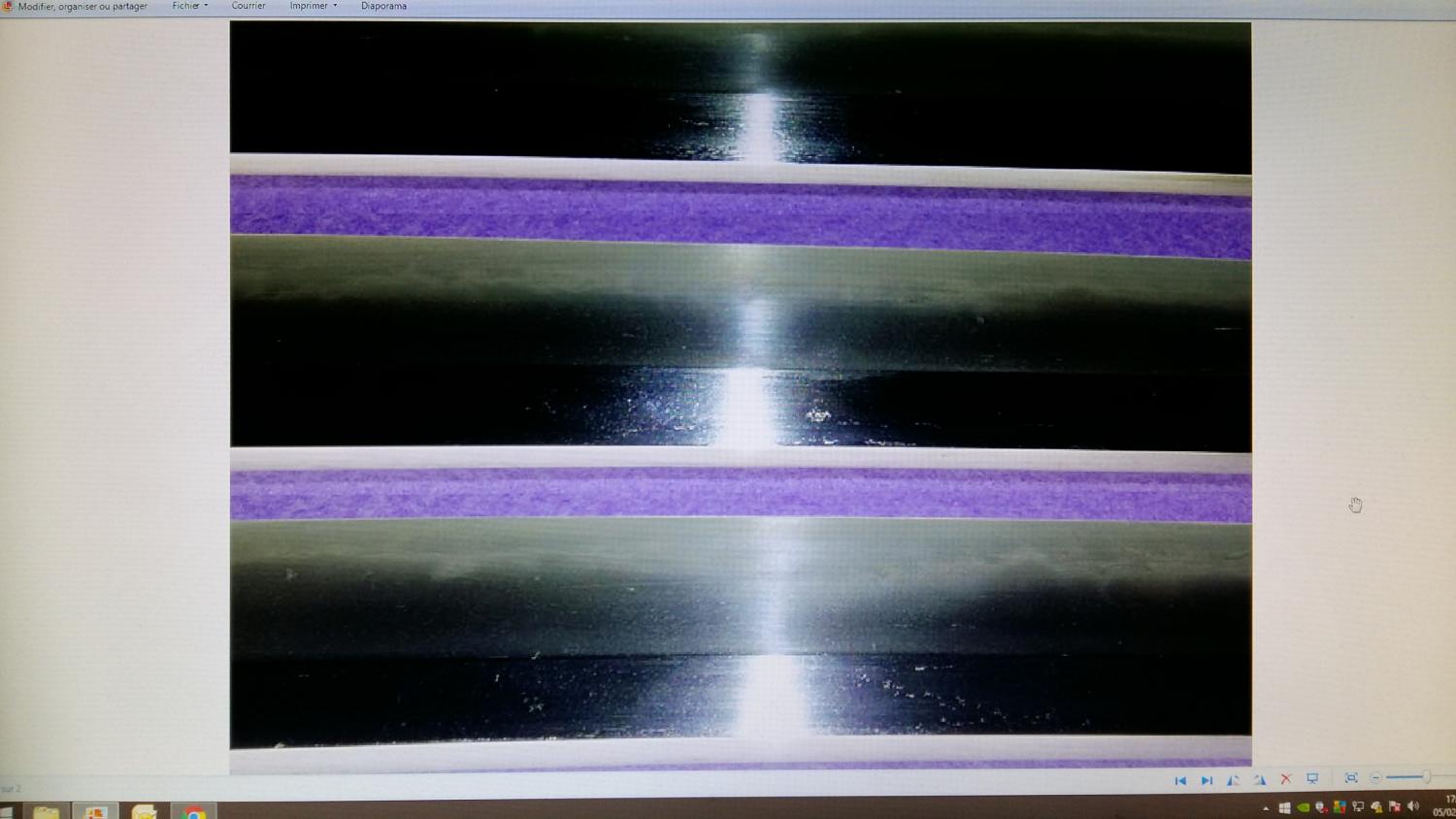
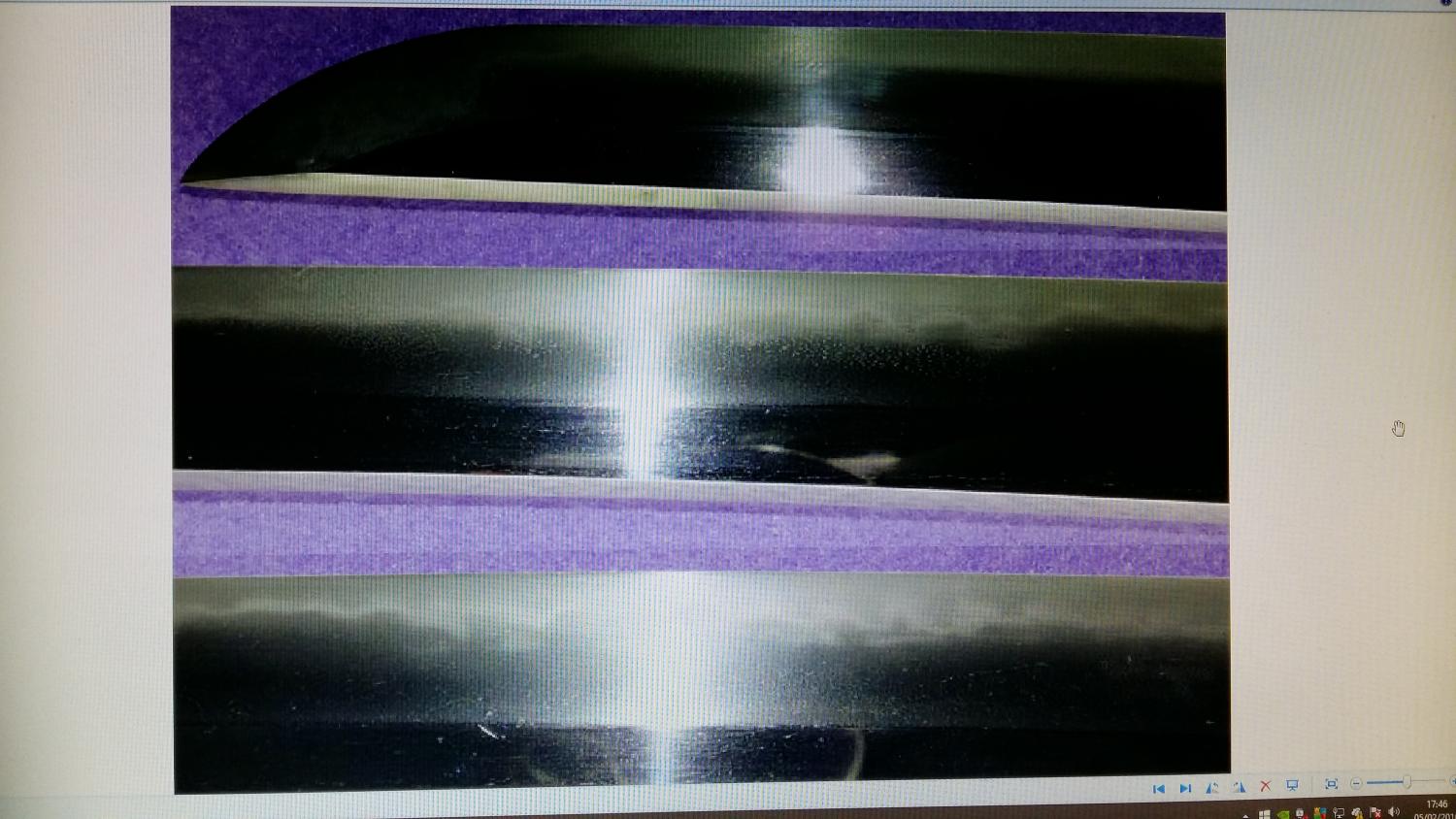
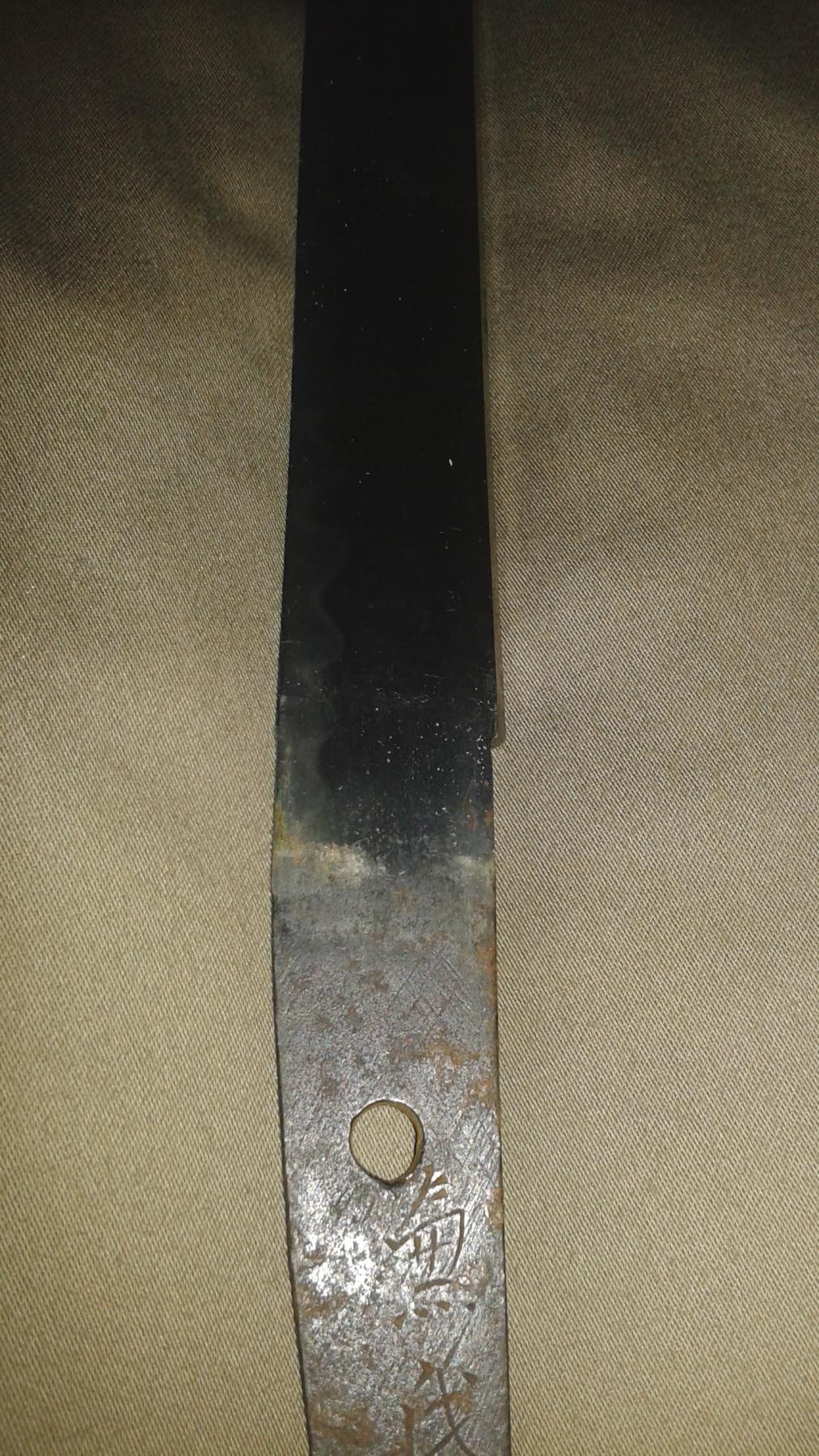
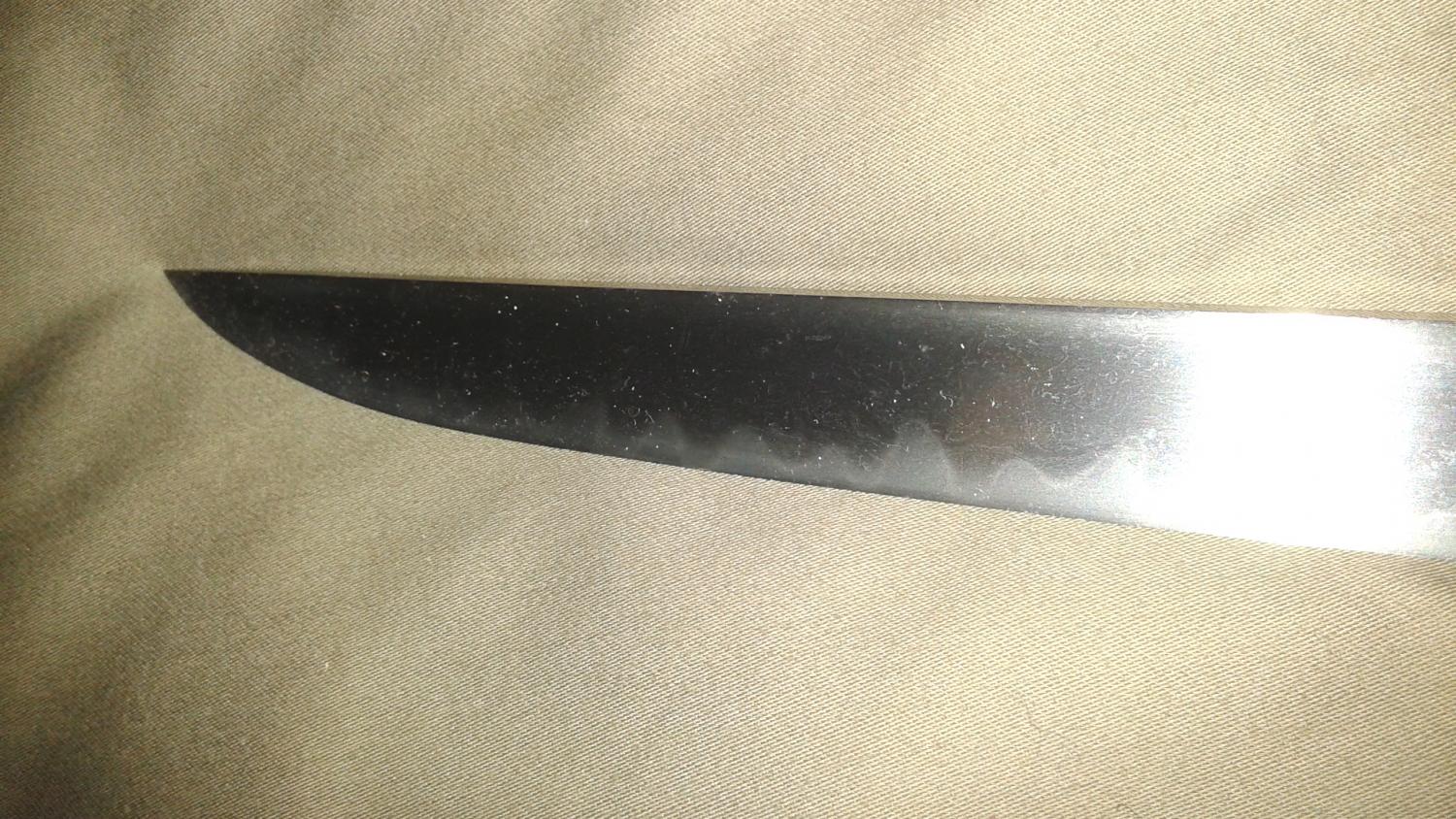
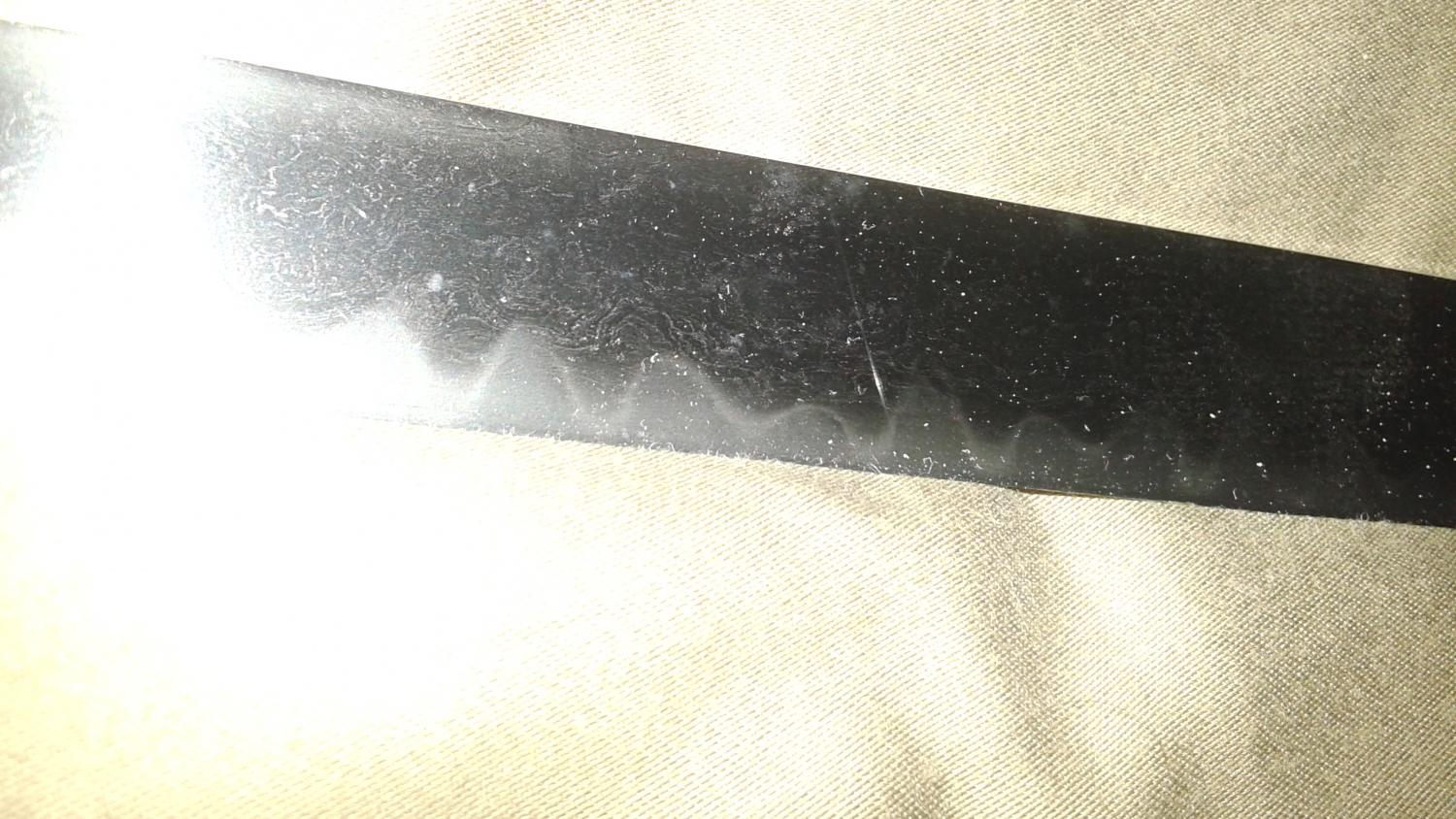
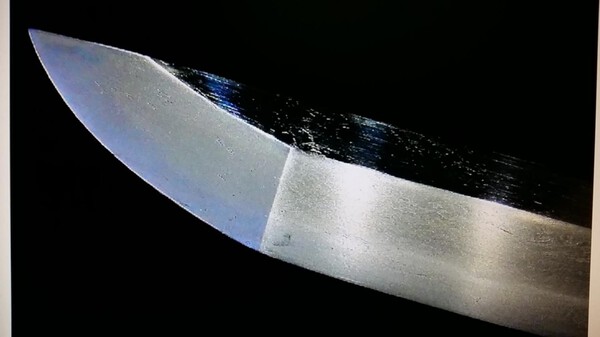
Hello. I was puzzled when this signature, and I wonder if there is a gimei or original signature. here are some photos of the hada and hamon and I would like to know what you think. cordially. rodriguez.


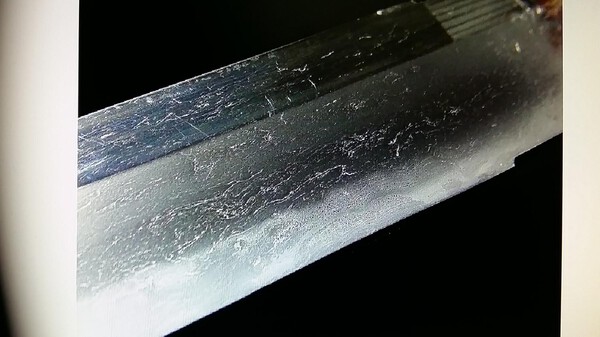


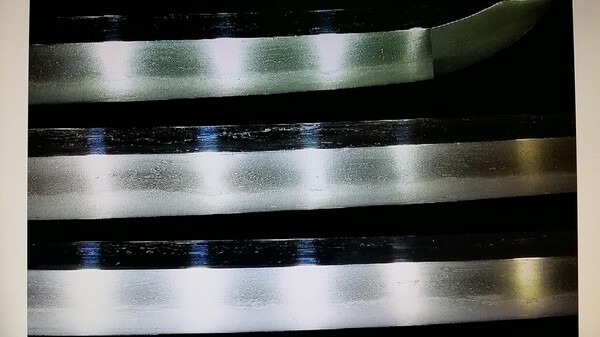

-
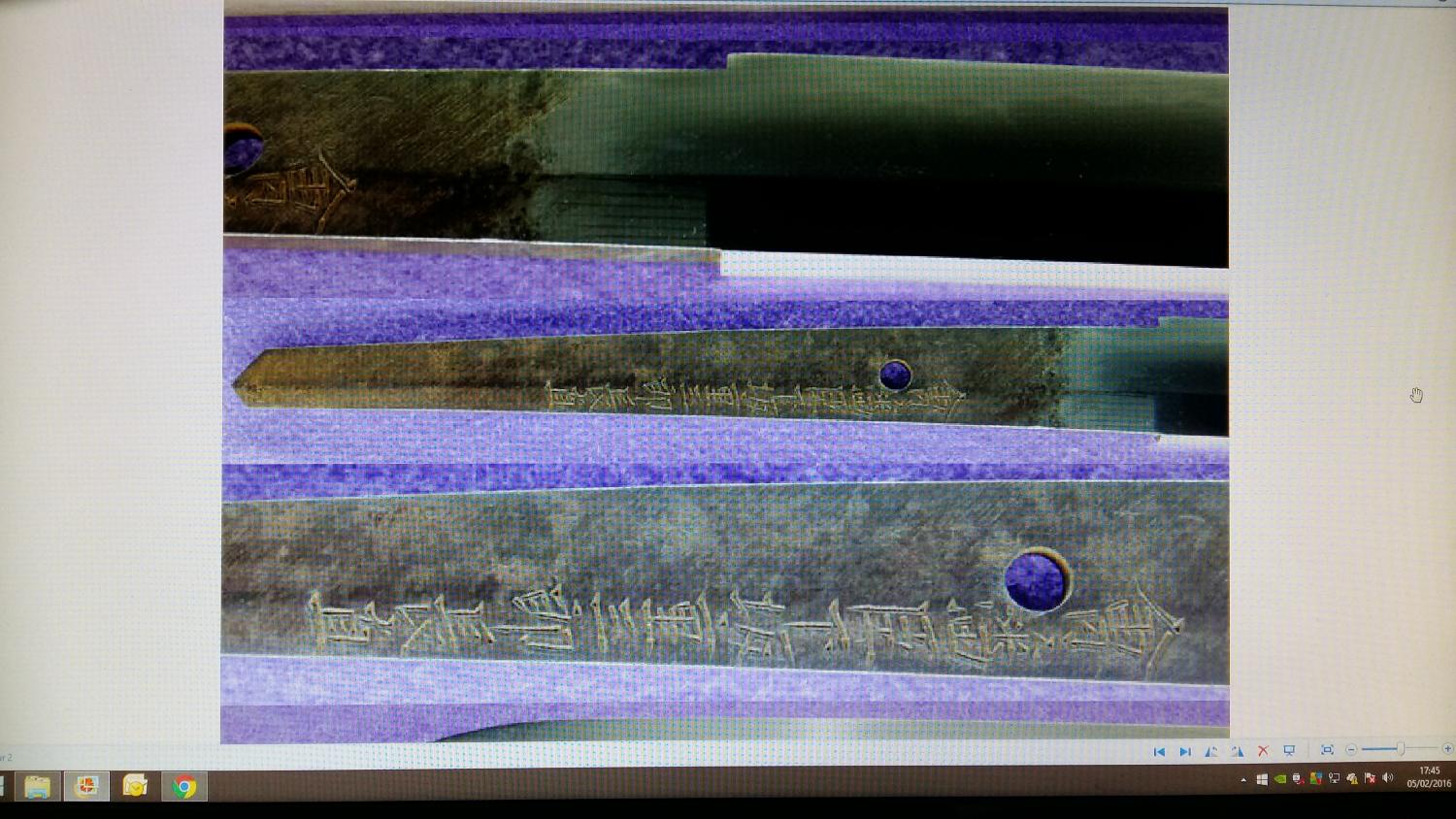
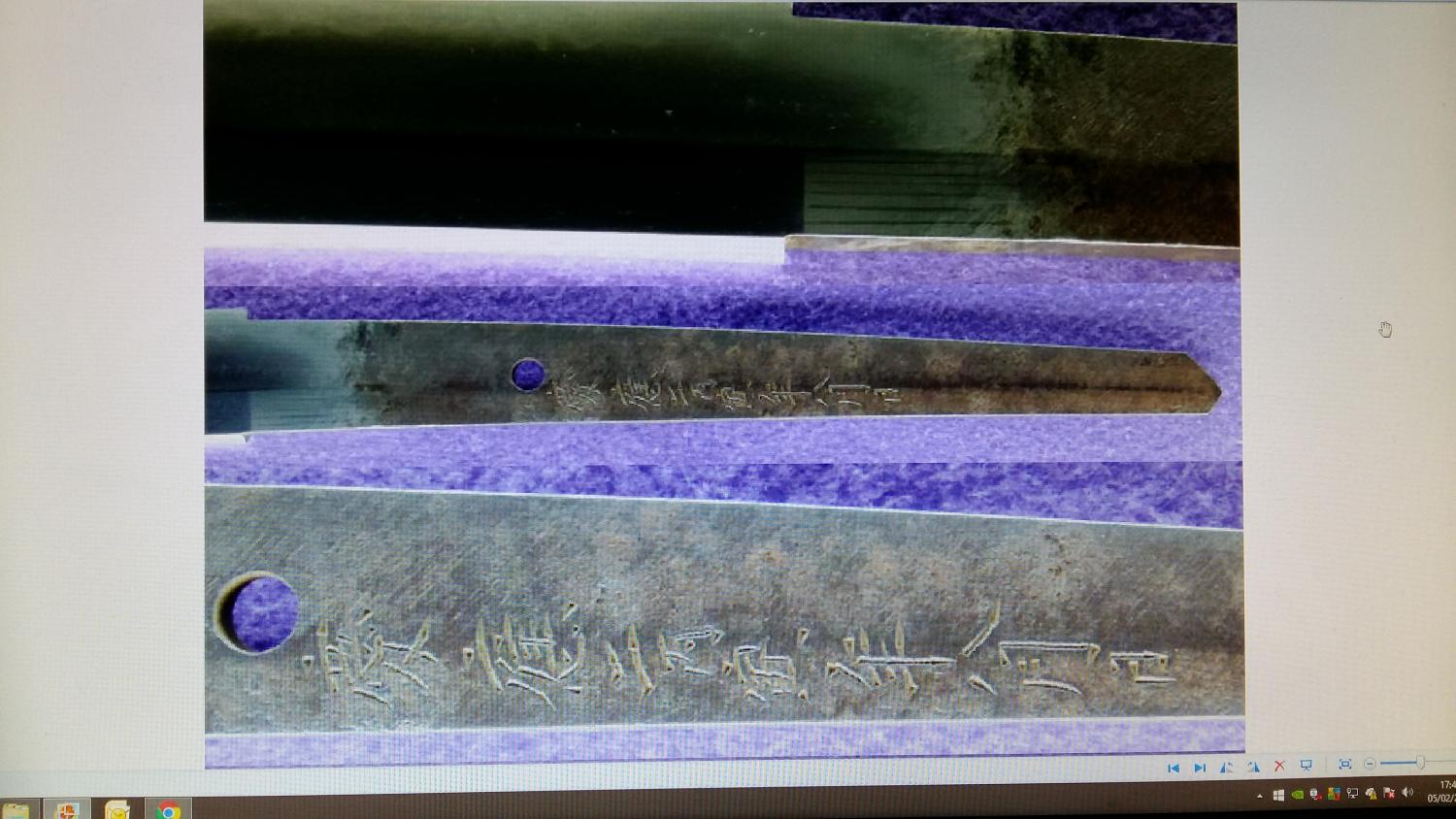
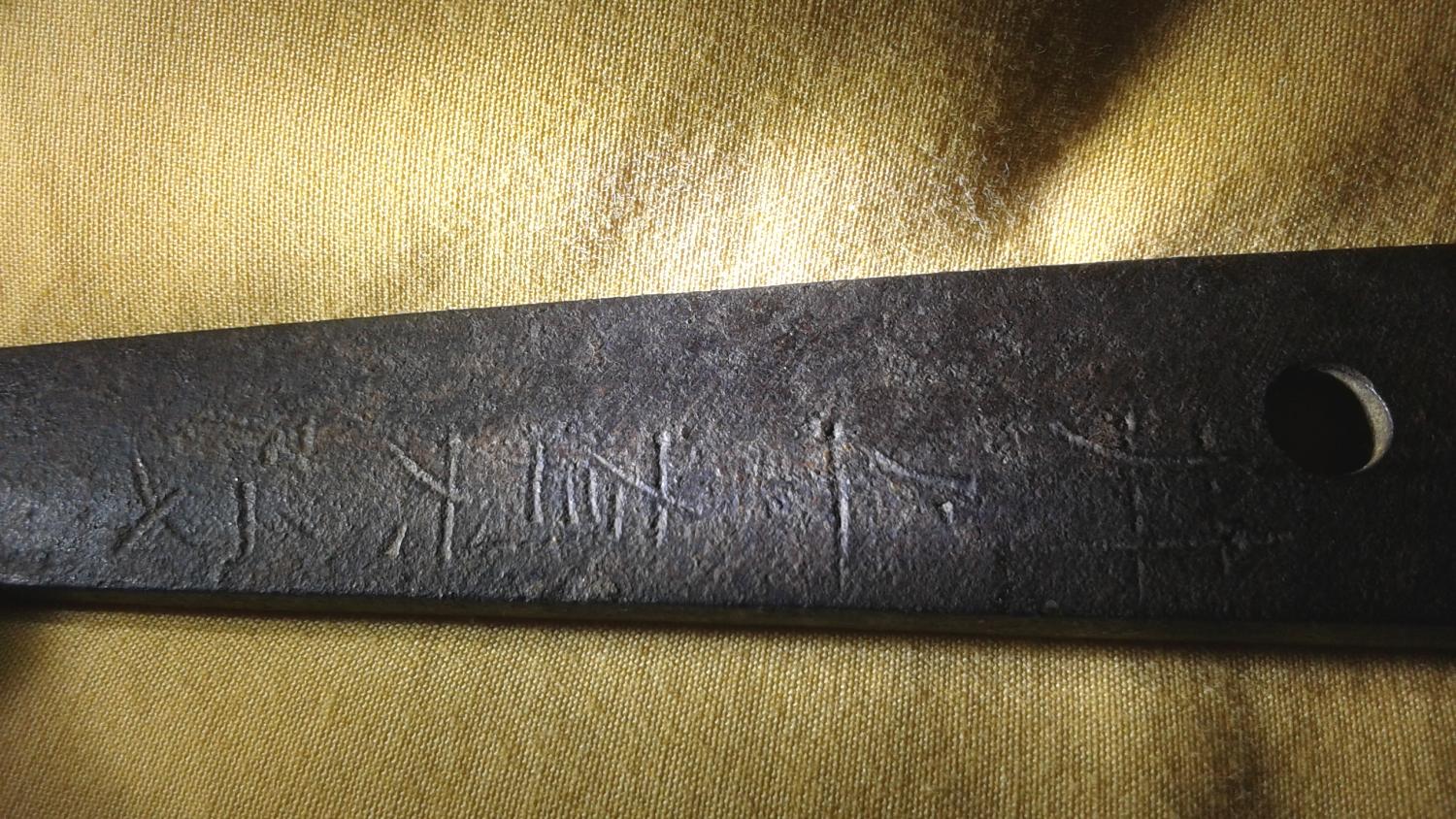
Hello. I am somewhat skeptical when was signing my last aquisition. could you tell me if there is a gimei or original. cordially. Rodriguez.
-
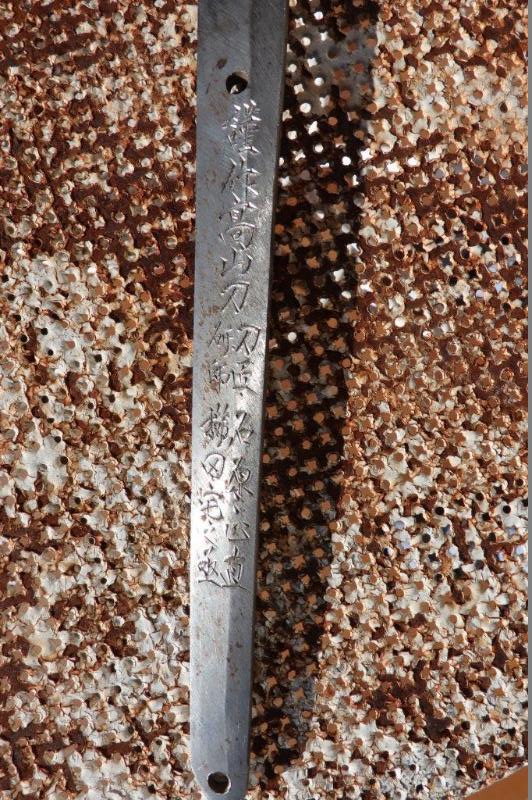
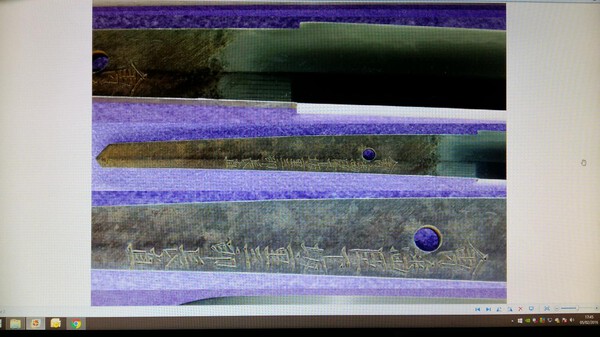
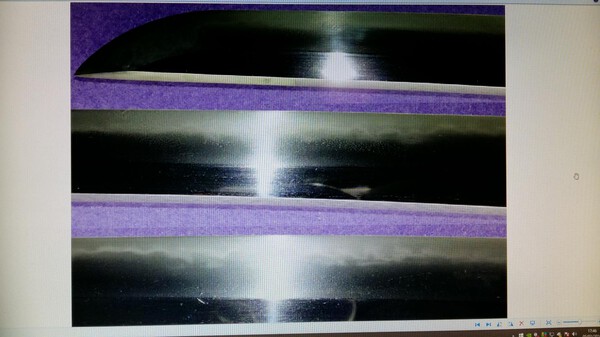
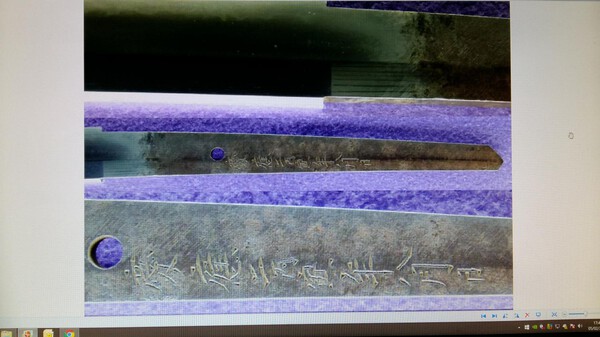
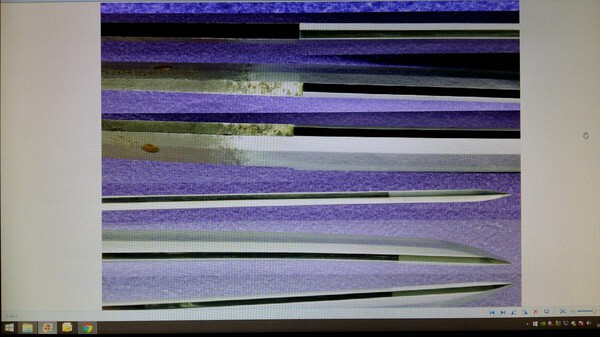
Hello. I need advice on this blade. thank you in advance. cordially. rodriguez. 日本刀 刀 会藩臣下坂重三郎長直(会津藩砲兵隊一番隊士) 慶応二丙寅年八月日 Council clan Japanese Sword vassal Shige Saburo Sakai ChoTadashi (Aizu clan more artillery officer of the body) Keio Nihei Tiger years in August Date katana [aizu_shin shimosaka shigesaburou naganao KEIO 2] (Aizu feudal clan artillery First Squad) day guarantee preservation sword swords NBTHK Hozon Number: 1610-1037 Saber entering Koshirae Blade length Blade length (HA-CHOU) 66.8cm (two two little feet cun more than a minute) curvature chain (Sori) 1.8cm original width Width hamachi (MOTO-HABA) 3.02cm Motoshige Thickness at Moto Kasane 0.69cm 鎬 重 0.76cm previous width 1.89cm Sakikasane 0.51cm Raw lovely idol rod Country (KUNI) · era Period (Jidai) Mutsu Aizu country late Edo period in 1866 (1866) Mutsu Aizu. The Edo period last KEIO 2 (1866) Kanagawa registration No. 55105 November 6, 1973 Nippon Foundation certificate Art swords save backup Association swords certificate August 17, 2015 [Comment] Ishido referred TameYasushi teenager. Like most of the officer corps of the Aizu clan artillery was active.
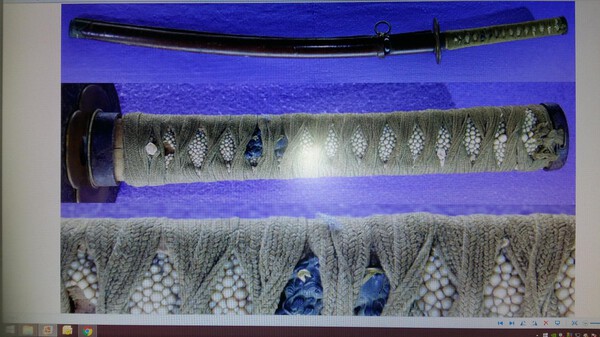
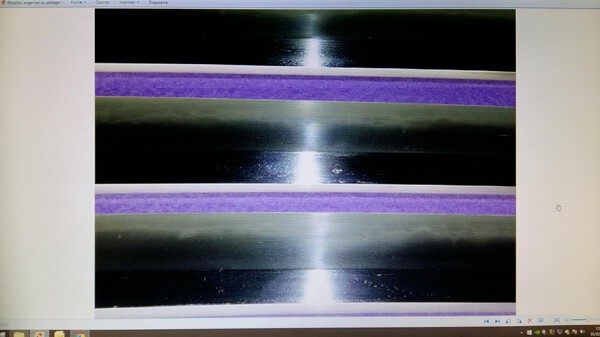
-
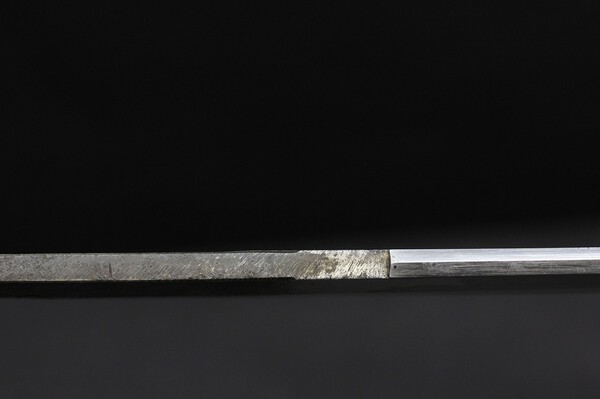
Hello. That is the question I ask myself, as this slide is meant to be the period: Momoyama Period papered Tachi Koshirae Nagasa w: 67.7 cm - 26.65 inch. Would it be possible to have a more informed opinion, because the metal blade that leaves me skeptical. Best regards. Rodriguez.



-
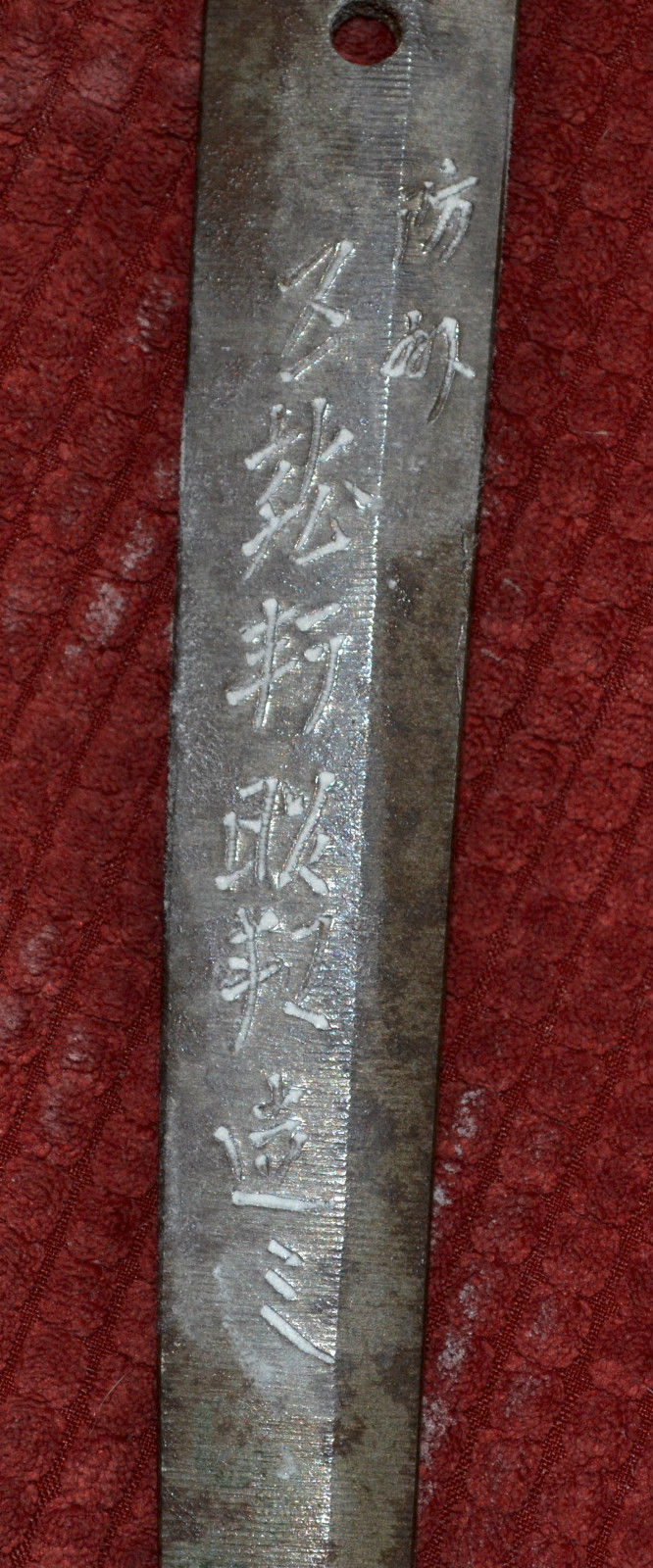
Hello. I'm confused to decipher the signatures and I need help. Best regards . rodriguez.


-
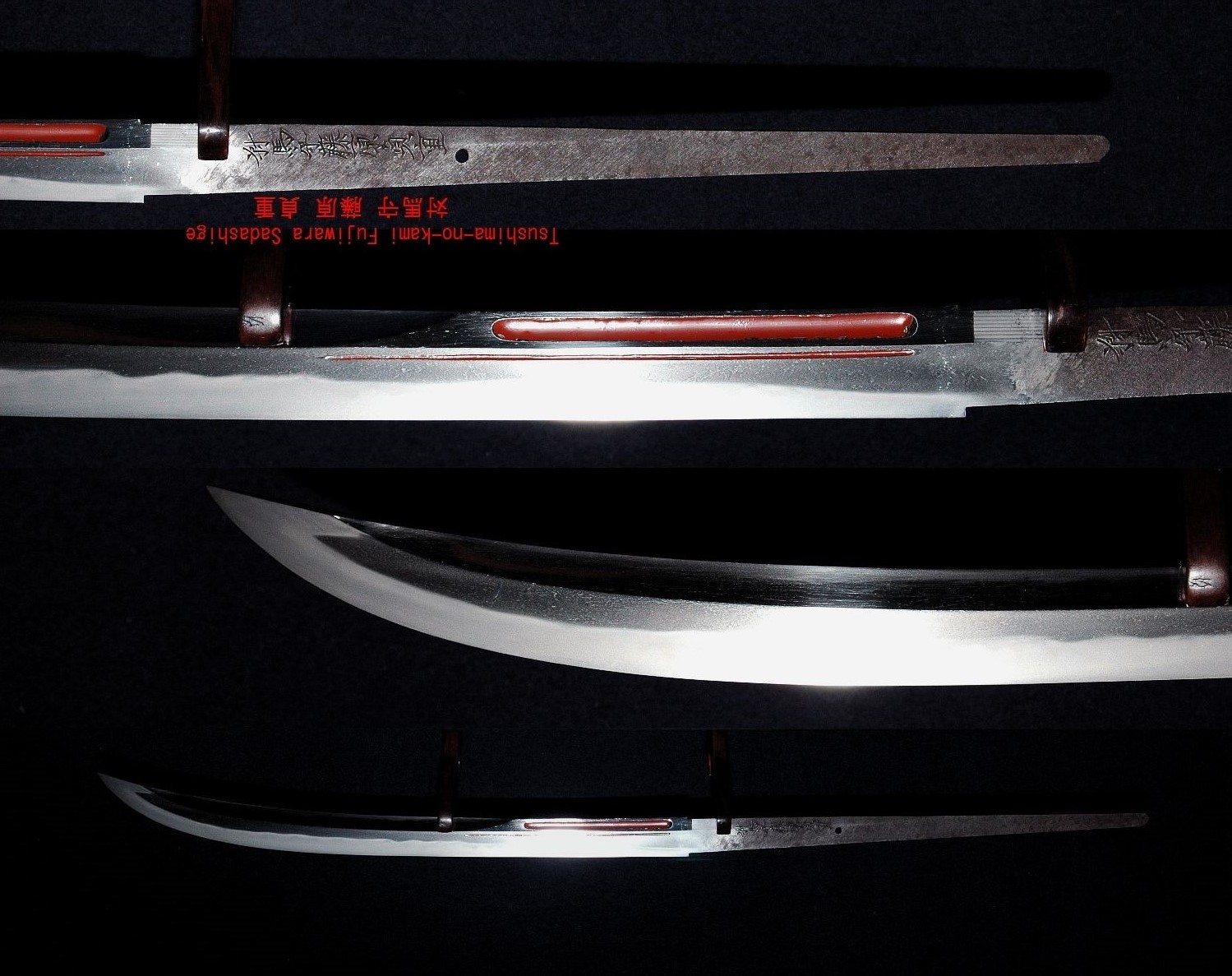
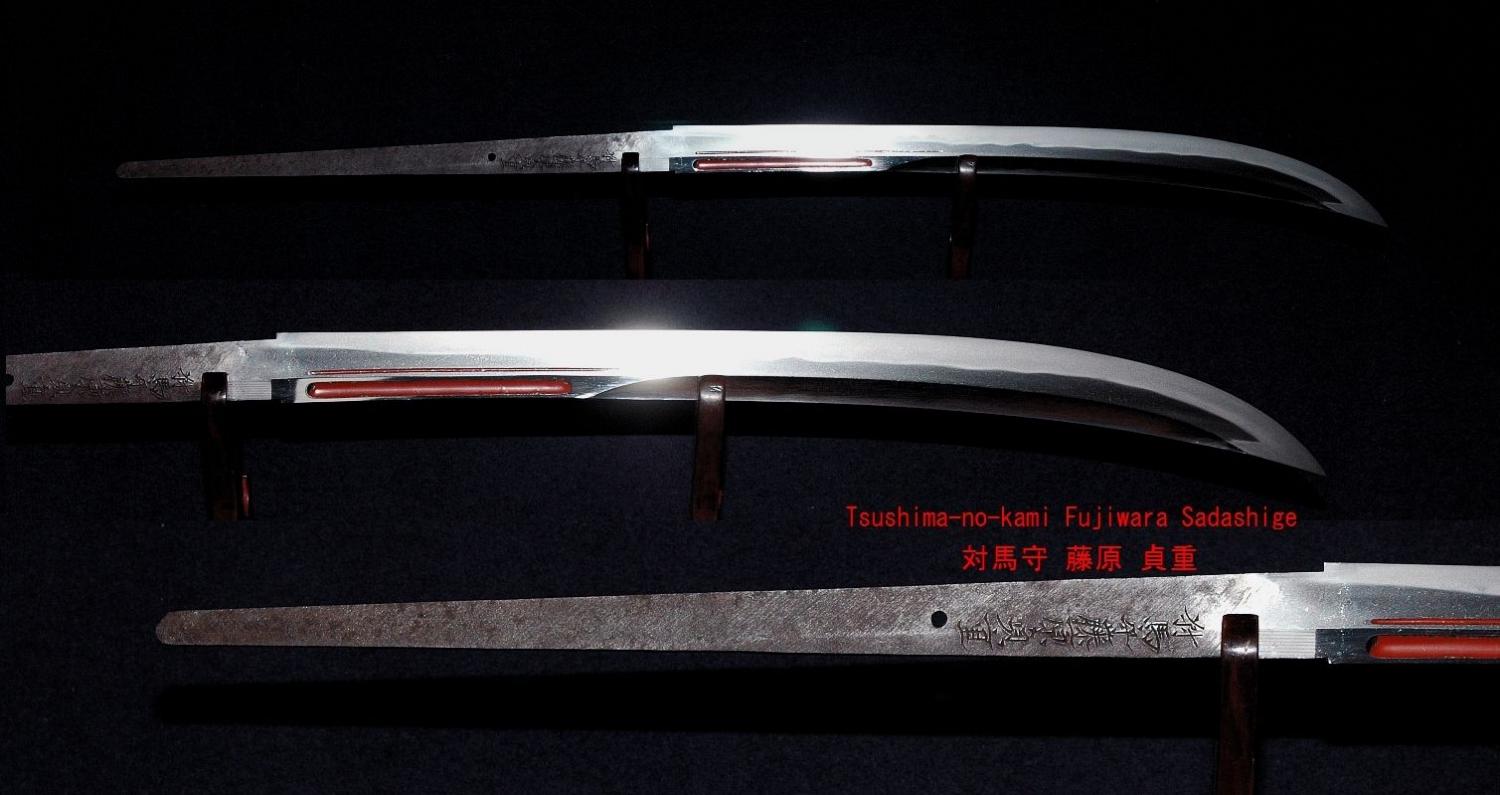
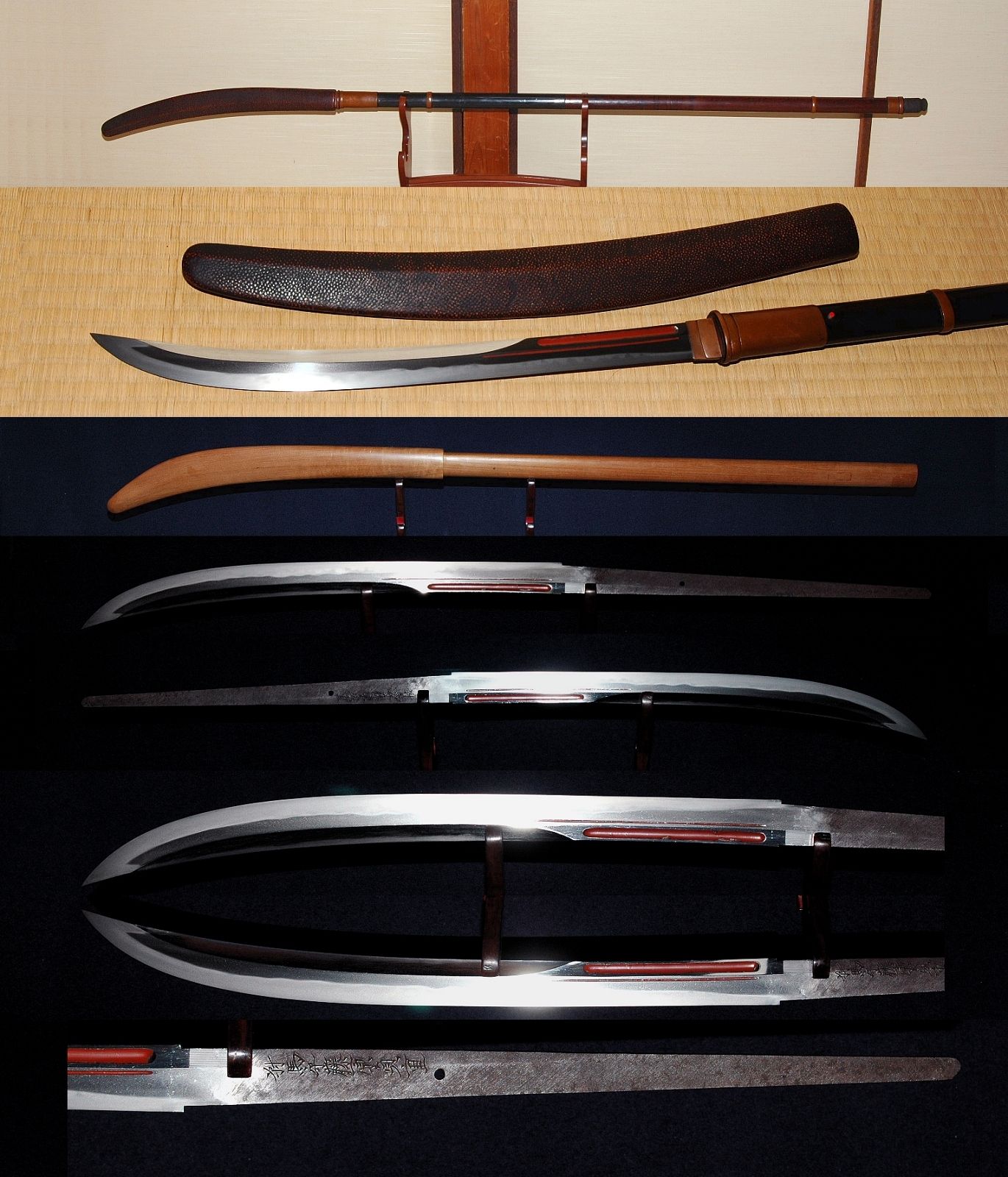
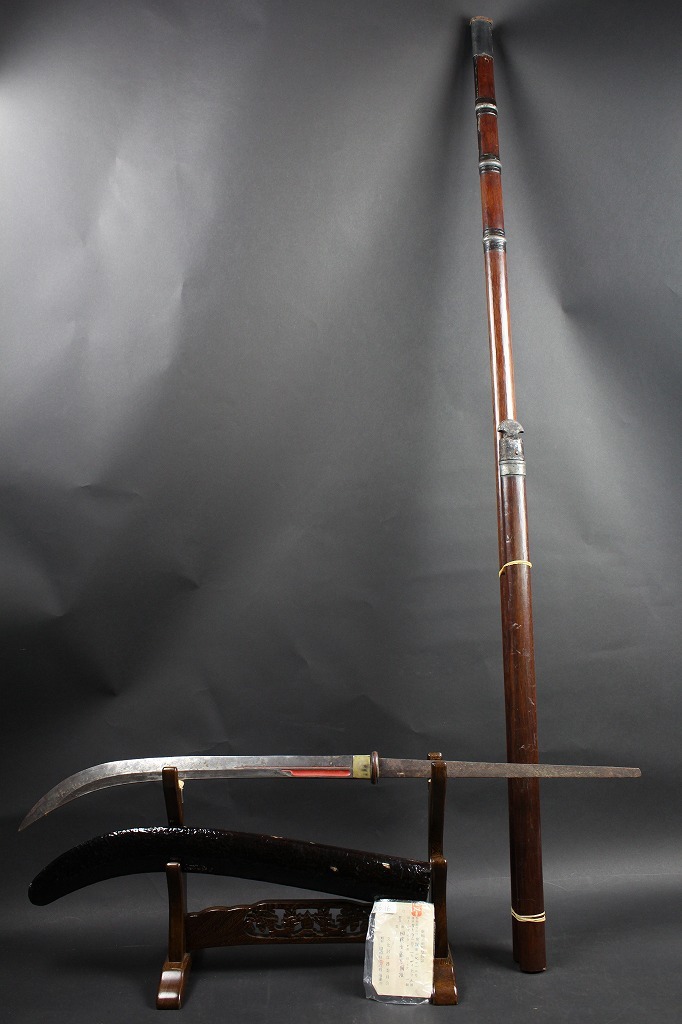
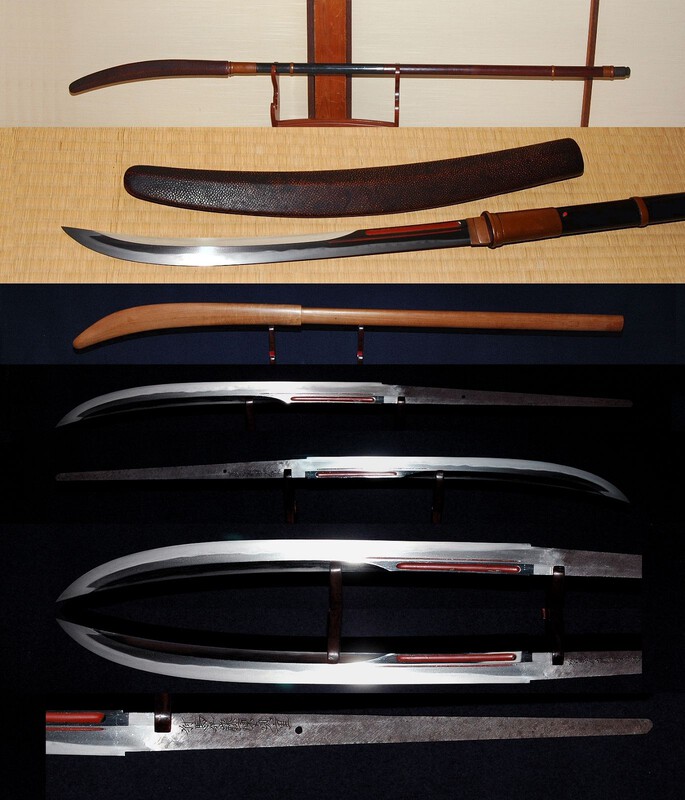
Hello. Could you give me your opinion on this naginata. Signed対馬守 藤原 貞重 Tsushima-no-kami Fujiwara Sadashige, who is the famous swordsmith in Bishu (Now, Aichi Prefecture) . Sadashige’s real name is鈴木市左衛門 Suzuki Ichizaemon Sadashige learned the skill from貞幸Sadayuki and made lots of great quality of swords and Naginatas around寛文頃Kanbun era 1661~1672. Hamon of this Naginata is Nie-deki and Gonome-midare with Suguha. This blade must get influence from Soshu-den and has beautiful Hamon. There is beautiful Naginata-hi (Koshi-hi) carving. There is Hamon even at Mune area. Judging from Nakago, this blade is not thinner because of polishing, therefore this blade is beautiful appearance. Recent polishing. <Blade> Hacho(Blade length): 44.1cm Sori (Curvature): 1.6cm Motomihaba (Width at the Hamachi):3.09cm Motokasane(Thickness of Motokasane): 8.1mm Sakimihaba: 3.12cm Sakikasane: 5.9mm Nakago (The tang of the blade) Length: 34.6cm Material: Iron Hamon: Nie-deki and Gonome-midare with Suguha Jihada: Ko-mokume-hada Mune: Mitsumune # of Mekugi-ana(the hole for the mekugi): 1 Signature: 対馬守 藤原 貞重 Tsushima-no-kami Fujiwara-Sadashige Weight (Approx.): 575g –Blade only high quality one, influenced by Soshu-den. Best regards. Rodriguez


-
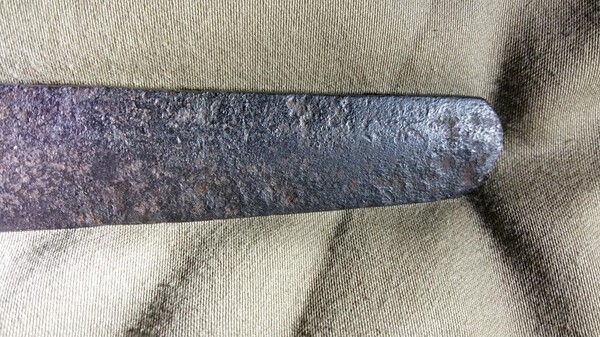
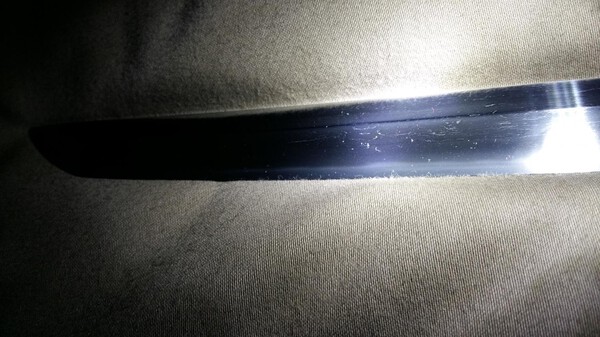
good aftenoon. Katana in koshirae. Signed: "Bishu Osafune Tadamitsu 備州長船忠光" and dated "The 8th month of 1481 (文明十三年八月日)." I can hardly read the mei and the date due to corrosion, but this is what the registration certificate says. could you give me an opinion on this blade. thank you. rodriguez.





-
Hello. I forgot to mention that the common is Matsuba-saki. The form of the naginata led to think that this seems like a ceremonial element. do the ceremonial forge has these features? Best regards. Rodriguez.
-
Bonjour. Je oublié de mentionner que la commune est Matsuba-saki. La forme de la naginata conduit à penser que cela semble être un élément d'apparat. Ont été établis avec ces caractéristiques? Cordialement. Rodriguez.


-
Hello. I failed to mention that mune is Matsuba-saki. The form of the naginata leads to think that it seems to be a ceremonial element. Were they with forged with these characteristics? Best regards. Rodriguez.
-
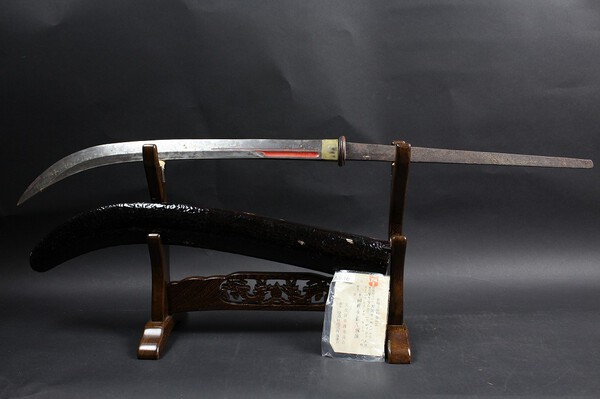
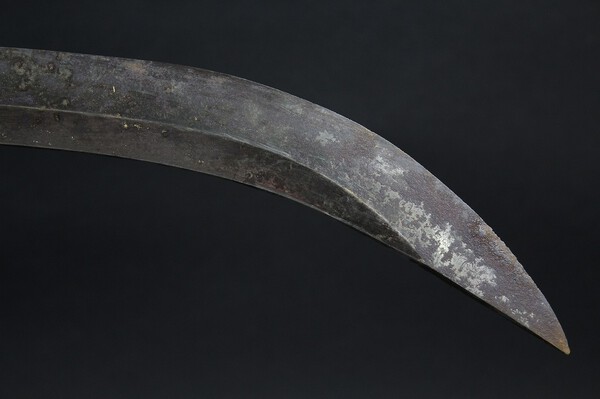
Hello. Here is a naginata that I just bought. It is the period Edo. The blade is signed Sagamino kami fujiwara kunitsugu. Saya 19.68 '50cm Nagasa 17.32 '44cm Motohaba1.18 '3cm Sakihaba 0.98 '2.5cm Could you give me a more informed opinion on this new acquisition. Thank you. Rodriguez.




-
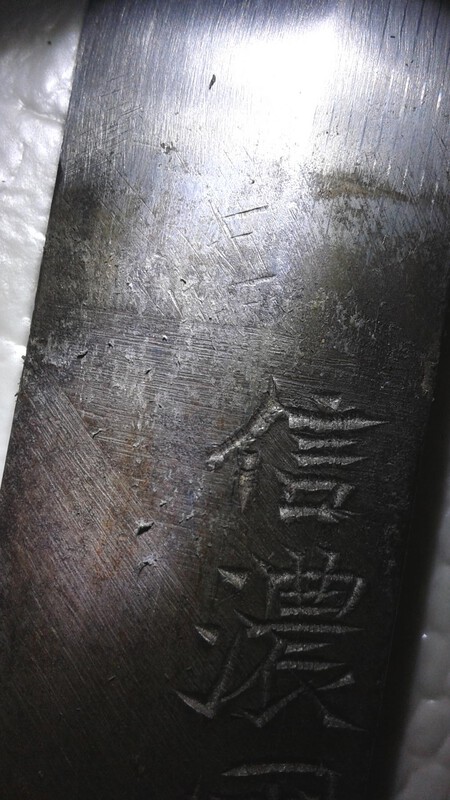
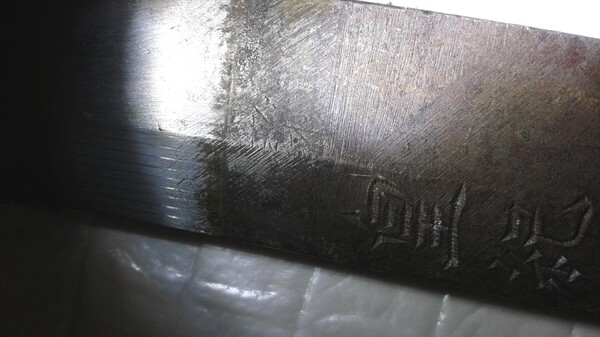
Hello again. a thousand apologies for the translation: gunto here is a "98" signed tomomaro, and as usual I just quetter some information, among other things, the meaning of the traces or above mei kanji and kanji symbols for figures on seppas. R. gerard.
-
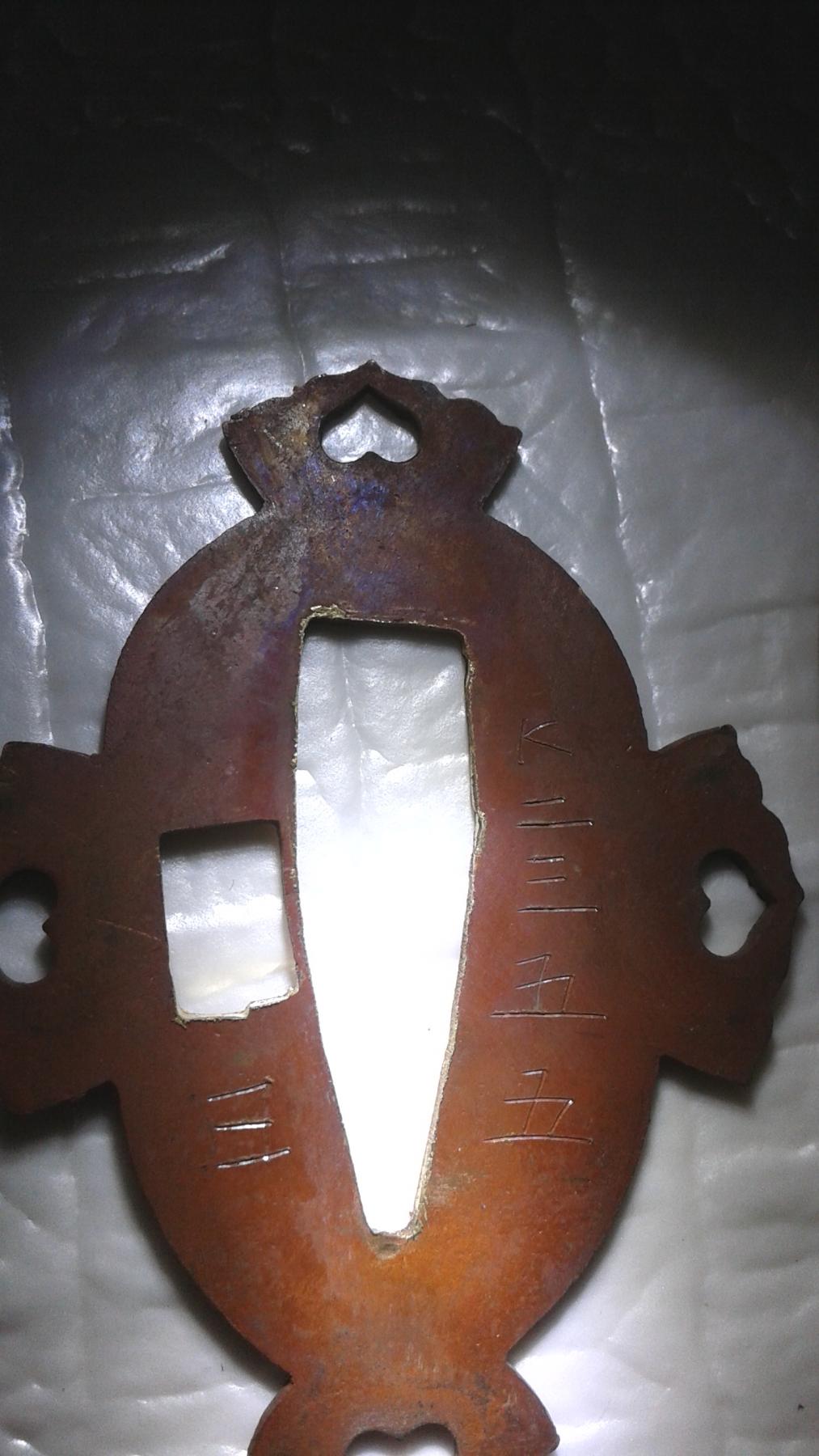
bonjour. voici un gunto "98" signé tomomaro, et comme d'habitude je viens quetter quelques renseignements,entre autre , la signification des traces ou kanji au dessus du mei et la symbolisation des chiffres en kanji sur les seppas.


-
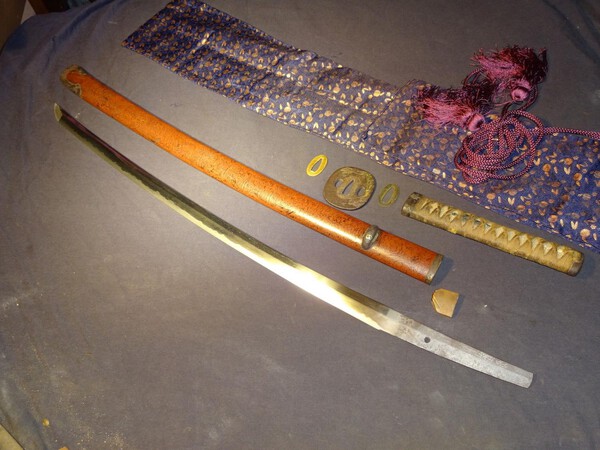
bonjour. pourriez vous éclairer mes connaissances . surtout sur la signature de la tsuka située sous le fuchi . je crois savoir que le mei est :"Mutsu Aizu ju Michinaga 陸奥会津住道長". merci. rodriguez.


-
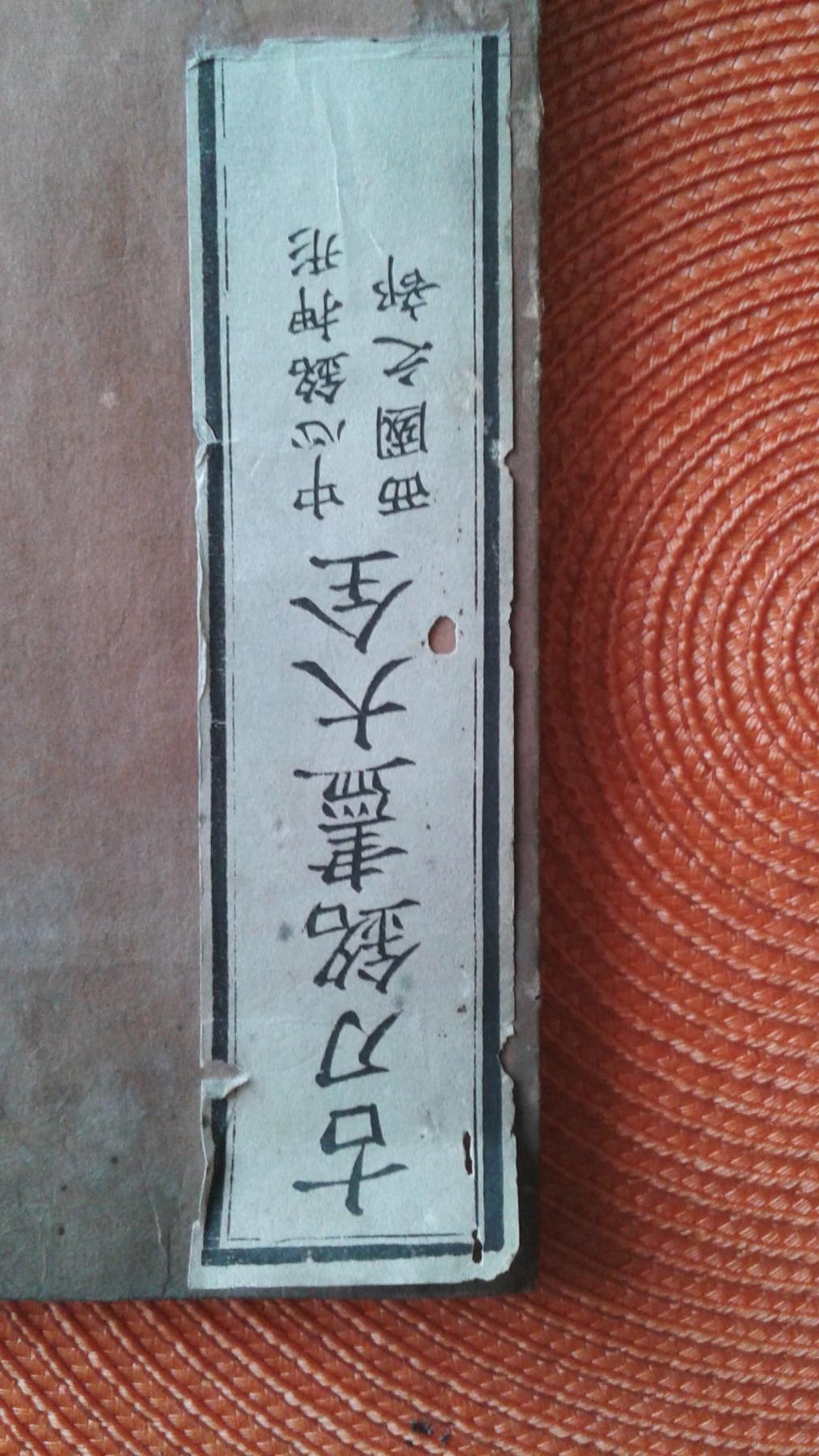
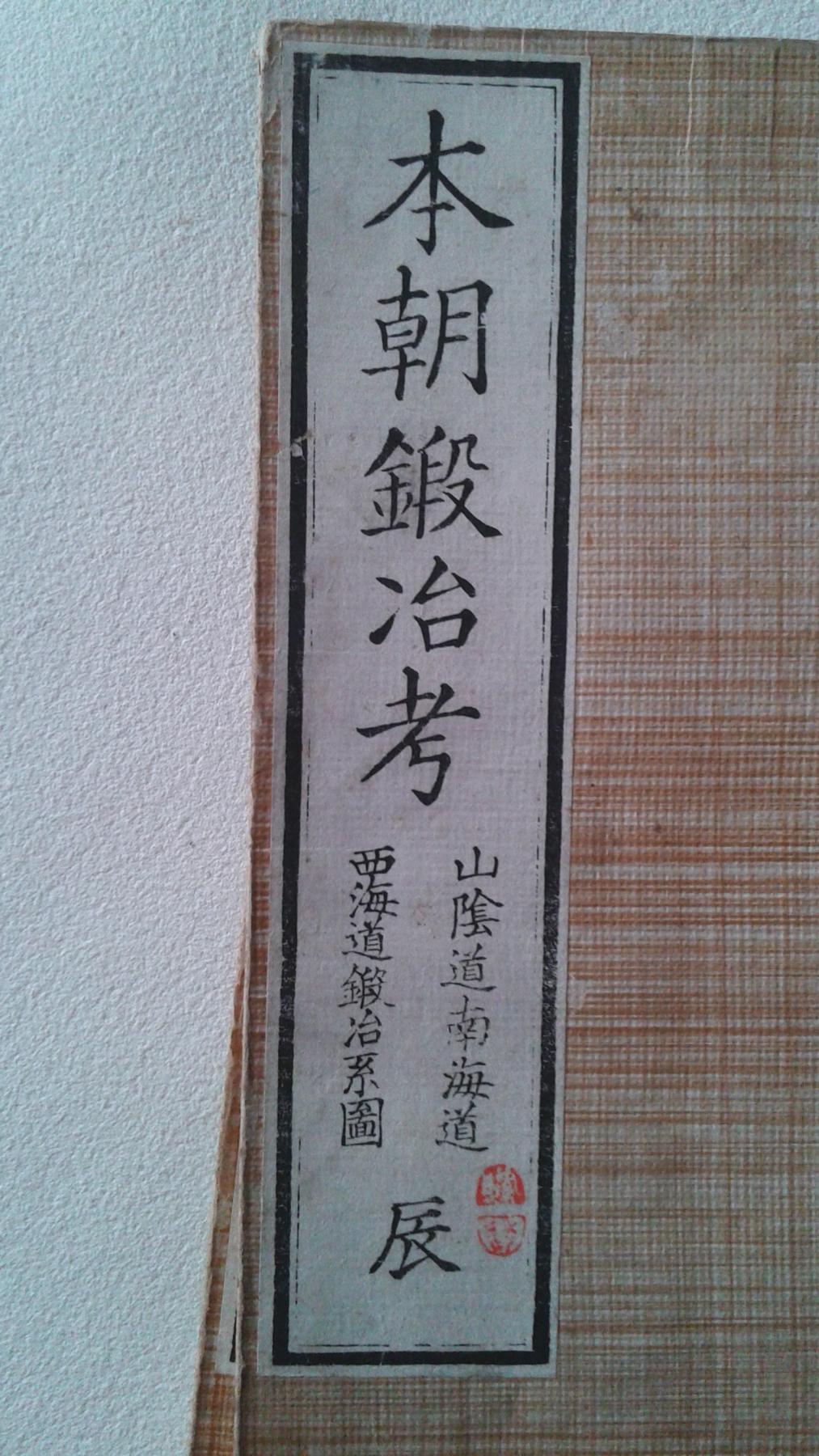
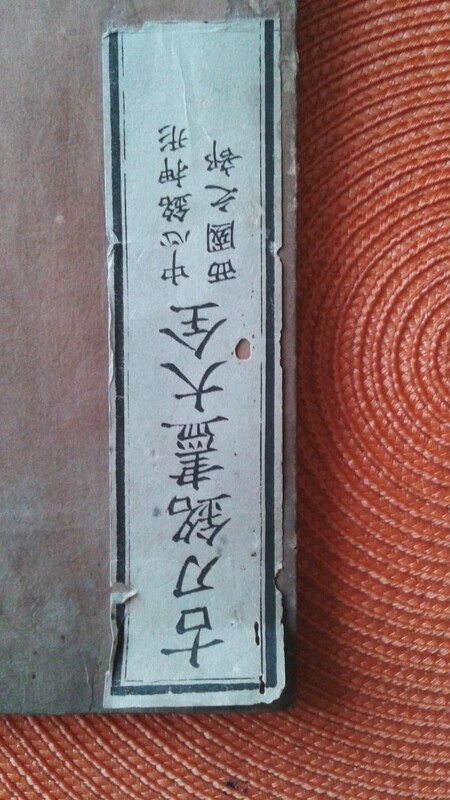
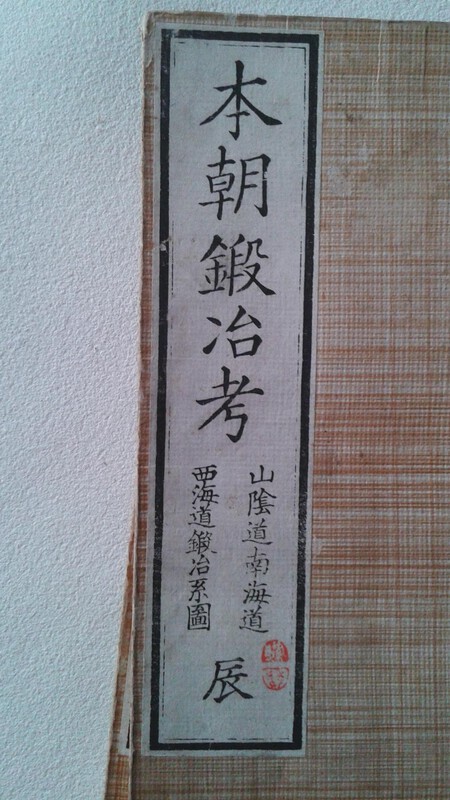
bonjour. je suis bien incapable de traduire l'intitulé de ces livres . j'ai besoin d'aide . merci d'avance . rodriguez .
-
bonjour. merci pour ces info. rodriguez.
-
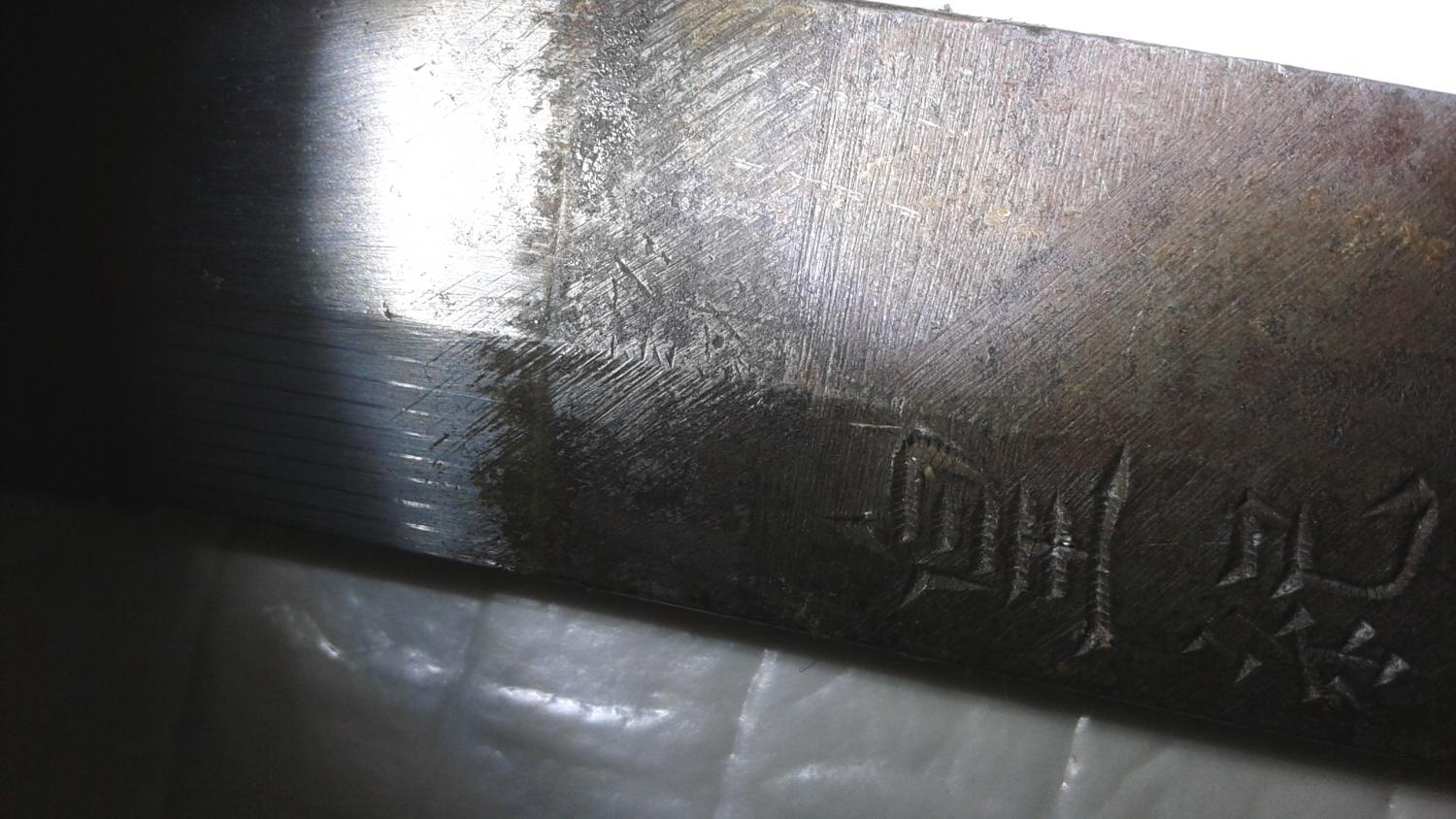
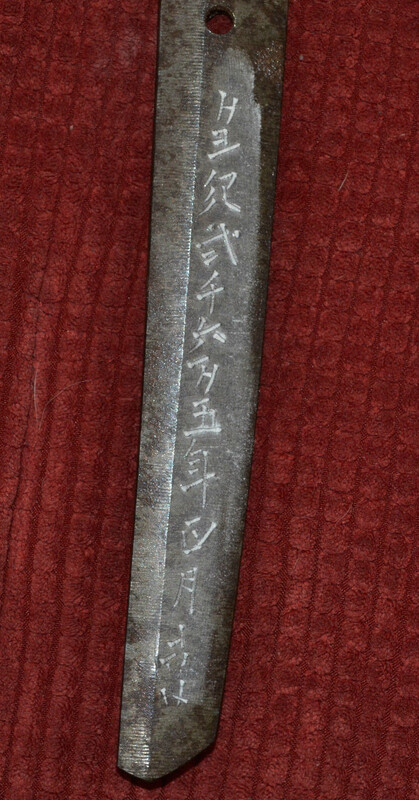
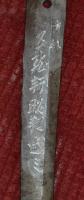
bonjour. je n'arrive pas a traduire ce mei . les kanji sont étranges .
-
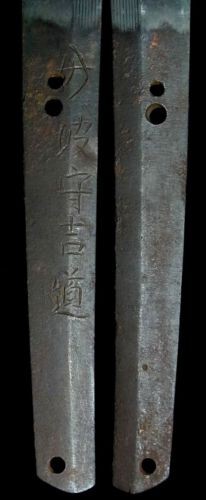
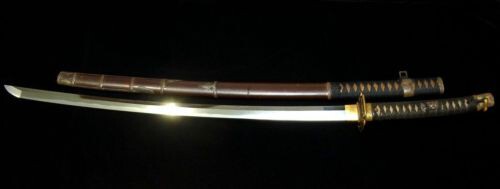
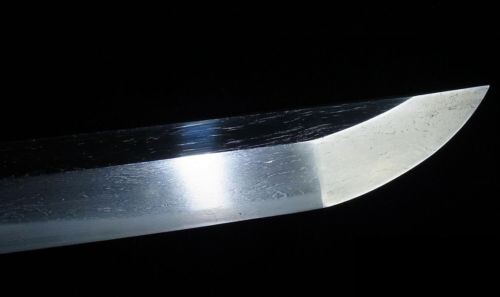
Moi qui ai besoin d'informations sur cette signature. Je ne peux pas faire de cette barre qui peut être sur ce kanji. La branche de Kyoto (Kyo-Tanba) écrivit la course de point "kami", soulignant la position de neuf à onze heures, tandis que la branche d'Osaka (Osaka-Tanba) a écrit le même score de la course à la position six heures. Je me demande si un élève a été en mesure de signer? Cordialement. rodriguez

-
ok thank you .
-
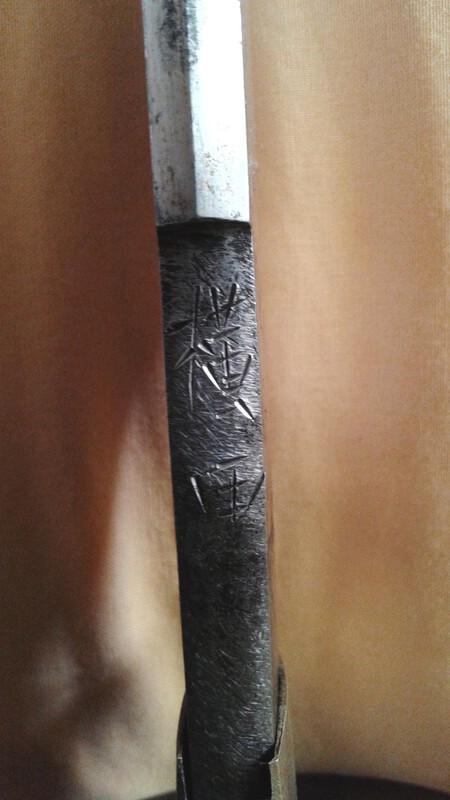
Toshimasa. I can not seem to translate the kanji as under the habaki. Could you help me? Rodriguez.

-
hello. you mean by kodai? best regards. RG bonjour. que voulez vous dire par kodai ? cordialement . RG .
-
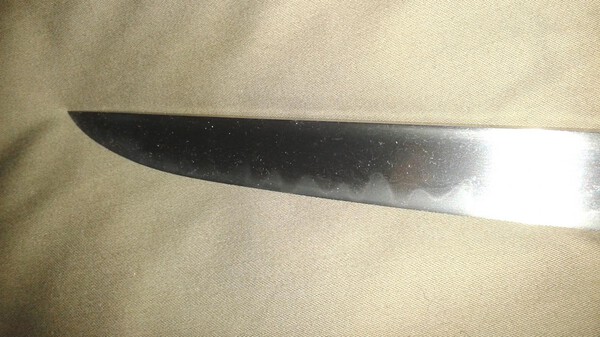
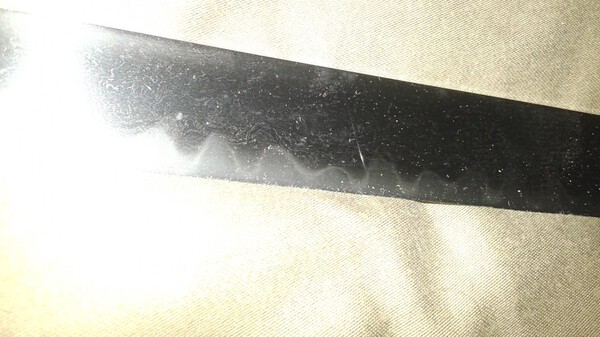
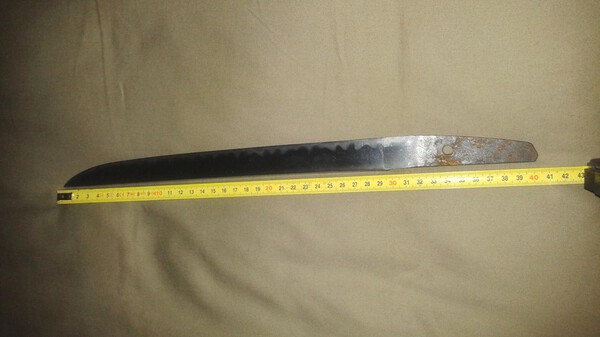
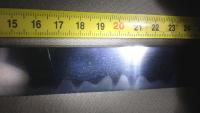
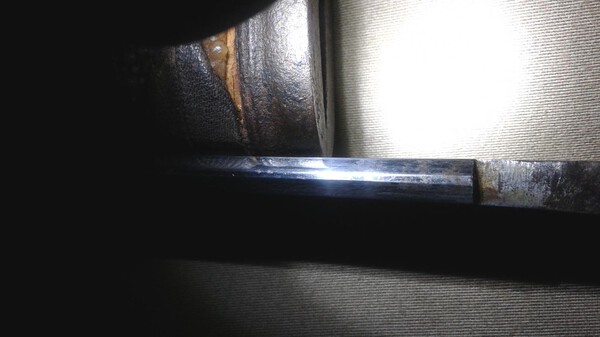
Bonjour. Que pensez-vous de tanto CE. Je me Déjà fait mes Propres Idées, Mais je ne en peux pas get date de juin, Je Pense Que is du XVIe siècle. Que pensez-vous des mei. cordialement. rodriguez .






-
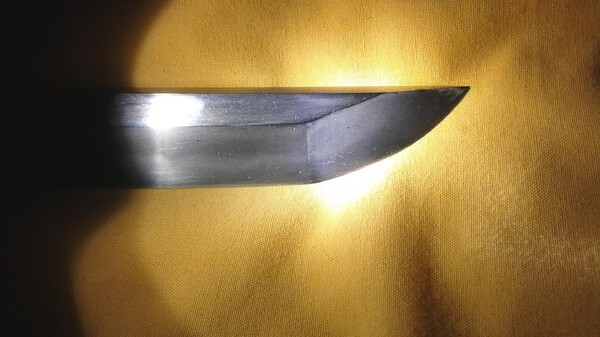
Wakizashi dans shirasaya. Signé: "Inoue Shinkai." En vieux vernis, de petites rayures superficielles et l'oxydation. Garantie contre hagire. Nagasa: 47,0 cm. Sori: 0,5 cm. Moto-Haba: 2,6 cm. Saki-Haba: 1,7 cm. Moto-gasane: 0,7 cm. Saki-gasane: 0,5 cm.Wakizashi dans shirasaya. Signé: "Inoue Shinkai." En vieux vernis, de petites rayures superficielles et l'oxydation. Garantie contre hagire. Nagasa: 47,0 cm. Sori: 0,5 cm. Moto-Haba: 2,6 cm. Saki-Haba: 1,7 cm. Moto-gasane: 0,7 cm. Saki-gasane: 0,5 cm. Wakizashi in shirasaya. Signed: "Inoue Shinkai." In old polish, minor surface scratches and oxidation. Guaranteed against hagire. Nagasa: 47.0 cm. Sori: 0.5 cm. Moto-haba: 2.6 cm. Saki-haba: 1.7 cm. Moto-gasane: 0.7 cm. Saki-gasane: 0.5 cm. could you let me know the nature of this wakisashi:I think the hamon is Gunome midare, The sori is chu-kissaki zori and is often done in an extended style. Generally the blades are iori-mune. Jitetsu: ko-ko-Itame and Mokume is a tighter and clearer level. Chikei is mixed in and ji-nie is thick and strong. boshi the continuous shape hamon with a short kaeri. Kanbun of 12 (1672), he signed INOUE SHINKAI. I am far from reality? best regards. RODRIGUEZ




-
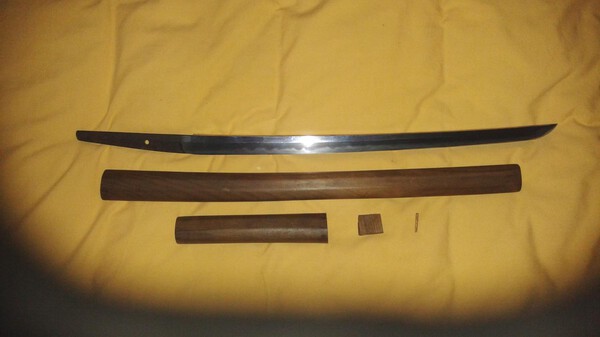
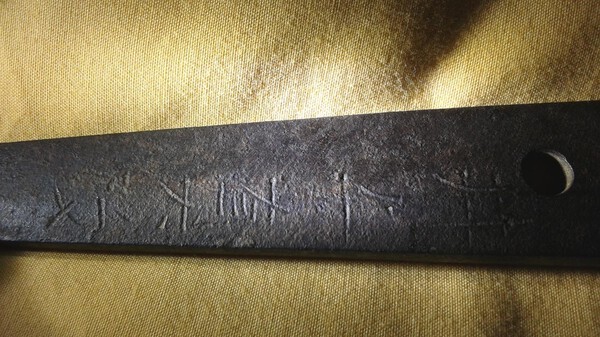
good morning. I would like to have an opinion on this blade because I have taken the liberty to fly some technical features. 920g weight Size: Length 34.1 "86.5cm Length of the blade 21.9 "55.7cm Sori, blade curvature 0.5 "1.2cm Width of the blade, at the motokasane habaki 1.2 "3cm Age: MUROMACHI, to around 1460. I'm no expert but I found some matches with one of the schools YAMASHIRO. The hada is masame hada with some chikei and Utsuri. The hamon is suguha, Gunome midare or koshi-no-hirata midare with activity yaki kusure. The nakago is Mumei. This blade is the period MUROMACHI.