rodrig4
-
Posts
148 -
Joined
-
Last visited
Content Type
Profiles
Forums
Events
Store
Downloads
Gallery
Everything posted by rodrig4
-
hello. here is a kakemono that has a signature on the back and I can’t make the link with the kakemono. Some help would be welcome. Thank you in advance and have a good day. RG.


-
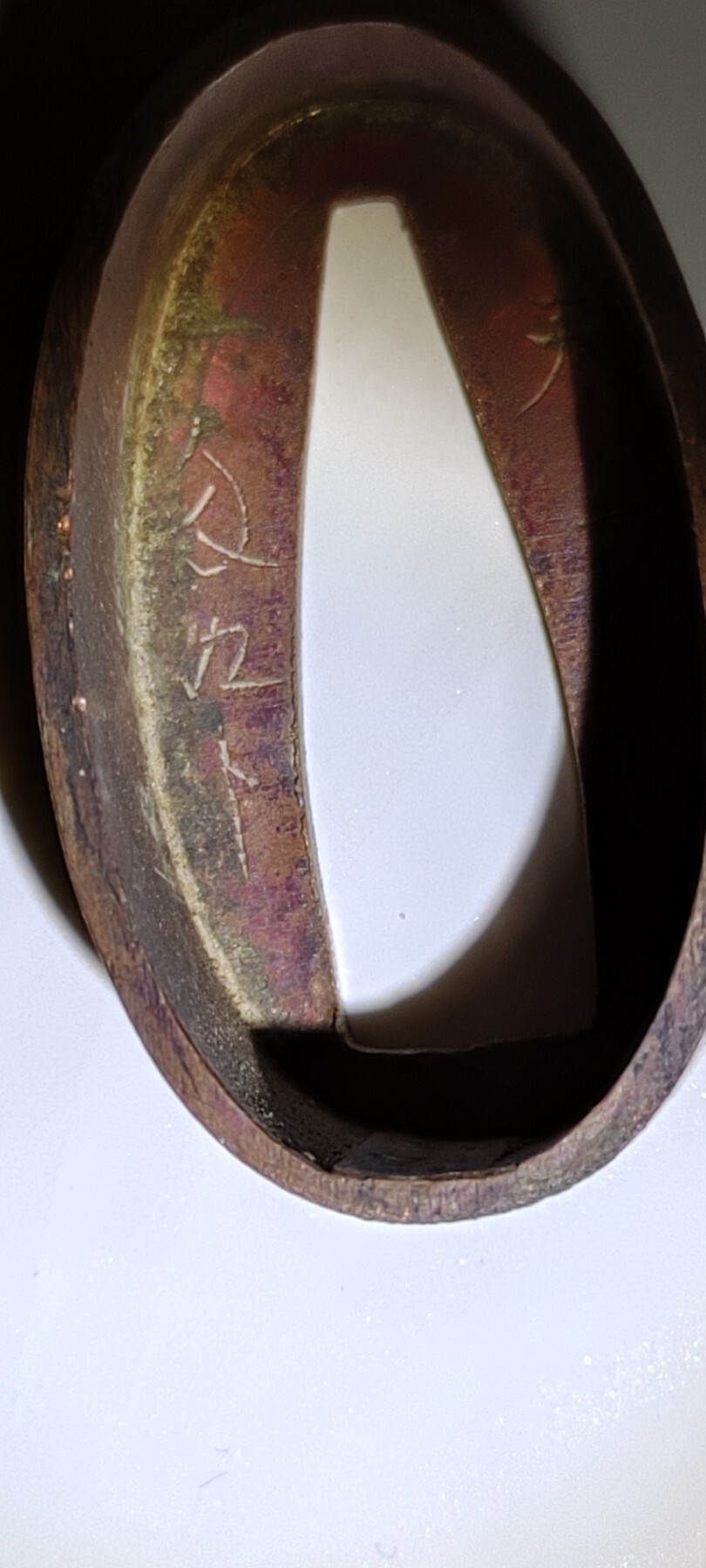
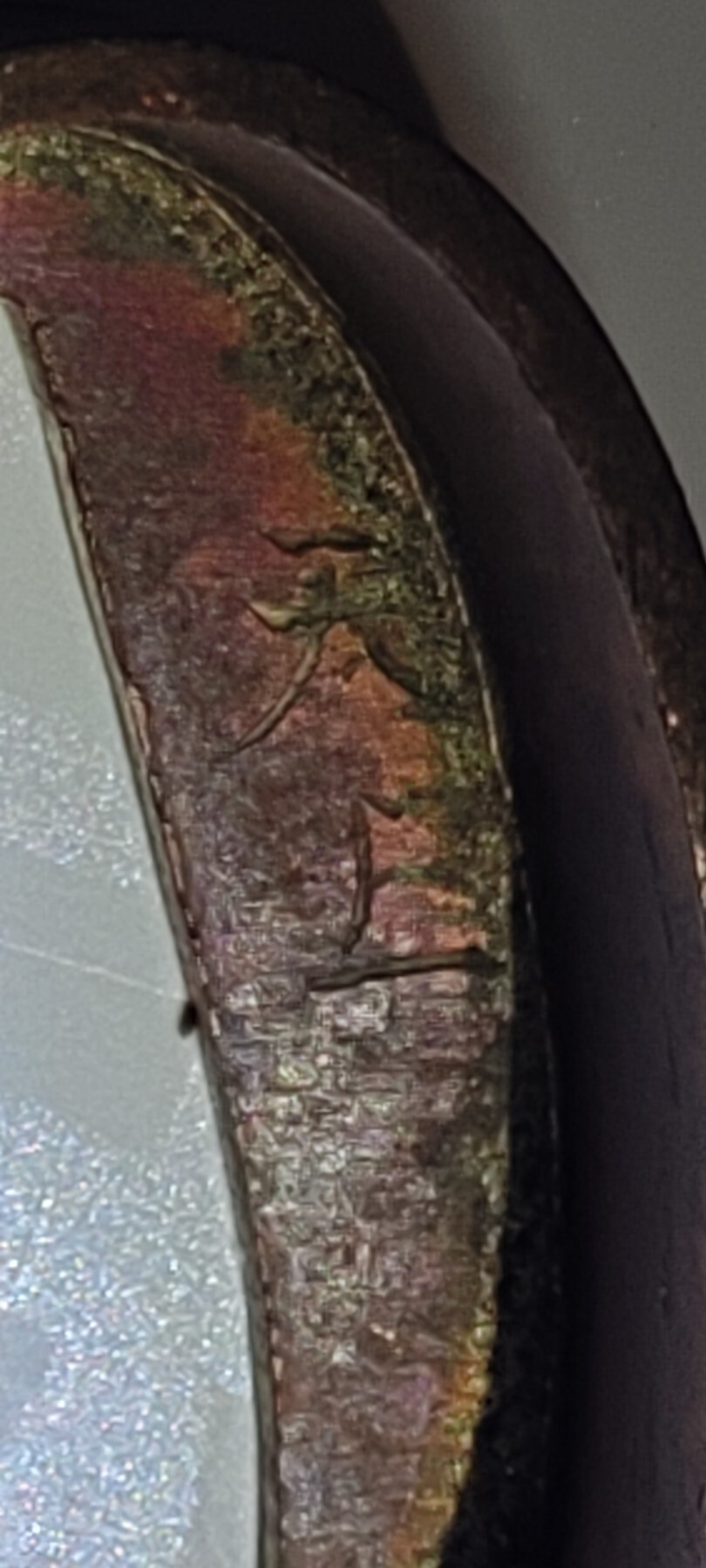
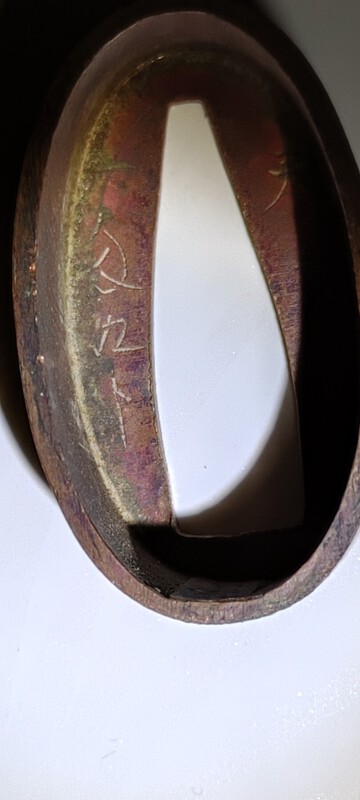
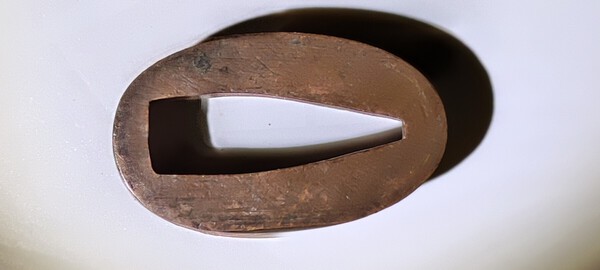
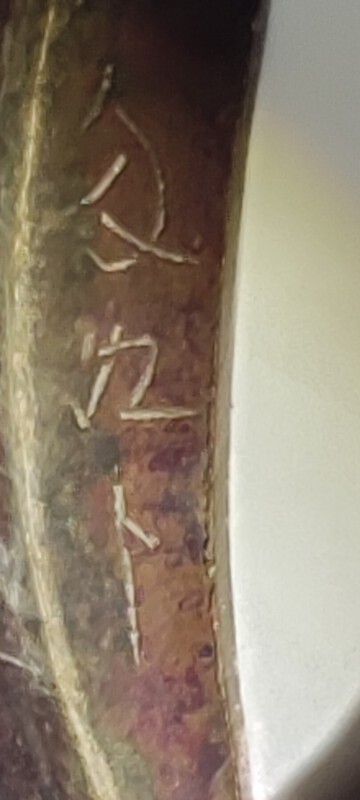
bonjour. je n'arrive pas à traduire tous les kanji de cette tsuba, cependant il me semble qu'à droite de la tsuba le dernier kanji semble être yuki. pourriez-vous me donner un coup de main pour cette traduction. merci d'avance et bonne journée. RG.

-
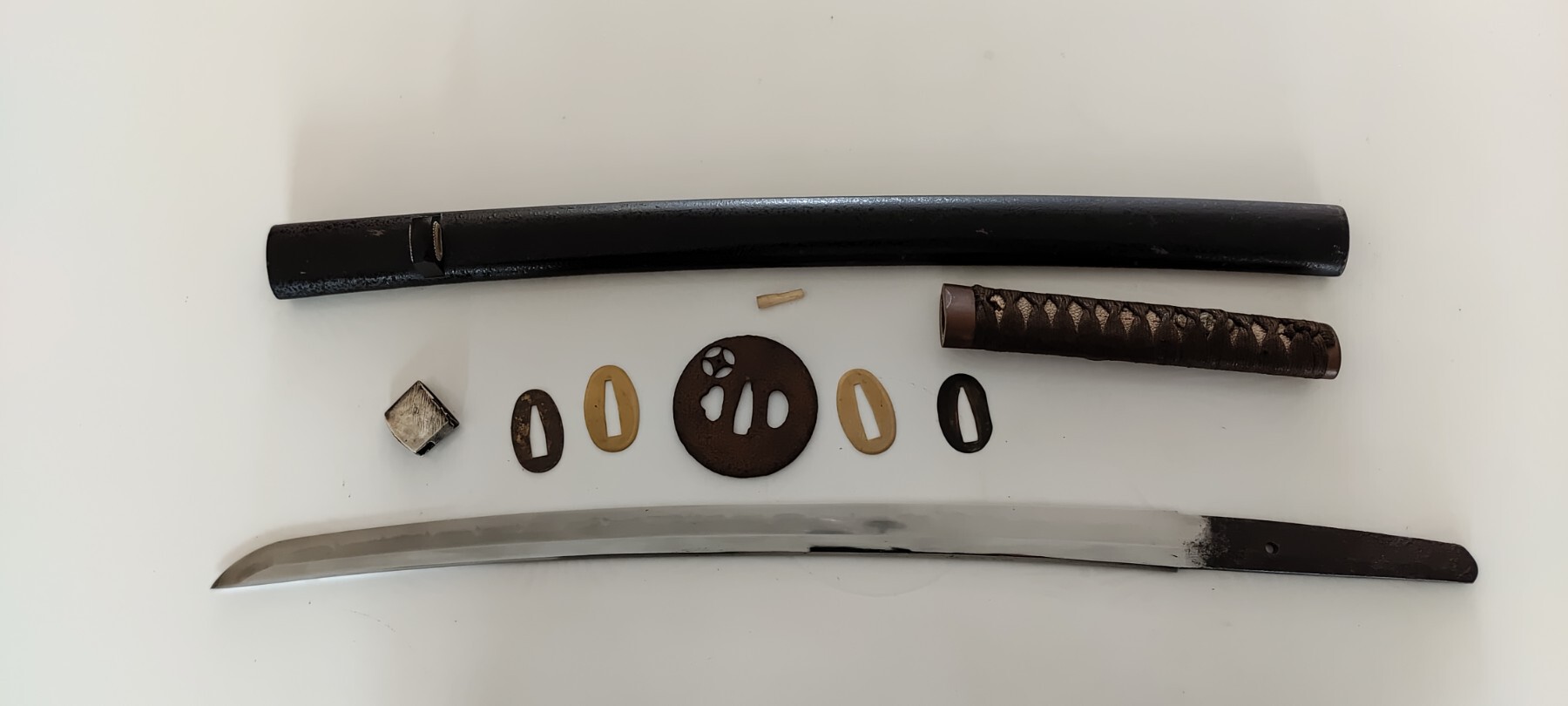
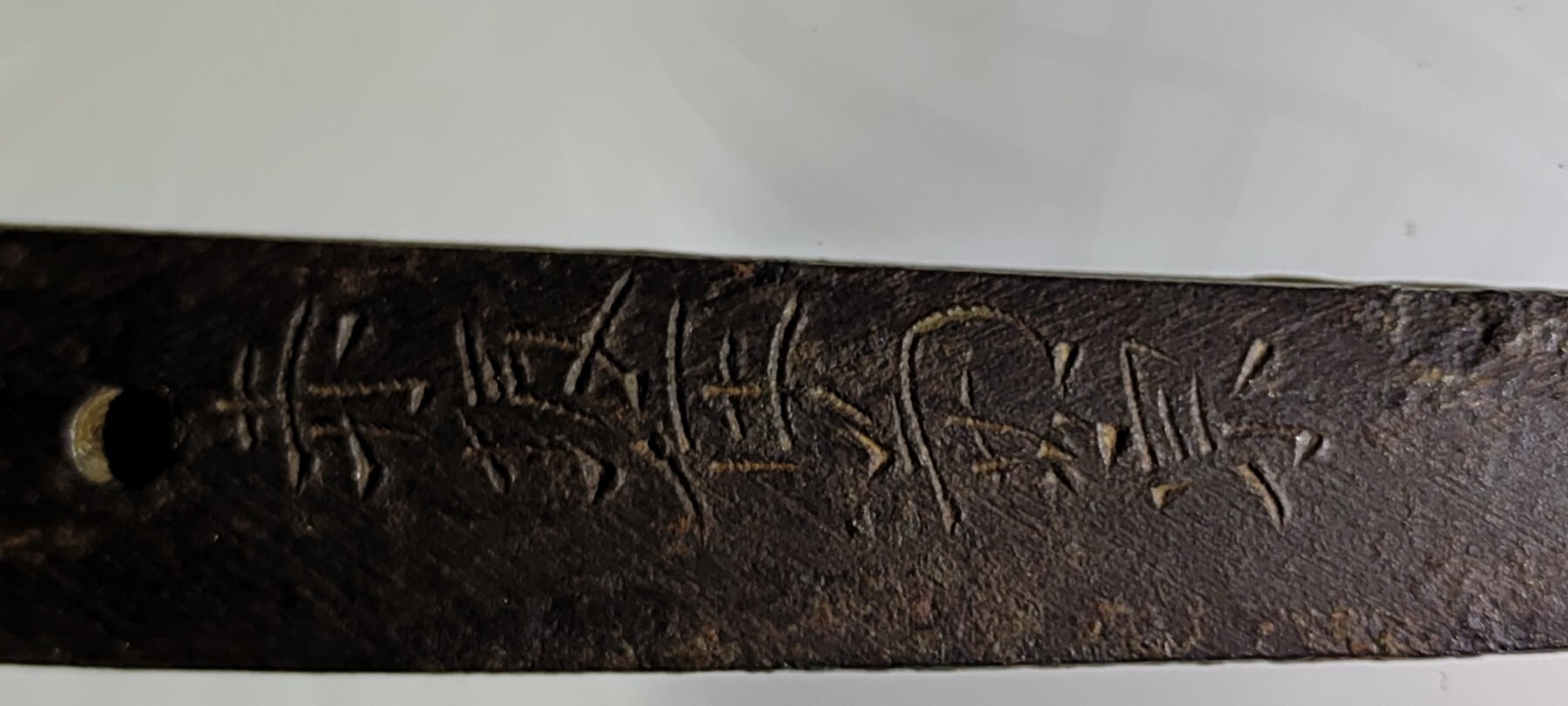
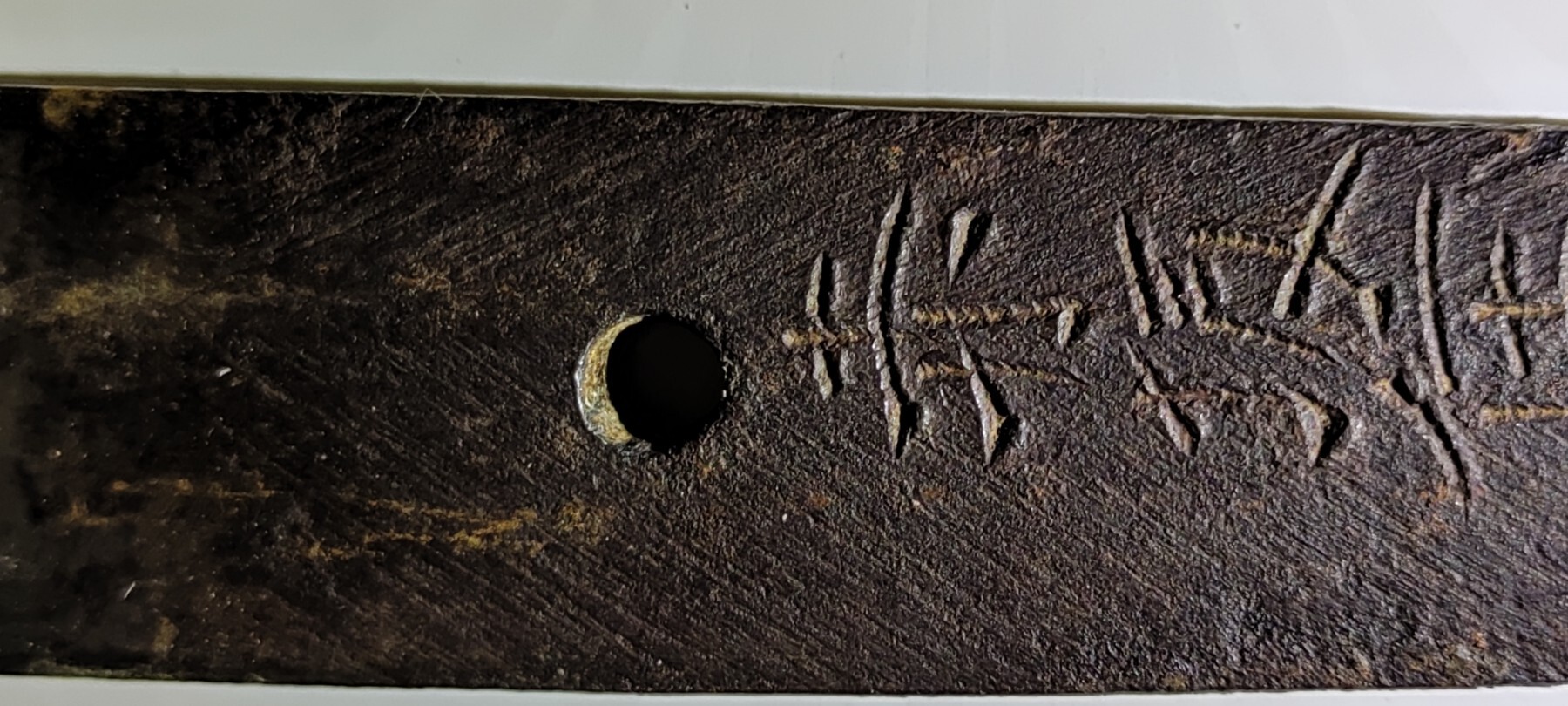
Wakizashi Signed:備州長船住康光 Bishu Osafune ju Yasumitsu.
rodrig4 replied to rodrig4's topic in Swords and Edged Weapons


-
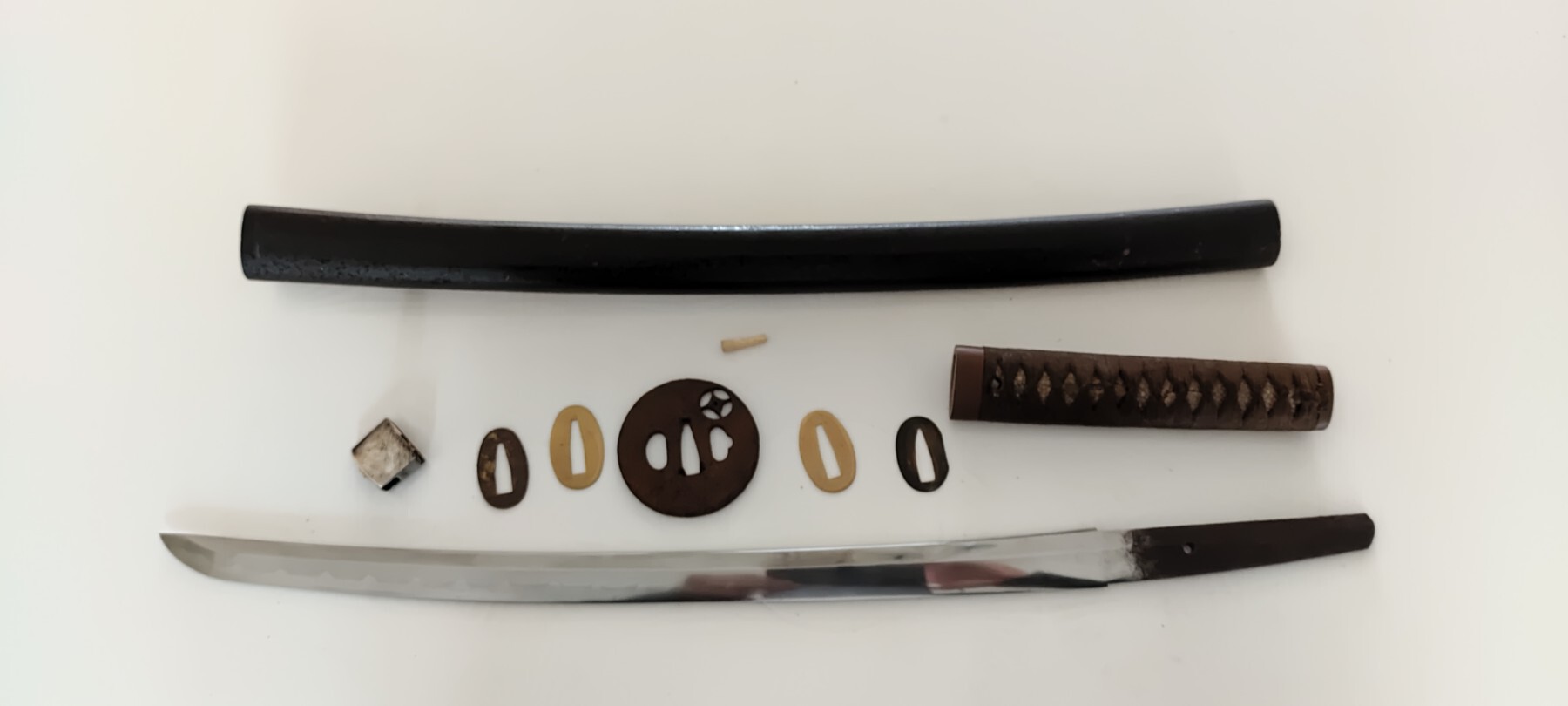
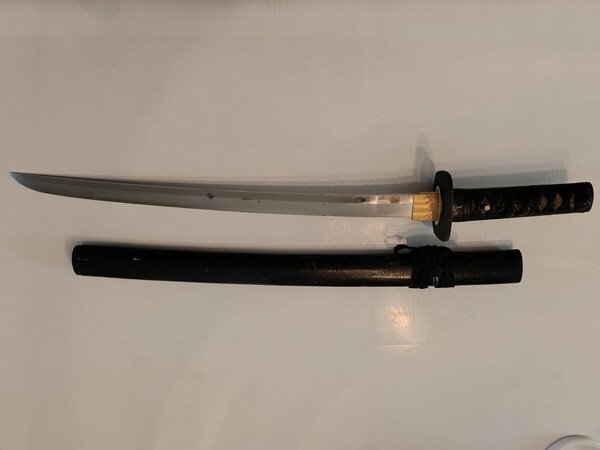
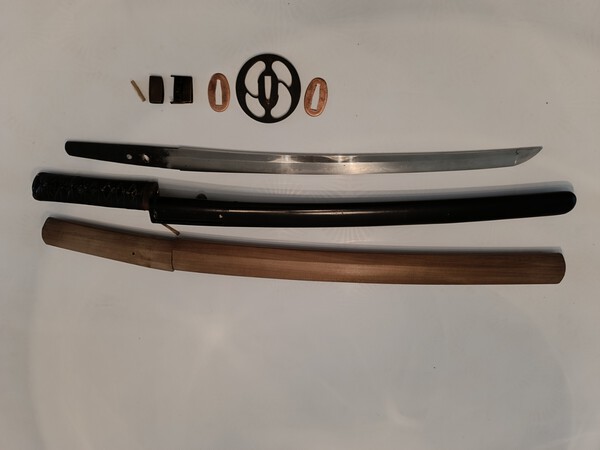
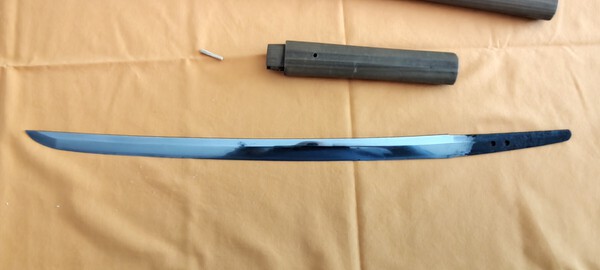
wakisashi signed 宇 多 國 宗(Uda Kunimune). Muromachi period. Samurai art __ Material: wood, iron, copper. Description of the article Weight: 687 grams. Total length:28.543 in (72.5 cm) Nagasa length: 18.622 in (47.3 cm) Nakago: 14.35cm Handle length: 17cm Sori (curve):0.276 in. (0.7 cm) Motohaba (width near the habaki):2,8cm Sakihaba (width near the yokote):19,5cm motoKasane (thickness at habaki):6,6cm Sakikasane (yokote thickness):4,8cm hada:mokume hamon:suguha with sunagashi Condition: Very good (antique damage) fuchi and kachira are from the EDO period. kitae kizu. PRIX 1000 EUROS.





-
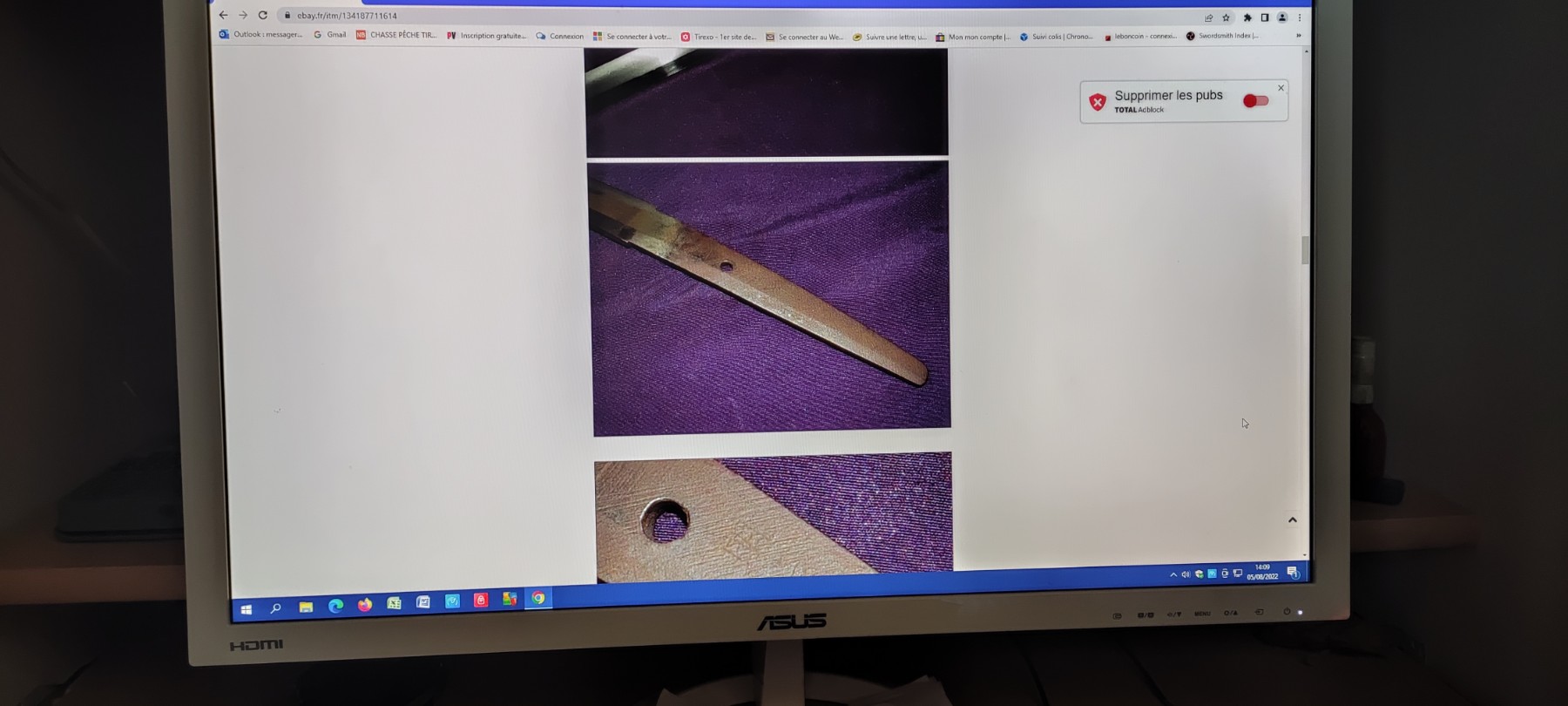
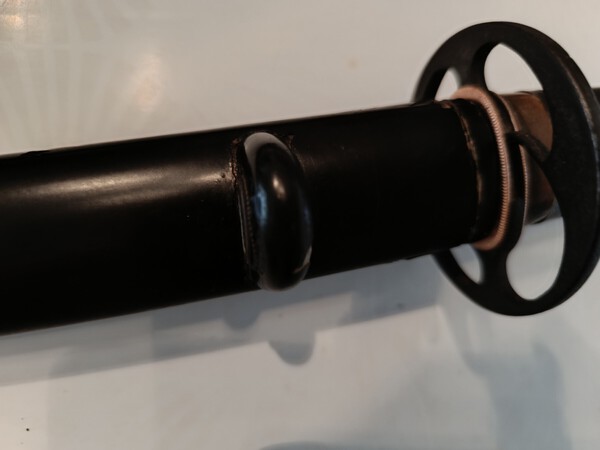
Caractéristiques de l'objet matériel : Tamahagane Original/Reproduction: Antique Original Région d'origine : Japon Description de l'objet fournie par le vendeur Description de l'objet fournie par le vendeur Wakizashi Signed:備州長船住康光 Bishu Osafune ju Yasumitsu. Nagasa 41.5 cm. Sori 0.9 cm. Motohaba 2.8 cm. Motogasane 0.6 cm. Sakihaba 1.9 cm. Sakigasane 0.4 cm. Poids de la lame : 387 g Poids monté : 687. Torii-zori (華表反) : la courbure est située au centre de la lame. Il est de type de sori le plus utilisé. Aussi appelé kyo, étant une référence à la tradition Yamashiro, qui employait principalement ce type de courbure prix:760 euros.



.thumb.jpg.9322df3a9e918ecc902dbd3a7a5b966e.jpg)

-
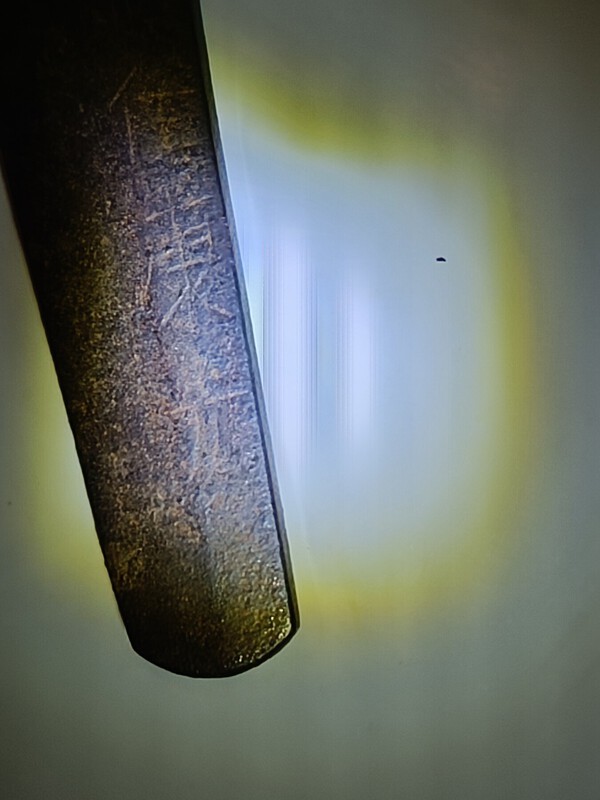
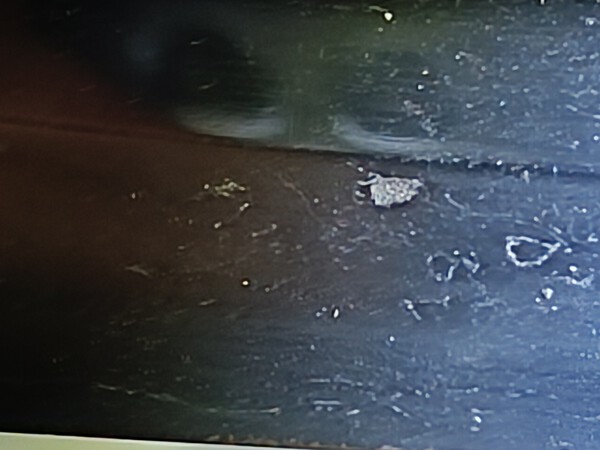
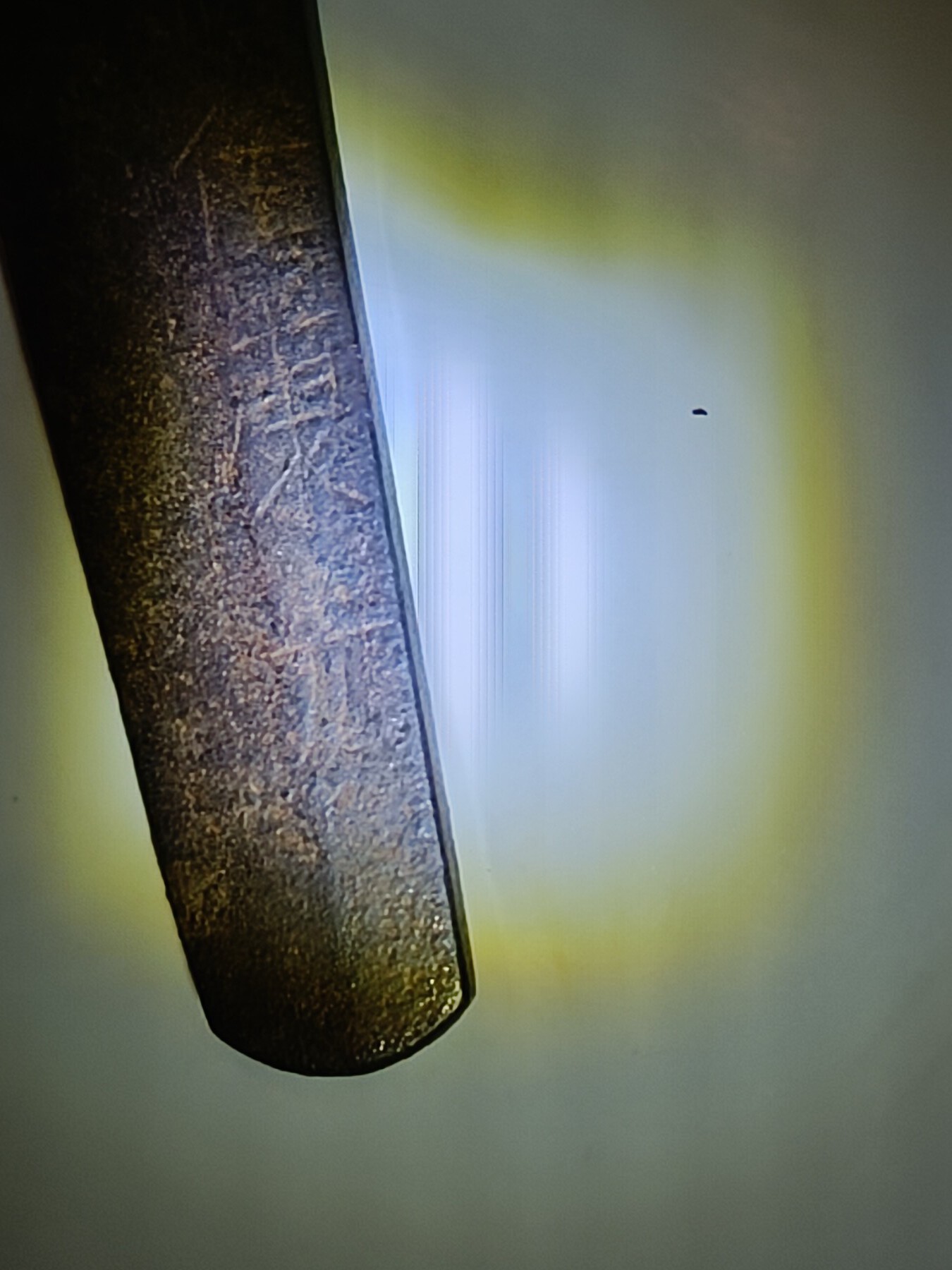
Good evening. Could you please translate these kanji because I think the signature is not complete. I have translated bishu and yasumistu well but I can’t find osafune. Thank you in advance and have a good evening. RG.





-
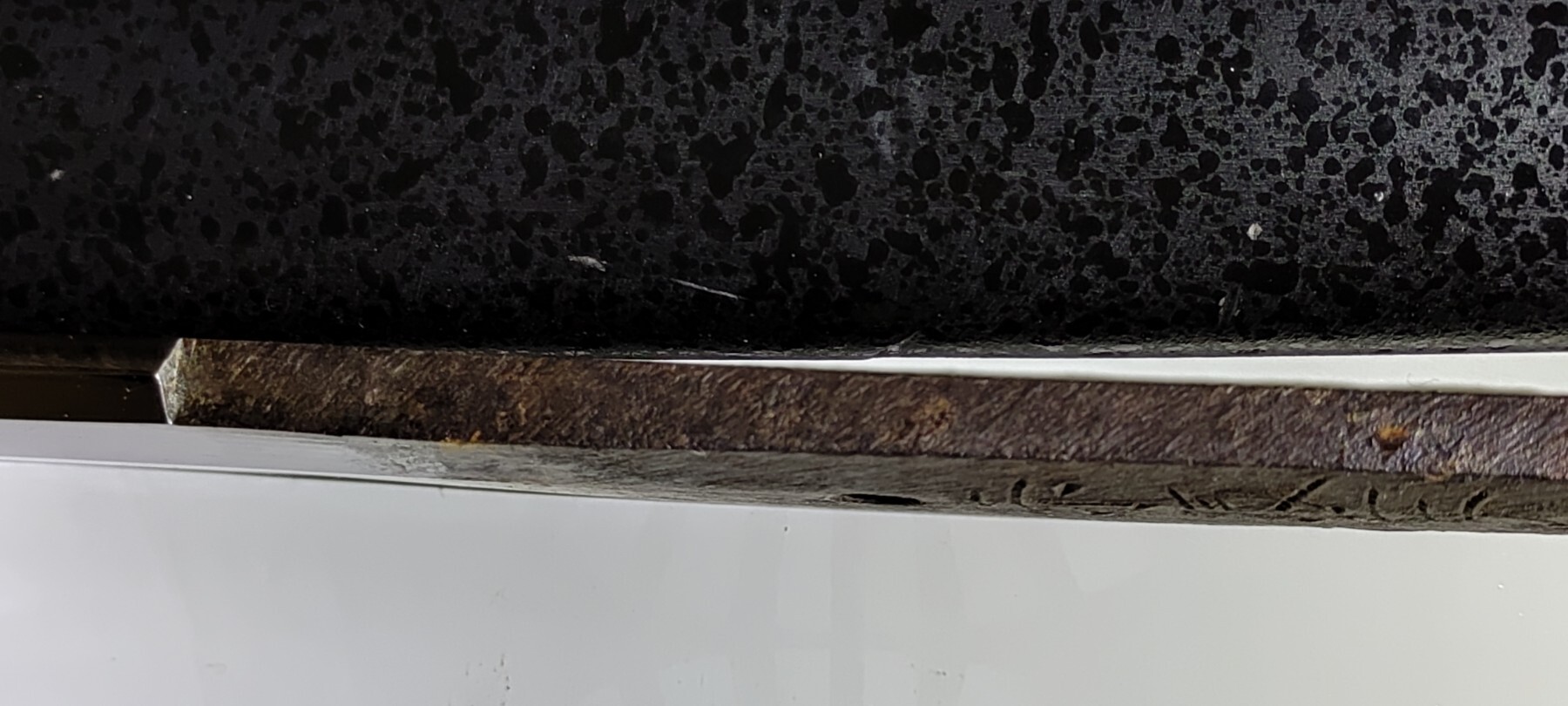
hello. This is my latest acquisition signed YASUMITSU. It seems to me that kanji are missing. could you confirm if it is a mei or a gimei. thank you in advance RG.



-
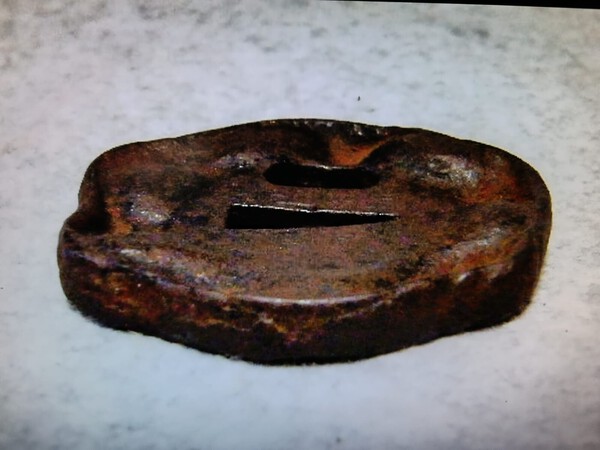
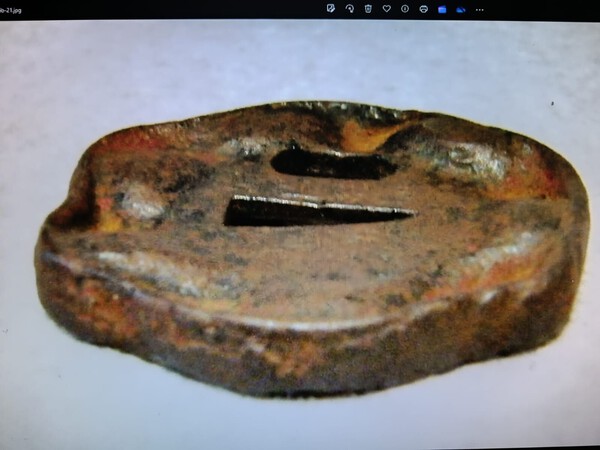
Hello. This kozuka is signed but it’s hard for me to» translate the second kanji. The first kanji seems to be KANE. Could you confirm. Thank you in advance and have a good day. RG.


.thumb.jpg.9fb712a521231d8bf672887bf4ec6d77.jpg)
-

-
on the other hand what place this blacksmith occupied in the scale of knowledge and knowledge of his art . had a special place or was it a blacksmith among many others.

-
bonbour. could you translate these kanji because I can not decipher , ormis the first two kanji of this tsuba signed myoshin. Thank you in advance and have a good day. RG.
-
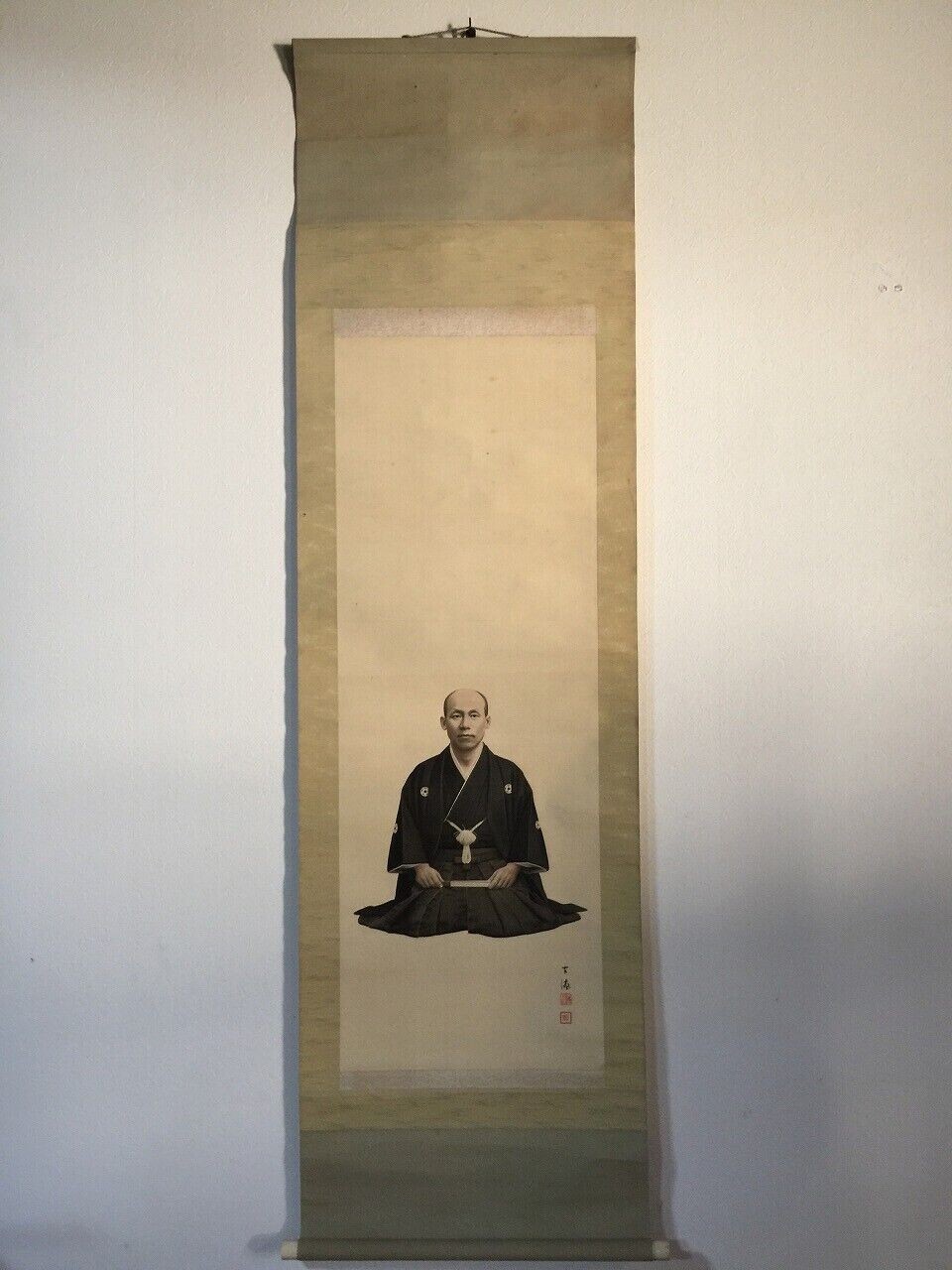
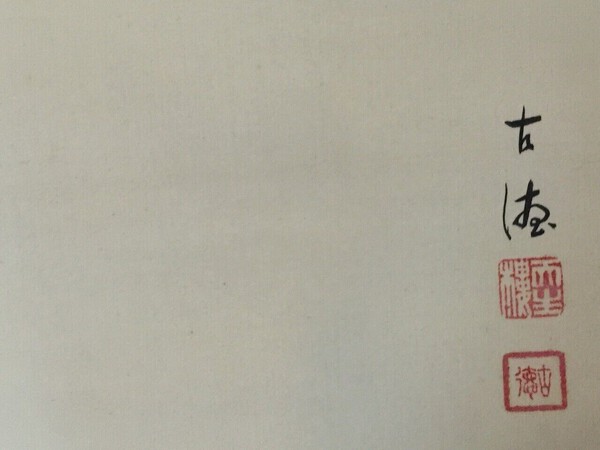
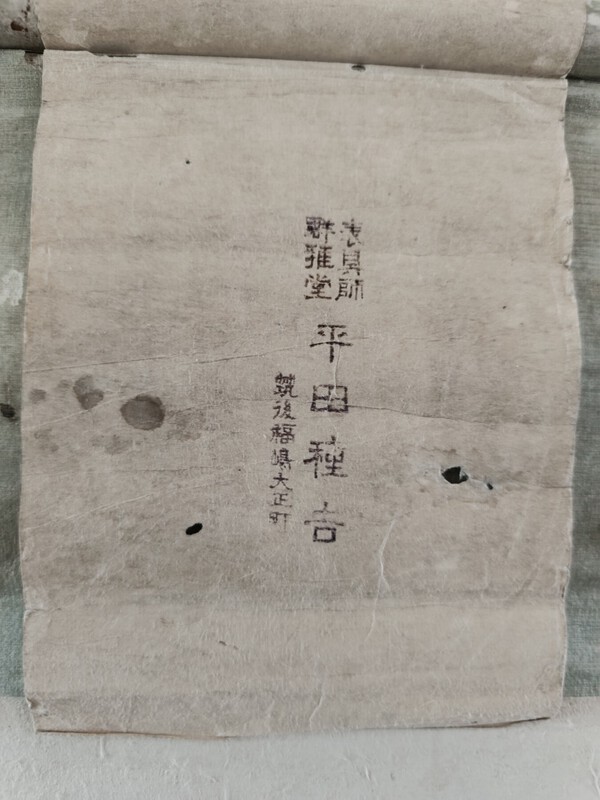
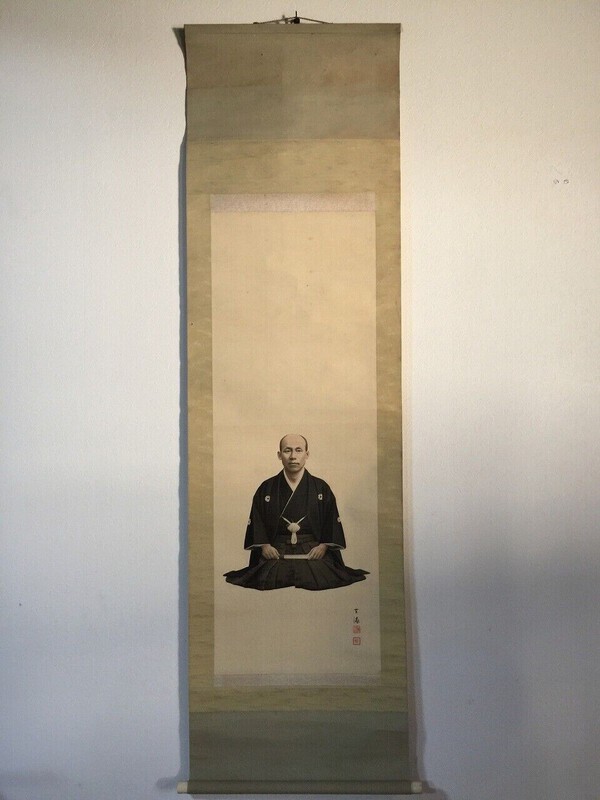
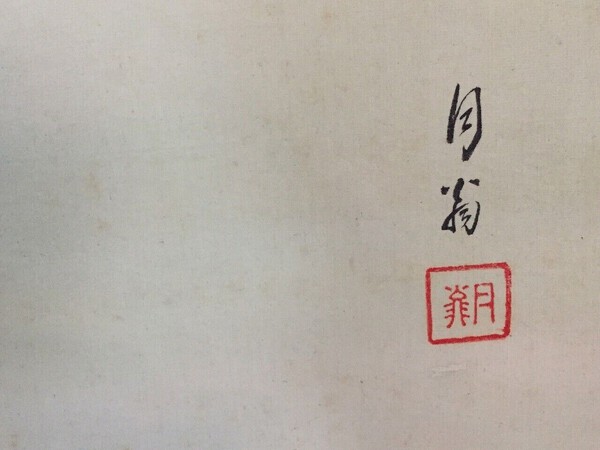
Good morning. This is a recent acquisition and I would like to understand what these kanji mean and this stamp that I present in these photos as well as this label. Main material: silk. Original/Reproduction: Vintage original Hand painting: printing. Region of origin: Japan Age: 1900-1940 Manufacturer: Japan Thanks in advance. R.G.
-
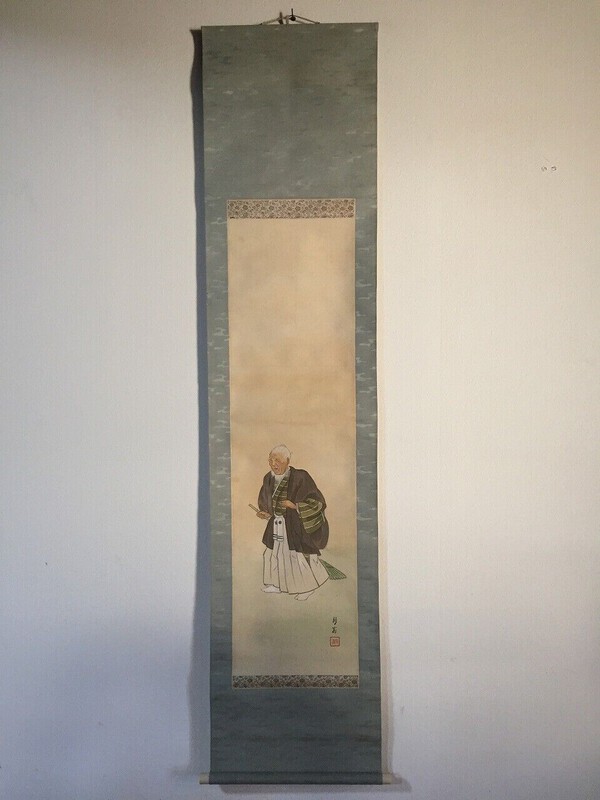
Good morning. This is a recent acquisition and I would like to understand what these kanji and this stamp that I present in this photo mean. Primary Material:Silk Original/Reproduction:Vintage Original Hand Paint:Print Region of Origin:Japan Age:1900-1940 Maker:Japan thanks in advance. RG.
-
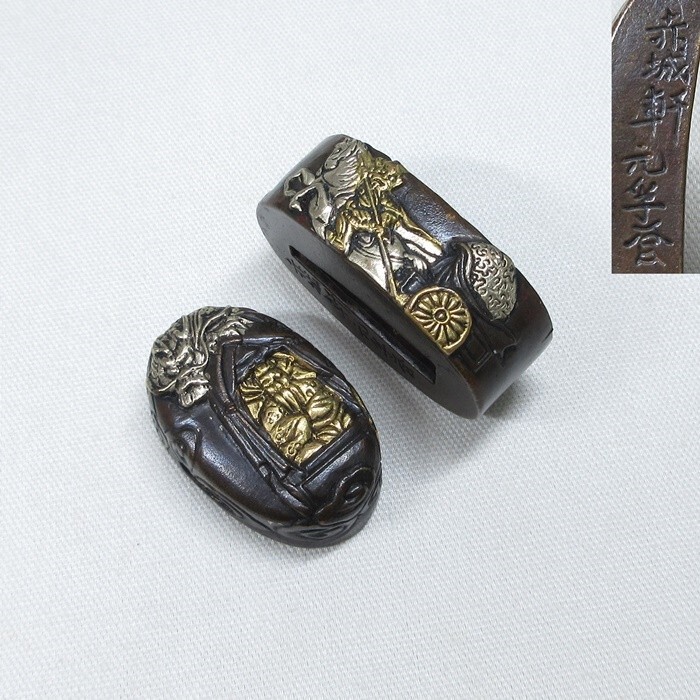
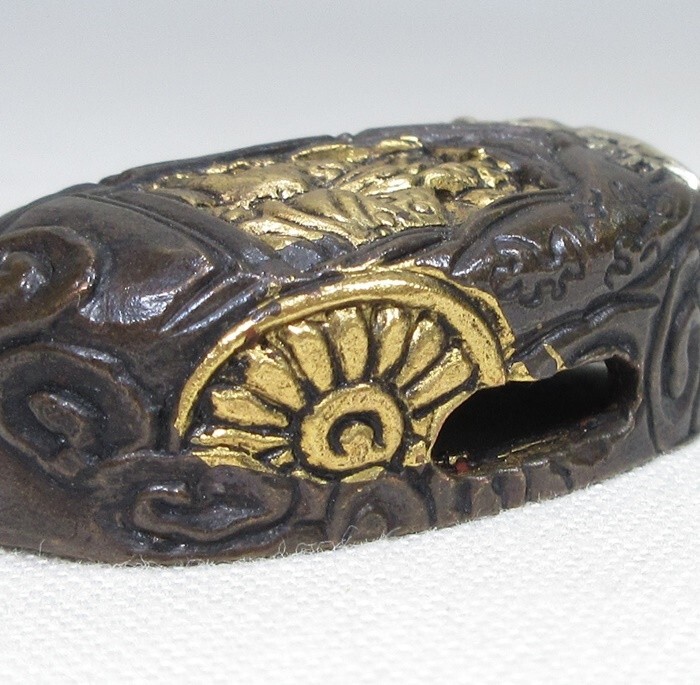
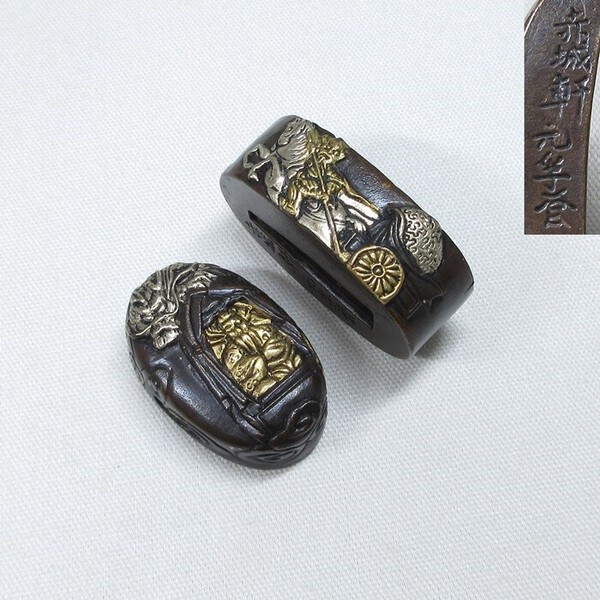
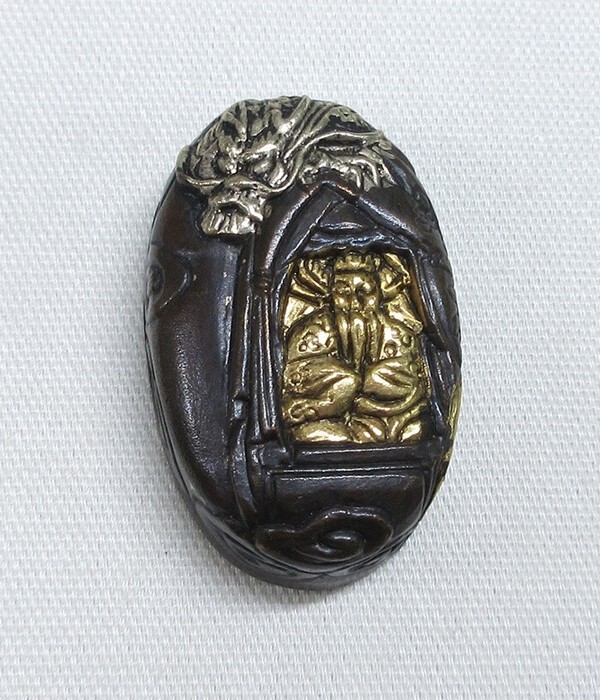
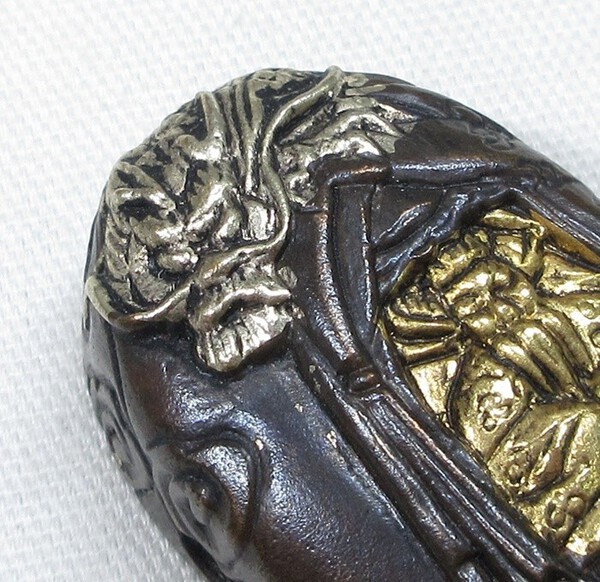
Good morning. here is this fushi and kashira set that I recently acquired. It is dated according to the seller from the MEIJI period. I decoded among the kanji of the signature a kane and a mitsu without being able to translate entirely. I thank you in advance if you can fix it. RG.
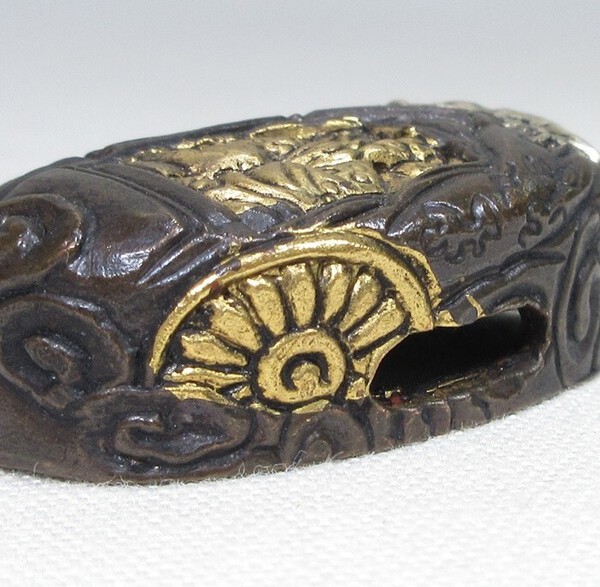
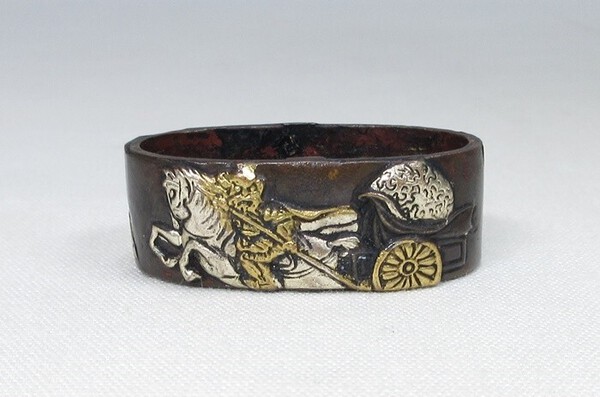
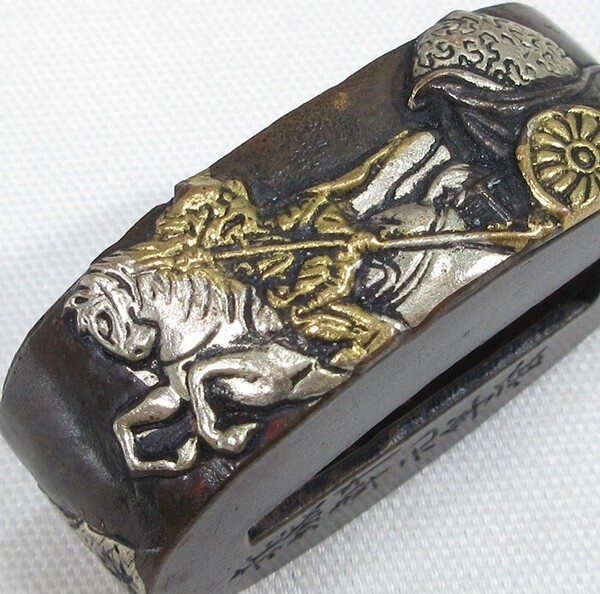
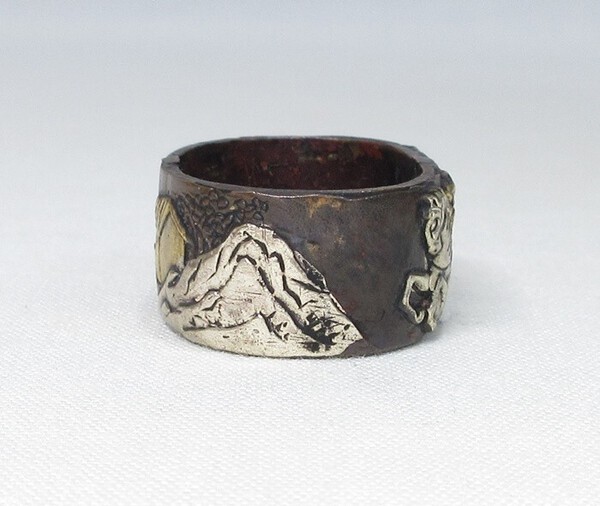
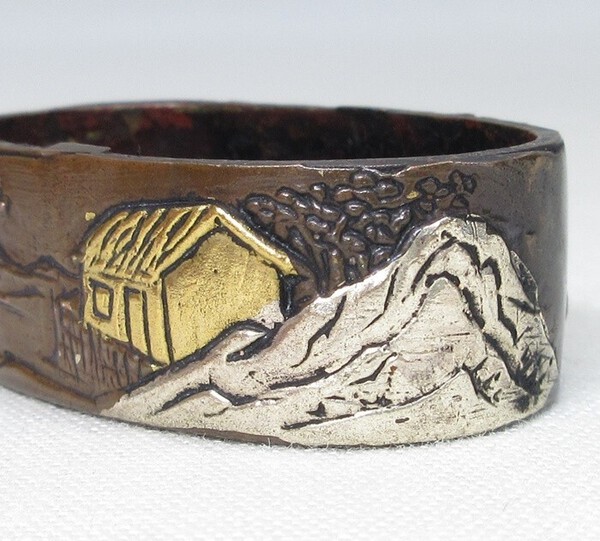
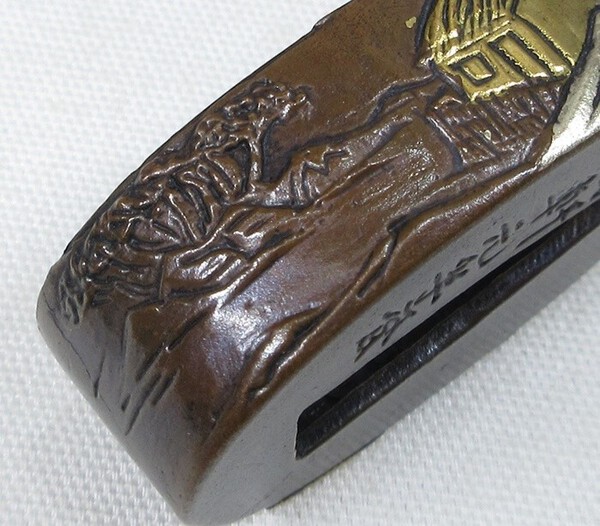
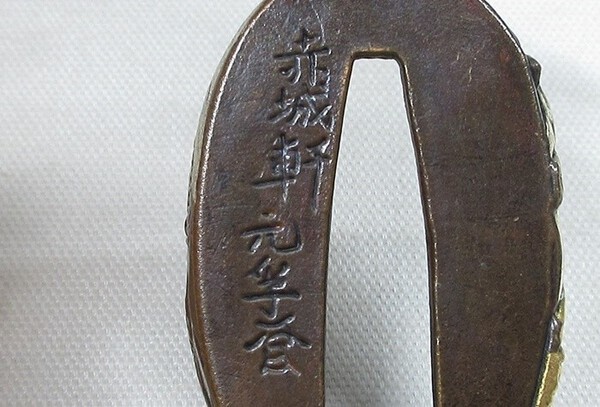
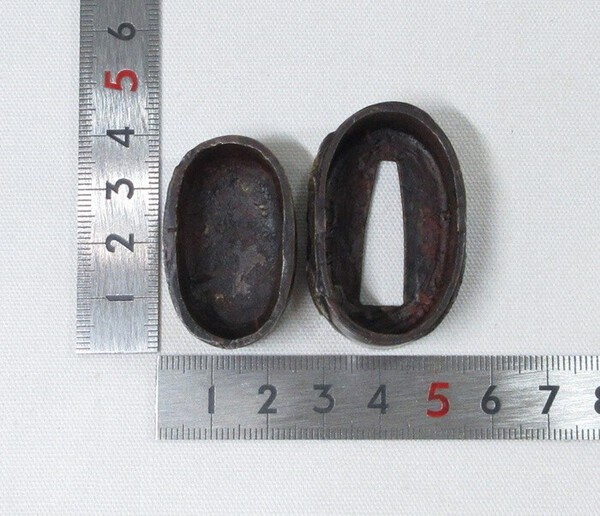
-
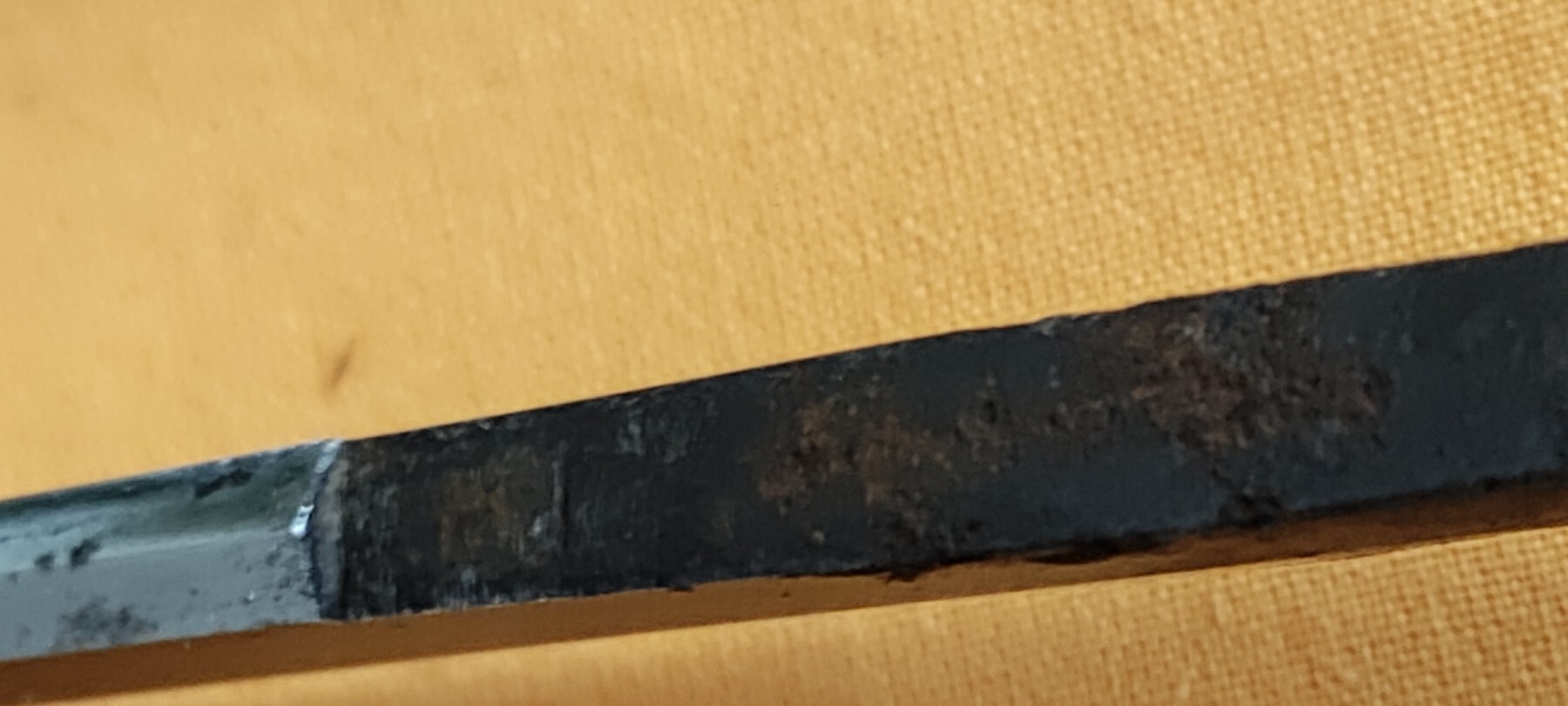
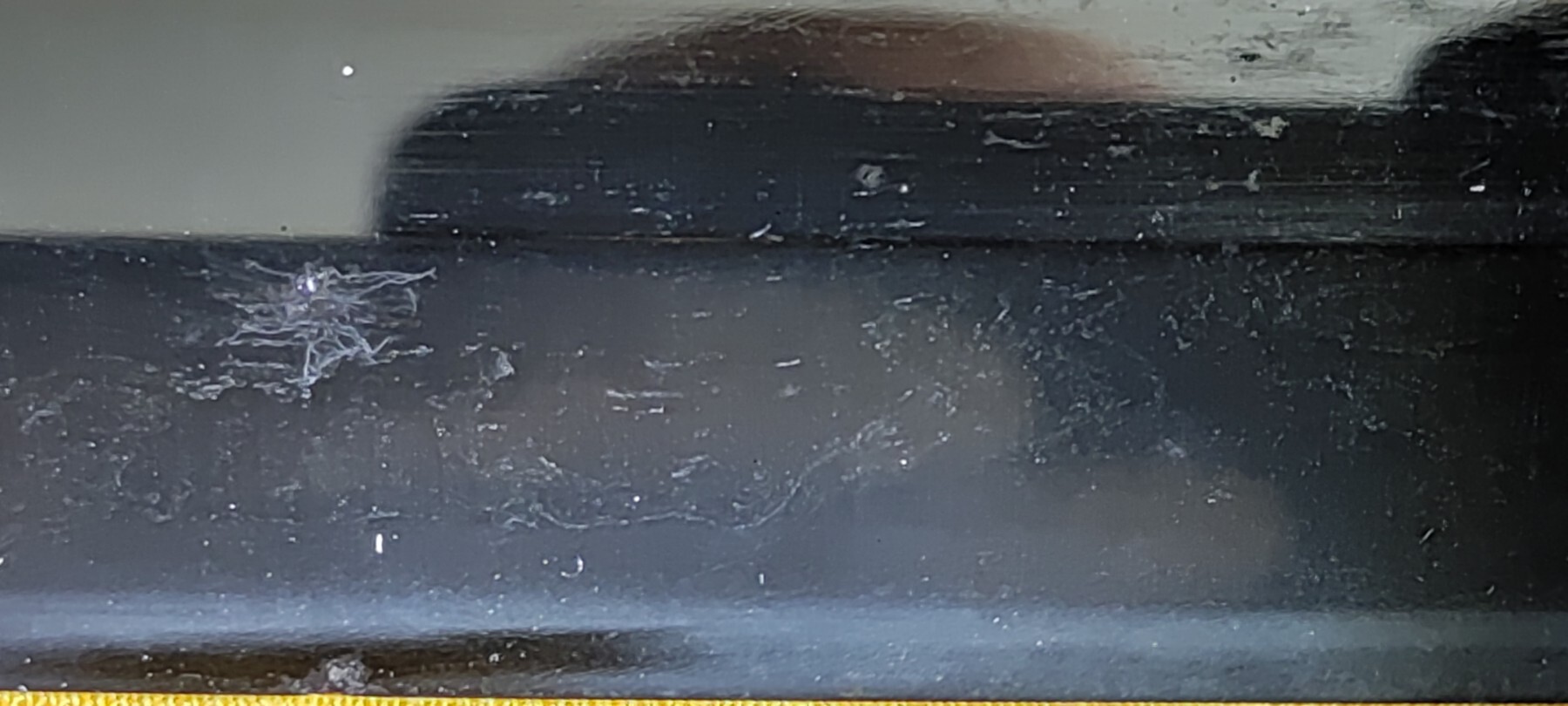
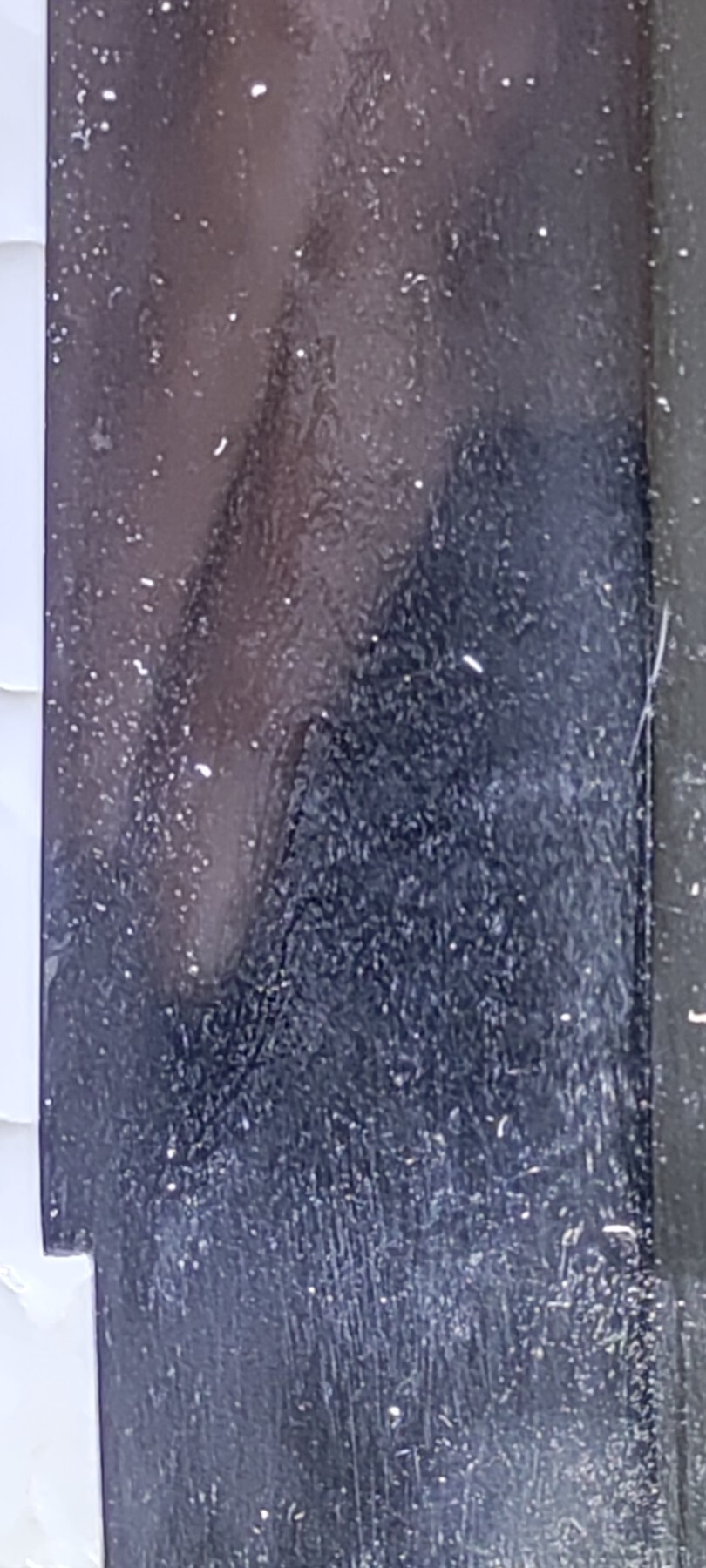
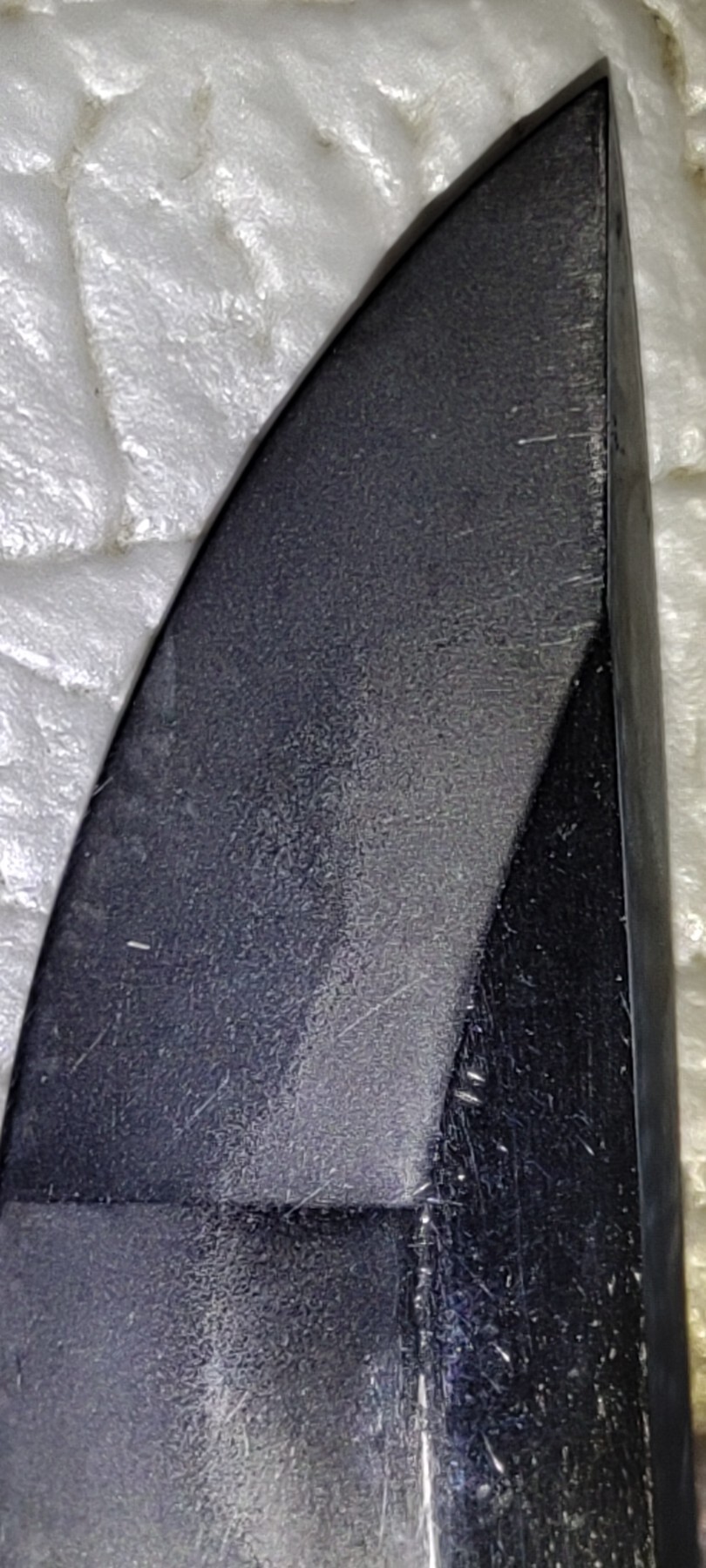
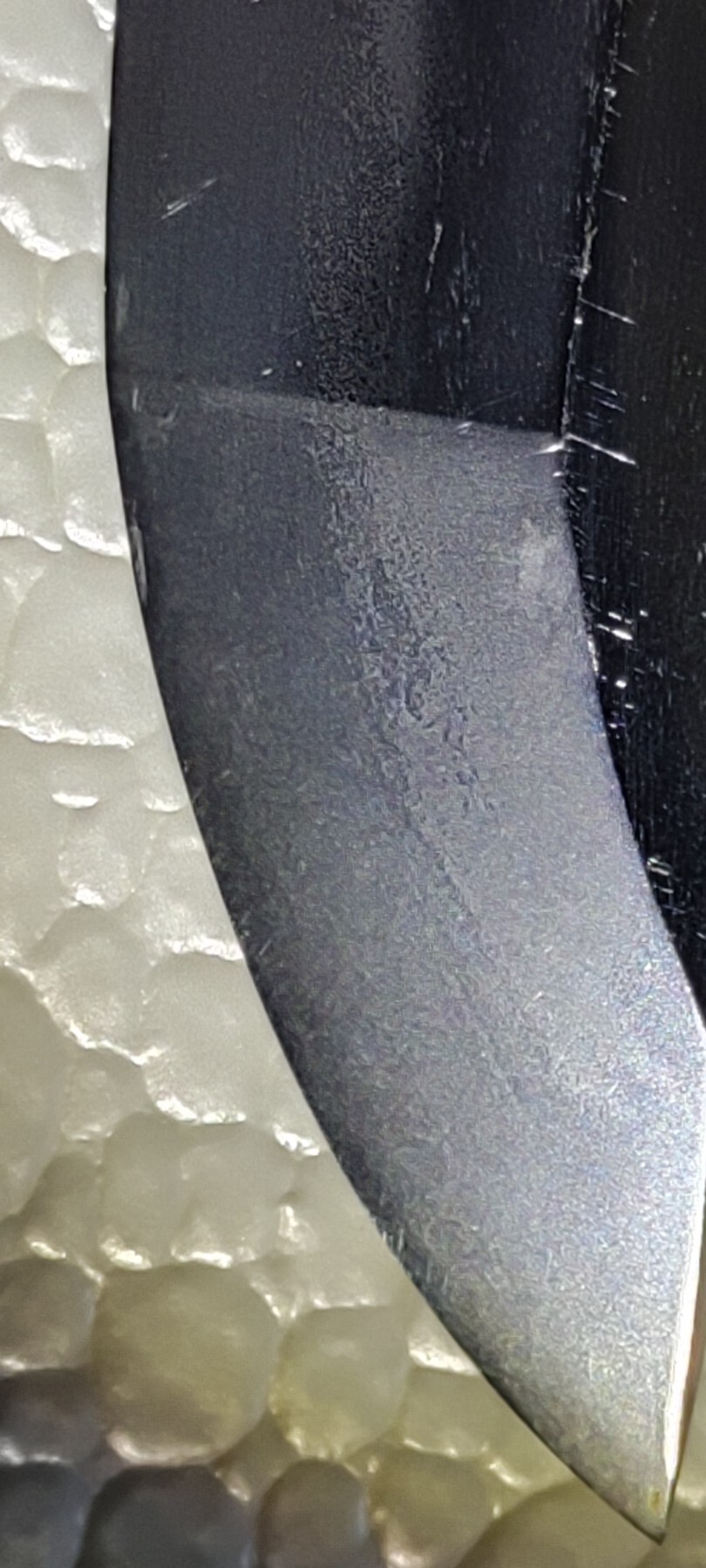
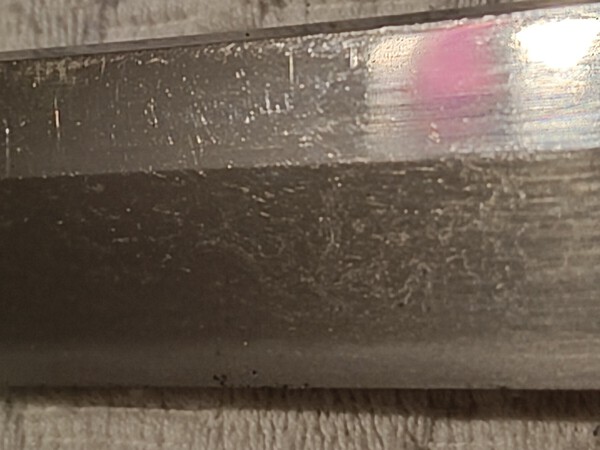
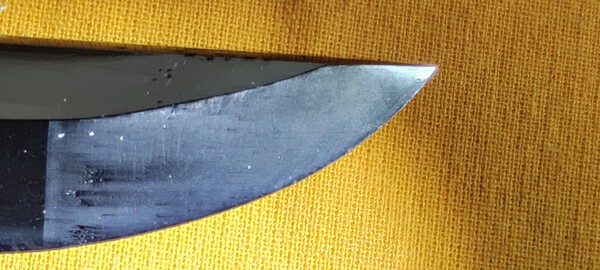
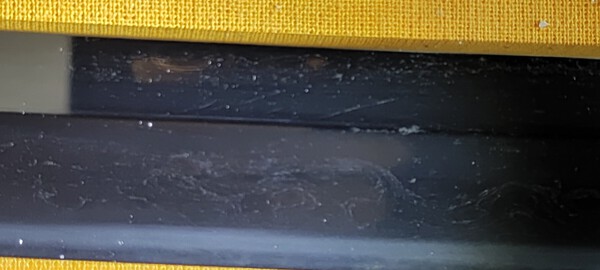
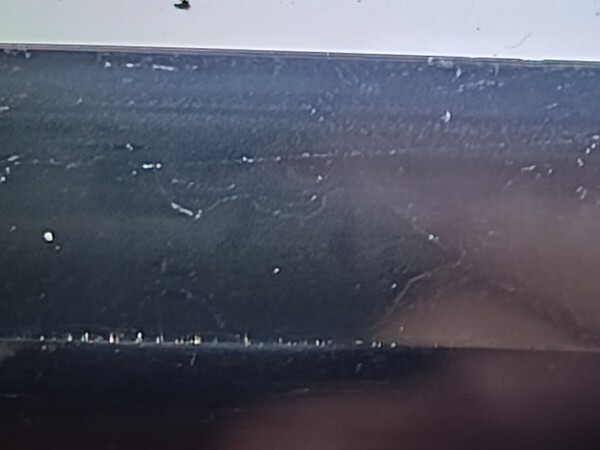
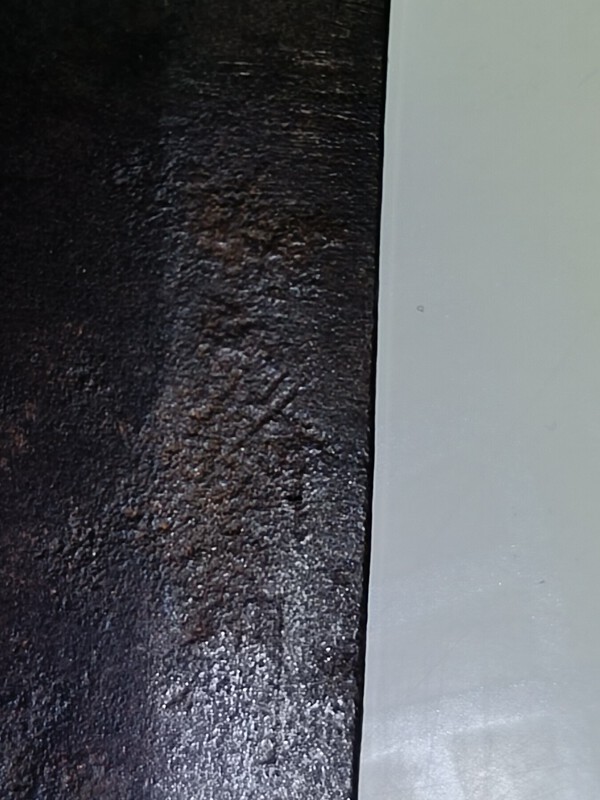
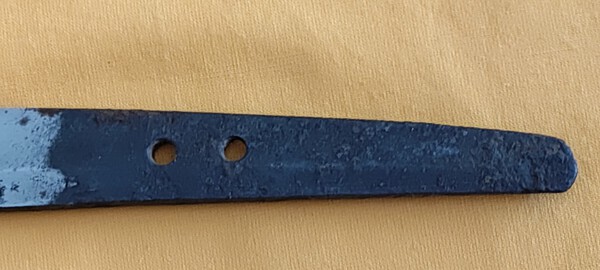
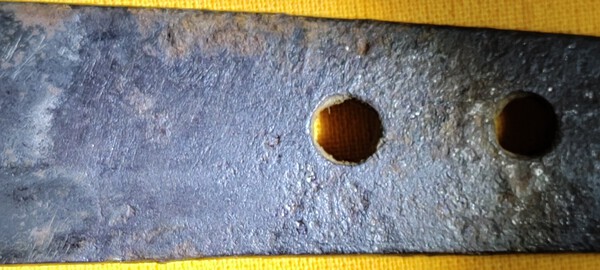
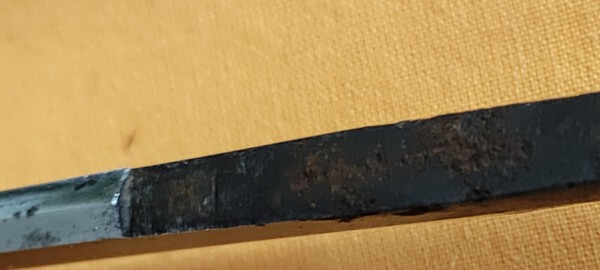
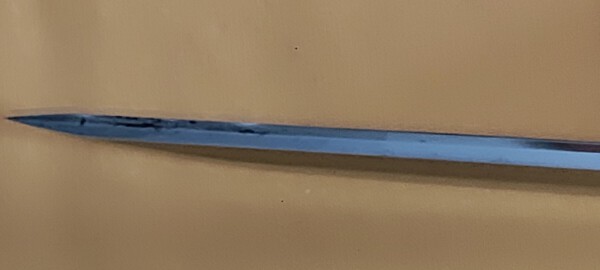
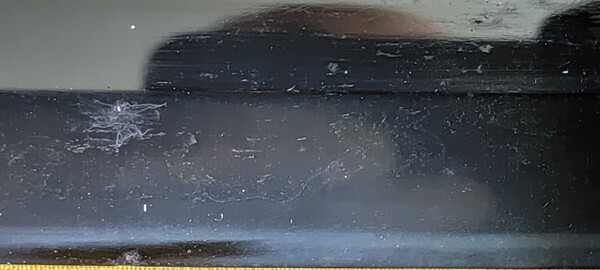
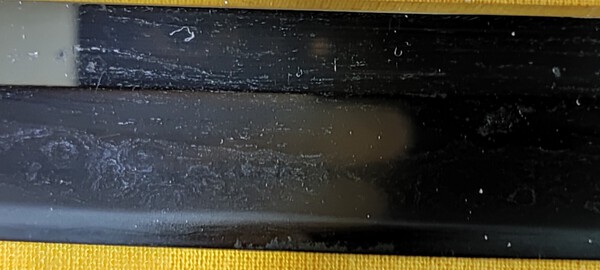
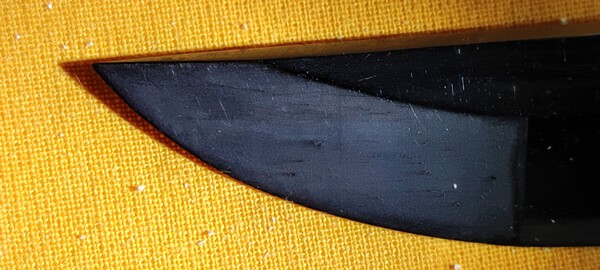
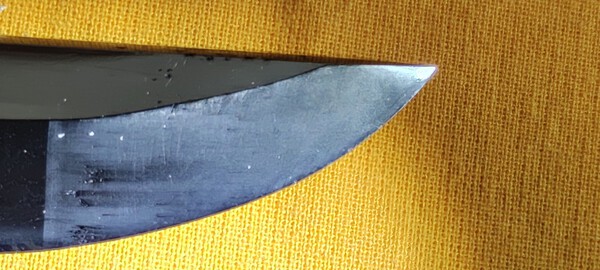
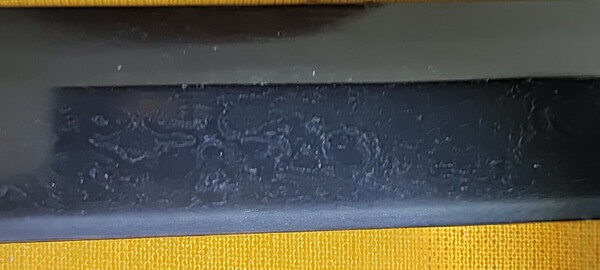
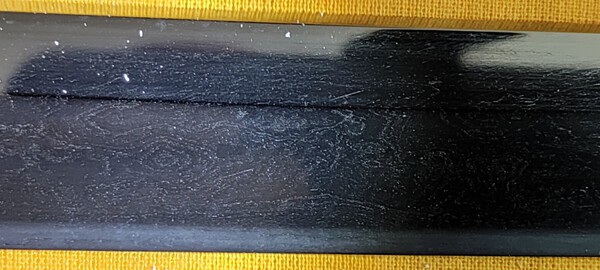
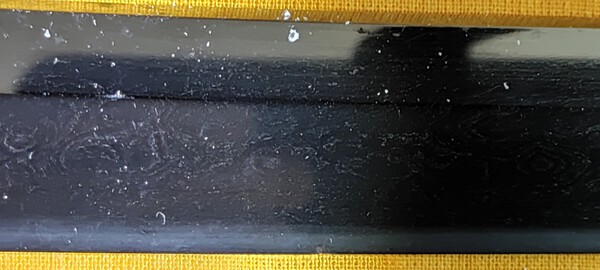
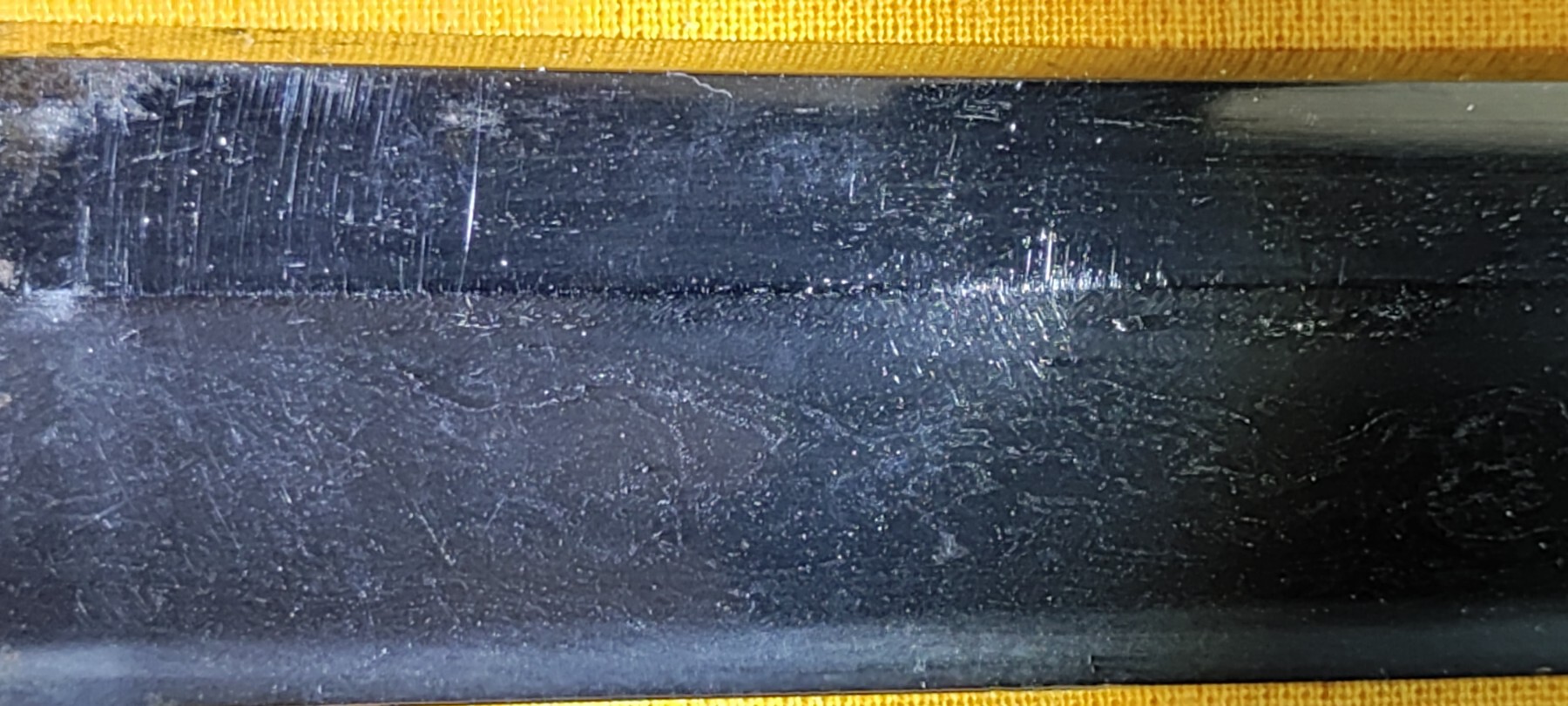
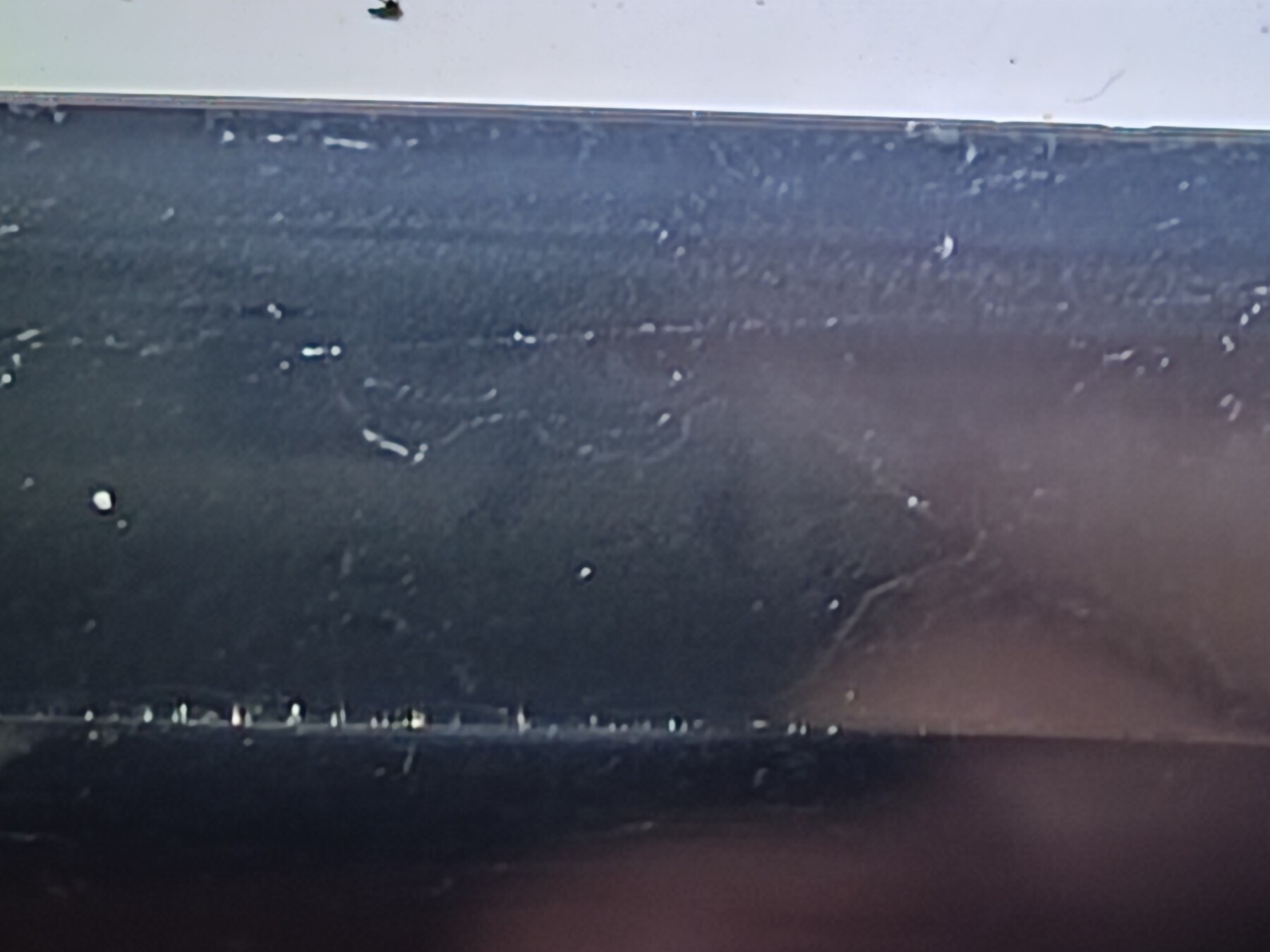
_Good morning. I am perplexed by these clear or dark, it all depends on the lighting,spots on the hamon. this wakisashi was sold to me as uda kunimune from uda school with certificate from NBTHK. the hamon seems to be suguha and the ji mokume. the part above the shinogi is different from the ji which seems to confirm an era. Could you give me your opinion on my conclusions? _Muromachi period. samurai art __ Size: Koshirae Overall Length: 28.543" (72.5cm) Blade Length: 18.622" (47.3cm) / Sori: 0.276" (0.7cm) Weight: 687 grams (Packaging: 600g)
- 1 reply
-
- 1
-

-
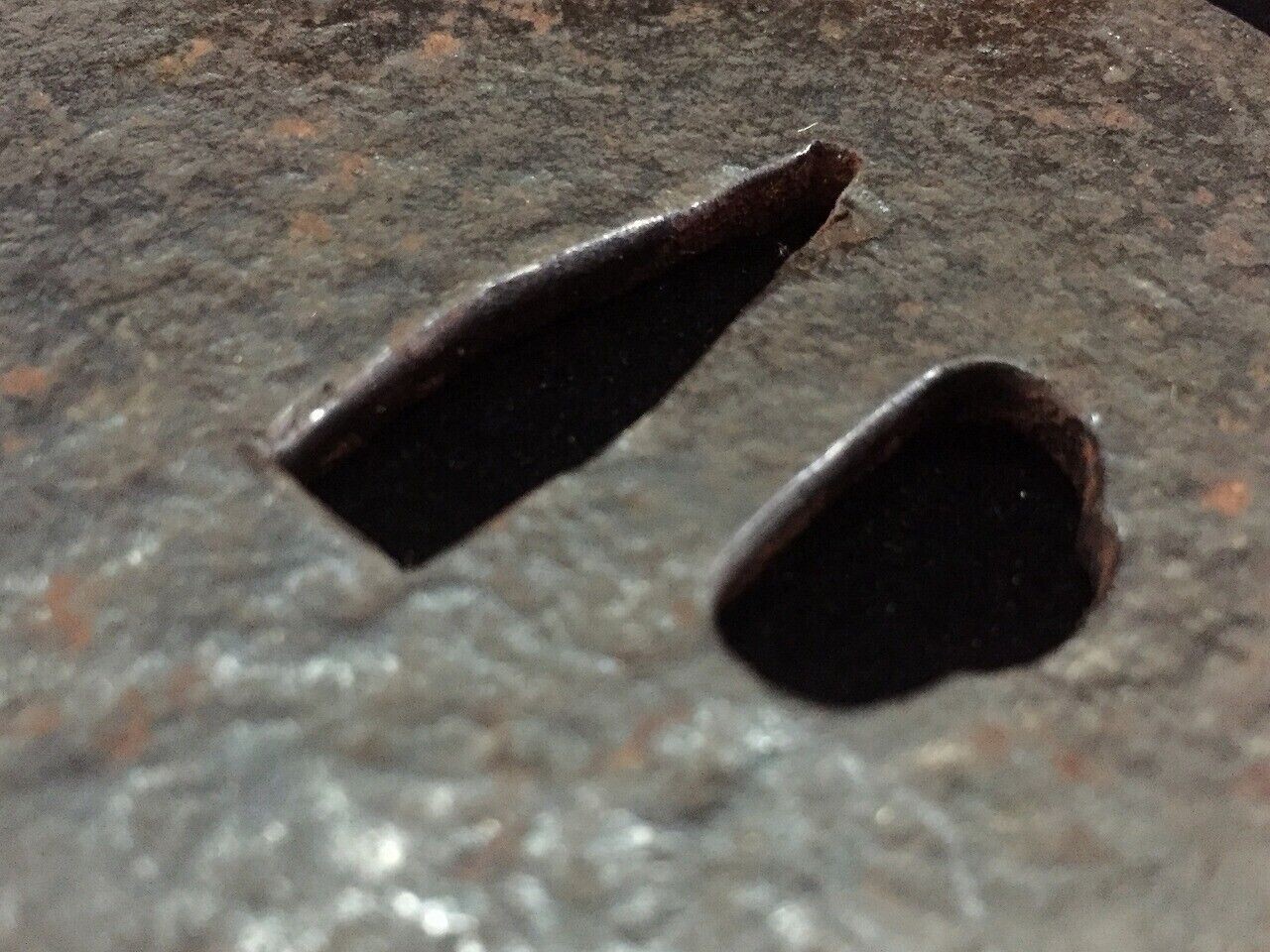
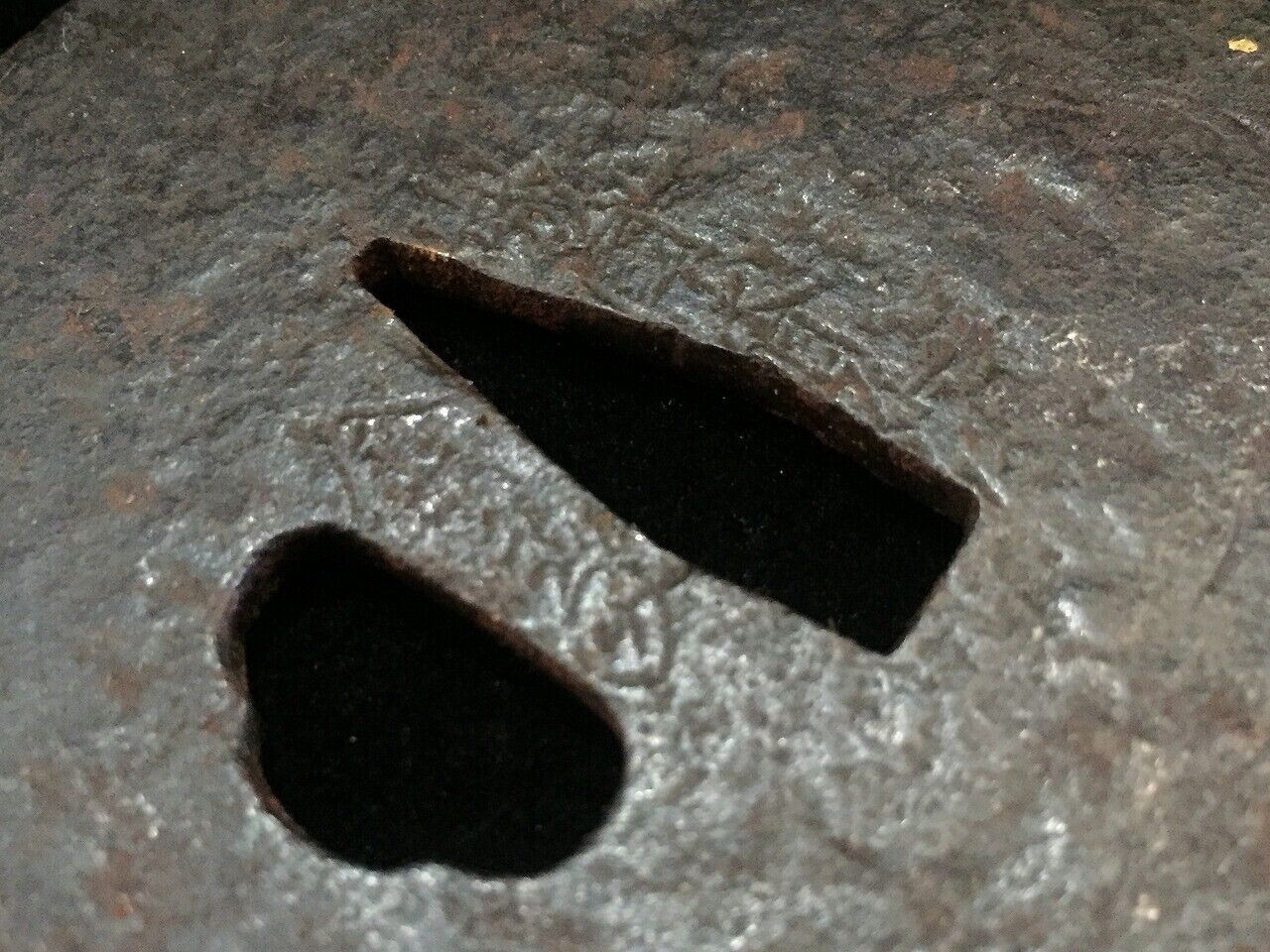
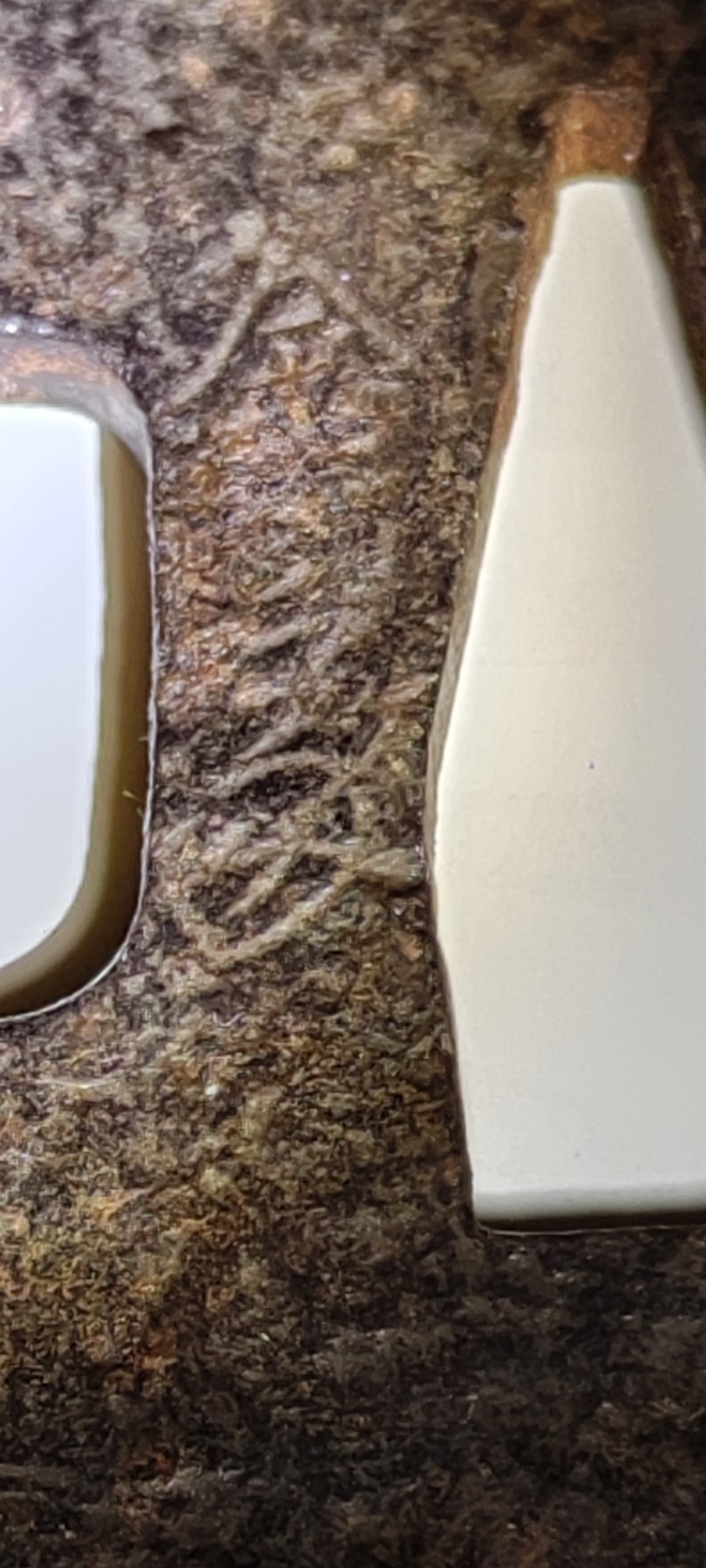
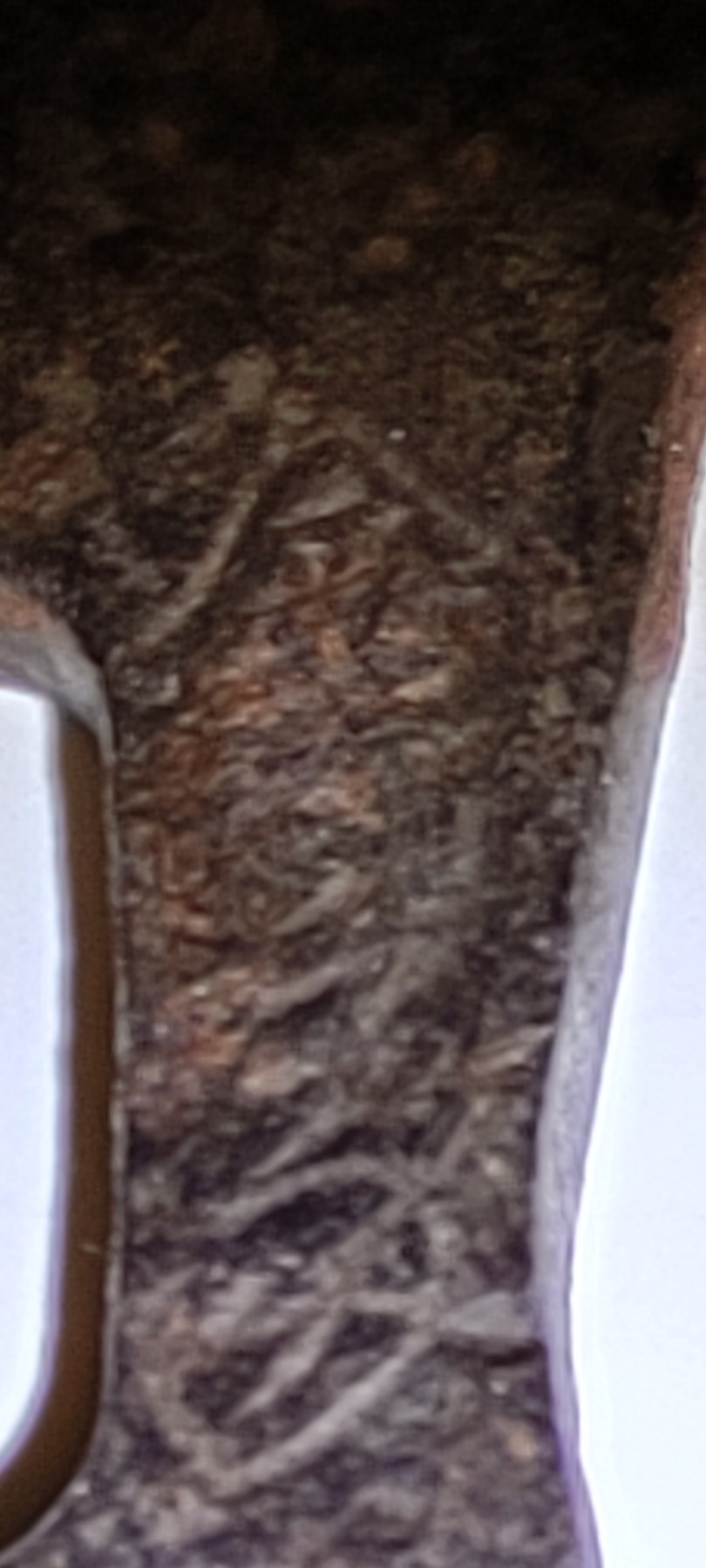
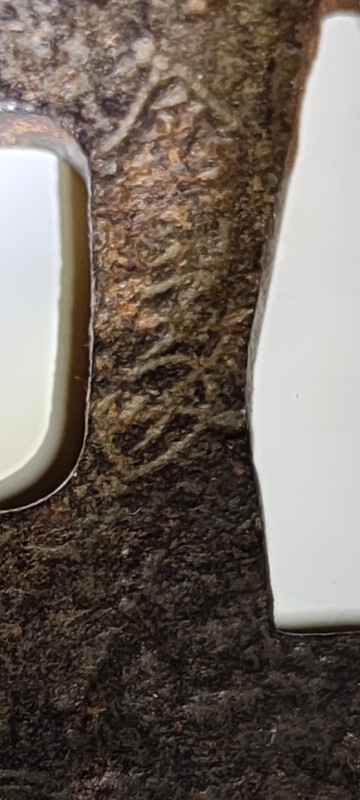
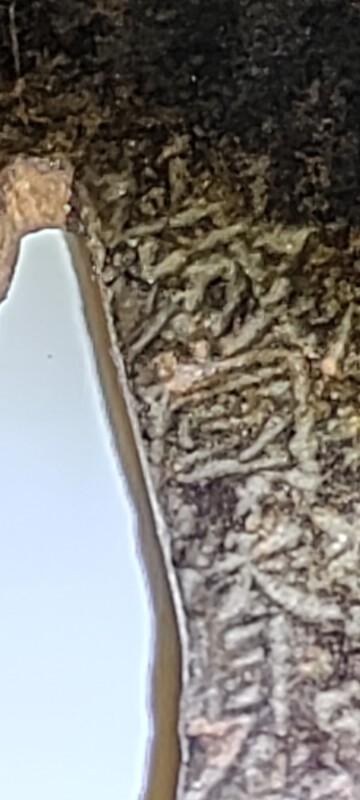
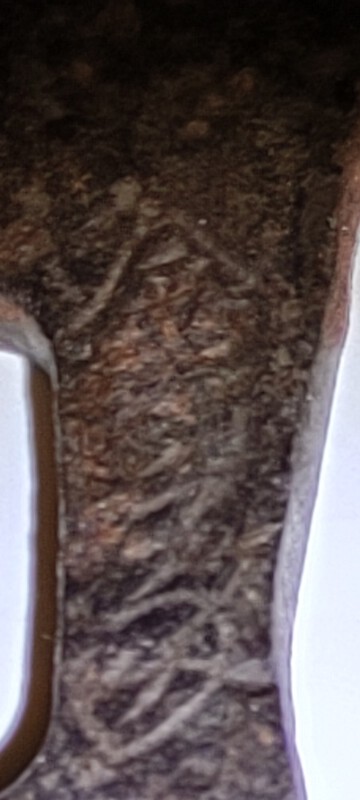
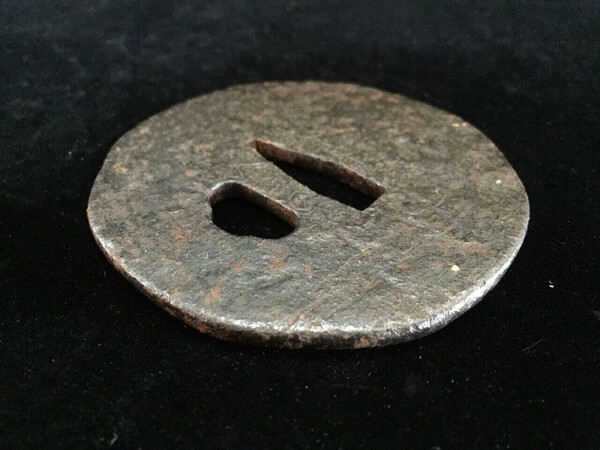
Good evening. The signature of this tsuba puzzles me. Already because I can't translate it and then because it is made up of kanji that I'm not used to seeing. its dimensions are 7 cm for 122grs. Have a good evening. RG.
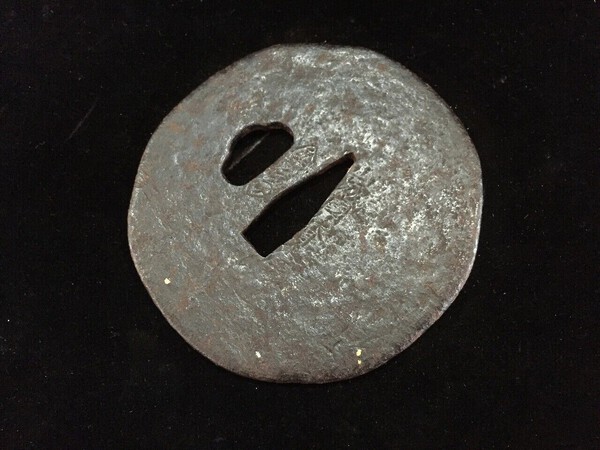
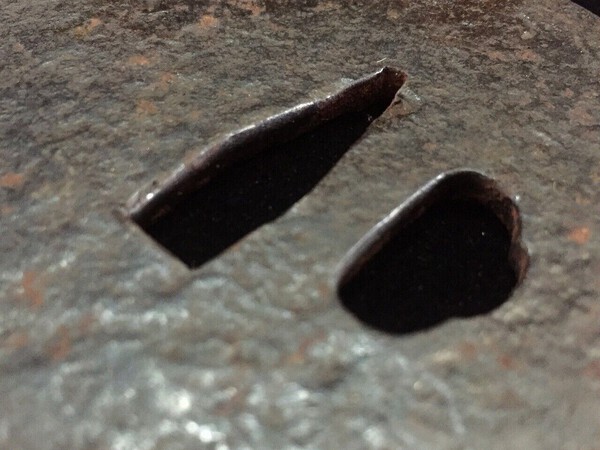
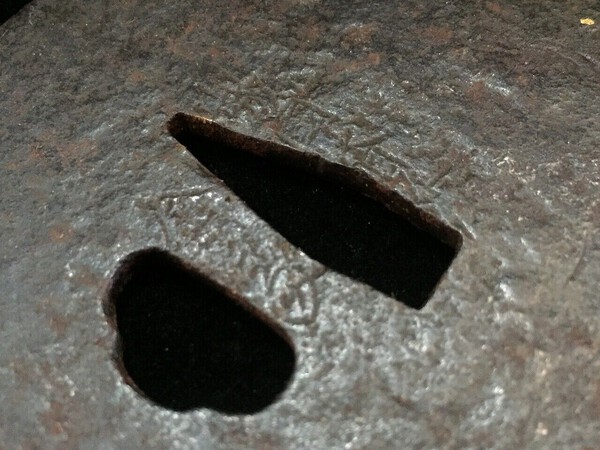
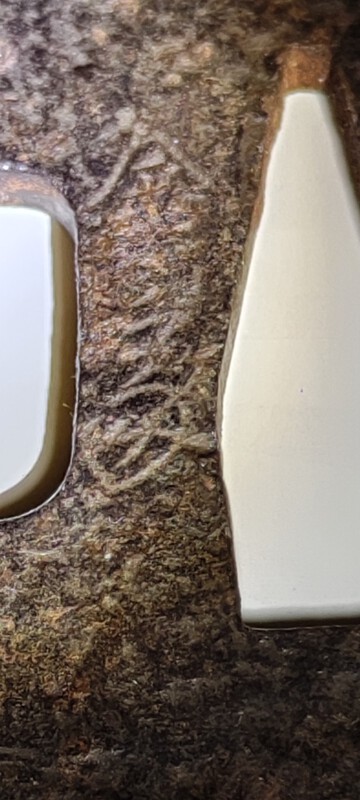
-
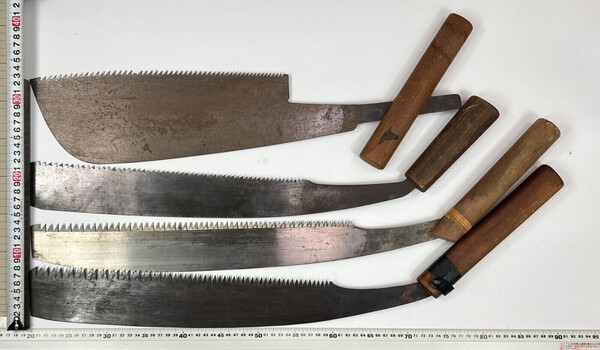
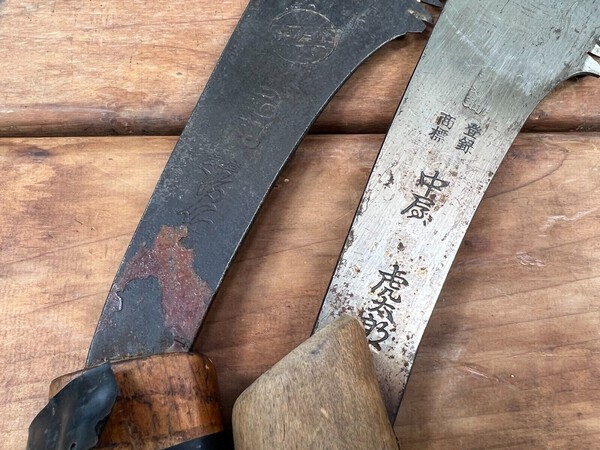
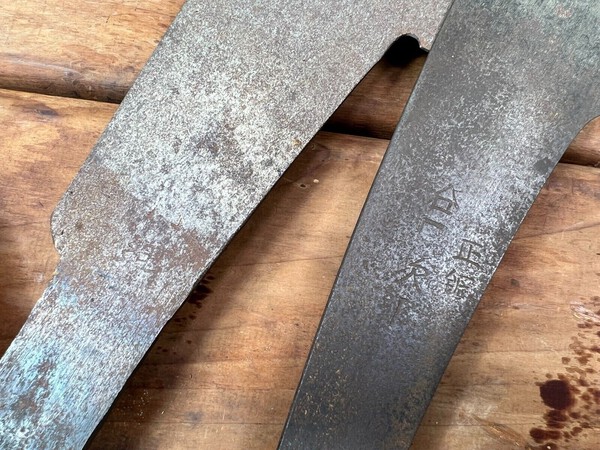
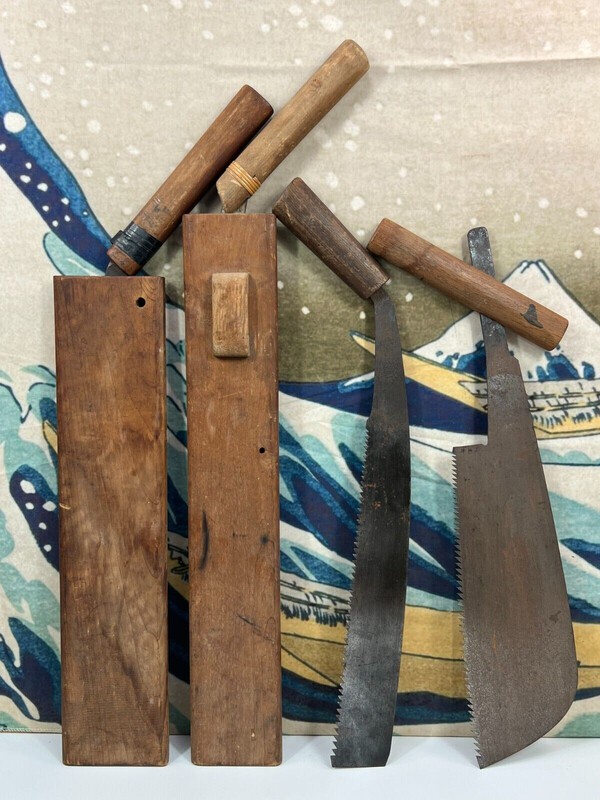
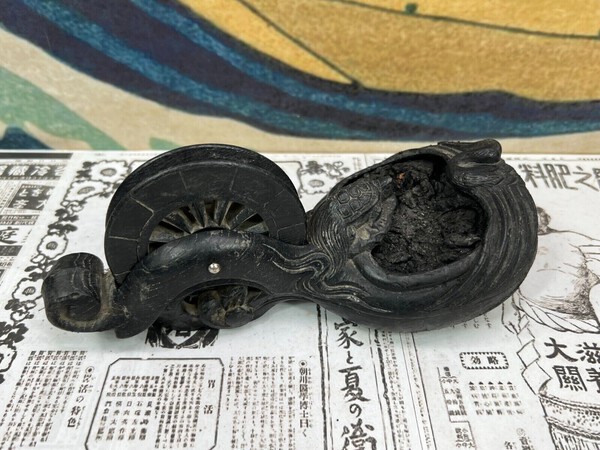
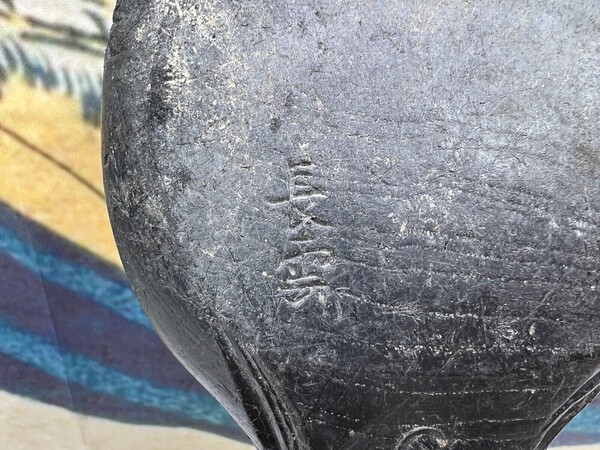
Good evening. here are some signed objects from the MEIJI period. maybe you will help me to decipher these kanji. thank you and good evening. RG.
-
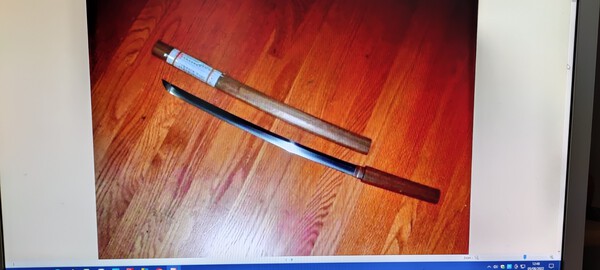
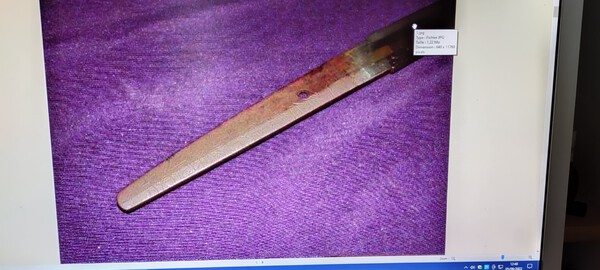
Hello to you. I have just acquired this wakisashi signed KUNICHIKA and I find very little trace of this blacksmith. maybe you could tell me more. Thank you in advance and good day. RG.
-
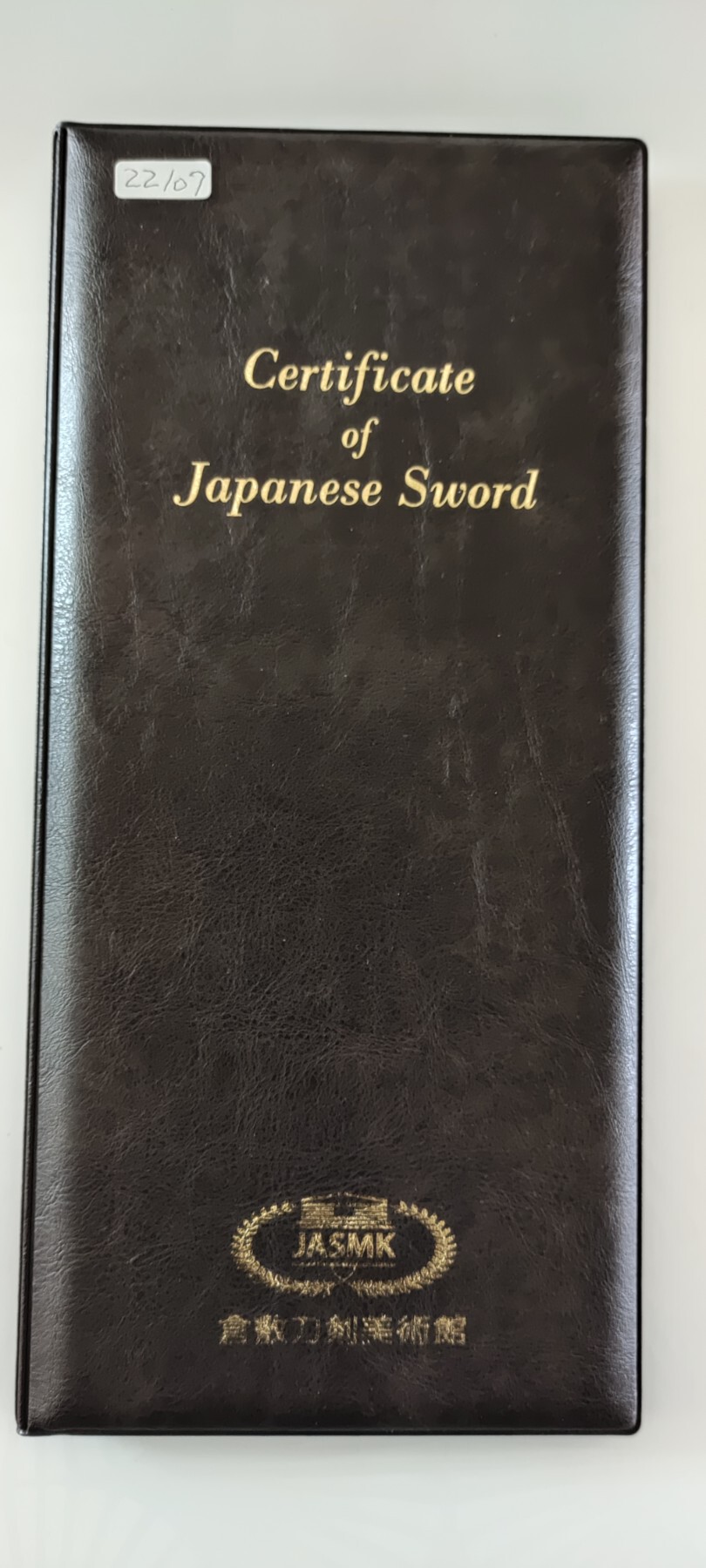
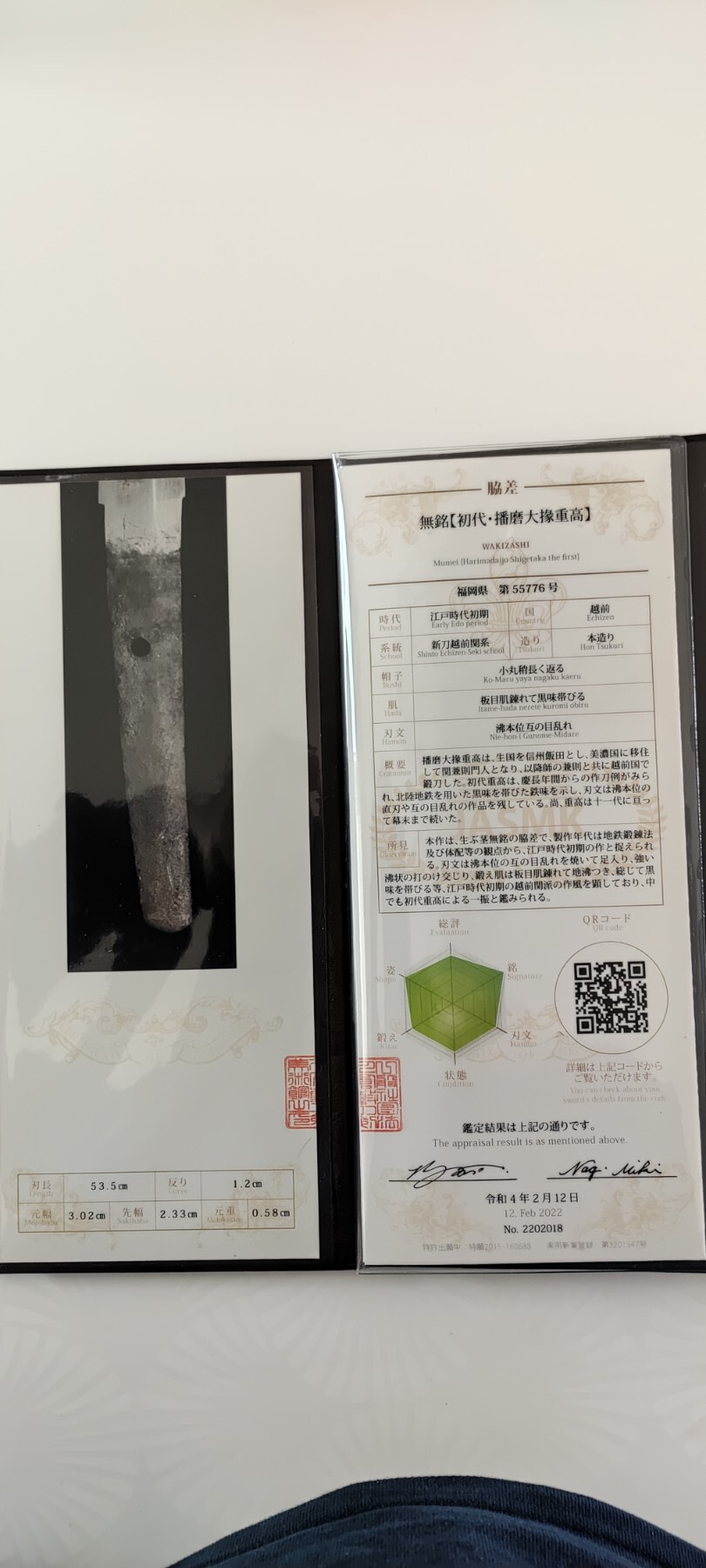
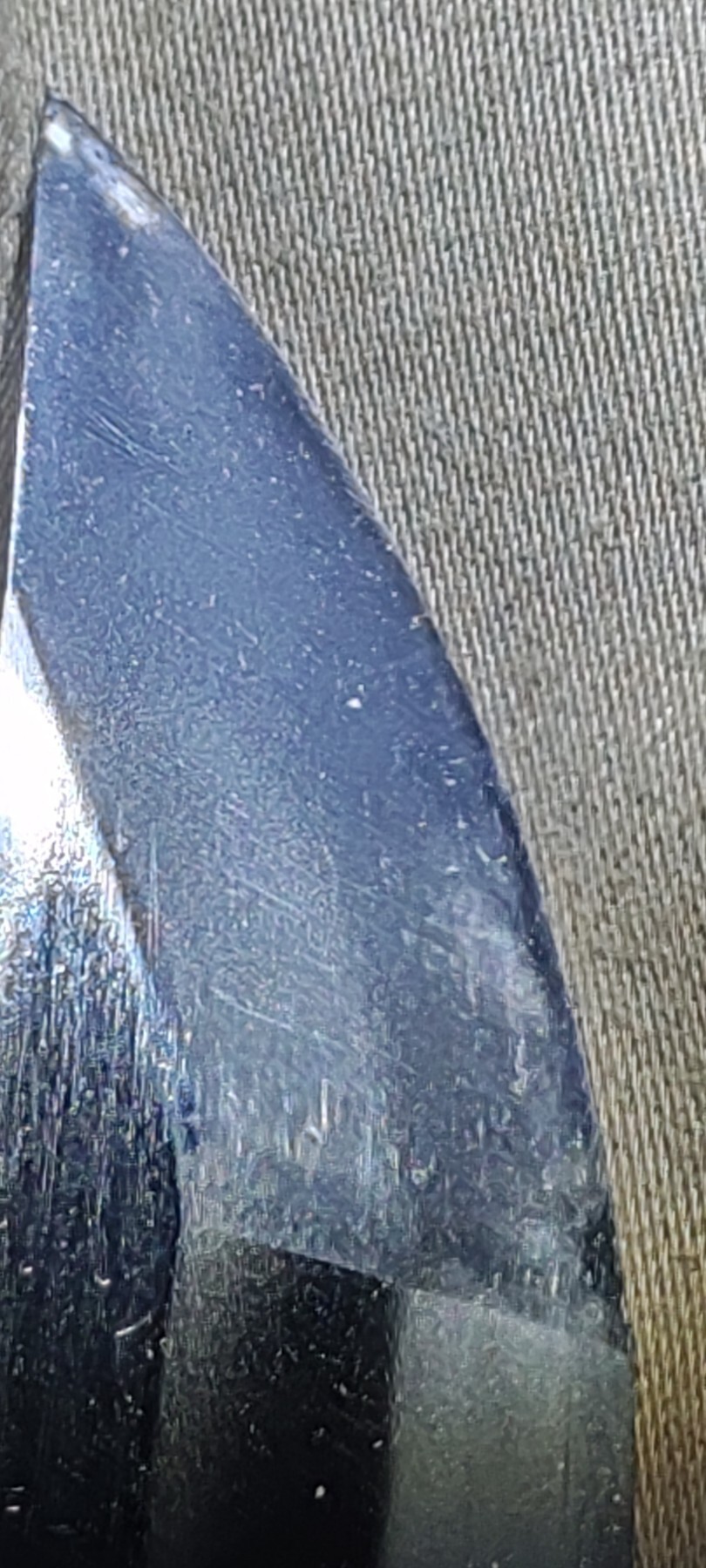
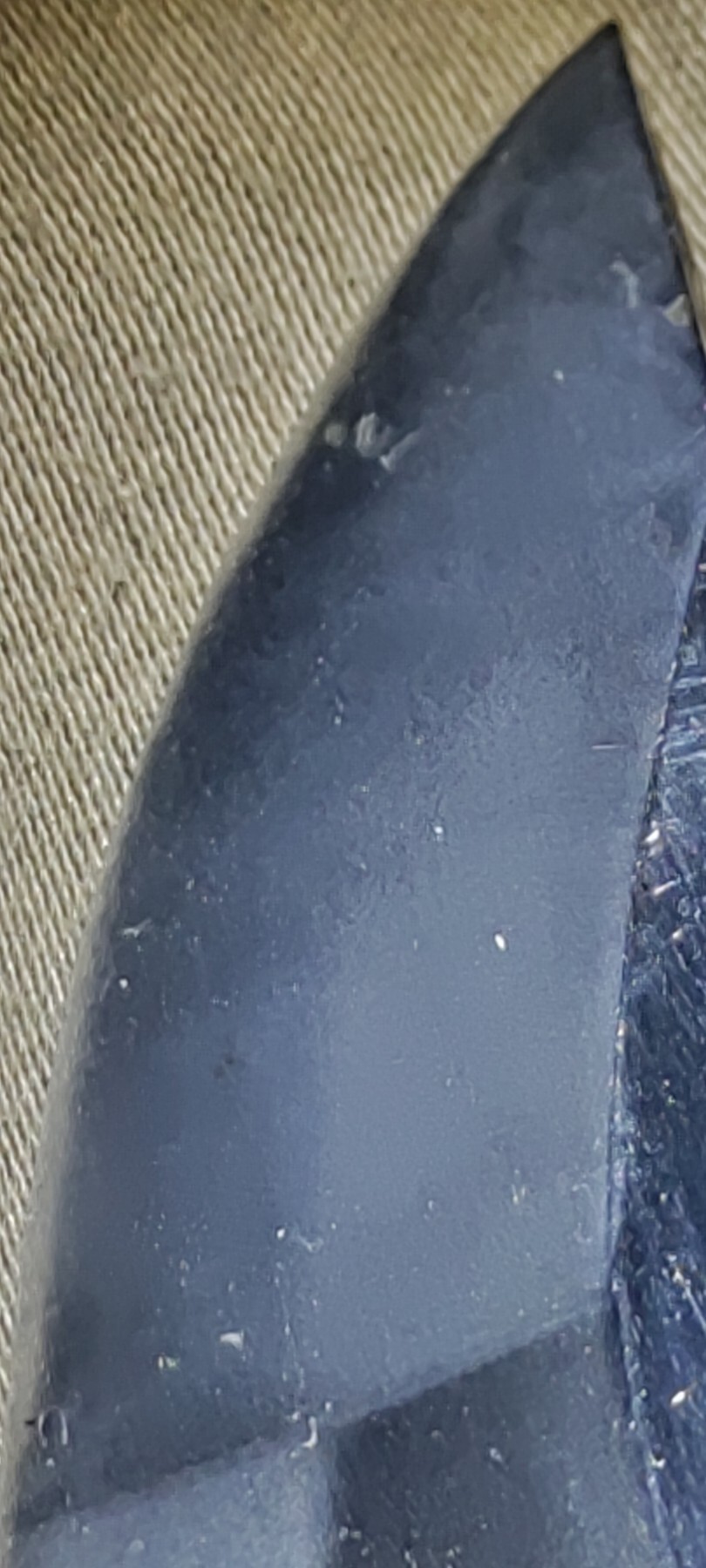
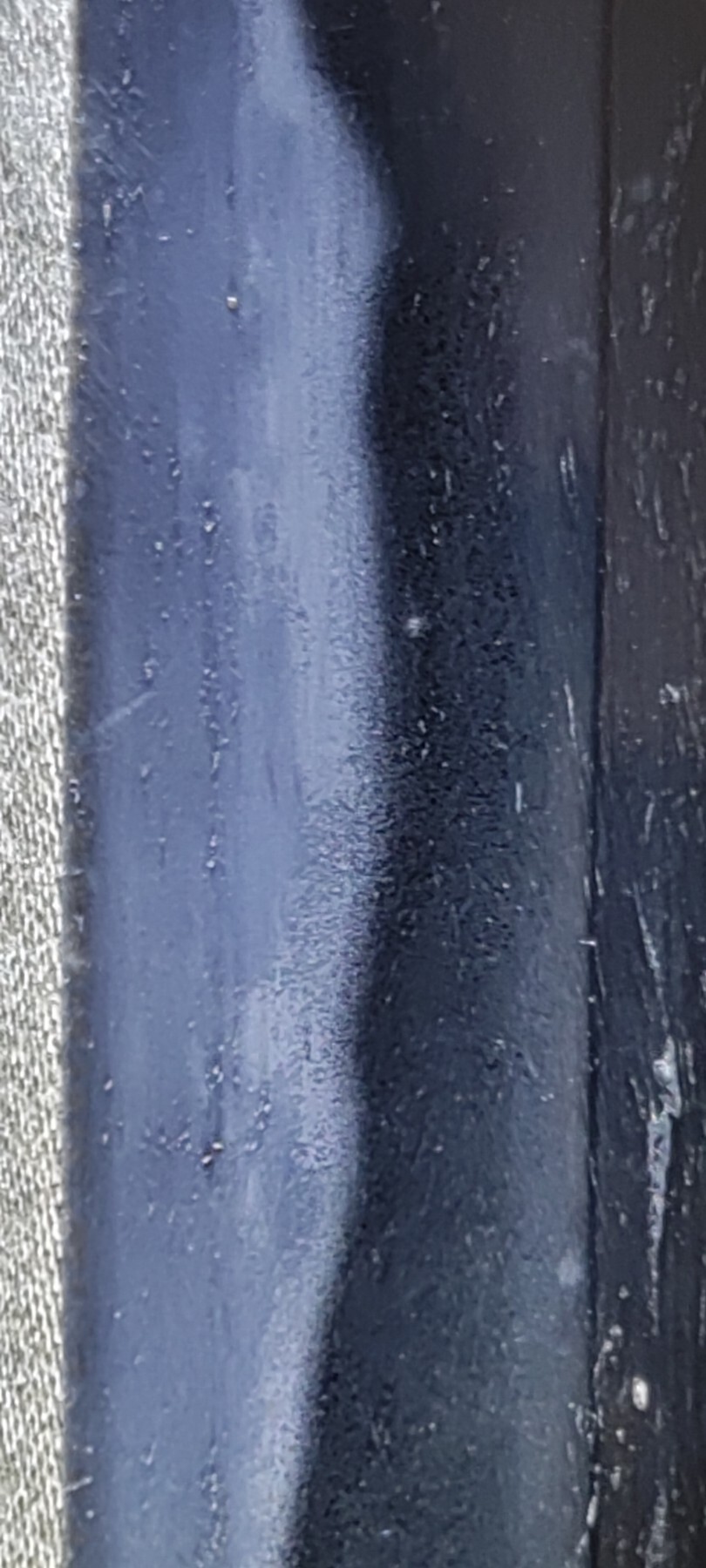
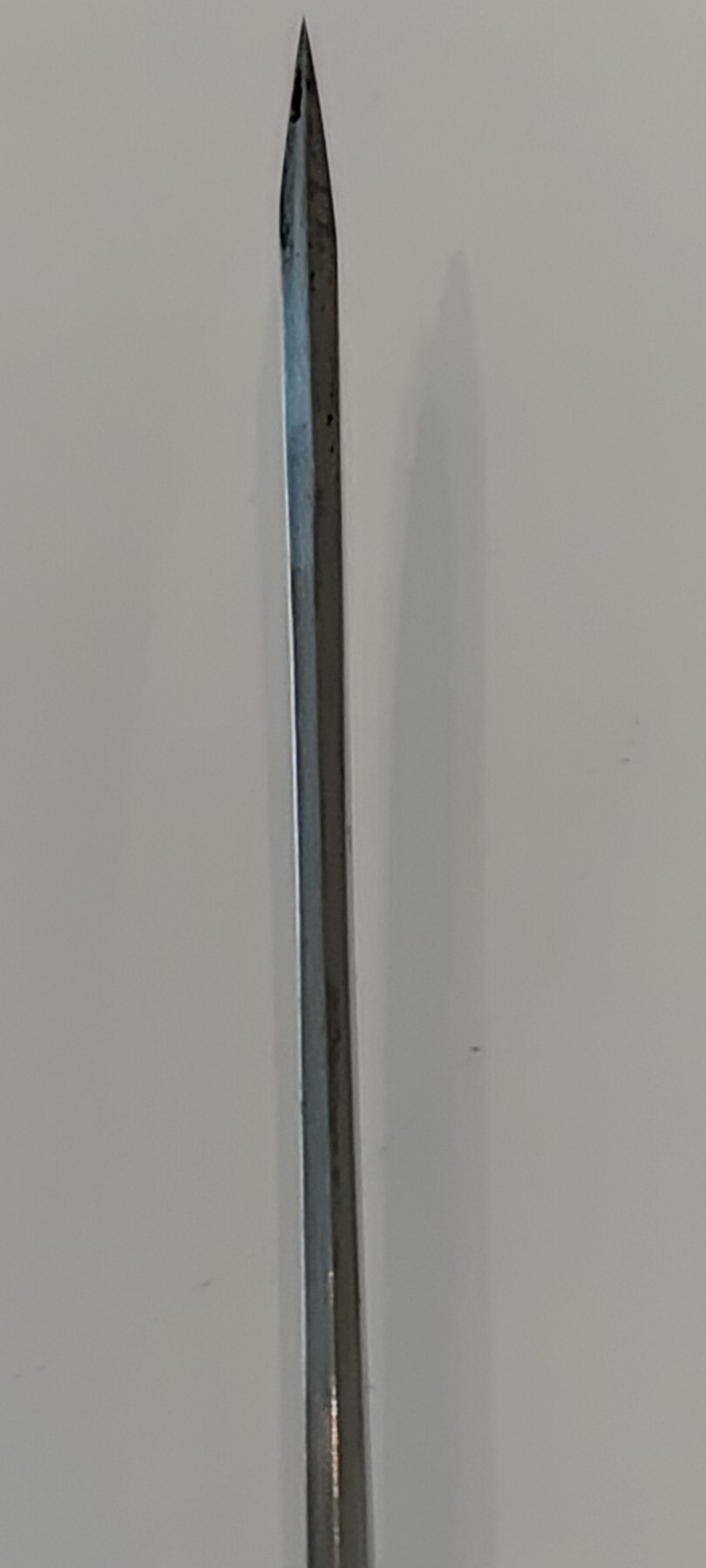
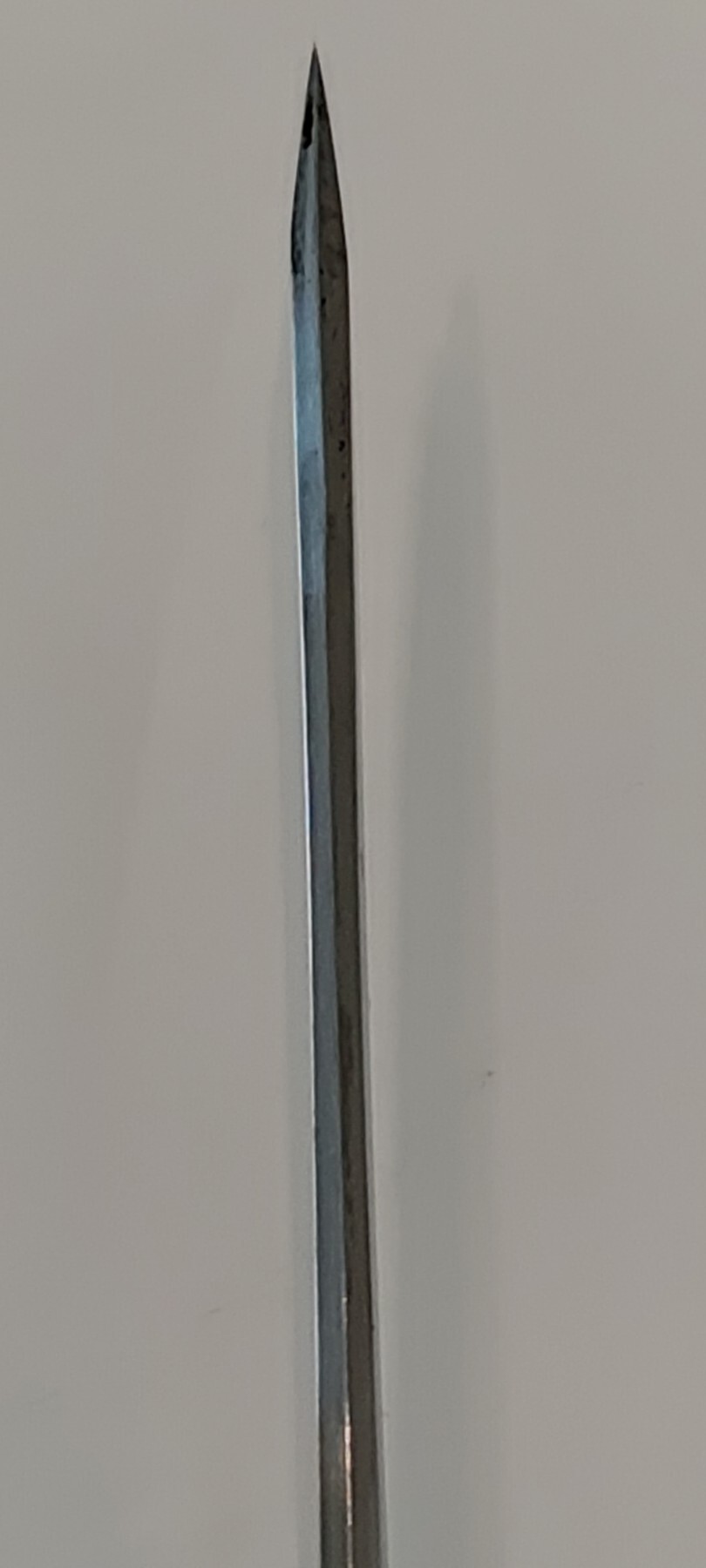
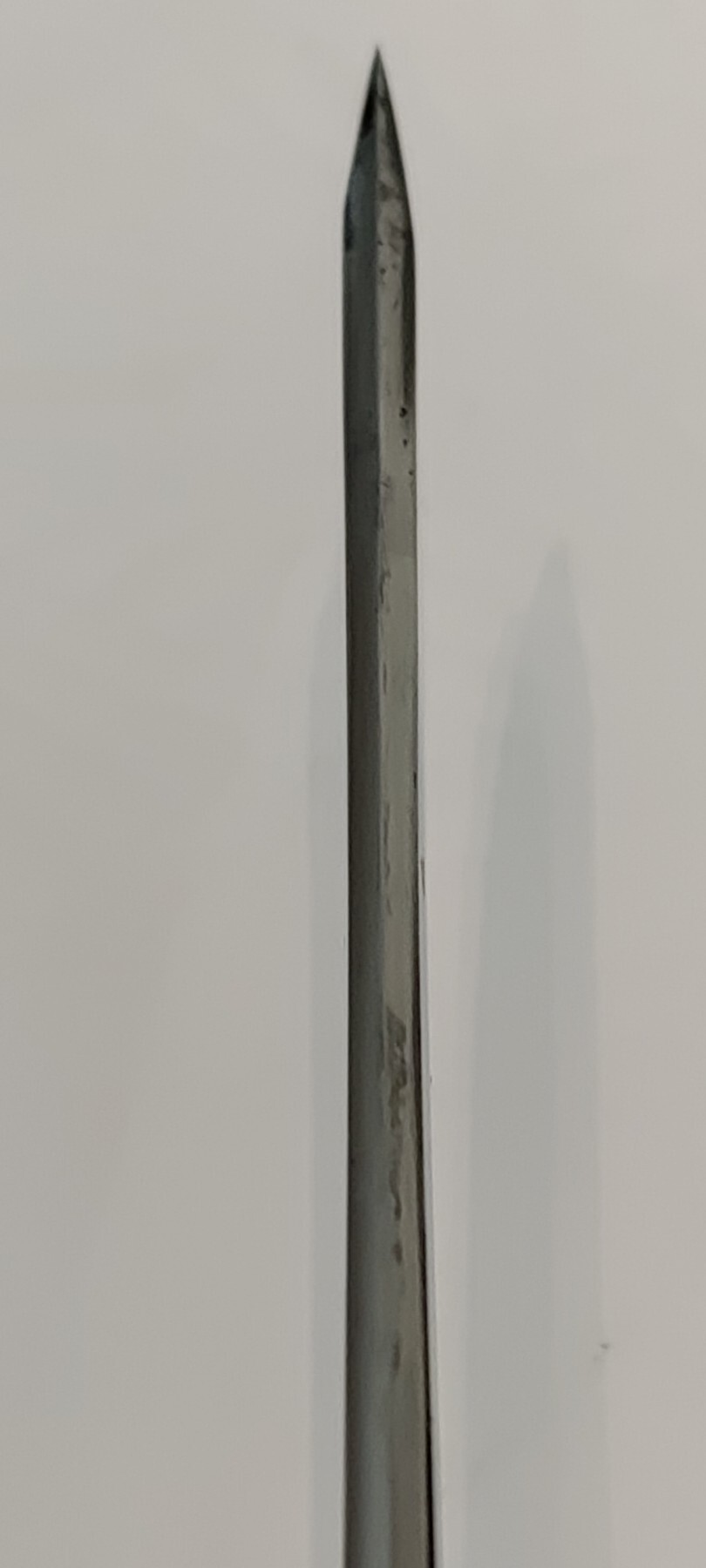
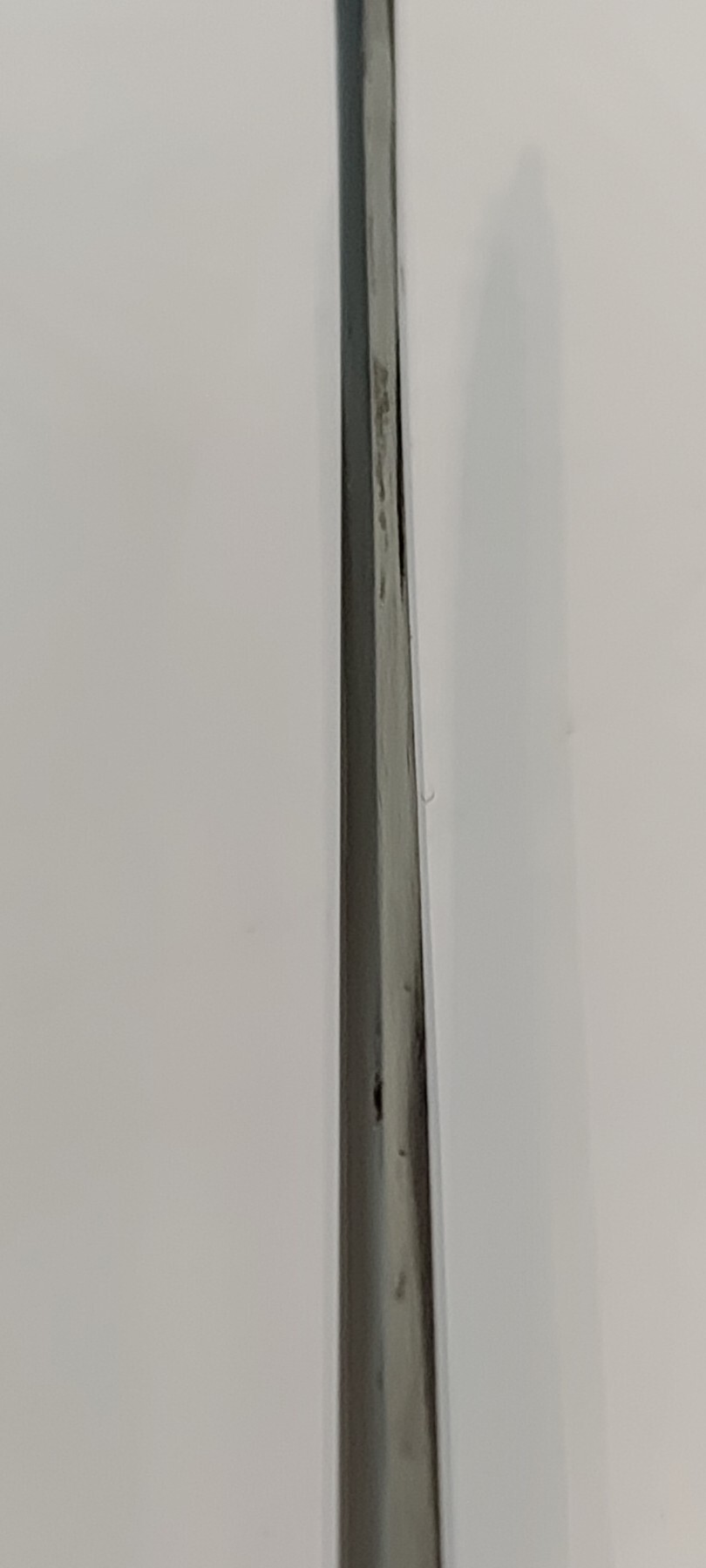
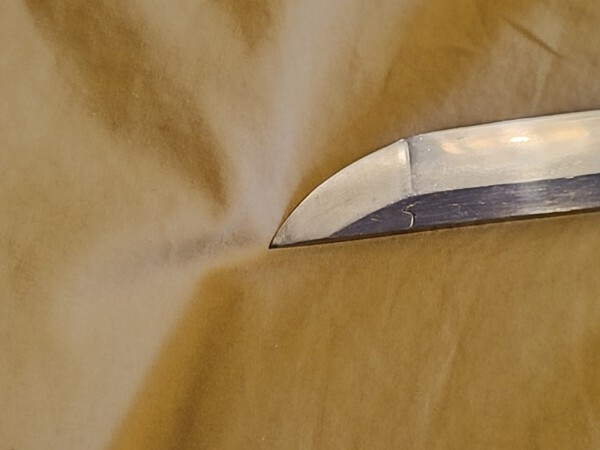
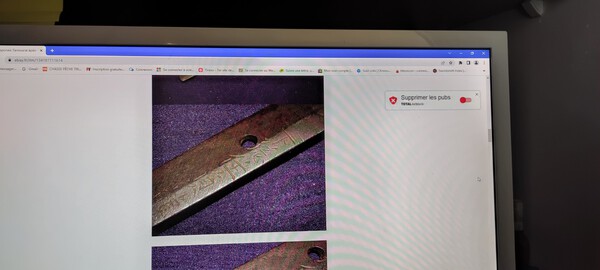
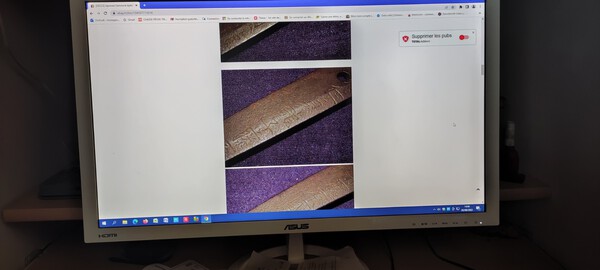
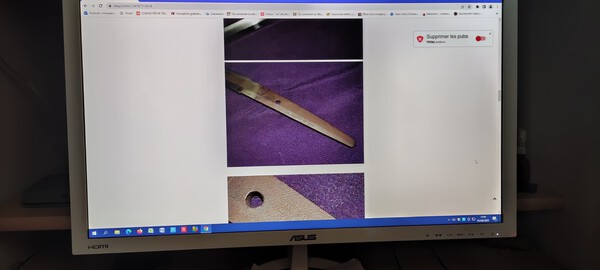
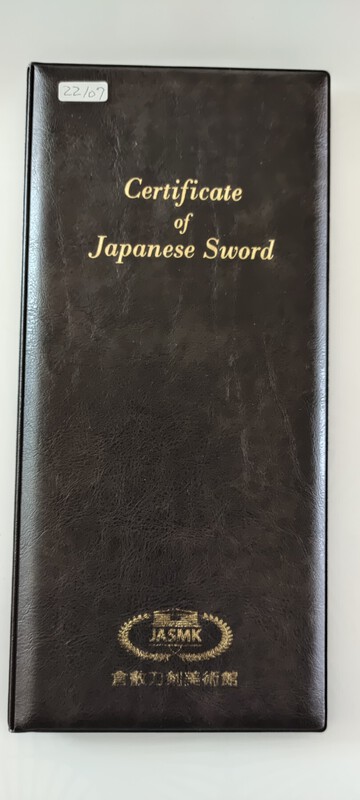
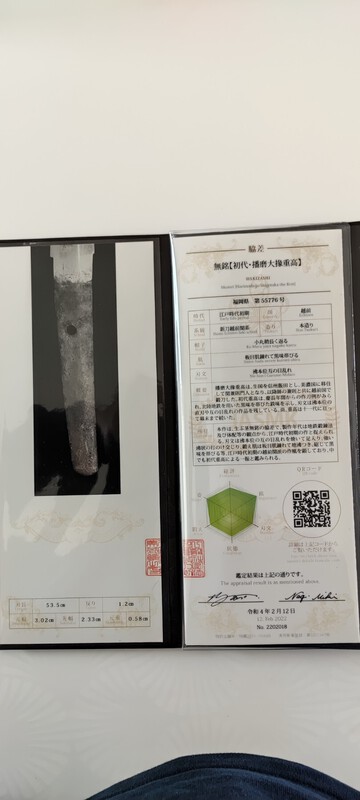
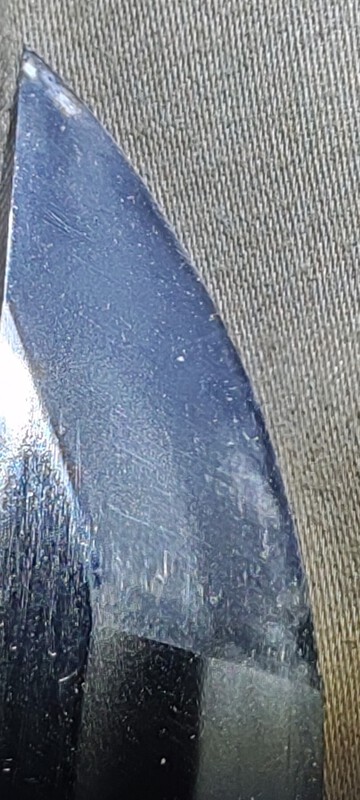
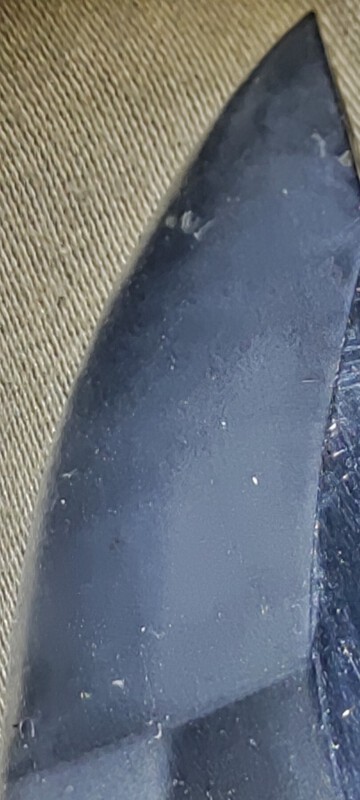
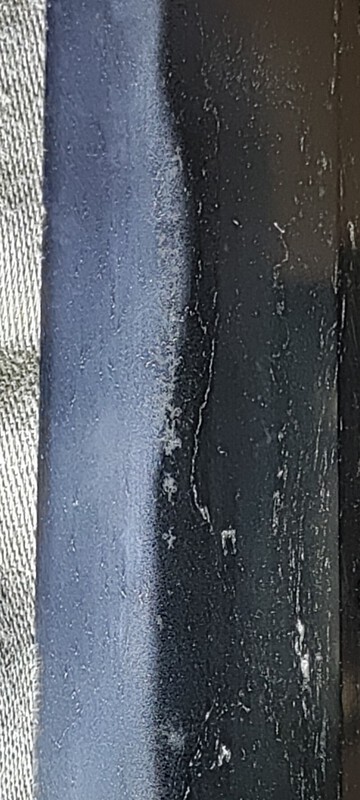
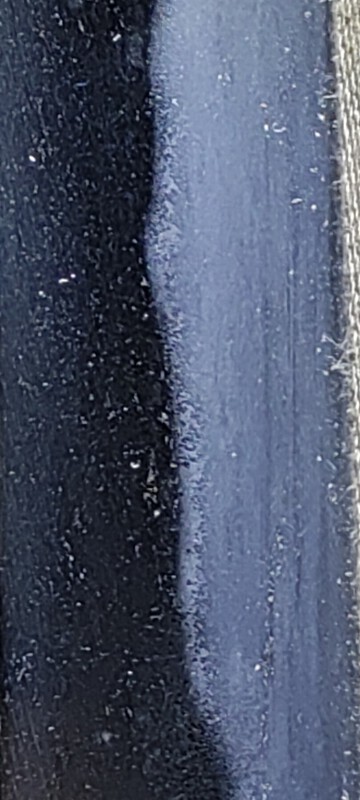
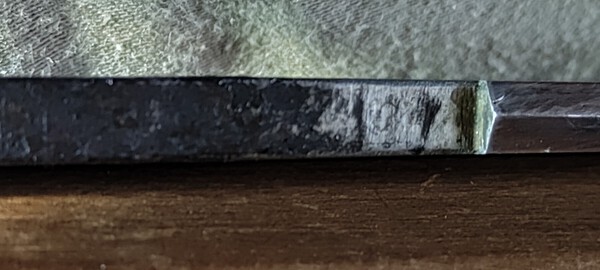
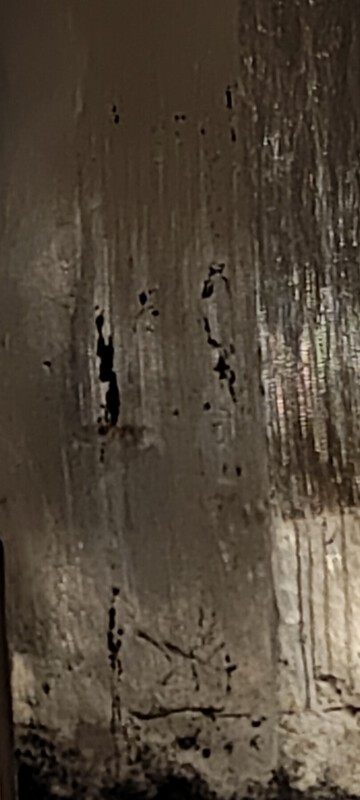
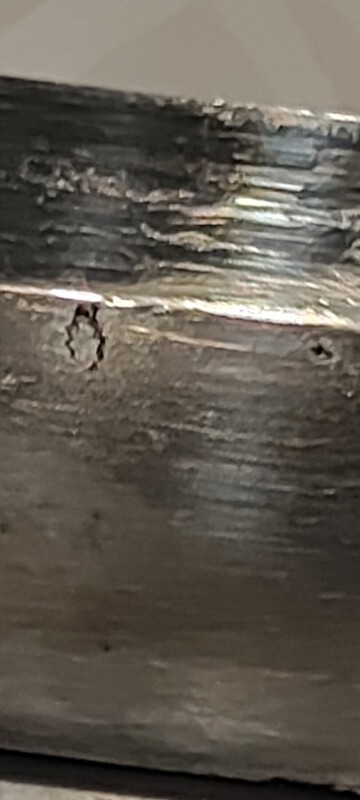
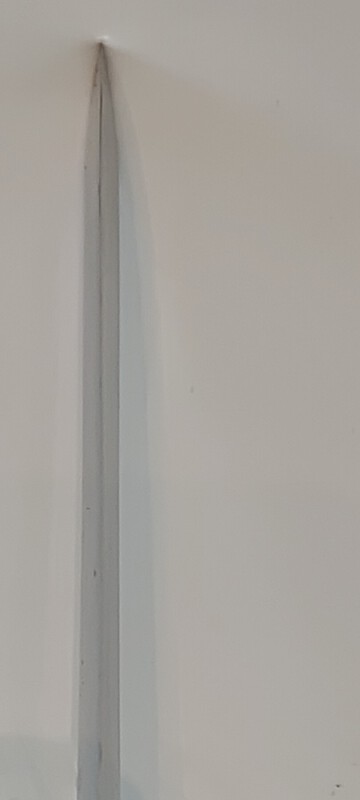
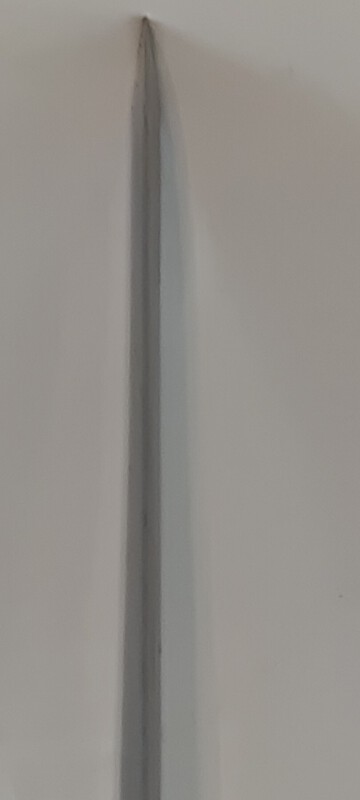
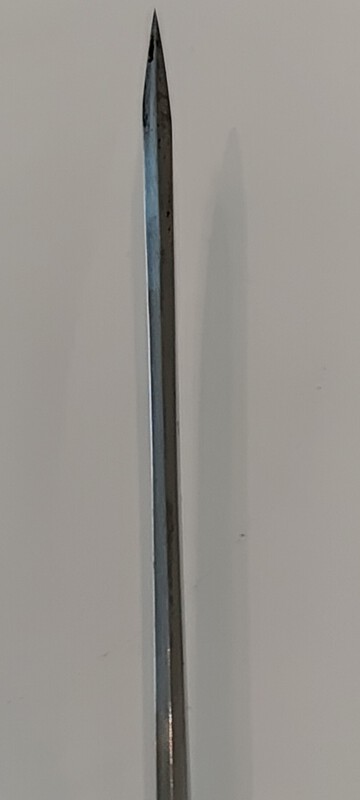
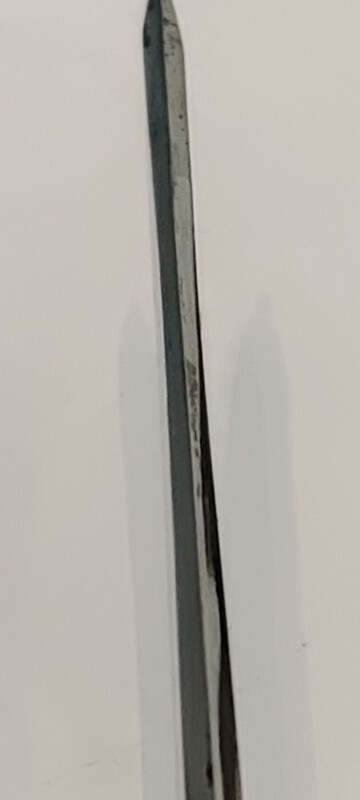
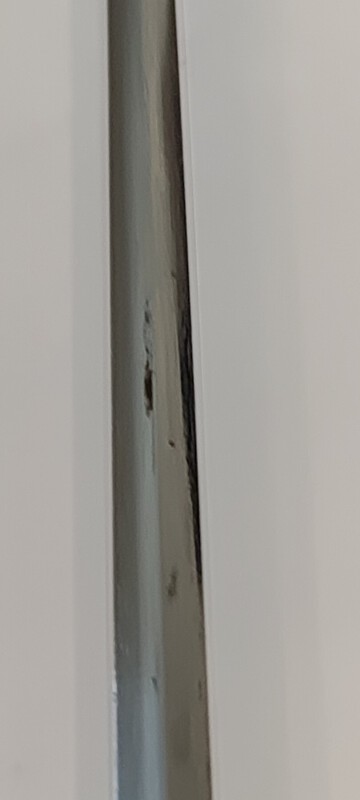
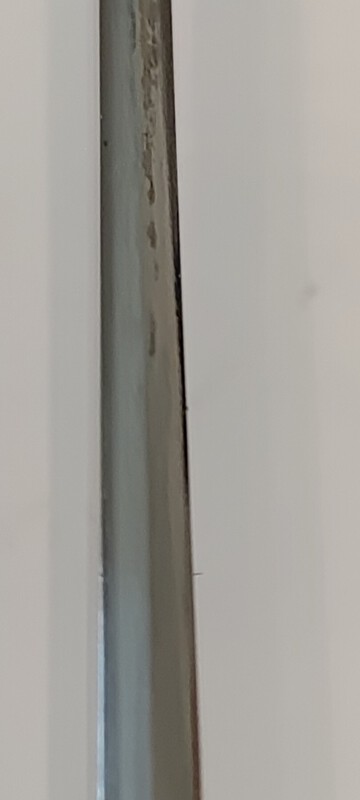
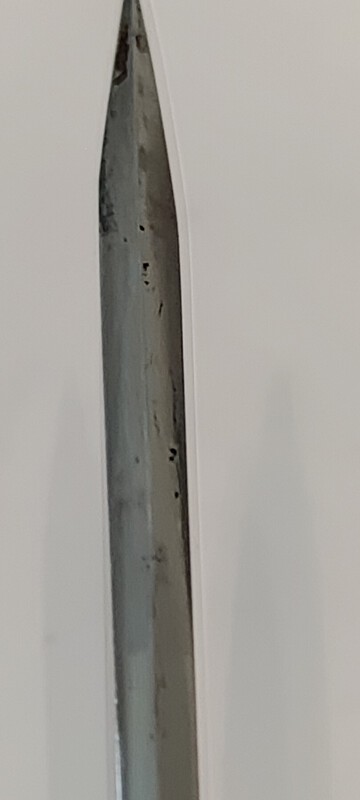
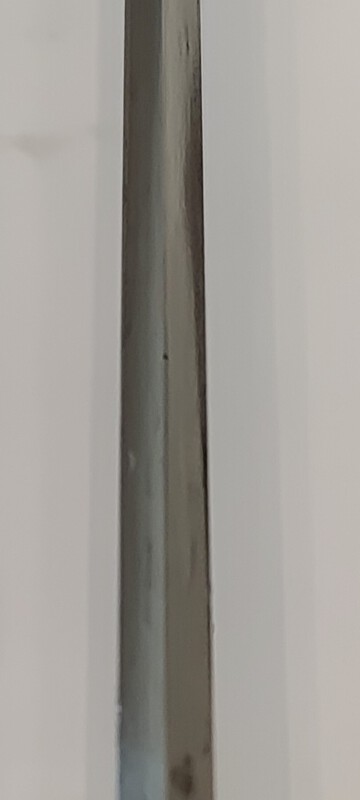
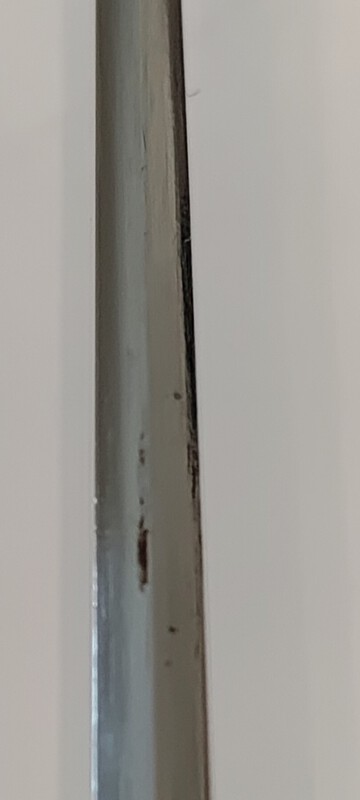
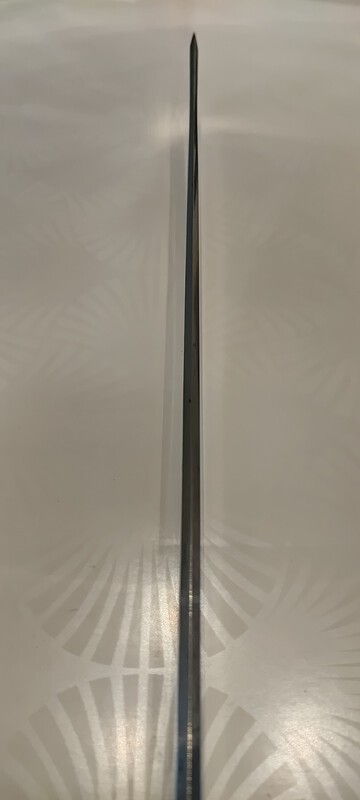
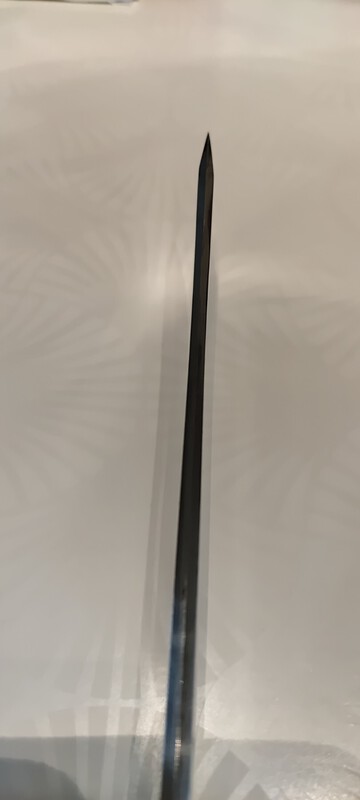
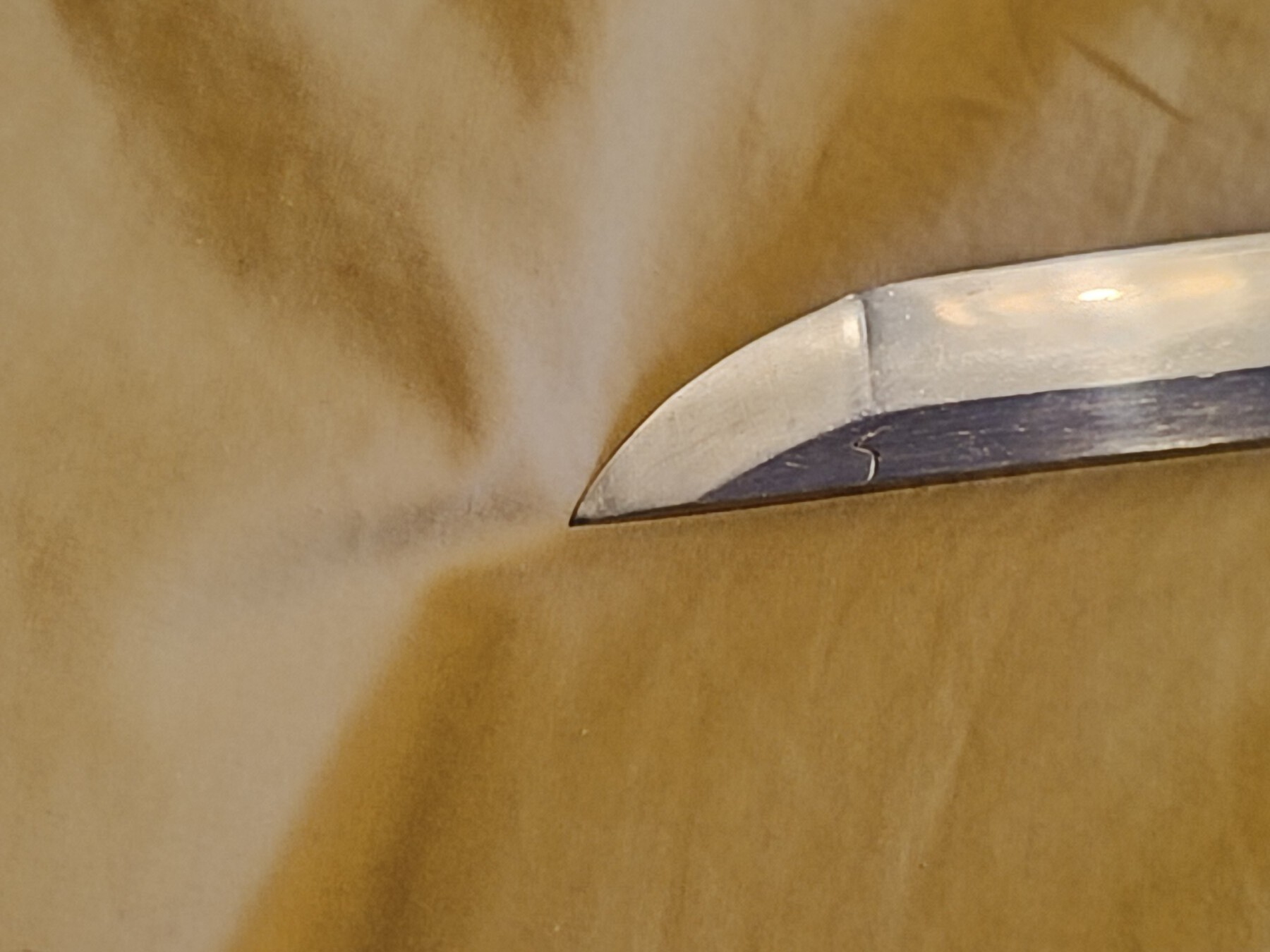
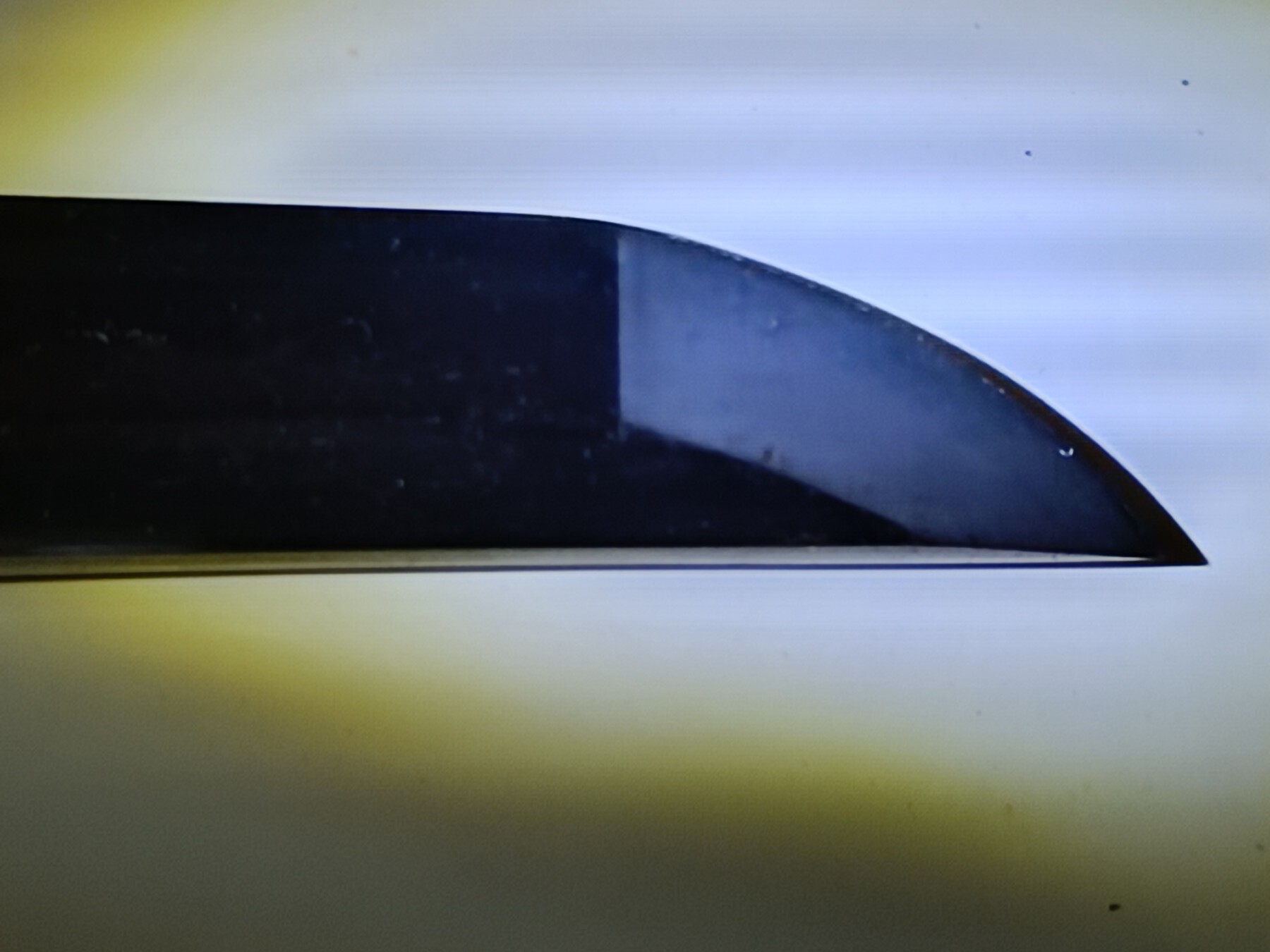
Hello. I return to the subject of this shrunken wakisashi just before the boshi. This blade was delivered to me with a JASMK certificate. Here are some pictures of this blade as well as the certificate. Cordially. RG. PS: It must be recognized that there are many kitae kizu. I did not photograph the bare blade.


-
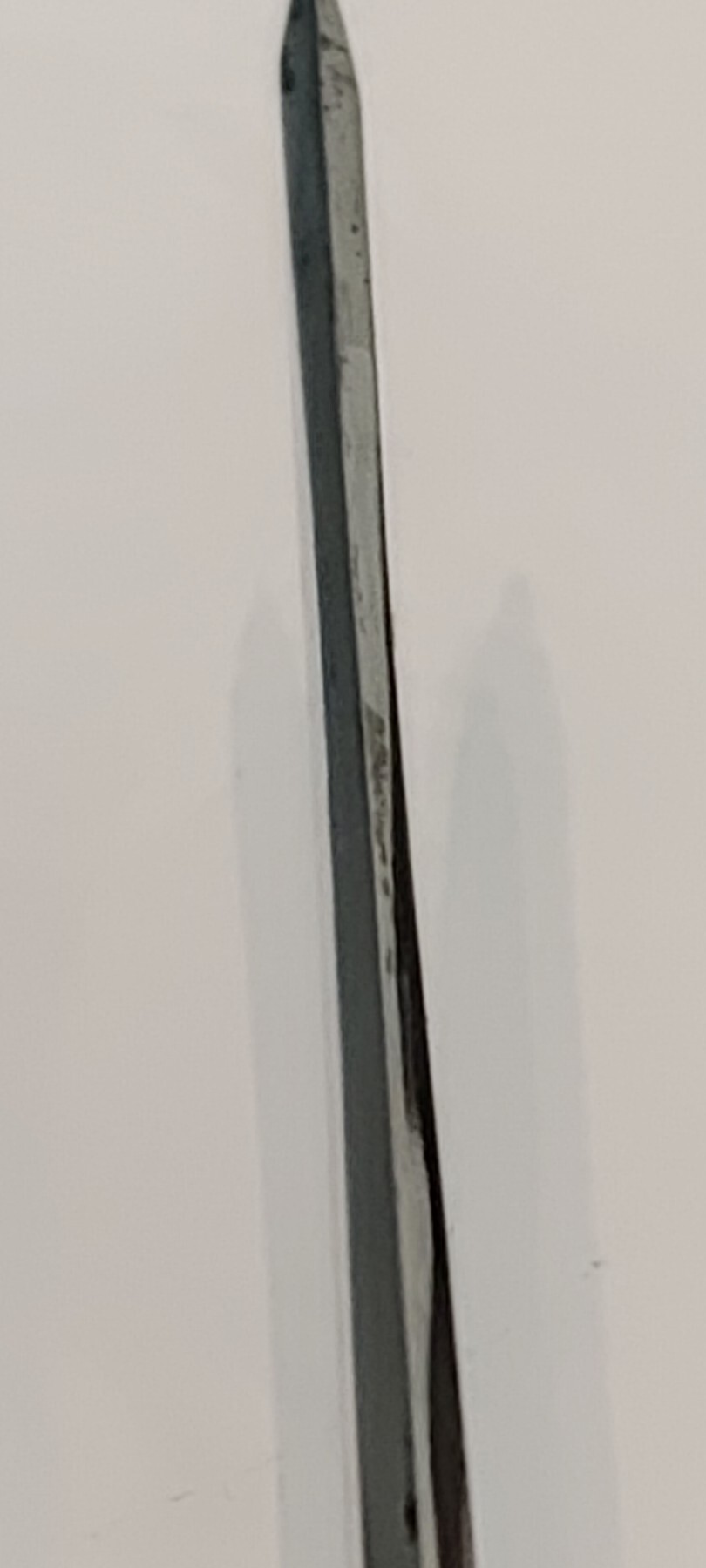
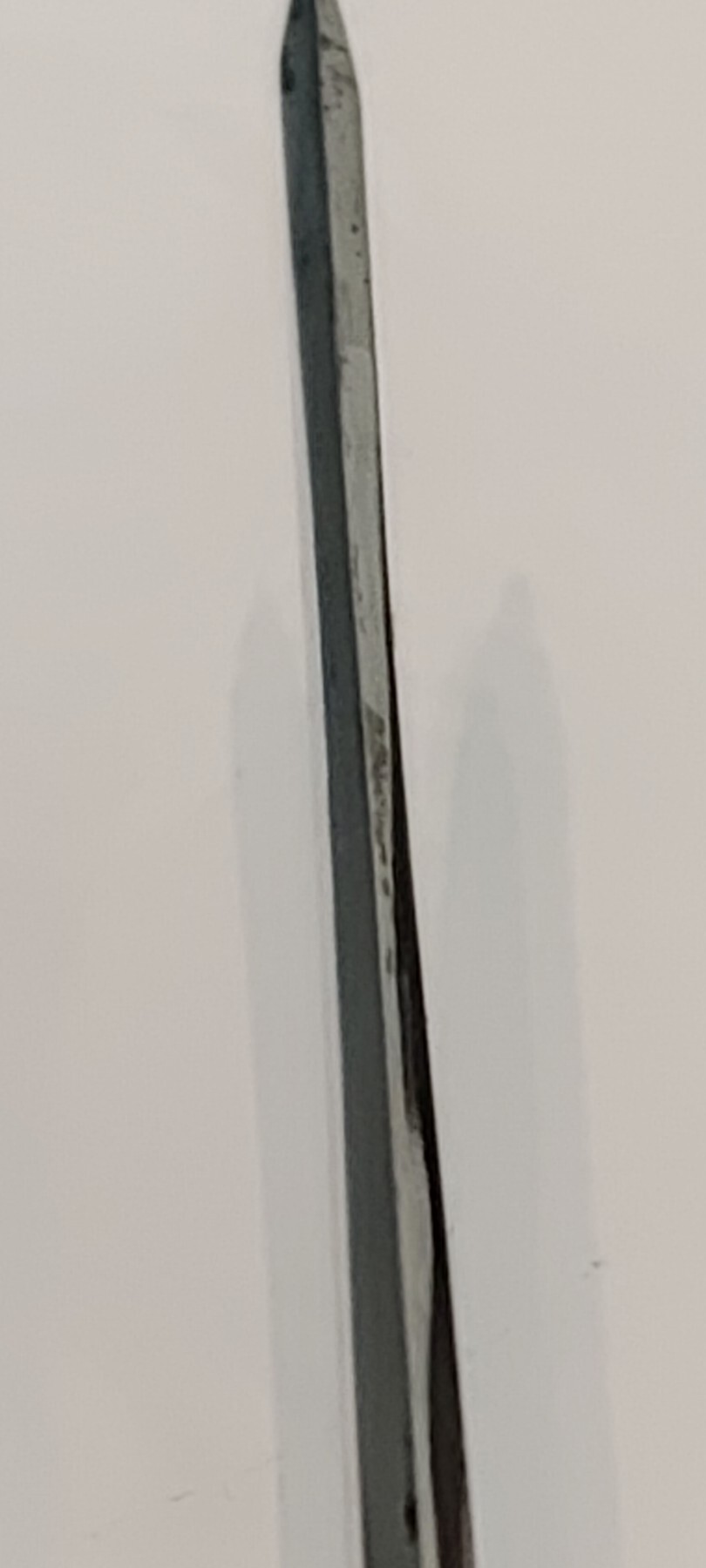
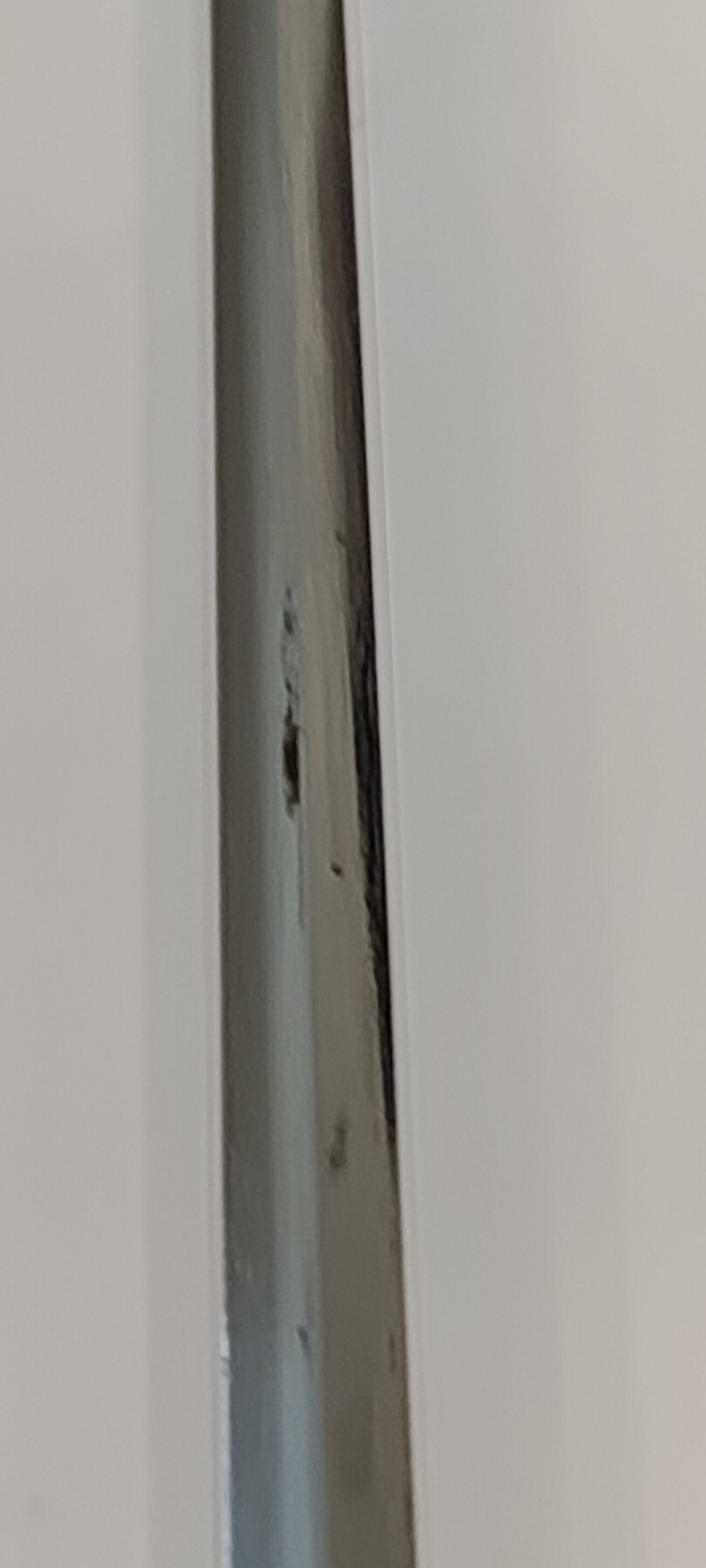
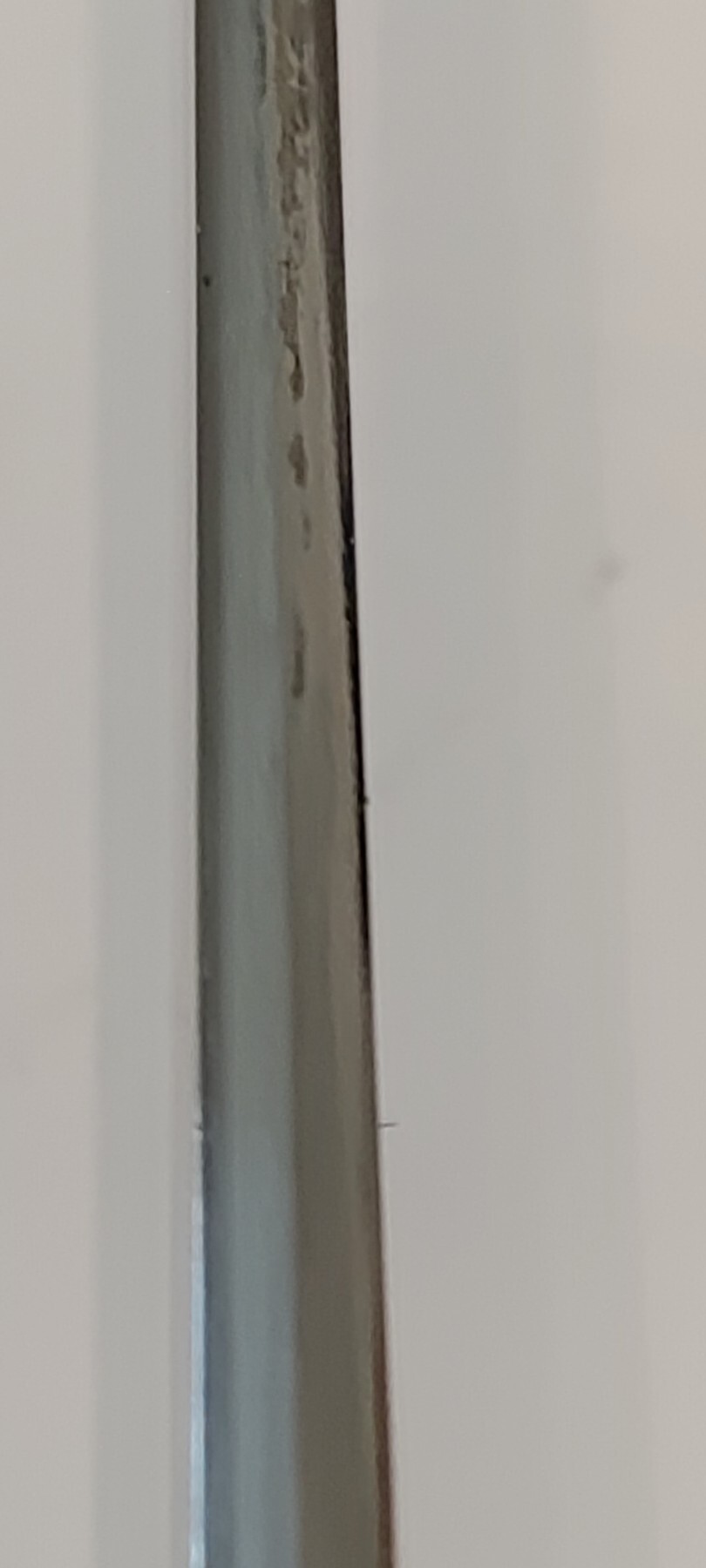
Hi there. Having examined this blade, I can say that the boshi is not reinforced. The shrinkage is fluid and homogeneous. There is a slight curve due to the narrowing on both sides and this thinning of the ji as well as the edge of the Hamon are very straight. Have a good day. RG.
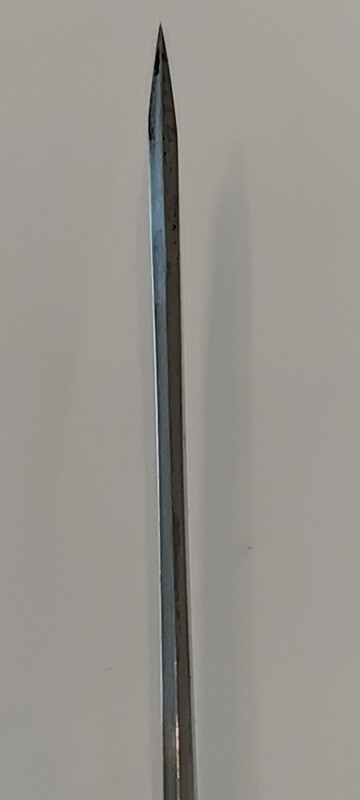
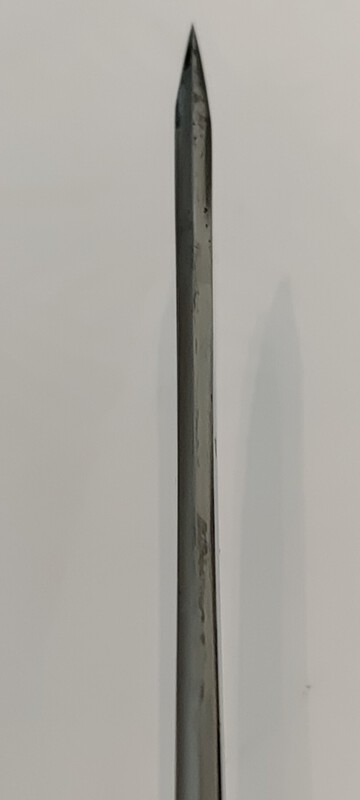
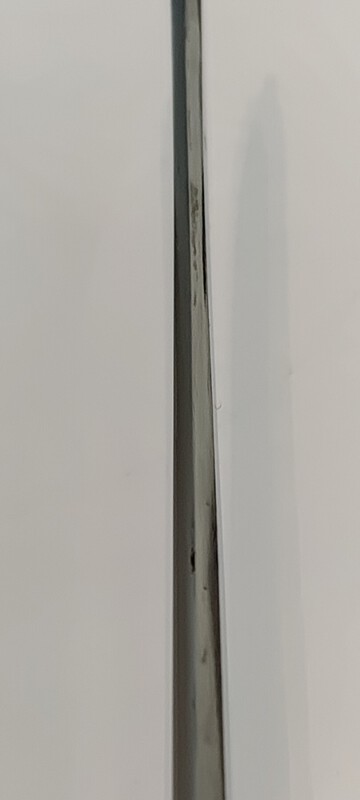
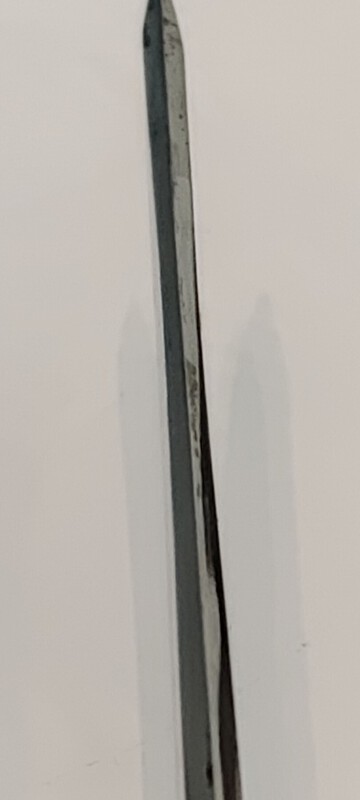
-
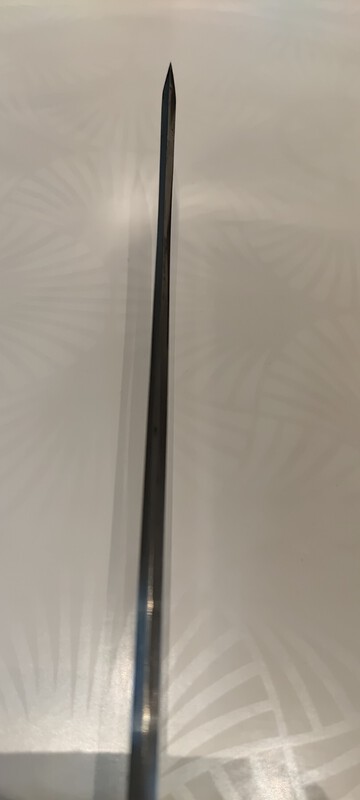
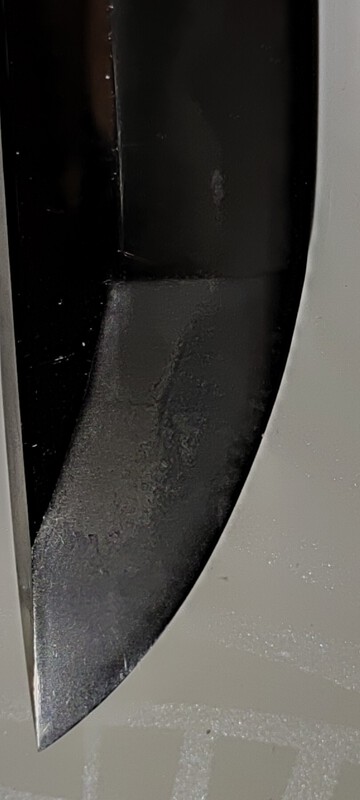
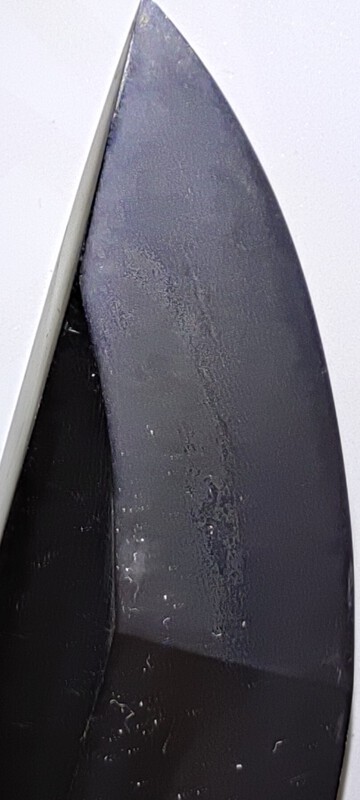
good evening. Could you explain to me if this narrowing of the blade just before the boshi is normal? Cordially. RG.
-
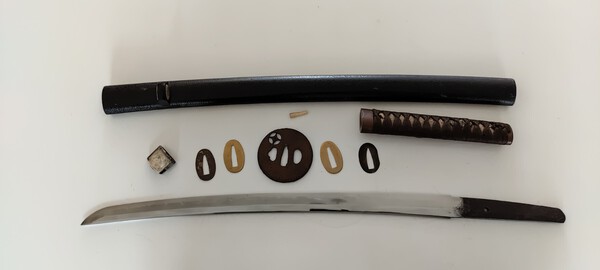
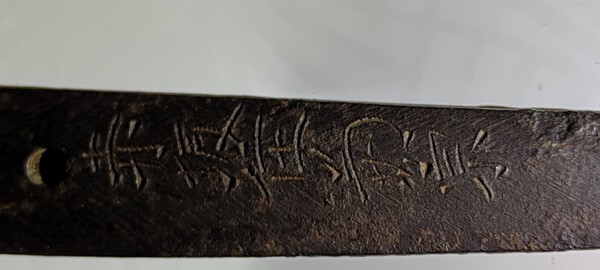
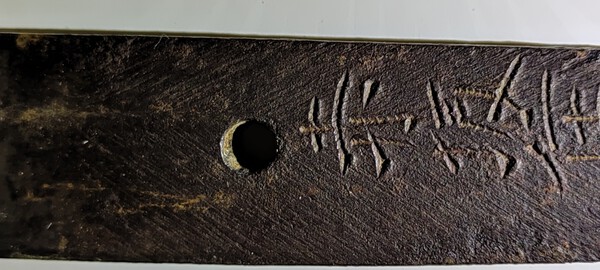
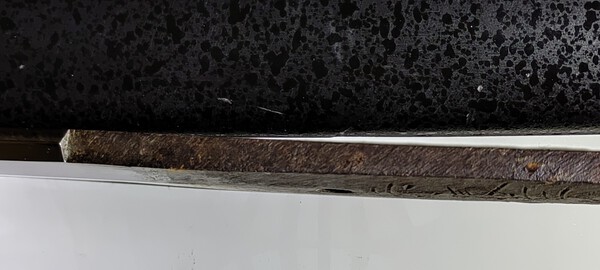
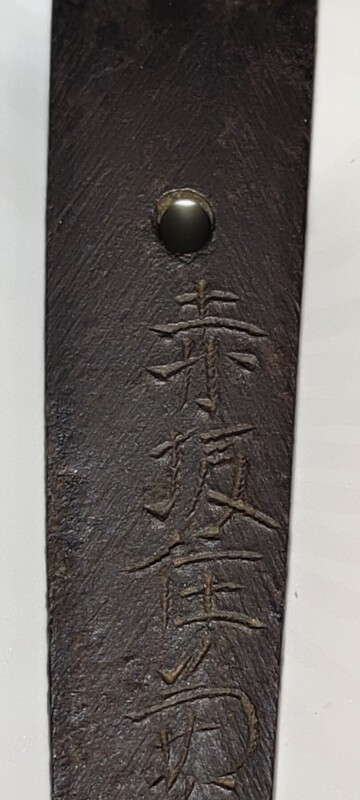
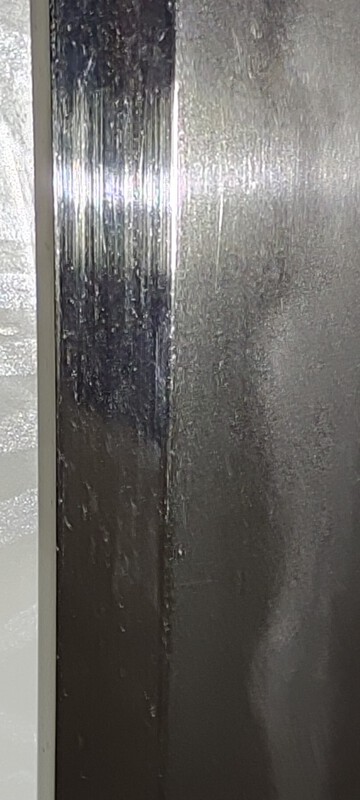
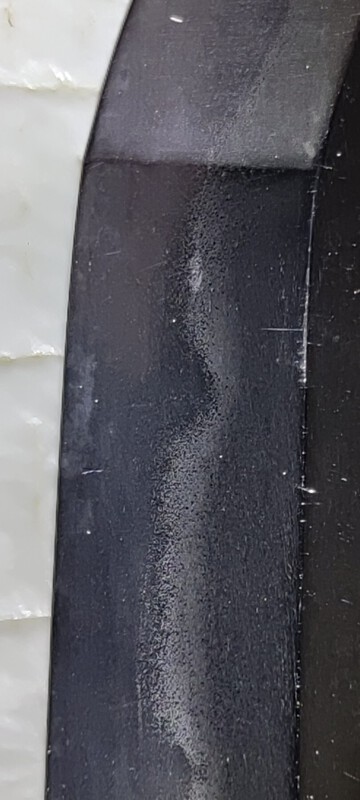
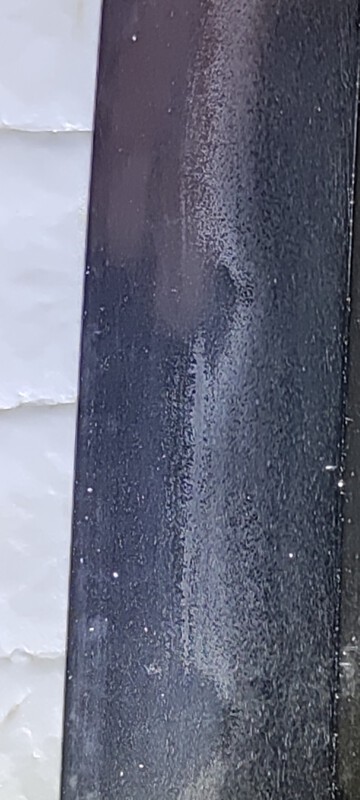
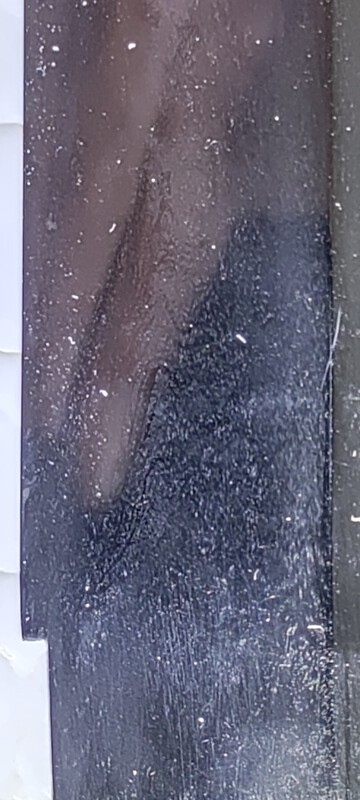
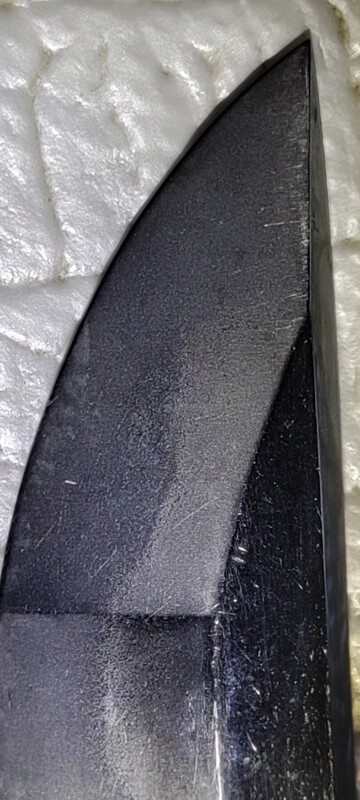
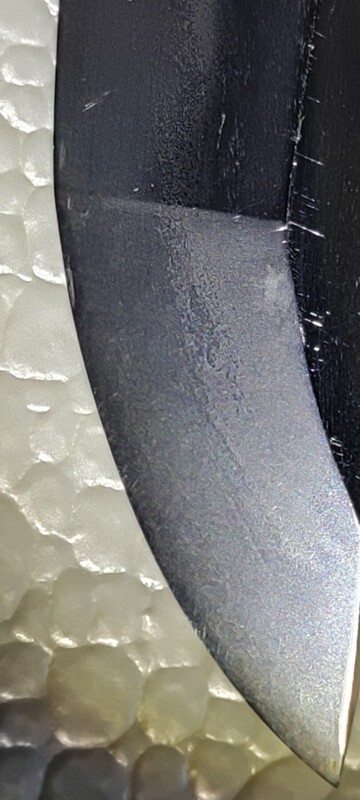
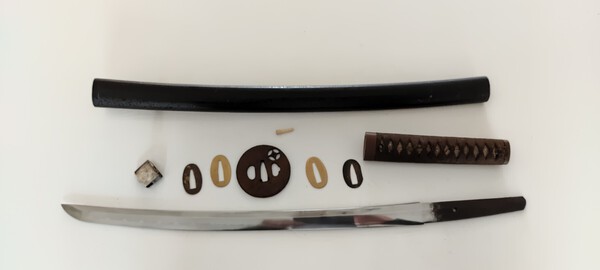
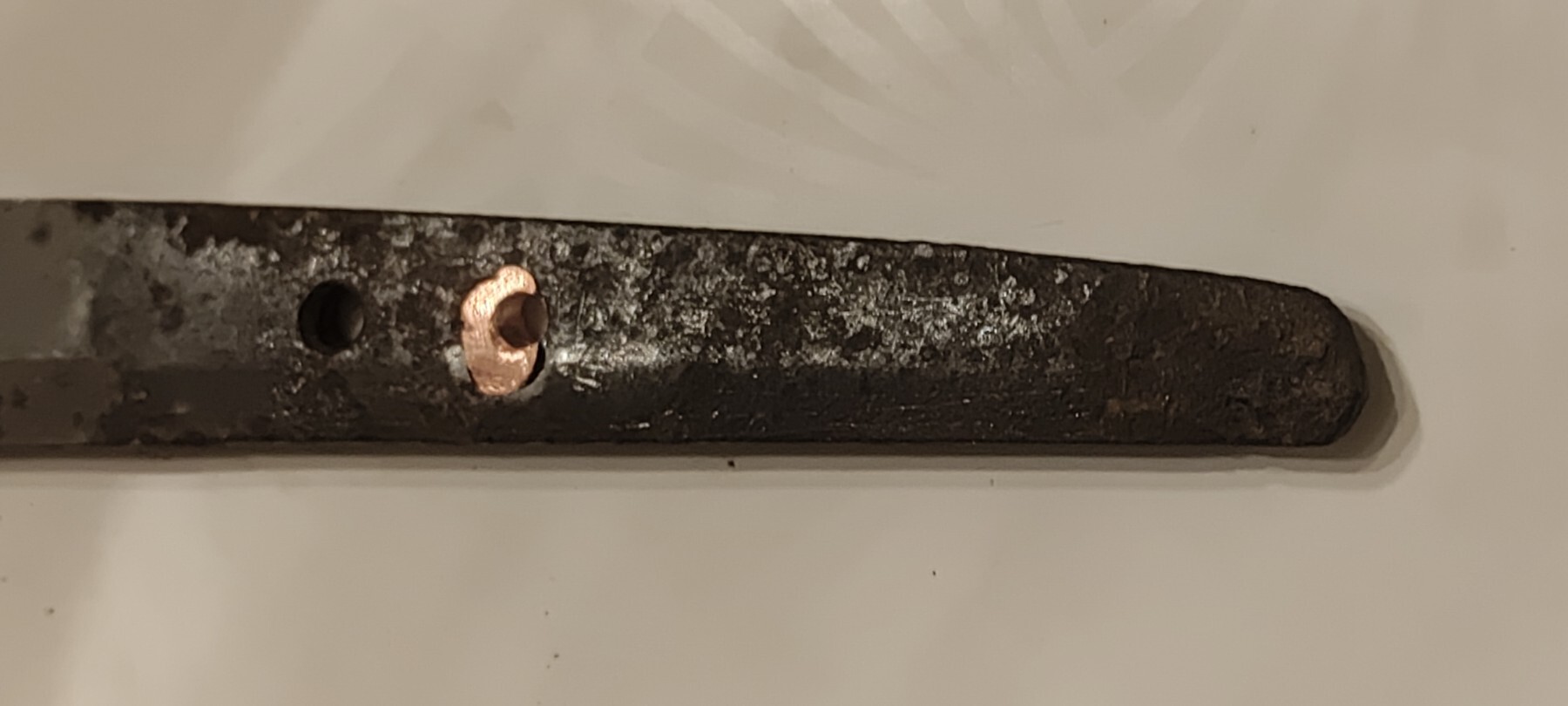
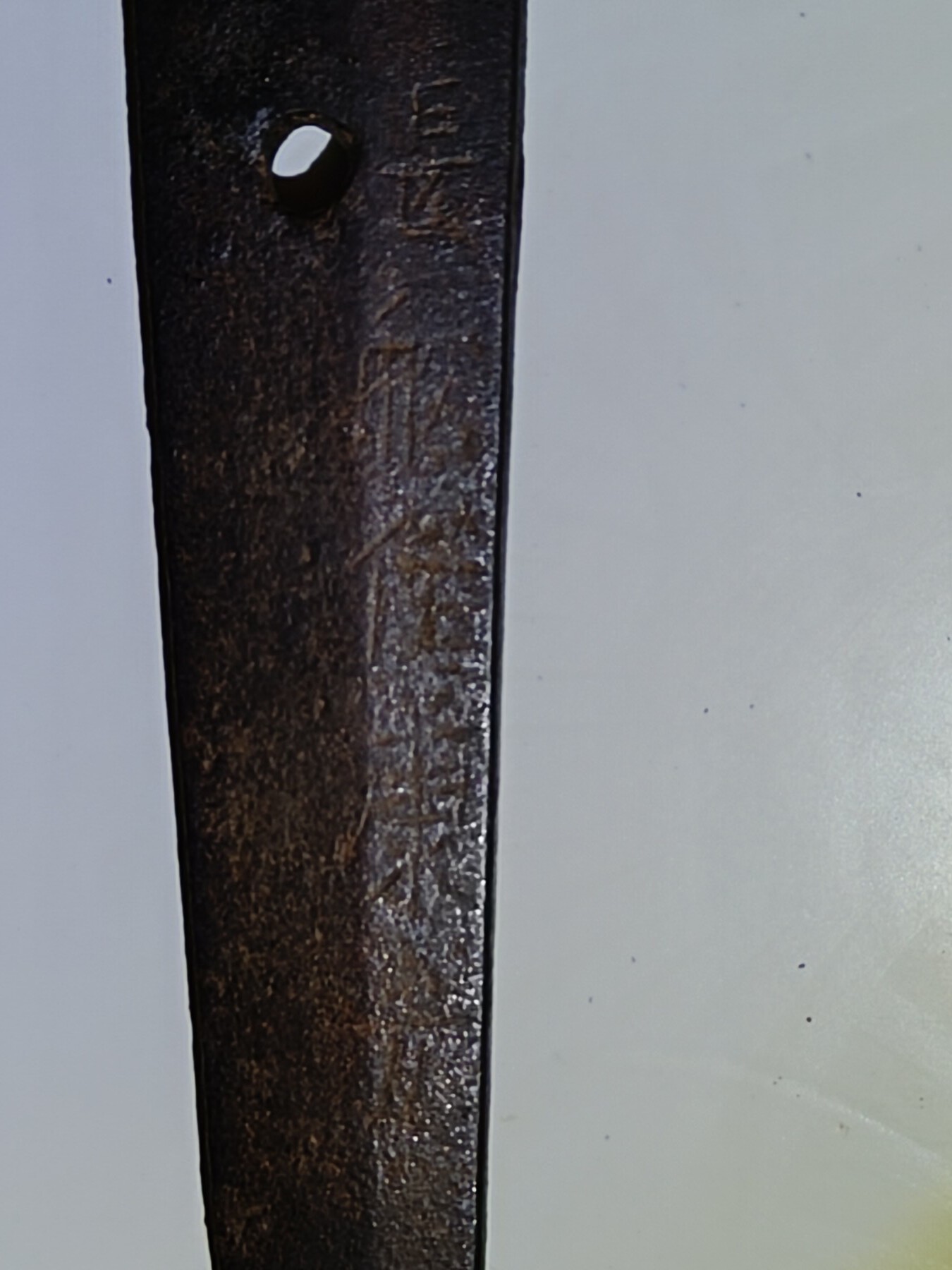
good morning. here is my latest acquisition and I have many questions. the nakago takes me back to yamato school with yasurime takanoha and nakagojiri agari. I post some photos that should save me from talking nonsense. RG. Caractéristiques du wakisashi.docx

-
good morning. here is a signed kashira that I cannot identify. could you help me? thank you in advance have a nice day. Rodríguez.

-
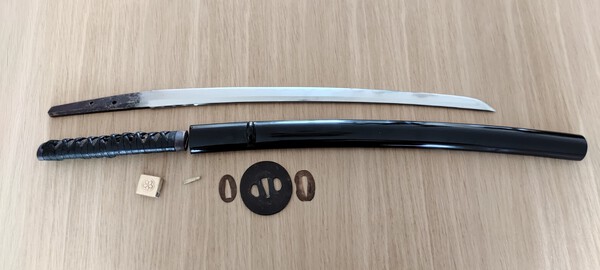
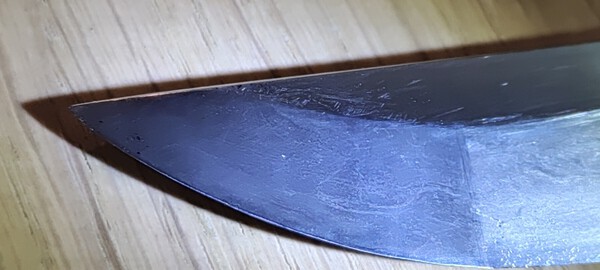
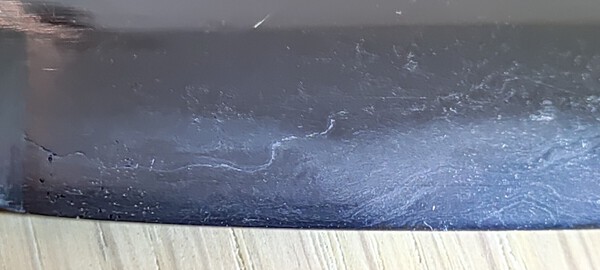
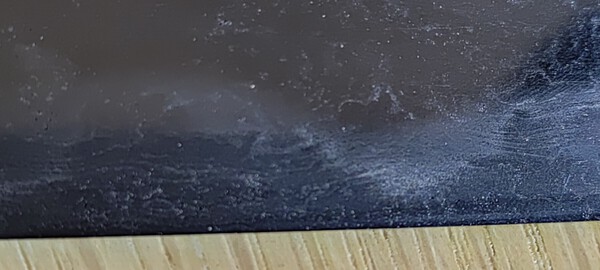
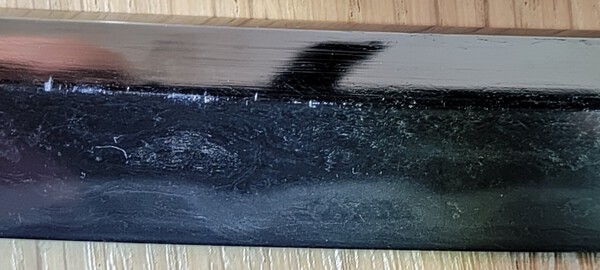
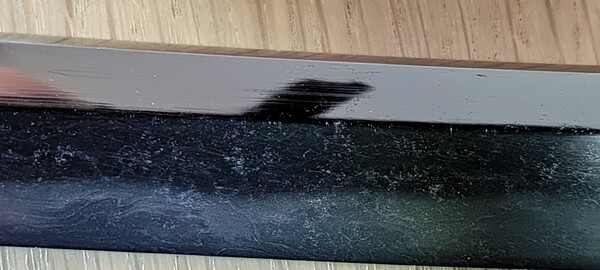
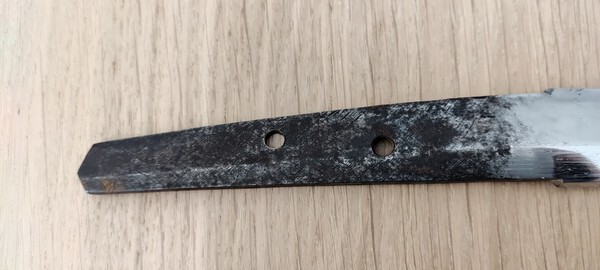
good morning. the nakago of this wakisashi has a yasurime higaki so probably yamato, mino, or naminohira school. my lack of knowledge leads me to this observation. on the other hand I can not make the hamon and the ji coincide in its cases. could you help me. best regards and have a nice day. rodriguez.

-
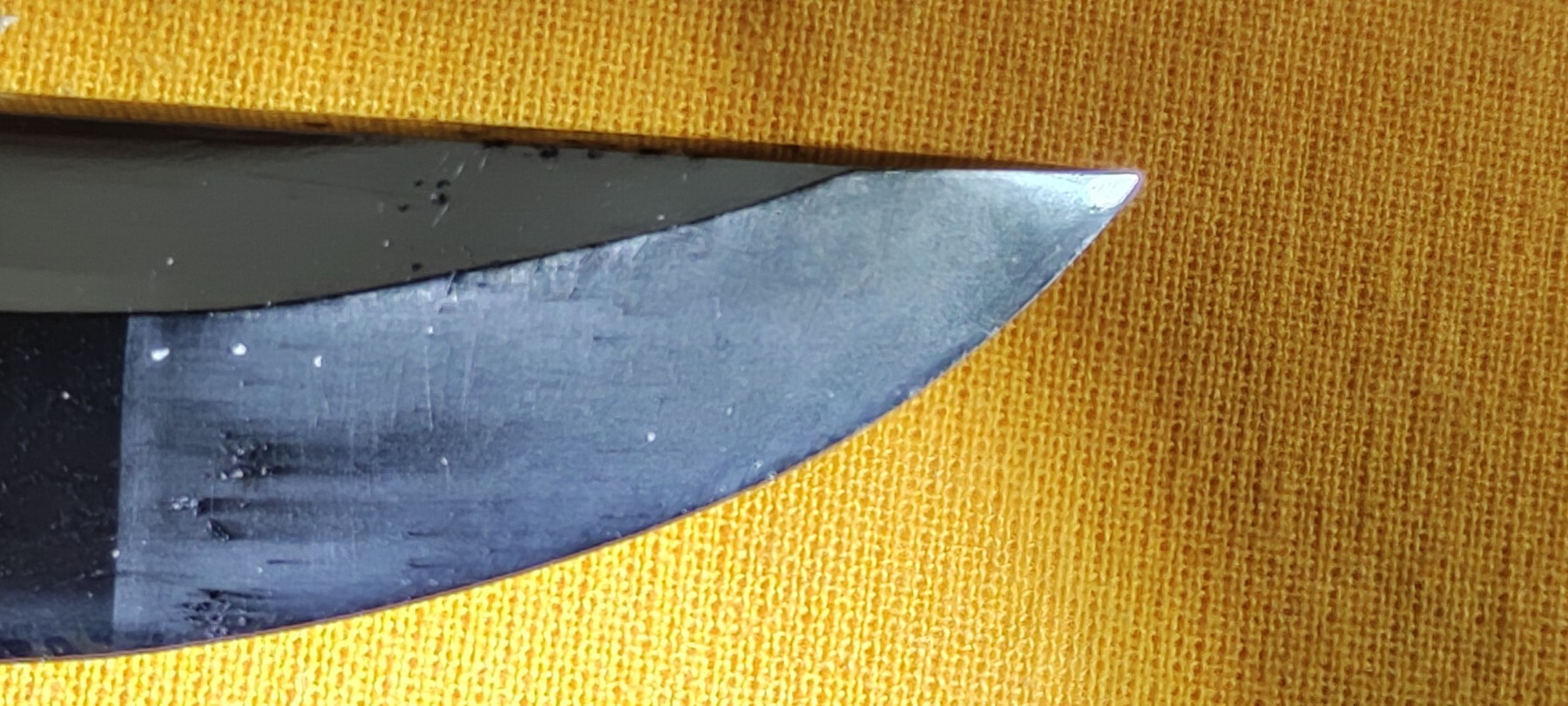
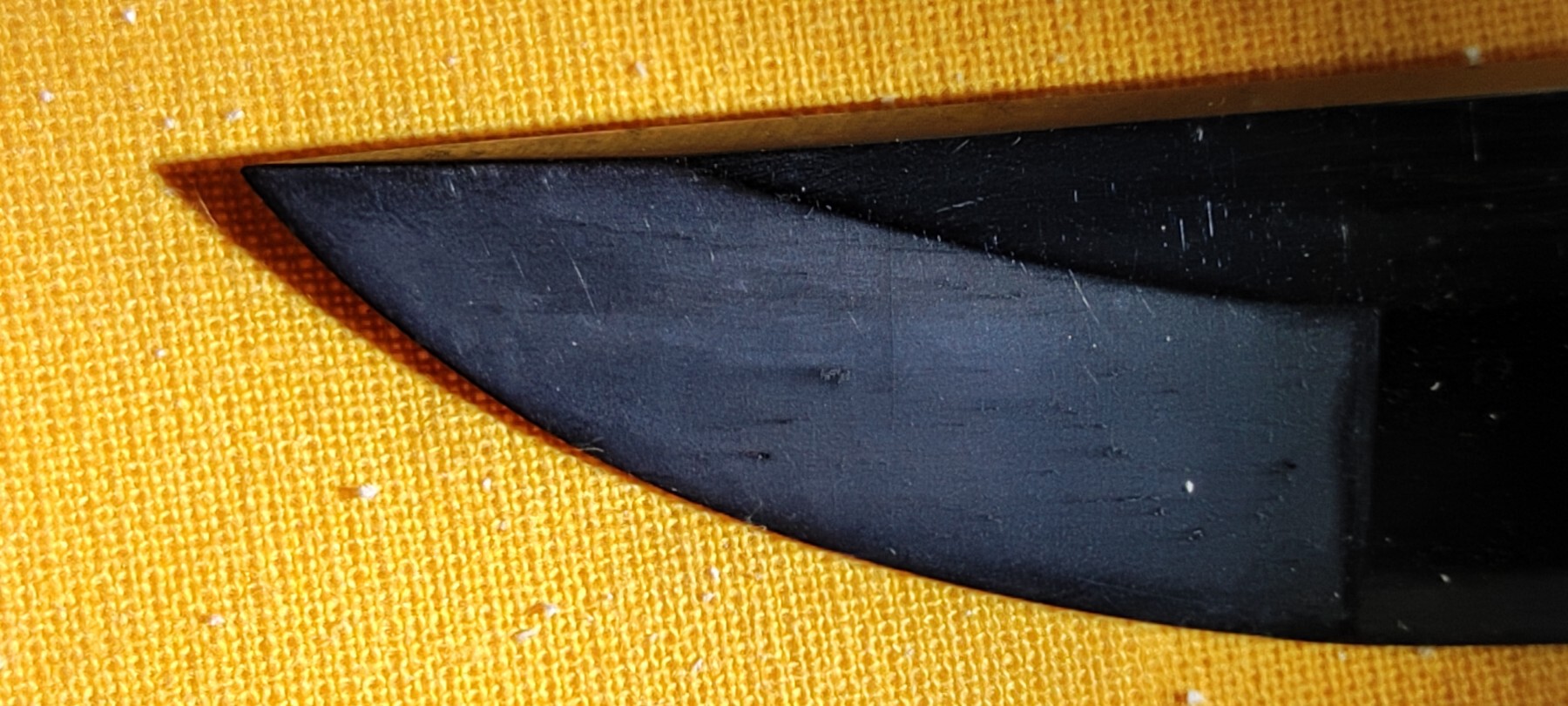
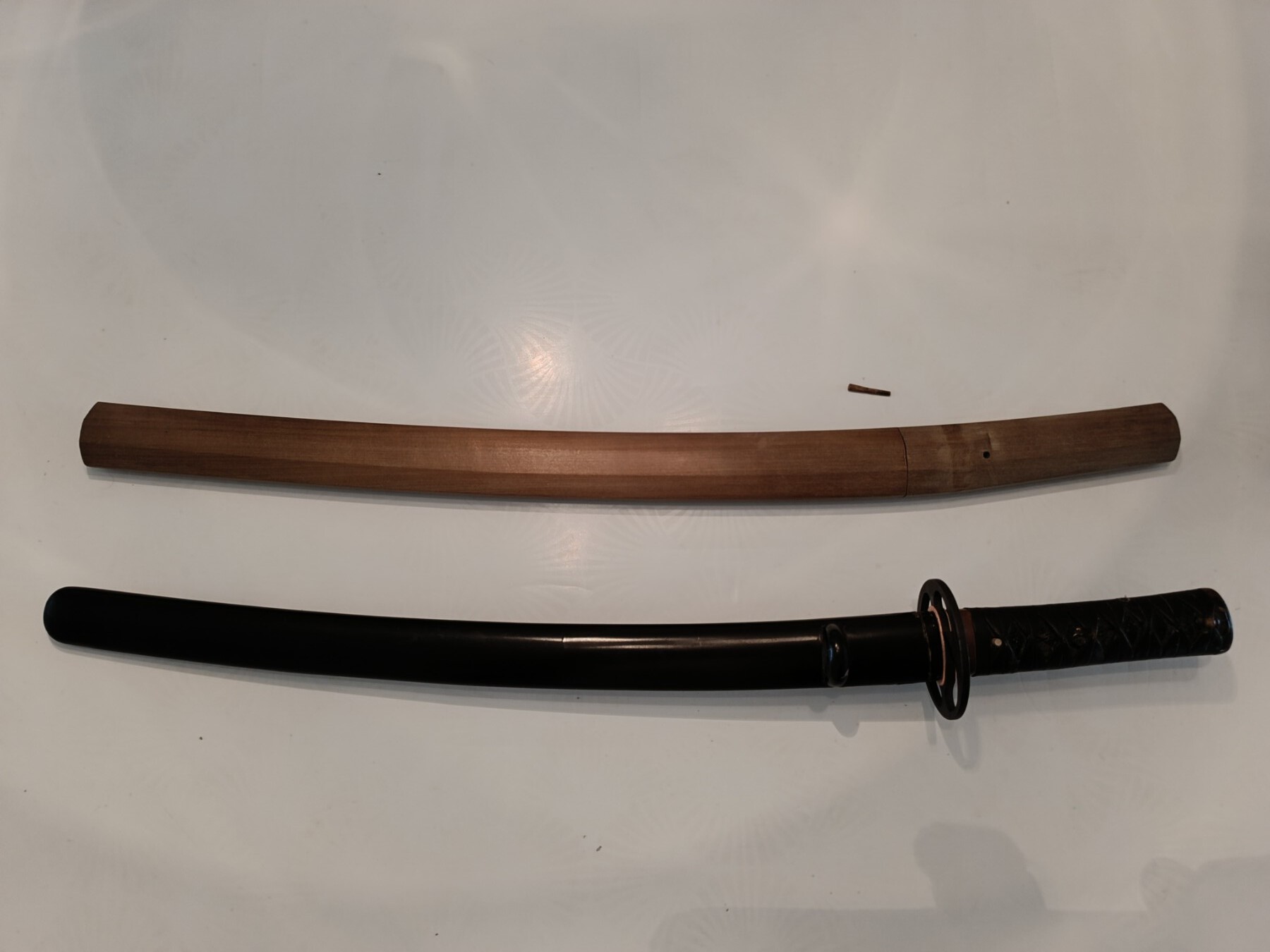
Good evening. here is the final version of the kantei on a wakisashi that I exhibited last Saturday. could you tell me if I am approaching a form of reality or if I am still far away... Many thanks to you and have a nice evening. RG. SUGATA : Tsukurikomi : Shinogi zukuri . Torii Sori (Kyo Sori). Cette forme porte le nom du Torii ou porte d'entrée d'un sanctuaire shintoïste, ressemblant à la traverse incurvée. Le point le plus profond du torii sori coïncide avec le point médian de la lame. Kyo est un nom alternatif pour la province de Yamashiro , où de nombreuses épées de cette forme ont été fabriquées. Les sores d'une lame se trouvent en déterminant le point le plus profond de la courbe le long de la mune entre le munemachi et l'extrémité extrême du kissaki (section ponctuelle). mihaba (身幅), largeur de la lame du mune au tranchant : 28,8mm. sakihaba (先幅), largeur de la lame mesurée au yokoté : 22,2mm. saki-kasane 先重ね, épaisseur au yokoté : 4,2mm. moto-haba身幅, largeur entre le tranchant et le mune : 28,8mm. moto-kasane元重ね, épaisseur du mune : 6,2mm. kissaki : funbari (踏張り) d’origine. Lame large qui se rétrécit sensiblement mais uniformément vers la pointe n'a pas de funbari. kissaki : chu-kissaki. Fukura : rounded fukura. Shinogi : arrête longitudinale sur la lame.low shinogi, typique pour les lames Bizen et Soshu. shinogi-ji : surface de la lame comprise entre le shinogi et le mune. low shinogi . Les forgerons Sôshû et Yamashiro ont épaisseur du mune : un shinogi-Ji étroit. Mune, 棟 : iori mune. Hada : itame-hada (板目肌). Hamon : yahazu (矢筈) , Éléments midare fourchus ou en forme de queue d'arondequi ressemblent à des encoches de flèche ( yahazu ). Cette interprétation est souvent vue sur les épées Mino. tobiyaki (飛焼き) Taches durcies dans le ji qui ne sont pas reliées au hamon . bôshi 帽子 : la continuation du hamon dans le kissaki qui court avec un kaeri (返り). togari-bôshi (尖り帽子) - à l'époque du koto, il était plus courant de laisser le hamon s'écouler « naturellement » dans le kissaki . (Pointe de la lame). Lorsqu'il y avait une tendance à reculer vers le kotô à la fin de la période Edo, le hamon a également poursuivi sa tendance à nouveau dans le bôshi . Nakago : ubu. Le Nakago est la soie d'une lame japonaise. Il est appelé Ubu s'il n'a pas été raccourci ou altéré. Forme typique d'Ubu Nakago (Futsu Gata) Cette forme générale est le type nakago qui survient le plus fréquemment. Yasurimei : Les Yasurime (modèles de marques de fichiers) sont une considération importante dans le kantei (évaluation). Nakagogiri : extrémité du nakago . Période mi-Edo (1688-1781)








.jpg.2ec3ecebe18f8c2dcbd154717181bcdb.jpg)



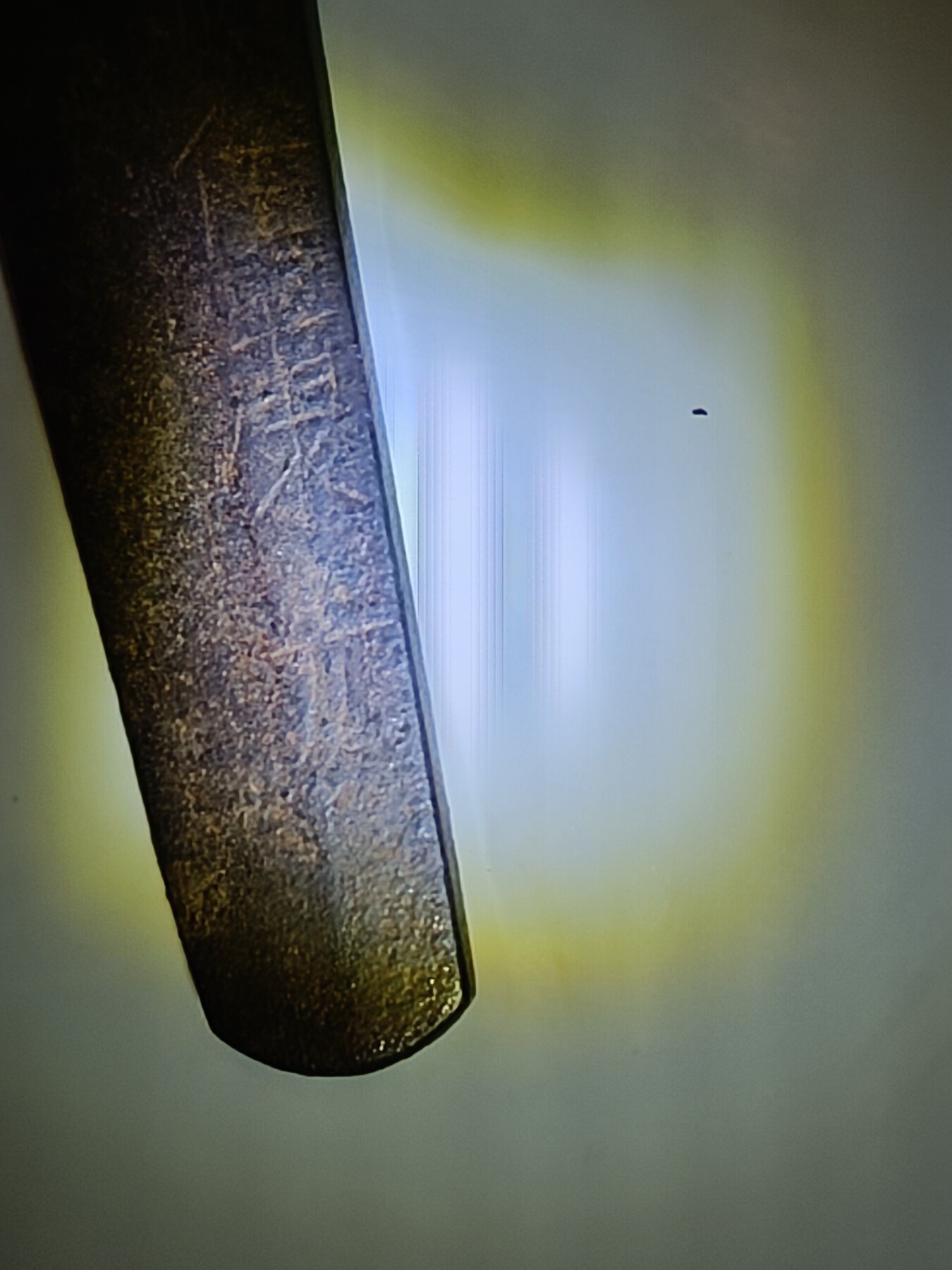


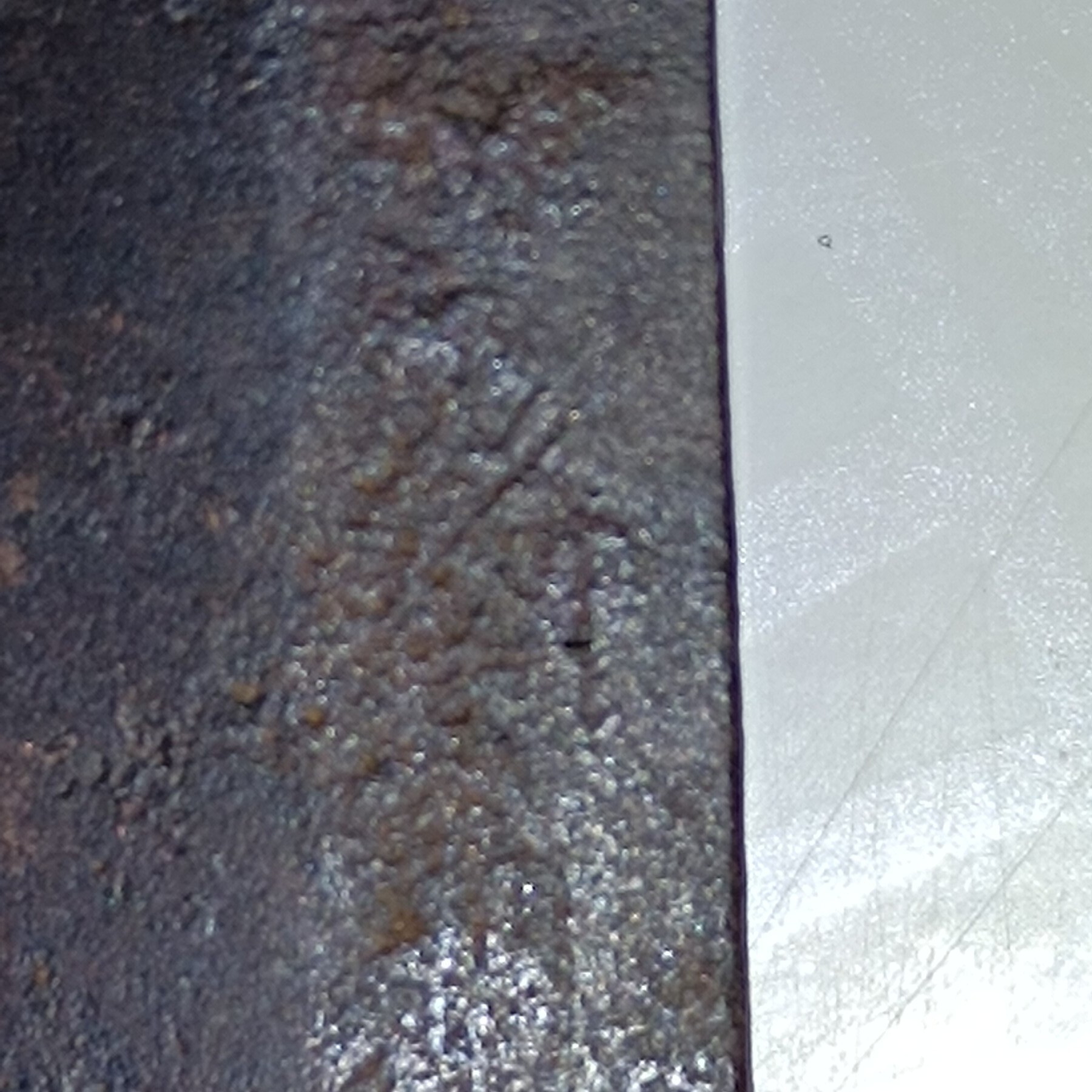



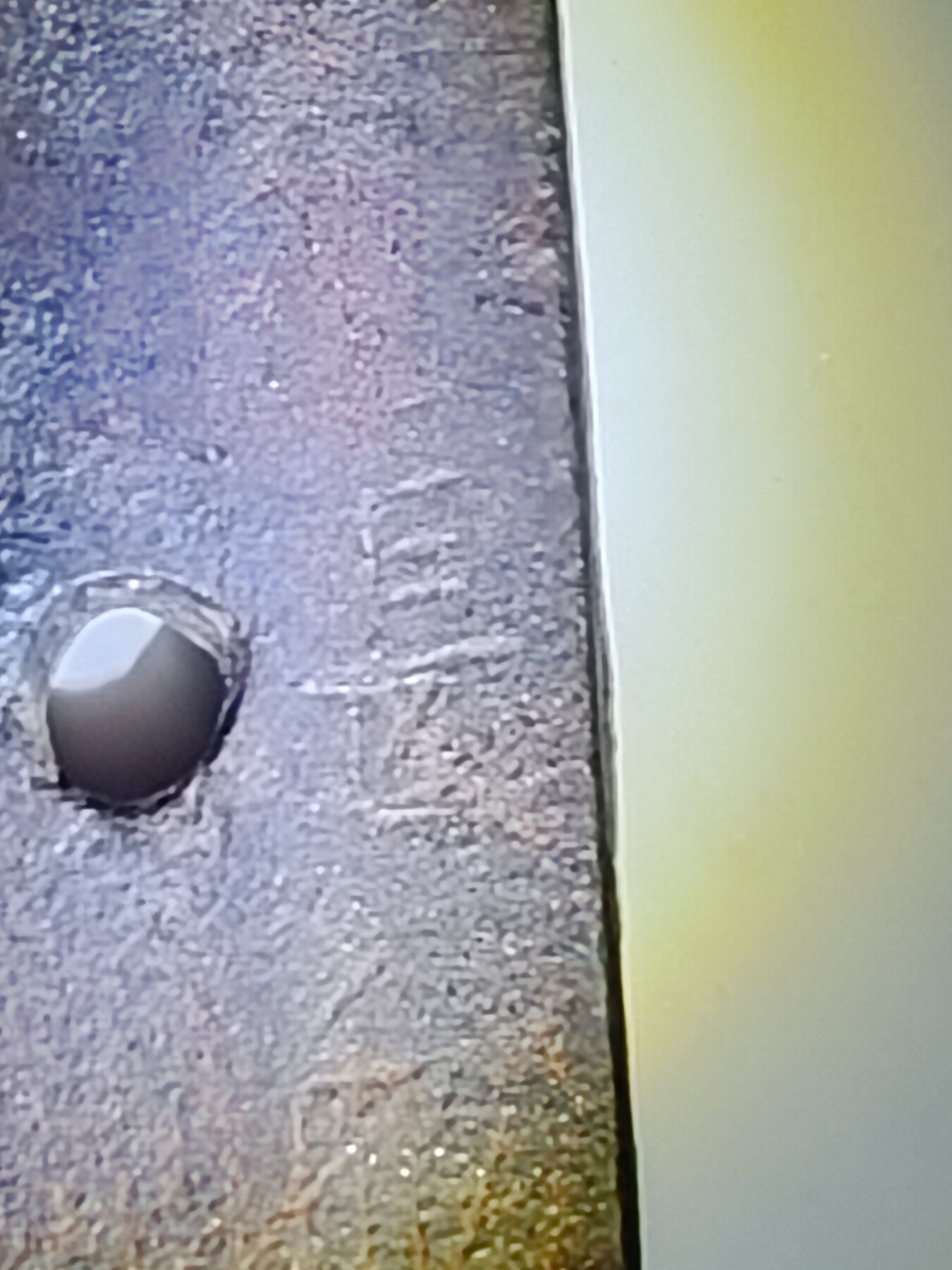


.jpg.bf70b499b41bb476f4f71c0145673b17.jpg)