dwmc
-
Posts
617 -
Joined
-
Last visited
Content Type
Profiles
Forums
Events
Store
Downloads
Gallery
Everything posted by dwmc
-
This all seems rather odd, Type 95 copper handles with mis-matched numbers. The two currently for sale on Ebay are also mismatched numbers. Just coincidence ??
-
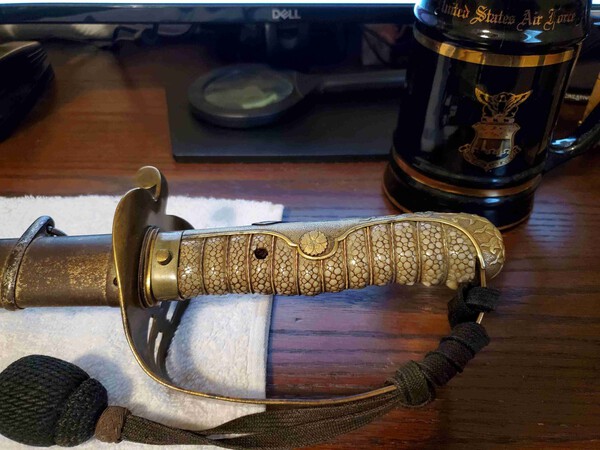
Agree, take John's advice. Restoration (Basically a nightmare) Locating proper fitting parts, chuso, fuchi, etc, is difficult, if not close to impossible in some cases. Below is an example I've been working on for close to a year, chuso, fuchi, menuki, wiring. Seppa still aren't correct... Dave M.
.thumb.jpg.a45157b10eaf86d211077e2cde7c25fe.jpg)
-
I received a reply from the seller in Japan. He indicated the sword was actually (Sensya-tai) wwll tank corp. I would like to have known if he got this information from a direct relative of the original (Sensya-tai) soldier. He didn't have or offer further information beyond what I suspect he had been told by the individual he purchased the sword from and didn't indicate if the person was or wasn't a relative with firsthand knowledge. I guess as with many of the wwll Shin-gunto swords there will always be an unknown element attached. We can either believe what little information may be available or reject it entirely. Appreciate the interest and comments, Dave M.
-
Probably something I should have done in the first place, however I'll recontact the seller and inquire as to the reason for using an abbreviated airplane term in reference to a Gunto koshirae. Hopefully he will provide an explanation as to his logic, could be interesting. I'll post an update...
-
Quite possibly Bruce or maybe just to confuse guys like me. The odd thing about this term was both swords where listed in Japan and both had the buckle attachment. One of the desciptions actually referred to sword as crew gunto type. Apparently the term originated with Japan seller or sellers. Another odd one... Dave M.
-
I recently shared a WWll Gunto in which I eventually came to the conclusion it was most likely a late war sword using sparse components available at the time and was used very little if at all in combat due to its exceptional condition. This however, is not the reason for this topic. I failed to mention in the previous thread my sword was listed as a long wakizashi 22" in (Zerosen koshirae.) My question is, what exactly is meant by Zero-sen koshirae ? I've noticed only a couple times in the past this type koshirae description used, and also like the sword I purchased had a buckle type fastener through the tusba, rather than the more traditional button snap. Is this a term (Zero-sen) used for possibly a crew sword, pilot sword??? Any information appreciated. Dave M.

-
Buckle rather than a snap button on leather field cover??
dwmc replied to dwmc's topic in Military Swords of Japan
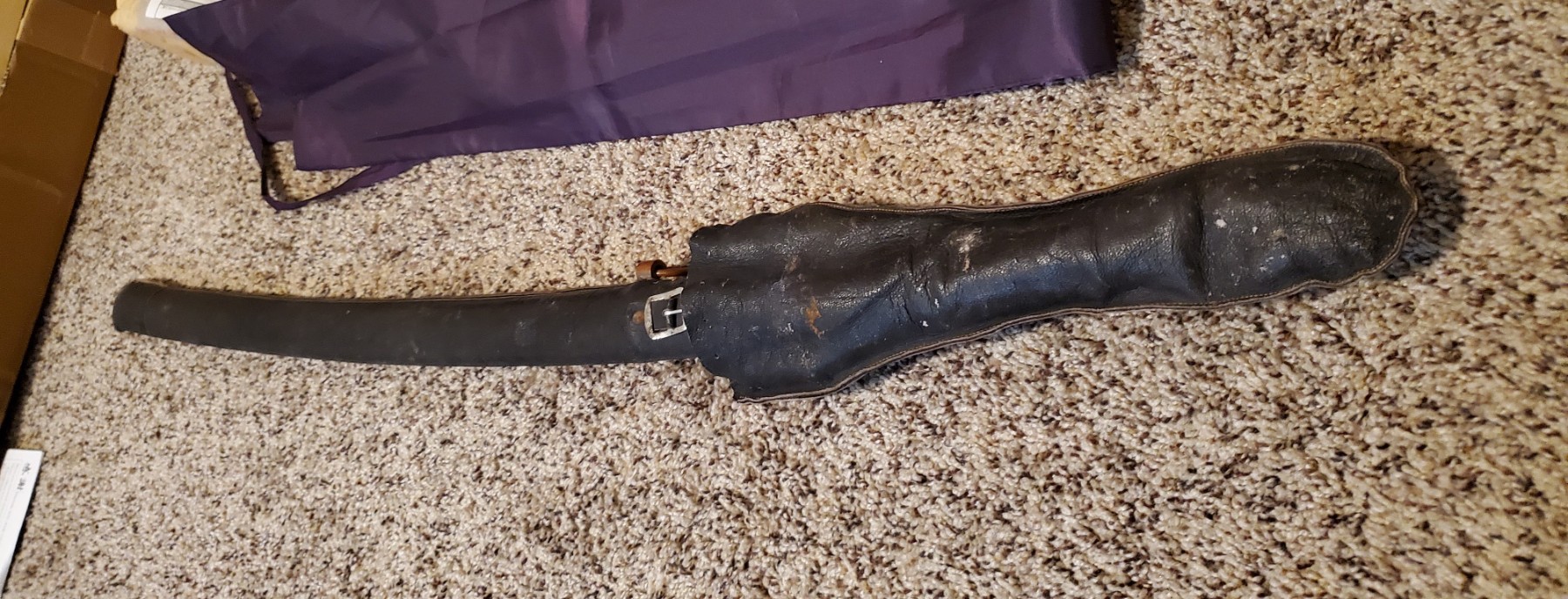
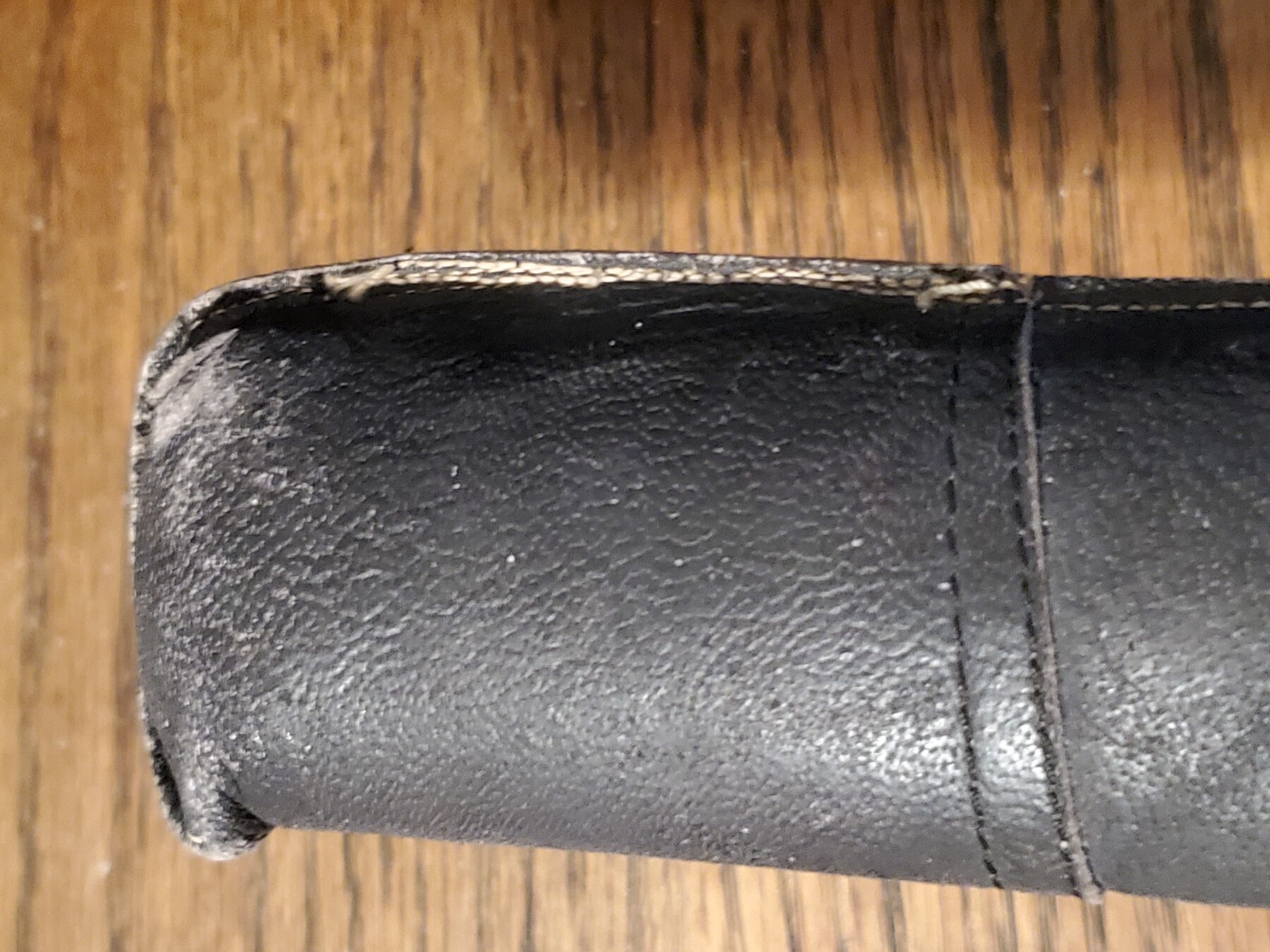
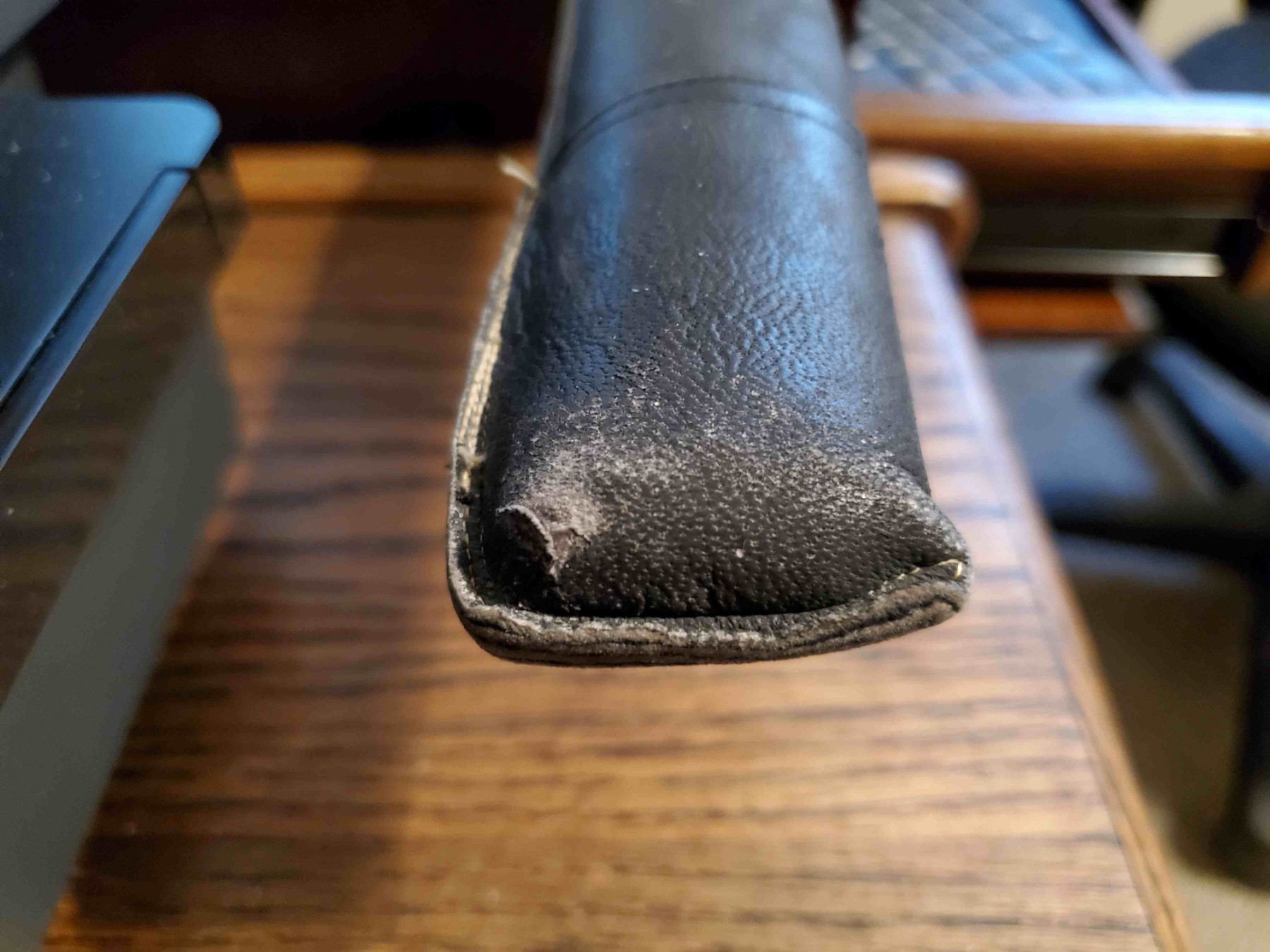
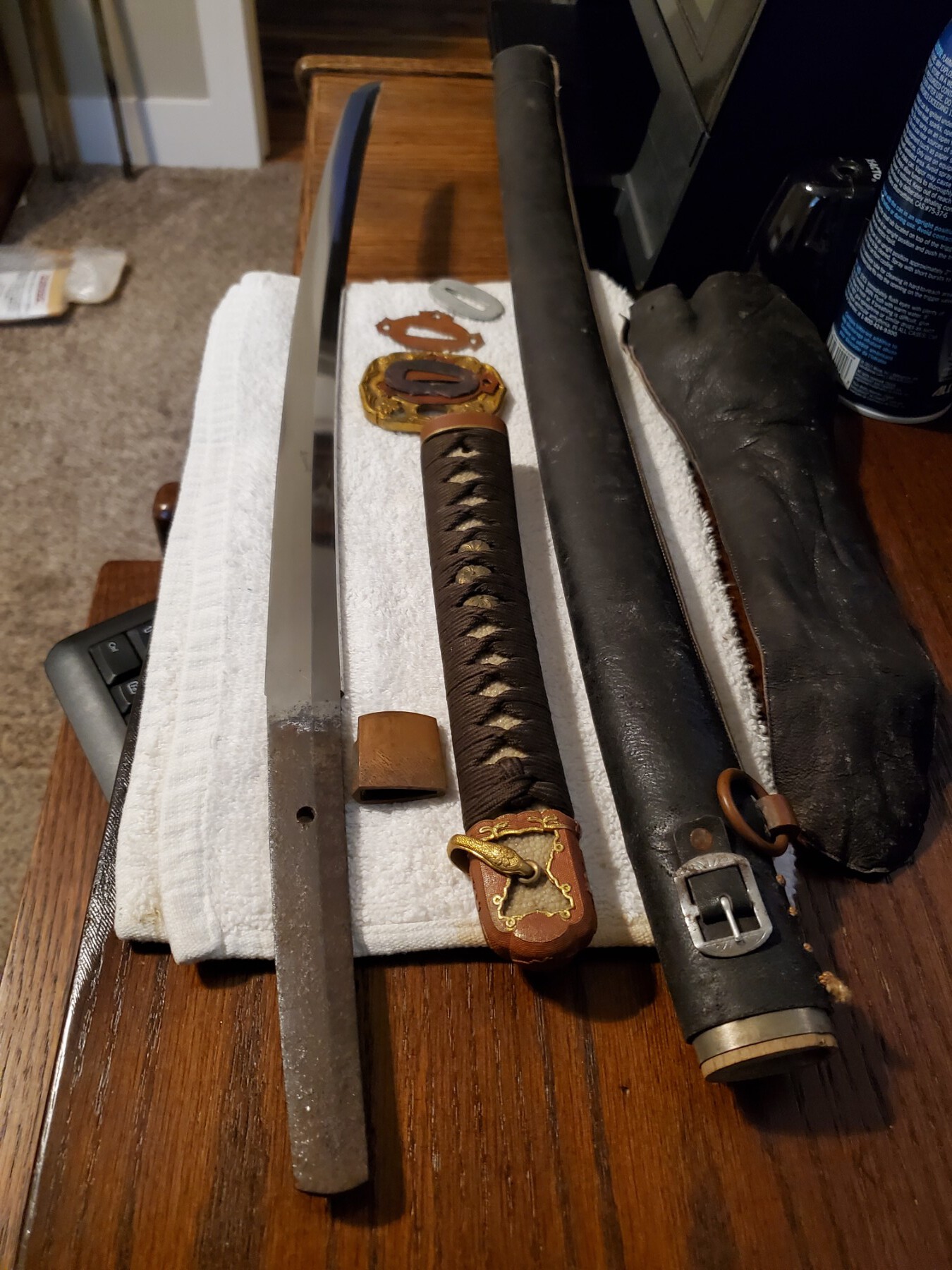
I thought I would share a final comment on what I believe this sword is based on the responses above. As mentioned, I purchased this sword from Japan, so it's definitely not a post war bring back job, although it could have been a post war Japanese creation as Dave R. suggested. True, buckles are not that unusual on leather field covers, however, cheap "tin toy" type buckles are not. When I dismantled the sword there was heavy (verdigris) on the leather fastening seppa, tsuba, and other metal seppa. You may also notice, compared to Dave's field cover examples, the material is different, and the quality is certainly lower. Also, I notice there are no metal eyelets and are tied together with string. The fittings are fairly decent, the tsuka ito is in almost "too good' of condition. The tsuka and saya cover are only moderately damaged and show no evidence as ever being in the field. The blade itself is in excellent condition outside of a couple of small rust areas. So what does this amount to...I'll be the first to admit, I have a weakness for Gunto which are a bit out of the ordinary even though not particularly significant in any meaningful way. After looking at the sword upon arrival, taking note of lack of snaps, metal eyelets, the heavy verdigris, string binding, possible pig skin, rusted rivet and buckle, yet fairly decent craftsmanship. It occurred to me this is classic last ditch/late war work? My thinking is this is a very late war, (put together) sword which was assembled by what items were available at the time. I theorize the war ended, the sword was worn very little if at all, was not turned in at wars end, and was hidden away for the 70 + years until a few months ago... This of course can only be based only on a preponderance of what evidence is available, but at least to me seems to be a fairly reasonable possibility. Only being able to speculate on what (may) have occurred with many of these WWll era gunto is part of the frustration as well as fun with WWll sword collecting. Dave M. -
Buckle rather than a snap button on leather field cover??
dwmc replied to dwmc's topic in Military Swords of Japan
I agree with your observation Dave. Typical it isn't. I would go so far as to say it isn't cow leather. Possibly pig, or some other leather type of material. It is extremely supple, and yet has the appearance (in hand) as having considerable age, at least WWll era? There is however a sewn chape at the end of the saya fashioned out of the same type material. The sword is out of Japan, so it's definitely not a bring back "Bubba job." Very odd indeed!!! Dave M.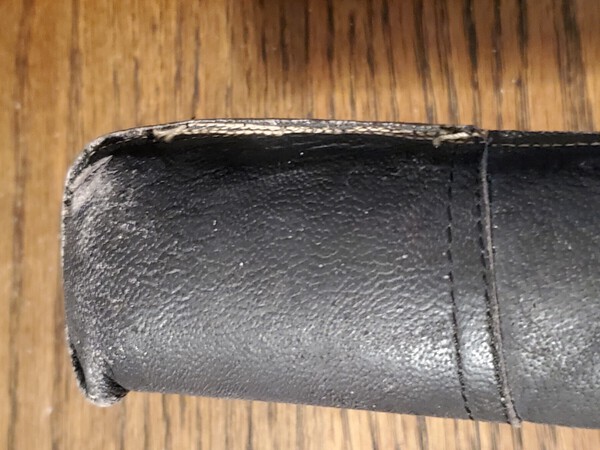

-
Buckle rather than a snap button on leather field cover??
dwmc replied to dwmc's topic in Military Swords of Japan
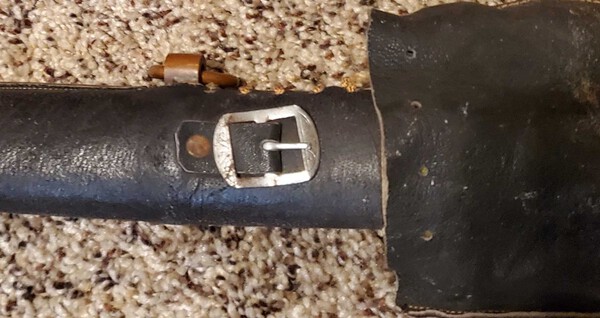
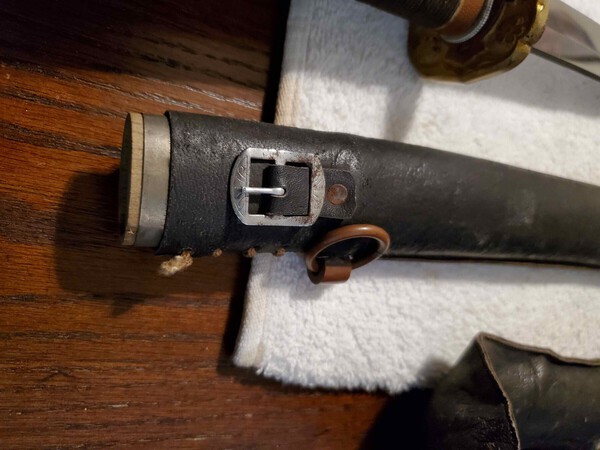
I suspect it's original to the cover due to the fact as Bruce pointed out it is the same leather and definitely old. However, as John mentioned, it is a light weight buckle, of which you certainly wouldn't expect to find on a serious field combat cover. I guess it seemed like a good idea at the time to the leather craftsman, yet the photo of the leather attachment seppa was the end result of the great "buckle" experiment. Appreciate the comments and hope members enjoy seeing something a bit out of the ordinary. Dave M.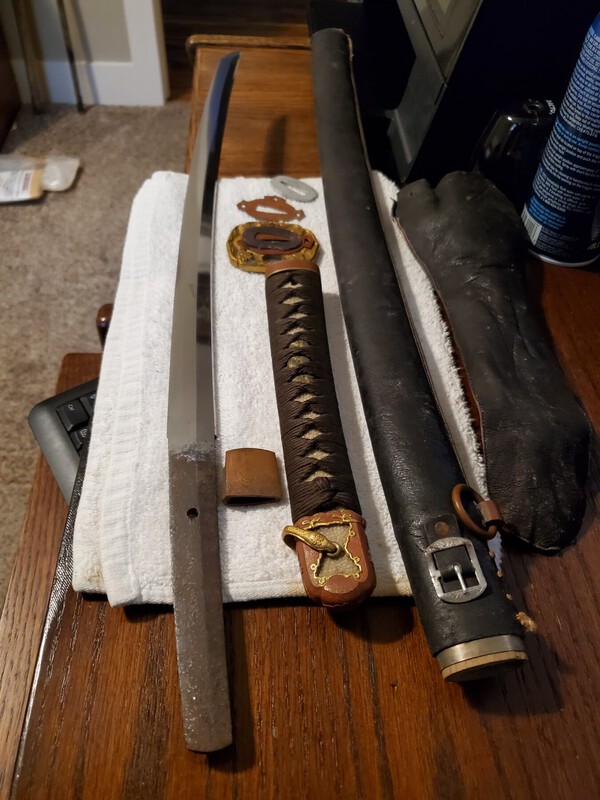
-
Buckle rather than a snap button on leather field cover??
dwmc replied to dwmc's topic in Military Swords of Japan
Leather seppa with appendage missing...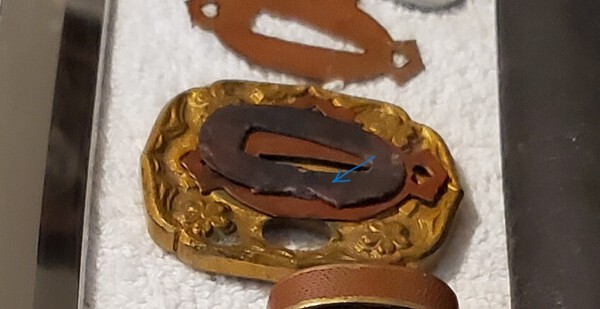
-
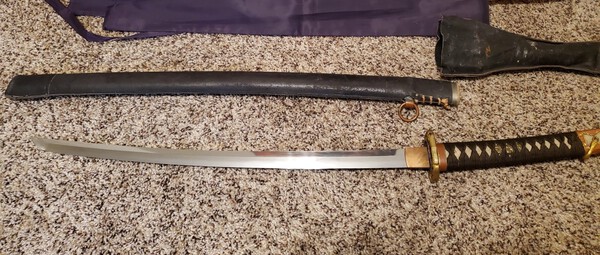
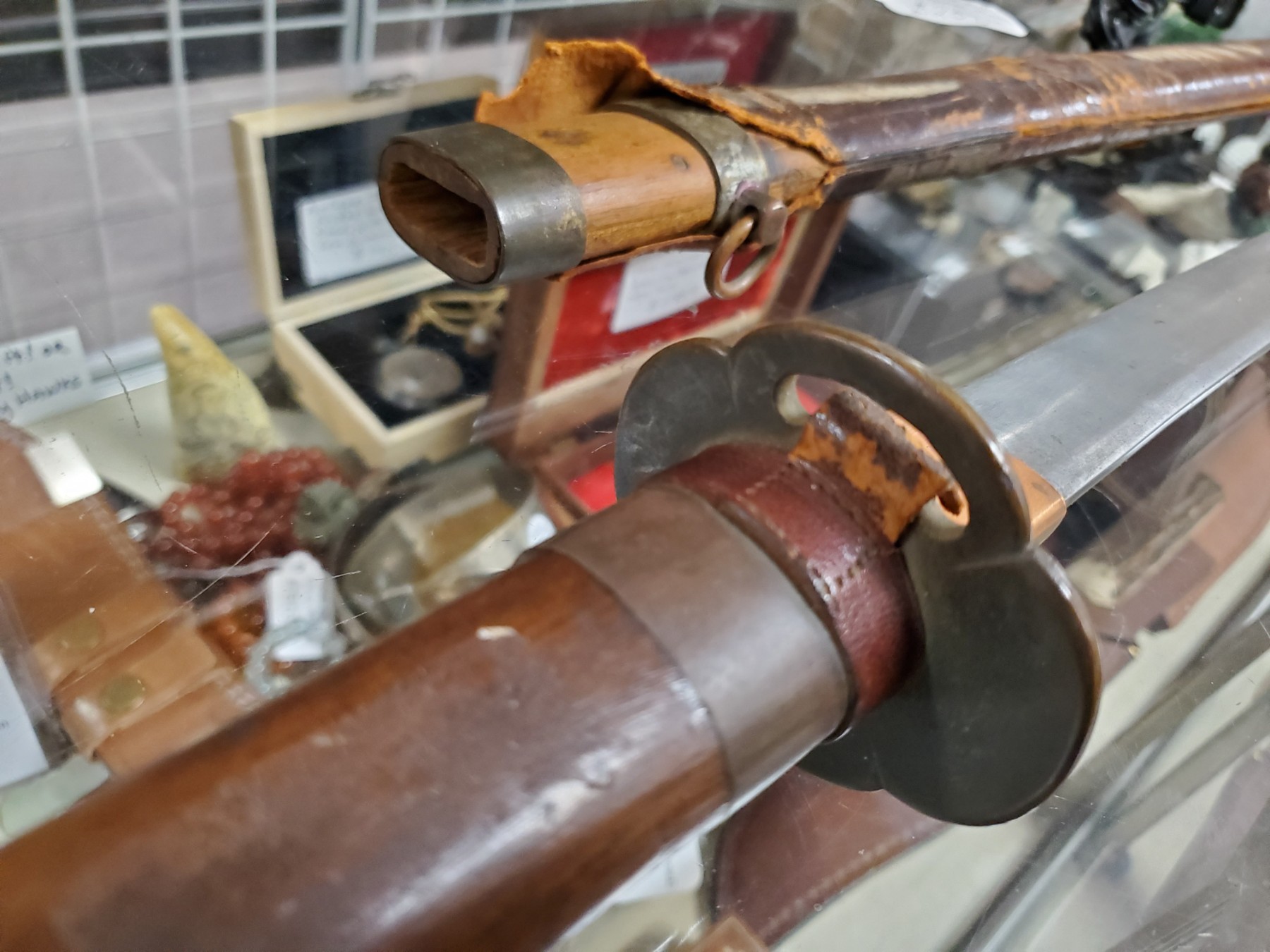
Thought I would share this example of a leather field cover which used a buckle rather than a snap. It was attached by a leather seppa with a belt like appendage which passed through the tsuba into the buckle. The leather seppa was still with the sword, yet the appendage has long been missing for obvious reasons. However, still a bit interesting. The sword appears to possibly be shinto era. Ubu, mumei, decent polish, well balanced, rather elegant and a sword I'm sure would have been a first choice of a WWll soldier to carry into combat. Dave M.
-
In summary of posted Sword. 1. It's not a traditional Japanese made sword. 2. It's most likely a "Peta Katana" produced in Japanese occupied Indonesia during WWll. (Dave R.) 3. The term " Island Sword" is somewhat of a misnomer. Actual Japanese swords forged off main island are designated " Field or improvised." (As per Kiipu) 4. I incorrectly mentioned the sword was "field" made in Indonesia whereas it was probably produced by local sword smiths and is not a Japanese sword. (Yet a facsimile in many ways) After further research I noticed there's nothing new about these types of swords and has been discussed in the past (by myself also.) However, they do seem to show up on occasion and I guess could be legitimately considered part of WWll Pacific Theater history... Best regards, Dave M.
-
Got it, I think....Therefore, it should actually be called an "PETA katana" field made in Indonesia while under Japanese control. Thank you both, Dave M.
-
Thanks Thomas, Yes, definitely similarities between the two swords. I think between you, Hamfish, Dave, Bruce, Chris, the consensus is most certainly another one of the Island made type swords. I'll let the owner know the most likely area and type of sword as he currently has it incorrectly listed as "Old Japanese." Thank you all, Dave M.
-
Excellent Dave, I thought you would be the guy to sort this (somewhat) Japanese looking aberration out! Well done, Indonisian, makes perfect sense... Thanks again, Dave M.
-
Chris, These are a few additional pictures you mentioned. (I'm even further perplexed by the sword after looking at it again). I thought I could see a very tight Kanuka type hada, but not conclusively. The shinogi appears to be more near the center of the blade, and there is absolutely no movement in the habaki or tsuba, which seems strange, almost as if it is bound strongly together in some way. I tried to move the leather collar on the tsuka to see if there was a mekugi-ana beneath, the leather was extremely tight, and I didn't want to damage it further. All I can say is this is a very odd Japanese type sword which is beyond my ability understand. Possibly some sort of rebellion era sword, or possibly an old middle eastern attempt to imitate a Japanese sword. Lastly, maybe an Island sword as Bruce suspected..... Dave M.
.thumb.jpg.324dc3c141441e81f41a5194f5f16ae0.jpg)
.thumb.jpg.7d9ba1450be51212207b708703e741d1.jpg)
.thumb.jpg.81d4ea1c72ff129b1dc3ae22f3beab98.jpg)
.thumb.jpg.8d9a17b2968ffb3de1ce12f5c2734fc2.jpg)
.thumb.jpg.e6754418c86999c29b64780d920b11fc.jpg)
-
Chris, I'll try and get better pictures of the blade, but as you know, even fairly good pictures of an out of polish blade don't turn out that well. However, at least we will see the overall blade shape (sugata). No, I wouldn't pay $695 for the sword, although, I might consider 3 or $400 just for the novelty of it in my collection. Dave R. Do you have any idea of what you think this sword may be?? Dave M.
-
Hi Chris, I also felt the Mokko shaped tsuba was a rather interesting for an island made sword, and yes, the leather and overall appearance seems to be at least eighty years old. The owner is asking $695. Dave M.
-
Thanks Bruce, I was kind of thinking that also.
-
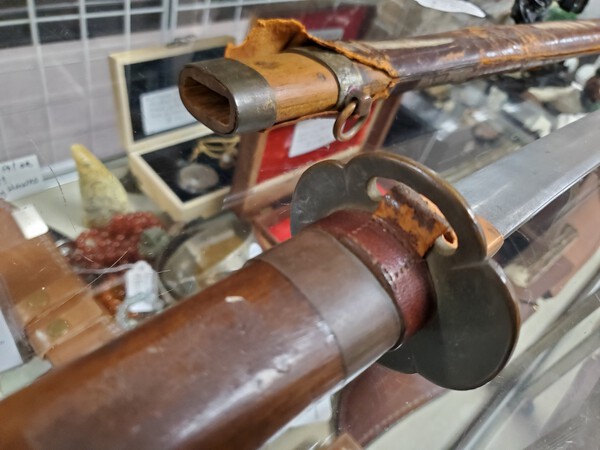
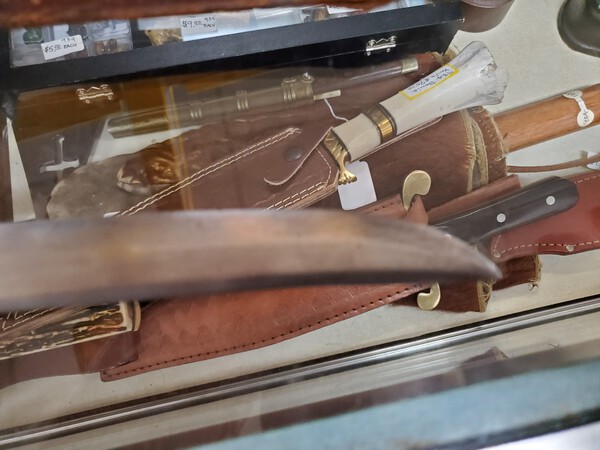
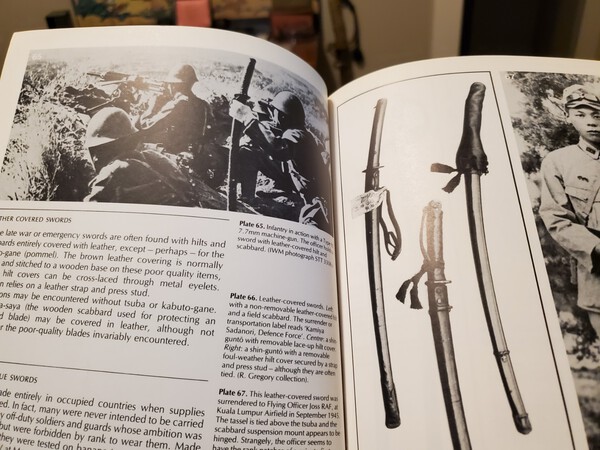
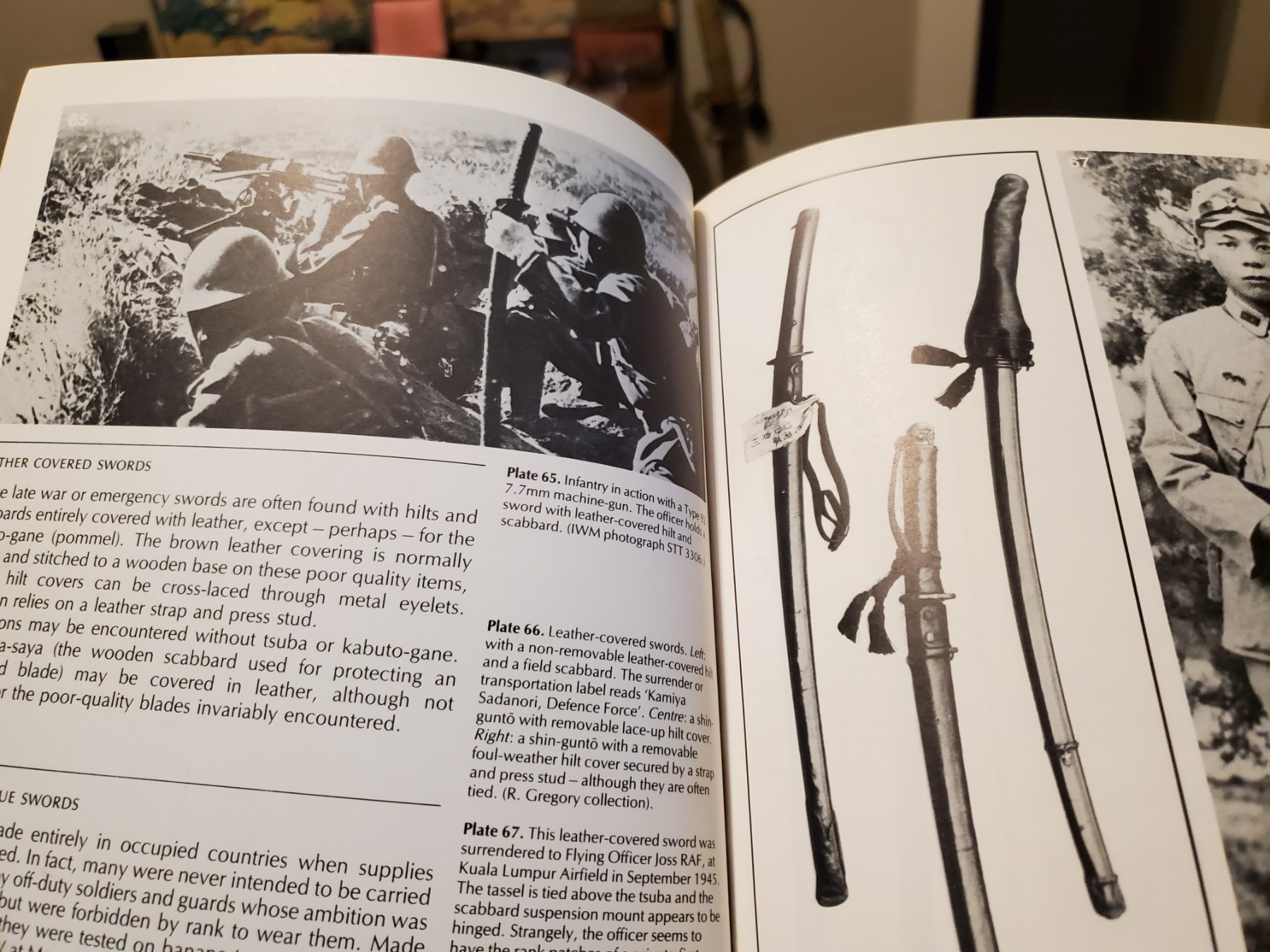
I found this sword recently at an antique shop and took a few relatively poor photos, however, hopefully good enough to get a few opinions as to its origin. It appears to be a sword once covered in both saya and tsuka with leather, (tsuka leather removed.) There doesn't appear to be a mekugi- ana for tsuka removal. The habaki seems longer than normal. The Tsuba is rather plain with Mokko Gata shape. There are no seppa. The blade is severely out of polish with no visible hamon or hada and possibly a shobu zukuri sugata. The plate 66 (page 49) photo appears to be similar. (Fuller and Gregory 1868-1945) Is this a late war Japanese sword? An island made sword. Chinese fake??? Opinions much appreciated...Dave M.
.thumb.jpg.858d4cbf27755b663d4e9b14ad9a1574.jpg)
.thumb.jpg.6859c6b71ece1c1dde131800e51c40c7.jpg)
-
WW2 Japanese sword (Fukumoto AMAHIDE)
dwmc replied to Swords's topic in General Nihonto Related Discussion
Most likely Daisaku Daimei by Ido Hidetoshi. Dave M..thumb.jpg.d03a2667fce321c7a2391aa85cd88f92.jpg)
-
There's probably not another gunto with more miscellaneous names as the Type 3 shingunto. Four or five years ago, I believe it was Shamsy (Steve) suggested, based on the year 1940, it should actually be designated Type 0. Dave M.
-
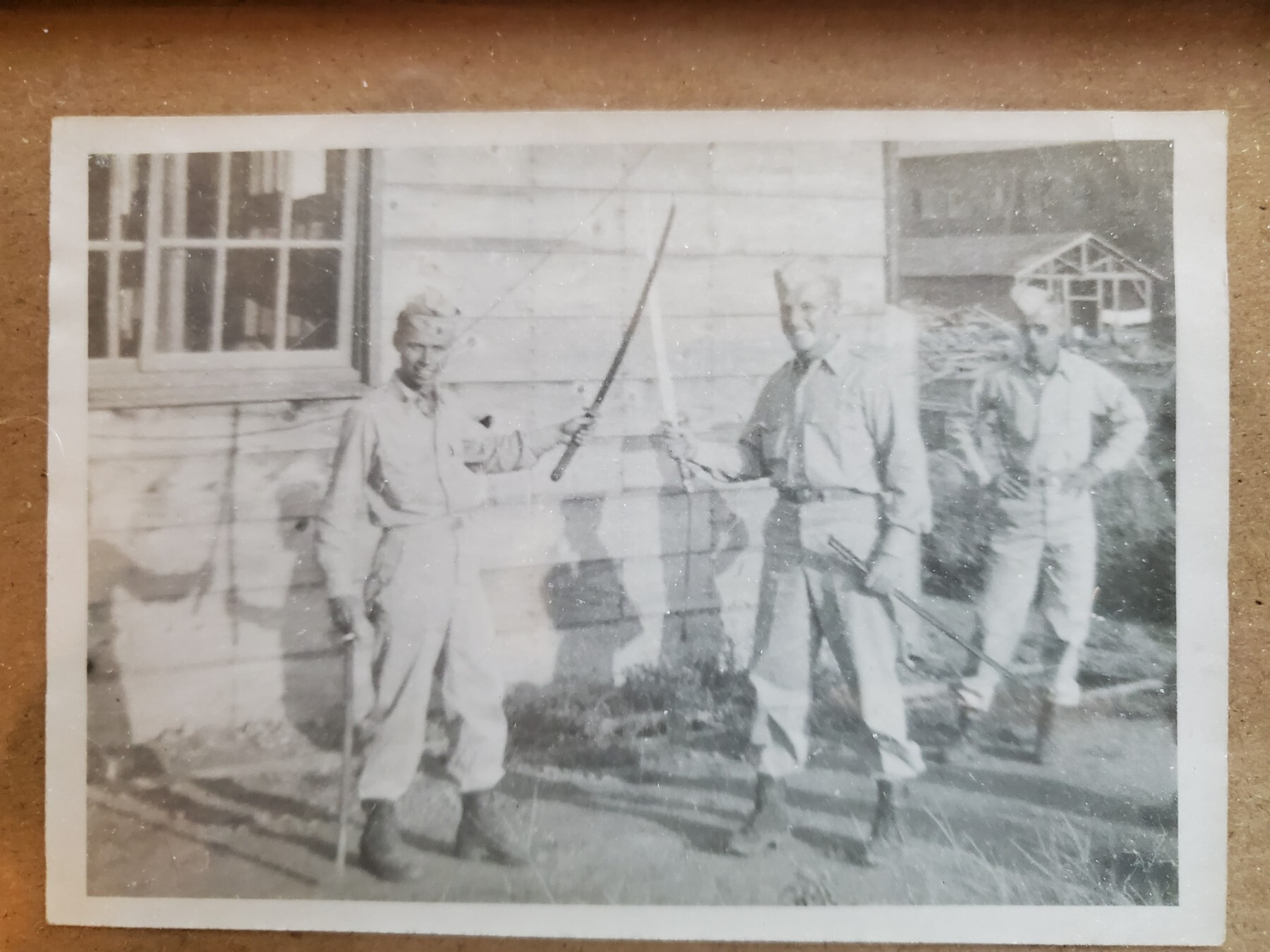
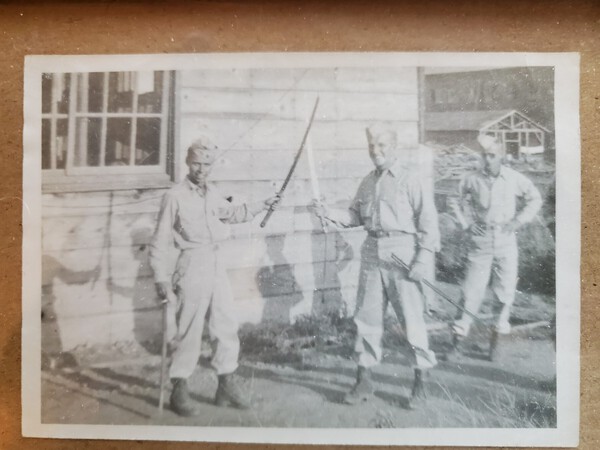
Trystan's photo could very well be an example of a white saya. However, below is a photo of my father (on left) with one the swords he brought home. It shows, as Steve suggested, how deceptive the old black and white pictures can be, my father's sword was definitely not painted black, and his buddies not white. Dave M.
-
No problem Peter, all input appreciated, it's becoming apparent to me there are even a few slight variations in what could be considered traditional "Gunto green" as John and Gareth have shown. After looking closer at Victor's Mantetsu saya, which Bruce shared, it appears to be a greenish paint possibly applied post war. Again, all input is greatly appreciated, however, yours appears to be the closest to the "Bluish Green" saya color variation displayed in Ohmura's Gunto Site, however, I'm not sure we've quite got a match yet. I'm beginning to suspect that very specific Bluish Green saya color variation is extemely rare, if not produced in any number at all, an anomaly indeed. Perhaps one will eventually show up! Thank you all for the effort, Dave M.
-
Thanks Bruce, This is exactly the Saya color variation I was thinking of, perfect example ! The look of wwll era, age appropriate, excellent... You've established there are a least a few out there. Thanks again, Dave
.jpg.ab42f993aecd5943536317ce94b8e190.jpg)






.jpg.b0c46fe3b702564b36afbdadab2262f9.jpg)
.jpg.2b624ca80bc06d34fa67f637bb948a89.jpg)
.jpg.74baa0f65021291936e2e5c105fd07e5.jpg)
.jpg.4d24d20fc97e616b6a234040c80af0a0.jpg)
.jpg.fc959312652aae624bdf05992ac396b2.jpg)
.jpg.110698d6c739e42de1cbdb9af9ee3f9e.jpg)
.jpg.e0405b14b819c564ee1fbebbce2fee66.jpg)

.jpg.c1297c64d9671ae9103f539e3740d382.jpg)