Viper6924
-
Posts
539 -
Joined
-
Last visited
-
Days Won
2
Content Type
Profiles
Forums
Events
Store
Downloads
Gallery
Everything posted by Viper6924
-
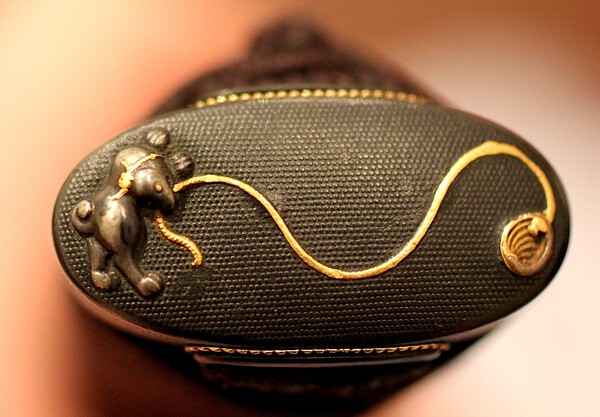
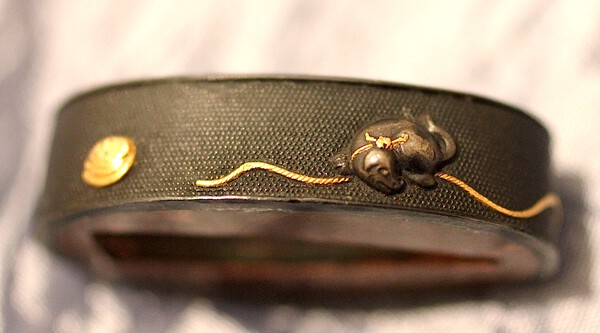
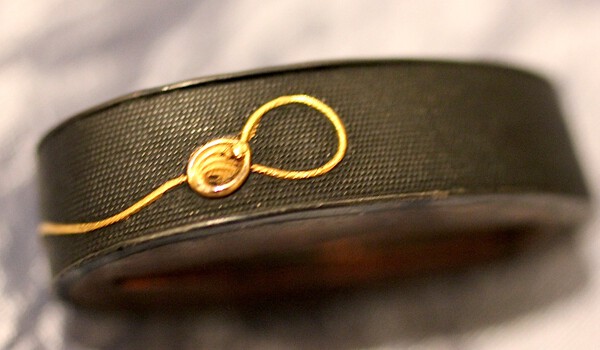
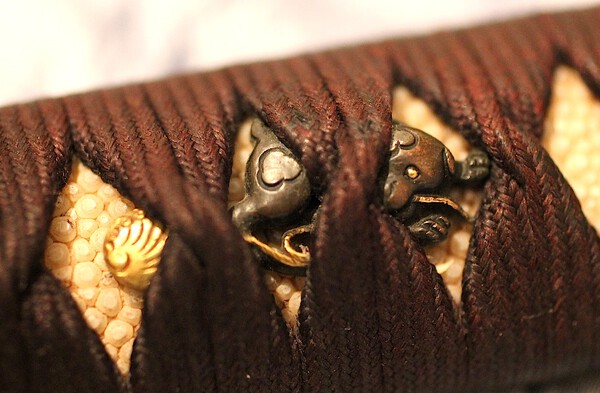
Who let the dogs out... :D I just love these puppys. Very nice fittings, guys. They are simple yet elegant. Perhaps the breed is Shiba. The imperial dog of Japan. Again, this theme seems fairly common. Especially amongst tsubas. Not been able to find any references to a school in my limited collection of tosogu-books. Jan
-
Thanks Bruno for sharing your tsubas and pushing me in the right direction. So this is actually quite a well known motif. Still little lost on the meaning. From the other thread I got a suggestion of "continue the family line" Well, sounds like something a samurai could have been wearing on his sword. Any other suggestions? And the school? Thansk again, Bruno! Jan
-
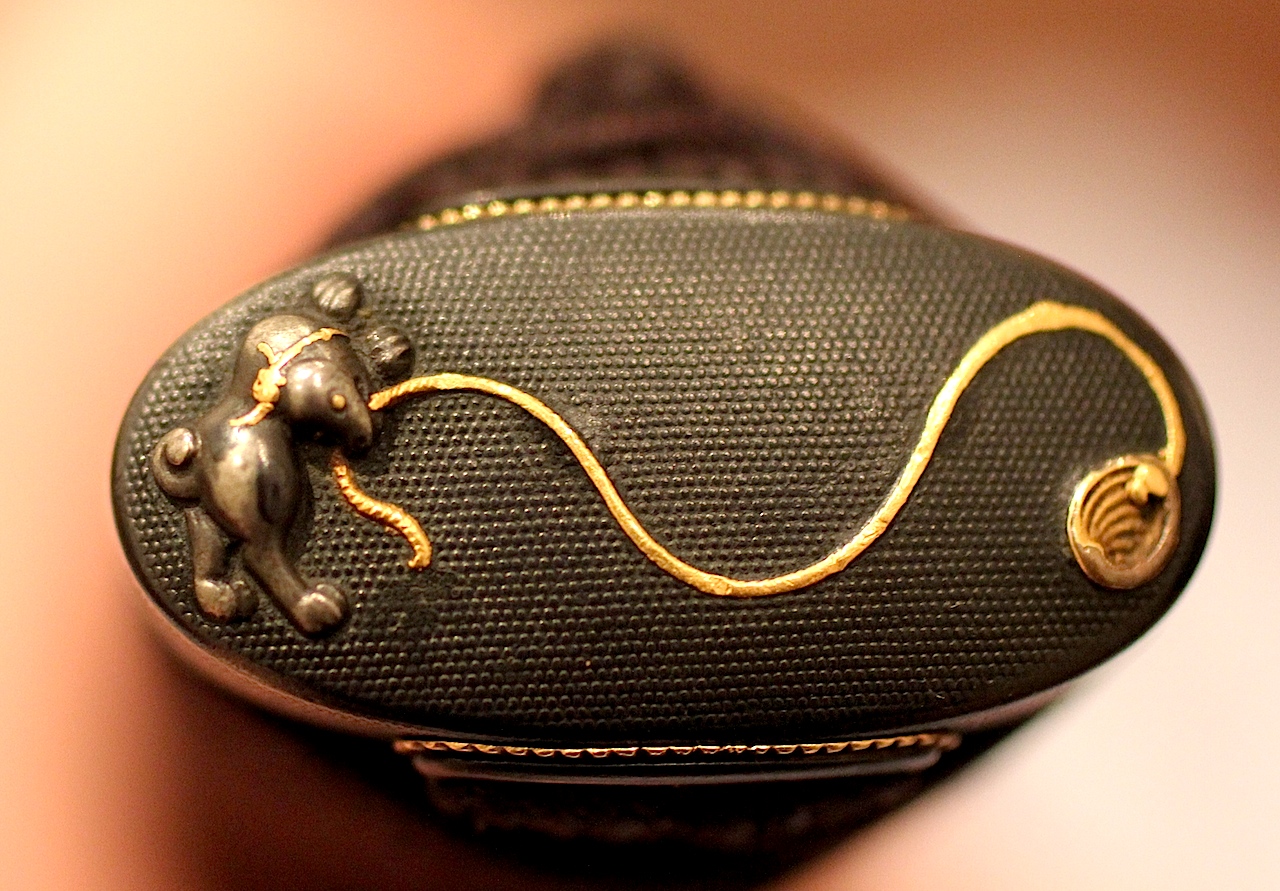
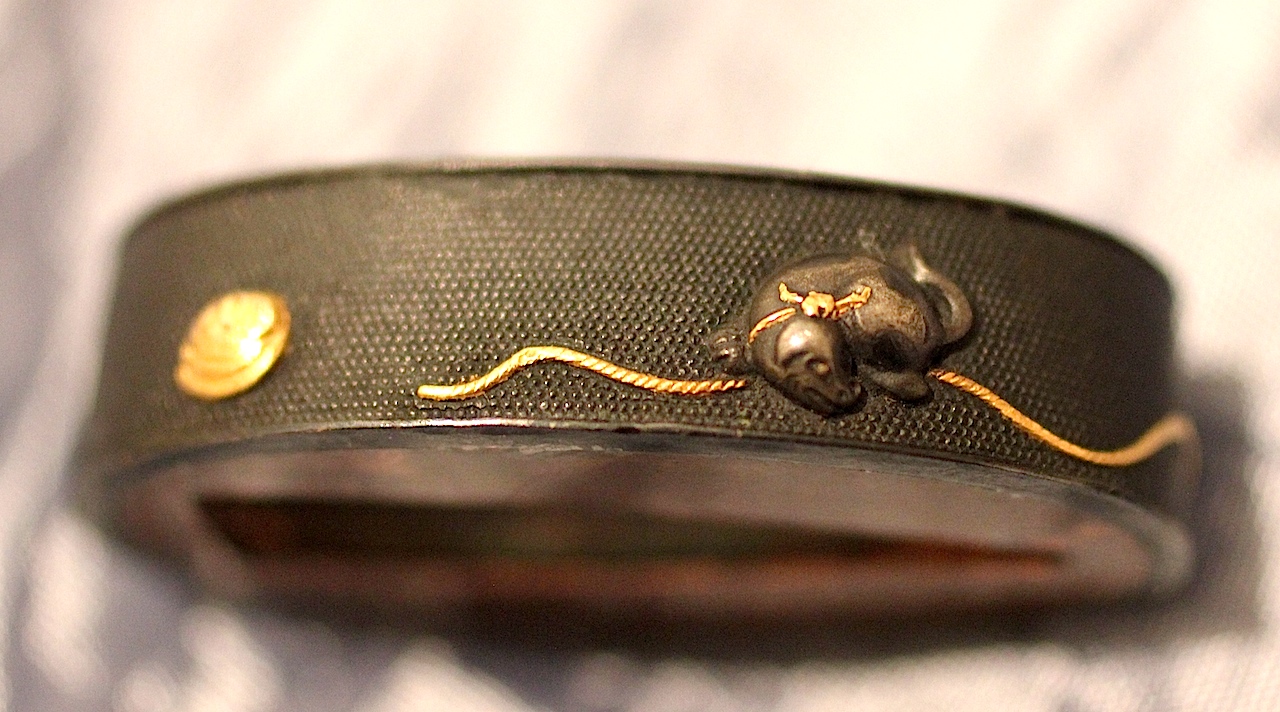
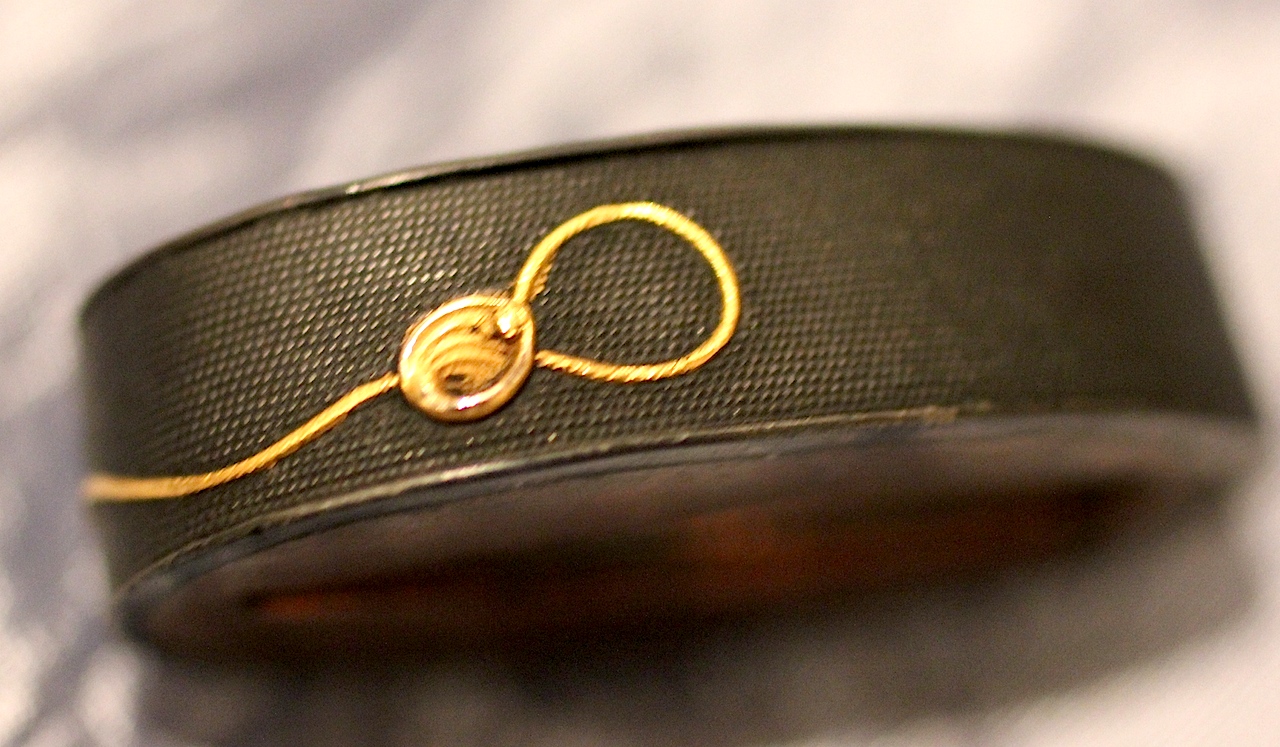
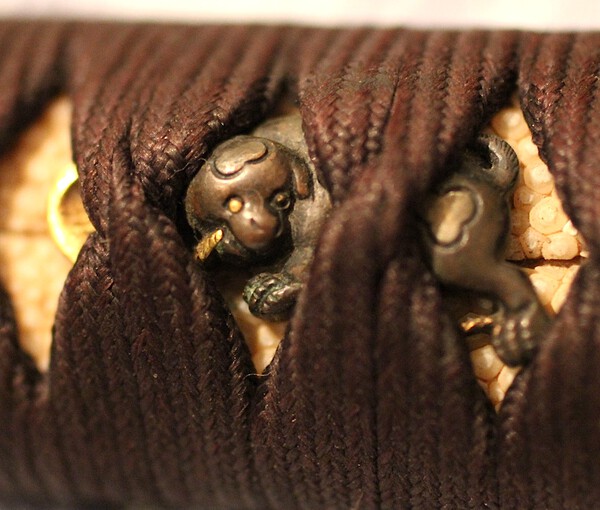
Hi guys! Have a matching set that, if possible, I would like to know a bit more about. It´s not signed. I guess pinpointing a maker is hard but I would settle with the school. It´s fitted on a sword from 1784 so I guess it would be made around that time. Puppy playing with a string. Damn cute... Thanks! Jan
-
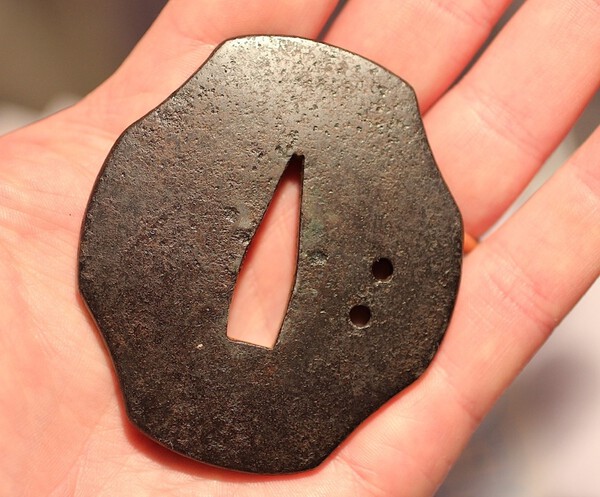
Was going through some old threads and found this little interesting topic. Sorry to say I don´t visit the "Tosogu" area as much as I should. One area of collecting I def don´t master. But there is still hope :D Me and fellow boardmember Anthony, visited Kagoshima last year. Through contacts we got invited to the dojo of Jigen Ryo. A very old sword school famous for it´s aggressive style of fighting. We even got to train one hour with the current sensei and two of his students. When I say we, I should say Anthony. I managed to slip whilst in the bathroom, the very same morning, and broke my toe. Not my proudest moment... Anyway... Besides the traning (aggressively beating the daylight out of a tree trunk) we also got a tour of the dojos small museum. Amongst many interesting object connected to the Jigen Ryu, was a handfull of tsubas. Everyone showed the same traits. Very simple design. Two small holes punched into the iron. The overall size of the katana-tsubas was small compared to the "normal" tsubas. Through a interpreter the sensei kindly explained te reason for this look. The simple design reflected the economic situation for many of the Satsuma samurai. Having the largest number of samurais in Japan (over 30000) the individual samurai had a rather small stipend compare to other areas in Japan. The two small holes (the same size) was used as a way of control for the sensei. The first rule of Jigen Ryu is "A sword shall not be drawn from it´s scabbard unless it is to attack" The sensei tied a small string of ricepaper to the saya. If the student came back with the string broken, he had to explain the reason why. With the nature of the Jigen Ryu, I guess the student also had to present the head of his opponent The reason for the small size of the tsuba was very clear. A student of Jigen Ryu only needs one strike. Two strikes is inconceivably. Therefore there is no need for a big tsuba to protect the wearer of the sword. Nuff said!!! Here´s a picture of my Satsuma-tsuba Jigen Ryu-style. Looks very much alike the ones in the museum. Jan
-
Website Onihonto.com
Viper6924 replied to nihonto1001's topic in Auctions and Online Sales or Sellers
I´m now the current custodian (you never really owns a piece of history) of the Satsuma-tsuba. Just want to lift my hat to Jon and thank him for a really good experience from a buyers perspective. It took 4 days from the payment until it arrived in the land of the norsemen Jan -
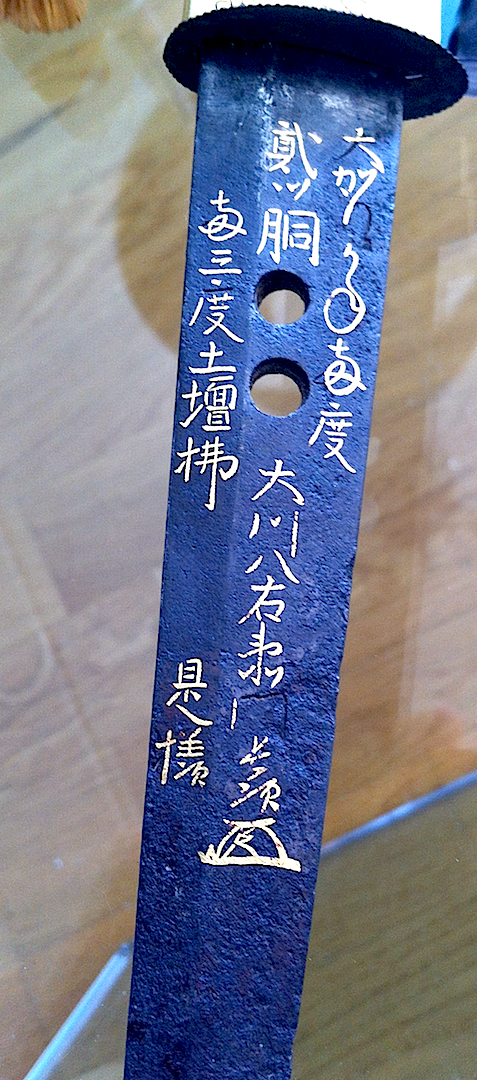
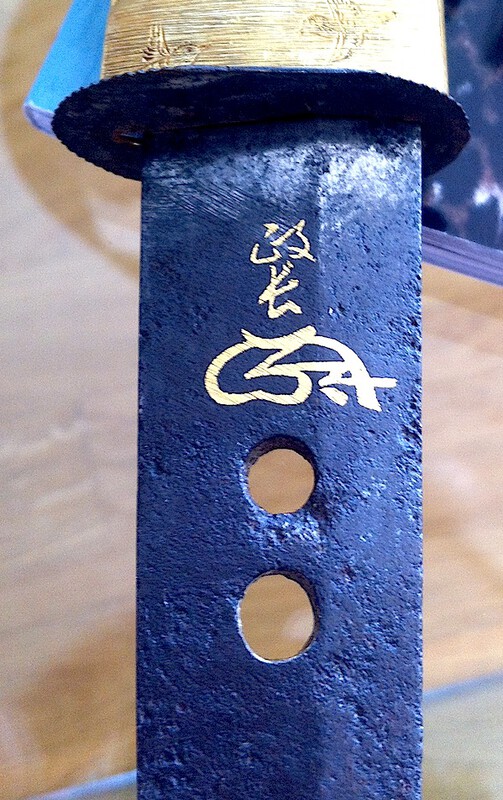
After I´ve finished Mr Seskos latest book about tameshigiri my interest for this intriguing yet terrifying practise was woken. A friend has a sword with a tameshi-mei thats recently been up for discussion at another fantastic forum So far we have gotten a date: 26:th of July 1655. Would love to get some more of this translation sorted, just for the satisfaction of knowing whats behind the kanjis. There are some amazing "translators" here, so any further help would be greatly appreciated. Thanks guys! Jan


-
Eagerly waiting for my book to drop in the mailbox!!! Jan
-
Woodblock print with matchlocks!
Viper6924 replied to Viper6924's topic in Tanegashima / Teppo / Hinawajū
Piers, I feel rather honoured that you even consider comparing me with such great warlord as Shingen I might use a dual meaning in my replys... Good luck with the next couple of days hard competitions. Jan -
Woodblock print with matchlocks!
Viper6924 replied to Viper6924's topic in Tanegashima / Teppo / Hinawajū
Piers, so far they are all framed and hanging on the wall(s) :D But because of restrictions in the space-department I have desided to exclusively go after matchlock-prints in the future. Takes longer time between buys... I must have missed your matchlock prints, so please share a few whenever you have the time. Perhaps after next weekend Jan -
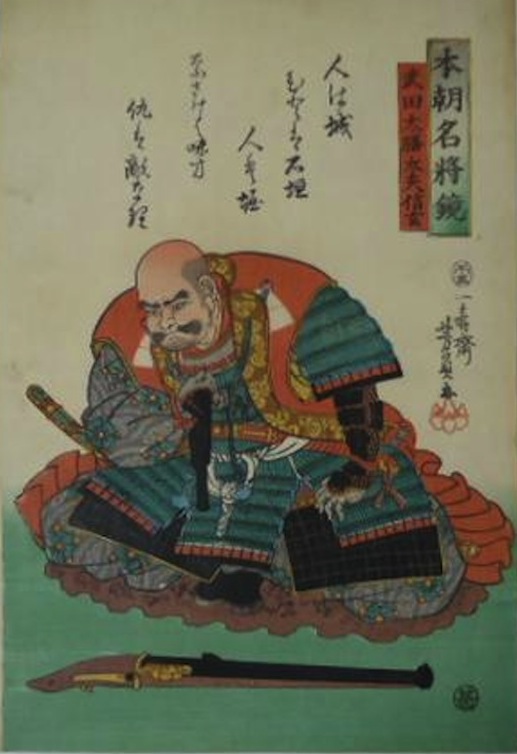
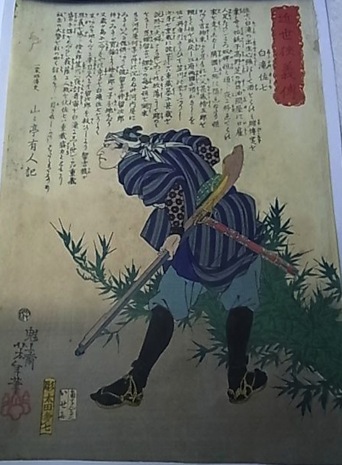
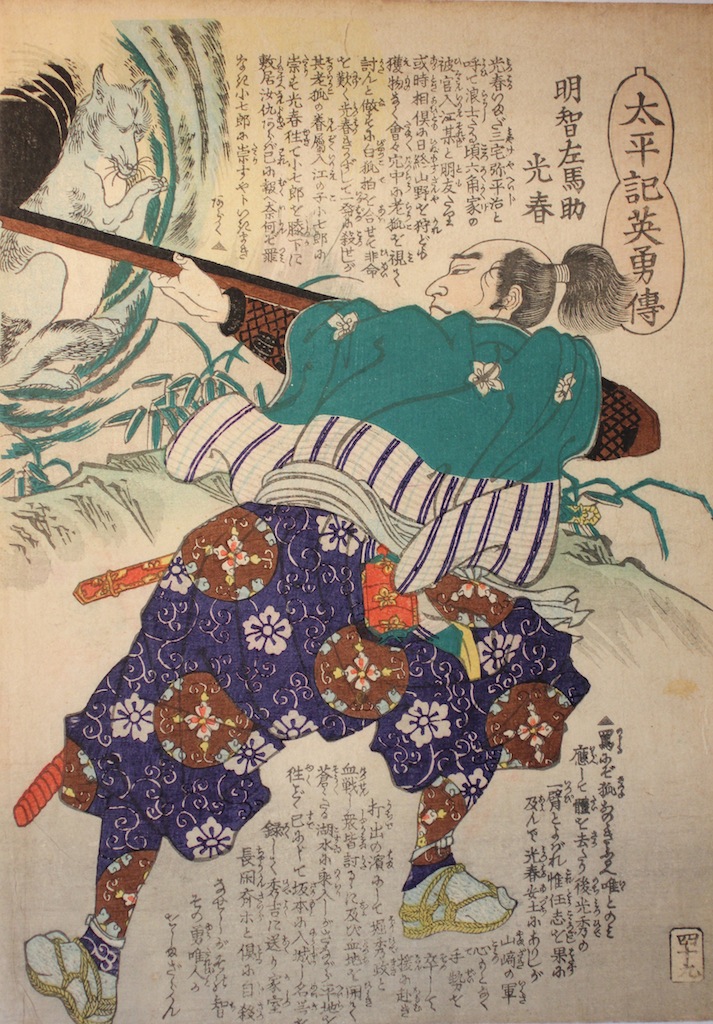
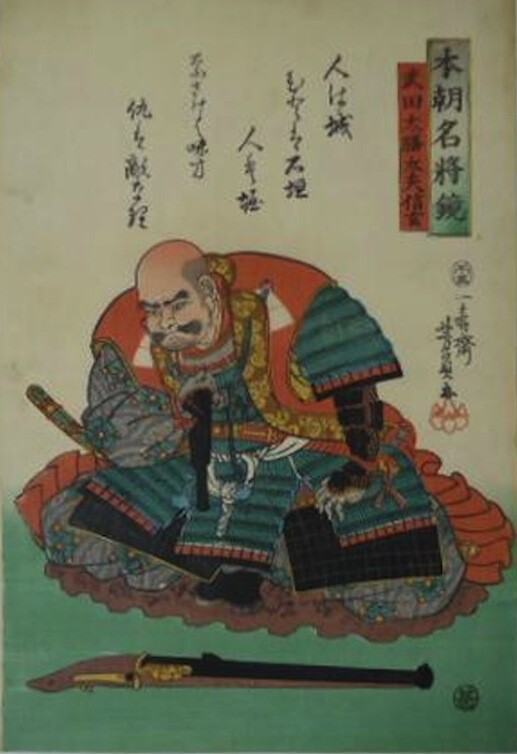
Besides matchlocks and things linked to this subject, I also try to collect woodblock prints depicting scenes with matchlocks. This is a rather tall order, because the "matchlock-prints" are far and few between. I´ve manged to lay my hand on three. Compared to the normal prints depicting samurais in all their glory, these ones have a more dark, dare I say almost sinister feel to them. Or perhaps is just me... Two of these have been published on this forum before. The first one is showing Takeda Shingen contemplating over a ten-monme matchlock. Is he foreseeing his own clans demise at Nagashino 1575? There is def something in his eyes. The second one gives us snapshot from the Tonegawa turf war when Shirataki Sashichi participated in a revolt. This is a dark print. He has just fired his gun and is now watching the outcome of that shot. No glory in this print what so ever. With the third one we really take at step down the abyss. This is Akechi Mitsuharu. The cousin of the infamous Akechi Mitsuhide who led a rebellion and killed Oda Nobunaga 1582. He was quickly dealt with by Toyotomi Hideyoshi 13 days later at the battle of Yamazaki. The man on this print missed the battle and atoned for this by committing hara-kiri. He wrote his deathpoem on a door with his own blood. This print is also rather gloomy even if his clothes are colorful. He has his back turned towards the onlooker almost hiding the matchlock which he is aiming towards some kind of mystic creature in the bamboo grove. Not the best PR for the matchlock... Would love to see if my fellow boardmembers managed to find any other prints which includes matchlocks. Jan
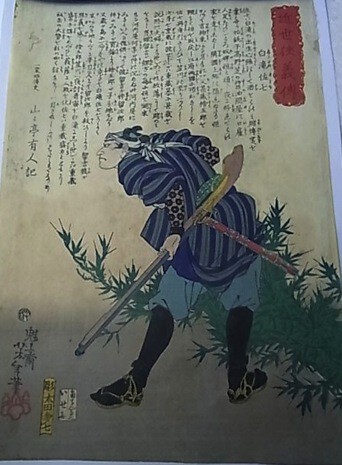
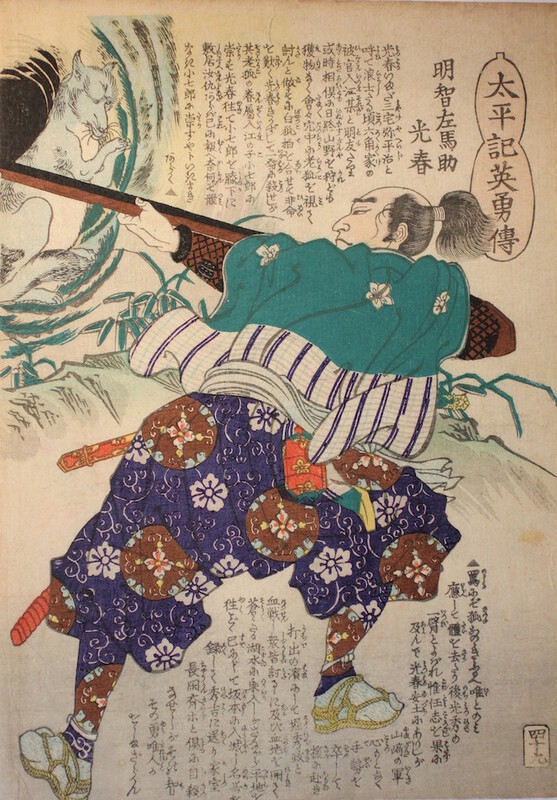
-
Love waking up to an interesting new topic, Ron! Don´t know where to start... I fully agree that the most technical terms should be used with caution otherwise the less knowledgeable members can be left on the outside. Which would be a great shame when this and other forums should be all about spreading knowledge be it regarding swords or matchlocks. However, being a place where people join in to learn and to spread knowledge, I think learning the most common Japanese terms is part of that learning curve. I´ve been interested in Japanese antiques for about 20 years. But it wasn´t until I found this place that my learning curve went straight up. These days my field of interest lies mostly somewhere between Japanese armor and matchlock. Depends on the time of day, you might say Adding the Nihon-No-Katchu just made my life so much easier. Still being a screaming novis in both fields, I try to the best of my abilities, to soak up every piece of new information that I come across. A part of that is of course the Japanese terminologi. This is a double edged sword. Not only is it hard learning to read the words. Learning to pronounce it is a different kind of beast. I remember my first trip to Japan. At that time I was very much into the field of nihonto (Japanese swords) I had read a lot and learned the most basic terms describing swords. When I passed by a swordshop in Kyoto, I desided to enter. Inside sat an old man drinking a cup of tea. I was greeted with a smile and a sentence in Japanese. Panic!!! He offered me a chair and a cup of tea. In the end I spent two hours in a shop with a man who couldn´t speak a single word of english. But our common interest in Japanese swords made this meeting a success. I learned one thing in that shop. Reading a Japanese word and saying it correctly is two totally different things... What I try to say with all this ramblings is that to fully learn/grasp the field of swords or matchlocks you must eventually dig into the more technical terms. Thats the natural way of gaining more and deeper understanding of this fascinating topic. After about 5 years I´m ready to take that extra step. But again, in order to avoid scaring away the beginner, I think the best way is to thread carefully. If You are using the Japanese term, best to include the english "translation". That way all levels of competence are catered for. And by the way, I´m Swedish. I have to first translate the Japanese word into english and then retranslate it into swedish. You english-speaking members have nothing to complain about... :D :D :D Jan
-
Kayaku-dameshi (Gunpowder tester)
Viper6924 replied to Viper6924's topic in Tanegashima / Teppo / Hinawajū
No worries, Ron! Can´t win em all. Didn´t break the bank on it, only my pride So I guess I have a modern "Netsuke "Derringer". Still, I could probably blow off my own finger if I´m not careful... The hunt goes on! Jan -
Kayaku-dameshi (Gunpowder tester)
Viper6924 replied to Viper6924's topic in Tanegashima / Teppo / Hinawajū
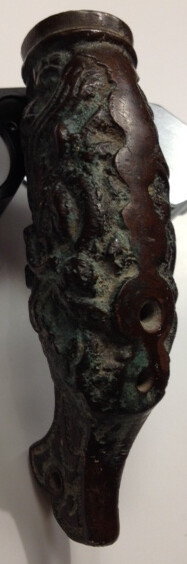
"A Netsuke "Derringer", well I can probably live with that. Always wanted a small teppo :D :D :D The reason I called it a powder-tester is bacause of some pictures I kept on my computer. I think it was Piers who posted them a while back. That one looks to have the same basic construction as this the one I showed. Albeit much more ornate and with two touchholes if I´m not mistaken. Interesting... Jan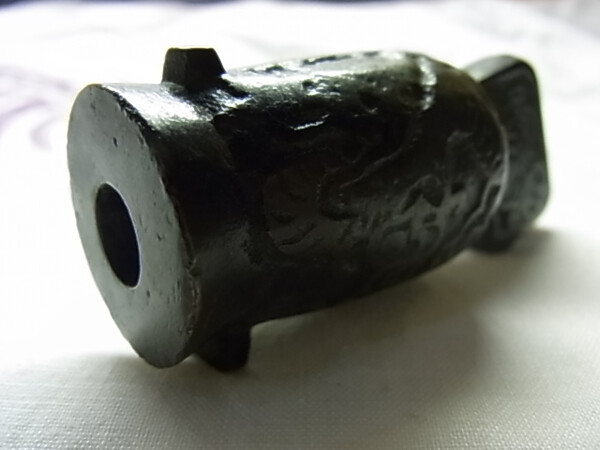
-
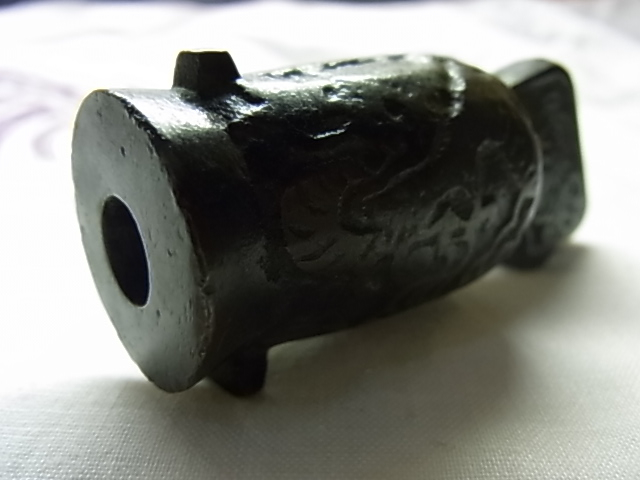
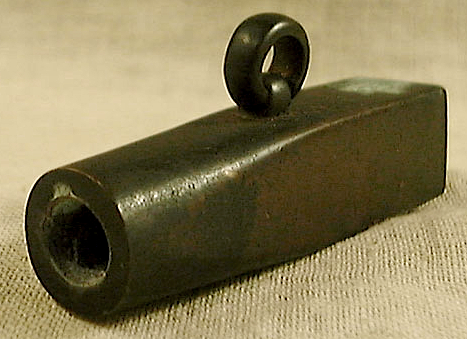
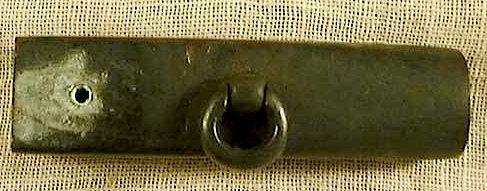
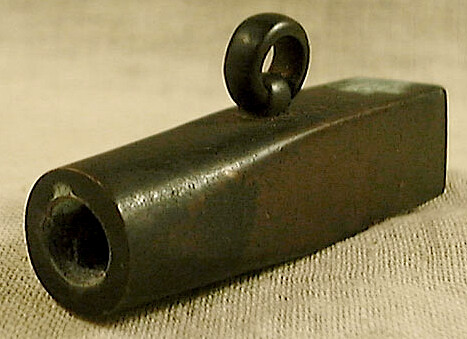
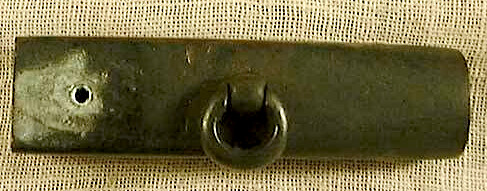
Not all acquisitions to the my collection must be big and spectacular. Sometimes the very tiny one´s makes me happy Been after a Japanese powdertester for a while now. The hunt is over!!! This is a kayaku-dameshi made out of copper. It´s a tad over 6 cm long with a "caliber" of about 1,6 cm. Have some scorch marks near the touchhole and also at the muzzle. So it must have been used by some previous owner. Not being an expert on guns or gunpowder, I´ve always wondered how this things works. Of course I understand that you but a small amount of gunpowder inside and ignite it via the touchhole. But in which way did they determine that it was a batch of "good" gunpowder? Just by the thing going BOOM? Jan
-
Taira Sawada's book "Nihon no Furuju"
Viper6924 replied to estcrh's topic in Tanegashima / Teppo / Hinawajū
No worries what so ever, Justin! This thread and your scans has been very helpful indeed. It's now clear as a glas of water :D Thanks Justin! Jan -
Taira Sawada's book "Nihon no Furuju"
Viper6924 replied to estcrh's topic in Tanegashima / Teppo / Hinawajū
Just as a clarification. This book with blue cover is called? From your PDF:s Justin this is "book 2"? It´s always helpful for us non-Japanese speaking if the cover is also included with pictures of the content. Jan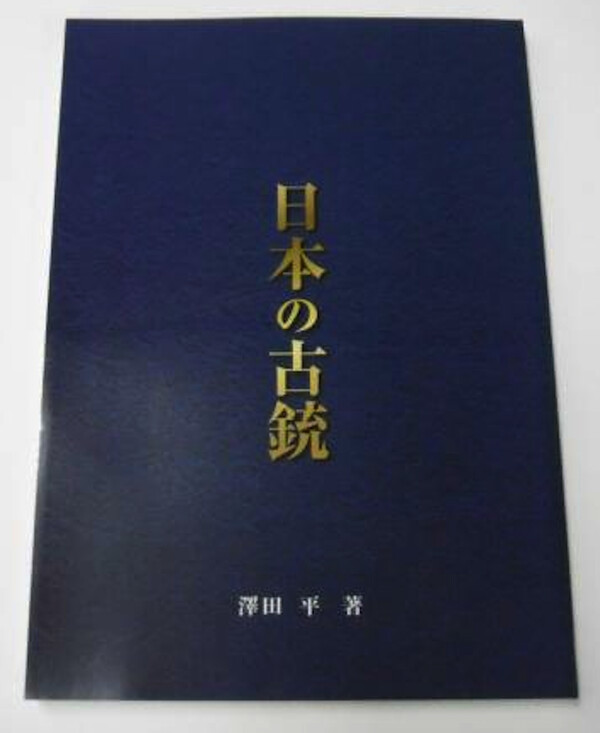
-
website japaneseweapons.net
Viper6924 replied to Peter Bleed's topic in Tanegashima / Teppo / Hinawajū
I found it a bit surprisingly also, Justin! In the beginning I of course thought that he wrote the answers himself. But a few times he replied very quick and the quality of the english in those replys was not so good. But more important , he was always very polite and tried to help with whatever I threw his way :D After I got in contact with the heavyweights on this site I haven´t felt the need to terrorise him with my banal questions anymore. I´ve found new victims... Eric, that would be kind of a Matrix-moment. I´ve seen this before somewhere... :D Jan -
website japaneseweapons.net
Viper6924 replied to Peter Bleed's topic in Tanegashima / Teppo / Hinawajū
Followed this thread with some interest. Been in contact with Mr Sugawa quite a lot via e-mail (Don´t tell your friends, Piers :D ) Last time was about two years ago. I always had to wait for 2-3 weeks for a respons. After awhile I understood that he had his answers written by some friend who spoke english. Not perfect english but much much better than what Mr Sugawa is capable of. I know for a fact that he´s been over to Sweden and participated in some blackpowder shooting competitions in the past. So judging from "his" answers to me, I can understand that the book has some funny translations. I agree with Piers that some of his formulations are weird at best. But I like the initiative of him making an english book on such an interesting subject. And the pictures in nice. I guess it´s up to some of this forums members if we, in the future, are going to have a top-notch book done in english dealing with teppos Jan -
Thanks for your kind words, Ron! Well, I try to keep my teppo-collection to a few pieces of somewhat higher quality. I´m actually waiting for a little beauty that should arrive in about two weeks time. Haven´t been adding to my teppo-collection for a while now. So I´m rather excited :D I will be back... Jan
-
Ron, being a humble collector of these interesting guns and the associated paraphernalia , I welcome this new section on the NMB. Any place where I have a chance to feed my insatiable appetite for knowledge is just great. Running with the likes of you and Piers is also very motivating. I hope I can contribute in my own small way. Jan
-
Hi guys! I found this strip of paper tied around the neck cord of an old jingasa. Actually had this helmet for some time without locating it. Most of it is destroyed. It´s about 3,5 mm wide. It has two minute ridges on the sides. On this strip of paper are a bunch of kanjis are written. Perhaps it´s the laundry-bill. Perhaps it´s a note used in school for someone who wanted to cheat on the test Would love to have some clue to what it could be. I try to post them in the order from the top. But remember that it´s not a complete text. Thanks! Jan
-
Not much to add after Ian:s answer. These iron jingasas was meant for the teppo-tai (meaning the ashigaru using the guns) This particular shape is by no means the most common one. On the inside it would have been fitted with either two elongated pads or a single U-shaped pad for some comfort to the wearer. The Japanese term for this is zabuton or makura. Also of course the chinstrap called ago himo. Most jingasas was outfitted with a mon or a kind of unit-sign. There´s about one million different Yours has the "double mountain" sign which can be both a family crest or a unit-sign. Jingasa is a rather unappreciated part amongst collectors of Japanese armor due to the simple construction. But I find the them quite interesting. Specially from a historical point of view. Jan
-
Hi guys! Have a mei inside a helmet that I would love to know the translation of. I have two different pictures of the same mei. I hope one of them is readable. Any help is appreciated! Thanks! Jan


-
The maedate with the "swastika" and the one to the left of it, was apparently the only two that the seller said was "Edo-period". Jan
-
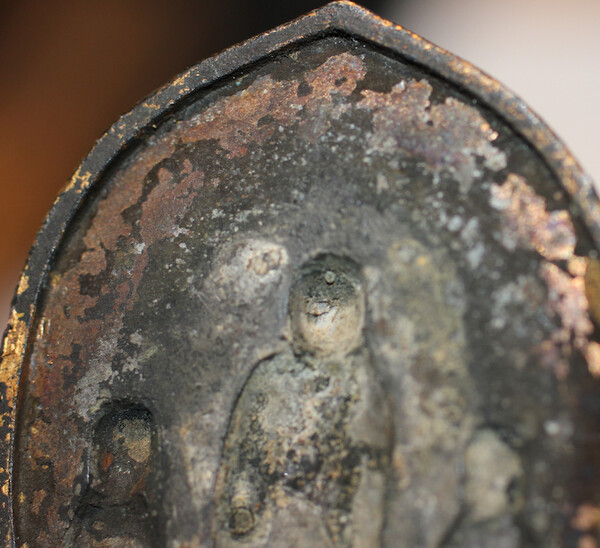
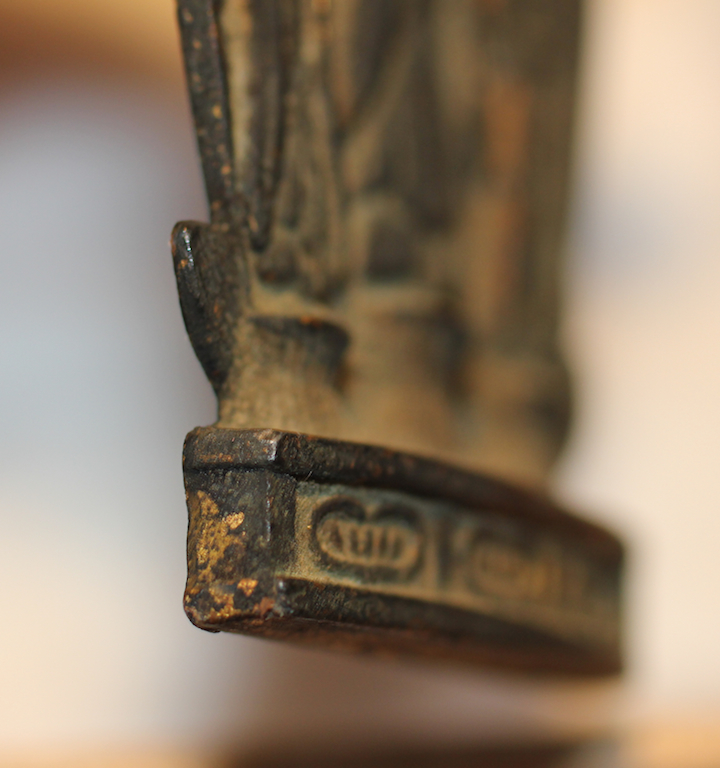
Hello, Malcolm! You right about the term "Omamori". I came across the term fairly quick when I started to make my humble research about my "artifact". To place it in a specific period is close to impossible form pictures alone. I took a few more. I´m using a macro-lens. You can see the "third eye" or chakra on the Amidas forehead. Almost impossible to spot just by looking at it. Guess it´s cast in bronze, but not sure. At one time it was coated in some sort of gold color. Jan