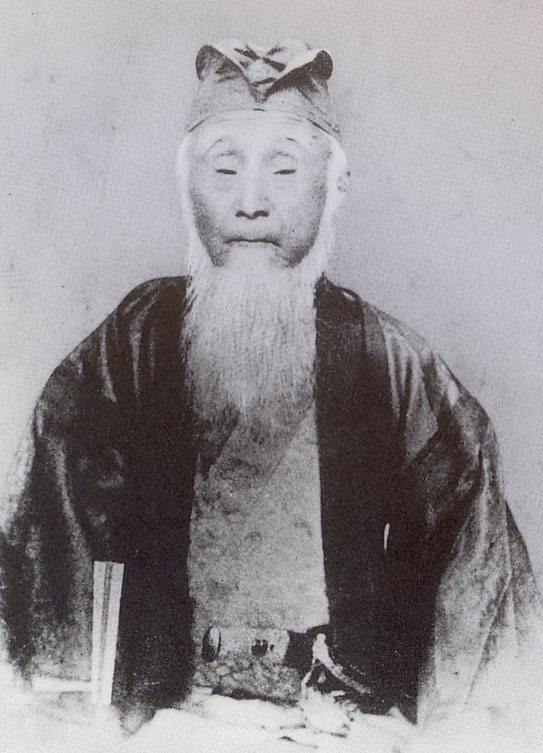
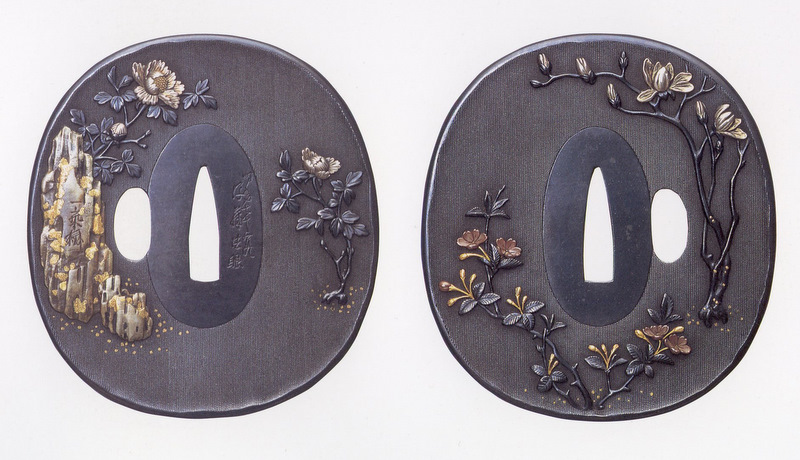
Ford Hallam
-
Posts
3,091 -
Joined
-
Days Won
78
Content Type
Profiles
Forums
Events
Store
Downloads
Gallery
Everything posted by Ford Hallam
-
Hi Rich This statement you made regarding the use of uttori intrigues me... I've not come across any sources that indicate the use of uttori in Hizen work. I've always taken it to be standard nunome-zogan. Uttori is a process that involves wrapping gold foil around a piece of pre shaped metal prior to it being inlaid. This is not a very robust technique as the foil is only attached around the edges of the inlay, where the foil is tucked under, and can easily be torn off. In fact I'm not sure I've ever seen it used on steel. ...can you shed some light on this puzzle for me, please? cheers, Ford
-
Gary, there's no point getting all huffy at this point and attempting to gather all the other non-posters on your side to help assuage your bruised ego. Your attempt to twist my opinion that this may be a case of a little knowledge being a dangerous thing is similarly disingenuous. My point, which I believe you understood, was that your superficial understanding of the subject had in fact mislead you and led you to make statements that revealed precisely the limitations of your understanding. My comment was merely a cautionary one, and one we all ought to remain well aware of...not just relative neophytes. You stepped in to this discussion and asserted that in your opinion the tsuba was a Chinese cast copy and that the papers looked dubious. These are pretty heavyweight claims to make....and unless you can back them up you are going to have to face some serious critique. You were completely uncompromising in your assessment and in fact a careful reading of your comment does reveal a superficial understanding of the matter. I tried to elucidate but you took this to be demeaning As for "giving it your best shot" ...what does that actually mean? It's the sort of thing I've heard on Pop Idols... Is this supposed to earn you some credibility for effort? ...of course here we'll just have to accept your judgement...despite already having proved fallible in reference to the tsuba that started this topic. I'm not at all sure that that "philosophy" is relevant here...seems a bit "new age" to me and I don't recall agreeing to anything as vague as that when i joined this forum. In any case, how does a neophyte recognise the best ? Anyway, I've said enough...I've no more invested in this "chat". enjoy, Ford p.s. I don't suppose you're the same (master) Gary Wortham who runs the Woodlands dojang teaching the modern system called Chayon-Ryu
-
Gary, having already received the customary rebuke for throwing in unsupported opinion I'll attempt to elucidate I think this may well be a classic case of a little knowledge being a dangerous thing. I can see why you thought this tsuba was a cast copy but that coarseness you refer to is more likely due to corrosion. There are enough other areas of the steel that indicate casting to be unlikely. This grainy, almost stone-like texture is in fact quite characteristic of Kamakura style guards as is the relatively naive workmanship( as Chris rightly points out) . It would be a huge mistake to fail to recognize that the tsuba making tradition didn't simply come into being fully developed. The skills and techniques we see in these works have evolved over time, and in some cases the quality of schools has even declined. What is most important to grasp, however, is the specific attributes one should expect to be able to discern in specific examples from particular schools and different periods. Why would you specifically expect to see bones, folds etc in a Kamakura bori tsuba ? Are these particular kantei points? I don't believe so. As to the condition of the patina I would add that this is extremely difficult to judge in a photo and in any case is also quite easily damaged. So using that as part of your argument for it being a Chinese fake may not stand up to closer scrutiny. Personally, I'm in favour of debating the relative merits of differing views however as your speculation was evidently based on a fairly superficial appreciation of Kamakura bori tsuba there seems little to debate I hope you appreciate the complexity of this great study and research of Japanese swords and fittings; as well as enjoy the group's discussion and efforts. Regards, Ford p.s. I was also intrigued that you rejected 3 differing answers from reputable "experts" to the identity of a tsuba in favour of a picture of something apparently similar in a Christie's catalogue. What makes you more confidant in the resident boffin at Christies? he he...I certainly wouldn't be
-
Just a very quick response from me...not modern, imo. materials are intriguing and the actual design is accomplished.....more later. I'm cooking and my glass is nearly empty too...gotta go
-
Steve, for what it's worth...and far be it for me to tell you what to collect , you said at the out set that you bought the piece because it appealed to you. No-one can argue with that...however you are now trying to establish whether or not the mei might be genuine, so this raises a different set of considerations. The first being whether the artistry is of the standard one would expect of a really big name artist. While I will concede that it's a fairly pleasant kozuka I wouldn't personally regard this work as anything more than good. The katakiri is actually, in my view, not particularly expressive nor elegant in itself. The appeal of the design rests mainly with the actual subject matter depicted. This is absolutely not enough in terms of the standards expected by Japanese connoisseurs. Every aspect of the work must be redolent of the masters touch. As a very minor example, no serious artist in this tradition would have rendered the paint brush as in this piece. It has simply been engraved over the silver inlay leaving a silver tip to the brush....it ought to be shakudo and thus black. It's a relatively insignificant aspect....or so we might think. Not so to those for whom these creations were considered high art. Anyway, that's just my view and as it was offered for free please feel free to discard it if you're so inclined. regards, Ford
-
One more thought occurred to me while mulling over this pair of fuchi/kashira. The background texture is clearly made with a nanako punch but has been using in this case to merely create a sort of random, jumbled pattern. The interesting thing is that this is more like the sort of very early grounds we see on the earliest examples of Japanese metalwork ( and Chinese for that matter) before there was any attempt to create more defined grains and alignments. What we subsequently see is a gradual development of the technique culminating in some truly staggering refinement and precision. It's true that towards the end of the Edo period we see examples that are less than perfect but never quite as "accidental" as in the present example. Given that the maker is clearly attempting to emulate the look of a particular type of Ichijo's work, a style that generally features pretty refined nanako, is it not significant that the ground in this case is fudged? To me it says that the maker was unable, or lacked confidence in his ability to make a convincing nanako ground so he opted for a more creative solution. This is what worries me...I don't think this would have happened were the maker a professional working in the Edo period. Nanako production, although often carried out by a specialist in the studio would have been part and parcel of the standard training of any kinko artist worth his salt...or should I say; worth his rice :D Anyway, I hope my various observations on the pair in question at least provide some further aspects to consider when judging soft metal work in general. regards, Ford p.s. It's a lovely sunny day here in cape Town, albeit a bit chilly. The studio is flooded with wonderful light and I'm having a very calm day carving bamboo leaves in shibuichi...pity you can't pop in to have a look ....but we'll soon have a DVD that'll be the next best thing :D
-
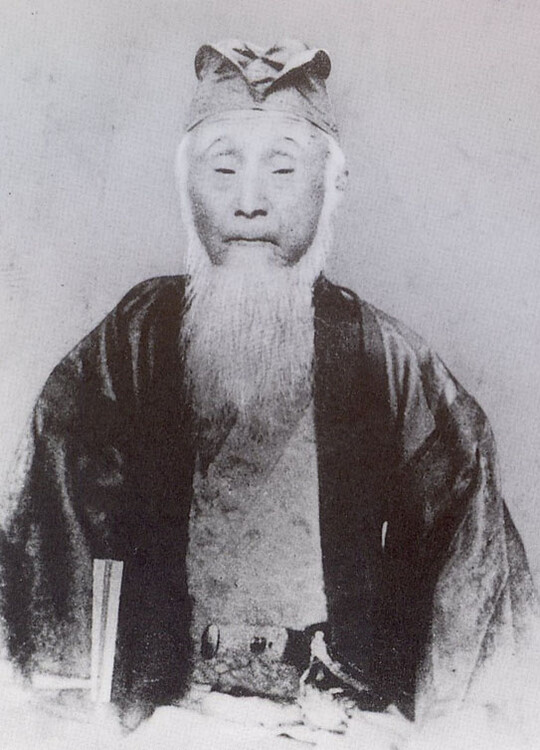
Pete, so what your saying in effect is that the spurious mei must have been added later then as Ichijo was right at the end of the Edo period. I mean his mei couldn't have been faked before he was born... (just being a Gemini ) Here's photo of him...he looks quite the part, doesn't he. The tanto he's wearing ( in Aikuchi mounts) was made by Koyama Munetsugu. I understood the gist of what Mike was saying but that was the problem...as you've explained, by saying "usually" we still have no definitive statement and yet this vagueness is used to validate the claim that the work is definitely not modern. This is fuzzy logic...
-
One of the chaps on my forum, Karl, "der wunderkind" Wunderlich, noticed this discussion and sent me the following link; Link to article on Baleen with specific reference to it's use on Japanese sword mounts. This would appear to quite an extensive bit of research and seems to provide pretty much all we'd need to know. I reckon I might even try making some myself now...anyone got a dead whale for me? There are number of pages so use the navigation buttons at the button to move forward, or back.
-
Sorry Fred, I should have been clearer..my comment was actually directed at the general disclaimer that is often made. I did note that you asked for both some input on the mei and opinions. I'm relieved that you feel you're getting something out of the discussion too. These sorts of debates are, I think, the sort of thing the NMB does quite well. We're all challenged to look more closely, think clearer and develop our understanding of the subject together.
-
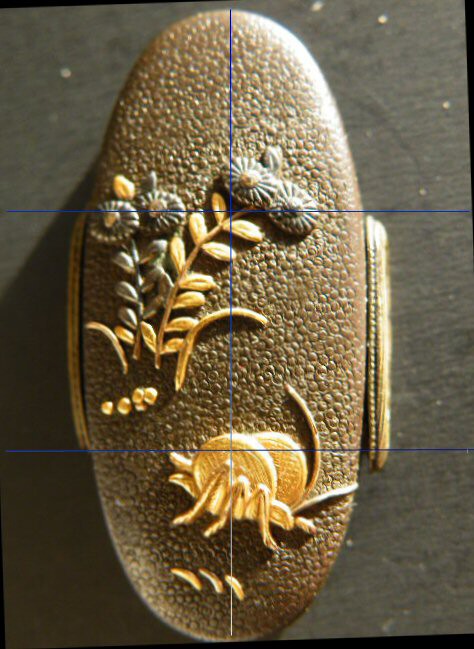
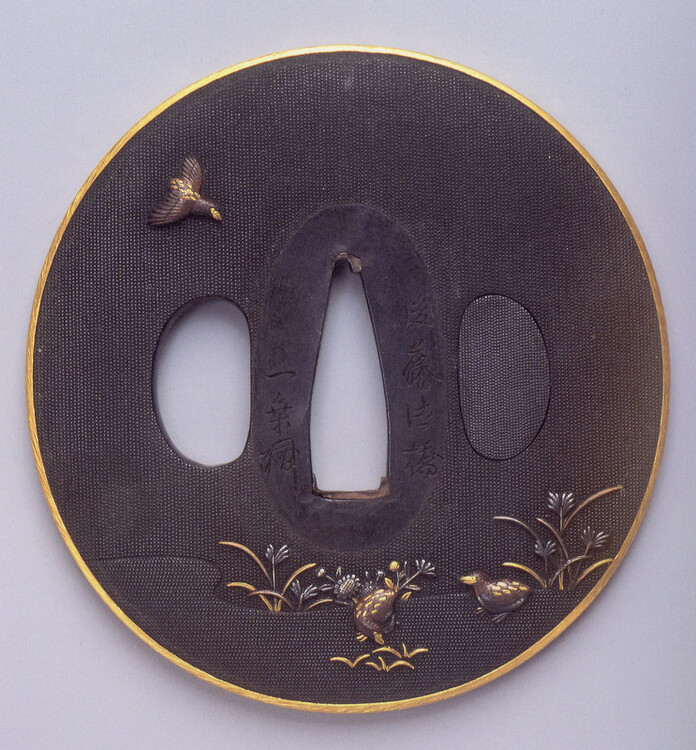
It's interesting, isn't it. Images are posted and opinions asked for but when the response is not what was expected or hoped for we're told that we can't really judge from pictures alone. So why bother in the first place then? In fact I disagree. In many cases, this being one of them, I feel it is perfectly possible to make a pretty accurate judgement of work like this based on decent photos. It does, however, require a fair degree of experience in terms of handling Japanese metalwork. When you've seen a lot of pieces and are able to easily asses their relative qualities it becomes quite straightforward to tell dross from average and excellent from merely good. Mike, your comment; seems a bit odd to me. So what you seem to be suggesting is that modern work simply shouldn't be expected to this good. That's pretty disheartening really.... But seriously, that's not an argument at all....and relying on your observation that if you've studied in Japan then it becomes clear is also a false argument...it's an appeal to authority of sorts and in reality is meaningless also. What you're claiming is that you can tell, by virtue of your advanced study in Japan and if we can't see it...then it follows that we haven't seen enough good work in Japan. Sorry, I'm not convinced by this sort of reasoning. I'm also always somewhat amused when further "evidence" for a particular piece is drummed up by referring back to something the original owner claimed regarding the provenance. Work must always be judged on it's own merits...not on alleged tales of it's origins. Nothing to figure out in my opinion. I take it then that you were the vendor at the SF show then Mike...if so I can appreciate your irritation with the critical scrutiny they're getting but that's what the forum is all about really, considered and critical discussions on the merits or otherwise of the pieces shown. Some further points to consider; has anyone else seen a similar bevelling of the edge of a nakago-ana on a fuchi's tanjo-gane like that before. It seems a bit over worked to me, as though the maker was trying to be too clever ...and the actual placement/composition of the elements that make up the design are very awkwardly arranged which leaves me feeling there's a lack of experience in this matter too. The shitodome seem to be misaligned in the images as shown also. This may be corrected by a clearer photo but if not I'd suggest that's a pretty bad mistake. One Goto Ichijo certainly wouldn't have allowed. This is a genuine Ichijo tsuba which show some similarity in terms of the flowers and grasses. The general elegance of delicacy of the tsuba is quite different from feeling one gets for the fuchi/kashira under discussion though. ...and another Ichijo tsuba which shows well his elegant design abilities and technical precision. Both these examples are from the Kiyomizu Sannenzaka Museum in Kyoto. I think the question of the authenticity of the mei is now irrelevant as the workmanship simply isn't in the same building as that of the master. The question now is; was the spurious mei added later or at the time of manufacture? My view, because the copper patina is so consistent as to indicate the original, artificial patination, is that the mei was cut when the piece was made. This, in my opinion, makes it an outright fake.

-
For what it's worth, i would tend to agree with Franco's initial opinion in suggesting these are not much older than 70 years. For many of the same reasons Franco hints at...although my analysis of technique use would naturally be somewhat different. The point is made well enough though....not Edo or even Meiji in my opinion. The very unusual circular "nanako-esque" ground is the first alarm bell for me....followed by the relatively flat appearance of the raised inlay. As for the Ichijo school resemblance, I don't see it at all.... I also appreciated Mike's comments about much contemporary work being merely lifeless copies. Unless this changes sometime soon the tradition will die....all real art must express vitality.
-
Hi Gary, baleen is, as you say, not at all common. My impression is also that it is a highly prized wrap found only on quite special koshirae. More often on Aikuchi but I know of at least 2 daisho thus wrapped, both in museums in Japan Baleen is composed of keratin, the same stuff as horn, claws and your nails. It's a fibrous protein. Turtle shells are composed of the same material and it was common practice to weld plates of shell together using boiling water and pressure so I imagine baleen can be bonded in a similar way. The baleen plates of whales can grow over 10 foot but I imagine shorter strips were joined together and then split off into ever finer strips until finally they could be drawn through a drawplate to produce a uniform thread. A bit like the way Japanese bamboo blinds (Sudare) are made. When the material is wet and warm it is very flexible. Naturally, with the moratorium on whaling the stuff is no longer readily available and I haven't seen a convincing synthetic substitute yet although I imagine it would be relatively to find a suitable nylon or other polymer that would behave and look the same. Here are some images of an Aikuchi I have that is in need of some baleen repair...on the saya too.
-
 Reckon you'll see me there again...I may even let you have a peek at our world famous film too
 -
Question re-mounting tsuba on blades - sort of.
Ford Hallam replied to drbvac's topic in General Nihonto Related Discussion
I should point out that most commercially processed leathers contain traces of tannic acid and as such can stimulate rust on steel. Vegetable tanned leather would be a safer choice, or acid free paper card. -
Sorry Franco, I misunderstood what you were getting at. The process as you've described it is precisely what seems to have happened to these older, pre-Edo shakudo pieces. I'd also suggest that this worn effect was highly prized as being a true expression of wabi/sabi....with a dash of shibui, to taste :D
-
John, looking through some of the most recent catalogues of Goto work it is evident that there are quite a few early examples that are in fact merely plain shakudo.
-
On more careful consideration I have to say I agree wholly with Rich's assessment of this being most likely early Goto. As you say Rich, Mino work is never this restrained. The patina on shakudo, is as Franco described, a thin layer of copper oxide that is induced by means of a very mild, aqueous copper salt solution. In the case of early shakudo (ie; made with impure copper) this patina can reform through general handling, this is due to various oils/acids/salts etc on the skin reacting with the metal particularly minute traces of arsenic in the copper. This sort of self healing is rarely particularly even, or complete, on later shakudo that has been made with more refined copper. The exact reasons have to do with the specifics of oxide formation and actual alloy compositions. John, the idea that the initial deformations caused by the creation of the nanako gradually easing back to the initial position is an interesting one. In fact, to a certain extent, this sort of movement can occur in metal but it is only a microscopic sort of effect. In addition to which it is quite common for the plate baring the nanako to be made before the kozuka is soldered together. The heat required to join the constituent parts would necessarily anneal the metal as thus relieve all stress set up by the punch work. The other thing to note is the actual wear pattern. Typically, you'll find that those areas that would be shielded from the caresses of fingers and thumbs etc ( In the areas adjacent to the frame and just around the raised inlay for instance), tend to retain quite crisp nanako albeit clogged with grime and dust. :D Franco's idea that the wear may be accounted for by an ongoing corrosion process is also intriguing but as far as the specifics of the patina make-up on shakudo, it has been clearly shown, through various analysis and electron microscope examinations, that this is a very stable film. The sort of ongoing conversion of metal to oxide layer, that is suggested, would be identified by a green, verdigris layer.( rokusho) In fact, any careful examination of older shakudo, under good magnification, will inevitably reveal tiny traces of this green oxide but for any sort of significant breakdown of the surface layer to occur would require a fairly hostile atmosphere, or environment. The effect of such corrosion would also not be particularly even. Hope this adds something to the pot regards, Ford
-
Hi John, I'm a bit rushed right now but will try to add some more info regarding your query asap. regards, ford
-
Judging by the shape of the stamens of the flower I'd suggest it's a camellia. Clearly the piece has age as evidenced by the honest wear to the nanako, and the subsequent healing of the patina. This self healing of worn patina is not a feature of Edo period shakudo so I confidently place this pre Edo, most probably Momoyama period. The feeling of the motif seems about right to me, too. So we're left with a relatively small pool to choose from....Ko- Mino seems obvious. regards, Ford
-
That is a nice example, Peter. Well spotted ...and not a bad price methinks...
-
Chuck, the Iris tsuba you mention ( in the MFA) is actually a masterpiece by Kano Natsuo, possibly one of the finest artists in this tradition. That ground work isn't hammered at all but is very skilfully and sensitively carved. It's also very small, I was shocked when I finally got to see it in the flesh but I agree with you, it is sublime. regards, Ford
-
Hi Chuck, first off, welcome to the wonderful world of old rusty steel ... from what you wrote about these guards calming you I suspect your love affair may be quite serious...no cure I'm afraid but we do act as a support group too. :D A few thoughts came to mind as I read this thread so I hope you won't mind my rather pedantic contribution I think it worth pointing out that the use of the word "rustic" is obviously very subjective here. It isn't a recognised classification of any specific group of guards. The other problem with using this adjective lies in it's definition; "simple and unsophisticated or rough and unrefined". here we enter a minefield in terms of aesthetic assessment...especially in this field. Very frequently we see very simple work that is extremely sophisticated but to inexperienced eyes this is not always apparent. We also often encounter work that is quite rough and unrefined....that is in fact simply just poor quality work, and not an expression of any sort of Goshi aesthetic sensibility. I only mention these thought as I think that by sticking with such a loose, and ultimately unhelpful description you may in fact hinder your appreciation varieties of the work you are drawn to. regards, Ford
-
Hi John, please don't apologise, my prompt was directed more towards the rest of our interested members. The reason I specifically didn't comment on the comparisons offered was because I was hoping to stimulate exactly the sort of assessment Paul has offered. You make some good points Paul, so you get a gold star There is more to go on though..... The interesting thing about these sort of aesthetic judgements is that everyone can in fact see the evidence....without knowing anything specific about the artist in question. I'd suggest looking beyond the craft and looking more closely at the art. regards
-
hmmm....well that didn't elicit much comment . Anyone see the differences? Just wondering.....
-
and the last image...seems there's limit on 5 attachments per post Hope these help in your assessment. regards, Ford