Henry Wilson
-
Posts
1,813 -
Joined
-
Last visited
-
Days Won
8
Content Type
Profiles
Forums
Events
Store
Downloads
Gallery
Everything posted by Henry Wilson
-
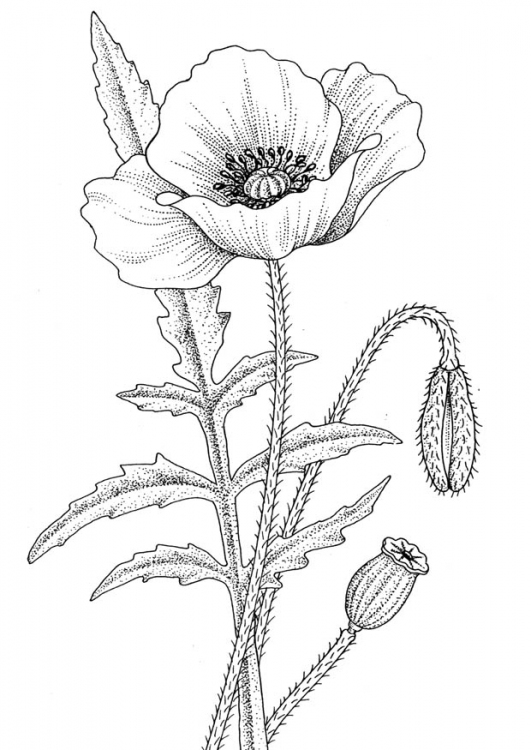
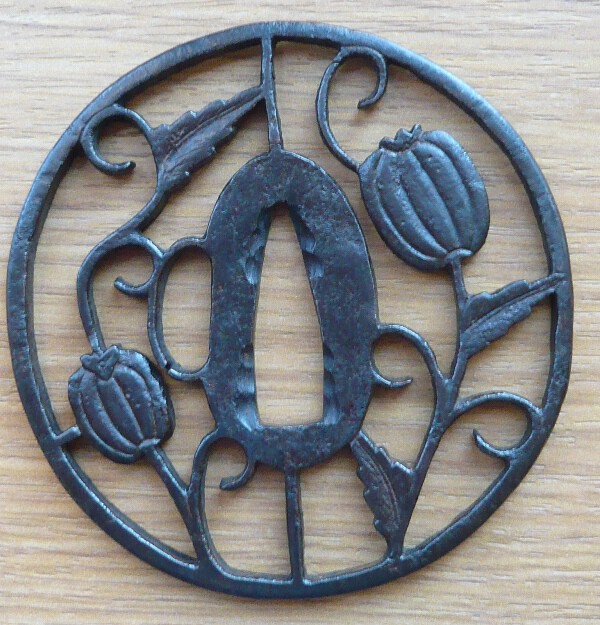
Thanks Kevin Poppy pods it is. I know that they are associated with sleep and death. What significances do poppies have in Japan?
-
What is the plant in this Kyo tsuba? Thanks

-
Henri Joly has a good write up on Daikoku in Legend in Japanese Art. Entry 157 on p. 48 http://www.archive.org/stream/legendinjapanese00jolyuoft#page/48/mode/2up
-
Hi Joe Thanks for the reply. I am glad that I misunderstood and that you are joking. Like I said I don't want to upset anyone. All the best.
-
I am very sorry that Joe seems upset as it was me that started to question the "beauty" of all 庭園 tsuba in general (not specifically his). It was not my intention at all to annoy anyone and I wish Joe good luck with the E bay auction. I am aware that ten zogan is not the sole trait of the Onin and I can kind of see the Onin influence now so thanks Reinhard for the spread of pics but ..... to say I am not convinced :| . Onin and the 庭園 theme tsuba to me seem to be poles apart although they do have vines in common. The base plates are total different, Onin are generally thin so the thicknesses... The inlay meaning the carving and materials used are different... One more thing. The E bay listing at the link above says "Included is a tsuba from the late Koto/Early Shinto period." which I think means Late Muromachi / Momoyama / early Edo period. I am not so sure I totally agree with this very large time span. I would say your tsuba is early Edo at the earliest but more likely mid Edo. Just my thoughts and again no offense intended.
-
Also I fail to see much Onin influence too. PS Let's not fight
-
Sorry and no offense to the proud owner(s) but I can't see anything nice at all about this / these tsuba. Can someone explain to me what is nice about it / them?
-
庭園図 or ていえんず which translate as "garden or park illustration"
-
could it be an overgrown garden?
-
Thanks all for your comments and thoughts. I was thinking along the lines of but lotus leaves sounds a lot more convincing. Have a nice one
-
Does any one have any theories on what theme is in this Kanayama tsuba?

-
I am amused at how much talk these items have received.
-
What makes this Katchushi? http://world.choshuya.co.jp/sale/tousou ... /index.htm
-
I take Katchushi as being relatively thin plate with a dote mimi usually with a bit of sukashi that is a more than mon sukashi but a lot less than what is seen in ji sukashi. Also I think the plates are generally plane flat on both sides with no tapering or curvature. Old Kamakura style and Onin tsuba are believed to be approximately contemporary to the more rustic Katchushi style and I think we look at these as ways to catergorise Katchushi.
-
Nice stuff The kogai ana on this one is interesting. http://www.bushiart.com/includes/large. ... num=TS1643 do the papers give an indication of the age of the tsuba? I have had a look but can't find anything myself.
-
Purpose of 'surrender' tags?
Henry Wilson replied to Bugyotsuji's topic in General Nihonto Related Discussion
If you are all wondering where to send your swords, I'll gladly accept them (if they are good enough) and will respect you for the rest of your life. Don't want to sound cynical but IMHO as I can see the delighted owner selling their repatriated treasured family heirloom and having a good laugh at the do gooder at the same time. -
That is one heck of a chat up line. Gets them all the time.
-
Modern science turned on something from the days gone by. http://search.japantimes.co.jp/cgi-bin/ ... 628a4.html
-
This is a nice story that might be suitable for some weekend reading. http://en.wikipedia.org/wiki/The_Tale_o ... boo_Cutter And an even better story: http://search.japantimes.co.jp/cgi-bin/ ... 625x1.html Well done boys!!!!!!!!!!
-
It could well be a flint bag. They were usually made of leather and contained flint stones and metal to light a fire. They initailly were worn around the waist but later on they were apprently attached to scabbards of swords at one point when people traveled.
-
This might be of interest. http://translate.google.co.uk/translate ... n%26sa%3DG Original link: http://www.hotelokura.co.jp/tokyo/shukokan/
-
I would not use uchiko at all. A micro fibre cloth, he ones for cleaning camera lens, is much better, cleaner and will not scratch a blade.
-
The tsuba and blade could be the same period, but I have feeling the tsuba is a bit younger as it does not look older than mid Edo IMPO. Try comparing the colour and amount of rust in the sword inscription with the rust in the cut outs on the tsuba as it might give you a sense of comparative age (but also remember that they are probably made from two different sources of iron) The sword could well be late Muromachi (the Sukesada group) but I am not a sword guy. TFI
-
What you say seems to me to be pretty much correct if the cross hatching has brass inlayed in it. I am not so sure if I would call it Heian jo zogan though. Have a look here to compare: http://home.earthlink.net/~jggilbert/heianjo.htm If we ignore the hatching it reminds me (but is not) of some YAMAKICHIBEI tsuba that have been discussed. viewtopic.php?f=2&t=6937&p=55274&hilit=yamakichibei#p55274
-
Ace. My favourite theme too.