mecox
-
Posts
986 -
Joined
-
Last visited
-
Days Won
16
Content Type
Profiles
Forums
Events
Store
Downloads
Gallery
Everything posted by mecox
-
Identification of this Japanese Sword (Enigma).
mecox replied to Augustus's topic in Military Swords of Japan
TOSHIMASA (敏正) Of interest, there are several examples of Toshimasa shown on War Relics Forum ...with different style /care in mei cutting. The one on right considered to be by a different person. Additional information: when he registered as a smith in 1941 he was living in Seki-machi, Aioi-cho. It appears he did not enter (or accepted?) in the 1941 Sword Exhibition, however, he is mentioned in the 1944 exhibition which was run by an army organisation Rikugun Gunto Tenran Kai and held at Yasukuni Shrine in Tokyo. It had 236 swords. The table below only shows Gifu Prefecture swords. And of course its always the best plan to SEARCH the NMB...there are a number of examples and discussion.

-
Identification of this Japanese Sword (Enigma).
mecox replied to Augustus's topic in Military Swords of Japan
Austin, as noted your sword is TOSHIMASA (敏正) from Gifu Prefecture. His real name was Asai Eikurō (浅井栄九郎), born January 15 1886 (Meiji 19). He was a student of Watanabe Kanenaga (渡辺兼永) whose school taught many smiths. He registered as a Seki smith in Showa 16 (1941) August 18 (age 55) and worked as guntō smith. He died October 25 1958. In 1942 ranking of 400 smiths he was in ryōkō no retsu level (7th of 7). You blade is dated Ni Sen Roku Hyaku Ni Nen ("2602 year of the Japanese Empire") which is 1942. It has a large Seki stamp. Your blade has taka no ha ("hawk feather") filing on nakago, but the one in Slough book is sujikai (angled), also some different shape nakago. Here are 2 more examples from Fuller & Gregory books.

-
More examples and explanation here:
-
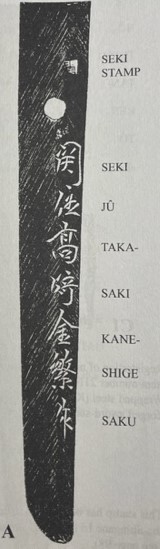
James, and Koichi: KANESHIGE (金繁), real name Takasaki Saburō (高崎三郎), born June 9th 1917 (Taisho 6) student of Kojima Kanemichi (小島兼道), he worked as guntō smith and died July 10, 1963, posthumous Buddhist name Shaku Kyōshin (釈教真). He registered as a Seki swordsmith on Showa 14 (1939) June 9 (age 22) and at the time was living in Gifu, Kamo-gun, Tomika-cho, Miyaji. In the 1942 list of 400 swordsmiths ranked in level 7 of 7 (ryōkō no retsu). Oshigata below from Slough book. Has Seki stamp.
-
BK-9: MON, THE Japanese FAMILY CREST Hawley & Chappelear, 1976. SOLD thank you.
-
PM sent. Mal
-
Lonely H, Jan got him: 関住石原義定作 = Seki-jū Ishihara Yoshisada saku. In Sesko: Yoshisada” (義定), real name Ishihara Jō´ichi (石原錠一).. He was born Meiji 32 (1899) August 16, and registered as a swordsmith in Seki on Showa 14 (1939) October 25, which is early on. At the time he was living in Seki-machi, Nagazumi-cho. This mei is quite well cut and has a Seki stamp. He also has a blade with Sho-sakura stamp, he also signed Yoshisada (義定) and Noshu ju Ishihara Yoshisada saku. He became a Rikugun Jumei Tosho.


-
Bruce, don't forget this Tanigawa Isshin died in Showa 20 (1945) either March 1 or November 1 , so less likely making late war blades. Could this be early war blade with late war koshirae?
-
wow...looks homemade
-
Alex, as noted by Jan, this is a Seki smith, whose real name was Tanigawa Yoshiharu (谷川慶治) and his tosho name “Isshin” (一心). There is not much info on him, no date of birth, but he registered as a Seki swordsmith on Showa 16 (1941) September 12. He died in Showa 20 (1945) either March 1 or November 1 (both are given). This could suggest he was older and born late 1800's. When he registered he was living is Seki-machi, Tsukini-cho. His recorded oshigata show mei of: Tanigawa Isshin, Tanigawa Isshin Saku (Seki stamp), Tani Isshin (sho stamp) with date September 1940?. Your blade looks early war (pre 1942) with Sho/sakura stamp. The nakago all appear to have higaki filing (yasurime), although there is some variation in nakago shape and style of writing. The oshigata below are from Fuller and Gregory books. [Note: he is different to Koa Isshin Mantetsu]. Can you post a picture of your tsuba and seppa, they look rather basic.




-
Please can someone help with a tang translation
mecox replied to James1967's topic in Translation Assistance
James, yes looks to be Fukumoto Kanemune who was a key smith in the Amahide workshop in Seki. Details in this NMB Download: -
Chris, yes looks to be: FUJIFUSA (藤房) from Gifu, real name Yoshida Fujikazu (吉田藤一), born on July 8th 1918 (Taisho 7). Worked as a guntō smith during World War II, and registered as a Seki smith Showa 19 (1944) April 30. He lived at Nishi-cho in Seki-machi. Not much information on him. He was a later war smith. You blade is probably mid-1944. There is also a blade by him dated June 1945.
-
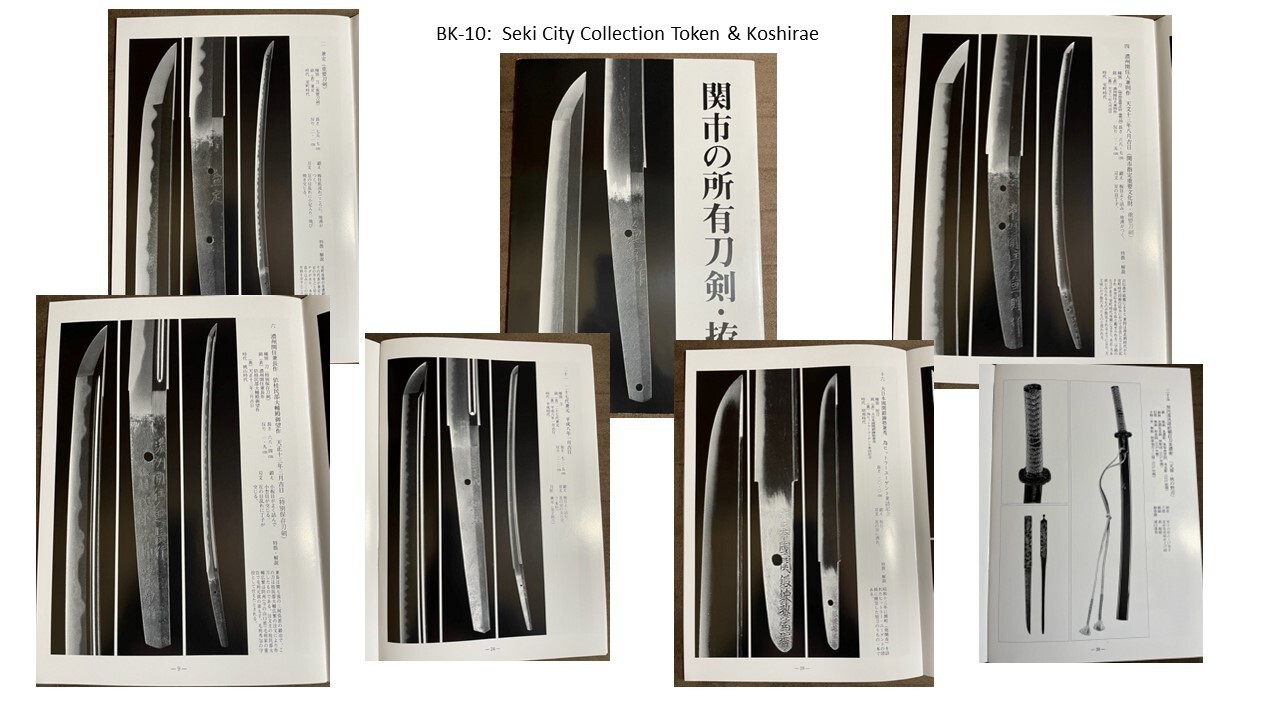
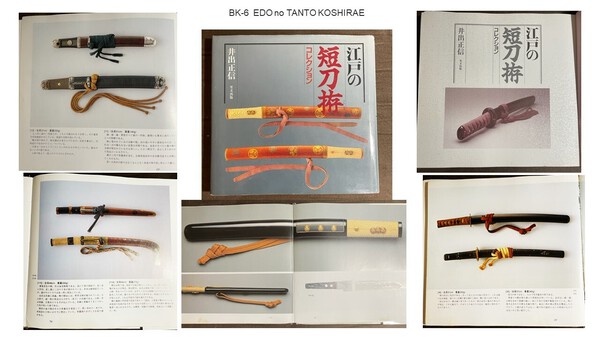
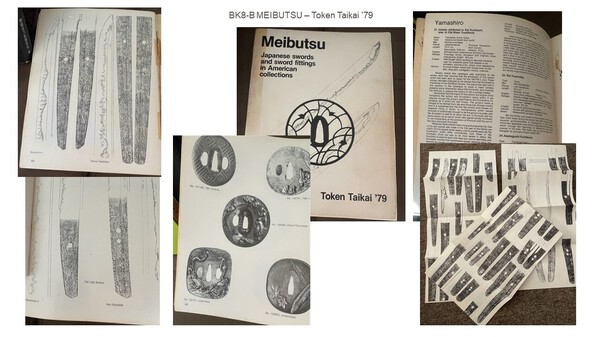
BK-6 EDO no TANTO KOSHIRAE IDE Masanobu Heisei 9 (1997) Hardcover with dustjacket, 99 gloss pages (70 pages of colour photos), around 125 examples, 20.5 x 21,5 cm. In Japanese, shows wide variety of koshirae over time, good informative photos. Very good condition. $40 plus mail. BK-7. Two Books: (A) ART OF THE Japanese SWORD & (B) SHOHIN SHU The two books by Mukansa swordsmiths are US$40 plus mail. BK7-A: The Art of the Japanese Sword: As Taught by the Experts. 2004. by Kunihira KAWACHI and Masao MANABE. Softbound with a glossy jacket, 21 x 15 cm, 156 pages in English. Introduction to Japanese swords, manufacture and care, current Nihonto world, personal history, Q & A section, sword stories and lists of sword museums. Many colour pic and 16 pics of his work. Excellent condition and signed by Kunihira with a poem. BK7-B: Shohin Shu (“Collection of Small Items”), Showa 61 (1986). A booklet by Sumitani Masamine (1921-1998) from Ishikawa-ken, a modern smith, who became Mukansa in 1966, and in 1981 was designated Ningen Kokuho (“Living National Treasure”). Size 24.5 x 21 cm, with 31 glossy pages, and presents coloured and B&W photos of kozuka and bachiru made by Masamine. The latter small knives were popular in the Tenpyu Era (711-781) of the Nara Period. Has a note by Mr Soichiro Inokuchi (1995) who was head of the Nihon Bijutsu Token Kai of Kanazawa and a colleague of Masamine san. Published by Token Shibata. BK-8. Two Books: (A) KOTO SWORD SCRAPBOOK & (B) MEIBUTSU. The two books are US$35 plus mail. BK8-A: Koto Sword Scrapbook. W.M. Hawley. 1976. Softcover, 27.5 x 21.5 cm, 64 pages. A book of oshigata from a sword appraisers records around 1550. Swordsmith names are in English in the index, plus the reference number to Hawley’s large swordsmith compilation. Reasonable condition, cover a bit worn Oshigata of around 127 swords with clear mei. BK8-B: Meibutsu: Japanese Swords and Sword Fittings in American Collections. Token Taikai 1979. Softcover, 68 glossy pages of swords and fittings (17 pages of tsuba), text in English with good details, clear B&W photos. Contains full size fold out oshigata plus 4 foldouts with multiple oshigata in rear envelope. There is a lot of information in this book. Very good condition, but cover is loose. BK-9: MON, THE Japanese FAMILY CREST Hawley & Chappelear, 1976. Hard bound of 104 pages in English with useful index of mon subject, design and families, 28.5 x 22 cm, also a summary of historical background of mon. Excellent condition. Owners name in front. US$85 plus mail. BK-10: Sekishi no Shoyu Token Koshirae (“Seki City Collection of Token & Koshirae”). 2008. By Seki City Office of Tourism. Softcover and 40 gloss pages, 29.5 x 21 cm, text in Japanese, clearly labelled. Has 32 full page B&W photos of swords with detail of mei, of a range of swords over time to modern. New condition. US$25 plus mail.




-
BK5: MINO-TOKO MEIKAN “Mino Swordsmith Lists” Heisei 20 (2008) now SOLD, thank you.
-
BK1: SEKI KAJI NO KIGEN OSAGURU “The Path of Origins of Seki Swordsmiths” Seki Kaji Toso Chosakai “Committee for Study of Seki Kaji To” Heisei 7 (1995) Hardcover with dustcover, 301 glossy pages, 30 x 22 x 2.8 cm, text in Japanese. Contains summaries, overviews, plus a collection of papers on separate aspects by different authors. Covers the development of Seki swordmaking, materials and smiths from the very beginning, including archeological findings and old records, with maps, photos and charts. Also a translation of contents pages. US$65 plus shipping. BK2: WAKIZASHI NYUMON “Beginners Book for Wakizashi” Kazuo TOKUNO Showa 50 (1975) Hardcover & plastic dustjacket., 21 x 15 cm, 190 pages, 56 pages of B&W photos with nakago and monouchi, 10 pages of koshirae, 55 pages of oshigata. In Japanese, very good condition (has some notes in English in book). US$30 plus shipping BK3: NIPPON TO SEKI SHICHI RYU (“Seven Styles of Seki Swords”) YAMADA Aoi 1970 (Chuou Token Kai) Hardcover with slipcase, 27 x 19.5 cm, 339 pages, this is a summary of the key toshi of the main Seki schools. In Japanese, there are 210 pages of oshigata with Japanese script, tosho names are easy to see. Each smith is later described in Japanese text. Also 13 pages of clear B&W photos of mei of the key swordsmiths. Includes “family” trees. Authors stamp in rear. A hard to find book, in excellent condition. US$75 plus shipping. BK4: Two Exhibition Books: Gotoh Museum Swords & Omamori (tanto) BK4-A: COURT and SAMURAI in an AGE of TRANSITION (exhibition at Gotoh Museum, Tokyo). By Japan Society, 1990. Soft cover, glossy pages, 29.5 x 22.5 cm, 127 pages, English text, description of period, background and all items. Full page B&W photos of 22 swords with full descriptions. Very good condition. BK4-B: OMAMORI TO TENRAN KAI (exhibition by Zen Nippon Tosho Kai), 2007. Soft cover glossy booklet, 29.5 x 21 cm, 40 pages, beautiful colour photos of blades and koshirae of tanto and smaller omamori-to. Japanese text but easy to follow captions. Excellent condition. Two books for US$35 plus shipping.


-
What on earth is going on with shinsa?
mecox replied to a topic in General Nihonto Related Discussion
Bruce, date kanji as noted by Jussi and Ray is sho gatsu (first month). Below text from a useful notebook (written by wife and self "Hizuke no Hon" Book of Dates....)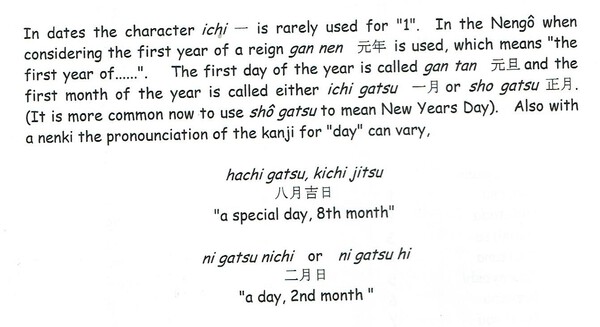
-
Help Translating and thus Identifying this Swordsmith
mecox replied to SethKaos's topic in Translation Assistance
Seth, it looks like this smith from Seki: HIDETOSHI (秀俊), real name Ido Shunzō (井戸俊三), born June 14th 1915, he worked as a guntō smith and died September 18 1985. In 1942 ranked as ryōkō no jōi (Akihide). Worked in Amahide group, summary and examples here: -
Paul, there is a bit more on the Kanenobu in this paper:
-
Could be Kanetsugu, but not fully sure which one. Not fully sure, but does Dan's sword have a Gifu stamp? There are three in Sesko: (1) KANETSUGU (兼継), Shōwa (昭和, 1926-1989), Gifu – “Kanetsugu” (兼継), real name Maekawa Gen´ichi (前川源一), born January 15th 1904, he worked as guntō smith and died March 9th 1951. (2) KANETSUGU (兼継), Shōwa (昭和, 1926-1989), Gifu – “Kanetsugu” (兼継), real name Maekawa Yoshiki (前川喜儀), born March 5th 1913, he worked as guntō smith and died September 9 th 1964. (3) KANETSUGU (兼継), Shōwa (昭和, 1926-1989), Gunma – “Ryūminsai Kanetsugu saku” (龍眠斎兼継作), “Kanetsugu” (兼継), real name Imai Kenzaburō (今井憲三郎), he studied first under Kiribuchi Kanetomo (桐渕兼友) and later under Kasama Shigetsugu (笠間繁継), gō Ryūminsai (龍眠斎), he died on February 6th 1971 at the age of 77, ryōkō no jōi (Akihide), Third Seat at the 6th Shinsaku Nihontō Denrankai (新作日本刀展覧会, 1941). This one is also P. 71 in Slough. Dan, need a better pic of mei.
-
Paul, your sword is Niwa Kanematsu Kanenobu (born 1874). His son was Niwa Shuji Kanenobu (born 1903). There is a summary of them in NMB Downloads:
-
Hi Dan, and Steve, the sword is a very late war item in a type 3 gunto koshirae. The nakago is rather rusty and the mei are extremely roughly cut. Date is Showa ju kyu ju gatsu 昭和十九年十月 1944 October, getting late in the war and all low quality. Smiths mei is Kane X saku, can't read the second part of name. There is a stamp up near habaki , looks like Gifu Gi in sakura.
-
Jesper, to add to Klaus and Jean above, smith is Naganori” (永則), real name Kuwahara Fumio (桑原二三男), born November 27th 1911, and registered as a Seki swordsmith Showa 17 (1942) January 29, so at age 30, and at the time was living at Kurachi in Seki. Sesko notes he was a student of Kawai Kaneyoshi (河合兼義), but not many examples of his work. The stamps at end of nakago look to be naka (or Chu) and shichi 7, and a punch mark? For information, here is a summary of his teacher: 兼義 Kaneyoshi (河合 義文 Kawai Yoshifumi) Born: Meiji 35 (1902) Oct 25; Reg: Showa 14 (1939) Oct 25/20? 1937:Kamo-gun, Kajita-mura, Shita-machi. 1939: same address. Deshi in 1937: 1. History: was a nephew of, and trained under Watanabe Kanenaga (#16) in Seki-machi. Became independent in Showa 9 (1934). 1941: 6th shinsakuto 2nd level of 5. 1942: Toshu Banzuke 5th level of 7 (Chu Saku) Became Rikugun Jumei Tosho. 1952: at opening of new Fujiwara tanrenjo in Seki. Slough: p.74. Example mei: Seki ju Kaneyoshi saku 関住兼義作
-
Somewhat dumb question about boy swords
mecox replied to deadreconing11's topic in General Nihonto Related Discussion
Boys Swords: look at these beauties in NMB. Top: Hobnails, April 27, 2021. Lower: Chishiki, May 10, 2021. -
Somewhat dumb question about boy swords
mecox replied to deadreconing11's topic in General Nihonto Related Discussion
Here is an example of a "Boys Sword" as a tachi: full length of koshirae is 66 cm (26 ") and nagasa is 38.3 cm (15 "). As Brian notes they are miniature scale versions. Copper habaki, suguha hamon and niji mei Ietsugu 家次 (this was a line of smiths in Kaga). I think this sword is probably early Showa period (?). Seems in ancient times "Boys Day" was called Tango no Sekku and one of five events to ward off evil spirits. In 1948 this became Kodomo no Hi ("Childrens Day") for both boys and girls on May 5, and samurai dolls became popular, also carp banners. Swords and armour again became popular in Showa period. Search the key words in NMB...some good info and pics.

-
Please help with this gunto mei translation
mecox replied to Minseito1941's topic in Translation Assistance
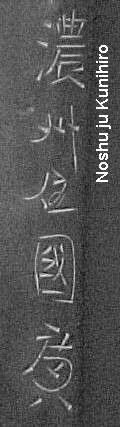
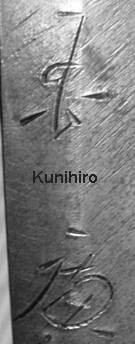
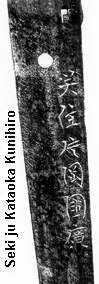
Don, following Moriyama san and Piers: Mei is likely to be "Noshu ju Kunihiro" but is roughly cut, and the "ju" is only one stroke , maybe like "no". There is an example in Japanese Sword Index which shows clear mei (left fig). Also another (middle fig) which is possibly (?) the same smith (this has also been read as Kunikane). Hard to find info on this Kunihiro smith, and he is not in the registration records for Seki swordsmiths. There is another smith that is similar, Kunihiro Kataoka “Kunihiro” (国広), who does a similar "Hiro" on his mei, but in the Seki records they use a shorter version of "Hiro" . His mei example (at right) also has a Seki stamp. KUNIHIRO (国広), Shōwa (昭和, 1926-1989), Gifu – “Kunihiro” (国広), real name Kataoka Itoshi (片岡愛), born am April 1 st 1895, worked as rikugun-jumei-tōshō and died December 2 nd 1965. In 1942 list of smiths he is ranked in 7th of 7 levels (ryōkō no retsu) (by Hikosaburo Akihide). I could not find any more on your man at the moment. http://www.japaneseswordindex.com/oshigata/kunihir3.jpghttp://www.japaneseswordindex.com/oshigata/kunihir2.jpghttp://www.japaneseswordindex.com/oshigata/kunihiro.jpg