MassiveMoonHeh
-
Posts
197 -
Joined
-
Last visited
-
Days Won
8
Content Type
Profiles
Forums
Events
Store
Downloads
Gallery
Everything posted by MassiveMoonHeh
-

Increasing Gold Membership numbers?
MassiveMoonHeh replied to Brian's topic in General Nihonto Related Discussion
Brian - monetising a site like this is a must - it is just to valuable to be a charity (Unless of course someone rich is willing to sponsor it) - but it needs funding! 1. Advertising via Google adverts is one way to go. Members get to view the site minus the ads. 2. Creating a members only area of high resolution blades as previously suggested would be enormously beneficial but that involves all members contributing and some may not be willing to list what they own so perhaps allow contribution anonymously - that is you get to decide if you put your name against your blade or not when you list it and blades uploaded anonymously do not have any tags back to the uploader. 3. Gold members do not need to pay a fee to list items for sale? Non-members get 5 free adverts but need to pay or become a member after that? 4. Gold members get access to sales items 12 hours before non-members is a great idea - if the seller is willing to do that? 5. Gold Member Dealers always have their posts at the top above non-dealers. 6. Dealers and Sellers regardless of membership should have a review status so that you can see if they are reputable. 7. Membership discounts to Gold Member Dealers so that we support our Gold Member dealers? This also becomes an incentive for getting dealers to become Gold Member Dealers. 8. Membership discounts to NBTHK membership or their publications? Has this ever been discussed with NBTHK? To try encourage more members going gold and get more NBTHK members? 9. Limit access to older posts in searches for non-paying members. That is they have access to 1 month of data but show them that there is data available but it is blurred out? Most recent posts are always free. 10. Free downloads section is only available to Gold members? 11. Deals with Gold member authors who are writing books to get discounts for their latest books for Gold Members? 12. Deals with museums who hold exhibitions to give Gold Members' discount rates? 13. Exclusive events for gold members - such as private viewings or access to swords at various museums, sword shows or private collections that allows gold members to a special event where those who attend are able to pick up some of the top rarely touched swords and view them properly. Now that would be exciting and worth the membership just for opportunities like this. Most of these have been mentioned before. I am not sure about a forum shop selling only merchandise is that valuable in terms of generating revenue unless you have plans to open a proper shop and sell things related to Nihonto - but that is not the business. -
Does anyone know if NBTHK have ever suggested they would put their sword directory online? I know I would pay to get an annual membership to that. I suspect majority/ everyone here would. A NBTHK Juyo & Tokubetsu Juyo Shinsa book costs around 20,000 yen each. That is 60,000 yen every two years for two Juyo and one TB books or 30,000 yen a year on average. But I am not sure how many of these books they print or sell annually and therefore do not actually know how much they make from this exercise. Current Japanese NBTHK membership costs 12,000 yen and foreign membership costs 19,200 yen - I believe this use to cost more because they sent mail internationally but I am also advised that all of this is now online since covid? So I am not sure how many members they have - a few I suspect but not as many as are members registered with clubs and forums such as NMB. If they provided the NBTHK sword database to members I suspect they could probably ask 25,000 or 2,500/month (Price of a Netflix subscription) across the board and negate the need for local and international snail mail. As this is a subscription to an educational service subscribers could probably also get a tax deduction for this in most countries. I think this could really take off if they did a deal where sword clubs and forums are allowed to apply for association status, so that the club can get subscriptions to the NBTHK at a discount rate (20% less perhaps) that would allow the club or forum to fund their activities through the difference between the subscription and the discount. It would bring in some much needed revenue for the clubs and forums, that currently struggle, it would bring in more money to NBTHK and the data access would be super helpful for the community. A win, win for everyone really. There is also opportunity for the NBTHK to license their images and sell them if people wanted to use them outside of the NBTHK database. They could also charge the retailers more (like 100,000 a year) to allow them to use the NBTHK data, images & certificates in their sales advertising. It just makes economic and commercial sense. I am not sure they get anything from the retailers who scan in and currently use the NBTHK certificates on their websites? Does anyone know more about this? Surely something like this must have been discussed in the higher circles of the NBTHK in the past? But I am very aware of how reluctant the Japanese are to online usage especially in the Nihonto space where the average age is not exactly young. The Japanese also appear to love paper work, snail mail and red tape - in a way these last 30 years or the "lost" 30 years have seen a lot of Japan left in the 90s. So I am aware this is not a small exercise and would involve a significant amount of work, infrastructure and mental realignment to set this up but I am also sure that I am not the only one who wants this - the Nihonto community is desperate for high resolution images. It would be so good to have a single source for this information - the benefit analysis & growth of this space would be absolutely enormous. If the NBTHK are not willing to do this due to the size or uncertainty of the project then perhaps there is an opportunity for a private institution to exclusively license this data from the NBTHK and on sell it themselves to the community? Of course if there was a really rich benefactor who would be willing to fund this and make this incredible data available for free, then I will also not object. Morning thoughts.
-
Jussi, as always an absolute pleasure to see a post from yourself, whenever you do I know I am going to learn something! Thank you. Yes, I was surprised to see the price of the Norishige and especially the Kanenaga. If true that makes these two blades some of the most expensive blades ever sold. Like, ever! And the Kanenage in particular could lay claim to the most expensive blade ever sold in a public forum in the modern era, but they seem to only include both these blades in a list in the article as an appendix, or end note. How is it possible that a these two blades could sell for this much and both get forgotten in the sands of history? So yes, it is very strange and I would love to find out more.
-
Marketing 101 - you are not wrong.
-
At $676,500 in today's money - I like your definition of second tier! Would generally agree that this could be possible except for the fact that just below the Yoshihiro tachi is one of the other Tenka-Sansaku - a Awataguchi Yoshimitsu tanto. Both may have a both been meito but they are not from the Kyōhō Meibutsu-cho which is what I would say the meibutsu refers to. Also, these swords were described as swords of major importance and none of the other Yoshihiro's have been elevated to that category... yet. Also, happy to be proven wrong here... would love to see a Soshu or Senjuin sold at these kind of prices.
-
As this was a Japanese Auction (rather than a Western Auction) held only 56 years post Meiji Restoration, selling a Daimyo Family's masterpieces, I am going to lean very heavily into the idea that they probably very much knew the difference between a Tachi and Katana. But crazier things have happened.
-
With regard to the Yoshihiro... I am unaware of a Gō Yoshihiro tachi that has survived to the present day. Certainly none appear in the Juyo list. I know that there is Tokubetsu Juyo kodachi from Shinsa 16 that sold at Christie's in 2009 and there is this Tachi that apparently sold at Christie's but $11K seems stupidly cheap and no date is given for the auction - as such I am unsure this data is real or correct but there is a lot of info in this listing so who knows? As such I would have to say for the price suggests it was probably a Gō but for the fact that no Tachi exists at the Juyo level or higher it is probably lost after the war... if it was a Gō.
-
I stumbled across a great little read in the Token Bijutsu Volume 35 about the sale of the Iyo Saijō Clan's Matsudaira Masterpieces. The Iyo Saijō Clan was established with the fief of 30,000 koku as a branch family of Kishū Tokugawa by Matsudaira Sakyō-dayū Yorizumi, who was second son of Tokugawa Yorinobu ruling Kishū. When the new branch came into existence, some of the treasures in the Kishū family collection were transferred as heirlooms. Among the ten transferred swords, three of them were meibutsu, namely, Maeda Masamune, Tokuzen-in Sadamune, and Satō Yukimitsu. Others included two Juyo Bunkazai, a kodachi by Sanenaga and a ken by Mitsutadai. It is said that the magnificence of swords in the Matsudaira collection came next only to the Maeda, Shimazu, and Kishū Tokugawa collections. In the article it, it talks to the sale of a few of these great swords that we have discussed even recently here on this forum. It seems insane that some of these things have actually been sold but there you go. In 1918 or 50 years after the Meiji restoration, two of the Iyo Saijō Clan's Matsudaira meibutso were sold: 1. Torikai Rai Kunitsugu tanto - said by Dr Homma when he saw it in 1950 that he was surprised this was not elevated to a higher status (Juyo Bunkazai or higher) this sold in 1918 to a Mr Sugihara who paid 8,000 yen for it. To put in perspective. 1 yen was equivalent to roughly 51.5c USD back in 1918. So this means the sword roughly cost $4,120. To assess how much this was in the day, an unskilled labour earned you $1/day, whilst skill labour was $1.50/day. As such the salary of an unskilled labourer was $241/year or $361.50/year for a skilled labourer. At the time a larger, well-built, multi-bedroom home in New England cost between $2,500 and $3,500, today this home would cost over $3-4 million. Basically, if you look at the USD prices from back in the day, all you need to do is throw three zeros at the end for an roughly equivalent price today. 2. Kotegiri Gō wakizashi - Initially owned by Inaba Tanba-no-kami Masakatsu it was given official recognition as work of Gō by the origami issued by Hon'ami Koon in Kanbun 2 (1662). The origami also certified that it was worth 100 pieces of gold coins. Later when its ownership went to Hosokawa Etchū-no-kami the price was raised to 130 gold coins. It went back to the Inaba again with the origami certifying its new value was 200 gold coins. Finally it was put into the same auction in 1918 as the Torikai Rai Kunitsugu tanto and was sold for €3,338 or $1,719. In 1924, some 56 years after the Meiji Restoration, the remaining bulk of the Iyo Saijō Clan masterpieces were auctioned off, including their third Matsudaira meitbutso: 3. Tokuzen-in Sadamune tanto - named ofter the owner Maeda Gen-i who had the pseudonym Tokuzen-in. It came to the Kishū Tokugawa by way of the Shōgun Tokugawa, and it eventually went to the Matsudaira in lyo Saijō. It was at the time given the price of 300 gold pieces. It was placed in an auction in 1924 along with an aikuchi-koshirae with a set of mitokoro-mono made by Gotô Kojo. The three metal pieces are of the shishi (lion) design in gold. The tanto and the koshirae sold for 5,200 yen or $2,132 at 41c USD. Which seems a lot but this sword was made a Kokuhō or National Treasure on the 22nd November 1952 and is now held at the Mitsui Memorial Museum. The following is a list of some of the swords of major importance that sold at the 1924 auction: Bizen Kanenaga (unsigned) with shirasaya: 27,800 yen or $11,398 (even though it was not meibutso it became the highest priced sword at the time - we know it is not Kokuhō or Juyo Bunkazai as none of Kanenaga's blades are Kokuhō or Juyo Bunkazai. Would love to know what happened to it, is it one of the Juyo Bijutsu or Tokebetsu Juyo blades?) That would be almost $11.4 million in today's money! Norishige (unsigned) with shirasaya: 12,100 yen or $4,961 (People loving Norishige apparently is not a modern trend... Is this one of the Kokuhō or Juyo Bunkazai blades?) That would be almost $5 million in today's money! Tsuriganekiri Kuniyuki with shirasaya: 3,050 yen or $1250.50 or $1.25 million in today's money! Unreal! Enju Kunitoki tachi in shirasaya: 2,200 yen or $902 Yoshihiro tachi in koshirae: 1,650 yen or $676.50 Awataguchi Yoshimitsu tanto in koshirae: 1, 320 yen or $541 Rai Kunimitsu with shirasaya: 1,250 yen or $512.50 Awataguchi Kuniyoshi tachi in koshirae: 1,250 yen or $512.50 It is also known that more than half of the blades sold at this auction achieved prices above 1,000 yen or $410, that is over $410,000 in equivalent purchasing power today. If we consider the Dr Compton Auction at Christie's held March 30, 1992 as the highlight Japanese sword auction of our generation, then this 1924 auction would simply have been the greatest Japanese sword auction of all time!
-
The Honno-ji Temple Museum DAIHOUDEN (The temple where Oda Nobunaga died), has been hosting an excellent exhibition for the last 8 months entitled "Valuing the Invaluable Symbols of the Warrior Class". This has been an excellent exhibition that saw a large attendance. Here they did something more than just show the sword. They also produced life size Oshigata of the whole sword and displayed this below the sword with explanations so the people visiting the exhibition could compare it directly with the sword so that they knew what they were looking at. Basically like looking through the eyes of a Hon'Ami appraiser. This was a great idea. They also provided the valuation according the Hon'Ami based in Gold Coins of how much each sword was said to be worth at the time in gold pieces and converted this to today's value. They gave only one value but the truth is that there are three values that could have been provided, the Gold Price, the Rice price and the Labour price. The most valuable is the labour price whilst the rice and gold price has not really kept up with inflation. Their price appears to settle somewhere in the middle. For example the Masamune Tanto had a price of 50 pieces in 1639: - In terms of rice this would be worth around 2-3,000,000 yen today. - In terms of gold this would be worth around 20,000,000 yen today. - In terms of labour where 1 ryu was equivalent to roughly one year's wages of a labourer. The this would be worth around 200-300,000,000 yen today. These are what the museum estimated today's value* equivalent would be from lowest to highest: - Hirotsugu Katana: 20 million yen (approx. $133,000) - Enju school Katana (attributed Juyo): 35 million yen (approx. $233,000) - Sekishu Dewa-ju Naotsuna saku Tachi (Juyo Bijutsu): 50 million yen (approx. $330,000) - Hasebe Kunishige Wakizashi (Hon'Ami Kōjō origami): 60 million yen (approx. $400,000) - Rai Kunimitsu Tanto: 80 million yen (approx. $530,000) - Norikuni Tanto (Juyo & Hon'Ami Mitsutada Origami): 100 million yen (approx. $665,000) - Masamune Tanto (Hon'Ami Koon Origami): 100 million yen (approx. $665,000) - Rai Kuniyuki Kodachi: 150 million yen (approx. $1,000,000) - Bizen Osafune Kanemitsu Tachi (Juyo Bijutsu & Hon'Ami Mitsutada Origami): 200 million yen (approx. $1,330,000) - Rai Kunitoshi Tachi (Tokubetsu Juyo & Hon'Ami Kōjō Origami: 300 million yen (approx. $2,000,000) This was very interesting and if correct it again confirms that we are living in the 安刀時代 (Era of the cheap sword). 日本刀の美 made a great video of this exhibition that you can view here and you can read more about it here on from Tamaki Joji Togishi's blog post. *I never attended the exhibition but did a quick google and found only one post but without any photographic evidence I could not corroborate these numbers and I could not find anything else so if you did attend or are going to attend before the exhibition closes this weekend, please confirm or deny these numbers. Thank you.

-
untilNagoya Sword Museum will be hosting it's very first exhibition of the now world famous tachi MIKAZUKI KANEMITSU that was purchased at Sotherby's from the Paul L. Davidson collection on the 25th March 2025 for an undisclosed amount via silent auction. This exhibition will only feature Bizen Swords showcasing the brilliant works of sword smiths active in Bizen Province (present-day Okayama Prefecture). There are going to be a proverbial festival of swords on display, see here. This is probably one of the most anticipated Nihonto exhibitions of the year. Prices: Adult: 1,200 yen Senior (65 years and older): 1,000 yen University: 500 yen Students: 300 yen Disabilities: Free For more information click here.
-
For those who have no idea of what we are talking about... here is an article from 2018 about the craze that started in 2015, such is the popularity of the game that it is still a thing today.
-
Don't mind you budging in here at all. Great insight into culture. Yes, I have read the reports of strong interest from girls at sword exhibitions. If the boys were smart they would go hang out at the latest Rai and Awataguchi exhibition dressed like a Token Rabu character.
-
It is... by Tetsuya Noguchi. I will add, that this artist's work has also been exhibited at other serious Sword Museums including Mori Shusui Museum of Art in Toyama. You can find the instagram post of the sculpture's arrival at the British Museum, here.
-
untilThe Kyoto National Museum is holding an exhibition that is designed to encourge the learning of sword appreciation through National Treasures and Important Cultural Property swords. Price: Adult - 700 yen Student - 350 yen Children under 17 - Free Click here for more information.
-
One of NHK's more recent videos explores the use of Nihonto in Kabuki theatre. It explores the Japanese mindset around swords, how legends influence culture and this space through dramatisation. Nihonto have found a lot of interest through the recent Touken Rabu manga series which has now been brought to life in Kabuki. Animating the sword, makes the people associated with it come alive and makes the art form even more interesting. It was a fascinating watch to get an insight into the spirit of the Nihonto. https://www3.nhk.or.jp/nhkworld/en/shows/3025180/
-
For everything that has been said about the Bristish Museum in the run up to its latest exhibition... Samurai. Here is some footage from inside the British Museum's first exhibition of their Samurai collection. It is a visual effects tour deforce. If I was to describe it in terms of fashion I would call it "Samurai - The Retrospective." And I think that is what this is, a fashion show that would make any Parisian Fashion House proud. It is visually stimulating. Introducing Gen Z to the Museum World. Is it meant to be a exhibition that truly explores the history of the Samurai? Probably not. Does it try to make Samurai Art/Fashion cool and hip to a new generation? I think yes. I think Gen Z would walk in and say... this is pretty cool. So what if some of the facts may be muddled - they are not reading the boards anyway. This is a selfie moment and it looks cool. And subculture is important. Therefore anything that can be done to break into that is a positive. We need to remember the general theme of museums for Gen Z is... boring. This exhibition is not. Would not be surprised to see strong Japanese themes in the next summer lines coming though Tiktok. The exhibition ends with a Samurai Riding a rubber duckie... this is the high light of the exhibition. Social Media remember. I am sure if Tokugawa Ieyasu was trying to reach Gen Z to promote his Japan, he would approve. Ok, to be honest I am not sure what he would say... This is not a serious, stuffy exhibition for Japanese sword nerds! But it is a lot of fun! And like Touken Ranbu, this does introduce a new audience to the wonderful world of the Samurai. And for that... I think we can count this as a win. (If they really love it they will do their own research anyway!) https://youtu.be/Gk8M78g_FXA?si=tBXqAsTvDeQaIwnh
-
Jussi - I have a theory on the lack of signed works by Soshū smiths and it involves the establishment of Rinzai Zen Buddhism another cultural revolution for Japan that was introduced with the introduction of the Kamakura Shogunate that encourage austerity, the abandoning of self and the strict adherence to loyalty within the master/ disciple relationship. I also subscribe to the advise from the Kotō Meizukushi Taizen and Tōken Kantei Hikketsu that both explain why we have blades signed Shintogō Kunimitsu after 1312 and that is because both Hasebe Kunishige (Kunimitsu's eldest son) and Shintogō Kunihiro (Kunimitsu's Fifth son) at various times signed their blades Shintogō Kunimitsu to show lineage after their father's death - of course this also had the enormous commercial benefit of using their father's good name to sell their wares. But agree with you - when it comes to Soshu smiths there is a lot of information missing and a lot of information that contradicts due to lack of documentation at the time and then you have people (like me) relying on documents written 200 years or later to understand what was going on at that moment in time. This is not ideal.
-
Yup, this is the pain of our current hobby. Very few photos are of the quality we require to truly study this art form from a distance. This is why we need to create a Catalogue Raisonne for the great smiths. It will make a world of difference not only for the hobby but for academic study.
-
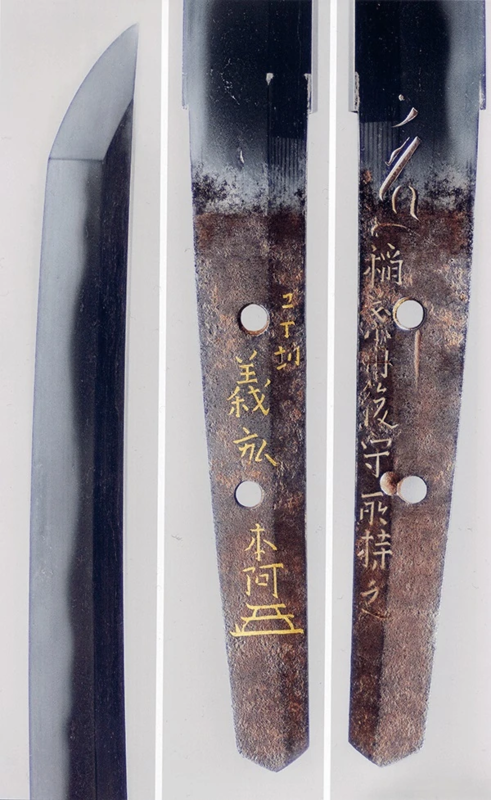
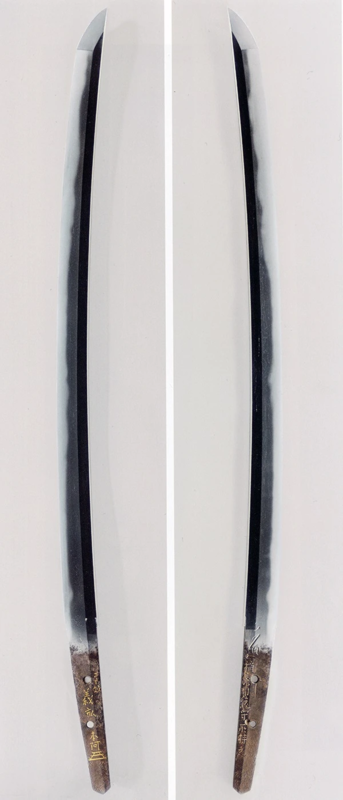
I did wonder if it was the Kotegiri-Gō. Here are a few colour pictures of the sword.
-
Norishige was also said to be the preferred smith of the Moimoi which makes sense if you are the best smith in the Province. I would love to go back in time to have tapped Albert Yamanaka's mind regarding all of this to get his thoughts or Homna Sensei's or even Darcy's. Man so much knowledge and thinking now lost to time. Of course much of what was not written down is because there is no historic proof and therefore it remains in the realm of theory or speculation but it would have been such a lovely conversation to have had just to hear their thoughts on historical events specific to the the various smiths. Best we can do is read what they left behind (these newsletters being a major asset) and hopefully we uncover a small nugget that helps us understand more. If for nothing else, this is why I love this forum - it is a treasure trove of knowledge and thought.
-
I have not come across the Kabuto-Giri Gō in my journey. Do you have a link to it with more information about it? Would be fascinated to learn more. Out of interest is this the Gō Tanto they have listed as Juyo Bunkazai? If so I did not realise it was a meito. For clarification are these images of the Kabuto-Giri Gō or your Senjuin sword? Thank you. With regard to his training as a Samurai, if he was from a Samurai family he would have started his training at the age of 5 and completed it at his Genpuku (12 years.) They were expected to be battle ready by 13-14 years old at the latest. Unreal. This gives him another 7-9 years to focus learning his craft of being a sword smith. Obviously this would be interrupted by any retainer duties but for all that was going with regard to the Samurai's discontent with the Shogunate there were no major skirmishes or battles where the Moimoi were involved during this time. In fact it appears that his life by enlarge was lived during a period of relative peace, if such a thing was possible. One major event that does happen in Gō's lifetime was the Shōchū Incident, which was the first, failed attempt by Emperor Go-Daigo to overthrow the Kamakura Shogunate and restore direct imperial rule. The plot was discovered and suppressed by the Shogunate's representatives in Kyoto, but it marked the beginning of serious, organised opposition to the Hōjō regency that ultimately lead to the collapse of the Kamakura Shogunate in 1333. Interesting the Shōchū Incident happened in 1324, the same year Norishige left Gō's forge and Gō died in 1325. Also interesting that the Moimoi were a branch of the Ashikaga clan who were active supporters of Go-Daigo and ultimately helped him overthrow the Kamakura Shogunate. You have to wonder - was Gō somehow involved? Especially when one consider's his supposed sudden death? One explanation I read stated that he committed Seppuku - it does make you wonder. Any way, it is very interesting.
-
Norishige is an interesting one... The Kiami-Bon Mei-Zukishi of 1351 states that Norishige was the student of 1. Shintogō Kunimitsu from 1308 to 1311 (aged 18-21). That was only 3 years which is not long enough to become a smith under normal circumstances. What it does not state is that it was only three years because Shintogō Kunimitsu got ill and shortly afterwards died. Meaning that Norishige needed a new Sensei and so we are told he moved to Toshiro Yukimitsu's forge to continue his study under him in 1311. As we know Yukimitsu is said to be the father of Goro Nyūdō Masamune and the most senior student of Shintōgo Kunimitsu, so this move makes logical sense in the context of the relationship with Shintogo Kunimitsu. FYI, Kunimitsu died a few months after Norishige left in 1312 - he was only 62. This move is captured in the Koto Mei-Zukishi Taizen who expands on Norishige's studies and states that Norishige studied for a further 15 years (18 years in total) and had a total of 3 more sensei after Shintōgo Kunimitsu. They read like the proverbial whose who of Soshu smiths: Sensei 2: Toshiro Yukimitsu (Time spent: 1311-1321) He spent 10 years with Yukimitsu and as such Yukimitsu can be considered Norishige's foundation smith (although he was just teaching him what Shintogō Kunimtisu taught him... Soshu Style. *As a side note, Yukimitsu was actually older than Shintōgo Kunimitsu by two years. That his first dated blade appears in 1319 makes sense in this context. "Saeki Norishige made this." Sensei 3: Gō Yoshihiro (Time Spent: 1321-1324) He then spent 3 years studying under Gō. Many assumed Norshige taught Gō but it appears the opposite was true. This is while we know Gō was 9 years younger than Norishige and died 1 year after Norishige left his forge in 1325. Norishige was clearly seeking knowledge from the best regardless of age. Sensei 4: Masamune (Time Spent: 1324-1326) After Gō, Norishige finally went to go study under Masamune and spent a further 2 years studying under Masamune - Gō died the following year in 1325. Norishige according to the Koto Mei-Zukishi Taizen literally learnt under the greatest smiths ever - I am not sure there is any other smith that can claim such an incredible lineage of sensei. If anyone was a product of Sagami/Soshu, it was Norishige. Unreal! It also shows the amount of thought and experimentation that was going on during this time - Norishige's blades are renowned for showing all his learnings and experimentations (some great and some not so much) and you can definitely more than any other smith track his progress and development through his blades. He was a keen learner and experimenter and wanted to learn under as many smiths as possible to find out what worked and what did not in persuit of the perfect blade. This included studying under his junior by age, Gō Yoshihiro, just like his Sensei Yukimitsu studied under a younger Shintogō Kunimitsu. It is therefore appropriate that the Etchu School of smiths can rightly be called the Gō School. It also shows how close and familiar all these Soshu smiths really where with each other. To explain the period I can only really compare it to the early days of Silicon Valley, everyone came in from everywhere share ideas, learn, experiment and build a brand new way of doing things. Because everyone was willing to share, everyone literally knew everyone! This is why this period really was the Golden Age. I also want to share a little side story here about Gō which is kind of fun in terms of chronology. From the above we know that Norshige studied under Gō in 1321, but what makes this date even more interesting is that it gives us an end date for Gō's studies with Masamune. That is Gō started his studies under Masamune at the age of 21 according to both the Kokon Mei-zukishi Taizen and Oseki Sho, this means if we do the math then Gō only studied for a total of two years or so, from 1319-1321, under Masamune - as he was aged 21 in 1319. This means this kid somehow managed to download everything Masamune was teaching in just 2 years (creating blades that equalled his master) and then he went on to teach Norishige at just 23 years of age. This kid was a trip. Yup - mind truly blown. I also have some ideas as to what encouraged Masamune to start teaching as I believe Gō was one of his first students, but I will leave that for another day. What is not answered is how this boy genius already possessed enough smithing skills and gravitas to impress Masamune enough in the first place to allow him to study with him at age 21 (I am still researching this - was there a Yamato link, which specific blades suggest the link? Much to learn.) What we do know is that Mount Tateyama, in whose foothills Gō grew up and had his forge (Matsukura District) is one of the three Sacred Mountains of Japan and as such it is said to be the home of heaven and the underworld, so perhaps Gō on one of his hikes up the mountain did a deal with the devil? Would not be the first. Also explains why he died at age 27 like every other legend. I think he may actually be the first to join the 27 club? (I jest by the way - or do I?) Regardless, if the stories are to be believed then, the word prodigy in the ilk of Mozart or Da Vinci is deserving of this kid from Etchu and he definitely deserves to be one of the Tenka-Sansaku. 🤯 Here is a image of a cross section of one of Gō's Tokubetsu Juyo Masterpieces where the Hamon looks remarkably like the reflection of Mount Tate in the Mikuriga-ike Pond. If I was to guess, this kid Gō clearly loved this mountain - he is said to have climbed it to get it's iron sands for his swords from the streams as close to the source as possible. That the quality of his blades have lasted 700 years, some as fresh as the day when they left the forge, speaks volumes to the secret knowledge he had managed to collect in his short life.

-
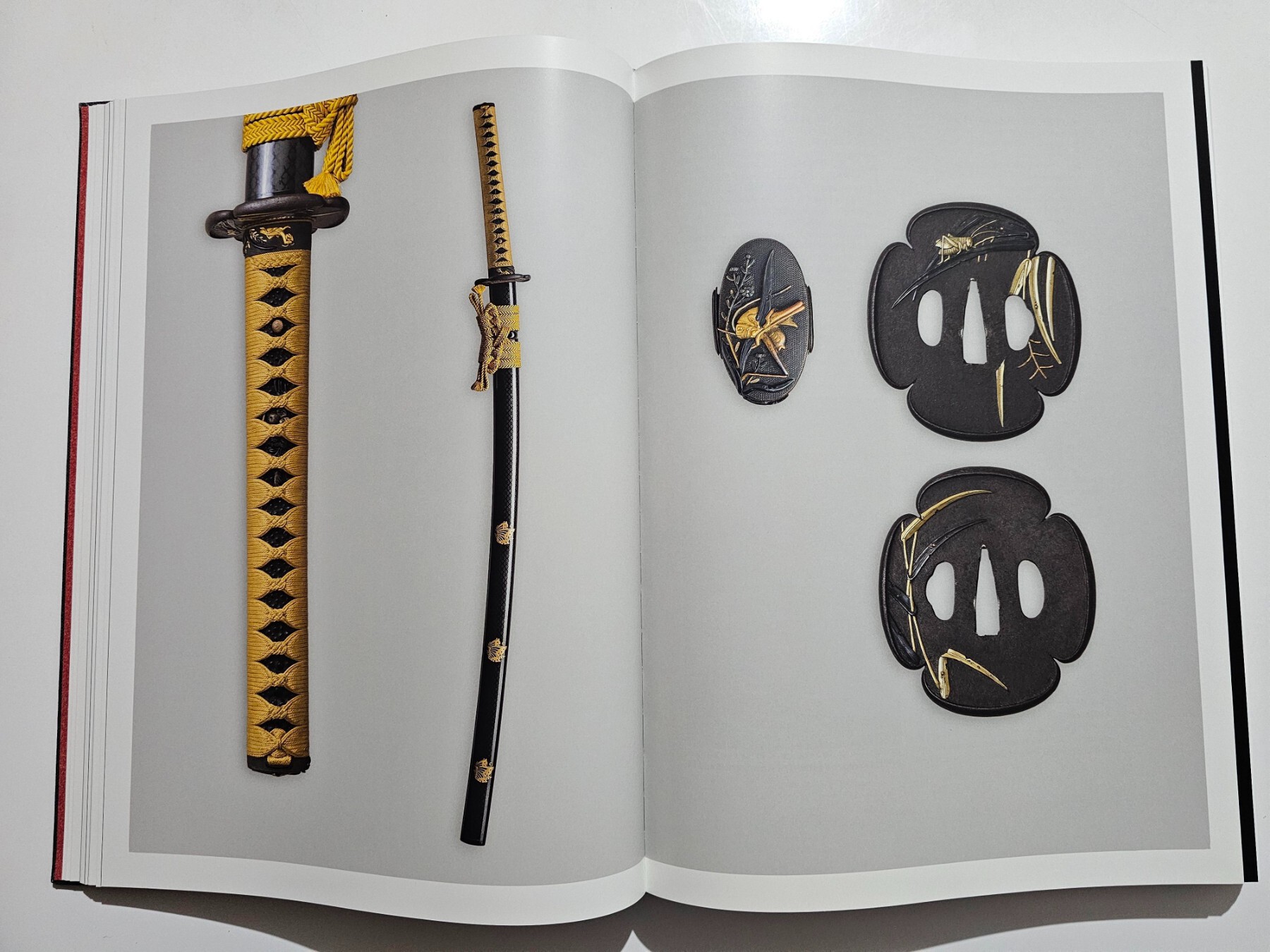
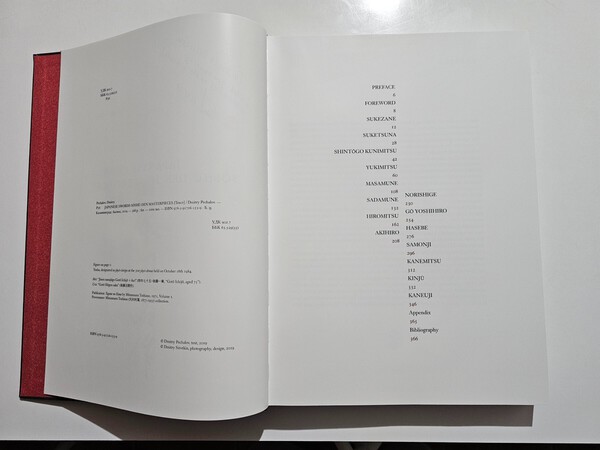
So a couple of weeks ago I purchased the book "Japanese Swords Sōshū Masterpieces" by Dmitry Pechalov from the Soshu-Den Museum. It has been around for a little while (since 2019) so I guess this is a post-post-post release review of the book. Let me just start off by saying... WOW!!! This is how a Sword book should be presented! The book is NOT small - in fact at 40.5cm x 30cm (16"x11.8") it is actually rather big, but let me be the first to say it - when it comes to Nihonto photography... BIG IS BEAUTIFUL! And whilst the pictures are exactly what you want in a sword photo; Massive Hasselblad super high definition images in all their glory, this is not a coffee table book. This book is serious, showing years of research and dedication to the cause, I promise you will learn a lot more than you already know and it will probably answer a lot of your questions or concerns that you had. Everyone in the Nihonto space knows, the Soshu-Den is the cream of the crop, their swords are beautiful, they are rare and generally very, very expensive - especially for the unfathomable heights of Tokubetsu Juyo and above. As such these blades are super hard to get a proper look at in person and in fact in most cases you never will. This book however gives you an insider's view of some of the best of Soshu-Den blades ever made. Every Master and sword has a significant write up that gives me massive Darcy Brockbank'esq vibes in it's detail; from the story of the Master, to the story of the blade and it's associated provenance (Not surprising really as Darcy helped and worked with Dmitry on the book for over 5 years - he even wrote the forward. Mark Sesko was also engaged for his expertise - so this book was put together by a stellar cast of Nihonto specialists.) Before I continue, let's be very clear, whilst this book is a book about the Soshu-Den, the stars of the show are the 20 swords that come from one very special private collection - and for this all I can say is... thank you. This is like being invited to a very detailed, all access private tour of an exclusive private sword club - the kind you did not know existed but when you do, you become desperate to somehow get in. To be able to see Soshu Master Blades including several at Tokubetsu Juyo in all their Massive High Definition Glory (yes these words are all capitalised) is just special. No, I will say this book is extra-ordinary. I am a massive advocate for the creation of Catalogue Raisonné for each Great Nihonto Master. But let's be clear - if/when this happens then this book is the benchmark that these catalogues will need to meet. This is how the photos will need to be presented, this is how the stories will need to be told. For the art form that is Nihonto and it's associated crafts there is just no other way around it, if we are to truly appreciate what has been created by these Great Smiths. Because let's be honest for us mere mortals this will be the closest we will ever get to one of these Japanese Treasures. So we might as well be allowed to indulge vicariously through the photographs of these beautiful slithers of steel. So I am going to say it - this is a book that you absolutely have to own as a sword collector. It is not cheap but it is so, so worth every penny you spend on it. It should also be noted that after six year this book is not available second hand and this in itself speaks volumes about this book. Once you own it you don't want to give it away or sell it. It will almost immediately become a treasure that takes pride of place in your collection. Mark my words here - a standard has been set here and this is the standard we will judge all future Nihonto books by. As such it is a very important book for Nihonto and therefore in my opinion it is an instant classic. I will read it often and cherish it but I may have to get some white gloves as I genuinely want to look after and preserve this copy of the book as best as I can. Due to it being a watershed book, and that it was so beautifully put together, I suspect it will soon enough become a collectors item as soon as it sells out. I believe @Brian said the same thing about it in his review 6/7 years ago (that one was for the Gen Zs.) In all honesty I am not sure how many Dmitry has left and I do not know if he will ever reprint this book, so... If you don't already own one - grab a copy today before you miss out - I promise you will not be sorry. I purchased mine through @Grey Doffin at Japanese Swords, Books and Tsuba but please note that the books are all shipped by Dmitry who is based in Europe and as such there will be an extra shipping fee. You can find out more about the book here: https://www.nihonto-museum.com/book Please Note: I am not paid by Dmitry or Grey and I have no affiliation with Dmitry or Grey other than I just bought the book through/ from them. Neither of them were aware of this review before I published it (I do not even know Dmitry's profile name on this site.) As such this is my own opinion and I do not benefit from this opinion other than the hope I can help get some good stuff get into hands of the real enthusiasts. As such I hope this review helps. Cheers.

-
New Video from British Museum
MassiveMoonHeh replied to MassiveMoonHeh's topic in General Nihonto Related Discussion
I have a copy of this book and again I was hoping for something a little more here. The book published in 2005 is unusual in it's layout. The first half of the book 82 pages explains the Japanese sword and it's makeup. The majority of the book is in black and white (photos included) except for 25 pages from from pg 49 to page 64 that are in glorious colour and offer some wonderful colour photos of paintings and some koshirae - no blades unfortunately. I suspect that this was a cost cutting exercise which just made what could of been a rather exciting book rather dull. The actual discussion of the swords in the exhibition starts from page 40 where it gives a brief outline on the 99 blades in the exhibition in chronological order (with no pictures - did I mention dull) and then once that is all done it shows the 99 blades and korshirae from page 82 - again as mentioned before abandoning all colour and showing them in NBTHK TJ certificate style with the tang, tip of the blade and small full frame image of the blade in black and white - even the attachments like koshirae are in black and white. It is very academic in approach following the NBTHK protocol down the line for the photos. What makes this approach frustrating is that this is not an academic paper and therefore for a catalogue it would have been lovely to see some colour photographs. Makes you realise how just in the last 20 years blade photography and book publishing have progressed. Photography still has a long way to go but you now have the likes of eirakuda.shop leading the way with regard to showing off this wonderful art form - if you have not seen their photos do a favour and go have a look. Back to the book, as mentioned above the layout of this catalogue definitely makes for some interesting reading as the reader is required to flip back and forth between the pictures of the blade and the explanation of the blade that are separated by some 40+ pages. Not sure why they did this other than again it was a cost saving exercise as part of some crazy British notion of austerity. Would not have wanted to be a fly on the wall of that meeting - super boring. As a result the book is as dull as a British summer (again I realise the last few years have been rather exceptional so perhaps a bad example here.) All in all I was left rather flat reading this book and I was quite excited when I purchase it. It could have been a real treasure instead because of the austerity measures, the lack of colour and unusual layout I would say unless you have a massive desire to see what the Bristish Museum own or it is part of some sort of academic research, skip this book. -
Bit of a Mayday call. I recently acquired an original full set of Albert Yamanaka's Nihonto Newsletters and discovered to my dismay that Volume 2 Newsletter 5 was missing a number of pages (gutted as this specific newsletter has all the good stuff on Masamune... ) As such I was hoping some would be willing to scan their Volume 2 Newsletter 5 and share it with me just so that I can complete my set? As you know I have recently uploaded links to the Digital version of the newsletters being uploaded by the Sacramento Japanese Sword Club and if push came to shove I could recreate Volume 2 Newsletter 5 from this but for the sake of completeness, I really would prefer to have a scan/photocopy of the original Volume 2 Newsletter 5 for posterity sake. If anyone could help I would really appreciate it - please PM me. Thank you.