MassiveMoonHeh
-
Posts
212 -
Joined
-
Last visited
-
Days Won
9
Content Type
Profiles
Forums
Events
Store
Downloads
Gallery
Everything posted by MassiveMoonHeh
-
 For those who have no idea of what we are talking about... here is an article from 2018 about the craze that started in 2015, such is the popularity of the game that it is still a thing today.
 -
Don't mind you budging in here at all. Great insight into culture. Yes, I have read the reports of strong interest from girls at sword exhibitions. If the boys were smart they would go hang out at the latest Rai and Awataguchi exhibition dressed like a Token Rabu character.
-
It is... by Tetsuya Noguchi. I will add, that this artist's work has also been exhibited at other serious Sword Museums including Mori Shusui Museum of Art in Toyama. You can find the instagram post of the sculpture's arrival at the British Museum, here.
-
untilThe Kyoto National Museum is holding an exhibition that is designed to encourge the learning of sword appreciation through National Treasures and Important Cultural Property swords. Price: Adult - 700 yen Student - 350 yen Children under 17 - Free Click here for more information.
-
One of NHK's more recent videos explores the use of Nihonto in Kabuki theatre. It explores the Japanese mindset around swords, how legends influence culture and this space through dramatisation. Nihonto have found a lot of interest through the recent Touken Rabu manga series which has now been brought to life in Kabuki. Animating the sword, makes the people associated with it come alive and makes the art form even more interesting. It was a fascinating watch to get an insight into the spirit of the Nihonto. https://www3.nhk.or.jp/nhkworld/en/shows/3025180/
-
For everything that has been said about the Bristish Museum in the run up to its latest exhibition... Samurai. Here is some footage from inside the British Museum's first exhibition of their Samurai collection. It is a visual effects tour deforce. If I was to describe it in terms of fashion I would call it "Samurai - The Retrospective." And I think that is what this is, a fashion show that would make any Parisian Fashion House proud. It is visually stimulating. Introducing Gen Z to the Museum World. Is it meant to be a exhibition that truly explores the history of the Samurai? Probably not. Does it try to make Samurai Art/Fashion cool and hip to a new generation? I think yes. I think Gen Z would walk in and say... this is pretty cool. So what if some of the facts may be muddled - they are not reading the boards anyway. This is a selfie moment and it looks cool. And subculture is important. Therefore anything that can be done to break into that is a positive. We need to remember the general theme of museums for Gen Z is... boring. This exhibition is not. Would not be surprised to see strong Japanese themes in the next summer lines coming though Tiktok. The exhibition ends with a Samurai Riding a rubber duckie... this is the high light of the exhibition. Social Media remember. I am sure if Tokugawa Ieyasu was trying to reach Gen Z to promote his Japan, he would approve. Ok, to be honest I am not sure what he would say... This is not a serious, stuffy exhibition for Japanese sword nerds! But it is a lot of fun! And like Touken Ranbu, this does introduce a new audience to the wonderful world of the Samurai. And for that... I think we can count this as a win. (If they really love it they will do their own research anyway!) https://youtu.be/Gk8M78g_FXA?si=tBXqAsTvDeQaIwnh
-
Jussi - I have a theory on the lack of signed works by Soshū smiths and it involves the establishment of Rinzai Zen Buddhism another cultural revolution for Japan that was introduced with the introduction of the Kamakura Shogunate that encourage austerity, the abandoning of self and the strict adherence to loyalty within the master/ disciple relationship. I also subscribe to the advise from the Kotō Meizukushi Taizen and Tōken Kantei Hikketsu that both explain why we have blades signed Shintogō Kunimitsu after 1312 and that is because both Hasebe Kunishige (Kunimitsu's eldest son) and Shintogō Kunihiro (Kunimitsu's Fifth son) at various times signed their blades Shintogō Kunimitsu to show lineage after their father's death - of course this also had the enormous commercial benefit of using their father's good name to sell their wares. But agree with you - when it comes to Soshu smiths there is a lot of information missing and a lot of information that contradicts due to lack of documentation at the time and then you have people (like me) relying on documents written 200 years or later to understand what was going on at that moment in time. This is not ideal.
-
Yup, this is the pain of our current hobby. Very few photos are of the quality we require to truly study this art form from a distance. This is why we need to create a Catalogue Raisonne for the great smiths. It will make a world of difference not only for the hobby but for academic study.
-
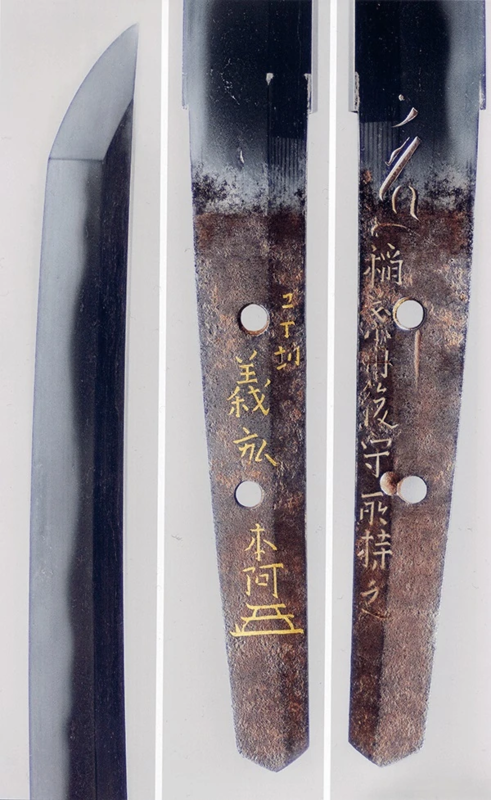
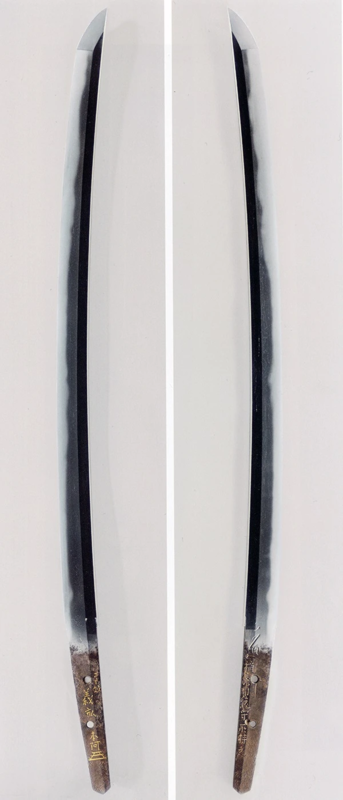
I did wonder if it was the Kotegiri-Gō. Here are a few colour pictures of the sword.
-
Norishige was also said to be the preferred smith of the Moimoi which makes sense if you are the best smith in the Province. I would love to go back in time to have tapped Albert Yamanaka's mind regarding all of this to get his thoughts or Homna Sensei's or even Darcy's. Man so much knowledge and thinking now lost to time. Of course much of what was not written down is because there is no historic proof and therefore it remains in the realm of theory or speculation but it would have been such a lovely conversation to have had just to hear their thoughts on historical events specific to the the various smiths. Best we can do is read what they left behind (these newsletters being a major asset) and hopefully we uncover a small nugget that helps us understand more. If for nothing else, this is why I love this forum - it is a treasure trove of knowledge and thought.
-
I have not come across the Kabuto-Giri Gō in my journey. Do you have a link to it with more information about it? Would be fascinated to learn more. Out of interest is this the Gō Tanto they have listed as Juyo Bunkazai? If so I did not realise it was a meito. For clarification are these images of the Kabuto-Giri Gō or your Senjuin sword? Thank you. With regard to his training as a Samurai, if he was from a Samurai family he would have started his training at the age of 5 and completed it at his Genpuku (12 years.) They were expected to be battle ready by 13-14 years old at the latest. Unreal. This gives him another 7-9 years to focus learning his craft of being a sword smith. Obviously this would be interrupted by any retainer duties but for all that was going with regard to the Samurai's discontent with the Shogunate there were no major skirmishes or battles where the Moimoi were involved during this time. In fact it appears that his life by enlarge was lived during a period of relative peace, if such a thing was possible. One major event that does happen in Gō's lifetime was the Shōchū Incident, which was the first, failed attempt by Emperor Go-Daigo to overthrow the Kamakura Shogunate and restore direct imperial rule. The plot was discovered and suppressed by the Shogunate's representatives in Kyoto, but it marked the beginning of serious, organised opposition to the Hōjō regency that ultimately lead to the collapse of the Kamakura Shogunate in 1333. Interesting the Shōchū Incident happened in 1324, the same year Norishige left Gō's forge and Gō died in 1325. Also interesting that the Moimoi were a branch of the Ashikaga clan who were active supporters of Go-Daigo and ultimately helped him overthrow the Kamakura Shogunate. You have to wonder - was Gō somehow involved? Especially when one consider's his supposed sudden death? One explanation I read stated that he committed Seppuku - it does make you wonder. Any way, it is very interesting.
-
Norishige is an interesting one... The Kiami-Bon Mei-Zukishi of 1351 states that Norishige was the student of 1. Shintogō Kunimitsu from 1308 to 1311 (aged 18-21). That was only 3 years which is not long enough to become a smith under normal circumstances. What it does not state is that it was only three years because Shintogō Kunimitsu got ill and shortly afterwards died. Meaning that Norishige needed a new Sensei and so we are told he moved to Toshiro Yukimitsu's forge to continue his study under him in 1311. As we know Yukimitsu is said to be the father of Goro Nyūdō Masamune and the most senior student of Shintōgo Kunimitsu, so this move makes logical sense in the context of the relationship with Shintogo Kunimitsu. FYI, Kunimitsu died a few months after Norishige left in 1312 - he was only 62. This move is captured in the Koto Mei-Zukishi Taizen who expands on Norishige's studies and states that Norishige studied for a further 15 years (18 years in total) and had a total of 3 more sensei after Shintōgo Kunimitsu. They read like the proverbial whose who of Soshu smiths: Sensei 2: Toshiro Yukimitsu (Time spent: 1311-1321) He spent 10 years with Yukimitsu and as such Yukimitsu can be considered Norishige's foundation smith (although he was just teaching him what Shintogō Kunimtisu taught him... Soshu Style. *As a side note, Yukimitsu was actually older than Shintōgo Kunimitsu by two years. That his first dated blade appears in 1319 makes sense in this context. "Saeki Norishige made this." Sensei 3: Gō Yoshihiro (Time Spent: 1321-1324) He then spent 3 years studying under Gō. Many assumed Norshige taught Gō but it appears the opposite was true. This is while we know Gō was 9 years younger than Norishige and died 1 year after Norishige left his forge in 1325. Norishige was clearly seeking knowledge from the best regardless of age. Sensei 4: Masamune (Time Spent: 1324-1326) After Gō, Norishige finally went to go study under Masamune and spent a further 2 years studying under Masamune - Gō died the following year in 1325. Norishige according to the Koto Mei-Zukishi Taizen literally learnt under the greatest smiths ever - I am not sure there is any other smith that can claim such an incredible lineage of sensei. If anyone was a product of Sagami/Soshu, it was Norishige. Unreal! It also shows the amount of thought and experimentation that was going on during this time - Norishige's blades are renowned for showing all his learnings and experimentations (some great and some not so much) and you can definitely more than any other smith track his progress and development through his blades. He was a keen learner and experimenter and wanted to learn under as many smiths as possible to find out what worked and what did not in persuit of the perfect blade. This included studying under his junior by age, Gō Yoshihiro, just like his Sensei Yukimitsu studied under a younger Shintogō Kunimitsu. It is therefore appropriate that the Etchu School of smiths can rightly be called the Gō School. It also shows how close and familiar all these Soshu smiths really where with each other. To explain the period I can only really compare it to the early days of Silicon Valley, everyone came in from everywhere share ideas, learn, experiment and build a brand new way of doing things. Because everyone was willing to share, everyone literally knew everyone! This is why this period really was the Golden Age. I also want to share a little side story here about Gō which is kind of fun in terms of chronology. From the above we know that Norshige studied under Gō in 1321, but what makes this date even more interesting is that it gives us an end date for Gō's studies with Masamune. That is Gō started his studies under Masamune at the age of 21 according to both the Kokon Mei-zukishi Taizen and Oseki Sho, this means if we do the math then Gō only studied for a total of two years or so, from 1319-1321, under Masamune - as he was aged 21 in 1319. This means this kid somehow managed to download everything Masamune was teaching in just 2 years (creating blades that equalled his master) and then he went on to teach Norishige at just 23 years of age. This kid was a trip. Yup - mind truly blown. I also have some ideas as to what encouraged Masamune to start teaching as I believe Gō was one of his first students, but I will leave that for another day. What is not answered is how this boy genius already possessed enough smithing skills and gravitas to impress Masamune enough in the first place to allow him to study with him at age 21 (I am still researching this - was there a Yamato link, which specific blades suggest the link? Much to learn.) What we do know is that Mount Tateyama, in whose foothills Gō grew up and had his forge (Matsukura District) is one of the three Sacred Mountains of Japan and as such it is said to be the home of heaven and the underworld, so perhaps Gō on one of his hikes up the mountain did a deal with the devil? Would not be the first. Also explains why he died at age 27 like every other legend. I think he may actually be the first to join the 27 club? (I jest by the way - or do I?) Regardless, if the stories are to be believed then, the word prodigy in the ilk of Mozart or Da Vinci is deserving of this kid from Etchu and he definitely deserves to be one of the Tenka-Sansaku. 🤯 Here is a image of a cross section of one of Gō's Tokubetsu Juyo Masterpieces where the Hamon looks remarkably like the reflection of Mount Tate in the Mikuriga-ike Pond. If I was to guess, this kid Gō clearly loved this mountain - he is said to have climbed it to get it's iron sands for his swords from the streams as close to the source as possible. That the quality of his blades have lasted 700 years, some as fresh as the day when they left the forge, speaks volumes to the secret knowledge he had managed to collect in his short life.

-
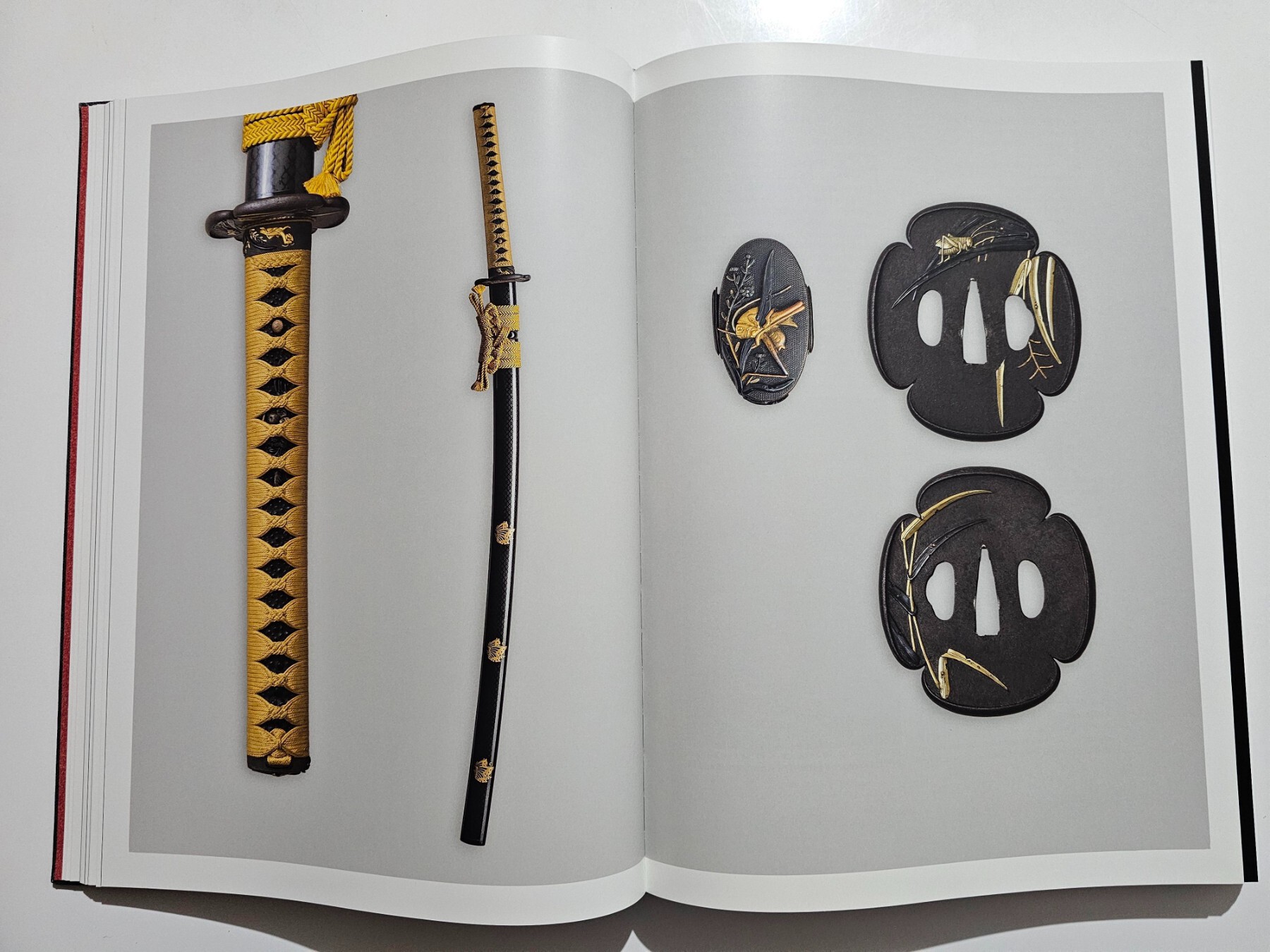
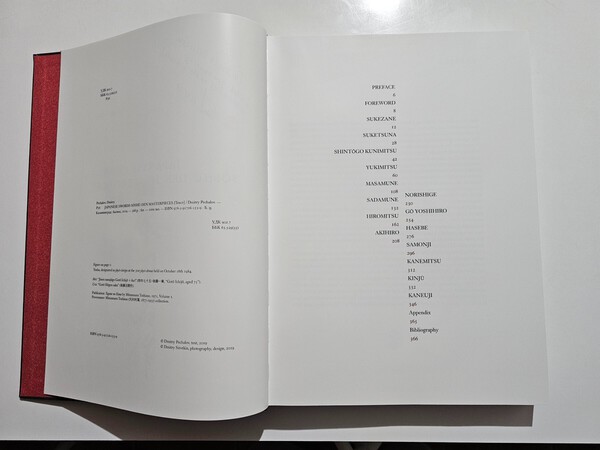
So a couple of weeks ago I purchased the book "Japanese Swords Sōshū Masterpieces" by Dmitry Pechalov from the Soshu-Den Museum. It has been around for a little while (since 2019) so I guess this is a post-post-post release review of the book. Let me just start off by saying... WOW!!! This is how a Sword book should be presented! The book is NOT small - in fact at 40.5cm x 30cm (16"x11.8") it is actually rather big, but let me be the first to say it - when it comes to Nihonto photography... BIG IS BEAUTIFUL! And whilst the pictures are exactly what you want in a sword photo; Massive Hasselblad super high definition images in all their glory, this is not a coffee table book. This book is serious, showing years of research and dedication to the cause, I promise you will learn a lot more than you already know and it will probably answer a lot of your questions or concerns that you had. Everyone in the Nihonto space knows, the Soshu-Den is the cream of the crop, their swords are beautiful, they are rare and generally very, very expensive - especially for the unfathomable heights of Tokubetsu Juyo and above. As such these blades are super hard to get a proper look at in person and in fact in most cases you never will. This book however gives you an insider's view of some of the best of Soshu-Den blades ever made. Every Master and sword has a significant write up that gives me massive Darcy Brockbank'esq vibes in it's detail; from the story of the Master, to the story of the blade and it's associated provenance (Not surprising really as Darcy helped and worked with Dmitry on the book for over 5 years - he even wrote the forward. Mark Sesko was also engaged for his expertise - so this book was put together by a stellar cast of Nihonto specialists.) Before I continue, let's be very clear, whilst this book is a book about the Soshu-Den, the stars of the show are the 20 swords that come from one very special private collection - and for this all I can say is... thank you. This is like being invited to a very detailed, all access private tour of an exclusive private sword club - the kind you did not know existed but when you do, you become desperate to somehow get in. To be able to see Soshu Master Blades including several at Tokubetsu Juyo in all their Massive High Definition Glory (yes these words are all capitalised) is just special. No, I will say this book is extra-ordinary. I am a massive advocate for the creation of Catalogue Raisonné for each Great Nihonto Master. But let's be clear - if/when this happens then this book is the benchmark that these catalogues will need to meet. This is how the photos will need to be presented, this is how the stories will need to be told. For the art form that is Nihonto and it's associated crafts there is just no other way around it, if we are to truly appreciate what has been created by these Great Smiths. Because let's be honest for us mere mortals this will be the closest we will ever get to one of these Japanese Treasures. So we might as well be allowed to indulge vicariously through the photographs of these beautiful slithers of steel. So I am going to say it - this is a book that you absolutely have to own as a sword collector. It is not cheap but it is so, so worth every penny you spend on it. It should also be noted that after six year this book is not available second hand and this in itself speaks volumes about this book. Once you own it you don't want to give it away or sell it. It will almost immediately become a treasure that takes pride of place in your collection. Mark my words here - a standard has been set here and this is the standard we will judge all future Nihonto books by. As such it is a very important book for Nihonto and therefore in my opinion it is an instant classic. I will read it often and cherish it but I may have to get some white gloves as I genuinely want to look after and preserve this copy of the book as best as I can. Due to it being a watershed book, and that it was so beautifully put together, I suspect it will soon enough become a collectors item as soon as it sells out. I believe @Brian said the same thing about it in his review 6/7 years ago (that one was for the Gen Zs.) In all honesty I am not sure how many Dmitry has left and I do not know if he will ever reprint this book, so... If you don't already own one - grab a copy today before you miss out - I promise you will not be sorry. I purchased mine through @Grey Doffin at Japanese Swords, Books and Tsuba but please note that the books are all shipped by Dmitry who is based in Europe and as such there will be an extra shipping fee. You can find out more about the book here: https://www.nihonto-museum.com/book Please Note: I am not paid by Dmitry or Grey and I have no affiliation with Dmitry or Grey other than I just bought the book through/ from them. Neither of them were aware of this review before I published it (I do not even know Dmitry's profile name on this site.) As such this is my own opinion and I do not benefit from this opinion other than the hope I can help get some good stuff get into hands of the real enthusiasts. As such I hope this review helps. Cheers.

-
New Video from British Museum
MassiveMoonHeh replied to MassiveMoonHeh's topic in General Nihonto Related Discussion
I have a copy of this book and again I was hoping for something a little more here. The book published in 2005 is unusual in it's layout. The first half of the book 82 pages explains the Japanese sword and it's makeup. The majority of the book is in black and white (photos included) except for 25 pages from from pg 49 to page 64 that are in glorious colour and offer some wonderful colour photos of paintings and some koshirae - no blades unfortunately. I suspect that this was a cost cutting exercise which just made what could of been a rather exciting book rather dull. The actual discussion of the swords in the exhibition starts from page 40 where it gives a brief outline on the 99 blades in the exhibition in chronological order (with no pictures - did I mention dull) and then once that is all done it shows the 99 blades and korshirae from page 82 - again as mentioned before abandoning all colour and showing them in NBTHK TJ certificate style with the tang, tip of the blade and small full frame image of the blade in black and white - even the attachments like koshirae are in black and white. It is very academic in approach following the NBTHK protocol down the line for the photos. What makes this approach frustrating is that this is not an academic paper and therefore for a catalogue it would have been lovely to see some colour photographs. Makes you realise how just in the last 20 years blade photography and book publishing have progressed. Photography still has a long way to go but you now have the likes of eirakuda.shop leading the way with regard to showing off this wonderful art form - if you have not seen their photos do a favour and go have a look. Back to the book, as mentioned above the layout of this catalogue definitely makes for some interesting reading as the reader is required to flip back and forth between the pictures of the blade and the explanation of the blade that are separated by some 40+ pages. Not sure why they did this other than again it was a cost saving exercise as part of some crazy British notion of austerity. Would not have wanted to be a fly on the wall of that meeting - super boring. As a result the book is as dull as a British summer (again I realise the last few years have been rather exceptional so perhaps a bad example here.) All in all I was left rather flat reading this book and I was quite excited when I purchase it. It could have been a real treasure instead because of the austerity measures, the lack of colour and unusual layout I would say unless you have a massive desire to see what the Bristish Museum own or it is part of some sort of academic research, skip this book. -
Bit of a Mayday call. I recently acquired an original full set of Albert Yamanaka's Nihonto Newsletters and discovered to my dismay that Volume 2 Newsletter 5 was missing a number of pages (gutted as this specific newsletter has all the good stuff on Masamune... ) As such I was hoping some would be willing to scan their Volume 2 Newsletter 5 and share it with me just so that I can complete my set? As you know I have recently uploaded links to the Digital version of the newsletters being uploaded by the Sacramento Japanese Sword Club and if push came to shove I could recreate Volume 2 Newsletter 5 from this but for the sake of completeness, I really would prefer to have a scan/photocopy of the original Volume 2 Newsletter 5 for posterity sake. If anyone could help I would really appreciate it - please PM me. Thank you.
-
Great Quote, Hector. I am not sure what the Japanese call a the being who knows nothing and therefore keeps learning but finds that after all that learning he knows even less... I definitely fall in that camp.
-
John, there is an index for the original Newsletters (here) created by the legened that is Mr Hartmann. I have also been working on a more detailed index for the original newsletters (to include the Tokugawa Jikki, Kyoho Meibutsu Cho and the Famous Sword list) but currently the pages for these updated online newsletters are different to the old newsletters and as such the old index does not correspond (although majority of the work has been done) and it will need to be updated to reflect these new page numbers. Once we have all the updated newsletters then I will look to see if we can push out an updated index. Cheers.
-
The Sacramento Japanese Sword Club has been given permission to re-present and upload Albert Yamanaka's Nihonto Newsletters online, which they are doing one newsletter at a time as Leon Kapp finds the time to work on the next Newsletter. It is an incredible effort and credit needs to be given where credit is due. I have managed to track down links to all the available Newsletters and will post every new one as they appear online. In the mean time I encourage everyone who downloads these newsletters to follow Sacramento Japanese Sword Club on Facebook and drop them a line thanking them for this excellent work on providing access to this invaluable resource. Albert Yamanaka's Nihonto Newsletters Volume 1 Yamanaka V1 NL01 Yamanaka V1 NL02 Yamanaka V1 NL03 Yamanaka V1 NL04 Yamanaka V1 NL05 Yamanaka V1 NL06 Yamanaka V1 NL07 Yamanaka V1 NL08 Yamanaka V1 NL09 Yamanaka V1 NL10 Yamanaka V1 NL11 Yamanaka V1 NL12 Yamanaka V1 NL12 Extras Volume 2 Yamanaka V2 NL01 Yamanaka V2 NL02 Yamanaka V2 NL03 Yamanaka V2 NL04 Yamanaka V2 NL05 Yamanaka V2 NL06 Yamanaka V2 NL07 Yamanaka V2 NL08 Yamanaka V2 NL09 Yamanaka V2 NL10 Yamanaka V2 NL11 Yamanaka V2 NL12 Volume 3 Yamanaka V3 NL01 Yamanaka V3 NL02 Yamanaka V3 NL03 Yamanaka V3 NL04 Yamanaka V3 NL05 Yamanaka V3 NL06 Yamanaka V3 NL07 Yamanaka V3 NL08 Yamanaka V3 NL09 Yamanaka V3 NL10 Yamanaka V3 NL11 & NL12
- 82 replies
-
- 13
-

-

-

-
New Video from British Museum
MassiveMoonHeh replied to MassiveMoonHeh's topic in General Nihonto Related Discussion
Well, I am gobsmacked. When I read his CV, https://www.joenickols.com/about, I am not sure what specifically jumps out at the most venerable British Museum for them to say, yes we must get this kid to be the next curator of our most important exhibition on Samurai culture we have ever held? It is certainly not his vast experience in the field. -
Found this video by one of the curators of the new Samurai Exhibition opening this week at the British Museum and was quite excited to watch it. He starts off explaining that the British Museum has one of the largest collections of Samurai artefacts outside of Japan. Unfortunately if you visit it you would not know as the permanent collection on display is rather poor. But hopefully the Exhibition will right this wrong... Unfortunately it appears it will not. The curator goes on to explain sword history but shows only one sword but does not even mention the smith and then focuses on the Koshirae of the various periods. Kind of like the Louvre explaining French history by their choice Louis Vuitton hand bags - cause they are pretty, rather than showing the Imperial collection. I guess it is interesting for a newbie but I was left very disappointed. I fear if this is the level we are engaging for the Samurai Exhibition, then unfortunately this Exhibition will leave the enthusiast and even the general public with a lot to be desired. Nice if you like unusual pretty things but otherwise very frustrating as they continue to hide the good stuff in their warehouse. I hope to be proven wrong.
-
untilHosted by the Toyama Japanese Sword Study Group. Listen to explanations and tour the Shusui museum, then hold a famous sword in your hands. Enjoy delicious winter seafood from the Sea of Japan, including winter yellowtail, and local sake, while chatting and exchanging information with fellow sword enthusiasts! This is a luxurious training camp packed with activities. Please join us! Beginners are welcome! Please feel free to inquire. Venue: ① Shusui Museum Tour (Capacity: 20 people) ② Training Camp: Minshuku Kozaburou, Ao, Himi City (Capacity: 20 people) ③ Famous Sword Appreciation Event (Capacity: 35 people) 10 swords and 5 sword fittings will be on display. *No bidding or appraisals will be held. Don't worry! Takaoka Techno Dome, Takaoka City, Toyama Prefecture *You can choose to participate in only one of ①, ②, or ③. Please let us know which one you would like to participate in when registering. Fees: ① Museum admission is free (entrance fees are at your own expense). ② Training camp: ¥19,000 (includes one night's stay, two meals, drinks, and an after-party). A ¥500 one-way fare is required for those using the shuttle bus from the museum to the guesthouse and from the guesthouse to the exhibition venue. ③ Famous Sword Appreciation Club: ¥2,000 for Toyama Sword Research Society members, ¥2,500 for the general public. *Students receive a ¥500 discount on the exhibition membership fee. *First-time participants are required to attend an etiquette seminar. Course Fee: ¥500 Schedule: Saturday, February 14 1:00 PM Meet at Shusui Museum of Art (Toyama City) 1:00 PM - 3:50 PM Visit the Shusui Museum of Art's Tachi Praise Exhibition. 4:00 PM Shuttle bus departs from Shusui Museum of Art (5:00 PM arrival at the hotel). 6:00 PM - 8:00 PM Social Gathering (may transition into an after-party if appropriate!) Sunday, February 15 7:00 AM - 8:00 AM Breakfast (bus departs for the venue at 8:30 AM) 9:00 AM - 10:30 AM Arrival at the venue. Unloading and setup begins. 10:30 AM –11:00 AM : Exhibition reception 11:00 AM –12:00 PM : Exhibition etiquette seminar (for those who are eligible) 11:00 AM – 4:00 PM: Sword and sword fittings appreciation 12:00 PM – 1:00 PM: Luncheon lecture (optional) 4:00 PM – 5:00 PM: Dismantling For more information or to register for the event please DM Toyoama Japanese Study Group - https://x.com/toyama_touken.
-
untilOn the 2rd floor exhibition room From the mid-Heian to the late Muromachi period, the tachi was the predominant form of Japanese sword. Made over many centuries as a blade well suited to mounted warfare, the tachi survives today in numerous masterful examples. From the Muromachi period onward, however, with the rise of foot soldiers and the introduction of firearms shifting combat to the ground, the uchigatana came to replace the tachi in practical use. Even so, within warrior society the tachi retained high ceremonial status. It was prized as an object for presentation and as an essential element of formal attire in rituals, and its production continued for roughly a thousand years up to the present day. This exhibition, titled “In Praise of the Tachi,” traces the sword’s history from the Heian period to today, highlighting the distinctive features and points of interest of each era. For more information please click here.
-
Just stumbled across this video by Cross Cultures from the NHK, published on the 12th January: https://www3.nhk.or.jp/nhkworld/en/shows/2084073/ "The fact that foreign collectors cherish Japanese swords helps to unearth ancient works taken overseas after 1945. It also serves as a force for preserving traditional techniques facing extinction." Nice little time capsule of today's Foreign Japanese Sword Enthusiast.
-
untilThis exhibition is presented by the Australian Society for the Preservation of Japanese Art and Swords, a private collectors' organisation dedicated to the research, preservation, and promotion of swords, sword fittings, armour, and related artefacts. This display features Japanese armour, masks, sword fittings, and other items dating from the late 16th century to the mid-19th century. Admire the armour crafted by Japanese artisans, the exceptional artistry, and the refined aesthetic sensibility of the samurai. For further information click here.
-
untilThe largest US Japanese Sword Show is back - bigger and better than ever. For further details click here.