MassiveMoonHeh
-
Posts
212 -
Joined
-
Last visited
-
Days Won
9
Content Type
Profiles
Forums
Events
Store
Downloads
Gallery
Everything posted by MassiveMoonHeh
-

House of Tokugawa coming to an end...
MassiveMoonHeh replied to MassiveMoonHeh's topic in General Nihonto Related Discussion
Oh, ok - that makes a lot of sense, it sounds like the Shogun side of the Tokugawa family will continue but the Tokugawa Yoshinobu (last Shogun) line will end? Thank you. -
Just read a fascinating article in the Times... The current head of the Tokugawa family, Miki Yamagishi, has advised that when she dies so will the family line and the title of Duke/Dutchess Tokugawa will cease to be... She has made a decision to pass on the Dutchy and will give the Tokugawa archive to the Tokyo National Museum and so end the family line. So bring to an end to the story of the incredible family that led feudal Japan for 250 years. It is fascinating read. A book is apparently coming out shortly about it. Will be worth a read. https://www.thetimes.com/article/277d6e47-15aa-4585-bce7-c0d0ab37db98
-
For all the research you do into this space I reckon we could wrangle up a honorary doctorate for you! 😉
-
Drop Hoshi a DM, I am sure he will look to add them if he can.
-
Mino sword associated with the Owari Tokugawa family
MassiveMoonHeh posted an event in Community Calendar
untilGifu Prefecture Museum is celebrating it's 50th anniversary of opening with a very special exhibition featuring the Tokugawa Art Museum's sword collection, which is associated with the Owari Tokugawa family, to commemorate this occasion. Boasting one of the nation's leading collections of samurai culture, the Tokugawa Art Museum has been home to swords associated with the Owari domain and the Owari Tokugawa family for generations, all made up of bequests from Tokugawa Ieyasu. They are unrivaled not only in their "quality," each with its own history, but also in their "quantity," which counts hundreds of items. Among these, hidden behind famous swords and specialties, there are quite a few swords made by Mino blacksmiths that have been missed from public display until now. This exhibition provides a comprehensive introduction to swords from the Tokugawa Art Museum's collection, including swords from Mino and Owari, which have rarely been on public display until now. During the Sengoku period, Mino swords, which were forged and used locally by the people of Japan as practical swords, were praised for their sharpness and ease of use, but their value was often overlooked. These unknown masterpieces of Mino swords, which will be brought together to mark the 50th anniversary of the opening of the Gifu Prefectural Museum, are likely to be of great significance to the public in Gifu. For more information please click here. -
untilThe Honnō-ji Treasure Hall Museum, in Kyoto will be hosting the "Five Sword Traditions Exhibition". The first exhibition will focus on the "Yamashiro and Yamato traditions." The exhibits include masterpieces from each of the schools, including Gosanjo, Senjuin, Yasumasa, Tegaki, and Shirikake. Oshigata swords are also displayed along themes, including Gojo Kuninaga, Ryumon, and Touma. For more information click here.
-
To add NihontoWatch app icon on Android: Open nihontowatch.com on your phone, click on the three-dot menu and select Add to home screen.
-
My new favourite app.

-
untilThe Nagoya Sword Museum "Nagoya Token World" (Naka Ward, Nagoya City, Aichi Prefecture) will hold a special exhibition "A Grand Collection of Various Swords". When you hear "Japanese sword," many people probably imagine the swords worn by samurai at their waists. However, the world of Japanese swords is incredibly diverse. In addition to name changes based on length, such as "tachi," "uchigatana," "wakizashi," and "tanto," "naginata" (a polearm with a sword blade at the end of a long handle) and "ken" (a double-edged sword) are also included in the family of Japanese swords. This exhibition allows you to see the history of swords spanning approximately 1,000 years, from the Heian period to the Heisei period, all in one place. Even if you are not very knowledgeable about swords, you are very welcome. Please experience how the shapes and uses of swords changed with each era through actual artifacts.
-
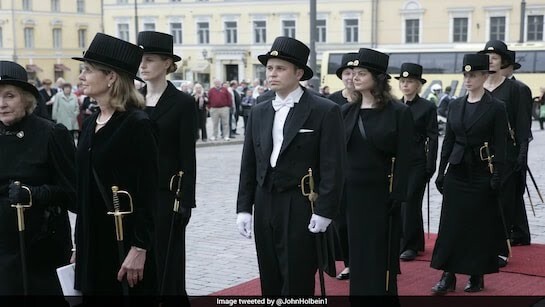
I just read that in Finland, PhD graduates get a awarded a Top Hat and Sword with their degree... The top hat apparently symbolises academic freedom and independence, while the sword represents the responsibility to defend truth and scientific knowledge. So I am fact checking on my favourite Sword forum... @Jussi Ekholm is this true, it seems old world crazy enough to be true but does it really still happen? if it does is there a specific sword you need you get awarded or do you get to chose your own sword? Perhaps nice katana to write off on tax cause it was part of my degree. Or does each university have their own specific sword? Or is it only a specific university? So many questions. If true it might be time for me to do a doctorate in Finland! 🤩
-
untilKitano Tenmangu Shrine, located in Tenmon, northwest of Kyoto, is a shrine dedicated to Sugawara no Michizane. To mark the 1,125th anniversary of Michizane's death in 2027, the Kyoto National Museum will hold a special exhibition showcasing 17 National Treasures and Important Cultural Properties from Kitano Tenmangu Shrine, as well as items related to Tenjin worship from across Japan. For the first time ever, the entire Kitano Tenjin Engi Emaki (Jokyu Version), a National Treasure, will be on display, along with many other Important Cultural Properties, including the Koan Version, Mitsunobu Version, and Mitsuoki Version, showcasing the legendary birth of Kitano Tenjin. Also, the two tachi swords "Higekiri" and "Hizamaru", both designated Important Cultural Properties and held by the Kitano Tenamngu Shrine and Daikakuji Temple respectively, will be on display for the first time together during this special exhibition. And further more, the Kyoto National Museum has advised that Photography will be OK! Additionally, through works discovered through research by the Kyoto National Museum and the Kitano Cultural Research Institute, as well as a number of masterpieces handed down at Tenmangu Shrines, Tenjin Shrines, and temples throughout Japan, the exhibition will unravel the diverse aspects of Tenjin worship that have not been discussed much until now, and the important role that these have played in Japanese culture. Held in the 1F-2 exhibition room of the Heisei Chishinkan Wing of the Kyoto National Museum. To find out more click here.
-
nihonto-db.com, Nihonto Database and interactive tools
MassiveMoonHeh replied to nulldevice's topic in Nihonto
Chandle your work is first class building on Jussi's incredible efforts. As you know I am a massive fan of this project and have already played with this quite a bit - I am excited to see it when images stat coming through... cannot wait! To @Hoshi, @nulldevice & @Jussi Ekholm, thank you so much! You three are all a credit to this space! The effort you three have put into your projects are just an incredible step forward for this hobby making it a lot easier to navigate than ever before! Wow 2026 - we are only 49 days in and this is already proving to be an awesome year for being a Nihonto enthusiast! -
untilOsaka Katana‑za returns to Shiromi Hall inside Osaka Castle! Osaka Katana-za is West Japan’s largest Japanese sword and sword-fittings exhibition and immediate sales event. Held annually in Osaka, it brings together over 40 top dealers, together with sword collectors, and sword professionals from across Japan. Unlike museums, Katana-za is a commercial exhibition, meaning all items on display are available for purchase. It is a rare opportunity to examine high-level Nihontō in person, speak directly with dealers, and handle pieces that seldom appear outside Japan. Dates: Saturday, March 28 & Sunday, March 29, 2026 Venue: Osaka Castle Hall – Jōken Hall Time: 10:00 – 17:00 (last entry 16:30) Admission fee: 1,000 yen on the day, 900 yen advance Lawson ticket code 55755 For more information please click here.
-
The Japan Times wrote an article on Thursday about the recent sword "boom" in Japan. You can read it here.
-
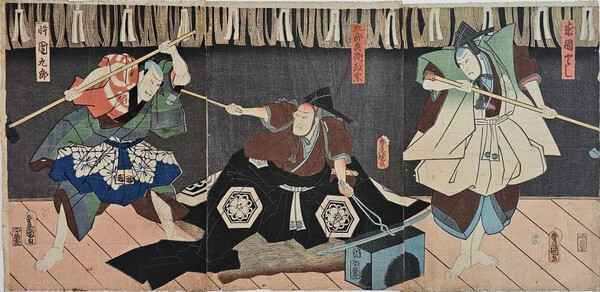
This one of my favourites - it shows actors Kataoka Nizaemon VIII as Rai Kunitoshi (Right), Ichikawa Danzô VI as Gorō Nyūdō Masamune (Centre) and Onoe Waichi II as his fictional son (Segare) Dankurô (Left). It is by Utagawa Kunisada (Toyokuni III) for the play Date Moyô Somete Kisaragi at the Nakamura Theatre in 1858.
-
Increasing Gold Membership numbers?
MassiveMoonHeh replied to Brian's topic in General Nihonto Related Discussion
Brian - monetising a site like this is a must - it is just to valuable to be a charity (Unless of course someone rich is willing to sponsor it) - but it needs funding! 1. Advertising via Google adverts is one way to go. Members get to view the site minus the ads. 2. Creating a members only area of high resolution blades as previously suggested would be enormously beneficial but that involves all members contributing and some may not be willing to list what they own so perhaps allow contribution anonymously - that is you get to decide if you put your name against your blade or not when you list it and blades uploaded anonymously do not have any tags back to the uploader. 3. Gold members do not need to pay a fee to list items for sale? Non-members get 5 free adverts but need to pay or become a member after that? 4. Gold members get access to sales items 12 hours before non-members is a great idea - if the seller is willing to do that? 5. Gold Member Dealers always have their posts at the top above non-dealers. 6. Dealers and Sellers regardless of membership should have a review status so that you can see if they are reputable. 7. Membership discounts to Gold Member Dealers so that we support our Gold Member dealers? This also becomes an incentive for getting dealers to become Gold Member Dealers. 8. Membership discounts to NBTHK membership or their publications? Has this ever been discussed with NBTHK? To try encourage more members going gold and get more NBTHK members? 9. Limit access to older posts in searches for non-paying members. That is they have access to 1 month of data but show them that there is data available but it is blurred out? Most recent posts are always free. 10. Free downloads section is only available to Gold members? 11. Deals with Gold member authors who are writing books to get discounts for their latest books for Gold Members? 12. Deals with museums who hold exhibitions to give Gold Members' discount rates? 13. Exclusive events for gold members - such as private viewings or access to swords at various museums, sword shows or private collections that allows gold members to a special event where those who attend are able to pick up some of the top rarely touched swords and view them properly. Now that would be exciting and worth the membership just for opportunities like this. Most of these have been mentioned before. I am not sure about a forum shop selling only merchandise is that valuable in terms of generating revenue unless you have plans to open a proper shop and sell things related to Nihonto - but that is not the business. -
Does anyone know if NBTHK have ever suggested they would put their sword directory online? I know I would pay to get an annual membership to that. I suspect majority/ everyone here would. A NBTHK Juyo & Tokubetsu Juyo Shinsa book costs around 20,000 yen each. That is 60,000 yen every two years for two Juyo and one TB books or 30,000 yen a year on average. But I am not sure how many of these books they print or sell annually and therefore do not actually know how much they make from this exercise. Current Japanese NBTHK membership costs 12,000 yen and foreign membership costs 19,200 yen - I believe this use to cost more because they sent mail internationally but I am also advised that all of this is now online since covid? So I am not sure how many members they have - a few I suspect but not as many as are members registered with clubs and forums such as NMB. If they provided the NBTHK sword database to members I suspect they could probably ask 25,000 or 2,500/month (Price of a Netflix subscription) across the board and negate the need for local and international snail mail. As this is a subscription to an educational service subscribers could probably also get a tax deduction for this in most countries. I think this could really take off if they did a deal where sword clubs and forums are allowed to apply for association status, so that the club can get subscriptions to the NBTHK at a discount rate (20% less perhaps) that would allow the club or forum to fund their activities through the difference between the subscription and the discount. It would bring in some much needed revenue for the clubs and forums, that currently struggle, it would bring in more money to NBTHK and the data access would be super helpful for the community. A win, win for everyone really. There is also opportunity for the NBTHK to license their images and sell them if people wanted to use them outside of the NBTHK database. They could also charge the retailers more (like 100,000 a year) to allow them to use the NBTHK data, images & certificates in their sales advertising. It just makes economic and commercial sense. I am not sure they get anything from the retailers who scan in and currently use the NBTHK certificates on their websites? Does anyone know more about this? Surely something like this must have been discussed in the higher circles of the NBTHK in the past? But I am very aware of how reluctant the Japanese are to online usage especially in the Nihonto space where the average age is not exactly young. The Japanese also appear to love paper work, snail mail and red tape - in a way these last 30 years or the "lost" 30 years have seen a lot of Japan left in the 90s. So I am aware this is not a small exercise and would involve a significant amount of work, infrastructure and mental realignment to set this up but I am also sure that I am not the only one who wants this - the Nihonto community is desperate for high resolution images. It would be so good to have a single source for this information - the benefit analysis & growth of this space would be absolutely enormous. If the NBTHK are not willing to do this due to the size or uncertainty of the project then perhaps there is an opportunity for a private institution to exclusively license this data from the NBTHK and on sell it themselves to the community? Of course if there was a really rich benefactor who would be willing to fund this and make this incredible data available for free, then I will also not object. Morning thoughts.
-
Jussi, as always an absolute pleasure to see a post from yourself, whenever you do I know I am going to learn something! Thank you. Yes, I was surprised to see the price of the Norishige and especially the Kanenaga. If true that makes these two blades some of the most expensive blades ever sold. Like, ever! And the Kanenage in particular could lay claim to the most expensive blade ever sold in a public forum in the modern era, but they seem to only include both these blades in a list in the article as an appendix, or end note. How is it possible that a these two blades could sell for this much and both get forgotten in the sands of history? So yes, it is very strange and I would love to find out more.
-
Marketing 101 - you are not wrong.
-
At $676,500 in today's money - I like your definition of second tier! Would generally agree that this could be possible except for the fact that just below the Yoshihiro tachi is one of the other Tenka-Sansaku - a Awataguchi Yoshimitsu tanto. Both may have a both been meito but they are not from the Kyōhō Meibutsu-cho which is what I would say the meibutsu refers to. Also, these swords were described as swords of major importance and none of the other Yoshihiro's have been elevated to that category... yet. Also, happy to be proven wrong here... would love to see a Soshu or Senjuin sold at these kind of prices.
-
As this was a Japanese Auction (rather than a Western Auction) held only 56 years post Meiji Restoration, selling a Daimyo Family's masterpieces, I am going to lean very heavily into the idea that they probably very much knew the difference between a Tachi and Katana. But crazier things have happened.
-
With regard to the Yoshihiro... I am unaware of a Gō Yoshihiro tachi that has survived to the present day. Certainly none appear in the Juyo list. I know that there is Tokubetsu Juyo kodachi from Shinsa 16 that sold at Christie's in 2009 and there is this Tachi that apparently sold at Christie's but $11K seems stupidly cheap and no date is given for the auction - as such I am unsure this data is real or correct but there is a lot of info in this listing so who knows? As such I would have to say for the price suggests it was probably a Gō but for the fact that no Tachi exists at the Juyo level or higher it is probably lost after the war... if it was a Gō.
-
I stumbled across a great little read in the Token Bijutsu Volume 35 about the sale of the Iyo Saijō Clan's Matsudaira Masterpieces. The Iyo Saijō Clan was established with the fief of 30,000 koku as a branch family of Kishū Tokugawa by Matsudaira Sakyō-dayū Yorizumi, who was second son of Tokugawa Yorinobu ruling Kishū. When the new branch came into existence, some of the treasures in the Kishū family collection were transferred as heirlooms. Among the ten transferred swords, three of them were meibutsu, namely, Maeda Masamune, Tokuzen-in Sadamune, and Satō Yukimitsu. Others included two Juyo Bunkazai, a kodachi by Sanenaga and a ken by Mitsutadai. It is said that the magnificence of swords in the Matsudaira collection came next only to the Maeda, Shimazu, and Kishū Tokugawa collections. In the article it, it talks to the sale of a few of these great swords that we have discussed even recently here on this forum. It seems insane that some of these things have actually been sold but there you go. In 1918 or 50 years after the Meiji restoration, two of the Iyo Saijō Clan's Matsudaira meibutso were sold: 1. Torikai Rai Kunitsugu tanto - said by Dr Homma when he saw it in 1950 that he was surprised this was not elevated to a higher status (Juyo Bunkazai or higher) this sold in 1918 to a Mr Sugihara who paid 8,000 yen for it. To put in perspective. 1 yen was equivalent to roughly 51.5c USD back in 1918. So this means the sword roughly cost $4,120. To assess how much this was in the day, an unskilled labour earned you $1/day, whilst skill labour was $1.50/day. As such the salary of an unskilled labourer was $241/year or $361.50/year for a skilled labourer. At the time a larger, well-built, multi-bedroom home in New England cost between $2,500 and $3,500, today this home would cost over $3-4 million. Basically, if you look at the USD prices from back in the day, all you need to do is throw three zeros at the end for an roughly equivalent price today. 2. Kotegiri Gō wakizashi - Initially owned by Inaba Tanba-no-kami Masakatsu it was given official recognition as work of Gō by the origami issued by Hon'ami Koon in Kanbun 2 (1662). The origami also certified that it was worth 100 pieces of gold coins. Later when its ownership went to Hosokawa Etchū-no-kami the price was raised to 130 gold coins. It went back to the Inaba again with the origami certifying its new value was 200 gold coins. Finally it was put into the same auction in 1918 as the Torikai Rai Kunitsugu tanto and was sold for €3,338 or $1,719. In 1924, some 56 years after the Meiji Restoration, the remaining bulk of the Iyo Saijō Clan masterpieces were auctioned off, including their third Matsudaira meitbutso: 3. Tokuzen-in Sadamune tanto - named ofter the owner Maeda Gen-i who had the pseudonym Tokuzen-in. It came to the Kishū Tokugawa by way of the Shōgun Tokugawa, and it eventually went to the Matsudaira in lyo Saijō. It was at the time given the price of 300 gold pieces. It was placed in an auction in 1924 along with an aikuchi-koshirae with a set of mitokoro-mono made by Gotô Kojo. The three metal pieces are of the shishi (lion) design in gold. The tanto and the koshirae sold for 5,200 yen or $2,132 at 41c USD. Which seems a lot but this sword was made a Kokuhō or National Treasure on the 22nd November 1952 and is now held at the Mitsui Memorial Museum. The following is a list of some of the swords of major importance that sold at the 1924 auction: Bizen Kanenaga (unsigned) with shirasaya: 27,800 yen or $11,398 (even though it was not meibutso it became the highest priced sword at the time - we know it is not Kokuhō or Juyo Bunkazai as none of Kanenaga's blades are Kokuhō or Juyo Bunkazai. Would love to know what happened to it, is it one of the Juyo Bijutsu or Tokebetsu Juyo blades?) That would be almost $11.4 million in today's money! Norishige (unsigned) with shirasaya: 12,100 yen or $4,961 (People loving Norishige apparently is not a modern trend... Is this one of the Kokuhō or Juyo Bunkazai blades?) That would be almost $5 million in today's money! Tsuriganekiri Kuniyuki with shirasaya: 3,050 yen or $1250.50 or $1.25 million in today's money! Unreal! Enju Kunitoki tachi in shirasaya: 2,200 yen or $902 Yoshihiro tachi in koshirae: 1,650 yen or $676.50 Awataguchi Yoshimitsu tanto in koshirae: 1, 320 yen or $541 Rai Kunimitsu with shirasaya: 1,250 yen or $512.50 Awataguchi Kuniyoshi tachi in koshirae: 1,250 yen or $512.50 It is also known that more than half of the blades sold at this auction achieved prices above 1,000 yen or $410, that is over $410,000 in equivalent purchasing power today. If we consider the Dr Compton Auction at Christie's held March 30, 1992 as the highlight Japanese sword auction of our generation, then this 1924 auction would simply have been the greatest Japanese sword auction of all time!
-
The Honno-ji Temple Museum DAIHOUDEN (The temple where Oda Nobunaga died), has been hosting an excellent exhibition for the last 8 months entitled "Valuing the Invaluable Symbols of the Warrior Class". This has been an excellent exhibition that saw a large attendance. Here they did something more than just show the sword. They also produced life size Oshigata of the whole sword and displayed this below the sword with explanations so the people visiting the exhibition could compare it directly with the sword so that they knew what they were looking at. Basically like looking through the eyes of a Hon'Ami appraiser. This was a great idea. They also provided the valuation according the Hon'Ami based in Gold Coins of how much each sword was said to be worth at the time in gold pieces and converted this to today's value. They gave only one value but the truth is that there are three values that could have been provided, the Gold Price, the Rice price and the Labour price. The most valuable is the labour price whilst the rice and gold price has not really kept up with inflation. Their price appears to settle somewhere in the middle. For example the Masamune Tanto had a price of 50 pieces in 1639: - In terms of rice this would be worth around 2-3,000,000 yen today. - In terms of gold this would be worth around 20,000,000 yen today. - In terms of labour where 1 ryu was equivalent to roughly one year's wages of a labourer. The this would be worth around 200-300,000,000 yen today. These are what the museum estimated today's value* equivalent would be from lowest to highest: - Hirotsugu Katana: 20 million yen (approx. $133,000) - Enju school Katana (attributed Juyo): 35 million yen (approx. $233,000) - Sekishu Dewa-ju Naotsuna saku Tachi (Juyo Bijutsu): 50 million yen (approx. $330,000) - Hasebe Kunishige Wakizashi (Hon'Ami Kōjō origami): 60 million yen (approx. $400,000) - Rai Kunimitsu Tanto: 80 million yen (approx. $530,000) - Norikuni Tanto (Juyo & Hon'Ami Mitsutada Origami): 100 million yen (approx. $665,000) - Masamune Tanto (Hon'Ami Koon Origami): 100 million yen (approx. $665,000) - Rai Kuniyuki Kodachi: 150 million yen (approx. $1,000,000) - Bizen Osafune Kanemitsu Tachi (Juyo Bijutsu & Hon'Ami Mitsutada Origami): 200 million yen (approx. $1,330,000) - Rai Kunitoshi Tachi (Tokubetsu Juyo & Hon'Ami Kōjō Origami: 300 million yen (approx. $2,000,000) This was very interesting and if correct it again confirms that we are living in the 安刀時代 (Era of the cheap sword). 日本刀の美 made a great video of this exhibition that you can view here and you can read more about it here on from Tamaki Joji Togishi's blog post. *I never attended the exhibition but did a quick google and found only one post but without any photographic evidence I could not corroborate these numbers and I could not find anything else so if you did attend or are going to attend before the exhibition closes this weekend, please confirm or deny these numbers. Thank you.

-
untilNagoya Sword Museum will be hosting it's very first exhibition of the now world famous tachi MIKAZUKI KANEMITSU that was purchased at Sotherby's from the Paul L. Davidson collection on the 25th March 2025 for an undisclosed amount via silent auction. This exhibition will only feature Bizen Swords showcasing the brilliant works of sword smiths active in Bizen Province (present-day Okayama Prefecture). There are going to be a proverbial festival of swords on display, see here. This is probably one of the most anticipated Nihonto exhibitions of the year. Prices: Adult: 1,200 yen Senior (65 years and older): 1,000 yen University: 500 yen Students: 300 yen Disabilities: Free For more information click here.