Exclus1ve
-
Posts
180 -
Joined
-
Last visited
-
Days Won
2
Content Type
Profiles
Forums
Events
Store
Downloads
Gallery
Everything posted by Exclus1ve
-
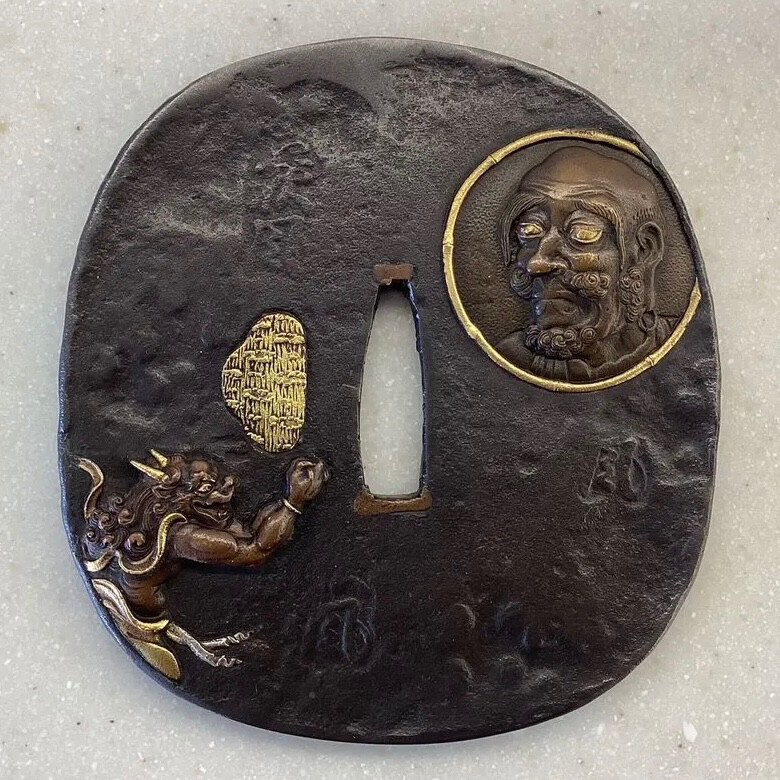
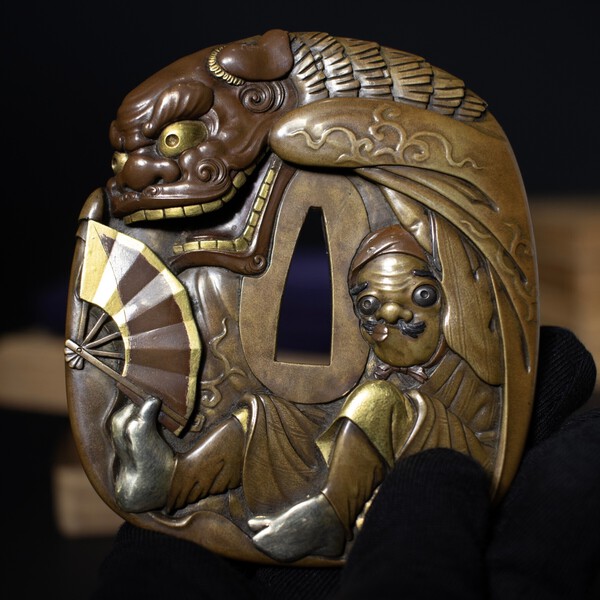
Greetings to all! In a later Meiji or Showa, there are often tsuba for decoration or tsuba that are not intended for a sword. I'll post an example of such a tsuba, I don't understand one thing, why couldn't a proper seppa dai be done? One of my favorite tsuba made by Ford Hallam: This tsuba also has an inlay in the place of the seppa dai, but this does not prevent it from being installed on the sword. Ford himself said that practical importance comes first. So why did the craftsmen make decorative tsuba, if it would be possible to take into account the practical application? Kind regards, Viktor


-
Inlay with nanako looking neat. Judging by the execution of the work, it looks like the original, just a little worn. If you look at it without zooming in, you can see the effect of "silk")
-
So I can't find at least one reason why it was done in the 19th century) The quality of fakes is only increasing over time. In this case, all the same cast copies, and then they were given to a person for manual revision. However, this remains just a "coloring book".
-
It's an old but interesting topic. In Moscow, this quality of tsuba is being sold only now by 3 sellers. More than $1,000 for each one. I believe that they were produced at the end of the 20th century - the beginning of the 21st. I compared them thoroughly, the differences in relief are minimal. Obviously, they were manually modified after casting to make them different from each other. The sellers claim that these are copies of the 19th century. Who is closer to the truth? №1 №2


-

-
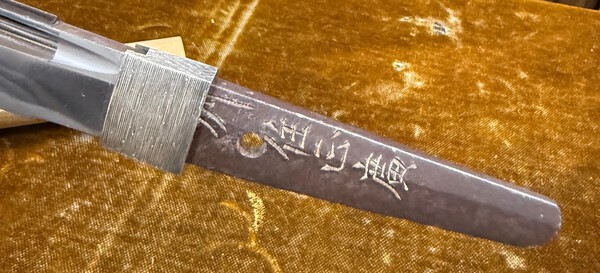
Greetings to all! I found information about this smith, correct me if I'm wrong. I will also add new photos of the seller. The problem is that there is a metal stratification. SSESHU JU MASAHIRO Tsuto School, Osaka district, 1650-1700. This is Master Massahiro, who lived in the province of Setsu, the eastern part of Japan, opposite the island of Awaji. Masahiro is a student of the school's founder, Sukehiro, who later adopted the name Tsuta.



-
Hello! I would like to know more about the sword and the master. Thank you in advance!


-
There is no question that this is casting. But are all these copies made nowadays?
-
I'm new to this forum, but due to my former hobby of numismatics, I also belong to other communities. I've never seen this on our (numismatic) forums. It's nice to see strangers with the same interests so worried about each other. Respect!
-
Curious how the figures are fixed to the tsuba? Are the pins soldered to the tsuba?
-
It's really funny))
-
There are similar details…

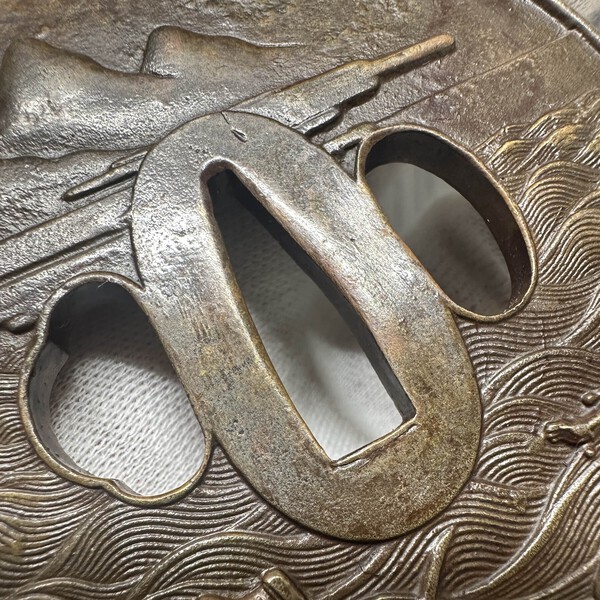
-
Hello! What do you think about the authenticity of this tsuba?

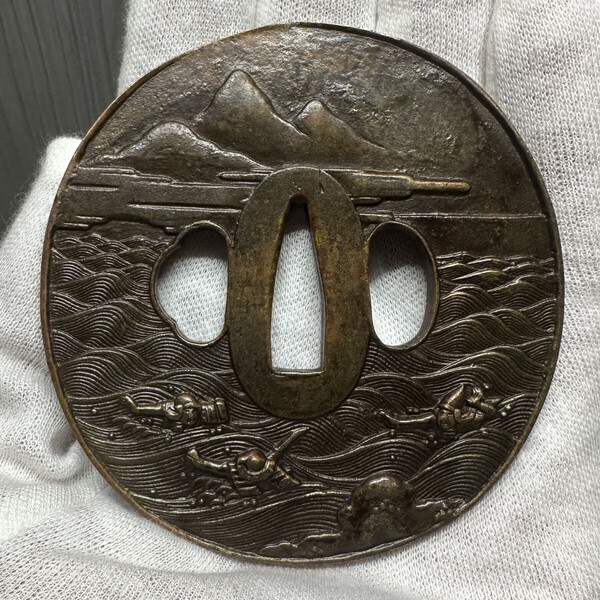
-
Yes, I also tend to think that the figure was added later. So this fastening technique was often used on tsuba?
-
I also wanted to ask if there has ever been such an inlay technique? The base of the figure is flat, and it partially hangs in the air. Or is it due to the unusual shape of the tsuba?


-
I found a similar set with the same plot. The name "Three Kingdoms”, but there are no details. https://auctions.yahoo.co.jp/jp/auction/u1176005508


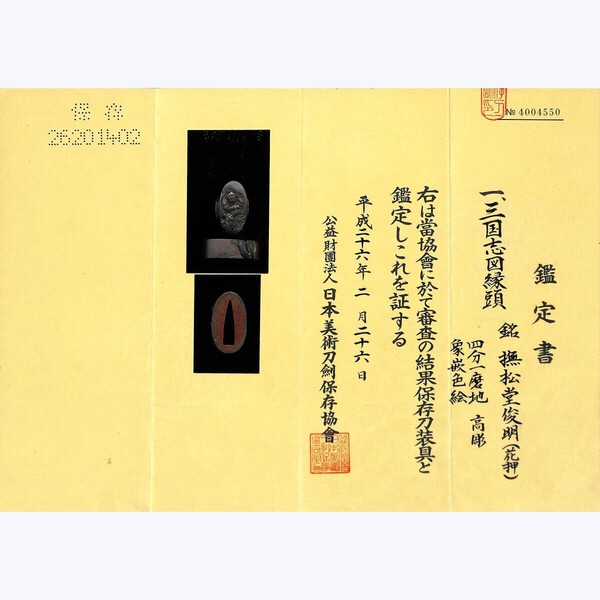
-
There is an interesting detail on the second tsube. Do you think this is a mistake or an idea of the artist?)


-
The set is full, but the Fuchi only shows the Bishamonten spear and …?

-
I think you're right! Is the same character depicted on tsuba and kasir along with Bisyamon-ten? Or are these unrelated plots?
-
Ford Hallam wrote about this in more detail earlier.
-
Thanks! I often see this woman portrayed together with Bisyamon-ten (Japanese 毘沙門天). I have a kashira with the same woman. So who is she?)


-
Yes. Why should they be made in places where sword fasteners are never installed?

-
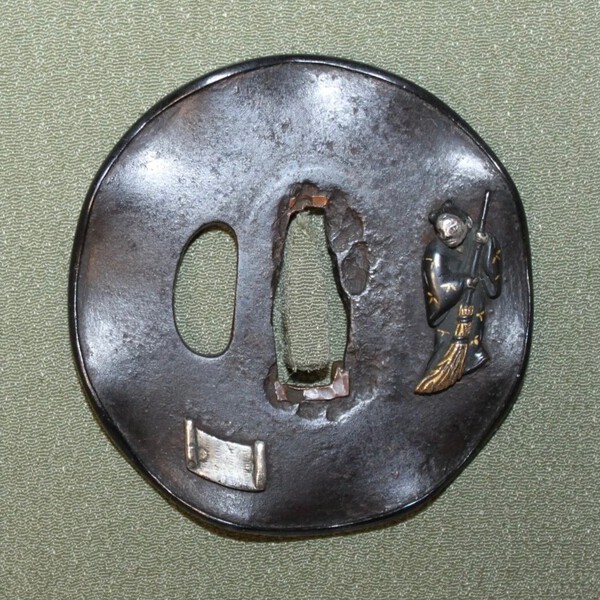
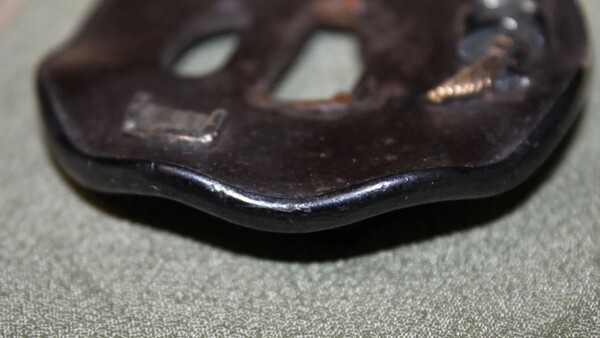
I wonder if the shakuda figurine and fukurin were made later or made together with tsuba? And what causes the irregularities near nakago-ana?
-
Thank you all again! Now we know more about the Soten school)
-
Hello! A very unusual shape, shakudo inlay, fukurin made of shakudo too. I would like to know more about this tsuba. I would appreciate your comments!