Iaido dude
-
Posts
514 -
Joined
-
Last visited
-
Days Won
3
Content Type
Profiles
Forums
Events
Store
Downloads
Gallery
Everything posted by Iaido dude
-

FS - High-class Owari Sukashi Tsuba with 2023 NBTHK Hozon Papers
Iaido dude replied to Higo-san's topic in Tsuba
Classical design. Beautifully executed. -
I would hate to be the one to go at that rust. I recently tried to use a piece of bone for this purpose and felt that it affected the iron surface more than intended, leaving some of the bone embedded as very fine residue and changing the texture. Perhaps antler is softer than bone.
-
I do remember seeing an old post commenting on Tagane-ato patterns as possible signatures of specific schools. I just don’t know what these patterns can tell us. I do note that the patterns are not identical for each example of the very similar design of two plum branches.
-
So, do you think my daisho are Umetada?
-
You've unmasked my complete ignorance. They are indeed magnetic. So, Shakudo inlays of varying alloys of copper, silver, gold on an iron plate? I need to read up a bit.
-
Thanks so much for this valuable information. So, Uemon, silver-brass-Shakudo inlay was used for the iron plates. Ume is also plum in Chinese. I love sour plum preserved as dried fruit with seed or wet over shaved ice (my favorite, but can only get this in my native Taiwan. The Worthpoint piece is for Wakizashi. Attribution below from National Gallery colleciton: Plum branch and blossom, copper, silver, gold inlay. Att. Maneaki Umetada, Kyoto, Yamashiro.
-
Thanks very much. How interesting that rendering of millet heads was difficult.
-
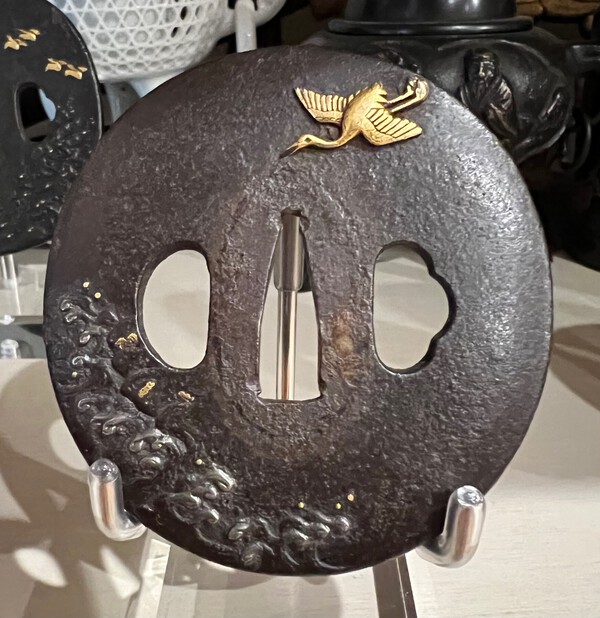
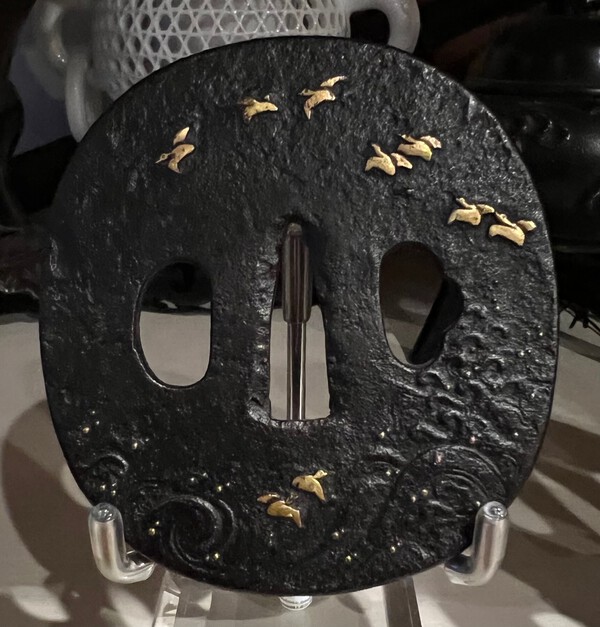
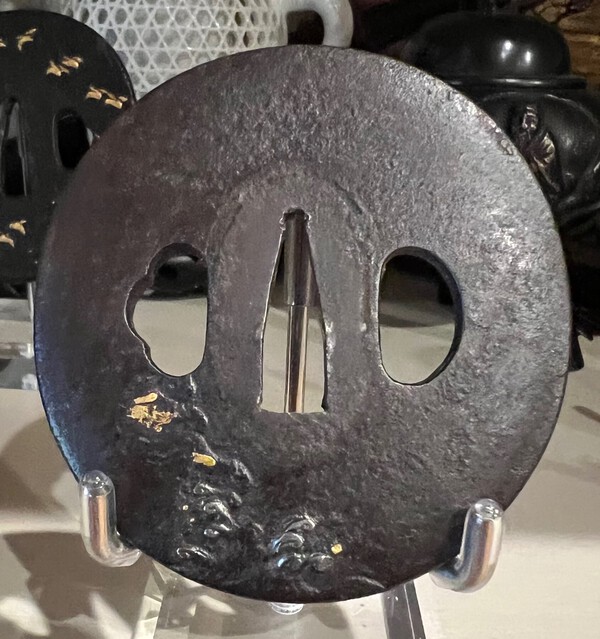
Tsuba, #4, 5 (Daisho) Katana (73.2, 68.6, 4.5, 4 at mimi) Wakizashi (69, 62.8, 4.0, 3.2 at mimi) Theme appears to be plum blossoms and reed (?).
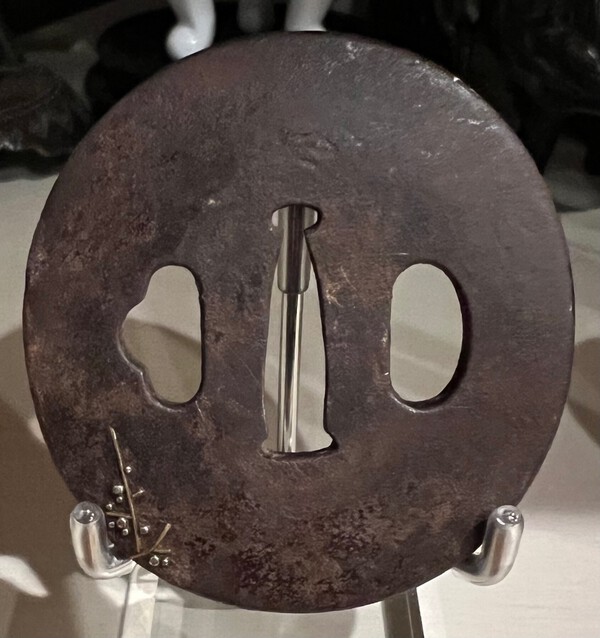
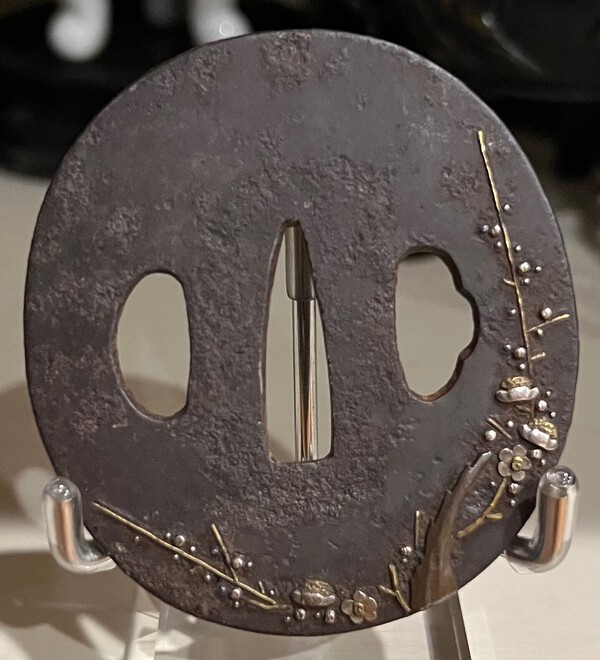
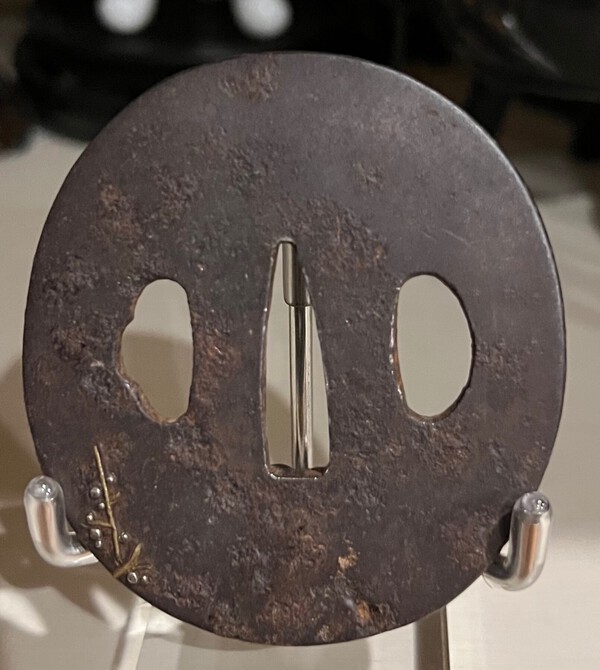
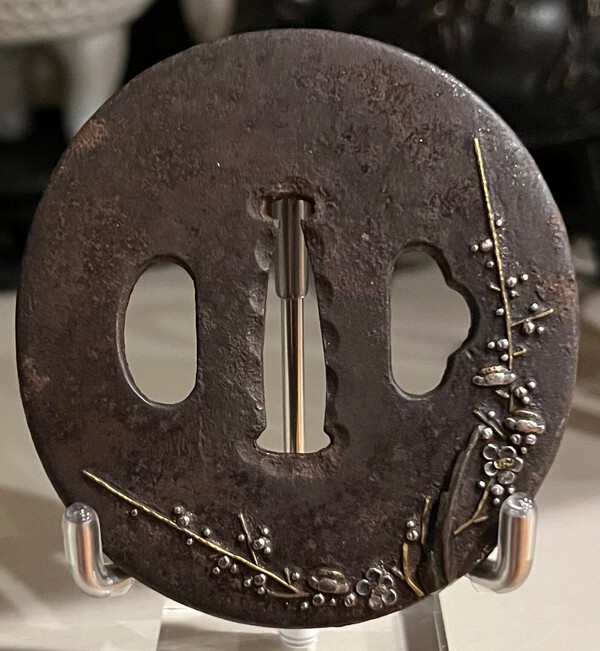
-
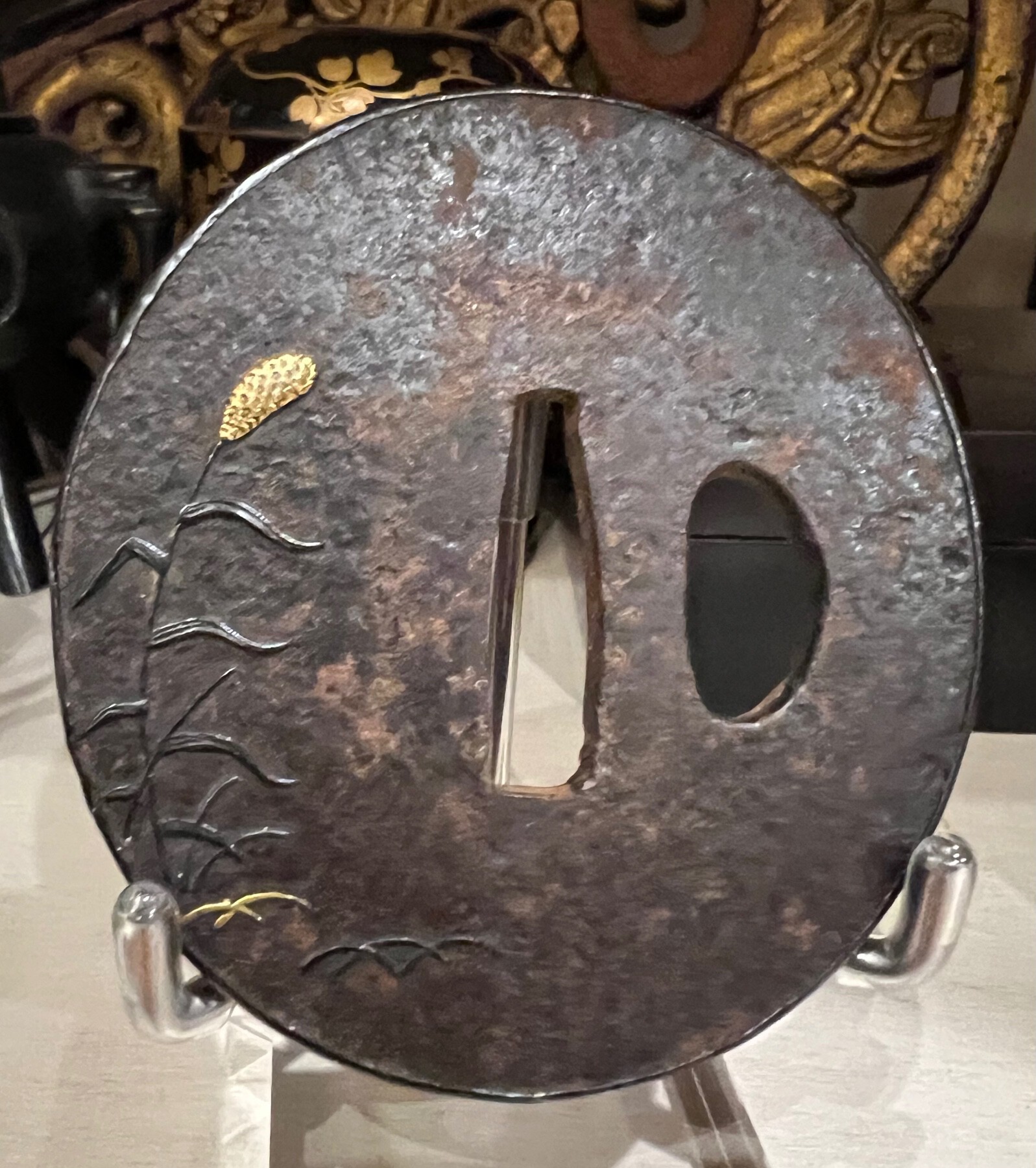
Tsuba #3 (71.6, 67, 4.4 with raised edge on rim) Some kind of bird amidst reeds or cat tails ?).
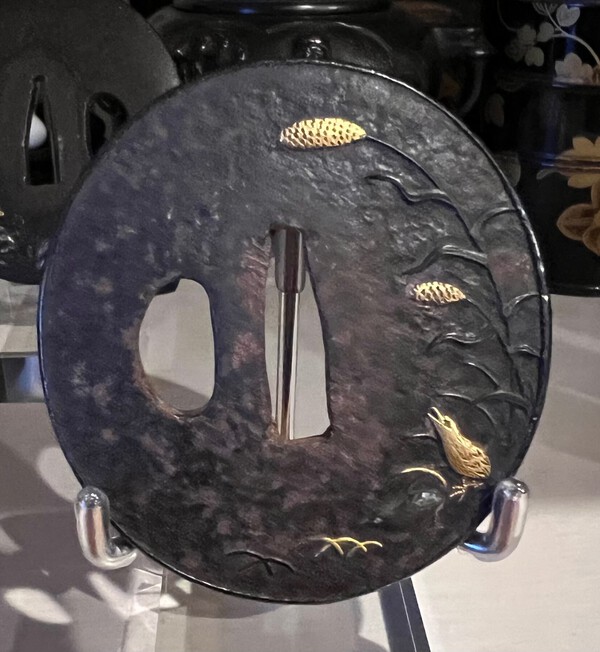
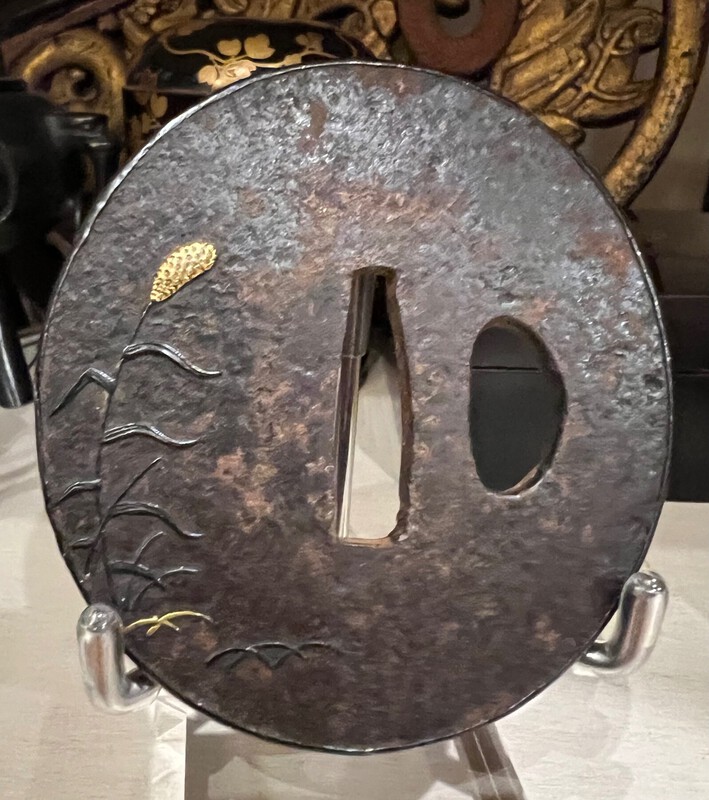
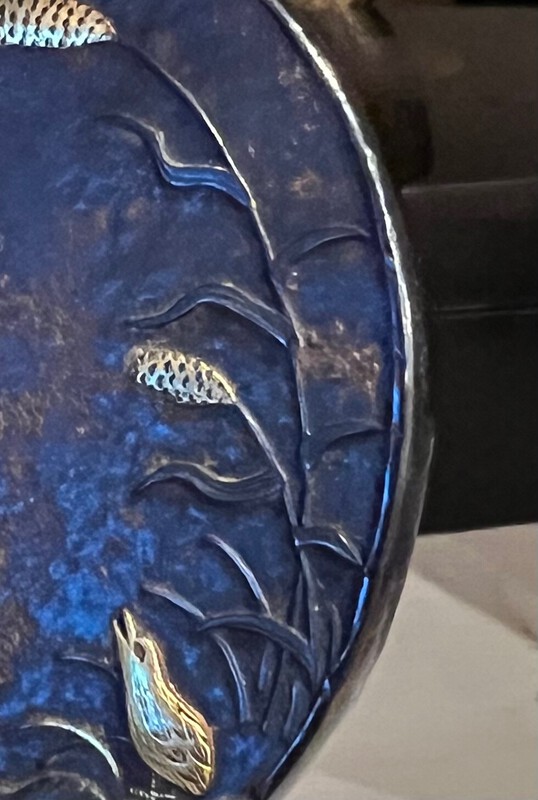
-
These are from among a small group of shakudo tsuba acquired while I was living in Singapore from 1998-2005. The remainder will be posted separately. I think I purchased them from eBay without any real knowledge about tsuba—not unlike my present state. They have just resurfaced from a forgotten old box at the back of a closet. I’d appreciate any help in identifying the materials, school, period, and current value. I intend eventually to offer these for sale to NMB members. My collecting focus is early sukashi tsuba especially the kanayama and owari schools. The plates are all iron. Tsuba #1 (78.6, 72.7, 4.8) The theme of this large tsuba is birds (geese above, plover below?) flying over waves with a beautiful deep dark brown patina (different exposures front/back), pleasing design, and skilled execution. The condition is excellent throughout. Tsuba #2 (72.7, 69.2, 4.7, 3.3 at mimi) Similar theme as # 1 with crane over waves. Silver and gold colored mixed metal with very high relief crane with finely detailed feathers on shoulders of wings.
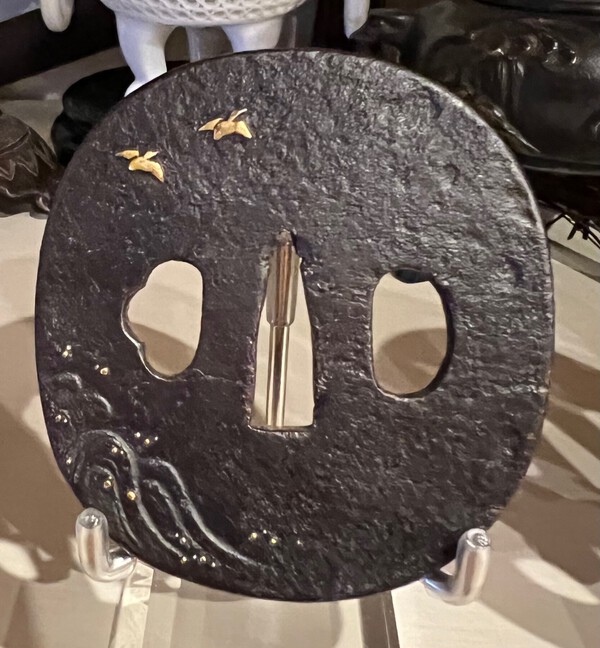
-
Yes, exactly. 4.6 at the seppa-dai. Still getting the hang of it. Thanks so much.
-
😂 Beginners luck. Eat your heart out!

-
None of the flaws detract from my enjoyment and learning. Thanks, Steve
-
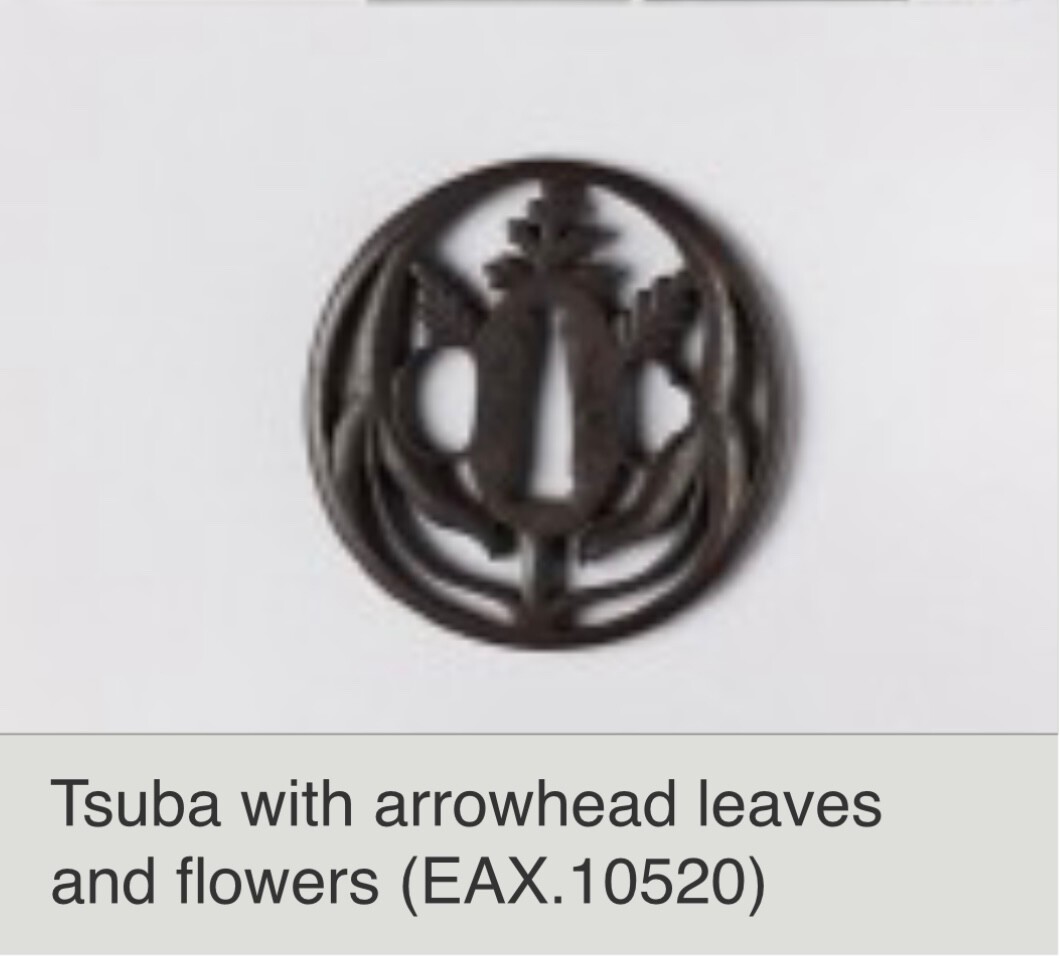
It has the dimensions in the range of kanayama and motifs are characteristic, but it doesn’t seem to have been well cared for and/or it has suffered damage.
-
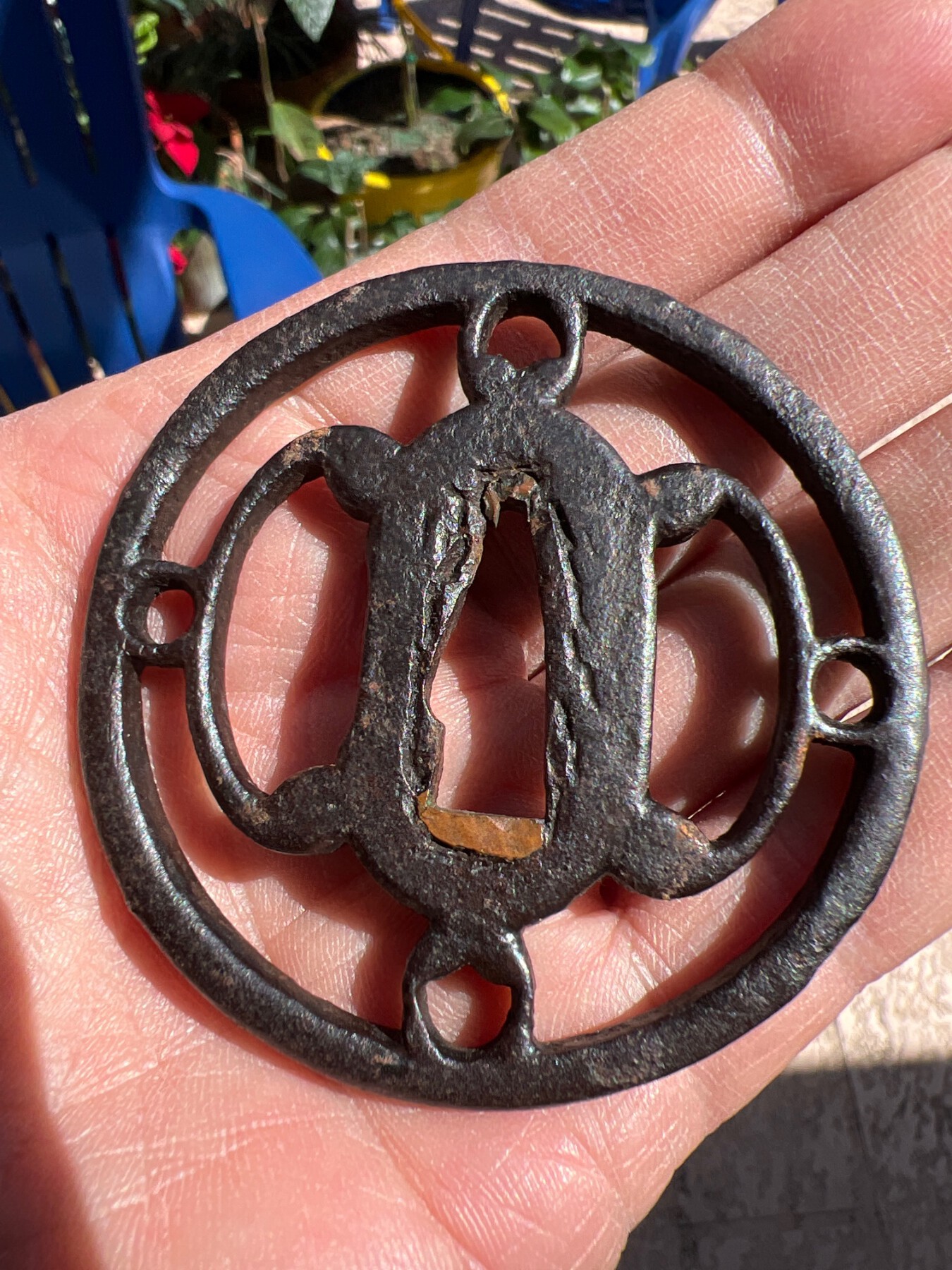
I was rummaging around in a closet and came upon a case that I had not opened since 2005 when I relocated from Singapore back to Boston. It contains a small number of Sudoku tsuba (I will post separately) that I acquired while still in Singapore, including a daisho. I vaguely recall buying them probably on eBay. I must have been interested in them because of a general interest in Japanese culture. I certainly was not a tsuba “collector”—perhaps until now. There is a final oddball sukashi tsuba. I don’t remember this one at all. Any thoughts on what this tsuba is (school, period, fake)? Surface is irregular, dark brown patina. It has some rust in several places. A part of the nakago-ana is missing. 66, 4.7-4.85 at rounded square rim, 4.6 at mimi (not accurate by my caliper that is not suited for measuring this dimension)


-
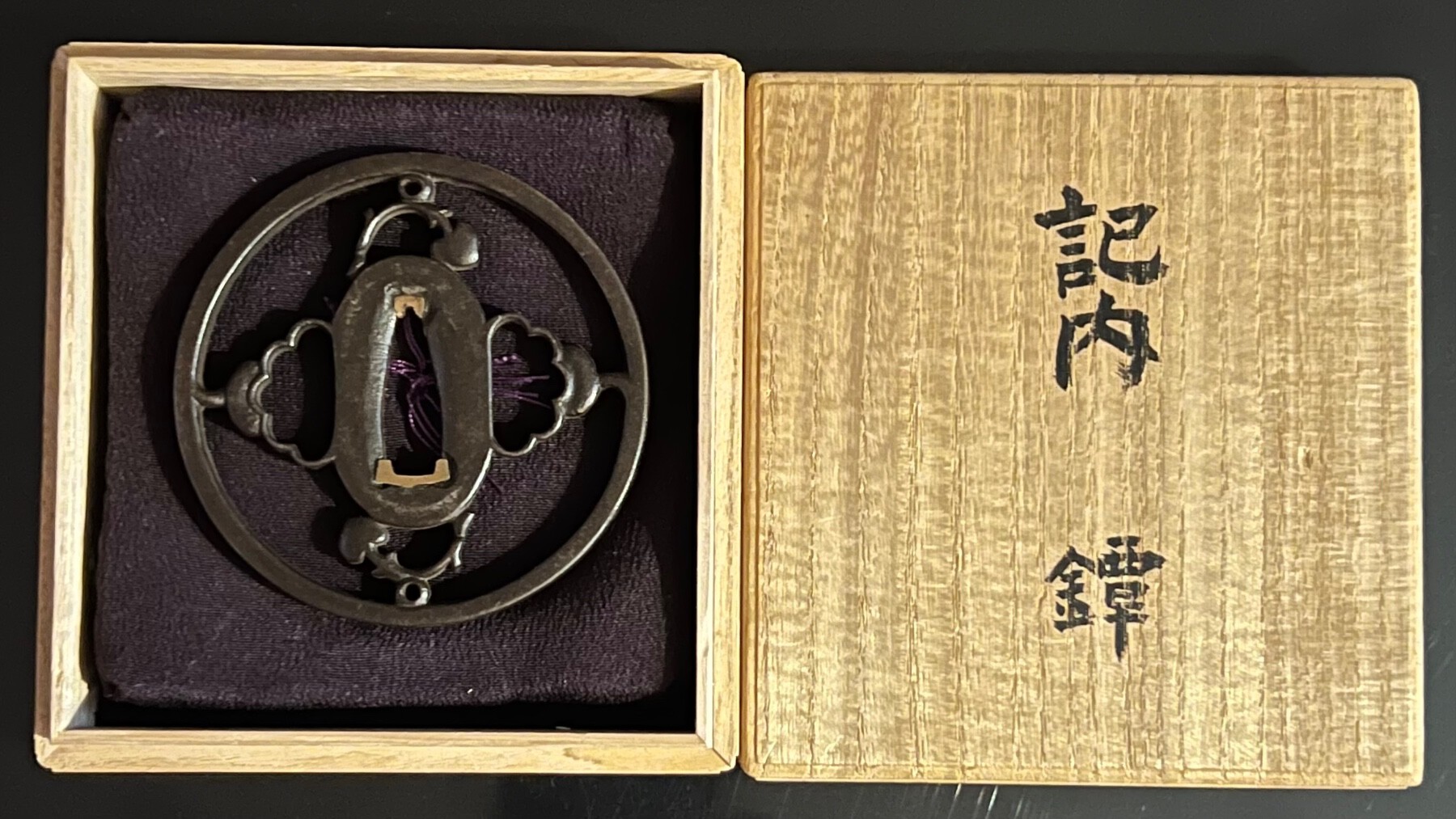
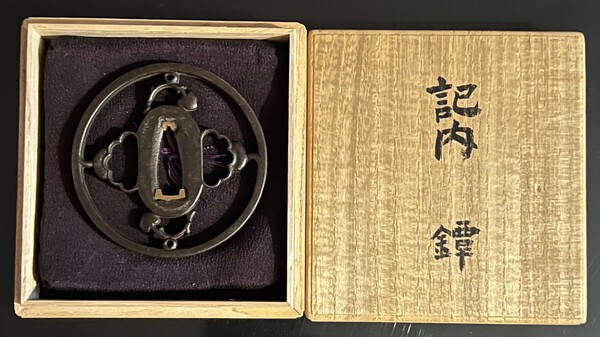
Doesn’t make sense either. The hakogaki description inside lid is correct. The “kinai” on outside of lid not correct it would seem. That seems to be a mistake.
-
Hi Steve. Do you still have #2? If not please let me know if you have similar sukashi for sale in the future.
-
Thanks so much. This was very helpful. I don’t for a second believe I overpaid for this piece (only my 2nd sukashi tsuba). Indeed, I feel it is a great value to me at $800. The provenance just enhances the appreciation and understanding of the piece.
-
The aoi are carved in high relief with a sense of motion as they twist (not done in just one dimension). So, I agree with David’s comment about the Shoami school’s use of nikubori ji-sukashi technique. That really brings it all together nicely. I wonder if the lid got swapped from another or it’s simply in error. I think there is a part of the hakogaki that references “June 1991 Honorable Mention, Mumei, Middle Edo Worker, Aoi.” Was Sasano indicating that this tsuba was in some way a submission for a contest? Translation by Translate Go app may be in error, but it is very specific.
-
Interestingly the triple aoi is the mon of the Takagowa clan and that of the last shogunate. There is some reference to aoi in Japanese culture as symbolizing abundance (as in harvest) and good fortune, warding off thunderstorms and earthquakes, and death and rebirth (may be more a western tradition). https://en.m.wikiped...g/wiki/Tokugawa_clan https://art.thewalte...hock-crests-aoi-mon/
-
Stephen’s link is an interesting description and commentary on primarily kamakura iron plates sold in auction. Interesting insight into the Sasano collection pieces now in a museum in Japan. Pieces with Hakogaki by Sasano and sold in the west may not be “museum quality,” but then again tsuba like mine hold an interest nonetheless and are not fakes or outright imitations. I saw a sukashi from Sasano’s silver book (plate 134) offered from a private collection in the west being offered for $10,000 because it is a “Japanese national treasure.” It is impressive. I would have to sell one of my vintage Gibson Les Paul guitars to acquire it (I am tempted). My kinai sukashi cannot compare, but I just really enjoy and appreciate it. I do feel a kinship with sensei when I look at his seals on the hakogaki.
-
This is a kinai sukashi that is less cluttered and elaborate. Apparently there were artisans of this school who could have produced my sukashi possibly incorporating ko-shoami and owari elements. The iron plate of my sukashi was carefully carved, the rim squared, and the surface is smooth without tekkotsu typical of the middle edo period. BTW, please correct me if I’m talking garbage.

-
This is the box cover next to tsuba.It’s darker than the prior images suggest (photography with artificial lighting). It certainly says kinai. The calligraphy style is unmistakably that of sensei.

-
I’m traveling at the moment. I’ll post the pic of lid when I return, but I’m sure you are correct. The seller is not someone whom I would have guessed could make this kind of mistake. Honestly though, it doesn’t much matter to me what attribution is correct. My enjoyment and appreciation has increased immensely. Thanks for your sharing your expertise and for your suggestions.
-
Thanks. Artur Drogamiecza from whom I just received a nice sukashi just let me know that “Kinai” was never a part of the hakogaki. And aoi (hollyhock) is in fact mentioned by Sasano sensei. Mystery solved! I’m just simply astounded at how bad the translation is that came with this sukashi. I definitely need to learn Japanese. Artur thinks it belongs to the Owari or second Shoami school. If my interpretation is correct then the movement often mentioned in relation to at least the ko Shoami can be appreciated as one follows the “leaf-bud-leaf-bud” arrangement whether clockwise or counterclockwise.