Iaido dude
-
Posts
542 -
Joined
-
Last visited
-
Days Won
3
Content Type
Profiles
Forums
Events
Store
Downloads
Gallery
Everything posted by Iaido dude
-
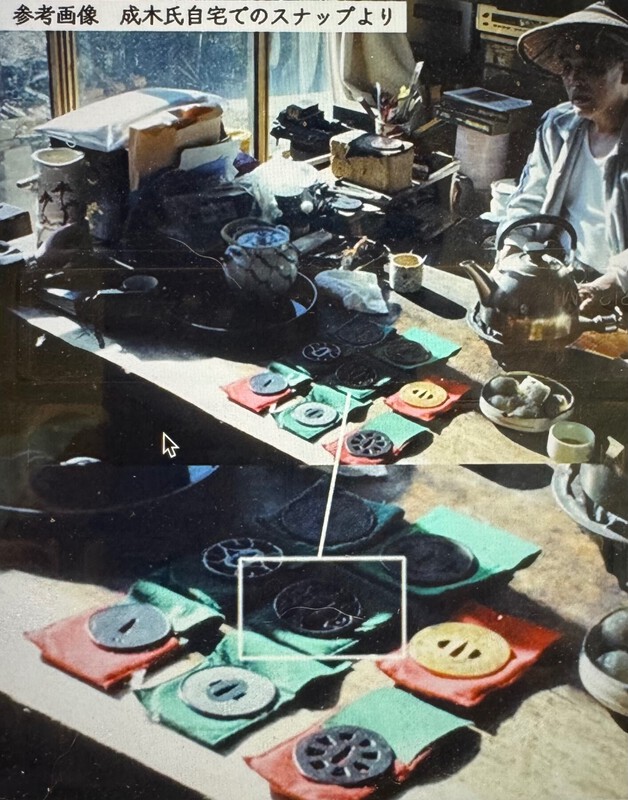
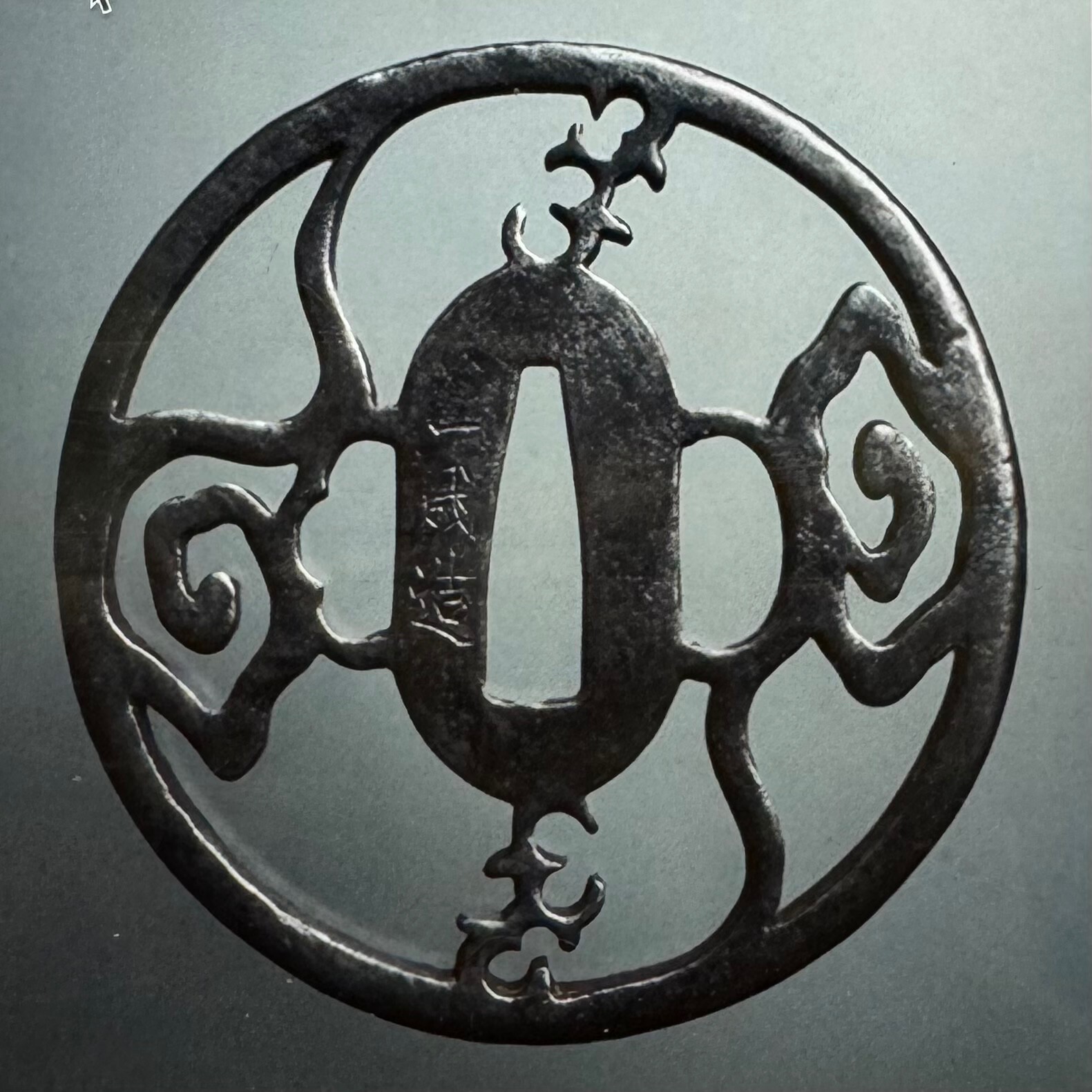
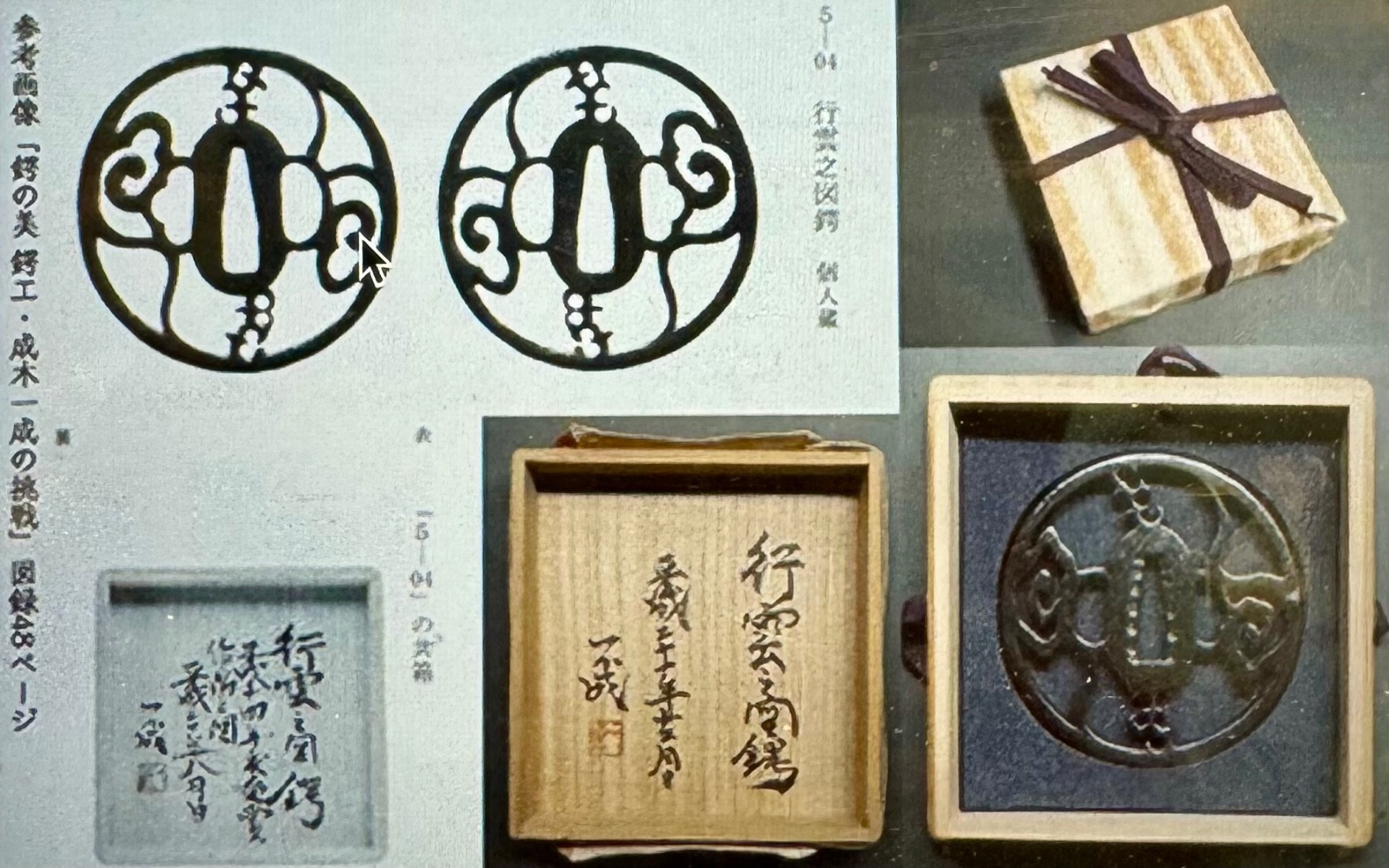
Bravo, although I wonder what specific features tipped you off. Noriki is a master contemporary smith who was born in the first half of the 20th century. He creates exquisite utsushi of Owari province guards of the late 16th and early 17th centuries. I didn’t include a pic of the ura with his mei on purpose for this exercise because I want to make a point about the significant flaw of attribution on the basis of the color and surface treatment of iron sukashi tsuba as propagated by Sasano sensei and his students. The smiths who created Owari province tsuba were highly skilled at forging iron plates with surface treatments to express many different styles and artistic sensibilities (e.g. wabi, sabi, mono no aware, yugen). The Noritsuke school and contemporary smiths like Noriki can likewise create these effects including tekkotsu and yakite shitate. The last photo below shows a tsuba (encircled) of the identical composition in Noriki’s workshop. Just look at the array of styles and composition and features on display among his creations. He creates homage pieces with his mei. We were all “fooled,” which attests to Noriki’s artistry and immense skill. https://www.jauce.com/auction/m1177516137


-
It really does appear to be. The size is a bit bigger than most Owari, but there are always exceptions.
-
I think that the features are consistent with Owari or Kanayama, but stay tuned. The rim is square. Nearly all Akasaka have rounded rims. It is dished, whereas Akasaka guards are thicker at the seppa-dai and thin towards the mimi. And tekkotsu are generally not found on Akasaka. I also find this tsuba very compelling. It has a fluidness and vitality that I associate with Kanayama and Wabi Tea Culture. However, the karigane appear to be more recent than Momoyama and Early Edo in their styling and execution (hence the Akasaka feeling).
-
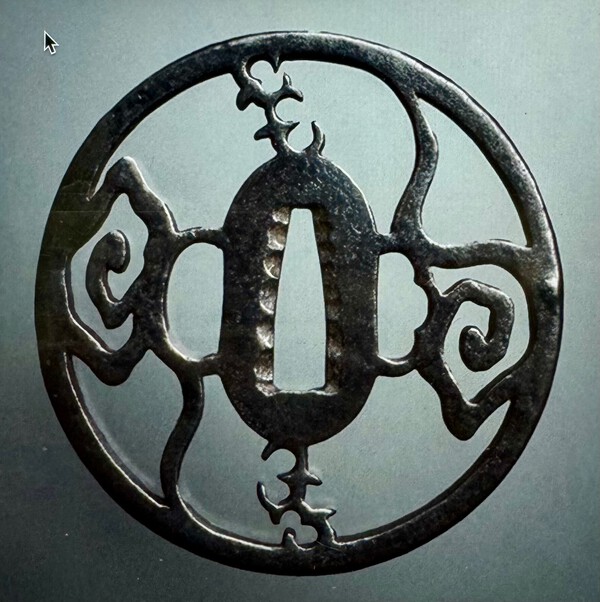
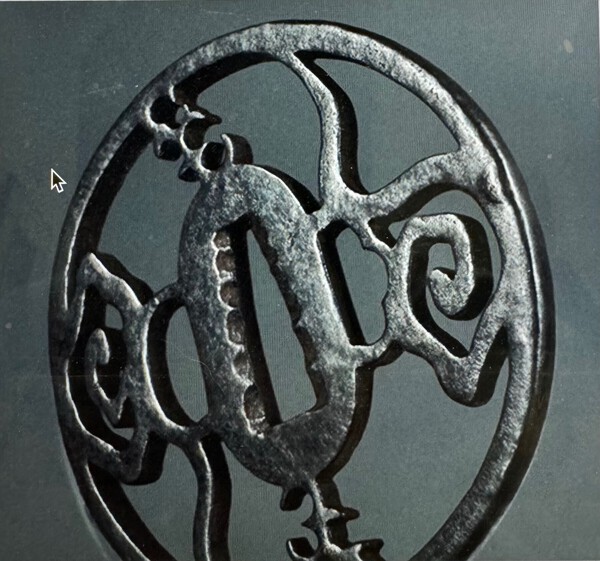
Here is a tsuba I saw online. I think it would be instructive to get a consensus on its attribution including “school” or specific smith, period of production, and motifs. It has a square rim and what appear to be globular tekkotsu on the mimi. Dimensions: 82 mm x 80 mm, 5.7 mm (mimi), 4.9 mm (seppa-dai).
-

Christian Ship Tsuba (Is This Really an Ono Kozeho?)
Iaido dude replied to Iaido dude's topic in Tosogu
Another possibility is that if it is crucifix and these tsuba were made after the beginning of the Christian persecution in Japan as utsushi of the Ohno or Yagyu styles, it would set the date to after the earliest Edo Period for the emergence of another form of disguised Christian expression of faith. This would be just as in the case of Ikenie tsuba as they began to soften and then become disguised. If we can argue about whether the motif is religious or a practical maritime device it seems possible that that argument could’ve been made in a historical context by the faithful. It would be a testament to the enduring power of religious faith and the persistence of personal and political protest—even in the face of persecution and the threat of death. This is why Fred calls these tsuba a sacrifice by Japanese Christians. -
Yes. There is a special bent saya chisel that is often used. The only way for me to pull this off without the long hours over a long period of effort to acquire these skills is to use a router and precut template. I do this a lot on guitars. It’s cheating, but it gives a very precise way of achieving the goal. I tightened the koiguchi by gluing a thin veneer on the narrow side. To prevent rattling inside the saya, changing my technique for resheathing can go a long way.
-
Christian Ship Tsuba (Is This Really an Ono Kozeho?)
Iaido dude replied to Iaido dude's topic in Tosogu
I think you win the argument just for using the term "parsimonious." In medical practice and teaching, we often refer to the rule of parsimony by invoking Occam's razor! The difference here is that in so far as tsuba are an art form and an historical culture-bearer with elements that are often chosen for their meaning and symbolism rather than for the sake of simplicity, I don't think parsimony necessarily applies. I don't know why there is that curled element to the bow. I noticed it as well. I suspect that it is a stylized rendering. What is striking is that this element appears in all of the examples even as some of the other details vary slightly. The one on auction has a rendering of the rope as having coils, which lends texture to this element. -
Christian Ship Tsuba (Is This Really an Ono Kozeho?)
Iaido dude replied to Iaido dude's topic in Tosogu
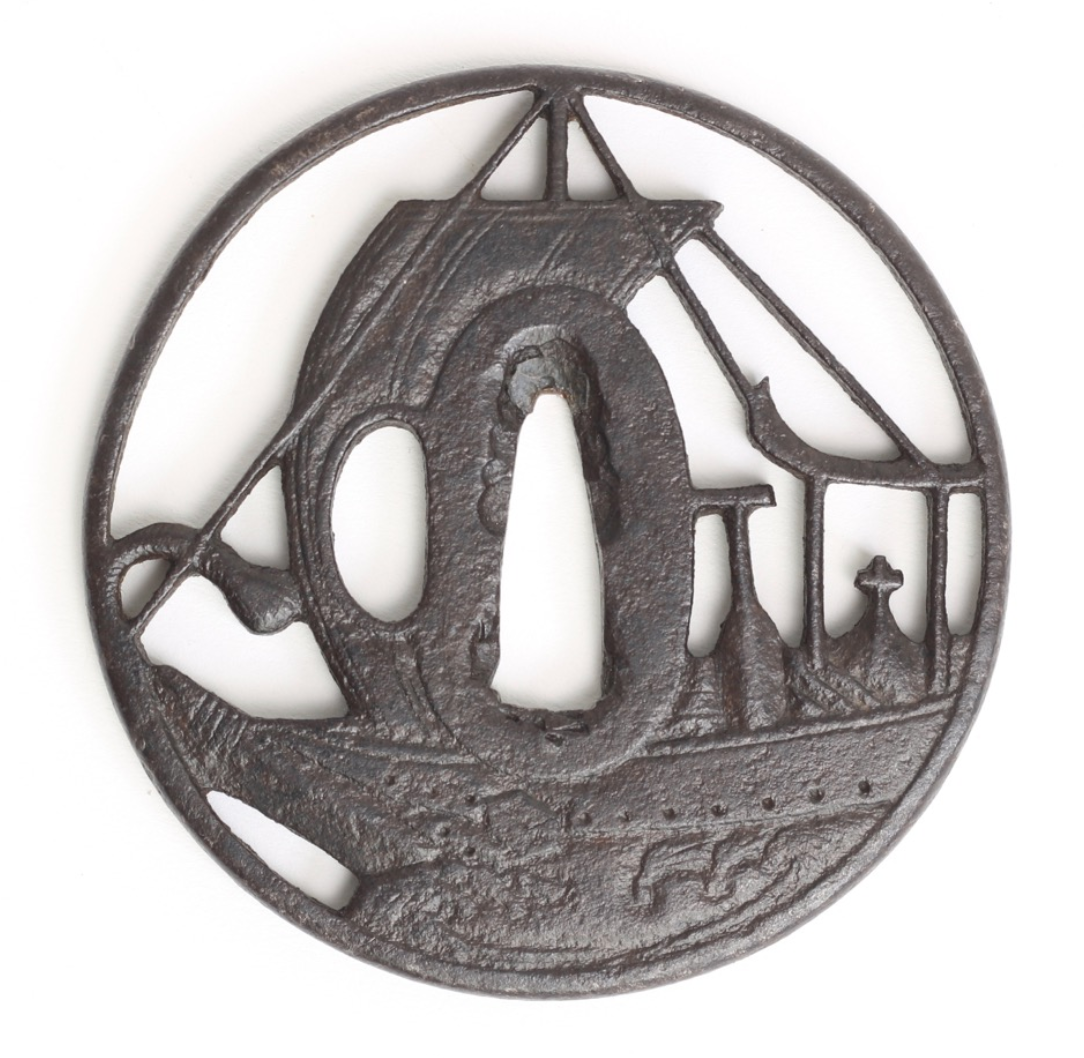
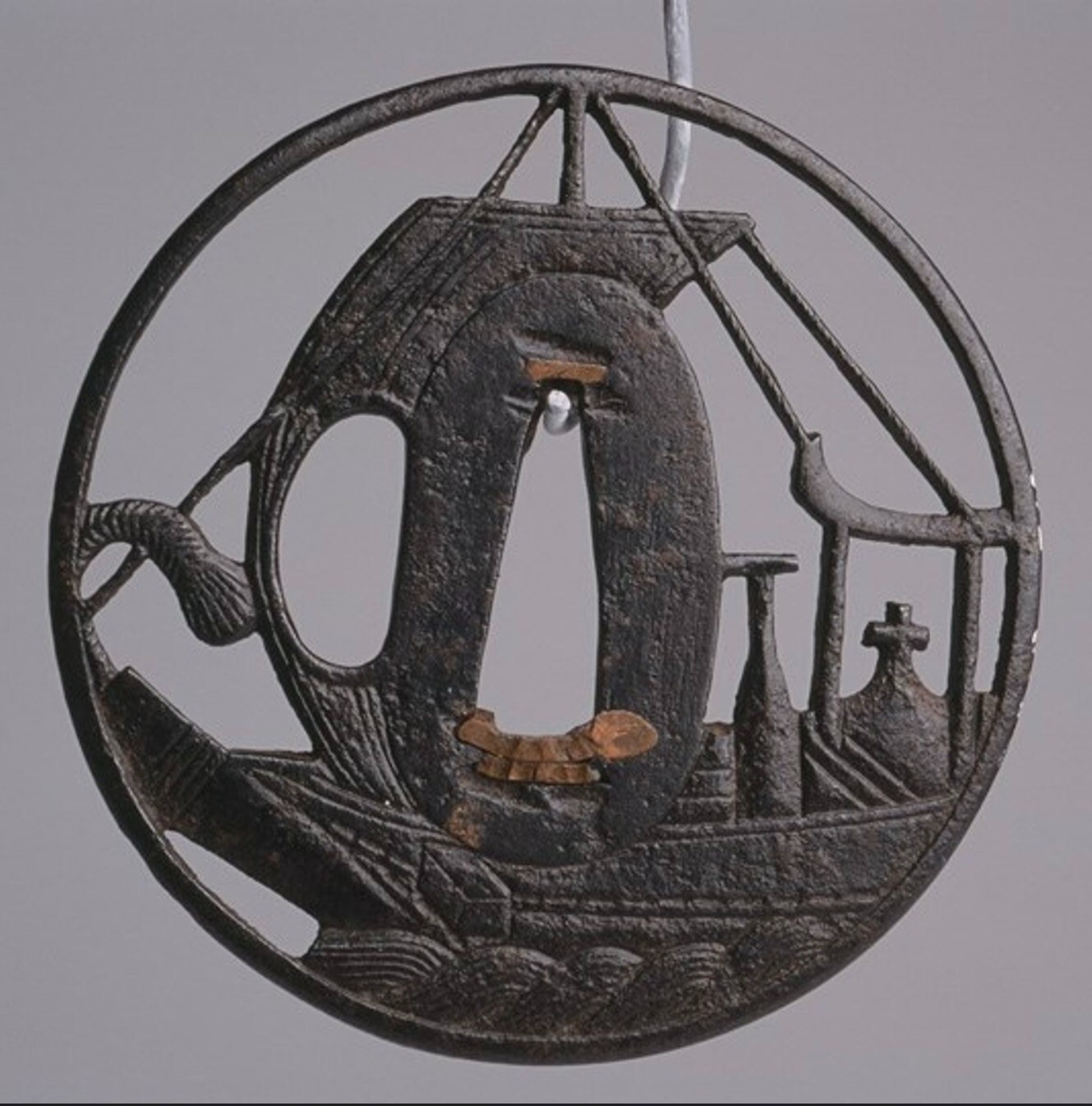
Thanks, Justyn and Florian. It seems that the capstan was invented in the 14th century and gets its derivation from the Spanish or Portuguese, which would support the theory that the ship depicted is Portuguese. The question is whether a capstan was worthy of being singled out. The careful rendering of this motif is so specific and intentional that I find it hard to believe that it is not in fact emblematic of a Portuguese Jesuit ship. The form of the composition of the sail does seem to take its inspiration from the Yagyu and Ono depictions. The top of the sail is rendered the same way even on the woodblock prints--a stylistic element. What is remarkable is that the many examples of this tsuba composition are nearly identical (if anyone has an image from the Compton Collection or Nakamura's Tsuba Shusei, please post). There seems to be a demand for this image. It was somehow very meaningful. -
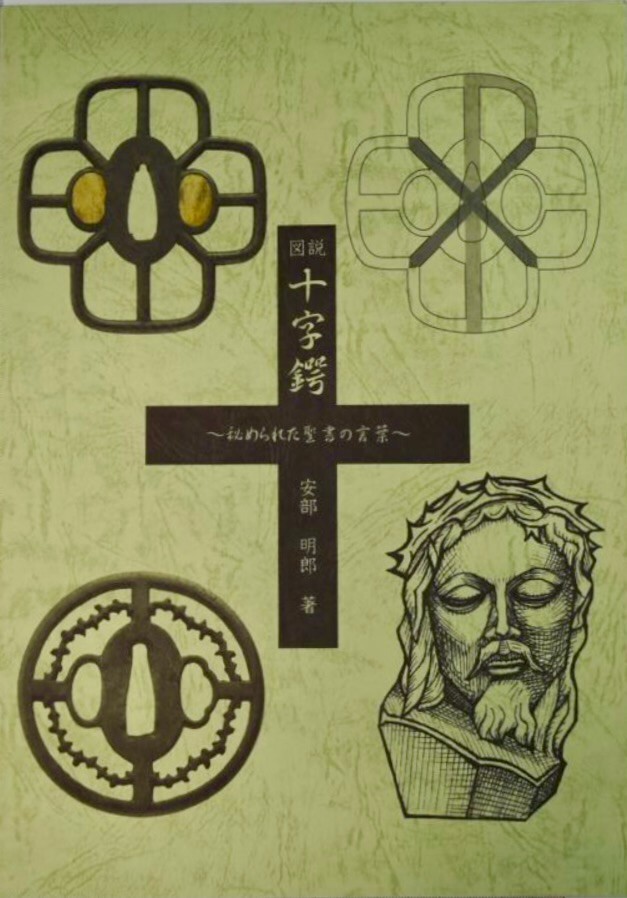
Aside from Fred's published article in which he coins the term "Ikenie tsuba" as the most appropriate way to refer to these Shakoh tsuba (as opposed to Tokei), I only have a monograph on tsuba with Christian iconography purchased on Jauce and an article from the shared NMB archive (On Esoteric Buddhist Iconography in Early Japanese Matchlocks by A. Goetz). Interestingly, the monograph doesn't actually feature an example of Ikenie tsuba. Some of the purported Christian symbolism is a bit of a stretch. Others are quite compelling, including the one on the lower left of the cover (not geese in a ring). These are the only dedicated references that I have for religious iconography appearing on tsuba. I'm sure there are others, but my reference library is rather limited. On_Esoteric_Buddhist_Iconography_in_Earl.pdf

-
Christian Ship Tsuba (Is This Really an Ono Kozeho?)
Iaido dude replied to Iaido dude's topic in Tosogu
A few more from Sasano (silver book).

-
This was my original post with the reference to Fred Geyer's article. However, I am stand corrected since according to his accompanying timeline and text, the 2nd style emerges in 1605 when Christianity achieves popularism and the original and vibrant 1st style with a composition that reflects the original Jesuit IHS symbol (alternating short and long rays) emerged in the late 16th century when the Portuguese Jesuits make first contact in Japan. According to Fred's timeline the first style appears in 1552, but this is based on the appearance of the iron plate qulaity and is not in keeping with the history of the early Akasaka masters. I don't think you can date iron tsuba by the appearance of iron because the Momoyama-Early Edo smiths were masters at forging the plate to look earlier in their attempt to express the Wabi Tea Culture aesthetics. 1624 is when Shodai Akasaka moved from Kyoto to Akasaka to found the new Akasaka school. I argue that the original tsuba I posted must be pre-1624 because the persecution of Christians begins in about 1614 and quickly intensifies in the following decade. Shodai would likely have stopped producing such overtly Jesuit IHS style tsuba by then. So, I call that this mumei tsuba Proto-Akasaka. The proposed timeline is not perfect, but it's pretty close. Dating is fraught with some element of uncertainty because the early Akasaka masters did not sign their works.


-
Christian Ship Tsuba (Is This Really an Ono Kozeho?)
Iaido dude replied to Iaido dude's topic in Tosogu
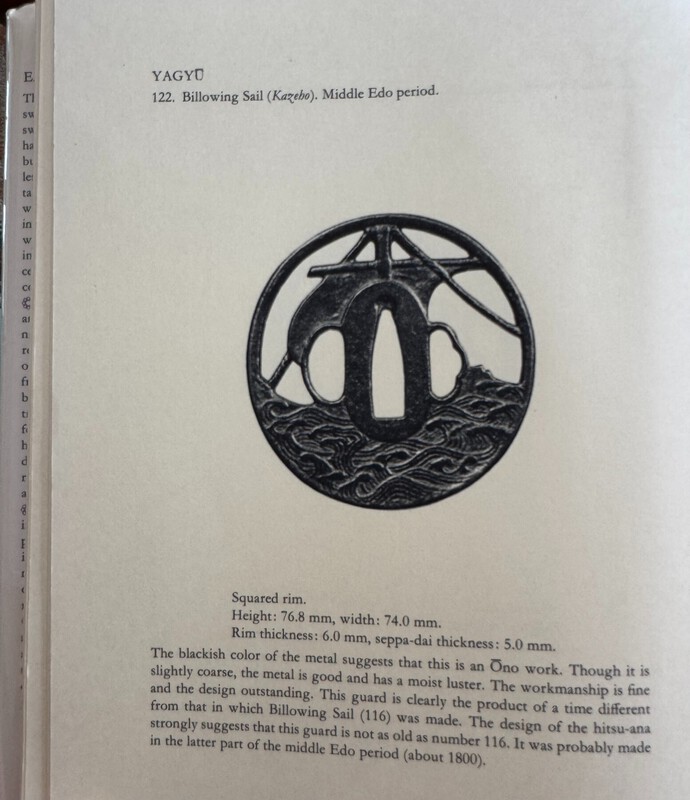
Sasano (gold book) has several examples of the Kozeho attributed to Ohno and Yagyu with the original simpler composition and without the crucifix on the stern. It may actually be an Ono design that became popular with Yagyu and subsequently included in the Yagyu design book as Kozeho. The meaning for the Yagyu Shinkage-ryu school of swordsmanship was that with sincere effort at practice one can "sail" to victory (something like that).

-
This tsuba has just come on auction. It is familiar to many of us as being attributed to Ono with the motif of a sailing ship. This specific composition with the crucifix on the stern may be a reference to There are numerous such examples with similar attributions (e.g. Walter Compton Collection, Nakamura's Tsuba Shusei, various sellers and auctioneers) that are referring to the Kozeho motif seen in Ono and Yagyu work. However, I am skeptical and am hoping others will weigh in. It is suggested that this is a sailing ship transporting goods (Portuguese?) in the Ise Bay, Southeast of Nogoya. If it is actually a later work of the Edo period, what school can this whole genre be attributed to then? https://drouot.com/en/l/28349546-Japan-ono-middle-edo-period-1603-1868-iron-maru-gata-with-yo Mandarin Mansion (sold) https://www.mandarinmansion.com/item/ono-school-ship-tsuba Musees D'Angers (attributed "Owari" workshop) https://ow-mba.angers.fr/fr/notice/mtc-9025-garde-de-sabre-decore-d-un-navire-ce30b96a-7a07-43b8-b0c2-f8bbe1113315


-
Yes, you are absolutely right. Later, the posts become simple diamonds.
.thumb.png.10a300fca786a7d956d6a8a5acd2649c.png)
-
I’m glad you both brought up the hinoki v. honoki issue. I successfully sourced out honoki specifically for saya-making that made the same comments. What is confusing is that elsewhere people write that there is no difference between these and that honoki is an incorrect term. I agree with you both. The other aspect of Japanese traditional woodworking that has come of my watching videos on making saya is the almost super-human ability to work with chisels and planes in hand to achieve such accuracy. I’m in awe of the skill that can be developed, but it is quite daunting for a beginner. I use a set of high quality Japanese chisels in my restoration work on guitars, but I’ve not had to develop this level of finesse.
-
Here is another Akasaka Shakoh tsuba I just acquired (en route from Japan) in the 2nd style with curved rays around the posts at 3 and 9 o’clock. There are bundo weights at top and bottom to acknowledge the Owari influence. The other rays are shorter than the early style and are of equal length. We see these changes in the composition as persecution of Christians begins and intensifies after 1624.

-
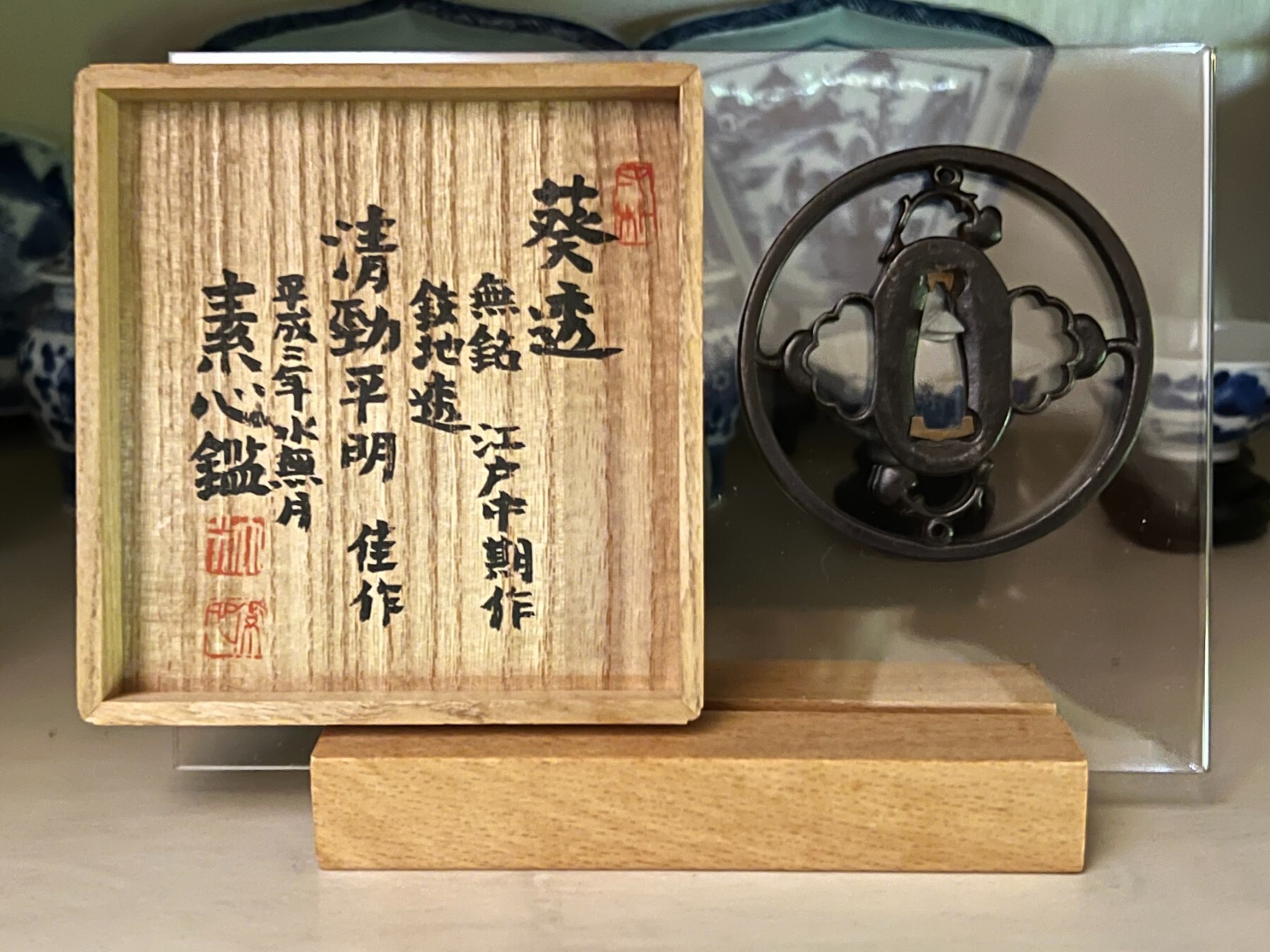
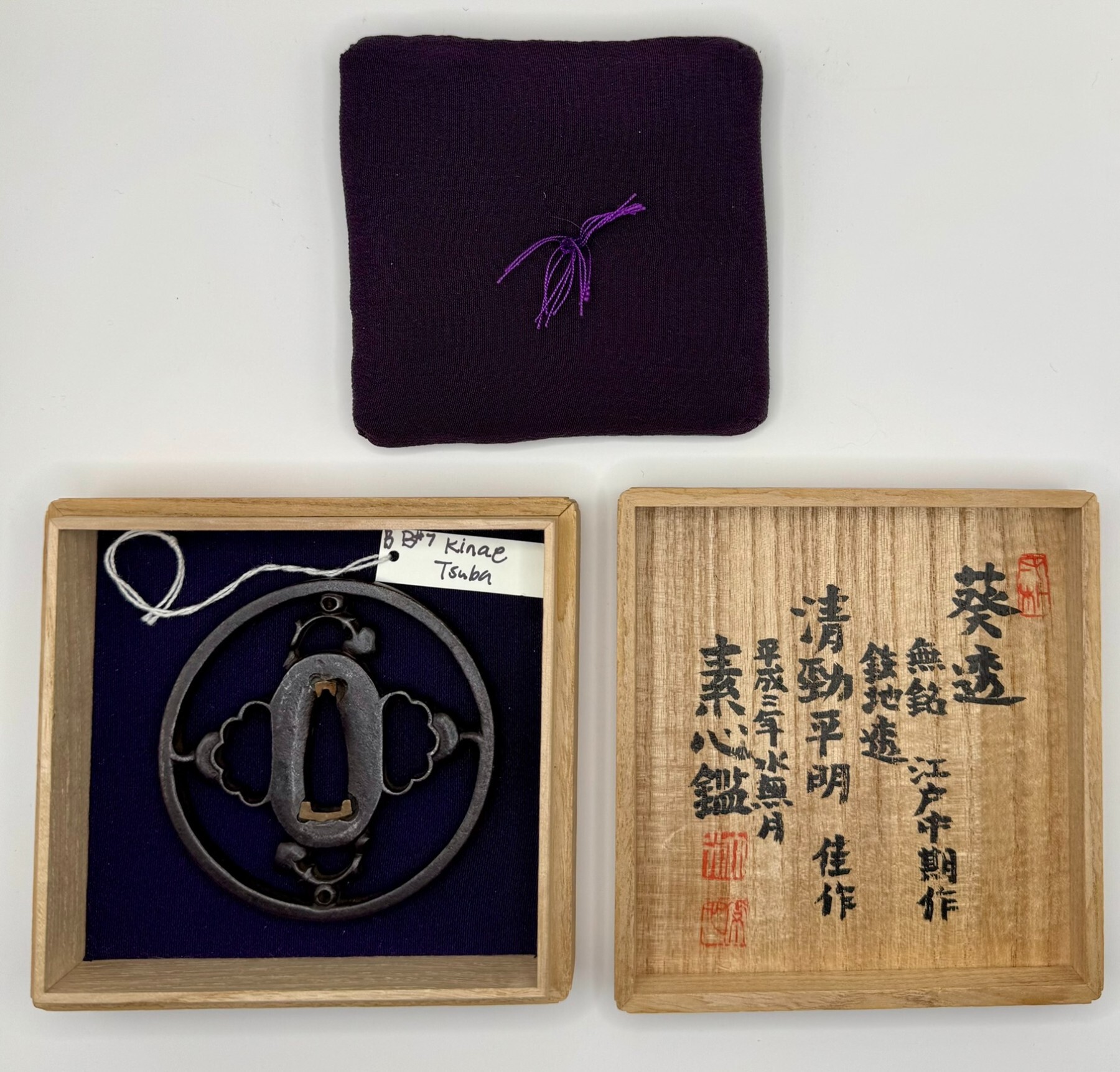
This is a skillfully carved ji-sukashi tsuba attributed to Kinai by Sasano sensei with his hakogaki. Kinai is brushed on the top of the lid, while the hakogaki with his mei is brushed on the inside of the lid. This tsuba really inspired my sukashi tsuba collecting starting back in spring 2024. It is difficult to part with it, but my focus has crystallized to Momoyama-Early Edo Owari Province sukashi tsuba with religious iconography. The early Kinai were heavily influenced by the Shoami style with ample movement. This one has alternating aoi (hollyhock) leaves and buds, which I interpret as symbolic of "life-death-rebirth." The carving has a wonderful and deep 3D quality to it. The iron is dark brown/blackish and smooth. I suspect that this "dished" tsuba is mid-Edo, but because it is mumei, it is very difficult to attribute to a specific Kinai smith. $800 + $25 (shipping in US) is firm. International shipping at actual cost. If you would like the custom display stand I made, it is an additional $30. Please PM me for more info and additional photos. 72 x 71 mm, 5.9 mm (mimi), 5.5 mm (seppai-dai).


-
- 6
-

-

-
I want to have a new says made for this iaito so that it doesn’t rattle on being sheathed during practice. It was a Japanese custom made iaito (1038 gm, 30” nagasa) gifted to me by my teacher about 20 years ago. Thinking of making the saya from hinoki myself, but it will be a steep learning curve. Besides, I am waiting for the arrival from Japan of a new super heavyweight Dotanaki style iaito. That one is slightly heavier. https://www.ebay.com/itm/312907878796?mkcid=16&mkevt=1&mkrid=711-127632-2357-0&ssspo=tE8UuHeOQ8K&sssrc=4429486&ssuid=HMDEU0GLQ0e&var=611625317890&widget_ver=artemis&media=SMS
-
Yes, one of the qualities that I appreciate about the Shakoh I posted is that with a medium-sized tsuba, it is 6.5-6.75 mm thick and weighs 133 gm--a very substantial guard. Perfect for shifting the balance point of a sword towards the tsuka. I have mounted a similarly monstrous Ohno chock full of globular tekkotsu on my practice iaito to inspire my practice and to achieve the desired balance.

-
Wonderful, Simon. There is no better way except by working through the process of handcrafting an object, in order to gain a very concrete understanding of how a traditional process was developed. I have been thinking of trying my hand at making a new saya for one of my practice iaito because after many years of use the fit has become a bit loose. Can you provide a description of how you made the saya starting from hinoki boards?
- 4 replies
-
- 1
-
-
- koshirae
- restoration
- (and 1 more)
-
Jean, here is a Shakoh on Jauce right not that is identical in composition to yours, but in terrible condition: https://www.jauce.com/auction/r1174195546

-
Thanks, Jean. Very nice Shakoh. I must have misunderstood the AI-generated query search as well as used the term "sanmei" incorrectly: So, there is no actual term for the "puff pastry" construction (maybe that should be the term, hahaha!).



-
Here is another example of a nice Akasaka Shakoh of the 2nd style with shorter rays, rounded rays around the left and right diamond posts, and small weights on top and bottom. This gets increasingly exaggerated so that Christian samurai can begin to say “Am I Kirishitan? No. Not my circus. Not my monkey.” It likely dates after 1624 when we don’t see the Owari influenced bundo weight motif anymore—replaced by straight or diamond posts.

-
Great point, Florian. The rim is rounded, but not radially like a true torus. I’m waiting for sunny weather to take a better pic to show this. The inner wall actually has a flat portion, but it is more rounded than Fred’s. His is flatter on the omote and ura surfaces—more like Owari. Perhaps the unusual quasi-torus shape of the mimi reflects experimentation—prototyping as it were. It creates a very robust and substantial effect even if this idea was ultimately abandoned by the Akasaka atelier.

-
I was under the impression that all of the Ko-Akasaka masters produced distinctively rounded rims. Mine doesn’t have the 3-layer puff pastry construction (mokume-game) that I have seen in Nidai Akasaka work. Using Deepseek AI query, it doesn’t appear that Shodai forged mokume-gane tsuba. This was developed by later generations starting with Nidai. Here is a possible prototype-Akasaka tsuba with features of Owari and Akasaka tsuba: https://richardturner.wordpress.com/2011/09/28/who-can-it-be-now/







.png.e070a22859797db7e072cb65ab7197a5.png)