Jcstroud
-
Posts
481 -
Joined
-
Last visited
Content Type
Profiles
Forums
Events
Store
Downloads
Gallery
Everything posted by Jcstroud
-
34 tsuba...
-
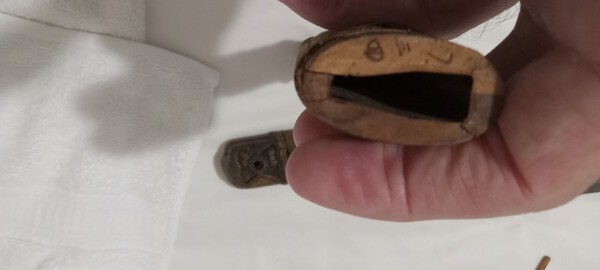
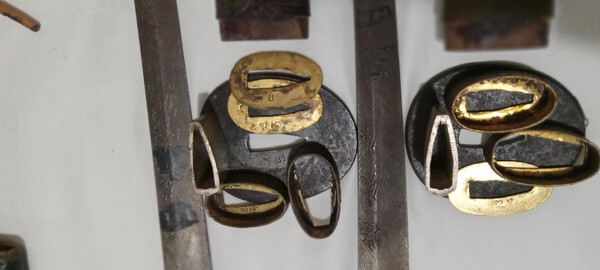
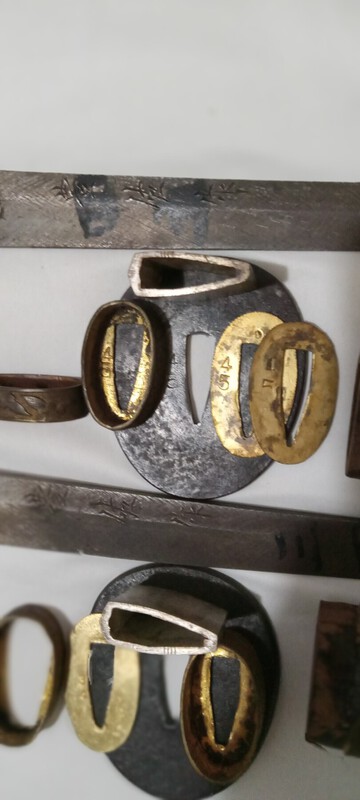
Here you go.... @BANGBANGSAN will send others pronto...
-
We can do this.....
-
Seems to confirm that the koshirai of both were done at Tenshozan Tanrenjo now the blade sources very likely Seki but not yet verified.....It is now my belief that Toyosuke was a swordsmith at the Takayama forge based on all the info and comparisons thus far....
-
Type 98 Shin Gunto - Navy arsenal blade
Jcstroud replied to Whitecap's topic in Military Swords of Japan
Devil blade in disguise. -
Good example of the Toyokawa anchor in sakura found on fittings, along with the Suya stamp. I thought the anchor stamps didnot appear till 1940 were these western style phased out by that time?
-
Look at the stamps #5 looks like the same hmmm.
.thumb.jpg.dce14e993c79677eb79e4e853a47ee2c.jpg.638484ca32dc3c89ac2d959e914cfa6d.jpg)

-
Iwas curious to know what the measurements were of the sword Takayama Masakichi used using the photos was able to estimate a sword of 2.1 shaku based on the nakago length of 1 shaku of course it is an estimate but interesting none the less. 😁
-
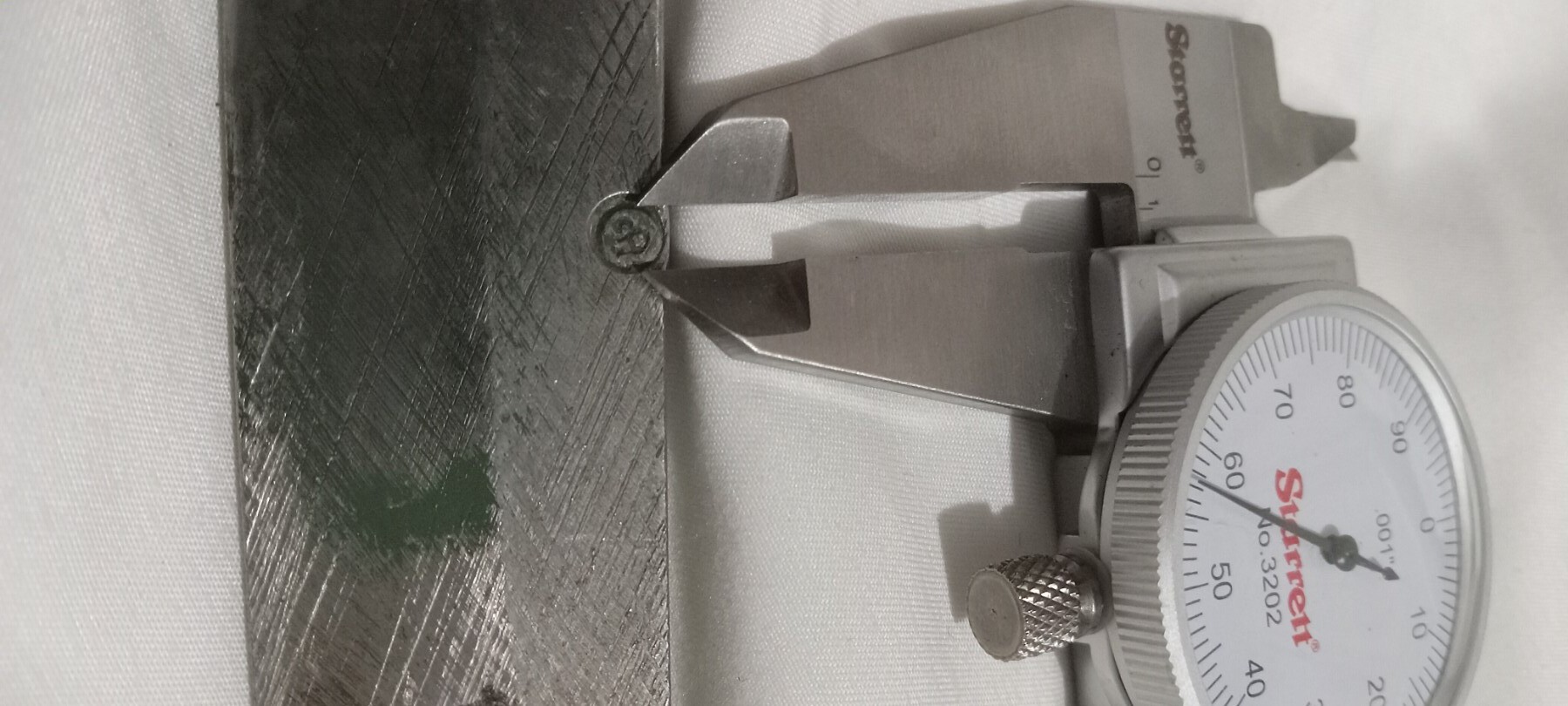
Initial comparisons: #34 25 inches habaki to tip or 63.5cm #45 24.8125 habaki to tip or 63.023 cm #34 assembled weight less saya =37.45 oz.or 2 pounds 5.45 oz. #45 assembled weight less saya =37.85 oz. or 2 pounds 5.85 oz. This seems to show them to be short and overweight as compared to RJT specs even with the shortened nakago. Hmmmm seems the IJN had different specs especially Takayama blades.Could these be from there?
-
Finally have found the legendary "Toyosuke"
.webp.8cdb2b302551a1c2f73899b5b798a4b6.webp)
-
I would investigate it well,considering the condition including restoration expenses,shipping etc. P.s. was the swordsmith one of the ones I mentioned?
-
Navy koshirai with a seki stamp kinda weird.The IJN did not have a good opinion of army gunto after the Manchurian incident.afterwards went about creating the Bujin To or warrior sword by Navy engineers Masayoshi aka Takayama Masakiichi being one.
-
A curiosity...was the swordsmith one of those I had previously listed? Is the koshirai army or navy? Now I am curious.....
-
I agree with @ROKUJURO He is more experienced. With the Seki stamp a han-tan is a possibility.
-
Takayama Masakichi set up the forge known as Takayama there he instructed the swordsmiths at Seki how he wanted them built,and Masahiro was in charge of the forge with Masanao at his side according to what I have read.
-
The swordsmiths known to have made Takayama-to were Kazuichi Hattori aka Masahiro Ishihara Masanao Shinoda Ujifusa and Miwa Ujinaga that I know of.Frankly any dealer that will not tell you the name of the swordsmith is a deceptionist. Use caution
-
The swordsmiths known to have made Takayama-to were Kazuichi Hattori aka Masahiro Ishihara Masanao Shinoda Ujifusa and Miwa Ujinaga that I know of.
-
Likely not original polish does it have an ubu-ha Aka unsharpened area near the habaki? This was I have been told a combat feature,as well as a indication of "as made condition"The Seki stamp is an indication of a mass produced non- traditionally made as you know.I think the "Elders" cold tell you more.....
-
Very likely originated from seki then finished at Tenshozan Tanrenjo imo
-
Looks to have been polished off years ago.the kissaki resembles a Takayama- to late war were thicker but not like first design. Not a flaw just well worn.
-
Would it be possible to take a picture of the nakago aka tang would help in determining where it was made, and maybe when. I am no expert but in my opinion it is partially traditionally made ,maybe oil quenched.but lacks a yakote. John S.
-
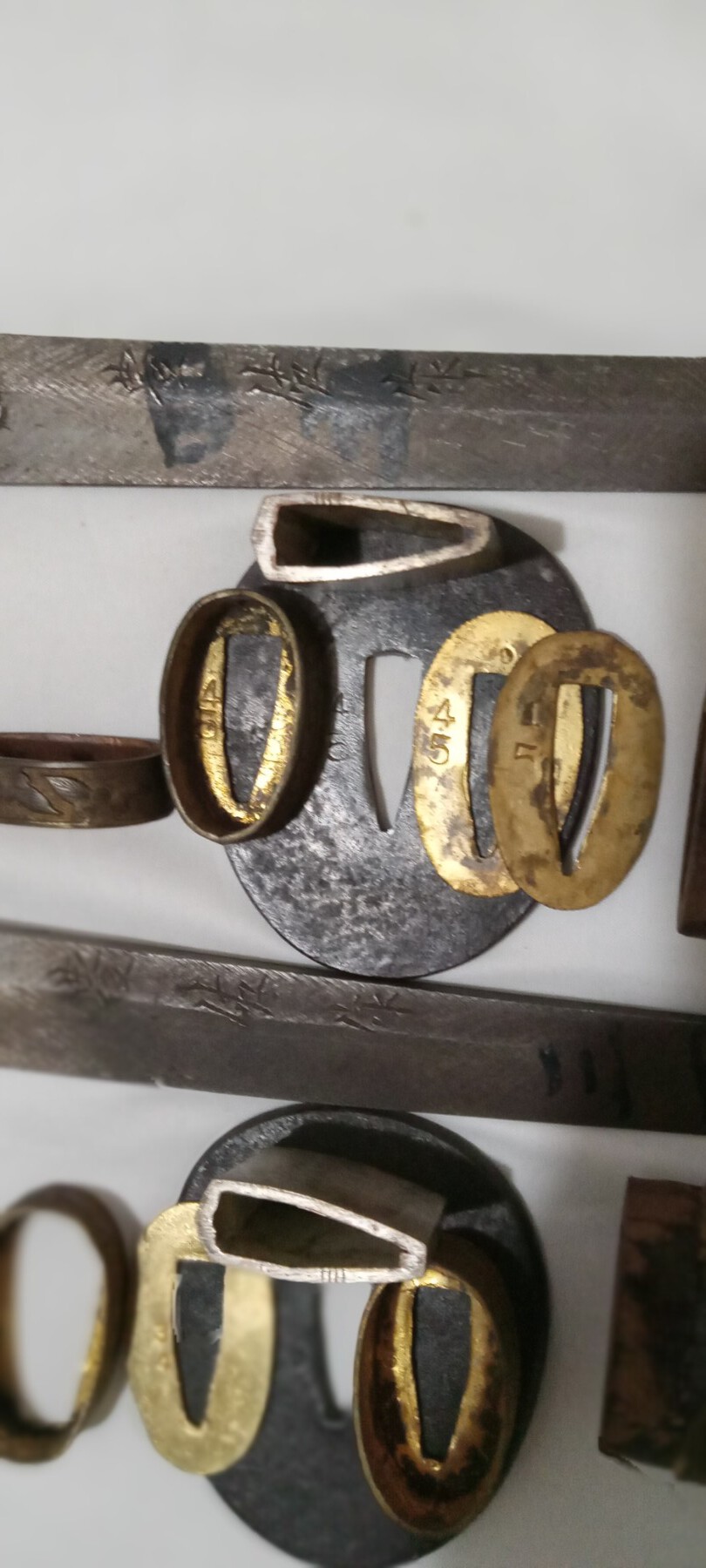
#34 and 45 both have like numbered habaki,saya,koiguchi,fuchi,tsuba, and tsuka all matching numbers.
-
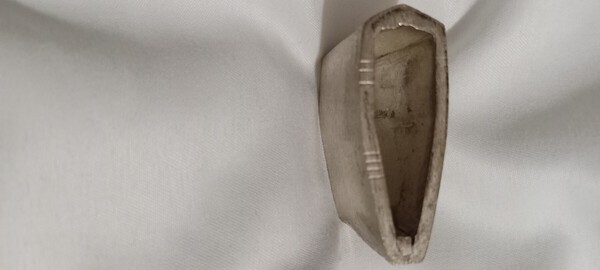
A correction to my previous post Toyosuke #45 has the bare blade weight of 812 grams and#34 has the bare blade weight of 802 grams or 1.79 lbs. Versus 1.76 lbs also thought I would add a couple of interesting photos

-
Type 98 Shin Gunto - Navy arsenal blade
Jcstroud replied to Whitecap's topic in Military Swords of Japan
690969096 weird am I reading this right seems almost like secret message code? -
I dont mind digging but I aint no Tombraider. 😁