Deez77
-
Posts
105 -
Joined
-
Last visited
Content Type
Profiles
Forums
Events
Store
Downloads
Gallery
Everything posted by Deez77
-

Old heirloom (?) tsuba translation request
Deez77 replied to Deez77's topic in Translation Assistance
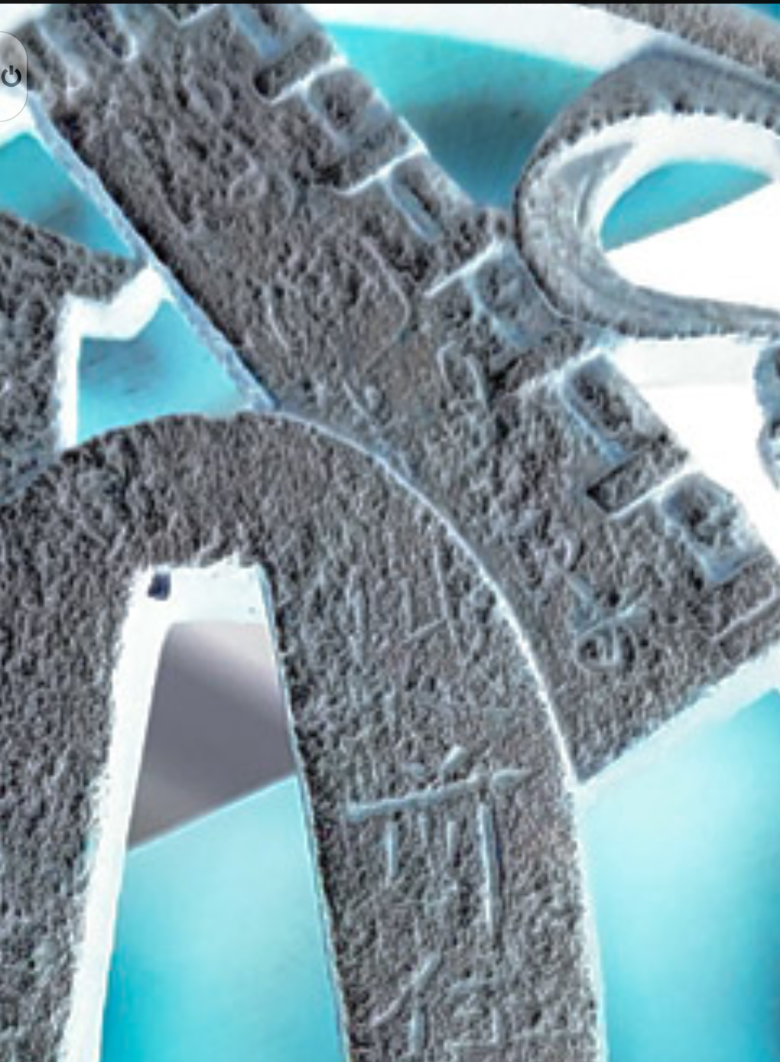
I also realized the banners appear to have been carved with 'ha tsu u ma' (はつうま) or something like that as well. Easier to see when enhanced. What do you think? Damon
-
Old heirloom (?) tsuba translation request
Deez77 replied to Deez77's topic in Translation Assistance
Thank you Piers...and agreed. Pretty interesting motif that I've never seen from this school...so likely a custom order. Too bad about the damage as I'm sure the details would have been very nice. Damon -
Old heirloom (?) tsuba translation request
Deez77 replied to Deez77's topic in Translation Assistance
Thanks piers... I found it, Muchi (鞭). -
Old heirloom (?) tsuba translation request
Deez77 replied to Deez77's topic in Translation Assistance
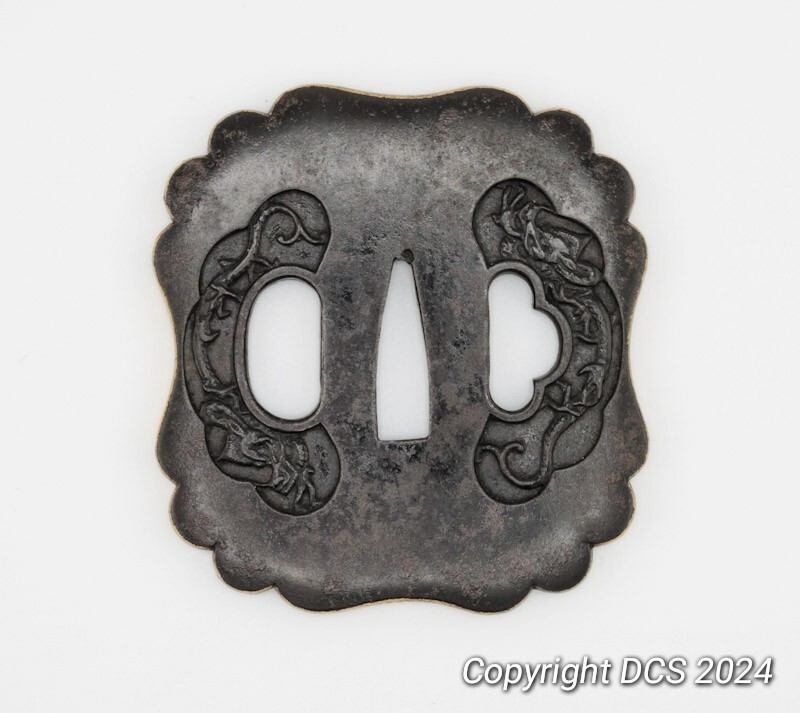
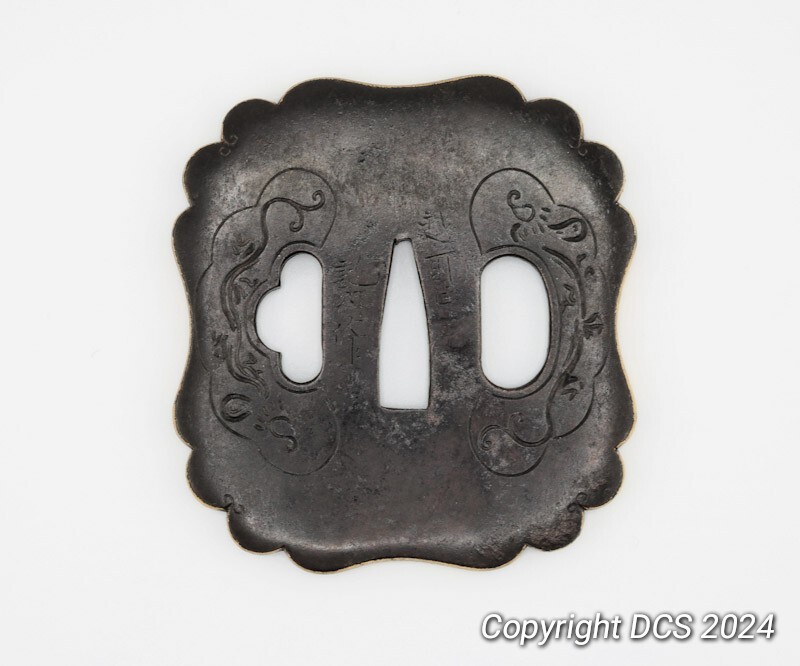
Here are a couple of additional images. Damon

-
Old heirloom (?) tsuba translation request
Deez77 replied to Deez77's topic in Translation Assistance
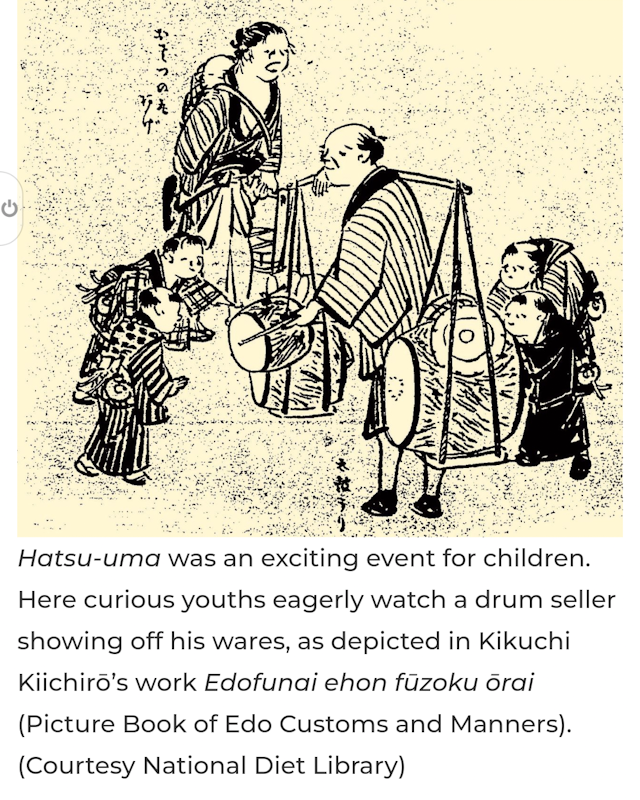
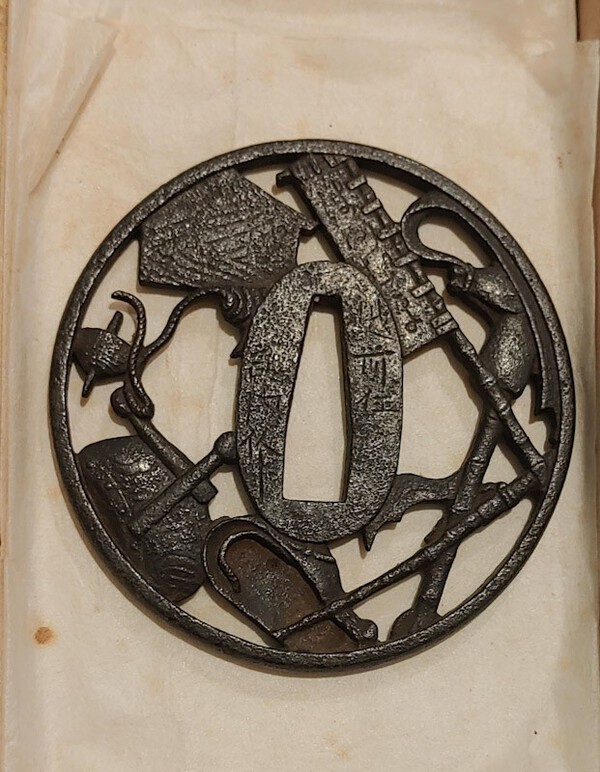
Thanks Dale, I believe the horse is related to when the hatsu-uma takes place. Here's something I found on how to calculate it: " Hatsu-uma (初午) refers to the first day of the Horse in February. It is a significant festival celebrated at Inari Shrines across Japan. Let me share some details about it: Zodiac Calculation: To determine the date of Hatsu-uma, the zodiac signs are used. The 12 zodiac animals are: Rat, Ox, Tiger, Rabbit, Dragon, Snake, Horse, Sheep, Monkey, Chicken, Dog, and Wild Boar. Starting with the zodiac animal for January 1st, you count in order. For example, if January 1st is the Chicken, then January 2nd is the Dog, 3rd is the Wild Boar, and so on. The Horse is the 10th zodiac sign from the Monkey. The subjects in the tsuba seem to represent many items associated with the celebration (and with matsuri in general)...and include: - kitsune mask - spinning top - toy horse - wooden placard with fox symbols - flag and pole - (possibly) some kind of bamboo item worn at the waist - taiko drum I found some interesting woodblock images of hatsuuma celebrations with various items (from the link I shared in my previous post). All in all, in interesting piece with a (possibly) interesting story and some noticeable (fire?) damage that doesn't concern me as I'm not a reseller. I am interested in trying to figure out the names mentioned in the 'story' to see if that is something that could be traced. It would seem the story was written/documented in the box in 1975, some 50+ years after the great earthquake...possibly based on a recounting by someone who would have had first hand knowledge from that time. 🤷🏼♂️ It's not often you get some additional information/story to accompany a piece. Anyway, thanks a lot for the interest and contribution. Damon


-
Old heirloom (?) tsuba translation request
Deez77 replied to Deez77's topic in Translation Assistance
Thank you very much for the assistance, that is extremely helpful. Google translates the samurai name as "Hayashi Sajie" but I presume there are multiple ways it could be read? There are plenty of pages on the hatsu-uma festival/celebration, but this one (https://www.nippon.c...Japan-topics/c11802/) notes many of the symbols featured in the tsuba itself. Who knows if the information captured on the box is at all legitimate, but it does make for some interesting research. Damon -
I have what appears to be a Kinai tsuba that was a family heirloom and was damaged in a fire caused by an earthquake. That's all I could really get out of Google translate. Would someone be kind enough to provide a line-by-line translation of the top and bottom of the lid? Top Bottom Tsuba Many thanks in advance Damon


-
Although I've never sent one of my tsuba away for papers, I HAVE considered it for some of my best pieces in order to see how high they could be rated. For me, it feels perhaps like a way to bring more recognition to fine works of a particular school...AND...validation of the significance of the collection. I have no interest in papering for purpose of selling or increasing monetary value (per se). Damon Edited: fixed typo
-
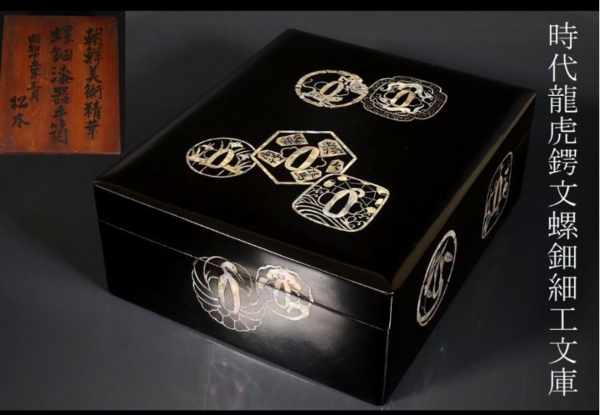
What looks like a nice lacquered box with mother of pearl tsuba. Starting bid 50k JPY. https://page.auction.../auction/k1128295086 Damon
-
A shachi-themed Myochin hammered box with some sort of inscription (according to listing). Asking a pretty penny. https://page.auction.../auction/j1127496260

-
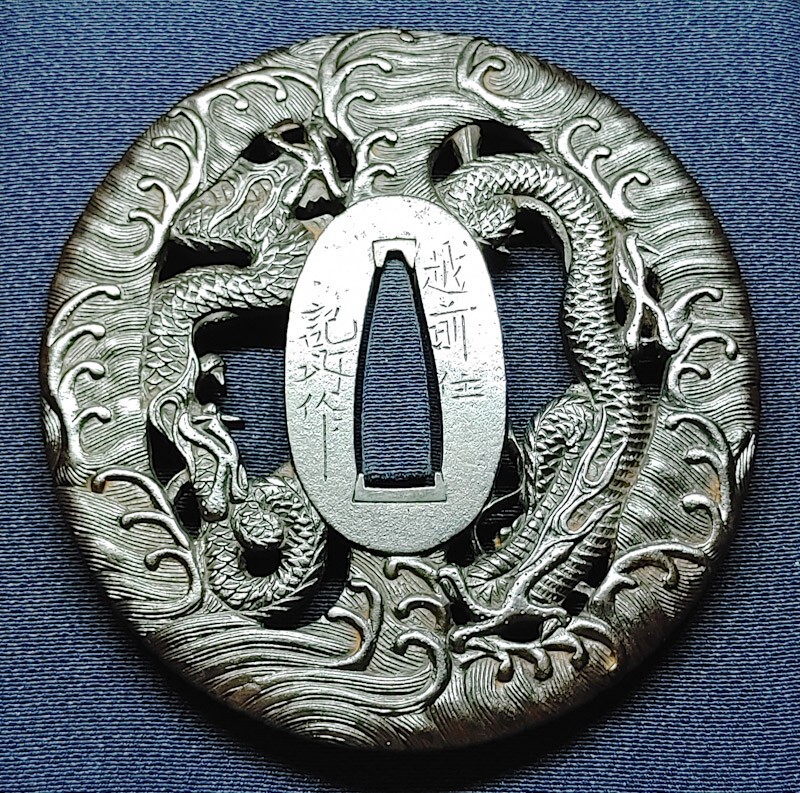
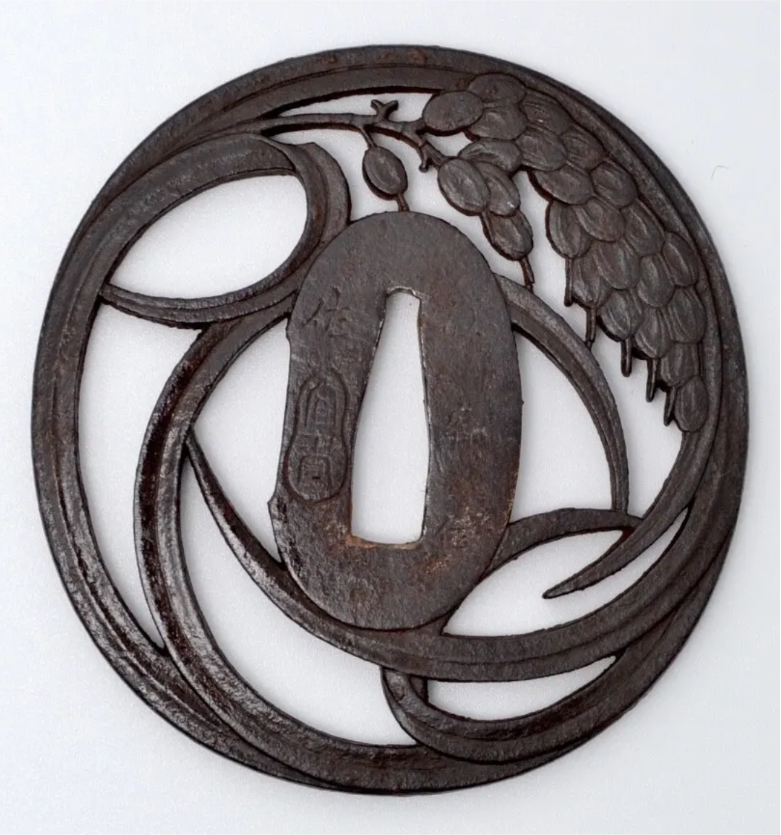
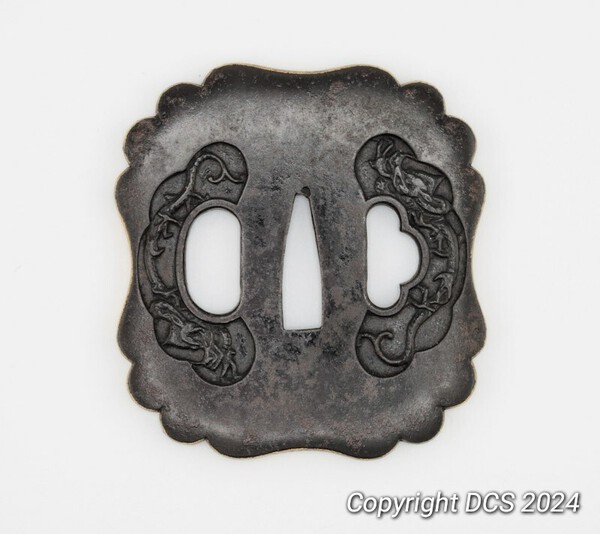
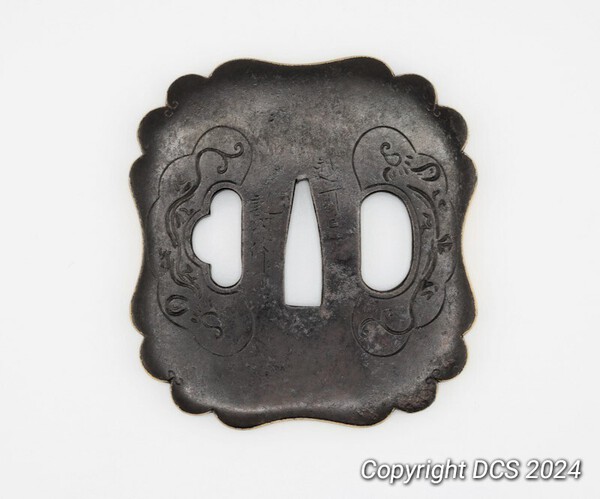
My only rain dragon motif tsuba...not a common Echizen Kinai design. Damon
-
Let me know if the name of that book comes to mind. I wouldn't mind having a read.
-
Thanks for sharing, Dan. I have my own "routine" when unboxing a newly arrived tsuba. It goes something like this: I typically unwrap it, hold it with my middle finger and thumb to take a good close look at each side, then holding the seppa dai with my thumb and middle finger give it a hard thump with my other hand's middle finger, cup my hands behind it and have a deep smell, then rub it in my hands, and repeat above steps a few times. It's important for me to get "a feel" for the tsuba, its weight, the texture of the metal, its smell to try and appreciate all of its parts. While I often think about each piece's story, I can't say I've actually felt any vibes coming from any of them. I somehow envy that connection you have made with the pieces, good or bad. @Spartancrest, can you recall the dreams when you wake up? Are the nightmares anyhow related to samurai or old Japan? I mean, could they be a projection of a previous owner? Thanks again all for sharing with us. Damon
-
Gentlemen, In lieu of the internet not cooperating, I'm happy to offer up an exquisite example to illustrate the point. Damon


-
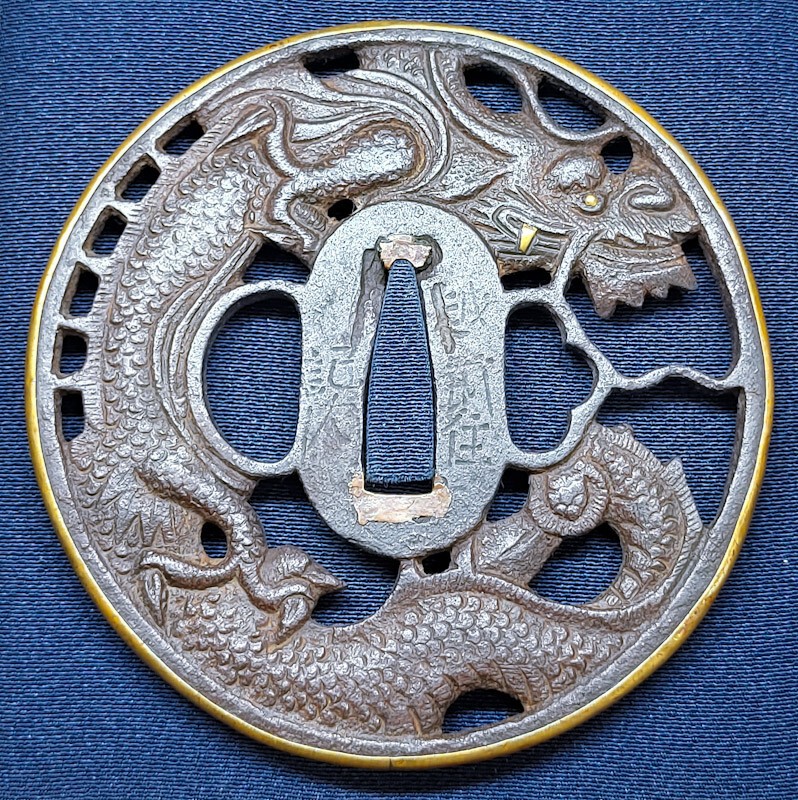
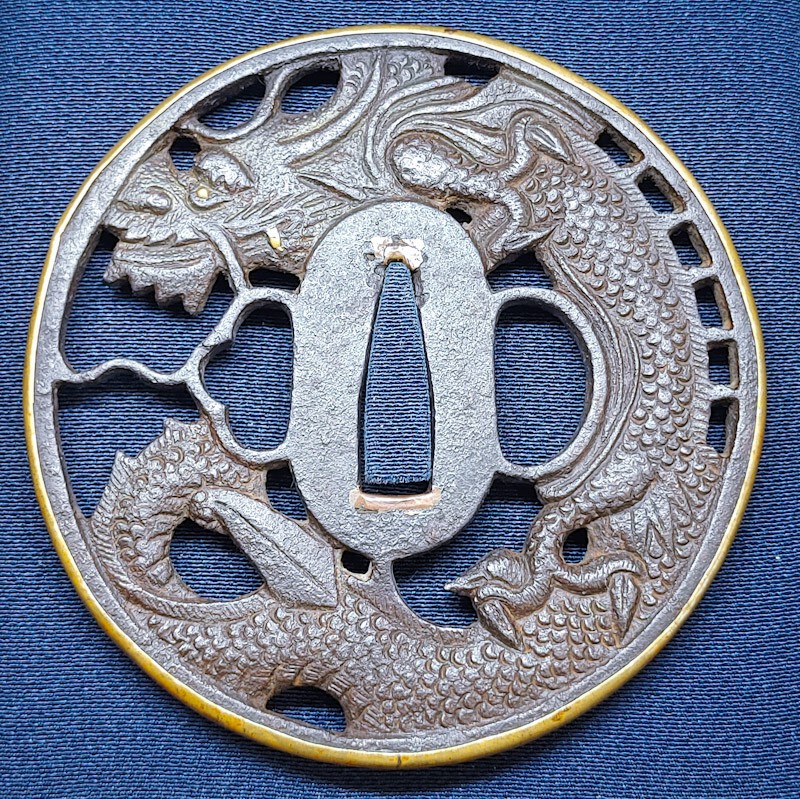
Lol...they sure did, Dale. Here's one from my collection to add to the list. Signed Echizen ju Kinai. Damon


-
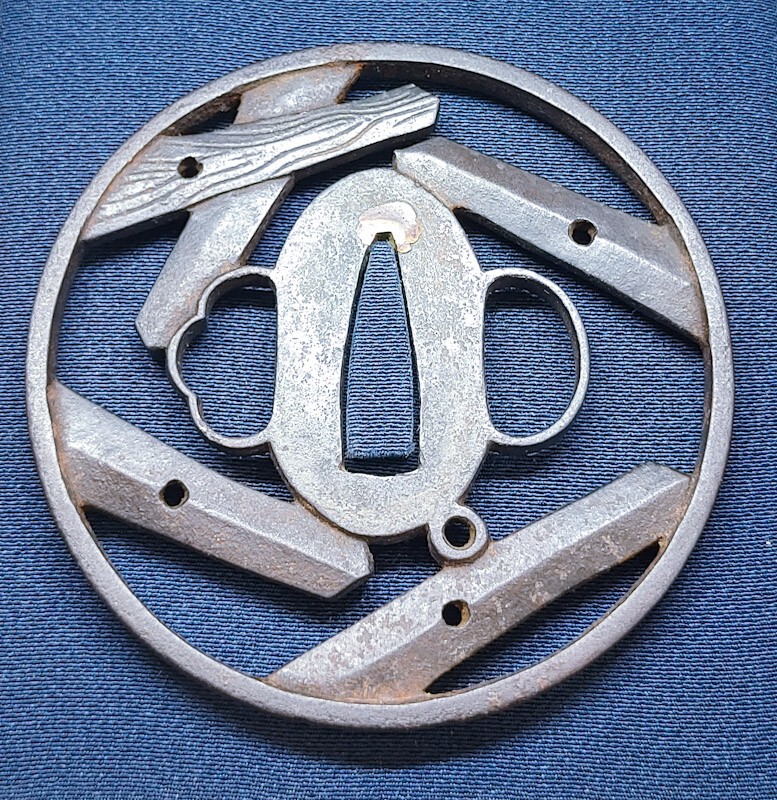
That is an awesome motif Jimi-san. First time I've seen the nakago theme represented that way. I have a more common example. Damon


-
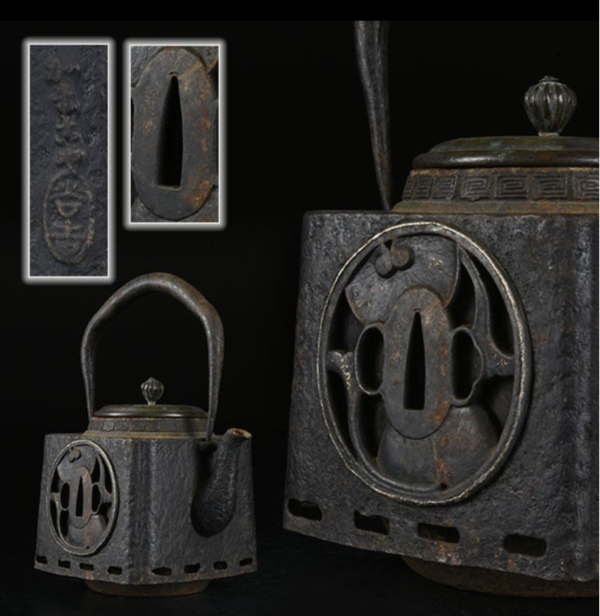
Love it, Dale, but definitely out of my price range. Here's an interesting kettle with a typical Kinai tsuba design incorporated. https://page.auction.../auction/b1105934652 Damon
-
😲 wowza!
-
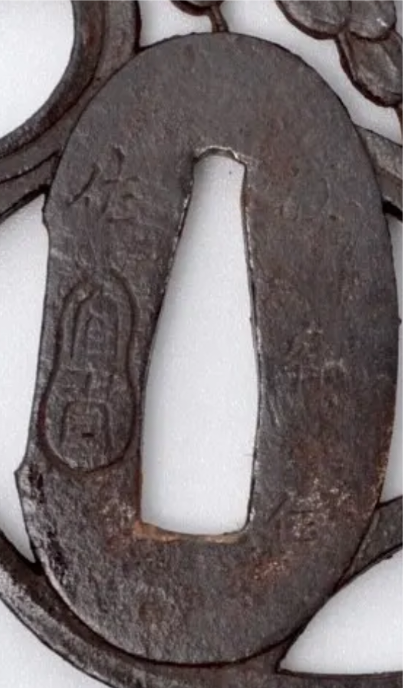
Here is a somewhat similar example with some (what seen to me to be) very unusual signature markings. https://www.ebay.com...r=artemis&media=COPY


-
Someone from a tosogu FB group I'm a member of had suggested the following: "There is the Gohei at 9:00. And the hammers are also part of the ritual that make the creases nice and sharp. The “palanquin” is telling that this is actually depictin “Jijin Sai”. Possibly the whole tsuba relates to this ritual. The slanted boxes look like Saisen Bako." I was especially curious about the reference to "Jijin Sai", actually Jichin-sai, or groundbreaking ceremony. This is an example of what's available online, https://www.japanesewiki.com/Shinto/Jichin-sai (ground-breaking ceremony).html#:~:text=Jichin-sai (also pronounced ",Japanese as the Ujigami%2C the Maybe getting closer to deciphering it. Damon
-
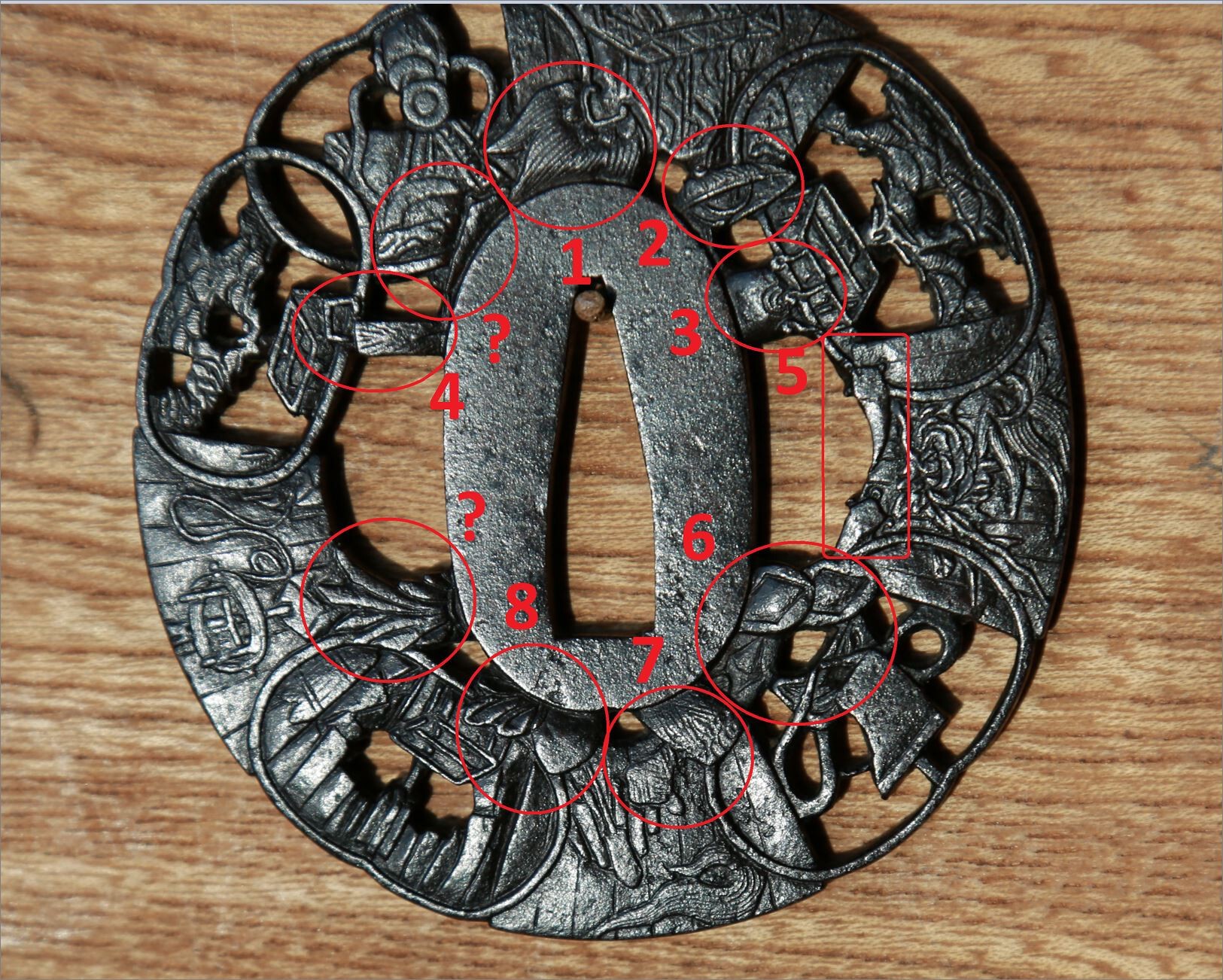
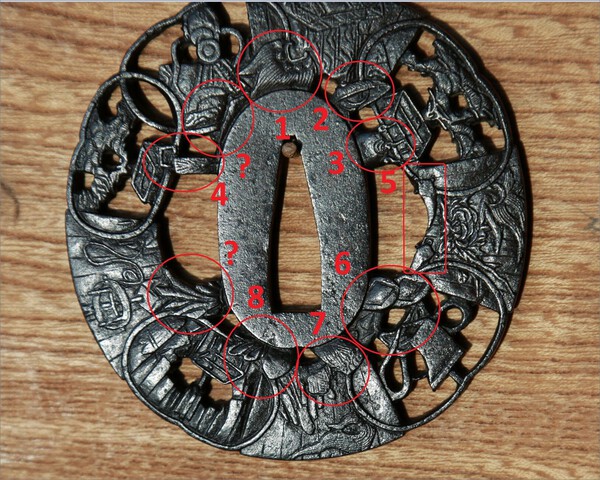
Thanks a lot Dale, Grev, Matsunoki. I've definitely identified some of those lucky treasure items on the omote as seen below: 1. Kakuremino: invisibility cape/robe 2. Kakuregasa: invisibility hat 3. Hoju: treasure ball said to fulfill wishes 4. Hoyaku: granary/warehouse key 5. Choji: clove buds 6. jewels/coins from mhammer? 7. Uchide no kozuchi: magic hammer 8. Kinnou/Kinchaku: treasure pouch Although there's still a couple of the "lucky" items that I'm not sure about. Of course, there's also the other panels, and I'll continue trying to figure out what those are. Certainly a "good luck" theme for this one with a whole lot going on. And I've never seen anything close to this from this school of tsuba makers. Regards Damon
-
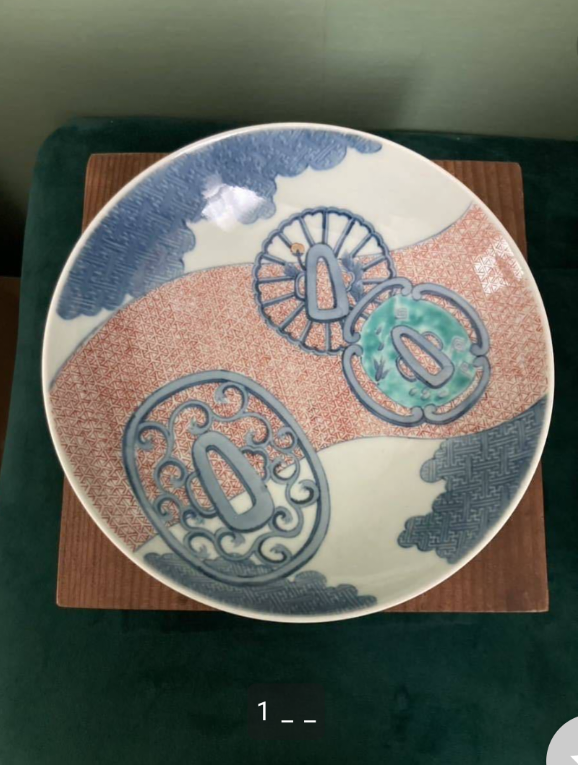
A more detailed bowl with tsuba design. https://page.auction.../auction/f1098421532 Damon
-
Kirin is one of my favorite Japanese beers, along with Yebisu. 🍻
-
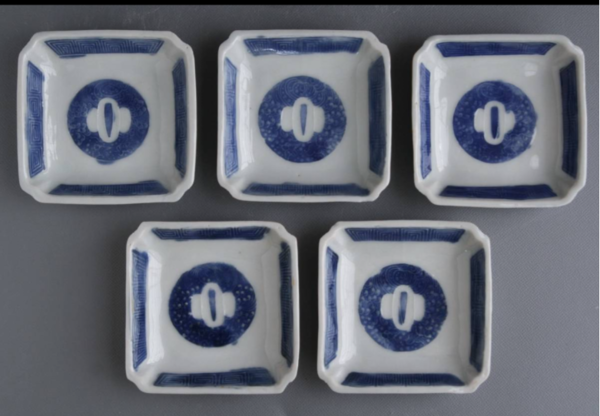
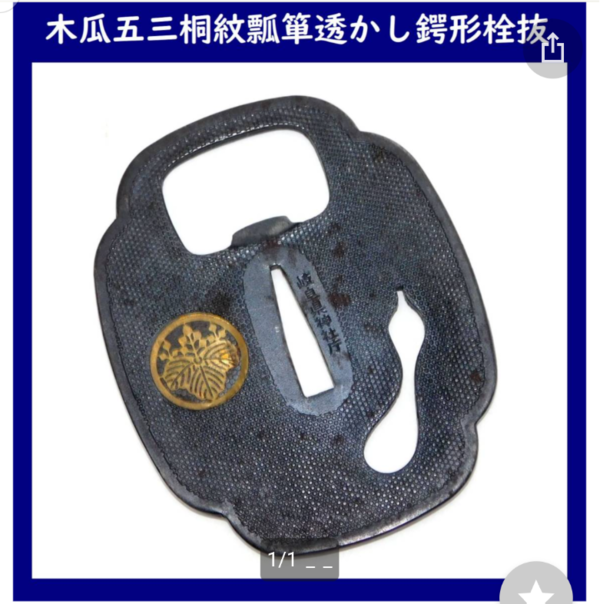
A tsuba themed dish set. https://page.auction.../auction/e1104557759 And bottle opener. https://page.auction.../auction/u1104596532
-
Would you mind sharing a link to that one? I'd be interested to have a look. Regards Damon