Brano
-
Posts
558 -
Joined
-
Last visited
-
Days Won
5
Content Type
Profiles
Forums
Events
Store
Downloads
Gallery
Everything posted by Brano
-
Here is an automated translation of setsumei Tanto from session 69 Important Sword Designation No. 69, Measurements Nagasa: 25.8 cm, Sori: Uchi-zori, Motohaba: 2.3 cm, Nakago length: 10.9 cm, Nakago sori: Almost none. Shape Sugata: Hira-zukuri, Mitsu-mune, Mihaba is standard, Kasane is moderate, Features uchi-zori. Forging (Kitae) Kitae: Itame hada with some nagare, Ji-nie is well-developed, Chikei appears prominently, Bo-utsuri is visible, The steel is tightly forged. Hamon Hamon: Chu-suguha with ko-ashi, Slight kinsuji present, Nioiguchi is bright. Boshi Bōshi: Straight, turning slightly in ko-maru style with hakikake. Horimono Horimono: Omote: Plain ken (straight groove), Ura: Suken carved in flowing style. Nakago Nakago: Ubu, Kurijiri, Yasurime: Katte-sagari, Mekugi-ana: One, Omote: Two-character mei (signature) centered below the mekugi-ana, Ura: Dated inscription. Explanation Shintōgo Kunimitsu is effectively the founder of the Soshu tradition and is renowned for training three legendary swordsmiths: Yukimitsu, Masamune, and Norishige. His work, while reminiscent of the Awataguchi style at first glance, is distinguished by prominent chikei and kinsuji in the ji and ha. He excelled in suguha variations (ito, hosu, chu, hiro) and is considered one of the two greatest masters of tanto alongside Fujishiro Yoshimitsu. This hira-zukuri tanto exhibits typical late Kamakura-period traits, including standard mihaba, moderate dimensions, and uchi-zori. The itame hada mixed with nagare, along with pronounced ji-nie and chikei, showcases Kunimitsu’s characteristic workmanship. The chu-suguha hamon with a bright nioiguchi and slightly hakikake boshi further confirm this attribution. The blade’s strong, well-forged steel and the presence of a dated inscription on the nakago make it exceptionally valuable for historical study. This piece is recorded in the Kōzan Oshigata.

-
No Here are the current Shinsa fees https://www.touken.or.jp/shinsa/fee.html
-

Mandarin Mansion - experience to share?
Brano replied to omgPirates's topic in Auctions and Online Sales or Sellers
Most rich people are well educated And to assume that the rich are mindlessly spending their money on a piece of metal in the form of a Japanese sword is, in my opinion, wrong Of course, this happens sometimes - especially when selling through reputable auction houses However, when selling through a specialized dealer - an uneducated rich person buys an unshortened Shinto or Shinshinto, which is healthy and nice and heavy ... Why would he spend ten times as much for something like this? He doesn't understand what he is buying at all -
Mandarin Mansion - experience to share?
Brano replied to omgPirates's topic in Auctions and Online Sales or Sellers
Well Kirill - I have to say that such a statement is a bit unfair Besides, you are also a seller as you said yourself and I assume that as a good seller you also emphasize positives and optimistic assumptions If a Ford dealer said - well, in truth, Honda has fewer breakdowns and our service hours are twice as expensive, but we have higher fuel consumption - he probably wouldn't be successful in selling If a seller doesn't include misleading information, but emphasizes sales arguments in a positive light, then he is just applying the right sales strategy -
In the previous post it was stated on NTHK papers Kenmu Era ( 1334-1336 ) However, according to sugata I would say a few decades younger around the Enbun/Joji
-
JuBi Tomoshige is in Nihonto Taikan Koto III Here is setsumei in Japanese NT3_Tomoshige_set.pdf

-
This sword was also published in Token Bijutsu En Here is a PDF scan 730010781_set_GB.pdf
-
This is how it should be measured However, I have personal experience after purchasing a blade from a reputable Tokyo dealer that the declared figure for kasane was actually kasane measured on nakago Real dimensions measured with a digital caliper Motokasane 6.3 mm Motokasane at shinogi 6.7 mm Sakikasane 4.2 mm Kasane at shinogi nakago 7.6 mm

-
It is not unusual for a seller to list kasane for shinogi and not for mune, so the buyer expects a more robust blade I have not found any publication that would publish data for kasane for both mune and shinogi However, Token Bijutsu masterpieces oshigata always has data for kasane (I assume always measured for mune) @ Kirill: Motokasane larger than 8mm for Koto blades are really rare and I don't know of any blade with a kasane over 10mm (measured for mune)
-
How can you describe an attribution as gimei? If a blade has an attribution, it means it is a mumei (it can have Kinzoganmei/Shumei...) Maybe I misunderstood your statement - you mean that all/most blades attributed to the best swordsmiths in Western collections are not what Shinsa says?
-
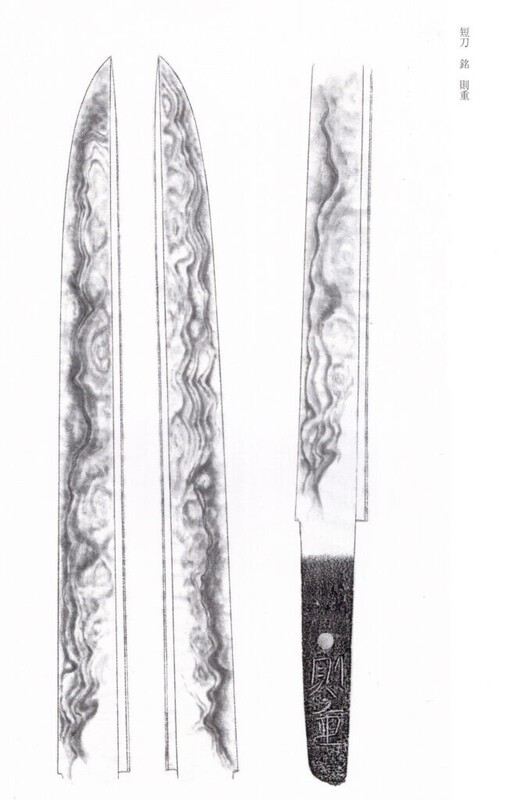
Yes - that's it It is undoubtedly an amazing blade and one of the best tantos from Norishige Setsumei translated using a translator: Designated on April 23, Heisei 26 (2014) – 23rd Designation Session Inscription: "Norishige" Measurements Nagasa: 23.8 cm, Sori: Uchi-sori, Motohaba: 2.05 cm, Nakago length: 8.7 cm, Nakago sori: None Shape Sugata: Hira-zukuri, Mitsu-mune. The mihaba is standard, with a slightly Fukura-kareru appearance. The ridge (mune) is sharply tapered. Forging (Kitae) Kitae: Itame-hada mixed with masame, partially showing hada-tachi. The ji-nie is densely distributed, and chikei are prominently visible. Hamon Hamon: Overall, the yakiba is high, featuring a ko-notare pattern mixed with ko-gunome elements. The hamon has ashi and yo, with deep nioi and thick nie. Kinsuji, nie-suji, and sunagashi cross between the ji and ha, while yubashiri follows the hada lines. The mune is hardened (yakikomi) from the base to the tip, giving the impression of a hitatsura-style hamon. The nioiguchi is bright and sharp. Boshi Bōshi: Midare-komi. The omote side shows strong nie with island-like (shima-ba) formations, while the ura side has vigorous hakikake with a flame-like (kaen) appearance. Nakago Nakago: Ubu, with a shallow ha-agari and kurijiri. The yasurime are unclear. One mekugi-ana is present. On the omote side, below the mekugi-ana, there is a large, bold two-character inscription ("Norishige"). Smith Etchū no Kuni Norishige Period Late Kamakura period Explanation Historical sword records from the Edo period list Norishige as one of the "Masamune Juttetsu" (Ten Great Disciples of Masamune). However, based on the sugata of his tachi and tanto works, as well as dated pieces from the Shōwa and Gen’ō eras, it is more accurate to consider him a student of Shintōgo Kunimitsu, as described in Muromachi-period texts. He should thus be regarded as a fellow disciple of Masamune rather than a direct student. Norishige’s style closely resembles that of the highest-tier Sōshū smiths, particularly Masamune. However, he often displays even more pronounced nie variations than Masamune. His forging features bold, large-patterned hada-tachi, known as "Matsukawa-hada" (pine-bark grain), with prominent chikei. Additionally, the hamon exhibits dynamic hataraki where the forging texture interacts with the hardened edge, showcasing an extraordinary range of nie activity. This tanto exemplifies Norishige’s distinctive style, with a standard mihaba and his characteristic "hako-sori" (box-shaped curvature). The jigane combines itame and masame, with dense ji-nie and abundant chikei. The hamon is notably high, blending ko-notare with ko-gunome, featuring deep nioi, thick nie, and a bright nioiguchi. Kinsuji, nie-suji, and sunagashi extend dramatically across the ji and ha, while yubashiri follows the hada lines. The bold chikei and well-refined itame-hada serve as a textbook example of "Matsukawa-hada." Furthermore, the radiant hamon, characteristic of top-tier Sōshū work, displays thick nie that fully expresses the beauty of nie activity across the blade. Large-scale kinsuji, nie-suji, and sunagashi dynamically traverse the ji and ha. This work perfectly encapsulates Norishige’s mastery, and its exceptional preservation makes it an outstanding example of his artistry.
copy.thumb.jpg.a688ef2f4cbf9fbd5ab4f1d37907fffb.jpg)
-
Kotetsu has always been highly priced However, I doubt it will sell for this price A Tanto by Norishige was on offer two years ago and the asking price at the time was 75 million Yen and it was sold A few months ago this blade reappeared on offer from the same seller as a consignment sale. It has recently disappeared from the offer, so it has either been sold or the owner has taken it back Almost all top blades are traded quietly and there is no interest in either party letting the price be known
-
So if I understand you correctly - you claim/think that the above examples of naginata-naoshi with boshi that kaeri has were not modified from naginata, but were made as we see them - correct? And don't worry - my English is worse than yours and I often use a translator
-
In fact, with today's AI capabilities, it's quite easy to get a translation of Japanese texts However, many nihonto enthusiasts lack a library they can work with
-
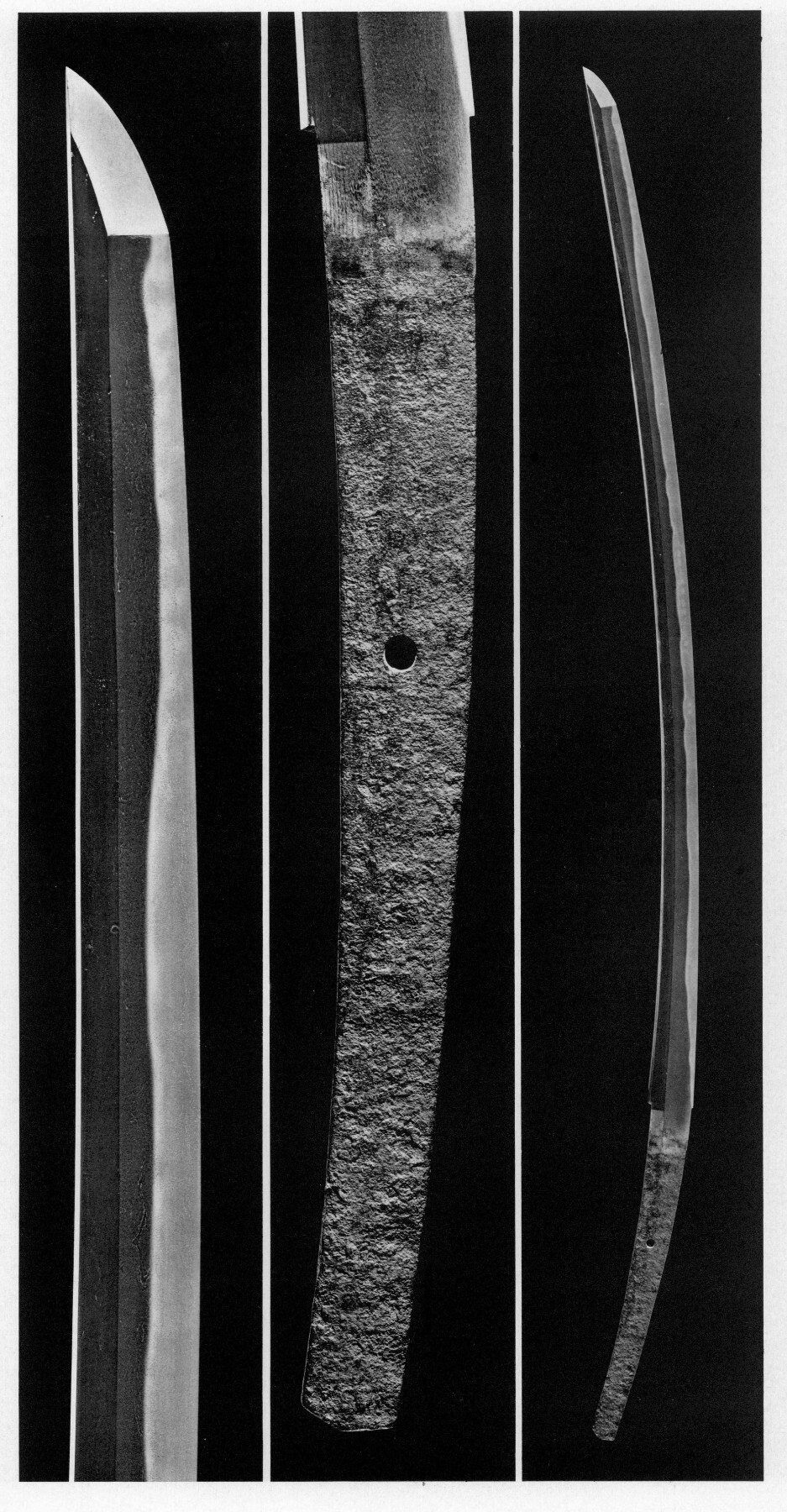
Come on Jacques Do you expect someone to show you a blade before and after? What is the argument that they are two different blades? On the left is the blade that NBTHK designated as a naginata If you have even a little imagination, then you can guess whether it is possible to preserve the kaeri when transforming into a naginata-naoshi by modifying this particular blade by the mune
-
It is undoubtedly a generous gesture from @Rayhan It is one thing to process data and databases for one's own use And another thing to have publicly available data Just a friendly reminder Every publication is subject to copyright And since Japan is a signatory to the Berne Convention, copyright expires 50 years after the author's death
-
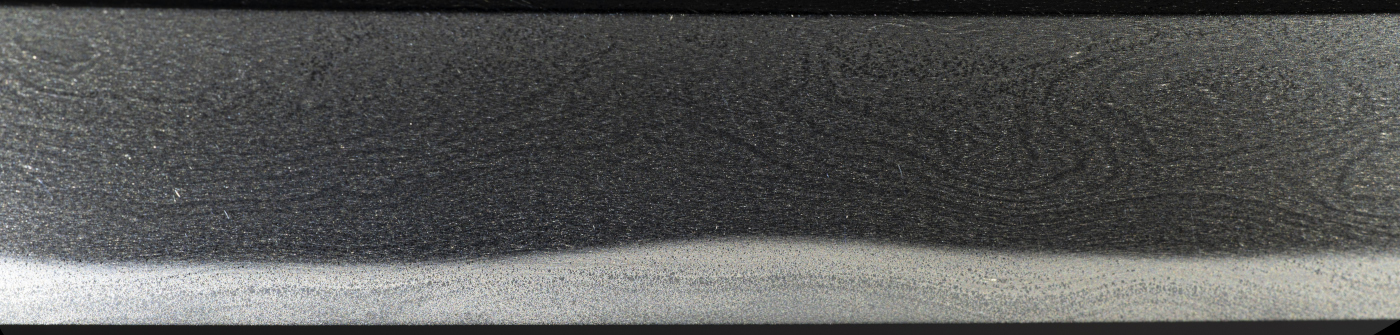
Another example of an early Yamashiro blade with very fine ko-nie jigane and chikei, which are also very fine (you can see them better in places where the photo is a bit out of focus)


-
The first case you describe is actually the jigane itself (chikei is not made of a cluster of ji-nie) The published photos are of a blade from a first-class Soshu swordsmith, however the chikei are made of martensite crystals that are woven through the layers of jigane Chikei can take many forms and many times may not be visible at first glance Here is an example of a Bitchu blade from the end of Kamakura, where the chikei are about the thickness of a human hair (for a better idea - the sakihaba is 16mm and the kissaki is 25mm)


-
Chikei doesn't always follow hada In places where chikei are not formed you can see the structure of the jigane, which has a much finer texture than it might seem when looking at the chikei


-
Markus describes Jifu in his book as: " Areas of dense ji-nie which appear as spots, splotches (fu, 斑) on the ji. It as a more or less clear border and deeper color than the surrounding jigane and it is a hardening effect. That means it appears free from the jihada, the forging structure, and is not limited to follow the pattern of the grain. "
-
Maybe you meant sumihada, which is typical of the AOE school
-
I separated the ura side from the photo and then divided it into the top and bottom of the ura side Maybe it will be clearer now However, as I said, it is impossible to draw definite conclusions from the photo and Norinari is undoubtedly a rare swordsmith

-
With the exception of the highest quality blades, there is almost zero chance that your investment in nihonto will appreciate - even in terms of absolute value. And I am not comparing this from a time perspective compared to an investment in, for example, the SP500 index, which can double in a decade over the long term If you are not above average educated in nihonto , do not buy blades as part of an investment portfolio If you buy a blade with Hozon papers, but in Juyo quality, the price will almost always be close to what the quality of the blade represents and not the papers that come with the blade. Be aware that blade dealers have been in business for decades and they know what they are selling
-
As Jussi said, blades that meet your expectations are very rare A healthy blade with a nagasa over 80cm pre Muromachi should easily pass Juyo if it is really healthy Therefore you will have to adjust one of your requirements - parameters or price In the entire history of Shinsa only about 150 Juyo blades fit your expectations And of those, I'm guessing maybe half won't have the sori you expect. Regarding the Nipponto seller - here I would be especially careful and without checking the blade in the hands of someone I trust I would not buy anything
-
This was valid for some time during Covid I think You can apply again for Hozon and Tokubetsu Hozon in one application https://www.touken.or.jp/shinsa/fee.html BTW - Shinsa has again significantly raised fees for Juyo and TokuJu




copy.jpg.3a64acde31a9fbda65bfc399327a2685.jpg)