jeremy
-
Posts
364 -
Joined
-
Last visited
Content Type
Profiles
Forums
Events
Store
Downloads
Gallery
Everything posted by jeremy
-
On the other hand, there is a similar appearance called "mukade-shinae". It appears in blade surface like wrinkles, not cracks. It not a flaw. When a blade is heavily bent and straighten again, it appears on the blade surface. It is very thin wrinkles on the steel surface, so it can be removed by sometimes polishing. http://www.ksky.ne.jp/~sumie99/flaws.html
-
Correct . I should have said mukade shinae like in this article : http://www.ksky.ne.jp/~sumie99/flaws.html
-
I agree . Ive used so many swords for tameshigiri in Japan and here in Australia and have bent more swords than id like to think about. Some of the bent and re-straightened swords had exactly this ripple shinae in the shinogi-ji. I think it depends on the severity of the bend too.
-
Hey guys Does anyone know what tariff code to use for sending a tsuka to Japan ? Years ago the last time I sent a tsuka from Australia to Japan I didnt need a tariff code. 9307 code is for swords etc but I dont want to alarm the customs workers with an incorrect code. Or do I use the 9307 and write description as tsuka ?
-
I'm trying to see what part of the blade you're talking about but unable to see it myself . Would a blade get Tokubetsu Hozon with a flaw like that?
-
Time frame for receiving sword from Japan
jeremy replied to jeremy's topic in General Nihonto Related Discussion
Thanks guys -
Hey guys I bought a sword from a reputable dealer in Japan on 28th June. Any idea how long it will take until its ready to be sent ? What has your experiences been ? Cheers Jeremy
-
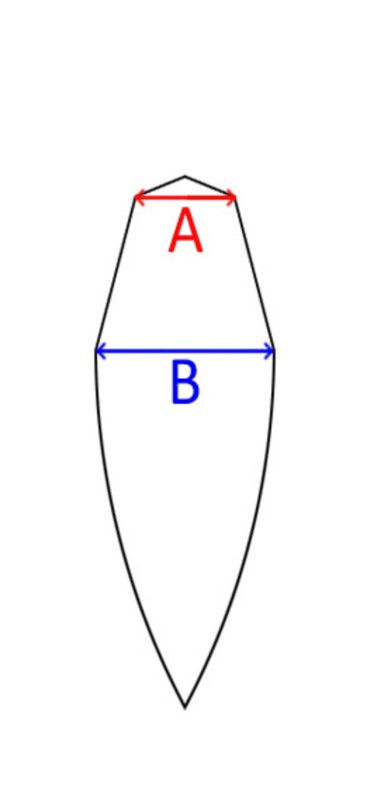
I actually asked sumie kashima at usagiya this question. She said she believes my sword is high shinogi with those measurements. Just to be clear what I'm referring to here. Measurement A is 5.5mm and measurement B is 6.9mm
-
New Shinken Purchase! Gendaito - Akamatsu Taro Kaneyuki
jeremy replied to Charliebrown's topic in Nihonto
0.39-0.45 inch sori? That's pretty shallow for a cutting blade? -
Hey guys Is there a "rule" so to speak on how much difference there has to be between the kasane and shinogikasane in order to be classified high and low shinogi? For example, if a blade has a kasane of 5.5mm at the kasane and 6.9mm at the shinogikasane would that be classified as high shinogi ? Jeremy
-
That's a big blade! How tall are you using a blade of that length, if you don't mind me asking ?
-
Thank you ! I remember reading that somewhere actually. Thanks for the reminder
-
Makes sense ! Thank you!
-
Thanks! The naked blade seemed tori zori to me but the mounted picture seemed like a koshi zori
-
Trying to figure out if this looks more like tori-zori or Koshi-sori ? Its a deep 3cm sori with a 83cm Nagasa.


-
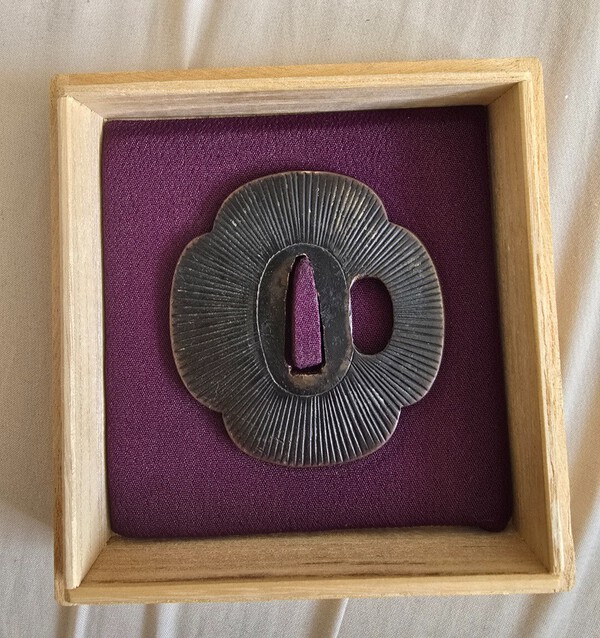
https://www.ebay.com...emis&media=WHATS_APP Comes with a tsuba box and silk pouch .

-
I don't know how DHL accepts swords to begin with. I tried sending swords with DHL from Australia to USA a few times and was told DHL doesn't accept weapons/ sharp implements.
-
40 + 😫😫
-
I've had brand new shinsakuto with ware in the shinogi ji , only been polished one time. Ware can become worse after repeated polishing, it's pretty much you and your luck. But in the case of these two blades your presenting here, it shouldn't end up becoming fatal. Just an eyesore for some people.
-
Usually fatal means that the structural integrity has been compromised, ie unsuitable to he used as intended. But I don't see anything here that would severely compromise the integrity of the steel . If a ware is too close to the cutting edge , it could cause a crack or chip. I've used many blades over the decades with ware without problems. Jeremy
-
Is now a good time to buy swords from Japanese dealers?
jeremy replied to dyn's topic in General Nihonto Related Discussion
I saved myself about $500aud recently by buying a sword 3 weeks ago compared to if I bought it right now from Hataya sensei in Japan. So i think it is a good time to buy swords from Japan now. -
My first Nihonto: a mumei Uda school Katana
jeremy replied to Laurian's topic in General Nihonto Related Discussion
You definitely could've done alot worse than this sword as your first. I know I did . In regards to kitae-ware / tate-ware , they're usually not a problem in regards to structural integrity as long as they're not located too close to the edge of the blade. Alot of the blades I've cut with have had small openings here and there , mostly in the shinogi-ji. It's more common in older koto blades as they have generally seen few more polishes than newer swords hence the propensity for these kind of kizu. Regards Jeremy -
That's fair enough , when I see gendaito my mind thinks late 1800s to 1940s era blades made in Japan. I must say the blades themselves look very impressive for non Japanese made, I bet a few people have been fooled into believing that they're buying a Japanese made sword with these pics and descriptions
-
A bit misleading calling it a gendaito though. He does have genuine nihonto on his eBay however for people who are looking for cheaper nihonto.
-
Are these blades really nihonto? There's something odd about the nakago on these blades ?