Jean
-
Posts
8,637 -
Joined
-
Last visited
-
Days Won
51
Content Type
Profiles
Forums
Events
Store
Downloads
Gallery
Everything posted by Jean
-
Mark, The blade seems polished and the saya is interesting though there is a missing - Kurikata seems made of wood, it would cost a lot if you have it to be made. Kozuka is missing. Description is astonishing : Nagasa indicates a katana. It is listed in the wakizashi section and the description hilarious : Chu-jo saku is not a bad rating. Fittings are probably common or Tsuruta san would have them pictured. I have seen a lot worse. Ask Tsuruta san if it is a tanto/wak/katana and try to discuss the price. Perhaps Tsuruta san shall grant you a small discount
-
I am using Black Pearl, everything is OK for me
-
John, Here it is . Sorry, it is in French :
-
Ian, Thanks a lot for the information. At first, I was wondering what Glaive were you talking about, considering that in my mind there was the association with the Roman sword (2 edges , short and straight). In fact, there is a distinction in French between Glaive and Glaive d'armes, glaive d'armes being referring to a pole arm used during Middle Age and which appeared at the end of the 13th century. For members interested subject, there is a short description of it in Wikipedia : http://fr.wikipedia.org/wiki/Vouge_(arme)
-
Axes have been for ages, in all civilizations since prehistory, a favourite weapon when it comes to a mêlée : From the dwarves mentioned in the "Lord of the Rings" or "Eragon" :D , to the French "francisque" and the North American "tomahawk".
-
 How right you are Barry, I hesitated a lot at the beginning not wanting to give nightmares to some members
 -
Thanks Pete for the explanation, that is the kind of post which makes NMB unique.
-
In a mêlée, War hammer, axes are much more efficient and easier to wield than swords
-
Agreed with Mark, it could be a hagire running through the hiraji but I have never seen such things
-
It seems that Dr Stein is feeling the same way : http://home.earthlink.net/~steinrl/glossary.htm A diagram is not all, see my question to Guido : does 2=4
-
Interesting Guido, How would you define Handachi then? A Koshirae with an element of a tachi? Could you post some pictures of the examples mentionned in the Tokyo National Museum "Sword Mountings" (東京国立博物館 - 刀装篇) (unless forbidden by copyright)? Now referring to this koshirae, does the kabuto-gane alone justify the term Handachi (forget about the saya), in the same way if the saya had a saya-jiri as the kabuto-gane mentionned above, would it be qualified as a handachi? In a handachi, can we talk about kabuto-gane and saya-jiri or kashira/kojiri?
-
John, Yes, IMHO, they are Tachi mounting.
-
Very good idea and if possible the translation in English.
-
Difficult to say, even if we were to see the laquer sword, but they were fashionable in Shinshinto
-
Request with Hira-zukuri Ko-wakazashi please
Jean replied to D-Lewis's topic in Translation Assistance
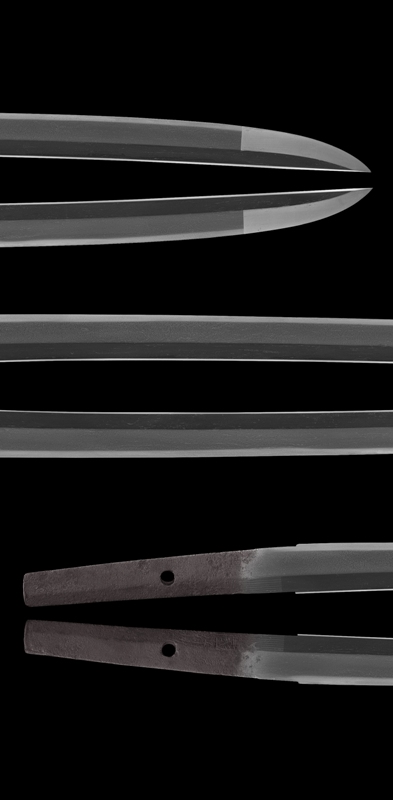
How would you name this sword, nagasa=37cm, ubu signed by Kunitoshi, late Kamakura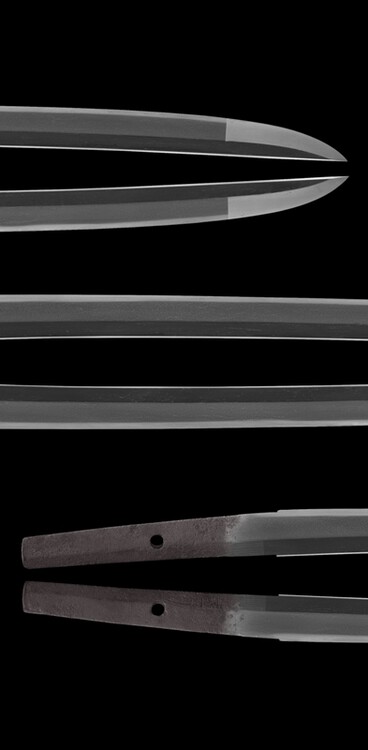
-
Guido, 2=4?
-
John, IMHO, I think it was a handachi modified for wear as a military tachi. Seldom do we find real tachi koshirae for this kind of sword, too rich to be brought to war. In fact, I have never seen a common tachi mounting, only elaborate ones http://www.aoi-art.com/sword/wakizashi/ ... shirae.jpg Even this one is elaborated (not mentionning Efu, Itomaki no tachi much more refined) In fact, my first katana was in handachi mounting and when you said : I would prefer it to have an aoi-gata tsuba, I was thinking to myself John is reading my mind
-
John, I am not a specialist but, for me, this ia what should be a handachi Koshirae (but for the tsuba) : http://www.nihonto.com/11.11.07.html
-
John, I would not call it handachi without seeing the saya which should be en suite
-
Request with Hira-zukuri Ko-wakazashi please
Jean replied to D-Lewis's topic in Translation Assistance
Hi Doug, from the pictures, it "could fit" (very cautious I am my precious - sorry, I feel a little Gollum this morning (- 10°C)) sue Muromachi, so I was not talking about the blade, but the mei being added later on. It is very crisp with no wear at all. Through ages, writting has evolved. No exception with Japan. Have a look at Kamakura mei, compare it to Muromachi ones, Shinto and Shinshinto, you see what I mean. Suruga province with Shimada school is a well known school in which you can find different influences, mainly Sue Soshu and Mino. The tanto I linked to has a typical suguta. In thie tanto, you will fin often very long kaeri, muneyaki,, sometimes togari ... An overall picture of the blade + a picture of the whole tang would be helpful -
This Week's Edo Period Corner
Jean replied to Bugyotsuji's topic in General Nihonto Related Discussion
At Last : A box to stack my Lehman Brothers stocks -
Request with Hira-zukuri Ko-wakazashi please
Jean replied to D-Lewis's topic in Translation Assistance
What a coïncidence : http://www.aoi-art.com/sword/tanto/08621.html -
Request with Hira-zukuri Ko-wakazashi please
Jean replied to D-Lewis's topic in Translation Assistance
Doug, The sword is perhaps koto, but not the mei. The nakago is by no means Kamakura (by the look of the part where is the mei) Have a look in different books at Kamakura mei and you will find that this one looks very modern/recent (no wear - In particular, the atari). BTW, niji mei was used by some schools in Muromachi. You find it in Bizen and above all in Shimada school, Suruga province, where you can find a Sukemune, but I feel sure it is not this one. These two kanji are very oddly cut. I am not sure that the mekugi ana is not drilled -
You did it again, naughty boy
-
Thanks a lot Darcy for this answer (and BTW HNY to you), I had the feeling that this swordsmith was one of the most prolific. If I can abuse (and above all if you don't mind), who are the top 3 smiths (in sword numbers) who have achieved Juyo/Tokuju level? When shall we see your next book published?