Alex A
-
Posts
7,419 -
Joined
-
Last visited
-
Days Won
49
Content Type
Profiles
Forums
Events
Store
Downloads
Gallery
Everything posted by Alex A
-
Cheers Jean, roger that. Alex
-
"Han Bing slong", something else i need to look into!, cheers Jean, seems papers are not as reliable as i thought. Alex.
-
Hi Jean ,quite straight forward, i was curious as to why the 2 organisations differ so much in there opinions, i am aware that an estimation paper is a low scoring paper (didnt make kanteisho). Sam, yes, ive took another look, certainly says NTHK estimation paper and your right about what im talking about. Thanks again Lance, Sam and Jean. Alex
-
Hi Peter, maybe the subject of art might tip it in our favour. Alex.
-
Ive just been having a browse through the internet sites. Ive come across a few katana with 2 sets of papers, NBTHK Tokubetsu Kicho and also NTHK estimation paper. Does this mean that the NTHK thought the sword was of poor quality and the NBTHK think the sword was of high quality? I am aware that they judge on different merits, is it a case of the NTHK dismissing the blade because of poor quality work and the NBTHK giving the sword merit for other reasons? I cant understand why the seller would say that it had an estimation paper when it also as a Tokubetsu Kicho paper. Apologies if this as been brought up before. Alex.
-
Hi, i know there as been a few uk shinsa in the past, i was wondering if anyone knows if there is one planned for 2013? Alex.
-
Superb!, well done. Alex
-
Well concluded Keith. Alex.
-
Ive been sucked in by some of the conversation on here, usually just use an old white t-shirt, but today i ordered some microfibre cloths :D Alex.
-
I use express gun oil, available on ebay. Alex.
-
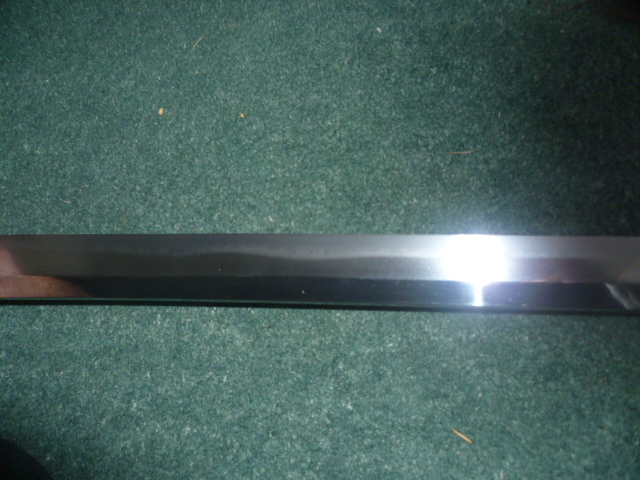
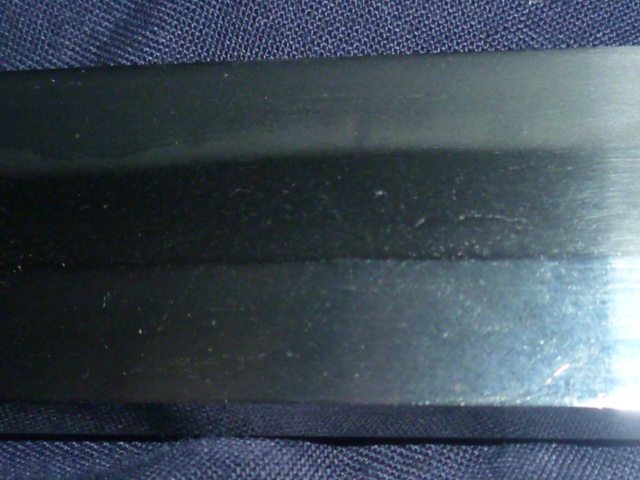
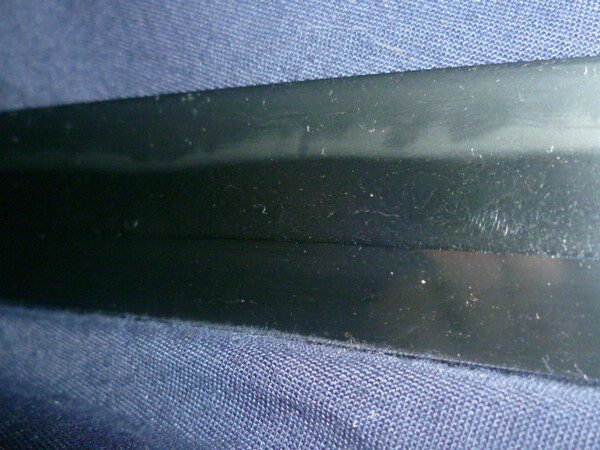
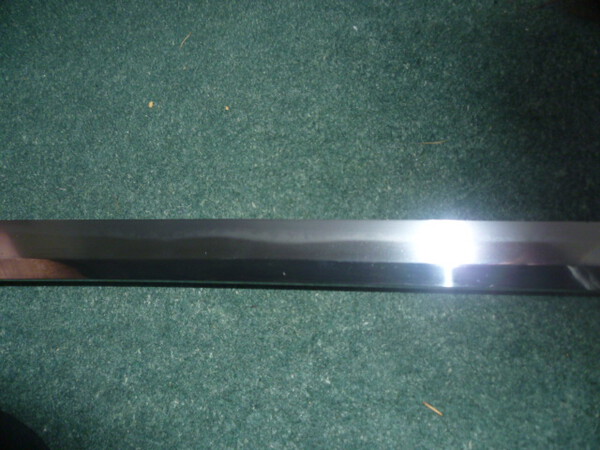
My last go at this with my limited knowlege is as follows: Papers say osuriage (大o- meaning large) so i can only presume that means large cut off the blade. On the subject of the yasurime being kiri (kiyomitsu blades of that age where kiri), maybe it was shortened by the kiyomitsu school (possibly because the sword remained nearby the kiyomitsu school) or a school that also used kiri. Finally, i described the hamon as gunome choji in another post(this information came with the sword on an invoice-worksheet), whereas the nthk papers describe it as ko gunome midare. Im not sure where the choji comes into it, maybe someone could put me right looking it at the pictures below. Excuse the photography. Apologies for bringing this up again! Alex
-
Thanks again John, think the large dealer down south may have got it wrong or maybe it was just there take on it. :? Hi yes, kiyomitsu is kiri.. Alex
-
Hi Bruno, if your going to use alcohol on your blade you would be better using 100%. You need it to evaporate fast and completely. Your blade is porous. Wiping it off may not do the job completely. Alex
-
I see your point David, i would only use 100% isopropyl alcohol. Luckily i have access to it at work Alex.
-
Ive had a go at translating the hamon on this nthk paper using the glossery, im new to this so apologies!. From what i can gather it reads "ko gunome midare"(irregular small gunome)..That bit i understand. What is now confusing me is that the dealers worksheet says "gunome choji". I cannot find the word "choji" anywhere in the hamon description. I can find "width of the tempered portion", not sure where this comes into the equation. Is it possible the dealer could have been refering to ashi when he uses the word choji? Alex.
-
Hi Denis, dont get too overly concerned about all this, using uchiko once or twice a year obviously will not damage your sword. Dont leave too much oil on your blade, only a thin coating, and it will be fine. In a modern central heated home in the uk you probably dont need to use oil, its dry enough. I oil my blades simply as a precaution because im away from home most of the day. Alex.
-
Cheers Jean, just had a quick look to see what there is, plenty of reading, thats for sure. Alex.
-
Thanks Adam and Jean for your assistance, much appreciated. The hamon does clearly run past the hamachi. The yasurime is also kiri on both sides as Jean stated, thanks for helping to sort out this query. Alex.
-
Cheers for that Adam, the hamon in this Kiyomitsu 1504 blade looks remarkably similar to the hamon in my 1688ish blade which is nice to see. Alex
-
Hi Adam, what era is this blade? Alex.
-
Hi, i wouldnt use coloured cloths to wipe the blade, apparently it can stain the blade, its likely with strong colours that this is possible, so better to use white only. Ive never used isopropyl alcohol to clean old oil off, usually powder once a year, i think it sounds a good idea, less abrasive, that must be a good thing. Im sure if the samurai of old had better methods at that time, they would have used them. Alex.
-
Hi, may i add that i dont actually use choji oil, i read somewhere that gun oil is better, think it was aoi arts care guide. The one i use has a rust inhibitor, never had any problems. I live in the uk, i think its fine to leave your swords without oil as long as the room where you store them stays at a reasonably constant temperature. I work shifts, the house goes from cold to hot and so on, this change in temperature can lead to condensation on the steel so better safe than sorry. Alex.
-
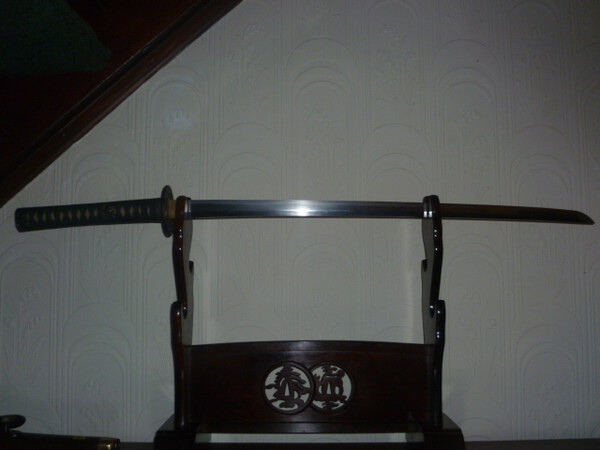
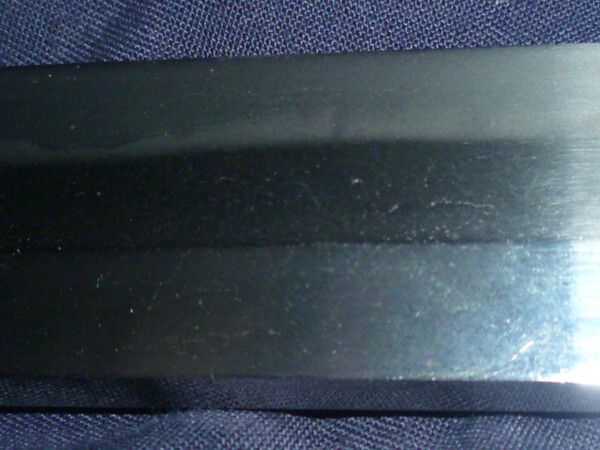
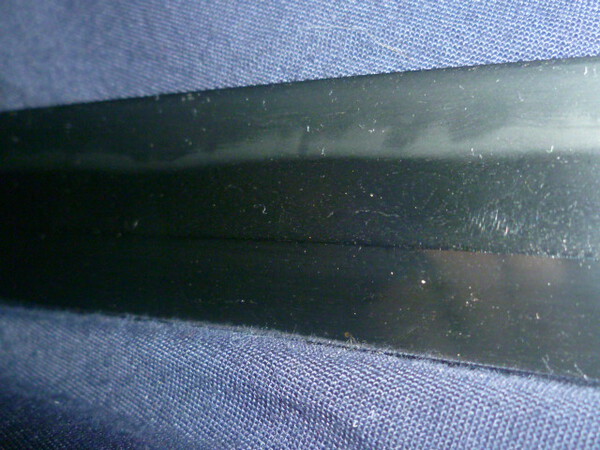
Hi Klaus, been having a look to see what i can find about kaga kiyomitsu, as your aware your 6th generation tensho kiyomitsu is from a school that dates back to 1444. What i dont know and what im hoping someone will tell me is does this school of kaga kiyomitsu have anything to do with the kiyomitsu school dating from 1673 with 3 generations??. My kiyomitsu katana is dated genroku period, some pics below (excuse the photography). Mike, is it possible to see more pics of your blade, and details of grain and hamon? Alex.
-
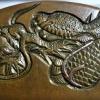
Iron fuchi with old symbols in relief
Alex A replied to Alex A's topic in General Nihonto Related Discussion
Hi Jean, i know there are some high quality iron fittings, i never said that there wasnt. As you said, you cant look at something without giving it a closer look, fair enough, but i was just looking to find out more about the fuchi in the way of the symbols, and a date etc (if possible). Alex. -
Iron fuchi with old symbols in relief
Alex A replied to Alex A's topic in General Nihonto Related Discussion
Cheers Lance, appreciate the constructive assistance. Alex.