hxv
-
Posts
1,271 -
Joined
-
Last visited
-
Days Won
1
Content Type
Profiles
Forums
Events
Store
Downloads
Gallery
Everything posted by hxv
-
 Kunitaro san, I hesitated to enter into this discussion, but given the response of the NBTHK: seemingly cavalier attitude, lack of urgency, contrasted with the sophistication of the forgery and potentially wide-reaching implication, there is an enormous elephant in the middle of the room that everyone is pretending not to see. Is anyone suggesting, privately or publicly, that it might be an inside job? I am really not trying to be provocative, and am in no way slandering anyone or any organization. I am simply following logic. Regards, Hoanh
 -
Need help translating first mei - Takai sada Tsugu?
hxv replied to Marc's topic in Military Swords of Japan
Dear Joe, Thank you for your thoughts. It is interesting to hear reasoned arguments from both sides of the fences. Regards, Hoanh -
Need help translating first mei - Takai sada Tsugu?
hxv replied to Marc's topic in Military Swords of Japan
Marc, Thank you for the excellent close up pictures. Based on the workmanship on your sword and mine (viewtopic.php?f=50&t=20141), I would have to guess that the two swords are not made by the same smith. So, I would conjecture that my smith is unrecorded and is not the same as Takai Stadatsugu that made your sword. The hada and hamon are very different. There is no mokume to be seen anywhere on my sword. It's all itame/flowing masame. The hamon are clearly different. I searched for many hours on the web and found this swords-for-sale listing back in 1998. A sword was listed as signed by "Noshu Ju Sadatsugu Saku Kore," and the description is a dead ringer for the workmanship on my sword (see sword #5 below, and with a "Tan" stamp as my sword as well). Again, without seeing the mei, we don't really know what kanji was used for "tsugu." Furthermore, "Minamoto" was not present in this mei. I did send Larry an email to see if he recalls the sword at all, but it's a very, very long shot and I have not heard back from him. Anyhow, I hope you find the info, however scarce, interesting. What do you think, Marc? Same smith or different smiths? At the risk of hijacking your thread, I would also be interested to hear from the general membership regarding my conjecture that the two swords are not made by the same hands. Too far fetched or reasonable? Regards, Hoanh >Larry E. Klahn >123 South 6th St. >La Crosse, WI 54601 >PH: 608-784-9900 >Email: LKlahn@AOL.com > >Swords for Sale > > >1. Koto period Tanto, 9 7/16 in cutting edge, Medium width notare hamon of >nioi with >ko nie, Mokume Hada, Shirake utsuri present on both sides, 2 holes in o >suriage nakago, Silver foil habaki, Samurai Mounts, Darkened Copper fuchi and >kashira in suite in a wood grain pattern, Copper fudog menuki, brown ito, >Copper tsuba with rope rim design, Kozuka with flower motif, Dark brown >lacquered saya with gold flecks and 3 lacquered gold mons, copper and silver >kurikata, In polish, $ 2250.00 > > >2. Meiji era Tanto, 8 7/8 in cutting edge, Wide gunome notare hamon of nie, >Mokume hada, unsigned ubu nakago, Gold washed copper habaki, Aikuchi mounts, >Cherry wood saya, floral pattern kurikata, horn fittings on saya and tsuka, >missing horn kashira, no wrap or menuki (never had them) 2 piece shakudo >mekugi. In polish, $1675.00 > >3. Showa period Tanto - Kindaito, 9 7/8 in cutting edge, medium suguha hamon >of nioi >with ko nie, itame hada with chikae, Thin groove 1 side, solid silver habaki, >Samurai mounts, round iron tsuba with turtle motif and gold >applied rim, unmatched shakudo fuchi and kashira and bronze menuki, black ito, >black lacquered saya, Signed Yasutomo saku, (Louis Mills) Dated 1989, fully >traditionally made tanto using steel the smith made in his forge by smelting >iron sand. 98% polish $ 1000.00 > >4. Early Koto period Wakizashi, 20 ? in. cutting edge, narrow notare hamon of >nioi with some sunagashi, 3 battle cuts in mune, Brass habaki, ersatz leather >covered saya and low end samurai mounts, the saya is the sword's shira saya >converted for carry into the war, Signed Bishu Tomo Ju Sadatsugu, working in >1425, ubu 2 hole nakago, 70% polish, $ 795.00 > >5. Showa Period Gendaito/Kindaito, 25 1/8 in. cutting edge, medium width >gunome >choji hamon of nioi with lots of ashi, some ko nie and some sunagashi, copper >habaki, Shin gunto mounts with leather combat cover on saya, Signed Noshu Ju >Sadatsugu Saku Kore and dated 1942 with a rare "tan" stamp reference Fuller >and Gregory, 60% polish, $ 750.00 > -
Yep, I have the same problem with several of my saved searches. Regards, Hoanh
-
Very, very nice example and thank you! Hoanh
-
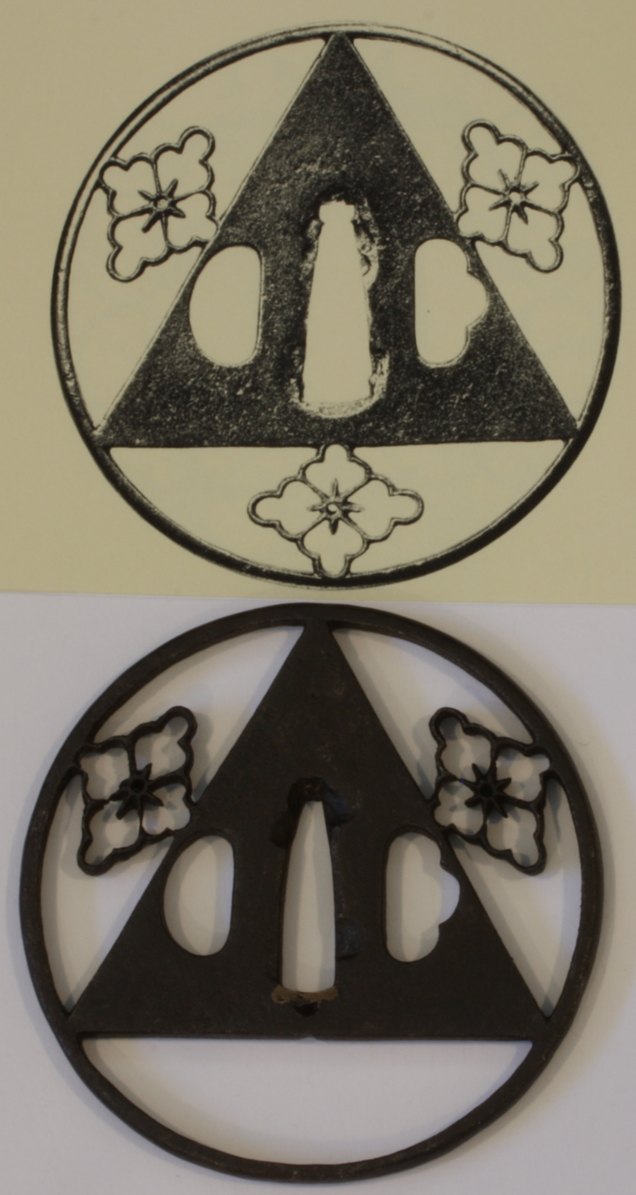
I should really elaborate on my thinking. If Sasano's interpretation of the motif is correct, it seems unlikely that this motif is of interest to anyone except a few people of this particular lineage. Furthermore, this motif doesn't seem to be one of those that are popular and repeated to death through times, e.g., mitsutomoe. So, it seems unlikely to me that it is a later copy of Sasano's tsuba. If I were to order a tsuba, or a few tsuba, for my personal use, I would most likely order it from the same tsuba shop, rather than sprinkling my business around, hence my conjecture that Sasano's tsuba and mine came from the same shop during the same time period. I know conjectures are just conjectures, but there is some logic behind it. As John said, there are many different levels of workmanship, even in the same tsuba shop, so differences in the level of workmanship does not bother me. Regards, Hoanh
-
Roman, Your point is well taken. I do see that Sasano's tsuba has a finer rim. Regards, Hoanh
-
Thank you for the great suggestion, John. I didn't know this extent of restoration is even possible. I like the tsuba enough to pursue the idea. Regards, Hoanh
-
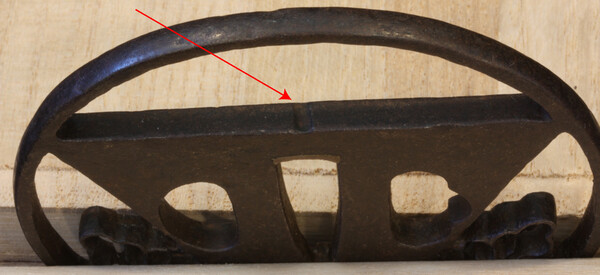
Greetings, I couldn't resist the temptation to purchase a Kyo sukashi tsuba with a very elegant and unique design, and the iron seems to be nicely done. After the purchase, I was digging around to see if I can understand the motif, but there is nothing out there on the web. So, I cracked open my copy of Sasano, and lo and behold! My tsuba is (nearly) identical in size and motif as the tsuba on page 76 of his gold book. In the top picture, I placed my tsuba at the bottom of the page for comparison. Now my tsuba is clearly missing a flower at the bottom, but the design and the size match are unmistakable. In the middle picture, I placed my tsuba directly on top of his tsuba for comparison, and it's a match. In the bottom picture, I took a close up photo of my tsuba where the missing flower would have been, and sure enough, I see a notch, identical to the notches where the other two flowers are. It looks like the missing flower had been missing for a long...... time, as the iron on both the rim and on the bottom side of the triangle have healed and patinated nicely. Given my reading of Sasano's interpretation of the motif and that I have not seen any motif remotely similar to it, is it reasonable to assume that this guard and the one in Sasano's book were made by the same person, or at least in the same shop, during the same period? This is not a rhetorical question, and I have not formed an opinion at the moment. Any discussion/comment/theory is most welcome as always. Even with the missing sukashi, it's quite charming and I like it a lot! Regards, Hoanh


-
Jason, I can't give you enough thumbs up! Hoanh
-
Steven, You are absolutely correct in your assessment. Good work! Also, please tell your friend that if it were a real Japanese sword, he would not want to touch any part of the blade (except for the bare tang) with his fingers or any part of his body. It will induce oxidation & rust almost immediately. Regards, Hoanh
-
Henk-Jan, I buy on ebay once in a blue moon, and http://justsnipe.com/ is sufficient for me. The freebie is good enough. Regards, Hoanh
-
Need help translating first mei - Takai sada Tsugu?
hxv replied to Marc's topic in Military Swords of Japan
Thank you Marc. I have a keen interest in seeing close up shots of your blade. Much obliged! Regards, Hoanh -
Henk-Jan, If you snipe it, you will avoid this kind of dishonesty. Hoanh
-
Looks pretty suspicious to me Hoanh
-
Mei is hard to read. May be "Bishu Ju Sukesada?" Dunno. I'm not sure at all. Hoanh
-
Please don't oil the nakago. Nakago are porous and will absorb the oil. Rust can and will develop over time. This is the same reason we don't oil up iron tsuba. Regards, Hoanh
-
Gray, Gabriel did an excellent job and gave good suggestions. Buy some (relatively inexpensive) books, do some reading, go on the web to dealers' website to look at authentic nihonto in good condition. After a few months, you can tell the Chinese fakes without too much trouble. The downside is that after a while, you would wish you were in a higher tax bracket. Welcome to the board! Regards, Hoanh
-
Looks to be of dubious Chinese origin (my opinion only). Hoanh
-
I suspect faked patina and gimei...
hxv replied to CurtisR's topic in General Nihonto Related Discussion
Curtis, It's not a great deal, no matter what the price was (unless it's free). The location of the nakago ana is a deal breaker! Regards, Hoanh -
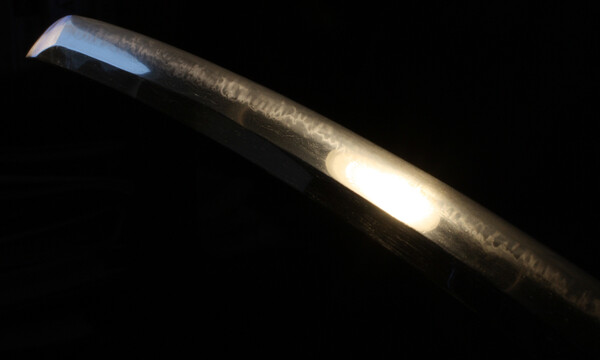
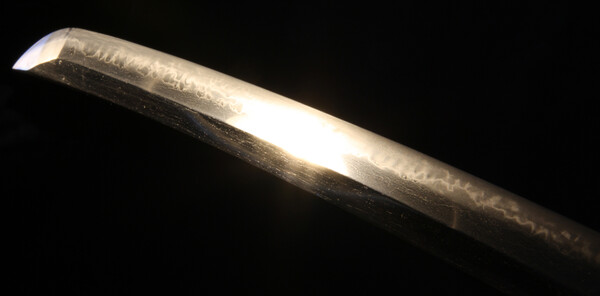
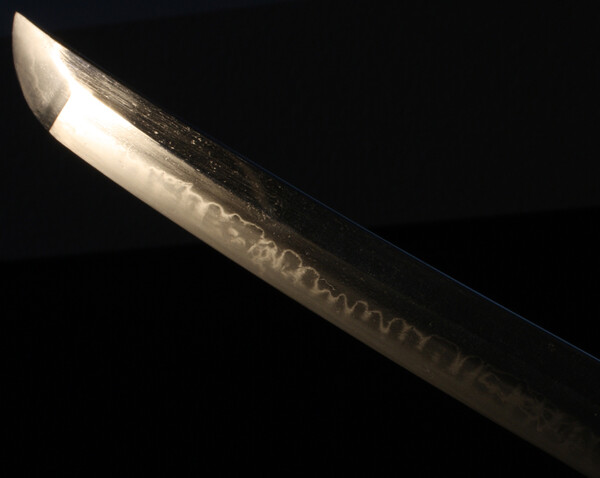
Jean: Thank you. Yes, they are my own pictures. I have been practicing nihonto photography. Chris: I agree. This sword was last polished in Japan in 1999, according to the previous owner. It's too bad he didn't take care of it properly. Regards, Hoanh
-
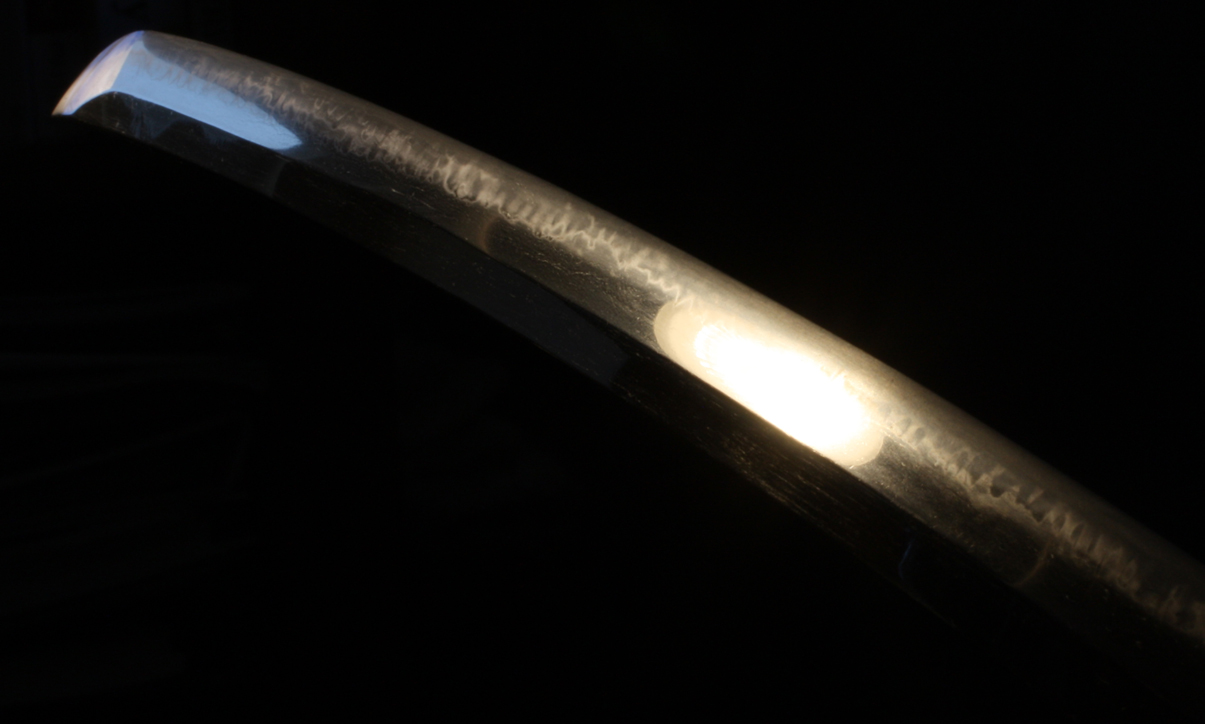
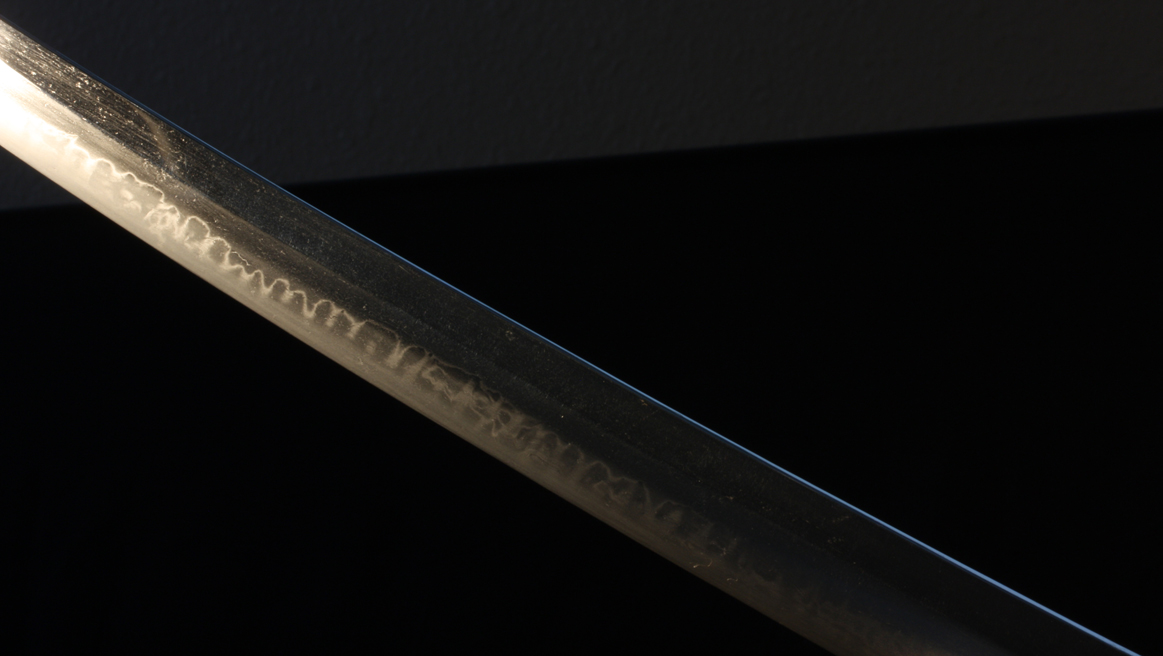
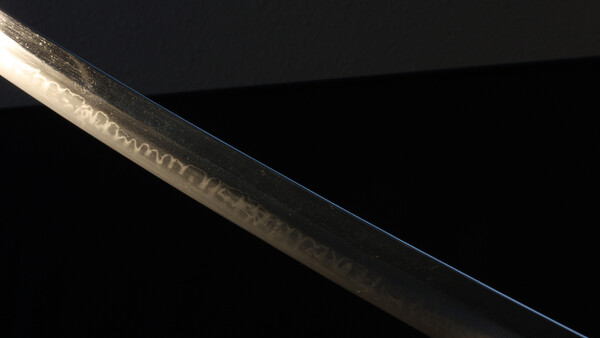
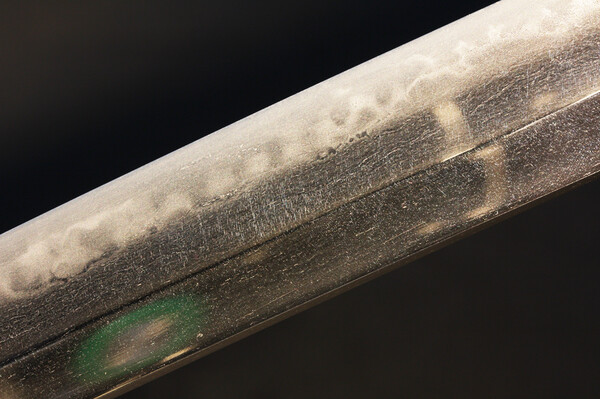
This is one of my favorite pieces - nice and fine itame/masame hada, exuberant gunome choji, chikei in a couple of places, nijuba, sanjuba, lots of hataraki, midare komi boshi. The ha is bright and lights up like a Christmas tree - not hard at all to photograph. Regards, Hoanh
-
Ebay seller with sudden influx of nihonto
hxv replied to AndyMcK's topic in Auctions and Online Sales or Sellers
Antti, It's been discussed here many times. This outfit basically hopes to arbitrage items they do not own for a profit. Regards, Hoanh -
+1 Hoanh
-
Thank you all. I think I will pass on it, too. No upside, too much downside! Anyhow, below is the seller's reply to my inquiry. Regards, Hoanh It's a fair question. I also don't know much about determining provenance and the like for WWII knots, but I firmly believe this is original for one reason: I bought it at a sword shop in Tokyo in 1998-99, before the Chinese fakes became so convincing. In those days, the sliding knot always looked wrong. Now, they're doing them better, and it's hard to tell the difference. At the time, I had seen no Japanese fakes at all, and there were often sword knots still tucked away in drawers in little family shops like the ones I bought my knots from. So, because I bought my knots in Japan at a time when the Chinese weren't faking them well, I am sure this one is real. I just compared photos with the two fakes currently active on eBay, and noticed two things: 1. One of them seems to be using bright yellow nylon for the tassels. Obviously wrong color. 2. On the other one (the most expensive), look at the sliding knot (still not quite right, but almost there) and the little gold loops immediately above the tassel strands, made from the same material as the strands. The "loops" are just not as tight as mine and the two genuine ones that are listed under the sold items. The workmanship is a bit below the level of the genuine ones. Perhaps not conclusive (I don't know what is conclusive with these), but worth a look.