Henry Wilson
-
Posts
1,813 -
Joined
-
Last visited
-
Days Won
8
Content Type
Profiles
Forums
Events
Store
Downloads
Gallery
Everything posted by Henry Wilson
-
Fukushima / Aizu tsuba, all opinions welcome.
Henry Wilson replied to kusunokimasahige's topic in Tosogu
The school / maker is katchushi in my opinion. This is based on the characteristics seen on the plate. It was probably made as a Tensho revival peice. The artist would be impossible to name but at a guess a student of a metal worker living near a large city. -
Fukushima / Aizu tsuba, all opinions welcome.
Henry Wilson replied to kusunokimasahige's topic in Tosogu
It looks late Edo Katchushi to me. -
Thank you all for such fascinating write ups. I find myself with a lot to ponder on. I think I will revisit that Hoover book again (it is free if you have a Kindle ). Best regards
-
Thank you gentlemen for your thoughts. I completely agree with you on the points that you have made. What you are saying is what has made Zen so appealing in my opinion. However it seems to me that you are referring to a Zen attitude that you have as opposed to a Zen quality that an object possesses. The way I understand it, your Zen thoughts are being "stimulated" by an object which indicates that the Zen quality is in you. Put another way, how we see something does not necessarily mean that something is, and it does not necessarily give something a Zen quality. If I have the right attitude I could say that this computer is Zen, but that does not necessarily make it so. I wise man once told me, to understand Kaneie, Nobuie, Yamakichibei and all the great people in the tosogu world, you need to have an understanding of Zen. This lead me to discover this book which I feel explains very well what makes something Zen (if words are able to define it) . http://www.amazon.co.uk/Zen-Culture-Tho ... 0394410726 Also, below is a good essay which some of you might find interesting: http://www.friesian.com/divebomb.htm Finally, to me this tsuba has Zen quality. I chose it as an example because the design is not abstract and is clearly of a tea whisk used in tea ceremony, just as the lovely menuki are of blossoms and a branch. The suggestivness, the roughness, the detail and the seemingly rustic look to me epitomizes which we sense as Zen quality. I can't find the colour version, but I think this black and white will do.

-
Respectfully, I would beg to differ. This page is a good read: http://artsites.ucsc.edu/faculty/lieberman/zen.html Here are some quotes from it. I feel that the menuki do not exhibit what is quoted above. Basically there is very little suggestion. True Zen art draws you deeper into the object and each time you look at it, you experience something different. I personally feel these menuki do not do that. They are very nice by the way.
-
And a big thanks to me for going to the trouble of typing out the signature on the tsuba!
-
It looks iron to me but the greenish colour around the rim of the seashell type impression looks copper-ish....
-
It might be this. 記内 越前住
-
These figures are very interesting. Thank you Kunitaro for listing them. I wonder what differentiates a Juyo Kotosho from a Hozon/Tokubetsuhozon Kotosho. The criteria must be age (within the Kotosho net), quality, condition, provenance. Any thoughts or comments would be greatly appreciated.
-
Hi Kunitaro Thank you for the very interesting and informative reply. I wonder if a patina was somehow in bad condition would that prevent a tsuba being placed in the Nanbokuchou period? Also, the numbers you list, what do they refer to? Many thanks again.
-
Very nice and right-up my alley. Can anyone comment on why it has been attributed to the Nanbokucho period? http://www.nihonto.com/11.6.12.html
-
Read all about it. http://www.japantimes.co.jp/text/fl20121023jk.html
-
To me it looks late Edo and the metal reminds me of Tosho style. The kanji seems to read 八幡大菩薩 Hachiman Daibosatsu, and all in all the tsuba gives me the impression of a revival peice of the good old Muromachi period. The Japanese site does not give any information above what the English site says. Why don't you email them and find out what era they think?
-
Good grief! Lost for words..... The only comment that I can make is 16th century is hardly ancient, to me anyway........
-
What a wonderful thread. Is there a picture of the sword in question?
-
Give the translation ago yourself. Also, it is not a strictly speaking a kozuka. Not many koto kogatana exist. Finally, I can see Fujiwara straight off which is found a lot in Shinto swords.
-
I think the "to pine" connection is a bit of a stretch. :lol: To yearn / pine is 慕う shitau. Incidently 末 matsu call also mean "end of" seen in 幕末 bakumatsu which is the closing days of the Tokugawa era.
-
I think symbolisim of an axe is quite complex. Have a look at this: http://en.wikipedia.org/wiki/Ono_%28weapon%29
-
I agree with Mr Doffin.
-
Hi David Below are some thoughts: The shape of the hitsuana makes me think Shoami. The metal looks Tosho. The overall shape looks Momoyama. I would say that it is Momoyama Shoami.
-
Could you post some pics of the koshirae? I am curious to see it.
-
Responding to John L's post and not wanting to hi-jack the thread: On the other hand, I have always wondered why people are quick to contradict someones opinion and say that a symbol is not Christian. To my eye a lot of the time, these so called symbols could be Christian... in as much as they could not be Christian.
-
Congratulations David. For what it is worth, I too think it is a nice tsuba.
-
Now I see. I could not imagine the shape, so thanks Thierry. Also thanks Kunitaro as well for putting things into perspective. I posted some stuff on hitsu ana while ago: viewtopic.php?f=2&t=13495&st=0&sk=t&sd=a It is way down at the bottom and is gleans from Sasano "Tosogu no Kigen". It might be of interest and could be of relevance. Maybe!
-
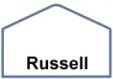
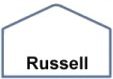
I have done some digging. From SOKEN KODOGU YOGO to MEISHO no KAISETSU by Rear Admiral Layton: "Those (hitsu ana) of triangular or elongated-oblong (tapering to the bottom) are attributed to the mirror craftsmen, kagamishi 鏡師 of the pre-Muromachi 室町period, the yamagane 山銅 or the seido tsuba 青銅鍔" "Old tsuba (hitsu ana) had oblong triangular, fan shaped, etc." The book also refers to GOKAKU 五角 shaped hitsu ana which looks like this (a triangle on a rectangle): (please ignore the Russel ) I hope this helps.