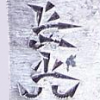
Drago Posted October 24, 2011 Report Posted October 24, 2011 Hi, this is less of a direct translation question, but rather a calendar translation question... I sill hope you will be able to help me. The sword has the following date inscribed: 永正二年二月日 Now, that translates to: "Eishō, year 2, a day in the second month" Eishō was from 1504 to 1521, so year 2 is roughly 1505 So far so good, BUT: That doesn't mean that the second month is Feburary! This date was incribed before the Japanese even had their first contact with Europeans and their calendar system. In other words, the Japanese didn't start their years January 1st and their months propably didn't even have the same lenght... So here's the question: When was that "second month"? Is there any way to determine that? (determine means for example: "second month is between March and April" or "second month was from June 7th to July 12th"...) Although I gave you a specific inscription, this can acutally be considered a general question since this, I think, concerns the translation of all date inscriptions. I found many many tables translating the eras to years, but I didn't find a single table saying on what day (of our calendar) they started or ended. The related question: What is that "day" exactly? Does it refer to the day the sword was finished, the day the blade was finished or what? And how long did it take to forge a sword? Quote
cabowen Posted October 24, 2011 Report Posted October 24, 2011 2nd month is indeed equivalent to our February. The sword is usually signed today when it is finished but before polish. Sometimes after polish though. February and August were considered "good" months to make a sword so many are signed Feb or Aug even though they were not actually made then.... Quote
John A Stuart Posted October 24, 2011 Report Posted October 24, 2011 Hi, It isn't that simple. The first day of 1505 using the Chinese lunar calendar, which was used in Japan, was February 14, a Tuesday. This means that the second month was started mid March and lasted until mid April. Intercalary months where there can be 13 months in a year and rarely 14 make it somewhat more complex. However, if one is superstitious lucky months would be auspicious to inscribe regardless of the real month of forging. John Quote
Markus Posted October 24, 2011 Report Posted October 24, 2011 Tobias, please try also the nengo calculator: http://web.me.com/meyer.eva/www.yukikur ... o_calc.htm It gives Thursday the 6th of March 1505 for the first day of the second month Eisho two for example. BTW: The Eisho era started on the 30th day of the second month Bungi 4, which is equivalent to March 16th 1504. Quote
Drago Posted October 24, 2011 Author Report Posted October 24, 2011 Ah, thank you very much. "nengo calculator" huh? I never considered searching for something like that... Quote
Jacques Posted October 24, 2011 Report Posted October 24, 2011 Hi, mention ni 二 or hachi 八 are engraved with an esoteric purpose which is not related with the month in which the sword was made. Quote

Recommended Posts
Join the conversation
You can post now and register later. If you have an account, sign in now to post with your account.