oli
-
Posts
358 -
Joined
-
Last visited
-
Days Won
1
Content Type
Profiles
Forums
Events
Store
Downloads
Gallery
Everything posted by oli
-
December 1798
-
There is a chapter about the smih in the Book Shinshinto-shi from Markus Sesko. I would go for restoration and papers, you have some options in USA. Another example https://shop.nihontou.jp/products/detail/29508
-
indeed interesting smith, from Book Markus Sesko: SUKETAKA (助隆), Kansei (寛政, 1789-1801), Settsu – “Ozaki Gengo´emon Suketaka” (尾崎源五右衛門助隆), “Ozaki Gengo´emon no Jō Suketaka” (尾崎源五右衛門尉助隆), “Ozaki Gengo´emon Fujiwara Suketaka” (尾崎源五右衛門藤原助隆), “Ozaki Nagato no Kami Fujiwara Ason Suketaka” (尾崎長門守藤原朝臣助隆), real name Ozaki Gengo´emon (尾崎源五右衛門), he was born in the third year of Hōreki (宝暦, 1753) in Harima province but moved later to Ōsaka to study under Kuroda Takanobu (黒田鷹諶), Takanobu in turn was the grandson of the 6th gen. Bungo Kai-Mihara Masaie (貝三原正家), Suketaka received the honorary title Nagato no Kami (長門守) in the twelfth month of Kansei ten (寛政, 1798), he died in the second year of Bunka (文化, 1805) at the age of 53, as Suishinshi Masahide he too tried to copy the tōran-midare of Sukehiro (助広), that means we can see how early shinshintō smiths were influenced by Kamada Natae´s (鎌田魚妙) praise of Sukehiro´s tōran in his standard work Shintō Bengi (新刀弁疑), his successor was his son Takashige (隆繁), Suketaka´s blades have a shallow sori, a thick kasane, much hira- – 1017 –niku, and a relative large chū-kissaki, they show a dense and hardly discernible ko-itame which tends to muji, we know tōran- midare, gunome-midare, and suguha hamon whereas the tōran-midare consists of rough and irregular nie, the tama don´t have an uniform size, he applied a long sugu-yakidashi and the bōshi ist ko-maru, some blades show horimono in the form of dragons, plum blossoms, or a branch of a plum tree, the tip of the tang is an iriyamagata-jiri, the yasurime are ō-sujikai with keshō, he signed also with a characteristical cursive script which tends almost to grass script whereas the date signatures of such mei are entirely executed in grass script, jō-saku
-
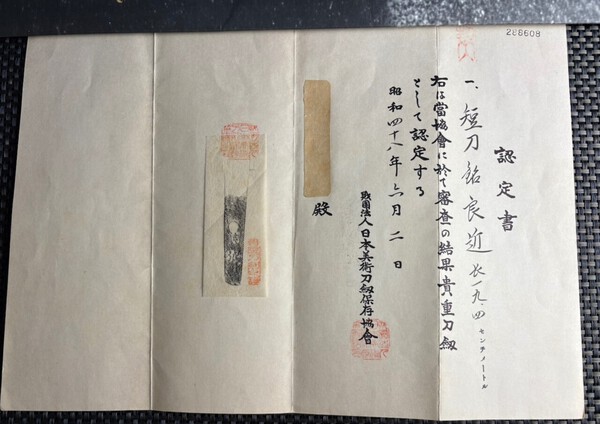
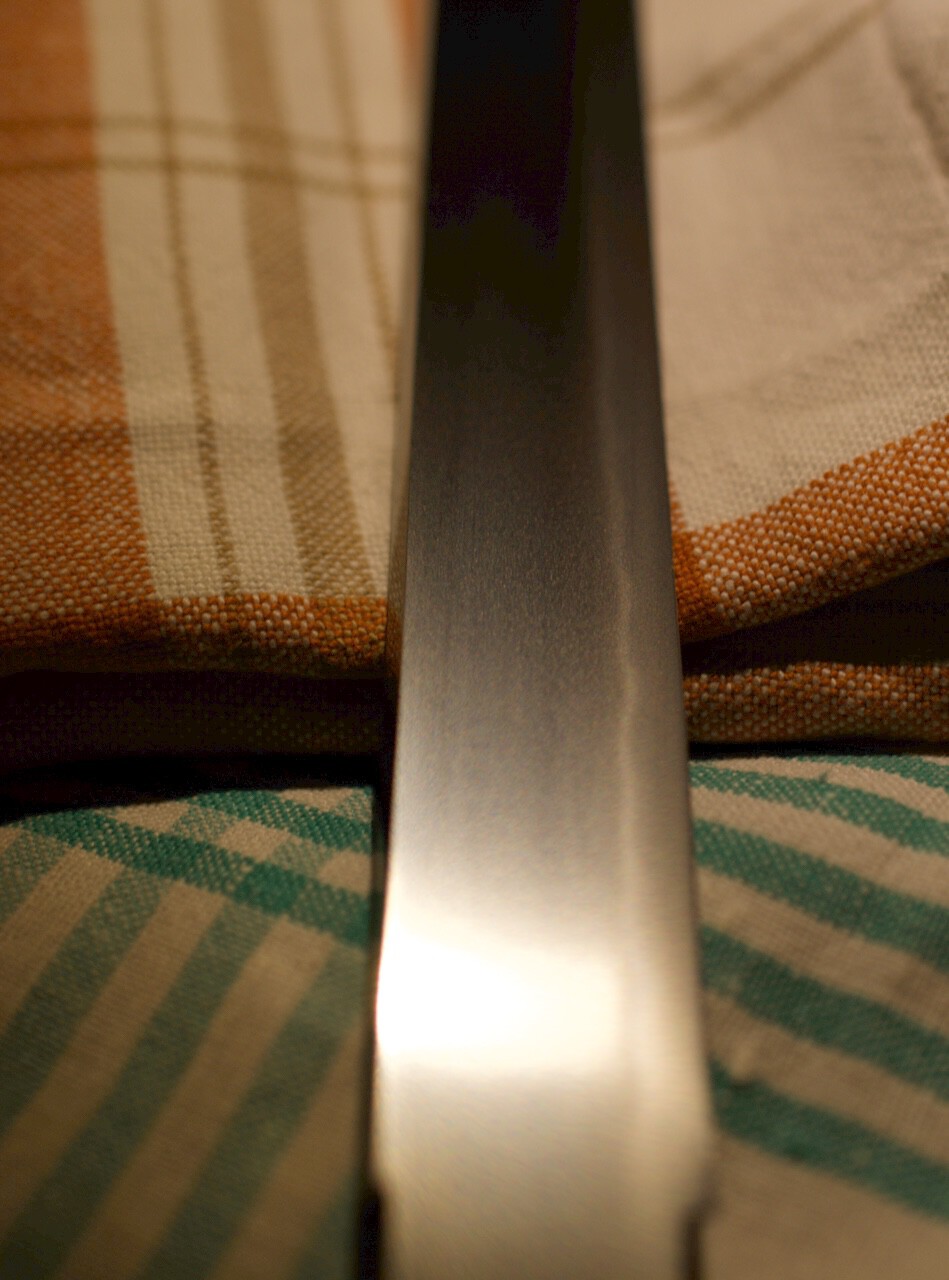
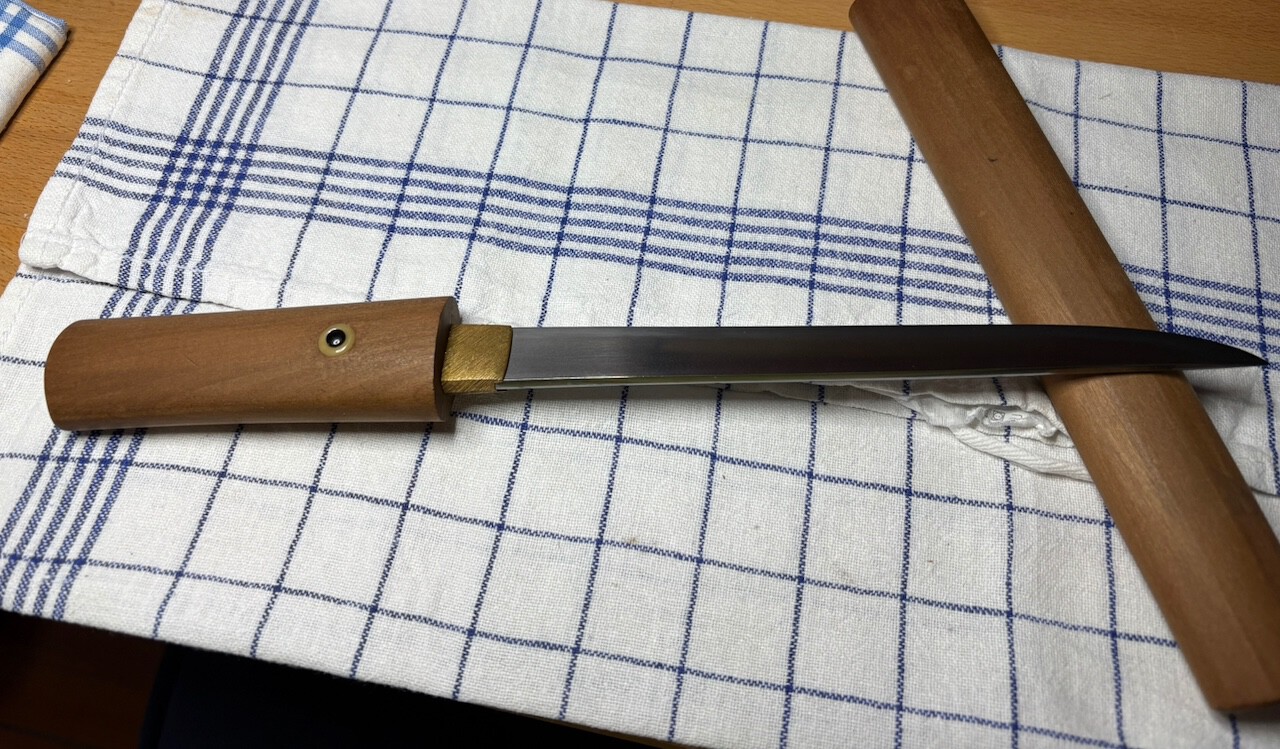
bump 1200 Euro (including shipping inside EU)
-

Source of highest grade uchiko in Europe?
oli replied to Lewis B's topic in General Nihonto Related Discussion
Not sure, but i don't think this is a good idea -
this is a big Kissaki: https://www.touken-matsumoto.jp/en/product/shousai/KA-0805
-
Source of highest grade uchiko in Europe?
oli replied to Lewis B's topic in General Nihonto Related Discussion
I bought this one https://togishi.com/store/p39/Large__Polishers_Uchiko_Ball_.html , you must look from time to time in the shop. -
still available
-
Last year, there were also dealers with affordable blades. And yes no 20% VAT, as i know. I saw prices from 3000 Euro to 30.000 Euro for a Katana.
-
hi, would recommend to visit the Japan Art Fair (https://www.japanartfair.com/) , there you have the opportunity to hold the swords in your hand. best regards Oli
-
If you looking for o-kissaki, you can find them easily in Shinshinto period
-
Koto: https://eirakudo.shop/718723 https://www.touken-matsumoto.jp/en/product/shousai/KA-0787 (sold but Kanenobu, would fits in you pricelimit) Shinto: https://www.aoijapan.com/katana-tango-no-kami-kanemichi-nbthk-tokubetsu-hozon-token/ Shinshinto: https://www.aoijapan.com/katana-sumi-hidekuni-tan-korenbthk-tokubetsu-hozon-token/
-
Not sure what you looking for, maybe you should also read some books. I recommend koto-shi, shinto-shi, shinshinto-shi (last two also written in german) . For 1,6m yen you can get some very nice swords, It seems you like Shoshu/Mino-den, you can find a lot of in shinto.
-
Hi, before you buy online, i would advise to visit the Japan Art Fair (https://www.japanartfair.com) . There are a lot of Dealers from around the world and you can have a look on the blades in real. Regards Oli
-
Thanks for your explanation, i was confused because the Showa Masayoshi would be the 8th Generation. The 3rd Generation worked until Mejin, let say until 1870 for easier math and the Showa Masayoshi worked till end of war 1945. So this would be 5 Generation in 75 years. So it would be about every 15 years a new Smith Generation. Thanks Oli
-
weekend bump 1300 Euro (including shipping inside EU)
-
I think they are connected , but the Showa Masayoshi moved in another part of the country. Not uncommon, after the end of the shogunate.
-
Hi Bruce, not sure what you looking for. Maybe he changed the Kanji in Showa times, i am not a Kanji expert. Maybe others could help. I think maybe there is a failure in the book, 7th/8th generation i think a bit too much, the 3rd generation worked until Meiji time period. Regards Oli
-
Hosokawa is the school name, from Swordsmith from Japan (Markus Sesko): MASAMORI (正守), Bunkyū (文久, 1861-1864), Musashi – “Sakuyō-shi Minamoto Masamori” (作陽士源正守), “Sakuyō bakka-shi Hosokawa Masamori kore o tsukuru” (作陽幕下士細川正守造之, “made by the bakufu retainer Hosokawa Masamori of Mimasaka province”), “Sakushū Tsuyama-hanshi Masamori” (作州津山藩士正守, “Masamori, retainer of the Tsuyama fief of Mimasaka province”), real name Hosokawa Sennosuke (細川仙之助), son of the 2nd gen. Hosokawa Masayoshi (細川正義), he worked from Edo for the Tsuyama fief (津山藩) of Mimasaka province, he is counted as 3rd gen. Masayoshi, we know blades from the Kōka (弘化, 1844-1848) to the Meiji era (明治, 1868-1912), he used the same koku´in seal as Masayoshi, chūjō-saku
-
Another example of his signature: https://www.nihontocraft.com/Takahashi_Naganobu.htm Also a very nice blade.
-
Maybe 2 smiths? NAGANOBU (永信), Keiō (慶応, 1865-1868), Izumo – “Naganobu” (永信), real name Takahashi Rihei (高橋利平), it is suspicious that is listed with the homonymic smith and first nam as Takahashi Naganobu who wrote his smith name with the characters (長信) and his first name Rihei with the characters (理兵衛), so maybe this is a double-entry NAGANOBU (長信), Tenpō (天保, 1830-1844), Izumo – “Unshū-jū Fuyuhiro (雲州住冬広), “Unshū Takahashi Naganobu” (雲州高橋長信), “Unshū-han Fujiwara Naganobu” (雲州藩藤原長信), “Un´yō-shi Takahashi Rōshi Fujiwara Naganobu” (雲州藩藤原長信聾司藤原長信), “Tōto ni oite Unshū-jū Takahashi Rihei Fuyuhiro Naganobu” (於東都雲州住高橋理兵衛冬広長信), “Edo Kōjimachi ni oite Unshū-han Takahashi Naganobu kore o saku” (於江都麹街雲州藩高橋長信作之, “made by Takahashi Nahanobu from the Unshū fief [= Matsue fief] in Edo´s Kōjimachi”), “Chōshinsai Fuyuhiro” (長信斎冬広), real name Takahashi Rihei (高橋理兵衛). He had studied under the 4th generation of the Izumo-based Fuyuhiro lineage (冬広) and was eventually adopted into the family whereupon he succeeded as 5th generation Izumo Fuyuhiro, the 17th generation after Wakasa Fuyuhiro (若狭冬広) who was the founder of the Fuyuhiro line. He used the gō Rōshi (聾司) and Chōshinsai (長信斎). By the way, the former gō means literally “the deaf officer. ” In the first year of Tenpō (天保, 1830) he went to Edo to study under Tsunatoshi and made his smith name Naganobu out of the first two characters of his pseudonym Chōshinsai (Naganobu is the Japanese reading of the characters Chōshin). At that time he lived in the Sannō district (山王) of Edo. Later he was hired by the Matsue fief (松江藩) of Izumo province which he signed using the colloquial name “Unshū fief” (雲州藩). With this employment he moved to the Edo residence of the fief which was located in Hirakawa (平河) in the Kōjimachi district – 743 –(麹町). However, in Genji one (元治, 1864) the fief ordered him back to Izumo because of the bakufu campaign against the Chōshū fief where he died on the 20th day of the fifth month of Meiji two (明治, 1869) at the age of 64. His workmanship is similar to Tsunatoshi’s. His blades show a magnificent sugata but he also made smaller blades with western-style refined steels. Most of his works are in the Bizen tradition. The jigane looks soft, the jihada is muji but tends sometimes to masame, and the hamon is a somewhat slanting ko-chōji-midare with hard and dark spots along the yakigashira. But he also applied a suguha or tōran-midare. Because of the gyaku-sujikai yasurime it is assumed that Takahashi Nakanobu was left-handed. Sometimes he signed in kaisho block script (楷書) on the omote and in gyōsho cursive script (行書) on the ura side, but in later years he also signed both sides in cursive or rather grass script. There is the urban legend going round that one of his blades cut through the barrel of a machine gun during World War II. jō-saku nice blades btw!
-
weekend bump 1400 Euro (including shipping inside EU)
-
and i recognise Leen!
-
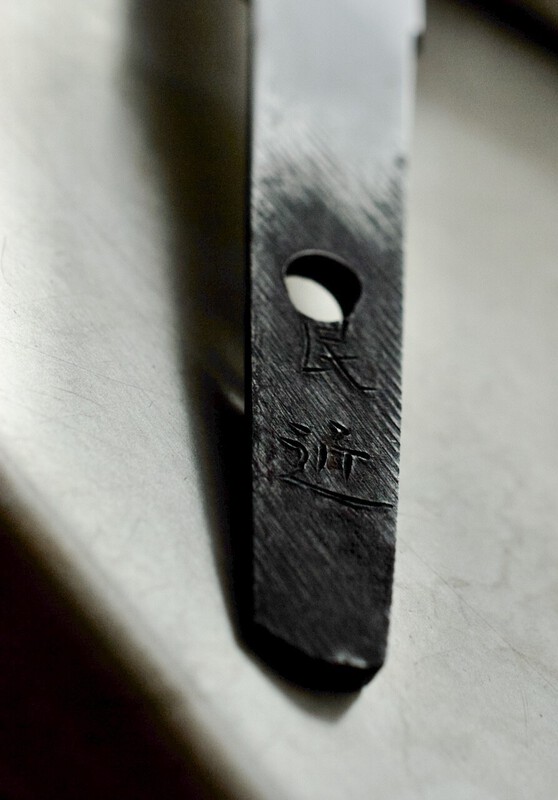
more
-
more pictures