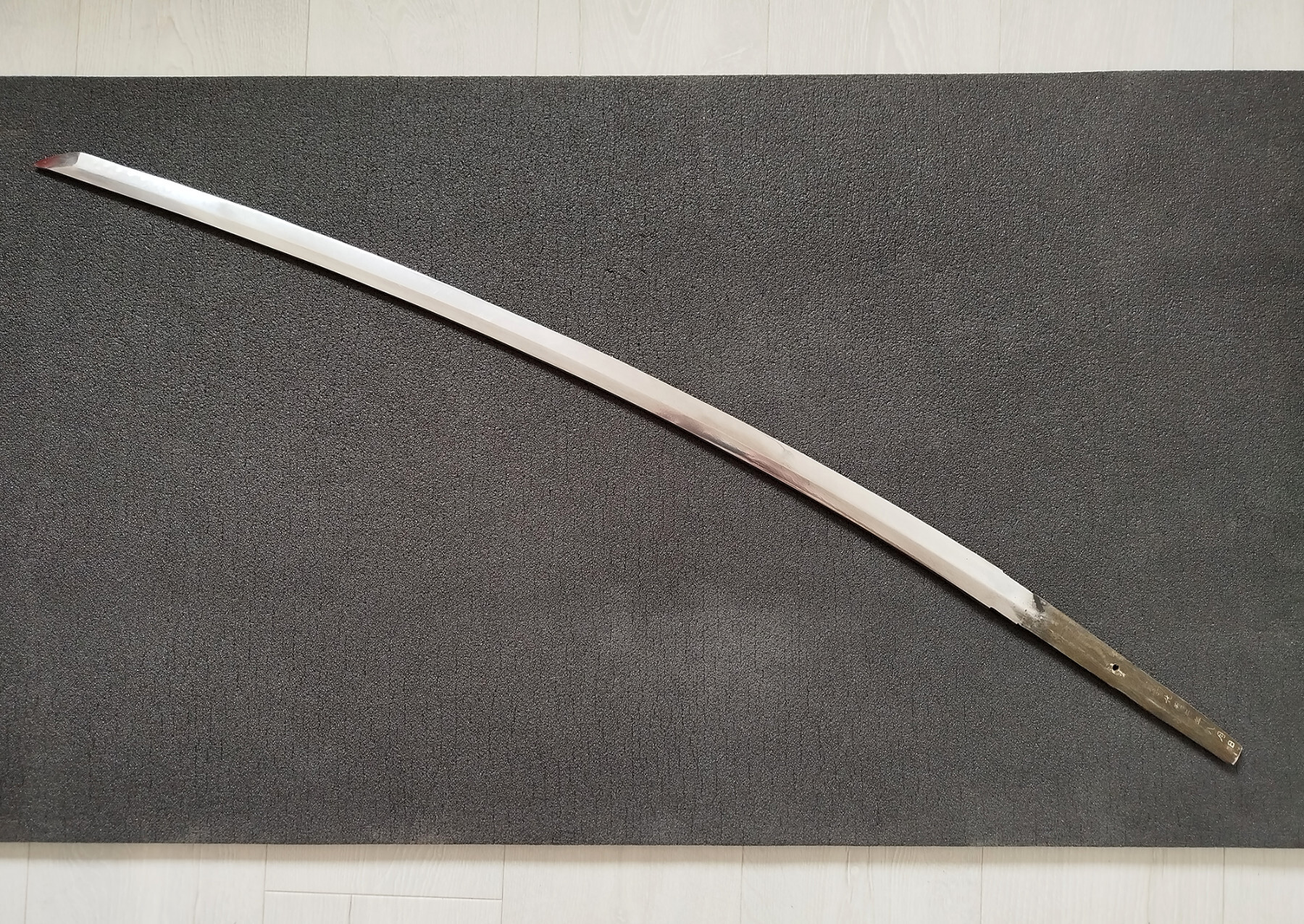
Nazar
-
Posts
200 -
Joined
-
Last visited
-
Days Won
2
Content Type
Profiles
Forums
Events
Store
Downloads
Gallery
Everything posted by Nazar
-
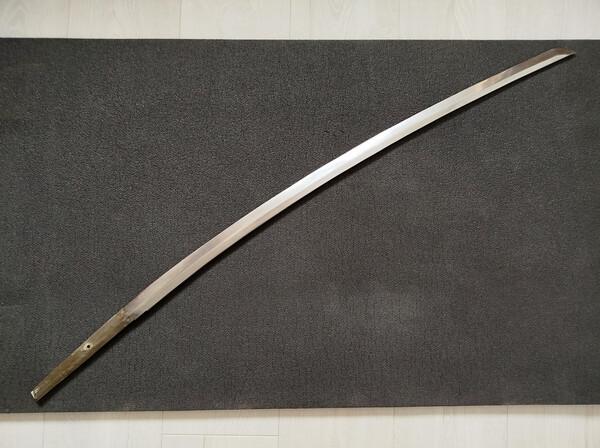
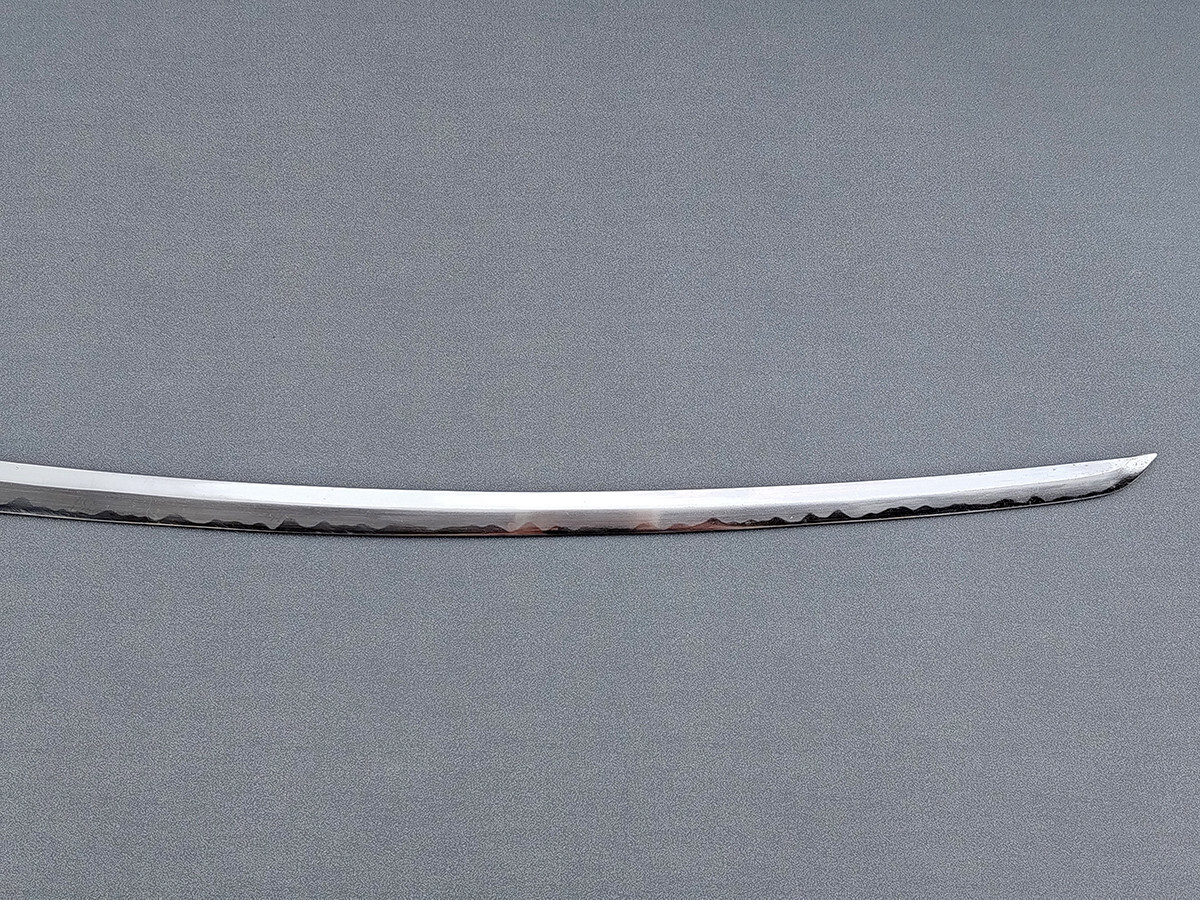
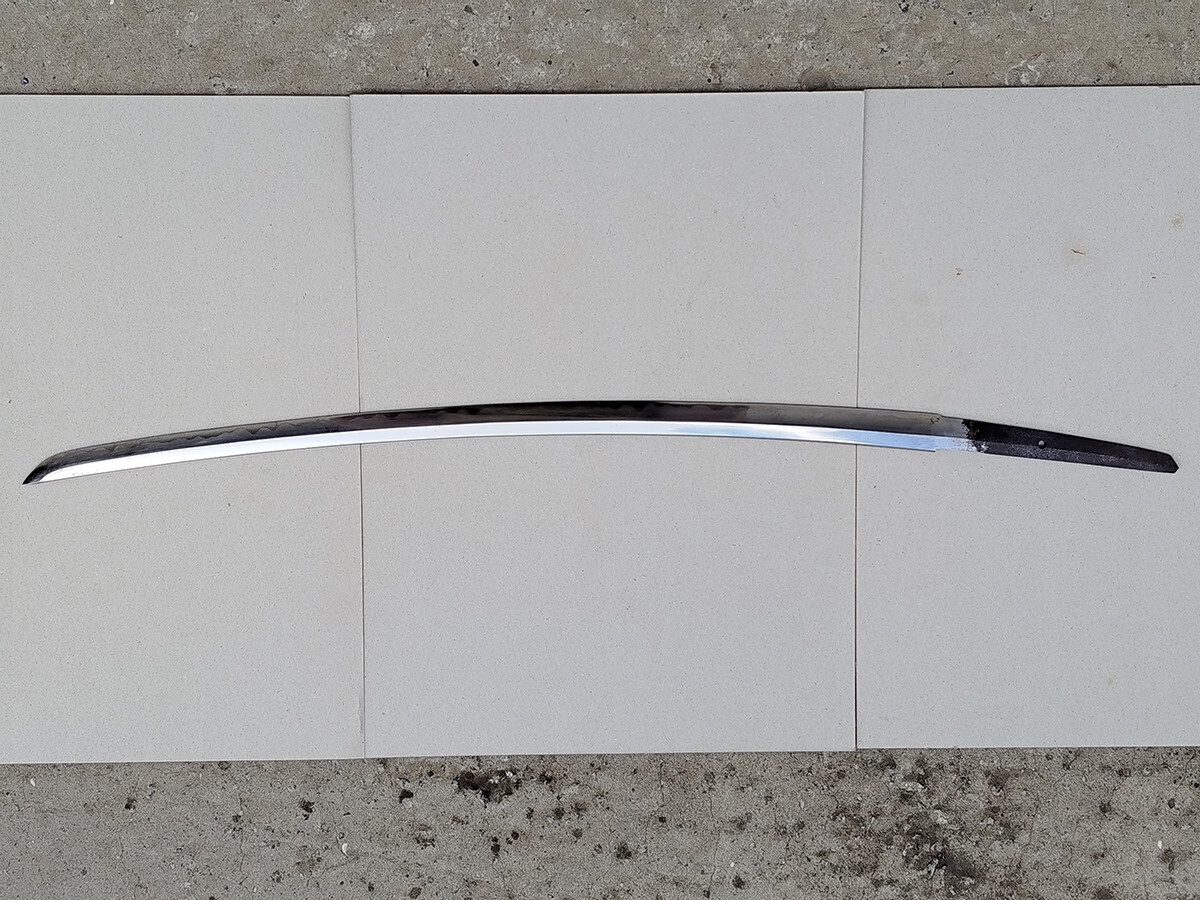
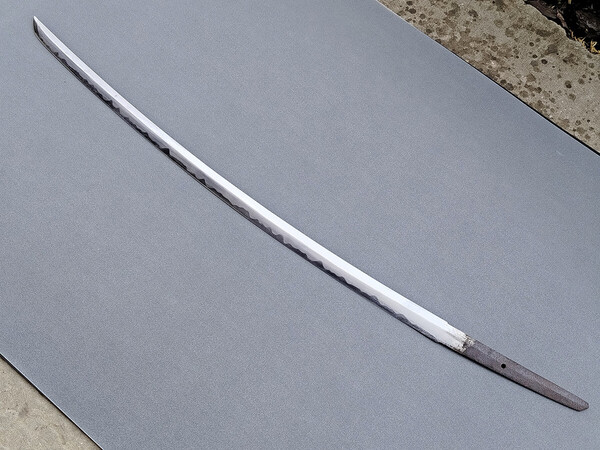
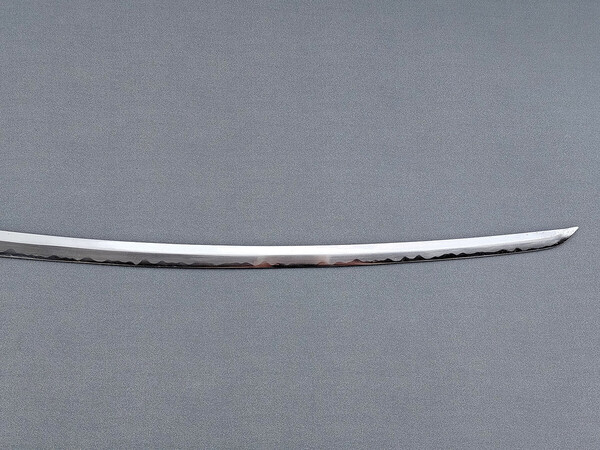
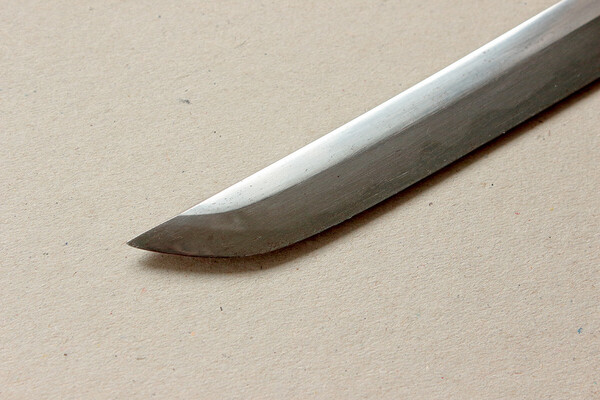
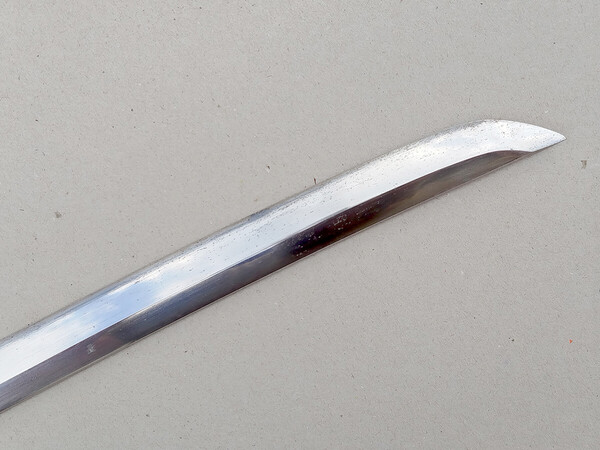
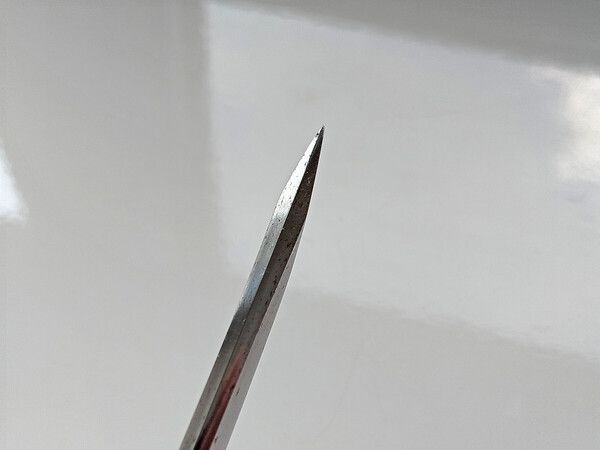
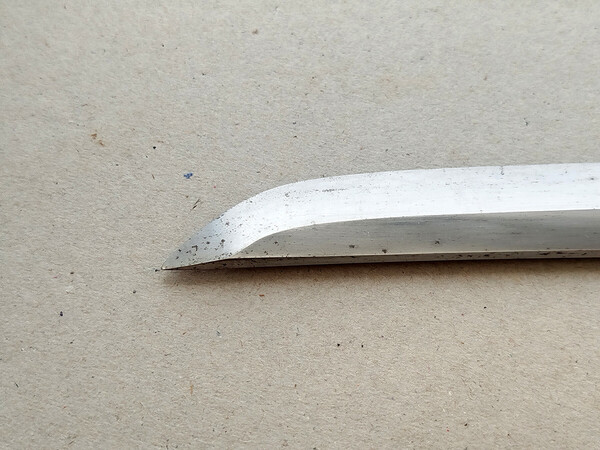
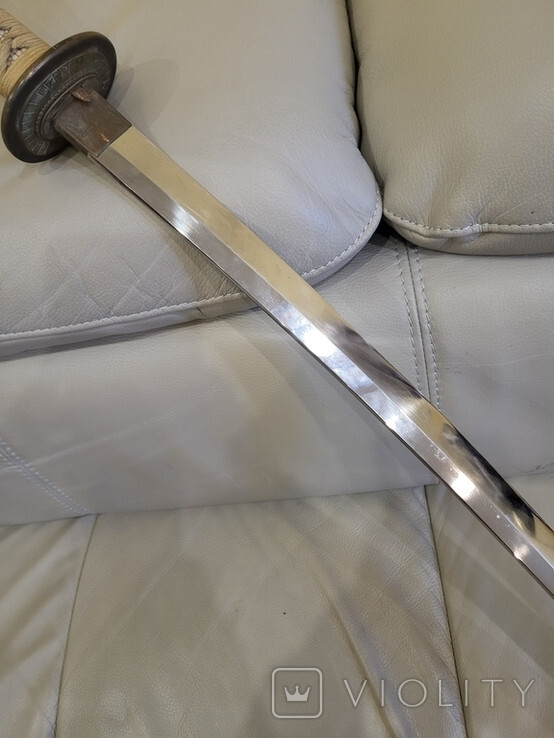
The hamon of this blade looks beautiful (at least for me). Its waves caught my eye from the starter. But I noticed that the hamon line is too close to the edge of the blade. At the extremes it is as close as 1.5mm according to my caliper. Now, as I understand, such a thing is typical for older blades that have seen a lot of polishing. That's when I started wondering if it could be an older blade in kai-gunto mounts or if it is just another war blade that was polished too frequently. Here is how the hamon looks on both sides of nagasa . It was simpler to catch it on photos like this.


-

-
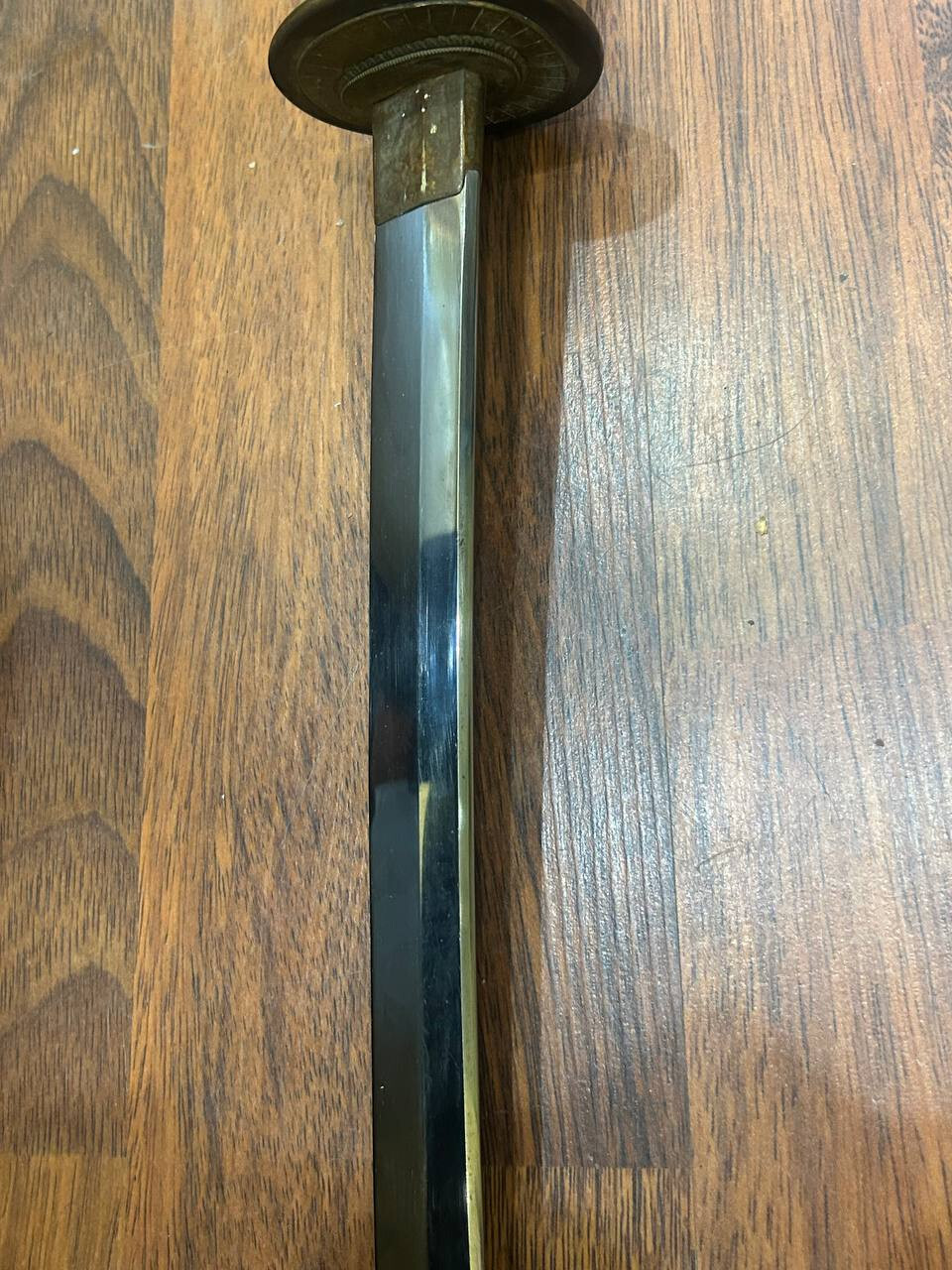
The Nagasa length is 67cm which is pretty standard for a gunto. Photo shooting the blade that was buffed is quite an issue. I did my best though.
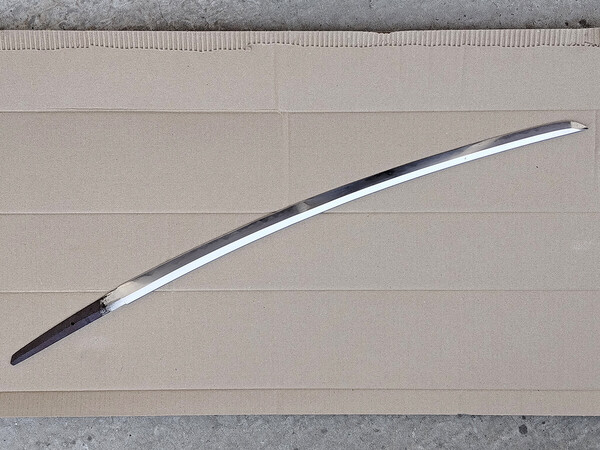
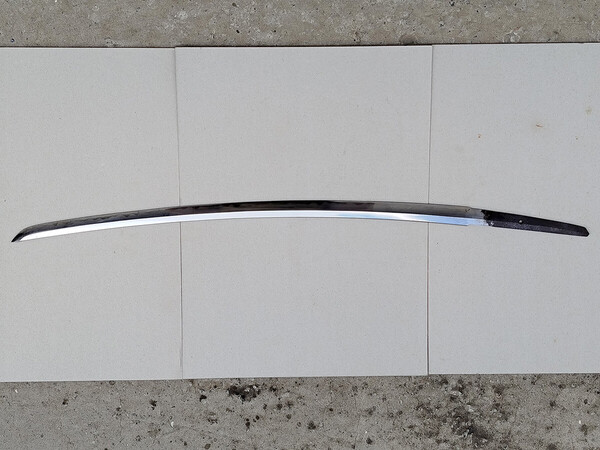

-
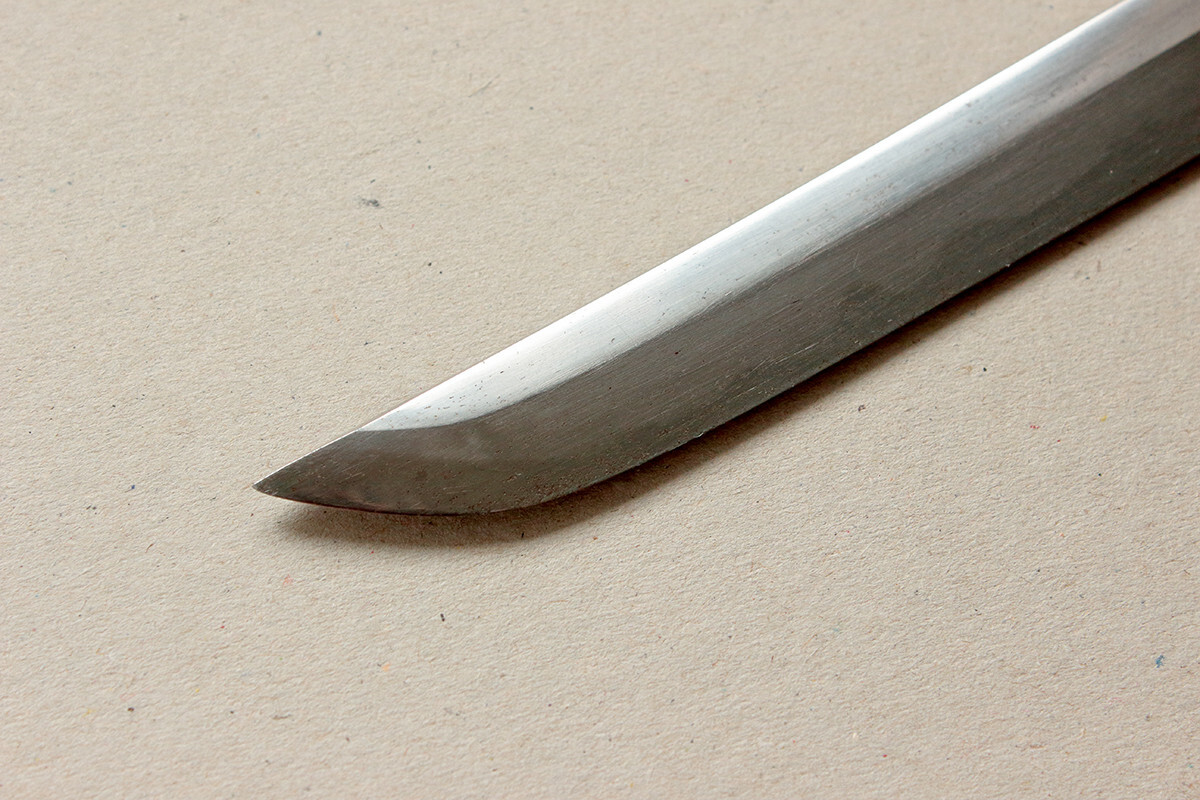
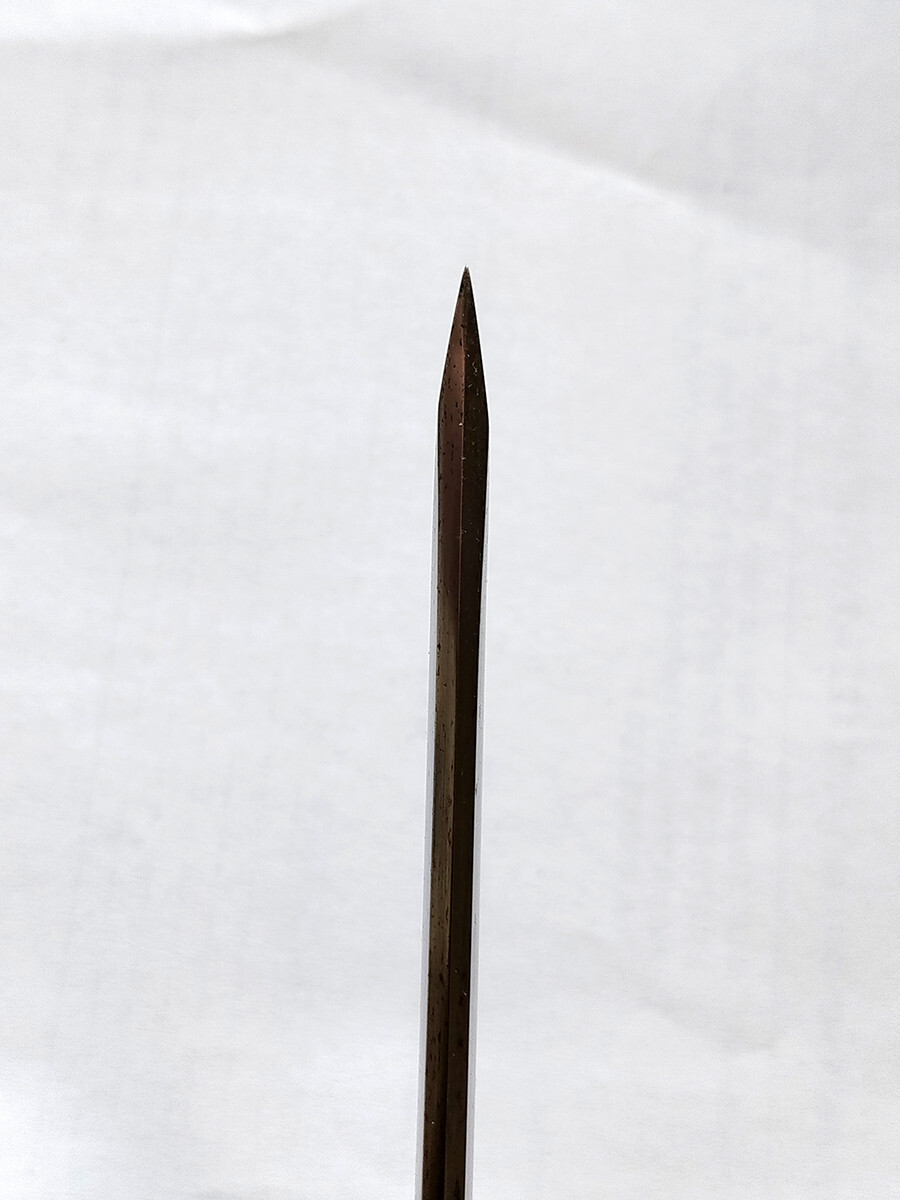
Sorry for overloading you with photos. In this particular photo as I believe, the file marks could be seen.

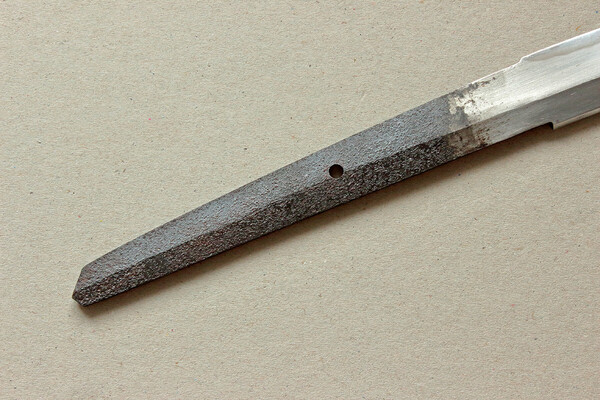
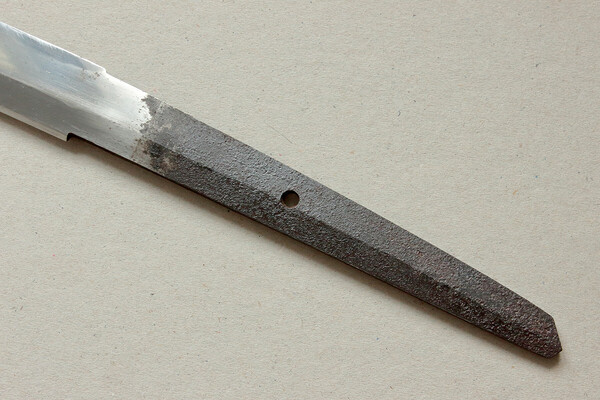
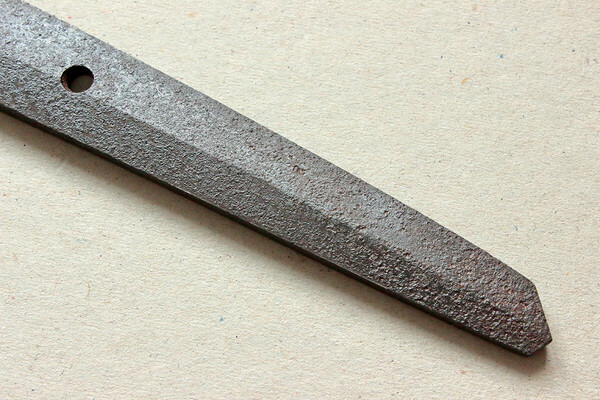

-
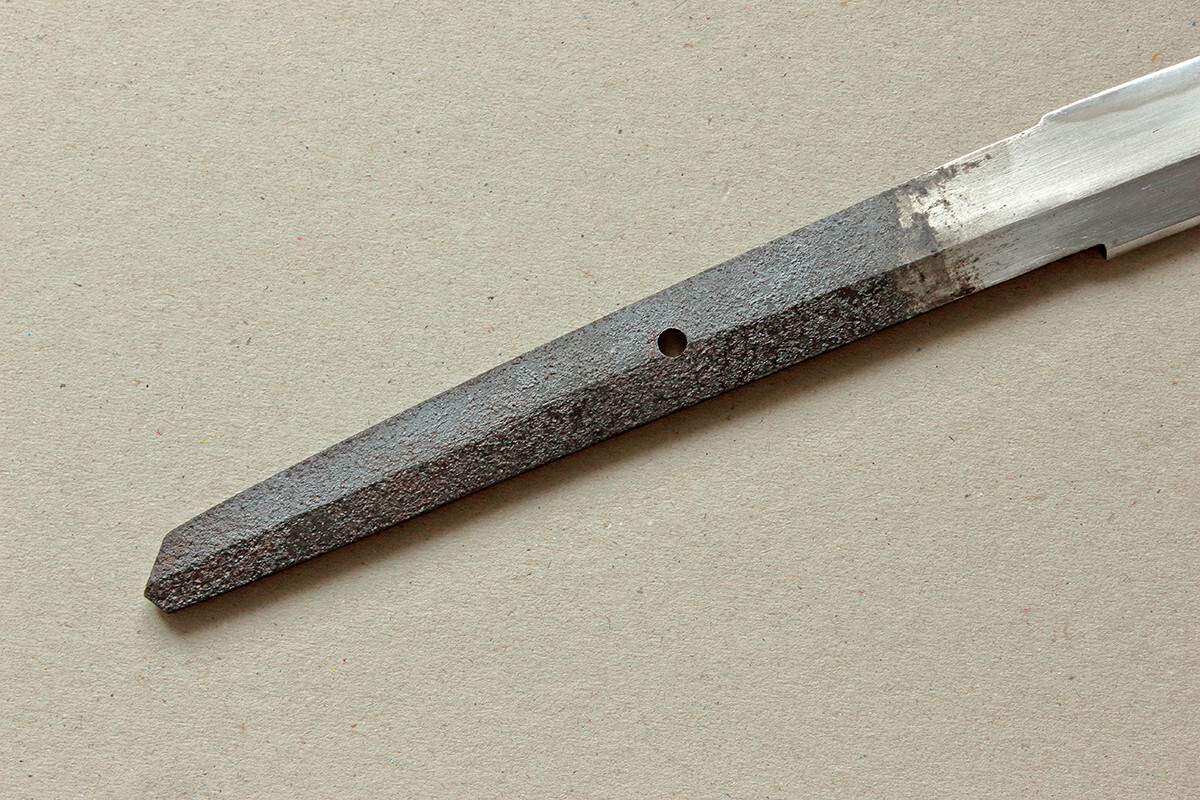
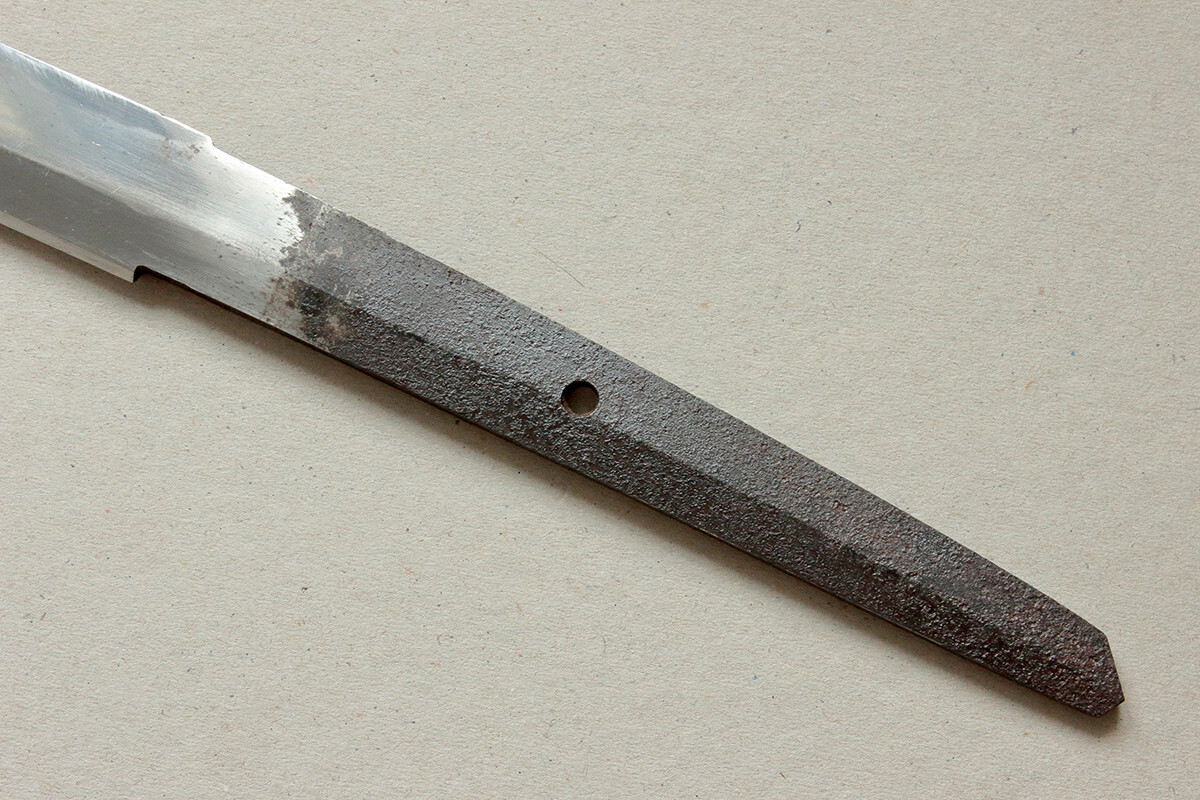
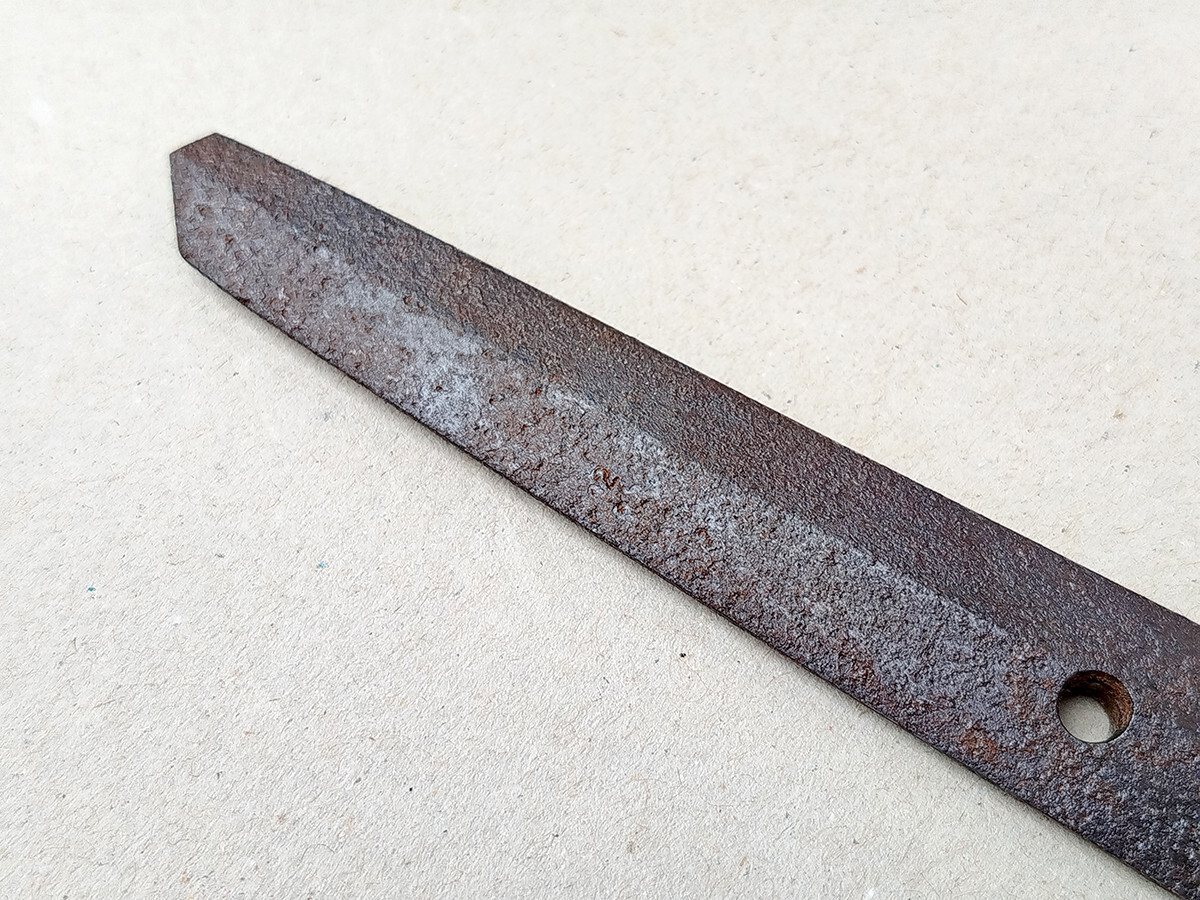
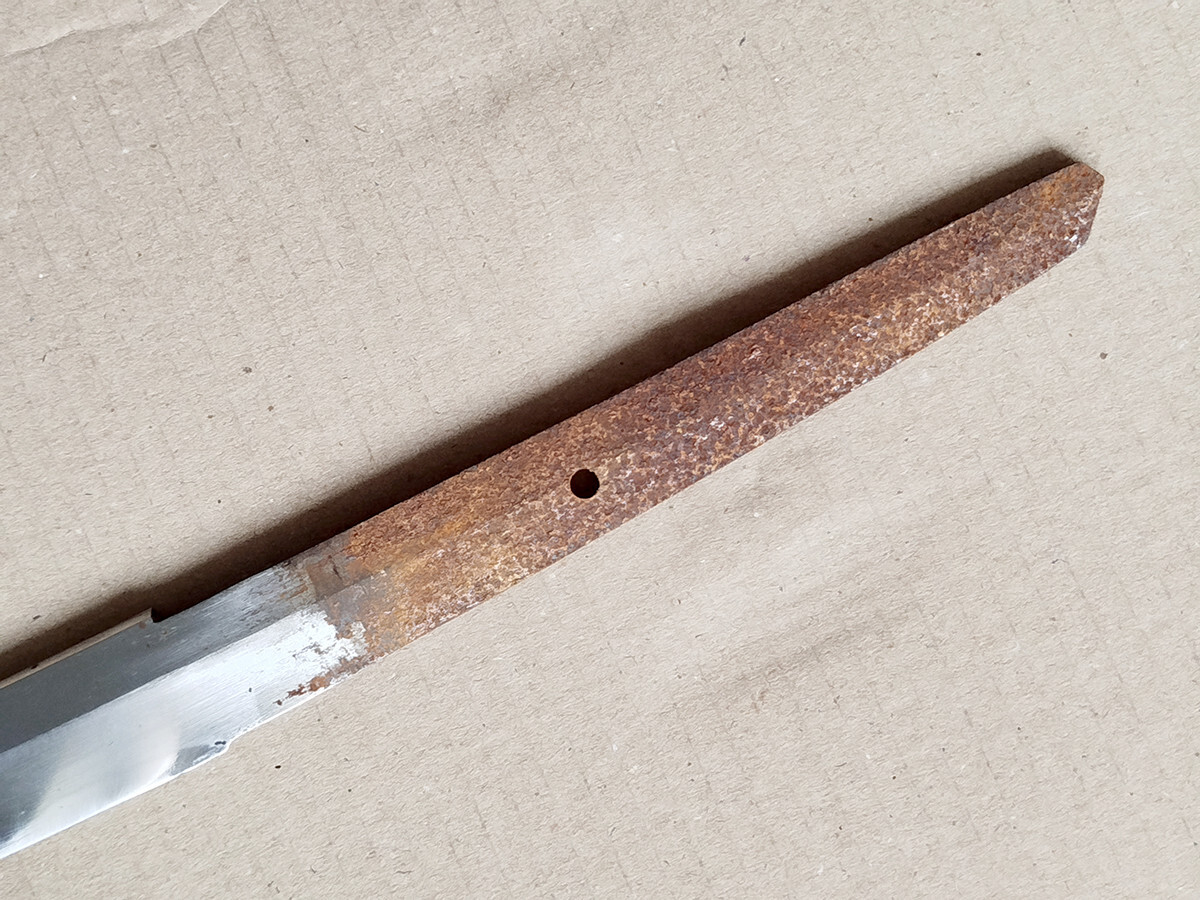
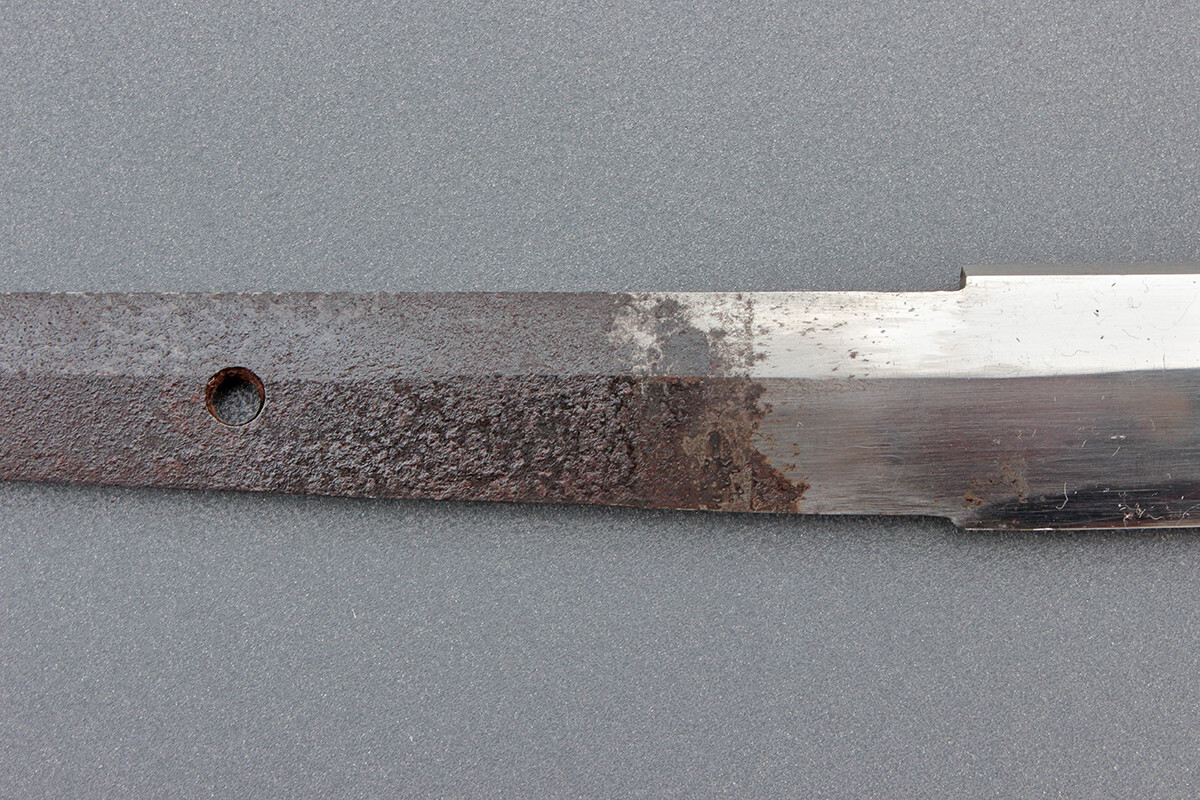
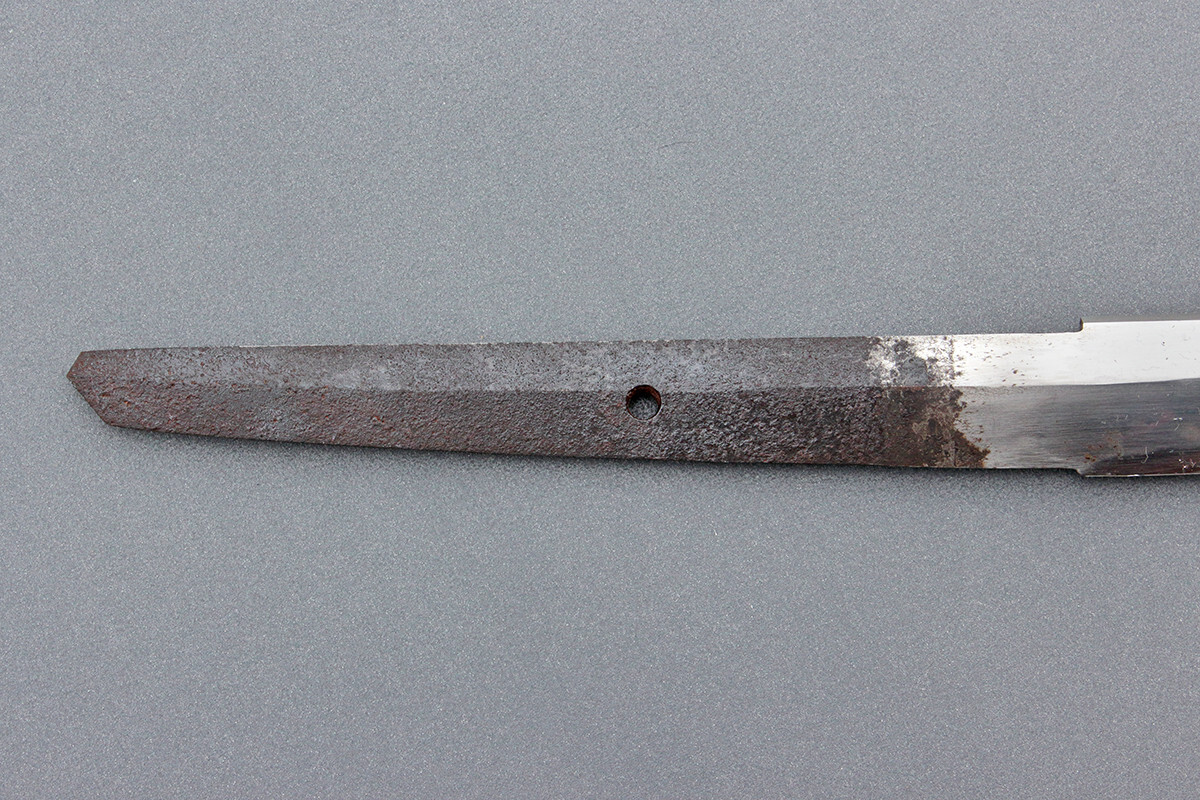
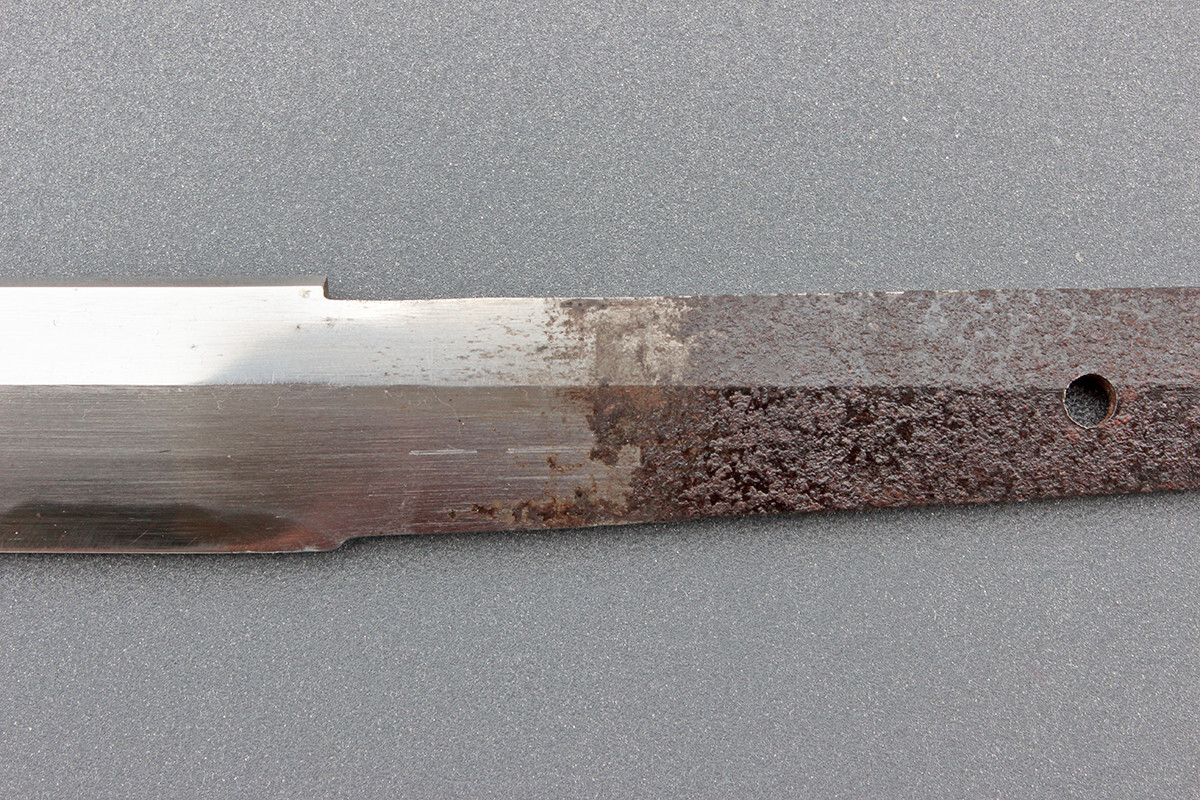
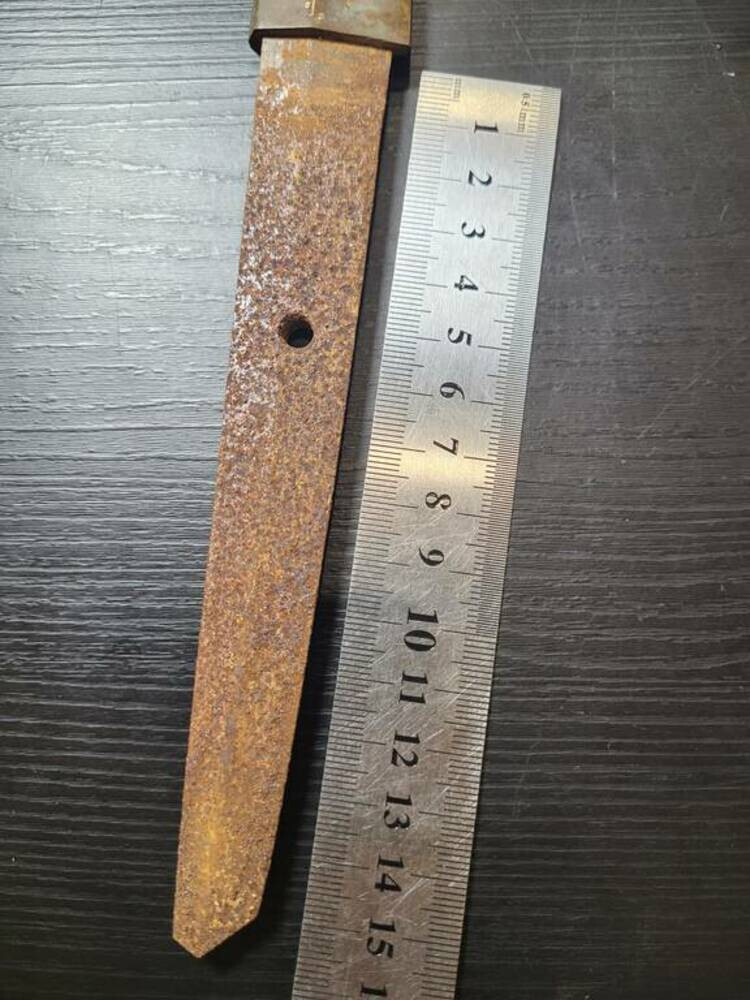
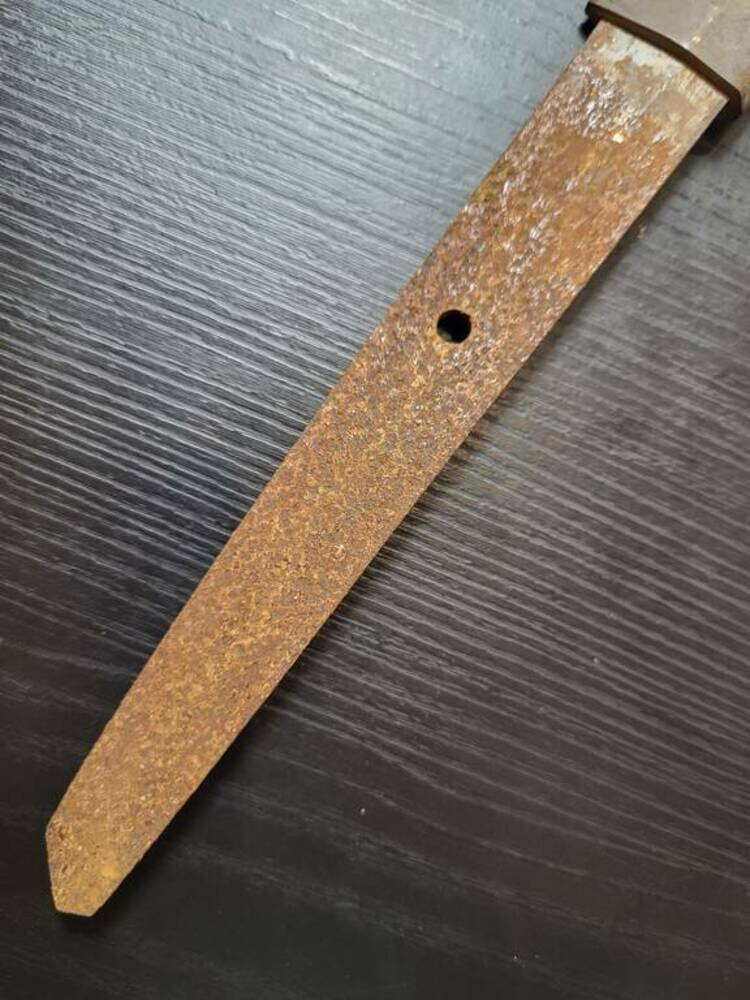
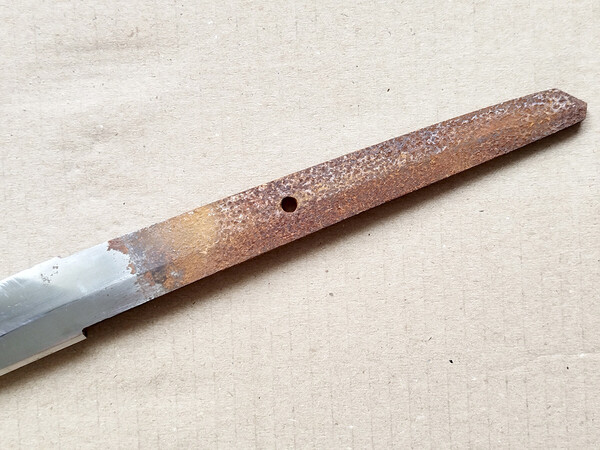
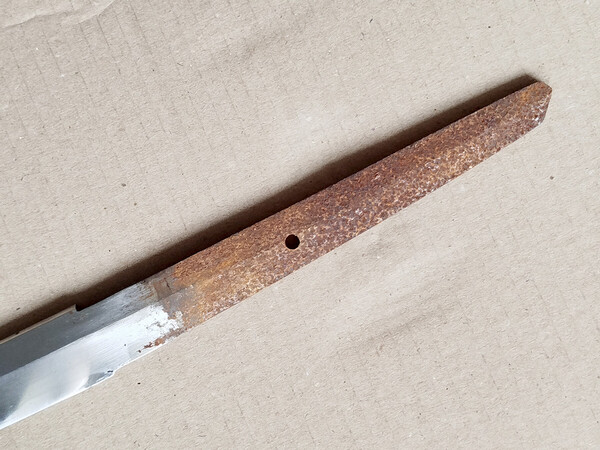
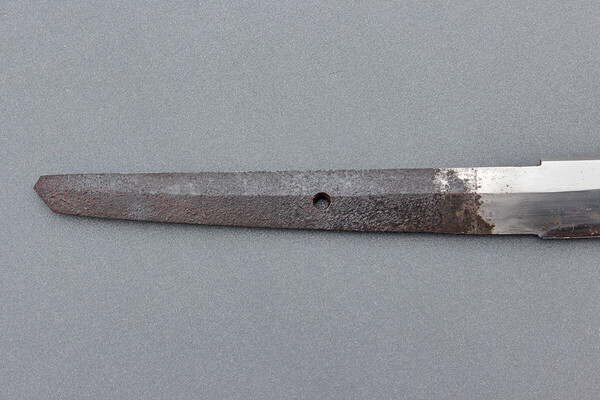
I removed superficial red rust from the nakago. I worked very carefully and slowly. The only markings I found on the nakago is number 2. No arsenal stamps, no any kind of inscription. The thing that I thought may be an arsenal stamp turned out to be just a play of light on rust. Same number 2 I found on habaki, wooden halves of tsuka and chuso. So, at least these parts belong to the blade. Here are photos nakago before: And after:



-
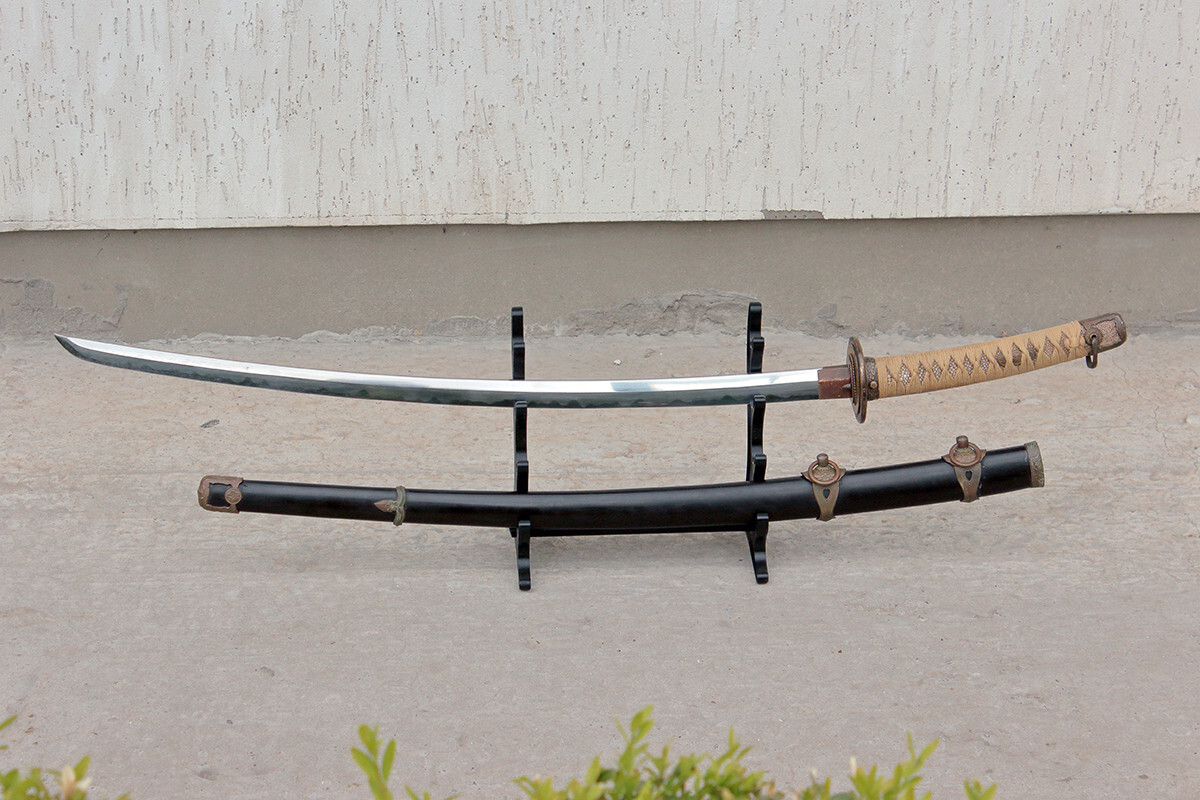
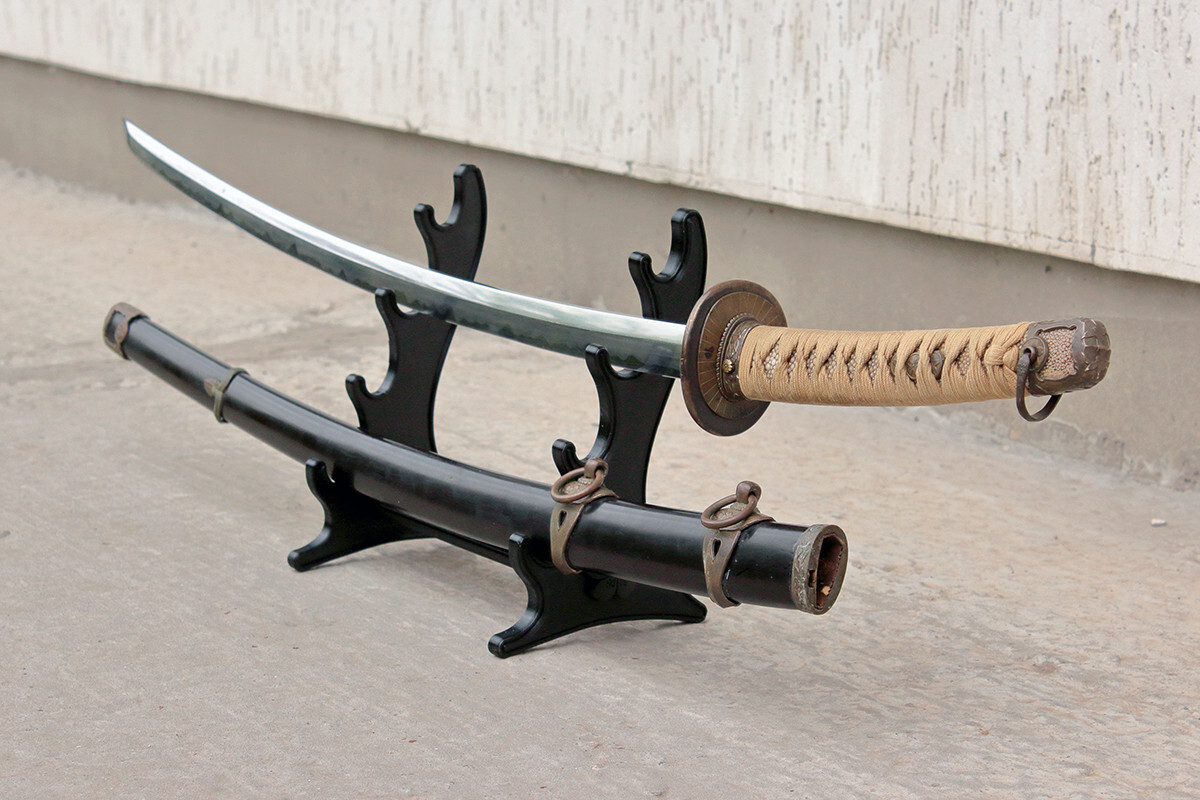
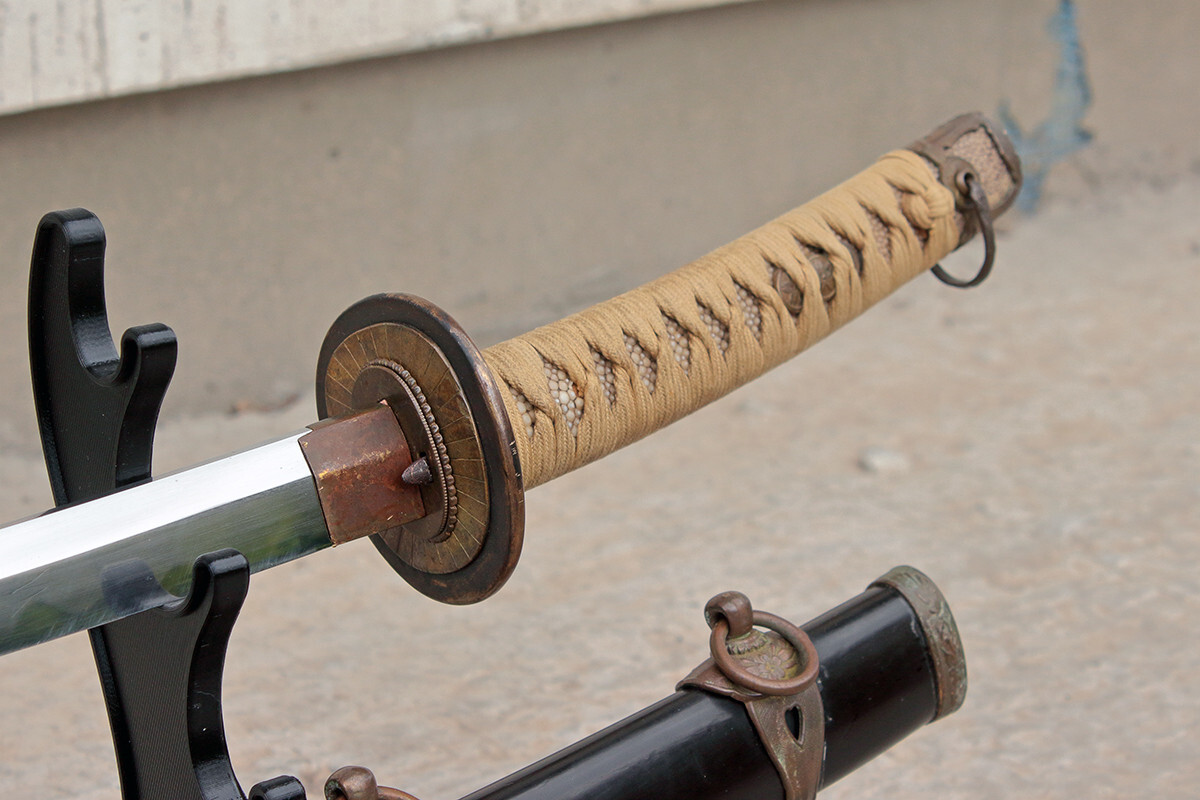
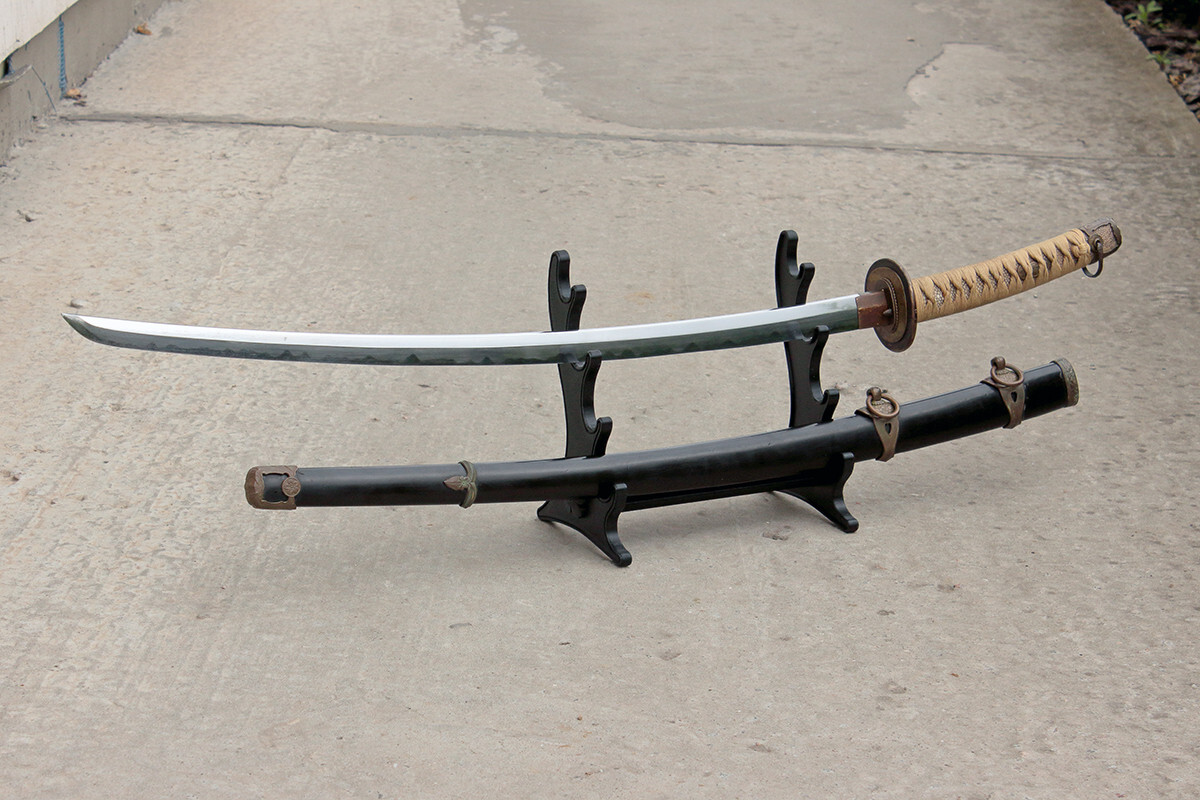
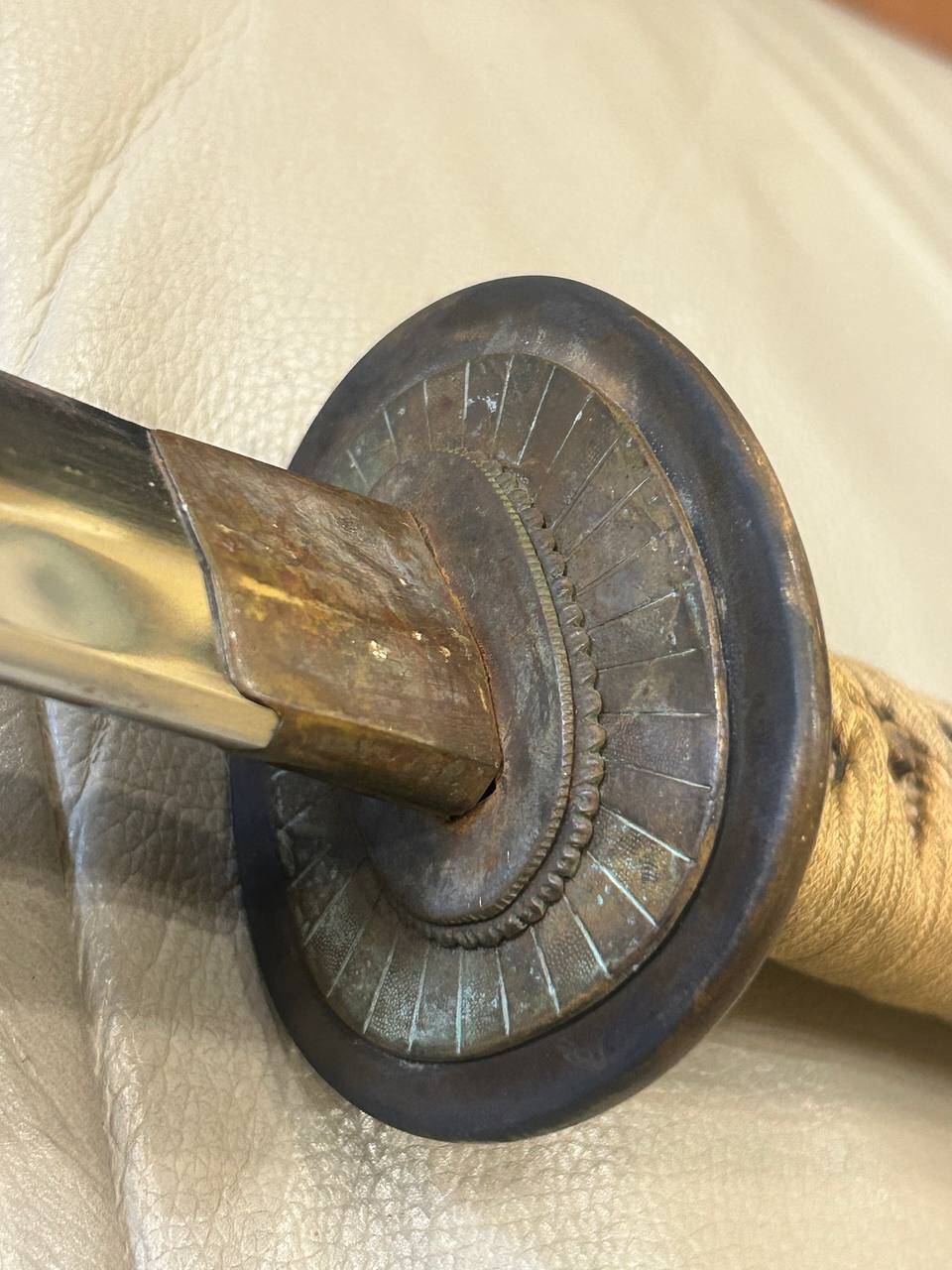
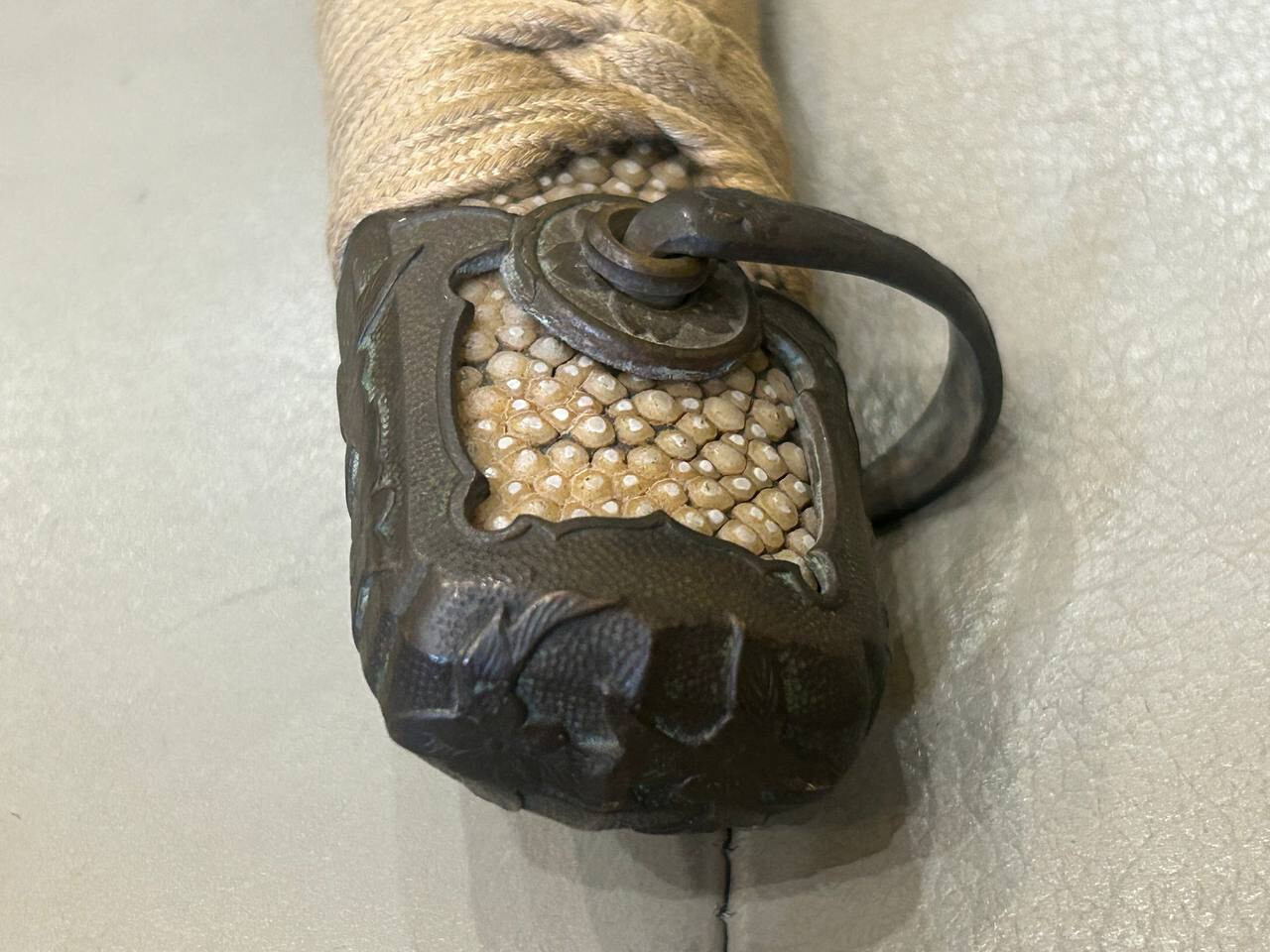
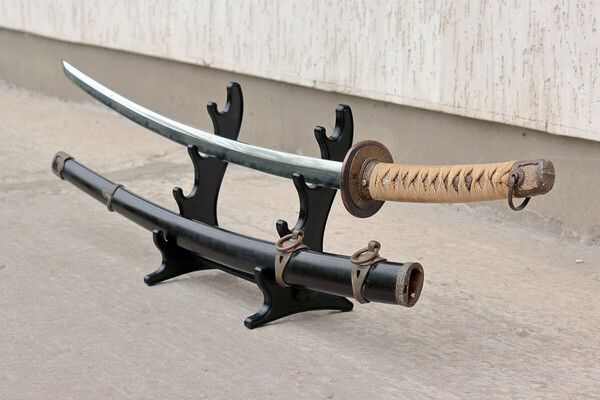
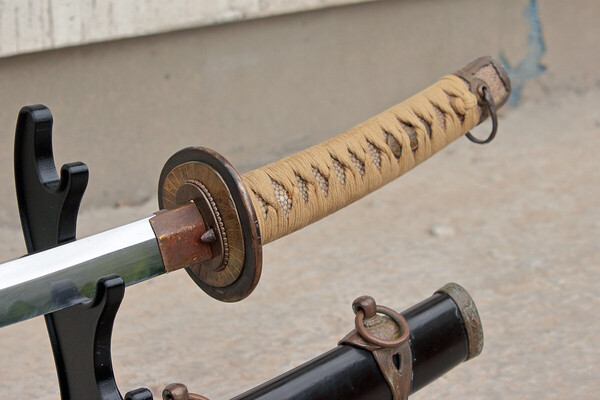
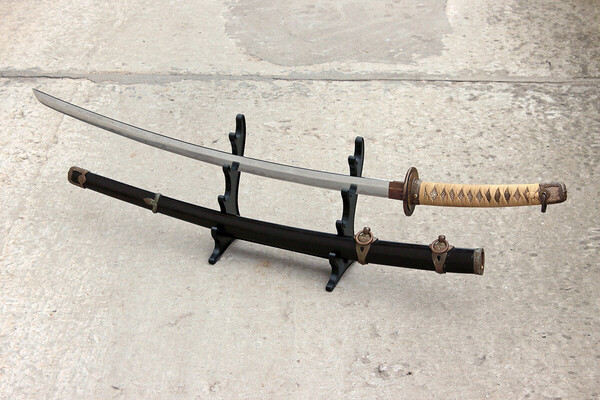
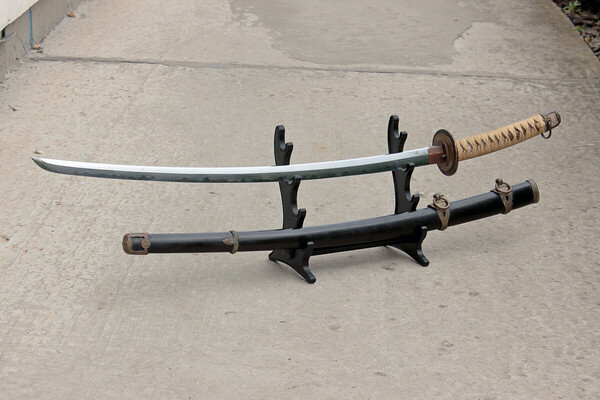
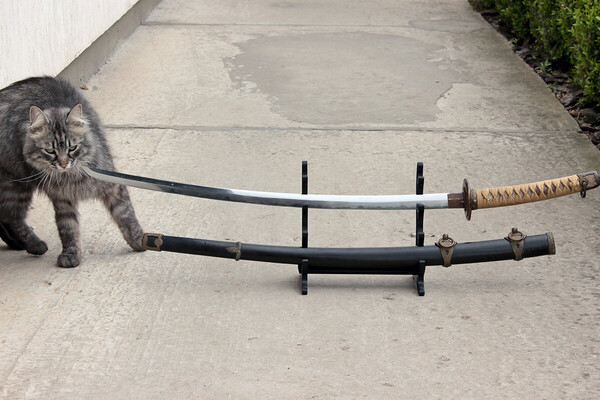
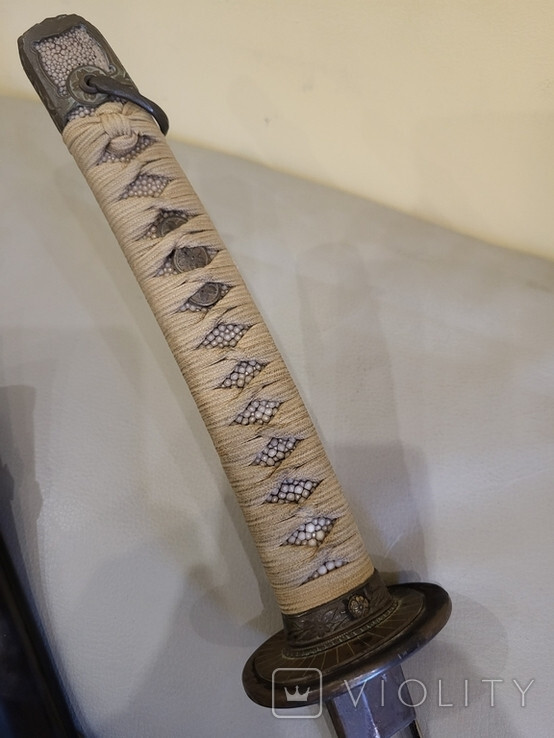
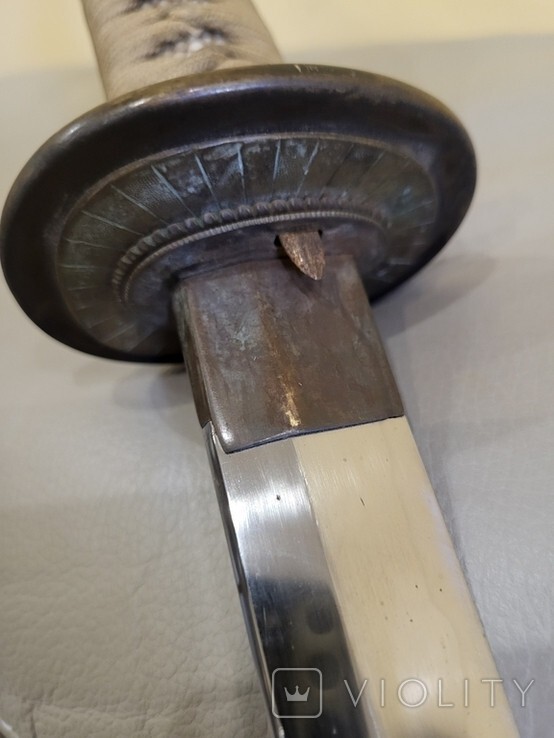
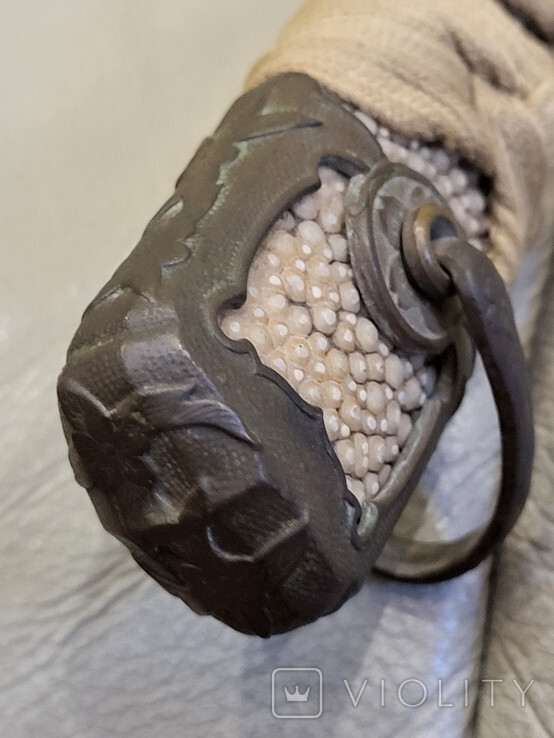
Hi all. So I ended up buying the sword you guys helped me to identify as real kai-gunto. I took some pause to cool off and think. Then I contacted the seller and negotiated the price down to USD 1500. Still sounds like a high price for such a sword, but I had reasons of my own to buy it. The main thing in a situation like this is to be happy with what you get. And so far I am happy. I believe I already mentioned that after three years of war I grew tired beyond measure and in the last months I feel myself completely burned out. Yet I still have work to do. Luckily, these days I have some time (not much though) I could spend on myself. And since I found out that Japanese blades have a magic in them that switches my mind in no time, I am in it. After the first failure (though I don't consider it as such) I decided to switch on simpler things like Navy dirks. And since for me the best way to study a subject is to have some objects of study at hand I acciered a pair of them. But I believe it may be a separate story, so let's return to the kai-gunto. Sword arrived and as expected: the blade had some corrosion dotting and it barely had a place free from fingerprints. And as you guys correctly noticed, nagasa was buffed. Fittings looked like they were in dire need of cleaning. At first glance the sword looked like an assembly: tsuba and seppas may be from one set but nakago-ana is too large for this blade. Luckily for me, I have some experience in polishing metals (though, not swords) so after looking at the blade I had a clear understanding that any kind of improper treatment will do no further good. So since its arrival I was only constantly oiling the blade and the most aggressive tool I used on the nagasa was a toothbrush with shortened bristles. However, I gently cleaned habaki, tsuba, seppas, fuchi, locking mechanism, kabuto-gane and sarute. I had no time for cleaning the elements of saya yet. Now kai-gunto looks like this. Process of cleaning was closely monitored by one of our cats. She likes to participate in all kinds of human activities. That's why some photos are more hairy than others:-))

-
Hi Brian. Nice dirk. Looks genuine to me too. Slightly unordinary pattern of dimples on fuchi and koiguchi.Usually they are smaller and have a more dense pattern. But they match each other and have some remains of gilding on them. So no red flag. Two more things: 1. The handle is covered not with ray skin but celluloid, but it's likely that tsuka still has a wooden core. 2. Wire wrapping has to be made from one twisted wire and two plain wires. Two plain wires are missing. The reason to disassemble it is to make sure that the blade and fittings are from one set. Not sure from these photos but it seems mekugi has some scratches on patels. So it may have been dismantled before. Thus it is worth taking a look at what is under the tsuka. As for the price. This one https://richard-militaria.at/Japan-Dolch-fuer-Marineoffiziere-M1883-Meiji-16/M75055 was listed for EUR 600 or 650. Sold.
-
Thank you Bruce! While looking for information on kai-gunto I have read a lot of your posts. Same while I was researching Navy dirks. Since my appearance here on forum it so happened that I was carried away by Japanese Navy blades. So I think maybe I have to give this sword a try.
-
So about this seller. The local internet auction forbids private messaging between sellers and buyers. After another request for photos in the comments they just dropped their address and invited me to visit them. I googled the address. Turned out to be a small antique shop in Kyiv. Their speciality seems to be far from swords. The sword was given to them for sale by the owner, so they are just trying to get their percentages on sale. I called them and asked them to send me photos (which I posted here today). They also informed me that they are scared to dismantle swords because they have no such experience and are frightened to break something in the process.I lived in Kyiv before the war, but now my duty keeps me far from home. Or else I could look at this sword in person. I believe I could negotiate it for around 1700 USD.
-
Got some additional photos


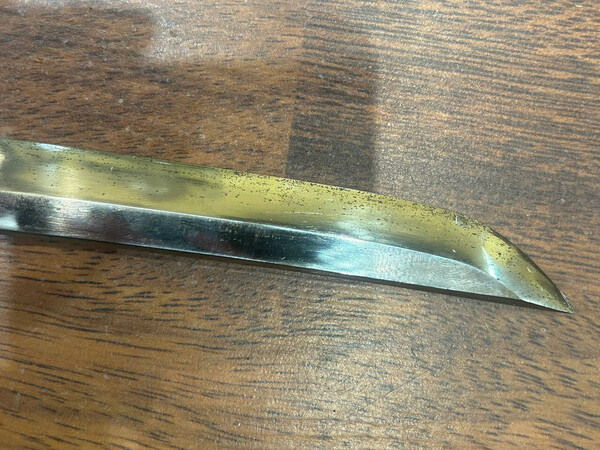

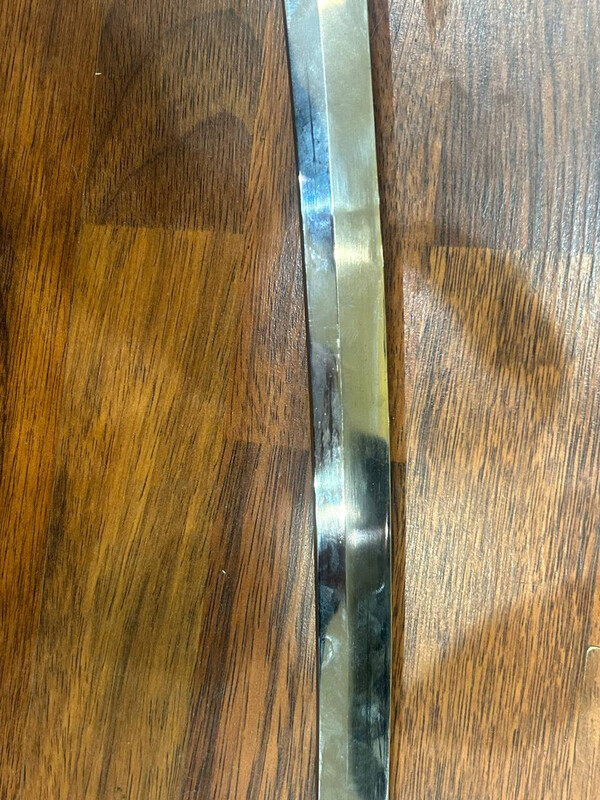


-
I think I found something that looks like a stamp on a tang.
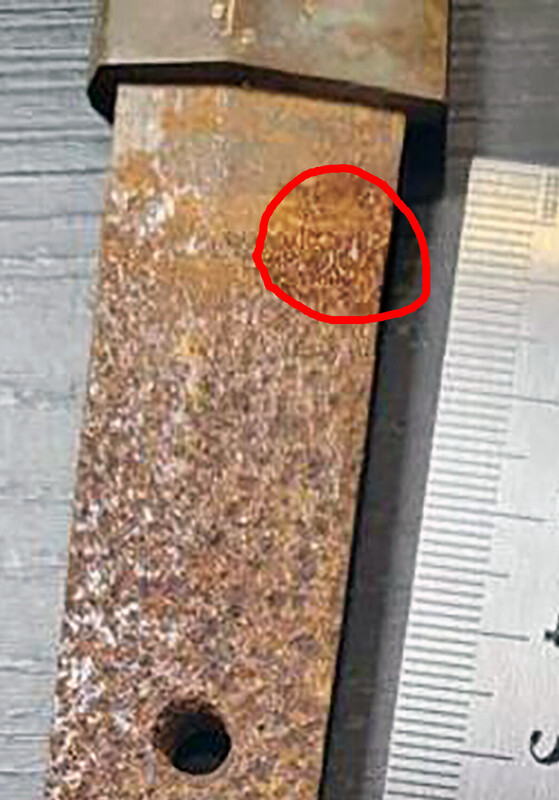
-
That's my belief too that patina on brass elements is artificial. To my noob eye all things looked correct but my red flag was patina. It's too uniform on all elements to be natural. I think these are the only photos I could get.Seller had troubles removing tsuka and I doubt if he could remove habaki.
-
Thank you for your inputs! And here goes nakago...
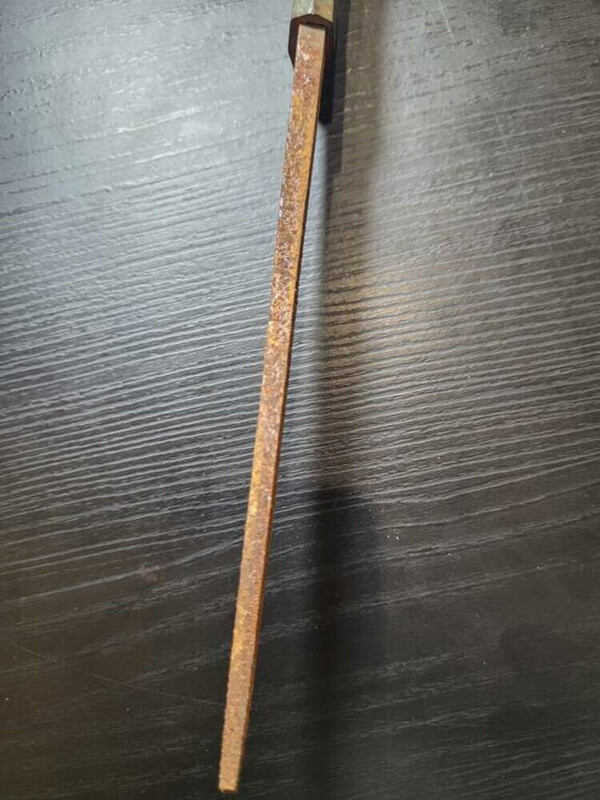


-
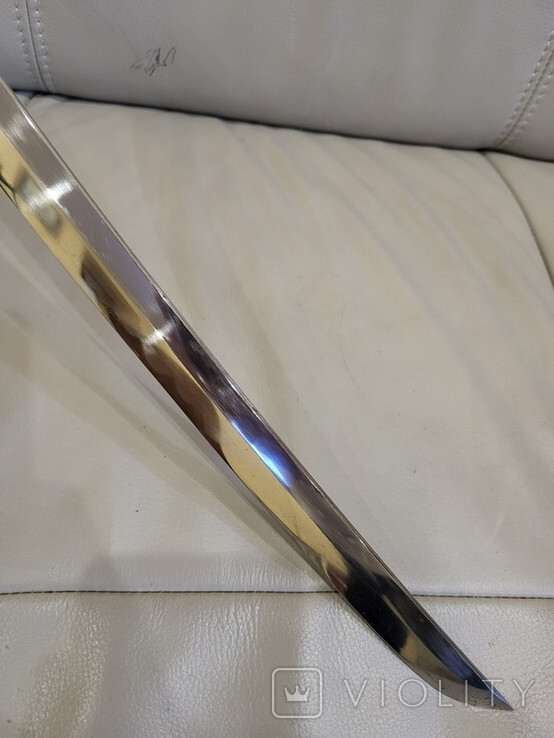
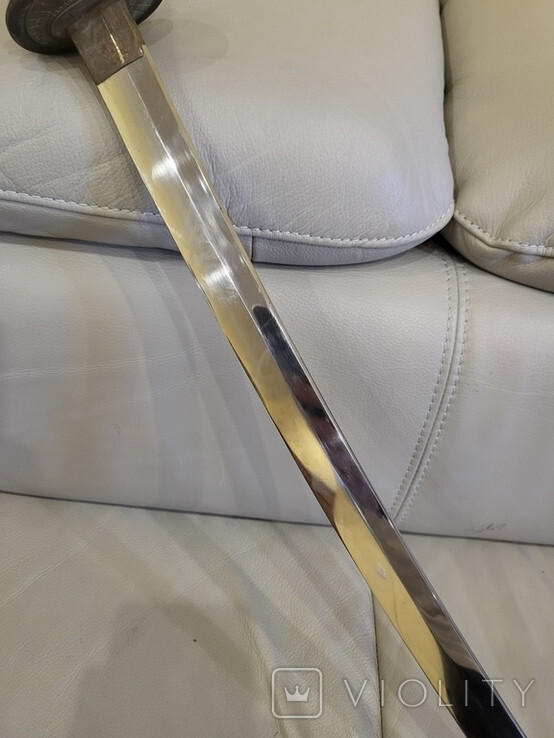
Hi all. I need your advice. on the kai-gunto. This kai-gunto popped up on a local internet auction. I have my concerns about its genuinity but my expertise in this sphere is still far from sufficient. Also the same seller has another gunto with a 5 digit number on habaki which (from what I learned) is a clear giveaway of fake. So maybe you could help me identify if this sword is genuine or not. Unfortunately, the photos I attached to this message are the only ones available at the moment. I requested photos of tang from the seller but didn't get them yet. Kind regards, Nazar




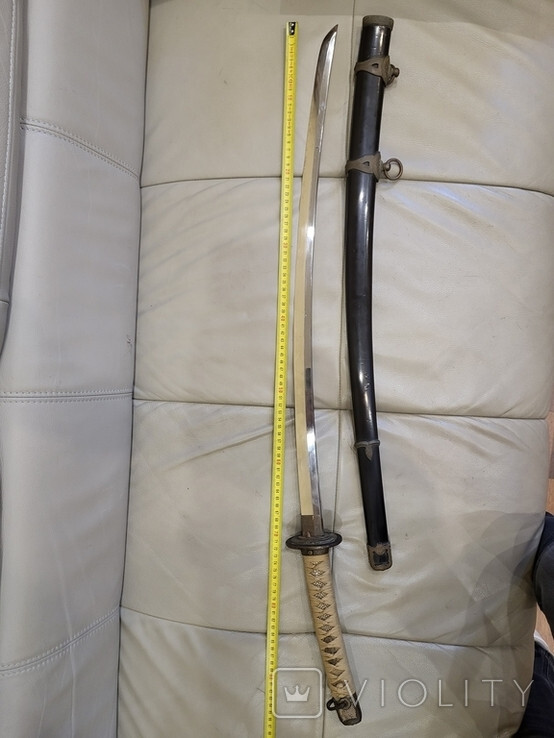
-
Thank you Robert!
-
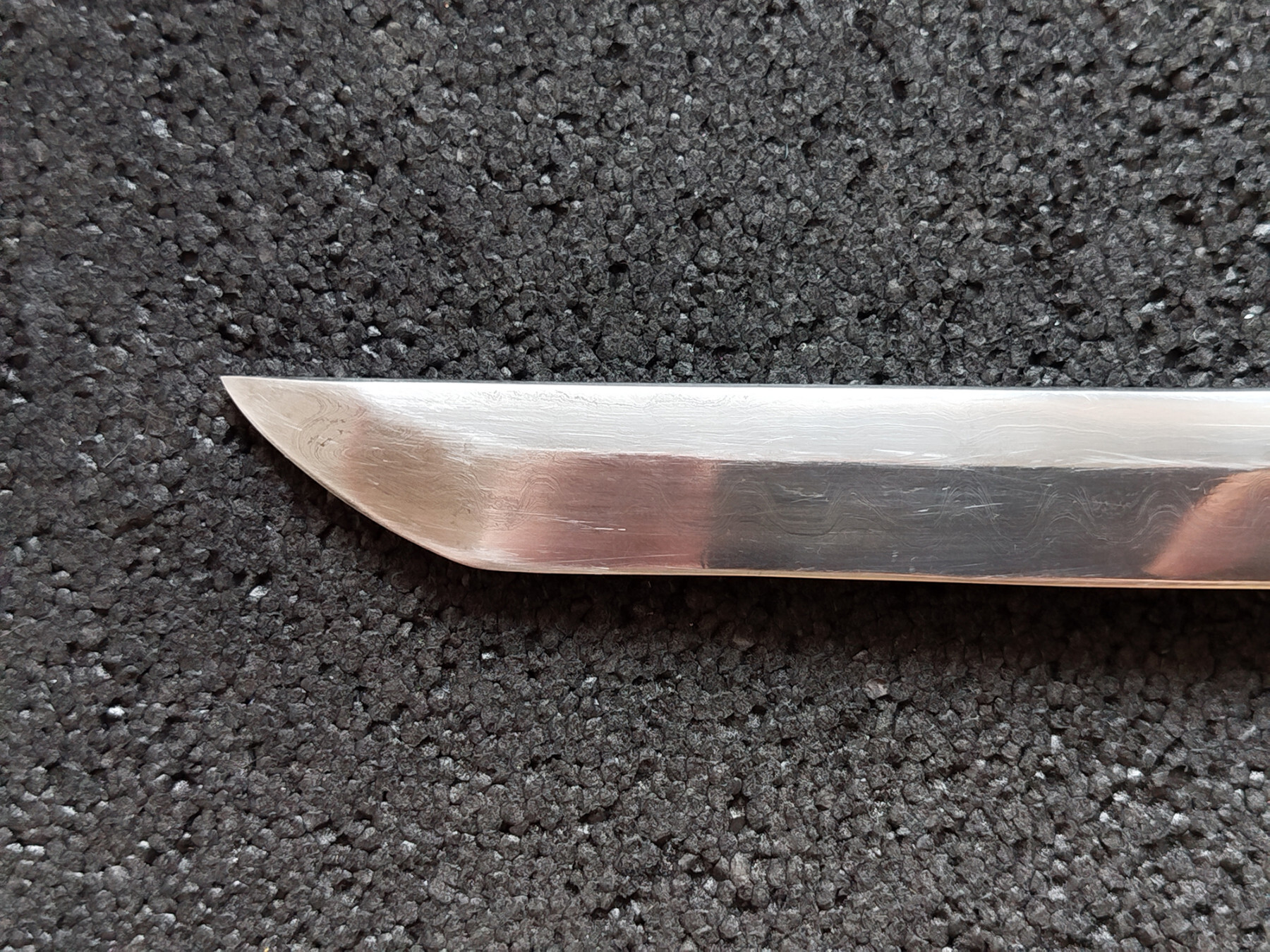
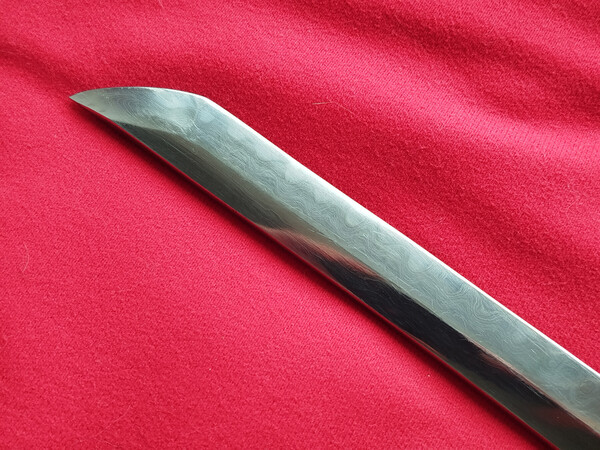
Thank you for your answers and your words of support! These three years weren't bright for us and it seems we have even darker times ahead. Yet things are much simpler for me these days. There is a job and it has to be done. It was much harder to make the first step in 2022 when a full scale invasion began. Yesterday it was three years since I waved my family goodbye at the railway station in Kyiv. Haven't seen them since then. Also in the last months it became harder and harder to switch my mind from my everyday tasks to something civil. So the sword, even being fake, was worth buying, because it helped me to trick my own mind. Brian, you surprised me by your knowledge on Reibert. I am used to getting some goods from there. When it comes to blades, just before I enlisted, I bought a replica of Spyderco Schempp EuroEdge from here for a pocket knife. Turned out to be very useful in soldiers' everyday life. Later I replaced it with a smaller blade, Kershaw XCOM. I have some weakness for daggers so no wonder when post war but genuine Fairbern-Sykes dagger turned out on Reibert, I bought it. As for the Ratnik, they are as rare as the AK-12 itself. Most of the enemy troops are issued with ordinary AK-74, at best it's AK-74 with factory installed upgrade kit. I'll ask some people, but chances to get the knife are low. There is also a question of how to send it abroad. Customs wouldn't pass it through. Also, let me explain why I decided that there is a possibility of the blade being genuine. You see, not being an expert on nihonto, I do have some expertise on other subjects. Long story short: Before the war I had a small motorcycle workshop. To anyone interested here is my website https://www.gazzz-garage.com . I still keep it online in hope that one day I will return to my projects. To keep things going I designed and manufactured conversion kits for motorcycles. I had been selling them all over the World. Did other jobs, like rebuilding engines and making custom spoked wheels too. Sure, my main goal was "full scale" custom projects. I liked to work alone, but one couldn't do all the jobs. So I worked out cooperation with subcontractors. The main things that I've got done by subcontractors on a regular basis were: fiberglass works, welding, paint job, seat cushioning and upholstering, glass beads blasting, laser cutting and all kinds of machining, be that surfacing of cylinder head or CNC milling. I still had a lot of different kinds of work done by myself, like overhauling engines (could even mix parts from different models of motorcycles in one engine), suspension, wheel assembling and truing, metalworking and polishing. But narrowing my specialities I was able to perfect them with every project finished or job done. Working on engines and other parts I learned to "read" parts, this helps a lot when you receive a gearbox in the bucket and have not only sort it out but assemble with all washer oriented as they were by factory. Another thing is polishing. I did a lot of aluminum polishing and with old Japanese engine cases I not once encountered non-homogeneity of aluminum alloy of which cases were cast. It means that some areas of the surface were softer than others. It wasn't visible during dry or wet stages of sandpapering, it started to show itself on the stage of polishing. And the longer you use a buffing wheel on such a surface the more "damascus" pattern of aluminum becomes visible. And that's only one thing. With time I worked out my own methods on how to work with such surfaces. In the case of tang and machi that don't line up, it was obvious to me that someone messed them and that was done at least twice. From what I could see, I see the initial surface of the tang with marks of filing. Then there is the first grinding. From the look of it it was done with a grinding wheel motor. Someone tried to hide this messy job with chemicals. This was followed by another course of cutting and grinding, though this time no one tried to blacken the marks. As for the hada, I am certain that the blade was treated with a buffing wheel and polishing compound. Seeing how it went with tang and knowing the local "traditions" of polishing, I am more than sure that both, buffing wheel and compound were quite coarse. Also such treatment usually utilizes the concept that could be expressed like "press harder, keep longer". At that time I was aware of the difference between how damascus steel is made and how hada is formed. Also I was aware of the superficiality of my knowledge. So I made a guess that such treatment will expose hada and may cause visual effects similar to damascus. Especially if the remains of the polishing compound wasn't not removed completely. Also I took into account that even after such brutal polishing hada doesn't look like phony damascus katanas from ebay.
-
Thank you guys. I was ready to face the fact of the sword being not genuine. As a matter of fact I estimated the chance that it is genuine as very small. However, I had to check, so thank you for your input! Alas, I am far away from club meetings and shows. Same thing with time for reading books. Three years ago russia invaded my country, so I sent my family westward (to Europe) and volunteered for the army. I came a long way from being a machine gunner to running my own small unit. By some luck I wasn't KIA so far, however I got my share of concussions. On the bright side, I am still alive and still doing my best in this war. On the other hand, not much is left from my former life these days and collecting is one of such things. It keeps me sane. Therefore, the best I could do these days is to not overstep my small area of expertise on other subjects. At least until I master this new area on some basic level.
-


-

-


-
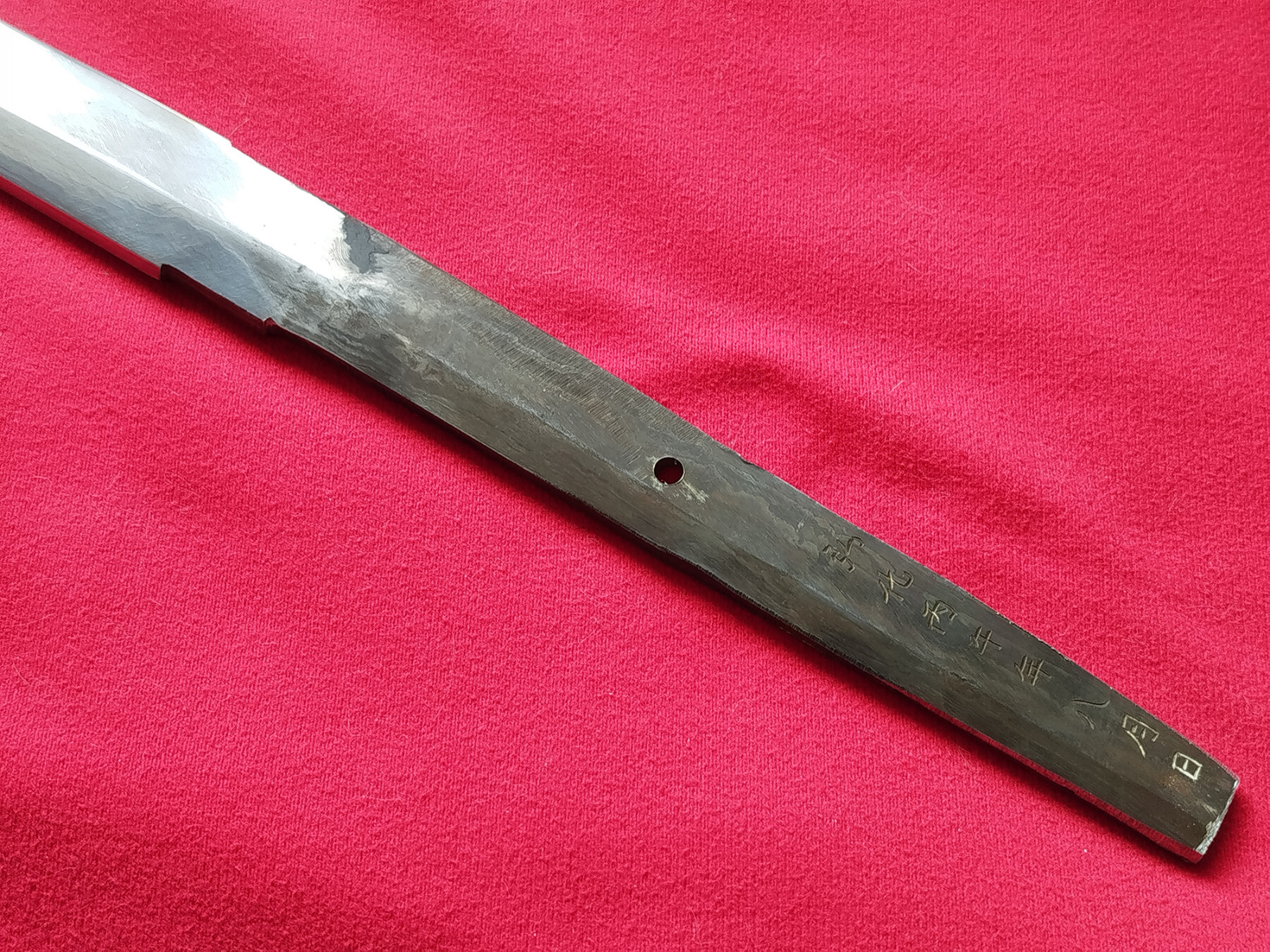
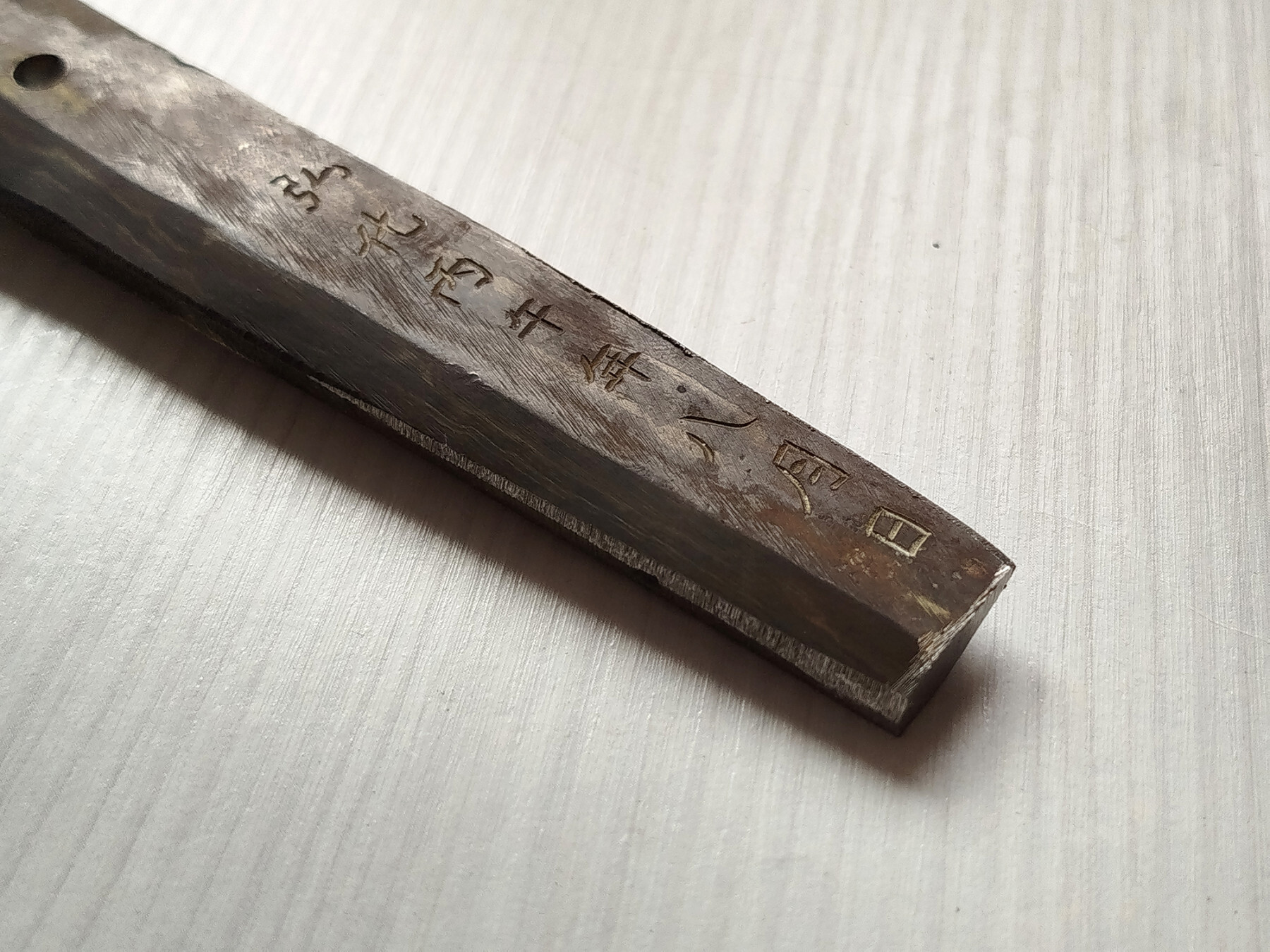
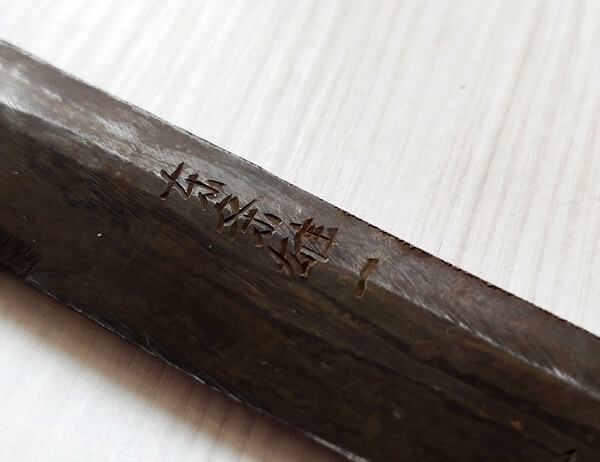
Hello everyone! I believe you people have witnessed a lot of such stories here. One evening I was browsing through local internet auction pages in search of Great War articles like Austro-Hungarian or German belt buckles or trench knives. Suddenly I stumbled upon this "Katana" article. Something in the lot caught my attention, so I added it to my watchlist. Some days after I received notification that the listing time is ending. It so happened that I had a free evening that day so I decided to take another look at the sword. The longer I was looking the more curious it seemed to me. The handle, the sheath and the guard definitely looked like "replicas" even for such a complete noob in Japanese swords like me.What caught my attention was the blade itself. I liked its shape and somehow it didn't look phony to me. I didn't have much time, it was like an hour until the listing ended. For this time I managed to decipher one of two writings on the tang (the one that looked older and less accurately cut). I found out that it has to be a date of manufacturing and to my surprise the deciphering of it made perfect sense. With a little time left I decided that even if the sword is a copy I like it anyway, thus it is worth fighting. So I won the sword. After the sword arrived I mostly immediately disassembled it and laid aside all parts except the blade itself. For the next several days I spent all my free time learning about nihonto, trying to find more information on the blade I bought. This learning by itself turned out to be pleasant and helped me to switch my mind from my everyday tasks. And that's how I found this forum. I wish to thank all the people who participated and still participate in filling this site with information. I ran through many topics here and followed many links. Yet, even as the date on the blade narrowed the area of search, I am aware that for such a short time I only touched the surface of the ocean. There is a chance that the blade may be genuine, so I need your expertise on it. As for the dimensions of the sword, here they are: Total length: ~106cm Nagasa: ~84cm Sori: 31mm Weight: 1094gr Date: 弘化丙午年八月日 ( Made on a day in the eighth month of the year of the horse of the Kōka era [August 1846] ). As for the signature that has to be mei ( 东条雄一 ), it's confusing. The persons who cut the date and made this signature seem to be different persons. Also, for all I learned, there should be 東 instead of 东. So I assume this writing is a later addition. That's if my theory of the genuine blade is true. Unfortunately someone tampered with tang in maybe the worst way possible. At some stage that person just cut part of the tang with an angle grinder and then grinded it, mostly from the side of mune machi. Also Mekugi-Ana was widened with a drill bit of larger diameter. This was made for the only reason - to fit the tsuka that person had at hand. And yep, hamachi and munemachi also were messed up for the sake of installing new habaki. However for me it became a proof that the blade itself has history far longer than phony tsuka, tsube and saya. And yet original file marks are still visible. Alas, it seems that the very same person that mutilated tang, also gave the whole blade "full course" of buff wheel and polishing compound. Yet, to my noob eye all parts of the blade look to be legitim. I gathered as many pictures of confirmed ayasugi-hada (綾杉肌) as I could in such a short time and again, to my eye the hada on my blade doesn't look phony.