Marcus Devonport
-
Posts
52 -
Joined
-
Last visited
-
Days Won
1
Marcus Devonport's Achievements






-
A stunning set of Aikuchi Mounts... Which School/Maker??
Marcus Devonport replied to Marcus Devonport's topic in Tosogu
Cant help but agree with you, on the Koshirae included in your link. I quite like the detailing on the Mekugi of all things, as well as that Habaki. Very nice 🙏 -
A stunning set of Aikuchi Mounts... Which School/Maker??
Marcus Devonport replied to Marcus Devonport's topic in Tosogu
Thanks for the response. Admittedly, I'm only starting out on the journey of Tosogu collecting- I'm still very much in the "honeymoon phase", which may come through somewhat in my writing. I have no doubt that more seasoned (and wealthier) collectors can aqquire much better. I know it's subjective, but for me this is among the nicest I've handled. Just wanted to offer something to the forum, other than my usual reel of questions. -
A stunning set of Aikuchi Mounts... Which School/Maker??
Marcus Devonport replied to Marcus Devonport's topic in Tosogu
It looks to be an unsigned piece, although I've been reluctant to wiggle loose the fuchi to look beneath for a signature (as it carries with it the chance of causing accidental damage) I am curious whether the workmanship points towards any particular schools/workshops- I would be grateful for your thoughts. Thanks Again, - Marcus Devonport -
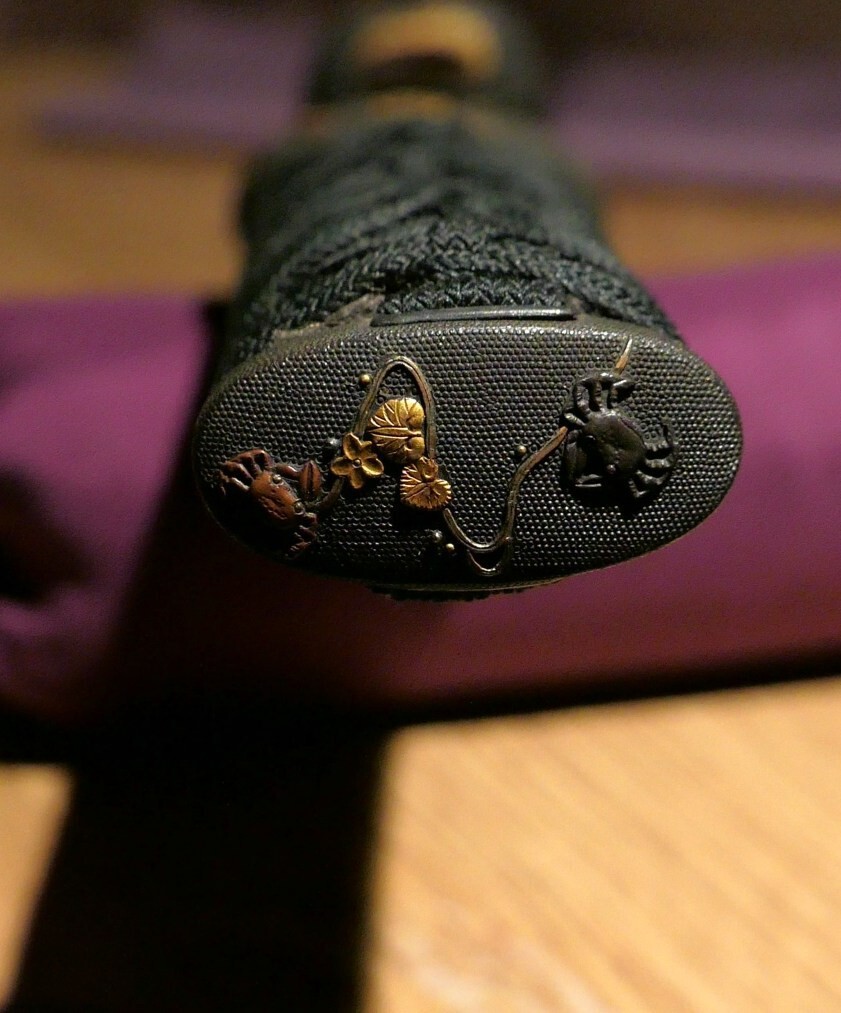
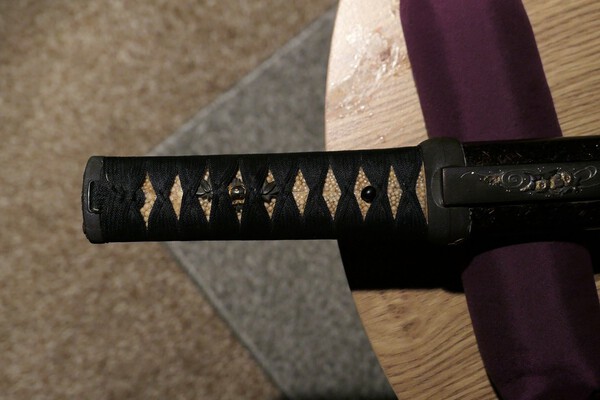
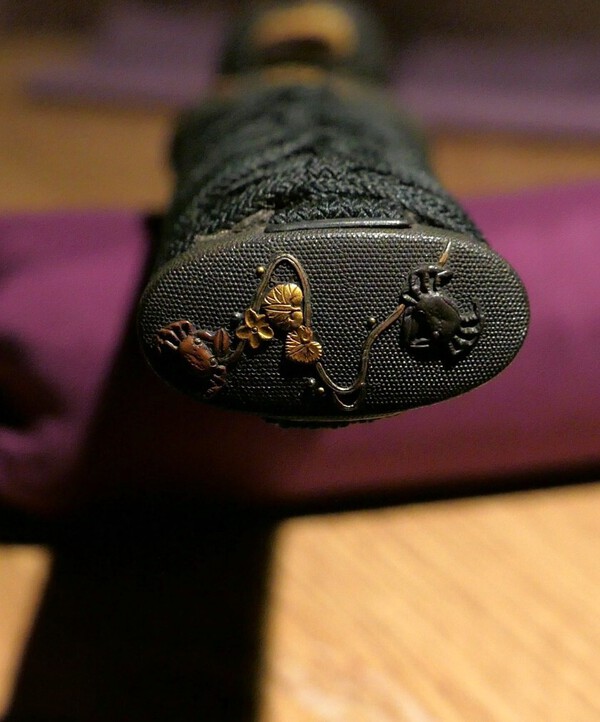
Wanted to share an Aikuchi koshirae, entrusted to me by a very good friend. I've held it in my collection a number of months now, so thought it was about time I put together a short post on the piece. The koshirae once housed a Sunobi-Tanto. It must have been a blade of spectacular quality, to be paired with such a koshirae. Visually, the fittings themselves these are quite interesting. Each piece of the set is colourfuly adorned with crabs and water plants, set against a soft background of Nanakoji. Upon closer inspection, I suspect these "waterplants" to be wild ginger, or hollyhock; as stylistically they are similar to the 'cloves' seen on certain Kamon. I thought that this may have been an intentional choice; perhaps to celebrate family ties/allegences of the original owner who commissioned the piece. I feel that these being in *gold* of all things is no coincidence. Now onto the saya... I'm especially fond of this style of urushi; I particularly enjoy the inclusions of aogai and flaxseed/rice husks within the lacquer- it gives the piece a very "three-dimensional" feel. It must take a great degree of skill to achieve such a finish. I do not believe the kozuka itself is original to the set, yet it's subject loosely follows the "aquatic theme" The kozuka shows good workmanship. We see "Omori-esque" beads of silver set into the base, which is a nice touch. The tsuka itself is neatly bound in Jabari maki, black silk over white samegawa. Several sizable 'emperor-nodes' are visible. The selection of samegawa is a telling sign of the overall quality. Again, we see the nautical/riverside theme continuing into the Menuki, with a singular crab peeking through the wrap.





-
A Naval Kyu-Gunto by Teruhiro
Marcus Devonport replied to Marcus Devonport's topic in General Nihonto Related Discussion
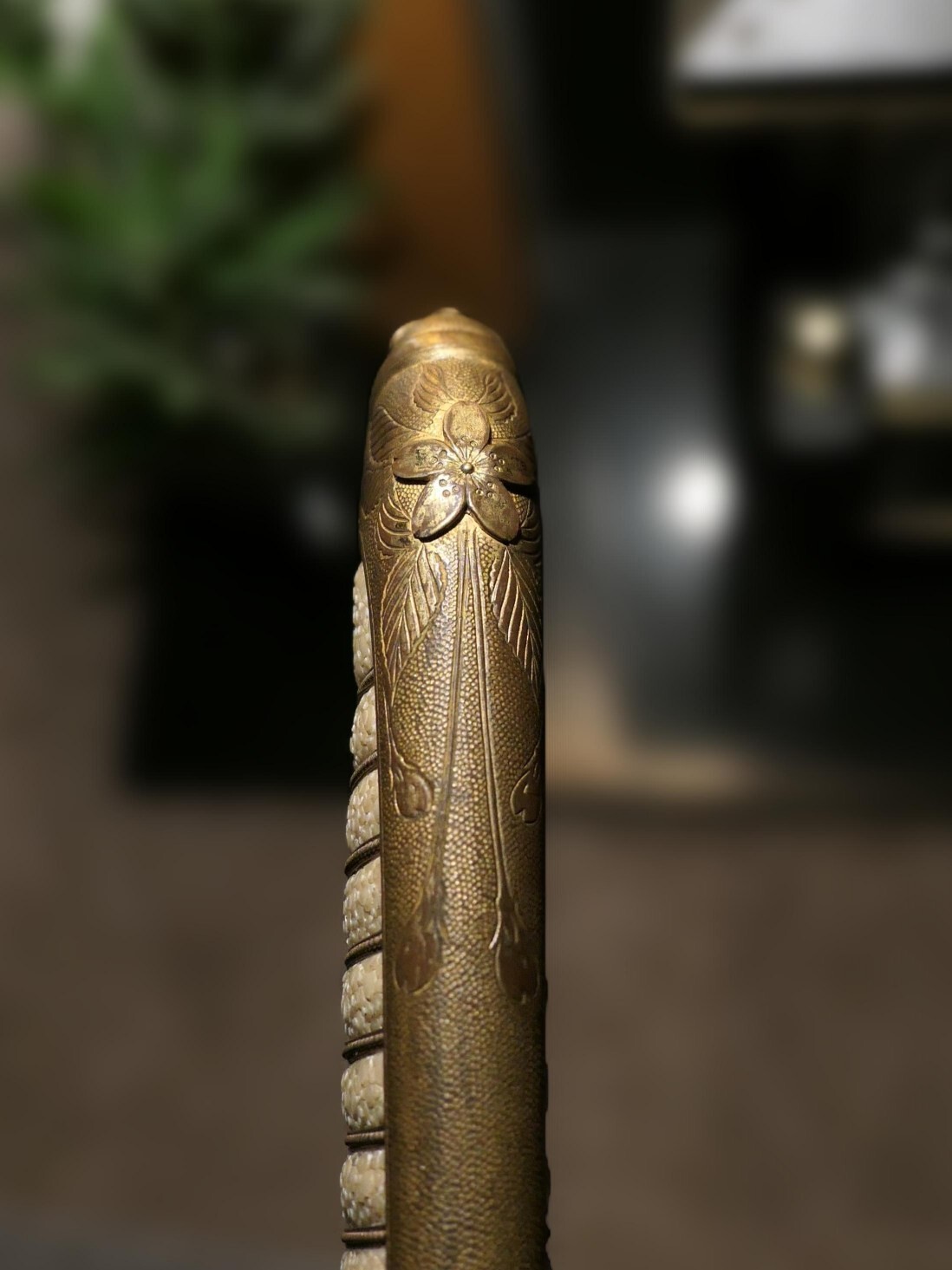
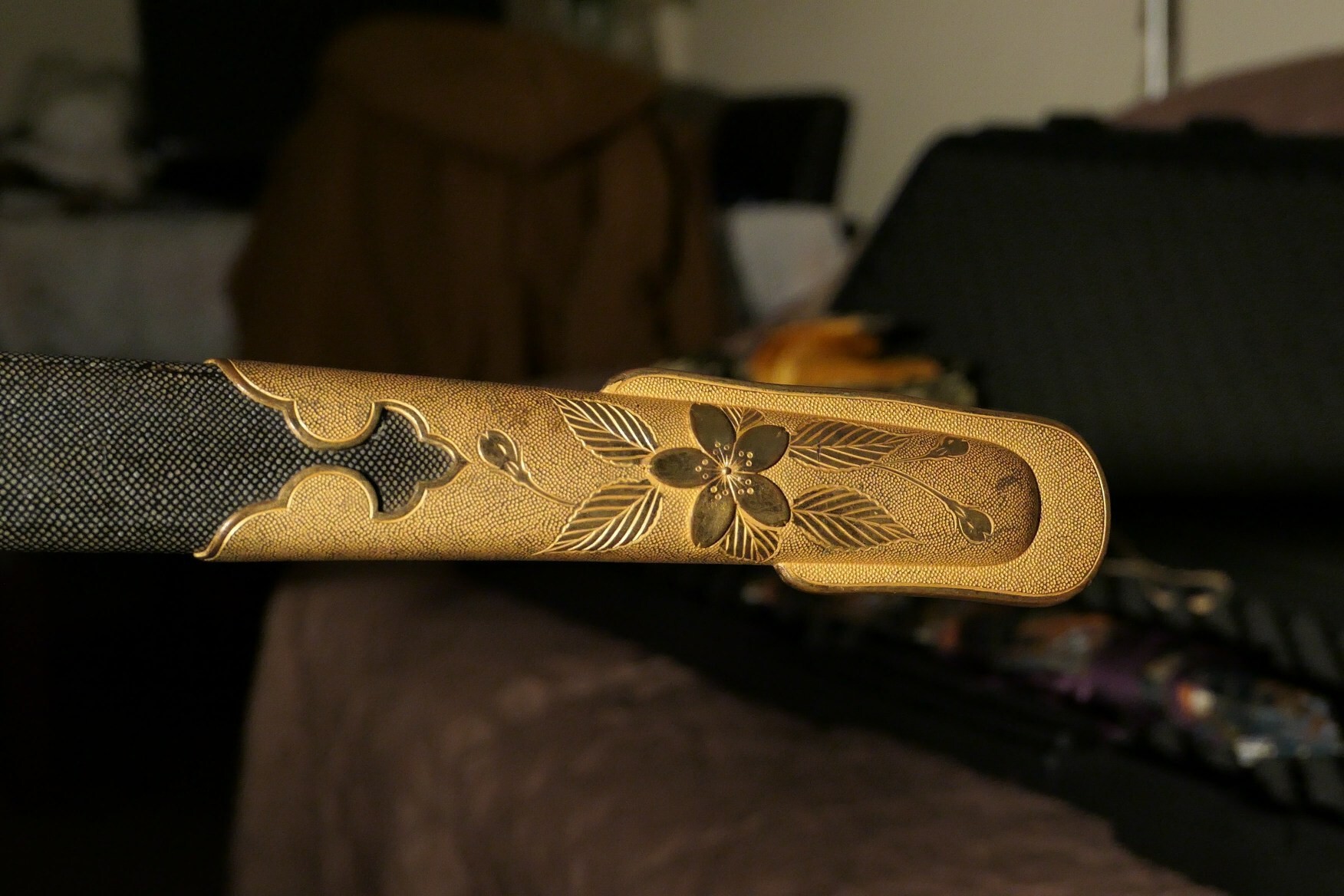
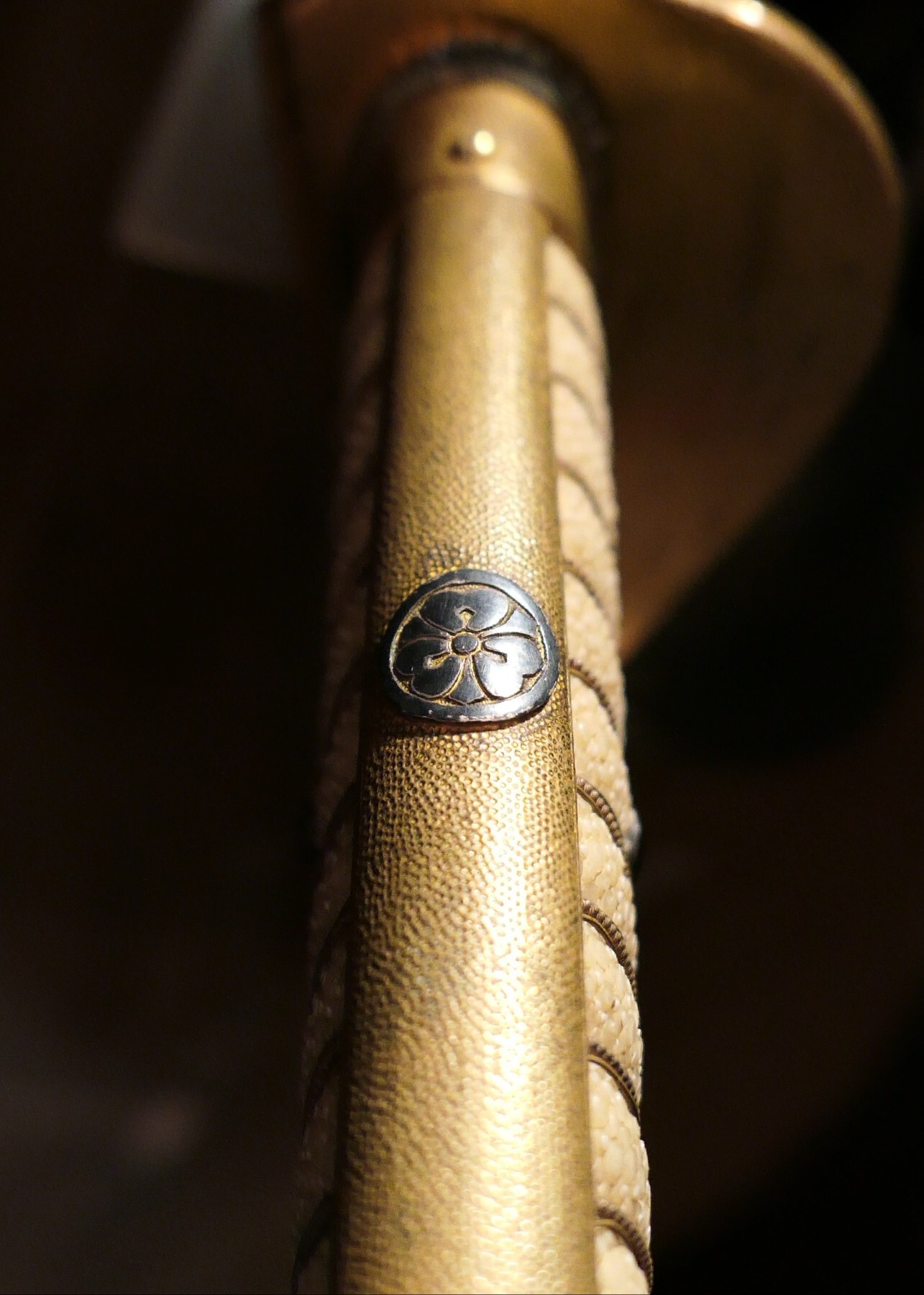
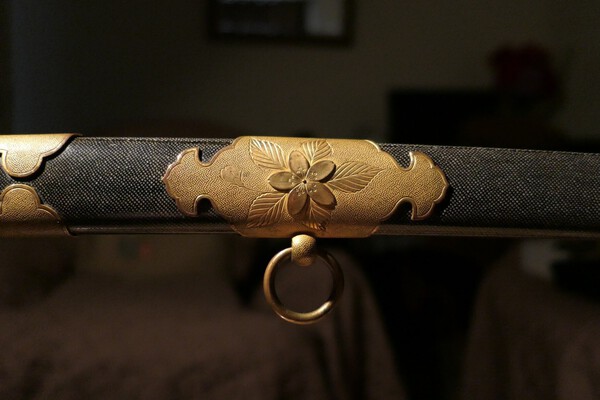
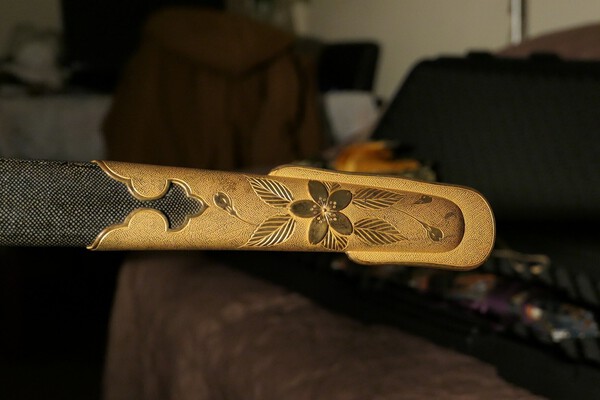
Tried to include a few more few close-ups, showing the detailing of the mounts. Each of the components are adorned with cherry-blossoms, with finer-detailing to the backstrap. I suspect the Saya has been done in Dogfish/Eel skin, instead of conventional Rayfish Same- the texture appears very uniform and lacks any variation; being without any obvious "Nodes". One interesting feature to the sword is the folding "retention flap", which secures the blade within the scabbard




-
A Naval Kyu-Gunto by Teruhiro
Marcus Devonport replied to Marcus Devonport's topic in General Nihonto Related Discussion
Ive always been curious about the Katabami-Mon, it's interesting that there may be some links to the Sakai clan. Thanks again, Geraint 😁 -
A Naval Kyu-Gunto by Teruhiro
Marcus Devonport replied to Marcus Devonport's topic in General Nihonto Related Discussion
I've seen officers signing their names in pencil, on a couple of Type 98 swords I used to own. Ive not seen any signs of this on Kyu-Gunto though. Ill do my best to photograph more of the koshirae over the weekend, with a focus on the individual fittings. I quite enjoy the unique 'East-meets-West' aesthetic of 'Russo-Japanese' wartime mounts. -
A Naval Kyu-Gunto by Teruhiro
Marcus Devonport replied to Marcus Devonport's topic in General Nihonto Related Discussion
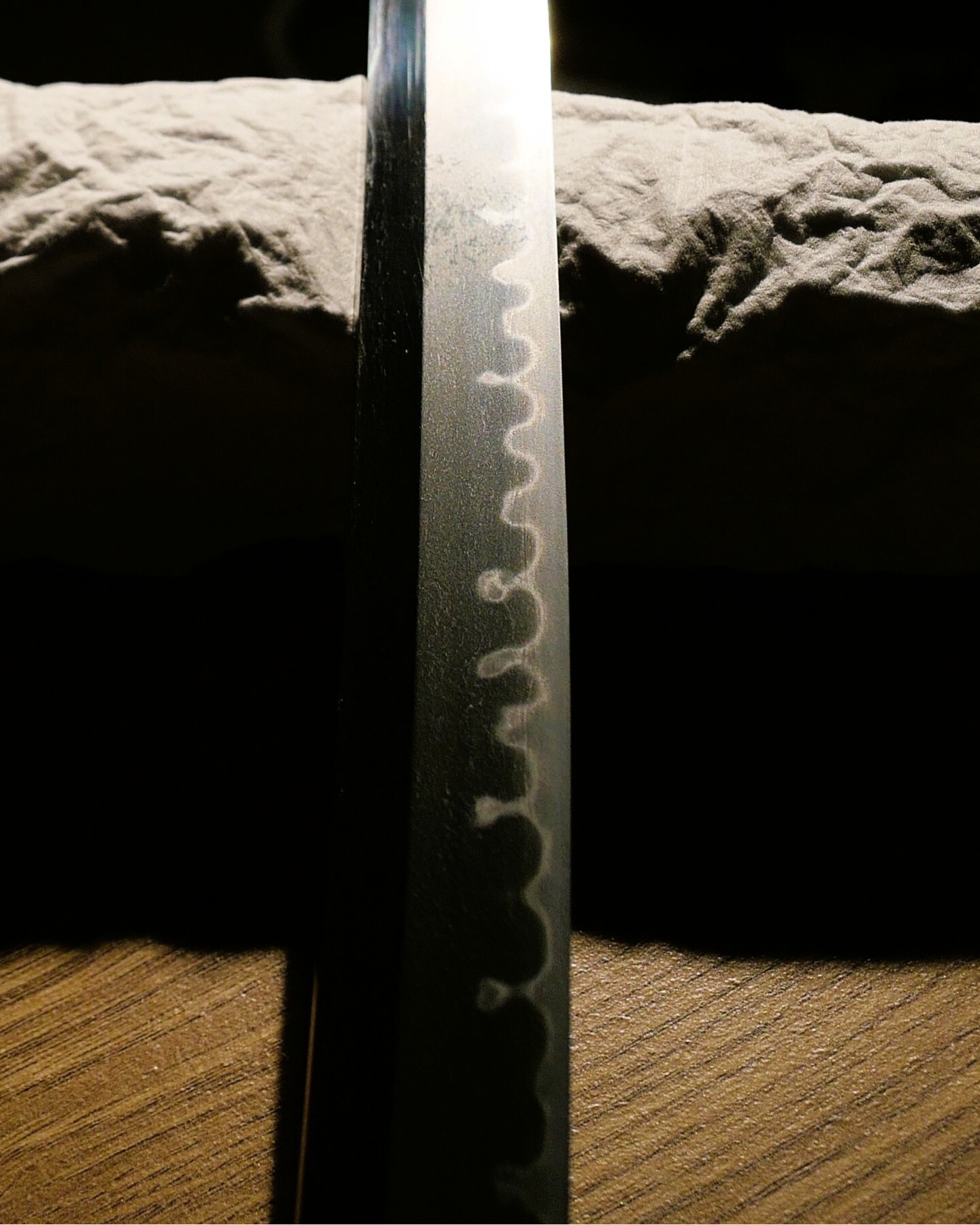
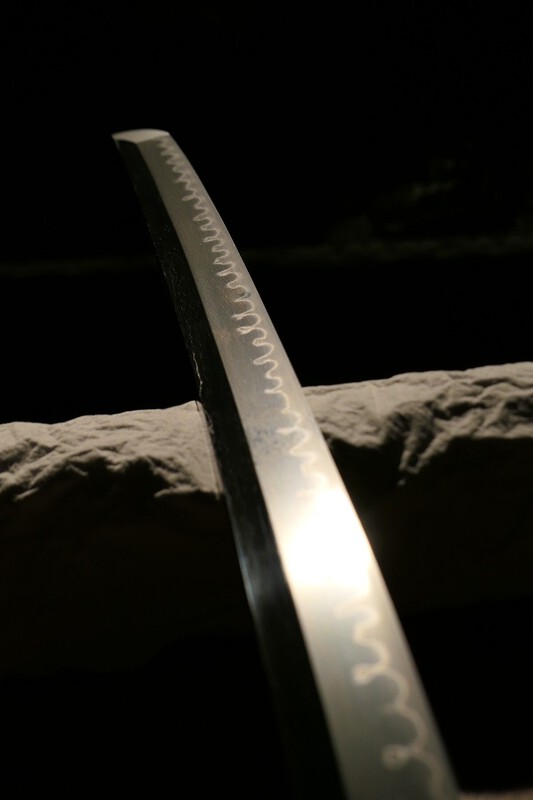
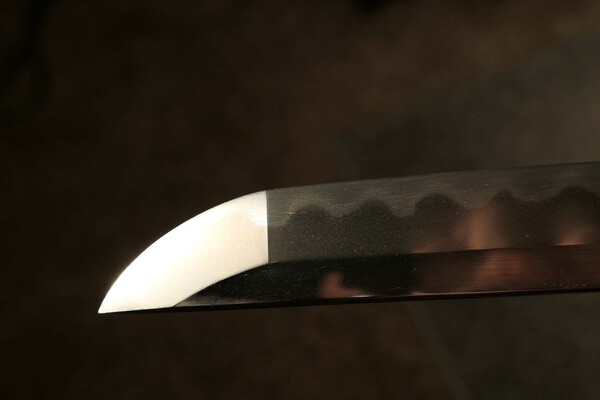
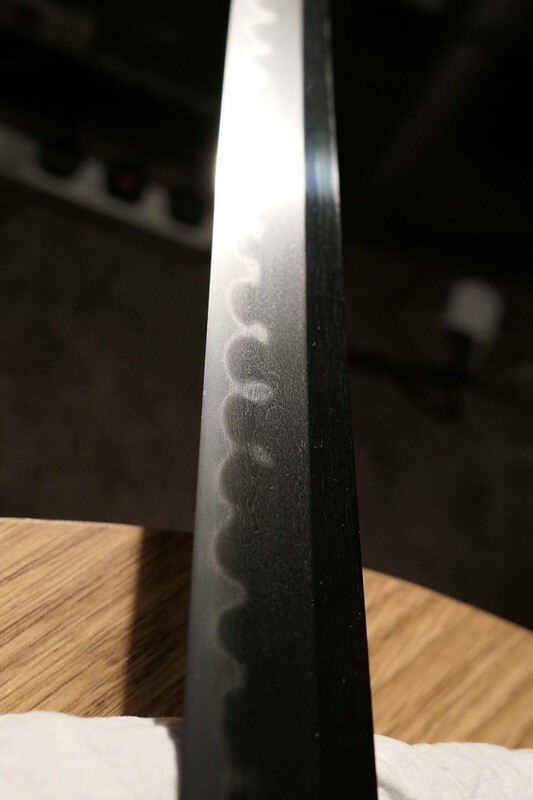
Thank you, for the kind words. It is very reminiscent of Bizen-den in the lower portion of the blade; especially with the lobes of tadpole choji. Its only the later third of the blade, before you start to see that classic Mino-style gunome. -
A Naval Kyu-Gunto by Teruhiro
Marcus Devonport replied to Marcus Devonport's topic in General Nihonto Related Discussion
Thanks, I have something of a history with this particular sword... I was really invested in the sword when it came up for auction, but couldn't match the winning bid 😁 Yet somehow the sword found it's way back to me a little over a year later, in a dealers private collection.- It took 12 months of gentle negotiation before we could close a deal -
A Naval Kyu-Gunto by Teruhiro
Marcus Devonport replied to Marcus Devonport's topic in General Nihonto Related Discussion
-
A Naval Kyu-Gunto by Teruhiro
Marcus Devonport replied to Marcus Devonport's topic in General Nihonto Related Discussion





-
A Naval Kyu-Gunto by Teruhiro
Marcus Devonport replied to Marcus Devonport's topic in General Nihonto Related Discussion


-
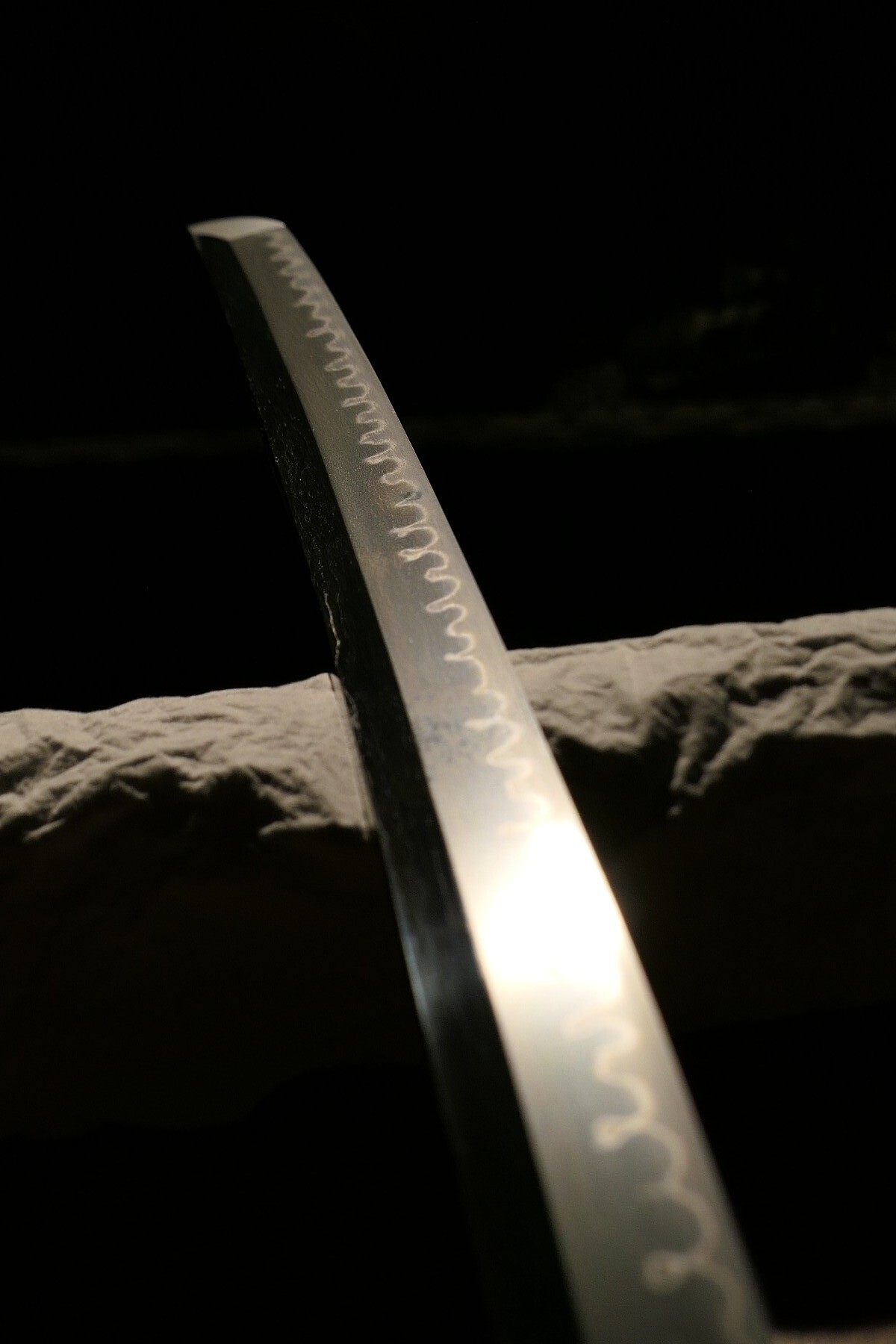
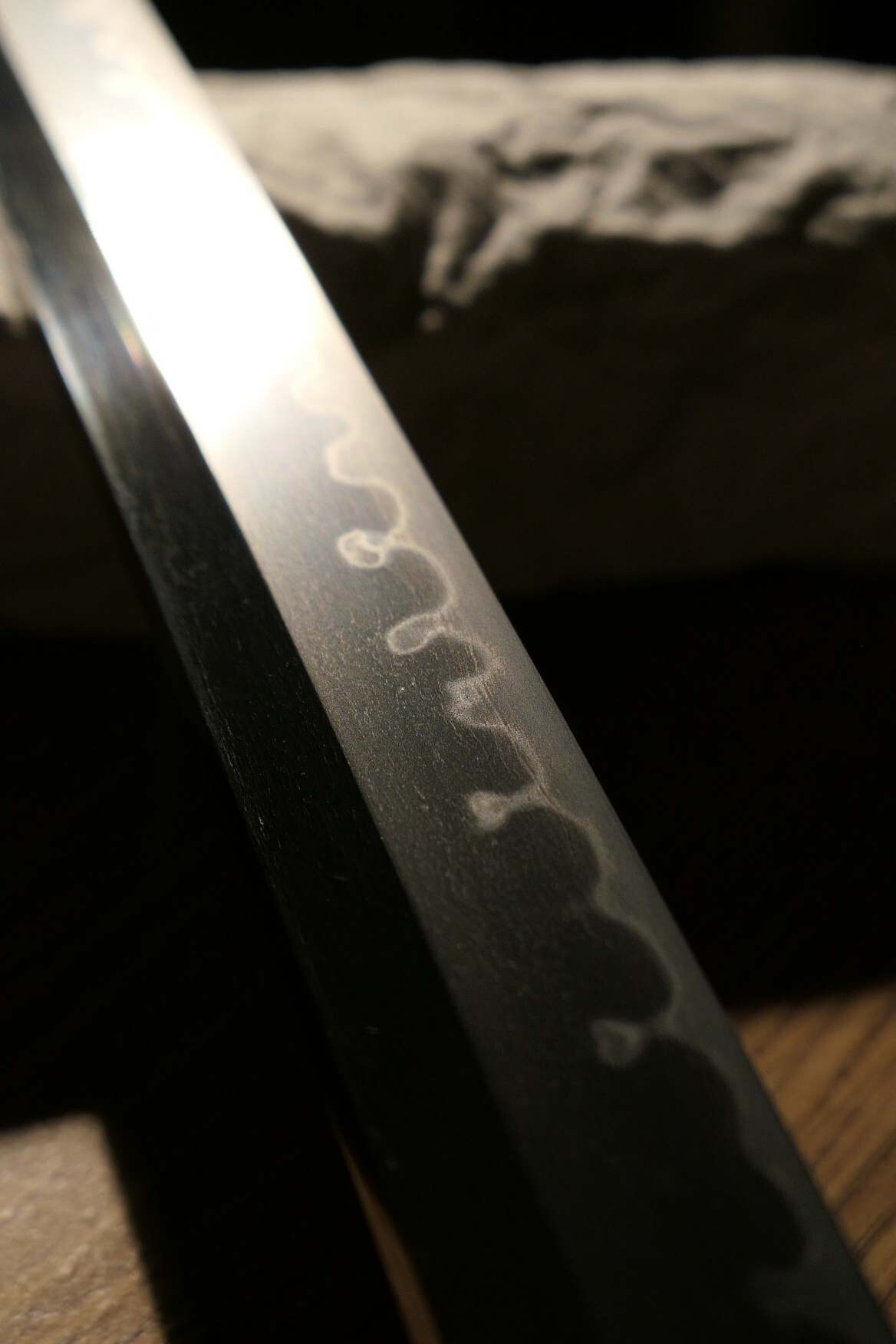
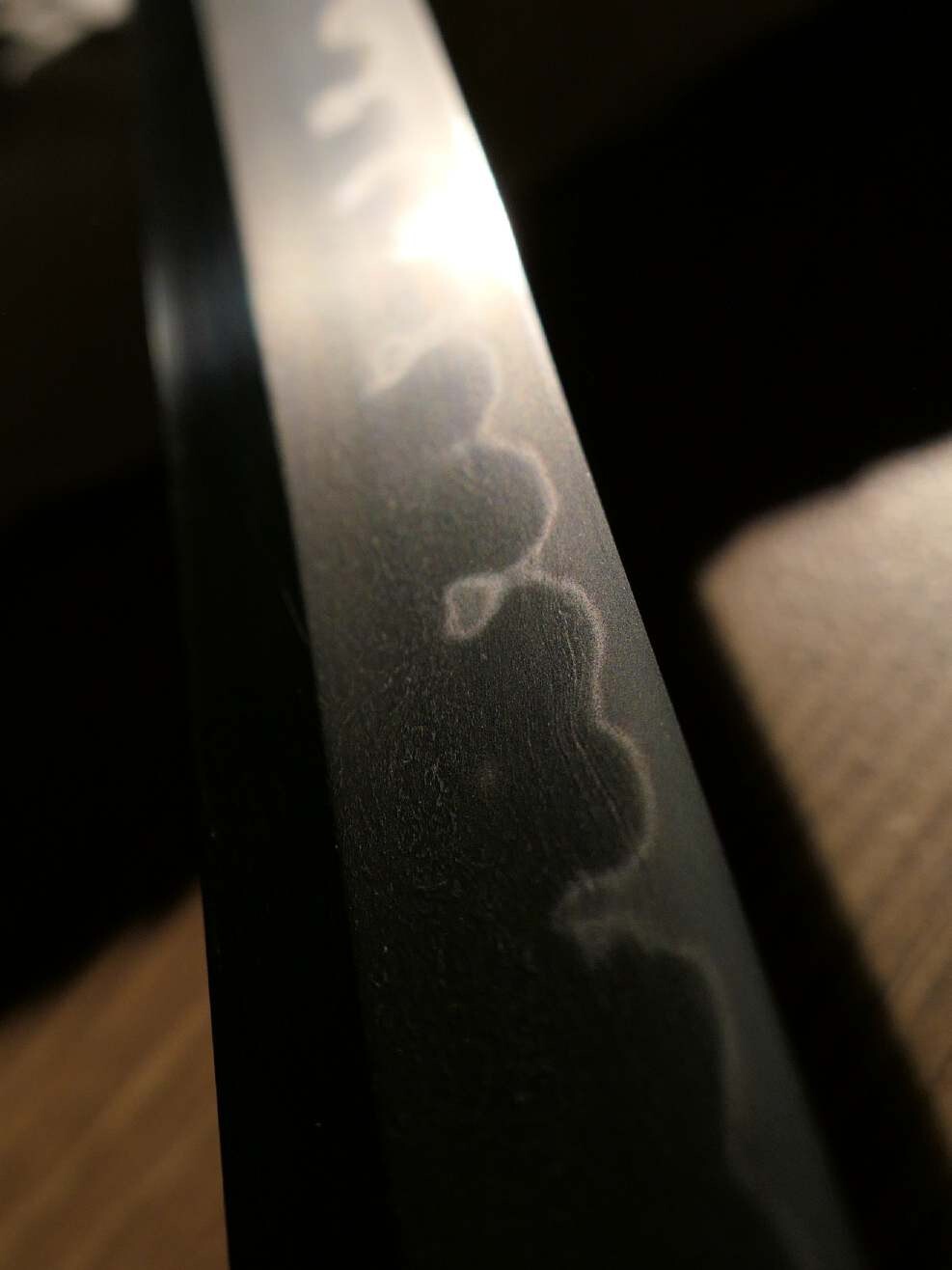
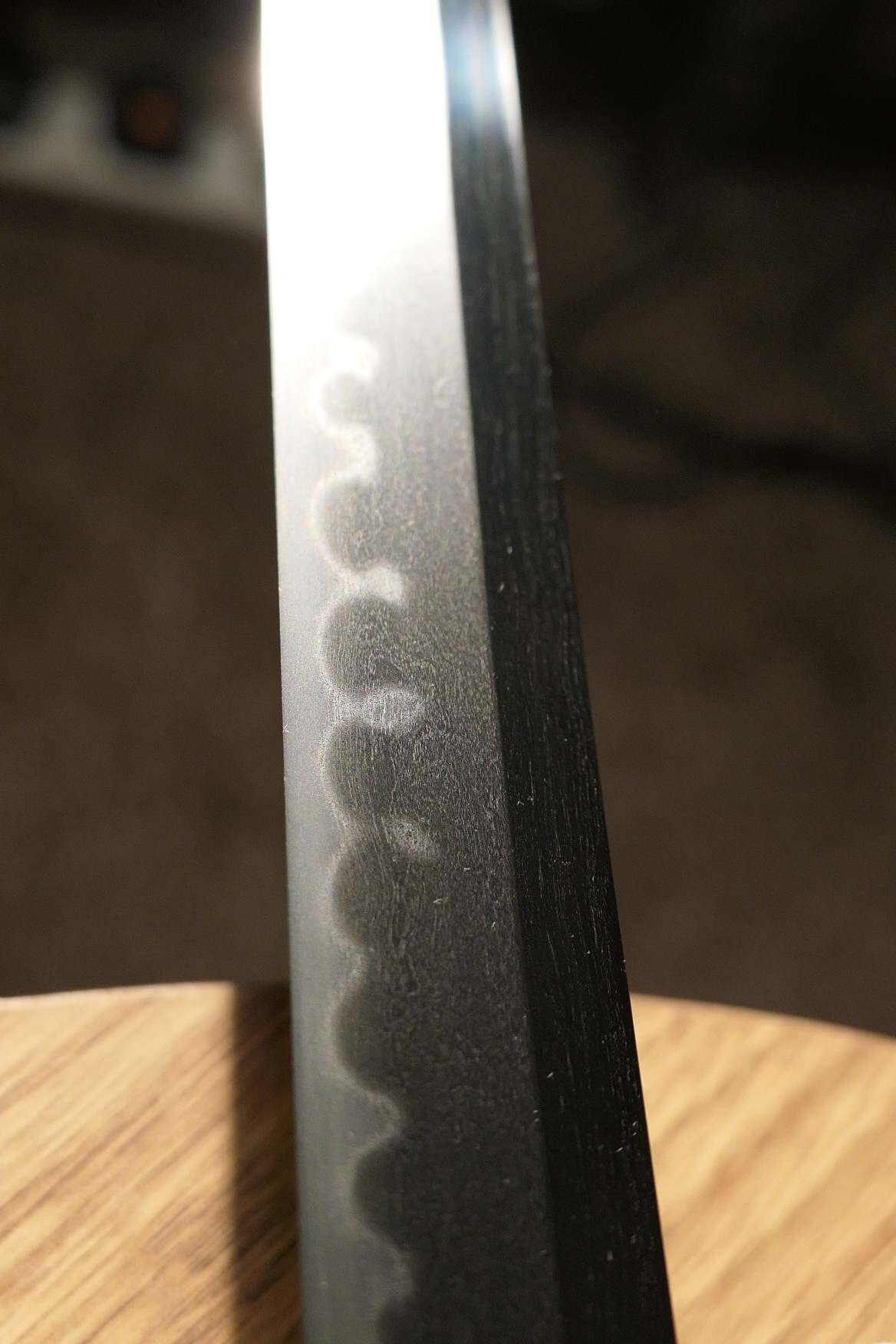
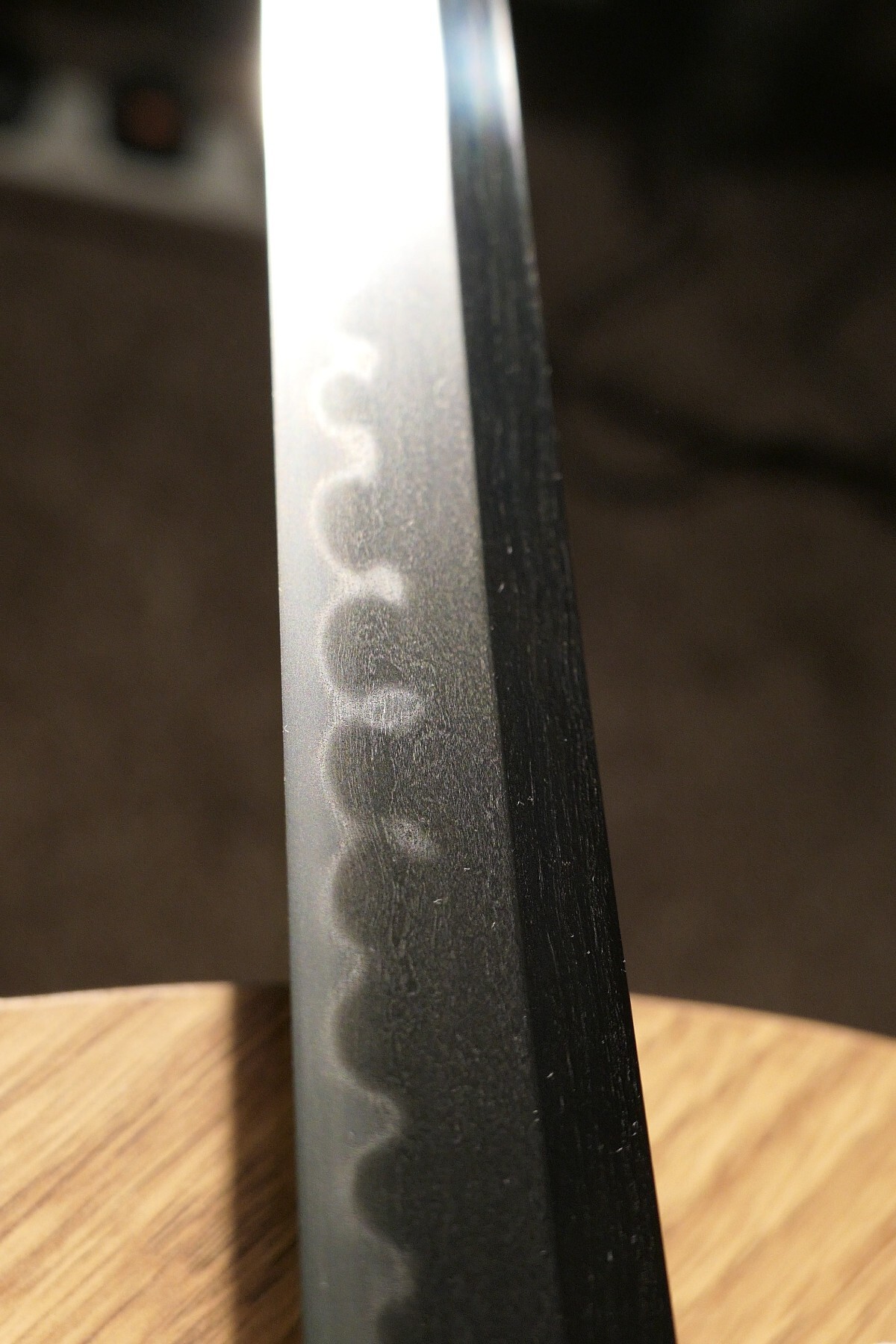
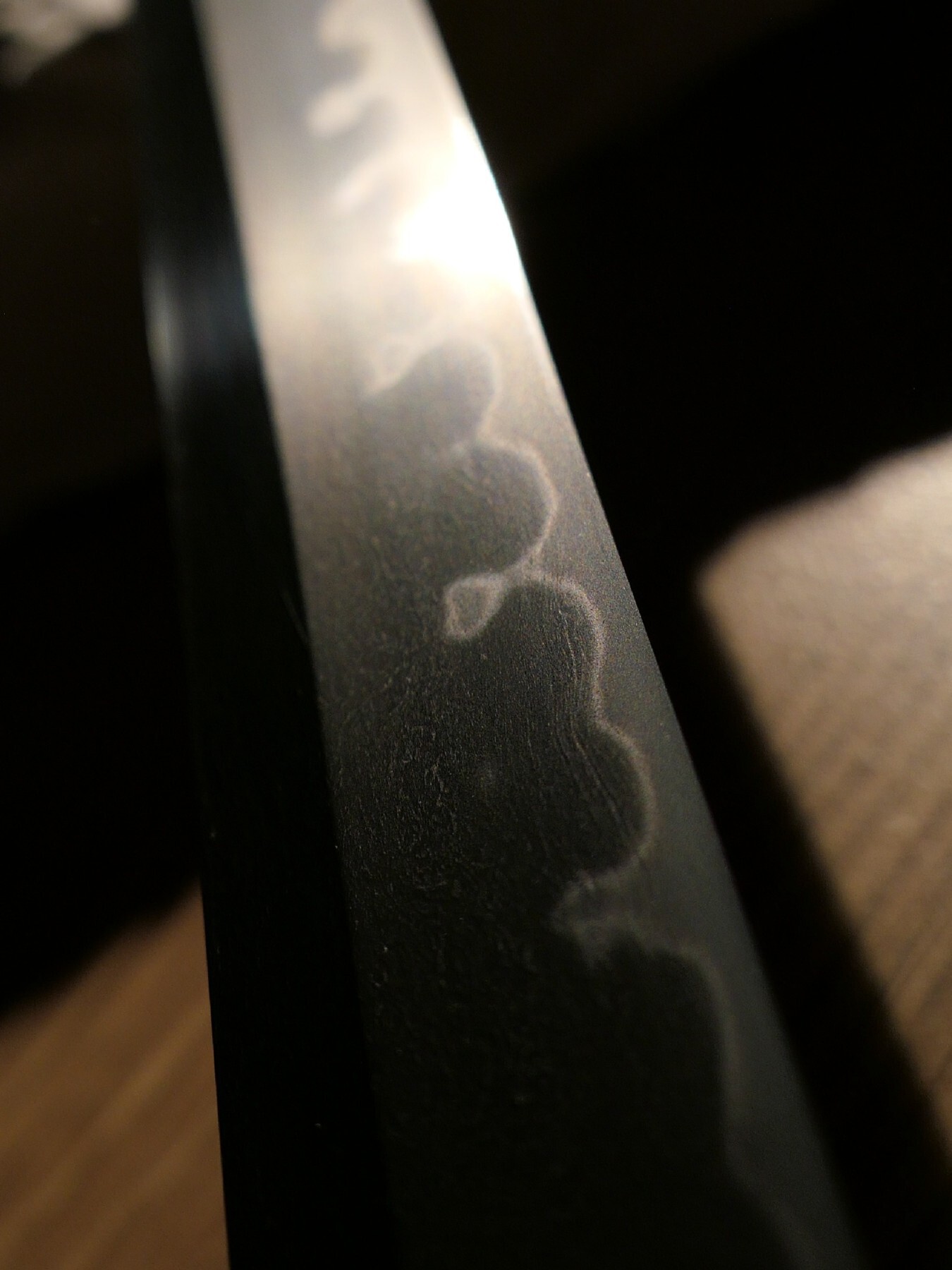
Wanted to make a post, sharing my latest acquisition to the group. Signed Harima no Kami Fujiwara Teruhiro- whilst the first 3 smiths of the line were tremendously skilled representing the best of the line, the NBTHK has attributed this piece as the work of a "later" generation. I absolutely love the presentation of this sword; having been mounted in Naval Kyu-Gunto Koshirae. I had seen a small number of Teruhiro signed pieces appear in the catalogues of higher-end auctions; with these largely being Shodai or the early generation blades. The majority of which being Tanto/Wakizashi length. Full-length katana have proved to be far more elusive- Despite their line continuing over 15 generations, I've struggled finding many examples of their work for reference online. So, I thought the group would appreciate a post, on this lesser seen smith. In my search, I happened across a past article, featuring this exact sword So I'm pleased to be able to share more of it to the group I'm not usually one to gravitate towards Hada when viewing a blade, but it really is a stand-out feature in this blade. The Hada itself tends towards Itame with burls of Mokume. There is a high degree of contrast in the colour of the steel, which makes the 'grain structure' appear 'bright' (without better terminology to describe it!) I *think* I see Chikei. Although this is a feature I struggle identifying, at my current stage of learning (I'd be grateful to the more seasoned members, who may correct me if I've misidentified this) I'm also greatly enjoying the variation to the Hamon, shifting between Kawazuko-Choji and Gunome-Togari There's abundant Hataraki throughout; with many instances of Sunagashi, Inazuma and Tobiyaki. Hope you enjoy- and of course, I look forward to hearing your thoughts on the blade itself All the Best, and Happy Collecting - Marcus


-
Thoughts and Attributions on an O-Suriage'd Wakizashi
Marcus Devonport replied to Marcus Devonport's topic in Nihonto
High stakes 😅 But, If I *were* a betting man, I'd be placing on a Bizen attribution from NBTHK... Maybe going as far as saying Early Muramachi. I feel that the characteristics are very fitting of the school: Choji Hamon ✅ Clear Utsuri ✅ Midare-Komi Boshi ✅ -
Thoughts and Attributions on an O-Suriage'd Wakizashi
Marcus Devonport replied to Marcus Devonport's topic in Nihonto
Apologies to be a little late to respond to this thread, I'm also a curious as its a very different direction to the Bizen attribution others were taking. Hamon looks to be mostly choji, with very prominent utsuri, although I do struggle picking up the structure of the hada in this particular sword 🤔 struggling to see any mention to choji on the Japanese Sword Index for Mino-Den, but not conclusive by any means.