John C
-
Posts
3,158 -
Joined
-
Last visited
-
Days Won
19
Content Type
Profiles
Forums
Events
Store
Downloads
Gallery
Everything posted by John C
-
WW2 Japanese sword Koa Isshin Mantetsu katana
John C replied to Swords's topic in General Nihonto Related Discussion
Bruce: Not sure if you got the serial number for the above blade, so here it is... John C.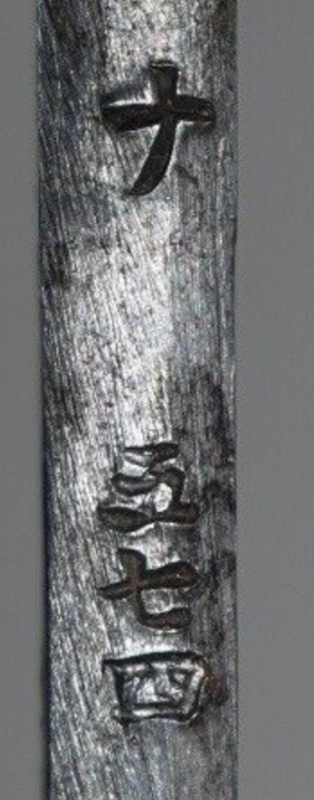
-
Good example for new buyers
John C replied to John C's topic in Auctions and Online Sales or Sellers
Here is another one being sold as "original" and has multiple bids. https://www.ebay.com/itm/314185427970?hash=item4926e92c02:g:d50AAOSwn-hjUbM- John C. -
John: Thank you. It goes toward confirming my suspicions. This is now 7 examples of Yukihiro signing one way, while the signature on the blade in question is signed differently. Could be an anomaly, but who knows. John C.
-
Wow. You guys are absolutely the best. Thank you very much! I am accumulating as many known translated samples as possible for a reference file. John C.
-
Hello: These have me stumped due to their style. I think the second character may be tsugu. But cannot figure out the first. Am I close? John C.

-
Folks: (particularly those of us who are new) Here is an example of an ebay listing for a WW2 Japanese Sword. All kinds of red flags. But you will notice there are still people bidding on it. https://www.ebay.com/itm/144780901273 John C.
-
Thank you guys. I tried looking them up but couldn't figure it out. I envy your skills! John C.
-
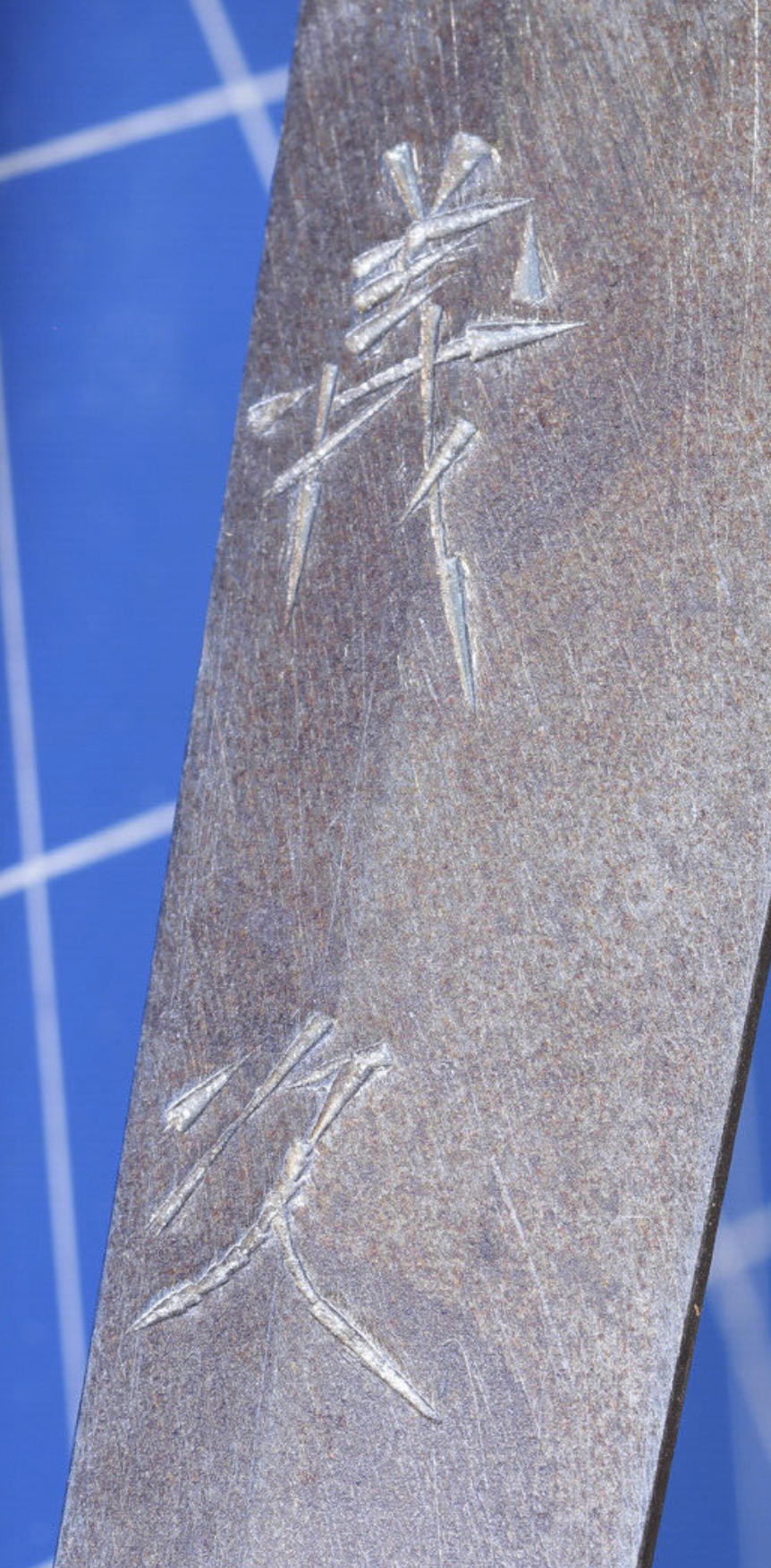
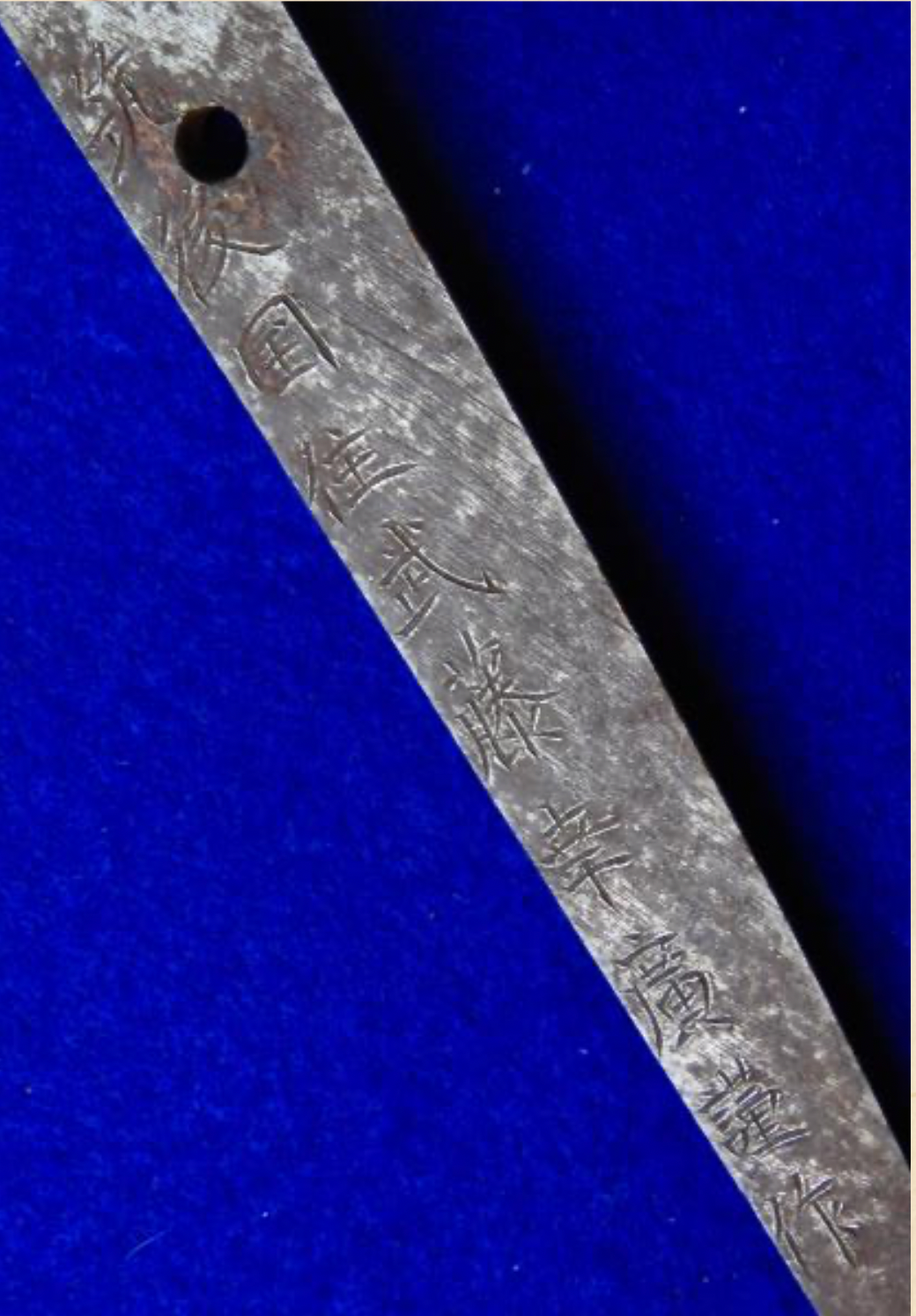
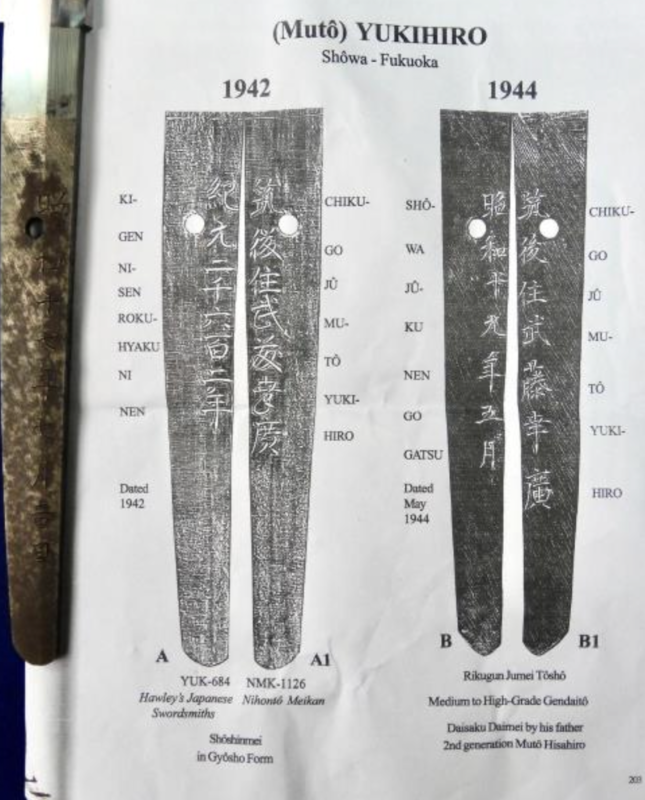
Hello: This mei is from an auction I am interested in, however the kanji used in the signature are different than his normal signature. The smith normally signed Chikugo ju Muto Yukihiro. This mei is signed Chikugo [something] ju Yukihiro [something] saku. It's the two "somethings" I can't figure out. Any help would be appreciated. Thank you, John C.

-
Further information: I have checked 3 other mei from nakago posted on NMB referencing this smith. All 3 mei match the sample in the book for RJT smith Yukihiro. At least 2 reference the star stamp. The blade in question on this auction uses a different style of mei. There are more kanji, two of which I cannot identify. Do you think this is the same smith? Thank you, John C.
-
My apologies: the name of the smith is Muto Yukihiro from Fukuoka prefecture. John C.
-
Vielen Dank, Chris. I will take all of that into consideration. John C. BTW: Ich hatte fur drei Jahre im Deutschland gewohnt.
-
Re: Here is the book page being presented for the sword above. John C.
-
Hello everyone: I have some concerns about the representation of a mei on a Muto Yukihiro signed blade. I am interested in this sword, which is being presented in an auction. But the signature on the blade is written in a different style than the one being presented by the seller in a book page. Could this be the same smith? I believe the date on the blade is Showa 1943, however there do not seem to be any star or other stamps to indicate RJT. Any insight you could provide would be much appreciated. Full disclosure: Seller (Hennadiy2006 on ebay) is asking 2750. John C.

-
Need help authenticating a Kai-Gunto
John C replied to ChappyMan's topic in Military Swords of Japan
Could be the camera angle, but it looks as if the tsuba were made for a tanto or wak and the seppa were made for a katana (different size nakago holes). John C. -
Kirill and Jussi: Those were my thoughts as well, however I was concerned that the more famous Sukemitsu may be the one more "faked" than a lessor known Sukemitsu. I hope to someday own a sword from pre-1868 and I am trying to hone my research and interpretation skills in case I come across a decent prospect. Thank you both very much for your input. John C.
-
Good day everyone: I would like your opinion on the validity of the mei on a tanto. In an effort to increase my understanding of signatures and dates, I have been studying mei and nengo kanji from pictures of nakago online. Below are two samples; the one in question with the seller's hand is from an auction site I have (hopefully correctly) translated and the other one from NBTHK paperwork from the same smith. In comparing the two mei, they appear to be very similar. The issue is with the dates. The NBTHK papered tanto was dated 1442. The one from the auction is dated 1461. Information I can find on the smith was that he worked with the Bizen/Bishu school from 1398 to 1441. Does anyone have an opinion on the validity of the signature given the terrible pictures and date discrepancies? I have translated (took 3 days!) the mei as Bishu osafune Sukemitsu. Full disclosure: The mei is from an auction site, however I am not interested in purchasing the blade. Just trying to develop translation and mei interpretation skills. Thank you very much for helping me learn. Regards John C.


-
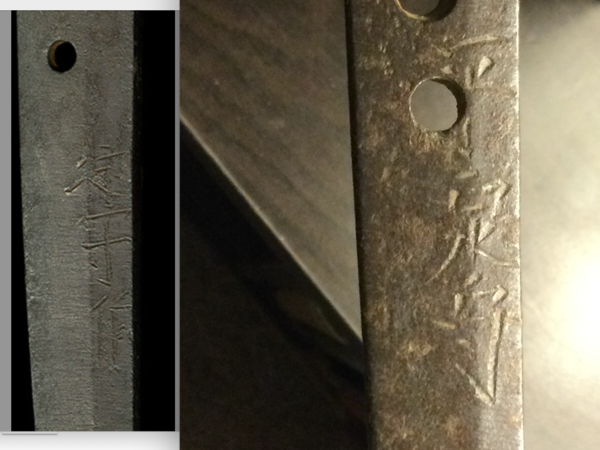
Jussi: The mei from my blade and the reference sample side-by-side look very different. Even the phrasing "Sadamori saku" vs. "Taira Sadamori." So, a gimei then? As for the koshirae, I can take a pic if you think it would help, however as you have heard, my pictures are not very good using my current equipment. Additionally, the tsuka and tsuba are not original to the blade. Or at least the tsuba is not. It must be at least 5 or 6 mm too large and rattles on the blade. The saya seems to fit okay and the habaki is an exact fit. John C.
-
Everyone: I really do appreciate all of the input. I guess it is somewhat comforting to know that my confusion over this sword is, at least in part, warranted. I think for now, I will just file this sword away as a "study" piece and look for examples of various eras that may fit the profile, etc. Thank you all very much for the interest in helping me solve this puzzle. And for the education and knowledge you all have provided. John C. p.s . I'll ditch the old Ipad and buy a better camera!
-
Ray: Okay. I see it now. I assumed there were three kanji at the top rather than two. Not sure I was looking that far back either. Thank you very much. John C.
-
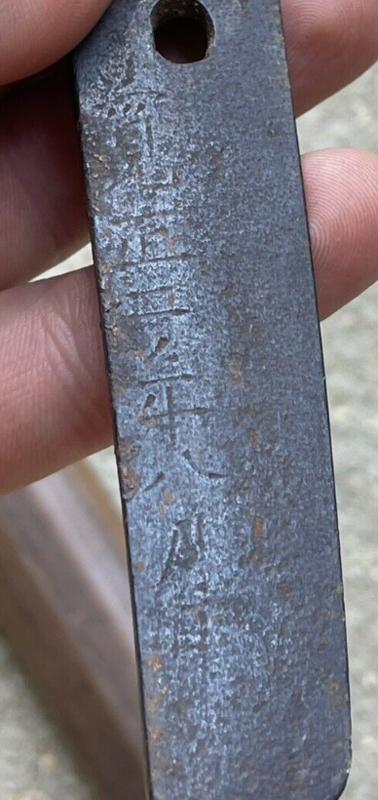
Hello valued translators: I have been trying to work out this date on my own using available reference materials, however the first two kanji (era?) have me stumped. I believe it says: [the era] go ni nen hachi gatsu = the 7th year of [era]; month of August. I realize the picture is not that great. This is from an auction site. I'm not interested in the blade, just attempting to translate the date and learn. I have noticed the stylized dates on the nakago do not always match the way kanji are printed. Thank you, John C. P.S. This will NOT be a regular request. Just can't figure this one out.
-
Jacques: According to the Token Society of Great Britain, the Kanbun Shinto swords followed this same pattern; namely: "Swords were Adapted to a new dueling style. Blades had less sori and marked taper towards the kissaki. This shape was believed to facilitate a faster and more efficient draw and slash with a sword which could be a major factor in such combat." I'm not saying this sword is anywhere near that old. But could someone have made it in that style thereby "concealing" its actual age? John C.
-
Folks: I was able to resize the pics to show the sugata (I hope). I too believe the signature may be gimei because it seems as if it were not done with any confidence. Like watching someone write a forged check - it's always hesitant. Thank you guys so much for the information. It all helps. John C.


-
Help With WWII Sword Captured By My Grandfather
John C replied to Mike Hale's topic in Translation Assistance
Mike: I believe the flag is known as a good luck flag (yosegaki hinomaru). It would be signed by relatives and friends with good luck wishes and given to a soldier. Although not related to the sword, a translation may help you identify the original owner. John C. -
Jimmy: As I stated in an earlier post, I tried to post a pic of the sugata, however the file size was too large and wouldn't load. Sorry for the inconvenience. I do realize the sword is an anomaly...that's why I'm here to get your opinion. You very well could be right on all accounts. I just don't know. I was hoping to learn from those who have been studying this for a while, so I do thank you for your assessment. I too always gave my students honest feedback; even when it was something they may not want to hear. John C.
-
Thank you very much, Steve. John C.