Mikaveli
-
Posts
362 -
Joined
-
Last visited
Content Type
Profiles
Forums
Events
Store
Downloads
Gallery
Everything posted by Mikaveli
-
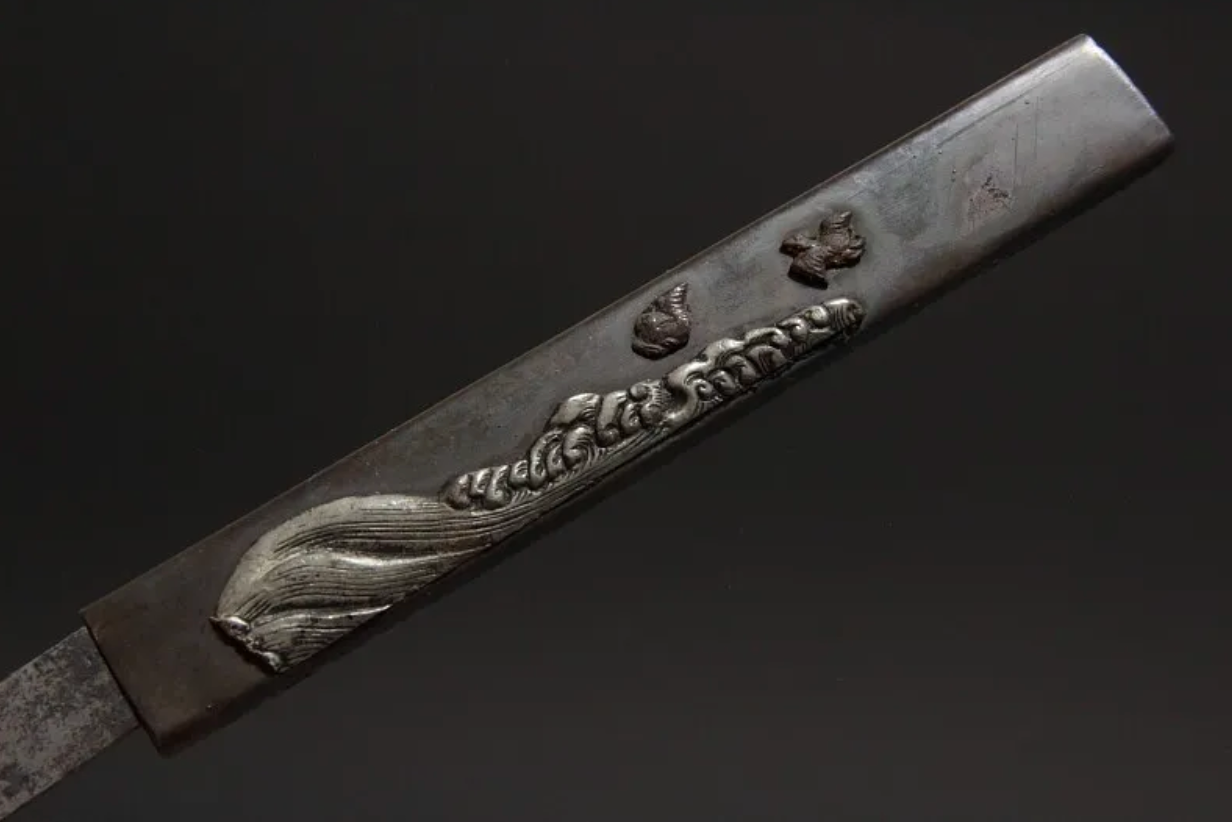
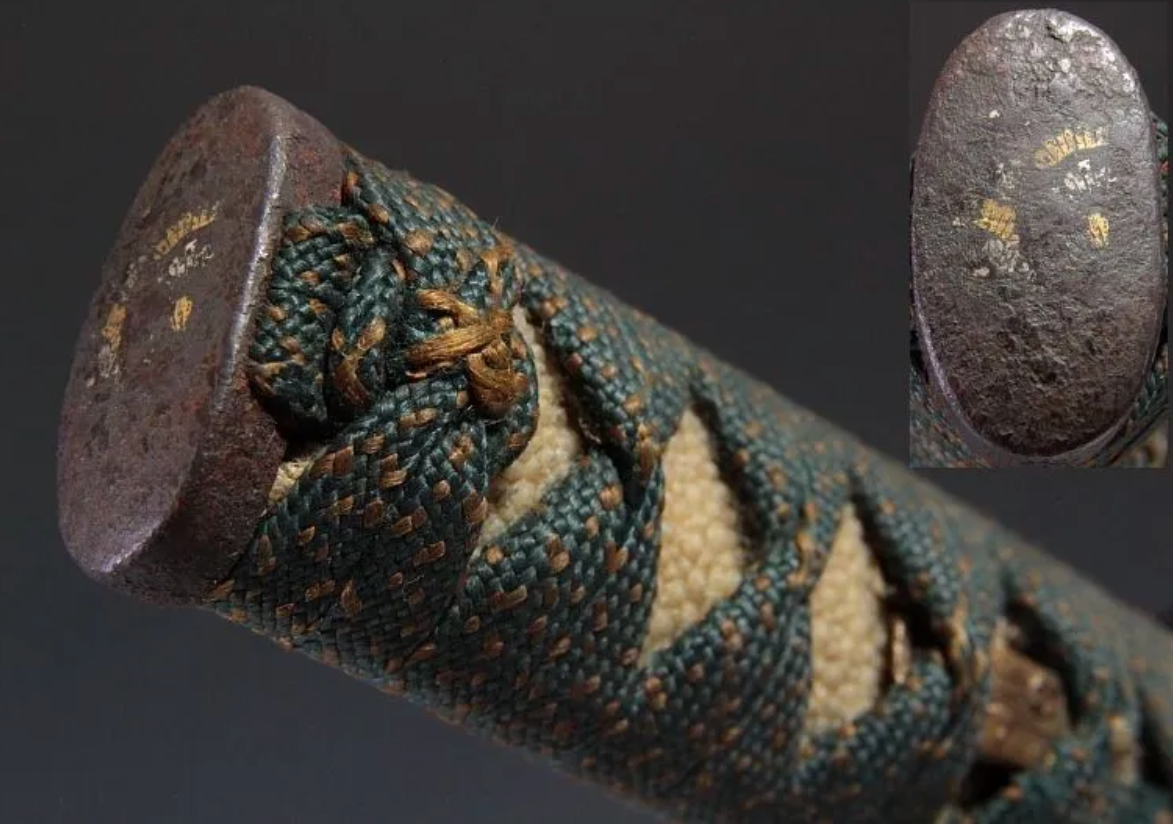
So, this caught my eye on eBay, I bid and won it for around £200. Obviously, the photos don't reveal too much - as long as it's Japanese I'd be happy with what I paid. The blade was supposed to be late Momoyama / early Edo, but no other details (not sure what will be visible out of polish). Tsuba looks off to me - but 🤷 what do I know. I liked the fuchi kashira and kozuka. Just really intended as a study / conversation piece.


-
Evolution of the 'shaku' unit of measurement
Mikaveli replied to rematron's topic in General Nihonto Related Discussion
It seems we have anthropometry to thank for both the variance of the measures and their similarity. Similar to the ft, the length of forearms, feet, hand span and thumb width seems common base units across cultures (the Roman foot is similar too). Interestingly, both the ft and the shaku have varied over time, and in different contexts. I'm sure Markus Sesko wrote about the latter when researching Masamune blades. -
I had the same thoughts about the koshirae - suppose it could easily be put together after. I'd be very happy to hear that the blade is genuine.
-
Can you post photos of the tang aligned vertically (blade up) and add photos of the blade and kissaki (tip)? First impressions are that it's a Chinese reproduction, but it'll be clearer after a closer look.
-
Google translate provides a pretty good start, to help you understand what the certificates state (if you can't read any Japanese)

-
Alternative tsukamaki wrapping (leather)?
Mikaveli replied to Mikaveli's topic in General Nihonto Related Discussion
So, after capturing a screenshot, it doesn't look quite how I remembered, but still appears to be ribbed, rather than wrapped cord? Appreciate it's not the highest res image, but any shared knowledge is very welcome.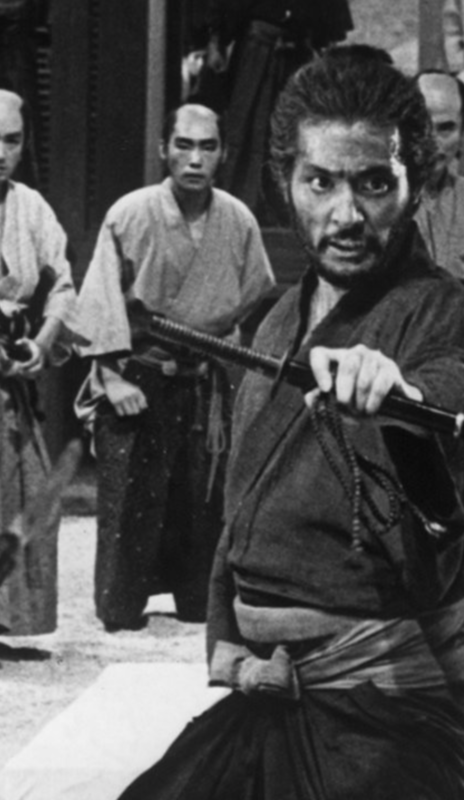
-
Alternative tsukamaki wrapping (leather)?
Mikaveli replied to Mikaveli's topic in General Nihonto Related Discussion
What material is that - and how does it adhere to the Tsuka? -
So, after watching a couple of old films (1962's Harakiri and 1955's Bloody Spear at Mount Fuji), I noticed a few of the main characters tsukas were wrapped in what appeared to be a single, flat piece of black leather (smooth, not twisted strands) - rather than Ito cord etc. Now, I've basically come to expect Tsuka Ito as the default - but was this always the case? ...or, am I just noticing film prop details that aren't relevant to real nihonto or the period?
-
"he also made swords in southern barbarian steel (dutch steel ) Nanban tetsu. " "Southern barbarian" was the original (Chinese) meaning, but by the Edo period, I believe its meaning had evolved to just refer to Western Europe (especially Spain and Portugal at one point). I'd think of it more as "imported steel" rather than any particular country as the origin, from what I've read.
-
Yes, first purchase - but with the help of forums like this as a guide (and an increasing library of recommended books). Still happy, although, in search of a companion for it now - expensive hobby! One of the best things to happen, as a complete newbie prior to buying anything - was to find a sword being sold as "in need of a polish". Googling that topic led me to a trove of information, by serious collectors and probably saved an expensive mistake.
-
Interesting, I hadn't really considered the jacket / lamination layers of different steel. So, a deep (wide) hamon on "monosteel" might produce a weak blade, but if only the outer steel is high-carbon, the overall structure isn't measurably weakened. So, next question is are the layering styles documented for the various smiths? I've (so far) only seen Masamune's "Soshu Kitae" style.
-
Interesting - is the a trend towards more decorative hamon in the Tokugawa period then? I hadn't heard of Nakamura, but his comments matched my assumption.
-
For Nihonto in general, how deep is the hardened area of the sword? I'm just curious about the potential difference in strength of some of the more decorative / variable hamon I've seen. For example, with all other things being equal, would a straight hamon, a third away from the edge be measurably less brittle than an undulating wave pattern that approaches two-thirds in places? Don't worry, I'm not planning on doing any actual testing - I'm just interested in how much the form would have affected function.
-
I was going to ask if the image was flipped, as I hadn't seen the person radical on the left! Was this a thing then? Signing backwards 😲
-
So, I've just purchased my first 日本刀, forged by Tanba no Kami Terukado, an early-Edo period smith. As he's my entry point into Japanese swords, I'd like to find out more about him, the blades he produced and (eventually) learn to compare / appraise his work in contrast with other smiths / periods. This is purely amateur research for my own hobby use, I've got no commercial interests and won't be selling anything etc. Any help in corrections, further / primary sources and examples of his work would be greatly appreciated. Profile Considered as a "leading Mino smith" in "The Connoisseur's Book of Japanese Swords" by Kokan Nagayama. "He is listed as working in Mino 1658-1684. He was also considered one of the Zenjo smiths and listed as Seki-Kaji-Toryo ” master of all Seki smiths”. The Tegai influence is easily recognized within this work. " - source: https://nihontoantiques.com/project/wakazashi-sword-fss-697/ Signatures Zenjou no Fujiwara Kanekado 丹波大掾藤原照門 (Tanba no Daijou Fujiwara Terukado) 丹波守藤原照門 (Tanba no Kami Fujiwara Terukado) 1659 on? Together with a few other variations. Active years 1658-84? School Yoshisada (Mino) Ratings Hawley's: 60 points Toko Taikan: ¥2.8M Fujishiro: "Jo Saku" -source: https://nihontoclub.com/smiths/TER16 Notable owners Isami Kondo (a Tokugawa Samurai, a member of the "Shinsengumi", later executed after capture). - source: https://www.samuraimuseum.jp/shop/product/antique-Japanese-sword-katana-signed-by-terukado-nbthk-tokubetsu-hozon-certificate/
-
Looks nice - do you know / did they indicate the smith the sword is attributed to? I'm a complete novice, but I've also just purchased an Edo period Shin To from that site.