tbonesullivan
-
Posts
408 -
Joined
-
Last visited






tbonesullivan's Achievements






-
Help Requested with Date on Kai-Gunto Blade
tbonesullivan replied to tbonesullivan's topic in Translation Assistance
Thanks so much for the info! Sadly the polish isn't in the best shape anymore, but there isn't any real rust or other damage to the blade. It came as part of a collection owned by a high ranking U.S. navy officer, though unfortunately there's no information on where it came from. Probably just off a pile of captured Katanas. Guess he got lucky. -
Just got a look at this, and it definitely looks like an older blade in a newer scabbard, unless it's Gimei. I have however been having trouble with the nengo, as the second character doesn't match any era name I can find records of. The mei looks like it reads 三 原 正 守 作 - MIHARA MASAMORI SAKU The characters I can get from the nengo are 永 ? 八 年 十 月 吉 日. There are several eras beginning with 永, but the second character doesn't match, though I am aware that there are alternate kanji sometimes used. Is it a simplified version of 禄, which would make this from the Ei-Roku period? Any help would be greatly appreciated!


-
Help with Type 98 Shin-Gunto Mei - Seki Stamped
tbonesullivan replied to tbonesullivan's topic in Translation Assistance
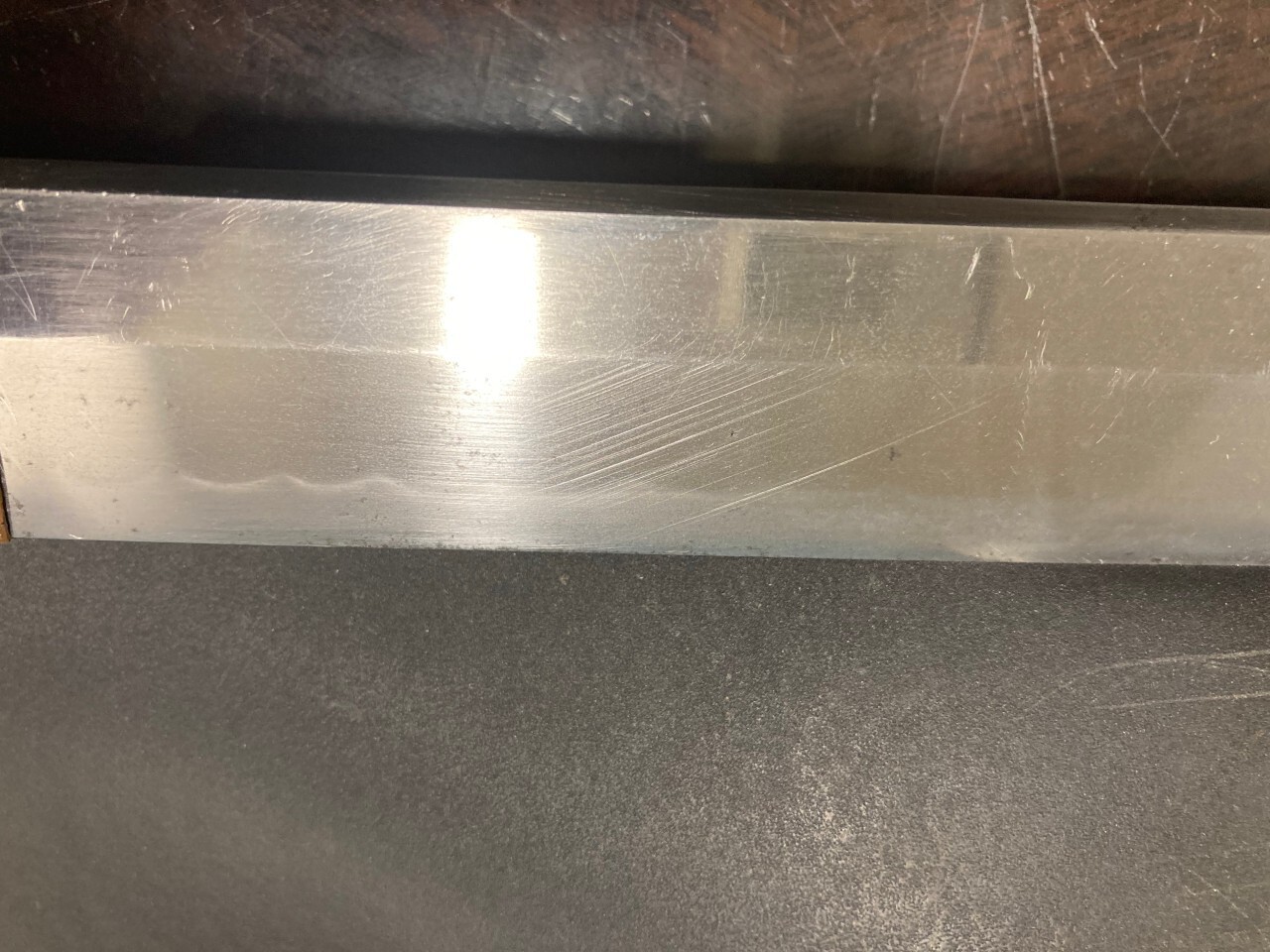
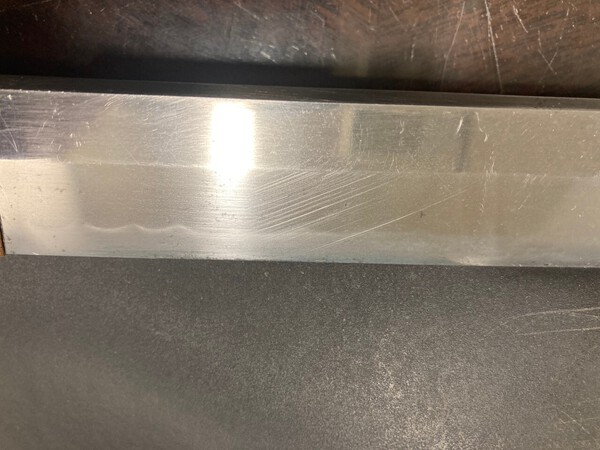
Thanks so much! That is definitely an interesting way of writing the 定 SADA character. The NAGASA on this one is almost exactly 2 SHAKU at 61cm. SORI is 1.7cm. Done! Also got a bad picture of the hamon. The habaki on this one is NOT coming off. It moves about 1cm and then won't go any further. Polish on the blade is "ok", but it's definitely a sword that saw some real use. At least it hasn't been buffed or uchiko powdered to death like so many other bring back swords I've seen.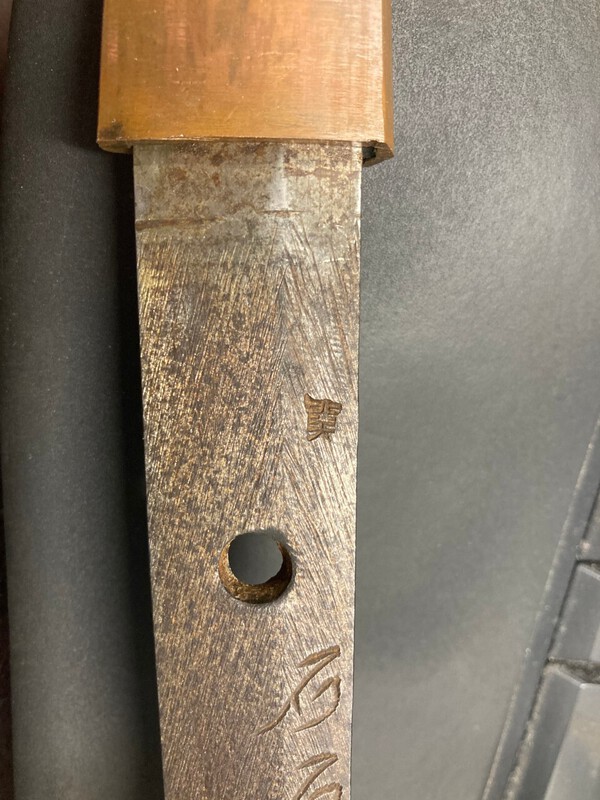
-
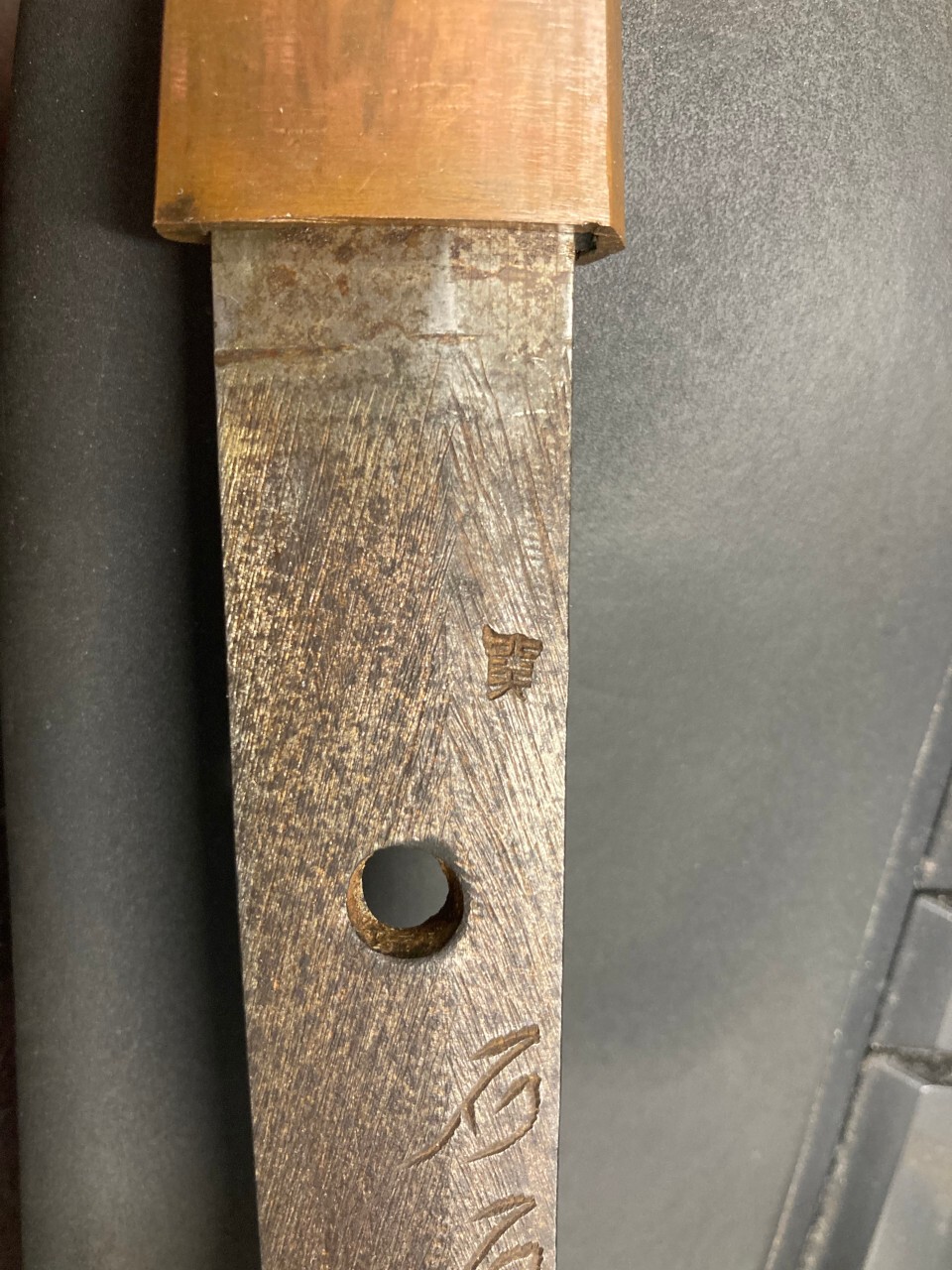
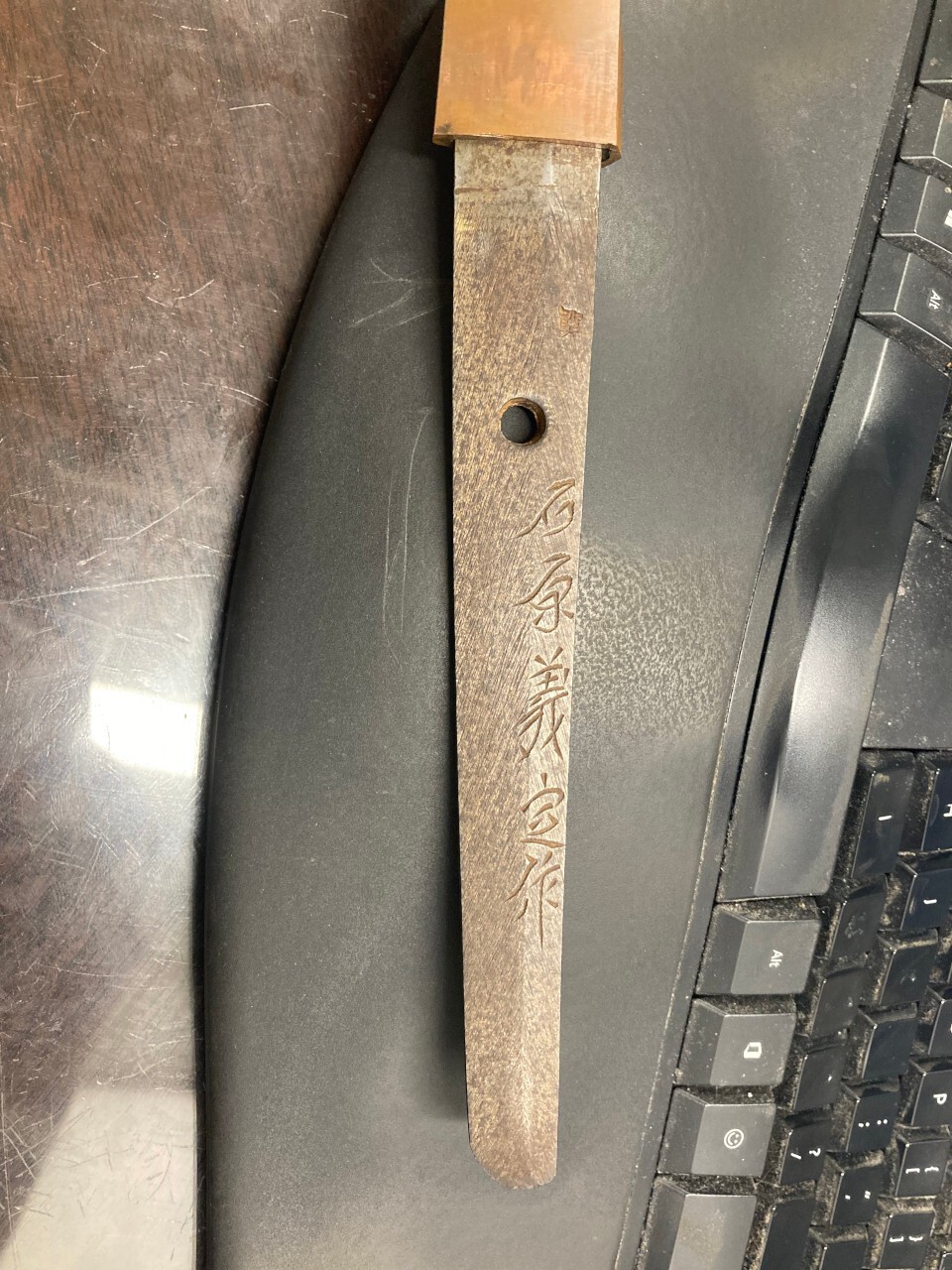
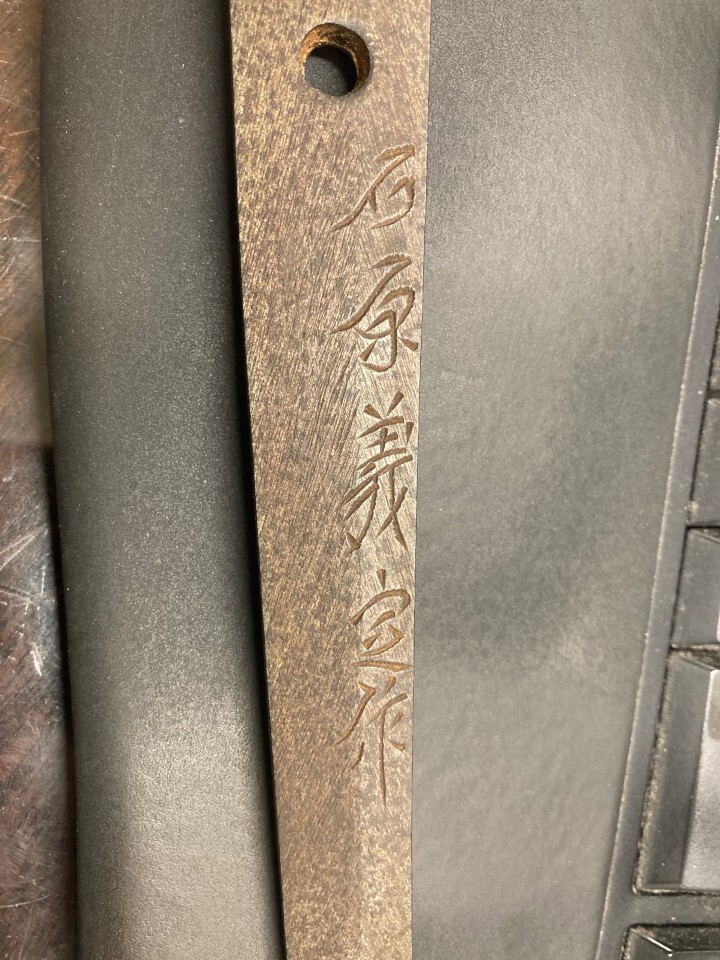
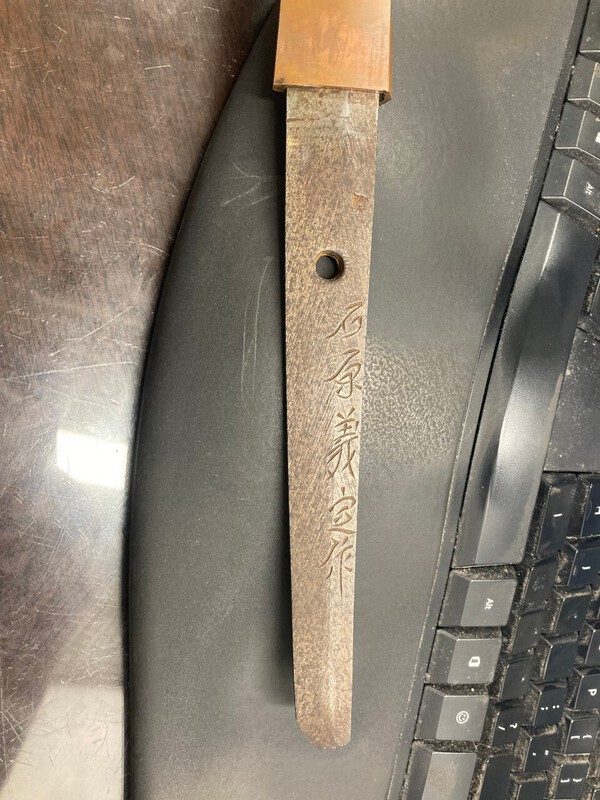
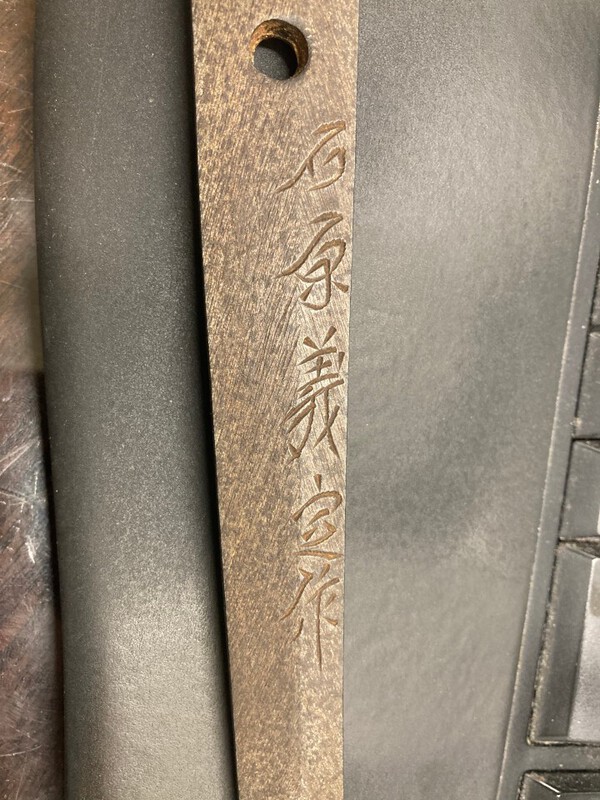
Been having some trouble with this one, as the style on the second kanji of the name, and the two characters before 義 YOSHI are ones I do not recognize. I thought maybe the second character of the name is 宗 MUNE, or 尚 NAO, but neither are quite correct. Any help would be greatly appreciated!
-
I am definitely a novice regarding sori. Like, how does one find the "deepest part" of the curve. Do you find it with the swords as a whole (tang and edge) on a flat surface, or just the nagasa.
-
Finally got around to this. Nagasa- 63.2cm Motohaba- 2.87cm Motokasane - 0.61cm Sakihaba- 1.72cm Sakikasane - 0.31cm Nakago Length - 17.8cm Sori/curvature - 2.8cm - tori sori Kissaki Length - 3.4 cm
-
Sorry for the lack of activity. I was out at a convention for the past week. I was looking at the SORI of the blade, and at least to my eyes, it looks like TORII SORI. I'm working on compiling measurements now that I am back with the blade.

-
This is possible too, and if it was signed on the other side of the blade, that side is missing even more material. If there was anything there it is gone. Then there's the fittings it came in, which are definitely tachi.
-
Well, that WAS the plan, but the current state of things makes it almost impossible to get it in for a SHINSA. I'm in the United States, which means that getting stuff in and out is very difficult, and many simply won't deal with it. I also doubt that the NTHK will be doing any on site SHINSA examinations either in San Francisco or Orlando.
-
If there was more, it is gone. The tang is missing large chunks of material, and below the KUNI there is pretty much a big indentation that would have removed any traces of the next character. I've got some pictures that should show this a bit better.


-
Ooops, sorry I was away for a bit. nagasa is 25 inches / 63.5cm right now, but looking at the tang it does look like originally it was longer. It's got IHORI mune. Blade shape is pretty standard. Not that I know of. I don't know anything about the history of the blade prior to handling it unfortunately. I have no idea how the tang got the way it is.
-
I've been told that the blade is very old, and it is definitely relatively thin, assume from having been polished several times. The tang is definitely missing a lot of material, and the KUNI character is quite faint. The curve of the blade is also a bit different than I see on the usual WWII era swords I deal with. Is there any way to tell what general era of swordmaking it is from from these pictures? Thanks in advance!


-
Yes, I see now, it was not made from Tamagahane folded steel. I cannot see any HADA at all. Is there any way to tell whether it was water or oil tempered?
-
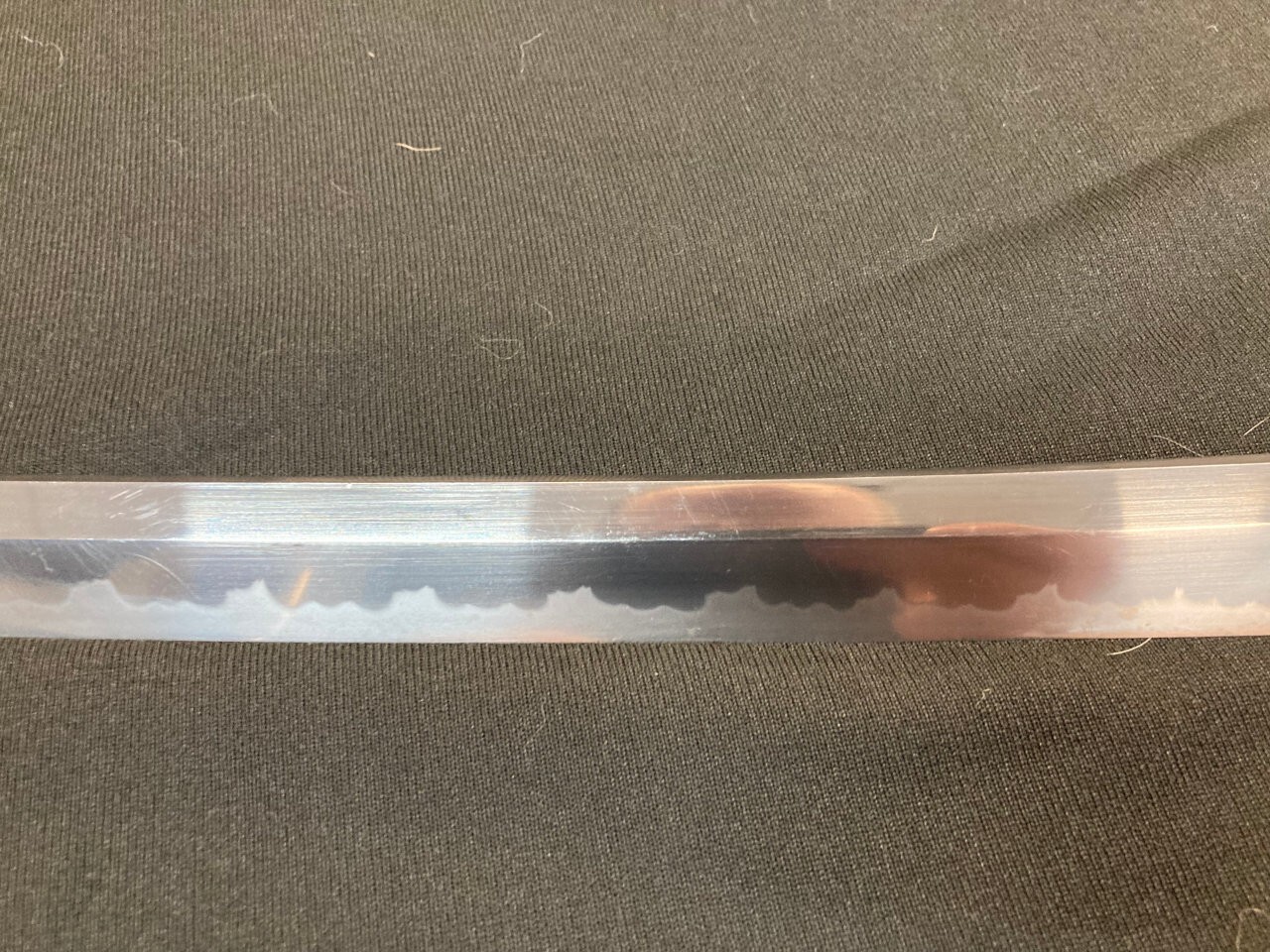
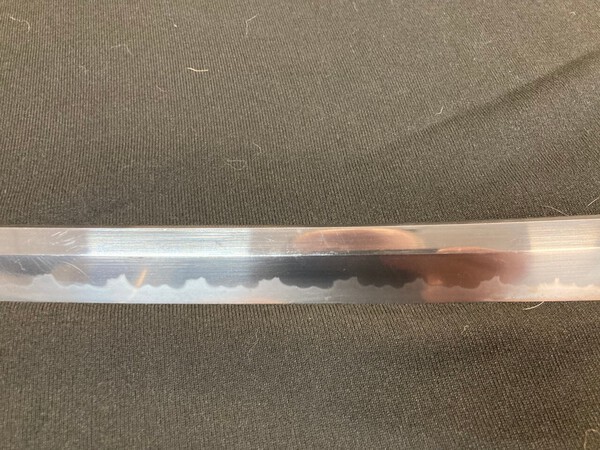
This is the blade from a Type 98 Shin-Gunt, which looks to be gendaito. This is a maker that I definitely haven't seen before, but I'm pretty sure the signature is 天 地 正 恒 作 - AMACHI MASATSUNE SAKU. The writing is quite stylized, and there are additional kanji on the other side of the tang, which I thought was a date, but it's not in a format I'm used to seeing. I thought maybe it was a Zodiac date, but I don't recognize the first and last kanji on the back. Any help would be greatly appreciated. I also got some (bad) pictures of the hamon, which is somewhere between HAKO and and YAHAZU.




-
True! They are definitely great for that. The problem is that many of these are floating around military shows with people thinking they are the real thing due to having aged from being decades old. The cross section however is completely wrong.