Jacques
-
Posts
5,202 -
Joined
-
Days Won
7
Content Type
Profiles
Forums
Events
Store
Downloads
Gallery
Everything posted by Jacques
-
It's Yasuhiro The sugata and yakidashi pointed to a Shinto blade, but the midare utsuri could lead people to think of a Bizen koto (that's why I hid all the nakago). The point that disqualifies Koto Bizen is the boshi, which should have been in accordance with the hamon as yakidashi is not compulsory. Nidai Sukehiro never produced an utsuri, the shodai did from time to time, but it's a pale bo utsuri that's hard to see, and katana by this smith are extremely rare. Nidai Sukehiro's yakidashi is shorter and the hamon often starts under the ha machi. In any case, bravo to those who dared to take the plunge and found the solution. ps Alex really doesn't know me very well...

-
I may be wrong, but I don't see how this wakizashi could be a naginata naoshi; I see a simple shobu-zukuri wakizashi with a high shinogi .
-
Just a quick thanks to the members
Jacques replied to Brian's topic in General Nihonto Related Discussion
I sincerely hope that all will go well for you. Type 2 diabetes? it's reversible, a balanced diet low in fast sugars and exercise is the best solution -
Nagasa = 64.8 cm Sori = 0.6 cm Kitae = Standing out ko-itame with a strong ji nie and a midare utsuri. Hamon = Nioideki compact and clear. Boshi = Suguha cho with hakikake along the rather pointed kaeri on the ura side

-
Whether you agree or not, it's a fact, and the deeper you go into the subject, the harder it gets. I'll skip the rest of your speech, it's a string of words with no real content.
-
I've held more than thirty swords from this school, so that's a good base. and I never said I was an expert, the real experts are Japanese...
-
In principle, a kantei is practised without opening a book; it's an exercise in memory. I'll rarely make a mistake with a Rai because it's a school I know particularly well, but I wouldn't say the same about the Nio school, for example, which I know very little about because I've only had the opportunity to study one, which is very, very inadequate.
-
One of my university professors used to say: “Don't listen to those who talk, listen to those who demonstrate”. You can say whatever you like, as long as you don't provide a clear, substantiated demonstration, it will only be your opinion, and Madame Michu's will be just as valid.
-
It doesnt' show the nioiguchi only the hadori so we cannot see if the nioiguchi is nioi or nie deki, if it's bright or no, if it's tight or no. About the hada we don't know it there is nie or chikei
-
Cannot say if it's suriage or not based on this unique photo but the sugata looks Kanbun shinto, it seems having a high shinogi which could lead to Mino or related school
-
Provide me a photo where you can see hada, hamon anf hataraki in details... after thatr you can speak For your instruction, an oshigata is like an ID card for a sword - it's made to scale 1 and NBTHK works a lot with oshigata, especially during shinsa.
-
I would say O Itame fairly hadadachi with masame towards the hamon
-
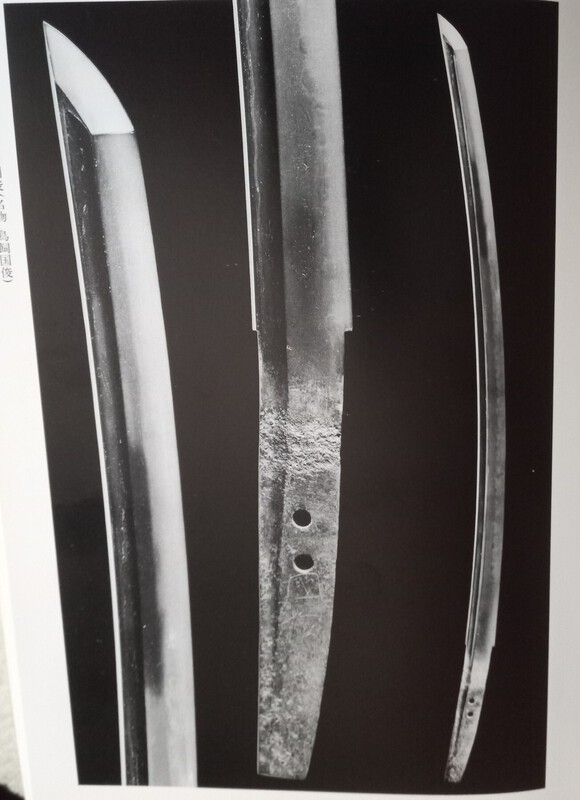
This sword is a kodachi signed Kunitoshi (Juyo Bunkasai). It is ubu and the hamon is a mix of gunome and midare choji, towards the mono_uchi we have a suguha with some ko gunome. Hada is a tight ko_itame with ji nie and a dan utsuri. As this sword is featured in numerous publications, it was easy to find its maker
-
Don't change what I said, I said you can't see anything on photos (proof attached); that said, you can't really appreciate a sword without holding it in your hand.
-
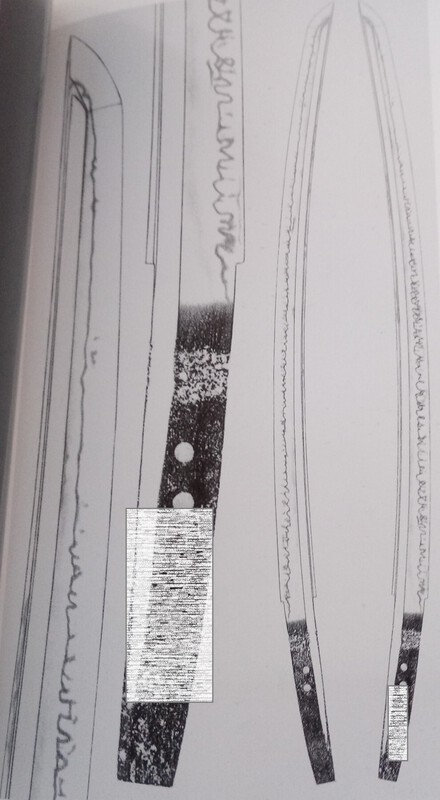
Nagasa = 60.3 cm Sori = 2.2 cm Motohaba = 3.00 cm Kissaki = 3.2 cm Era, school, smith. a description of the hamon will be a + This sword is famous
-
What I say only concerns me, and then people can do what they want with it, which isn't my problem. What I don't like is when people refute me without providing any facts, and there are plenty of people for that.
-
Knowledge above all, I'm not materialistic, I'm not interested in owning swords, and in any case I don't have the means for my ambitions. I have a small collection of knives, built up over 40 years ago, and I quickly realized how useless collecting was for me.
-
Easier than providing a valid answer...
-
You don't know who produces this famous Rai hada?
-
Yes, I'm proud to take things seriously. Nihontö requires a lot of work for people to understand and appreciate all it has to offer. Collector and connoisseur are not synonymous. By way of example, describe to me how to tell the difference between a ko-itame and a tight ko-itame. I've never been a hypocritical false modesty, I know what I'm worth and above all I know that I don't know a lot of things, you'll never see me talk about tsuba or other fushi-kashira because my knowledge of this subject is largely insufficient to be credible (Some people should think about that,whatever the subject).
-
Learn what is Ray hada and after that come to me... Would you buy a painting with half the paint missing? I wouldn't.
-
When I say a sword is “dead”, I mean there's not much left to see. The hada has disappeared, while the hamon has become weak and perhaps even invisible in some places. I'll never buy a sword in this condition, even at a derisory price, but I certainly don't have the same approach to Nihontö as many others and i'm sorry if i study it very seriously....
-
The only thing I can say is that this sword is dead.
-
In fact, the question doesn't even arise.
-
Blade with shinogi and nakago without shinogi = fake