Marius
-
Posts
3,200 -
Joined
-
Last visited
-
Days Won
26
Content Type
Profiles
Forums
Events
Store
Downloads
Gallery
Everything posted by Marius
-
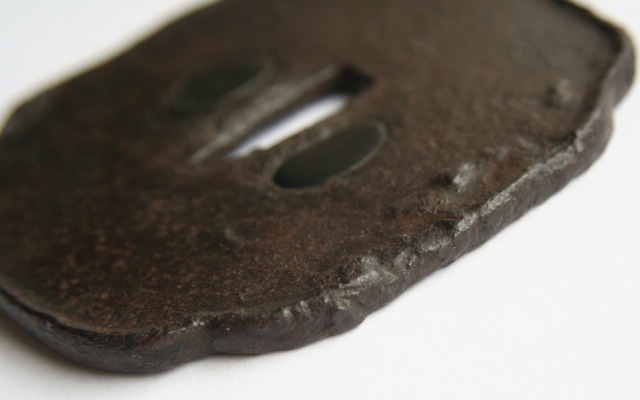
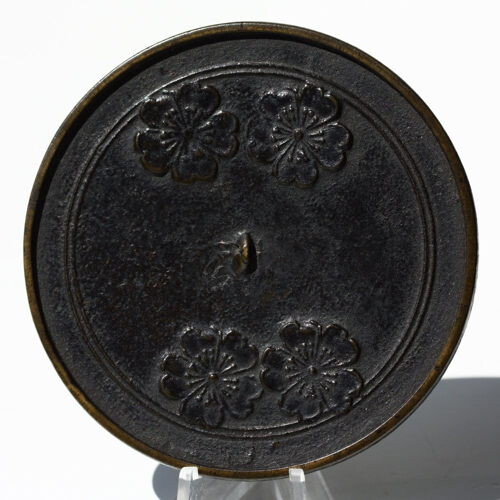
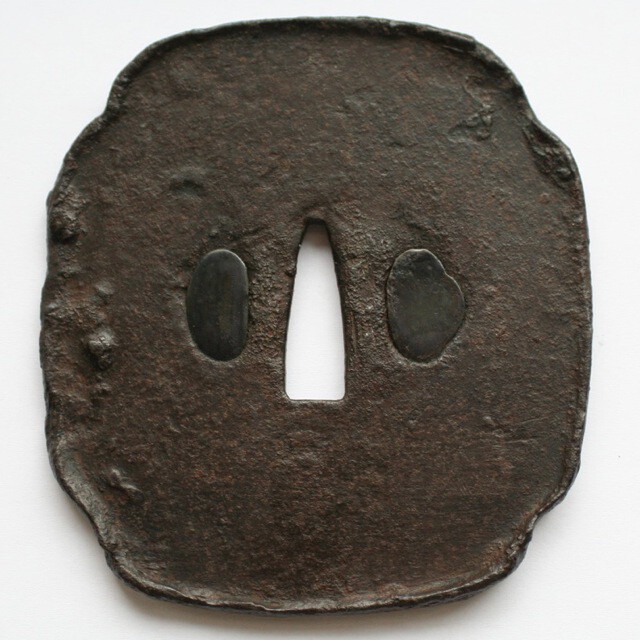
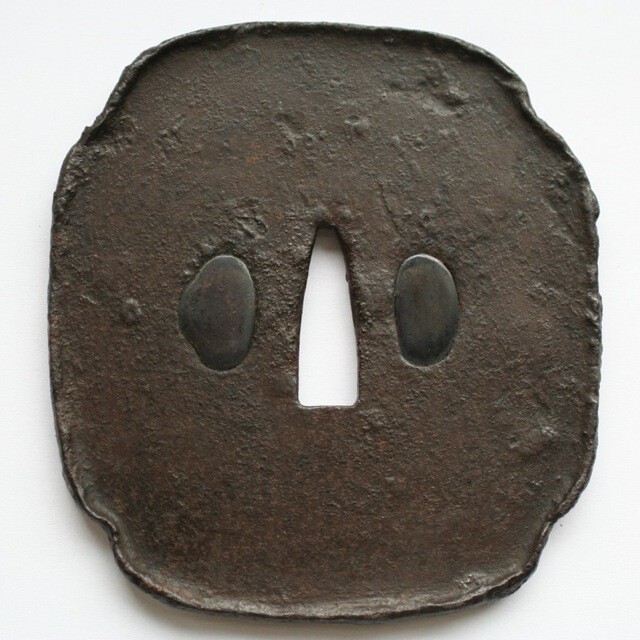
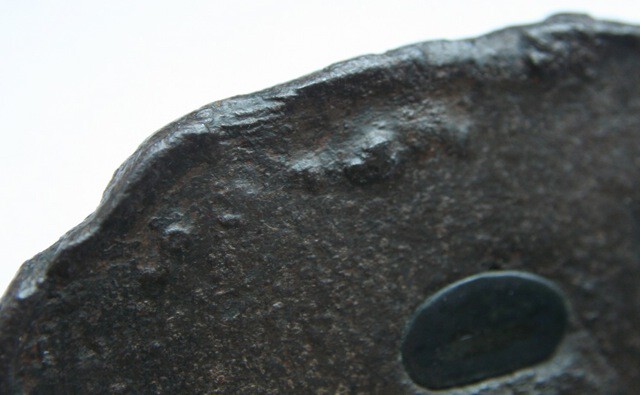
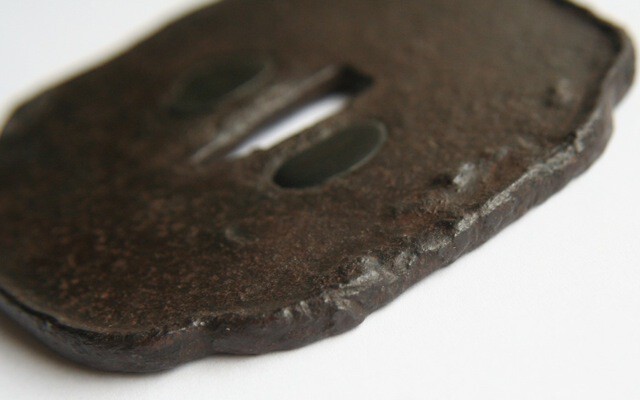
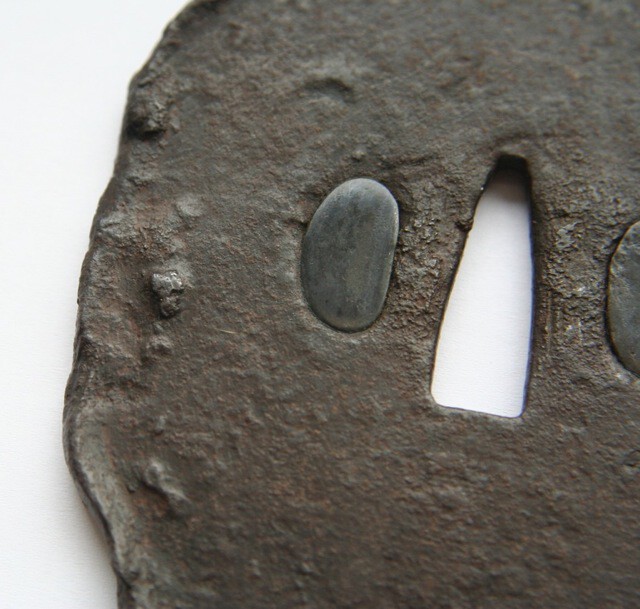
Dear All, I have just received this large (9.2 x 8.5 x 0.35cm) tsuba. The seller has written a comment about it on his website, but I leave it to you if you want to read it before saying your own opinion about that tsuba - if you think the tsuba deserves your comment, that is What strikes me is the granular surface of the plate and the nice tekkotsu in the rim - my theory is that this surface is the result of a yakite finish. The flowers are in high relief, the scans make them look like stamps. Please look at the third picture. Here is the original description: Thanks for looking and for your input


-
Thanks for the replies I don't think the plate was heavily corroded, it looks too healthy for that. Besides, it looks more hammered and molten that corroded - no flakes, no pits, healthy looks... Curran, the mimi is 5-6 mm thick. Those "gnarly iron nodules" look very much like tekkotsu, albeit very large ones. I have attached some pictures to my original post and deleted the old ones. My pics have been taken wthout flash and they show the colour and texture much better. Maybe this will give you some clues? My only clue is: it must be good tsuba, because I like to handle it - I know, that is one bad indicator of tsuba quality [sigh..] Speaking of handling a tsuba - I was looking for something to compare the tsuba's looks with. I have been thinking of Japanese teaware and then I have stumbled on a ko-shoami tsuba which has been likened to a Raku tea bowl with its glaze surface (Haynes #5, page 24, tsuba #61). The quality of the Haynes picture is bad, but this tsuba reminds me of mine... the same big iron bones and the same "molten" look. (I don't say my tsuba is ko-shoami, of course). A puzzle, but definitely a likeable tsuba one wants to touch. BTW, there is an interesting artcile on Raku tea bowls, where the author points out the sensuality of these items: http://www.terebess.hu/terebessgabor/raku.html I think many of tsuba enthusiasts here know this feeling Sorry for being so chatty today, but this tsuba is such a nice puzzle...
-
Dear All, you have seen it on eBay, I presume, and I am the one who has found it interesting at $150 I have received it today and I just wonder what this tsuba is? I like it (but who am I to judge it...), it is in very good condition, a bit of surface rust (can be easily cleaned), but no great age either (to my eyes). Still, a compelling piece of iron which forces me to handle it again and again and which gives me great pleasure to fuss with it. What puzzles me is what seems to be huge tekkotsu in the plate and rim - are they realy tekkotsu? Then, I also marvel at its crude finish, which does not seem to look like it was designed this way on purpose - this is not tsuchime, or is it? On one side of the rim the tsuba looks like it has been molten. The seppa-dai on the omote side looks scorched - as if a signature has been removed? Hitsu ana are plugged with shakudo. It's a rather large tsuba, dimensions are 9.5 x 8.5 cm, seppa dai thickness is 4 mm. It is heavy - a whopping 219 gramm. Please have a look at the pictures. I would be delighted to hear what you think about it. The color is dark brown, with no luster, rather dull, but in no way as bright as in the pictures (taken with a flash, I presume) (PLEASE NOTE: I have deleted the original pics and replaced them with better ones, done with no flash and reflecting the color of the patina) Thank you for looking
-
Fire/Smoke Damage on eBay Auction
Marius replied to SwordGuyJoe's topic in Auctions and Online Sales or Sellers
Joe, I would steer clear of this auction, whatever the sword. Let me present my sentiments: a. I hate auctions with pictures that disclose virtually nothing. b. I distrust the soot on the blade - I simply can't imagine the sword was sitting in someones closet for more than 60 years without having ever been wiped. The soot ("smoke damage") looks like an attempt to hide something. c. I don't like this excessive advertising and this seemingly naive quoting of those mysterious " two great ebayers who obviously have more knowledge" than the seller. d. I don't trust sellers who pretend not to know anything about the object they are selling. e. I don't trust people who describe swords like this: "You can close your eyes and run your finger down the edge of the blade (lightly of course) and it feels like it was made yesterday." This is the "the blade is razor sharp"-trick. All of this makes me think of someone who is addressing the less knowledgeable part of the eBay audience in order to make a quick buck out of something which could be a piece of anything, a ruined showa-to at best. -
Hi Marc, sorry for my delayed answer - many thanks for this valuable information BTW, I can read French to some extent, are there by chance any online excerpts from this rare book?
-
James, what kind of oil? And I presume that you have had the tsuba repatinated?
-
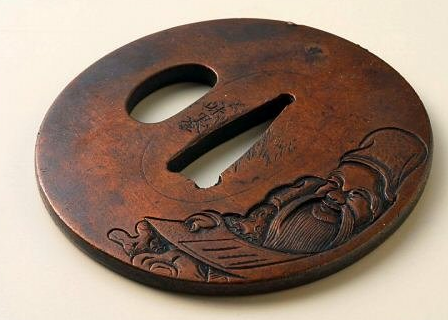
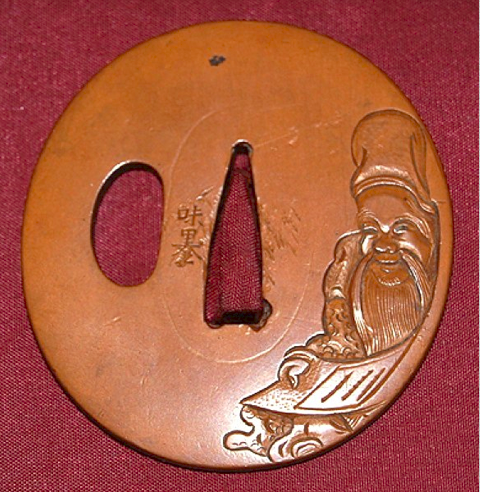
I am wondering who this long-bearded man with the hat and the sword is. Is that Shoki? Why then is he accompanied by a shishi and not an oni? Why doesn't he have his traditional Chinese official's cap with those two flapping "antennas" http://art.thewalters.org/viewwoa.aspx?id=28125
-
Pun, not intended, eh?
-
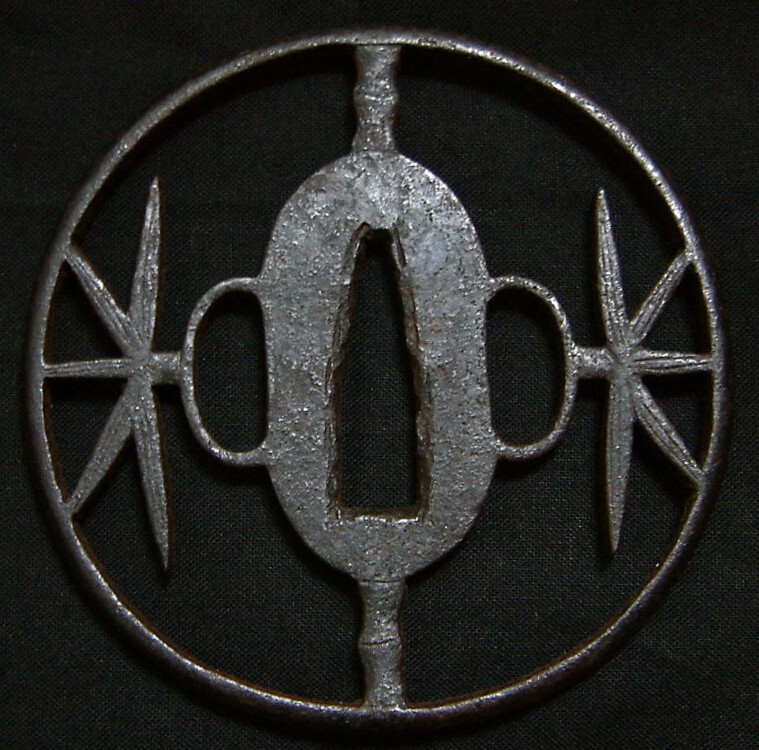
Hi Rich, thanks a lot for your input. I believe that in a later edition of Sasano's book the attribution is in fact to Ko-shoami. I will certainly not touch that tsuba, if there is no non-invasive way to get rid of the scale. I would rather keep it as it is and not do any more damage to it. It is a goner, for sure, but at least I can enjoy the shape and the fact that it may be a Muromachi tsuba. I am deluding myself, though, as this motif has certainly been copied until the 19th century, has it not? BTW, the reason why I am asking is that in the Haynes catalogues some tsuba are described like this: "some fire scale, but the tsuba could be restored" or something along these lines... So that was humbug, then? No way to rescue the tsuba?
-
Hi Lee, Thanks for the advice, I appreciate it. But wire brush? Never. That would boil down to having this tsuba destroyed. What is legitimate for a newly made sword, is ceratinly not for an old tsuba. Anyhow, nice to learn something new (the vinegar trick, that is)
-
Dear All, I have a tsuba, described by Sasano as Kyo-sukashi from middle Muromachi. I don't think mine is that old, although it matches the Sasano example in almost every respect. Nevertheless, it is a nice tsuba, deserving to be rstored. While I have had good experience with removing loose rust (washing in soap water, drying, working with pieces of bone, going slowly and methodically), I have no idea what to do with fire-scale. Any ideas? Thank you :-)
-
Ted, thanks a lot for pointing this out. Too bad that pictures do not show colours as they really are... I find it very difficult to describe the color - it is definitely not red and different from the other two suaka tsuba I have in my collection. Rather like something "light brownish"? A very pleasant color to my eyes... Anyway, what is your advice: should the tsuba be properly repatinated or rather left alone? I am inclined to leave it as it is, but that's me, the humble beginner...
-
Ford, thank you, the information about "kabure" is very interesting and adds to my limited knowledge.
-
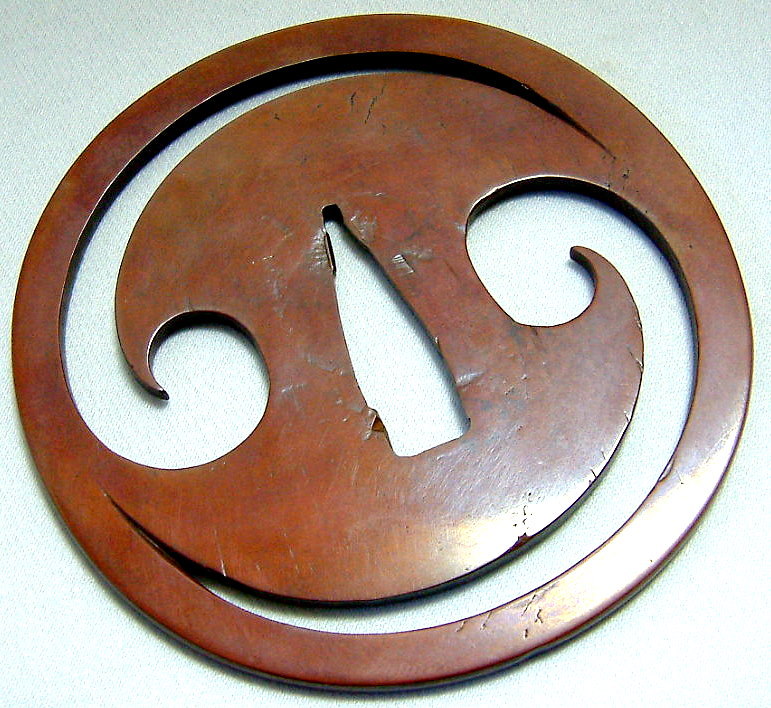
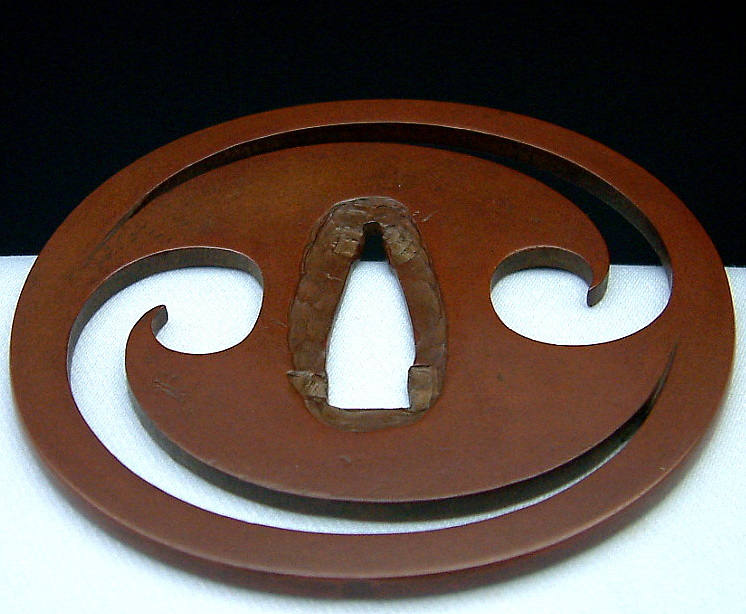
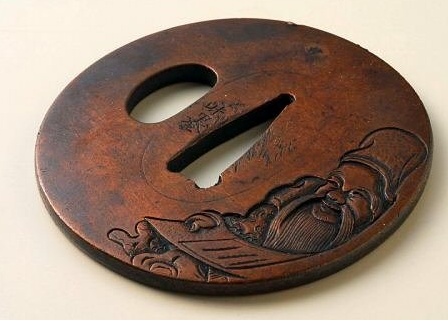
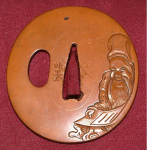
No, this is not the dreaded question - "should I clean a copper tsuba?". It is just that I have recently bought a suaka tsuba in very good condition (BTW, it has been identified as a gimei Miboku here http://www.nihontomessageboard.com/nmb/ ... w=previous). While researching Miboku a bit I have stumbled upon an older (2007) picture of the same tsuba: http://www.worthpoint.com/worthopedia/0 ... tsuba-with Guess what - the tsuba is undoubtedly the same, but the condition seems worse - it looks like it suffers from oxidation and/or dirt... The tsuba I have got is perfect - same small dent in the upper part, but no dirt or oxidation, and the color is beautiful, rather yellowish... Could it have been cleaned, if so, how? Below pictures of BEFORE and AFTER (and I assure that AFTER looks better in reality than on the picture)
-
Thanks, Guido, I appreciate your time
-
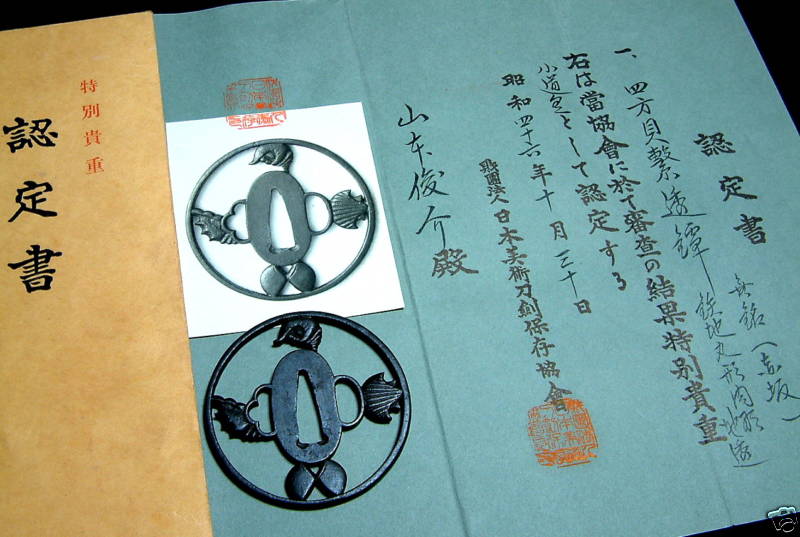
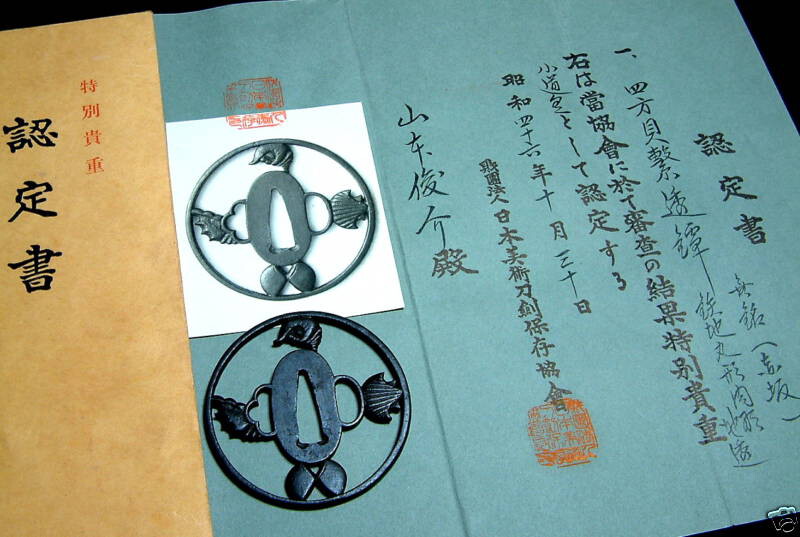
Dear NMB members, would you be so kind as to look at the origami and tell me if there is a period this tsuba has been attributed to? I know it is an Akasaka with seashells, nothing about the time it was made. I would presume late Edo... Curious to know. Thank you for your help :-)
-
Are Gimei blades worth collecting?
Marius replied to Gabriel L's topic in General Nihonto Related Discussion
As long as you let the gimei stay and will not put it to Shinsa, it's just a blade, neither Kamakura nor anything else, for your judgement just doesn't matter. Not MY judgement, Reinhard. You have particpated in the discussion about this particular sword, but the opinions are Ted's and Darcy's (who were not a shinsa of course and who have judged by pictures only). Here is the post: viewtopic.php?f=1&t=2392&hilit=kuniyuki+rai Sorry for this intermission. One more word about gimei: I would disagree that gimei precludes a sword from study. I agree that gimei is a bad thing in itself I understand why the NBTHK and NTHK policies exclude gimei blades from certfication And I would love to see a gimei removed by a specialist, so if you have pics showing the effects, I shall be grateful. -
Are Gimei blades worth collecting?
Marius replied to Gabriel L's topic in General Nihonto Related Discussion
I agree with Gabriel, just look at my signature However, just to brief you on a long-lasting debate: gimei is bad for the sword's value, some will a gimei sword as something as bad as a fake work of art. In fact most of great-name signature are gimei. If a sword has a great mei and no reliable papers attributing it to the signature author, it is almost certainly gimei. See a signed sword with a good mei? Assume it is gimei. Buy it if you like it, not because of the mei, but because of the blade. Japanese collectors dislike gimei blades, they sell them yo us, the less discriminating gaijin. Some really good swords which have been gimei, had their signature removed (tricky, expensive, to be done by a specialist only). I own a gimei Kamakura tanto, I like it for what it is, and will not spend $$$$ to remove the false mei. Just my tuppence. Hope that encourages you to research the problem. -
Dear Curran, many thanks for that info. Such a pity the menuki are gone. If you come up with the artisan's name, I will be grateful.
-
Tsuba Authenticity - Opinions Please?
Marius replied to FBJ's topic in Auctions and Online Sales or Sellers
Mike, congratulations on your purchase :-) It seems to be a real tsuba - judging by the overall looks and the patina, it is not very old, late Edo perhaps. Still, a nice piece, I would like to have such a guard. There is active rust, which you might want to remove. Be very careful, as it is easy to ruin a perfectly decent tsuba if you don't know what you are doing. Please read this article very carefully, the advice there is priceless: http://www.geocities.com/alchemyst/tsuba/tsubacln.htm It will take you weeks of repeated work to clean the tsuba, but you will enjoy the result. I have worked on late Edo katchushi tsubas like this and I must say, that there was a huge difference between "before" and "after". As far as fitting it on a katana is concerned - that is a matter of taste. It should look good on a small (60cm) katana, and rather not on a 70cm+ sword. Whatever you do, do not change the nakago ana in any way, should the nakago prove to be too large to fit the tsuba. No drilling, filing, etc... Better to look for another, better fitting tsuba than ruin a perfectly good one. Hope that helps -
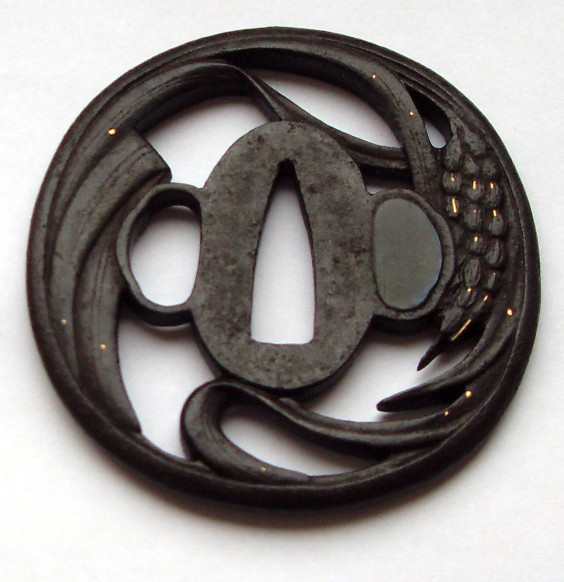
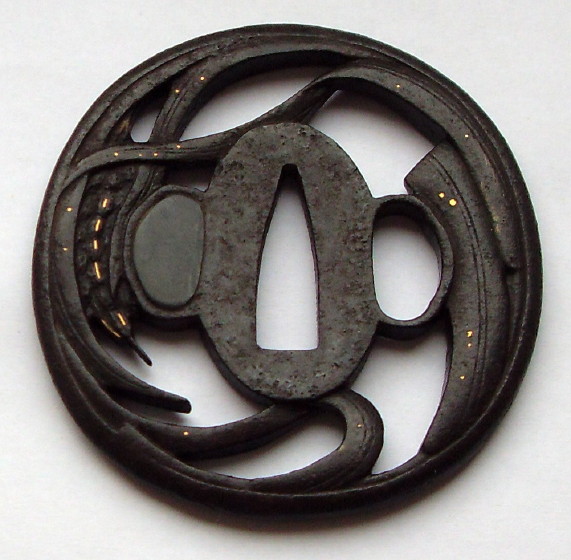
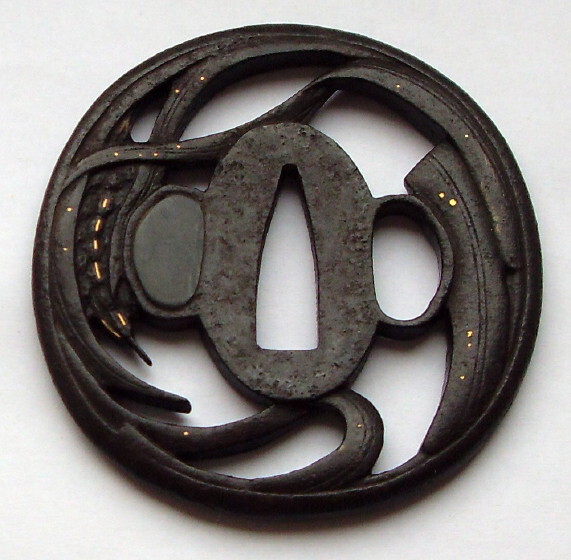
Dear John, the tsuba description has been adjusted accordingly. I have also changed the description of the sukashi tsuba with the rice plant to "Choshu", as indicated by you. Thank you very much for your contribution and your willingness to share your knowledge with a beginner BTW, I have another tsuba with the rice flower motif. I wonder what you think of it? Sorry for the abysmal quality of my pics, I had only a kiddie camera at hand...

-
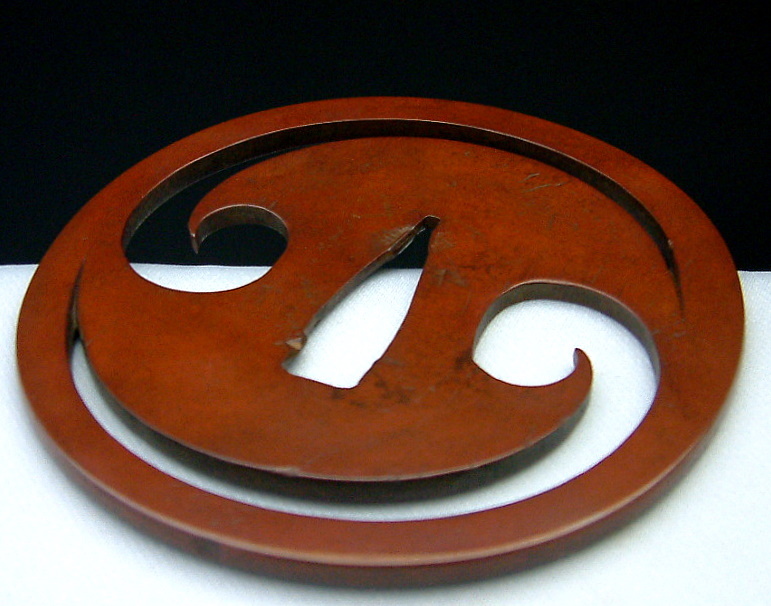
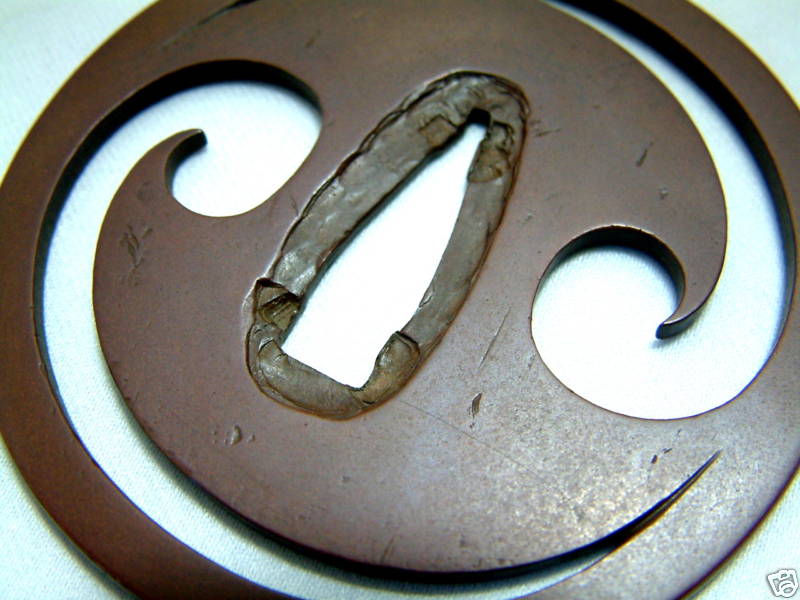
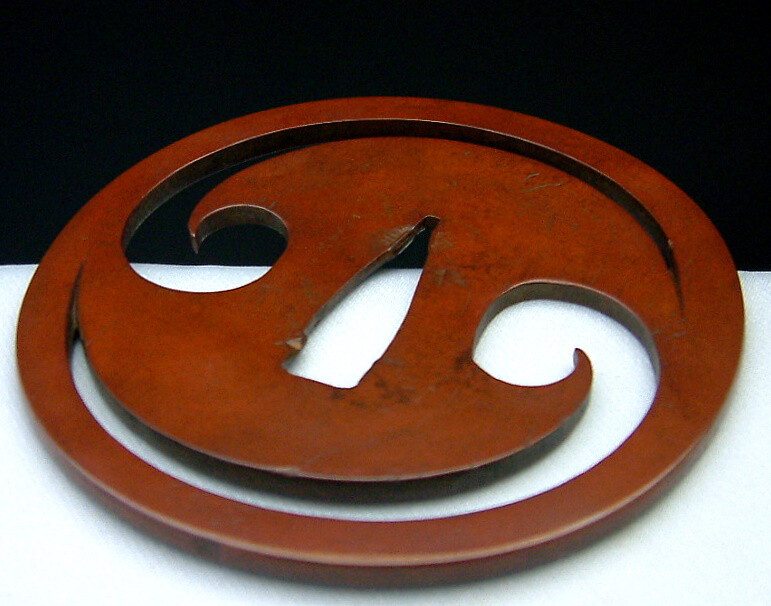
here you go The texture of the suaka is different on each side - on the front it is mikagiji, on the back it is smooth but not as a mirror. You cannot see this in the pics, but the mikagiji is wonderful. It is really very nicely polished surface with a wonderful color to it. The dimensons are as follows: 7.6cm x7.6 x 0.3cm Nakago ana: 2.9cm x 0.9cm Enjoy :-)


-
Thank you for your kind words I am very happy that you seem to like some of my tsubas Oh, and many thanks for the information about the Choshu tsuba. It seems that the rice motif was very popular. Reinhard, as to the Owari tsuba, whose twin you have - it is not papered, and the dimensons of mine are as follows: Diameter: 69.1mm; Nakago ana: 25mm; Thickness: 3mm The tsuba has tekkotsu in the mimi, said to be a feature of earlier Owari works. Should you like to see the tekkotsu, I can take pictures and post them here or send by PM. Just let me know please. PS: you won't see it in the pics, but the Higo sukashi with the aubergine (or gourd) motif has an absolutely wonderful patina. It is one of my top favourites, I won't part with. The least interesting of all these is (IMHO) the brass tsuba with the dragon motif. The Owari (?) with the bamboo motif is nice, but condition is only so so...
-
Dear All, I thought I might publish pictures of what I regard as the best tsubas in my small newbie collection... I wouldn't assume that you can be really interested as this is mostly low-grade stuff... But I thought some of you might still want to have a look. Some of the tsubas I have no idea about, and so I have marked them with a "?" And, if you have really nothing to do at the moment, any comments or pics that you would like to post would be greatly appreciated Here they are: http://web.me.com/mariuszk/mariusz/Tsuba.html Thanks for looking
-
I couln't agree more with your opinion, Brian. I have actually grabbed a nice and inexpensive Akasaka tsuba right upon my first visit to Fred's excellent website. I will probably stop buying tusbas from eBay. Fred, congratulations, and many thanks